
spot_img
Home Blog Page 6

Riding Shotgun with History: Pete Lyons on Can-Am, Formula One, and the Magic of Motorsport

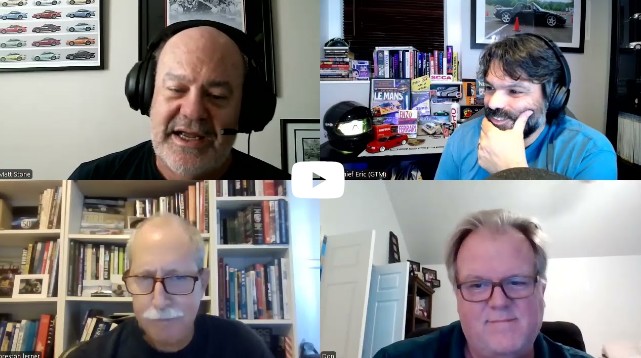
Break/Fix podcast is known for spotlighting the unsung heroes and legendary voices of the automotive world. In this episode, host Crew Chief Eric and The Motoring Historian Jon Summers welcome one of motorsport journalism’s most revered figures: Pete Lyons. With over five decades of storytelling, Pete has chronicled the roar and romance of racing – from the thunder of Can-Am to the elegance of Formula One.

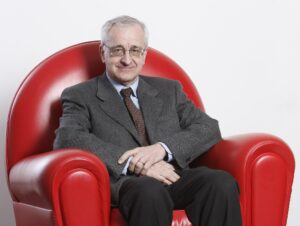
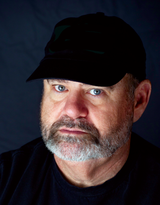
Photo courtesy Pete Lyons, www.petelyons.com

Pete’s journey into motorsports wasn’t love at first sight. As a child tagging along with his father, Ozzie Lyons – a photographer and journalist – Pete found race weekends more about Howard Johnson pit stops than horsepower. But everything changed when he got behind the wheel. Driving unlocked a visceral thrill, and soon he was hooked. With a camera in hand and access to his father’s darkroom, Pete began capturing the sport’s soul through images and words.

Tune in everywhere you stream, download or listen!

Listen on Apple
Listen on YouTube
Listen on Spotify

In the early 1960s, Pete set off for Europe with a backpack, a loaf of bread, and a dream. He bought a secondhand Norton motorcycle in London and chased races across the continent – from the Targa Florio in Sicily to the Nürburgring in Germany. His travels weren’t just about sightseeing; they were a pilgrimage to the holy sites of motorsport. The Nürburgring, with its 14.7-mile loop and 180+ corners, became his favorite – a dangerous, devious track that embodied everything he loved about racing.

Spotlight

Born in 1940 in New York State, Pete Lyons is an international motorsports reporter, photographer and award-winning book author in the fields of Formula 1, Can-Am, endurance sports cars, IndyCar, Trans-Am and many more forms of racing. In his decades-long, worldwide career, Lyons covered events on all six populated continents for numerous enthusiast publications, including Autosport, AutoWeek, Car and Driver, Racecar, Road & Track, Vintage Motorsport and many others. He is also the author of 20 published books including, for Evro Publishing, Shadow: The Magnificent Machines of a Man of Mystery, which won ‘Specialist Motoring Book of the Year’ at the 2020 Royal Automobile Club Motoring Book of the Year Awards (UK) and ‘Best Book’ at the 2021 Automotive Heritage Awards (USA).

Synopsis

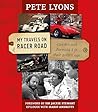
This Break/Fix episode features a conversation with Pete Lyons, a renowned motorsport journalist with a career spanning over five decades. Lyons shares his journey from a disinterested teenager to one of the most respected voices in motorsport journalism. He discusses key experiences, including following his father’s footsteps, backpacking across Europe to attend races, and covering iconic moments in racing history. The episode delves into the golden era of Can-Am racing, the rise of Formula One, and the evolution of motorsport journalism. Lyons also discusses his latest book, ‘My Travels on Racer Road: Can-Am and Formula One in the Golden Age,’ offering insights into his career and the stories behind some of the most memorable races and personalities he has covered.

  • And joining us is Jon Summers, the Motoring Historian, one of the many personalities on the Motoring Podcast Network! 
  • Reading your most recent book it looks like you weren’t that enthusiastic about cars when you were younger. Yet by your teen years it was the passion of a lifetime. What experiences did you have which piqued your interest (and future career)?
  • Let’s talk about what first drew you into the world of motorsports journalism, and how did your career get started?  
  • The perception of Can-Am was no regulations. Was it really like that? Who were the top 3 innovators?
  • What were the best tracks for can am? Was it the fast open ones, or were the slower tracks a better spectacle? 
  • Did teams spying on each other’s cars ? What was the attitude to poking your nose in other team’s garages?
  • By the mid seventies you were back in Europe reporting on Formula 1. How did that come about?
  • How has motorsports journalism evolved since you started, and what are your thoughts on the digital media era?
  • You’ve authored several books—what’s your process like when diving deep into the history of a particular series or figure?

Transcript

Crew Chief Brad: [00:00:00] Break Fix podcast is all about capturing the living history of people from all over the autos sphere, from wrench, turners, and racers to artists, authors, designers, and everything in between. Our goal is to inspire a new generation of Petrolhead that wonder to. How did they get that job or become that person?

The Road to Success is paved by all of us because everyone has a story.

Crew Chief Eric: Tonight we’re honored to welcome one of Motorsport Journalism’s most respected voices. I. Pete Lyons with a career spanning over five decades. Pete has covered everything from the raw thunder of Can-Am and Formula one to the gritty drama of endurance racing at lama. His vivid storytelling, deep technical insight, and front row access to some of racing’s most iconic moments have made him a staple in publications like Auto Sport Road and Track Auto Week and Vintage Motorsport.

Whether he’s recalling battles between legendary drivers or peeling back the curtain on Motorsports innovation, Pete [00:01:00] brings history to life with unmatched passion and precision, and we’re going to dive into his latest publication. My Travels on Racer Road, Canam and Formula One in their golden Age with a man who not only chronicled Motorsport history but lived it.

Joining me tonight is John Summers, the motoring historian, one of the many personalities on the Motoring Podcast Network. And with that, let’s welcome Pete to break

Pete Lyons: fix. Well, Eric, John, and, and everybody, thank you so much and I’m gonna hire you to be my publicist. You did a great job there. It really is.

Jon Summers: Marvelous, isn’t it?

Pete Lyons: Some of it’s

Crew Chief Eric: almost true. It’s all true. Even the lies. Pete, with that said, reading your most recent book, it looks like you weren’t that enthusiastic about cars when you were younger, but yet by your teenage years, it became a passion of a lifetime. So what were the experiences that had piqued your interest and set you on the path for your future career?

Pete Lyons: My dad was really keen on cars. Ozzie Lyons, photographer, engineer, movie guy. He did a lot of things, but he was a, a journalist, did a lot of photography at car races and so he was really very [00:02:00] interested in cars, especially car racing when I was like 12 years old or so, I would go along with him to the track, like a family vacation.

We go from New York state all the way down to Florida to Seabring every March, so dad could photograph the races and we could play in the sand and the mangrove swamps and so on. But I was completely bored by cars. I mean, I’m in the backseat. I’m a kid, I don’t get to do anything but sit there and wait for us to get to the next Howard Johnson so we could have some lunch or something.

And so I had no hands on experience of a car, so I didn’t understand what it was all about. But then when I got to learner’s permit age, dad started teaching me to drive. Oh, I get it. This is fun. In the matter of weeks, I was a converted race car person. I remember vividly my first time had driving a car and also being in at a race where I was interested and Dad gave me a camera and told me about shooting, and then he had a dark room at home.

Every house we lived in in, he built a dark Aram. So I got hands on instruction on Souping [00:03:00] film and making prints and so on. Basically, that’s the path that set me on and here I am.

Crew Chief Eric: So as we continue down your journey, looking through the chapters of the book, it seems like you were a backpacker before backpacking was popular, and you hear those romantic stories about a loaf of bread and a bottle of wine and traveling through Europe.

So you found yourself in England and then continuing on European travel. What drove you to go to Europe?

Pete Lyons: Well, let me first say that there were a lot of backpackers in my day. It’s not a new phenomenon. We’re talking 19 61, 62, 63. When I was there. I was with backpackers all the time. There’d be two or three standing at the side of the road when you’d walk up and stick your thumb out or on trains or sleeping in campsites or on park benches in Paris.

True story. I did that. So, you know, backpacking was not novel, but it’s a way to go.

Crew Chief Eric: So was it motor sport that drew you to Europe?

Pete Lyons: Oh yes. Yeah. I was not doing much of anything by the time I turned 20 years old. A whole bunch of stories in the, in the book about what I was doing, [00:04:00] traveling and working and so on.

But I was really trying to go to all the races I could and I decided I have to go to Europe and so I went to Europe. I had enough money for about two months in Europe. And then at the end of that two months, I didn’t want to come home. So I found a job and I worked that winter and then I traveled the next summer and worked again that next winter and traveled some more the third year and I just didn’t want to come home.

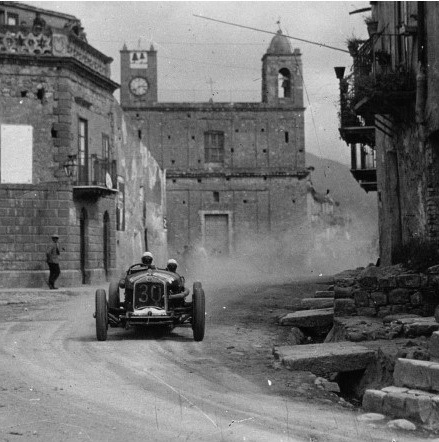
I went to as many races as I could. I bought an old Norton motorcycle secondhand, and I traveled all the way down to Sicily, to the Target Florio. In 1962, I went to the Berg Ring in Germany where I froze the piston and the cylinder. It was a single cylinder engine and I devoured the piston and had to wait in Germany for nine months before I could fix the bike.

I learned a little German then.

Jon Summers: What Model Norton was it?

Pete Lyons: It was a 1959 model. 50. It was a three 50 single, very basic, but the engine wasn’t anything special. What I liked about it was what I’d read about the road holder forks and the featherbed frame. You know, the man won so many motorcycle races in [00:05:00] that era.

I. And this was basically the same motorcycle. A lot heavier, a lot slower, a lot cheaper, but so am I. So it suited me fine. I, I enjoyed riding that all over Europe. Where did you buy it? In London. I bought it, I walked into a dealer in London and you showed me the bike and I bought it.

Jon Summers: It was the new bike, was it?

Pete Lyons: No, no, no, no. Two years old. This, this was almost winter time of 61 when I bought it. And it was a 59, so it was two years old. It was a good bike, but I did thanks to it that I shouldn’t have.

Crew Chief Eric: So you’re deepening your romance, your love affair with Motorsport being in Europe, because every time you turn around there’s a famous racetrack here, there and everywhere.

Had you established, at this point, maybe some favorites or some bucket list tracks that you were trying to get to, to record a photograph or capture or just experience?

Pete Lyons: Yes, but the first one on top of the list is always going to be the Burging, that Fantastic Mountain Road course in eastern Germany. In those days, it was 14.7 miles around and it had something like 184 corners depending on how [00:06:00] we count a corner.

And it was incredibly difficult to learn. It was incredibly devious. It was really damned dangerous. It’s my idea of what a racetrack ought to be, and I know it. Doesn’t fit into the modern, uh, conception of what racing ought to be. So be it. I’m in the old days.

Crew Chief Eric: Compare that to Lama.

Pete Lyons: Lama is totally different.

There’s a lot of magic there. It’s not as long. In those days, it was about nine miles around far fewer turns. The driving isn’t as intricate. But of course you do it for 24 hours and there’s two to three, even sometimes four different people in the car. So each one wants something different. So you have to compromise.

And also in those days it was really endurance cars could not stand flat out driving for 24 hours like they can today. It’s astounding what they can do today. But you, you had to nurse the car. I’ve been at Lama late in the afternoon and on Sunday afternoon they’re, they’ve been running like 23 hours and they just have to get through the last hour.

The engine note that used to be so pure and clean and lovely in the middle of the [00:07:00] night. It’s sounding hoarse and raspy and something’s gonna break if I’m not really careful. The cars are streaked with filth. I mean, they have been through a long, long endurance, you know, 3000 probably miles, uh, in the 24 hours.

So it, it’s a totally different experience and perfectly valid. Is that. And I love night racing. I love watching the car has emerged from the darkness and flash by and you see the flames from the exhaust and the bright red brake rotors and so on. So it’s a spectacle, but it’s not like Formula One at the Berg Brain.

For instance,

Jon Summers: your story at the beginning of your book that’s just coming out. The story of seeing the mat coming by at Lamar, it really resonated for me. Thank you. My best memory of Lamar, I went three years in the Audi years, about 20 years ago, and my best memory of Lamar is having the ritual Chinese meal at the restaurant at Herand Air, which I only did that once.

And then walking down, and it would’ve been like 2000 or 2001, the guys I [00:08:00] were wi was with were like, you know, za Straits just there. We could like walk down this driveway and like into this guy’s back garden. And so we got close to the, and I remember the, I remember the night of the Corvettes and the glowing break discs.

Yes, your piece. Brought that alive for me again. Ah, thank you. Thank you. It was magic.

Pete Lyons: It was magic being there and I, I always figured my role was to try to express the magic for what I felt for people who couldn’t be there, but wish they would.

Crew Chief Eric: So that’s the perfect segue into our next portion of your story, which is when did the light switch flip and you went from backpacker and motorsport, enthusiast to motorsports journalist.

What were the series of steps that brought you to that point and then realizing that that was gonna be your career?

Pete Lyons: That overstates the case. It just sort of happened and it happened because my dad was already associated with Autosport, the English weekly. You know, Motorsports publication from London.

Dad was their USA correspondent and photographer for some years. And so it was actually not a path [00:09:00] I chose, it was the path dad was following as on a weekend. And so I’m going along with him and I remember the thrill I had the first time, bought a sport, published one of my own photos. I mean, this is so exciting and I have to tell you, it’s still exciting, but I couldn’t figure out the, I was not aware of anything else I got to be doing.

I thought I should do this. So I did.

Jon Summers: I wondered if. Part of the reason why you came here in the first place wasn’t Dennis Jenkinson’s Continental Notes. You’re exactly right. As a mobile sports subscriber myself, that lifestyle was appealing to me, and I wondered if the Norton bike and the coming to Europe and the following, the Continental circus was DSJ instrumental in that.

I got the sense he was

Pete Lyons: absolutely. I often call Jens my guru. I never said that to his face, but when I was still in high school, someone gave me a book for Christmas. Obviously my dad, it was Dennis Jenkinson’s book called The Racing Driver, which I still have, and I’ve photographed. There’s a picture from it in the book.

[00:10:00] Jinx had this life, and it was the Continental Notes you could read sometimes in the magazine. We didn’t get that magazine, but I saw copies from time to time. So I knew this English guy. In those days, he had a Porsche, a little 3 56 coop, and he would motor around Europe going to these fantastic races like the Targa, Florio like spa, like Monaco, Rimini, Pescara, places like that.

And then he would write about his journeys and then his stories about the races. They just spoke to me. He brought out the feeling in me. I can remember there, there was a, a story that Jenks wrote. I think it was about Pedro Rodriguez driving a Porsche nine 17 around brands Hatch and probably the BOAC six hour race, something like that.

As I recall, it was a rainy day and he just described Pedro just dancing slithering around that wet. Racetrack. And honestly, John, I felt my breath coming fast. I was, and I’m sitting 3000 miles away months later reading words and I, [00:11:00] this is powerful stuff.

Jon Summers: Yeah, it’s, it is awesome. That reading your words in the book, expressing that for me, the article that did that for me was Dan Jenkinson’s article about the Milli Milia in 1955.

It was republished in 1995. In the June edition of Motorsport, and it was right after I’d finished graduation so I could read something that wasn’t the decline and fall of the Roman Empire for a minute.

Pete Lyons: Yes,

Jon Summers: and I read the Jenkinson article and I loved it. Yes. Love the sense of. Adventure and there’s a sense of joy diviv, which is missing from contemporary motorsport, and it’s sad that that’s gone.

Pete Lyons: I’m not close enough to motorsport to be sure, but I think the people who are involved in current motorsport, I think they’re as passionate about it as we were in those days. So I’m not gonna say that they’re not finding the same kind of enjoyment. It’s different from what I remember. But on the other hand, there’s a lot of it.

It’s [00:12:00] good too. For one thing. We’re not killing as many people.

Jon Summers: That was the perfect segue into talking about the mortality.

Pete Lyons: I don’t think we want to dwell on it. I think people know that it was very dangerous. I mean, all you had to do is look at the cars and the circuits and the driver’s suits and so on and and the helmets.

And they were very aware that it was dangerous. There were ongoing efforts to make it safer. Every year they tried their best to improve the cars and improve the barriers and et cetera, et cetera, but we kept losing people. The first year in my, in Formula one for me, we lost two drivers and then the next year we lost one, and the third year we lost two more in 76.

My last year, I don’t think anyone died. I not on in Formula one that I can remember. I might be wrong, but it was a very, very dangerous period. I put this in the book, the editor of Autosport in those days, he was the founder. He was a Scottish guy named Gregor Grant, and he said something once, I think he wrote it in one of his editorials.

He said that, you know, motor [00:13:00] racing is indeed dangerous, but you know, you must remember that when we started in the late forties, early fifties, we had just come through the most dreadful war and we were used to horrible things happening. And so motor racing is quite innocuous by comparison. So that was their thought.

Nowadays we have moved so far beyond that, we just don’t know what it was like then. And nowadays when someone is. Killed. And it does happen. Many younger people are just shocked. How can this possibly happen? And yet it was part of the game back in those

Jon Summers: days, very much so. And I, I feel like that kind of motorsports survives in the form of the Isle of Man tt Yes.

Have a place of students at local university. And for them, they see the TT more as existing with other extreme sports than it does with Motorsport, as the resident motorsport as they understand it now. And I thought that was quite an interesting perspective.

Pete Lyons: It was something that we had to deal with. I had to write obituaries for [00:14:00] people that I thought of as friends.

I used to try very hard not to get close to them because there was that risk of, you know, losing them. I wasn’t very good at not being friendly with ’em because they’re such fascinating people. I’ve said before that I don’t recall ever meeting someone in motor racing who wasn’t an interesting person in one way or another.

Part of it is we’re all there because we’re all enthused by the same thing, and you just feel like you’re part of a fraternity. I’m on the outskirts. I’m a journalist. There’s an adversarial relationship that one is aware of subliminally. It’s not that they were unkind to me or wary of me, but you could see that the way the mechanics talk to each other is a little different than the way they talk to the journalists who stopped by.

I developed good friendships and, and they would tell me things that I heard them not telling other people, you know, you never actually break through the barrier and get to the inside. I discovered that a couple times when I joined the crew of a, a race team on a, like a club racing thing. All of a sudden I’m a remember a team and [00:15:00] somebody else comes around and wants to know what we’ve done and.

I can feel it. I’m not going to tell him. I can see from that perspective how my approaching any of the mechanics or, or designers or crew chiefs around the racing team in those days, they would be cordial and friendly and partly because I’m the press and so they want to be nice to you so they will write about them and so on.

So it’s a, it’s a lovely conversation. In the same moment you can see in their eyes, I’d best be careful. He might ask me something I shunt wish to tell him. You know,

Crew Chief Eric: let’s switch gears and talk about Canam. We have had only very few opportunities to discuss Canam on this show. I had been fortunate to sit down with a friend of yours.

We had Rick Nup on here. Yes, talk to us about his Lamont experience. But he has tons of racing experience in Can-Am and he shared those stories with us. And so I want John to lead us down this exploration of Can-Am. It has such a mystique around it and has such an epic period in Motorsport history. So, John, take us down this road [00:16:00] with Pete

Jon Summers: really does have a epic kind of, uh, worldly feel for me as a, as an Englishman.

So let’s begin with the obvious about. Canam. The perception is that there were no regulations. It was this sort of wild west of no rules.

Pete Lyons: Was it really like that? There were some rules, but there were so few rules. Many people have said, I like to say it was the thinnest rule book in Motorsport. It probably rivaled only by the Pikes Peak Hill Climb Rules where it says Open class at Pikes Peak.

Is any car capable of going for the Hill Climb Track record is eligible. Okay, we can work on that. Canam did have rules because it was associated with the Sports Car Club of America and their Canadian counterpart, CASC. They came together and they produced a sports car series, an international one between the two countries.

That’s why it was called Can am Canadian American, and it was a series of professional races. Across North [00:17:00] America and they adopted the old idea of sports cars as experimental things Can-Am cars didn’t come into being. They evolved outta what had existed before. In Britain, you had what they called big banger racing.

They were McLaren’s and Lolas and other cars. British made chassis with big Chevrolet Ford and Oldsmobile engines. They were called big bangers, and the crowds loved them. And I’m talking, you know, 64, 65, and we had the same thing going on in the States. Not only English cars with American engines, but we had American cars like the Cunninghams came before them.

Then we had the scabs in the late fifties, and then by the early 1960s, they were building things like the Chaparral 63, 4, something like that. Again, all of that was. A fermenting growing blossoming thing, which in 1966 was codified in the Can-Am. But that whole ethos of you wanna put a bigger [00:18:00] engine in it, oh, that’s great, let’s hear it run.

Whereas eventually, and in most cases. Rules get piled on top of rules. One rule leads to two more and eventually you can’t move. If you wanted to design a Formula one car or a Lama car today, but you wanted to make it a little wider than usual, Uhuh can’t do that. Lad, you wanted to make the engine a little bigger.

Uhuh not allowed. Seems like every line of a modern design race car is drawn for the designer by some rule or another. It’s so constrained, whereas Can-Am was wild and free. You want a bigger engine this year or this week? You want a bigger engine. Okay? We’d love to see that. You want a different transmission.

You want to make different aerodynamics. Remember, the Chaparral came up with that wing on the above, the rear wheels so that it would, aerodynamics would push the back wheels down on the road. That was unheard of and yet was perfectly legal in Canam. Everybody loved it so that it was a totally different era.[00:19:00]

Jon Summers: So thinking about those kind of creative innovations, I mean, you mentioned Jim Hall and Chaparral. Who would you say the top three innovators were in Canam?

Pete Lyons: Chaparral with Jim Hall and Hap Sharp for sure. They did the first fiberglass, meaning composite chassis in racing in 19 63, 62. There had been a car made by Colin Chapman at Lotus, which had a glass fiber chassis, but that was a road car.

The elite Jim Hall, I’m sure he knew about that car, but they built a rear engine sports car that had that fiberglass chassis. Guess what? Today everybody has a carbon composite chassis. So that was an innovation which has stuck. Jim Hall pioneered what everybody called an automatic transmission. It wasn’t automatic.

It was a torque converter transmission. So in other words, there was no clutch, but you put your foot on the gas pedal and the thing locked up in the car moved forward. And the way you changed gear was you simply moved a lever. You had to [00:20:00] move the lever. It didn’t do it by itself, so it wasn’t automatic, but it was an innovative, different kind of transmission that allowed the driver to have two pedal control, just like you have in a Google cart.

Left foot brake, right foot gas, and like you have in Formula One cars and other cars today. Again, that that was a Chaparral thing that came about in the early 1960s. And then the aerodynamic revolutions that Jim Hall came out with, I described the wing, and later on there was the fan car that had an extra motor.

You could add an extra motor to a KN car. Nobody said you couldn’t do it. And that was to spin a couple of fans at the back, which extracted air from out under the car and turned the whole car into a limpet, you know, suction cup. It just grabbed the road. Those are the main things that Chaperral did. They also were the first people that I was aware of doing instrumented testing.

I have a picture that I took at Bridge Hamden once, a big passenger seat of the Chaparral with a big reel to reel tape recorder sitting in the passenger seat, belted in with wires, going to all sorts of sensors [00:21:00] around the car, and I knew enough not to ask, what’s all that for Mr. Hall? Oh, would rather not talk about that.

I asked Jim Hall once there had been a little aerodynamic appendage at the nose of one of the chaparrals, like a little additional aerofoil, no, no bigger than my arm, stuck at the front where the air intake was. Then it disappeared, and I, I said, Jim, why? Why did you, why have you removed that little appendage that front of the car while Pete.

I had enough time to think I’m gonna get a great answer here. He’s thinking about his answer. It had a neurodynamic effect that I’m not gonna tell you about. Thank you, Mr. Haler. This is the kind of thing that made that whole episode of my life so much fun. I felt like I was in a giant adventure going along with people who were opening doors into the future and they tolerated me tagging along and watching them and taking pictures and writing about it.

I wasn’t one of them, but they welcomed me to come along [00:22:00] on the ride. It was just so much fun.

Jon Summers: I was lucky enough to meet Don Nichols some years ago, and I found talking with him in the pit lane at Monterey. He clearly relished telling stories, and I found myself thinking some of these are true. Some of them I’m not really sure about.

I’m just enjoying all of them. Talk about some of the innovations that you remember shadow bringing to Can-Am.

Pete Lyons: Well, the first one of course was Trevor Harris’s tiny tire car, the 1970 car. Trevor and Don got together. Trevor had fountains of ideas. He’s an amazingly talented, brilliant, innovative guy. His mind just throws out ideas like sparklers.

He wanted to try a car that was like a go-kart and that had small wheels. He had, he wanted 10 inch diameter wheels, so therefore like 14 inch, 15 inch diameter tires and slightly larger at the back. But the whole idea was to make a car that was lower to the ground. Trevor knew about endurance carts.

Doesn’t say that. That’s what led him [00:23:00] to the idea, but the same concept, getting a smaller package down low. And so there’s less air resistance. And he thought with a, a smaller engine but less air resistance and less weight, you could go as fast as a big block heavy car. And so he got done. Nichols interested in that, and Don agreed to finance it.

And so they came out in 1970 with this most. Amazing thing. I mean, it would literally stop you in their tracks the first time you saw it, thought for the first time at must sport in 1970, I knew what it was, but I hadn’t seen it before. And good Lord, so how can I photograph this? You know? So get down to my knees, and I looked photographed up because that would elevate the height of the people around it and things like that.

It was not a successful car. A lot of that had to do with circumstances outside of Trevor’s control, but it led to a long line of other shadows, each of which got more and more conventional, but finally won the Canam Championship four years later. So that’s an important car. And then in Formula One, they did [00:24:00] do some cars that were fast, particularly in 1975.

The Shadow DN five was it. That started from pole position on a couple of races that year, which is darn good in Formula One. In 76 I think they won a race. They won the Austrian Grand Prix. Alan Jones, later a Formula One champion won his first Grand Prix with shadow at the Austrian Grand Prix in 1978.

So, but then the team never had the funding it needed, not when they started to get good, so it faded away. The story is fascinating. Don Nichols own personal story is fascinating. Trevor Harris and Peter Bryant, who was an interim designer, and then Tony Southgate who did the successful cars later, what a kaleidoscope of fascinating people.

Jon Summers: Absolutely. That’s what I found myself thinking that Don Nichols was in his seventies when I met him. He had a long ponytail and I was like. Dude, that’s just so cool. Riding with Revy. Ah, you must have been [00:25:00] friends with him for that all to come along and just explain to people who’ve not perused your book, what that’s all about.

Pete Lyons: Riverside Raceway 1971, a few days before the very last Canam of that year, and at the end of that race in 1971, Revson was going to be the first American to be the Can-Am champion in McLaren MAF. You can see the two seats in there and the full Bo that you work over the wheels and it actually has doors here on each side.

And those three things together make it a sports car. Other than that, it’s a, it’s a wild, basically unlimited car. The engine was as big box Chevy as they could make with an aluminum block. Gearbox was big and, and they could absorb that torque. The tires were big and fat. It had aerodynamics on it. By this time, there were some rules restricting The aerodynamics could no longer have them mounted up in the air like Chaparral had with struts going down to the wheels to press the wheels themselves down onto the road.

This way, the downforce goes through the body and the suspension down to [00:26:00] the wheels, which isn’t as pure as the Chaparral, but that got banned. So more and more rules were creeping into the cannon. Anyway, to your question, it was a, I think it was Tuesday before the race and one of the sponsors had some of their people out, and I was out there anyway because I’m a racetrack junkie.

Hey, they’re gonna be testing today, I’m going out. And I found that, uh, ready was giving people rides from the sponsor. So I got in line and they looked at me, oh, I paint in the seat on this side. There was no upholstery in it. It’s nothing but a sheet metal tub, you know, aluminum tub. Although the rules said that it was supposed to be equal for the driver and the passenger, they did cheat it over a little bit because there wasn’t enough room between the fuel tanks for two human beings.

So the driver needed to have a good seat and the passenger only needed to be along. He didn’t have to actually be comfortable. I can, I remember sort of driving my hips down into this narrow thing. And then I had to keep my right arm away from Revson. He’s right hand [00:27:00] drive car, and he’s shifting with his left, doing this with his steering wheel.

And so I didn’t want to get into his way when he’s steering the car. Teddy May, the team manager, he clasped by hand. He was doing this to everybody. He said, give your hand. He held it up and clamped onto the roll bar here, where, where my thumb is, that sloped part of it. And, and that’s my head underneath there.

And so I’m holding on like this. And on the left side, I’ve got my hands out as far as I can and holding it over the outside of the mono clock underneath the door. And then my foot well, was so narrow. The only way I could get in there was to take off my shoes and in my stocking feet, I put one over the other and just sort of slipped in there.

So it was not what you call a, a relaxing and comfortable position, but. At a time like this, who goes for comfort? We went out of the pit. By that time I knew Riverside, I’d done a Formula Ford School there. So I, I was familiar with going around Riverside at Formula Ford speeds. But this thing was, he sort of motored out of the pits and then nailed it in first gear and literally my head went like that.[00:28:00]

I mean, you know, we hear about next snapping acceleration. It’s true and nothing but blue sky. Then you put your head down and then bang again. And even when he went from fourth gear in into fifth at 140 miles an hour, whatever it was, there was the same thing. It didn’t lessen with the speed. And I reckon we, by watching the tachometer, which I could see in the wiggling needle, the highest number I saw was the equivalent.

I found out later from the lap chart, from the gearing chart, it was 185 miles an hour. And then after that, he still had his foot down on the throttle for a couple of seconds. So I’m convinced I saw like 190 miles an hour down the back, straight at Riverside with like that. And at the end of it, there’s this boilerplate steel wall around the outside to turn nine.

It’s a long way away, but it’s coming at me like this. And, uh, kept thinking, Mr. Revson, sir, perhaps you might want to think about putting your foot on the brakes, sir. I’m exaggerating. But when he did, I [00:29:00] saw why he didn’t have to do it before. I mean, we just like that. And if I had not been holding onto the bar like this, I have a feeling I would’ve pivoted outta the car, forward my ankles over my heels, out over the nose of the car.

That was the feeling I had. I’m glad Teddy put my hand here.

Jon Summers: You mentioned Teddy Mayer there. Yes. In the wake of Bruce McLaren’s passing, did Teddy hold the team together? I mean, it’s astonishing that the team leader passes and then all of a sudden you have this incredible success in Can-Am and then through the seventies.

Building success in Formula One into the Ron Dennis era. So did you perceive that firsthand? Talk about that

Pete Lyons: Teddy Mayer for sure. I mean, he was a very early friend of Bruce. He was a business partner. He was a manager financial guy I think. And Teddy was an instrumental portion of the structure that makes a team a part of the machine.

But the mechanics, they were all on board with this keeping [00:30:00] Bruce’s legacy going. Tyler Alexander, another American, both Teddy and Tyler were Americans there. There were a whole bunch of Kiwis, some English, there might’ve been other nationalities, I’m not sure. But it was the kind of team that was so successful and so solid that people wanted to come and work for McLaren.

They brought Dan Gurney and when Bruce was killed 10 days before the first race of 1970, they tapped Dan Gurney to come in and drive the car for the first couple of races. And of course he won the race, both of those races, and then he’d step back. So all of those people, including Denny Hall. Denny home was often described as sort of a tower of strength.

I’ve used that phrase that held the team together, but it wasn’t any one person. But certainly all the people we’ve mentioned, it’s just the way they were. They’re racers, and if you are a racer, you keep racing. If you decide you don’t wanna race anymore, you stop racing. I mean, it’s actually a fork in the road.

Jon Summers: Thinking about the tracks, you mentioned Moss Port. Was canam better to watch when the circuit was really fast, or was Canam better [00:31:00] when it was a slower circuit and it slowed the cars down and they couldn’t use all that power?

Pete Lyons: Each circuit tends to be different, which means you see different things. I wouldn’t say one is better than the other.

Mosport is a wonderful track, still is today swooping and fast and bumpy and varied. You know, I love tracks with hills on them. For that reason. I used to love San Jave in Canada, in in Quebec. Province we go is like that. Watkins Glen has a lot of that road. Atlanta and mid Ohio and so on. Riverside was wider and faster, more open, and longer straits gets the same number of corners roughly.

I used to think of that as a faster track than Laguna second, but then I think it was Denny Holm one day who corrected me. He says, no, Laguna second is bloody fast, Mike. I think it has to do with, even though you’re not going that speed, you’re in a tighter turn and there’s things closer to you, so it still feels that fast.

Jon Summers: It might be a little like Silverstone in Silverstone in its original form. Yes. None of the straits were that long, [00:32:00] but you didn’t have to slow down for any of the corners that much. So the overall lap speed was not that far off. Monza?

Pete Lyons: Yes, Silverstone is a track I’ve known for a lot of years, various iterations of it.

It was built on an airfield, a World War II bomber base, and so it’s basically on flat terrain, so it doesn’t have that dramatic up and down that I love. And you’re right, in those days it had, it was the perimeter road around the runways. It went around the X shaped runways. So it wasn’t that complex a circuit, but it was fast and wide open and wood coat turn in those days, the last turn on the lap.

Was a blood accordingly, fast, right-Hander, I mean fifth gear, practically flat. Practically flat and fifth gear. And on those tires in the seventies with the big baggy Goodyear tires, their bias play tires were not radial. So they, they were floppy springs were soft and the aerodynamics were not very strong in those days.

So you could really see something going on. The cars would lean and [00:33:00] slide and the drivers are working like this and there, there’s two of them doing that. And through boot coat it, who knows? 160 miles an hour maybe that was a vision. And then of course they put in the bloody chicane that ruined it.

Jon Summers: Didn’t shechter one year cause a big pile up or, so I’ve probably denigrated Shechter name unjustifiably there, but there was a big rack. One year and that’s what made them put the chicane in.

Pete Lyons: Shechter did have a big crash there and I guess it was not immediately after, but after that they did put in a chicane.

That’s right.

Jon Summers: Yeah.

Pete Lyons: Later did what everyone called the Shechter chicane at Watkins Glen. Watkins Glen had a somewhat similar sequence, uh, as you know, the glen sort of down and first in those days it was the first turn, sort of fast downhill right up the hill over the crest and so on, and there was a nasty fatal accident that crested that hill once.

Subsequently Shechter lobbied people to introduce a chicane partway through it to slow the cars down. And immediately there were all sorts of accidents at the Shechter [00:34:00] chicane. So they took it out and went back to the original. That’s Jodi’s, uh, contribution to this particular discussion.

Jon Summers: Silverstone used to be my local circuit, so the first time I ever watched a motor race was in the grandstands at Woodcote.

Oh, great. Fully, I appreciate what you mean. It wasn’t until I came to California and I rode motorcycles around Laguna and Infineon see’s point that I realized what they talk about when they say technical because no circuit in Britain is remotely technical. All the corners, they’re just like there. And how big are your cahones?

And you turn in and maybe the car slides and maybe it doesn’t and you wrestle it round. And Silverstone was wonderful for that. Do you have a favorite British Club circuit?

Pete Lyons: Well, I didn’t see enough of them to actually judge that. I liked Brand’s Hatch. In the old days, the first racing car I ever drove was at Brand’s Hatch.

I fronted up one day in 1967, I think, and I paid X pounds and I got four laps and a little formula Junior or something. And it was all over so fast. I can’t really tell you what I thought about it was, oh, this [00:35:00] is, I’m closer to the road than I thought. Oh, those are wheels there. My gosh, this thing just Agile.

Oh, you know, oh, is that the last lap? You know, it wasn’t until I took the formula of the Ford School, then I had three days of it, then another three days of the racetrack. Then I began getting an acclimated to it and I felt, I knew what a Formula car should feel like then. But I liked Brand’s Hatch. I had a wonderful ride with Ronnie Peterson once he was out there testing one of the Lotus Formula one cars, and of course testing his little while of intense action on the track, and then an hour between times while the mechanics changed something.

And so he had a Lotus that was the mid-engine car with a rental engine. So we’re, we’re sitting in the B. He’s sitting there. And the thing about Ronnie is he was so langy. I mean, he was tall, Swedish guy, pale blonde hair, very placid. And in that car, he was sitting back and his left hand was just sort of lying on the console, massaging the gear lever.

And his right hand was on the steering wheel and it was going [00:36:00] like this, and his face was perfectly placid. And at Bren’s Hatch, you came past the pits and went uphill over the crest of a hill, which then went down into a gully. The S speed motor was about 80, and the thing is healed over and sliding and Ronnie’s doing this, it felt like we were in streetcar.

You know, it was pretty hairy. And all this while Ronnie’s driving this and he’s got his head turning me, he’s talking to me the whole time. And I thought I couldn’t do that. I liked Brian’s aelant, but, but you don’t consider that a technical circuit?

Jon Summers: I dunno. Brands. I know Thruxton pretty well and Thruxton is my favorite of the British Club circuits.

Crew Chief Eric: It seems like every adventure we go on with Pete, we can’t stop talking about Formula One in some capacity or your return to Europe after the advent of Can-Am and finishing up that series. So let’s talk about returning to Europe in more detail and your time with Formula One. How did that come to be?

How did you pick up that gig?

Pete Lyons: The short story is that Leon Mandel at Autoweek informed me that I was coming to work for him. Canam was [00:37:00] dying at the end of 72. There were several reasons for it. Not at the only reason, but part of it was, you know, the Porsches had come in with factory cars. The Canna McLaren’s, for instance, had roughly 750 horsepower if you could believe what people told you.

Whereas the Porsches came in at like 980 and very quickly were at 1100 horsepower. I mean, there’s just no way McLaren could compete with that. They would’ve had to build a whole new car, go through a whole new development program. They did a turbocharged Chevy engine, but they were breaking the gear boxes, so they’d have to go through a whole gearbox program.

So at the end of 72, they were beaten by Porsche. They just decided they couldn’t come back. It was a financial thing. It was business matter. You know, you can’t squander money. And at the end of that year, I could see that coming. Lola was gone, Chaperral was gone. Shadow hadn’t yet amounted to anything. So it was just a matter of Porsche, Porsche, Porsche, and I was losing interest and I.

Just one make racing per se. And so I was thinking of doing something [00:38:00] else. Anything else? I didn’t know what I would do, but I was thinking, I, I think this is my last year, I’m gonna quit. And I was walking into the pit lane on the first day of practice and there’s, uh, race cars and they’re running and it’s hard to hear anything but Leon Mandels at the far side of all four of them, they’re two McLaren and two forces.

But Leon had the kind of voice that pierced that cacophony, and he said, lines, don’t go away. Your future all planned. That sounds interesting. So basically he, he hired me and sent me to Europe to do Formula One. So that’s actually the story of how it happened

Crew Chief Eric: Comes at a super exciting time in Formula One history, right?

This is the advent of the aerodynamics and the Y tires and all the sponsorships and the famous deliveries and the Marlboros and all the other brands that we can’t talk about or show on cars anymore. And don’t

Pete Lyons: forget, at that point, 73 was the same year that Shadow came in, followed by both Penske and vs.

Parelli Jones. For one point we had three separate makes of American car in Formula One. But it was, I think, was part of the reason Leon sent an [00:39:00] American to cover the races

Crew Chief Eric: and in so much as Can-Am has this mystique unto itself, the team, the name, the brand Lotus is also shrouded in a bit of mystery, right?

There’s so many different stories and hearsay and you’re there in the middle of it, in the fray with Colin Chapman and everyone else. Can you talk about your time witnessing Lotus and what was going down?

Pete Lyons: Not from any good insider perspective. They were one of the 15 teams, let’s say, that I had to keep track of.

I had to write two stories from each race, auto, sport, and auto week. And I had to keep track of chassis numbers for odds sake, which is kind of a joke, but we won’t go into that right now. So Lotus was here, but then there was McLaren Ferrari, Heskith March problem, whole bunch of them, you know, so that my time was split.

And so I didn’t live Shea Lotus for the whole period of time. They had some marvelous cars. They were fascinatingly innovative within the rules. My favorite was the wedge-shaped Lotus 72 that Emerson Foral drove for a [00:40:00] championship. I mean, that car, I’ve written a book about it and that car is just so elegant and interesting.

It was a car unlike any other, it was almost like a spaceship compared to a, a typical Braham or Laren.

Crew Chief Eric: Well, and the reason I bring it up is because things are happening simultaneously and we tend to fixate on a single point, or a single person or a single thing. But at this point, fellow Motorsports, journalists, Jerry Cromack is chronicling the story of Lotus that later became the book Chapman and his machines.

And so I’m wondering, you know, did you rub elbows with Rom back and was he able to share anything that he was working on with

Pete Lyons: you? I did know, Ja, of course. In fact, I visited him in Paris one day and he gave me an assignment. It’s like seem to remember, I can’t tell you what it was now, but I didn’t delve into it.

I mean, it was well known that he was a Colin Chapman fan. Oh, I was a bit of a McLaren fan.

Jon Summers: You talk about you, you knew Mike Sson and were were friends with Mike. Oh, yes, yes, yes. He was my landlord for some time. I believe. Mike Sson was the journalist who developed a close [00:41:00] relationship with Sana, and then SNA felt that he liked.

Betrayed his trust and you wouldn’t speak to him anymore. And there was a whole,

Pete Lyons: I know nothing about that. That was after my time and I, I can’t say a thing about it. I didn’t know that. My thought

Jon Summers: about

Pete Lyons: that

Jon Summers: was there must have been occasions where you were told things or overheard things or learned things just by being around the pit, just by walking from the shadow garage to the McLaren garage past the Ferrari garage.

There must have been things that you heard or saw or juicy bits of news that you didn’t want to write about.

Pete Lyons: Very little, but I was told things in confidence and I promised I wouldn’t say anything, and I’m gonna hold to that. Nothing earth shaking, I mean nothing scandalous, no bodies anywhere. There is something I can talk about.

Just to satisfy you, BKI Sims, who was at Braham one day came to me and he says. Pete, what do you know about that Chaparral that had the fans on the back and it stuck to the [00:42:00] ground? I said, oh, are you thinking of doing something like that? Then Beaky, he says, oh, the governor wouldn’t want me to say, but you, do you have any photographs?

And so I went into the Autosport archives and I dug through file folders, and they came up with two or three, four pictures that I had personally taken back in 1970 and sent to Autosport. Then I got on my Norton and I wrote down to, uh, almost straight to, uh, Gordon Murray, the designer at Bra. I says, BKI tells me you’re thinking of doing a ground effects car.

Did he? That was indiscreet of him. But the end result was I took those photographs on my bike riding down to where he and his wife lived on in the, it, it actually looked like a little cottage in the woods. It a pretty, and, uh, I turned up and his wife says, oh, yes, Golden’s expecting you, but he’s, uh, he’s out in the wood at the moment on his motorbike.

And presently I heard this trial’s bike coming, PA, pa, pa, pa. And. Gordon appeared coming outta the woods and stopped me, and he looks at me, he says, you can’t think about bloody motor racing when you’re riding this. [00:43:00] So we went in and I displayed my photographs and I told him what I knew about it, the Chaperral and how it worked, and what the effects were and so on.

And then I said, I won’t say a word about this until you’re actually ready to announce it. If you go ahead and do it, I want an exclusive on the story. And that was the deal. But the car actually came out after I had left Formula One, so I never wrote about it and it was many years before I wrote about it.

But that’s the kind of thing that you can get into, particularly if you’re accepted and trusted to a degree, they will tell you things, but on the understanding, you both understand that you’re going to keep it to yourself. People would say that Lotus is, were built a little too light. Well, unfortunately that probably was accurate.

Lotus did have a number of nasty failures that caused accidents. A team like McLaren was probably on the other side that, you know, they were conservative, which is why they finished races. I used to keep statistics and at the end of one year I figured out that the team with the [00:44:00] best reliability, the best finishing record was McLaren by quite a long bit, like something like 84% of the races.

Whereas other teams were down in the 50% range, they broke that often.

Jon Summers: Why were you able to perceive a difference

Pete Lyons: in the approach? Yes. McLaren, for instance, was much more conservative. They didn’t fly out and try to do something novel just because it was novel. They had plenty of ideas of their own. They made the interesting developments of their car, but they didn’t suddenly decided they needed to take a hundred pounds off the weight to the car.

You know, the idea is to finish the race, and they built cars to finish the race. My perception of it, they might say to something else, but at the same time they were qualifying on pole. They were doing fastest laps. They were making world champions. So you can’t say they were slow, but they were built in a kind of robust, logical, solid way, and they lasted through races.

Whereas Lotus’s tended to be a bit fragile.

Crew Chief Eric: So let’s turn the page and talk about another team [00:45:00] that I think many people have probably spent time on unpacking. And that’s Tyrell.

Pete Lyons: Oh yes. I used to hear the story that they were built in a timber yard. A woodyard, I thought, oh yeah, sure, sure, sure. And it turns out to be absolutely true.

So stupid. I never went there. I mean, it was a matter of 45 minutes drive from where I was living in those days. I could have gone to Terrell, I could have gone to Lotus. I did go to McLaren. I went to a couple of other places, but I never went to some of the ones that, in hindsight I wish I had, in which case I would have walked into this timber yard.

Ken Carroll was, he sold a lumber and it would’ve been a, a woodyard piled with timber and sheds. And one of the sheds that you might not have looked twice at, if you open the door, there was the Formula One racing shop in it. So it’s true that they were building a in a timber yard.

Jon Summers: Ferrari’s Garage, east Easter Jaw.

He had some truth to it.

Pete Lyons: Oh. Oh, he called them the Galler East. That’s right, yes, that’s right. It was thanks to first the Coventry climax engine from Britain and then the Cosworth DFE engine that Keith Duckworth designed. [00:46:00] Those were the ones that were available publicly so that so many could participate in Formula One.

In those days, you did have Ferrari that built their own engines and gearboxes as well as chassis. And you also had BRM that did the same thing in England, and occasionally you had somebody like Al Romeo or at TS or Mara did that, but list all the cars on the grid. You had the Lotus’s that McLaren’s the Tyrells, the Brahams marches, uh, keep going.

They were all built around the Ford Cosworth DFVV eight engine. Yes. To the extent they were hot Rods garage East, perhaps some of them were actually built in garages like the Terrell’s were. But I know that the, the first shadow was started construction in the guy’s garage, literally his home garage. He pushed his wife’s car out and put the bare metal that they were putting together for the first shadow before they got their actual factory.

So yes, it garage east is accurate. But, excuse me, sir, that Mr. Uh, crime back, they were winning races.

Jon Summers: [00:47:00] It’s astonishing for me that this one engine packet, were they different or when you walked down the pit lane and stood close to them, was the construction similar, even though the livery and the wings were different?

Pete Lyons: Very similar because, let’s face it, they were all built by the same basic people. A lot of the chassis were actually farmed out to, uh, specialist that built things like that. So they were similar. They were built to the individual design, but they were riveted and glued together, and that probably the thickness of the metal was the same.

And all the tools and the, the workmanship was the same. Not all of them, but they used the same suppliers for brakes, for wheels and tires, suspension springs, gearboxes, almost all used a specific gearbox. So there was a lot of commonality. On the other hand, at the same time, you could see that the designers were trying different things, but it, it wasn’t major.

You know, they would change little shapes here and there and different suspension geometries and put their radiators in different places and try different body profiles and different wing [00:48:00] shapes and positions. So there was some difference, but it was variations on a theme, let’s say. Whereas in Kda, you know, the Chaparral had very little resemblance to a McLaren, to a Lola, to a shadow, to a Bryant, yes.

They tended to have big block Chevy engines and Hu and transmissions. Okay. And this, at the same time, they did have the same kinds of brakes and shocks and so on. And the tires all came from the, the supplier, Goodyear, I think, and Firestone for a while. So from that standpoint, they were the same. And yet the fact that.

You could do a different chassis. In the earlier Chaparrals, they had these aerodynamic changes that other people didn’t have. Even though they were using many of the same components, it’s still, they were, I think there was more variety in k and m than there was in Formula One.

Jon Summers: Formula One had more rules.

My perception is certainly that there was more variety in Can-Am and there was in Formula One, and I wonder how much the, you know, similar components and all of that led to Formula One being, I’m not sure if competitive’s the right word, but [00:49:00] certainly its popular appeal grew right the way through the seventies and its appeal to sponsors grew out the way through the seventies.

And I wondered how much of that was due to the fact that the cars were. Relatively similar. So you didn’t have the situation where Porsche came along and kind of won everything.

Pete Lyons: I’m sure you’re right. Yeah. The days of Mercedes having the dominant car and then Ferrari having the dominant car, it’s still an interesting spectacle to watch, but it’s much more exciting if you have different cars and different drivers doing different things on different tracks.

You know, in one track, certain car is good, the next track you go to, the other one has an edge, and sometimes the races are just dreadful, boring processions, but other times they’re just wheel to wheel and oh my God. Did you see that? So it’s Vila di.

Crew Chief Eric: I’m sure we could talk about Formula One and Canda all night, but let’s not give away all the details in your book.

So let’s switch gears into our final segment and talk more about your book and let’s talk about the journey of what I call 80,000 words and setting off. And you’ve written books before, but [00:50:00] let’s talk about. Why this book? Why now? Why put this compilation together? What inspired you to write basically your life story?

Pete Lyons: I’m going to turn 85 in a few weeks, and the morning of my 80th birthday, almost five years ago, I woke up thinking, ha, 80 years old. Who would’ve thunk it? I’ve had one hell of a life, and I think that was the germ. I, I can remember taking a piece of paper. Well, before I got outta bed, I, and I started writing down some thoughts, which over time sort of turned into the book.

I think it was just an idea until one day my wife said to me, her name is Lorna. She said, Peter, you should write your own life story now. Okay. You know, my wife isn’t giving me instructions. I can do that. And then totally serendipitously the publisher in England, Evro Publishing, Mark Hughes is the editor there, and he’s a wonderful person to work with.

I had done a couple of books with him before Lotus and Shadow and so on. We were talking one day and he says, Peter, have you ever thought of doing a book about your life? And [00:51:00] I said on, you should mention that, mark. So I sent him some samples of what I’d been kind of noodling up and he says, yes, yes, we’d like to see more of this.

So what really pushed it over the edge was the photos I could bring to it. The words are one thing, but I was blessed with having such a huge photo archive. Not only my own, but of my father’s before me and including childhood photos, and even back when he was a, a young man dating my mother. You know, he’s got photos and a lot of those are in the book.

And when Mark saw the wealth of photography I could offer, they got quite excited. And I thought, this makes a good book.

Jon Summers: With a normal biography, there’s maybe one or two childhood pictures, but I get the impression because your father was into photography. Those early chapters give a really complete picture of your childhood and sort of set the scene for the person that you become in later chapters.

It’s, it’s really an enjoyable experience. Those early chapters.

Pete Lyons: John, you make my heart soar. That’s exactly what I hope to come across. Thank you, sir.

Crew Chief Eric: How did you find it? Writing about [00:52:00] yourself and not writing for someone else. You had such a long illustrious career as a journalist, writing about other things, and you’re always that omniscient third party looking in and then, you know, reporting the story to us, the audience.

But now you’re reporting your life story to us, the audience. You maintain a sense of your journalistic style in your writing in the book, but did you find it to be a whole new challenge, really writing about yourself?

Pete Lyons: I’m not sure challenge is the right word, because it seemed to flow. You’re right, it’s different and the whole period of time, and I’m still feeling it is.

What bloody cheek to write about yourself, who cares? But I’m getting a lot of people that seem to like what I did, so that’s very gratifying. It’s sort of narcissistic to do a thing like this. If people wanna read it, I’m perfectly happy to do that. But it is different. You’re right.

Crew Chief Eric: So when you look back over your chronology with wiser eyes and maybe rose colored glasses in some ways, do you have a sense that your journalism, or even journalism in general in motor sports has evolved over this [00:53:00] time and putting together all of your memories and your memoirs?

Pete Lyons: Before I ever even thought of becoming a writer on that trip to Europe, the two and a half years I spent in Europe, I was keeping journals all the time. Diaries, I guess we call them in those days. I filled several notebooks or you know, composition books with, I’d have a few hours of motorcycle ride and then I’d stop at I’d sidewalk cafe for light lunch or something, and I’d pull out the notebook and I’d write down some of the things I’d seen in my sleeping bag that night in the campsite.

I’d write some more. And so I got used to writing what I had seen during the day, not necessarily anything to do with motor racing. I’m talking about the Alpine Pass that I just crossed earlier that day, and now I’m sitting at a gustof and I’m having a beer and a wienerschnitzel, and I pull it on. I talk about riding that my Norton across the A.

That was fantastic. That’s the kind of thing that set me up for doing what I did later and professionally.

Crew Chief Eric: And we’ve had other writers on the show, and they’ve talked about the editing process being one of the biggest hurdles, you know, getting their story told the way they want it to [00:54:00] be, because some editors said, well, you should take that out.

Yeah, that makes sense when you’re telling a story again from that third party view because you’re like, well, maybe we can take out that paragraph or two, because it doesn’t really add any value. But here again, you’re writing about yourself and what do you say to your editor when they go, oh, come on Pete.

We really wanna talk. You wanna talk about this? And you’re like, yeah. Right. It’s my story. I wanna tell it the way I wanna tell it. So what was the editing process like for an autobiography?

Pete Lyons: Well, particularly with Mark Hughes, it was marvelous. It was a delightful experience, but as you say, there are things that they want to take out, and I was able to dissuade him on occasion.

He accepted my reason for wanting to leave something in, but thick as this book is 550 pages. It would’ve been like 700 had they printed everything I sent them to begin with. So there had to be a really painful chopping off your left arm kind of thing.

Crew Chief Eric: There’s a value in that storytelling. I mean, obviously you have those 200 extra pages somewhere, but do you feel like part of your story is left untold by not [00:55:00] having that information published?

Pete Lyons: No. No. Honestly, I think Mark’s expertise, his vision, his view of it, his perspective is superior to mine. I really actually enjoy writing. I like to watch thoughts appear on the screen, and just because I’ve had the thought, it doesn’t mean it needs to be in the book. Just as an example, riding across France, I stopped for supper one night.

I had a experience in the restaurant that I wrote about for the book, but Mark thought, well, it doesn’t actually advance the story much. It was a matter of my first French restaurant meal. So I thought, oh, this is, I’ve heard about French dining. Let’s see what it is. So I ordered a salad and something else.

Presently the salad appeared and it was a very good salad, and I ate some of it. Then I put it aside to enjoy the rest of it with my meal, and I sat there and no meal. I sat there some more, no meal. Started crossing my arms like this and looking around. There was nobody else in the restaurant. I was alone.

Looked around and finally outta the corner of my eye, I saw the face of the waiter stick his [00:56:00] head out of the kitchen and he looked back and got back. And the third time he did it, I was ready. And I said, where’s my supper? And he came over and he carried a dish out and there was something about his posture and his movements, his deliberate motion.

He was telling me something like, and he put it down in front of me. Then he moved to take the half eaten and salad. I said, no, no, I want to have that. And he put it back and he just gave me this weird look and he walked away. Then I remembered that I’d heard that in France, they eat meals and courses. We eat everything.

I mean, I eat everything together. I’ll take some meat and then some potatoes, and then some salad and vice versa. In France, apparently you’re supposed to finish the salad and then that goes away, and then you have the main course. And I told that story. It was part of the adventure of cruising through Europe and getting to know what was going on there.

So that’s one of the stories that got put on the cutting room floor. Thank you for letting me tell it. Now,

Crew Chief Eric: inside of that anecdote is. Moral for younger writers who are looking for some inspiration from you. And, and I, I wanna expand upon [00:57:00] that to ask any advice for someone who’s sitting down and maybe considering writing their autobiography.

Not to mention writing an a novel or a biography or another type of book, but if you’re considering writing an autobiography, do you have any words of wisdom that you can pass on or, or lessons learned from your experience?

Pete Lyons: I won’t call anything I say is wisdom. No way. I often get asked when people know that I’ve been writing my biography, they say, oh, I’ve always wanted to do that.

I said, well, what’s stopping you? Oh, I know I don’t have time, or I don’t know how to write or anything. So I say, start simple. You know, just think of something that happened in your life. It could have been this morning, it could have been when you’re more five years old. Just put some words down on paper and I don’t know any other advice to give somebody.

It’s just to start developing it. The people so far that I’ve talked to that I’ve told them that to, I asked them a few weeks later, well, how’s the biography coming? Oh, well, I haven’t, haven’t actually done that. You know, so I haven’t helped anybody is the answer. I, I would seriously advise anybody to just keep a diary.[00:58:00]

Also do photographs. And I don’t mean just put them up on the cloud from your cell phone, keep them somewhere, get an office like uh, John has of your own photos. But the fact that my dad had this archive and I had an archive helped a lot with the book. But even if you don’t have that, but what you need to do is make writing a practiced thing that you do.

I’m not sure that the skill is the right word either, but if you just write and write and write and think about what you write, am I expressing what I felt like? What happened to me going to work today? What did I see that was different and what do I think about it? Stop and scribble down something.

Things like that. And eventually you’ll build up something and you’ll find that, you know, this reminds me of something happened when I was four years old and I see a relationship. This kind of thing has happened to me. So I, I think it’s a voyage of self-discovery, but you’ve got to actually do it. Keep rolling the boat.

Crew Chief Eric: Pete, at nearly 85 years young, it took you almost five years to complete this project. Yes. What’s [00:59:00] next? Is there something else on the horizon?

Pete Lyons: Well, I, I am in fact working with another guy on a book. I don’t think he’s ready for me to tell the world what he’s working on, but he’s a person who has a fascinating life story to tell, and I’m helping him tell it.

Crew Chief Eric: Well, Pete, we’ve reached that point of the episode where I like to invite our guests to share any shout outs, promotions, thank yous, or anything else that we haven’t covered thus far.

Pete Lyons: Let’s not forget this. This is available@petelyons.com. Lorna and I sell it. You’re all invited to go to pete lyons.com and uh, look for it.

And if you like what you see, there’s other places you can get it, but you get it. My, with my autograph here.

Crew Chief Eric: And folks, that’s a wrap on this incredible conversation with a motor sports author and historian Pete Lyons. From the Thunders Days of Canam to the drama of Formula One, Pete’s storytelling continues to bring racing history roaring back to life.

His passion, insight, and firsthand experiences remind us why motorsports isn’t just about speed. It’s about the people, the machines, and the moments that define them. Whether you’re a [01:00:00] longtime reader of Pete’s books or just discovering his work now for the first time, we hope today’s episode inspired you to dig deeper into the archives and relive some of racing’s most iconic eras.

So be sure to check out his website, www.petelyons.com to learn more and pick up a personally autographed copy of his latest book. My Travels on Racer Road, Canam and Formula One in the Golden Age from his website. And with that, Pete, I can’t thank you enough for coming on Break Fix and sharing your stories with us.

This has been a beautiful experience, reliving the past, an epic past in one of the best periods of motorsports through your words, and it’s been an absolute privilege to share your stories. So thank you for doing this. Thank you for writing the book, and we hope to hear more from you soon. Thank you to both of you.

It’s been a

Pete Lyons: great

Crew Chief Eric: fun day. And John, thank you again for coming on and sharing this journey with me.

Jon Summers: Thank you, Eric. Thank you very much. And thanks, Pete. Thank you.

IMRRC/SAH Promo: This episode is brought to you in [01:01:00] part by the International Motor Racing Research Center. Its charter is to collect, share, and preserve the history of motor sports spanning continents, eras, and race series. The Center’s collection embodies the speed, drama and camaraderie of amateur and professional motor racing throughout the world.

The Center welcomes serious researchers and casual fans alike to share stories of race drivers race series, and race cars captured on their shelves and walls, and brought to life through a regular calendar of public lectures and special events. To learn more about the center, visit www.racing archives.org.

This episode is also brought to you by the Society of Automotive Historians. They encourage research into any aspect of automotive history. The SAH actively supports the compilation [01:02:00] and preservation of papers, organizational records, print ephemera, and images to safeguard, as well as to broaden and deepen the understanding of motorized wheeled land transportation through the modern age and into the future.

For more information about the SAH, visit www.auto history.org.

Crew Chief Eric: We hope you enjoyed another awesome episode of Break Fix Podcasts, brought to you by Grand Tour Motorsports. If you’d like to be a guest on the show or get involved, be sure to follow us on all social media platforms at Grand Touring Motorsports.

And if you’d like to learn more about the content of this episode, be sure to check out the follow on article@gtmotorsports.org. We remain a commercial free and no annual fees organization through our sponsors, but also through the generous support of our fans, families, and friends through Patreon. For as little as $2 and 50 cents a month, you can get access to more [01:03:00] behind the scenes action, additional Pit Stop Minisodes and other VIP goodies, as well as keeping our team of creators fed on their strict diet of Fig Newton’s, Gumby Bears, and Monster.

So consider signing up for Patreon today at www.patreon.com/gt motorsports. And remember, without you. None of this would be possible.

Highlights

Skip ahead if you must… Here’s the highlights from this episode you might be most interested in and their corresponding time stamps.

  • 00:00 Welcoming Motorsport Journalist Pete Lyons
  • 01:32 Pete Lyons’ Early Life and Passion for Cars
  • 03:05 Backpacking and European Adventures
  • 08:26 Transition to Motorsport Journalism
  • 12:02 The Dangerous Era of Motorsport
  • 15:31 Exploring the Can-Am Racing Series
  • 31:12 Exploring Iconic Race Tracks
  • 36:59 The Decline of Can-Am Racing
  • 38:29 Covering Formula One in the ’70s
  • 38:57 The Mystique of Lotus, the Reliability of McLaren and the Unique Story of Tyrell
  • 49:49 Writing My Life Story and Advice for Aspiring Writers
  • 59:13 Final Thoughts and Promotions

Bonus Content

There's more to this story!

Be sure to check out the behind the scenes for this episode, filled with extras, bloopers, and other great moments not found in the final version. Become a Break/Fix VIP today by joining our Patreon.

All of our BEHIND THE SCENES (BTS) Break/Fix episodes are raw and unedited, and expressly shared with the permission and consent of our guests.

Learn More

Get a copy of Pete’s latest book!

Whether you’re a longtime reader of Pete’s books or just discovering his work, we hope today’s episode inspired you to dig deeper into the archives and relive some of racing’s most iconic eras. So be sure to check out his website www.petelyons.com to learn more, and pick a personally autographed copy of his latest book My Travels On Racer Road: Can-Am and Formula 1 in their golden age from his website.

Publication date: March 2025. US price: $90.00. CDN price: $120.00. ISBN: 9781910505878. Format: 240x210mm portrait (9.4in x 8.3in). Hardback. Page extent: 560. Illustration: 550 photographs, including color.

As Sir Jackie Stewart states in the book’s Foreword, “Pete Lyons was one of the best journalists in Formula 1 at the time I was racing.” Lyons himself writes that when he became obsessed with motor racing, “It felt like my true road.” He witnessed Chaparral, Lola, McLaren and Porsche create ever-more-monstrous Can-Am beasts to be tamed by the likes of Jim Hall, John Surtees, Bruce McLaren, Denny Hulme, Mario Andretti and Mark Donohue. His cameras, notebooks and typewriter also were there when Tyrrell, Lotus, McLaren and Ferrari were the dominant forces in Formula 1, with Jackie Stewart, Emerson Fittipaldi, Niki Lauda and James Hunt the World Champion drivers. 

Immersed in this golden age of racing, Lyons brought a unique blend of evocative description and fastidious factual detail to his craft, putting his devoted readers at the heart of the action. This captivating memoir will transport the reader back to those times with key content like:

  • Early travels, including criss-crossing the USA in his family’s pre-war Rolls-Royce and by Vincent motorcycle in the late 1950s, then discovering Europe’s racing scene as an impecunious wanderer in the early 1960s.
  • Breaking into professional reporting from 1964 for the UK’s Autosport alongside his father Ozzie Lyons, with assignments embracing IndyCar, endurance sports cars, Formula 1 and more, and getting to know the great names in these worlds.
  • Falling in love with the Can-Am upon its inception in 1966 and following this “big-banger” racing closely for seven seasons, during which “Riding with Revvie” — laps with 1971 series champion Peter Revson in a McLaren M8F — was among the highlights. Lyons’s travels “on racer road” took him all over North America by Volvo station wagon, Ford van and Honda CB750 motorcycle.
  • Embarking in 1973 upon four seasons of global travels with the Formula 1 “circus’ and all the diversions that came with that, including time spent with Emerson Fittipaldi at his home in Brazil and a British rallying odyssey as Denny Hulme’s navigator.
  • Around Europe, Lyons’s means of travel included his Chevrolet Corvette Stingray, a VW camper van that doubled as mobile office and hotel, and rented private aircraft that he flew to races himself.
  • In his post-nomadic life, Lyons has been plying his trade ever since as a writer, photographer and editor.

“My Travels On Racer Road: Can-Am and Formula 1 in their golden age” is available in the U.S. from specialist and online booksellers, as well as on evropublishing.comPete Lyons’s new memoir is also available directly from the author, complete with his personalized signature, at his website: https://www.petelyons.com/my-books.

Evro Publishing books are distributed in North America by Quarto Publishing Group USA. Books can be ordered from Quarto by email: sales@quarto.com; phone number: 800-328-0590; or website: www.quartoknows.com Please use the relevant ISBN number when ordering.

Pete’s memories of Le Mans are vivid and poetic. He recalls the haunting beauty of night racing: glowing brake rotors, flaming exhausts, and the raspy growl of engines pushed to their limits. He describes the transformation of cars over 24 hours – from pristine machines to filth-streaked survivors. His writing captures the magic for those who couldn’t be there, making readers feel the grit and grandeur of endurance racing.

Pete’s transition into journalism was organic. His father’s connection to Autosport magazine opened the door, and Pete’s first published photo lit a fire that never went out. Inspired by motorsport writer Dennis Jenkinson (DSJ), Pete embraced the life of a roving reporter, following the “Continental Circus” and writing with the same breathless excitement that DSJ once stirred in him.

Covering motorsport in the 1960s and ’70s meant confronting its deadly reality. Pete wrote obituaries for drivers he considered friends and wrestled with the emotional toll of the sport’s risks. He reflects on the camaraderie within the paddock and the subtle barriers between journalists and teams—always welcomed, but never quite inside.

Photo courtesy Pete Lyons, www.petelyons.com

Can-Am racing was a playground for innovation. Pete describes it as having “the thinnest rulebook in motorsport,” rivaled only by Pikes Peak. Teams pushed boundaries with massive engines, radical aerodynamics, and experimental designs. Jim Hall’s Chaparral cars led the charge with fiberglass chassis, torque converter transmissions, and even fan-powered ground effects.

Pete also highlights the Shadow team’s bold designs, including Trevor Harris’s tiny-tire car and the powerful DN5 Formula One entry. Though Shadow never had the funding to dominate, their creativity left a lasting mark.

One of Pete’s most unforgettable experiences was riding shotgun with Peter Revson in a McLaren Can-Am car at Riverside Raceway. Strapped into a bare aluminum tub, holding onto the roll bar, Pete felt the neck-snapping acceleration and sheer power of a machine built for speed. It was a moment that crystallized the awe and adrenaline of motorsport.

Pete Lyons’ stories aren’t just about racing – they’re about the people, places, and passions that define motorsport’s golden age. His latest book, My Travels on Racer Road: Can-Am and Formula One in Their Golden Age, is a love letter to the sport and a testament to a life lived at full throttle.


Guest Co-Host: Jon Summers

In case you missed it... be sure to check out the Break/Fix episode with our co-host.
Listen on Apple
Listen on YouTube
Listen on Spotify

Other Recommended Reads

Reading List

Don't miss out on great book like this one, or other titles we've read and covered as part of the GTM Bookclub on Break/Fix Podcast.
My Travels On Racer Road: Can-Am and Formula 1 in their golden age
DeLorean: The Rise, Fall and Second Acts of the DeLorean Motor Company
A French Kiss with Death
Driving to the Future: Living life following Formula One racing
Tales From the Garage
Geared for Life: Making the Shift Into Your Full Potential
Ultimate Garages
Fenders, Fins & Friends: Confessions of a Car Guy
Racing While Black: How an African-American Stock Car Team Made Its Mark on NASCAR
The Last Lap: The Mysterious Demise of Pete Kreis at The Indianapolis 500
James Dean: On The Road To Salinas
Performance Thinking: Mental Skills for the Competitive World...and for Life!
The Other Side of the Fence: Six Decades of Motorsport Photography
Racing with Rich Energy
Little Anton: A Historical Novel Complete Series
Lone Rider: The First British Woman to Motorcycle Around the World
Iacocca: An Autobiography
Colin Chapman: The Man and His Cars: The Authorized Biography by Gerard Crombac
Paved Paradise: How Parking Explains the World
Shipwrecked and Rescued: Cars and Crew: The


Gran Touring Motorsports's favorite books »

Goodreads

Gran Touring's book recommendations, liked quotes, book clubs, book lists (read shelf)

This content has been brought to you in-part by sponsorship through...

Motoring Podcast Network

Hurley Haywood: Thirteen Times Around the Clock at Le Mans

When it comes to endurance racing, few names carry the weight of Hurley Haywood. With 13 starts at the 24 Hours of Le Mans between 1977 and 1994, three overall victories, and five podiums – all behind the wheel of a Porsche – Haywood’s legacy is etched into the tarmac of motorsport history.

In a recent Evening With a Legend event hosted by Crew Chief Eric, Haywood shared stories from his remarkable career, offering a rare glimpse into the grit, grace, and occasional chaos that defined his time at Le Mans.

Photo courtesy ACO; lemans.org

Haywood’s first trip to Le Mans in 1977 was anything but glamorous. After flying into Charles de Gaulle and renting a car, he found himself lost in the industrial maze of Le Mans. His salvation came in the form of a man wearing a Porsche jacket – Klaus Bischoff, his crew chief. Bischoff ushered him into a bar to meet the team, then arranged for Haywood to sleep in the back seat of a car until tech inspection the next morning. That knock on the windshield? It was Manfred Jantke, head of Porsche’s racing program, wondering where Haywood had been.

Tune in everywhere you stream, download or listen!

Listen on Apple
Listen on YouTube
Listen on Spotify

Haywood’s first laps at Le Mans were in pitch black. With no simulator, no rulebook prep, and no track familiarity, he was told to follow Jackie Ickx for two laps – then he was on his own. “The average speed was 165 miles an hour,” Haywood recalled. “There’s a lot of very fast straightaways, and I really had my hands full.”

Hurley in 1977 behind the wheel of the Porsche 936, his first attempt resulting in his first win at Le Mans; Photo courtesy International Motor Racing Research Center

Though Haywood lived just 55 miles from Daytona, he considers it the tougher race. “The night is longer, the driver talent more varied, and the margin for error smaller,” he explained. Le Mans, by contrast, had stricter rules and higher-caliber teams during his era. Norbert Singer, Porsche’s legendary engineer, once told Haywood that Le Mans was more difficult from a strategy standpoint. “If you make a mistake at Daytona, they bring you in and say, ‘Don’t do that again.’ At Le Mans, it’s minutes of discussion – and making up that time is hard.”

Hurley in 1977 behind the wheel of the Porsche 936, his first attempt resulting in his first win at Le Mans; Photo courtesy International Motor Racing Research Center

After his first Le Mans win, Haywood received a call from Roland Putnam, president of Rolex USA. Putnam had noticed Haywood wasn’t wearing a Rolex on the podium. Haywood explained he’d left his watches at home to avoid theft and had bought a Timex Ironman instead. That Christmas, Rolex sent him a watch with a rubber band – the “least flashy” model they made. It became a legend in its own right.

Synopsis

In this episode of Evening With a Legend, renowned endurance racing driver Hurley Haywood shares his experiences and stories from competing in the 24 Hours of Le Mans, one of the most prestigious races in motorsport. Hurley reflects on his career spanning from 1977 to 1994, during which he achieved three overall victories and five podium finishes, primarily driving for Porsche. Hurley discusses his first race at Le Mans, challenges faced, memorable moments with teammates like Jackie Ickx and Al Holbert, and the evolution of racing at Le Mans over the years. The conversation also touches on the differences between racing at Le Mans and Daytona, the impact of modern technology on racing, and Hurley’s transition to roles such as a brand ambassador for Porsche and Rolex. The episode offers insights into the world of endurance racing and celebrates Hurley’s legendary status in the sport.

  • You have the most attempts (so far) of any guest on EWAL with: 13 total, and 3 wins and 5 podiums between 1977 and 1994. Since we can’t cover all of them, let’s quickly talk about your journey up to Le Mans and how the deal was put together; and talk about some of the highlights. 
  • Let’s talk a little more in detail about 1977; (Porsche 936) – 1st win. Had you raced in Europe before 1977? If so, where, how did that go? When you got there, what were your first impressions of Le Mans? How did it compare to racing in the US especially when you take the 24 hours of Daytona into consideration?
  • 1986 seems like an interesting year, the Le Mans record books have you in 2 cars in the same race; both Silk Cut Jaguars? Why? How did that happened?
  • Jumping back to the early ‘90s you returned to “the New Le Mans” – again with Porsche in the 962s, and in 1994, this is lucky number 13, and your final win at Le Mans in LMP1 with the 962 LM. (At the Age of 46); why stop? 
  • What do you feel is the most challenging part of driving at the 24 hours of LeMans? 
  • As one of the most successful American drivers at Le Mans, what do you think it means for motorsport in the United States, and how do you feel about the global recognition of Le Mans?
  • Looking back on your 13 attempts, what advice would you give to young, aspiring drivers who dream of competing at Le Mans and following in your footsteps?
  • Now that the Le Mans Classic is back, any plans to race LeMans again?

Transcript

Crew Chief Brad: [00:00:00] Evening With a Legend is a series of presentations exclusive to legends of the famous 24 hours of Lama giving us an opportunity to bring a piece of LAMA to you. By sharing stories and highlights of the big event, you get a chance to become part of the Legend of Lama with guests from different eras of over 100 years of racing.

Crew Chief Eric: Tonight we have an opportunity to bring a piece of LAMA to you sharing in the Legend of Lama with guests from different eras of over 100 years of racing. And as your host, I’m delighted to introduce Hurley Haywood, a name synonymous with endurance racing excellence. Over the course of 13 attempts at the legendary 24 hours of Lama Hurley cemented his legacy as one of the greatest sports car drivers of all time.

From his debut in [00:01:00] 1977 to his final start in 1994. Hurley was more than just a driver. He was a force to be reckoned with, whether battling through the night or sharing the cockpit with icons like Jackie Icks and Al Holbert. His impact on endurance racing is undeniable. With three overall victories and five podium finishes all behind the wheel of a Porsche.

His story is one of relentless determination, precision, and uncanny ability to push both man and machine to their limits. We’ll break down his lamont’s career, the highs, the lows, and what made Hurley Haywood a legend in the world of Lama and beyond. With that, I’m your host crew chief Eric from the Motoring Podcast Network.

Welcoming everyone to this evening with a legend. Hurley, welcome to the show. Thank you for having me. You have the most attempts so far of any guest on an evening with a legend 13 total three wins, five podiums between 77 and 94, and since we can’t cover them all, let’s quickly talk about your journey up to Lama and how the deal was put together and talk about some of the highlights.

Hurley Haywood: Joe Hopin, who was in charge of both Audi and racing here in [00:02:00] the United States, called me up. One afternoon and said, how would you like to go to Lamont? And I said, fantastic. You know, sign me up. He arranged with Portia to have me drive on the factory team. Was that the first time you had raced in Europe?

Yes, that was the first time I’d raced in Europe. Now you gotta remember. The only really reference I had to Lamar was the movie Lamar, you know, read about it in, in magazines. And I never really thought out what the city of Lamar was like. So when I flew over, I flew into Charles Dega, rent a a car, and drove to Lamar.

Well, I was shocked. Lamont is a huge city, very industrial. I was completely lost. I didn’t speak very good French. I was just kind of driving around trying to find something that I could recognize and nighttime fell and I was driving down this little alley. There was a guy with a Porsche jacket on [00:03:00] and I said, can you help me find where Porsche is?

So he looked in the window and he says, ah. He says, here, Haywood, we’ve been wondering where you are. And, and it turns out that this guy was Klaus Bischoff, who was my crew chief for the car. And he says, you gotta come into the bar and meet the guys that are gonna be working on your cars. You know, I’d been up for like 36 hours.

So I was kind of a walking zombie to make it simple. He said, we’re not gonna try to tell you how to get to your hotel, we’ll take you to the cathedral or the. Tech inspection was the next day. You can sleep in the back seat and Porsche guys will find you. I’ll tell ’em that you’re there. So that’s exactly what happened.

And that morning there was a loud knock on the windshield and it happened to be Manford Dianca who was head of the racing program. And he said, where? Where the hell have you been? So that was my introduction to Porsche. Nowadays, you know, a newbie has to go through a whole regimen of testing, whether it’s on a [00:04:00] simulator, the rule book.

Lights, you know, different caution lights, what that means to controlled areas. If there’s a incident, they don’t close the whole track, but they close the area that where the accident is. That being said, I really had no idea of what the track looked like. You know, the practice starts at like six o’clock at night and runs to about midnight.

They said, okay, now is your turn. And it was pitch black and they said, we’ll send Jackie X out and you can follow him and he’ll show you the way around. That was two laps and then I was on my own, you know, the average speed at that point. Was 165 miles an hour. That’s pretty fast. So there’s a lot of very fast straightaways and straight is over 200 miles an hour.

So I really had my hands full, but it kind of all worked out and the team was really very gracious and, and very helpful, and they walked me through the protocols, but. It was [00:05:00] something that I was absolutely, completely unprepared for. What happened after we won the race, I mean, there was tens of thousands of people just swarmed onto the pit lane, and the next day when I got to the airport, there was a mob of people there.

So it was sort of surreal in, in its presentation. It was really shocking, but. I got used to it and I enjoyed it.

Crew Chief Eric: So let’s unpack that first race. One of the questions that came up from a lot of the folks that are sitting in the audience, they wanted to know how it compared to racing at Daytona, and I know they’re really night and day, but endurance racing as a whole.

How was Lama in comparison to the 24 hours of Daytona?

Hurley Haywood: Well, I’m often asked that question. Daytona is my home track. I’m 55 miles away from the speedway from. The races are so different and you know, I’m often asked what do I think is the harder race to win? And I’ve always said Daytona was [00:06:00] harder because one, the nighttime is 12 hours.

They have a vast sort of arena of driver talent, some very professional guys, and some real amateur people, so you never know who you’re coming up to. That makes it difficult. Lamont, they have very strict rules and it’s sort of the caliber of teams and drivers. At the time I was racing there was much higher than in the United States.

That’s has changed dramatically over the years and to our present situation where it’s probably equal. But Lamar is such a iconic race and personally, I. Racing at Daytona is more difficult. I asked Norbert Singer what he thought was more difficult and he said, well, from a race strategy and from what happens in the race car, I think they’re both pretty equal.

What makes IMSA better or Daytona better is if you make a mistake, they bring you into the [00:07:00] pits and they say, don’t do that again. And if you do it again, you’re gonna be in serious trouble. Where at Lamont, it’s sometimes several minutes of discussion what you’ve done and making up that on a track is difficult to do.

So he said, I think Lamont is more difficult.

Crew Chief Eric: So you got a first impression of the track. You got a first impression of your Porsche teammates and the team, but you made a first impression on the French as well. I hear Maybe this is legend, maybe this is a little myth busting here, but there’s a story about a rubber band Rolex.

Roland

Hurley Haywood: Putin, who was the president of Rolex in the United States, called me up and said, congratulations. That was wonderful. You did a great job over there. You had your arms raised up in the air, and I noticed that you didn’t have a have a Rolex on. I said, well, I didn’t take my Rolexes over there because I didn’t want to get them stolen.

I didn’t, you know, so I went out and bought a Timex iron man. He said, okay, that makes sense. So that [00:08:00] next Christmas, Rolex had invited me up to New York for a luncheon. When dessert came, a box came with a Rolex in it with a rubber band on it. And he said, this is the least flashy watch that we can produce.

Well, in hindsight, it was probably the watch that got the most amount of comments. ’cause where did you get that Rolex? Where did you get that rubber band? And so recently I became an an official ambassador of Rolex back in 1991. It was a handshake. That was all we needed. They were completely honest and they were, you know, really good to me and over the years.

And Luca said, it’s time that we signed you up with a, a bonafide contract. And I said, that’s great. Contract was one page. Basically the situation was that when you go in public. Please wear a Rolex.

Crew Chief Eric: That was about it. So they’re a great company to work for. Talking about your [00:09:00] 77 season again in the Porsche, 9 36, Harley Clarkson wrote about his vantage point in competing against you with his team, and he said there were tons of challenges with the car, and yet you and Jackie and Jurgen Barth still managed to bring the car home for a win.

So what was that like?

Hurley Haywood: You know, they gave me the honor of starting the race. That’s a pretty heavy weight on your shoulders when you are starting a race like that with no experience as far as the start goes. So we take off and the throttles fixed wide open in the first corner. I managed to get out of the way of everybody get it slowed down with the throttle stuck.

You couldn’t push the clutch down ’cause you would over rev the motor. The first thing that came to my mind, well hit the ignition switch. Well, I did that and. I was in the grass and it was hard to sort of bump start the car again. I had to take off the rear bonnet. We had actually practiced taking off the rear bonnet to get to the [00:10:00] engine, which was a mammoth thing.

I mean, probably weighed what that hood weighed, but I managed to get it off, found out what the problem was, got the throttle fixed, and got back in and started up and went back to the pits. I think we lost maybe two or three laps during that episode. I went back to the pits. They fixed it and everything was great.

Jackie’s car had a, had a mechanical problem and they moved Jackie over with Jurgen and myself. And Jackie is a absolute master at night and in the rain. ’cause it always rains at some point during that race. And then when it rains, it doesn’t rain on the whole track, it rains in portions on the track. So Jackie fought during the night.

Jurgen and myself sort of was a backup. It all kind of worked out. Porsche really has a, a wonderful ability to put sort of like personalities together in the car. We’re all secure with being racing drivers. We’re not out there to prove who the fastest guy is. [00:11:00] We’re there to win the race and everybody does the job that they’re supposed to do.

And that’s been the case on all the cars I’ve ever driven for Porsche with teammates. It just was really special to win that race.

Crew Chief Eric: Well, I’m glad you brought up teammates ’cause we’re gonna jump ahead of here a little bit. 1978 and 82, you podium, you come back in 1983 for your second win in the Porsche 9 56 and Mark Hal wrote, what was it like driving with Al Holbert and Vern Schoen as teammates?

How did your driving styles differ? How did your strengths work with each other or against each other? I knew Al

Hurley Haywood: long before we raced together at le, and he is a great driver and a great friend and. The same feeling for the cars along with Vern. The three of us together made a really potent team and the, the 9 56 was a difficult car to drive.

The geometry in the car was, you know, a lot of effort went [00:12:00] into the steering and IMS a would not allow that car to race in, in the states. They said, well, you know, you gotta get the driver’s feet behind the front axle thinking that Porsche would never do that. Well, that was how the 9 62 was developed and they long gated the wheel base, and that made all the difference in the world.

That thing was just a sweetheart to drive, and it was kind of like a driver’s dream come true. It had so much down force that the cornering speeds were like. On a railroad track, so it, it was

Crew Chief Eric: really nice to drive that car. Up until this point, you had the chance to race with some of the best drivers in the world.

As your teammates, can you share some memorable experiences with your teammates that really stand out?

Hurley Haywood: Can’t even

Crew Chief Eric: count how many

Hurley Haywood: drivers I’ve driven with, but guys I’ve driven with in the long distance races, we all kind of had the same mission motivating us, and that was to win the race. We weren’t there to set the fastest time.

We were there to do zero mistakes. Bring the car back in one piece, [00:13:00] and we all kind of contributed to that thinking, and we would sit down after our practice sessions and kind of say, well, you know, what are we gonna do? We don’t wanna get into a wheel to wheel fight with somebody, because that’s when mistakes happen.

It was kind of a feeling that we had. We were not sandbagging, we were not being easy with the car. We were being easy with the car, but not to the point of being slow with the car. That’s kind of a very delicate balance where you’re trying to be really quick, but save. You know, back then we didn’t have sequential shifting.

We didn’t have power steering, we didn’t have any of that stuff. It was all done by the driver and it was very easy to exhaust yourself. ’cause those cars were pretty hot inside. We had to be careful with that. And in a two hour stint, I would lose five pounds of sweat. And getting that liquid back into your system was sometimes a real problem.

One time I brought my doctor over, you know, he said, well, [00:14:00] the easy fix for that is hydration with a iv. Porsche. Saw how quickly I recovered with that, and they said, okay, it makes sense. Now that’s not allowed because people are afraid that there’d be doping stuff in the mixture. But back then, uh. It was a very efficient way to get back up to speed.

Crew Chief Eric: Later in the 83 season, you had a pretty bad accident at Mosport, which kind of took you out of the Lama scene for the next couple years, and that brings us to 1986. You are in the record books twice in the same year on the same team, and that’s the Silk Cut Jaguars. How did that happen? How did that work out that you were running two cars over 24 hours?

Hurley Haywood: Tom Walkinshaw decided that they wanted to bring some very experienced drivers in long distance. So they got Brian Redmond and myself to come. And before that happened, uh, I had broken my leg back in 1983, Bob Tuus called up Al Holbert and he said, I’m thinking about. Hiring [00:15:00] Hurley because you know, he can’t push the clutch down on a Porsche, but we have a gearbox and he only has to push the clutch to get in and out of the pits.

Al said to Bob, he said, if you can hire Hurley, do it today because he’s one of the best. And that’s exactly what happened. So I raised for the Jaguar team, the Trulia team group, 44 for two and a half years. And then when that program stopped and it moved over to Walkinshaw, Walkinshaw decided that he wanted Brian Redman and myself to come help his team win the race.

We were told basically to keep our mouth shut and. Drive as fast as we could go. ’cause he wanted to be on television at the start of the race. And so eventually all three cars had mechanical problems and we would move from one car to the other car. [00:16:00] And so I don’t wanna get into the particular, but it was kind of an amusing round table of guys that were going from one car to another car and then that car would break and move to the third car.

So. A, uh, difficult situation to be in.

Crew Chief Eric: And this was during a time when the driver stints weren’t as limited as they are today. You had minimum driving times, but you didn’t have maximum driving times. So are you able to jump between the two cars?

Hurley Haywood: Yeah. Correct.

Crew Chief Eric: Correct. So what was it like driving the Jags compared to the Porsches you had run in the past?

Hurley Haywood: Uh, they’re gonna hate me when I say this, but it really, it was like a truck. It was very loud, very guttural. I mean, it was not a difficult car to drive, but it just, it was like hot rod City. You know? The thing sounded really great. Definitely almost, and it was sort of not as sophisticated as the group 44 car was.

Group 44 car had that 12 cylinder. It was a beautiful sounding engine. Lee Dyer was the one that [00:17:00] designed it. And you know, it was a really nice car. And then when we, when we went back to back to drive the Walkinshaw car, it was just dramatically different. I’m not saying it was worse or better, but it was just very different.

Crew Chief Eric: So you’ve mentioned Bob Tuli in Group 44 a couple times here, and that brings us to 1987. One of my favorite years of racing in general. At the same time that you were still racing at Lamar doing endurance racing, you started with Bob and the Audi program in Trans Am bringing the Quattros to road racing.

So what was it like jumping between the Audis and the nine 60 twos and at that time did you prefer one over the other? Well, let me back up

Hurley Haywood: a little bit. When Bob Tulio lost the Jaguar deal, at the same time Audi was thinking about coming into race in the United States. And they wanted to sort of promote the Audi program.

And Joe Hopin was of course the guy that sort of negotiated all the rules and everything. He called me up and he said, well, [00:18:00] what do you think we should do? What team do you think we should get? And I said, well get Tulio. He’s got all the equipment, he’s got the shop, he’s got the transporters. They’re all spotless.

Totally in that Audi sort of way of thinking. So that’s what happened and he got the deal and everybody went over to English Scott to talk about the program and you know, work out the details. But that was one of the greatest cars. Everybody laughed, said, what are you doing with driving to basically sedan.

And they stopped laughing after our first race because we were just so superior to everything else on the, on the racetrack. And then TransAm kicked us out of TransAm ’cause the cars were so good that we moved over to imsa. The cars were not really made to do long distance races, so we didn’t do day detail and we didn’t do se bbr.

But then, you know, I think shook. Won almost every race. And I was second in all those races. So that thing was unbelievable. 700 horsepower, huge tires on the front end rear, and it was really a [00:19:00] pretty cool car to drive.

Crew Chief Eric: And the reason I bring it up is that I. That wouldn’t be the last time you drove with Hansuk and Walter Rural.

And if we jump forward a little bit and then we’ll do, we will dance back. You actually ran in 1993 with Hans and Walter at Lamont in a nine 11 turbo. Was that part of this whole group 44 contract? How did that come to be?

Hurley Haywood: No, it didn’t have anything to do with the contract with Group 44. It was like a prototype.

Nine 11 that we raced at Daytona and Sebring. I think it was really fast. It was really a great car. And then we were also gonna race that car at Lamont with Stook, myself and Walter. That was the race, if my memory’s correct, was the race that Walter retired after. You know, so that was the end of that program.

That was a really cool car, really fast.

Crew Chief Eric: Did you guys choose to drive together or was that pre-ordained? It was

Hurley Haywood: pre-ordained. They wanted an American, which was me [00:20:00] and Walter of course, and Hans. Were great friends and, and fantastic drivers and very fast. So we were kicking ass in Daytona and then we had a, I think Danny Sullivan drove with us at Daytona.

There was four guys at the, on the team at Daytona. A mechanical failure. We were out of the race.

Crew Chief Eric: We were

Hurley Haywood: leading

Crew Chief Eric: at the time. Now, as we jump back into the early nineties, you’ve returned to Lamont many times again behind the wheel of Porsche nine 60 twos. And we’re gonna talk specifically about 1994.

That’s lucky. Number 13, your final win at Lamont in LMP one with a 9 62 LM at the age of 46. Well,

Hurley Haywood: you know, the car that we ran in 94 was a dower car, and the dower car was a 9 62. That was. Made for the street. Norbert Singer found a loophole in the, in the rules that all we had to do to make that car legal was to eliminate the ground effects.

And we did a lot of testing in the wind tunnel. We did a lot of testing on [00:21:00] tracks. We went to, I think Paul Ricard or Manny Core and did 24 hour test with that car. So it was a really a, a nice car to drive. It was very fast on a straightaway ’cause it didn’t have a lot of down force. So that was really cool.

And so we went testing. I can’t remember. It was, I think it was Manny Cor that we were testing that, and I was scheduled to drive with Stok and Terry boots, I think, and myself. And then me, Baldy and Yannick Damo were gonna drive with Danny Sullivan after the test, Yannick and Marrow went to the factory and had a seat designed for them.

They were the same size as I was. So when, uh, Sullivan got to the track on race day on race practice, he couldn’t get in their seat. He was too big. So they said, oh, we’ll fix that. We’ll just move Hurley over and he can drive with those guys, and Sullivan can drive with shooken boots. And so that’s how that happened.

And that was [00:22:00] literally one of the very few races that I’ve ever had a seat. That fit me properly. Usually I was just sort of hanging on because the seats were always big and they would always have to put in a big clumsy insert, and you’ve never really felt comfortable with those cars. But that time the seat was perfect.

We would do driver changes and we wouldn’t have to adjust the belts at all. So that was really special. And it showed when we won, I mean, it was really great car.

Crew Chief Eric: Did you wanna run again after 94 or were you after 13 tries you were done.

Hurley Haywood: After 94, Porsche changed over to production cars, GT cars. I had made a promise to myself because of the speed difference between the prototypes and the GT cars that I would not ever drive a GT car at Lamont.

Different. I said no. And Porsche didn’t really have a prototype to race except the GT one. I can’t remember what they called it, but it was a great car. But I [00:23:00] was kind of out of the loop at that point, so I can’t remember even who drove that car.

Crew Chief Eric: Well, I’m gonna pull a question from the crowd here, and this can apply to any Porsche you’ve ever driven.

Scott writes, which Porsche variant was the most fun to drive? Not necessarily the fastest, but the one you enjoyed the most?

Hurley Haywood: The 9, 3 6. That was the car that I won Lamar with the first time. It had a, a really beautiful engine. The car was beautiful to look at. Had the big shovel above your head. Because it didn’t have ground effects, it moved around a lot.

It’s kind like driving a really powerful nine 11. You could adjust with your throttle what the rear of the car was doing, but not in an uncontrolled manner. It was just a really pleasant car to drive, and I like open cars.

Crew Chief Eric: You talked a little bit about the challenges of driving at LAMA and weather is something that comes up all the time and then mechanical sympathy is another one.

You know, being cognizant of the car and the other drivers and you know, you need to make it to the end. You can’t win LAMA on turn one. A lot of the legends that come on the show, we actually [00:24:00] talked to them about how the experience of LAMA changed them as a driver. And you mentioned at the beginning of the conversation that LAMA was the first time you had raced in Europe.

And again, first impressions or lasting impressions. So how do you feel that. Lama change you, maybe your driving style. What did you bring home from every time you raced at lama? Well, you gotta remember

Hurley Haywood: that prior to 1977, I had won three Daytona 24 hour races. So the 24 hour format was not something that was alien to me.

The same principles that hold true for being successful at Daytona hold true for being successful at Lamont. So my driving style, the way I thought, the way I trained didn’t really change that much. The only thing that really changed

Crew Chief Eric: was we

Hurley Haywood: had great food,

Crew Chief Eric: so. So when you look at Lama’s changes and its evolution, you started in the pre chicane days, and then in 1990 through 1994, you drove in the new format.

How was that for you? Did you have to really [00:25:00] relearn the track or was it always about the same? The

Hurley Haywood: speed difference between No, chicanes and the Chicanes was almost the same. It was well over 200 miles an hour between the chicanes, but because of the chicanes, the physical exertion. Of those two entities was pretty severe.

The breaking was massive. You really had to come in on the brakes, and I think that that was in itself something that really. Took a toll on drivers and cars. I much preferred the no chicanes, but the tire manufacturers just were not comfortable with that sustained speed with their product, and I think that they were pretty instrumental in getting the track to put the chicanes in.

Same thing at Daytona with the bus stop at Daytona would enter turn three at over 200 miles an hour on the banking with a lot of downforce and a lot of force on the tires. So they went to the speedway and said, we need to [00:26:00] put a chicane in there to slow the cars down on the entries into UH, three. So that I think worked well for them

Crew Chief Eric: as one of the most successful American drivers at lama.

What do you think LAMA means for motorsport in the United States, and as LAMA has evolved, how do you feel about the global recognition of lama?

Hurley Haywood: Well, I think cars now, both on the US side and on the European side. Are very similar to each other. They have a little bit different rule package, but I think the end result is really good for racing because in my day we would win these long distance races by lapse by miles.

And now at Daytona and at Lamar, you have multiple cars that are on the same lap after 24 hours. So I think that that is something that’s good. I. To be dominant. I like to win those races by large margins, but I think from the fan standpoint, it’s better that you have [00:27:00] multiple cars on the same lap in both prototype and in gt, and that just makes for a good show.

Crew Chief Eric: So there’s a lot of young drivers that are coming up through the system now that have LAMA as one of their crown jewels. And so looking back over all your entries at LAMA and even over your career, what advice would you give to young aspiring drivers who dream of competing at the 24 and following in your footsteps?

Hurley Haywood: I think this new generation of drivers is amazing. Their maturity behind the wheel, how they deal with all the pressures are. Mind-boggling really. I, you know, I looked at kind of what I was like in that era. It’s just a completely different mindset of these young kids, and they’re super fast. They don’t make mistakes.

They understand the engineering of the cars. Peter, Greg once told me, he said, you know, you, you are hired as a driver. Don’t try to be an engineer. Articulate what the car is doing. And then let the engineers figure out what to do. And I think that that is the case [00:28:00] on many of the young drivers that are in the sport right now.

They’re very articulate. They know what they’re doing, and they’re only gonna get better with time. So I think the future of racing, the next generation of superstars is gonna come from the current crop, both the European and on the American side.

Crew Chief Eric: So having returned to Lama many times, you’ve seen a lot of change, as we talked about with the change of the course configuration itself.

What are some of the best new things that had come to Lamas since you had started there? In 77,

Hurley Haywood: the pits were like, you would make a pit stop and there would be. Literally hundreds of people that you would have to dodge through to get into your pit slot to make the pit stop. It was just so overwhelming with the crowd of people that was allowed into the pits.

So that’s when they built the new pits and the new boxes above the pits. That was really special and that made it much, much safer

Crew Chief Eric: and. Much more enjoyable. We got a couple of crowd questions here. Terry Johnson writes, with all the modern day [00:29:00] advancement in telemetry communication and all the cockpit gadgets for the driver, do you see your era as more pure in terms of racing?

Hurley Haywood: Absolutely. You know, I’m not a big fan of electronics controlling the cars. I like to be in control of what is going on with the car. And if I want something, you know, I’ll radio into the pits and I’ll say, okay, the car’s understeering. What are gonna do? Now all of that is already known with telemetry.

They’re not necessarily relying on what the driver says. They know what, what he’s gonna say. We didn’t have sequential shifting. We didn’t have a BS brakes, we didn’t have power steering, we didn’t have air conditioned cockpits. I’m not saying it’s any easier now. I think with the introduction of all the commands from the pits to the drivers on what to do to save energy, the formula for fuel usage and electricity has to be dissipated at the same time.

So if you come into the pits and they see that. The battery’s been [00:30:00] zero. You’re penalized. That’s why it’s so important to listen to the engineers. They’re telling you you’re using too much fuel, you’re using too much battery. Dial back a little bit. It’s a constant thing, so it’s not just one lap to doing to do it in almost every lap.

So I don’t think I could drive a race car with having somebody talking to me all the time.

Crew Chief Eric: So along with that, Greg Caruso writes, what’s the biggest difference you see in today’s endurance racing compared to when you were racing? Is it safety? Is it something you already mentioned, or is it something else?

Hurley Haywood: It’s all of those things. Because the cars are so strong and so safe, it sort of gives the drivers this secure feeling that if something goes wrong, I’m not gonna hurt myself. In my generation, people got hurt in race cars, people got killed in race cars. I think that that tempered the way we looked at things and how we analyze what kind of risks are we gonna take Now in a 24 hour race, it’s 24 segments of 100% [00:31:00] performance.

And there’s no regard for being careful with the car. You can throw it around, you can bump into somebody and you’re not gonna damage the body work. They’re very strong cars and the safety equipment is phenomenal. Helmet technology and race suit technology is, is really good. Bladder control on the fuel tanks is good, so it is a much secure and safer environment.

And that makes the racing better and safer. You wanna be as safe as you possibly can, but because it’s safe, there is sort of that feeling that I’m invincible and that’s a bad thing to feel. I think

Crew Chief Eric: Tom Stout asks any advice on visiting Lama as a spectator? I.

Hurley Haywood: Go with somebody that knows the ropes. Take a friend or, or somebody that’s been there before.

It’s overwhelming how large it’s, unless you know the systems, it’s really difficult to navigate. There’s a lot of different program that have space in their formula that you go over. The airlines are. Paid [00:32:00] for the hotel, the food, the restaurants, the tickets for the race, where you’re gonna watch the race from.

Those are really important because there is a language barrier. Unless you know the person that lives in the United States speaks fluent French. It can be a real nightmare.

Crew Chief Eric: So I’m gonna slide in another member question here. Leon Carson writes, and I’m sure you get this all the time, of all the tracks you’ve driven, what track do you enjoy driving on the most?

Hurley Haywood: I love Watkins Glen. Watkins Glen is, you know, that’s what was the first racetrack I ever won a race with. Peter, Greg, myself, won the GT portion in 1969. I was sitting on cloud nine. A couple weeks after the race was over, I got my draft notice and I was on an airplane flying to Vietnam in November. So that sort of cut my racing career till 1971.

Peter, Greg said, don’t worry, you have a job when you get back. And I rotated outta the army in, in 71 and we won the first race at uh, VIR. So that was great of Peter to

Crew Chief Eric: be

Hurley Haywood: [00:33:00] patient.

Crew Chief Eric: Watkins Glen, definitely at the top of my list, making my heart smile there, Hurley, I appreciate that. Good. Now that the LAMA Classic is back, any plans to return to Lama?

And if you were gonna go back, would you race any of your previous cars or maybe something else? Something you competed against.

Hurley Haywood: I would not want to race the cars. We have a lot, a lot of cars in our collection here in Jacksonville at the Burma collection. We exercise those cars, we demonstrate those cars, but we don’t race those cars.

When I hung up my helmet in 2012, I just said, you know, competitive racing is just not in the bucket list at this.

Crew Chief Eric: Do you still enjoy watching races like Lamont, the 24 hours of Daytona? Does it still get you, like revved up like you would wanna be on track? I’m

Hurley Haywood: on

Crew Chief Eric: the sort

Hurley Haywood: of the management part of different teams.

They ask my advice and you know, I’m busy being an an ambassador for Porsche and being an ambassador for Rolex. So this last year we had a lot of Rolex people come to the race [00:34:00] dealers. I was with them sort of explaining what was going on, and I enjoy doing that. And you know, the insight that you give to these customers that are really not too used to racing is invaluable.

And I think Rolex is the brand in practically every major sport in existence. And Motorsport is very lucky to have them as a sponsor, a supporter quality that. Is involved in building a watch is the same as building a race car. You have to be absolutely 100% precise.

Crew Chief Eric: The popularity of LAMA continues to grow, and this year there were some big announcements As we proceed into the next couple of seasons, Ford is coming back, Aston is coming back.

You’ve got all sorts of other brands coming to Lamont and talking about coming to Lamont, and it almost reminds me. Of the heyday of your time racing at Lamont, where the LMP field was absolutely huge and the competition was strong as it ever was. So it makes me wonder if you could go back to Lamont today and you could get behind the [00:35:00] wheel of a car, is the obvious choice the 9 63 or is there something else that you’d be interested in?

Taking a lap around the track in

Hurley Haywood: it would be hard to beat the 9 63. That thing is. Awesome. Nick Tandy is a, is a friend, and he said it’s really beautiful to drive that car. So if I went back to Lamo and if I was gonna drive something, it would be the 9 63.

Crew Chief Eric: No more questions from the crowd at this time. So what I’m gonna do is pass the torch to David Lowe, A-C-O-U-S-A President for some parting thoughts.

David Lowe: Harley, on behalf of the a CO and uh, the members of the A-C-O-U-S-A. Thank you so much for your time this evening for an incredible, incredible interview. And again, thank you for visiting us at our meetup at Daytona. It was also a pleasure to meet you there. All the best.

Hurley Haywood: I enjoyed that. And, uh, please give my best to all the a CO people.

Crew Chief Eric: Thank

David Lowe: you,

Crew Chief Eric: sir.

Hurley Haywood: Yep.

Crew Chief Eric: From his three unforgettable wins to the podium finishes that defined an era, Hurley’s legacy with Porsche and with the 24 hours of Lama is [00:36:00] nothing short of legendary. His determination, skill, and unyielding spirit have inspired generations of racers and its clear why he’s considered one of the all time greats in endurance racing.

Whether you’re a Porsche fan, a motorsports enthusiast, or someone who simply loves a great story of perseverance, Hurley Haywood’s journey at Lama is one for the ages. And with that, we hope you enjoyed this presentation and look forward to more evening with a legend throughout the season. And on behalf of everyone here and those listening at home, thank you Hurley for sharing your stories with us.

Hurley Haywood: Well, thank you Eric. You did a good job with the questions and I enjoyed the interview.

Crew Chief Eric: I want to have you back for some Audi talk. All right.

Hurley Haywood: All right.

Crew Chief Eric: This episode has been brought to you by the Automobile Club of the West and the A-C-O-U-S-A. From the awe-inspiring speed demons that have graced the [00:37:00] track to the courageous drivers who have pushed the limits of endurance. The 24 hours of LAMA is an automotive spectacle like no other for over a century, the 24 hours LAMA has urged manufacturers to innovate for the benefit of future motorists.

It’s a celebration of the relentless pursuit of speed and excellence in the world of motorsports. To learn more about or to become a member of the A-C-O-U-S-A look no further than www laman do org, click on English in the upper right corner and then click on the ACO members tab for club offers. Once you’ve become a member, you can follow all the action on the Facebook group, A-C-O-U-S-A Members Club, and become part of the Legend with Future Evening with the legend meetups.

This episode has been brought to you by Grand Touring Motorsports as part of our Motoring Podcast network. For more episodes like this, tune in each week for more exciting and educational [00:38:00] content from organizations like The Exotic Car Marketplace, the Motoring Historian, break Fix, and many others. If you’d like to support Grand Touring Motorsport and the Motoring Podcast Network, sign up for one of our many sponsorship tiers at www.patreon.com/gt Motorsports.

Please note that the content, opinions and materials presented and expressed in this episode are those of its creator, and this episode has been published with their consent. If you have any inquiries about this program, please contact the creators of this episode via email or social media as mentioned in the episode.

Highlights

Skip ahead if you must… Here’s the highlights from this episode you might be most interested in and their corresponding time stamps.

  • 00:00 Hurley Haywood’s Early Racing Days
  • 02:14 First Impressions and Challenges at Le Mans
  • 05:27 Comparing Daytona and Le Mans
  • 07:25 The Rubber Band Rolex Story
  • 08:59 Winning with Porsche
  • 14:26 Racing with Silk Cut Jaguars
  • 17:19 Transition to Audi and Trans Am
  • 19:11 Return to Le Mans with Porsche
  • 20:19 1994 Le Mans Victory
  • 23:44 Challenges & Changes at Le Mans
  • 26:07 Endurance Racing Evolution
  • 27:12 Advice for Aspiring Drivers
  • 31:37 Reflections on Racing and Hurley’s Legacy
  • 35:22 Closing Thoughts and Acknowledgements

Bonus Content

There's more to this story!

Be sure to check out the behind the scenes for this episode, filled with extras, bloopers, and other great moments not found in the final version. Become a Break/Fix VIP today by joining our Patreon.

All of our BEHIND THE SCENES (BTS) Break/Fix episodes are raw and unedited, and expressly shared with the permission and consent of our guests.

Learn More

Life at Speed: Hurley Haywood (Pitstop Mini-sode)

In this Pitstop Mini-sode host Rick Hughey from the International Motor Racing Research Center interviews legendary racing driver Hurley Haywood. Hurley details his early family background and upbringing in Illinois, where he developed a passion for driving. His formal education took him to Boston, Vermont, and Florida, where he met Peter Gregg, sparking his racing career.

After transitioning from motorcycles to AutoCrossing with a Corvette, Hurley impressed Gregg and joined his racing crew. With support from his father, Hurley pursued professional racing, leading to significant accomplishments such as winning multiple IMSA Championships.

Be sure to check out our previous article about Hurley Haywood and his Motorsport Career through the lens of the movie “Hurley”

He shares experiences including his time during the Can-Am series, racing a Porsche 917 and highlights the transition to driving for other teams and the disciplined environments they provided. He reflects on notable races, including his three Le Mans victories and his involvement in the International Race of Champions (IROC). Hurley emphasizes the evolution of racing into a marketing tool and provides insight into the strategic planning behind modern racing series.


Evening With A Legend (EWAL)

Evening With A Legend is a series of presentations exclusive to Legends of the famous 24 Hours of Le Mans giving us an opportunity to bring a piece of Le Mans to you. By sharing stories and highlights of the big event, you get a chance to become part of the Legend of Le Mans with guests from different eras of over 100 years of racing.

We hope you enjoyed this presentation and look forward to more Evening With A Legend throughout this season. Sign up for the next EWAL TODAY!

Haywood’s 1977 win wasn’t without drama. He was given the honor of starting the race, but the throttle stuck wide open in the first corner. “I managed to get out of the way, hit the ignition switch, and coasted into the grass,” he said. After removing the rear bonnet and fixing the issue himself, he returned to the pits. Jackie Ickx’s car later failed, and Haywood joined forces with Ickx and Jürgen Barth to take the win.

Haywood emphasized the importance of chemistry among teammates. “We weren’t out there to prove who was fastest. We were there to win the race,” he said. Whether driving with Al Holbert and Vern Schuppan in 1983 or Hans Stuck and Walter Röhrl in 1993, Haywood found success through collaboration, not ego.

Hurley piloting one of two Silk Cut Jaguars at LeMans in 1986; Photo courtesy International Motor Racing Research Center

In 1986, Haywood drove for Silk Cut Jaguar and ended up racing two cars in the same 24-hour period due to mechanical failures. “It was a roundtable of drivers moving from one car to another,” he laughed. Compared to Porsche, the Jaguars were “like a truck – loud, guttural, not as sophisticated.”

1983 24 HEURES DU MANS #3 Porsche (Rothmans Porsche) Hurley Haywood (USA) – Al Holbert (USA) – Vern Schuppan (AUS); Photo courtesy International Motor Racing Research Center

Haywood’s final Le Mans win came in 1994 in a Dauer 962 LM, a street-legal version of the Porsche 962. A last-minute seat swap put him in a car with a seat that actually fit – “one of the very few times that ever happened.” The result? Victory at age 46.


Lessons from Le Mans

Despite the glamour, Haywood’s approach remained grounded. “You can’t win Le Mans in Turn One,” he said. His advice to young drivers? Be articulate, understand the car, and let engineers do their job. “Peter Gregg once told me, ‘You’re hired as a driver. Don’t try to be an engineer.’”

From pre-chicane days to modern telemetry, Haywood has seen Le Mans evolve. He prefers the purity of his era—no ABS, no power steering, no air-conditioned cockpits. “Now it’s 24 segments of 100% performance,” he said. “There’s no regard for being careful with the car.”

The infamous #3 Porsche 956, piloted by Hurley Haywood, Al Holbert and Verne Schuppan in 1983; Photo courtesy International Motor Racing Research Center

Haywood is optimistic about the next generation. “They’re mature, fast, and articulate. The future superstars are already here,” he said. And while he may have hung up his helmet, the legend of Hurley Haywood continues to inspire racers on both sides of the Atlantic.


ACO USA

To learn more about or to become a member of the ACO USA, look no further than www.lemans.org, Click on English in the upper right corner and then click on the ACO members tab for Club Offers. Once you become a Member you can follow all the action on the Facebook group ACOUSAMembersClub; and become part of the Legend with future Evening With A Legend meet ups.


This content has been brought to you in-part by support through...

Double Pole and Three Podium Finishes for Leipert Motorsport in Fuji!

0

At the legendary Fuji Speedway in Japan, the PROFICAR-backed Leipert Motorsport team once again demonstrated strong form in the Lamborghini Super Trofeo Asia. With a double pole in qualifying, dominant pace throughout the weekend, and three podium finishes, the team clearly reaffirmed its ambitions in the championship.

Photo courtesy Liepert Motorsports, Copyright Nick Dungan Photography

Leipert Motorsport showed promising pace from the very beginning – particularly Brendon Leitch in the #89, who made an early statement during free practice. In the first qualifying session, he secured a commanding pole position, while Ethan Brown in the sister car #27 impressed with second place. In Q2, the team delivered again: Nicolas Pirttilahti matched Leitch’s performance and put the #27 on overall pole, while Jiajun Song (#89) qualified sixth in class. Two sessions, two poles – a commanding double pole for Leipert Motorsport.

Race 1: Two Class Podiums to Start the Weekend

The opening race of the weekend delivered a solid start: Brendon Leitch (#89) dominated the first stint before handing over to Jiajun Song, who brought the car home in third place in the Pro-Am class. Meanwhile, the #27 pairing of Brown/Pirttilahti ran in second for much of the race but ultimately crossed the line in third place in the Pro class.

Photo courtesy Liepert Motorsports, Copyright Nick Dungan Photography

Race 2: Victory for Leitch/Song, Missed Podium for Pirttilahti/Brown

In Race 2, Nicolas Pirttilahti (#27) once again started from pole and confidently led the field until the pit window. The mid-race driver change to Ethan Brown went smoothly. However, a late-race spin without contact dashed hopes for another podium. P4 in class was a frustrating result after such a strong performance. The Leitch/Song duo provided the team highlight of the weekend: after a steady start, they capitalized on a safety car shortly before the pit window. Once Leitch took over, he charged through the field – moving from 16th overall to 1st in the Pro-Am class and 2nd overall. A well-earned class win that perfectly showcased the skill and determination of both drivers and team.

Photo courtesy Liepert Motorsports, Copyright Nick Dungan Photography

Next Stop – South Korea!

Team Principals Marc Poos and Marcel Leipert summed it up: “This was a very positive weekend for our team – three podium finishes, a double pole, and strong performances all around. We’re truly proud of our drivers and the entire crew. We scored valuable points and proved once again that we’re a top contender in Asia. Managing back-to-back events on two continents at the same time was a challenge – but the whole team delivered an outstanding performance”

The next round of the Lamborghini Super Trofeo Asia will take place from July 18 to 20 at the Inje Speedium in South Korea. The goal: build on the strong performance in Fuji and continue scoring valuable championship points.


About Liepert Motorsport

Leipert Motorsport was founded in 2002 and became one of Europe’s top GT-Teams in Sprint- and Endurance-Racing. Spreading its GT-Engagement even wider across the continental borders, this step is the logical consequence for the German team after being a front runner and championship winning team in multiple competitions.

Screen to Speed: Phoebe Nongrum

“Sometimes I still have to pinch myself—did I really make it this far?” That awe-struck honesty captures the spirit of a racer who defied geography, convention, and expectations to pave her path into motorsports. In Screen to Speed Episode 50, we meet  Phoebe Nongrum a remarkable woman from the small northeastern town of Shillong, Meghalaya – India’s only female professional racer from her region.

Tune in everywhere you stream, download or listen!

Listen on Apple
Listen on YouTube
Listen on Spotify

Born in a place where motorsports weren’t just rare – they were practically unheard of – she had no family background in racing and grew up surrounded by government employees, nurses, and entrepreneurs. Still, a quiet dream simmered beneath the surface.

From Dirt to Formula Cars

Her grassroots beginning quickly escalated when she was accepted into India’s first all-female Formula racing team, built by the URA Racing Team. Competing against 60 women, many with karting experience and familiarity with racetracks, she stood out as a novice with a fearless approach—making it into the top six team lineup.

She went on to make history as the first racer from her state to earn a podium in a national Formula championship. But as quickly as the momentum grew, it paused: the pandemic forced a break. She didn’t quit. She recalibrated.

Watch the livestream

Facing skepticism—both from men and surprisingly, some women—she found herself under scrutiny on and off the track. “They panic when you’re trying to overtake them. You know you’ve shaken something when they get flustered.” Yet, she channels that friction into motivation: “The more they doubt me, the harder I push.”

Phoebe’s mission isn’t just about personal achievement. With pride, she’s launched a motorsport society in Meghalaya aimed at nurturing future talent – men and women. One of her mentees recently debuted in the Indian National Rally Championship, and she’s determined to widen the track for those who dream big in small towns.

She draws strength from proving naysayers wrong – dedicating podiums to those who told her she’d never make it. Her style? Less confrontation, more demonstration.

Highlights

Skip ahead if you must… Here’s the highlights from this episode you might be most interested in and their corresponding time stamps.

  • 00:00 Meet Our Guest: Phoebe Nongrum
  • 01:10 Overcoming Challenges in Racing, taking those first steps
  • 06:47 Breaking into Formula Racing
  • 13:38 Inspiring the Next Generation
  • 17:21 Facing Stereotypes in Motorsport; Overcoming Doubts and Challenges
  • 23:11 Living in the Present and Future Aspirations
  • 24:42 The Importance of Sponsorship in Motorsport
  • 34:44 Encouraging Younger Racers
  • 41:20 Final Thoughts and Farewell

Transcript

Crew Chief Brad: [00:00:00] Welcome to Screen to Speed, powered by Init eSports. In this podcast, we dive into the journeys of remarkable individuals making waves in sim racing and bridging the virtual with the real. From the thrill of digital circuits to the roar of real life racetracks, we explore the passion, dedication, and innovation that drives the world of motor sports.

We’ll hear from athletes, creators, and pioneers sharing their stories, insights, and the powerful ways sim racing is connecting communities and creating pathways into motor sports. So buckle up screen to speed starts now.

Lyubov Ozeretskovskaya: Hello. Hello. Welcome everybody to any talks. Uh, happy to see everyone here. We got, uh, gram today with us. Uh, welcome.

Phoebe Nongrum: Thank you so much for having me. [00:01:00] Uh, it’s lovely to, this is my first time with you guys, so this is pretty exciting for me.

Lyubov Ozeretskovskaya: Yeah, that’s great. Thank you so much for joining us, uh, today. Uh, so you’re the only one, uh, female professional racer from, uh, your city in India.

Uh, so what does it mean for you personally?

Phoebe Nongrum: Well, uh, you know, uh, it’s actually a very, very big deal. Uh, I think words can even express or, you know, explain what a big deal this is to me. Uh, like the reason being firstly, you know, uh, getting into racing in India is quite a difficult task. Um. Apart from the fact that I come from a very tiny, um, part of India, it’s even another, uh, you know, uh, another difficult step.

Uh, basically, um, I come from the north eastern part of India from a very small town called, uh, [00:02:00] it’s in the state of Mikhale. And, uh, you know, like every other person, every other kid had a dream, right? The same goes to me. Was barely like just a dream basically, which was not even, uh, in my wildest thoughts that it would ever, ever be possible to ever touch a racing guy, ever.

So I think, uh, sometimes I myself need to, you know, pinch myself and say, Hey, hello little girl. Did you actually get here? So it actually means quite a big deal for me. Uh, sometimes I’m still in denial of the fact that I made it this far. Okay.

Lyubov Ozeretskovskaya: That’s great. Uh, did you have anyone in your family who was into racing actually.

Phoebe Nongrum: See that is the best part. None. Um, you know, since it’s a small town, everybody here actually don’t, we don’t even have big companies here. Right. Because it’s a small town. Mm-hmm. So everyone is dependent on either being an entrepreneur, [00:03:00] running their own small businesses, or, you know, working with the government basically.

Right. So government jobs are very well loaded, right town, like everyone who, uh, finishes their studies. Rush for these exams for government jobs. Right. So, uh, I myself, you know, um, has, uh, have parents who work with the government. So there is nobody in my family, like either, some of my family members would be doctors or nurses or engineers, you know, but none in the motor sports, uh, field.

So I think I was the only one who stepped, took that step out. And, uh, you know, uh, stepped into the motor, uh, world, which. Wasn’t, uh, wasn’t, you know, accepted, uh, in, at first, you know, that way. Mm-hmm. So now nobody from my family is in that background, so I think [00:04:00] I’m the one who took that first step to get into motor sports.

Lyubov Ozeretskovskaya: Mm-hmm. You’re really brave, uh, to be first one, uh, from your family to jump into Motorsport actually. Uh, do you remember the exact moment when you knew that racing was actually for you?

Phoebe Nongrum: Uh, you know, um, I never actually thought of that because I. I finished my studies and, uh, finished my, um. Graduation and, uh, I think I was myself aiming.

I worked for a while. Uh, I was in a different state in India from my town where I finished my graduation and I started working in a different city in the south, the southern part of India. And, uh. I was working there for about 12 years. So I think, um, I mean, I worked a couple of jobs. I worked with Red Bull.

Red Bull, I worked with a few mm-hmm.

Lyubov Ozeretskovskaya: Companies

Phoebe Nongrum: and, uh, but still, you know, I, I, I didn’t feel I fit in and I thought to myself like, I feel so lost. Like, you know, I’ve done my graduation. Uh, [00:05:00] now I’m working. I’m supposed to be happy. Like I have a good job and like I’m making good money, but something seems to be missing.

Mm-hmm. So, uh, I never still even thought about the wild dream, you know?

Lyubov Ozeretskovskaya: Mm-hmm.

Phoebe Nongrum: Getting into a race, uh. But then, uh, once finally day I decide I’m done with these jobs. I need a break. Like I just a job and to try and figure out what I exactly wanna do. What is this feeling that I’m feeling that I’m missing out?

Uh, so I took a big step. I took a break from working and everything else. I came back home. I. Uh, it was then when, you know, we have these, uh, local, local events like, you know, like, uh, a small autocross in the dirt track and stuff like that. Mm-hmm.

Lyubov Ozeretskovskaya: So I had a

Phoebe Nongrum: friend who was like, Hey, you’ve always been wanting to do stuff like this, you know, here, take my car.

Just go drive. Mm-hmm.

Lyubov Ozeretskovskaya: You know,

Phoebe Nongrum: uh, maybe, you know, somehow you, you’ll, you’ll do well. I said, uh, no. He’s like, no, just go take my car. No big deal. You know, I’m like. Okay, fine. Let me give it a [00:06:00] shot. So I think that was the moment when I got into that car and uh, drove and that’s when I felt that, you know, sitting in that seat, in the racing seat.

And that’s when I was like, I think I belong here.

Lyubov Ozeretskovskaya: Mm-hmm. You

Phoebe Nongrum: know, so that was the moment for me where I was like, I think I should take this break and go racing for a year and see where I, you know, actually end up. Where I actually, um, if I can actually make it somewhere with this racing. Mm-hmm. Right. So that was the time when, you know, I felt that I belonged.

And right after that, I, uh, got into other, uh, disciplines of racing and uh, and then it just kept going. So I just thought to myself, okay, this is exactly where I should be. Yeah.

Lyubov Ozeretskovskaya: That’s awesome. Uh, can you tell me a bit more about your first, uh, racing event, which happened? How was it for you, what kind of emotions you get, and, uh, what kind of experience that was overall for you?

Phoebe Nongrum: Basically, um, that was all [00:07:00] local event, but it started from there. And, uh, after that, I, I got called, like I had a few friends who already introduced me since I was in, I was studying in the south of India, like I said, and, uh, I had a few friends in the field. So someone I had known had called me and said, uh, you know what, uh, there’s someone.

Was actually hosting a hunting for, and it’s going to be the first, um, the first formula of female team in India. And uh, I was like, okay. And they were like, we think you should enroll for that. You know, we think you should, um, participate, you should try, you should give it a shot. Go round and uh, see if you’ve got it in you.

And I was like, that’s so interesting. Like the first female formula racing team in India. Mm-hmm. And, uh, I was like, uh, sure, why not? So I got in touch. Um, I got in touch with the team, the team’s name is Ura saying, and, [00:08:00] uh, the, the mentor, the coach of URA saying, the owner of the team, and he was ex, he explained to me what, uh, what’s to be done.

And so the next thing I knew, I was down south again in a place called and, uh, at the tracks over there, the motorway and, um. Uh, and this was, uh, an event that usually, uh, you know, uh, every year it’s a season based event, of course, which is hosted by JY Tires. So it was a Cheeky Tire Formula, formula Championship, formula four Championship.

Lyubov Ozeretskovskaya: Mm-hmm.

Phoebe Nongrum: And, uh, this, uh, the time was a big step for me. It was the main step for me that I got him to race. I got there, uh, 60 women from around India had came for that event. Uh, some of them, uh, you know, who made it through the team were that are familiar with the track. Some of them had a little bit of cutting experience and things like that, [00:09:00] the basics, basically.

And, uh, as for me, uh, I was someone and the few others that were there, I was completely blank. Like, I’ve never seen a formula car before.

Lyubov Ozeretskovskaya: Mm-hmm. You

Phoebe Nongrum: know, have I, I, have I ever like, gone so close to it, not touched it, you know? So this one time I was like, okay, I’m actually gonna drive this thing and I don’t know how it works.

But then anyway, uh, during the challenge hand, I drove my vest. Um, I got very good lab timings on the formula car, so I made it to the top six lead. Team. Mm-hmm. So the team, uh, each team had to have six drivers. So I made it to the top six. And, uh, so I drove the first season then. So that was when, uh, you know, I knew that, okay, I should continue as, as long as I can flow, go, uh, further with this, I’m just going keep on moving, you know?

Mm-hmm. So decided that at that point of time, so on the second season. Uh, is when I, [00:10:00] uh, actually, you know, uh, got into podium. Uh, I created history for, uh, you know, for my state, uh, being the first, uh, formula and, you know, achieving a podium mm-hmm. In that, uh, formula. And, uh, after that, uh, you know, then unfortunately for me, the pandemic had, had, uh, happened, you know, so I did not, uh, get any more chance to go racing.

So it was a break for a while for me.

Lyubov Ozeretskovskaya: Mm-hmm.

Phoebe Nongrum: And, uh, yeah. So, but that was how, uh, everything kick started for me. Mm-hmm. Uh, driving at the J Tire Championship.

Lyubov Ozeretskovskaya: That’s great. You got, uh, actually real good results in, uh, in formula. Um, so how, uh, your family react, uh, that you jumping into Motorsport? Uh, so you, you only one person from your family Yeah.

Who did this?

Phoebe Nongrum: Yeah. Yeah. So basically, uh, I even came back [00:11:00] home, like when I took the break to come home. Um, my dad was like, Hey, what about like, you know, uh, maybe shifting to the, a government job, you know? Mm-hmm. Uh, there’s something here called, uh, the civil exams where you, you know, you write the exam and then you become like, uh.

Like, uh, uh, one of the officers, like a big rank officers. Mm-hmm. So it’s an Indian civil exam. So I was like, okay, maybe why not? Since I’m back and stuff, I even prepared for the exam. You will not believe it on the day of the prelims exams. It was the same day for the formula, uh, selection round, you know.

So I went to my dad and I was like, Hey, listen, something came up. He’s like, what do you mean you have an exam today? And, uh, I was like, um, no, but um, this is something very important to me. So I was like, um, maybe I should go and, uh, you know, give it a shot. If this doesn’t work, I will never like, talk about racing [00:12:00] anymore and probably get into this.

Series, you know, bit of, uh, maybe working for the government or something like that. Mm-hmm. So I don’t think, uh, they took it well because I don’t think so. It was something familiar to them. I don’t think they saw the fact that, you know, there’s a lot that can be, can be done through racing. Like you can actually mm-hmm.

Uh, uh, like, you know, make a living or like, you can get far with this because of course, like I’m from a very small town. No basics of cutting at all, like zero. Okay. Mm-hmm. Till today, I don’t think I caught. So, uh, but then, you know, um, since I started driving at an earlier age, I think that’s how like I managed.

But yeah, so it, they didn’t take it well. So every time I would have to go racing, I would not tell them beforehand my plans. Mm-hmm. I would just tell them a day or two before I leave. Mm-hmm. So that, you know, they don’t have. That much time to think and then, you know, worry about it and then, you know, end up telling me like, no, you know, you [00:13:00] can’t go this, that.

Mm-hmm. So I don’t give them the time. I just tell them like, just before I go, uh, a day or two and uh, by the time to process it, I’m gone. You know? Mm-hmm. And then I always come back with a trophy. So I think, uh, you know, eventually they got used to it.

Lyubov Ozeretskovskaya: Mm-hmm.

Phoebe Nongrum: Like, ah, okay, she’s going there, she’s coming back with a trophy.

So it is just, it just got used to that fact.

Lyubov Ozeretskovskaya: Mm-hmm. You get really good plan to, you adapt your family to your, uh. It’s racing and then you’re doing it. Yeah, yeah. Love it. Yeah. I

Phoebe Nongrum: have to find a way.

Lyubov Ozeretskovskaya: Yeah. You said in, in the presentation, which you sent to me, that you, uh, once you inspire both, uh, like boys and girls, uh, why is that important to you?

Phoebe Nongrum: Uh, you know, I mean, like coming from a small town, you know, I think, uh, I myself, I. Couldn’t imagine, you know, that I would get here. [00:14:00] So, and I, a lot of other younger, uh, females and males, like boys and girls from my state. Who also aspire to, you know, get into such things, you know, like get into motor sports or like any type of discipline of motor sports.

Everybody has their own, you know, some of them love the speed, some of them love the techniques, you know, this, uh, maybe some of them love drifting, some of them love, uh, maybe formula racing. Some of them would love the dirt, like rallying and the rest, mo motocross, uh, you know, biking, like dirt biking, stuff like that, right?

So for me, uh, I think it’s very important. Uh, you know, to inspire them so that, you know, they’d see me and they’d be like, you know, if she can do it, so can we, you know? Uh, so they would actually pick up themselves, find their way on how to get about, like, how I did. Uh, it wasn’t easy for me, definitely when I started, because like I said, I was the first one.

Now I’m, I’m someone who had to think, how do I [00:15:00] behave my own way? How do I make, uh, you know, uh, this. Way for myself, uh, in motor sports. How do I get far? Like, it was a lot for me. Uh, and uh, somehow I managed. So now that I’m here, I would like to, I would love to inspire them to look into the sport if they have the.

Uh, why waste it? You know? Um, gone are the days where people are like, oh no, you can’t make it, you know, uh, this is difficult. And, you know, I don’t think anything is difficult if you put your mind into it. So that’s what I want to put across to them. I, I’ve been trying, uh, my level best. I’ve also started a motorsports, uh, society here.

And, uh, through that society is where I’m trying to, you know, help the younger generation. Mm-hmm. Recently we had, uh, we had a male who. Performed really well. We also had a few females, uh, but they’re not ready yet to go to the track. But the mayor was ready. So we had helped him [00:16:00] with, uh, you know, uh, doing his first Indian National Rally Championship, uh, the first round, uh, that happened in the south of India again in, so we have put him across through the first round, okay?

Mm-hmm. So this is just ways, I mean, we don’t have that much fundings, but whatever we can what, however I can, I’m just trying to help. So that, you know, they feel that, okay, we have support, so they work harder and you know mm-hmm. They plan, um, accordingly on how they wanna work, uh, so that they can, you know, build a future in more sports.

Mm-hmm. So that’s what I would like to inspire. Yeah.

Lyubov Ozeretskovskaya: Yeah, it’s actually great you got, uh, society to inspire, uh, next generation yet to get into racing, especially in India. So I actually understand how, uh, hard it can be because I’m from Kazakhstan, I’m from Almany, and uh, when I started racing, uh, yeah, like.

Not a lot of people, uh, get into this. Uh, [00:17:00] so now we got, uh, big circuit. We got, uh, card circuit, like, uh, racing, uh, develop, uh, quite fast here. Great. Uh, so it’s, uh, really cool to see, uh, that people get into it, uh, jump into racing and, uh, having fun here. Um, and, uh, speaking, uh, forward. So how do you feel to be a female racing driver in, uh, this motor sport industry?

Because, uh, personally I met some stereotypes. Uh, and, uh, then you just, you know, you’re finishing on a podium. You just beat all these boys and they like, uh, crying in boxes. Yeah. Yeah. And, and just, uh, stop talking, uh, bad things about you. So how was it for you? Yeah.

Phoebe Nongrum: I mean, uh, forget boys. I mean, sometimes there are even girls, you know, like women.

I mean, not maybe in the spot, but maybe it could be even someone you know, [00:18:00] or your friend. Mm-hmm. Or you know, somebody like that. Like, it’s just so weird that people sometimes, you know, cannot really appreciate someone for doing. Uh, their best, you know, especially in this spot, because being a female in this spot is not easy competing with the men, right?

Mm-hmm. Um, I think, I think when I started my first formula racing, I think, uh, every time I would go so close to a guy in front of me and try to overtake, he would panic. You know? He could see that, you know, there’s a, there’s panic over there. Tension. And then, and then when you push too hard, then they start like, oh my God, she pushed me so hard.

Like, I think that’s the idea of the spot. I need to like sh you a bit so I can overtake, you know? Mm-hmm. Like, I need to find my space. So I think for even the slightest thing, like when they get shoved a bit, they, they get so overwhelmed. The fact that, oh my goodness, the female shocked me out there. She trying to overtake, you know, I.

Feel, um, they’re just not used to it, especially here now in [00:19:00] India, that female, uh, are coming up like female drivers are coming up and with competing with them, and I don’t think, you know, that sits well with them because they’re so used to in, uh, you know, uh, they’re still used to their own world, like men against men.

But, uh. Of course we have those wonderful, uh, male drivers as well who are supportive. Like I have met a lot of supportive male drivers who would suggest things to me, who would guide me, who would say like, you know, you’re doing well, you should push harder. Yeah, we have those as well. But then again, yeah, uh, we always find the stereo stereotyping ones also, uh, you know, uh, some of them cannot take it, so it hits their ego.

It’s very sad, but, uh, yeah, it’s actually fun for me because the more I know, like I’m, you know, uh, I’m scared you and I’m hitting your ego. I’m like, come on, this is so much fun. Like, you know, the more you tell me I can’t do it, the more I show you how I do it. So it’s just, it’s just, I like the challenge.

It’s kind of a [00:20:00] challenge to me and it’s actually fun, you know? Mm-hmm. That way. So stereotyping, I’ve had many. But also on the other hand, I, I also give credit to the few that, you know, actually support me. I mean, I’ve had a lot being all by myself, starting this, a new journey on my own and having some of them supporting me is really great.

Like, you know, in the. Of course at the tracks is what I mean.

Lyubov Ozeretskovskaya: Mm-hmm. And

Phoebe Nongrum: then of course, uh, day to day, right, you meet someone, they ask you, oh, what do you do? You’re a female. Oh, you drive a racing car? Oh my god. You know, like, uh, um, the first time, yeah, the first race I had done and got like, first a few races that I had done, basically got a podium.

I had someone telling me, what are you doing with your life? I’m like, I’m actually enjoying this racing, but. I’m not even thinking, you know, I took a break from working for so long and I’m, I’m having fun. And this person had come to me and said like, but you know, you’re not gonna make it anywhere, right?

Because this is like, uh, you know, this is Shalong and you live in India and you know you are a woman. You [00:21:00] know? Um mm-hmm. It’s, it’s, it’s, you are not, it’s just going to be fun for now. What are you going to do in the future? I said, I don’t think, if I can predict the future, I think, you know, I would. Like right now, it’s how I would work towards it, but because I can’t predict it, I think I’d like to listen.

You know? I mean mm-hmm. I’d like to take it one step at a time. So this person was like, oh, I have fun while it still lasts. Like the way the person said it was like, you know, as if like, you know, oh yeah, it’s gonna be for a while, so just have fun and you’re gonna go down after that. But then, you know, I kept climbing up instead.

So there was one time when I got a podium and I actually said this was to that person, you know? Mm-hmm. Who said that I was not going to make it. This podium is for you, you know? Uh, because you said that I wasn’t going to make it far. Is the reason why I pushed myself even more, you know? Mm-hmm.

Lyubov Ozeretskovskaya: So here

Phoebe Nongrum: I am now, enjoy and watch me, you know, lift my teeth, you know, that was how it was for me.

So sometimes I can get really [00:22:00] cheeky like that and someone pushes me much. I’d be like, okay, you know, it’s okay, but I’ll just show you how it’s done. You know, I don’t have to say or fight or, you know, say anything back to you, to you and make you feel bad for making me feel bad. And just show you how bad it seems to actually see someone actually, you know, do something the opposite of what you are saying, you know?

Mm-hmm. It’s like that. So basically all in all, all the good and the bad and, you know, all the stereotyping, uh, so far has been fun for me because the more they try to pull me down, the more I actually show them the results. Mm-hmm. So it’s actually kinda, it’s kind of a good challenge actually. You know, I look at, I take it in that way, you know?

The more you pull me down, the more I get up. So it’s good. Keep doing it.

Lyubov Ozeretskovskaya: Yeah. Oh, that’s, that’s good. Yeah. I think I’m in the same way as you. Uh, so, uh, no one can, can, can beat me. Yeah. No one, uh, can, uh, I, I, it would be really

Phoebe Nongrum: [00:23:00] interesting if, it would be really interesting if we meet one fine day, have a team, and maybe be racing against, you know, some of them out there.

Lyubov Ozeretskovskaya: Mm. And I really like the, the thing which you said about, uh, that, that you’re living in present because, uh, really sometimes it’s really hard to, uh. Plan anything in racing, uh, because all depends on many factors like sponsors and, uh, like companies who are interested in you. And, uh, uh, yes, like I, I’ve been taking part in the formal of four, formal three as well, and we had to program with my, uh, as motor sports team till the F1.

Uh, but, uh, eventually they just, uh, shut down, uh, the team, uh, the next year. Oh. Uh, yeah, and I just, uh, during COVID I jump into streaming, jump into I racing and actually enjoying to be a part of this community. So you always, uh, [00:24:00] you know, you, you always got, uh, opportunities next to you. Uh, and, uh, you just have to take them and, uh, go for them.

And it doesn’t matter, you know, if you. Like in racing car? Uh, I think being in motor sport overall in racing industry, you got diff uh, different opportunities, uh, to be in this industry. Um, not only as a racing driver, but uh, also as a like racing engineer or maybe, uh, sim racer, maybe someone else. So it’s, uh, cool that, uh, industry getting better and we got, uh, like more space for everybody and more, uh, job for everybody here as well.

So I, I know that you not planning really far away, but, uh, what would be your dream, uh, series where you would like to take a part in, maybe in the future, if it’s possible. So what that will be for you.

Phoebe Nongrum: Um, there are a few things of course that I have [00:25:00] in mind. I mean, I don’t know if I’d get that far, but again, like I said, you know, you can always dream, but you never know that dream might come true.

So there are a few, uh, series that I’d love to be part of. Uh, firstly it would be the W series. Mm-hmm. You know, I don’t know if that’s happening again or not, but it happened for a few seasons. I think two seasons happened. Uh. Uh, two or three seasons. I would love to be part of the W Series, even if it’s not, uh, you know, me getting so far, it would be lovely to drive, you know?

Lyubov Ozeretskovskaya: Mm-hmm. And,

Phoebe Nongrum: uh, apart from that, of course, um, the other part of the, the other discipline of motor sports that I love would be rallying. So I would love to. Uh, you know, make it to the WRC, the World Rally Championship.

Lyubov Ozeretskovskaya: Mm-hmm.

Phoebe Nongrum: Again, like even if I do not make it that far, at least I should make it somewhere there, you know, drive those stages, uh, you know, get a chance to, uh, drive a few stages maybe, or if I’m lucky enough, have a sponsor for the whole season.

But, uh, you know, a few rounds in these, uh, [00:26:00] would be really amazing for me. Uh, and of course I’m open to other disciplines of, uh, racing, but, um, all these are not available in India, right? So, and I have to go out and then again, like, you know, I have to step out of my country. And then again, for that, like you saying, uh, sponsors, uh, is very difficult, especially for women drivers, um, I mean for male drivers as well as, so it gets even more difficult for women drivers.

Um, because I think, uh, you know, uh, most sponsors are still trying to wrap their head around the fact that, okay, it’s a female driver or should we invest or should we not invest, you know? Mm-hmm. These things, I think still, um, you know, uh, goes about in their head like, should we put in this much effort and stuff like that.

It is kind of difficult for them as well. I understand. But it’s also difficult for us because then again, you know, we have, we have these, um. Uh, thoughts in them. Like, I mean, we have people who still think that it’s a female. Uh, should we or should we not still, you know? Mm-hmm. [00:27:00] But, uh, I hope that, you know, there are more sponsors that don’t think, I mean, because if they give their trust in us and they do sponsor, I think that’s when we, uh, you know, even just ask people just.

As human beings, uh, you know, tend to work harder. Mm-hmm. The more, uh, we, we have someone to support us, the more we have someone to believe in us, I think that’s when we also, uh, are able to give in our all right. I mean, if I come to you and I’ll be like, Hey, you know what? You are good, but not so good. I think that’s gonna make you question yourself.

So instead of me coming to you and saying that, like, Hey, you are good, but not so good. If I was a sponsor, I’d be like, Hey, listen, I’m gonna put my everything in you. So you know, give me that minute or give me that second, make it come whatever, you know? Mm-hmm. Um, I believe in you. We are gonna do this as a team.

I think if things come in more positively in that way, I think, uh, you know, they get most out of it. You know?

Lyubov Ozeretskovskaya: Mm-hmm. [00:28:00]

Phoebe Nongrum: Any in any field is what I’m trying to say. Because when you have doubts, it’s when you know, even us as drivers, we of course when once we put that helmet on, there’s a lot that goes on in our head right before we start.

And of course after we start, we forget everything and we just on it, like at it on track, right? So once we get that support, we know we have someone who’s supporting or someone with positivity, someone looking forward to get something good out of us. I think that’s what pushes us to do better. Mm-hmm.

Know pushes us more. So I think if we create that space of, you know, irrelevant if you’re a female or a male driver, you know, uh, come in as a sponsor, uh, help out, you know, see, maybe you can try always with, they need a, sponsors could always try with the drivers for a season or two, see how they work, you know?

Lyubov Ozeretskovskaya: Mm-hmm.

Phoebe Nongrum: Uh, that way I’m sure they would find three, four female races who are good at it. Jimmy Chadwick is like really amazing. Mm-hmm. Sophie is, uh, also amazing, you know, so [00:29:00] I mean, like, um, these drivers have also proven, uh, Doreen, right? I think if I pronounce her her name right, Doreen. Yeah.

Lyubov Ozeretskovskaya: So, yeah, I think it’s, uh, really important to have the, you know, the whole industry, uh, who’s like working toward the, the drivers and uh, and sponsors also getting in.

So when you got really small, uh. Industry of racing in your country. It’s really hard to get sponsors. It’s really hard to get into racing actually, because, uh, like it’s not working that well, as in, for example, in the United States, uh, where we know that industry is working pretty well and, uh, drivers getting small sponsors and it’s actually overall working, uh, pretty, pretty well.

Um, um, so yeah, it’s really complicated, uh, but it’s good to see that, uh, racing, develop and, uh, starting to grow every [00:30:00] day in small countries as well. Like not really small, but small in, uh, in racing industry. Yeah. Uh, because racing is. Not really, uh, popular, uh, like in India or in Kazakhstan, but it’s, uh, cool to see that it’s, uh, eventually growing And, um, yeah, that, that’s really cool, uh, to see.

Definitely. So I, I think that’s, uh. In the future. So perfect world, uh, where in every country we’ll have a racing, which is, uh, like, uh, good business for everybody and, uh, uh, nice sport to get in. Uh, and, uh, but yeah, that’s just a dream. And all these people, which we, we got right now, um. All guests, which we got on the need talks.

Uh, they, uh, trying to, um, you know, invest into this step to, um, make, uh, [00:31:00] their country closer to be in, in, in big worlds of the racing. And actually it’s really, really cool. Uh, one day that, that’s my, my dream that, uh, we’ll have in each country, uh, the racing, which, uh, e equal to, uh, racing, uh, how it’s working in United States because, uh, uh, they got the big show with it.

They got little sponsors who support like. Even, uh, drivers who taken part in last position, uh, in championship. And it’s really cool to see how it’s working actually. And, um, hopefully, yeah, in one, one day, uh, in like in India or in Kazakhstan and other countries, we’ll see. Um. You know, more people into racing and more sponsors also getting into it and just, uh, having fun.

Um, so yeah, actually from your yourself, how do you see the future of Indian Motor Sports? Would you like to see [00:32:00] someone from India taking part in formal one or maybe in, uh, other, uh, big championships? Uh, so how do you see it from yourself?

Phoebe Nongrum: Yeah. As far as the Euro, um, it goes, I think, uh, from India right now we have, in the rallying field, we have, uh, s gi who has been representing India and the WRC.

Uh, I think he hasn’t done the whole season as yet again, maybe because due to sponsors, you know, but he has been getting help. So he has been attending like, maybe a few rounds of the INRC last year or prior to that, I think 2023 or 24, uh, is when he, uh, actually took part in the WRC. He is actually one of India’s top best drivers.

Mm-hmm. Um. So, uh, you know, it’s lovely to see him there because that inspires us. And, uh, also, uh, like we have other drivers like, uh, [00:33:00] um, I think his name is, uh, Han. Uh, no, sorry. Uh, what is his name? Yeah, I think Johan something is there. I forgot his name. Then, uh, there’s, uh, Kush. Uh, so these are a few drivers, engine drivers that I’ve gotten so far as being male, you know, so it would be lovely to see also a female engine driver.

Lyubov Ozeretskovskaya: Mm-hmm.

Phoebe Nongrum: Uh, you know, doing one of these, um, uh, even of these, um, disciplines of either rallying or uh, you know, um, formula. So for us to get there, I think, uh, we would need a lot of, uh, help with the sponsorship.

Lyubov Ozeretskovskaya: Mm-hmm.

Phoebe Nongrum: So, and the fact that, you know, uh, we haven’t accepted India as, uh, I mean most of the Indian, uh.

Uh, sponsors probably haven’t really looked into, uh, motorist sports, uh, that, you know, looked into it that well to invest in it. But yeah, slowly and surely we are coming up slowly [00:34:00] and surely we are having, uh, people who are interested in it. So I just hope like five years down the line, we have like, you know, um, a few female drivers, uh, out there, uh, you know, representing India.

Lyubov Ozeretskovskaya: Uh, hopefully that will be you. Uh, so we’ll be happy to see you on international scene.

Phoebe Nongrum: Yeah.

Lyubov Ozeretskovskaya: Yeah. And, uh, the last one, uh, I think I’m

Phoebe Nongrum: hoping so too. I mean, uh,

Lyubov Ozeretskovskaya: yeah, hopefully, uh, we’ll see you on international scene, uh, representing India one day. Hopefully

Phoebe Nongrum: one day, one fine day.

Lyubov Ozeretskovskaya: Okay. And uh, the last one, what advice can you give to Yes, girls, boys who would like to take a part, uh, in racing, uh, all over the world and from India?

Uh, particularly.

Phoebe Nongrum: So basically, um, you know, if you have that [00:35:00] dream, I think, um, now we live in a world where. You know, it’s not like before, before we have to, if our parents say, know this is what we have to do because it’s good for you, we tend to always, uh, you know, follow that step, right?

Lyubov Ozeretskovskaya: Mm-hmm.

Phoebe Nongrum: Uh, I just think that, um, if you do have a dream, uh, relevant of its, uh, just racing or anything else, I think you should speak up.

I think you should tell them of your dream. You know, if, if it’s, if you wanna be, let’s just put the simple example of you wanna be a singer. Which is something that’s related to, you know, the normal, um, uh, day-to-day, uh, thoughts of, you know, where you should be. Like a doctor or a, or a, or a police officer or a, you know, like, like the normal jobs, you know, if you have something like, I wanna be a race car driver, or I wanna be a singer, I think you should go, always be able to go to your parents and, you know.

Tell them, this is what I think I’m good at and this is what I wanna do. So the same, similar thing with [00:36:00] racing. I think, um, we should take that step and just inform them, you know, oh, hey, I find I have interest in this. You never know. Your parents might go all out and support you, you know, knowing the fact that, uh, you know, this is your dream.

So I think, uh. It should start at a young age where, you know, we should be given also that opportunity to speak up or tell what our dreams are to our parents, because I think that’s the only way where anybody could live their dream. Right? Uh, until, and unless our parents don’t know about our dreams, I don’t think, uh, you know, we would get anywhere that far because.

If only they knew, then maybe they’d be supportive. I mean, best example is look at Louise Hamilton’s, uh, dad. So Louise Hamilton’s dad was like, you know, very supportive towards him since he was a kid, right? Mm-hmm. And, uh, I think it, that is a good way to go about, because if your parents knows what you love, they would give everything.

Like Louise’s dad gave everything, like, you know, [00:37:00] for him to become a world champion one five day. So I think, uh, you know, it should start there. Mm-hmm. Um, my advice would be don’t be scared. Go tell your parents what your dreams are. In case it turns the other way. Like, you know, like for me, like, you know, I wouldn’t say my parents were against it, but they just needed time to get used to it because this is something new to them.

Maybe, you know, someone would be in the same spot like I was in. I, what I would say is find a way, you know, find a way to make them get used to the fact that, uh, you know, this is normal. You know, uh, at first it might seem impossible, but if you work towards it. Find your way, work towards it. You know, find a way to tell them, make them familiar with, uh, the whole, uh, you know, the whole, um.

Make them familiar with the whole, uh, plan or the whole dream that you have. You know, eventually they’ll come around it, anybody will come around it. And the, the most important thing is that you believe in yourself. Like, you know. Mm-hmm. Uh, you don’t, um, [00:38:00] you know, doubt yourself. Even if others around you doubt you.

You shouldn’t doubt yourself. I mean, of course I’ve had my days as well, like when I had a lot of people doubting me. Some days I would doubt myself as well, right? Mm-hmm. Uh, but then, um, some days I would also doubt myself. Uh, but then these things are normal, you know, I mean, we’re human beings. There would be days that would be difficult, and of course we would think to ourselves like, what am I even doing here?

Like. You know, I got this far, but I don’t think I can go further. You know, these are things that happen to other individuals. Right. But I think if those days come, we shouldn’t be too hard on ourselves. Mm-hmm. I think we should let those days pass. I think, uh, I’ve been in days where I’m like, when the pandemic had hit, I was like, oh, my recent career is done.

Like, this is it for me. Like I just started, you know, and, uh, this has happened and I think this is it. Like, um, you know, this is where it ends. I’ve had days like that too. And then once the pandemic was over, I was like, Hey, [00:39:00] you know what? I could, I can always restart where I left off, right? I can always try again.

I mean, it was starting from the bottom again. So then I was like, why not if I’ve started from the bottom before I can do it again, right? Mm-hmm. So these are things that, uh, you know, you should, um, be able, like your mind is a powerful, uh, it’s, it’s, it is the most powerful thing in your body. So I think the more you tell, you convince yourself, the more you train your mind that you can do these impossible things, I think it’s, you know, you can do it.

Lyubov Ozeretskovskaya: Mm-hmm. So,

Phoebe Nongrum: I mean, if you tell your mind that, uh, you know, I’m sick. Your body will feel sick. Mm-hmm. Basically, right? Uh, or you say, uh, I’m feeling lazy. You know, the moment you think I’m lazy, your whole day is gone. You are gonna feel lazy the whole day. Mm-hmm. So basically the mind is the most powerful thing in your body.

So if you say, I can do it, basically, uh, you know, even if you can’t do it today, if you can do it. Like five months from now. But if you say every day that you can do it and you take every small [00:40:00] step you are gonna get there eventually, right? Mm-hmm. So I think, um, this would be my, uh, advice to everybody that, you know, um, nothing is good and pretty always, um, now if we look at most of the racing drivers, we love where they are at right now.

But everyone has a story at the end of the day, right? Mm-hmm. Everyone had come through something to get to where they are right now. So what I would say is that, uh, you know, um, if you think that’s what you want, don’t give up. Like chase it. Even if it seem impossible, I’m sure in between somewhere, it’s not going to be smooth.

It’s gonna be a rough path. Mm-hmm. But, uh, you know, uh, don’t stop there. You know, continue, keep going. You know? Uh, and eventually if you do not give up on yourself, you’re going to get to places where you never thought you would be, uh, like the rest of us who have, you know, uh, pushed ourselves and come this far.

Lyubov Ozeretskovskaya: Mm-hmm. So

Phoebe Nongrum: that would be my, yeah. Yeah.

Lyubov Ozeretskovskaya: I, I agree with you. Also, it’s. It’s [00:41:00] always worse to try. Uh, at least. Yeah. And, uh, maybe you going to get in and, uh, like have good experience if you’re not going to continue, like at least you. Going to have fun. Yeah. And, uh, just, uh, did what you, uh, what you actually like and that, that’s great thing.

Okay. So thank you so much for Yes. Being with us. Uh, yeah, no worries about technical issues. It, it is always happened. Uh, it’s fine. And that’s part of the stream. Yeah, because we, we go on live and it’s more harder than, uh, record videos and all the stuff. So once again, uh, Phoebe, thank you so much. Yeah.

Phoebe Nongrum: Thank you. It was lovely chatting with you. Thank you for having patience with my network today. And, uh, I hope it, we do stay connected. Maybe, you know, once I day I get to come and see you and never know what plans you could make for the future. Yeah, sure. Only when we join hands is when we can. Yeah. [00:42:00] Okay guys, when we join hands is when we can make a better place, right?

So, uh, one question I have, I have for you though. Uh, so you, you do some racing a lot?

Lyubov Ozeretskovskaya: Yes. I I’m doing this a lot. I’m full-time streamer, uh, the network again, so I suggest you to join a racing one day. It’s really fun.

Phoebe Nongrum: Yeah. Cool. I hope I, I, I hope I’m trying set up myself. Yeah, I’m trying to set up a sim myself.

I’ve never done sim racing before, so hopefully we can connect then. Mm-hmm. Maybe we can. Yeah. Would be awesome. Sim racing,

Lyubov Ozeretskovskaya: I think worse to try because, uh, community is really friendly and, uh, helpful all the time. Okay. Then I guess,

Phoebe Nongrum: um, the network is not allowing us to go further. Okay.

Lyubov Ozeretskovskaya: See you. Okay guys, thank you so much for watching.

We’ll see you. You should stay. Thank

Phoebe Nongrum: you. Yes, thank you. Bye.[00:43:00]

Crew Chief Brad: In it. eSports focuses on SIM racing events in digital tournaments. They bring eSports content to fans and sponsorship opportunities to brands while maximizing audience reach across multiple sports industries and platforms. eSports is a woman-led company where diversity, equity, inclusion, and accessibility is in their DNA and their platform aims to combat bullying and cheating to help make the eSports world as safe and fair as possible.

To learn more, be sure to log onto www.initesports.gg or follow them on social media at init eSports. Join their discord, check out their YouTube channel, or follow their live content via switch.

Crew Chief Eric: This episode has been brought to you by Grand Touring Motorsports as part of our Motoring Podcast network.

For more episodes like this, tune in each week for more exciting and educational content from organizations like The Exotic Car Marketplace, the Motoring Historian, break Fixx, and many others. If you’d like [00:44:00] to support Grand Touring Motor Sports and the Motoring Podcast Network, sign up for one of our many sponsorship tiers at www.patreon.com/gt Motorsports.

Please note that the content, opinions and materials presented and expressed in this episode are those of its creator, and this episode has been published with their consent. If you have any inquiries about this program, please contact the creators of this episode via email or social media as mentioned in the episode.

After over a decade in corporate jobs—including a stint with Red Bull—she hit a crossroads: “I was supposed to be happy… but something was missing.” That yearning led her home, back to Shillong, where a chance at a local dirt-track autocross turned out to be a life-defining moment. A friend handed her the keys and said, “Just drive.” She did – and found where she belonged.

Phoebe’s ultimate goals? Competing in the W Series and making her mark in the World Rally Championship (WRC). While she recognizes the financial hurdles—particularly as a woman in a male-dominated space—she remains undeterred. With sponsorship challenges in India and limited domestic infrastructure, she believes trust and opportunity could unlock the next generation of fierce female racers. “If sponsors just gave us the chance—they’d get results they never expected.”

Advice for the Next Generation

To those dreaming of a life in motorsport, Phoebe’s message is simple and empowering:

  • Be vocal about your ambitions, especially with your family.
  • Don’t let others’ disbelief shrink your vision.
  • When the hard days come, let them pass—then come back stronger.
  • Trust your gut, trust your grind.

Phoebe’s journey reminds us that talent can come from anywhere – and with enough courage, it can go anywhere!

Copyright INIT eSports. This podcast is now produced as part of the Motoring Podcast Network and can be found everywhere you stream, download or listen! 


More Screen to Speed…

Dive into the journeys of remarkable individuals making waves in sim racing and bridging the virtual with the real. From the thrill of digital circuits to the roar of real-life racetracks, they explore the passion, dedication, and innovation that drives the world of motorsports. They hear from athletes, creators, and pioneers sharing their stories, insights, and the powerful ways sim racing is connecting communities and creating pathways into motorsports.

INIT eSports focuses on sim racing events and digital tournaments. They bring eSports content to fans and sponsorship opportunities to brands, while maximizing audience reach across multiple sports, industries, and platforms. INIT eSports is a woman-led company where Diversity, Equity, Inclusion and Accessibility is in their DNA, and their platform aims to combat bullying and cheating to help make the eSports world as safe and fair as possible. To learn more, be sure to logon to www.initesports.gg today or follow them on social media @initesports, join their discord, check out their YouTube Channel, or follow their live content via Twitch.

At INIT eSports, founder and CEO Stefy Bau doesn’t just settle for the ordinary. She creates extraordinary experiences by producing thrilling online competitions and real-life events that transcend the boundaries of the eSports universe. And she’s here with us on Break/Fix to share her story, and help you understand why you need to get more involved in the world of eSports. 

Tune in everywhere you stream, download or listen!

Listen on Apple
Listen on YouTube
Listen on Spotify

Pole Position and Double Victory in Spa!

0

As part of the support program for the legendary 24 Hours of Spa, the Lamborghini Super Trofeo Europe returned to the iconic Ardennes circuit. For Leipert Motorsport, supported by
PROFICAR, it was a weekend full of highs and lows: while the team made a strong  statement with two class wins and an overall victory, serious crashes and two hospital visits also marked the event with concern.

The free practice sessions were shaped by changing weather conditions. Rain and varying grip levels made it difficult to assess true performance early on. Nevertheless, Leipert Motorsport delivered in qualifying: the #99 (Rytter/Pretorius) impressed with pole position in Q2, while Gerhard Watzinger (#70) secured P2 in the Lamborghini Cup class.

#44 Thalin/Bergman (SWE) – Pro Class

Photo courtesy of Liepert Motorsports

A dramatic moment occurred right at the start of Race 1: a starting incident caused Calle Bergman to collide with the race leader, leaving the #44 heavily damaged and out of the race. Bergman was taken to the hospital for precautionary checks but was fortunately released without injury. Due to the extent of the damage, the car could not start Race 2.

#70 Gerhard Watzinger (USA) – Lamborghini Cup

Photo courtesy of Liepert Motorsports

Watzinger once again delivered a strong performance. He finished 3rd in class in Race 1 and followed it up with a commanding class victory in Race 2 – an important step in his title pursuit. He currently sits third in the championship standings, just three points behind the leader in the Lamborghini Cup class.

#88 Pablo Schumm (SUI) – Pro Class

Photo courtesy of Liepert Motorsports

Pablo Schumm also showed excellent form. After finishing sixth in class in Race 1, he was on course for a podium in Race 2, running third when a crash during his second stint forced him to retire. Schumm was also taken to the hospital for checks but thankfully released without serious injuries.

#99 Rytter (DK) / Pretorius (ZAF) – Pro Class

Photo courtesy of Liepert Motorsports

The #99 duo continued to build on the strong pace shown in previous rounds. After a fourth-place finish in Race 1, they dominated Race 2. Starting from pole position, Anthony Pretorius led the first stint and handed the car over in P1 to Silas Rytter, who drove a strong second half to secure the team’s first overall win of the season.

Looking Ahead: A weekend full of emotion, but the Second Half of the Season is in focus!

Marc Poos and Marcel Leipert: “It was truly a weekend of highs and lows. We celebrated three podium finishes – including an overall victory and two well-deserved class wins. Unfortunately, the #44 and #88 suffered heavy damage after serious accidents. That’s especially disappointing considering the strong performances by Manz, Calle, and Pablo – all of whom were capable of podium results in the PRO class. We’re incredibly relieved that both drivers are heading home without major injuries. Now we’re fully focused on the second half of the season – highly motivated and back in the title fight!”

Photo courtesy of Liepert Motorsports

After an intense stretch of back-to-back races in Europe and Asia, Leipert Motorsport now looks ahead to the second half of the Lamborghini Super Trofeo Europe season. With strong pace and a determined team, race wins remain clearly in sight – the next round takes place August 29–31 at the Nürburgring.


About Liepert Motorsport

Leipert Motorsport was founded in 2002 and became one of Europe’s top GT-Teams in Sprint- and Endurance-Racing. Spreading its GT-Engagement even wider across the continental borders, this step is the logical consequence for the German team after being a front runner and championship winning team in multiple competitions.

B/F: The Drive Thru #58

0

In this episode of the ‘Drive Thru News’ podcast, sponsored by organizations like CollectorCarGuide.net, Project Motoring, Garage Style Magazine, hosts discuss various automotive news and events. Starting with the grand 24-hour Le Mans race, they celebrate Ferrari’s win and delve into Robert Kubica’s triumphant return to racing post-accident. The episode also touches upon other racing car performances, such as Porsche and Cadillac, and upcoming motorsport events. The podcast takes a turn to critique Ferrari’s ongoing woes in Formula 1, debating the team’s performance and management issues. It also covers new automotive innovations, including Volvo’s sensor-based seatbelt technology and Nissan’s leaked budget sedan design. Amidst lighter moments like discussing bizarre car modifications, Brad shares a personal story of defending his family against a deer. The episode wraps up with mentions of track events and racing partnerships, promising more exciting content for car enthusiasts in future episodes.

Tune in everywhere you stream, download or listen!

Listen on Apple
Listen on YouTube
Listen on Spotify

Showcase: The Le Mans Episode! 

AF Corse team take Ferrari into the history books at Le Mans

Ferrari wins the 24 Hours of Le Mans with the #83 AF Corse. The #6 Porsche Penske Motorsport and the #51 Ferrari – AF Corse complete the podium. A triumph achieved in front of 332,000 spectators — a record attendance for the event. ... [READ MORE]

SAVE THE DATE - LEMANS 2026

The 94th 24 Hours of Le Mans will be raced on 10-14 June 2026. The legend continues! Don’t miss the 2026 running of the iconic race next June! Save the date in your diary now and be part of a unique experience! Thousands of you were trackside or watching all over the world, sharing your passion as the thrilling 24-hour race played out! Thank you for your support and your smiles! We look forward to seeing you next year and to writing the next chapter together. ... [READ MORE]

LeMans Classic is just around the Corner!

 ... [READ MORE]

Ferrari at Le Mans: A Legacy of Speed and Endurance

From Showroom to Le Mans: The Ferrari Journey ... [READ MORE]

The Ford GT: Engineering Triumph & Racing Legacy

Ford GT: How Ford silenced the critics, humbled Ferrari and conquered Le Mans ... [READ MORE]

Evening with a Legend: Jordan Taylor

 ... [READ MORE]

McLaren's New Le Mans Hypercar Offers Unprecedented Access

How does two years of arrive and drive, complete with a pit crew and race engineers, sound? Oh, and did we mention behind-the-scenes access to testing and development? ... [READ MORE]

Genesis Reveals New Details About Its Magma Racing Team at Le Mans

TLDR: The GMR-OO1's development is progressing, the race team has added notable members, and the Genesis brand is entering new markets. ... [READ MORE]

The Simeone Foundation Automotive Museum and ACO Partner for a Historic Celebration of Le Mans

100+ Years in the Making: A Historic New Partnership Between the Simeone Museum & ACO. Photos courtesy of the Simeone Foundation Museum. ... [READ MORE]

**All photos and articles are dynamically aggregated from the source; click on the image or link to be taken to the original article. GTM makes no claims to this material and is not responsible for any claims made by the original authors, publishers or their sponsoring organizations. All rights to original content remain with authors/publishers.


Shownotes & Supporting Stories

For a list of all the articles and events referenced on this episode check out the show notes below.

Domestics

EVs & Concepts

Formula One

Japanese & JDM

Lost & Found

Lowered Expectations

Motorsports

Stellantis

VAG & Porsche

TRANSCRIPT

Executive Producer Tania: [00:00:00] The drive-through is our monthly news episode and is sponsored in part by organizations like Collector Car guide.net Project, motoring Garage Style Magazine, the Exotic Car Marketplace, and many others. If you’re interested in becoming a sponsor of the drive-Thru, look no further than www.motoringpodcast.net, click about, and then advertising.

Thank you again to everyone that supports the Motoring Podcast Network, grand Touring Motor Sports, our podcast, break Fix, and all the other services we provide.

Crew Chief Eric: Uh, all right, Brad, well bring us in.

Crew Chief Brad: Welcome

French Speaker: drive through episode

Automobile Automobile.

Crew Chief Eric: This is one of my favorite episodes of the year. Why? Why [00:01:00] is

that?

Crew Chief Eric: Because it’s June, we get to talk about. The 24 hours of incredible time. This is the pinnacle of racing, the best racing on television, the best event of the year, the most spectacular spectacle.

Executive Producer Tania: I’m sorry,

Crew Chief Eric: I thought the pinnacle of racing was Formula One.

What’s the exact opposite of Pinnacle?

Crew Chief Brad: The pinnacle and the pinnacle.

Crew Chief Eric: Oh, there it. There it is. There it there. It’s.

Crew Chief Brad: Our new segment. Our new segment, the Pinnacle and the Pitiful.

Crew Chief Eric: Well, we have a guest in the house tonight. He foreshadowed a little bit sooth saying maybe he had some magic juju. He rubbed the Ferrari emblem a little bit last week.

It’s a wonderful thing to have so many creators on the Motoring Podcast Network in studio with us tonight. William, big Money Ross. Here to celebrate Ferrari’s victory.

Crew Chief Brad: Good evening.

Crew Chief Eric: Ooh, listen to you.

Crew Chief Brad: Yes. This isn’t William Ross, who, who is this guy? He doesn’t sound all nasally and doesn’t sound like he’s talking through a sewer pipe or something.

William Ross: Yeah. For everyone listening, I finally stepped up and got a new microphone. We love it. We love it.

Crew Chief Eric: All right, let’s talk about, let’s [00:02:00] talk about the 24 hours of Le Mans. Oh man, what a weekend. William. You must be a proud papa as a Ferrari Papa Threepeat three in a row.

The hat trick.

William Ross: Well, yeah, I mean it’s awesome to see that, but I think the real cool thing is that they, of course, the team won with Robert Kizza at the Wheel.

Yeah, I think that’s just, that’s awesome. For everything he’s been through. It’s come full circle 10 years ago, signing for a fer ride. Then he had his accident in the rally car and now he comes back and you know, he wins Le Mans and that being a private tier team, that was awesome to see. Well earned. It was really.

Cool to see. It looked like for a second there, what was there like two hours to ago, three hours ago, when all of a sudden he’s saying about having a box, something with the air tube or something. Yeah. And it just couldn’t do something with it or something like that. I was like, no, no, no, no, no. Suck it up.

Drive, you know, it is. Just get there and make it happen. I mean, on one side. Yeah. Hey, after s scootering, it wouldn’t have been a 1, 2, 3 because someone got disqualified. It was good to see Porsche bringing it. Penske [00:03:00] getting thwarted again. Two in a row for

Crew Chief Eric: them too. The Indy 500, they got DQ for, we’ll call it, modified their vehicle outside of the specified parameters.

Not cheating, but you know, modifications.

William Ross: Yeah. Something along those lines. However you wanna legalize it.

Crew Chief Eric: Let’s talk about Kizza for a second. Brad. Tanya, you know about this accident, right? Have you seen the videos of what happened to him?

Executive Producer Tania: No. Uh, it’s been a long time. I know I. He almost died, was pretty severe.

I think he hit a tree or something. I know he broke his leg very severely.

Crew Chief Eric: So this was back in the days when, what would today would be like the WRC two cars, like the VW Polo and the Skoda and the Seas and all those that they had running back Then he spins and hits basically a guardrail and the guardrail comes through the car.

Mm-hmm. It’s absolutely horrific when you see the pictures of it and everything. It’s like completely fluke too, of all the things to hit.

Yeah,

Crew Chief Eric: just nutty. Absolutely nutty. So he’s been back in the driver’s seat for quite a while, so to go from that, you know, near death. Experience to winning Le Mans. That’s a heck of a story.

William Ross: Yeah. I mean his hand is [00:04:00] basically unusable. Anyways, that’s the one thing that’s, so he is literally basically driving with one hand, you know, he can use it, kind of push things around so that, but they gotta modify stuff ’cause it’s just basically a dangling appendage there. That’s what makes all that much more impressive.

He was able to come back from that and he’s driving at this top level. Just goes to show how easy it is to drive a car with a floppy paddle gearbox. Yeah. ’cause that was back older. That wouldn’t happen in no way.

Crew Chief Eric: So I agree with you. You know I watched a good portion of the race later into the race ’cause I had obligations with the A CO and the Symone event and all those kinds of things.

But what I did watch sporadically through the weekend, I had this moment, I was talking to some folks while we were there at the viewing party. You know, they were talking about Porsche versus Ferrari and this and that and you know, cars and the automotive engine and I’m like, look. You have to realize Porsche, Ferrari, they’re a league above everybody else because we’re seeing two of the finest engineering companies in the world going at it.

Not just car companies, but engineering companies. And so to see them duking it out and then 9 63, [00:05:00] unfortunately it doesn’t have the legs. They haven’t figured it out after all three, four years now of development and good for Ferrari. That’s all he kept saying was for Ferrari, they need to win this. And they need to go out on a high stop after this year ’cause Ford is coming and you don’t wanna set yourself up like Toyota has done the last couple years where it’s just been this downward spiral where it’s evident that Toyota was running with no competition for a very, very long time.

William Ross: Well, I think the one thing Penske or Porsche has that issue with that car is, and I could be wrong, but having to basically make that usable or qualify for both sides of the pond.

Crew Chief Eric: Yeah,

William Ross: I mean you got totally different scenarios in regards to tracks that you’re running an INSA than you are to we, yeah.

You got street, all these crazy ass stuff they do over here that those cars aren’t meant to be on that kind of track. First of all. I mean on some of these courses here in the United States, it doesn’t make sense. But I think that could be the issue in regards to what they can’t. Because it’s gonna be give and take.

Alright, do you want to have it for that or you wanna have it for that? What do you wanna win?

Crew Chief Eric: And I hear differing opinions on that. ’cause we had Jordan [00:06:00] Taylor on as part of evening with the legend and he said the Cadillac that they were running, which the Wayne Taylor car didn’t do as good as they had projected, but he was like, the setup really isn’t that different.

They have a different arrow package for Le Mans because it’s so much straighter and so much longer. So they can do more speed. But then again, they’re speed limited. They’re sort of capped around 2 10, 2 12 on the upper end of speed anyway. But the card that they have there is the same card that they run over here.

You know, the Cadillac, VLMP, dh, whatever all the acronyms are now.

William Ross: Yeah.

Crew Chief Eric: No

William Ross: difference.

Crew Chief Eric: I keep making the argument that the 9 63 is not a Porsche. People are like, oh, what do you mean it’s a Porsche? I’m like, what of it is a Porsche other than the sticker between the headlights? It’s a Delara chassis with an Audi power plant and a oh, but the magic juju.

And I’m like, yeah, whatever. BM BMW is a Delara. The Cadillacs at Delara, the Ferrari, the winning Ferrari is a Delara chassis.

William Ross: Yes. You look up and see on that little one-off they built for Mr. Roger Sil, whatever his middle [00:07:00] name is, Penske, it’s not really road legal. Mm-hmm. Per se. They got special dispensation from government’s, whatnot, to drive it.

But I thought that thing was pretty killer. And everyone’s talking about is that gonna be the next Halo car? Right. But to your point, you’re like, no, because it really can’t, because it’s not really a Porsche. Mm-hmm. It’s just name badge only. That’s what you get with the regulations. I mean, that’s what you’re gonna have.

Crew Chief Eric: So I wanted to ask Tanya, I know secretly you were rooting for the PEO and the nine x eight. I mean, what’s going on? Them and Alpine. I,

Executive Producer Tania: I, yes. I know they’re not gonna do anything, but I would love to see the PEO finish better. I thought when they debuted that car and they debuted it without a rear wing, so without had downforce, it’s just like you guys are buck wild.

Why are you doing this? But then they were actually, they weren’t even terrible. It all kind of fell apart I think in kind of the last quarter, second half of the 24 hours and more towards the last quarter of it. But I felt like they were hanging in there without a rear ring.

William Ross: They let a couple laps, didn’t they?[00:08:00]

Executive Producer Tania: They did. Like they were hanging. It almost looked like, oh my gosh, are these guys gonna pull it off? And I don’t know since then, and I really think it’s cool looking

Crew Chief Eric: peo I agree. I think sweet. They said there were more cars on the same lead lap than there’d like ever been in quite a long time. So I think that’s where you’re getting at Tanya, that even the PEOs were still in the lead lap, even though they were behind like, you know, 40 seconds or whatever it is.

It is a three and a half minute lap after all right. There’s a lot of delta there. But yeah, I root for them too as the underdog. And they did come up with a really slippery car and then they realized that didn’t work. So then they had to put air foils all over it, which has significantly slowed them down.

Alpine. I’m still scratching my head. They’re like, get it together.

Executive Producer Tania: Well, I hope to see them do better and. I guess we also have to look out for the magma. Oh no, it’s back. Brad, look at this thing. But did anyone catch the reveal at Le Mans? No. ’cause we hardly saw any of the race.

Right.

Executive Producer Tania: But apparently they were, team magma was revealing [00:09:00] their.

Future L-M-P-D-H hypercar. It looks like it’s on fire. You know, it’s a really cool paint job.

Crew Chief Eric: I will give it that. Is that the Cadillac with the Genesis badge on it? Yes. I mean, I know that’s an option. Like you could just get your chassis in your body from Dara and that’s that. But it looks an awful lot like the Cadillac.

Executive Producer Tania: They don’t give details other than V eight engine, hybrid system, yada, yada, yada. Oh, I love this.

Crew Chief Eric: The racing team’s decision to employ a V eight powertrain, which was designed basically by combining two of Genesis 1.6 liter turbo four cylinder. That’s like straight outta Audi’s playbook. We need a V eight.

We got two 16 vow Rocco engines. Boom, we got a V eight now. Here we go. There you go. And so these are based on the WRC engines. Hopefully they’re not using the Hyundai hybrid system that’s in the rally cars, ’cause those are notoriously unreliable. So hopefully they’ll get their MGU from somebody else.

Executive Producer Tania: Uh, they don’t really talk about yet [00:10:00] some of those specifics, so I guess we’ll have to watch out for it.

Obviously they’re putting the bug in everyone’s ear. So will it be. Officially debuted on track next, Lemone next year, I guess Time will tell. They do say they’re gonna try to be competing in next year’s we races.

William Ross: What’s McLaren running in theirs? I know they debuted theirs too. Yeah, that’s right. McLaren was talking about coming back as well.

I know they dropped a curtain on that thing as well.

Crew Chief Eric: Also, I believe had a show of that. Can we Photoshop the McLaren badge on this car? ’cause it probably looks very similar. It probably, yeah. In Orange. So it’s getting confusing.

William Ross: Well, you know, and going back to talk about the eo, that’s what’s great about that car is they didn’t copy, they didn’t like, Hey, we’ll take this into, I mean, they just went start from scratch and just went at it and I mean, and the car kudo to them and then for sticking with it.

Yeah, they end up having to add all the arrow and stuff like that after the fact. But you know what, that’s some. Kaho to jump out and what they started with, what are they saying is they’re hoping, was it by 2027 that they said they should be winning or something like that? Of course, everyone, you [00:11:00] know, all teams say that, oh, in two years we’ll be winning.

Yeah. You know, and same with lp, but you know, LPLP, that’s just the whole cluster. You know what, all across the board, all the racing departments.

Crew Chief Eric: So what year is the 9 63 gonna win? Um, the, the classic. Oh yeah, yeah. There we go. There we go. That makes sense. Or historics. Yeah.

William Ross: Yeah. Never until it’s a full fledged factory effort.

Crew Chief Eric: Never. Well, that’s just it, right? Corvette was the last holdout. They were the last factory team, and now everything is private tier, quote unquote works cars. And it’s just like, okay, maybe we’ll see. But you know, that’s another thing I noticed in the GT class, whatever GTLM, it used to be back in the day, they didn’t get a lot of coverage.

This Le Mans either, they focused a lot on the LMP one class, you know, all the big cars, the hypercar. At one point, I think I might have asked you, Tanya, I was like, are there even any Corvettes running? ’cause I don’t even remember seeing them on tv. It was like, and then I spotted the red one and I was like, oh, there is a Corvette running at Le Mans.

William Ross: There’s a couple, weren’t there? There three? Yeah, there

Crew Chief Eric: were, but they were just, [00:12:00] nobody was paying attention to them because no one pay attention to anything. They’re privateers, right? So you’re just like, eh, whatever. Who cares? It’s all Pratt Miller. Yeah. I

William Ross: was a little surprised by

Crew Chief Eric: that. ‘

William Ross: cause you know, usually you have your better racing.

In that class that’s going on ’cause they’re banging on each other and going at it from drop of the flag. I was a little surprised by that. They weren’t paying much attention to it as intently as they normally do. And then there was a big

Crew Chief Eric: battle that somehow we all missed it. That happened in the GT three class.

That’s what it’s called now. Right? Between Porsche and Ferrari. And that ended with Af Corsa in second place.

William Ross: Yeah, man. Tie one. Exactly.

Crew Chief Eric: But that was a good battle. But they hardly ever showed

William Ross: it on tv. It was like, it was ridiculous. Well, the one unfortunately in the, uh, other class, Valentino Rossi’s team that he’s running with those BMWs, I mean, they’re good.

I mean, he can drive, there’s no doubt about that. And that’s a strong team. And it sucked if they got knocked out like they did. Yeah, that was unfortunate. That would’ve been cool to see him win at Le Mans in a car. That, that’d been a great story. Well, that

Crew Chief Eric: happened last year too, where they got knocked out [00:13:00] or the car broke or something.

So that’s two years in a row. Disappointment for Valentino Rossi.

William Ross: That’s unfortunate. But hey, got another year to go. Well, I mean, how old is he? 46. Four. Four. Three. I mean, he’s still young. He’s got plenty of time. He’s not as old as Alonzo. So he is still got time.

Executive Producer Tania: Oh yeah. Plenty of time. He’s older. He’s actually, I think he’s older ’cause he is 46.

Lies. Lies Alonzo’s, like 62 years

Crew Chief Eric: old. Come on now.

Executive Producer Tania: Alonzo’s only 43.

Crew Chief Eric: Oh, I don’t believe that at all. So I’m gonna throw this out there for you guys to debate. We know that WEC is multi-class racing. We know that IMSA is multi-class racing, but when you get to Le Mans and you start looking at LMP one GTP, whatever it’s called this week, right?

L-M-D-L-M-D-H, yada, yada, yada, yada. But that’s why it gets confusing because inside of P one you have like four other classes running together. You know, hypercar, hybrid LMP one, and then you’ve got stuff normally aspirated. Not that you like the acid mark and Valkyrie. So there’s this sort of weird mixed class at the [00:14:00] top of the totem pole.

And so we even talked about it this weekend. Should they regulate P one or make it an unlimited class? Brad, what do you think? Unlimited. Tanya has popcorn in her mouth.

Executive Producer Tania: I have no comment on this. What?

Crew Chief Eric: How

Crew Chief Brad: she’s reserving her comments for F1.

Crew Chief Eric: Oh, okay. Well, yeah, that, yeah, we’ll get to that. So William, GTP.

What do we think? Should it be an unlimited class? Let ’em just do what they’re doing. Unlimited. Go nuts.

Crew Chief Brad: Let the engineers go wild. Yes. Put the, uh, accountants away and let the engineers go crazy.

William Ross: Yeah, just say, alright, here’s your energy capacity. That’s it. Let everything else just go nuts. Like in the seventies, five liter.

Yes. Do whatever you want after that. Do whatever you want. Open up your checkbooks and have at it. Or, I mean, if you cap it, I mean, hey, you know, it’s let, let the engineers go crazy. I think that level, that’s what that should have. I mean, yeah, there’s a couple things here and there. Maybe trickle down 10 years after the fact in the road cars, but I mean that’s your premier racing and reality is the manufacturers getting into it is all about the [00:15:00] powertrain.

It’s not about the car, it is just about the engine. The powertrain here, have that experiment. Do what you want, bam. There you go. There’s your reliability test, everything like that. So I think that’s what they should do is just figure out some engine parameters, stick with that. Then let everything else just go nuts.

I will say that VE Creek sounds amazing, right?

Crew Chief Eric: And I think there were a lot of people rooting for that and they got DQ right away, like back of the pack, back with Penske and they were done. They’re like, who bears? Yeah. At that point, I don’t even remember what the infraction was that caused them to start at the back of the pack, but I was like, that’s pathetic.

I’m like, really? Too awesome.

That sounds very French brat. Too awesome. Back at the pack. It’s too awesome. They should have made him a honorary garage 56 card and then they could have won their own class and it would’ve been all right. Was

Crew Chief Brad: there a garage 56 car?

Crew Chief Eric: No. That’s so seldom that they do that. It’s gotta be something really ridiculously different.

Crew Chief Brad: Like a Camaro.

Crew Chief Eric: Well, yeah,

Crew Chief Brad: like NASCAR car, NASCAR Camaro. Yeah.

Crew Chief Eric: Alright, so the [00:16:00] GTPP one field keeps getting bigger. Like this is the biggest, it’s been in a long time. Not as big as the seventies and the eighties, where you basically had two classes running at Le Mans prototypes and nine 30 fives. That’s pretty much what the seventies boiled down to.

It’s getting bigger and they’re talking about more brands coming, right? Hyundai slash Genesis Ford’s coming. And then we were talking about it like, when is the shoe gonna fall and Mercedes is gonna throw in a car? And then, you know, Lambos supposed to have a car that qualifies in that class, not just in GTD, if that’s the case.

Brad, your favorite class. You know Jackie Chan’s gonna be sitting only in those grandstands. He is not gonna be able to campaign an LMP two car. Are you okay with that?

Yes.

Crew Chief Eric: Yes. It’s like pop quiz. Which class gets the least amount of TV coverage during a Le Mansr race Over 24 hours. LMP two. I’m personally not sad.

If LMP two goes away, it would be cool to make LMP two a support race where it’s like they run for maybe four hours or six hours the day before or [00:17:00] something, you know, whatever. Just get ’em out of the way. But if the P one class gets so big, there’s just not gonna be enough space. Or we gonna have like 90 cars running at Le Mans.

Crew Chief Brad: How is there not enough space? It’s an eight mile track. How many cars do they fit on Watkins Glen? Like what’s, what’s the ratio? How many cars per mile?

Crew Chief Eric: 20 per mile or something.

Crew Chief Brad: Okay, so, so 20. Yeah, so at that point, so, okay. Was that 160 cars?

Crew Chief Eric: We got plenty of space then.

Crew Chief Brad: Yes.

Crew Chief Eric: Just keep adding, bring back P three as well.

We’ll be all right. I don’t know. I personally would like to see P two go away just because they don’t get enough love. And it would be cool to have like a dedicated coverage just for them and get excited about a spec race. ’cause that’s what it is. They’re either orcas or they’res. And the power plant is like Gibson or Judd.

It’s very watered down to like, this is the formula and that’s it. And then, you know, none of the drivers really get any airtime really. And at the end you’re like, oh wow, somebody won P two. Like that’s fantastic.

Crew Chief Brad: This sounds like a support race for a NASCAR race. Gibson and Judd. [00:18:00] You got a Gibson in there or Judd?

I got the Judd in mine. Oh, we got the Gibson over here.

William Ross: Yeah. Right.

Crew Chief Eric: I mean, what is the point

William Ross: of LM two? I mean, what, what is the point?

Crew Chief Eric: And I could be wrong. Sort of like almost like a feeder system into the bigger classes. That exist, like the hypercar and GTP and all that. But it also helped keep the racing sort of going when there were only Toyota and Toyota and Toyota, there was nobody else.

Crew Chief Brad: But I think the LMP two class was strictly a cash grab for the gentleman drivers.

Crew Chief Eric: You know, that’s not far off. No, they, they needed to fund it somehow. Are there any gentlemen, drivers qualified to run in P one? I think they all have to be platinum, right?

William Ross: I would hope you to be platinum

Crew Chief Eric: at that

William Ross: point,

Crew Chief Eric: but you can’t be a bronze driver at that level.

I have to check the rule book. I mean, like to think, yeah, I can’t think of any gentlemen drivers. ’cause even Ben Keating ran P two and GT cars. That’s the only thing he’s been able to do as a gentleman. Driver and I, I don’t think anybody is able to run P one if they’re not like a pro driver. Yeah. I don’t know.

Well, [00:19:00] like I said, Toyota, Toyota, Toyota. Let’s talk about Cadillac for a second. Another car that sounds fantastic. Not as good as Aston, but it’s damn good. It goes back to qualifying hyper pole, all that stuff. Was Ferrari and Porsche sandbagging? Is that what we’ve concluded here?

William Ross: I don’t think so. They even admitted that Cadillac was, you know, over one lap was fast.

It was just sort of long distance runs. So I don’t know what happens to the car if I’m doing one lap to say doing lap 20 on it tires, you know, those things last, how many stints they were doing on the sets. I mean, nothing’s changed on that car from, you know, one lap to 10 laps. So I, I don’t know. I guess maybe they were, I don’t know.

I don’t think they were. But if you’re looking at a big picture, who gives a shit about hyper pole? Just the race win that you want. I mean, as long as you’re starting up front. Well, and that’s just it, right?

Crew Chief Eric: Cadillac’s on the pole, and by the first pit stop it’s like. Ooh, see all later, 14th spot, like, what the heck happened?

Like completely fell apart. And that’s where I was. And to your point, unlike a Formula One race where we try to win by the first corner, [00:20:00] in most cases, Le Mans is not one in the first corner or the first lapper in the first hour because it’s all day. You really gotta stretch those cars out. And you’re right about the tire stents.

They were saying Porsche was doing 13 laps per stent, and then they’re triple stining the tires. So they’re getting well rounded down to 36 laps on a tire, which that’s a lot of miles at nearly nine miles, you know, on a set of slicks. That’s pretty damn good. You know? They’re really making the use out of that rubber.

Yeah, that public school math. Yeah. 36 laps. That’s why Brad’s my number guy.

William Ross: Yeah. Well, you know, I mean, maybe the fact was too, just in traffic, that thing, especially in the beginning, your first few hours, you’re so clustered, it just wasn’t there with it. It couldn’t, who knows? But yeah, it was a little bit surprising that it dropped off that much that fast. Yeah, it was a bit surprising.

Crew Chief Eric: It was. So, I don’t know if you guys noticed or not. This was the first Le Mans since 22. It hasn’t rained during the race. It was a completely dry race, which unfortunately, in my opinion, made it kind of [00:21:00] boring.

William Ross: Yeah. Wet weather always adds a little excitement to things. A little spice.

Crew Chief Eric: Yeah. Even a night racing, because it was so dry, was just like, oh, okay.

Yeah, whatever. They’re just go doing lap. Wow. Well, let’s just hope it’s dry in two weeks. Yes. Oh, so speaking of the classics, I got some inside baseball from people that were at the viewing party. They were telling me that the way classic is formatted, so we were under the impression they’re just gonna send out.

Everything from the chitty chitty bang bang to, you know, the Mazda 7 87 B. And they’re just gonna run for 24 hours straight. No, no, no, no, no. It’s all broken up. There’s all these car corrals, like where all the Porsches are parked. And then the Porsche members come and then they said there’ll be Ferrari parking, lots of four or 500 cars alone.

So they said you can spend all day just looking at cars in the parking lot, let alone what’s going on on track. And then what they do is they break it down like Goodwood, and they run them by classes for a certain period of time. And so certain classes run during the day, and then other ones only run at night.

And so they run cars throughout the 24 hours nonstop, [00:22:00] but they’re going out on track and they’re coming in and doing all that kind of stuff.

William Ross: Yeah. And I’ve seen how that was getting set up, which I thought was, it’s nice because you get to see everything run and you can see the different, everything like that.

And ’cause like they only run for like two hours or four hours per something like that. Which is nice too is ’cause then the break you have between them, you know, all their stuff getting separate like that. I, I don’t know. I’m excited for it. It’s gonna be a lot of fun. That’s gonna be sweet.

Executive Producer Tania: So you mentioned the Ferrari threepeat at the beginning.

Congratulations to them, but not gonna talk about the disqualification of the number 50 car. That’s

Crew Chief Eric: your job. What’s up? Did you know that it was

Executive Producer Tania: disqualified? I

Crew Chief Eric: heard about it today as a matter of fact.

Executive Producer Tania: So the number 50 car, which finished in fourth place, apparently got disqualified for being unsafe. Or possibly having an unfair speed advantage because four bolts were missing from the rear wing.

William Ross: Yeah. Did you start reading into it? It’s like, huh?

Executive Producer Tania: And it’s like, okay, so four bolts were missing. It was unsafe, and yet the car drove for 24 hours without anything happening.

Crew Chief Eric: Okay. Yeah. So let me [00:23:00] explain how this collusion works. Okay. The fact that the 51 car did that ridiculous pirouette going in into the pit lane.

Remember that? Where they were like, they weren’t sure if they were gonna give him a penalty or not. They had just given Sebastian Bourdain a penalty for doing the same thing. You know, running over the white line. Pure GUI comes in, smoking, hot into the pit, locks it up, spins it around, you know, hits the curb, all this stuff.

And then nobody says a word. You know, he comes in the pit, changes his tires, goes back out. Everybody’s just, they’re like, oh man, we’re gonna get like a, you know, whatever, ten second penalty like they would do in Formula One. And they went the whole race and nobody said anything. The officials were like, it’s under investigation, blah, blah, blah.

And then. There was never any talk about it ever again. And we were watching the official feed from France, so you’re getting all like the extra stuff coming through that versus the televised stuff on HBO. Okay. So they went radio silent on the Ferrari and I think this was their opportunity. They found something else and they said, ah, we didn’t get you the first time because you know, we couldn’t, [00:24:00] but now we’re gonna get you and we’re gonna get you really good.

So collusion.

William Ross: On the car that didn’t do it. Yeah. Well,

Executive Producer Tania: and apparently too, I, the claim I guess is like the final 37 minutes is where this all matters. And it was lapped 380 of 387 Oh my God. Where it made its highest top speed and therefore the loss of those bolts, the deflection of that wing, allowed it to, they were falling back.

They got no competitive advantage. They were in

Crew Chief Eric: fourth place for crying

Executive Producer Tania: out loud, does it even matter? Fourth place and falling back. I don’t know. I mean, rules are rules. I get it.

Crew Chief Brad: I think Christian Horner made a phone call.

He hates Ferrari so much. He made a phone call, he was watching the race. He’s like, this is unfair advantage. That’s awesome. Check the bolts. He sent a text message. Check the bolts.

William Ross: Was that before or after? Called ’em up. Asked em if they wanna take F spot on the, oh yeah. [00:25:00]

Crew Chief Eric: As we kind of tail out the Le Mans talk.

And we’re gonna talk a little bit more about the related motorsport here ’cause we need to do a little comparison shopping. Let’s talk about the sione event. Tanya, you came up for a good portion of the first day and uh, what did you think?

Executive Producer Tania: Uh, it was a good event. I was a little bit surprised actually.

Maybe I shouldn’t have been, I don’t know. But by the number of people that were there, I’m surprised how many people know of the place, I guess, and maybe that’s not fair to them, but it’s definitely a hidden gem, I think, because very few, if basically anyone else does live demos of historic vehicles, basically, right?

Only other one that’s

Crew Chief Eric: like, this

Executive Producer Tania: is revs. Down in Florida. I think that’s pretty interesting and it’s more attention grabbing for people than just kind of walking around and reading a placard next to a car and moving on. So, um, it was nice to see that number of foot traffic that went through. I think there’s potential in the event to be.

Something more. I know it’s their third year running it, so hopefully every year. I didn’t [00:26:00] participate in the first two years, so I don’t know how this compares versus those. Hopefully it’s been a somewhat of a step change progress, kind of better and better every year. But

Crew Chief Eric: yeah, I would probably go again.

So let me hit you with some staggering numbers. According to my sources. Because remember people rolling in and rolling out. Yes. It’s really hard to keep track of Yes, it was who was there and who wasn’t there. And every time they did a demo, the chairs that they had set up, they were full. And then there are people outside.

There’s people watching the race, there’s people walking around. I mean, just people everywhere. So somewhere between 800 to a thousand people rolled through in 24 hours. Wow. That many, and I didn’t realize this because you know, we were doing our little thing at the A CO booth and talking to potential members, why should I join and what’s the club about?

And they even gave us, you know, 15 minutes up on stage to talk about and promote the club. And I did that with one of our fellow club members and whatnot. We had 60 new registrants. Oh, sweet. That’s outstanding. So it was like, when did that happen? We made it easy for people. Here’s a QR code, fill out the form, put in your credit card.

Boom, you’re a [00:27:00] member, you’re done. We obviously helped some people do that, that were struggling a little bit with, you know, their cell phones or whatever, but I was like 60. I was like, holy smokes. That’s incredible. The intent wasn’t to really necessarily be a membership drive, but that’s awesome for the a CO to grow like that, you know, in one day.

William Ross: Yeah, that’s huge. That’s a great statistic there to have that happen. That says a lot in regards to one, the interest and it’s gaining momentum, but two. I think the venue helped immensely too, as compared to last year.

Yeah,

William Ross: I should have got in my car and drove there Friday night. I told you it was doable.

Pouring rain Saturday didn’t even go.

Oh man,

William Ross: it was raining. It was like, I mean, coming down buckets, I just, I go, I ain’t going. I was like, I should have got my damn car and drove, it’s like son of a bitch.

Crew Chief Eric: We had off and on rain and I got handed to the curators at the Sione Foundation. Come hell or high water, they are running those cars outside.

Cars are coming in, soaked it. They left a GT 40, mark two parked outside most of the day just sitting out in the rain, like whatever. And then at one point the [00:28:00] hippie, nine 17 was out there with it just sitting out there. And then they bring it in when they, you know, when they needed to. And there was some prototype Ferrari, two 50 pontoon fender, which I’ve heard estimates anywhere between 20 and $50 million in value.

And they’re like, yeah, they took that thing out like three, four times. They’re running around 50, 60 mile an hour. And it’s like. You’re killing me. But it’s good to see a museum that, to Tanya’s point isn’t static.

William Ross: Yes.

Crew Chief Eric: Everything else is just model cars in a big box.

William Ross: Do, does Simone have, um, land around there where they can expand the outdoor, because I know they do it in the parking lot, they do it, but it’s not that big.

So I don’t know if there was actually room where they could potentially grow. It could be cost prohibitive.

Executive Producer Tania: There’s a train that runs directly behind the parking

Crew Chief Eric: lot. Oh, all right. Yeah, that won’t help. Amazon owns the other side. So unless they give up their lot, which apparently is huge, then they got nothing.

And they’re sandwiched in between other businesses. Yeah, it’s back behind basically Philly airport.

William Ross: Well, the great thing is, is they’re continue on and growing. Even after he passed, you [00:29:00] see a lot of these things, the person that was driving force behind it, pushing it, but the money, everything like that, they died and it closes up.

We’ll get, you know, um, what’s her names? They had all those plans for all the, you know, over Chester in England, all that stuff. And he dies and. Everything. Sell it all. Yeah. So that’s good to see. To your point about

Crew Chief Eric: acquisitions, they just acquired another car. They added one to the collection, they revealed it Saturday nights, 1952 Nash.

It was the car that won the first 12 hours of Seabring. I tell you what, it’s gorgeous. It’s this pewter gray. It looks so sharp. It’s got the typical Nash race car with the triple headlights shaped like a triangle in the front, you know? So it kind of makes that shape. It’s nice. Straight six sounded so good.

I was like, oh man, they just ran that thing out there for a while and then bring it in. And they actually used that car in the morning to like wake everybody. They literally drove it around the inside of the museum to like wake everybody up. It’s like, what the heck is going on?

William Ross: No, that’s awesome. I’ll be there next year

Crew Chief Eric: and well, you know, and because you weren’t there, I didn’t get a chance to really take any video.

We were so busy [00:30:00] doing other stuff and then finally like, Hey, I want 10 minutes to watch the race, you know, do this eat, and all that kind of thing. I did take the time to film the Hippie nine 17, and so that’ll be in the show notes for people to check out. That car is just. So cool. And then on top of it all, to have one of its previous owners there to talk to people about it, to talk about it, experiences and this and that.

And then we had him up on stage. We had Harley Clarkson, the owner of Mirage, that’s all the golf live cars, like the GT 40 behind you and all that. We had him there to do a live evening with a legend, which is usually, you know, our private Zoom sessions that we do with the A CO members. So that was really cool.

It was a packed house for that too. It was like, where did all these people come from at seven o’clock at night? That was awesome. So unfortunately I didn’t take as many videos. We’ve got a bunch of photographs and stuff we can share, but very cool experience, even if you’ve never been there before and you don’t wanna wait till next Le Mans look at their demo schedule, pick something that resonates with you.

’cause they’ll do four or five, half a dozen cars and you get to kind of see how the museum works on a basic level, and then [00:31:00] just extrapolate that out to four or five cars every other hour for 24 hours. I mean, it’s just. Constant motion at the museum. Set it up. Let’s go. Got plenty of time this summer. Set it up.

I’ll be there.

William Ross: I got the map and everything already on my phone.

Crew Chief Eric: I’m down to clown William. I’m ready anytime you are. Alright. Ferrari, three peas at Le Mans. How come Ferrari Formula one can’t build a car. That’s worth a damn. I’m just gonna lay it out there.

William Ross: F1 is getting very, very boring. You don’t say especially watching Monaco. That’s just a joke. Charles Aire, however you wanna pronounce his name, Charles, whatever, he’ll never be anything other than angry. Yes, angry. Angry. Little Frenchman. I’m sorry, manganese or whatever he pronounce that

Crew Chief Brad: mangas.

William Ross: I think Louis Hamilton’s passed his prime new regulations come in next year and [00:32:00] it’s either hit or miss.

’cause then you’re always chasing it. But it’s whoever can nail it right outta the thing is gonna win. I mean, look what Mercedes did. And all of a sudden, now it’s Red Bull came into it. Now all of a sudden it’s McClaren. McClaren just got it, refined it and nailed down the little things to it. But now all of a sudden, next year, it’s completely new regulations.

You know, I always look at both sides and say, well, you know, if you look at qualifying that it’s either no more than second or second half between lap times and everyone’s always in 10, 10, this and that. But then you watch the race and everything spreads out and just why they can’t get their shit together.

And I just can’t believe that they would get rid of Asur that quickly. Yeah. And put it all on him. Come on, whoever nicked the idea of bringing Newie and not just, oh, here, here’s the checkbook, Adrian, how much you want? Whatever you need, get it. Why they didn’t sign him. I don’t know. Someone’s ego got in the way.

They didn’t wanna have him there. And I don’t know if it was au, whoever it was, but that was a huge F up on their part for not getting Adrian Newey huge. Especially next year, Aston Martin comes out and starts just crushing it. Heads will roll because that’ll [00:33:00] just prove the point. I mean, as we all know, Adrian knew he is just, you know, he’s the man.

That’s that. And they’ll have Honda engines, so they’ll have the power, how they can still call themselves. Aston Martin is beyond me. I mean,

Crew Chief Eric: so Tanya, you have this meme here.

Executive Producer Tania: It’s not a meme, it’s a quote. Who’s saying this? Fred Vaser apparently.

Crew Chief Eric: And who is he referring to

Executive Producer Tania: himself?

Crew Chief Eric: I

Executive Producer Tania: don’t know who the one thing is.

Is it the car at this

Crew Chief Eric: point? The motor. Why don’t you read it for our audience? ’cause they’re not looking at this.

Executive Producer Tania: Fred Vaser is quoted as saying we must ask ourselves the right questions. If Ferrari hasn’t won for years. We’ve changed the team principle, the drivers, we’ve changed everything. Except one thing

Crew Chief Eric: is that his resignation like.

What is that?

Executive Producer Tania: Well, he’s the principal that’s changed, so they’ve already done that. I don’t know. Is it higher ups in Ferrari?

William Ross: I think he’s talking about their mentality, I would think. But I mean, obviously there’s more than that that needs to change. But the problem with Ferrari is they’re so bureaucratic in regards to how they run everything internally.

It’s. Horrendous.

Crew Chief Eric: How is the Le Mans team? How are the 4, 9, 9 P [00:34:00] guys getting away with it? They built a killer car three years in a row.

Crew Chief Brad: You said it already. They’re not a factory team. They’re a private tier.

William Ross: Mm. And if they poach the guy that’s running that now and put him in charge, get rid of Aser and put him in, then Okay.

Then there goes your Le Manss team. They’re done. Yeah. If they’re trying to say that’s the case, then they both suck. Yeah. Then they’re both bad.

Crew Chief Eric: That’s why I said Ferrari has to leave Le Mans after this year. They need to stop and go out on a high three in a row. You know, wait another 52 years to come back and just call it a

Crew Chief Brad: day.

I feel like that’s cowardly lying. They can’t do that. Ford’s coming in next year. They’ve gotta go against Ford. They have to.

Executive Producer Tania: We need a new movie. Ford V. Ferrari, part two.

Crew Chief Brad: Part two. It’ll be like hot shots. Part part two. Yeah, part part two. Hot shots. Part two. That’s awesome. The second one,

Crew Chief Eric: as long as it doesn’t end up like Highlander Part two.

Nevermind. Like the naked gun.

Crew Chief Brad: Two

Crew Chief Eric: and a half or whatever it was. Oh, there

Executive Producer Tania: is a new naked gun coming out. Let’s not go there. Yeah, right.

Crew Chief Eric: Oh, sweet. Don’t search for that on the internet kids. [00:35:00] So let’s talk about Monaco just a little bit longer. Although it doesn’t need any more airtime than it’s already gotten.

Executive Producer Tania: The drivers hate the race.

Crew Chief Eric: The fans hate the race.

Executive Producer Tania: Why are they still racing there? Other than that quote? It’s Monaco. And who gives a crap? What’s that Musical? Tradition. Tradition. Bitler on the roof. Yeah, there

William Ross: you

Executive Producer Tania: go.

Crew Chief Brad: I don’t even think it’s got anything to do with tradition. I think it’s money.

William Ross: Oh yeah.

Now moving the date too. They’re changed all up. Not gonna be on Memorial Weekend anymore. Yeah, just a cash grab. Yeah. I mean, that’s what it boils down to, you know, using that excuse. Oh, it’s traditional. Oh, there’s, yeah, Tanya said Everyone hates it there. Drivers hate it. Teams hate it. The cars are too big, there’s no passing, there’s nothing.

Executive Producer Tania: And they tried to make it more interesting by forcing additional pit stops and it did nothing. Yeah, it did absolutely nothing. It did not change the order of anything. It made

Crew Chief Eric: worse. That should have been a no pit stop race. Just get it done. And there

Executive Producer Tania: should have been blue flag black flags for people that were just worse than parade lapping and holding people up.

[00:36:00] Like get outta the way.

Crew Chief Brad: I think for Monaco, I think they should. Yeah. Like Eric said, no pit stops and then remove all FIA regulations. Just let ’em go. Just the the, the Mad Max race.

William Ross: That would be awesome.

Crew Chief Brad: Thunderdome

William Ross: and every 10 laughs. They gotta switch cars with their teammate. They gotta jump in each other’s car.

That would make it way better be like Formula E. In the old days, they gotta switch cars.

Crew Chief Brad: Yeah. And they, they should start a reverse grid. There we go. Ooh. And then maybe every 20 laps the drivers get out and fight. They get out into a fist fight.

Crew Chief Eric: If they did reverse grid, that might be the only opportunity.

Lance Scroll will ever win a race.

Crew Chief Brad: Lance scroll. Lance school,

Executive Producer Tania: if they would’ve reversed Grided, Monaco, Antonelli would’ve been first. Ah, that’s

Crew Chief Eric: true. Haass could get a win. If they reversed grid, it’d be amazing. They still wouldn’t get a win. I’m impressed with Haass this year, I have to say, like they’re kind of middle of the pack.

There’s no reason to really make fun of him anymore. And there’s other teams where you’re like, all right, Salberg is just there waiting for Audi to take [00:37:00] over. And Aston Martin’s pathetic. And Williams is sort of, again, fighting in the middle, so I can’t really say too much. But the ones I poke the most fun at is Ferrari, and it’s heartbreaking every race.

Is pathetic. I don’t understand their dog shit. Slow. That’s all I can say. I don’t unders like DRS wide open drafting somebody and you still can’t get around them. Oh, which

Executive Producer Tania: race was it? Catalonia? I don’t remember, but I know you didn’t believe me for the longest time when I said the Ferraris are slow, like there is a problem with them.

And then you saw it when it was like Hamilton versus LeClaire and the DS Open couldn’t pass them. LeClaire couldn’t pass Hamilton with the DRS open. What are you talking about? Yeah. And then you see like whoever the hell else has with their DRS open and they’re like, shoot by somebody. It’s like, what is that?

It’s an air break instead of like a speed up.

William Ross: It was team orders. Yeah, they get on the radio, let him buy Why Made sense. You know why?

Crew Chief Eric: Because you end up like Lando in Canada. That’s why. Oh, what a knucklehead. What was he [00:38:00] thinking?

Executive Producer Tania: That guy is. His own worst enemy. And he chokes. He chokes. What a knucklehead.

Yeah. Where do you think you were going?

Crew Chief Eric: Yeah, that was a eye racing move. Like he was suddenly gonna have traction and space on an island that is the size of Brad’s shoe.

Executive Producer Tania: Well he, he must have thought pry was just gonna move over for him. ’cause Ptri held his line. He didn’t move to the left, he didn’t pinch him off.

He was in a position and he held that position and then he thought he was just gonna fit in half the size of a Formula One car.

William Ross: Maybe he thought he was gonna pull that. Uh, what that guy did, the NASCAR move where he just. Pinned it against the wall and just pinned it and went around. He figured you just slammed the wall and go,

Crew Chief Eric: no, no.

Like the cars movie where he bounces up and then he flips over and lands on the other side. Yeah, that would’ve been great. Yeah. There we go. Fantastic. James Bond stuff. Ugh. Canada was boring. Just like Monaco because it’s too small. It’s too tight. It’s just one car width wide. I mean, it’s just. Ugh. That’s another one that, it’s tradition.

They run Canada. ’cause they, they have to have a [00:39:00] Grand Prix in Canada, I guess.

William Ross: Well I thought they were getting away from that track. I thought they were supposed to go, um, where to Mosport. I, I thought they were moving away from the island for that reason. ’cause one going racing, two accessibility. ’cause it’s a nightmare in regards to Yes.

There’s only those two ways or one way to get on and off that island. Well, and you gotta get bused on. Yeah. You can’t

Crew Chief Eric: park there. There’s no grandstands.

Executive Producer Tania: Well there are grandstands. Stop saying that you saw them

Crew Chief Eric: compared to Dakota. There’s like no grandstands. There’s like nothing. There might as well be three chairs and 10 people like playing, you know, musical chairs.

William Ross: Yeah. I always thought they were moving it to downtown or something like that. They’re gonna do action. Oh, that’d be

Crew Chief Eric: even worse. We went to Montreal a couple years ago. The streets downtown. Oh, they’re horrendous. It might as well be Jeep Wranglers racing, not formula cars.

Executive Producer Tania: Well, not even that, but Montreal is a very grid laid out, plus city courses are all terrible.

Crew Chief Eric: Yeah, they’re all awful. Look

Executive Producer Tania: at

Crew Chief Brad: Monaco. They should move it to Toronto and drive around the skydome parking lot.

Crew Chief Eric: Oh, that’s like what they’re trying to do for indie car. Right. And down in Texas or [00:40:00] whatever. Down in Dallas. Yeah, around the stadium. But then that ends up like Miami, right. And then you’re like, that’s horrible.

Sucks too. Now I will say I have a newfound appreciation for Catalonia. That was actually a decent race. The Spanish Grand Prix was pretty good. The outcome was nothing short of to be expected. So I was like, all right, whatever. But again, Ferrari can’t get outta their own way.

Executive Producer Tania: Hey, that’s the first race they podium.

By luck.

Crew Chief Brad: How many cars were, uh. Yeah. D nfd. Yeah. Disqualified. Exactly three. What were there? Were there 18 cars? Dnf

William Ross: and nothing’s gonna change now for Ian season because no one’s doing anything more with their cars this year. It’s all going to 2026. There might be one or two changes here and they’re very minimal, but, so nothing’s really gonna change in the order.

Pastor’s gonna be world champion.

Executive Producer Tania: The Spanish GP was exciting because we hadn’t seen it for a while. We got to see Tappin’s true colors once again. Oh, that was

so

William Ross: good.

Oh man, that was good.

William Ross: God. I wanted him to get somehow some ways, so he got that last point on his license so he could get banned for the next race.

Get suspended. That’d been awesome.

Executive Producer Tania: It’s astonishing that at the very least he wasn’t DQ [00:41:00] from that race. Yeah. Collusion. I mean, he pretty much was on the radio saying, I’ll show him. And then purposely tried to punt him off the track.

Crew Chief Eric: I have said it before, you can take the racer out of the cart, but you can’t take the cart racer out of the boy.

He drives like a cart racer.

Executive Producer Tania: No, that was not a cart racing move at all. That was a an aggressive, vindictive move. My

Crew Chief Eric: racing move

Executive Producer Tania: premeditated because he had all the space in the world not to do that.

Crew Chief Eric: I agree with all of those

Executive Producer Tania: things and that sends a bad message to people that are watching.

William Ross: So you think Red Bull will pay him a hundred million dollars next season to stay at?

Only thing that would keep him there cash. Rumor is he wants to leave. Saw that too. But I,

Executive Producer Tania: I don’t know. Then there’s rumors. He is gonna gonna go to Aston or he is gonna go to Mercedes or he is gonna go here. He is gonna go there. Really? I don’t know is gonna go to Aston. ’cause Adrian’s there.

Crew Chief Eric: That’s the only reason.

Is he gonna be the second driver to Lance who?

Executive Producer Tania: Yeah. Who do you get rid [00:42:00] of? Let’s play this game. Who do you get rid of? Stroll or Alonzo?

Crew Chief Eric: Who does Daddy Warbuck’s fire? Well, Alonzo’s 62 years old, so he needs to retire. But he’s

William Ross: a better driver than

Crew Chief Eric: Stroll.

William Ross: Well, but Lance can’t go do tennis now ’cause of his wrist.

So he is stuck. F1. Yeah.

Crew Chief Brad: Oh, poor baby.

Crew Chief Eric: And the, and the worst part is, and I’ve said this by watching the race Alonzo, they like give him a little taste of like being like at the front again and the excitement of the old days. And then it’s like,

Fernando get back in line and start toeing Lance around

Crew Chief Eric: because that’s what he’s paid to do.

He has Lance on his ass the whole time cutting through traffic and just toes lance around. That’s what he’s paid to do. I wouldn’t want that job. And if I was for stopping, I wouldn’t want that job either. Regardless of Adrian Newey. No. ’cause that’s what you’re signing up to do is tow that guy around.

Crew Chief Brad: If I was making the money that they’re making, I would tow Lance Stroll wherever the fuck you wanted to go for his entire life.

I don’t even care. [00:43:00] You want to toe to McDonald’s? Let’s go. Yeah. You wanna tow to Starbucks? You want me to tow you through the Starbucks? Drive through? Let’s it No, no No’s you, you wanna

Executive Producer Tania: toe to Timmy’s Tim Horton’s.

Crew Chief Brad: Oh yeah. You, you wanna tow to the Horton’s? Yeah.

Crew Chief Eric: Let’s get it right. Let’s get it right.

Official sponsor of the F1 movie is KFC. You’re gonna tow him to get some Kentucky Fried chicken.

Crew Chief Brad: Oh, hell yeah. Can tow you the KFC.

Crew Chief Eric: You seen those commercials? They’re, I thought it was Taco Bell is okay. No, it’s KFC. Well, it’s the same company anyway. KFC, taco Bell, McDonald’s, whatever. It’s all, it’s all Pepsi.

Yeah. Yeah, exactly.

William Ross: Well, so speaking of the movie, is anyone here going to pay to go see it in the theater? They’re gonna wait till it comes out on Apple.

Crew Chief Brad: I have small children. I will not be paying to go see anything.

Executive Producer Tania: Oh, coming out on Apple. Oh, that’s right.

William Ross: Well, I don’t have Apple. Well, you it. Yeah. So four weeks after it’s released, it’ll come out on Apple.

It should be. Or six weeks. I’ll get it on Voodoo.

Crew Chief Brad: Yeah. I just canceled my Apple tv, so Yeah. I won’t be watching it for another year.

Executive Producer Tania: I mean, I think I have a gift card to a MC.

Crew Chief Eric: God. God. Well, you’re gonna do an episode about it if, if you go see it, I know you’re gonna go see it, William, come on.

William Ross: Yeah, I’m [00:44:00] gonna go see it.

We got this great new theater that opened up that’s got the reclining seats and everything. That, and tickets are only like $11 dirt cheap instead of like the 20 something. Yeah, it’s, it’s awesome. It’s Phoenix Theaters new first one in this area, I guess, or something. Or they’re starting, I don’t know. But yes, $10 and 79 cents or something like that.

That’s not just Matt and Nate. That’s like anytime. Wow. At night you can go. It’s like me and my wife and daughter went the other night, saw movies. All three of us tickets were only 32 bucks for all three of us. Do you have to make your own popcorn in the back? Well, I mean, I was smuggling my own candy, of course.

And my diet. Mountain Dews.

Crew Chief Brad: Do you gotta stand there and run the reel?

William Ross: Yeah. Well it’s good exercise.

Crew Chief Eric: That’s why is one arm’s bigger than the other? Yeah.

William Ross: All you have to do is clean up and vacuum after the movie. That’s, oh, there you go. Put on a vest and just clean up.

Crew Chief Brad: You gotta sell concessions to the next movie, the, the next time slot too.

Exactly.

William Ross: It’s all give and take.

Crew Chief Brad: Yeah.

Crew Chief Eric: So Tanya, you mentioned to me the other day that there are proposed wing changes. That means that the Ferrari’s are gonna be even slower. Is that right?

Crew Chief Brad: They’re just gonna remove four bolts. [00:45:00] Yeah,

Executive Producer Tania: there you go.

That was a headline that was floating out there, but I think in the end it does all have to do with the crackdown on the front wing deflection. Ah, okay. But I think they ended up changing more of the front wing design as a result of that. And so I think it went into effect ahead of Canada. So I don’t know that it necessarily negatively impacted ’em ’cause they were as slow as normal, so.

Crew Chief Brad: They didn’t get any slower. That’s a plus,

Executive Producer Tania: but that’s a slow track

William Ross: too. But Clare didn’t change anything from my understanding. They didn’t change nothing. Everyone else had to change or they changed it. So then that’s why they’re trying to file protests or something like that and said, no, it’s within line.

I mean, I know who the biggest culprit was of that flexi wing, Adrian Newey. I’d love to see his, you know, his office and just seeing him go into town at the big drafting table, still using the mechanical pencil and everything. That’d be unbelievable to see.

Crew Chief Eric: No, it’s like that episode

William Ross: of the

Crew Chief Eric: office where he walks in and he shuts the door and he closes the blinds and he sits down and he starts crying at his desk.

That’s what Adrian is doing at [00:46:00] Aston right now. What I do, what I do, that’s what he’s doing.

Well that wraps up our showcase devoted to Le Mans and Formula One with the undertone of Ferrari mixed in there. If we didn’t talk about enough motor sports news, we need to go over the pit wall. Quickly add one more topic for our motor sports news this month, and this goes back to the Monaco GP weekend, Memorial Day Indy 500, Kyle Larson Double Fail.

This is what I call the Joe Flacco syndrome. Do you remember number one elite quarterback in the world? Joe Flaco. He would like self-proclaimed Kyle Larson. Yes, I get that. He’s a NASCAR champion. But the same thing, right? Like I’m, I can beat all those Formula one guy, I’m faster than max for stepin, blah, blah,

blah, blah,

Crew Chief Eric: blah, whatever.

All the other bs, you know, armchair quarterbacking that we all do as [00:47:00] razors, but he crashes at Indy, gets on a plane, flies to Charlotte for the, whatever, the Coca-Cola 600 or wherever the heck it was. And then crashes there too, you know? But you’re the best driver on the planet.

Executive Producer Tania: I’d love to see him get in a formula car and show that he’s better than Max for Stepin.

Crew Chief Eric: Yes,

Executive Producer Tania: he ain’t never gonna do that. I’d love to see, for staffing, go do the Indy 500 and beat everybody.

Crew Chief Eric: He’d be so bored, he’d be like, I’ve never driven longer than 75 laps. This is ridiculous. Get me out of here. That’s it for Motors Sports News. But we are gonna rejoin the conversation next month with reports from Le Mans Classic, from the Hillsborough Concourses more F1 more of everything because July is an exciting month, so we look forward to more Motors sports news in the next drive through.

And remember, folks that our Motor Sports News is brought to us in partnership with the International Motor Racing Research Center. Their sweepstakes is back in full swing, and as we’ve said before, it’s your chance to win a 2025 Porsche nine 11 T [00:48:00] with a six speed manual, or take a $75,000 cash option.

Details on how you could enter to win that Porsche are@racingarchives.org, and then click on sweepstakes from the upper right corner.

And so we should probably get back to our regularly scheduled granting and raving. And so, William, since you’re here with us, normally we would jump into Volkswagen, added Porsche news, right? Because that’s sort of our bias. I decided to switch things up temporarily and switch over to STIs because they are the parent company behind, you know, Fiat and Ferrari and all that fun stuff.

There was a headline that came out that says, this is from Ferrari, and it reads, there is zero demand for the next Ferrari ev. And I was like, wait, there was a Ferrari ev.

Crew Chief Brad: What was the first Ferrari ev?

William Ross: Well, first it was gonna be the derivative of the new 12 dolche salinity or whatever it was. They’re gonna do that.

But then they realized there’s probably no uptake on it. So then they switched it over to the SUV, would’ve been the PO San way, but EV one, [00:49:00] then they realize nobody wants to buy a fricking electric car, so they’re like, forget it. They change it so many times to figure out what type of car they wanna put it in.

And you see, you know, all the little secret prototype cars coming out. There’s a great guy that’s Varix, V-A-R-I-Y-X-X-I. I dunno, that just basically camps out every day outside Marine and just takes photos of stuff. There is so many different variations and everything, ’cause obviously you can hear it driving.

No sound. They had multiple ones that they were just trying to go through, but I think they were thinking they were gonna be able to slide in where they, it would be the uptake would be because of what the car was, you know, A SUV, you know, not a sedan or coupe or what have you. So they kind of kept transitioning.

Now they came to realization just as every other manufacturer in this world did. Nobody wants stinking electric cars.

Crew Chief Eric: Hybrid is the answer though. Yes, it is. Well, speaking of electric cars and talking more about Stellantis last month, we’ve talked about yet again, Jeff Bezos. Quote unquote, Amazon coming to the table with the slate Ev, you know, the affordable pickup [00:50:00] truck that you can do all this bolting on and make it look like a Bronco or make it look like a maverick.

You can be a pickup or you can be an SUV, or you can be this, you can be that, you know, for the low, low bargain base price of $20,000 and you get rolled up windows and air in your tires and all that fun thing. Well, the CEO of Ram division of Solanis, you know, Dodge trucks used to be right. He came out and said there’s absolutely no way that they can produce this truck for $20,000.

That’s a on paper vehicle when you actually go to go buy it. So here we go. Here’s the bait and switch Tesla model. It’s gonna end up being 30, $40,000 like everything else, because you’re gonna want the options, and the options aren’t gonna be cheap. They’re not gonna give you the Bronco version of the same truck.

For the same cost as the one without it, it’s just, it’s not gonna work. So he’s calling them to carpet on the, you know, the bargain basement truck. And not only that, he comes out saying that this undercuts the rest of the truck market, which is where I have a problem, because now we have the pot calling the kettle black because big trucks are too damn expensive.

[00:51:00] What am I getting for a hundred thousand dollars from your ram? So we gotta sort of meet in the middle here on these trucks at some point.

William Ross: I like the fact, you know, going back to basics with that, in essence with the roll up windows, everything like that, there’s no big screen or whatnot. Hey, you use your own phone or whatever and just ties all in together.

Maybe it was when you buy, it’s just a rolling chassis, you gotta put in your own engine.

Crew Chief Eric: It’s like the movie theater. You gotta make the popcorn in the back.

Crew Chief Brad: Exactly. You know, I find it hilarious that we’re talking about an electric vehicle. The power plant is driven by just one giant battery and it’s gonna have roll up windows.

Those

Crew Chief Eric: are extra electrons.

Crew Chief Brad: That is just. Completely absurd. Just throw some Duro cells in there. Who

Crew Chief Eric: cares? There we go. No, it’s like red green show. Remember when he had the cordless drill and he made the manual windows go up and down with his drill? That’s how he made power windows. The same thing. Just put a half inch chuck in there and just,

Crew Chief Brad: they just power it with the Ryobi 18 volt.

Done. Yeah, [00:52:00] take a couple of those

William Ross: in there. All your

Crew Chief Brad: peripherals. Just throw a couple, a couple hundred of those in there each, and just take them out as they die.

William Ross: When’s that thing supposed to be available? Are they even taking deposits? Are they taking a hundred dollars deposits yet

Crew Chief Eric: the third Saturday of never.

That’s when it’s coming out.

William Ross: Obviously he needs some sort of tax benefit for all his money, so he just dump it into that as a nice writeoff.

Crew Chief Brad: What comes out first? The slate? The scout or the Tesla Roadster. Oh, damn.

Crew Chief Eric: Why you gotta do that to me? Or the DeLorean?

William Ross: It’s gotta be the slate. He’s the most liquid, cash wise.

Yeah. The other ones are all pipe dreams. Tesla’s going down this crapper. You know Mr. Numb nuts.

Crew Chief Eric: And you remember at Monty Python and the people rejoice a Yeah.

William Ross: Talk about way to sink your own company. Just start doing what that moron

Crew Chief Eric: did. Well, what is it that Elon said when the cyber truck finally rolled out?

We signed our own death certificate or something like that. It’s the best vehicle ever. Yeah. Yeah. With the salute. Yeah. Oh my God. All right. [00:53:00] Well, in Volkswagen, Audi and Porsche land, I. And there’s been some shuffling of the deck. There has been for the last couple of years. It all started, in my opinion, when they fired the guy who designed the ID buzz and all the new retro cars that they were coming out with.

It’s all just been this round robin of CEOs and design chiefs and this and that. And we know Volkswagen just putting out stuff that nobody wants. But unfortunately this has become systemic and now this. Plague that has infested Volkswagen is finding its way over to Audi and they released what their new design language is gonna look like for the next generation Audis, which are coming out basically later this year into next year.

And, oh God,

Executive Producer Tania: it’s ugly.

Crew Chief Eric: This is the ugliest passat I’ve ever seen. And I think you said on Discord. Why did they bolt the GTI front end to the Audi? It was more like F they did that. It’s really bad. And if this is what the new Audis are gonna look like, you’re really gonna have a hard time telling them.

Apart from the Lexi and the new [00:54:00] BMWs and everything else that’s on the road, they just look like anything else. And in profile, this particular car looks a lot like the old Passade. Oof, no thank you.

Executive Producer Tania: Even the hood, the shape, it’s a little bit flatter than the new golf. But the new golf, they made it very, almost more beetle like.

And that’s not a good thing actually for these either of these cars. I don’t know. It’s disappointing. I definitely,

Crew Chief Eric: and the reason I bring this up is Audi is selling, or has sold by this point etal design, so put it all together. They’re getting rid of one of the most famous Italian design houses of the modern era.

And this is what they’ve come up with because they weren’t happy with maybe whatever retail design was coming up with. You guys are making the biggest mistake of your lives. I guess this is the Bengal period for Audi. That’s what’s coming, but we’ll see. I could be proven wrong. It’s been known to happen.

Executive Producer Tania: Yes. So

Crew Chief Eric: whoa, whoa. What is this? Do I

Executive Producer Tania: see some Swedish meatballs on the list? We have some Volvo news, which we don’t normally have

Crew Chief Eric: ever.

Executive Producer Tania: Now. This is [00:55:00] less about a new car coming out and more about a new technology and I don’t know what is this that I feel good about it. So Volvo obviously has a long history and a long reputation for safety, right?

They were the first to invent, I believe, the three point safety belt, four cars back in the day. Now they’ve come up with a new innovation to the seatbelt, and it very much worries me when the words over the air updates and if my seatbelt ooh, are used in the same sentence,

Crew Chief Eric: Ooh, that’s bad.

Executive Producer Tania: That makes me really uncomfortable.

So we can just start there. That’s where this is going. So apparently they’re introducing a new seatbelt design. That essentially is completely sensor based to the level that it’s going to detect your height, your weight, your body shape, how you’re sitting in your seat. It’s going to take that day, aggregate it, [00:56:00] do whatever, and it’s going to optimize the tension, the load of the belt for you.

What you invented the seatbelt like 60 years ago or more. It’s worked pretty well. I mean, granted, depending on the accident, there’s some things you can’t survive, but for the most part, the three point belt with the design of the seats and how they crumple, everything works. Safety as a system and as you can learn about in other previous podcasts, it all works together.

This is an overdesigning solving a problem that doesn’t exist.

Crew Chief Brad: I have a couple points. Oh, one to Tanya’s point, it’s a cash grab. They can’t make money on the old seatbelt design, and they can’t sell cars because they suck. So they’re looking for a cash grab to try and revolutionize the, the wheel. They’re trying to remake the wheel.

Also, looking at the exploded view of the parts and everything. This thing has more parts than my tundra motor. And at [00:57:00] what point are they going to send this information about your seatbelt and if you’re wearing it properly, to the authorities Uhhuh, where they can send you an an over-the-air ticket. Yep.

For not having your seatbelt properly secured or

Executive Producer Tania: link it to your insurance.

Crew Chief Brad: Yeah. And then you, yeah. Again, oh, you weren’t wearing your seatbelt for 35 milliseconds on February 4th, 2028. You know, you get a $50 fine and we’re gonna drop your insurance,

Executive Producer Tania: and they’re opening themselves up to data privacy because now it’s recording your personal information that’s going to be stored somewhere.

Let’s say that’s hackable by someone. I don’t know. It’s the modern world. We’re in the internet of things. I have

Crew Chief Eric: a bigger question to ask. How much does this seatbelt contraption weigh?

Executive Producer Tania: A lot. I’d imagine there’s a lot of moving parts on this.

Crew Chief Eric: It

Crew Chief Brad: looks like a transmission. It looks like these are gears.

Executive Producer Tania: Imagine one of those parts fails. It is ridiculous. One of these little components fails and then what? Your seatbelt doesn’t work properly and then you die. Do you

Crew Chief Eric: have to take the car in for seatbelt [00:58:00] maintenance now? Like, is that gonna be part of your dealership plan? How much is this gonna cost?

Executive Producer Tania: Is there like an oil change on your seatbelt?

You gotta keep those parts lubricated.

Crew Chief Eric: We used to make fun of muffler bearings. Those are a real thing. If you have a baffled exhaust, there’s bearings in the exhaust. There might be a

Executive Producer Tania: lot of bearings in this seatbelt assembly.

Crew Chief Brad: They’re, they’re gonna release it on December 31st, 2025, and they’re gonna have the first mass recall on January 1st, 2026.

Geez Louise.

Crew Chief Eric: This is ridiculous. Switching gears and talking about domestic cars. Some sad news. This is specifically with Ford, but hot hatches are officially dead at Ford.

Executive Producer Tania: Wait, they’re officially dead now and not like already 10 years ago.

Crew Chief Eric: No, no. The final hot hatch was built at Ford. That’s it. Uh, Ford, America or Ford.

Globally, there are no more hot hatches. Period. So after 45 years of hot hatches at Ford.

Executive Producer Tania: So Ford is exiting the European market.

Crew Chief Eric: That’s what I’m [00:59:00] reading between the lines. Yes. So no more Ka none done. No more hatchbacks.

Executive Producer Tania: Okay, cool.

Crew Chief Eric: Bold plan cotton. Yeah. We’ll see how this plays out for you. That’s a shame because b spect cars like the Fiesta are hot.

They’re in demand. People like them. They want them. And then, you know, slightly bigger the focus. Stuff like that. But yeah, no, they’re done.

Crew Chief Brad: They’re out. Are they still running Fords in Rally? And what does this do to the rally teams?

Crew Chief Eric: Yeah, so they’re running the Puma in Rally, which is a hatchback as well.

It’s slightly bigger than even the focus. A little lower, a little longer, but still a hatchback, you know, in that design. But yeah, the Puma’s gone too. So I’m curious what Ford’s gonna run in WRC if they don’t kind of keep the puma going along for a little while, but maybe they’re gonna pull out,

Crew Chief Brad: they’re gonna run a mki.

Crew Chief Eric: Yeah. Okay.

Executive Producer Tania: Well, they have their new super duper EV card that they’re building to take on Volkswagen’s Pike’s Peak record. Good

Crew Chief Eric: luck chasing the IDR up the mountain. That was a hell of a run. But Ford is trying on all fronts because the [01:00:00] Mustang GTD just set its quote unquote lightning lap at the Berg ring.

And I said to myself, does this even matter anymore with the change in the automotive landscape and EVs and all that kinda stuff? I don’t know. An ev, they can do a lightning lap at the ring. ’cause the ring’s so long. I guess they’ve done it in ez, but they get like one lap right? Or two at maximum. And I guess the take hand would be the only other one, but.

Is it really important anymore that a Mustang can do A fast lap at the ring?

Crew Chief Brad: How many spectators did it hit around the track? What? A bit a lap time’s not

Crew Chief Eric: Yeah. How many spectators did it hit at the track? Oh my God. Yeah. So I mean, good for Ford. They’re trying and the Mustang competed at Le Mans another car that didn’t really get a lot of airtime over the weekend.

So actually sort of forgot. I was like, oh yeah, there’s Mustangs running in GTLM or GT three rather. But anyway, good for Ford. Get rid of the hot hatchbacks. Focus on the Mustang if that’s where you think your market is and sell trucks. Boom. Done. So switching to Asian domestic news, I’m just gonna read this headline.

Nissan’s new budget [01:01:00] sedan was just leaked online. Uh,

Executive Producer Tania: a new Altima design. What? Right. They don’t make anything else. Exactly. So I guess there’s a new Altima coming. What is this rendering? What is this trash?

Crew Chief Eric: This is what Nissan can afford

Executive Producer Tania: right now.

Crew Chief Eric: Okay. Oh my God’s that bad.

Executive Producer Tania: It’s

Crew Chief Eric: really bad.

Executive Producer Tania: It. Looks like a Tesla or a Lucid or something.

Crew Chief Eric: It’s awful.

Executive Producer Tania: We all are copying each other so

Crew Chief Eric: as per use, so it’ll look like the new Audi, so we won’t be able to tell the difference.

Crew Chief Brad: I read that headline completely different. I read it as the, it just leaked online, meaning like there needs to be a cleanup of someone’s oil all over the internet.

Crew Chief Eric: Toyota’s doing some math.

How about this? 9 million EVs are just as polluting as 27 million hybrids. I’d

Executive Producer Tania: like to see their lifecycle

Crew Chief Eric: analysis. This is the Jeremy Clarkson lifecycle analysis. Remember that thing you did on top gear where he showed like where the batteries for a Prius came from and like the strip mining and this and that, and then it gets transported here, and then it gets put on a ship [01:02:00] and by the time it’s done Yeah, it goes around the world three times.

Executive Producer Tania: Yeah, yeah, yeah. And then when the car is finally destroyed or whatever, where it all goes, that is a true lifecycle analysis. It is called cradle to grave. That means from the very beginning inception of where all the parts come. Mm-hmm. All the way to where all the parts go, when the thing is no longer.

Functioning anymore. A lot of people choose to draw the box that they say their lifecycle is around a different part of that whole manufacturing chain, and that’s where the math can get kind of funny. And that’s where statistics and numbers and all that kind of stuff, you can play around and have the data say what you want it to say if you don’t know what the fine print of the data is.

So I don’t know what the basis of this is.

Crew Chief Eric: I mean, if he’s basing it on the fact that those 9 million EVs, they’re getting their materials by colonizing Mars, then yes, obviously the Prius’s are better for the environment.

Executive Producer Tania: I mean, it goes back to the argument that some people have made from the onset of the EVs, that the actual [01:03:00] manufacturer of them is the polluting part.

Though there is data that I have seen, it comes down to what your manufacturing process is, right? It’s, it’s not as simple as just saying, oh, I made an EV and it’s super polluting and horrible, and the manufacturing process was worse than, you know, the oil refining and a gas car and all this stuff.

Because if you had. Renewable as your energy source for making the car. Then suddenly that’s a whole other can of worms. But then you could argue, well, if I had renewable for when I made the regular gas car, that’s a whole other can of worms. But you still got the oil refining part of there, which is a problem.

Right? So it’s a very dynamic situation really, and nobody ever actually explains or shows where the data comes from and what’s behind these claims, other than they’re very sensational. Yeah, I mean that’s very stark to say,

Crew Chief Eric: nine verse 27. I’d sort of like my math from earlier. Any rate, slight public service announcements.

If you are a Mazda owner, there is a recall [01:04:00] underway for all Mazda threes and CX thirties because apparently we’d never learned our lesson about Tata airbags. So that’s really all I need to say about that.

Crew Chief Brad: Well, they got ’em at a discount.

Crew Chief Eric: Fire sale.

Crew Chief Brad: You notice they’re in the cheap Mazdas?

Crew Chief Eric: Yeah. Yeah. Not

Crew Chief Brad: the CX 90 or or whatever.

Not the more expensive ones. The cheap ones the budget friendly.

Crew Chief Eric: Well, speaking of budget friendly Brad, it’s time we go and look under Lost and found your favorite section of the drive through where we call up Chuck La Duck and Gray Chevrolet and see what they have on the lot. And I found something that screams.

Your next purchase knowing you sold your R 32. Got a little cash in your pocket. You should pick up this Oldsmobile Bravada pickup truck

Crew Chief Brad: bra. Nada.

This thing is terrible.

Crew Chief Brad: I love the license plate cut in half.

Can I ask a serious question? Sure. Did Daniel do this? That’s what I [01:05:00] was thinking too, because this looks like something Daniel would’ve done.

Crew Chief Eric: Right. I got old GMC. Jimmy, I’m won’t cut it. No, this is a bad idea from the word go

Crew Chief Brad: Next up is gonna be that mercury wagon he’s got up there at the mountain. He’s gonna cut it up into one of these.

Crew Chief Eric: This is the question I always seem to be asking myself. What compels people to do this? Because you probably could have bought a flatbed pickup that he’s trying to achieve with this at like a government auction for like next to nothing. And yet how much time, effort, labor built, not bought. Hold my

Executive Producer Tania: beard.

Crew Chief Eric: Yeah, I guess so.

Executive Producer Tania: Wait, we’re not gonna talk about the teeth on the front of it.

Crew Chief Eric: What is that about? That’s,

Executive Producer Tania: that makes it look tough. It’s gonna eat you up. It’s gonna cut you in half with those teeth.

Crew Chief Brad: It’s the truck’s bravado. Ooh. Oh that’s bad. That joke was cut in half.

Executive Producer Tania: And then, wait, hold on. Okay, wait, wait.

So we do all this work Uhhuh, we chop this MF up. We put the fangs and the, the vampire [01:06:00] teeth on it,

Crew Chief Eric: Uhhuh, and then we leave it this nasty Oldsmobile brown color in the catalog that’s listed as diarrhea brown.

Okay.

Crew Chief Eric: Not only that, you’ve done all this work to make it a flatbed pickup truck. Looks like something super industrial.

It can tow as much as those Cushman carts that we talked about on the last episode. Like what’s the payload on this thing? Like 500 pounds. It can’t tow anything. You can’t do anything with it. So what’s the point? You can’t even put mulch

Executive Producer Tania: on there.

Crew Chief Eric: No, it’ll slide off. It would fly out. But you can weld an engine crane to the back of it though.

And then it becomes like a little tow truck.

Executive Producer Tania: Are you trying to do those golf carts from the last time?

Crew Chief Eric: So moving on. Lost and found. Well, guess what? If one of your bucket list cars is a quote unquote Eleanor Mustang from the New Gone in 60 Seconds. ’cause you know, we always have to differentiate between the original gone in 60 seconds, the Mach one Mustang that they had in that versus, you know, the 66 Shelby GT 500 that they used in the Nicholas Cage movie.

If you’ve always wanted one of those, and you probably know the story about how there’s been [01:07:00] lawsuits and lawsuits about making Eleanor replicas and copyrights and this and that, well guess what? Court has now. Overturned all the appeals and replicas of the 66 Shelby GT 500 Eleanor are legal at least for the time being until the next round of lawsuits.

So if you wanna build one, now’s the time to do it. You are not gonna get in trouble for doing it. That’s exciting. They’re gorgeous. So stupid. I know, right? William knows all about that on the Porsche side of the house, what you can and can’t do. And call. And can’t call. Right. That’s why Singer can’t use Porsche in their name.

Right. Singer Design.

William Ross: Yeah. If you ever go to the bottom of singer page, look how many times they state they’re not affiliated. All this stuff. Porsche don’t like that at all. That’s kinda surprising though with this.

Crew Chief Brad: It’s a very Ferrari thing to do.

William Ross: Yeah.

Crew Chief Eric: Ferrari just doesn’t allow you to modify anything.

That’s a no-no. That’s verboten. Speaking of William, did you see that new Baby Blue F 40 that was redone that was restored and they repainted it?

Yeah,

Crew Chief Eric: it looks really cool. Like really good.

William Ross: Oh yeah. I dunno if [01:08:00] you watch on YouTube, watch the guy from Stance Works. You ever see that guy? Yeah. Yeah. He’s doing that.

Building a tube frame, everything forties. He’s got the, I I, I’m excited to see how that thing turns out. I think he’s gonna do a nice job. I, I think it’s gonna turn out sweet. You know when you get one up there. I mean, have some fun with it. Yeah. But yeah, the baby blue thing is beautiful. Those things look great in other colors, that’s for sure.

Yeah. Not just red or black. Not just red

Crew Chief Eric: or black, although they look damn good. Black. But anyway, this next one, Tanya, this came across my desk. Before it came across yours. I was actually hiding this up my sleeve. And then you posted on a Discord and I was like, no. She must have a Google filter looking for totally rad things like replacement headsets for a car from 1985.

And Pioneer has answered your prayers, oh man, I gotta want that so bad. But it’s not sold here. That’s so shortsighted and so stupid.

Executive Producer Tania: There are some other, like Blau Punk actually does make something that you can, I believe buy here. So might have to think about these kind of things in the future. So if you’ve got an older [01:09:00] car or you don’t really have any options, it’s singled in, it’s a tape deck, like what do you do?

And you don’t have the dash space to go put something different in and you just want a more modern looking tape deck that still has a cassette and you need your cassette adapter and all this stuff. Like what? But these Pioneer and also BLO punk, they’ve actually made calling it the retro head unit and it legit looks like very clean, not kind of, you know, back in the day they had all the, the gaudy single in unit and you could take the face plate off because it was the hotness to, you know, have your radio stolen or whatever so you could remove the face.

And it had all the bright neon colors and all the buttons and all that stuff. These are very clean, like almost factory. Style radios period appropriate, and the cassette is there except it’s a flap and when you open it, it’s got USB Ox in Come with Bluetooth. It’s awesome if you wanna keep your car looking period appropriate, but also have [01:10:00] modern radio technology not running around with the wires in the carcass set adapter.

Try and use one of those other air over FM transmitters. It never really works very well, blah, blah, blah. $500. I think the pioneer one is something like that, or 500 Euros, which is pretty expensive, but. If you got kind of a, I don’t wanna say collector car, but a car from back in the, the eighties or early nineties even, that you really care about it, it could be worth spending the money on.

And also a lot of those radios from back then tended to basically die.

Yeah.

Executive Producer Tania: Especially the cassette adapters. The cassette portion of them would sometimes break down. You’d get your cassette stuck or they would just stop really working. And what and what do you do? And even the technology of the, the radios themselves, the receivers aren’t very good.

And you’d struggle to get local broadcast channels. So something like this, more modern in your old car is really pretty cool.

Crew Chief Eric: So you’re gonna get one once. You can get one is what? Once I can get one. It would look great in the Audi. Yeah, it would. And that Blo Punk especially looks factory. The Pioneer looks a little chintzy, but the Blo [01:11:00] punk’s nice too.

It’s got SD card reader and a bunch of other features that the Pioneer doesn’t. So I approve this message. This is good. Good stuff. Good. Find,

Crew Chief Brad: make sure you add it to the Christmas. Yeah. Christmas Special

Crew Chief Eric: Man. 2025 is the year that keeps on giving to our uncool wall. This one came across my desk literally today.

Wow. I don’t even know what to say about this car.

Executive Producer Tania: What did, what did it say? What is, it was something about the sound this makes or something and or the sound you hear. What was that? That was written with it? Because the sound I heard was,

Crew Chief Eric: oh, I said suddenly heard the Inspector Gadget theme song playing when

Executive Producer Tania: I see this.

Oh yeah, no, I suddenly heard that. Sound of somebody w retching.

Crew Chief Eric: This is horrendous. And then I thought about William and I was like, wasn’t there a Ferrari? They called the bread van? Was it? It was like a Ferrari two 50 short wheel base or something.

William Ross: Yes, it was built by Count Volpi or whatever. ’cause he was pissed off ’cause Enzo wouldn’t sell him a two 50 GTO.

So he wanted to have something that was basically the same thing. So had biz design and build it to annoy him. That’s why I [01:12:00] made it a station wagon, bread van. Everyone called it Bread van to piss off Enzo. And that thing was fast man. I think it went and competed with him was good, but it basically was an FU to Enzo is what he did.

’cause he wouldn’t sell a GTO.

Crew Chief Brad: It sounds like there’s a theme there. A lot of people are doing an FU days.

Crew Chief Eric: Yeah. I mean this car is an FU to everybody. I understand that the R 33 is not necessarily the GTR that everybody wants, but to go spend the money to do this.

Hmm.

Crew Chief Eric: It looks like a truck cap on it. It’s wild.

Did you guys notice the placement of the sunroof? Who does that benefit? Not even above the back seats. I was like, why is it all the way back there? Like, what is this? Maybe this is a really good Photoshop.

Crew Chief Brad: Really good

Crew Chief Eric: Photoshop, but I have a feeling this is California hot rotting.

William Ross: If you think about it, if they just grafted that on, so that’s all new.

Where that sunroof is like from the line of the roof line back would be new. So anything they didn’t change, they didn’t wanna cut [01:13:00] into the roof of the car itself. The original, they just grafted that on. Maybe

Crew Chief Eric: that’s awful.

William Ross: And that rear

Crew Chief Eric: window, the molding too, is like three inches thick. It looks like a porthole on a ship.

It’s awful. But anyway, we’ll leave it up to the audience to decide. I, I am constantly surprised when I log onto the uncool wall and see all the votes and see how stuff shifts from month to month. Like there are cars now that are, people are judging as you know, these are actually kind of cool. And I’m like, I would’ve never picked that for the life of me.

Like these would’ve been the bottom of the barrel. Now the classics are always at the top of the list, right? The Aztec and the HHR and the PT Cruiser and. All the usual suspects, but this one I had to add it to the list. If you wanna check out what we’re talking about, go to gt motorsports.org, click on podcast, and then uncool wall, and you can go vote on over 60 cars on our uncool wall.

All right. We don’t have any Tesla news, but we do have what Brad has, retitled seriously. What could go wrong? And Brad, I need you to share this story with the audience because I heard [01:14:00] you got into a fight.

Crew Chief Brad: Yeah. You should see the other,

Crew Chief Eric: the other mammal. I heard it was an animal.

Crew Chief Brad: You should see the other mammal.

Yes, yes, yes. So

Crew Chief Eric: wait, wait, wait. Is this a dashboard confessional?

Crew Chief Brad: My family was walking home from the neighbor’s house after dinner minding our own business, just walking through the yard. And this Mike Tyson deer came up and was like, gimme your lunch money. And we were like, nah, fool. And then it just started attacking my kids and my wife, and she jumped on top of the kids to protect them.

It tried to trample on her. So I literally. Hulked it. I went over, I picked it up like literally lifted this 150 pound deer and threw it, and it kept coming back. So I’m like punching it. I’ve got my arms around its neck. At some point, I mentally decide that I’m going to kill this deer with my bare hands.

Hulk smash you. I [01:15:00] mean, you’re, you’re laughing and you, you joke in the moment. I mean this, it was life or death and it, it was not going to be my death. I, I let it go, was able to scare it off a little bit to get the family inside, but it kept coming back.

William Ross: Wow.

Crew Chief Brad: And I was in my neighbor’s yard. I could not find a usable stick as a weapon because he’s very good at grooming his yard.

I eventually found something and my neighbor drove, you know, the family back to the house. I walked across the street to make sure that I could have eyes on the deer, but it tracked me all the way back to my, my door. Eventually I got it to just run off and ran around the neighbor’s house. Fast forward, it’s terrorizing another family down the street now.

Dang.

Crew Chief Brad: And I don’t know if anybody follows me on Instagram. I think I’ve got like two followers. But I posted a picture of like my baseball bat that I’ve had for like 20 plus years. Basically I walk to and from my office, ’cause my office is in my detached garage. I walked to and from my office with the bat.

Wow. There’s the story.

Crew Chief Eric: And it’s a female deer, right?

Crew Chief Brad: Yes. It’s a [01:16:00] doe, a deer. A female deer.

Crew Chief Eric: It’s not like those shows on National Geographic when deers attack, you know, it’s usually like some other large predator. Is it the color of your car that like pissed off this deer? No.

Crew Chief Brad: So the theory ’cause animal control came out and did absolutely nothing.

Thank you so much Chesterfield Animal Control for wasting my tax dollars on your fuel to come out and tell us, oh yeah, deer attack Uhhuh. Keep an eye on it. The theory is that it was protecting a fawn. Ah, it sensed that my oldest son, who was in front of us all was a threat. And because, you know, he was, you know, little or whatever, dude went after him.

But then my wife and I jumped in and it was very interesting in that situation to see our reactions. ’cause as I think back on it. We both did something completely different, but it just kind of worked. Like she went in full on, protect the kids [01:17:00] mode. I went in full on, I’m gonna kill this thing, and it just, it worked.

I don’t know what would’ve happened if it was, it had been a male deer. I don’t know what would’ve happened if it was just me and the kids, or her and the kids. I mean, thankfully, we don’t have to know, find that out in this situation. It was very scary for one,

Executive Producer Tania: if it was just you and the kids, I envisioned you grabbing them, basically the scruffs of their necks and just running.

Yeah,

Crew Chief Eric: yeah. Put one under each arm and your haul ass outta there.

Crew Chief Brad: I would like to think that too. But I also think that I might’ve still just tried to go after the deer and I would’ve yelled for the kids to go back to the house, but I still probably would’ve done everything I could to go for the deer or put myself between the, you know, the deer and the kids.

Crew Chief Eric: What’s it like to punch a deer?

Crew Chief Brad: Um, well. I’ve got a broken finger. Oh no. Which I did not feel at all. Like I didn’t realize it was broken till afterwards.

Executive Producer Tania: Got all that adrenaline,

Crew Chief Brad: literally trying to wrestle, listening to the ground to choke it. I’m gonna choke it [01:18:00] out, you know? No, no Tapout this time,

William Ross: man.

That’s your shift in hand too. No cameras or video of this anywhere. Neighbors. Someone absolutely

Crew Chief Brad: there. There are eyewitnesses. No, no cameras or anything. Nobody got pictures. It’s

Crew Chief Eric: circulating on America’s Funniest Home video. So he’s doing like he’s doing

this.

It’s cat slaps.

Crew Chief Brad: Yeah. And I am not a small man. I’m larger than probably 90% of the, the world’s male population. So the fact that I was struggling with this, I mean, I can’t imagine if it was, I mean. It’s 150 pound deer, but it’s like 150 pounds. Solid Muscle.

William Ross: Muscle. Yeah.

Crew Chief Brad: Yeah. One track mind. It’s like no reasoning, just,

Executive Producer Tania: is that the sound it made?

Crew Chief Brad: Yeah. It didn’t make any sounds. Is there frosting around its mouth

Crew Chief Eric: too? I mean, what’s going on here?

Crew Chief Brad: We joke, like since we’ve moved down here. We’ve had [01:19:00] roaches, we’ve had bats, we’ve had mice, we’ve had chipmunks, we’ve had deer now and we’ve had snakes. So nice. And I live in a suburban neighborhood, like 15 minutes outside of Richmond, the more you know,

Crew Chief Eric: no, it is a public service announcement for folks, right?

Because there are more deer now because less people are hunting. And I am not advocating for anything one way or the other, but it is a concern for drivers. Tanya’s mentioned it before too, ’cause she doesn’t use the oxyo. LED headlights. See my shameless plug. So, you know, spotting deer is the thing that you gotta do because there’s more of them out there than there ever has been before.

Crew Chief Brad: Dude, I am hell bent. I’m gonna take up hunting. I am gonna make it my personal mission to make all of the white-tailed deer go extinct. That’s a tall order

all in.

Crew Chief Eric: Meanwhile. Back of the ranch. I saw this one and it wasn’t quite Florida man worthy, but I figured Tanya, you’d appreciate this. Headline Reads, [01:20:00] woman doesn’t wanna get taken advantage of at the mechanic, so she puts on the disguise. That’s gotta be the worst fricking disguise.

Executive Producer Tania: You know, I thought that at first and then.

As I look more at her. But is it,

Crew Chief Eric: I mean, the TikTok video is the best though. Oh, I didn’t see the booty. Shorts are a problem. Like it kind of throws the disguise off a little bit. I just saw the still shot. Oh yeah. Go to the TikTok video below. But this is where it all falls apart

Crew Chief Brad: the things people do for views.

Crew Chief Eric: Yeah, that’s exactly it. So from like the neck up, it’s all Duke’s a hazard, but the problem is from the neck down, it’s Daisy Duke. So there’s like, there’s nothing left to the imagination. It’s just like, yeah, you’re not fooling anybody. Right. You didn’t go full Peter Sellers here. Pink Panther style, full disguise.

You know, like, no, sorry, that was a fail. Well, maybe she thought there was a counter.

Yeah, so that’s why this didn’t make it to Florida, man. This [01:21:00] has definitely lowered my expectations,

Crew Chief Brad: lowered expectations.

Crew Chief Eric: And speaking of this next one, this cursed road near North Dakota Oil Field swallows up any truck that tries it. And I’m like, okay, cursed. Road cursed by the stupid people that continue to try to drive on it. Oh my God, that’s the only cursed part of this road. There’s a fucking hole in the road

Executive Producer Tania: and people

Crew Chief Eric: drive into it.

Executive Producer Tania: It’s a. This isn’t a road, right? Oh my God. It’s a landslide. What? And then they wonder why their built Ford tough. Got stuck. I apologize. Actually, none of these pictures the picked a Ford.

William Ross: And who was driving that backhoe?

Executive Producer Tania: It’s flipped over the backhoe. Can’t even make it on this quote road end quote.

William Ross: It’s terrible, but it’s hilarious.

Executive Producer Tania: I like this caravan that tried to do it.

William Ross: [01:22:00] Video. Sh. That truck’s getting swallowed up. I mean, it’s underwater again, how hard could

Crew Chief Eric: it be? Right? And this is why I also have said before, reputable news coming from the drive. This is the stuff that they’re reporting on. I was like, come on guys. Like, whatever.

All right. Well I guess it’s time we go down south. Talk about alligators and beer.

Executive Producer Tania: Well, we’re going down south, but not the florid. This time we’re going to Houston’s I six 10 Loop. Oh, I know this road. Oh boy. This would’ve been fun to witness. You really have to watch the video.

Crew Chief Eric: Oh, no.

Executive Producer Tania: So before you watch the video, this guy’s sob breaks down. Well, that’s the problem right there. This other person shows up and I guess someone they know they couldn’t afford a tow truck, so they show up in their SUV to tow the sob.

Go ahead and start watching the video. They [01:23:00] attach the toe strap to the rear of the sob.

Are you serious? Can you believe what the hell? You almost have to ask, was this a stunt? But I don’t think, I think it’s just dumb people. Wow. Holy shit. And why don’t you immediately stop when you realize how fast were you going? Way too fast. I mean, that SOB is whipping around. So not only are they trying to pull the car from the rear.

Obviously the tow hook is on a corner, so they’ve got the tow strap caddy corner and then they’re like hauling ass down six 10, which is like a 4 95 but straighter. Oh my god. Poor car. And the dude’s in the sob, you can see the guy. There’s a guy in the driver’s seat. No. Okay. There’s dude in the driver’s seat and the SOB is just whipping [01:24:00] fishtailing back and forth behind.

Wow. And allegedly the lady driving the SUV was like laughing.

Crew Chief Eric: This is the principle of when in doubt throttle out because he obviously kept speeding up. This is insane. You can see the person in the car trying to counter steer to Correct. But it’s actually, that’s what I’m saying. It’s making it worse.

Executive Producer Tania: Oh my God.

Well, here’s the thing. Whatever way the car was going, they’d have to go the opposite way. So they probably were just all over the place In general, did these people get a ticket? I hope so. I mean, they could have caused horrendous accident. Oh

Crew Chief Eric: my god, so, so bad.

Executive Producer Tania: I mean, poor car, that car is destroyed.

Whatever the problem was that it broke down is like 10 times worse. Now, the tow truck would’ve been a far less expensive issue to deal with and the repercussions of that, but. Anyway, couldn’t find much in the Florida scene. Not much going on across the country either, but this was the nugget that I think makes up for the slow month.

Crew Chief Eric: And with that, Tanya, it’s time for our [01:25:00] GTM Trackside Report, sponsored by the northeast region of the Audi Club of America.

Executive Producer Tania: Are you ready to discover the exhilarating world of track driving this season? Step into your driver’s seat and experience the thrill of pushing your car to its limits in a safe, controlled environment.

Perfect for those who have always dreamt of getting on track. Here are some upcoming A CNA events you might want to check out. New for the schedule is a two day HPDE event at Mt. Tru Blanc, also known as St. Jovi, and that’s in Quebec, Canada, partnering with the BMW Club, this event takes place Saturday and Sunday, June 28th and 29th.

Also, there’s a two-day HBD at Palmer Motorsports Park, July 19th and 20, followed by Watkins Glen on a Wednesday and Thursday, August 13th and 14th. And if you are in the Mid-Atlantic region, you can go to NJ MP’s Thunderbolt Circus for a Monday, Tuesday event, September 15th and 16th. And also just added to the roster is an HBDE [01:26:00] Solo Day at Limerock Park on Friday, October 10th, along with FCP Euros, October Fest, which is also being held at Limerock on Sunday, October 26th for experienced track enthusiasts.

These events offer a fantastic opportunity to refine your techniques and challenge your position on the track. Reconnect with the vibrant community of drivers and instructors who share your passion and enjoy the friendly and supportive atmosphere. Push your limits, improve your handling skills, and take the opportunity to make every second on the track count.

Crew Chief Eric: That’s right Tanya. And for more Audi Club events outside of just track time, please visit www.nqclub.org to discover more events like this. You can also visit our motorsports calendar@club.gt motorsports.org and then click on events. All right, Brad, it’s time to take us home.

Crew Chief Brad: And if you’re not quite ready to hit the track, don’t forget that you can find tons of upcoming local shows and events at the ultimate reference for car enthusiasts collector car guide.net.

Crew Chief Eric: [01:27:00] And we got a promo for the Ferrari marketplace too.

ECM Promo: For everything from Ferrari and Porsche, Lamborghini and Konig Seg, visit exotic car marketplace.com. If you’re into anything with wheels and a Motor, log onto the Motoring Podcast network and check out our family of podcasts@motoringpodcast.net. This is the place to find your favorite new show.

Next up a shout out to David Beatie and his team at Slot Mods who custom builds some of the coolest slot car tracks in the world@slotmods.com. Let your imagination run wild. And finally, grand touring motorsports covering all aspects of auto racing and motorsports history. Check out their ezine@gtmotorsports.org.

All the links for our sponsors are in the description.

Executive Producer Tania: Be sure to jump back into our podcast catalog and check out other programs we offer, like screen to speed, the Ferrari marketplace, the motoring historian evening with a legend, the logbook break fix, and of course the drive through. And remember, for everything we talked about [01:28:00] on this episode and more, be sure to check out follow on article and show notes available@gtmotorsports.org.

Crew Chief Eric: And a spoiler coming in August, we got a new series, so stay tuned. During Monterey Car Week, we have a whole new podcast coming on to the Motoring Podcast Network. So I don’t want to tell you the name just yet, but stay tuned. You will know, and it’s slightly different and we’re hoping you guys will enjoy it.

So give us some feedback when you hear the first couple episodes coming online later this summer.

Crew Chief Brad: And if you enjoy our various podcasts, there’s a great way for you to support our creators on the MPN. We’ve got lots of great extras and bonuses to explore on our expanded Patreon page. So if you’d like to learn more about our bonus and behind the scenes content and get early access to upcoming episodes, consider becoming a Break Fixx VIP by clicking the blue join for free button in the middle of the page when you visit patreon.com/gigg motorsports.

And to thank you to our cohost and executive producer Tanya, and a big shout out to [01:29:00] William, big Money Ross for joining us tonight.

Crew Chief Eric: Well, again, thank you William, for coming on. We appreciate you and we look forward to more of your episodes throughout the season too. And I’m sure we’ll have you back on another drive through.

We’re gonna talk about Le Mans Classic.

William Ross: Yeah, well we got Hillsborough, we got a lot. We got a lot of

Crew Chief Eric: things coming up. We might just have to do a special episode about Le Mans Classic.

William Ross: Yeah, I think so. That’s gonna be a good one. So, ’cause there’s a lot of things we gotta discuss about that because it’s gonna be interesting, that’s for sure.

But I appreciate you guys having me on though. This has been awesome as always.

Crew Chief Brad: And all the fans, friends and family who support Grant touring, motor sports and the Motoring Podcast network. Without you, none of this would be possible.

Crew Chief Eric: I think this is a record. This might be the shortest one ever.

Crew Chief Brad: It’s still gonna be an hour and a half long.

Peace.

Crew Chief Eric: Hang on, hang on.

Crew Chief Brad: Sorry. Stupid audio. Go ahead.

Crew Chief Eric: Well, hello? Hello? Or shall I say Ben? Nu. Ben Nu.

Executive Producer Tania: Is he frozen? Oh,

Crew Chief Eric: it didn’t load. That’s the problem. It doesn’t load. Oh. But [01:30:00] we have a guest in the house with us tonight to celebrate. Le Mansr, are you on mute? Did you mute your mic? Yeah, it’s his new microphone.

Executive Producer Tania: There’s a button on it. Sometimes you can accidentally hit it and it goes red. Ah,

Crew Chief Eric: there we go. That’s how he did his other episode. I wonder why that was red underneath there. He wonders why stuff gets edited.

Executive Producer Tania: You skipped Florida, man.

Crew Chief Eric: Oh, we missed one. Oh oh, look at this. Look, we have the toilet.

Crew Chief Brad: The they, the, the pinnacle and the pitiful

Crew Chief Eric: Williams’s talking. But I think his mic muted itself again. Did it? Did it turn red? Yeah, I did.

Crew Chief Brad: Yeah, I got it.

Well, here we are in the drive through line. Me and her. Cars in front of us, cars in back of us all just waiting to order. There’s some idiot in a Volvo with his bright on behind me. I lean out the window and scream, Hey, what ya trying to do blind me? My wife says Maybe we should.[01:31:00]

Crew Chief Eric: We hope you enjoyed another awesome episode of Break Fix Podcasts, brought to you by Grand Tour Motorsports. If you’d like to be a guest on the show or get involved, be sure to follow us on all social media platforms at Grand Touring Motorsports. And if you’d like to learn more about the content of this episode, be sure to check out the follow on article@gtmotorsports.org.

We remain a commercial free and no annual fees organization through our sponsors, but also through the generous support of our fans, families, and friends through Patreon. For as little as $2 and 50 cents a month, you can get access to more behind the scenes action, additional pit Stop, mini sos and other VIP goodies, as well as keeping our team of creators fed on their strict diet of Fig Newton’s, Gumby bears, and Monster.

So consider signing up for Patreon today at www.patreon.com/gt motorsports. And remember, without [01:32:00] you, none of this would be possible.

Highlights

Skip ahead if you must… Here’s the highlights from this episode you might be most interested in and their corresponding time stamps.

  • 00:00:00 Kicking Off the Episode #58
  • 00:01:39 Ferrari’s Victory at Le Mans
  • 00:02:10 Robert Kubica’s Comeback Story
  • 00:04:39 Porsche vs. Ferrari: Engineering Giants
  • 00:07:21 The Future of Hypercar Racing
  • 00:22:24 The Disqualification Drama
  • 00:25:07 Simeone Foundation Event Recap
  • 00:31:22 Ferrari’s F1 Struggles
  • 00:34:59 Monaco, Catalunya & Montreal
  • 00:41:53 Adrian Newey and the Struggles of Fernando Alonso
  • 00:43:28 F1 Movie Discussion
  • 00:44:50 Proposed Wing Changes and Ferrari’s Performance
  • 00:46:27 Kyle Larson’s Double Fail
  • 00:48:35 Ferrari’s EV Dilemma and Ram’s Affordable Truck Controversy
  • 00:54:59 Volvo’s New Seatbelt Technology
  • 00:58:31 Ford’s Exit from Hot Hatches
  • 01:00:57 Nissan’s New Budget Sedan and Toyota’s EV Math
  • 01:03:56 Mazda’s Airbag Recall
  • 01:06:36 Lost and Found: Eleanor Mustang Replicas Legalized
  • 01:08:32 Pioneer’s Retro Head Unit
  • 01:11:10 The Uncool Wall and R33 Bread Van
  • 01:24:57 GTM Trackside Report and Upcoming Events
  • 01:28:54 Conclusion and Thank Yous

Track Side Report

Are you ready to discover the exhilarating world of track driving? This season step into your driver’s seat and experience the thrill of pushing your car to its limits in a safe, controlled environment. Perfect for those who have always dreamt of getting on track … here are some upcoming ACNA events you might want to check out:

  • New for the schedule, a 2-Day HPDE @ Mont-Tremblant (also known as St. Jovite, and that’s in Quebec Canada) partnering with the BMW Club. on Saturday & Sunday, June 28-29
  • 2-Day HPDE @ Palmer Motorsports Park; Saturday & Sunday, July 19-20
  • 2-Day HPDE @ Watkins Glen International on Wednesday & Thursday, August 13-14
  • 2-Day HPDE @ NJMP Thunderbolt Circuit on Monday & Tuesday, September 15-16
  • And just added to the roster is an HPDE Solo Day, at Lime Rock Park on Friday October 10th, along with FCP Euro’s Autoberfest event (also at LimeRock) on Sunday October 26th. 

MORE DETAILS ON OUR MOTORSPORT CALENDAR

For experienced track enthusiasts, these events offer a fantastic opportunity to refine your techniques and challenge your precision on the track. Reconnect with the vibrant community of drivers and instructors who share your passion, and enjoy the friendly and supportive atmosphere. Push your limits, improve your handling skills, and take the opportunity to make every second on the track count. For more Audi Club events outside of just track time, please visit https://www.neqclub.org

Would you like fries with that?


There's more to this story!

Be sure to check out the behind the scenes for this episode, filled with extras, bloopers, and other great moments not found in the final version. Become a Break/Fix VIP today by joining our Patreon.

All of our BEHIND THE SCENES (BTS) Break/Fix episodes are raw and unedited, and expressly shared with the permission and consent of our guests.

Guest Co-Host: William Ross

In case you missed it... be sure to check out the Break/Fix episode with our co-host.
Listen on Apple
Listen on YouTube
Listen on Spotify

UnCOOL-wall! 

This was once a Nissan Skyline GT-R, but suddenly we can hear the theme to “Inspector Gadget” playing in the background. What do you think? Cool or Uncool? Cast your vote for 60+ cars on our uncool wall!

Now is your chance to rate some of the best of the worst from our Drive Thru NewsParking Lot Gold and What Should I Buy? series. Vote early and often!


Support our Creators!

We hope you enjoyed another awesome episode of the Drive Thru! We remain a commercial free and no annual fees organization through our sponsors, but also through the generous support of our fans, families, and friends through Patreon.

For as little as $2.50 cents a month, you can get access to more behind the scenes action, additional Pit Stop mini-sodes and other VIP goodies, as well as keeping our team of creators fed on their strict diet of Fig Newton’s, Gummy Bears, and Monster. Consider signing up for Patreon today. And remember, without *YOU*, none of this would be possible!


This content has been brought to you in-part by sponsorship through...

Motoring Podcast Network

The Ford GT: Engineering Triumph & Racing Legacy

In the early 1960s, Ford found itself struggling to appeal to younger buyers, losing market share to General Motors. To reverse this trend, Lee Iacocca spearheaded the “Total Performance” program, using motorsports as a marketing tool. This included efforts in drag racing, NASCAR, IndyCar, and international road racing. However, there was one glaring gap – Ford lacked a car capable of winning outright at Le Mans.

Ford GT40 MkII as seen at Simeone Foundation Museum

Meanwhile, Enzo Ferrari, concerned about his company’s financial future, entertained discussions of selling Ferrari to Ford. The negotiations, however, fell apart at the last moment, enraging Henry Ford II. His response was decisive: Ford would build a car to beat Ferrari at Le Mans.

Ford GT40 MkII as seen at Simeone Foundation Museum

Engineering the GT40

Ford’s engineers lacked experience in developing a mid-engine prototype race car. To solve this, they enlisted British expertise—specifically Eric Broadley of Lola Cars, whose Lola Mk6 GT already fit Ford’s vision. This partnership led to the creation of Ford Advanced Vehicles (FAV) near Heathrow Airport.

Despite initial promise, the GT40 faced numerous technical hurdles. Early aerodynamic instability made the car nearly undrivable at high speeds, leading to disastrous test runs and race debuts. Adjustments—including a rear spoiler—stabilized the platform, setting the foundation for continued development.

The Shelby Era

Following a lackluster 1964 season, Ford handed the GT40 project to Carroll Shelby’s team. Based in Southern California, Shelby American had access to a deep talent pool and cutting-edge aerospace technologies. Shelby’s team replaced the GT40’s underwhelming Indy-derived 255-cubic-inch engine with the proven 289 small-block V8, improving reliability. Their relentless testing at Riverside and Willow Springs paid off—Ken Miles and Lloyd Ruby secured the GT40’s first victory at the 1965 Daytona 24 Hours.

Ford GT40 MkII as seen at Simeone Foundation Museum

Yet the 1965 season overall was far from successful. Ferrari still had the upper hand, and Ford’s GT40s suffered from fragility. This led to further enhancements, culminating in the GT40 MkII—fitted with the monstrous 427-cubic-inch big-block V8 from NASCAR.

Tune in everywhere you stream, download or listen!

Listen on Apple
Listen on YouTube
Listen on Spotify

The Legendary 1966 Le Mans Victory

By 1966, Ford arrived at Le Mans with an unprecedented effort: eight GT40 MkIIs fielded by Shelby American, Holman & Moody, and Alan Mann Racing. Ford mandated conservative lap times to ensure reliability, yet the race still saw fierce competition between the leading GT40s. Ken Miles, driving one of Shelby’s MkIIs, dominated much of the race.

1966 Gulf Ford GT40 as seen at Le Mans Museum

A decision to stage a dead heat finish—where two Fords would cross together—led to controversy. Due to a technicality in the race regulations, Bruce McLaren and Chris Amon’s car was declared the winner over Miles and Denny Hulme’s. While Miles had seemingly secured Ford’s victory, he was denied the official win. Nonetheless, Ford’s 1-2-3 finish cemented its dominance over Ferrari.

1967: The Pinnacle of American Motorsport Engineering

Following their triumph in 1966, Ford introduced the GT40 MkIV, incorporating aerospace-grade aluminum honeycomb chassis construction and radical aerodynamic refinements. Developed through extensive wind tunnel testing, the MkIV was designed for speed and stability.

Ford GT40 MkIV as seen at Simeone Foundation Museum

Dan Gurney and AJ Foyt piloted the MkIV to victory in the 1967 Le Mans race, dominating Ferrari and Chaparral’s latest challengers. Gurney’s innovative use of throttle control reduced brake wear, ensuring the car’s reliability. This victory—an all-American effort featuring an American car, engine, and drivers—marked the ultimate success of the Ford GT program.

Spotlight

Few cars capture the essence of American performance and racing heritage quite like the Ford GT. In his book Ford GT: How Ford Silenced the Critics, Humbled Ferrari, and Conquered Le Mans, author Preston Lerner takes readers on a thrilling deep dive into the history, engineering, and racing legacy of this iconic machine. From the groundbreaking GT40 that stunned the motorsport world in the 1960s to the modern GT’s triumphant return to Le Mans in 2016, Preston masterfully weaves together the stories of the visionaries, drivers, and engineers who made it all possible. In this episode, Preston explores the book’s most fascinating insights, discuss Ford’s relentless pursuit of victory, and uncover what makes the GT one of the most legendary race cars of all time.

Preston Lerner is a freelance writer who has covered racing for the past four decades. For many years, he was a regular contributor to Automobile Magazine and Road & Track. Lerner is also the author or co-author of six books, most recently Shelby American: The Renegades Who Built the Cars, Won the Races, and Lived the Legend. The material used in “Television Turns Its Gaze on Motorsports” is drawn from his upcoming book, The Deadliest Decade, which examines the safety, commercial and technological developments that transformed racing from 1964 to 1973.

Transcript

Crew Chief Brad: [00:00:00] Break Fix’s History of Motorsports series is brought to you in part by the International Motor Racing Research Center, as well as the Society of Automotive Historians, the Watkins Glen Area Chamber of Commerce, and the Argo Singer family.

Crew Chief Eric: Few cars have captured the essence of American performance and racing heritage, quite like the four gt.

In his book for GT, how Ford Silenced the Critics Humbled Ferrari and conquered LeMans author Preston Lerner takes readers on a thrilling deep dive into history, engineering, and racing legacy of this iconic machine from the groundbreaking GT 40 that stunned the motorsports world in the 1960s to the modern GT’s triumphant return to LAMA in 2016.

Preston masterfully weaves together the stories of the visionaries, drivers and engineers who made it all possible. In this episode, we return to the International Motor Racing Research Center for a center conversation where Preston explores the book’s most fascinating insights [00:01:00] discusses Ford’s relentless pursuit of victory and uncovers what makes the GT one of the most legendary race cars of all time.

Tom Weidemann: For those of you who have not had a chance to meet, my name is Tom Leman. This is one of the most delightful opportunities I get to welcome people to our center conversation, and particularly today with our wonderful speaker Preston, learn Pressure. Pressure present. I am delighted to have such a wonderful crowd here today to hear this presentation, and let’s get right to it.

Ladies, let introduce Preston Lerner and his talk on. Let’s see, where is that? Oh, it’s the GT 40. Are you ready Preston? I

Preston Lerner: think Don’s going first.

Tom Weidemann: Sorry about that. Don. Don Caps is a member of our historians council, a great friend of the center. And so now let me bring up Don Caps, we’ll get you more information.

Done

Don Capps: sheet, the center time stations, which have been going on since what, 2000 late [00:02:00] 1999, 2000. Uh, I’ve been here as with this time, they have someone like Preston and some of people will come. This is great. Plus this is a wonderful crowd. Today, Preston and I have gone back a little ways back and forth on some.

Preston is a contributing writer for a automobile magazine and is, uh, written several really interesting books. Scab, which is still kind of a milestone for that particular mark, still into Paul Newman, uh, Mexico. Also really wonderful book on automotive mythology, which, uh, I, I’ve enjoyed that one a great deal because it, it made a very dear lady, very happy to see something that she had a research on.

You have to read a book, but one is very dear and dear to all of us who are here today is his work on the 4G two and race of 1966. I know how many of you remember back in the, uh, the dark ages where about two or three times a year you [00:03:00] get a satellite TV beamed in from France on the Obama race, and there it was, the American cars coming across the line in.

And that was an incredible experience to see it live all in any color you want, along to black and white. So things have changed a great deal and one of the things that’s nice to have someone like Preston here is he brings a tremendous of amount of information and knowledge on the automobile world.

All so basic. Somebody really doesn’t need an introduction, but someone who really, uh, I.

Preston Lerner: Thank you, Don. Thanks also to Tom and Glenda and Josh and Bill and Kip and everybody else here at the International Motor Racing Research Center. This is my first visit. It’s a fantastic facility and it’s an honor and a thrill [00:04:00] to stand at the spiritual home of American Road Racing. I am the author of four gt and if you can see from this unconscionably long subtitle, my book is specifically about the Forge Factory program to win La Ma.

Ford advanced vehicles built 133 or a hundred thirty four four GT forties. Only about two dozen of them were raced by the factory. The rest were sold to private tier. Some of them had some amazing successes. The most famous, and a lot of you here probably know it was chassis 10 75, which went on to win Lama two years running in 68 and 69, and they were four GT forties that continued to race and club races well until the seventies.

So there’s a lot of history there, but I’m really focused very specifically on the year 63 to 67 when Ford ran a factory program. You know, a lot of stories have been told about the GT 40. Several excellent books have been written over the years and there are still some points of dispute. You know, I reached my own conclusions.

Your mileage may vary, but this is the story as I see it. At any rate, and I’m happy to, to answer as many questions as you guys have. I. The Ford GT Saga begins in the early [00:05:00] 1960s. Ford’s products have become very stodgy and the company was losing youth sales and market share to General Motors. So at the tail end of 61, Lee Iaccoca was brought in to run Ford Division, and one of his primary objectives was to appeal to the first cohort of what we now call the baby boom generation.

One of the ways he wanted to do that was to implement the win on Sunday, sell on Monday concept. Ia. Coco was instrumental in inaugurating the Total Performance Program, and the idea was to use racing as a marketing tool to appeal especially to younger buyers. So total performance ended up, there was a whole bunch of stuff that they did, but the four major components, at least for our purposes, they did drag racing, which was based on the muscle cars that were already coming off the assembly line.

They did stock cars with Holman and Moody, and they. They sent a whole bunch of money down to Charlotte and Motors, especially the 4 27 big block they did in cars. Winning Indy was their big goal. Created a special motor, 255 cubic inch twin cam, forward 4K motor, which became one of the great [00:06:00] engines in, in, uh, indie history.

And there was road racing, uh, with the cobras, which were really successful here in the states. And would go on to be very successful overseas. But you know, the Cobra was a GT car and it wasn’t really eligible. It was never gonna win LAMA overall. And frankly, no one in the United States or very few people in the United States knew anything except for Lama and Ford had nothing in its inventory to go win Lama.

So at the same time that these things are going on, uh, here in the states, Enzo Ferrari in Marine, he was looking to the future and was, and was worried about what was gonna happen. Ferrari was, in certain respect, the polar opposite of Ford because Ford used racing to sell streetcar. Enzo sold street cars to fund racing.

And he could only sell so many cars because there was, you know, a relatively small market for it. And he was wondering how long he was gonna be able to fund the racing program to continue to win at endurance racing at Lamont. And he was also in Formula One in a big way. So Ferrari let it be known through his emissaries that he might be willing to sell the company.

Ford got wind of this. They sent over a bunch of accountants and technicians. They inventoried the factory. They looked at the books they sent over Don Fry, [00:07:00] which who was uh, Lee Coco’s, right hand man to negotiate directly with Enzo Ferrari. And torturous negotiations ensued. They hammered out a purchase price, actually put together a contract, and at the 11th hour, Enzo got cold feet and he left Don Fry standing at the altar.

Conspiracy theorists are convinced that Ferrari never intended to sell to Ford, and that this whole ploy was a charade to convince Fiat to buy the company. And in fact, Fiat did buy the company a couple years later as devious as Enzo Ferrari was. I think that’s a little more Machiavellian than he truly was.

You know, my reading of the subject is that the more the negotiations went on to be clearer, he came to Ferrari. But if he became part of the Ford Corporate Empire, he was no longer gonna be able to act like an absolute monarch, which is what he’s been since he started the company. So he told Don Fra, he wasn’t interested.

Ferri goes back to Dearborn. He meets with Henry Ford the second. Henry known as the Deuce, was the grandson of Henry Ford. He, he was the CEO and president of Ford Motor Company. He’d been running it since World War ii, and he was every bit as autocratic as Enzo Ferrari. And so when [00:08:00] Fry tells Henry what happened, Ford was convinced that Enzo had essentially given him the middle finger.

So he told Fry, well, that’s the way he wants it. You go over there and whip his ass. Or he may have said, you go to Lamont and beat his ass. It’s actually not clear exactly what he said because Fry told the story different ways to different people. The salient point is that Henry Ford wanted Ford Motor Company to win Lamont and he wanted to humiliate Ferrari in the process.

So that’s what they set out to do. But the problem was Ford didn’t actually have anybody in its entire company, which was something like 350,000 employees who knew anything about international road racing. And the only guy who sort of knowledgeable on the subject at all was a British transplant by the name of Roy L.

And L had run the Aston Martin program that went to Lamont in 49. That actually sounds a little more impressive than it is because back then the Astons were essentially modified street cars, and after that L had nothing to do with racing. He worked on the production side of the business for Owt and then for Ford of England.

Then he came over to the States and he worked in RD at Ford. But in the land of the blind, the one eye [00:09:00] band is King Roy Lund was tasked with putting together a proposal that would be presented to the Ford management to sort of green light this program. Lum was a, was a clever guy, a clever engineer, and he realized that what Ford needed, uh, was gonna be a, uh, a mid engine MoCo with a swoopy aerodynamic body powered by a Ford V eight.

He also roughed out the dimensions of the car, which he called the GT 40 because it was supposed to be 40 inches high. He. So L and Don Fry go to Ford Management. They present this plan. Ford Management says, great, go in Lama. They didn’t think it was really gonna be that big a deal. You know, L was the one who really understood the enormity of the, the project that Ford had ahead of it.

So the problem was there was nobody at Ford who knew how to build a car like this. And in fact, there was no one in the United States who really had any experience with mid-engine Monaco chassis. So Roy Lund decided to go to England to find somebody to design and build the car that would go to Lamont.

And they considered a couple of possibilities before deciding on Eric, broadly. Broadly, had been working in the construction trades in the mid fifties when he built a special to go road racing the club level [00:10:00] himself. And his car was so successful against the Lotus’s that other guys commissioned cars from him.

And eventually he was successful enough that he created a company called Lola Cars. And in 63 he had wowed the motorsports world with a car called the Lola Mark vi, or sometimes Lola gt. And this was a mid-engine Monaco with swoopy aerodynamic body work powered by a Ford V eight engine, which is to say it was exactly what Roy one was looking for.

Broadly is hired the company lease a shop space near Heathrow Airport. Forms a company called Ford Advanced Vehicles. To build the cars broadly brings his small Lola crew over John Wire, who, uh, had become famous for Ram rotting. The Aston Martin team that won Lamont 59 was brought in to run the operations.

So to keep the trains running on time, John Wire was nicknamed Death Ray, you can sort of get the sense Y from the way he looks here. He wasn’t a good guy to have mad at you. And then Roy L came over to England with three Ford engineers and they went to work. Now one of the pervasive myths that really kind of annoy me is that people [00:11:00] say that the four GT was nothing more than a warmed over Lola, and that’s demonstrably false denied explicitly by broadly and wire and L.

The engine was entirely an American product, obviously. It was the, it was essentially the 2 55 cubic inch Indy car motor with a push rod valve train instead of a twin camera arrangement. The body, which you saw before actually had been a full-size clay had been done before Braley was hired. Lauren had already sketched out the dimensions before Braley was hired.

The Monaco had a lot of Lola stuff in it, no question about it. But it was bigger and more robust. And frankly, the Brits were aghast at how heavy it was. The suspension was pretty much standard race car practice of the day. But the suspension geometry was put together by a Ford engineer back in Dearborn who was using software written in Fortran on an IBM mainframe.

Not sure how that, well that worked. So it was really an an Anglo-American collaboration in the truest sense of the word, and I think that’s the best way to think of it. The collaboration didn’t go all that smoothly to be honest. There was a serious culture clash, and it wasn’t so much between Americans and the English, but it was [00:12:00] the Ford guys were formerly trained engineers who were used to working in a corporate environment.

You know, they were accustomed to protocols and design reviews and all sorts of formalized procedures to follow, and the Brits were racers. It wasn’t that they, you know, were shade tree mechanics, but they were used to doing things on the fly and making corrections as necessary. The two groups did not get along at all.

The Americans thought the Brits were kind of bumpkins, and the Brits thought the Americans were sticking the mud. So before too long, Roy Lun and Eric Broley, who were the two people in charge of the program, weren’t even talking to each other and everything had to go through Roy Lu and that didn’t work too well.

Originally, they had hoped to race the beginning of the 64 season, and in fact the first car wasn’t finished until April 64 and it was shown briefly here at Heathrow Airport, and that’s actually wire on the left, broadly in the middle, and a rare picture of Roy L on the right. And then it was flown over to the States where it was shown very briefly to the American media.

Uh, right before the New York Auto Show and then this car, which is the first car, was sent over to La Ma for the Lamont test, and there was a second car finished so late that it was shipped over to France without even [00:13:00] being graphic up properly. So needless to say, the cars hadn’t been tested really at all.

They’d just been shaken down to make sure they would run. They get to La Ma and it’s a disaster. These are cars that are supposed to go 200 miles an hour. And at 150 miles an hour, they were all over the road. Joe Lescher, French driver, who was brought in because Bruce McLaren wasn’t available, goes out in the first car and immediately totals it.

Uh, the bulls on kink. The second car is driven by Roy Salvadori, who had won Lamar with Carol Shell being 59, and he’s cajoled by a wire to get back into the car on the second day, and he does so against his better judgment and proceeds to crash the car at bulls on hairpin, cranks the front end. And so that car’s done for the day.

Salvadori was so unimpressed by the car that he immediately quit the program in the interest of his self-preservation as he put it. In fact though, that was, that was the wrong call on Salvador’s part. The problem with the car was that the aerodynamics of the body work produced a bunch of rear end lift, which is exactly what you don’t want in a race car.

I. Simply by slapping a spoiler on the rear deck that settled down the rear end and thereafter, pretty much everybody who drove the [00:14:00] Ford GT said it was among their favorite cars ever. It was a big car. It was a heavy car. It was not good and then slow stuff. It wasn’t agile, but it was extremely stable and benign and medium speed and high speed corners.

It was faster than any indie car or uh, formula one car in a straight line. Ford had spent a lot of time on the cockpit making it comfortable, which was very unusual in those days. You know, Ferrari didn’t care about his drivers. So it was, it was really good for long distance races and, and it had the, the one quality that drivers want most in a race car, and that is that it was fast, it could win races.

And so drivers generally love the GT 40, the guys who drove it except for Roy Salvador, of course. So month after the two cars are wrecked at lama, there’s a car, I believe this is, the second car was repaired and it goes to the Burg Green for its race debut. Berg Green really was the wrong spot for debut, but it was the only chance to race the car before Lama.

So that’s where Ford decided to go. Phil Hill and and McLaren are in the car. They qualify second to John Ciz and the lead Ferrari. They run second in the race, but then they break predictably pretty early on for Lama. Then it’s a month later. So they had three cars of Lamont, which is pretty impressive for a brand new operation.

End of the first [00:15:00] lap, Ferrari are leading. 1, 2, 3. They go down to Church Rouge, which is, you know, is the right hand or leads onto the moles on Strait to start lap two. Ferrari is 1, 2, 3. The fourth car in line is Richie Ginther and he’s behind them and at the end of the moles on straight, he is passed all three Ferrari and he is disappearing into the distance.

Ginther leads easily for the first hour. He pits Maton. Gregory gets in the car. Maton Gregory leads easily during his stint. The car is the fastest car on the track, but unfortunately it breaks. Second car catches on fire, so its race is over. Third car is Bill Hill and Bruce McLaren, and they’re delayed at the start.

They have a misfire that takes ’em a while to figure out, but once the car’s going, it’s also the fastest car on the track. Sets the track record, but then it fails slightly before a half distance. All three cars failed, which is not what you want when you go racing, but reliability is something that you can deal with.

At least the cars were fast. That’s what you want with a new car. You want it to be fast. You can always work on fragility later on. Generally speaking, the Ford Camp was upbeat after that first Lama. The rest of the year didn’t go quite as well. They raced at, ran in France shortly after Lamar, and the cars performed very [00:16:00] badly.

So thereafter Wire decided not to do any more racing and he wanted to focus on testing and development. But towards the end of the year, he was told he was ordered actually to prep two cars for. The Nassau speed weeks and he didn’t want to go there. There was racists in The Bahamas. They were kind of a, they were a run what you brung deal.

They were, it was on a tight circuit. He thought it was a waste of time to go, but he was, as I say, uh, coerced into, into sending two cars there. And the problem is, is they, uh, they do terribly here. They’re being outrun by a cobra of all things He. Both of the four GTS break and they’re beaten by GM products, which sort of adds insult to injury after Nassau.

There’s a big powwow back in Dearborn and the Ford discusses what went wrong with the season and they decided that the problem with the four GT program was not the cars, it was John Wire. So they fired John Wire, although they let him continue to run the customer racing program, and they decided to have the racing program run by their in-house snake charmer, Carol Shelton.

Don’t think Shelby needs much of an introduction here. One of the most charismatic figures ever. Great driver, he created the cobras. What’s important is he’d also put together a race team called [00:17:00] Shelby American based in Southern California. And I know today it sounds weird to think of a racing team in, you know, in Los Angeles because you know, everybody’s in Charlotte or they’re in, uh, Indianapolis or somewhere near a racetrack.

But Southern California had been the home, the really center of, uh, American racing industry pretty much since Harry Miller, uh, opened his shop in downtown Los Angeles in the teens and well into the fifties. Most of the, the really competitive Indy Roadsters and sprint cars and midgets were still coming outta shops in Los Angeles.

I. In addition to all the, the sort of racing history, Southern California was the birthplace of hot rod civilization, so there was a tremendous talent pool of really good craftsmen, experienced race mechanics there for Shelby to choose from. And Southern California was also where all the aerospace stuff was happening in addition to the people.

Shelby had access to a bunch of materials and components and technologies that were just then finding their way in into the motorsports world. I mean, stuff like titanium and fittings and stuff, we really all take for granted now. I mean, that was just then moving over into that world. So Shelby put together a really impressive organization.

I don’t have time [00:18:00] unfortunately to, to talk about all the people who went on to bigger and better things, but two of them deserve special mention. First, Phil Remington, master of all trades. Remington could do pretty much anything. He was a machinist, he was weld, he could fabricate, he could tune, suspensions, breathe on motors.

I mean, he could do it all. The thing about him that made him difficult to work with was not that he was difficult personally, he was actually a very pleasant guy and and extremely humble considering how accomplished he was. But as I said about him, he could do everything that, that you could do, and he could do it faster, and he could do it for longer than you could do it.

But Carol Smith, who was the race engineer, you guys have probably seen his tune to Win and Fasteners to win all his books. He said that Remington’s greatest skill was that he was a problem solver and he would come up with fixes before other people even realized that there was a problem. So Remington’s number one, and I think he was probably the single most important person in the four GT program.

Second was Ken Miles. I was a Brit. He’d driven a tank after D-Day in World War ii, come over the California in the fifties to work at an MG dealership. Was a champion, small boar racer in West Coast racing. Was [00:19:00] hired by Shelby for the COBRA program. Won a whole bunch of races in Cobras. Besides being a really talented race car driver, he was a test driver at Parx launch and he could drive for hours on end at nine-tenths without damaging the car, and then come back and tell people exactly what the car was doing in the middle of turn six, you know, at 4,200 RRP M or whatever it was.

So he was an invaluable resource. The cars come over from England in December of 1964. And they’re immediately Shelby eyes. First thing they do is they paint ’em. Blue is a Shelby Blue. Next thing they did, these are the bari wheels, uh, wire wheels were replaced by, uh, good old American Hali brand mags. The 2 55 IndyCar motor is replaced by a 2 89 small block, which had been proven in the cobras already.

They started testing the things mostly at Riverside. This happens to be at Willow Springs, which is north of la. Miles and Bonderant would bomb around the track for hours on end. They’d report all their issues to Remington. Remington would make the fixes implement them. They’d go back out to Riverside in rural springs and repeat as necessary.

They only had about six weeks for Daytona, but they sent two [00:20:00] cars to Daytona and lo and behold, miles and Lloyd Ruby win in their first doubting for Shelby American. So as you can imagine, the uh, four guys thought that Shelby walked on water after that. It was not only the first win for the four GT, it was the first time the card ever come close to finishing a race.

Unfortunately, I think the British expression is that it flattered to deceive because this turned out to be the high point of the 65 season. The rest of the year went pretty disastrously. They were beaten everywhere and they were humiliated a couple places. Ford realized it needed to sort of do something to raise its game, so to speak.

So one of the steps they took was to create an in-house subsidiary called CarCraft, and this was a quasi works skunk works. Where Ford engineers were sent either on the payroll or to moonlight and come up with the r and d, uh, improvements to advance the program. And one of the things they decided to do was to use the 4 27 cubic inch motor, the big block, which was being raced really successfully in NASCAR by Holman and Moody.

And so the guys at Car Craft thought it might be a good idea to see if they could stick a 4 27 into four gt. [00:21:00] And it really wasn’t a particularly difficult conversion. They had to cut a rear bulkhead, they had to move the seats, a bunch of plumbing changes. Later on, they developed a new transmission, but by and large, it was a pretty simple conversion by industry standards.

And when they finished the car, Ken Miles was dispatched to Michigan to the Romeo test track to see what the car would do. And after shaking it down, he goes out and he pretty immediately gets the car up to 200, 1.5 miles an hour. And he, when he gets out of the car, Roy Luon says to him, what do you think?

And Miles says, that’s the car I wanna race at Lamont. Which is good, except that there was only about six weeks to go before Lamar. There’s now, now a rush program to get the car prepared. The new car, the big block car, is dubbed the Mark two and the small block cars are retroactively named Mark ones just for future reference.

So for Lamar Ford shows up with six cars. They got two mark twos, brand new four mark ones. The Mark twos had barely been shaken down before the race, and when they got to the track they found out they were wicked loose. And that’s really a problem in La Ma, which was one of the fastest tracks in the [00:22:00] world.

So during the course of practice and qualifying, the Shelby American guys spent most of their time behind the pits, cutting aluminum, shaping it, and then, uh, fixing it. These appendages to the race corner. The car is completely clean. Aerodynamically when it showed up. Lamont here, it’s got a front air dam.

It’s got a canards on the, uh, front fender. It’s got these weird looking tail fans on the rear deck, and it’s also got a big rear spoiler, which you can’t see. So the car looked kinda like a frankensteinish, ran like a monster out on the track. And as soon as the race starts, puts Bruce McLaren in the lead, Chris Amen.

Behind him. When they get to the end of the MOS on straight at Lap one, they can barely see the Ferraris and near view view mirrors. These guys dominate the race and the mark twos until they break. This is kind of a common theme with the Ford story. It turns out the problems were really kind of fluky deals that didn’t have anything to do with the new motor, but nevertheless, the car is broke and to make matters worth.

So did all four of the mark one. Ford was oh for six, which is a pretty bad er. Back in Dearborn there was serious consternation and wonderment about why things had gone so badly wrong. [00:23:00] So Ford created a thing called the LAMA Committee, and I know that sounds like bureaucratic, sort of ask covering sort of like a blue ribbon committee, but in fact, the department heads from each of the major departments at Ford were put onto this committee.

So they had a representative from engine and Foundry and transmissions. And design and even public relations, and they would meet periodically to check on what was going on and to chart course corrections if necessary. One thing they really need to understand is what sort of resources that Ford put into this program.

And it wasn’t just money, even though what Ford spent was unprecedented, that no one had ever come close to spending this kind of money. But this was the first time that a major mainstream manufacturer had ever gone racing in a big time way. Ford was creating a paradigm for what would be used in decades to come.

It’s still being used to this day. And in addition to the money that they spent, they had all these r and d resources that teams like Ferrari or Jaguar, you know, had no access to, you know, they created car craft, I mean, a whole subsidiary for racing. There was an engine cell, a dino cell, where they would run four 20 sevens for 24 to 48 hours.

Not, not just the motors, but they had a attached [00:24:00] to a gear box, which was run by servos so that it could mimic all the gear changes made at Lamont. You know, that was something that no one else had ever thought of doing before, and I, I don’t even know who does that to this day. So it was a, it was a really impressive effort.

I, I just think that’s worth remembering as an overarching theme in this project. Anyway, Lamont committee, they, they came with a couple of important decisions. First, they decided to bag the rest of the 65 season. Their thinking was that nobody cared about places like Spa and Monza. They even heard of them here in the States.

All really Ford cared about was winning lama, maybe to a lesser degree, the American races at Sebring in Daytona. So they decided to forget about racing anymore in 65 and focus on testing and development here in the States. And the testing was relentless. Again, no test program like this had ever been seen before.

And not only would Shelby American show up with all their guys, but Ford would send a bunch of engineers and they also had the vendors show up with engineers, so Lockheed or ING or Goodyear. And everybody would then write up reports, his memos and all these memos will be sent around to everybody. And there’s just stacks and stacks of paper, which are really, [00:25:00] uh.

You know, kind of fascinating to see what they found, all the different things they experimented with and just tried to make work. The third thing they decided to do was not leave all their eggs in the Carroll Shelby basket. And so it was decided to bring in Holman and Moody, which had been the dominant force down in stock car racing to also be involved in the program.

They also brought in Alan Mann over in England and Mann had just won the GT championship, uh, with the Cobra Daytona Cove, so he was brought in as well. Although, to be honest, he was always a minor player. And the other thing that LAMA committee decided to do was to double down on the big block motor. And this was a controversial decision at the time, and there’s still debate about it to this day.

The Brits were convinced that Ford could win LAMA with a small block engine. And I guess you could argue that they did win Lama with a small block in 68 and 69, but that of course was after the unlimited engines had been outlawed. Still, you can make the case that maybe the 2 89 would’ve beaten Ferrari at Lamont in 66.

But there’s a axiom in boxing that a good big man will always beat a good small man. And I think that’s the case with the, uh, the engines. No way the, the small block was gonna beat [00:26:00] the big block car. The big block was too powerful, too much torque, which the drivers love. ’cause that’s what you want coming out of a corner.

And since it was so strong, they could basically lo along it’s 6,000 or six 200 RPM and still go 200 miles an hour. Yes, it was heavier, so it was harder on brakes and tires and all sorts of components. But on balance, I think the 4 27 was the way to go. So they test for the rest of the 65 season. Start the 66 season.

Go to Daytona. It’s a 1, 2, 3 finish. Ruby and Miles repeating their victory of 65. Next race at Sebring. One, two, finish. This is Miles and ruby again. Now in the open top X one should have been a 1, 2, 3 finish. This is the famous race where the infamous race where Darren Gurney was leading his car broke on the last corner of the last lap.

And he was disqualified for pushing the car across the start line. So the teams go to Lama Loaded for Bear. They’re the prohibitive favorites. They have no fewer than eight cars. It’s like an armada. No one’s ever seen before. Three Shelby American cars, three Ho and Moody cars, two Allen Mann cars. They’re the prohibitive favorites going into the race.

But you know, being [00:27:00] favorites also this pressure by being kind of the odds on favorite, and the person who was feeling it more than anybody was Leo Bebe. Leo Bebe was the guy in charge of all of Ford Racing’s programs, and he had been a confidant of Henry Ford II since they met in the Navy during World War ii.

But before Lama Henry Ford had met with Bebe and he’d handed him a note card on which he’d handwritten three words, you better win Bebe understood. This wasn’t like a friendly exportation. This was an order from his commander in chief, and he was going to be expected to fall on his sword if he failed to win Lamar.

This little card meant so much to Bebe that he carried it in his wallet for the rest of his life. So, yeah, he kind of knew you better win before the race starts. Ford meets with all its drivers and they, they give everybody strict orders to run to very conservative lap times. So we’ll finish the race.

And so far as I can tell, nobody paid any attention to these lap times. No, the first lap, this was still when the had the Lamas start when he ran across the track and jumped in his car. Miles’ door didn’t close properly, so he has to pit at the end of the first lap and he goes out and immediately sets a lap record to make up [00:28:00] for lost time.

Meanwhile, Dan Gurney never likes to be slower than anybody in the Ford team, so he sets another lap record while taking the lead. The third Shelby American car was driven by Chris a Amen, and Bruce McLaren. Team McLaren was sort of McLaren’s fledgling manufacturing operation, was sponsored by Firestone.

Everybody else was running good years. During this race, as you can sort of see here, it was, it rained on and off. The track was greasy, called for intermediate tires. It just so happened the Firestone Intermediate was junk. Kept throwing treads, so they lost several laps replacing tires. And finally, McLaren makes the politically in expedient decision to get rid of his Firestones, even though Firestones his sponsor and slap on a set of good years.

And this is when he leans down into the car and tells a amen. Well, what Aon told me, he said was drive the door handles off the door. I believe what Amon told AJ Bain was a go like hell, whatever the point was, they wanted to run flat out to make up for lost time, and that’s what they did. By about halfway through the race, it’s Shelby American Cars 1, 2, 3.

Ferraris are nowhere. It’s Ford’s race to Win. But then shortly after [00:29:00] Dawn Jerry Grant pits from the lead in the car. He’s sharing with Dan Gurney. The water temp gauge is pegged. Head gasket’s gone. Leo Bebe feels a stinking sensation in his stomach. Remember, Bebe’s been through 64 where all three cars have failed.

He’s been through 65 when all six cars have failed. At this point there are four, four gts left. So four of ’em are already gone and all he can think of is that he’s got this, you better win no card in his pocket. And he is got Henry Ford II with this vast entourage looking over his shoulder and he doesn’t wanna screw things up.

So he immediately sends down orders to slow the cars down to lap times of four minutes a lap. They had qualified around three 30 a lap. So this is 30 seconds off the pace. Granted it was greasy on the track and you know it’s an endurance race. Those are lap times that an amateur could be driving at. And Chris a Amen told me that it took him about 15, 20 minutes just to slow down to that pace.

Thereafter, the race ceases to be a race in any sort of what we think of a race. I mean, there was no real competition out there. I. If you look at the, uh, results, and you’ll see that the lead changed hands numerous times over the course of [00:30:00] the last eight hours between the name of McLaren Car and they’re in the black car and the Miles Denny Hume car, which is the second car over there in line.

But it wasn’t because they were dicing for the lead, it was because, you know, their pit stop schedules, they just pitted at different times and they had to pit about every hour for gas. They needed tires periodically. These cars went through brake pads, so they had to make pad changes. Both of them changed rotors before the race was over.

They weren’t really competing. All they were doing was clicking off laps and, and making their way to the finish. Somewhere along the line, someone comes up with a bright idea of staging a dead heat finish. Now, this is to me, one of the great mysteries of Lemos 66, and there’s a bunch of mysteries about this race.

I have no idea who really came up with the idea. Bruce McLaren said he did, but that seems really unlikely to me. And the thing is, I cannot think of a single automobile race that’s ever ended in a dead heat. Uh, not a major one. I can’t think of a single race of any kind that ended in a dead heat. You know, whether it be a horse race or a boat race, or a political race.

The whole point of race thing is to anoint a winner. So I don’t know why anyone thought they were gonna be able to do this, but to Leo Bebe, this sounded like a great idea. First of all, it would be a public [00:31:00] relations coup for Ford. Second of all, it would prevent the first two cars from fighting with each other for the win.

And that was his great fear, was that they would start dicing and they would crash into each other and things would go down the tubes. So Ford Official is, is. Sent over to, uh, talk to the A CO, which is the Automobile Club of the West, which is the I syncratic organization that runs Lama and the French officials essentially say, we’re cool with that.

If you want a dead heat finish, go for it. So Ford of official comes back, he reports to BB and Shelby and all the, uh, the Ford guys. We can do a dead heat finish if you wanna do it. Somewhere along the line, the Ken Miles car had pulled well ahead of the McLaren A Amen Car. And why it did so is is also a subject of dispute Miles fans and Charlie Agape, who’s his, was his crew chief and is still around to this day, are convinced it was ’cause Miles was the faster driver in a faster car.

Bruce McLaren always contended that Miles had flouted team orders and instead of running at four minutes a lap, he cut a couple of quick laps to make sure that he was in the lead when they came down to the end of the race. At this point, it’s [00:32:00] impossible to say what really happened. But the point was before they were to get into their cars for their final stint, both McLaren and Miles were brought over to talk to the board Brain Trust.

And they were told, miles, you slow down. Let McLaren catch up to you. By this time, there’s only one other Ford left, and that was a Holman and Moody car being driven by Dick Hutcherson, who was a stock car Ace, who admitted later he had no business driving at Lamont. He was completely out of his element. I mean, you can imagine also in the rain and at night.

He never even turned right before. He’s in third place, but he’s 10 laps down. So miles and McLaren get in their cars for their final stint, and they start circling around. Miles, slows down, McLaren starts to catch up. Meanwhile, the Ford official comes running breathlessly until the Ford pits and he says the A CO has changed its mind.

They’re no longer going to allow a dead heat finish if the cars finish side by side. The car that has covered the greatest distance will be declared the winner. Now it just so happened that Miles and Hume qualified Second Aon and McLaren qualified fourth. So therefore, Aon and uh, McLaren will [00:33:00] have covered about 20 more feet than the other car, and it would be declared the winner on that basis.

The problem is there are no in-car radios back in 1966, the only way to communicate with the drivers is via pit boards, which are shown at the Moozon hairpin. And it’s pretty hard to get this whole thing in writing. I think while the drivers are going by, theoretically, they could have pitted the cars to tell the drivers what was going on, but no one wants to take the chance.

I think of a, of an unscheduled pit stop for no particularly good reason. And also from Leo, Leo Be’s perspective, all that could happen was bad things if the guys understood the situation, because Miles might be encouraged to start racing with McLaren for the win. And that’s exactly what he didn’t want to happen.

Again, there are a lot of people who think that Bebe purposely screwed miles out of the win, and I find this a little difficult to believe. I mean, miles was a little difficult personally, and I guess you could argue that he had floated team orders earlier in the race if he did fly team orders earlier in the race.

But you know, he’d been a stall water of the program. He had done most of the testing and development. He knew the Ford guys really well. He was coming off winds at Daytona and Sebring. I mean, I don’t see any reason why they would’ve wanted to hang him out [00:34:00] to dry. I think Bebe’s issue was he didn’t want anything to go wrong and he didn’t particularly care who won the race as long as a Ford won the race.

And from his perspective, it was safer to do nothing. So he did nothing and the cars continued on to the finish. And this is the famous finish. You know, in this photo, as you can see, this is, uh, McLaren leading with miles lagging back. And so there are schools of thought that say that McLaren goose the throttle to steal the victory.

And some people claim that Miles purposely held back to show his disgruntlement at Ford for denying him the victory. In fact, miles says that the real finish line is actually back about 10 yards from there. And he said when they crossed the timing line, there was actually a, a wire that they were as close to being dead even as they could.

And nobody knew what was going on in the pits. I mean, even in the Ford Camp, they weren’t exactly sure what was gonna happen. There’s a fellow here, bill Benet, who’s actually there in 66, who was actually there while this was going on. Nobody in the stands knew what was going on. Chris a Amen in the pits didn’t know what was going on.

He didn’t realize that he was the winner until they started pushing him toward the victory roster. On the other hand, Ken Miles thought he had won the race and he actually [00:35:00] tried to drive his car to the victory rostrum, and he didn’t realize that he was second until they wouldn’t let him go there. So, and Ford couldn’t have cared less either way.

I mean, to the United States, no one had heard of any of these guys. I mean, you had, uh, a transplanted Britain, three guys from New Zealand, all the people in the United States knew that a Ford had won, finished 1, 2, 3, vanquished Ferrari mission accomplished, which is why Henry Ford is the only guy who looks really, really happy here on the victory, ROS, that’s Amen.

And McLaren, and to me, their smiles look a little bit sheepish. A couple of minutes after that, miles and Hume are more or less pushed onto the rostrum, and there’s a pretty telling photo of Miles who looks like he’s grinning his teeth while he’s grinning. Clearly not happy to be there. The only person who looks really elated is Henry Ford, and that’s important to note because I.

A week before the race, Henry Ford had told reporters he figured this would be the end of the program after Lamont. And when you think about it, this was the perfect place to end the program. They just finished 1, 2, 3 beaten Ferrari, you know, done everything they’d set out to do. All that could happen from now was things could go downhill.

The thing is though, racing is a brutal, cruel sport. So many [00:36:00] things go wrong so many times that when you win any race, I mean even at the Lowliest club level. You’re just so happy. At least I’m so happy. So you’re just elated. And you can see Ford here. He’s just jazzed by the whole thing. And he’s so amped that when they ask him, well, what are you guys gonna do now?

He says, we’re gonna come back and do it again. And I think this came as a surprise to all the people at Ford. I don’t think anyone really intended to really figure there was gonna be a 1967 program. So a lot of people that sort of the Ford saga ends here, but I actually like the rest of the story, which is just one more year.

’cause to me, it’s the best part of the story, even though it’s sort of a postscript in some respects. After Lama, a man is let go. Holman and Moody plays a, a larger role in testing and development, and they incorporate a lot of NASCAR technology into the race car. Most notably, there was a heavy duty roll cage, and this turns out to be a big deal, at least in Peter Revson because it’s thought to have saved his life when he barrel rolled his car during testing at Daytona.

And there’s again, they test and test and test and test, and they do so much testing that they rename the cars as, uh, mark two Bs. The six, six cars were called Mark two a’s, but at any rate. Ford goes to [00:37:00] Daytona to begin the 67 season and they figure they’re gonna have more of the same, gonna be Ferrari again, gonna be a nice easy year.

Instead, they run into a buzz saw and it’s called the, uh, the Ferrari three 30 P four, A gorgeous car. It’s a car that sounds spectacular. It’s agile, it’s fast, it’s as iconic in its own way. The P four is as the mark two was. At Daytona Ford has a catastrophic race output. Shafts for the transmissions were improperly.

He treated and every one of ’em fails. Only one car finished the race and it was way back. The Ferraris finished 1, 2, 3 and they managed the picture perfect. Uh, line of breast formation, you know, at the finish. That Ford kind of botched there at Lamar. To add sort of insult to injury after the race, Chris, a Amen who had moved over to the Ferrari team said the, uh, Ford handled like a truck compared to the Ferrari.

So the four guys weren’t too happy. But besides being humiliated, there were also a sense of, well, what do we do now? They just spent. Six months developing. You know this Mark two B, and it had just been trounced by Ferrari at Daytona, and it’s conceivable [00:38:00] the Mark two might’ve been able to beat Ferrari Lama, which was attractive, favored the Fords, but it definitely wasn’t a done deal.

So Phil Remington came up with a plan B or sort of a Plan J, as you might wanna call it. And I gotta backtrack really briefly to why that is. So from the very beginning of the program, everyone understood excessive weight was the biggest issue with the four gts. And there have been all sorts of efforts to lighten the cars.

They used aluminum body work and actually aluminum chassis, they cut the tops off. But eventually a uh, Ford engineer by the name of Chuck Mountain, who had been one of the guys who had gone over to England in 63 to work on the original car, found a company in western Massachusetts called Brunswick. And it made a bunch of consumer products.

One of them was actually bowling pins, believe it or not. I think it was those A MF bowling pins. But they also were a major department of defense contractor and they were building instrument panels for fighter jets out of a aluminum honeycomb material that was very light, yet very rigid. So mountain thought it might be possible to build a Monaco, added this.

Material. Ed Hull, who was one of the unsung heroes of the program, built a chassis where he used honeycomb aluminum. It was bonded with, uh, an industrial [00:39:00] grade glue that was cured in a high temperature ovens, very similar to the auto Clay is used now to, uh, make carbon fiber and around this Monaco Ford styling put together a radical looking body work.

It had these protrusions at the front that looked to me like lobster claws. And it had this high long rear deck, which has actually been modified here a little bit already, but it resembled a bread van. They dubbed this to the J car. And the JCAR actually was slightly faster than the Mark two, but only slightly.

And most of the drivers, well actually all the drivers except Forman preferred the Mark two. So it was decided to raise the mark two in 66 at lama, and that was the right call. Obviously they finished 1, 2, 3, but they continued to test the jcar after Lama. And so Ken Miles was in the car at Riverside in August.

They’re testing two experimental, semi-automatic transmissions and on the back stray while he was doing something like a buck 80 or something like that. Car goes outta control. No one to this day knows exactly why. All sorts of theories. Some people say they thought the body work was aerodynamically unstable.

I find it hard to believe. Some people thought the honeycomb aluminum actually came apart in in the Monaco. Some [00:40:00] people think the brakes locked. I think the most likely thing was that the transmission froze in gear rate. The car goes off the track, high speed barrel rolls, miles is ejected, and he’s killed on the spot.

And that’s probably the lowest day in the history of the Ford GT program. And that also ends, as you might imagine, a development of the JCAR until Daytona 1967, when Ford has nothing else in its cupboard to beat Ferrari. So Phil Remington comes up with the idea of using the jcar. He thought it was a good chassis and he thought the problem was the body work, which he suspected was very draggy, is the way he put it.

So Remington flies to Dearborn with two of his top fabricators and they take the car into the wind tunnel. And Remington literally starts hacking away at the body work and reshaping it totally by intuition into the shape that he thinks will work well. He gets finished, they run the car through the tunnel.

The numbers look good. They immediately shipped the car out to Kingman, Arizona high speed test track that Ford has out there straight outta the box. The uh, mark four is five miles an hour faster than the mark two. So Ford decides, Hey, we think we’ve got something here. They named the [00:41:00] car of the mark four and the reason why they didn’t name it the mark three was because the mark three was the name reserve for, there was a street car version of the GT 40 of which they built, I think seven total.

Ford decided to have a kind of gong show bake off between the mark four and the mark two. Uh, at Sebring whole new Mark four is built up. Shelby American was running with Mario Andretti and Bruce McLaren Holman and Moody was running a, uh, one of the Mark two Bs. McLaren puts this car on the pole and then races with the Chaparral.

There’s a, they dice for a couple hours until the Chaparral breaks, and the mark four wins easily. The mark two is literally miles and miles behind. This is one of the rare occasions where a car straight out of the box wins its first major race anyway, and the Mark IV actually only raced two races, and it won both of ’em.

So I had a pretty good winning record. After Sebring Ford decides to build four brand new Mark fours. I mean the resources they had at their disposal were were pretty incredible. This is the Gurney Ford car, though the really famous one, which is still owned by Ford, the only one that they still own. And Ford goes to Lamar with four mark fours with two mark twos as [00:42:00] backup.

McLaren puts one of the mark fours on the pole, but the Ferrari and Chaparral are right there, and clearly this isn’t gonna be a cakewalk this year. First of all, remember Ferrari had crushed the Fords at Daytona and they’ve been faster than the Mark four in the Lamont test. Chaparral was the most sophisticated race car in the world in 1967.

This was the two f, the high wing car with the adjustable wing and, and the Semiotic matter transmission. So, you know, Ford had a real race on its hands. It wasn’t like 66 where they were just waiting for the Ferraris to fail. McLaren’s on the pole. The, the Chaparral Ferrari’s right there. The slowest Mark four, strangely enough, is Dan Gurney.

Since then, there’s sort of this mythology that has grown up that Gurney was sandbagging ’cause he didn’t wanna embarrass his co-driver. AJ Foyt Gurney denies that this was the case. Foy was not a very experienced road racer, but he was AJ Foyt. I mean, he was gonna go fast and he did go fast. What happened was that Gurney was consciously following the example of his friend Briggs.

Cunningham and Briggs was not a very fast driver, but he always finished at Lamar. Whereas Gurney had D nfd in seven out of his nine races there. So Gurney may decided that he was gonna go slow and he was gonna [00:43:00] especially go slow in the break zone for the moles on Hairpin. Well, what happened was the cars were going 215 miles an hour down the street.

Then they had to break down to about 35 miles an hour for the hairpin. And you can imagine how hard that was on brake pads. Also, the brakes would get extremely cool on the mul on strait and when they would get, when you hammered the brakes, the rotors had a tendency to crack. So what Gurney decided to do was, instead of breaking at the 300 yard mark or whatever it was, he decided he could lay brake at, he was backing outta the throttle around 600 yards out, letting the aerodynamic drag slow the car down to about 160 miles an hour.

Then he was lightly getting into the brake pedal, slowly build up temp so that the would preserve paths and, and save the rotors. The other reason why he wasn’t particularly fast during practice was he was adamant about making the car handle well through the Olson kink. The cars were dead flat through the kink, even at 250 miles an hour.

But when the car wasn’t handling well, it was a bit of a handful. You really had to concentrate, you had to use all the road, and that was a problem. If it was, you know, when it’s dark, it. It might start raining. There was always traffic at Lama Gurney. Wanted to make sure he could get through the kink, literally with one hand on the [00:44:00] steering wheel.

So he worked for a long time in practice, fiddling with the suspension and adjusting the rear spoiler until he transformed the car into what he described. The handling as being like a big American luxury car, you know, it was perfectly stable and a really comfortable, and just gobbled up miles. That’s how he was ready to go and the race begins.

Ronnie Bucknam takes the lead in a, strangely enough, in one of the marked two vs. And he holds the lead for the first hour, but Gurney was behind him and he thought that Ronnie was driving pretty hard to stay there. Gurney takes the lead after the first hour and he and Foyt lead for the next 23 hours.

At one point there were eight laps ahead of the lead and all the other fors run into trouble. Mario Andretti famously crashes in the Ss. Both of the mark twos get caught up in his crash. So there are three for wrecked in like literally one minute. Lloyd Ruby beaches, his mark four in the sand. McLaren loses the body work on his mark four while he is on the mos on straight.

Then he has to go back around. He has to go back out to find it loses a whole bunch of time and he finished way back. So while these guys were in the lead, the Ferrari are the best of the rest, and the Ferrari were really good, but [00:45:00] they weren’t fast enough to catch Boyton Gurney. So Ferrari realized their only hope of winning the race was to break the Ford.

Mike Parks in the P four was sent out to Harry Gurney into driving faster than he wanted or ought to drive. Parks got behind him and he started duking back and forth and flashing his brights, and then he would outbreak him in the brake zone at the moozon hairpin and a down your arage, generally behaving like what?

Uh, gurney called a pain in the ass. Gurney got tired of this and after a couple of laps when he got to Arage, which is the slow right hander on the backside of the circuit, he pulled off the circuit and he parked the car and he just sat there in a neutral with the engine running and parks pulls off behind him and the two cars are sitting there.

And to me that I think this is the most surreal moment in the history of automobile racing. It’s the middle of the 24 hours Oma. And the cars running one, two are sitting on the side of the road, like Uber drivers waiting for their fares to show up. So I love that. But Gurney was content to sit there as long as parks wanted to sit there.

So after about 10 or 15 seconds, parks finally takes off. [00:46:00] Gurney takes off after them, and the race proceeds to the finish. They didn’t run very hard there after they didn’t have to. They won by, I think, four laps, set a new record. Foy took the last stint. That picture at the beginning was, if you recall, there was gurney sitting on the hood as they went to the victory rostrum.

And here they are at the rostrum. Where Gurney famously shakes up his magnum of champagne, pops the cork and sprays the crowd. Supposedly, this is the first time anyone had ever done this before, and this started a tradition that for better or worse exists to this day. This was the capstone of the of the Ford Factory effort.

About a week after this, Don Fry announced that Ford was getting out of Lamar racing. Ford had actually prepared, they had plans for the 68 season, but they shelved them. They didn’t wanna spend any more money. What more could they do? Shortly thereafter, the CSI, which as I recall, was the predecessor of the FIA or somehow, I don’t know the exact relationship.

I’m sure Don knows they changed the regulations and they outlawed unlimited sized engine. They did make a little bit of a mistake there. They created group four where they set the engine limit at five liters and they said the course had to be homologated. Well, as it turns out, the GT forties, of which [00:47:00] there were, you know, more than a hundred out there, easy to homologated and ran a small block, five liter motor, two 80 nines, and also three oh twos.

So John Wire took GT forties and he got himself some Gulf sponsorship and he went to LAMA and won in 68 and 69 with small block GT forties. So Ford wins LAMA four years running. This is the greatest American Achievement Ivy League in international road racing. Most of the Ford people, and I suspect most people generally think the 66 is the best victory.

Personally, I like the 67 win. Genuinely all American car, all American drivers, really competitive race and tremendous performance. So that was the end of the Ford program. And again, first time really a mainstream manufacturer had gone racing and Ford set the bar pretty high. To this day, I think everyone who goes big time auto racing is tries to match the achievements of Ford.

We’re gonna open the floor to questions if anybody has any questions, but I did wanna mention a couple of names here. First, Jim Vogel, who’s the owner of the GT 40, the Mark two, which is the um, 66 winner, and he’s here, and that’s his car over there in the lobby. Bill Vanay, who pointed out before, who was here in 66, and [00:48:00] also Calvin Lane who was here somewhere, I didn’t see him, but he was there at Lamont 64, saw the cars run.

So if you guys get a chance, you should chat with them a little later today. Anybody has any questions, just lay ’em on me and I’ll do my best.

Don Capps: Where is the Mark iv?

Preston Lerner: The Mark iv. It’s very interesting ’cause Ford didn’t understand, I think what they were doing and they had no interest in their history. The actual 66 winner ended up being sold, but the Mark IV they knew was a big deal and they kept that.

It’s in the Henry Ford Museum in Dearborn to this day. It’s never run since 67. And actually there was some damage in transport a couple years ago and it was sent to all American racers and Dan Gurney’s team actually did the restoration of the car,

Don Capps: the minor point. But

Preston Lerner: yes.

Don Capps: Uh, I worked in the, a division of 3M in 1961, and at that time I was led to understand that that was a well established aerial technology.

At that time, we were making the diesel. Oh, really? But we were making the, that’s how I came across. But that was a well established technology, lot of planes in the air using technology. [00:49:00]

Preston Lerner: Yeah. I find it hard to believe that the. Failed. I mean, but I think this is interesting ’cause this is the era when, again, where aerospace technology is making its way over to motorsports for the first time.

I mean, now we take all that stuff for granted, you know, this is when it was really starting to happen. Did FO defer to gurney? I mean the car set up. Yeah, absolutely. Fo explicitly said, you know, whatever you wanna do is fine with me. And I have to confess that Floyd’s one of the only people that I was never able to talk to.

I’ve actually tried to talk to, I did a book on the SC. Don mentioned a couple years ago, and he wouldn’t talk to me about that book either. I don’t know, and I don’t know why I’ve talked to him about other subjects, the road racing stuff he never would talk about. I don’t, I have no idea why, but yeah, I mean, he clearly understood he was the junior partner in that team, but I, I just wanted to disabuse people with the idea that fight was some neophyte out there.

I. I mean, you know, he was probably the greatest driver in America at the time. He had just won Indy like two weeks previously. He had actually raced the scabs pretty successfully. He rear engine scabs in 64. So his problem was he’d never been to Lamar before, never raced at night before, and he didn’t get any [00:50:00] practice time because the windshields which were made nearby in Corning kept breaking during practice.

So, uh, that was one of the problems they had that year.

Audience: Question regarding the rivalry between Ford and Ferrari. I really kicked around that there was a point in time that Ferrari either attempted to or canceled or raced. It was supposed to occur in Italy in, uh, in an effort to avoid being embarrassed by Ford.

Is there any any truth to that?

Preston Lerner: I believe I have to. How they prevented the Cobra Daytona coup from winning the GT Championship in 64. And I don’t remember the details, but yeah, it was like some chicanery that Enzo, uh, cooked up to make sure that they kept the championship. The two 50 GTOI think won the championship and it was long in the tooth by that point, but nothing like that happened in Lamas stuff.

But there’s only ’cause Ferrari couldn’t come up with any solutions. I guess he would’ve done it if he could’ve,

Tom Weidemann: he would’ve been quarter about all.

Audience: Second question, how long were these run on the circuit? I remember one came in the, in my mind. Was [00:51:00] it?

Preston Lerner: Oh really?

I don’t think so. First, uh. Uh, yeah, Henry’s, uh, Italian wife, a very glamorous, supposedly she placed a bed on Ferrari in 67, I think, or 66, but, uh, I don’t know how well that, that didn’t go over too well, apparently with the Ford guys. I’m not sure how long the GT fours were raced for. I mean, it was a, it was a long time, you know, again, you might wanna look, the Ronnie Spain book is really well done and, and there’s several other books that sort of deal with the private tier years.

I don’t recall having any habitual, you know, systemic problems with fires in those cars. So maybe that was just a bad deal there in Mexico City.

Don Capps: Part of that is the safety regulation change. 70, you’ve got to have certain types of, uh, protections in the fuel tank, that type of thing. Uh, there other, uh, issues that really by 70 71, they were, uh, technically safety wise becoming obole upgrade.[00:52:00]

You go out, buy another car because by then they.

Preston Lerner: I’m happy to answer more questions though. You know, we go over there if you wanna ask me anything informally, but if not, I really appreciate you taking this time. It was a pleasure for me to do this.

Thanks.

IMRRC/SAH Promo: This episode is brought to you in part by the International Motor Racing Research Center. Its charter is to collect, share, and preserve the history of motor sports spanning continents, eras, and race series. The Center’s collection embodies the speed, drama and camaraderie of amateur and professional motor racing throughout the world.

The Center welcomes serious researchers and casual fans alike to share stories of race drivers race series, and race cars [00:53:00] captured on their shelves and walls, and brought to life through a regular calendar of public lectures and special events. To learn more about the center, visit www.racing archives.org.

This episode is also brought to you by the Society of Automotive Historians. They encourage research into any aspect of automotive history. The SAH actively supports the compilation and preservation of papers, organizational records, print ephemera, and images to safeguard, as well as to broaden and deepen the understanding of motorized wheeled land transportation through the modern age and into the future.

For more information about the SAH, visit www.auto history.org.

Crew Chief Eric: We hope you enjoyed another awesome episode of Break Fix Podcasts, brought to you by Grand Tour Motorsports. If you’d like to be a guest on the show [00:54:00] or get involved, be sure to follow us on all social media platforms at Grand Touring Motorsports.

And if you’d like to learn more about the content of this episode, be sure to check out the follow on article@gtmotorsports.org. We remain a commercial free and no annual fees organization through our sponsors, but also through the generous support of our fans, families, and friends through Patreon. For as little as $2 and 50 cents a month, you can get access to more behind the scenes action, additional pit stop, minisodes and other VIP goodies, as well as keeping our team of creators.

Fed on their strict diet of fig Newton’s, Gumby bears, and monster. So consider signing up for Patreon today at www.patreon.com/gt motorsports. And remember, without you, none of this would be [00:55:00] possible.

Highlights

Skip ahead if you must… Here’s the highlights from this episode you might be most interested in and their corresponding time stamps.

  • 00:00 Welcome and Speaker Introduction + Don Caps’ Remarks; Preston Lerner Takes the Stage
  • 04:55 The Birth of the Ford GT40
  • 05:24 Ford’s Racing Strategy
  • 06:19 The Ferrari Negotiations
  • 08:25 The GT40 Development
  • 13:06 Challenges and Early Races
  • 16:42 Shelby American’s Involvement
  • 21:45 The 1966 Le Mans 24 Hours
  • 30:25 The Controversial Dead Heat Finish
  • 35:05 Post-Race Reactions and Ford’s Future Plans
  • 36:22 The 1967 Season and Ferrari’s Challenge the 330 P4
  • 39:36 The Tragic Testing of the J-Car
  • 40:53 The Mark IV’s Triumph at Le Mans 1967
  • 46:29 Ford’s Exit and Legacy in Racing
  • 47:45 Q&A Session and Closing Remarks

Livestream

Learn More

If you enjoyed this History of Motorsports Series episode, please go to Apple Podcasts and leave us a review. That would help us beat the algorithms and help spread the enthusiasm to others. Subscribe to Break/Fix using your favorite Podcast App:
Listen on Apple
Listen on YouTube
Listen on Spotify

Consider becoming a Patreon VIP and get behind the scenes content and schwag from the Motoring Podcast Network

Do you like what you've seen, heard and read? - Don't forget, GTM is fueled by volunteers and remains a no-annual-fee organization, but we still need help to pay to keep the lights on... For as little as $2.50/month you can help us keep the momentum going so we can continue to record, write, edit and broadcast your favorite content. Support GTM today! or make a One Time Donation.

Despite its racing success, Ford discontinued its factory Le Mans effort after 1967. However, GT40s continued to race, securing additional victories in 1968 and 1969 under John Wyer’s Gulf-sponsored team. The car’s impact persisted—decades later, Ford resurrected the GT program, leading to its historic comeback win at Le Mans in 2016.

Ford GT40 MkII as seen at Le Mans Museum

Today, the GT40 remains a symbol of engineering ingenuity, motorsport determination, and Ford’s historic rivalry with Ferrari. Whether through aerodynamic advancements, mid-engine design philosophy, or raw American horsepower, the GT40’s legacy has shaped endurance racing for generations.


Other episodes you might enjoy

This episode is sponsored in part by: The International Motor Racing Research Center (IMRRC), The Society of Automotive Historians (SAH), The Watkins Glen Area Chamber of Commerce, and the Argetsinger Family – and was recorded in front of a live studio audience.


This content has been brought to you in-part by support through...

Motoring Podcast Network

Ferrari at Le Mans: A Legacy of Speed and Endurance

Every year, motorsport enthusiasts gather to witness one of the most grueling and prestigious endurance races in the world – the 24 Hours of Le Mans. This historic event, spanning over a century, is not just a test of speed but a battle of attrition, strategy, and engineering excellence. While manufacturers compete to showcase the resilience of their machines, few brands have as deep a connection with the race as Ferrari.


In the episode below William delves into various topics including the iconic 24 Hours of Le Mans race, the evolution of racing cars from the past to present, and the significance of Ferrari in the racing world.

Tune in everywhere you stream, download or listen!

Listen on Apple
Listen on YouTube
Listen on Spotify

When Le Mans first started, it was all about testing manufacturers and proving who could build a vehicle capable of lasting 24 hours under extreme conditions. Public roads, rough terrain, and unpredictable weather meant that success wasn’t just about raw performance – it was about durability and adaptability.

Le Mans Museum, photo courtesy Gran Touring Motorsports

Ferrari, in its early days, focused primarily on race cars, with minimal road car production. The goal was simple: build machines capable of dominating races like Le Mans. In the 1940s and 1950s, these cars weren’t just purpose-built track machines; they were vehicles that could be purchased, modified slightly, and entered into competition. The idea of driving to the track, racing, and then driving home epitomized the spirit of endurance racing.


Historic Moments and Legendary Models

One of the most astonishing feats in Le Mans history was Luigi Chinetti’s solo driving effort – nearly 23 hours behind the wheel – a testament to endurance in its purest form.

Le Mans Museum, photo courtesy Gran Touring Motorsports

Fast forward to 1965, when Ferrari secured its last road-going Le Mans victory with the Ferrari 250 LM. Unlike today’s hyper-specialized race cars, this was a machine that could be driven off a showroom floor, prepared for racing, and set loose on the Circuit de la Sarthe.

Le Mans Museum, photo courtesy Gran Touring Motorsports

The evolution of race cars led to increasingly specialized machines, such as the 499P Hypercar, which won Le Mans in recent years. While Ferrari continues to offer customer racing programs for those fortunate enough to purchase exclusive models like the 499 Modifica, the purity of racing road cars has become a relic of the past.

Crew Chief Eric with the 2023/24 winning Ferrari 499P, photo courtesy of David Middleton, MIE Racing

The Shift to Modern Endurance Racing

Le Mans today is no longer a race of conserving cars until the final hours. Instead, it has evolved into a full-on sprint from start to finish, where teams push their machines to the limit from the moment the green flag drops. Gone are the days of nursing a vehicle to the end—modern hypercars are engineered to sustain relentless high-speed punishment for 24 hours straight.

Despite advancements in aerodynamics, hybrid technology, and race strategy, some enthusiasts long for the days when cars were slightly more road-friendly. This nostalgia fuels events like Le Mans Classic, which brings back legendary vehicles from decades past, allowing them to roar around the track once more.

The Value of Racing History

Owning a car with Le Mans-winning heritage is something special. The 250 LM that triumphed in 1965, recently sold for over $36 million, proving that provenance significantly impacts valuation. Models with race history, particularly those that have crossed the finish line victorious, command a premium far beyond standard collector vehicles.

Ferrari Daytona LM as seen at RM/Sothebys Auction at LeMans in 2023; photo courtesy Gran Touring Motorsports

Technical advancements may have distanced modern Le Mans cars from their road-going ancestors, but Ferrari’s legacy remains deeply intertwined with endurance racing. Whether the brand secures another consecutive victory or faces fierce competition, Ferrari’s presence at Le Mans will continue to symbolize the relentless pursuit of speed, engineering prowess, and motorsport history.

As the latest Le Mans unfolds, spectators will witness a battle not just of machines but of engineering evolution. Ferrari, alongside other hypercar competitors, pushes the limits of what endurance racing can be. And for enthusiasts who crave the historic connection between road cars and racing icons, events like Le Mans Classic offer a glimpse into an era where driving to the track and racing were all part of the adventure.

Whether Ferrari secures another triumph or not, the marque’s legacy at Le Mans remains firmly cemented in history—a testament to innovation, endurance, and passion for motorsport.

Tune in everywhere you stream, download or listen!

Listen on Apple
Listen on YouTube
Listen on Spotify

Jordan Taylor: Corvette, Cadillac, and the Soul of Endurance Racing

Over 100 years of racing history converged at this special Evening With a Legend, where host Crew Chief Eric welcomed Jordan Taylor – Corvette factory driver, Le Mans veteran, and one of the most versatile endurance racers of his generation.

Photo courtesy of Wayne Taylor Racing; @jordan10taylor

Jordan’s first trip to Le Mans wasn’t as a driver – it was as a kid tagging along with his dad, Wayne Taylor, who raced Cadillac in the early 2000s. Sharing hospitality with Corvette Racing legends like Kelly Collins, Ron Fellows, and Oliver Gavin, Jordan’s dream was born: to one day represent an American brand on the world stage.

Tune in everywhere you stream, download or listen!

Listen on Apple
Listen on YouTube
Listen on Spotify

That dream came true in 2012, when he flew straight from Detroit’s Belle Isle Grand Prix to Le Mans, arriving by helicopter and diving into the test day with barely a moment to breathe. “Thrown in the deep end,” he recalled, “but driving down Mulsanne with that loud V8 behind me was unforgettable.”

Photo courtesy of Wayne Taylor Racing; @jordan10taylor

Synopsis

This episode of Evening With a Legend features an in-depth conversation with Jordan Taylor, a renowned competitor in the 24 Hours of Le Mans and a factory driver for Corvette Racing. We cover Taylor’s experiences and insights from over eight Le Mans campaigns. Topics discussed include Taylor’s first impressions driving at Le Mans, the unique challenges of the track compared to other endurance races, and his experiences with different Corvette racing models. Additional highlights include stories of teamwork, strategy, and handling the physical and mental demands of endurance racing. Taylor also shares anecdotes about colleagues and mentors, details on car differences, and his role as a driver coach for the Garage 56 program. The episode concludes with Taylor’s reflections on his racing career, the integration of IMSA and WEC racing fields, and his plans for future races, including a return to Le Mans with Wayne Taylor Racing and Cadillac.

  • You’re part of the “next generation” of Team Corvette drivers, picking up where folks like Kelly Collins, Andy Pilgrim and others left off. What was going through your mind the first time you drove at Le Mans (esp. in a Corvette), and how did that experience shape your career or change you as a driver?
  • Your first LeMans was in the C6-R, then you moved to the C7-R, and through the C8-R, can you talk about the differences in the cars. Is there one generation that you prefer over the others?
  • You’ve been asked several times about the comparison between the Rolex 24 Hours of Daytona and Le Mans, do they really compare? Can you describe the unique challenges of racing at Le Mans compared to other endurance events you’ve competed in?
  • Can you walk us through the strategy behind managing stints, pit stops, and fatigue during the race? How do you mentally and physically prepare for the demands of a 24-hour race like Le Mans?
  • Let’s dive into the Garage-56 experience during the 100th
  • What has been your most memorable moment at Le Mans, and why does it stand out to you? What do you think LeMans taught you?
  • For young and upcoming drivers – What do you feel is the most challenging part of driving at the 24 hours of LeMans? 
  • What’s next for Jordan Taylor, and Wayne Taylor Racing?

Transcript

Crew Chief Brad: [00:00:00] Evening With a Legend is a series of presentations exclusive to legends of the famous 24 hours of Lama giving us an opportunity to bring a piece of LAMA to you. By sharing stories and highlights of the big event, you get a chance to become part of the Legend of Lama with guests from different eras of over 100 years of racing.

Crew Chief Eric: Tonight we have an opportunity to bring a piece of LAMA to you sharing in the Legend of Lama with guests from different eras of over 100 years of racing. And as your host, I’m delighted to introduce Jordan Taylor, who has established himself as a formidable competitor at the 24 hours Lama showcasing his exceptional talent in endurance racing.

As a longtime factory driver for Corvette racing, Jordan has played a key role in over eight LeMans campaigns, [00:01:00] contributing to podium, finishes, and class victories. Known for his speed, consistency, and racecraft. He has mastered the demands of the circuit. Losar excelling in both day and night. Stints and his adaptability and strategic mindset have made him a crucial asset to his teams, solidifying his reputation as one of the top endurance racers of his generation.

And with that, I’m your host crew Chief Eric of the Motoring Podcast Network, welcoming everyone to this evening with a legend. So, Jordan, welcome to the show.

Jordan Taylor: Oh yeah. Thanks for having me on.

Crew Chief Eric: Well, Jordan, you are part of the next generation of Team Corvette drivers picking up where folks like Kelly Collins and Andy Pilgrim left off.

So what was going through your mind the first time you drove at Lamont, especially in a Corvette? How did that experience shape your career or change you as a driver?

Jordan Taylor: Yeah, it was amazing. Obviously my first time going to Lamar kind of as a fan or a viewer was. Back in 2001 and 2002 when my dad raised the Cadillac there, so that was the GM team, Cadillac and Corvette, and the hospitality was shared with Cadillac and Corvette.

So my first time there, you know, I was hanging in the [00:02:00] hospitality with those guys like you mentioned, Kelly Collins, Oliver Gavin, Ron Fellows, all those, you know, legendary Corvette driver names to go there with my first time. And as one of those guys, it was pretty surreal. It was always kind of the goal.

After seeing an interpersonal was to get there, especially with an American brand like Corvette, to represent them on a world stage. Like that was amazing. And yeah, the first time I was able to go was 2012, I believe, after Detroit, the Bell Isle Grand Prix. Usually Lamar like you have this huge buildup to it, but for us, bell Isle was the week of the test day.

So I raced in Bell Island Saturday, had to fly out that night. Landed in Paris Sunday morning. I got on a helicopter with Peter Baron and Ron dl. We flew to the racetrack. Did a little private driver’s meeting over lunch and then I was able to get in the car for the afternoon, so it was kind of thrown in the deep end.

I didn’t really get to make the most of my first experience there. But yeah, just being able to drive down Wilson on that first time with that huge, loud V eight behind you or in front of you, I guess in the Corvette was super cool and you know, a great memory.

Crew Chief Eric: [00:03:00] Well, I’m sure you got that. Sense that LAMA is hollowed ground.

And so I’m sure you’ve been asked several times to compare between endurance racing in the United States and then racing at Lamont. Do they really compare? Can you describe the unique challenges of racing at LAMA compared to like the 24 hours of Daytona?

Jordan Taylor: They’re much different style races. Lama, it’s its own animal.

Daytona obviously is an SSA race, so for SSA racing, you know, you always, you, you know, you’re gonna have a yellow caution. At some point it’s gonna bunch everyone back up. It’s easier to get laps back. The goal at Daytona is to stand the lead lap or within a lap until the last four hours, and then you kind of go racing.

So it’s more of a survival race, and then you battle at the end. And you need a quick car just because it is kind of a head-to-head fight. At LA Mall, you need a quick car, but the, the way the race goes is. You don’t get those yellows to kind of bring you back together. So every second you lose, that could just accumulate over 24 hours to kind of be on your game and focus.

The whole race is even more important at LA Mall. All those little mistakes you make, dropping a wheel, any issues in the pits that time just accumulate over 24 hours. And there have been new [00:04:00] rules coming in with some of the wave rounds and things to kind of bring that a little bit closer. Most of the year that I was there was three safety cars, so you could get a luck an unlucky brake and lose two minutes with that.

So. Lamar, you’re always kind of pushing, always on the limit. In Daytona, you’re, you can kind of relax a bit. I’d say for the first 16 to 18 hours.

Crew Chief Eric: So having raced at other venues in Europe and all over the world really, how does Lamar compare to some of the other tracks you’ve been to?

Jordan Taylor: Uh, it’s not really like anything else.

That’s what makes it kind of difficult. Obviously most of it is public roads. No one gets a test on it and it seems like every year we go there, there’s some little adjustment or change the T track where either the town has changed something for the highways. Or you know, the racetrack has seen something on the, on the Bugatti side.

So yeah, I remember one year we drove down Mossana to test day and there were just tons of little bits of asphalt coming up the whole way down just because they had just repaved it. But then once it was clean, the grip was super high. So that track evolution over the race week and between the test day and the race week is always huge.

But then you [00:05:00] also don’t know if it’s gonna make the car more under steer or more over steer as it grips up. So you’re always kind of on your toes. It’s such a long lap and GT card. It’s almost four minutes. Getting a read on a change takes a lot more time Getting a read for high speed corners versus low speed.

Sometimes if you get traffic in the porch square, you’re like, ah, I didn’t get a read this lap. Gimme another four minutes to get a read. So it makes changes a little bit more difficult, which means your preparation is a. That much more crucial, kinda leading into it to be kind of as prepared as possible with the car that you want to have for race week.

Crew Chief Eric: So your first LAMA was in a C six R and then you moved to the C seven and the C eight, obviously as a factor driver for Corvette. So can you talk about the differences in the cars? Is there one generation of the Corvette that you prefer over the other?

Jordan Taylor: I mean, I had the most success in the C eight, so that’s probably the one I’d say I enjoyed the most.

The C seven, obviously winning LAMA is a amazing memory. I. And the C six I’d say was maybe the least memorable just because it was kind of my first introduction into proper professional GT racing. [00:06:00] It was a very difficult car to drive. It was very finicky with how you had to drive with the driving style.

Very unique driving style that I. You know, it took time to kind of wrap your head around and kind of going from the C six to the C seven. I’d say it kept a bit of that trend where the driving style was very unique. Some guys didn’t adjust to it. They had some IndyCar guys come test it, other, you know, renowned sports car drivers, and it just required this weird driving style that if it clicked, it clicked.

If it didn’t, it just didn’t make any sense. And sometimes you’d get in it and it wouldn’t make sense. And then other days you’d get an in, it would and it would click. So the C seven I, I really enjoyed once I understood the driving style. And then the C eight was more natural, I’d say it felt more like a natural race car with the mid-engine, with the weight distribution, it just made more sense naturally to drive it.

The C seven, you just had to be so smooth with everything. I think with all the weight on the front of the car, you had to be so smooth with your inputs, especially with the brake pedal. Anything you did with kinda your feet could really upset it really quickly. And I think each guy. Over the years had one spin in that car that just never made sense.

I [00:07:00] had one at, uh, the Road America test that I just had no idea what happened. Antonio had one at Long Beach, didn’t know what happened. I think Ollie had one somewhere and Tommy had one somewhere. So it was also a bit of a finicky car, but it won a lot of races. It won a lot of championships. It won Lama for us in 2015, so can’t complain too much about it.

Crew Chief Eric: All right, Jordan, I got a question from the audience here. Any favorite Doug Feehan stories from your Corvette racing days?

Jordan Taylor: I love Doug Feehan. Let me see. I’ve been around Doug probably since I was four or five years old, just because he was involved with my dad’s stuff. Actually, I think he was involved with my dad the year I was born as well.

So I’ve known Doug my entire life and I can’t remember, I think it was Petite Lama one year. And Antonio Garcia was qualifying our car and I was sitting next to, uh, my teammate Nikki Katz, and Doug was, must’ve been like down below and Antonio, like we weren’t very quick all practice. And then Antonio goes P one and we just hear Doug from down low, like, take that bitch.

And we’re like, what was that? It was still pure, like, it was like, that’s [00:08:00] so dope. Like he just loves winning, loves Corvette, loves the brands. And it is so passionate. I think that’s my favorite Ian story.

Crew Chief Eric: Alright, so let’s compare green apples to red apples. Last year you drove a Ferrari mid engine car. So how did that compare to the C eight?

Jordan Taylor: Yeah, quite different. So the C eight car that I drove was the G-T-L-M-G-T-E version. So it was designed for that class. So it wasn’t designed for the spec Michelin that it runs on, or the spec Goodyear that it runs on in wac. When we transitioned between, what would that have meant? 2021 and 2022 to kind of GT three rules in imsa, the car didn’t really fit the class very well, so the way it handled, the way we had to set up the car geometry wise to get it to work with that tire, it always felt a bit funky.

So I think when we started development, I was there for the development of the new car, the GT three Corvette. As soon as that one kind of rolled out, it felt way better instantly on that spec tire just because the car was designed for it. I think the way the GT three rules are written, every car that’s kind of built to that homologation, it’s a pretty tight window of what you can do.

[00:09:00] Everyone’s got the same sort of Bosch a BS system. Everyone runs the same tire. You’re supposed to be in the similar weight range, similar downforce range. So all the GTD cars, I think, feel relatively similar. It’s just gonna depend on how the BOP positions you with. Arrow levels and power levels and and what that feels like.

When I jumped into Ferrari last year, I thought it was gonna be this crazy new thing to feel, but once you start pushing and getting to the limit of it, it felt relatively similar. I think with it being a mid engine as well, and probably just overall weight and arrow levels. It was pretty similar but I’d say drivability.

The engine was much different, obviously much different type of engine and build. But yeah, it was a good experience. Obviously all my gt experience has been in GM products, whether it’s a Camaro, Cadillac, GT three Car, or Corvettes. To try something different like a Ferrari, especially at a place like LA Mall was, was super special.

Crew Chief Eric: So how did that come together? I mean, you’ve been with Corvette for so long. Why a Ferrari?

Jordan Taylor: Well, I wasn’t planning on going to LA Mall and a buddy of mine, Marco Sorenson, who races for Aston Martin reached out and said. Basically like, Hey, if you wanna do Lamont, I know some [00:10:00] guys who are looking for, you know, a gold platinum raided driver.

And it was this great family, Johnny and Conrad Larson, and I think it was gonna be Johnny’s last race. So we spoke on the phone a few times and I flew out to Paul Ricard to test with them and I. I just loved them. It kind of reminded me of my family with my dad being in racing and Conrad being super young and up and coming.

It was a fun experience. Obviously anytime you can do La Ma, it’s something you want to jump after, and it was with Af Porta, who obviously has a lot of success. It’s a team that I’ve raced against many years, especially at La Ma. I think a couple years that we were finished, second at La Ma, they won, and the year that we won, they finished seconds.

The team also I can kinda learn from and see, you know, where their strengths and weaknesses are and something that I can kind of take away from it.

Crew Chief Eric: Well, I’m glad you brought up teammates, teamwork, things like that. I mean, that obviously factors into the success of lama. Let’s maybe compare and contrast a of course to gm.

You know, how are the teams different? If you can talk about that. What makes for a good, strong driver lineup, you know, how are they choosing, you know, obviously they chose you to come and drive for them, but how much does that play into the [00:11:00] success as well?

Jordan Taylor: The teams were much different. A lot more coffee at af Corsa and espresso and pasta now, like I, I was so used to being there with Corvette over the years and everyone speaking English and it feeling like I’m having my little America experience over in France and.

My brother had been with so many different teams and I’m, I’m always hearing his experiences of language barriers and food issues and, and things like that. So for me it was a cultural change. Uh, I’d never been with a non-American team, so for me that was interesting. It was just so much different mentality from the team.

Different way to approach practice sessions. Different way to approach the race strategy wise, different way to organize meetings, logistics, communications. It was just interesting to see it from a whole different perspective and see why they’re successful. But yeah, picking drivers is always a difficult thing.

Corvette has done a very good job over the years. Same as going to the racing. I think they both have a very similar mentality where you take the personality, the driver as a big part of it, making sure that they fit in personality wise. There’s no clashes with egos or anything like [00:12:00] that. You have to be pretty easygoing and friendly and relatively lighthearted where you don’t take your job too seriously, but serious enough to get the job done.

So that’s, I think, one of the most important criteria that both Corvette and WTR take into it, and I think that’s been a big recipe for the success. Obviously there’s a lot of very fast and competitive drivers, but if they’re creating friction in the team, it’s gonna drag everyone down so you can find the personality and the driver that’s fast.

That’s the perfect recipe. And I think when you look at, when I joined, uh, a of course the last year, obviously with the way the GT three rules are, you can only have one Golder platinum. So by that time they were pretty limited on who, on who they could pick. So they were asking around and Marco was able to recommend me and the personality was a big part of it.

Even Johnny told me, Johnny Larson, that. He wanted to talk to me, get to know me a little bit before he kind of made that commitment, just because he also wanted to have a good experience with Lama. He didn’t want to have a driver come in and only care about himself for setting fast laps. And thankfully it all went well.

They’re a great family and good to see that different teams have that approach as well. And it’s not just, I. Driver out [00:13:00] there to set fast labs and and out there for themselves.

Crew Chief Eric: So you alluded to it earlier, you know, Lama is a high stakes environment and even in your time there’s been rules changes since 2012 to today.

One of them, you know, we’re talking about teammates still, we’re talking about the changes in the teams, even minimum drive times and maximum drive times have changed over the last 15 years or so. So can you walk us. Through what the strategy is like of managing the pits and the pit stops and managing your fatigue and your health and mental wellbeing, and how do you prepare for a race like Lamar or even the 24 hours of Daytona or any of these endurance races.

Jordan Taylor: The first one or two time you do a 24 hour, it’s probably the worst experience you’re gonna have, hopefully, and you, and you learn from it. Especially Lamar. You have the whole week there and you do the test day on Sunday, you have Scru Friday, Saturday, you’ve already done two days of media. By the time you get in the car, you get to drive a little bit on Sunday.

And then you have Monday, Tuesday to kind of get back into media stuff and meetings. You have the drivers parade on Friday, so you have all this stuff outside the car that’s mentally draining you and kind of distracting you from what you’re [00:14:00] there to actually do. So the first two times you do it, or first time for sure that you do it, you’re just mentally exhausted and drained.

And by the time you do actually get to the race car, you’re like, ah. Like this is what I’m actually here to do. Your head’s not really fully in the game like it should be. So that’s the first thing I think a young driver learns doing these events is. You gotta do your media commitments on everything else outside the car, but your job is to be a hundred percent when you do get in the cars.

That’s something that you kinda learn, I think, over a career is how to balance those two things. And at WCR, we do a lot of driver science work with a doctor named Dr. Ferguson. He’s doing a lot of driver studies just to kinda understand the mental fatigue and physical fatigue. So we wear sweat rate patches, heart rate monitors, body temp sensors.

He’s measuring everything pretty much before we get in the car and after we get in the car and he can kind of tell us. Our sweat rate and if we’ve been drinking enough. And the goal is to have that live for the telemetry, for the engineers to kind of monitor our sweat rate, to keep us ahead of things for hydration.

Because if you do a three hour stint and you become into this [00:15:00] massively dehydrated state, it’s gonna take you a long time to get back to that, and you might not have enough time to get that hydration back in by the next time you get in. So. We’re still constantly learning kind of what each driver needs.

My brother and I are, are obviously brothers, but we have much different sweat breaks, so he needs a lot more sodium. He sweats out between four and five pounds per hour. I sweat out between two and three pounds per hour. Understanding each driver’s needs is super important and it’s been nice to have, you know, Dr.

Ferguson coming into there with us and supporting that. So we think about it a little bit, but he can kind of just tell us. Hey, you need to be doing this. You need to be doing this to stay on top of things. I think we’re a little bit ahead of the game than a lot of other guys with, I’d say the nutrition side, just because kind of our hobbies include some like triathlon training and things like that where we can kind of practice those things with hydration and nutrition on our weekends, and then when we go to the racetrack, we’re better prepared.

Crew Chief Eric: Well, this leads us into a conversation about the 2023 season, the hundredth anniversary of LAMA, and your involvement as a driver coach. The Garage 56 program. That’s what everybody probably wants to [00:16:00] hear about. So let’s do a deep dive into that experience. What it was like putting it together, what it meant for you, what it meant for America and for American fans.

Jordan Taylor: It was super cool. I think when I kind of signed up to be a part of it, I definitely didn’t think it was gonna be as. Big of a story as it was. I don’t think anyone involved thought it would be as big of a story as it was. But yeah, really early on, I think, I don’t know how far be, before the program was official, Chad Kau reached out, just kind of picked my brain a little about Lama just again, asking generic questions like a month later I was like, Hey, if you, our guys are ever thinking about something, like I’d love to be involved in some way.

So, I don’t know, it must’ve been, you know, six or eight months later, you know, he is asking more questions and I’m like, all right, what’s going on? And then it gets announced. That it’s happening. And then John Dunan from SA called and was like, Hey, we’d like to have you involved in some way, maybe as a reserve driver or or a advisor.

And I said, yeah, like anything to be involved. I’d, I’d love to be involved with it just because it’s like, I’m not racing there. It’ll be a much different experience. I’ll get to test the car with them and go as a reserve driver. And then when I got to the [00:17:00] actual driver announcement in Daytona, they told me that I’d be quoted as the driver coach.

I didn’t know that going into it, but it was pretty funny just. Title to have, you know, when the drivers are Jensen buttoned, like Rockefeller and Jimmy Johnson. Three guys who definitely don’t need driver coaches, but it was an amazing experience. Obviously jumping in the car early days and testing at Daytona was fun.

Then we went to Sebring for a 24 hour test through the night. We did test at Coda back to Sebring, and every time you’d get in the car, there’d be some big jump in performance and it was always something new, but it was just fun to be part of something where there’s no rule set, there’s no ho allegation that you have to stick to.

There’s a general rule of what we have to stick within. But as far as car development, you know, you can just do whatever you want to to try and make it faster and more reliable. So that’s fun as a driver where we’ve kind of lost that in professional racing, where once you kind of build a car that’s.

Your car and to moated, especially in GT three, you can’t touch anything. So to kind of be able to be hands on and as a driver say like, Hey, I think this would be cool if we could do something here. And then next week they’ve built a part for it or [00:18:00] developed something or developed three parts for it, and they’re like, let’s try this one.

Let’s try this one. What about this one? And I think just the involvement of Hendrick, NASCAR and General Motors. There’s just three massive companies that are pushing performance and kind of excellence. And then by the time we got to Lamont, we still probably didn’t expect it to be as popular as it was just because it was so close to us.

Like we were so used to seeing the car and hearing it and being involved with it. At that point, it was just a race car and it was loud, it was cool, but we didn’t think the kind of reaction would be as amazing as it was when we did get the tracks. Obviously the car ran very well. It was super fast, you know, in the race leading the GT pack for most of it until we had a little gearbox issue near the end, but the car made it to finish, I think proved a lot of people wrong thinking that, you know, a NASCAR can’t go to Lamont and be competitive.

I don’t think it was a pure NASCAR by that point. It was pretty far developed. Super cool program. Probably one of the cooler experiences I’ve I’ve had in my life.

Crew Chief Eric: Being there to see it live in person and seeing the reactions of the people. I mean, it was definitely mixed. A lot of folks were like, oh, they’re never gonna make it.

Yeah, they’re gonna run out of [00:19:00] tires and blah, blah, blah. You know, you fired that thing up. You could hear it pretty much all the way around Lama, but at the end, when you guys crossed the finish line at the end of the 24, I mean, people are saluting and they’re cheering and they’re crying and there’s American flags, and it was the most amazing spectacle you had ever seen.

Hang your hat on that. Be proud of that because it’s a long time coming that we see. See, you know, that type of ingenuity and to take something out of nascar to bring to endurance is absolutely incredible. And to your point, I don’t know how similar it is to, what is it, the car of tomorrow that I guess they’re quoting is the next generation nascar.

But I’d like to see more of those kinds of cars running around. Do you think there’ll be a homologated version of that car coming back to Lamar or something else like it?

Jordan Taylor: Not that I’ve heard. I mean, that car is probably pretty expensive at this point to make. I think they poured quite a bit of money into it.

I mean, at the end of the day, it had carbon breaks. Had all shift, had a ton of electronics in it. You know, we did a lot of tire testing with Goodyear to kind of develop a tire for it. But yeah, I mean, probably relatively, the car probably isn’t that expensive to, compared to, you know, a hypercar or something like that.

But, uh, I know it would be super cool [00:20:00] to see, you know, 20 or 25 of ’em out, out there racing each other. There was a design to have a rear wing on it, which would’ve made it way more efficient. Drag versus downforce. So I think if we, we were able to develop it. Properly into, you know, a race car. It could be properly quick.

And there were some limitations that we were on that you had to keep a spoiler to kind of keep it more NASCAR and very similar look to it. But yeah, I, I would love to see more of ’em out there. It was, it was one of the more enjoyable cars I’ve driven. We were, we took it to Dakota to do a lap before the motor GP race.

Took it to VIR to do the lightning lap for car and driver, and those are just such fun driving experiences. The purity of the car is something you don’t get as much these days. Obviously there’s a lot of electronics driver aids in GT three and Hypercar that are kind of supporting the driver and when you get an ad thing, it’s just.

A raw machine and you’re just connected to the ground through this crazy car. And for the driver’s experience, it was much more raw and emotional.

Crew Chief Eric: And to your point from earlier, I think the BOP probably would’ve killed that car and wouldn’t have done as well as it did [00:21:00] or would, didn’t have stood out as much as it did.

So there’s also that to consider, but. And mean. I don’t think it’s a direct catalyst for this because the talks were already happening, but we saw even last year, a deeper merger between the IM SSA field and the WEC field, and you had cars from Lexus and BMW and all sorts of other brands showing up at Lamont.

So for a lot of us, it started really paying more attention to the racing. You’re like, oh, I recognize those. You know, it’s not just Italian and French and German stuff out there in your eyes. How is that working out, bringing more of the IMSA fleet to Lama with the balance of power? For me, it’s

Jordan Taylor: great. I mean, I, I grew up an, IM SA guy watching LAMA every year kind of on TV as a kid.

So for me, that’s my perfect schedule as an IMSA year, Daytona Sebring, petite and all of our American races and Lama. So to kind of get that eligibility for us to kind of race there with our cars is. A dream come true. It’s what we were always hoping for when I was young and growing up, was to have that ability to do both in the same car, in the same team.

It was something that my dad was able to do through [00:22:00] the nineties where if he won Daytona or Sebring or Petite or the championship, he would get an entry to lama, which he did in the late nineties, like 95 through 98. So yeah, for us, when those rules change and. And there was some eligibility for our GTP class to go join the hypercar and the GT three class in to join the GT three class.

There was perfect and, and getting entries that way. So it’s weird to kind of be involved with it as a driver. I think I’m so used to looking at it from an outsider’s perspective and when you watch, you know, those LMP one fields racing for an overall win, you kind of. Put those guys on a different level and when you’re watching them and now it’s the same level that, that we’re racing at there, those guys are coming to race with us at Daytona and some of the bigger races here, and then we’re going to race them kind of on more of their homegrown.

So it’s really to kind of be a part of it. As a fan, I still look at it as this much different level, uh, just because it’s something that I grew up watching this year, going there for the first time as an overall winner. Gonna be an interesting feel, but it’s something that I’m excited about just because I’ve been in the car now all year, and [00:23:00] it’s something that I’m comfortable with being in the car, and it’s just gonna be, hopefully another race on the calendar.

Just a little bit more of an important one.

Crew Chief Eric: Well, you mentioned the, let’s call it LMP one, GTP, hybrid hypercar class. Whatever it is now, it feels like it’s changing all the time. How do we entice more of the, let’s label them the obscure brands. To come race the United States. Let’s take Porsche off the table ’cause they’ll race anywhere.

But how do we bring Projo over? How do we get Ferrari to bring the 4 9 9 to race here in the States?

Jordan Taylor: Yeah. I mean, I would love to have them. I, there’s so many good cars in the class now and the WEC Hypercar field is so strong and so deep. I think most of the entries are going to WEC just because the York guaranteed those Lamont entries.

And it’s such a big budget to pick one or the other that I think at least initially for them, it’s smart to go there just ’cause they know they’re gonna get a Lamont entry and if you just join him. So there’s a bit of a question mark as as if you’ll get invited there. So I would love it. I think there’s been, talk about REI getting a Ferrari here and eo.

I haven’t heard much of a customer talk with them, but with forward coming and Genesis, it would be great [00:24:00] to have some of those come over here. Even if it’s just for endurance races like Daytona, Sebring, and Petite are classics. Those are still. World renowned events that everyone wants to win. So yeah, it would be fantastic.

I don’t know how to entice them more. I think when people come and and race in America on our tracks, especially those ones like Seabring Petit and Watkins Glen, those are some pure race tracks. The drivers really enjoy driving, and I know from European drivers that have come to America and only been here for a year or two, they just love our racetracks just because.

They still have that old school feel where most of the European tracks have kind of developed those track limit violations type designs. And for a driver, it’s difficult to kind of find those limits when there’s extra asphalt there that you want to use and then you can get a penalty for it. I love that we kept that raw feel to our attraction American.

I think the drivers appreciated and respect that as well.

Crew Chief Eric: So what do you think has been your most memorable moment at Lamont, and why does this stand out to you?

Jordan Taylor: Definitely winning Lamont in 15, that whole week was kind of a whirlwind. It was the year that the sister car, the other Corvet, the 63 car that year [00:25:00] with Magnusson, had a throttle stuck in the ports grove, and he had a massive crash and then they were unable to fix it.

So we were down to one car for the race. And obviously that was the first time in history that Corbett Racing had entered the race with just one car. So being one of the three drivers, kind of representing the brands. When you’ve got a million people there supporting you from management and upper levels of GM and obviously all the team personnel, and it’s just such a ordeal to get there.

And now there’s only one bullet in the gun is us, and it’s up to us to kind of not make mistakes and get the job done. So I. Heading into it. It was terrifying just to know that. But it was amazing to have the support, both sides of the garage, 63 and 64 engineers swapped off through the race. So one stint I would have, Chuck was the four car engineer in my, in my ear.

The next stints Kyle from the three car would be in my ear. So it was really good. How. The team split duties and used everyone kind of to their fullest. And Ryan Briscoe was in the three cars, stayed the whole race even though he wasn’t racing and was kind of always keeping us up to date with what was going on between stints and, and how we were [00:26:00] doing.

So I think the way that week went and just kind of feeling down and out of it before the race even started to then be in, in the hunt, um, Sunday morning, and then when the Ferrari fell out with like an hour or two to go, we knew. We just needed to survive from that point. It was just a massive weight off of everyone’s shoulders, I think.

And then, yeah, obviously just bursting into tears after the race. And then I’ll never forget waiting in the stairwell to go up onto the podium and Oliver Gavin had his wrong shoes on in the car, so he was radioing. Get my podium shoes ready, get my podium shoes to the guys to find someone to go find those proper shoes to wear on the podium.

Super cool experience. Obviously, walking onto that podium, seeing all the people down there, all the blow horns that you kind of see in the videos. Raising the American flag with the anthem was super cool. And yeah, just having those memories and pictures and videos to kinda look back on is always a nice thing.

Crew Chief Eric: So you brought up something that I don’t think I’ve asked a pro driver in quite a while talking about Oliver Gavin in his podium shoes. Do you have any superstitions, any rituals, anything that gets you prepared for the race?

Jordan Taylor: Nothing good. I [00:27:00] think Ollie’s thing was he had a. Sponsor for shoes and he was driving with a different brand shoes that he didn’t wanna go to the podium with.

I think I’m pretty basic. I think I’m like right glove, right shoe first. Yeah. I’d say if, if I put my left glove on first or something happens, I would probably take it back off and start with my right hand again just to kind of take that out of play just in case.

Crew Chief Eric: So biggest oops moment. It doesn’t necessarily have to be at Lamont, but if there is one at Lamont, what did you learn from it?

Oh yeah,

Jordan Taylor: it was at Lamont. It was my first ever proper crash in the race car was at LAMA 2012. It was at that test day that I was talking about where we flew over the night of the test and then I was in the car right after lunch. So it was my first time there. First time experiencing the track. You need to do 10 laps at the test day to qualify for race week as a rookie driver back then.

So I go out, I’m doing my run, I’m just gonna do a 10 lap run just to make sure I qualify. And I get to like lap eight. And then they do a full course yellow simulation to kind of see how all the systems are working. So we do a full course yellow, and I’m driving around, kind of looking around and rating the guy’s like [00:28:00] what I’m seeing and how cool is this.

Then it goes green again. I do lap nine, and then I do lap 10. And then they’re like, all right, stay up, do one more lap. And I was gonna do 11 laps and one lap. 11 I spun in the Porsche curves and hit the wall. And I hadn’t crashed a car until then in my whole career, which no one really believed, but like, so I crashed.

And I was like, wow, like I destroyed the car. It felt like such a big crash. And then I’m like, sorry guys. The car is destroyed as I’m sitting in it. And then they come tow me out and DJ from the team comes and he is like, what’s wrong? And I’m like, I don’t know. I’m sorry I destroyed the car. He’s like, you could have driven this back.

And I was like, no way. It was a huge crash. And then they got the car back. Couple body panels were damaged, but the car was still straight. All the wheels were straight. No suspension damage. So they said if that happens in the race, like if you don’t drive that car back, just don’t bother coming back because the car was perfectly fine.

So it was an oops moment, obviously crashing. But it was also a good like learning experience was like, wow, these cars are pretty strong. I think it could take a hit like that and I should have driven it back. Good learning moment. And I’ll never [00:29:00] forget Magnuson. Came up afterwards. I was looking at the car and felt bad.

Obviously I must have been like 20 or 21 years old, and I felt bad that I crashed their car. And he is like, eh, it’s not your first crash. It won’t be your last crash. And I’m like, yeah, it wasn’t my first crash, but hopefully it’s my laptop for a little while.

Crew Chief Eric: So a lot of drivers have said that Lama changed them.

The experience was so profound. It was so different than what they were used to. It might’ve been the first time that they had ever raced in Europe. And obviously in the old days there wasn’t a lot to go on. There wasn’t videos to watch. There weren’t. Simulators to test on and train on and things like that.

Do you think Lamont changed you as a driver? Did you take something home to the states and apply that to your racing here?

Jordan Taylor: Yeah, it’s a much different experience there, like we were talking about at the beginning, where you kind of have to stay focused at all times through the race because every, any kind of second you lose is accumulating over the race distance.

One of the years we were, you know, lapsed down and I was driving around. The straits are so long, especially in a GT car where you can feel like your mind will wander a little bit just because you’re just flat out [00:30:00] in sixth gear for such a long time, and by the time you get to the next chicane or mosan or down to Indianapolis.

Gotta kind of click your brain back on and, and walk back in to kind of be on a limit for the break zone and for that corner. And I’ll never forget finishing that sentence being like, wow, my mental, that kind of focus and fatigue wasn’t good there. And thankfully we were kind of out of the race that year.

We, we weren’t even competing. We were just laps down, doing laps. And I was like, I can never kind of let that happen again. Where I’m letting my mind kinda wander. And that’s something you don’t get. I have never experienced anywhere else. I think it’s because Lama is so big and with it being 56 cars. And in the GT class, I think that was one of the years when there weren’t many LMP one cars.

It was at night. You could be driving around in the pitch black, not see a car for like 30 minutes if the pitch weekends was doing that. So you’re out there in the pitch black driving by yourself. It’s, it basically feels like you’re driving on the highway between two cities. And I just, I’ll, I’ll always remember kind of getting on the car and being like, I gotta make sure that never happens if we’re actually in the race.

’cause if we were in the race, that would’ve been a bad situation. So that was a big learning [00:31:00] experience. That’s something I’m glad I had it because it’s a good realization to make sure that it doesn’t happen. But if that’s something that LAMA is the only place you can kind of get that feeling where you can kind of be all by yourself and it’s a unique experience.

Crew Chief Eric: If you could change any aspect about racing at lama, is that something you would change? And I bring that in reference to some of the older drivers that I. They used to complain about the pits until the pits got changed. And then, you know, the mosan changed in the late eighties, early nineties. So it’s seen a lot of evolution, but you’re not done racing at Lama.

There’s something when you go there, you’re like, man, I really wish they would just change this corner or do this thing. Or maybe it’s something as simple, it’s, it’s a squeaky door in the, going into one of the rooms or something. What would you change about Lamont? Um,

Jordan Taylor: I mean, there could be more bathrooms in the pit lane.

That would be nice. Yeah, the bathroom situation isn’t great. I feel bad for the crew. Guys are kind of locked in there for the whole thing. I’d say TrackWise, there’s obviously been a lot of evolution, I’d say during my career there. Obviously the force curves have changed quite a bit. After Magnuson had that crash in the wall, Duval had a crash into, uh, in the one on the left and they kind of pushed all that back.[00:32:00]

Uh, a lot of the track limits stuff has, has changed kind of outta Ta Rouge and the Ford Chicas changed a bit. I’m more a fan of the old school stuff, where I like that kind of more on the edge feel less track limits violations, keeping that kind of risk versus reward feel to the racetrack. I understand the safety aspect is a huge part of it and there were some big crashes, but I like to leave it a little bit more in the driver’s hands rather than, than the official hands.

Forcing them to make those calls when they have to make, you know, attract them as call for left time or attract them as call due to a pass. And kind of when you get into the night at Lama, it’s so dark and there’s so many places you can make up a little bit of an advantage that officials can’t get everything.

So if someone finds a second year, a second there, that’s gonna add up. And, uh, one year in the Dunlop Chica, the first one, you know, one of the manufacturers claim that they had cold tires on every outlet, and they would just straight line it and make up, you know, three or four seconds every outlet. And you’re like, if you put a gravel trap there, there’s, they’re not doing that.

They’re making the corner and you know, the [00:33:00] manufacturer’s saying, ah, we’re struggling with cold tire in our out lab, so we can’t do anything about it. So I think putting it in the driver’s hands and giving us that possibility and the teams that possibility, they’re gonna maximize that and push those limits.

And I think if you kind of take that out of the driver’s hands and make it more of a black and white rule. It would just make everything a little bit cleaner, I think.

Crew Chief Eric: Well, LAMA is one of those tracks that it’s sort of tough to get practice laps on. That’s one of the things I’ve heard from a lot of drivers, and it’s a once a year event realistically, and you’re of a generation where you spend a lot of time on the simulator, so who’s gotten it right?

What’s your favorite SIM for lama? Is it iRacing? Is it LMU? Is it one of the other ones? What do you use to practice your laps for Lamont?

Jordan Taylor: Yeah. I practice on iRacing most of the time. I enjoy that just because you can get out there with. Traffic and if you find a good like hosted session, you know, there’s 60 cars out there and you can get a feel for where to pass cars, where cars are passing you, where to place your car to kind of defend a little bit better.

For me it’s, it’s less about the absolute like driving experience [00:34:00] and lap time gain. It’s more about the flow of traffic and passing and getting that race ability out of it because. We get to go to, you know, our super expensive simulators with Delara and Cadillac and GM and spend days on that thing to kind of perfect our lap time and performance.

When I’m home, I like to kind of get that racing aspect and I’ll hop in there with our teammates with going to the racing guys and I mean, it’s a great place to practice racing craft. I remember when I racing first came out, I would always hop on there with. And find guys like Will Power or Dale Lanar Jr.

If you start racing with them, you start learning something that is probably they’re doing on, on the real race tracks. And that’s kind of invaluable information that you, you’re probably never like, I’m never gonna get it from willpower. I never race against him. So you can learn something from a guy you’re never gonna race against.

And. You’re not gonna use it against him, obviously, but it’s something you can use against someone else. Or if you kind of see that on the racetrack and you need to defend for it, maybe you’ve defended that guy in I racing a little bit before to kinda understand those strengths and weaknesses. So yeah, I, I love getting on there and racing with new people.

You can always learn something, [00:35:00] especially the sim drivers these days are. Next level of how good they are. I’m not fast anymore on there, but at least I can understand a bit of racecraft.

Crew Chief Eric: Jordan, that’s the perfect segue into our next question, which really has to do with up and coming and young drivers that are holding LAMA as part of their crown jewels that they want to collect.

So if you could share some advice for rookies up and comers. People are working their way up through the system, and this applies to racing in general. What do you. Feel are some of the challenges that they need to overcome, they need to address, maybe they need to acknowledge, like you said, like you learned from lamont, took home with you.

How do these folks prepare for their journey to Lamont?

Jordan Taylor: Yeah. I think the good thing about these days is you have so much kind of at your hands with video and onboard and past races. Simulators like we were talking about iRacing. My always go-to is I start watching old races like we’re going to Detroit.

I’ve watched last year’s Detroit, I’ve watched a qualifying session. I’ve watched all the onboards from the different cars, and I think it’s the best way to prepare just watching other people do it and [00:36:00] see it from a different perspective. It’s a lot easier to pick things out when you watch from a different perspective.

Even myself, like if I have onboarded my own, I’ll go and watch it after the fact and see stuff that maybe you don’t see in the moment. So I think the first thing is to start watching it from the outside. Watch old races, watch old events, watch onboards, and then hop on a simulator and, and get up to speed on the track.

And like we were saying, obviously there’s a lap time part of it, but I think there’s also a racecraft part of it. And if you’re new to the track, my always go-to thing is. Especially on a sim as you find the fast guys and drive around them. ’cause you’re gonna learn good tendencies and good habits from those guys.

And if you’re following the guys around similar to your pace and you’re, you know, a little bit off the pace, you’re not gonna learn as much. So you kind of, kind of push yourself into the deep end a little bit and force yourself to kind of learn from the fast guys and, and understand what they’re doing.

But going from virtual world to the real world is definitely different. Obviously the Trek is. A little daunting. It’s very old school. With the old school guardrails down, moan. The speeds are so high down the straits, four squares are crazy [00:37:00] fast. I think when you get there in real life, it’s a little bit of like a reset.

It was like, okay, this is LA Mall. Like this is serious. There is a lot of risk to get time out here. The conditions are always changing. I think the more you can prepare ahead of time with watching those things where you know you’re watching dry footage, watch some wet footage, watch some changing conditions.

See where the puddles stay. See where the lines are graduating in the, in the rain, and as it’s drawing up what corners are staying wet the longest. The more you can learn ahead of time, the better prepared you’re gonna be there and the more relaxed you’ll feel going into it that first time you hit the track, because it’ll feel way more familiar to you if you’ve studied enough.

Crew Chief Eric: All right, Jordan, I got a question from the audience here. This one feels a little personal. Scott writes, I haven’t seen Rodney in a while. Did he retire?

Jordan Taylor: He hasn’t retired. He’s just been a. Yeah, it’s been a while since. I think he’s popped up. I can’t even remember the last time. He’s still around now. He’s still, he’ll, he’ll come out at some point.

Crew Chief Eric: So let’s talk about what’s next. 2025 LAMA is right around the corner. Are you back in the seat of Yvette? Any plans [00:38:00] to jump up to l and p one? What’s going on?

Jordan Taylor: I was actually announced today. We’ll be there. Win Taylor Racing and Cadillac and the mobile one Cadillac, GTP car. So that’s super exciting. It’ll be my first time there going for the overall win.

I’ll be with my brother Ricky and Philippe Albuquerque, who’s my brother’s full-time teammate in the 10 car in imsa. So he’s had obviously a ton of experience there. I think he was there over with Audi back in 2015. Ricky has a lot of experience there at LMP two. It’ll be my first time there in a prototype.

We were talking about, I’m watching lots of prototype onboard to kind of understand. I think going there with having a GT background, I kind of understand where the prototypes pass. So like now putting myself in a prototype, I need to kind of understand where to make those moves. And then I also need to kind of bring into it where not to make those moves, where to be a little bit easier on a GT car because I know if I do that, make that move, I’m putting myself at risk.

Because I’ve seen it from the GTS side. So yeah, I’m excited about it. It’s obviously a big event for the team. It’s way Taylor the racing’s, first time going there, our technical director, Brian’s been there with my brother one year in LP two, so we’ve got [00:39:00] lots of little bits of information leading into it, but I think once we get there, there’s still a lot to learn.

But we’ve got good teammates with Action Express has been there the last two years with Cadillac, and Joda now has joined Cadillac this year in wac. They obviously have a lot of success there. In the past and it’s someone we can kind of rely on a little bit once we get there for race week to kind of bounce ideas off of and everything.

Crew Chief Eric: How different is that car compared to the one that you’ve run here in the states?

Jordan Taylor: Uh, it’s pretty similar. We shook down Arla Ma car in Indianapolis at Putnam Park, and the car itself is pretty much the same. There’s just some electronic differences and different stickers on the car make it fit into the rules, but we don’t use slow zones.

In America and, and some of the limitations on the data transfer to the telemetry is a little bit more limited on the west side. Just getting into the habit of, you know, understanding what the dash is gonna look like, making sure all the slow zone stuff works at that test was important. Just so when we do get to the law, like we were talking about it, such limited running, we want to make the most of it.

So we don’t want to kind of be fiddling with how those little things.

Crew Chief Eric: So if you could race any car in the current lineup last couple of [00:40:00] years at lama, not offending anybody, any sponsors or your dad, what would you run at Lama if you were king for a day

Jordan Taylor: watching last year? The sound of the Cadillac. I don’t think you could beat that.

So I feel pretty lucky to be in it. This was a car that, you know, even when I was racing a a different car last year, the sound of the Cadillac is, is hard to beat. And obviously coming from Corvette, a lot of motorsport has lost that sound aspect of the va. I’m very happy that Cadillac didn’t go down the turbo route like most of the guys did and has that kind of pure rumble.

So I’m lucky that I can say it even if it’s a political answer, but it’s still a good, fair answer I’d say.

Crew Chief Eric: So what would Rodney

Jordan Taylor: pick? He’s Duffy an American guy, so he is picking the Cadillac.

Crew Chief Eric: Now that the LAMA Classic is back, do you see yourself participating in any of those events? And if so, that’s sort of an open question too.

What would you pick over all the different generations of LAMA cars that are out there in a vintage endurance race?

Jordan Taylor: Yeah, so I, I drove a Greenwood Corvette at Daytona and Laguna, and that was. One of the coolest and craziest cars I’ve ever [00:41:00] driven, it was garage 56, like times 20 with how pure the car was.

It had so much torque at Laguna that I think I only used third and fourth gear, the whole track. You could leave the hairpin in third gear and still spin the tires and then just shift to fourth. I don’t know if I’d wanna race that one at Lamont. I think that would be terrifying. I think at Daytona we, we were doing almost 200 miles an hour.

We don’t even do that in the hypercar these days. So to do that at the mall would be very scary. Even accelerating at Daytona, you wouldn’t feel down force. You would feel lift as you were accelerating. Those guys were insanely brave to be racing that around the mall back then, especially with the safety, the lighting at night where it’s probably raining as well.

So I probably wouldn’t choose that to race. And the classic, I was a big fan of like the group C era. I, I didn’t grow up watching, but I think went out old enough to kind of watch and understand race cars. I’ve got a bunch of books downstairs of those cars and like we were talking earlier, like I’m a big fan of our development and kind of more of open rule book and, and the books that I have was every year than manufacturer brought their car.

And it was always these new cool [00:42:00] arrow updates and evolutions of things and engine updates and it’s something we don’t see as much these days. Those cars were super cool. I think like a silk cut jag was. A beautiful car. That’s something I would probably jump back to drive at someday.

Crew Chief Eric: You gotta listen to Hurley’s episode, he’ll tell you otherwise.

Oh.

Jordan Taylor: Oh really? Was it not good? Oh, no,

Crew Chief Eric: in his opinion, I’m gonna put it in air quotes. Okay. That said, what’s next Jordan, what’s next for you? Outside of Lama, what’s next for Wayne Taylor? Racing

Jordan Taylor: for us, obviously it’s, it’s our first year back with Cadillac, so it’s been, I’d say a lot of learning this. Year. I think Laguna was our best race performance wise.

If we’re just comparing with our teammates in Action Express. I think we were a bit behind them at Sebring and Long Beach, but Laguna, we felt kind of on top of the game. So I think for the rest of the year, we’re definitely excited for Lamar. The big opportunity for everyone on the team and kind of representing Cadillac, especially as an American driver going there.

Representing an American brand is always special, so there’s nothing too new for me. I’m excited just to be back racing prototypes and have the opportunity to race at LAMA overall. [00:43:00] So I’m not, I’m not looking too far ahead. I’m very much focused on lama. I leave tomorrow to go up to Indianapolis to sit in our simulator for two days for LAMA Prep or fully focused on it.

I’m not looking too far past June at this point, I don’t think.

Crew Chief Eric: Well, at this point, Jordan, we would turn the mic over to one of the representatives from the IMRs. C to give a couple of words, but in this case, that happens to be you. You’re the 2025 membership spokesperson for the International Motor Racing Research Center.

So would you like to say a couple words?

Jordan Taylor: Yeah, it’s a huge honor to be involved with the research center. I went there, you know, maybe seven or eight years ago, there was an event during the walk-ins. Spend six hour. Then Ricky and I actually went back up for the historic event on the old Walkins Glen Trek with maybe like forties or fifties themed cars.

Like we’ve been talking, like, I’m a big fan of kind of the history and, and more of the old school stuff. So to kind of be involved, the research center is perfect for me. It’s, I love the history of our sport. I think we can learn so much from it, and I don’t want to go too far away from it. You know, in the future, I think there’s so many good lessons that we need to keep and, and remember and [00:44:00] I think having that place to go to, to kind of have those folks and those memories to kind of reflect on and, and not forget kind of where we came from is super important.

So after Lama is our walk-in spend six hour weekend. So I’ll, I’ll go over there, see everyone during the race weekend and I think we, we will probably have a few more events. Plan in the future. But yeah, it’s a huge honor to be involved with it. I’m a huge racing fan. If I wasn’t the driver, I’d still be, you know, a big racing fan and advocate for it.

It’s kind of best of both worlds for me.

Crew Chief Eric: And on that note, I’m gonna pass microphone to David Lowe, A-C-O-U-S-A President for some closing thoughts.

David Lowe: Jordan, on behalf of the A CO, as well as the A-C-O-U-S-A members that were present tonight and will be following up watching online, thank you so much for an incredible evening on a personal note.

Typically the legends and most recently have been much older than you. So for you sharing your perspective was quite entertaining and interesting. Thank you. Yeah, thanks

Jordan Taylor: for having

David Lowe: me on. I appreciate

Crew Chief Eric: it. Jordan’s Lama performances continued to reflect his dedication to excellence in one of Motorsport’s [00:45:00] most grueling and prestigious events.

From his unforgettable stints behind the wheel, to the teamwork and strategy that define this iconic race. Jordan’s Insights give us a true look into what it takes to thrive on Motorsports biggest stage. If you enjoyed this episode, be sure to follow Jordan on social media where you can find him on Instagram and Twitter at Jordan 10 Taylor, for a mix of racing updates behind the scenes moments and his signature sense of humor, you can also check out his official website at www.jordantaylorracing.com for more of his progress in upcoming events.

And on behalf of everyone here and those listening at home, thank you Jordan for sharing your stories and your time with us, and we wish you the best of luck this year in the continuing seasons, and we hope that you enjoyed this presentation and look forward to more evening with a legend throughout the season.

Jordan Taylor: Thank you.

IMRRC/SAH Promo: This episode is brought to you in part by the [00:46:00] International Motor Racing Research Center. Its charter is to collect, share, and preserve the history of motor sports spanning continents, eras, and race series. The Center’s collection embodies the speed, drama and camaraderie of amateur and professional motor racing throughout the world.

The Center welcomes serious researchers and casual fans alike to share stories of race drivers race series, and race cars captured on their shelves and walls, and brought to life through a regular calendar of public lectures and special events. To learn more about the center, visit www.racing archives.org.

This episode is also brought to you by the Society of Automotive Historian. They encourage research into any aspect of automotive history. The SAH actively supports the compilation and preservation of [00:47:00] papers, organizational records, print ephemera, and images to safeguard, as well as to broaden and deepen the understanding.

Of motorized wheeled land transportation through the modern age and into the future. For more information about the SAH, visit www.auto history.org.

Crew Chief Eric: This episode has been brought to you by the Automobile Club of the West and the A-C-O-U-S-A from the awe-inspiring speed demons that have graced the track to the courageous drivers who have pushed the limits of endurance.

The 24 hours of LAMA is an automotive spectacle like no other for over a century. The 24 hours LAMA has urged manufacturers to innovate for the benefit of future motorists, and it’s a celebration of the relentless pursuit of speed and excellence in the world of motorsports. To learn more about or to become a member of the A-C-O-U-S-A look no further than www do laman.org.

Click on English in the upper right corner, and then click on the [00:48:00] a CO members tab for club offers. Once you’ve become a member, you can follow all the action on the Facebook group, ACO USA Members Club, and become part of the Legend with Future Evening with the legend meetups.

This episode has been brought to you by Grand Touring Motorsports as part of our Motoring Podcast network. For more episodes like this, tune in each week for more exciting and educational content from organizations like The Exotic Car Marketplace, the Motoring Historian, break Fix, and many others. If you’d like to support Grand Tour Motor Sports and the Motoring Podcast Network, sign up for one of our many sponsorship tiers at www.patreon.com/gt Motorsports.

Please note that the content, opinions and materials presented and expressed in this episode are those of its creator, and this episode has been published with their consent. If you have any inquiries about this program, please contact the [00:49:00] creators of this episode via email or social media as mentioned in the episode.

Highlights

Skip ahead if you must… Here’s the highlights from this episode you might be most interested in and their corresponding time stamps.

  • 00:00 Meet Jordan Taylor: Corvette Racing Star
  • 01:43 Jordan’s First Le Mans Experience
  • 03:03 Comparing Le Mans and Daytona
  • 04:17 Challenges of Racing at Le Mans
  • 05:30 Evolution of Corvette Models
  • 07:17 Memorable Moments and Stories
  • 08:09 Driving a Ferrari at Le Mans
  • 10:40 Team Dynamics and Driver Selection
  • 13:11 Preparing for Endurance Races
  • 15:47 The Garage 56 Program and NASCAR at Le Mans
  • 21:04 Future of Racing and IMSA & WEC
  • 26:19 Memorable Moments and Podium Shoes
  • 27:18 Biggest Oops Moment at Le Mans
  • 29:15 The Impact of Le Mans on Drivers, Changes and Challenges
  • 33:19 Simulators and Racing Practice
  • 35:07 Advice for Aspiring Drivers
  • 37:52 Upcoming Races and Future Plans
  • 43:12 Closing Thoughts and Acknowledgements

Bonus Content

There's more to this story!

Be sure to check out the behind the scenes for this episode, filled with extras, bloopers, and other great moments not found in the final version. Become a Break/Fix VIP today by joining our Patreon.

All of our BEHIND THE SCENES (BTS) Break/Fix episodes are raw and unedited, and expressly shared with the permission and consent of our guests.

Learn More

Cadillac Wayne Taylor Racing’s Jordan Taylor Joins IMRRC as Annual Membership Chairperson for 2025

Jordan Taylor, driver for the No. 40 Cadillac Wayne Taylor Racing V-Series.R GTP Team in the IMSA WeatherTech SportsCar Championship, has been named the 2025 Annual Membership Chairperson for the International Motor Racing Research Center, located in Watkins Glen, New York.

Taylor, 33, of Forest City, Florida, joins a stellar roster of past membership chairpersons, including Brian Redman, Helio Castroneves, Mario Andretti, Lyn St. James, Phil Hill, Dan Gurney, Sir Stirling Moss, among other illustrious icons of motorsports.

Taylor’s duties for the year include being an advocate in support of the IMRRC’s mission to collect, preserve and share the global history of motorsports, and to help create sustainability by drawing in new generations of motor racing fans.

“I am a huge fan of motorsports, obviously, growing up around the sport and being around sports car racing in particular, as long as I can remember,” said Taylor, son of IMSA team owner and three time World Sportscar Champion, Wayne Taylor. “I’ve always been a fan of the history of the sport, especially my dad’s generation, and the different evolutions of race cars. For me, just being a big fan of the sport makes this assignment exciting for me.”

Jordan’s racing career began in 2011, competing for Autohaus Motorsports. He then moved to Corvette Racing from 2012-2017. Now racing for Cadillac Wayne Taylor Racing in IMSA, Taylor and the team won the 2024 12 Hours of Sebring, and were third at the Rolex 24 At Daytona. During his tenure with WTR and Cadillac Racing, he’s collected two overall Prototype championships (2013 and 2017) and two overall Rolex 24 wins (2017 and 2019). Prior to his return to prototype racing, Taylor captured two GTLM championships in 2020 and 2021, a third in GTD-Pro in 2022 and a GTLM class victory at the 2021
Rolex 24.

“I’m probably one of the younger people who has been honored with this position at the IMRRC,” added Taylor. “I think I can connect to the younger generation, who may not appreciate the history of the sport as much as the older generation. I’d like to help my generation get up to speed.”

Mark Steigerwald, Executive Director of the IMRRC, welcomed Taylor, saying, “We are honored to have Jordan join our team as this year’s membership chairperson. I’m confident his passion for the sport as an advocate for the Center’s mission will reach all generations of motor racing fans who can appreciate what the Center is doing to preserve the sport’s rich history.”

This episode of Evening With A Legend was sponsored by the International Motor Racing Research Center (IMRRC). Learn more at racingarchives.org

Evening With A Legend (EWAL)

Evening With A Legend is a series of presentations exclusive to Legends of the famous 24 Hours of Le Mans giving us an opportunity to bring a piece of Le Mans to you. By sharing stories and highlights of the big event, you get a chance to become part of the Legend of Le Mans with guests from different eras of over 100 years of racing.

We hope you enjoyed this presentation and look forward to more Evening With A Legend throughout this season. Sign up for the next EWAL TODAY!

Jordan broke down the key differences between the 24 Hours of Le Mans and the 24 Hours of Daytona. “No yellows to save you,” he said. “Every mistake counts.”

  • Daytona: A survival race with frequent cautions and a strategic sprint in the final hours.
  • Le Mans: A relentless push from start to finish, where every second lost can snowball into defeat.

Jordan’s journey through Corvette’s GT racing lineage revealed the quirks and character of each generation:

  • C6.R: His introduction to pro GT racing – difficult, finicky, and demanding a unique driving style.
  • C7.R: A championship-winning machine with unpredictable handling. “Each of us had a mystery spin in that car,” he laughed.
  • C8.R: The mid-engine layout brought natural balance and drivability. “It just made sense,” he said. “More intuitive, more fun.”
Photo courtesy of Wayne Taylor Racing; @jordan10taylor

In 2023, Jordan raced a Ferrari at Le Mans with AF Corse – a dramatic shift from his American roots. “More espresso, more pasta,” he joked. But the experience was deeply rewarding. The team reminded him of his own family, and the car – though different – felt surprisingly familiar once pushed to the limit.

Whether with Corvette or AF Corse, Jordan emphasized the importance of team chemistry. “You need drivers who are fast, but also easygoing. No egos. That’s the secret sauce.”

Endurance racing isn’t just about speed – it’s about stamina. Jordan and his team work with Dr. Ferguson to monitor hydration, sweat rate, and fatigue. “My brother Ricky sweats out 4–5 pounds per hour. I’m more like 2–3,” he said. “Understanding that helps us stay sharp.”


Garage 56: NASCAR Goes to Le Mans

One of the most talked-about moments of 2023 was the Garage 56 program, where a modified NASCAR Camaro thundered through Le Mans. Jordan served as driver coach for Jenson Button, Mike Rockenfeller, and Jimmie Johnson.

“It was raw, emotional, and loud,” he said. “We didn’t expect the reaction to be so huge. People were crying, waving flags, cheering. It was one of the coolest experiences of my life.”

Jordan celebrated the growing crossover between IMSA and WEC, with more American teams and cars appearing at Le Mans. “It’s what we always hoped for,” he said. “Now we get to race on both sides of the pond.”

Photo courtesy of Wayne Taylor Racing; @jordan10taylor

As the hypercar era unfolds, Jordan hopes to see more obscure brands – like Peugeot and Ferrari – bring their machines to the U.S. “We’re racing at the same level now,” he said. “It’s surreal, but exciting.”

Jordan Taylor’s story is one of evolution – of cars, teams, and the endurance racing landscape itself. From Corvette to Ferrari, from Daytona to Le Mans, he’s not just chasing speed. He’s chasing legacy.

If you enjoyed this episode, be sure to follow Jordan on social media: where you can find him on Instagram and Twitter @jordan10taylor for a mix of racing updates, behind-the-scenes moments, and his signature sense of humor. You can also check out his official website at www.jordantaylorracing.com for more of his progress and upcoming events.


ACO USA

To learn more about or to become a member of the ACO USA, look no further than www.lemans.org, Click on English in the upper right corner and then click on the ACO members tab for Club Offers. Once you become a Member you can follow all the action on the Facebook group ACOUSAMembersClub; and become part of the Legend with future Evening With A Legend meet ups.


This content has been brought to you in-part by support through...

Award-Winning Documentary “Blind Logic” now Streaming!

SDG Releasing and Blind Logic Productions announce the official release of the acclaimed documentary “Blind Logic: The Ralph R. Teetor Story on July 8, 2025. The film will be available across major digital platforms, including Amazon, iTunes/AppleTV, Google Play, Microsoft, and Hoopla – as well as On-Demand cable providers, such as Charter, Cox, Xfinity, Spectrum, and others.
Emmy award winners Mike Rowe & Jeff Daniels bring this remarkable story to life. “Blind Logic” tells the inspiring, untold story of Ralph Teetor, the blind inventor of Cruise Control and one of America’s great automotive visionaries. The film has received early acclaim for its powerful message of perseverance, innovation, and legacy. As Cary Solomon stated, co-founder of SDG Releasing stated,” This documentary is a remarkable Americana story from the heartland that will resonate with audiences across the country.”

The all-star voice cast also includes Emmy Award nominated Barry Corbin (Killers of the Flower MoonYellowstone), Rick Zieff (Mississippi Burning, Terminator 3), Ben Good, Andy Rothstein, John Matthew, and others. As Mike Rowe commented, “I narrated this film because Ralph Teetor epitomizes the work ethic, which we value at our Mikeworks Foundation.”   Rick Zieff also stated to filmmaker Jack Teetor, “As I discovered more about Ralph Teetor, I was astounded by his remarkable courage to persevere through his life of blindness with such grace.”

The Teetor Legacy

Ralph Teetor’s legacy goes far beyond his automotive inventions. He was a pioneering engineer, balanced turbine rotors in WWI, a champion for workers’ rights, and a philanthropist. Teetor lived his life as a sighted person and has been inducted into both the Automotive Hall of Fame and the National Inventors Hall of Fame.

This documentary features appearances by prominent industry figures such as Lyn St. James, legendary race car driver, Franz von Holzhausen, the visionary Chief Designer at Tesla, Inc., Sarah Cook, President of the Automotive Hall of Fame, and the distinguished Leslie Mark Kendall, Chief Historian at the Petersen Automotive Museum. Family insight comes from Ralph Teetor’s nephew Tom Teetor and four grandchildren, Ralph Meyer, Lucy Meyer Kropp, Jennifer Bloniarz and Ruthie Jones.

Tune in everywhere you stream, download or listen!

Listen on Apple
Listen on YouTube
Listen on Spotify

Jack Teetor, Ralph’s great nephew (interviewed in the Break/Fix Podcast episode above), wrote, directed, and produced “Blind Logic.” Based on the book, “One Man’s Vision – The Life of Automotive Pioneer Ralph R. Teetor,” the film boasts an award-winning production team of Editor Derek Tow, Composer Jim Andron, Photo Editor Daniel Teetor, and Sound Editing & Design by Darren King, Nikola Simikic, and Amanda Roy.

Look for Mike Rowe’s “The Way I Heard It” podcast with guest Jack Teetor later in July on YouTube or AppleTV. See the award-winning trailer at:  https://www.blindlogicproductions.com/video/