spot_img
Home Blog

Ferrari, Provenance, and the Collector’s Dream: A Four‑Part Mini‑Series

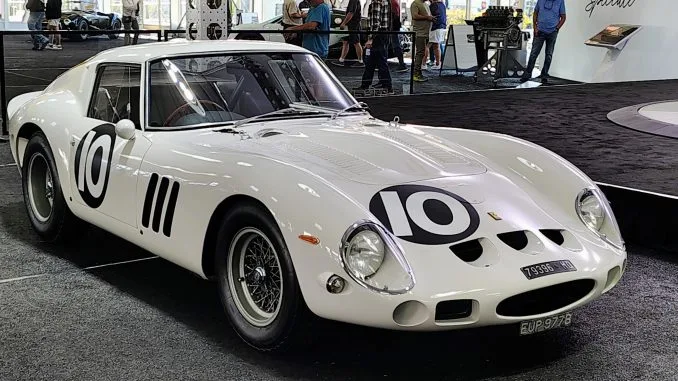
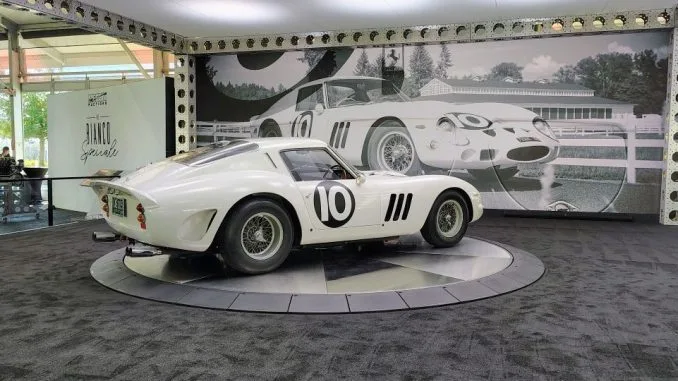
Few cars command reverence like the Ferrari 250 GTO. With only 36 built, each carries a mythology of racing triumphs, engineering quirks, and ownership sagas. This mini‑series of conversations – spanning historians, auction executives, and Ferrari specialists – traces the story of chassis 3729GT, the only GTO painted Bianco Speciale (white), and expands into the broader culture of Ferrari collecting, culminating in the Bachman Collection’s appearance at MECUM Kissimmee.

Episode 1: Spotlight on Chassis 3729GT

In this episode of the Ferrari Marketplace Podcast, William Ross from the Exotic Car Marketplace discusses the legendary Ferrari 250 GTO “Bianco Speciale”, with a special focus on chassis 3729GT, the only white GTO ever produced. Guests Sam Murtaugh from MECUM Auctions and Chris Miele from the Prancing Horse of Nashville join to explore the unique history, specifications, and modifications of this rare car. The conversation covers its racing pedigree, ownership history, and upcoming auction at MECUM’s Kissimmee event. The podcast also delves into auction logistics and the significance of showcasing high-value cars like the GTO. Additionally, the episode highlights the broader MECUM auction experience, including entertainment, events, and logistics. The hosts emphasize the importance of documentation and the evolving nature of collector car sales, framing the upcoming auction as a historic moment in the Ferrari collector market.

Tune in everywhere you stream, download or listen!

Listen on Apple
Listen on YouTube
Listen on Spotify
  • Unique identity: The sole GTO delivered in white, one of only eight right‑hand drive examples.
  • Racing pedigree: Driven by Graham Hill, Roy Salvadori, and Mike Parks, with period modifications for cooling and aerodynamics.
  • Ownership lineage: Long‑term custodianship by Jack Sears (1970–1999) and later John Shirley, former Microsoft executive, who restored it to its original white.
  • Auction significance: Its appearance at MECUM Kissimmee marks a rare public sale of a GTO, positioning it as a headline attraction.


Episode 2: The Historian’s Lens

This episode of The Motoring Historian focuses on the history of John Coombs’ 1962 Ferrari 250 GTO, also known as “Bianco Speciale,” the only white GTO from the factory. Coombs was a prominent British car dealer and race car tuner, known for his work with Jaguars in the post-war period. The discussion delves into Coombs’ pivotal role in car racing and his rivalry with other notable figures like Mike Hawthorn. It also explores Coombs’ decision-making, including his choice for a right-hand drive configuration and the specific racing modifications made to the GTO. The narrative touches on broader themes of car manufacturing, racing strategies, and automobile culture in the 1960s, providing insights into the significance of this particular GTO in automotive history. The script culminates with a discussion on the car’s market value and its auctioning by MECUM Auctions, highlighting its unique features and provenance.

Tune in everywhere you stream, download or listen!

Listen on Apple
Listen on YouTube
Listen on Spotify

Jon Summers, “The Motoring Historian,” contextualizes the car within British racing culture:

  • John Coombs’ legacy: A Jaguar dealer and tuner who turned to Ferrari when the E‑Type proved uncompetitive.
  • Jaguar connection: Coombs allegedly loaned the GTO to Jaguar engineers, influencing the development of lightweight E‑Types.
  • Right‑hand drive rationale: Beyond national preference, Coombs may have sought performance advantages on clockwise circuits.
  • Color symbolism: White and black were Coombs’ racing colors, distinguishing his cars in a sea of British Racing Green and Italian Rosso Corsa.

Episode 3: Provenance and Value

In this episode, William Ross from the Exotic Car Marketplace and guest David Neyens from Motorcopia.com delve into the intricate details of Ferrari’s legendary 250 GTO, one of which is set to cross the block at Mecum Auctions. They discuss the car’s rich provenance, including its one-of-a-kind “Bianco Speciale” color, its status as one of only eight right-hand drive models, and its storied history with notable drivers like Graham Hill and Roy Salvadori. David provides an in-depth market analysis and valuation estimate, predicting the car could fetch upwards of $63 million. They also highlight the importance of documentation and the evolving mindset of high-net-worth individuals investing in such rare automobiles. The episode underscores the excitement and historical significance of the Ferrari 250 GTO, making it a highly anticipated lot in the upcoming auction.

Tune in everywhere you stream, download or listen!

Listen on Apple
Listen on YouTube
Listen on Spotify

David Neyens of Motorcopia.com adds depth:

  • Production numbers: Debate over 36 vs. 39 GTOs, reflecting Ferrari’s hand‑built variability.
  • Engine saga: Original V12 separated and used in a Cooper F1 car; later replaced with a factory‑cast block, ensuring authenticity.
  • Market history: Public auction appearances are rare – only three in the past decade – with values ranging from $38M to $70M depending on provenance.
  • Drivers and lore: Graham Hill, Roy Salvadori, and others embody the era when professional and “gentleman drivers” blurred together.

Episode 4: The Bachman Collection

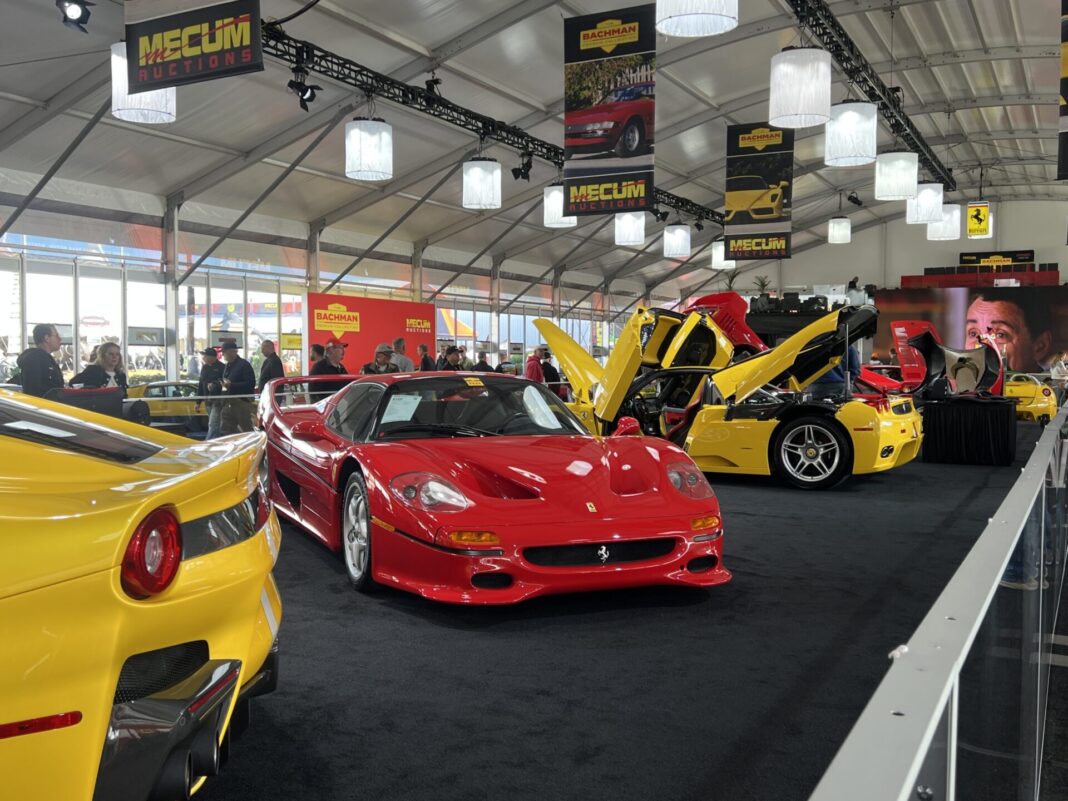
In the final episode of the mini-series, host William Ross along with special guests Chris Miele from Prancing Horse of Nashville and Sam Murtaugh from MECUM Auctions contribute to the conversation by focusing on the Bachman Collection, a notable assemblage of Ferrari models with exceptionally low mileage. They outline the Ferrari Classiche certification process, emphasize the importance of original components and low-mileage cars, and spotlight several key models from the collection, including the two 288 GTO, multiple F40s, an F50, and the LaFerrari. Miele and Murtaugh provide anecdotes about the collection’s owner, Phil Bachman, and his dedication to preserving and maintaining his cars in pristine condition. The podcast anticipates high excitement and strong interest as these prestigious Ferraris go across the auction block at the MECUM Kissimmee auction.

Tune in everywhere you stream, download or listen!

Listen on Apple
Listen on Spotify

The series expands beyond the GTO to MECUM’s broader Ferrari offerings:

  • Classiche certification: Red, yellow, and gray “books” authenticate originality, adding provenance.
  • Highlights:
    • 166MM: Early Ferrari delivered to the U.S., raced in period.
    • 275 GTB/4 Alloy: One of only 16 alloy‑bodied examples, praised as among the finest surviving.
    • 400i Manual: Rare manual gearbox variant, one of just 388 built.
    • 288 GTO: Single‑owner car with rare luggage option, only ~1,200 miles.
    • F40s: Two single‑owner cars with ultra‑low mileage, original tires preserved.
    • F50: The elusive supercar, tied to stories of factory politics and personal determination.
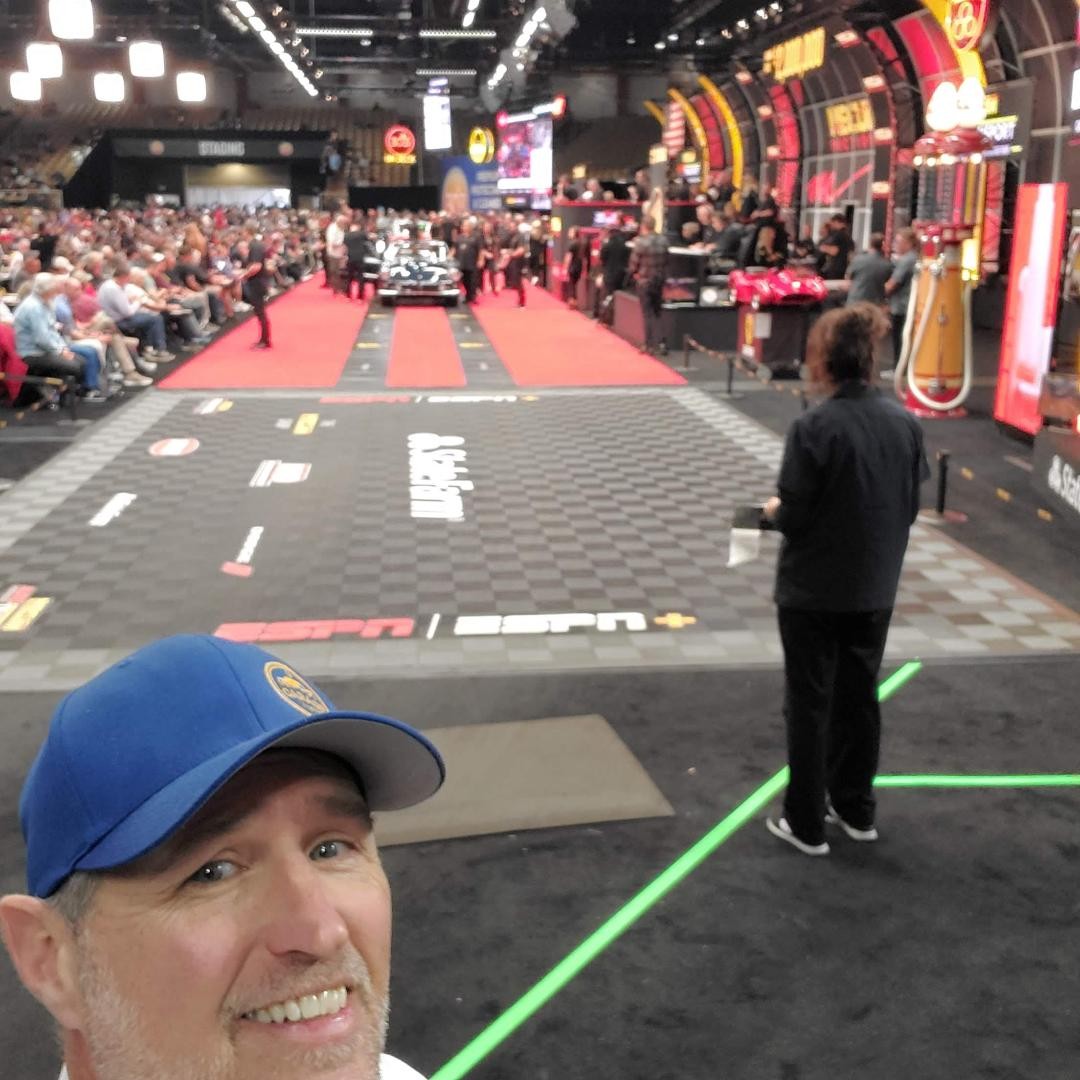
  • Auction logistics: MECUM’s “collections team” ensures careful handling, while Kissimmee’s scale – 5,000 cars over 13 days – creates a spectacle unmatched in the collector world.

Together, these episodes paint a portrait of Ferrari collecting as equal parts passion, provenance, and performance. The white GTO stands as a singular artifact of racing history, while the Bachman Collection demonstrates how rarity and meticulous preservation shape modern values. More than machines, these cars are cultural touchstones – symbols of competition, craftsmanship, and the enduring allure of Ferrari.


Guest Co-Host: William Ross

In case you missed it... be sure to check out the Break/Fix episode with our co-host.
Listen on Apple
Listen on YouTube
Listen on Spotify

Guest Co-Host: Jon Summers

In case you missed it... be sure to check out the Break/Fix episode with our co-host.
Listen on Apple
Listen on YouTube
Listen on Spotify

Guest Co-Host: David Neyens

In case you missed it... be sure to check out the Break/Fix episode with our co-host.
Listen on Apple
Listen on YouTube
Listen on Spotify

This content has been brought to you in-part by sponsorship through...

Motoring Podcast Network

TEAM AMERICA Makes Its In-Person Debut at Women With Drive V & PRI – A New Era for U.S. Sim Racing

0

Init Esports is proud to announce a historic milestone for American sim-racing talent: the first-ever in-person TEAM AMERICA national events are heading to Women With Drive V and the Performance Racing Industry (PRI) Show this December. As the official sponsor and racing hardware provider of TEAM AMERICA, MOZA Racing will play a central role in elevating the competition and celebrating the next generation of U.S. sim racers.

Women With Drive V
— Celebrating the Future of Women in Motorsports
will be held at the Indianapolis Convention Center | December 8–10, 2025

As a dedicated supporter of Women in Motorsports North America (WIMNA), Init Esports will bring three state-of-the-art simulators — fully equipped with MOZA Racing hardware — to Women With Drive V, where the leaders, athletes, and trailblazers of motorsport gather to move the industry forward.

All attendees, including drivers, team owners, and motorsport executives, will get the chance to strap in for a Hot Lap Challenge. The fastest female racer will take home a MOZA R5 Direct Drive Racing Bundle, igniting new pathways for women to compete in esports and beyond.

PRI
— The First-Ever TEAM AMERICA Booth & Time Trial Showdown
will be held at PRI Show Sim Racing Arena –  Lucas Oil Stadium booth 9209, Indianapolis | December 10–13, 2025

Following Women With Drive V, Init Esports brings TEAM AMERICA to the PRI Show floor in the Sim Racing Arena for its first official national competition.

There is still one more online event for TEAM America, on Dec 6th (register here), but invites have been prepared for the Top 12 racers from the 2025 TEAM AMERICA Online Series to come and battle for national glory in real life — powered by MOZA Racing, in Indianapolis. The high-stakes TEAM AMERICA Time Trial Challenge takes place on Saturday afternoon Dec 13, featuring rapid-fire sessions and epic racing energy.

From Thursday and Friday, PRI Show attendees can also jump into the sims to set their best times — a chance to qualify for the Saturday Finale, where they’ll face the top American talent head-to-head.

Michael Good, PRI President: “The PRI Show has always been about pushing the boundaries of motorsports innovation, and sim racing is a natural extension of that mission. TEAM AMERICA’s debut at PRI represents a pivotal moment for U.S. esports racing, bringing together technology, talent, and opportunity under one roof. We’re proud to host the Time Trial Challenge and showcase how virtual racing is creating real-world pathways for the next generation of competitors.”

At the conclusion of the event, the top performer from TEAM AMERICA will earn the opportunity to become a MOZA U.S. Ambassador — a driver who will become an official MOZA athlete and represent the United States on the global stage.

Don’t Miss the Action

Be part of the breakout moment for U.S. esports motorsport: Follow @InitEsports  to support the best American racers as they rise toward international stardom. This is TEAM AMERICA. Faster Together. The 2026 Calendar of racing will be revealed officially on site.


More Screen to Speed…

Dive into the journeys of remarkable individuals making waves in sim racing and bridging the virtual with the real. From the thrill of digital circuits to the roar of real-life racetracks, they explore the passion, dedication, and innovation that drives the world of motorsports. They hear from athletes, creators, and pioneers sharing their stories, insights, and the powerful ways sim racing is connecting communities and creating pathways into motorsports.

INIT eSports focuses on sim racing events and digital tournaments. They bring eSports content to fans and sponsorship opportunities to brands, while maximizing audience reach across multiple sports, industries, and platforms. INIT eSports is a woman-led company where Diversity, Equity, Inclusion and Accessibility is in their DNA, and their platform aims to combat bullying and cheating to help make the eSports world as safe and fair as possible. To learn more, be sure to logon to www.initesports.gg today or follow them on social media @initesports, join their discord, check out their YouTube Channel, or follow their live content via Twitch.

At INIT eSports, founder and CEO Stefy Bau doesn’t just settle for the ordinary. She creates extraordinary experiences by producing thrilling online competitions and real-life events that transcend the boundaries of the eSports universe. And she’s here with us on Break/Fix to share her story, and help you understand why you need to get more involved in the world of eSports. 

Tune in everywhere you stream, download or listen!

Listen on Apple
Listen on YouTube
Listen on Spotify

About Performance Racing Industry

Performance Racing Industry fuels the passion for motorsports by building, promoting, and protecting the worldwide racing community. PRI supports the interests of racers, enthusiasts, builders, tracks, sanctioning bodies and businesses through legislative action and advocacy, its monthly business magazine Performance Racing Industry, and the world’s premier motorsports trade show, the PRI Show. PRI also supports businesses by providing market research, education and best practices in motorsports business and racing technology. For more information, visit PerformanceRacing.com.


About MOZA Racing

Founded in 2012 by a team of automotive engineers and simulation enthusiasts, MOZA Racing has grown into a global leader in sim racing and flight simulation hardware. Driven by innovation, performance, and a passion for realism, MOZA offers a wide range of products including direct drive wheelbases, steering wheels, pedals, flight controls, and truck sim gear. MOZA proudly partners with world-renowned names such as Automobili Lamborghini, Porsche, Mercedes-Benz, and MotoGP. Learn more about MOZA: www.mozaracing.com

So what do you think my car is worth?

In the ever-evolving world of collector cars, few voices carry the weight of experience and insight like David Neyens. Known for his meticulous catalog writing and deep auction expertise, Neyens has now launched Motorcopia.com – a data-driven platform designed to bring clarity and confidence to car collectors and investors navigating the marketplace.

We recently sat down with David on the Break/Fix podcast, alongside returning co-hosts Don Weberg (Garage Style Magazine) and William Ross (Exotic Car Marketplace), to explore how Motorcopia is redefining how we understand collector car value.

Tune in everywhere you stream, download or listen!

Listen on Apple
Listen on YouTube
Listen on Spotify

Think of Motorcopia as a Bloomberg Terminal for the collector car world. It’s not an auction site or a photo gallery – it’s an intelligence platform built for decision-makers. Whether you’re a high-net-worth investor, a seasoned collector, or a professional advisor, Motorcopia offers:

  • Buy/Sell/Hold signals for specific models
  • Forecasting across short-, medium-, and long-term horizons
  • Deep dives into market liquidity, cultural relevance, and ownership costs
  • A concise, easy-to-navigate interface that avoids data overload

As William Ross put it: “It’s very straightforward… especially if it’s your car and you want to know where it’s sitting in the market right now.”

Spotlight

Synopsis

In this episode of Break/Fix podcast, the hosts explore the captivating world of collector cars and automotive journalism with special guest David Neyens. Known for his expertise in classic and exotic automobiles, David shares his journey from a career in financial services to becoming a trusted voice in auction catalogs. He introduces Motorcopia, a unique platform offering data-driven insights into the global collector car market, assisting enthusiasts, collectors, and investors in making informed decisions. The discussion delves into how Motorcopia’s detailed reports and data analyses help users determine whether to buy, sell, or hold specific car models. David emphasizes the importance of balancing passion with practicality and the role of elements such as preservation class and restoration in determining a car’s value. Additionally, the episode features returning co-hosts Don Weberg and William Ross, who contribute their expertise and insights into the intricacies of the automotive world.

  • David, you’ve had a long history in the collector car world—what inspired you to launch Motorcopia.com, and how does it build on your past experiences?
  • For those unfamiliar, how would you describe Motorcopia and the kind of information it provides to collectors and enthusiasts?
  • What types of data or insights do you find enthusiasts are most eager to explore when it comes to auctions and collector cars?
  • How do you see Motorcopia serving both seasoned collectors and those who are just beginning their journey into classic and exotic cars? 
  • With so many digital platforms emerging, what sets Motorcopia apart in terms of both its content and its mission?
  • If you look ahead five to ten years, how do you think data-driven insights will continue to influence the collector car industry?

Transcript

Crew Chief Brad: [00:00:00] Break Fix podcast is all about capturing the living history of people from all over the autos sphere, from wrench, turners, and racers to artists, authors, designers, and everything in between. Our goal is to inspire a new generation of Petrolhead that wonder. How did they get that job or become that person?

The road to success is paved by all of us because everyone has a story.

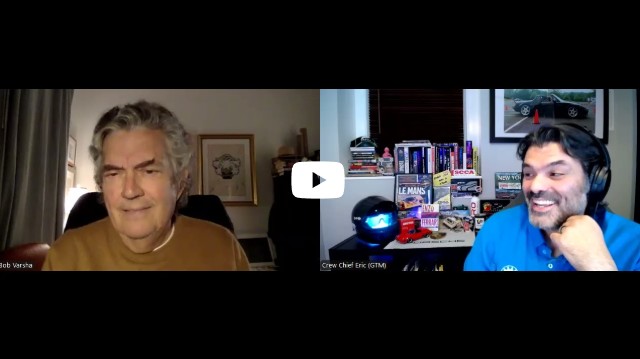
Crew Chief Eric: Tonight we are joined by a familiar name in the world of collector cars and automotive journalism. David Neyens known for his deep expertise in classic and exotic automobiles, has long been a trusted voice in auction catalogs and in the pages of enthusiast publications. Now he’s bringing that wealth of knowledge with Motorcopia.com, a unique platform dedicated to the intelligence and insights of the global collector car market

Don Weberg: from auction analysis and pricing trends to the fascinating stories behind the cars themselves.

Motorcopia is redefining [00:01:00] how enthusiast, collectors and investors understand the marketplace. In this episode, we’ll dive into David’s journey, the vision behind Motorcopia, and how data and passion are merging to shape the future of the car world.

Crew Chief Eric: That’s right, and joining us tonight are returning co-hosts Don Weiberg from Garage Style Magazine.

And William Ross from the Ferrari Marketplace, not just personalities on the Motoring Podcast network, but our car auction subject matter experts. So welcome back Don and William.

Don Weberg: Thank you.

Crew Chief Eric: This is gonna be fun. And with that, let’s welcome David to break fix.

David Neyens: Hello David. Hello everybody. Nice to meet you.

Crew Chief Eric: Like all good break, fix stories. Everyone has a superhero origin. Let’s talk about your long history in the collector car world. And what inspired you to launch Motorcopia.com and how does that build on all your past experiences?

David Neyens: Ever since I was just a little guy, I was always just obsessed with automobiles in general.

After a about 10 year stint in financial [00:02:00] services and banking was able to get into riding for a nearby collector car, auction house, and writing their catalogs. After a few visits, one of the tour guides, uh, mentioned he thought that I should give catalog writing a try, and that there might be, uh, an opportunity there.

So I purchased prior auction catalogs and just went over them just like I would a magazine or a book just kind of modeled their format and their style. Back in 2007, uh, unboxing day, I had the opportunity, I saw an ad actually where they were looking for catalog writers. The deal was you submit a test piece, pick a car of your choosing and give it a try, and if they.

Liked it. Then there was the possibility of an interview and a job working in the writing cataloging department there. As it happened very quickly, I was told they liked what I submitted. They were super busy with private collection sales and scheduled auctions. Asked if I’d be willing to interview, and they brought me on board pretty fast.

So that’s how I got my first few years in the business. After that went on my own in 2012 and, uh, with some help from a very good friend, uh, in the PR [00:03:00] industry in in California, Cindy Mele, she helped me to launch my next phase as a, as a freelance catalog writer and just became extremely busy. It’s been really rewarding.

I’ve met a lot of great people, uh, made a lot of great contacts with people and just continue that journey right to the present. And as far as Motorcopia goes, uh, as a new venture. That started back in May and June. I finished a major project for a customer, submitted my invoice and I’d been feeling a little bit tired, and then realized by then that I’d caught a terrible cold that put me on my back for about a month.

During that time, I thought, well, what can I do in addition to writing catalogs on my own where I can continue in the car field and, uh, try to do something different? And so the idea for Motorcopia came about. A lot of content creators do a better job of putting out great photography, great videos, online content.

That’s their space. With me being so deep in the market for so long, I decided to take data associated with collector car sales, process it, and [00:04:00] turn it into something that’s actionable for collectors and high net worth investors. People in, uh, their professional advisors as well, where I can give a buy seller a hold signal and also drill it down to specific models of cars, even.

Again, it was just simply because I was trying to find something different, something a new niche that no one else is really pursuing.

Don Weberg: Can you tell us exactly what is Motor

David Neyens: Copia? I was kind of inspired by, uh, there’s a fellow in, in the States. You’re all in the states. I’m in Canada. He, he writes, um, a newsletter that’s all about farming and agricultural commodities, investment strategies for farmers so that they can hedge their bets or get their crops to market at the right time.

Or maybe they hold onto them in a facility and they then sell them when the conditions are more favorable. That’s his business. He, and it’s just a no bones about it. He was a Chicago Board of Exchange trader at one time and just loved it. And he came from a farm and that’s what he did. So for me, it’s being able to take my love of cars.

Well, I love them all, but [00:05:00] you know, there’s some that are more electrifying than others or that are in more demand than others, and they actually apply a bit of a financial method to helping people to make decisions.

Don Weberg: But is it an auction platform? Form what? What are we looking at here?

David Neyens: What it is, it’s an information platform.

Think of it as kinda like a Bloomberg terminal setup for investors in the collector car market, or people that have high end collections and they want to know whether they need to buy, sell, or hold certain cars. Also, there’s the Motorcopia newsletter that works right from the website and with that I send out like a financial newsletter, but it’s geared completely to the collector car market and there’s a lot of crossover with the financial markets.

It’s a real hardcore nuts and bolts analysis. If you’re looking for good content and great pictures and stuff like that. I try to deliver that. The emphasis is on helping people to buy, sell, or hold and make those decisions with clarity.

William Ross: My opinion, you don’t need to worry about the pictures and that stuff because what you provide to someone is.

Basically the data and analytics down to specific models, which is fantastic for someone that’s [00:06:00] a very numbers driven Oh,

David Neyens: oh, right on.

William Ross: For those who have not gone on the website, you need to go on there. And what’s great about it too, it’s not like it’s crazy where it’s like, you know, you get some of these data driven sites, you get all this data so that you really, it’s kind of hard to make all It is so nice and concise.

It’s very straightforward and you can understand exactly what you need to find. To your point, buy, sell, hold. Just history of car, especially if maybe it’s just your car you’ve had for a long time. Hey, where’s my car sitting at in the market right now and what’s it been doing the past five years? If you haven’t been on site, you guys gotta go on the site ’cause it is really, really cool.

Don Weberg: Thank you. If I’m understanding correctly, if you go on the site, do you go back five years and show what those cars have been doing on the market, going up, going down, doing whatever? Is that what we’re kind of getting at?

David Neyens: Yeah, I’ve done two reports, really deep dives into the four GT Heritage Edition, the oh six four GT version.

Where that sits in that relationship, is it if it’s a buy, sell or a hold, the report breaks it down into immediate the next 30 days, one month to three months for short term, three months to 12 [00:07:00] months for a medium term, and then beyond that for a longer term view, sometimes a vehicle can be. An immediate term hold, but give it a year and it’s a buy depending on our forecasting, so we can drill right down and make forecasts.

And then I try to back test as well after certain auctions take place. Like at Monterey, I believe there are five or six of that four GT Heritage Edition that were offered and or sold. So I could look back and see, okay, was reserve too high on this offering? Was it priced right? What did they solve for and what does that mean for the future for those cars?

Because they were heading on a trajectory for a million plus dollars and really the sweet spot’s somewhere around 700, 750 right now for those cars. That’s borne out by auction experience and sales experience, online auctions, and also if there’s any private sale data that’s known.

Don Weberg: You picked on specifically the GT heritage.

Why that car? How do you choose the cars that are on the system? How many cars are on the system

David Neyens: Right now, I’m doing it more on a [00:08:00] demand basis, and I’m also picking and choosing bellwether type cars. That would be like a blue chip in the market. Something that’s got a certain amount of confirmed sales.

It’s got some interesting dynamics in the market as far as pricing, and this one was heading higher and now with the airs come back out, it’s still in high demand, rare limited edition. That’s how I picked that. It’s a bellwether. I’ve got another analysis, two different methods on the, uh, first generation of the Ferrari tester.

84, 85 to 91. The same idea. It’s a solid hold right now, but there’s upside potential still. The tester had almost 7,200 built. 71, 77 I think was the bill number. At least what’s accepted. The idea is, okay, there’s enough of them built where there probably are enough sales and enough attempted sales that I could find lots of records for the past five years online that.

Don Weberg: Would

David Neyens: help me to build that model as to why it’s a hold right now and it, it’s approaching a buy actually, and I believe one of my reports was [00:09:00] calling for a median of about $160,000 for a number two example, which is an excellent car, but not a Concord queen. Not a driver. So that’s sort of the standard baseline I go by is an excellent conditioned car, unless the customer tells me what the condition of the car is.

So I’m using haggerty’s one to four scale for condition. So that’s kind of one of the criteria. I’m using. Two things I do. One’s called the buy, sell, hold index, and that one’s a weighted average system. I get a score out of 10, I’m looking at 16 data points. One would be recent sales trends. The other one is, uh, market liquidity.

How frequently is this year, make, model or type of car appearing on, on auctions and auction websites and live and online. I’m also looking at how these cars are selling at auction. Do is what’s the sell through rate for them? Community, sentiment and buzz. So I’m also looking at what’s going on online and in print.

How often are these cars discussed or talked about? Is there a lot of nostalgic tailwinds to them to spur them on a little bit more? Was there TV use, like say [00:10:00] Magnum, pi, Ferrari? You know, that sort of burned into my memory bank and probably judging from the four of us, that might be something that we identified with as young folks.

Ownership costs and how complex they are to service, how costly they are to service, or how cheap they are to service. I like the test. I gave it a three out of 10 for ownership costs and maintenance costs. But you know, you could take an 84, 85 to 93, uh, Fox Body Mustang five liter, and you’d probably be looking at eight or nine for a score because their parts are available readily and they’re relatively inexpensive.

The other thing is, again, cultural and historical significance. Was there a competition history or like, say a copo Camaro from 69 ruled the drag strips. They were, uh, burned in everybody’s memory. Banks. That’s, you know, anybody up to around Gen X and millennial. That gives a good tailwind as well. Is there export and import demand?

Are there a. Cars crossing the border, say from Canada to the US or Europe to the us I’m also looking at regulatory and legal pressures depending on what the jurisdiction is. So, as you know, in [00:11:00] England it’s ultra low emission zones and uh, you can’t park anywhere. Whereas here in Canada, it’s uh, electric vehicles are getting pushed like crazy here and we’re being sort of coerced into that space.

Despite my opinions about that, how rare or how common are the cars, things like that. So again, there’s 16 data points that I’m going over with that. But you want something that’s got some action. So these are just sort of test cases where I’m publishing them myself right now to show people what I do.

William Ross: Because it is interesting with the tester because as I was leading and I kind of chuckle myself. Some years ago, the flying mirror cars, I either the Monte spec or however you wanna pronounce it, were not the car anyone wanted. They wanted the two mirror only that, but now it’s gone the other way. Now people want the flying mirror.

Yeah. So it’s got a little more value to and stuff, and it was just, it makes me chuckle towards the end. Then you got the TRS and you got the five 12 M. So it’s got those variants in there where those variables are there. But it really can kind of say like, pinpointing is like going to your customer, saying, okay.

What are you looking to buy? What are you trying to achieve with it?

David Neyens: Yes.

William Ross: It’s like, well you could have this low build towards the end production, final tweaks, [00:12:00] beginning, build, flying mirror, you know, you need this da da da and that kind of stuff. But you know, you have everything going across it, which I thought was really neat too.

’cause you usually don’t see that is not only did you have the sell, but auction ones, you know ones that didn’t. And I mean, someone that’s looking into buying up test row potentially. Don and it’s great information to really make an educated purchase because you can see where it’s at. Exactly. Now what I tell my people is like, look, you know, if you’re buying this as an investment and think you’re gonna make money, that’s not the way to buy a car.

But if you wanna, you got the data that’s backing up, which is fantastic ’cause you can really see where things go and that, that was a great example. You know, I mean, you nailed it. It’s a great bellwether in regards to putting information out there. One, there are enough of them built, but also enough variations of it technically.

Okay, what are you looking to do? Or where would you wanna be at? And because it, it’s an awesome site.

David Neyens: Thank you. It’s fantastic. And to get that some granularity to what value and sort of what the, uh, the recommendation is. So it’s kinda like on CNBC or whatever, they’re saying, this is a buyer or a sell, or I recommend this kind of thing.

It’s a bit of a dangerous thing. So I have to [00:13:00] say, here’s the data to support what I’m saying. You’re an adult and you’re a decision maker. This is meant to guide you and your advisors and to help you to make those decisions yourself.

William Ross: Yeah.

David Neyens: But yeah, there’s so many variables. And the other thing is classic and collector cars is such a passion driven field and it’s only exploded over the last 10, 15 years.

And I did a report on the, uh, 1989 to 94 Ferrari apocalypse. I called. There were a lot of enthusiasts, but there was a lot of speculation, a lot of Japanese money that was in the market. And a lot of those cars have since been repatriated over here to North America again. But I remember that very, very well, uh, as a student because always had a love for classic cars and collector cars.

But getting the analysts take on and in the financial papers was kind of eye opening for me. I think we’re in a much broader market. There’s a much more solid base to work from in the market today, and a lot of the online auctions and a lot of the live auctions with the cars that they’ve expanded into.

Enthusiast cars, Japanese cars, [00:14:00] BMWs, A MG, Mercedes, stuff like that. Where people are really getting into it and very fiercely loyal. It’s just made everything better for everybody, a lot better base to work from. It’s not as peaky as it used to be or as focused on one mark or one type of car.

William Ross: Do you see AI playing some type of role in this in regards to the data and everything like that?

David Neyens: You have to be extremely careful with AI as it stands right now, and it’s never. Something you can rely on 110%. You have to really question everything. I think it actually demands as much diligence as being an expert in a certain field and doing your own research. You still have to question everything.

You still have to double check everything. Even if you use it. It’s a tool. It’s a help. It doesn’t replace what people are already doing. No, I agree. Yeah, it, it’s just one of those things that if harnessed properly can be powerful and helpful, but if used lackadaisically, it’s going to show. As such.

Definitely.

William Ross: When someone comes to you for a report, what’s their number one compared to their number five in regards to, this is what I’m looking for to get out of this [00:15:00] report? What are they really trying to delve into and get out of it?

David Neyens: Ever since I’ve gotten into the business as a catalog writer, you’re in contact with owners all the time, unless you’re told not to contact somebody.

I’ve had so many conversations with so many great people and and the number one thing is, Dave, what do you think my car’s worth?

William Ross: Yep. How much can I get?

David Neyens: Yeah. Well, I’m not a qualified appraiser. Right. You have to be so diplomatic when you’re dealing with people. ’cause it’s also a very emotional thing. A lot of people are very attached to this type of thing, more so than other luxury items.

Like I call them alternative assets. I mean, you know, some people are really turned on by the wines they have in their cellar. Okay, great. But it seems like the passion component or the emotional aspect of ownership really attaches to collector cars. Very much so. But what do you think my car is worth?

And I have to kind of steer the conversation away. Yeah. Because it’s outside my pay grade or here’s what the reserve is. Do you think that’s right? And everybody’s always looking for a sounding board. They’re always wanting to know that they’re making a sound decision. Oh

Don Weberg: yeah.

David Neyens: Yeah. The other thing is auction estimates.

Always problematic. That [00:16:00] takes a lot of handholding as well. So that’s one of the things I do in one of my reports is, uh, help out with suggested reserve prices and suggested estimate ranges as well. And, and the other thing, an appraisal is a snapshot at a specific moment in time and things can change.

So I have people that would come to me and they’d give me an appraisal report that’s four or five years old and I’d have to gently tell them it’s way outta date. And yeah, you need to have another one. I recommend you get another one. And I have a list of people. That you may wanna choose from, but this is sort of a tool that can help with that process.

They generate comparables, which really helps as well. I’ve seen some appraisal reports, not everywhere, but I’ve seen them where it just says, this is the type of car that does very well at certain options. And there you go. So you have to have the due diligence, you have to have comparables, you have to have a methodology as well.

So that’s baked into those reports as well

William Ross: as, you know. An auction sale number can a lot of times not really indicate true value of that car. ’cause who knows the two people buying us like that. But then you also have, okay, like retail sales, you know, market out [00:17:00] there price. That was fantastic too. ’cause you know exactly why that thing sold for that because so and so and so and so were bidding over so it went $500,000 over the high, that kind of stuff.

Whereas, okay, here’s reality. ’cause again, like a client comes to you, they have a car. What can I get or what’s my car worth? Well, it’s like, well, here, let’s look at the numbers. But then it’s also, well, we gotta look at your car too. ’cause this is what there’re, but we gotta see where your car’s placed at.

Exactly. You have all those different pit points that you can kind of say, say, look, here’s an auction thing. Here’s privacy, here’s retail. You know, here’s what it got bid to. It didn’t sell. Say on bring a trailer. You have those numbers too. Well, it can really give. Someone for like me going to someone with their car wanting to sell it, they’ll go like, here, you know?

Right there, it’s straightforward. It’s giving you exactly what you’re looking for, where you wanna be at, and give yourself a good, educated decision. You know, obviously when it boils down to it, you can give all the details, info you want to the owner or whoever, but they’re gonna make their own choice.

Don Weberg: Yeah,

William Ross: that’s right. You know, you don’t want them to burn themselves out there and go, oh, I think my car’s worth 2 million when it’s worth one. You know, that kind of stuff. Oh, yeah. You know, [00:18:00] because then the car’s done.

David Neyens: That’s right.

Crew Chief Eric: As I’ve been listening to you guys talk about the valuation system of the vehicles and how the metrics are put together and how the data is analyzed, there’s a very important undercurrent here that I think we need to address head on, which is worth versus value, and they are not the same thing, although people think they are synonymous.

But I just wanna understand where the high watermark is because if I was an investor looking at, let’s say, the Testa roaster report. I’m not seeing the appraised value, which for me is the high watermark of what the vehicle could sell for based on what I’ve been told by an official in the market versus to Williams’ point, what the auctions are saying because the auctions are subjective.

If I got into a bidding war with you and that car is suddenly $500,000 over, if I’m a data analyst, that to me is an extreme that gets taken out of the equation.

David Neyens: Yeah, it’s an outlier.

Crew Chief Eric: It skews the data set. What is the tester Rosa actually worth? Based on what the appraisers are saying versus when the gavel [00:19:00] drops.

That’s why I want a little bit of better understanding, and I have a feeling the audience is sort of wondering, how does your math work when you come up with these valuations?

David Neyens: I use, uh, number one, the number four condition grades for specific vehicles and mileage. Mileage would go into the equation to colors, even colors.

Some are far more rare than others that help influence the market value. As far as appraisals go, I, I wholeheartedly agree, someone needs to actually see the vehicle needs to take a look at what I’m doing, but they need to look at the vehicle itself, of course, and that can be different than what’s been selling in the marketplace, where the numbers are coming from.

I’ve seen many times where an appraisal comes in. 10 to 40% higher than than what an actual market value is. Depends on how recent it is as well. It’s the same thing as with a real estate appraisal. When I was in banking, you’d have a, a market value estimate from the appraiser, but you’d also have a replacement value for the physical item.

You know, what it would take to replace it. And those are always two different things as well. Mine is based more on market and momentum. If there’s good buying activity or [00:20:00] selling activity, if there’s any kind of like a velocity in the market where cars are moving or not moving, it would pick up on that as well.

Crew Chief Eric: But doesn’t that fall victim to the same adage in housing, which is your house is only worth what someone is willing to pay for it. At the end of the day, regardless of what the numbers say in the house buying process, the appraisal is over what it’s selling for or it’s under what it’s selling for. So we’re in that same game.

So the car is worth what someone is willing to pay for it at the end of the day, right?

David Neyens: Yeah. You need willing buyer and a willing seller and a, and a reasonable. Timeframe. Yeah.

Crew Chief Eric: So going back to the data to establish trend. Mm-hmm. You still need a, like in science, you need a constant to test against, in your case, for your data set, what is your constant?

Is it mecu M’S value? Is it Sotheby’s value? Is it an a private appraisal value? ’cause you have to have something across the vehicles to make it consistent.

David Neyens: Oh, for sure. Where I get my numbers, I make a weighted average to get my score that I score a car at out of 10. So. Let’s look at the tester example here.

Sure. Let’s stay with that. I’m looking at not only the different auction houses online and a and [00:21:00] live, one of the biggest tools I use is actually classic.com, if you’ve seen that, where it has a rolling five year, uh, scatterplot of all the sales that have taken place and listings, even if it’s unsold. So that’s a huge tool to use.

So I’m going back as far as I can through that. I use, again, a condition multiplier. My assumptions are based on whether or not a car, unless I’m told otherwise, is an excellent number two condition. If it’s a Concor quality car, it’s gonna have a 20% multiplier. If it’s a driver, number three, we’re gonna take the baseline down by 20%.

So I’m looking at sales trend. For the value scope that I did for the test aero, I’m looking at rarity or commonality. So the score will be higher or lower for cultural significance. So the, the test aerosa gets a bump, it’s like a nine outta 10 as far as its, uh, pop culture status cost. I also look at maintenance costs and service costs.

The higher, the worse it is. So I’m not a mechanic, but I think you need an engine out just to do the timing belt. So that’s weighed into this as well. Demographics, which generations are, are into these cars or not, and whether or not [00:22:00] these cars are steady at the auctions. Definitely this is meant to supplement or assist in the process.

I always tell people to get an proper appraisal, get a recent, a fresh one, so you know also what you’re dealing with in terms of condition and comparables. With this, I’m coming up with 160,000 US for that generation of tester, Rosa, if you’re looking for a sale, and as far as reserve prices, so if you’re taking one to auction,

Crew Chief Eric: just don’t want listeners to think that, well, this is the Kelley Blue Book for classic cars.

’cause it’s not.

David Neyens: Gosh, no, no.

Crew Chief Eric: Because if you think about the things that you’re describing and the one to five scale and take into account mileage and the options and the color and that. Mm-hmm. Kelly does the same thing for pedestrian cars. Yep. We wanna make sure that we differentiate when we’re talking about this.

Maybe this is a future capability. Say I’m going the other direction and William and I have these conversations all the time. I got 200,000 to spend. So tester Rosas on the list, but how does this compare to maybe a car that’s older of more significance or a car that’s newer that might not have all these mechanical issues like you talked about engine out to do timing [00:23:00] belts.

Chain driven Ferrari where I can spend 200 grand and still have a V 12 or whatever it is. So, comparables across vehicles or is that yet to come?

David Neyens: That’s something I’m gonna be rolling out a bit more as I, as I evolve things. The biggest thing is if you’ve got a more rare car. It’s going to score higher in my scoring matrix.

If it’s easier to maintain, that’ll have a better score too. So you could take a car that’s less exotic, but perhaps more rare in terms of build numbers. It’ll have its own scores and weightings that’ll help us to determine value, but it also ties into what auction and online, offline, and dealers are selling for.

But there might be a chance to identify through this system, a car that might break out to the buy side. Or one that’s already been loved in the market and it might be time for a pause or a break in selling or, or value. So it just depends on the individual, you’re make and model kind of thing. And it, it’s individual attributes Above all, you know, this should be something that would be considered to help with selling, marketing, and auction set up for a [00:24:00] car like this.

Always have an appraisal though from a, an accredited appraiser in combination, I figure that more information is better than less. Of course.

Don Weberg: David, are you primarily focusing on the exotics on the Ferraris and Lamborghinis of Porsches, or are you gonna grow this out to. As Eric always has more pedestrian type cars.

I mean, for example, the IROC Camaro Yeah. Is absolutely going crazy right now. They are, and that to me has always been, I mean, I don’t wanna say surprising. I’ve always liked that car. Always knew it would be somewhere I don’t think I knew it would be this. Somewhere. So is that a car that’s on your site?

Are we looking at oddballs like for a name? Taurus, SHO. Yeah. That car is slowly starting to percolate or are you sticking to that narrowed? We love exotics. Where, where are we going with this?

David Neyens: Yeah. The starting point was just me doing some test cases and then illustrating the methods that I’m using to get my numbers.

If it was anything, like you said, uh, an IROC from the eighties and there’s a couple of different flavors of them, enough [00:25:00] that you can break that down into more granular. Types of cars inside of them? Like are you looking at the five liter or the 5.7? Are you looking at the one L?

William Ross: Yeah, it’s got the compact.

David Neyens: Yeah. I’d love to tackle those because there’s a huge amount of sales data on those and the good cars, like the really nice unadulterated original cars are so rare in that space. It’s like fox Mustangs. But I think what I would do is I’d have to break it down like you said, and thank you for that. You said the iroc, so that gives me more certainty with what I’m dealing with.

The only difference would be powertrain colors and condition and mileage. That’d be an interesting test case. So if someone wanted me to do that, I, I, I’d be happy to run one and, and just so they see it, because that’s a, a more mainstream car right now. It’s like second generation F bodies are starting to kind of make a nice breakout.

They were everywhere and people just kind of went, we like ’em, but we don’t know why. They’re not really doing much in the market, and you can buy much more powerful cars or this, that, or the other thing. But they were very special for their time. And now [00:26:00] people like me, I had a 10th anniversary, uh, TransAm back in the eighties that I saved up for with farm money and lawn mowing and hay baling money and tobacco picking money.

And that was my first car. And, and I absolutely adored it. But now second Gen F. Bodies are starting to get their due a little bit in the market. So I’m appreciating seeing those kind of cars that were produced in larger numbers, having attention now with enthusiast. Yeah, absolutely. I’d love to see what fits a buy seller.

A hold over my four time periods.

Don Weberg: I brought up the Camaro ’cause it’s a common, and it’s certainly not in the, uh, in the ballpark of pastor or tta or any of those guys.

Crew Chief Eric: That’s not necessarily true, Don. And that this adds another use case. To the equation here in that you have cars crossing the block in Mecu at Barrett Jackson at other auction houses where you have a modified Camaro or a Resto Modd Camaro, or something that is, you know, is a SEMA quality car, which is beyond concourses level.

Is that being taken to account here? Because those will sell for $200,000 all day long,

Don Weberg: right? Yeah.

Crew Chief Eric: David, how are you absorbing those [00:27:00] modified versions instead of the original purist cars?

David Neyens: I think that the modified cars, especially F Bodies and Corvettes, especially second generation Corvettes, there’s just so many of them that are built to that standard that are restomod, couple of orders of magnitude better than the original car in terms of what it’s like to drive or operate.

What I would do in those cases is separate that out, you know, look at the modified cars more in isolation that are done to a show standard as opposed to something that’s more original.

Crew Chief Eric: It changes your metrics again, because those cars need to be considered, let’s say they’re numbers matching. Even though they’re modified, they still are in the same category as a numbers matching stock car.

Why would we take them out? It gets a little gray really fast.

David Neyens: Well, if the car that the customer’s asking me about is a stock or a modified car, then that’s where I’m gonna have to like break that out. So I’m comparing apples to apples instead of apples to oranges. That’s why I started out with four GT Heritage.

That’s a very uniform car. Unless it’s been modified and there are a few out there,

Crew Chief Eric: like you were [00:28:00] saying before, what’s my car worth? And somebody says, no, David, that’s not what it’s worth. I just saw a Copo Xma car go across the block and it’s 250,000. Why isn’t my Camaro 250,000? Right? So now you get into this tug of war again of worth versus value.

So I wanna make sure that we establish that so people really understand what the intrinsic value is versus what it’s worth. So one is more subjective than the other. I know I keep harping on this, but I think it’s important for the first time collector to understand that you just don’t walk up to an auction, go, I want that one, or I’m gonna sell mine because I saw that one.

Right? It’s not a monkey see, monkey do situation.

David Neyens: Now I’ve seen people do that actually walk right up to me at an auction and just say, how much is that car? I wanna buy it right now. I didn’t buy it last night. There are people out there that are like that. Again. Yeah. I’d have to parse out is the car modified?

Is it standard? Is it, you know, rest a monitor? Is it just lightly modified? I mean, headers and duals don’t make anything too much of an outlier. In this case. It’s gonna be a little bit of a custom job.

William Ross: I always like that there’s expectation. There’s reality [00:29:00] that I always like, ’cause people have this expectation.

But then here’s reality.

David Neyens: Here’s where I found the gap is widest is dealing with. An enthusiast type car that someone’s owned for a while and they have a bit of an emotional bond with, there’s a, an older couple, a few years ago they had a 56 Ford Fairlane, crown Victoria. They’d owned it for 30, 35 years.

They loved it. They went cruising with it, but it’s a driver. They were so attached to it that, again, when you’re talking about value versus worth. They had 30 years with it of fun cruising and showing they bought it when it was not worth comparatively as much as it is now. And certainly inflation also figures into the numbers that people are expecting to get from a car.

A million dollars today was a hundred thousand dollars about 15 years ago, or 20 years ago. I’m exaggerating a little bit, but there’s a big gulf based on inflation. So I said to the pe, the lady I said. What do you have in mind for a value? She told me and I said, now, just so that you know, in this market right now, that’s a bit on the high side, and you know, does the car owe you [00:30:00] anything?

Do you owe money on it? Was there a huge expense that you’ve had over the last few years that’s going to affect your decision? And often a lot of people. When they’ve made a big investment in a vehicle after buying it, they feel they need to recoup that last dollar they put into it. And that’s another thing.

But I’ve seen the gulf between market value and personal value or worth is huge on the more mainstream side of cars. A lot of people on the higher end of the market are kind of dialed in and they want to do the best when they’re selling and they wanna do, do the best when they’re buying and get the lowest price.

But I’ve seen it more on the sub $50,000 car market where there’s that kind of golf cars can even, like, depending on where they come from. I’m not drilling down into that aspect of it right now, but there’s certain markets or certain locations where cars are just uniformly of better quality. Especially in the mainstream side or the enthusiast side.

William Ross: Obviously you know, you’re doing these for a customer or client, you know, so it’s obviously model specific, but what is driving you to put ones onto your site for general consumption? Yeah. How are you picking what to put on your site then? Because obviously the tester was a great [00:31:00] example. I think the four GT one’s a great one too, because you know it’s a very popular car, but how are you going about picking those, what you’re gonna put on the website for just general consumption?

David Neyens: For those that are like test cases that I’m publishing proactively, there’s a finite bill number. Now the tester is not particularly rare with over 7,000 built, but it’s far more rare than a lot of other exotics and uh, high performance cars despite that many being built. The tester is styling the cultural status of it.

You know, having been on Miami Vice and that whole thing. I think that just is a good test case because that’s something that a lot of people, whether or not they own one or plan to own one, they can at least identify with to some extent. The four GT on the other hand is that Heritage Edition is just.

Really rare. There’s no question as to whether or not they’re real or faked. That’s the other thing. Unlike some vehicles that out there that have that potential, both of ’em. I mean, I’ve only seen a few modified gts, let alone a heritage that’s been modified and tester roses. I don’t see them being modified very often at all.

No, you don’t. So it’s a nice case because they’re fairly uniform [00:32:00] in that subset of cars. Or the models that their manufacturer made. So I thought I’d try those because I think there’s some rarity to them. There’s some visual impact. The performance aspect is interesting and they’re just interesting cars all around that.

People, I think, would gravitate to just to throw that out there just to show what my different tools, if I run a certain year, make model through those filters. Is it a buy? Is it a sell? Is it a hold? What are the timeframes for those things?

William Ross: It’s a good example for, I would say a sales tool for you in regards to getting clients.

Yeah. They see that. They’re like, oh, okay. It’s a good basis to work from for somebody to get the idea of what you’re capable of doing. That’s what I took from that. I was like, wow, this is great. If someone sees it, Hey, I want an individual report, that the right thing. It’s like, there you go. It says it all right there.

So that was fantastic.

David Neyens: Sort of just a couple of test cases. I’m gonna keep rolling them out and also the market changes. From auction to auction or there’s trends definitely. But the idea is eventually, uh, those reports will need to be freshened up a little bit and to see how they compare. So maybe a year from now I go back and just have a look at how do my calls hold up.

And the idea is if they [00:33:00] hold up or maybe there’s some tweaks that need to be made or maybe something happened in the market in general that’s, uh, affecting market values in that space. Say the 250,000 and over, or the a hundred thousand and over market segments.

William Ross: Yeah. How are you going to make. That decision to go back and revisit something to adjust it to your 0.6 months or a year, I mean, or you just go, oh, the market seems to be gone a different way.

I had just done that, so I better go back and do it. I mean, you could have a set time maybe, or just gonna say what the market does, if it necessitates it to do it.

David Neyens: I was doing a forward market index looking ahead the next 30 days in the market, and then to get a score as to just the market in general, its health.

And whether it’s bear neutral or or a bull market, kind of like in financial terms. What I’ve done now is I’ve changed that to weekly. So I’m doing weekly forecasts. Right now. I’m only getting them published Tuesdays or Wednesdays, but it’s for the week ahead. Then afterwards, when this week is over on Monday, I’m gonna run a report and that’s the market pulse and that’s my Fear Andre Index.

And I’m gonna say, [00:34:00] how did my forecast hold up against reality? I’ve done a couple of posts now that show that both the weekly forecast and then the look. Back the retroactive look. Those are both now pretty closely aligned. So it’s, it’s showing that the methodology is jiving. When I make a forecast using my system, when I look back the next week, they’re almost in line with each other perfectly.

So, yeah, I, what I’d probably want to do is maybe a month to three months out at the end of the year, say, how did my report on the test Aerosa workout? Did that logic hold up? Did my call on the four gts? How did that hold up over this period of time? You just do a little bit of back testing like that just to show that it’s working.

William Ross: I like how you’re, you’re referencing t how did I do? Yeah, in regards to forecast, which is great ’cause a lot of people would bury it ’cause they don’t wanna look like they prove it wrong or had no idea. But anyone that knows this industry and business, you never know. I mean, you can use all the numbers you don’t know, but I really like that too.

Yeah. I was like, look, here’s how it went

David Neyens: and I don’t have anything to hide. I’m just putting this out there. This is my method. Does it hold up? Okay, great. It did hold up. So I’ve [00:35:00] had two one week periods where the, uh, forward look and the look back were in line with each other. They almost had the same scores, you know, so the look back is the reality and the look forward is the forecast.

Of course, that seems to be working. One of the things I’ve worked in is sort of geopolitics a little bit too. You know, how’s the news? Is it bad or is it stable? Or is it good? You know, or is everybody getting along now? In this week’s newsletter once I get it out. Finally, the first post is I’m breaking a golden cardinal rule here.

I’m actually discussing politics. One of the things I should be talking about, but here’s a buffet of seven potential black swans that could land anytime. I don’t wanna throw cold water and everything. The market’s been good. The market has breadth. There’s a wide market. There’s a huge number of types of cars, classifications of cars, enthusiasts to investor grade and everything in between.

So it’s not like the narrow Ferrari market of 35 years ago, and that’s it, where it’s very risky and speculative. Also, the last 25 to 30 years, there’s a just a [00:36:00] massive amount of money in the system, despite the news you hear. There’s people that are getting huge bonuses and they have to put it somewhere.

There’s only so much real estate you can buy. There’s only so much fine wine, cigars, time pieces you can buy. So, so that’s where the, our market’s, uh, really been getting an uplift as well. There’s a chart, I’ve got a report on showing insider buying and selling of stocks, but with one or two brief. Moments since 1998, company insiders have been selling stocks and freeing up capital and buying cars among other things as well

William Ross: can be a lot more prevalent.

I mean, you’ve seen it now where they got the investor goose, whatnot, buy a chair for $20 and whatever, you know?

David Neyens: Oh, yeah. Like the fractional ownership. Yeah. Yeah. I’ve only just recently seen four or five of them where there were one of them that’s kind of cropping up right now. It’d be interesting to see how that goes.

I mean, what I’d like to do is actually build a list where there’s a specific set of, say, 20 different year make and model of cars that have the most potential to be good to purchase. They’re not overpriced right now. They’re emerging as collectibles, and someone could put a fund [00:37:00] together or put a group together or for themselves and use those reports as guidance.

To build a garage full of great cars and hopefully enjoy them. It’s not all about the money. Drive ’em. Absolutely. It’s a major consideration for people getting into purchase or getting into the market. But for me, it’s the love of them. I see stuff on marketplace every day. There’s beautiful cars being sold for less than 10,000 Canadian dollars that have less than 50,000 miles on them, and they’re fun and interesting.

You don’t have to spend a huge amount of money on something like this. It can be a really fun hobby. I think the biggest thing is, for me, it was just simply. There’s other content creators out there that are doing that job so well and building their niche so well. I have rudimentary skills with a camera.

Forget video. There’s other people that have bigger followings or they know how to work the algorithms to get the right response they want. For me, it was simply, I’d like to see if I can add some value to people where you can take a look at these reports or you can order a report from me and I can build it.

And then that gives you some [00:38:00] confidence as to what you’re doing. Or maybe it’s a confidence in something you’re not doing. Maybe it’s saying, I better just hold onto this for another year. If it’s not costing me money, if it’s not hurting me, maybe I just hang onto it.

William Ross: This has been interesting. In the past few years, there’s been an explosion in regards to value in classic race car.

They’ve been going to the roof and you have log samples going across the board. You know, we had X collection go for 650 million. I mean, that was an incredible thing, but. Would you be able to do a report on someone that’s looking at, Hey, I’m looking at this XY, ZX formula, the one car from 1969, or you know, old Lamont’s car.

Is that something you could potentially do as well for an old race car?

Crew Chief Eric: And I want to dovetail off that, William, because I think now when David takes that into account, he needs to invert his scale because a concourses quality race car never raced. Yeah. Right. You want the one that’s the driver with the miles.

Yeah. That won a championship. So you actually have to skew your data set opposite for this. Yeah.

David Neyens: For a competition car. Exactly. Yeah, because you, you have to have some earmarks of actual use in [00:39:00] combat or in anger. There’s a Jaguar D type once a few years back. I think it brought over $20 million at auction in Monterey.

That was achieved, even though that card had been beaten up so much that the chassis tag was the only thing, and the, and a stamp on, on one of the frame rails was all that was left of it that actually crossed the finish line At Lamont, there’s a lot of Ferrari that have been re bodied or whatever, and it’s part of the story.

The one of the coolest ones for me is that two 50 GT uh, bread wagon. I used to know the fellow that owned it one or two owners ago, and he raced it in vintage races.

Crew Chief Eric: We saw it this summer at Lamont Classic.

David Neyens: Yeah. Yeah. And it’s driven, right?

Crew Chief Eric: Oh yeah. It was raced at full tilt this summer. Yeah. Yeah. And it’s, and the thing

David Neyens: about it though is, okay, so a lot of body panels, it got stuffed a couple times and it’s mostly there.

And you know, some expert redid the body, I mean. As authentic as it can possibly be, but the car was reburied back in the day, so does it really matter? You know, that car’s raced and it’s been in combat kind of thing, and to me that just makes that car even cooler and more [00:40:00] desirable than a lot of others.

Crew Chief Eric: Let’s take that back to our Testa. Yeah, use case or our Camaros and everything we’ve been talking about so far. Can you touch upon your feeling as it applies to the data when you start getting into the age old, debate preservation versus restoration? ’cause if I look at those five categories, yeah. As we move down to the driver, you know, the negatives to get applied to the value of the car.

You could also say that a preservation car lives there because it’s never been serviced. It’s been driven. It’s ori. Yeah. But a lot of people pay top dollar for a preservation class car versus a restoration concourse.

David Neyens: Well, yeah, and that was a completely opposite, flipped 20, 30 years ago, where everything had to be like jewelry.

Crew Chief Eric: What I

David Neyens: can do is, the nice thing is if I have logic, I can just change some of the scoring around a little bit to recognize the fact that a preservation class car is actually worth more Now in certain, certain circumstances, like it’s an unrestored classic Enzo. V 12 Ferrari, and if it’s presentable and it’s got a great story, [00:41:00] then there’s something to be said for that.

So I think there’s adjustments that can be made, just like when you’re adjusting comps on an appraisal,

William Ross: like with Ferrari, Jaguar, Mercedes, you know, you’re seeing the manufacturer come up with their own class, each department, and restoring these cars. How much value is that adding to it compared to going to an expert store that’s been doing it for 30, 40 years?

I mean, they’ve won Pebble Beach, they’ve won all this stuff, you know, it’s great. But how much does the manufacturer trump someone like that? Percentage wise, or is it really kind of a wash? Does it matter?

David Neyens: A classic department restoration from the factory. Versus an expert level restoration or a Conor level restoration externally by a specialist.

There’s times where I’ve seen value bumps, and you’ve seen them too, where if a known re restorer with a great reputation and a great crew hold off a concor winning restoration, or a multiple award. Restoration, I would think that that would actually enhance value. But I’ve also seen in the market where that has not enhanced value at an auction or a sale situation.

Because 30 years ago, a jewelry level restoration that [00:42:00] removed all the patina was worth more than preservation car. And now we’ve seen it flip, see in V 12 Ferrari, as you know, in matters to me, uh, and to a lot of people I’ve worked with. If a noted specialist who was still alive at the time did the, the engine rebuild, for example, that trumps a no name.

Even though they did good work, you know, sadly, I mean, there’s a name that’s built for a good reason and that’s because they’ve done good work. Then I think that helps with the value. There’s a lot of subjective factors though.

William Ross: Well, I get it. In my world, Hey, so and so did the register. That’s who you want.

Does it have it Red Book? You know, has it gone through class sheet? It’s like, okay, yeah, it’s got this redwood, but doesn’t always kind of really bugged me a little bit. That’s what everyone wants, and now it’s getting more prevalent in newer cars, so to speak. It’s creeping up into your nineties, early 2000 cars, depending on what it is model wise.

That’s the thing that’s like number one to have right off the bat if you’re selling a fry’s.

David Neyens: I think you touched on something really important here and, and that’s in auction work and catalog writing. What kind of paperwork does this car have? Is it a Carfax that only picks up history, uh, [00:43:00] starting in the, in the late nineties or early two thousands?

And the car’s 40 years old. You see a lot of things. But like the classic K book is awesome. It makes my job easier. FIA paperwork, if it’s a, a race car or homologated car. But I’ve also seen, there was a Chaparral mark, one they made, two of them. I might might have made more, I’m not sure. But it’s the one car that’s not in the, uh, Midland, Texas, uh, oil museum, Jim Hall’s place.

It’s the only one I think that’s out in the wild somewhere. And, uh. That car had an amazing amount of paperwork, and it was extremely confusing, but when you get into it, there were things that were known in the pre-internet era, and there were things that were believed to be true because someone saw a car like it somewhere.

It turns out they didn’t have them separated out properly, and histories get confused. So I actually had to take original shipping documents, copies of those, and the car went through several forms throughout its lifetime until it was restored as faithfully as possible. It was a lister, excuse me, it was a Lister Chevrolet.

Okay. Sorry. It was something from that [00:44:00] period though. And the point was there was a, a mass of paperwork and then there were letters based on what someone truly, honestly believed. They weren’t fabricating anything. It was just. This is in the eighties vintage race cars were starting to be appreciated and collected and sold, and then it really became important to get the story straight.

And so there was quite a lengthy process to get through it all. So despite the volume of paperwork, that was just the beginning. That was like put a banker’s box in front of you and then you go through that for two weeks and try not to go crazy. Then there’s other things that are far more cut and dry.

There’s, you know, the. Manufacturer statement of origin, like Alpha Romeo say, or Maserati. There’s, uh, copies of factory documents, so you know exactly how that thing left the factory. It’s, it’s funny because sometimes there’s a massive paperwork or massive documentation that is less of a help than you would think.

And then there’s others that are very much more direct. And you’ve seen that too, probably. Oh, yeah. And Don, you’ve seen that too. I mean, and you know, as a writer there’s more research, the more documents you have, but that’s always one of the biggest things is how well is the car documented? You know? Is anybody [00:45:00] still with us that I’ve interviewed people like.

There was a All American Racers, IndyCar, about seven or eight years ago that I had to do a writeup for, for an auction, and I was able to call Dan Gurney’s all American racers when he was still alive. His administrative assistant, Kathy was right there and she said, oh yeah, yeah, I’ll just go upstairs. I know where the box is, where the paperwork is for it.

And she was able to like that. And they did that once though. And then after that it was kind of like a bit more reluctance to do it. I don’t know why, but it just created work. She was willing to do it. God bless her. I mean, it was funny and she gave me like the original invoice to whoever it was that raced the car.

It was bang, bang, bang that this is it. Here’s who did any, any work to it and you know, and it didn’t get destroyed in back in the day. So

William Ross: yeah, there’s a couple of ’em. We have a gentleman that we’re all good friends with. He has the online database, storage of documents for your classic car, digitize, everything like that, that way, and then it can transfer over and how it’s encrypted or whatever.

You’re

Crew Chief Eric: talking about Julio at

David Neyens: the motor chain? Yes. So he is probably on blockchain then with it?

William Ross: Yeah,

David Neyens: an immutable record.

William Ross: Yeah. I really think that’s great because [00:46:00] then to your point, oh, it’s not lost. There it is. You know, it’s an actual, tangible asset. Absolutely. I always like what he’s doing with that.

I thought that it’s fantastic

David Neyens: and it lives on, I mean, the thing is. You have the provenance locked in as much as it can be. There it is. And it can be accessed and not messed with after that. Correct. I think that’s fabulous. You always hear about technology’s going to do this and do that, and it’s be worried.

That’s a great use case for technology. Yes. Something like that. And if it lends. Strength to the authenticity of the documents and to the vehicle itself. Well, that’s a win-win.

Crew Chief Eric: Well, on that note, let’s move into our final segment here and just sort of talk about the services that you’re providing, David.

And so you talked about putting these prospectuses together upon request to do the proof of concept to show that the math works. That’s right. To show that the algorithms work and all that kind of stuff. So basically walk us through your business process, meaning somebody say, Hey David, I listened to this podcast.

What’s the process look like? How much does it cost? Are you doing this as a service?

David Neyens: Yeah, it would be done on a fee basis, a [00:47:00] case by case basis on request. I’m still working out what kind of pricing would be appropriate. I don’t wanna undercharge, I don’t wanna overcharge, but it’s, it’s just something I’m gonna have to like, get some feedback from people and I have a sort of a target in mind.

So it’s just pretty early stages here. What I’m doing.

Don Weberg: So David, after going through all this, what’s the next step for you and Motorcopia?

David Neyens: Well, the next step is to keep forging ahead. Actually, it’s kind of exciting. I’m in the beginning of reaching out to lenders, insurers, leasing companies, industry people, and alternative investment managers, family offices.

So that’s the next step, reaching out, introducing myself, and urging people to sign up for the Motorcopia newsletter. I’ve worked really hard on the subject matter, and that’s my expertise. The online marketing is something that I have to work on and something that I need to do to roll things out better, but there’s nothing like a good old fashioned phone call or email.

So that’s the next step is just basically contacting people and urging them to sign up or gimme permission to sign them up for the Motorcopia newsletter. [00:48:00] Take a look at my reports. I’m moving to a, uh, paid model, but again, I’m working on the pricing and the levels, but I want people to see it and talk to me and if there’s, you know, suggestions or ideas about things that can be changed or updated.

Glad I got to get your feedback on the ones on the website because I was afraid that I was going too far with the information. Oh, no. And I’m glad for that. That makes me feel so much better because I don’t wanna write a book. On the other hand, you have to be able to. Defend or justify or promote what you’re saying, that there’s a thought process that goes on.

William Ross: Well, no, it was great delving into it. ’cause you know when you start, you’re going through your, you have your charts and the numbers and what I thought was great ’cause then all of a sudden, you know, I start seeing writing, I’m like gonna go into history and stuff like that, which I really don’t need. But that was just a quick little blurb.

Like a paragraph? Yeah. Maybe I go Perfect. Because I want the numbers and everything like that. I know the history of the car, I know all this stuff, da da da. For sure. What I wanna see is, okay, what’s this thing been doing previous? That’s why I, I thought it was fantastic. ’cause it it given you what you want and it’s not giving you what you don’t need and want.

It’s like, [00:49:00] Hey, this is why came. Yeah. This is what I’m supposed to be getting out of this. You have it set up great in regards to how everything’s laid out.

David Neyens: Well, thank you. I, I’m glad to get that feedback. That’s huge and, and me as a writer, I mean, I, when I’m not restricted to a word character and page count, we can all probably go right to town on it.

But is that what someone needs or wants? And, and that’s the other side of it. You want some information to take action or decide that you’re already in a good place holding or considering buying the best example of a car that you want. My whole thing is, while this is numbers driven and data driven, it’s passion driven at the root.

What I’m doing, and it’s a different approach to what I’ve been doing. So it’s, it’s actually pretty refreshing. I’m trying to get down to a, a reasonable editorial schedule where I’m putting out a newsletter every week with four or five good articles in it that I hope would give somebody either comfort or help them to say, yeah, you know what?

I do need to start considering the next set of options. Yeah, the market’s good or the market’s stable. Yeah, it’s been a great fit and I, and I’m hoping it’s something that’s unique [00:50:00] enough that my target audience will appreciate it or get proper information from, for their own life. I was just thinking I could do another content site.

I could look at doing buyer’s guides or I could do some price, uh, explorations and things like that. And then I. Let’s look at the market. The first thing was the, uh, Motorcopia market pulse index that I set up, and it’s, it’s kinda like a fear and greed kind of index just to tell you if the market is cold, medium, or hot.

It’s kinda like Goldilocks and the three Bears give you an idea of what last week’s market action was like and is the market stable? Our, our dealers filling their, their showrooms still as aggressively as before. Is there good sale activity? Is there a where the sell through is good at the auctions of last week?

Things like that. So, uh, just kind of a bit of a reading between the lines for people too.

Crew Chief Eric: Well, David, we’ve reached that part of the episode where I’d like to invite our guests to share any shout outs, promotions, thank yous, or anything else we haven’t covered thus far.

David Neyens: Two things, if anybody wants to, I have a special report on the collector car market in [00:51:00] 2025, and my forecast through the end of this year, through the end of the fourth quarter, it’s a PDF download.

I’d be happy to send that out to any of your listeners. Would like it. They reach out to me at admin@motorcopia.com and just let me know that they’d like a copy of that report. I will send the PDF over to them and hopefully start a relationship with that and add value to their, uh, car collecting or their world.

Secondly, and most importantly, I’d like to thank probably my best friend in the field who’s been my biggest supporter since I’ve been independent as a writer in 2012. And that’s Cindy Meitle of, uh, car pr USA. She is probably the og, the original gangster of. Collector, car promotion and public relations.

And if you have a worthy event, product or service in the collector car market or collector car field, I urge you wholeheartedly to reach out to Cindy at CAR PR USA and you’ll get the best support possible to get the word out.

Don Weberg: Motorcopia is a digital platform and publication founded by automotive writer and auction expert David Neyens.[00:52:00]

It caters to collector cars, enthusiasts, investors, dealers, and anyone interested in the market dynamics of classic, exotic and special interest vehicles. The focus isn’t just on car culture, it’s driven by data. Motorcopia offers tools, analysis, and reports to help people make informed decisions about buying, selling, holding, or investing in collector cars.

Crew Chief Eric: And David, I can’t thank you enough for coming on Break Fix and sharing your story with us and educating us on data-driven decision making when it comes to collector car buying, selling, and holding. It’s obvious in the way you talk, your passion, your expertise, all of it is there, and I wish you the best of luck on your latest endeavor and we will see where this goes.

Maybe the next 30, 60, 90, 12 months from now. Right? There you go. Yeah, as you say on the website. So thank you for doing this.

David Neyens: Thanks very much for having me, guys, and it’s been a pleasure. Appreciate it.

Crew Chief Eric: Yeah.

David Neyens: Good to meet you, David. Thank you. Thanks

Crew Chief Eric: again to Don and William as well.

Don Weberg: Thanks

Crew Chief Eric: for having me.

Don Weberg: All the best.

You too.[00:53:00]

Since 2007, garage Style Magazine has been the definitive source for car collectors continually delivering information about Automobilia Petroliana events and more. To learn more about the annual publication and its new website, be sure to follow them on social media at Garage Style Magazine or log onto www.garagestylemagazine.com because after all, what doesn’t belong in your garage.

ECM PROMO: For everything from Ferrari and Porsche, Lamborghini and Konig seg, visit exotic car marketplace.com. If you’re into anything with wheels and a motor, log onto to the Motoring Podcast network and check out our family of podcasts@motoringpodcast.net. This is the place to find your favorite news show. Next up a shout out to David Beatie and his team at Slot Mods who custom build some of the coolest slot car tracks in the world@slotmods.com.[00:54:00]

Let your imagination run wild. And finally, grand touring motorsports covering all aspects of auto racing and motorsports history. Check out their ezine@gtmotorsports.org. All the links for our sponsors are in the description.

Crew Chief Eric: We hope you enjoyed another awesome episode of Break Fix Podcasts, brought to you by Grand Tour Motorsports.

If you’d like to be a guest on the show or get involved, be sure to follow us on all social media platforms at Grand Touring Motorsports. And if you’d like to learn more about the content of this episode, be sure to check out the follow on article@gtmotorsports.org. We remain a commercial free and no annual fees organization through our sponsors, but also through the generous support of our fans, families, and friends through Patreon.

For as little as $2 and 50 cents a month, you can get access to more behind the scenes action, additional pit stop, minisodes and other VIP goodies, as well as keeping our team of creators. [00:55:00] Fed on their strict diet of fig Newton’s, Gumby bears, and monster. So consider signing up for Patreon today at www.patreon.com/gt motorsports.

And remember, without you, none of this would be possible.

Highlights

Skip ahead if you must… Here’s the highlights from this episode you might be most interested in and their corresponding time stamps.

  • 00:00 Meet David Neyens
  • 01:37 David’s Journey into Automotive Journalism
  • 03:15 The Birth of Motorcopia.com
  • 04:20 Understanding Motorcopia’s Unique Platform
  • 06:41 Deep Dive into Car Valuation Methods & Challenges in Car Valuation
  • 18:01 Worth vs. Value in Car Appraisals
  • 24:08 Expanding Motorcopia’s Scope
  • 28:41 Understanding Car Modifications
  • 29:04 Emotional Value vs Market Value
  • 33:28 Weekly Market Forecasts
  • 40:06 Preservation vs Restoration Debate
  • 42:50 Documenting Car History
  • 46:31 Motorcopia’s Business Model
  • 50:47 Final Thoughts and Promotions

Learn More

There's more to this story!

Be sure to check out the behind the scenes for this episode, filled with extras, bloopers, and other great moments not found in the final version. Become a Break/Fix VIP today by joining our Patreon.

All of our BEHIND THE SCENES (BTS) Break/Fix episodes are raw and unedited, and expressly shared with the permission and consent of our guests.

How It Works: The Motorcopia Method

Motorcopia delivers proprietary market indices – including the Market Pulse™, Forward Index™, Buy/Sell/Hold Index™, and ValueScope™ – alongside auction coverage, investment insights, and collector-vehicle analysis. With a focus on serving high-net-worth collectors, advisors, and industry professionals, combining deep cataloguing expertise with data-driven reporting to spotlight actionable trends, opportunities, and results across the global collector-car market.

David’s approach blends financial modeling with enthusiast insight. Each report scores a car out of 10 using 16 weighted data points, including but not limited to:

  • Recent sales trends and auction sell-through rates
  • Market liquidity and frequency of listings
  • Ownership costs and service complexity
  • Cultural significance and nostalgic tailwinds
  • Rarity, regulatory pressures, and generational appeal
Courtesy David Neyes, Motorcopia.com

For example, the Ferrari Testarossa – a car with over 7,000 units built – was analyzed as a “solid hold” with upside potential. Using Hagerty’s 1–5 condition scale, David forecasted a median value of $160,000 for a #2 condition car, factoring in auction results, private sales, and even pop culture relevance (yes, Miami Vice matters).

Courtesy David Neyes, Motorcopia.com

One of the most compelling parts of the conversation was the distinction between “worth” and “value.” We noted, appraised value might represent a high watermark, but actual market value is shaped by momentum, liquidity, and buyer sentiment. And David’s reports aim to bridge that gap – not by replacing appraisals, but by supplementing them with actionable market intelligence. “More information is better than less,” he emphasized. “This is meant to guide you and your advisors.”


Beyond Exotics: What’s Next?

While early reports focus on blue-chip models like the Ford GT Heritage Edition and Ferrari Testarossa, David is expanding Motorcopia to include enthusiast favorites, suggestions like the IROC Camaro and even oddballs like the Taurus SHO; both of which are gaining favor in the market right now, could be part of future reports.

Why? – Because these cars have passionate followings, rich sales data, and – when unmodified and original – can be surprisingly rare. “The good cars are so rare in that space,” David said. “It’s like Fox-body Mustangs.”

David was candid about AI’s potential and pitfalls, as part of an expansion of Motorcopia’s algorithm. “It’s a tool. It doesn’t replace what people are already doing,” he said. While AI can assist with data processing, it demands diligence and human oversight – especially in a field as emotionally charged and nuanced as collector cars.

Motorcopia isn’t just another valuation tool – it’s a strategic resource for anyone serious about understanding the collector car market. Whether you’re buying, selling, or holding, David Neyens is offering something rare: clarity in a world driven by passion.

As the collector car space continues to broaden – embracing Japanese classics, AMG Mercedes, and more – Motorcopia.com is poised to become an indispensable guide for the next generation of petrolhead investors.


Guest Co-Host: Don Weberg

In case you missed it... be sure to check out the Break/Fix episode with our co-host.
Listen on Apple
Listen on YouTube
Listen on Spotify

Guest Co-Host: William Ross

In case you missed it... be sure to check out the Break/Fix episode with our co-host.
Listen on Apple
Listen on YouTube
Listen on Spotify

This content has been brought to you in-part by sponsorship through...

Motoring Podcast Network

Holiday Shopping Guide, 2025

0

In this 62nd episode of Break/Fix’s Drive Thru News, titled ‘The Ultimate Holiday Shopping Guide for the Petrolheads,’ hosts Crew Chief Eric and Brad pivot from their usual automotive news recap to present a special holiday shopping guide. The episode incorporates a playful ‘Automotive Dating Game,’ where executive producer Tania, the episode’s star, questions three panelists about their mystery cars to select one as a potential Christmas gift. Additionally, the episode features holiday gift suggestions for car enthusiasts, including a racing sim rig, LEGO car sets, retro cologne, art prints, and 1/64 diorama display sets. Sponsors are highlighted through various ad breaks, and the episode wraps up with a heartfelt acknowledgment of the fans and patrons who support the show.

Tune in everywhere you stream, download or listen!

Listen on Apple
Listen on YouTube
Listen on Spotify

Showcase: Holiday Shopping Guide ’25

So what do you get for the enthusiast that already has all their toys?  – want to add to the list? Comment below! Below are all the articles, links and videos we talk about in this episode.

Get a custom SIM Rig designed by MIE Racing

Tania's first recommendation "for her" was a Racing Sim Rig. Consult with B/F guest David Middleton for you custom Sim Rig! ... [READ MORE]

LEGO Speed Champions "Formula 1" Series

Ready, set, go! LEGO® Speed Champions puts race car lovers in the driver's seat with realistic vehicle models from familiar racing competitors.  ... [READ MORE]

Socks are the new tie!

In the world of motorsports, passion often finds its way into unexpected places – like your sock drawer. For fans of fast cars and bold fashion, Portugal-based Heel Tread has become a cult favorite, transforming iconic liveries and legendary vehicles into wearable art.  ... [READ MORE]

Autel Scanner MaxiCheck MX808S

MaxiCheck MX808S bidirectional scanner is the m.ost competitive automotive diagnostic tool to date. With Rockchip RK3566 4-core CPU, 4GB RAM and 64GB ROM, built based on Android 11 platform, Autel MX808S provides 5X faster service speed than the old MK808/ MX808 and any other brand diagnostic tools which are built on the out-dated Android 4, no more slow and delayed feedback, it's time to update your garage with the 2025 new-est MX808S! ... [READ MORE]

Porcelain or Neon Garage Signs

Manufactured by Federal Electric, this original double-sided badge-style Phillips 66 sign presents gorgeously. The reddish-orange and black finish are accented by red and green neon. When Route 66 was being constructed in the 1920s, people were excited at the prospect of a single highway leading from Chicago to Los Angeles. The Phillips 66 sign debuted in 1930, just 3-years after the company opened up, and was inspired by a 66 MPH test run on a stretch of Route 66 in Oklahoma. The Phillips 66 sign combines the shape of the US highway sign with the 66 MPH speed of the test run. ... [READ MORE]

Custom Slot Car Track!

 ... [READ MORE]

THE AUTOMOTIVE WIRING MANUAL FOR BEGINNERS

A Complete Practical guide to Automotive Electrical Systems and Repair From basics to Advanced Wiring Projects and Solutions to Unusual Problems ... [READ MORE]

AAA Membership

Brad continues urge everyone to make sure they have constant coverage in case of emergency; get yourself some road-side assistance! ... [READ MORE]

Bendpak QuickJack

The QuickJack 6000TL portable car lift delivers an upgraded 6,000 lbs. lifting capacity with a reliable 24-inch lift height. Enhanced structural rigidity and a new hydraulic power unit give you faster, safer access to your vehicle’s undercarriage, perfect for your home garage or track day. ... [READ MORE]

The BlockZone: Audi Rally Quattro Group B 1984 3886pcs

Unleash the spirit of rally’s wildest era with the Audi Rally Quattro Group B 1984, a 1:8 scale masterpiece crafted from 3886 high-precision pieces. ... [READ MORE]

Grazie Alitalia, Best Of Edition

1/200 Best of Edition Every copy signed and numbered by the artist, Ricardo Santos. Cars highlighted with raised varnish printing for a beautifully striking and premium finish. Size 50 x 70 cm / 19.7 x 27.5 in. Unframed ... [READ MORE]

Aventi Designs Porsche Dealership - 1/64 LED Diorama - Hot Wheels Display

Experience the thrill of precision engineering with the Aventi Designs Porsche Dealership Diorama, a detailed 1/64 scale setup crafted for enthusiasts who appreciate performance, luxury, and design excellence. Whether you collect 911s, Caymans, or vintage Porsches, this battery-powered LED diorama is the perfect backdrop for showcasing your favorite models in a refined, showroom-style environment. ... [READ MORE]

1965 SHELBY/FORD Quilted Team Jacket

Officially Licensed by Ford Motor Company and Carroll Shelby Licensing, an exact replica of the Navy version of the iconic Carroll Shelby quilted team jacket! These were worn by the Shelby American team, and representatives of Ford Of France, at Le Mans and historic races through the 1965 racing season. ... [READ MORE]

Get away with Smoky Mountain Drives!

At Smoky Mountain Drives we organize driving adventures where like minded car enthusiasts can drive through the gorgeous scenery and amazing roads of the Great Smoky Mountains, all while enjoying great company! The roads of Eastern Tennessee and Western North Carolina are destination drives where people travel from all over the world to explore this region. All of the major exotic car rallies have made this area their drive destination, as well as iconic manufacturers such as Lamborghini, Porsche and even Pagani. Being local to these Great Smoky Mountains allow us to provide value packed events where car enthusiasts from a variety of backgrounds are treated to driving events that are second to none! On our drives, there is nothing else to think about. We have done the planning, the route selection, the driving notes, identified fuel stops, found fantastic hotels and eating spots! All you need to do is show up and be prepared to drive!. ... [READ MORE]

24 Hours of Le Mans Cologne Set

Born from the meeting of leather sophistication and the demands of the automotive world, Le Style embodies a distinctive fragrance, crafted for those who love to combine elegance, confidence, and passion. This set, created in collaboration with Corania, a renowned French perfumery house, includes the Le Style Eau de Parfum and its car fragrance diffuser. ... [READ MORE]

Porsche-inspired "FINNED" Mugs

Cylinder Mugs, inspired by iconic air-cooled engines, Finned blends design precision and passion, and is built for those who love coffee as much as cars. ... [READ MORE]

The Ferrari 250 GTO Spotting Guide A Definitive New Book for the World’s Most Iconic Car

Exclusive Kickstarter launch brings Ferrari’s most legendary model to life with more than 770 illustrations and detailed coverage of every chassis. ... [READ MORE]

**All photos come from the original article; click on the image to be taken to the original article. GTM makes no claims to this material and is not responsible for any claims made by the original authors or their sponsoring organizations. All rights to original content remain with authors/publishers.

Here are some other gift ideas from the GTM Team and Garage Style Magazine!

Check out some other gifts ideas and extra special bonuses that go with this episode!

Honorable Mentions

Garage Style Magazine

Check out even more gift ideas over at Garage Style Magazine!

Garage Style Magazine (GSM) is what’s been missing. A publication devoted entirely to garages and collections – we cover collectibles such as automobilia, petroliana, neon, porcelain, and more; we also bring to you the ideas that make a garage work, such as tools, cabinets and storage solutions, car covers, lifts, and doors to name a few; and, of course, we work in a few lifestyle bits – electronics such as stereos, televisions, and other entertainment must haves, and some luxury products such as watches, briefcases, handbags, travel ideas and personal items.

Guest Co-Host: Don Weberg

In case you missed it... be sure to check out the Break/Fix episode with our co-host.
Listen on Apple
Listen on YouTube
Listen on Spotify

Shoutouts

You’ve probably heard us say many times that you can sign up for our Patreon for FREE! There’s lots of great extras and bonuses for you to enjoy. But there are folks in our community, friends of the show, and sponsors that have gone the extra mile and donated to help support the MPN and we want to acknowledge those folks personally: 

  • Edward Hughes III
  • Laurie
  • Preston Lerner
  • Jim Manley
  • Dougie Kite
  • Bill
  • Jordan DaCosta
  • Mark Steigerwald
  • Mike Smith
  • David Beattie
  • Lia Lamela
  • BL
  • Mwenya Chewe
  • DeeAnn Hopings
  • Miamimiami47
  • Austin Belzer
  • Ruben Sanchez
  • w215 Motorsports
  • Marissa Cannon
  • Andrew Mulrean
  • Romano Conti
  • Mike Arrigo
  • Max Sonderby 
  • Ashley McAnelly
  • Robert Barr
  • Mark Shank
  • Marc Huete
  • Bob Gillespie
  • Janet & Brian Worstell 
  • Brett Sonderby
  • andrew voudouris  (voo-doo-ree)
  • Brian Young
  • David Scherpf
  • John Caffese
  • B.J. Harrington
  • Sean Roberts
  • Harry Brill
  • Rebecca Griffith
  • Ryan Compton
  • John Richter
  • Dr. Gordon Bell
  • Ron Shurie 
  • and Mike & Chrissy Crutchfield

Additionally, We’d like to thank all of our sponsors who helped us kick butt this season, (ROUND ROBIN)

Rich People Thangs!

TRANSCRIPT

Executive Producer Tania: [00:00:00] Welcome to Break Fixes, drive-through News, your monthly recap for everything fast, fascinating, and usually four wheels. We’re serving up a fresh batch of automotive headlines, motorsports madness, and car adjacent curiosities. All with zero wait time and maximum flavor from Formula One. Drama to Concept Car debuts with garage built.

To the quirkiest stories rolling out of the state of Florida, we’ve got your fix. So grab your coffee, buckle up, and let’s cruise through the latest in the world of wheels with a side of entertainment and just a dash of tire smoke.

Crew Chief Brad: Ho ho. Welcome to drive through episode number 62, but instead of our regularly scheduled ranting and raving, we’re back with the ultimate holiday shopping guide for the petrol heads in your life that might not have everything yet.

So let’s pull up the window, number one for some gift ideas.

Crew Chief Eric: I mean, that sounds like the same thing we’ve done every year, doesn’t it, pinky?

Crew Chief Brad: It does bring,

Crew Chief Eric: how about we do something different this year? How [00:01:00] about instead of our standard holiday shopping guide, we dip into the waters of what should I buy with a special version of the automotive dating game?

Him.

And with that, I’m your host crew, chief Eric here to bring you laughs, surprises, and maybe even a little bit of buying advice. So just like the classic show from the Groovy 1970s, we’ve got three mystery cars waiting behind the curtain, ready to charm their way to the heart of our lucky collector. What do you think, Brad?

Crew Chief Brad: I think we’re ready to go. I think this is a fantastic idea. I think our motors are revved. We’re ready to go

Crew Chief Eric: first. Let’s meet the star of today’s show. She’s fun. She’s adventurous and ready to find a new ride that can keep up with her existing collection of collective cars. Please welcome our very own executive producer Tanya.

Executive Producer Tania: Hi everyone.

Crew Chief Eric: Hi, Tanya. I’m not sure I wanna take that. Looking for a new ride?[00:02:00]

All right, Tanya. Just like the classic 1970s game, the rules are simple. You’ll be asking questions to our panel of Petrolhead about the car they’ve selected for you. Remember, you can’t see the cars. You’ll get to know them by our panelists answers, and at the end, you’ll choose the car you’d like to take as your Christmas gift.

Alright, I’m ready. Well, now let’s meet our three panelists. Well, sort of again, their cars are hidden away, but I’ll give you a little teaser about each one. Contestant number one claims his car can launch off the line faster than an Apollo era rocket from Pennsylvania. Let’s welcome Max Zenman.

Max Kaiserman: Good afternoon, evening, and good night.

If I don’t see you later. Contestant number two is a world

Crew Chief Eric: traveler who claims they’ve never run out of fuel yet from the place the young kids call mid. Let’s welcome William. Big money Ross. Good

William Ross: evening

Crew Chief Eric: and contestant number three. He’s a foodie who believes pineapple absolutely belongs on pizza. All the [00:03:00] way from that great southern state of Virginia.

It’s crew Chief Brad,

Crew Chief Brad: we’re gonna find

Crew Chief Eric: out

Executive Producer Tania: as the youngins say in the mid, we’re gonna fho six seven.

Max Kaiserman: Oh geez, my son’s five. He doesn’t get these things yet. Thank God. It’ll be worse

Crew Chief Eric: then. But with that, let’s give a big round of applause for our contestants. But before we dive into the question round, let’s take a quick break for some holiday messages.

REVS PROMO: Explore the beauty of automotive history@revsphotos.com, the official source for fine art prints from Revs Institute’s digital library. Each image is carefully curated from the institute’s world renowned archive, capturing rare moments in motorsport and design history. Every photograph is digitally restored and available in premium print finishes perfect for collectors.

Enthusiasts and anyone who appreciates the art of the automobile. Visit revs photos.com to own an authentic piece of automotive heritage curated by [00:04:00] Revs Institute.

Crew Chief Eric: Alright folks, it’s time to play Tanya. The stage is yours. Time to ask away.

Executive Producer Tania: Are we ready for this? I am not, but let’s get into it. This is a question for all the Garage Queens, future Garage Queens, garage Queen Number one.

Would you consider yourself a summer or a winter?

William Ross: I believe I’d consider myself a summer.

Executive Producer Tania: Same question number two.

William Ross: Oh, I’m definitely summer ’cause I really enjoy going topless.

Executive Producer Tania: And number three,

Crew Chief Brad: I think I was designed and built in the summer, but I’m very much a winter vehicle.

Executive Producer Tania: All right. Which feature contestant number two would you add to

William Ross: yourself?

What I would add to myself, I don’t know. I’m pretty complete package, but the only thing I could think of that I would need to add would be maybe some fuzzy dice hanging off the rear view mirror. Oh geez. Garage queen number three

Crew Chief Brad: the same. Oh, what would I [00:05:00] like to myself? Yeah. I want the

William Ross: same question

Executive Producer Tania: on this.

Ooh,

Crew Chief Brad: he’s, he’s being sultry, being suspense, sultry. I’m doing this. The, the shatner. I would add something. I’m not sure yet. I don’t know that I would need to add anything. Maybe a bumper sticker that says I love Italia.

Executive Producer Tania: Oh, we’ll throw this one at garage Queen number one as well.

Max Kaiserman: I think I would add space for my moon boots and helmet and possibly.

A little bit of extra fuel for 250,000 miles.

Executive Producer Tania: All right, you’re losing me here, but, uh,

then here we go. Garage queen number one. Since we’re going 250,000 miles worth of fuel, if we were going on this long road trip, what’s one thing you’d make sure was in the trunk?

Max Kaiserman: Uh, I don’t have a trunk to put any junk in. If I did. The luggage rack would have two [00:06:00] sparkling glasses of champagne for the two of us.

No, uh, don’t drink and drive kids. I think a luggage rack for my, um, moon rocks.

Executive Producer Tania: Okay. Continue with the space theme. Do you think we’d make it on this long extended road trip?

Max Kaiserman: Oh yeah. You, me and a third guy. Actually, I think there’s three of us.

Executive Producer Tania: All right.

Max Kaiserman: Only see two. So someone’s sitting on someone’s lap.

Executive Producer Tania: We’re not gonna break down. We’re gonna make it.

Max Kaiserman: No breaking down, no nothing but good old parts made in, um, America.

Executive Producer Tania: America. All right, crash queen number three. What song would be playing on the radio?

Crew Chief Brad: I’m not sure. I like a big pizza Viol some more.

Executive Producer Tania: I’m gonna ask this question to everybody. Garage Queen two.

What songs playing on the radio

William Ross: wouldn’t be specific. One song, but would be a specific artist and that would be Bob Seger.

Executive Producer Tania: Okay. Number one,

William Ross: fly Me

Max Kaiserman: to the Moon. Let me play Among the Star. [00:07:00] Well, Frank Sinatra for y’all.

Executive Producer Tania: Alright, which is more important? Number two. Speed, style or utility?

William Ross: Oh, definitely style.

Definitely style.

Executive Producer Tania: We got those fuzzy dice. I don’t know if they were pink, but they were fuzzy dice in the mirror. Oh, they could be pink, definitely. Why not? I think I know the answer to number ones would also be style. ’cause we’re going to the moon. But maybe it’d be utility also. ’cause we can go to the moon.

Max Kaiserman: No speed. Baby Speed.

Executive Producer Tania: Speed. What about you? Number three? I can’t leave you out.

Crew Chief Brad: Please don’t leave me out. Definitely the style. And utility are the most important.

Executive Producer Tania: Oil and utility. All right. What is your least favorite trait about yourself? Number one.

Max Kaiserman: Hmm. I work too hard. I look great for my age, and I look great with the top up or tops off.

So, wait, that didn’t really answer your question, did it? [00:08:00]

Executive Producer Tania: So you love yourself. Okay.

Max Kaiserman: Since 1954.

Executive Producer Tania: Number two, same question. I want to hear from everyone. Least favorite trait. What could you change about yourself?

William Ross: Uh, I have a tendency to get a little hot pretty quickly.

Executive Producer Tania: Uh oh. Gonna overheat. All right. So we wouldn’t make it on a long road trip.

Well, the tops off. You could, that would cool

William Ross: everything down. Oh, okay.

Executive Producer Tania: Things in

William Ross: check.

Executive Producer Tania: All right. And number three,

Crew Chief Brad: I would say the thing I like least about me is that there just aren’t more of me around.

Executive Producer Tania: All right. Limited productions. And number three, there’s not many of you around. How do you feel about weather?

Crew Chief Brad: Oh, baby, I can handle any weather you need.

Executive Producer Tania: All right, all weather, all terrain. Maybe number two. If you were gonna star in a movie, what genre movie, or you can name a movie, however you feel like answering that.

William Ross: Oh, I would fit perfectly into Cannonball Run too.

Executive Producer Tania: All right. That would

William Ross: be ideal.

Executive Producer Tania: What about you?

Number [00:09:00] one,

Max Kaiserman: movies starring Tom Hanks, where he may or may not be stranded on an island with a coconut. Not on an island, but far away.

Executive Producer Tania: Okay, Tom Hanks movie. Horse gone.

Same question number three

Crew Chief Brad: was to star in a movie, TV show or whatever.

Executive Producer Tania: Sure. Or genre of film, comedy, romance, action.

Crew Chief Brad: I would be in a romantic comedy. But I wouldn’t be the star. I’d be in the background. Something that only Eric would see for a split second while watching the movie.

Executive Producer Tania: Did you see that? He’d pause. Take a screenshot and then share with all of us, and

Crew Chief Brad: then he would ask Daniel to look it up in the database.

Executive Producer Tania: I’m gonna circle back real quick to number two, Cannonball Run. Who in that movie would you most associate yourself [00:10:00] with? Bert Dom, Dee, Jackie Chan. Shirley McClain.

William Ross: Oh, no.

This would definitely be Mr. Burt Reynolds all over it.

Executive Producer Tania: Okay.

William Ross: And a newer version. I guess you would say

Crew Chief Eric: noon. Improved bird.

William Ross: Yeah.

Crew Chief Eric: Yeah, but not dead one.

William Ross: Not a dead one. One. Still able to walk. But definitely I think a cowboy hat would go very well with this car.

Executive Producer Tania: Ooh, I’m getting some vibes. All right. What is your most worn out part or a part that you can’t obtain for yourself?

The elusive unobtainium part. Number three, what am I going to the mechanic for right away?

Crew Chief Brad: Definitely my wiring and my fuses. And my relays. Anything that is needed to make me actually run. I think you’re gonna need a mechanic garage. Queen number

Executive Producer Tania: one,

Crew Chief Brad: the

Max Kaiserman: brakes. ’cause we ain’t stopping.

Executive Producer Tania: Oh man. Number two, same [00:11:00] question.

William Ross: It would definitely have to be my front end ’cause it’s a very, very expensive park. They got pills for that now. Yeah, that might come in handy. Definitely to lift it up. You would definitely need something like that.

Executive Producer Tania: See, these are the vibes I was getting. All right, so those only

Crew Chief Brad: last four hours though.

Executive Producer Tania: Quite

William Ross: overheat.

Executive Producer Tania: Garage Queen number two. With that, are we getting into, or are we getting out of

William Ross: mischief? Oh, getting into mischief. Totally. Lots of smoke, lots of noise. Lots. Screeching and squealing.

Executive Producer Tania: All right. Garage queen number one. If you could race on any track, which track would it be?

Max Kaiserman: Probably a big, long runway someplace, my God.

But, uh, Lamont wasn’t too bad either for us.

Executive Producer Tania: Mm. Okay. All right. Number two, could you make it around a track?

Crew Chief Brad: Long as it wasn’t too long?

William Ross: Number

Executive Producer Tania: three,

Crew Chief Brad: Pikes Peak before it was paved.

Executive Producer Tania: That’s an intriguing [00:12:00] answer. Huh.

Crew Chief Eric: Oh no, that sounds signals. We’ve reached the end of our questioning. Tanya, you get one more opportunity to get some clues about your future car before we go into our decision round.

Executive Producer Tania: I will end it on a fun note.

Crew Chief Eric: This hasn’t all been fun.

Executive Producer Tania: Oh, it has all been fun. We’ll add whimsy to it.

Crew Chief Brad: Ooh.

Executive Producer Tania: Which superhero would drive you?

All around. Starting in reverse number three,

Crew Chief Brad: which superhero would drive me? Clark Kent, but not Superman.

Executive Producer Tania: Clark Kent, but not Superman. Okay. So we’re a star in a reasonably priced vehicle. Got it. Number two.

William Ross: Oh, this would have Captain America written all over it. Wow.

Executive Producer Tania: Number one,

William Ross: since

Max Kaiserman: they actually did comics for it, it would be Neil Armstrong.

Crew Chief Eric: [00:13:00] Well, Tanya, are you satisfied with your round of questioning? Do you have enough information to base your decision on

Executive Producer Tania: eating meaty miny mo?

Crew Chief Eric: Well, before we go in for the big reveal, how about a word from our sponsors?

Max Kaiserman: Geral the best thing since sliced bread. Geral. Get it now. Mostly opium, www.geral.com.

Crew Chief Eric: I’m so leading that in.

Rick Schad: I don’t know if it’s real website. I usually post all my models on LinkedIn. That’s kind of where I got my start. My first commissions came, believe it or not, from LinkedIn. And I build anything. It doesn’t have to be cars, I build anything, planes, boats, tanks, it doesn’t matter. So if you’re interested in having something really special, go to at the pope of plastic on TikTok at the Pope of Plastic on TikTok, also on Instagram at the popa plastic on, on uh, LinkedIn.

You can always. Find me at Rick Shad, [00:14:00] R-I-C-K-S-C-H-A-D-I post. You know, please reach out to me. You can also email me at Rick Shad, SCHA d@gmail.com, or you can email me at the popa plastic@gmail.com. We’d love to have you all come and visit me if you come and watch me at TikTok live. Just tell. Saw me, you know, on the internet or whatever, and I’d love to say hi.

And don’t be scared of TikTok for crying out loud. Don’t believe all the hype and feel free to ask me any questions.

Crew Chief Eric: Alright, Tanya, you’ve heard from all three panelists about their cars. Now comes the big moment. You have 60 seconds in which to decide which car it’ll be. Is it Max’s? Williams or Brad

and your choice is,[00:15:00]

Executive Producer Tania: well, this is a really hard decision, honestly. I’m pretty sure I probably want. Garage Queen number three, but I don’t know what garage queen number one is at all, and I’m compelled to go with that. Garage Queen number two scares me and I feel like it’s outside my vibe zone. It’s probably on the opposite spectrum of your vibe zone,

Max Kaiserman: but don’t fear the unknown.

Embrace it. Embrace the unknown.

Executive Producer Tania: And I think I’m going to, as it was said, eclectic collection. The number one would definitely be adding to an eclectic collection. So we’ll go with garage queen number one,

Crew Chief Eric: flash down, and for our fabulous new couple, that’s Tanya and the car, we’ve arranged this. Special garage meetup for you, but first Max has to get that car run through the car wash. So we’ll talk about the cars you didn’t choose. So let’s see what [00:16:00] Tanya passed up, taking home to her garage tonight.

Panelist number three. Brad, what was your car?

Crew Chief Brad: Tanya’s going to be very upset that she passed on is a 2005 Alpha Romeo 1 56 Cross Wagon Q4 Turbo Diesel manual. Geez.

William Ross: I was to link to that bad boy. I was thinking you were going for a La Forza when you started saying utility. Driving it. Honestly. I was like, okay, that’s about Brad’s thing getting way out there. I think of La Forza.

Crew Chief Brad: It’s got utility. It’s all wheel drive. It’s a wagon manual. Turbo diesel. It’s the better Fiat Panda.

Max Kaiserman: I thought it was a Jeep that someone left in Italy for some reason. You know?

Crew Chief Eric: And I know we had a $50,000 budget. What did this car sell for Brad?

Executive Producer Tania: 49,009. Nine nine.

Crew Chief Brad: Look at the link.

Executive Producer Tania: Oh my God. What? How much was this?

Crew Chief Brad: 4,100 [00:17:00]

Executive Producer Tania: you say four grand. 4,100.

Crew Chief Brad: We’ve got $46,000 to have fun with on our date.

MUSIC: Oh,

Max Kaiserman: you could get it rewired and spend the rest of the time looking at each other longingly in the, in the lobby of, of the, of the service station.

Crew Chief Brad: Yeah. We’ve got $46,000 for AAA membership.

Crew Chief Eric: Well, we heard from panelist number three with the Alpha Romeo. How about panelist number two? William, what did you bring to the party?

William Ross: Oh, we could go second Gen Dodge Viper. Mm.

Crew Chief Eric: What? Really, I, I could have sworn

William Ross: yours was a Cadillac.

Crew Chief Eric: I was thinking the same thing actually. Like an

Max Kaiserman: xts or something like that.

Crew Chief Brad: Thought he had to hook him. Horns on the front,

Max Kaiserman: eh?

Executive Producer Tania: Oh man. He threw me. When you’re talking about,

William Ross: well, when I said the Cannonball rundown, I was like, I wanna be show. That was the genre. Not so much fixing the movie and then, yeah, yeah. A newer version of Bert. So like an updated type. I thought [00:18:00] maybe the cowboy hat would do it.

Thinking Carol Shelby ish. You know, like

Executive Producer Tania: you threw me when it, you started talking about lifting it and dice. I thought it was gonna be some like squatted out

Crew Chief Eric: amino or something. Well, it’s a dodge. Yeah. Well, gentlemen, as a consolation prize for being the unlucky panelist, Tanya did not choose your cars.

You don’t go home empty handed. Tonight, we’ve registered you for the upcoming Mecu auction in beautiful Kissimmee, Florida. You’re on the hook for all the expenses, but don’t forget.

Don Weberg: Nobody sells more than Mecu nobody. Mecu Auctions is the world’s leader of collector car vintage and antique motorcycle and road art sales hosting auctions throughout the United States.

The company has specialized in the sale of collector cars for more than 35 years now, offering more than 22,000 lots per year and averaging more than one auction per month. Mecom Auctions is headquartered in Walworth, Wisconsin, and since 2011 had [00:19:00] been ranked number one in the world with the number of collective cars offered at auction, and its host to the world’s largest collective car auction held annually in.

Kissimmee Florida, as well as the largest motorcycle auction held annually in Las Vegas, Nevada Mecca’s Road a and Mecca on Time. Divisions offer a wide variety of collectibles for live and online auctions. You can learn more and follow Mecu and their upcoming events at www dot mecca. Dot com or you can follow them on social at mecom Auction on Facebook, at Mecom Auctions, on Instagram, at mecom, on Twitter, and at Mecom Auction on YouTube.

Crew Chief Eric: Nobody sells more than Mecu. Nobody. Alright, Tanya, this is it. Let’s meet the lucky winner.

Executive Producer Tania: I’m scared. Yeah. I wanna know what this is. I’m scared. This is gonna be something that’s like the equivalent of the Oscar Meyer Wienermobile or [00:20:00] something, but a space shuttle. All

Crew Chief Eric: right, max,

show her what you brought to the party. What has Tanya selected to take home to her garage today?

Max Kaiserman: As a representative of the, uh, historic Space Program, we are talking about a 1970 1,454 LS, five Corvette,

MUSIC: not too shatter.

Max Kaiserman: This one’s the convertible for more than what we talked about, but the T top in 71 was equally as nice.

Top on or top off, and no trunk.

Crew Chief Eric: So if you’re a female Corvette owner, do you still get the Jorts and the new balances? Does it come with it? No

Executive Producer Tania: big sunglasses and a scarf.

Max Kaiserman: Seventies glasses.

Executive Producer Tania: Audrey Hepburn, a scarf around and then big glasses.

Max Kaiserman: Yeah.

Executive Producer Tania: Hair blowing in the wind or, yeah. Wrapped up. Alright. All right.

I was scared. This wasn’t too bad.

Crew Chief Eric: Well, [00:21:00] folks, that’s all for today’s special holiday. What should I buy? Episode of the Automotive Dating Game. Thanks for joining us. And remember, your next ride might just be one question away, but stay tuned before, after the break for our next event, something we’re calling three Wise Bolts that.

EILFM PROMO: There’s so many podcasts out there. How do I find the one for me? For so long, I’ve searched for podcasts all over, but none of ’em seem to fit my needs. Where’s my Nick Cage Pissing fire podcasts? Where’s my monkey tickling? I couldn’t find it anywhere until I found everything I learned from Louis’s podcast with Steve Nzi, and now I get to hear about all the monkey tickling I want baby.

So many podcasts out there are all talk and no Congo. That’s why I listen to everything I learned from movies. Greatest Living Actor, Nicholas Cage. Of [00:22:00] course, that’s why I listen to everything I learned from movies. One-liners, plot holes, gratuitous boobies. Fun fact. That’s why I listen to everything I learned from movies.

See if everything I learned from movies is right for you at EILF movies. That’s. Everything I learned from movies on Twitter, Facebook, or Patreon, free on all the major pod catchers.

Crew Chief Eric: And we’re back to quote our friend Steve and Izzy. Those were just the most amazing ads that ever added in the history of adding.

So up next we have three wise vols where we’re gonna do a quick round robin of gift ideas for the Petrolhead in your life. This can go one of two ways are lovely. Panelists are gonna suggest gifts that they would have bought for themselves, gifts that they would buy for their best car bestie, and something you must buy.

Or are traditional for you, for your ride or for your garage?

Executive Producer Tania: Well, mine will be lame, so I can start.

Crew Chief Eric: [00:23:00] Well, with that positive endorsement, let’s go with Tanya.

Crew Chief Brad: Please sell a 72 Corvette.

Executive Producer Tania: Yeah,

Crew Chief Brad: I

Executive Producer Tania: don’t need anything anymore. I’m good.

Max Kaiserman: It does your hair for you. You don’t have to, you never have to get a hair dryer again.

Executive Producer Tania: Exactly. I scratched that off my holiday wishlist this year. But I will need a good brush ’cause it’s gonna be a rat’s nest. Buy for myself. A racing sim rig. Oh, buy for a car bestie. Any of the Formula one Lego sets. All right. And a must buy. Any car themed apparel is a must buy for any car enthusiast.

Check out Blip Shift for custom design t-shirts, or even heel tread for custom livery inspired socks both short and tall.

Max Kaiserman: And on your way there. Don’t forget to check out lunar replicas.com for your official Ford and Shelby Apparel. Shameless. Sorry. Sorry, I had to throw that in.

William Ross: William, how about you?

What have you got for [00:24:00] me? I’m gonna buy, I obviously seem like we’re not really worried about price here. Since our contestant went over there and went with a sim rig. I would get a, a shoe marker helmet, full size, you know, real legit, raised, worn helmet. Signed by him would be. And then for, uh, my garage, I would definitely buy a legit like golf sign or some sort of nice sign or like a old neon one, something along those lines.

They could hang on the wall and the other route I’d go. Then for the one would just be, I mean, a nice remote control. Type, either a Porsche or Ferrari or something along the line, just so someone can play with that. That would be lots of fun. Can race it around the Christmas tree.

Crew Chief Eric: Nice. Brad, what about your gift ideas?

What do you suggest for the car enthusiast that has everything in their life?

Crew Chief Brad: So I’m going to go out of order a little bit here for my bestie, who’s sitting in screen number five here. I’m getting you a book. It is the Automotive Wiring and Electrical System Guide for beginners.

Crew Chief Eric: Is it for an Alpha [00:25:00] 1 56 sports station wagon?

It is

Crew Chief Brad: not. It is not, but it is. It is in large print, and it was printed in September 27th, 2025. Large print. It’ll help you a lot with your nine 14.

Crew Chief Eric: Or somebody else’s GTI

Crew Chief Brad: or somebody else’s GTI for the must buy for anybody really that operates in automobile. I said it before, I’ll say it again. AAA membership I think is very important.

Executive Producer Tania: That’s about as just as exciting as diagnostic tool I was gonna suggest.

Crew Chief Brad: Exactly. Exactly. Now for the real prize for myself, I see every Christmas season these car commercials with the big red bow in the hood. And you know what nothing says. I love you quite like a 9 9 1 Porsche nine 11 GT three Rs. So that’s what I would buy myself,

Crew Chief Eric: max.

You could empathize there, can’t you?

Max Kaiserman: Yeah, that was my gift to myself [00:26:00] recently. So well, nine nine a 9 9 1 4 SII don’t need the GT four rss.

Crew Chief Eric: Nobody needs the gt. Oh, I I definitely want it a

Max Kaiserman: four s with a cob tune. I’m making 450 horsepower. Nobody needs that car either. Exactly. Exactly.

Crew Chief Eric: Max, you’re behind the mic.

What are your gifts suggestions for the 2025 season?

Max Kaiserman: For my car bestie, who happens to be my my wife? We recently upgraded from her 2014 Cross Trek to a 2021 or 22, I forget, uh, Forester. So a Subaru Forester certified pre-owned. It was an excellent bargain and they gave her a really good deal on the, uh, trade-in value on the cross trek.

So that was quite an upgrade. Excellent car despite the CVT. Anyway, the uh, um, so the gift to, uh, to myself. I recently bought a 1961 Corvette, which is the last truly good year of [00:27:00] the, uh, no, no, I’m sorry. 62 is a great year for a C one, but just the perfect styling. It’s, it’s a C two from the back and a C one from all other angles.

It is the perfect Corvette and a gift for the garage or for anybody’s garage. I highly recommend if you wrench or if you do. Work yourself. The Ben Pack. Quick jacks. What an awesome, awesome, awesome addition to a garage. I just got mine the other day and it has instantly changed the way I work in the garage.

So Ben Pack, quick Jacks and I got the new one, the 6,000 tl, the whatever the regular one is, but the 6,000 pound one. Which has some like added safeties and stuff like that. It can do everything in my collection. I mean, all the way up to a a ca. I have a Porsche Cayenne as well. It can pull the cayenne up.

Incredibly well made and I recommend everybody get one. If they can’t put a regular set of lifts in their garage, get a quick jack and they go on sale this time of year too. Actually. There’s lots of sales. I think Costco used to sell them. Discount codes or anything. [00:28:00] Discount code 1, 2, 3. No, I, I don’t know.

Crew Chief Eric: That’s the Facebook marketplace code. Yeah. So Max, while we still got you, do you wanna promote any of the wares you have on lunar replicas?

Max Kaiserman: Absolutely. Yeah. So, uh, I’m wearing, I’m wearing one of my wares right now, two of my wares. If you’re a Shelby fan, if you’re a classic car fan, if you’re a Ford versus Ferrari fan.

We are the original uniform supplier to Shelby and Ford teams in the 1960s, and we’re bringing them back out for the public. So you can get our team shirts from 19 64 65, and we’ll be releasing the 66 team shirts and jackets this winter. You can also get the, the historic 1965. Team jackets and shirts.

That was the team that sent seven cars to Laman in 1965 into the historic Daytona coup, the GT 40, mark two, the Cobras, everything. The Ford teams that year were really amazing and the Shelby team itself really made a name for itself and they wore our uniforms there and you can [00:29:00] get them yourself. Some great pictures of the guys wearing them when it rained terribly at Sebring in 65.

The pits were four feet of water and the, uh, chaparrals were literally like submarines in there. Yet somehow they still won. Who knew? In any case, we make the uniforms. They’re exactly the right thing to wear in your Cobra Mustang GT 40 Daytona coop, and they do keep you warm. The jacket is actually quite warm and it has a hood.

We are coming out with a helmet bag as well, so it’s sort of an overnight bag. We’re looking at expanding our line into driving gloves and some other, so sort of the gentleman racer kind of vibe, but very 1960s, possibly a set of driving shoes in the future. Maybe even an affordable watch for you watch fans out there.

Crew Chief Eric: Now it’s time for my picks, so I generally like to. I give a little bit of myself when I give a gift to someone else, right? So something that when they look at it or they use it, or you know, whatever, it reminds them of me. ’cause you know, hey, that’s important, right? So for [00:30:00] my bestie, then there’s multiples.

But for my bestie, I would get them from the block zone. The 3,886 piece Audi Quatro Group B Rally Car. They can assemble it over those cold winter months in front of the fireplace, and at the end have a one eighth scale model that they put together themselves. That reminds them of me every time they look at it.

I love the stuff that the block zone is putting together. There’s some very, very cool models. This one obviously speaks to me in very profound ways, but check out the block zone.com for some great Christmas. Ideas for the motorist in your life.

Max Kaiserman: It’s only 260 bucks too. Wow. Look at that. Yeah, it’s really cool.

Executive Producer Tania: And Black Friday sales are live, so get it at a discount.

Crew Chief Eric: Fire up the Quattro. All right. For myself, there’s a ton of artists that either demonstrate or put their wares. On social media all the time. We’ve interviewed a bunch of them. Folks like Samantha Zimmerman and Chris Dunlop, and you know, you go on down the line, but there’s a new bunch of [00:31:00] artists out there that are putting out some really epic, very pointed prints and limited numbers that I really, really enjoy.

And the first one that came out, and this comes from ricardo car artwork.com. Was the Alitalia inspired generational list of all the Lancias that wore the Alitalia livery. I think this looks super cool to include the airplane, and then they’ve branched off and they’ve included things like the Audis.

They’ve done Porsches, they have this whole chronology series of limited run prints. They’re signed by the artists and I think they’re just absolutely fabulous. So for me, this is something I wanna put in the hallway. People come over and go, that’s super cool. What is that? And so if you’re into, you know, the group B era, you’re into the group C cars, that kind of thing, that’s your style.

This is where it’s at.

Crew Chief Brad: I just found my new art piece, the Ferrari two 50 GTO.

Max Kaiserman: They’ve got the Quatro version and the CIA martini.

Crew Chief Brad: Those are killer.

Max Kaiserman: Yeah, they’re really [00:32:00] cool.

William Ross: What’s the tariff on that stuff? Changes every day, right?

Crew Chief Eric: Unfortunately. Despite the tariffs, they’re priced pretty reasonably too. If I remember correctly, they’re somewhere around 80 euros, which they are roughly a hundred bucks. That’s not bad. Even if you didn’t buy it for yourself, you bought it for the enthusiast in your life that you know, really likes that generation of car.

These are where it’s at, and these are new as of this year, so super, super cool. And finally, a must buy as an AVID one 64th scale model collector. I present you with Thei designs. Diorama display sets for your one 64th cars. You’ve probably seen these also floating around the internet. They’re these really cool, highly detailed dioramas that are like Porsche dealership.

There’s a seven 11 back behind the ramen shop and you know, all these kinds of things where you can park your themed 1 64 scale models and have a really cool display. They even sell display cases for the dioramas so you can [00:33:00] build it out into a wall and have these really cool scenes. They’re LED backlit, I mean, just.

Absolutely fabulous. Incredibly detailed. Not too, too expensive, but to me, as a collector, these are a must buy. They’re also on sale now. Yeah. Price better at all, man. Those are pretty cool.

Max Kaiserman: 94, 42 down from 1 44 95.

Crew Chief Eric: That’s a bargain. So those are my three gifts.

Max Kaiserman: I got my wife a forester, but this is actually cooler.

That’s, oh man, I, I’m amazed. Anything Porsche is less than like 500 bucks. Actually, that’s,

Crew Chief Eric: it’s funny you should say that, max, because what would a drive through holiday special be without some rich people? Thanks. Totally

Max Kaiserman: Unrelated to cars.

Crew Chief Eric: Okay.

Max Kaiserman: I recently went to DC for a meeting and I had some spare time.

I went to museum called the uh, people’s House, which is about the White House, and it was, uh, open just about a year ago by the White House Historic Commission. It tells a [00:34:00] lot about the White House and stuff like that, but any case, the gift shop there has some really cool little things, and one of them was.

Colognes made by the same companies that made colognes for US Presidents current president excluded, but John F. Kennedy apparently wore Caswell masses’, jockey club cologne, and aftershave. And I gotta tell you, for a guy that doesn’t wear cologne, I got it for the novelty. I, I live in the 1960s basically, so I got it for the novelty.

It is the nicest smelling cologne I’ve ever come across. It’s just unbelievable. Marilyn Monroe liked it. I hear he had a, uh, tennis instructor that was a fan and get it now before

William Ross: the White House is turned into a pink Mar-a-Lago. Yeah, right. Get it, get them now.

Max Kaiserman: No kidding. I mean, I’m really not a Cologne person, but this has been transformative.

I feel it’s vintage, it’s historic. They actually were the same company that provided colognes for George Washington. They’ve been in business. It’s a British company. They’ve been around since Stonehenge or something. Yeah, [00:35:00] the Druid smelled great. Are you

MUSIC: sure about? That

Max Kaiserman: was best. You know, they were working with what they got.

You smelled like a donkey. It was an improvement. Anyway, so Caswell Massey. Jockey Club. Seriously, I was blown away by this, and now I get the appeal of John F. Kennedy. It really makes sense.

Crew Chief Eric: Max, I’m glad you went here because normally under rich people things we would talk about watches and so we’d never really talked about colognes, although we’ve chatted about it on Discord before.

And so you open the door, you open Pandora’s box a little bit. So I wanna mention, as many folks might know, I actually wear Ferrari cologne and they have different versions. They have the carbon, they have the Russell. I actually wear the black ’cause I think it smells the best. They had a jello for a while, but you order it from Ferrari, you can actually get it on Amazon.

You can get a bunch of different places. It’s not that expensive. It makes a great gift. And again, try the sense out. The Black seems to be the most neutral. But it’s kind of funny, the number of car manufacturers that actually have colognes. Cadillac, Jaguar, Ferrari. [00:36:00] There’s Porsche design stuff.

Max Kaiserman: Yeah, the Pure, I think it is.

Yeah, I think they have them in the stores and stuff. Or if you go to the Porsche, boutiques in

Crew Chief Eric: malls and things. But more importantly, tying all this back to cars and racing. This summer when we were at Lamont’s Classic, William and I actually got the sample. The red, the white and blue colognes, the official 24 hour of Lama colognes that you can buy from the boutique.

You can also buy online@boutique.lama.org.

Max Kaiserman: Well, it’s not red, white, and blue. It’d be blue, white, and

Crew Chief Eric: red. Yes, yes, that’s true. Blue, white, and red. You’re right. My point is though, another inexpensive gift that says, Hey, I understand you as a car enthusiast. Here’s something you may or may not have. You pick up the bottle and go, Hey, that reminds me of the person that gave it to me.

Max Kaiserman: Does it smell like cigarettes, coffee and gasoline? That’s

Crew Chief Eric: red, white cigarettes, coffee and urine and baguettes. I mean, how did you guess Check out all the car inspired colognes that are out there, especially if you’re watch shopping or trying to put together a package for the car enthusiast in your life.

Max Kaiserman: One more honorable mention along with that [00:37:00] Omega. Has the Omega Aqua Terra cologne, which is phenomenal. It is the only other cologne that I have ever liked personally. I haven’t tried the Porsche or the Ferrari colognes yet. But the uh, omega aqua is really lovely and it’s been the same. They don’t have five or six of them, they just have one, and it’s sold in boutiques alongside watches.

William Ross: Well, speaking of the watches. Aaron, Shelby showed us his at lama. Is it Fossil bva? Yeah.

Max Kaiserman: Yeah, it was bva. I, I’m not sure about Fossil. Bva and Breitling were the two that had them for a little bit.

William Ross: Great line, great price. Yeah. They came out with some awesome watches that are, uh, Shelby themed.

Crew Chief Eric: Well, William, as we wrap out this rich people thing, segment, do you wanna talk about the new Ferrari two 50 GTO book that came out?

William Ross: This gentleman, this is his first shot at doing this, but he delves into. Every single chassis number of the two 50 GTOs and gets into their history. You wanna talk about thorough. If you’re a big fan of the Ferrari two 50 GTO, I mean, this is an outstanding book to get. It’s a limited [00:38:00] edition. He’s only doing a few hundred of them.

It gets into. Minute details, great stories about each specific chassis. It’s a great coffee table book if you wanna have something that’s a good, great conversation piece. Uh, and there’s some really cool stories about it in there as well. And he said it is on our website. I know he was taking deposits for it.

I’m not sure where it’s that. I haven’t checked on that lately. I know I put a deposit down

Crew Chief Eric: and the name of the book is the Ferrari two 50 GTO Spotting Guide. And it even has sections in the book where you can write when you’ve. Seen A GTO like at Pebble Beach Notes or at another car show. So you can annotate the times you’ve seen it and it’s almost like the Auto Bond Society birdwatching type of book, but for cars.

Yeah, it’s really interesting.

William Ross: You know, I like what he did with it, like doing that. I guess it’s something where you look at it once and you set it down and it starts collecting dust. It’s something you can always go back to and look at it like to your point is make notes in there about where you see and everything like that.

So I don’t wanna say interactive to an extent.

Crew Chief Eric: Yeah, it’s a

William Ross: great book. The guy’s a super nice guy too. I

Crew Chief Eric: talk

William Ross: to him.

Crew Chief Eric: I’ll add to that as we wrap this out. And these are Porsche priced. If you haven’t seen [00:39:00] them, look up the find mugs. They are replicas of the air cooled nine 11 cylinders, or what they call the jugs, and they’re made into coffee mugs.

They look really cool. They’re made out of. God knows what am

Max Kaiserman: and what happens when you put it in the microwave. Bad things happen. When you put it

Crew Chief Eric: in. The microwave takes off. It’ll f on your Ken do. Yeah, so probably magnesium, like the real things, but they are really, really slick. So check out, fend for the Unmistakably Iconic nine 11 inspired coffee mugs.

William Ross: Or if you want. We’ll custom make hoodies for you with the MPN logo on ’em, on the sleeves, 65 on the back, everything like that. So if you want something really unique, let us know. We’ll get ’em custom made for you.

Crew Chief Eric: Three easy payments of

William Ross: X

ECM PROMO: 85

William Ross: for

ECM PROMO: 24

Crew Chief Eric: months. Put that on layaway.

ECM PROMO: For everything from Ferrari and Porsche, Lamborghini and Konig seg.

Visit exotic car marketplace.com if you’re into anything with wheels and a motor. Log onto the Motoring Podcast [00:40:00] network. And check out our family of podcasts@motoringpodcast.net. This is the place to find your favorite new show. Next up a shout out to David Beatie and his team at Slot Mods who custom build some of the coolest slot car tracks in the world@slotmods.com.

Let your imagination run wild. And finally, grand touring motorsports covering all aspects of auto racing and motorsports history. Check out their ine@gtmotorsports.org. All the links for our sponsors are in the description.

Crew Chief Eric: And much like the classic 1970s National Lampoons movie, what would a Christmas holiday be without a Griswold Family Road trip?

Max Kaiserman: This part of the program I kind of wanted to talk about one of the easy. Car related vacations you can take, and that is [00:41:00] finding the roads near you that are the coolest to drive on. Whether it’s a scenic route, a route that takes you to the most impressive diners or drive-ins, or dives or switchbacks that will make your car spin on a dime.

Where would you travel stateside Europe. Where would you like the best roads to travel to if you’re traveling even on a budget,

Crew Chief Eric: it’s not the road from Paris to Lamont, right? Will you? God no. That’s going. You just drive to, from Indiana,

William Ross: get the same thing. Just close your eyes and say I’m in France. You know what?

I wanna go check it out. I had heard about it before, but then kind of escaped my mind and maybe one of you guys, maybe a driven, not max, my Brad, maybe you have, but have you ever heard or driven on the triple nickel down here in southern Ohio?

Max Kaiserman: Tencent. Shy of a quarter.

William Ross: Yeah. Where is that? No, look it up.

It’s like a 60 mile stretch, Southeastern Ohio, just southeast of Columbus, going down to Hocking Hills and that stuff over down to about Athens areas. My understanding, it’s supposed to be incredible in [00:42:00] Ohio, almost like a tail of the dragon type situa. I mean, not that tight and twisty, but just glass, smooth roads, everything like that.

Yeah, so I just came across this the other day, the triple nickel they call it.

Crew Chief Eric: I’m gonna ask again. In Ohio?

William Ross: Yeah, in Ohio. I mean, I was shocked too. Now, many, many moons ago, I was driving to this little rink town in Kentucky that was right across the river from Ohio Covington. And I had to get off 71 and I was going down these roads and I literally, I stopped at this intersection.

’cause I was out in the middle of, this does not seem right, ’cause all of a sudden the road is telling me to go down. Was like fresh asphalt. So I started driving it and it was gorgeous. It went along a river, a stream, and it was just glass smoothly. It just paved, it, hilly, everything like that. Middle of nowhere.

And then all of a sudden you pop out onto the one highway that goes along the Ohio River. ’cause then other side’s, Kentucky. I’m just like outta nowhere. Look up the triple nickel. ’cause we’re gonna have to maybe do that one day. ’cause it, it looks awesome

Crew Chief Eric: again. I’m gonna ask Ohio,

William Ross: Zanesville, Ohio, apparently due east of Columbus.

She got it. It looks like it’s Route [00:43:00] 7 63 in southern Ohio. Here’s a fun thing though. If you wanna deviate off it, you could hit suck, run road just for shits and giggles. I think it’s it’s West Fork Road you hit and then it dumps you into 7 63, which takes you straight down, basically right to dead ends into the Ohio River.

Right across is from Maysville, Kentucky. Which is a really cool little town to Max’s point, you know, there’s so many, especially the Appalachia area and everything like that. Southern Ohio, West Virginia, Kentucky, and stuff like that. I mean, there are so many cool little towns. They have all the historical things, everything.

It’s, it’s a lot of fun. They’re really cool things to go do. Gainesville’s right off 70, so if you take 70 over, you pass through that part. Road Track does a lot of stuff on it. Bringing our cars down there, especially when they’re up in Detroit.

Max Kaiserman: The one that I want to talk about, especially now that my 9 9 1 has its winter tires on because below 50 degrees, summer tires on that thing are a little spicy.

Pennsylvania. Route 32 takes you through Bucks County, Pennsylvania, through [00:44:00] the town of New Hope. It goes along the Delaware River and in fall time it’s absolutely gorgeous. So in the wintertime it just looks like. Marshmallow town. I mean, it is, it’s one of the nicest drives. It is a Pennsylvania roots, so they do clear it regularly if it snows.

Executive Producer Tania: Wait a second. You said it looks like a field of marshmallows. This is in Pennsylvania. You didn’t mean a pumpkin patch. Orange cones everywhere. It’s

Max Kaiserman: okay. I assume this episode’s coming out in December, so it might have snowed once by then.

Executive Producer Tania: He, he missed a construction joke. Yeah. Yeah.

Max Kaiserman: Oh, oh, yeah. Well, you know, when there’s snow on the ground, you can’t tell where the potholes are.

It makes it more interesting

Crew Chief Eric: trying to say something about Pennsylvania roads.

Max Kaiserman: You know, we have a thing about Pennsylvania roads. If you’re going straight down the road, you get pulled over for drunk driving.

Crew Chief Eric: That’s awesome.

Max Kaiserman: Philadelphia’s pothole, city man. But it’s one of the nicest drives and it’s just 20, 30 minutes outside downtown Philadelphia. So that’s something that you [00:45:00] can find. There’s actually a number of websites and stuff that you can look up, you know, best drive in my town or in the state that you live in.

Crew Chief Eric: Speaking of organized drives. William, you joined up with Mike from ESC Carbon Wheels and you did one of the Tail of the Dragon runs with them, right? One of the Porsche runs or something like that. I

William Ross: went there and met up with them when they were doing it. I took my X five and I whipped that thing around on the tail of the dragon.

You know, Josh, who puts those together, does an awesome job.

Crew Chief Eric: And that’s Smokey Mountain Drives, if I remember correctly. That’s the parent organization. There you go. Of all those different organized rides that they do.

William Ross: And he owns actually, um, it was a building, but he’s got a little restaurant and everything there too.

Like the one end of it. It’s a meeting point. And I said he know he’s doing a heck of a job organizing driving this. So, I mean, it’s a great little, uh, setup he’s got now. I know me. I mean, you’ve had many conversations about paying for going on a public road and everything like that, but if you’ve never been to Tail of Dragon, it’s kind of like one of those must see things.

Hey, if you’re a car person, you gotta go drive it. It’s just a lot of fun. But giving someone $300, it’s a public road. Just go whenever you want and [00:46:00] drive it. I dunno, I guess it’s a camaraderie group and they’re getting, you know, two, 300 people to go on this. So, I mean, they got a couple hundred cars and he’s not just doing Porsche, he does Corvette, he does air cooled only, stuff like that.

So, I mean, he, he’s really got something there in regards to. That crowd and just getting together and there’s a resort, you know, they got cabins, everything right, but they’re really nice. Like basically little houses got a main area of where the big gathering, everything like that. It’s a lot of fun. I mean, it’s really cool and not only just being part of that group, but all the other people you’re gonna meet there.

There’s just tons and tons of people that go there. Now you’re gonna have your morons and everything like that too. There are just hundreds and hundreds of youngsters running around on those little a d CCC or whatever the heck you call ’em, one twenty five CCC with the small wheels, whatever, you know, whatever you wanna call ’em, little monkey bikes, whatever, just whipping all over the place on that.

But I will say they do look out for everyone because they do that universal thing. If there’s a cop ahead, they tap their head. So if you’re going the opposite way, you’ll kind of give you a heads up. That’s really cool. That’s definitely a [00:47:00] must do for someone. That’s the road that’s known now here, say in the eastern United States to hit and you got angels Crest on the West coast.

It’s really cool too. If you never did that, definitely go do that as well. And again, public road, don’t have to pay anyone to go

Crew Chief Eric: on it. To close out that thought. If you’re thinking about this as a holiday gift for the car enthusiast in your life, check out the different car clubs. Because they oftentimes organize cover bridges, tours, or these like back road, you know, road rallies and stuff where they do these destination, what they call drive and dines and things like that.

And you don’t have to look too much further than clubs like SCCA. The Porsche Club, the Audi Club, BMW, doesn’t matter really what kind of car you drive, they’ll welcome anybody. But they do organize these types of trips and they’re low cost, low risk, high fun type of gift that you can give. And you can do it together.

You can do it as a family. Max, you’re talking, you have a cayenne, why not pack the whole family in and go for a road trip?

Max Kaiserman: Yeah. The best also is you’ll find some really interesting [00:48:00] stores and shops and restaurants. Along those roots, some of them that have been there for a long time. I, I’m a huge fan of the Hole in the Wall diner.

And, uh, you know, my family always made a point that we’d never go to like a Red Robin or something. If you’re in somebody’s town, try the local flavor. I gotta tell you, now that I’ve been, I’ve been driving my 61 Corvette quite a bit. I got it about a month ago, and I drive it a lot until it started getting cold out.

Park that in front of a restaurant and take a picture and put it up on Instagram or something like that. It’s actually, it’s a good hit for that restaurant. You’d be amazed what is alongside these historic roads, not on the highway. You know, like these are little state route and things like that.

Crew Chief Eric: Your question’s kind of tough.

Because immediately you get all the top gear, roads that come to mind, Stelvio Pass, and to your point, tail of the Dragon, I mean, you know all these famous roads, but it’s those roads in your area that maybe you don’t think about so much and maybe some of them you just take for granted. You’re like, Hey, it’s a bunch of, you know, hilly roads.

Max Kaiserman: Lincoln Drive in Philadelphia and Owens around is awesome. [00:49:00] I’d never recommend it. Obviously if it’s busy, it’s stop and go and there’s a lot of blind turns. But I did it the other night at about 11, and my license plate number is 1, 2, 3, 4, 5. Pennsylvania State Police in the 9 9 1 at like 11 or one o’clock in the morning or so.

Lincoln Drive is incredible. There’s also, there’s like West River Drive and stuff, which is beautiful and it’s also, they just reopened West River Drive, which bypasses I 76. The Schuell Expressway down the Schull River, and it’s one of the nicest, you know, and you come right up at the art museum. So like, there are these great little moments that you can have, even if you live in a city.

I’m just, I’m just talking about Philadelphia, New York. Uh, I almost got into a fender bender on the Bronx Expressway on Wednesday. But like, there’s little places that you can find anywhere if you wanna take your car out, whether it’s fast or not. I mean, it really, it can be a scenic drive. There’s lovely places around dc.

There’s places obviously in LA and stuff. You wanna have a weekend in Las Vegas. That ride from LA to Vegas is a lot of [00:50:00] fun. It’s a lot of straightaways through the desert, through Barstow and stuff.

Executive Producer Tania: And if you are in that DC metro area, to your point of a scenic ride, the Blue Ridge or Skyline Drive, that whole area is only a couple hours outside the city.

And. Obviously in the fall time it’s a very popular destination to see all the colors changing and the trees. It’s not going to be a high speed road trip because it’s definitely governed, ’cause you’re entering Shenandoah National Park. But it is definitely worth it if you are in the area and you’ve never been before.

Crew Chief Eric: You know, and Tanya brings up a good point. I was thinking, how do I not talk about something like Blue Ridge Parkway or Skyline Drive? Even out west things like, you know, the Canyon Roads, Mulholland and Angela’s crests and all those types of places like that. And the one that actually popped into my head, which is a really great driving road, which you’re not supposed to do with a truck and trailer, a big one.

But when you’re hauling a race car, that’s a different story. It’s actually the Taconic State Parkway on the way to Limerock the whole way up [00:51:00] through New York to Connecticut to go to Limerock. That is a heck of a drive. It’s beautiful old New England, tight, windy roads all the way up. From the city to the racetrack.

It’s kinda like a double destination. You wanna drive the road to Limerock so you can get to Limerock and drive Limerock. You might as well double down. So to me, that’s the kind of great escape road that I would take, especially as an automotive enthusiast. I think that would be a lot of fun.

Max Kaiserman: I got one route, nine N.

From Lake George to Ty Kon Rogan, New York. It’s spring, summer, fall. It’s amazing. In the wintertime, you think you’re gonna die, but the uh, route nine end alongside on the west side of Lake George going north or coming back down is absolutely incredible and so much so that they have built. Four or five lookout points where you just have to pull over and take a picture.

That’s a lot of fun. I did that in the Cayenne actually recently. We, we were at a show up in Tay Kon rug in New York and stayed in Lake George and went up and down every day for this thing, and that was a lot of fun too.

Crew Chief Eric: Good [00:52:00] Call Max. I like that. That’s a good holiday gift.

Max Kaiserman: Quick, easy vacation you can take with your car and with special someone or by yourself.

It’s something cost nothing but a tank of gas.

Crew Chief Eric: Well, Brad, I guess it’s time we bring this holiday episode to a close.

Crew Chief Brad: Did you know that you can buy track days or gift cards to track events for the petrolhead in your life? Organizations like Hooked on Driving Chen Track Days, David Murray Track Days, and many others offer you the ability to buy track time for others.

Heck out their websites for more information.

JUST TRACK IT PROMO: Want to get on track next season, then you need to just track it. Save 10% off any 2026 event registration with the coupon code BF 2026. To use the coupon register for the event on club registration.net and in the payment screen, use BF 2 0 2 6. In the promo code field, coupon code will be active from November 27th to 30.

The 2026 [00:53:00] calendar of events for Just Track. It is already available with exciting venues like Barber Motorsports Park Road, Atlanta Robing Road, Atlanta Motorsports Park, and Carolina Motorsports Park all on the roster for next season. In addition, just track it is expanding its ladies only program, which kicked off in 2025, featuring half day events at locations like Barbara and Road Atlanta with three on tracks.

Sessions that include an in-car instructor classroom training on the fundamentals of high performance driving and a rental helmet all at a discounted price. And the best part, the run group is Ladies only for more information on Just track it and their HPDE programs look no further than just track it.net and be sure use that BF 2026 coupon code at checkout.

Crew Chief Brad: As a reminder, you can find tons of upcoming local shows and events for the holiday season at the Ultimate reference for Car Enthusiast. Collector car guy.net

Don Weberg: oh oh oh. Merry Christmas since 2007, garage Style Magazine [00:54:00] has been the definitive source for car collectors continually delivering information about Automobilia Petroliana events and more.

To learn more about the annual publication and its new website, be sure to follow them on social media at Garage Style Magazine or log onto www.garagestylemagazine.com because after all, what doesn’t belong in your garage? Merry Christmas, a filthy animal and a happy new year.

Executive Producer Tania: It is been an amazing year for our team, and to date, we’ve already beat our goal for the year, producing over 100 episodes in a season on the Motoring Podcast Network, which includes shows like Break Fix, the Motoring historian, the Ferrari Marketplace, evening with a legend.

What should I buy? Screen to speed, and of course, the drive-through don’t go away. There’s still tons more to come as season six concludes in February, and then we’ll head into all sorts of new and exciting [00:55:00] programming for the 2026 season. So stay tuned to Break Fix Podcast. And our digital magazine@gtmotorsports.org for more details.

Crew Chief Eric: Folks, you’ve probably heard Brad say many times that you can sign up for Patreon for free, and there are lots of great extras and bonuses for you to enjoy, but there are folks in our community, friends of the show and sponsors that have gone the extra mile and donated to help support the Motoring Podcast network and shows like Break Fix and the drive through.

And we wanna acknowledge those folks personally.

Crew Chief Brad: Edward Hughes ii.

Crew Chief Eric: Lori Preston Lerner. Jim Manley, Dougie Kite Bill

Crew Chief Brad: Jordan DeCosta.

Crew Chief Eric: Mark Steigerwald. Mike Smith,

Crew Chief Brad: David Beatie.

Crew Chief Eric: Ella. BL

Crew Chief Brad: Meya Chu,

Crew Chief Eric: Deanne Hops, Miami. Miami 47.

Crew Chief Brad: Austin Belzer,

Crew Chief Eric: Ruben Sanchez, W2 one 15 Motorsport,

Crew Chief Brad: Marissa Cannon,

Crew Chief Eric: Andrew, Maureen Romano Conte,

Crew Chief Brad: Mike Rigo,

Crew Chief Eric: max [00:56:00] Derby, Ashley Macelli, Robert Barr, mark Shank, Mark Hewitt, Bob Gillespie, Janet and Brian Wartell.

Brett Derby, Andrew Re, Brian Young. David Scherf, run Kei, BJ Harrington, Sean Roberts. Story

Crew Chief Brad: Brill,

Crew Chief Eric: Rebecca Griffith, Ryan Compton,

Crew Chief Brad: Ron Richter, Dr. Gordon Bell, Ron Shery, and Mike and Chrissy Crutchfield.

Crew Chief Eric: Additionally, we’d like to thank all of our sponsors who helped us kick butt this season.

Crew Chief Brad: William Ross in the Exotic Car Marketplace.

Executive Producer Tania: Don Weiberg from Garage Style Magazine.

Crew Chief Brad: The

Crew Chief Eric: motoring historian John Summers. David Middleton from MIE Racing

Executive Producer Tania: Steffi Bow and the team at In it eSports.

Crew Chief Eric: Allison Kreitzer from the Eastern Museum of Motor Racing, David Lowe and the A-C-O-U-S-A Team.

Executive Producer Tania: Rob parr@collectorcarguide.net,

Crew Chief Eric: the International Motor Racing Research Center in

Crew Chief Brad: Project Motoring

Executive Producer Tania: and with special thanks to many, many others.

Crew Chief Brad: A thank you to our co-host and [00:57:00] executive producer Tanya, and all the fans, friends and family who support GTM. Without you, none of this would be possible. Happy holidays everyone. Ho, ho, ho.

Woo dishes go. If I sell that shit, maybe, maybe I should turn that shit off then. Alright, real quick, we’ll make some be

Crew Chief Eric: technical difficulties. This is where the color pattern and the Indian head comes in. Why did

Crew Chief Brad: I even fucking turn that on?

Executive Producer Tania: This is a test of the emergency broadcast system. Oh my goodness.

In the event of a real emergency, you

Crew Chief Brad: should

Executive Producer Tania: have used the actual microphone.

Crew Chief Brad: Well, I’m not home. Yeah, I know you’re not home.

Executive Producer Tania: He’s using a 1970s microphone. So tracks.

Max Kaiserman: Hey guys, on that note, I gotta go. Alright Max, we’ll see you. Thank you. Thanks for you. Alright,

William Ross: cool. Yeah, that should be a good one too.[00:58:00]

Executive Producer Tania: The drive-through is our monthly news episode and is sponsored in part by organizations like Collector Car guide.net Project, motoring Garage Style Magazine, the Exotic Car Marketplace, and many others. If you’re interested in becoming a sponsor of the drive through, look no further than www.motoringpodcast.net.

Click about and then advertising. Thank you again to everyone that supports the Motoring Podcast Network, grand Touring Motorsports, our podcast, break Fix, and all the other services we provide.

Highlights

Skip ahead if you must… Here’s the highlights from this episode you might be most interested in and their corresponding time stamps.

  • 00:00 Holiday Shopping Guide for Petrolheads
  • 01:15 The Automotive Dating Game Begins
  • 02:05 Question Round: Getting to Know the Cars
  • 12:06 Final Questions and Decision Time
  • 13:10 Revealing the Cars!
  • 22:31 Three Wise Volks: Gift Ideas for Petrolheads
  • 28:06 Luna Replicas: Classic Car Apparel
  • 29:45 More Gift Ideas for Car Enthusiasts
  • 33:33 Rich People Thangs: Colognes and Watches
  • 40:51 Car-Related Vacations and Scenic Drives
  • 52:11 Track Days and Car Clubs
  • 54:33 Thank You and Acknowledgements

Ghosts of Holiday Specials Past

Behind the Scenes

Guest Co-Host: William Ross

In case you missed it... be sure to check out the Break/Fix episode with our co-host.
Listen on Apple
Listen on YouTube
Listen on Spotify

Guest Co-Host: Max Kaiserman

In case you missed it... be sure to check out the Break/Fix episode with our co-host.
Listen on Apple
Listen on YouTube
Listen on Spotify

Reading List

Don't miss out on great book like this one, or other titles we've read and covered as part of the GTM Bookclub on Break/Fix Podcast.
My Travels On Racer Road: Can-Am and Formula 1 in their golden age
DeLorean: The Rise, Fall and Second Acts of the DeLorean Motor Company
A French Kiss with Death
Driving to the Future: Living life following Formula One racing
Tales From the Garage
Geared for Life: Making the Shift Into Your Full Potential
Ultimate Garages
Fenders, Fins & Friends: Confessions of a Car Guy
Racing While Black: How an African-American Stock Car Team Made Its Mark on NASCAR
The Last Lap: The Mysterious Demise of Pete Kreis at The Indianapolis 500
James Dean: On The Road To Salinas
Performance Thinking: Mental Skills for the Competitive World...and for Life!
The Other Side of the Fence: Six Decades of Motorsport Photography
Racing with Rich Energy
Little Anton: A Historical Novel Complete Series
Lone Rider: The First British Woman to Motorcycle Around the World
Iacocca: An Autobiography
Colin Chapman: The Man and His Cars: The Authorized Biography by Gerard Crombac
Paved Paradise: How Parking Explains the World
Shipwrecked and Rescued: Cars and Crew: The


Gran Touring Motorsports's favorite books »


This content has been brought to you in-part by sponsorship through...

Motoring Podcast Network

Patrick Long: 16 Races, 2 Wins, and a Lifetime at Le Mans

In the pantheon of American endurance racing, few names resonate like Patrick Long. As Porsche’s only American factory driver for many years, Long carved out a legacy at the 24 Hours of Le Mans that spans 16 consecutive starts, two class victories, and countless memories that blend grit, grace, and gratitude.

In this edition of “Evening With a Legend,” hosted by our very own Crew Chief Eric, Long reflects on his journey from a young karting hopeful in Southern California to a seasoned veteran on the podium at La Sarthe.

Tune in everywhere you stream, download or listen!

Listen on Apple
Listen on YouTube
Listen on Spotify

Long’s Le Mans story began long before his first race in 2004. In 1999, as a teenager, he was selected by Elf Fuels to attend La Filière, the French racing academy based at Le Mans. Living full-time in the Technoparc, he raced in the French Formula Campus series and soaked in the atmosphere of the 24-hour race as a fan. That year, he witnessed the infamous Mercedes flips – Mark Webber going airborne – and felt the visceral pull of endurance racing.

Fast forward to 2004. Long made his Le Mans debut in a Porsche GT entry alongside factory veterans Sascha Maassen and Jörg Bergmeister. With Roland Kussmaul engineering the car, the pressure was immense – but so was the payoff. They won their class. “It was surreal,” Long said. “I was the rookie, the liability. And yet, we ended up on the top step of the podium.” 

That first win came in an era when endurance racing still demanded mechanical sympathy. “We had a throttle cable issue, maybe even a clutch issue. You’d get pushed into the garage, lose laps, and still come back to win. That was endurance racing at its core.”

Synopsis

Sixteen starts. Two wins. Countless stories. Patrick Long’s Le Mans career is a testament to endurance—not just in racing, but in spirit. “I was a Porsche fan long before I ever drove one,” he said. “And I still am.”

Photo courtesy Wikipedia
  • What do you remember most vividly about your very first time racing at Le Mans, and how did it differ from what you expected?
  • What is it about the Circuit de la Sarthe that makes it so special and demanding compared to other tracks you’ve raced on?
  • How did it feel to achieve your first class victory at Le Mans (in 2004), and what do you think were the key factors that led to that success?
  • Of your 16 attempts, which races/years stick out as the most memorable to you, and why? 
  • Can you describe the unique relationship between a driver and the Porsche brand during such a demanding event?
  • Was there ever a thought/chance/plan to run in any of the Porsche prototype cars like the 919? Thoughts on the 963?
  • Over the years you raced at Le Mans, how did the atmosphere, competition, or technology evolve in ways that stood out to you?
  • Now that you’ve stepped back from full-time racing, how do you reflect on your Le Mans legacy, and what does that race still mean to you today?
  • Do you see yourself participating in future LeMans Classic events? If so, is there a car you’d like to race, from any era of endurance racing?

Transcript

Crew Chief Brad: [00:00:00] Evening With a Legend is a series of presentations exclusive to legends of the famous 24 hours of Le Mans giving us an opportunity to bring a piece of Le Mans to you. By sharing stories and highlights of the big event, you get a chance to become part of the Legend of Le Mans with guests from different eras of over 100 years of racing.

Crew Chief Eric: Tonight we have an opportunity to bring a piece of Le Mans to you sharing in the Legend of Le Mans with guests from different eras of over 100 years of racing. And as your host, I’m delighted to introduce Patrick Long, widely recognized as one of America’s most successful endurance racers with an impressive legacy at the 24 hours of Le Mans.

As Porsche’s only American factory driver for many years. Patrick competed in 15 attempts from 2004 [00:01:00] to 2019 at the helm of a Porsche GT class entry. He achieved class victories in 2004 and 2007, showcasing his skill, consistency, and deep understanding of endurance racing. Known for his smooth driving style and strategic mindset.

Patrick became a staple presence on the Cir d Losar, representing Porsche with distinction and helping solidify the brand’s dominance in GT racing. His Le Mans’s career reflects not only personal success, but also his vital role in strengthening the presence of American drivers on the world of endurance racing.

And with that, I’m your host crew chief Eric from the Motoring Podcast Network, welcoming everyone to this evening with a legend. So Patrick, welcome to the show.

Patrick Long: Thanks, Eric. It’s a pleasure to be here. And yeah, when I had that email and ACO comes up, that’s an acronym that’s very, very close to my heart and special in my life.

So it’s great to be here and to reminisce a little bit about such a special race and a special racetrack.

Crew Chief Eric: Well, we got a lot of ground to cover as racers. We like to talk stats a little bit here, so let me kind of [00:02:00] put things in context. We’ve had the privilege of interviewing all sorts of legends on this show.

So let’s go from the bottom to the top. Andretti and Jordan Taylor. Nine attempts at Le Mans Hurley Haywood, 13 attempts at Le Mans. You’re clenching the second spot right now with 15 attempts right behind David Hobbes with 20. That’s a lot of things to cover in a single episode. So how about we just focus on the big ones, and everybody likes to know about the first, right?

Because your first impressions or lasting impressions, so talk about. What you remember about your first time at Le Mans?

Patrick Long: Yeah, that’s a great sidebar for me to just quickly mention that. In 1999, I was a young Go Karter from Southern California and Elf Fuels had stood up as the supplier of our carting series that ran nationally and said we were gonna send a few Americans to La Fre, which was an academy from the French Federation of School, and be based and live at Le Mansr in the techno park and.

Compete in the French Championship [00:03:00] one Make Formula campus. What that all meant was that I was vying for a seat to live full-time in Le Mans and I actually did that in 1999 as a a young aspiring professional. So fast forward only four short years, and that was my first time showing up to compete at Le Mans.

And I never would’ve envisioned that I would get maybe three attempts at Le Mansll, let alone 15 in a row. An amazing, amazing memory. But yeah, the first year that I showed up, a daunting racetrack, a big learning curve, and big shoes to fill because the good and bad news was I was in one of the two lead Porsche entries, Roland Kuzma, the legend and icon of so many decades at Le Mans was my engineer and my teammates were Porsche’s veterans.

Factory driver, Sasha Mossett and Urick Berg Meister. So very, very overwhelming from beginning to end and it just made it that much more incredible that that year we ended up on the top step of the podium in the single GT category at that time.

Crew Chief Eric: We’ve heard different stories in the past. You know, people [00:04:00] talk about how they learned Le Mans.

First practice lap out. They’ve never seen the track before. Others have said it was their first European circuit that they ever raced on. Was that the same thing for you as well? Had you raced other places in Europe and when did you learn that first lap at Le Mans?

Patrick Long: My time in Europe started in 1996, racing carts in the summer, in the world championships, and then it became a full-time affair in 1998 with a year of carting, and then it moved to Le Mansr for 1999.

And from there I sort of traversed through Europe looking for opportunities to cut my teeth and race against the best from all over the world. And you know, in that era, I think British Formula Three was really the pinnacle of single seater categories and drivers looking to make it to Champ car, to Formula One two.

Le Mansr and I never had the funding to get. Quite two British F three. I remember testing just before I had a phone call from Red Bull to go through the Driver’s Academy for the inaugural Formula One driver search to get an American Formula One. And although that [00:05:00] story I’ve told many times didn’t end up as the ideal or the end goal for me, that is where I met.

Porsche and Parley a, an amazing career of 18 years with them. And today, you know, some four years after my full-time retirement from racing, I still work for Porsche as a brand ambassador and as a consultant in Motorsport. So no, very much not my first time racing in Europe, not my first time at Le Mansr, and not my first time attending the race.

I had been to the race three times prior as sort of a fan and just loved the experience of it. My first year was 1999 when I was living there. Know that was a wild race, and specifically with the Mercedes episodes and Peter Rech and Mark Weber going upside down as so many remember and probably attended.

Scary stuff, put it all into perspective. But the way I really sized up my first 24 hour experience, that being the 1999 Le Mans was. I spent 12 or 14 hours at the racetrack, went home, had a barbecue, had a full night of rest, woke up, had breakfast, [00:06:00] came back, and those same crazy drivers were still going around the racetrack.

And it really put it into perspective just how grueling it is for man and machine and what a fast and dangerous racetrack that was. So safe to say I was hooked. Just have loved it every single time I’ve been back since.

Crew Chief Eric: So you’ve mentioned throughout this, you know, the special qualities of Le Mans, how big it is, how daunting it is, the grueling nature of the race itself.

How do you compare that to some of the races in the United States or other ones? ’cause it isn’t the longest track compared to, let’s say the Berg Ring 24 or some of the others that are out there. So when you compare and contrast some of the other places you’ve been, is Le Mans still the most special? Is it, or is it the keystone in all the tracks on your list?

Patrick Long: I think it is the most special as a racetrack and how it flows, how quick it is, but also just how much rhythm there is and how much different challenges and layouts of corners there are. And it’s evolved in the time that I’ve been there. Certainly changed in some ways, but you know, the Porsche curves remain some of the most.[00:07:00]

Fast blind and challenging set of corners in all of Motorsport. I think I would liken the Porsche curves to a street track only. You’re going about three times the speed that you would be going at Long Beach or Detroit or Monaco. So just a wild, wild place. To answer your question a little more specifically, I would say in 2004, when I first drove some laps there in the pretest, it was the most daunting.

It was the fastest it, it did seem like the highest risk track I had ever competed at or driven around, but certainly nerve gring and Bathurst for that challenged to me and my driving and my nerve as much as Le Mans. I think Le Mans became a second home to me. I felt like a specialist there because I was. So fortunate to get to compete so many years in succession that I just was always first one out of the plane and on the way to the track because I couldn’t wait to get out there for qualifying.

I couldn’t wait to start the race and battle in that first hour stint because the whole world’s eyes [00:08:00] were on the television or there live watching that race. So just an amazing energy that I didn’t feel at any other sports car race I ever competed in.

Crew Chief Eric: And it’s funny you say that because a lot of folks try to compare.

Let’s say the Daytona 24 to Le Mans, and it’s like apples and chainsaws, right? You can’t really make that comparison. But I will say there’s other wonderful tracks in the United States with natural elevation like Laguna Seka, Watkins Glen, and you pick it, you name it. But after my first visit to Le Mans, I suddenly understood why Petite Le Mans exists at Rhode Atlanta because it is sort of a miniature version of Le Mans.

So do you get that same perspective having raced on all these tracks, even across the United States?

Patrick Long: Yeah, I would say so. The elevation of a lot of domestic racetracks is pretty unique. I mean, you get a lot more elevation at road Atlanta than you do at Le Mans, at least from a driver’s perspective. Maybe not from a topography or engineering side, but I would be willing to venture out and say that, you know, going to most port or anywhere in North America Road America, they have a lot [00:09:00] more elevation and Le Mans feels flatter as a driver.

You know, the Moozon straightaway is so much scale and such high speeds coming from Arage all the way back to Indianapolis feels dauntingly narrow, especially when you’re trying to coexist with three different classes and three wide moments. So Le Manss still challenges you to be so precise and to never let your guard down because the average speed is just.

So high and the stakes are so high, but the prestige, and again, I’ll keep referencing it, the energy of the fanfare and everything that comes along with the race in its spectacle is still untouchable, in my opinion.

Crew Chief Eric: So let’s go back to your first Le Mans 2004, and you said yourself, you’d already been there a couple years, so now you’re resident of Le Mans, or you know that’s your second home.

What was it like at the end of that race? Getting up on the podium after all that time and all the work and the effort and working with Porsche? You look down at the crowd and you go, I’m on the podium at Le Mans, did you feel like you had just landed on the moon or what was [00:10:00] that like for you?

Patrick Long: It was surreal.

I certainly didn’t expect it. I really couldn’t believe that we had won our class in a pretty. Tough fight with another Porsche and it went down to the wire. But I remember, well that this was a cusp of GT racing where when we qualified, we were still running a synchro H pattern gearbox. And you know, this car still had three pedals and was very bare and inside very few driver aids and much different than where I ended up at the end of my career competing at Le Mansll.

So you really did have to take care of the car and you did have to battle back. From adversity and spend time in the garage and come back from many laps down as someone else hit some troubles and had a mechanical issue or an off on the track. And those are my fondest memories. That was endurance racing at the core, and I felt like I caught the tail end of that traditional man and machine, where later down the road.

Everything, the tires, the brakes, the gearboxes, the [00:11:00] engines, the competition, everything was so robust that it absolutely was just pure qualifying laps from beginning to end. You hit every curb in sight. Every single shift was a red line. So I really love and respect and remember fondly that. Age old endurance race where you still had to take care of the car, take care of your competitors and your teammates, and we had a throttle cable issue, if I remember correctly, and maybe even a clutch issue, and seeing the team go to work being pushed backwards into the garage and getting out of the car actually, well, you know, under green flag conditions and still being able to win it lent itself to huge emotion because you, you had a little bit of surprise that you actually still won the race with everything that you saw and went through in that 24 hours prior.

Crew Chief Eric: I wanna dovetail off of something you said there. You mentioned that you were at the tail end of that analog generation of cars, repeals, H pattern, all that. So when you stood up on the podium and you look back at all the drivers and legends that came before you, was there somebody who had [00:12:00] inspired you, somebody you thought of as you’re standing there, you’re like, I’m standing in the same place that so and so.

Who drove a nine 11 or drove a Ferrari or something like that. Who was your inspiration?

Patrick Long: Yeah, there were so many people that helped me and inspired me who had competed at Le Mansll. Danny Sullivan was a huge, huge help in my career. He’s still such a close friend and a mentor, and obviously he had great success at the racetrack with Porsche.

I also thought about Andre Pesca. You know, he would’ve been there that day, but Andre was really the. Mentor of the Elf La Phillie Air program that I had gone through, and Anri was just a no frills guy. He said what was on his mind, he wasn’t a man of many words, but he treated everybody equally and with respect and gave good, solid, direct advice.

And he of course, had so much presence at that race, not only as a driver, but as a team owner. And so a long list. But those two guys were definitely on my mind standing up there, as was my own father who, you know, really was [00:13:00] a, a humble natured carpenter and surfer from Southern California that put so much on the line to give me the opportunities to even get a chance at racing professionally one day.

So it was, uh, an emotional day.

Crew Chief Eric: I’m sure a lot of folks wanna hear more specifics about the nine 11, which we’ll get into. But before we do that, I wanna ask you sort of one more question about your time at Le Mans, and this is where it gets difficult, right? We got 15 attempts at Le Mans, which years and races stuck out to you.

I mean, I could pick some and throw darts and we could talk about specific years, but there’s gotta be some memories, maybe memories or mishaps. That really stick out to you in those 15 attempts that made one year or one season stick out more than the other?

Patrick Long: Yeah. I mean, obviously the successful years where the end result was P one are amazing.

I’ll briefly touch on oh four. I was the rookie, I was the liability and I had mentors as team teammates and team members. A few short years later, 2007, I was the elder statesman in the car, the one with the most experience, the one that had to qualify and start the car and lead the team with [00:14:00] set up and direction.

You know, only in a few years, the Le Mans felt like very much like a home for me, and I felt a different sense of emotion when we won that race and driving for IMSA performance. Matt moot a French team from Ruen just up the road with a big insurance company from France on the side of the car. It was a, a much different feeling than winning with Peterson White Lightning in 2004 with a, an All American crew.

So it was kind of the bookends and a great, great memory. Many years with flying lizard there. We never had a victory, but we had great fights, great times, and yeah, gave it our all. And then I guess I’ll finish off with a high point of three years with Patrick Dempsey and everything he brought to that race and brought to the energy of Laal and just.

A lifelong friend. We didn’t win in 2015, but we finished second and we fought our way up onto that podium, and that was Patrick’s lifelong dream was to stand on the podium. So that second was as emotional and as happy as any victory, and a lot of it was secondary to seeing someone else [00:15:00] realized their dream and all that that came, and all the emotion that he was having and the pressure that he had faced in the years and.

Days and hours of time that we spent preparing for that to get him to a point where not only could he hold his own out there, but put in the hours to get up onto the podium. I have a couple of memories of tough, tough moments at Le Mansll, and scary moments as well. You know, danger is always present in Motorsport and certainly at Le Mansll.

In 2011, my junior teammate from Porsche, Mike Rockefeller, had a massive crash on the back straightaway in a Audi, I think it was an r. 10 or 12. And, uh, I came through that incident and I didn’t know who had been in the car, but I just remember driving slowly through carbon fiber. There was really nothing left of that car.

And luckily Mike was over the barrier, a little dazed and confused, but had crawled out of that wreck. And that was a scary moment. And there were a few more that were maybe more tragic and more memorable for the wrong reasons. But without going in too much detail, Le Mansr [00:16:00] taught you to respect it. It taught you that every time you were out on track, you had to be at the top of your game and that the danger was always clearly and presently there.

Crew Chief Eric: There’s so many different ways we could take this whole different threads here. So let me ask. Some audience favorites. First, let’s just jump right off of where you stopped and you were kind of leading towards oops moments, and for a lot of drivers, those oops moments aren’t the ones you see on television.

They’re not on camera. They happen behind the scenes. In the pit box. Is there a. Funny sort of oops moment for you and all your time at Le Mans.

Patrick Long: Quite a few. I remember maybe the second attempt I was back with Peterson White Lightning driving with Yrg Burmeister and Team Oard, two Porsche Legends and great friends.

And I remember Yrg was. Ill. And so my second time at Le Mans, Timo and I, back to back stints all the way through pushing hard on a very hot race with an overheating car. So the cockpit temperatures were high, and I just remember being so fatigued at the end of that. And luckily I was in my twenties, so I had [00:17:00] plenty of reserve energy, but just being so sore and my bottom side being so sore that I couldn’t sit on a chair, I was just ruined.

But laughing about it and getting through it another time, Patrick Dempsey was. He was drawing fans. I mean, we couldn’t go anywhere in that town without a frenzy of at least a couple hundred people trying to run each other over to get a glimpse of him. I mean, his show, Grey’s Anatomy was bigger in Europe than it was in the us and I didn’t know any of this and I had never really traveled with a big celebrity or star like that.

But I had fought my way in 2013, my first time driving with him. We had fought our way up and we were in a pretty solid lead in our class, and I remember the German engineer coming over the radio. Could have been Jim Jordan, actually from the US who was translating for the team. But one way or another, the team said to me, look, you’re gonna pit this lap.

There is a amazing amount of journalists and fanfare around the pit box. It’s live on Eurosport and it’s. Twilight and everybody’s here, so just be careful as [00:18:00] you come in the pit box. Well, I pull into the pit box and I couldn’t see the crew. I couldn’t see Patrick. I just saw flashbulbs and the entire pit box was covered with traffic.

And so I got out of the car and I made eye contact with one of my young mechanics, and he looked over at me and shook his head like, I can’t get to the car to even change the tires. It was pure instinct, but I just started ripping journalists and photographers and anybody who had access to the pit lane.

One by one, just pulling on their lapels, their necks, anything that I could get ahold of to rip them out of the way. And I remember there was a wide shot of the pit lane of me sort of clearing human traffic so that we could get a team onto the car and maintain our lead in the class. So just all kinds of wild times like that.

I mean, coming back, being stranded out in the middle of Moozon in the middle of the night, and the crew not even knowing where I was. And of course, having to retire. Hitchhike back to the town that we were actually pitted in. So yeah, that’s one way I kind of put into perspective racing at Le Mans is you [00:19:00] travel through three or four different villages in a lap, so you get different weather patterns and all different types of things.

So yeah, it’s, it’s always an adventure and always have enjoyed it.

Crew Chief Eric: Well, you’ve done some name dropping throughout this. And a lot of the fans like to hear about who was your favorite teammate. So you mentioned Dempsey, you mentioned Borg, Meister, and Timo. Who is the best to drive with?

Patrick Long: Oh man, that would be a tough one to pick.

Just one, and this is gonna sound political, but what I learned is even your greatest enemies and arch rivals sometimes ended up as your teammates and when you were as competitive as pro racing drivers seemed to be and were in my time. Instantaneously. You are one and you are a unit and you really do pull all in the same direction.

And you know the week later when you go back to ALMS and you’re competing against each other in rival cars, you might not talk anymore. But I didn’t have a teammate that I didn’t enjoy at Le Mansr. I think you spend so much time together, not only in the lead. [00:20:00] But the schedule is something that I always tell people who go to Le Mans for the first time is really study how the schedule works and where you have to be in your prime and pace yourself because you can wear yourself out all the way through the week with late qualifying in practice and then Friday not being in the race car and all of the different things, the drivers parades and things.

But I might have done as many Le Mansr with Yrg. I don’t remember all the stats. They certainly drove with him more years. In my career than anybody else, probably eight out of 10 years, a certain period of time. Yorg Berg Meister was just a wild man and, and somebody that on paper, him and I were about as opposite as they come, but we had such a bond, such a trust and such a mutual respect.

And then of course, Patrick Dempsey is a big name and he is a recognizable face and, and he is all those things. But beyond all that. He’s such a historian of the sport. He’s such a racer at heart. He has so much love and so much optimism that it reminded me not to be cynical, not to take things [00:21:00] for granted, not to let the result disallow you from looking around and realizing what a special opportunity we had to even.

Be at Le Mansr, let alone competing or ending up on the podium. And it sounds cliche, but you know when you’re that hyper-focused, sometimes you don’t see the forest through the trees. It’s just the next session, the next problem, the next lap time, the next need. And sometimes Patrick reminded me and just would put his arm around me and just say like, this is so incredible and this is such a gift.

And you sometimes need somebody like that, especially when you can be as intense and goal-driven as I was in my prime.

Crew Chief Eric: Intense and goal driven, I think is the middle name of the Porsche team. Right? I mean, that’s what they’re all about. We’ve heard that from other people in the past. They’re very to the point, very exacting.

So let’s talk a little bit more about that unique relationship with a team with a factory and an engineering group like Porsche. Obviously, your whole career is built around that. Even your career after your career is very Porsche focused. Tell us about being one of the [00:22:00] few American factory drivers at Porsche.

What was that like?

Patrick Long: It’s a huge responsibility. It’s of course, the coolest car company in the world, in my humble opinion. And as long as they were willing to have me on the team, I was gonna stick around because I believed in the product. I believed in the culture. I loved the history of the company and the way that these cars looked and felt and drove.

I think there was a complete aura around Porsche and everything they’ve done at Le Mans, and you really have that sense of the crest that you carry and what that means and what you’re expected to do. And as an engineering company, as a design company, and as a racing company, have always been present in Motorsport, but specifically at Le Mans, if you think back to their first class victory with the 3 56 sl, I believe in 51, it’s a long run for them.

And. Every single car that has that Porsche badge on the hood has a a large part of their history. And that was always sobering for [00:23:00] me as a driver, but it also inspired me and it bred confidence because they’re loyal, they’re prepared, they’re intense, and they’re reliable and quick. And that was the ultimate dream for a young kid to be driving for not only, um, a car company.

And a group of individuals who stand for those things, but an entire brand worldwide in what it stands for.

Crew Chief Eric: Given your illustrious racing career and the opportunity to drive all sorts of other cars along the way, was there ever a car that you walked away from and said, that’s as good as a nine 11?

Patrick Long: You know, I think that it would be unfair for me to say that.

I didn’t enjoy or look at other cars or drive other cars that I didn’t have tremendous respect for. I love the grunt of a V eight. I love cheering on all different brands in what they do, both in racing and outside of racing. But there is this allegiance in this attraction that I had, not just because Porsche ended up where I made my living, [00:24:00] but I was a Porsche fan long before I ever drove one.

And the. Connection of the driver and the car, I think starts at a young childhood in how it smells and how it feels, what sounds it makes, and the squat of a nine 11, the small cockpit and the sound of a flat six. Those are all things that I have boyhood memories of. And then from the racing standpoint, I always believed that I could red line shift and break as late as possible and rub fenders and doors.

I just believed in the product that it was not. Fragile. I respected it, but I also believed that the Porsche way in the engineering and the Porsche intelligent performance meant that I had a rock solid tool to do my job. And what else could I ask for? You know, I was a pretty aggressive driver and I would curb that in the 24 hour races.

At all costs, but there were times where you didn’t have that choice. And I loved that aspect of just how hard I could push the Porsche product, whether it was a LMP two car with a V [00:25:00] eight in it, or a flat 6, 9, 11. There’s great, great times with all the different types of product, you know, driving all the different generations of not only nine elevens, but of mid-engine prototypes and all the different types of race cars that Porsche engineered and designed.

Some of the coolest parts of the job and still is, is that you get to sample things that were from decades long before my career. There’s this common thread through each one of the cards, whether it’s the ergonomics of how they fit and feel, or when you crank the engine, and that part of it is just super special.

Crew Chief Eric: Your 15 attempts at Le Mans Cross. Over the evolution of the nine 11 during the period of the 9 96 through the 9 92. So out of all of those, is there one you prefer over the other? Is it the first one, the 9, 9 6 with the manual transmission? Or is it one of the other nine 11 variants?

Patrick Long: I had a pretty big soft spot for the 9, 9, 7, especially the narrow bodied cars in the nine elevens.

I would say sort of. 2000 7, 8, 9. I [00:26:00] loved those cars because they were still relatively analog and you know, it wasn’t full paddle shift, it wasn’t mid-engine, it wasn’t too much tech. But at the same time, they made proper downforce and they had the speed, you know, once we started pushing well below four minutes with some small modifications to the racetrack, but it just felt like an arms race.

I remember being south of the four minute mark and then it seemed like every year we were going three or four seconds a lap faster. So it really did progress there through the middle part of my career. And those were the fun days because every single year we went there, it was development of new parts and wherever the homologation might have been and the cars didn’t stay the same very long.

Crew Chief Eric: Let’s talk about perceived rivalries. You mentioned, you know, rival drivers. That you competed with an A LMS and things like that. For those of us that are fans watching Le Mans three plus thousand miles away or more, if you’re in California, you watch it on tv, there’s always this perception, Porsche versus Ferrari, Porsche versus Corvette.

For you driving at Le Mans, was that a [00:27:00] real thing or was it different than that? Or was there an actual rivalry between Porsche and Ferrari and Porsche and Corvette? And if there was, which one do you think was the harder one to really beat at the end of the day or keep off your tail to make sure you locked in the podium?

Patrick Long: Yeah, my memories of the Porsche Corvette rivalry were much more stateside for one reason or another. I don’t remember having too many hard locked in battles with Corvette, and that might’ve been because of the different class overlap and the timing of what car and class I was in versus where they were entered.

But certainly Ferrari, especially in the early first half of my career at Le Mansll, that’s who we were gunning for. And I remember that REI being a US-based team, would put one of the best efforts out there. They were tough. There were so many battles between Porsche and Ferrari and specifically Re and we knew if they had a perfect race, they were gonna be tough to beat.

And, and they knew that about us at Porsche and it was always respectful. It was tough. There was little gestures [00:28:00] and elbows up jokes that were made and had, but we always understood they were just straightforward and were there for the same reasons as us. So very fond memories with. Rick and Giuseppe and all the drivers that they had that came through there.

That red car was, was a tough one.

Crew Chief Eric: So let’s talk about the prototypes for a moment. Was there ever a chance to drive the nine 19 or were you just happy with the production cars? What was your plan within Porsche? Or did they have you sort of boxed in?

Patrick Long: My opportunities with prototypes came pretty early 2006, sort of couple years into my factory driver stand.

I started with Daytona prototypes in the Grand Am at that time, and then not long after that with Roger Penske and RS Spider Program stateside in in the American Le Mansll series and in imsa. In 2008, that was my one full season in LMP two, but that year I was called up to drive a GT car at Le Mansll, although there were a couple of [00:29:00] customer efforts with the RS Spider and very successful ones at that.

So never raced a prototype at the 24 hour Le Mansll, but grateful for those opportunities in the prototype categories racing for overall wins. And for people like Roger Penske, I mean, that still goes down as a huge highlight for me, not only to have that name on your overalls, but to have Roger himself calling every one of my races in 2008.

You know, there was an intense respect between us and we spoke openly at all times, but it was clear Roger was there to win and it all focuses. So, um, yeah, still running to Roger and like I mentioned in the pre-show. Beginning to drive his latest 9 63 RSP this past weekend. It, it’s been, uh, a longstanding relationship with those guys and just a huge amount of respect for them.

Crew Chief Eric: What do you think of the 9 63?

Patrick Long: It’s wild. I mean, the, we touched on it. I’m kind of old school at heart. I like an ignition button and a break bias. Yeah, you strap into the modern LMP [00:30:00] cars and it is an intense amount of different protocols, levers, lights. I mean, just to put in perspective, the steering wheel had three paddles on each side, so I had six different paddles.

There was probably 20 buttons on the steering wheel and another 20 buttons off to my right. And this isn’t a pretty small cockpit. And there were a lot of different cadences to the combustion engine and the hybrid engine communicating. The simplest one. In my first time when I drove the race car back in 2023, I had some lapse at Laguna Seca during Rensport was how do I even get this thing outta the pits?

And of course you get the 130 page log on how to operate it, but in the end, you really just ask your fellow drivers and they give you the quick direct route to it. So you start. In electric power mode as you leave the box and then at a certain point you get a display on your dash that says bump start ready, and that’s when you release the proverbial clutch and then the combustion engine fires up and that’s when the fun starts.

So it’s, yeah, just incredible to touch all different types of tech. But in this day [00:31:00] and age, the 9 63 is is a very complicated car.

Crew Chief Eric: So knowing what you know now and looking at the last couple of years of Le Mans, the GT classes are pretty well sorted. The balance of performance is there, you know, there’s some really great competition, there’s some really great racing at that level.

But up at the top, it’s getting interesting. More and more brands are getting involved. You’re hearing things about Hyundai and Ford’s coming back, and I mean, just everybody’s coming out the woodwork to run an LMP. In your opinion, what’s missing from the 9 63? What’s holding it back now that you’ve driven one, you’ve been around them, you know about them.

What’s the magic thing that they gotta do to make that car win at Le Mans?

Patrick Long: If I knew, they probably would want to hear it from me, but I, I. I think that clearly 2025, they gave it a heck of a run and to finish second, and to have as clean of a race as they did with a great, solid strategy was inspiring. But Ferrari’s been tough.

They have had it covered and it’s. Playing your cards correctly, you have gotta build a car. That’s great for the entire [00:32:00] WEC and IMSA season. And Porsche’s proven to be ultra strong on the full season and I think that’s a big focus is winning the championship outright. Naturally, everybody wants Le Mans as well, and I’m sure they’re working hard on that.

I don’t have that answer. When I go back to my own career and my own experience, the hardest part about setting up a car for Le Mansll is that you have to be quick in the straight lines. There’s so much straightaway at Le Mansll, but you can easily get focused on that one lap pace. And then forget that you’ve gotta last an hour in a stint and that you need your tire underneath you and you need to be quick through the Porsche curbs and you need to be good in breaking and all the things that downforce bring to you.

But of course, that’s a balance of drag. So it’s making efficient downforce, uh, where you’re slippery and quick in a straight line, but still have that tire underneath you and, and the driver’s confidence to go really quick through the Porsche curve. So, yeah, all speculation from my side, but I’ll just come and say it.

I’ve [00:33:00] had perfect, perfect races at Le Mans. We have never slipped up or lost a second in the pits or had anything go wrong and finish outside the top five. And that’s because there’s balance of performance. There’s adversity in weather and other things outside of your control. So even having a perfect race and having three drivers that are all identical in their perfect pace doesn’t guarantee you anything at Amal.

At least not anymore and and that’s why it’s so great to watch.

Crew Chief Eric: Well, I’m glad you went there and you mentioned strategy and how important that is to racing. I wanna know more from the perspective, not of the team strategy, but of what you as a driver have a role in shaping the decisions from the cockpit.

And I bring that up because you hear about this more and more when you watch Formula One, you get Max and Charles going, leave me alone, just let me drive. Right? They got the engineer parroting something in their ear all the time, which is distracting. Does that relationship exist at the 24 in the same way?

And if so, how did you influence the engineers and the pit box to say, Hey guys, this is what I think we need to do.

Patrick Long: Yeah, it [00:34:00] comes back to a few things that are really like that home court advantage knowledge of how the racetrack evolves. Because what happens naturally is that you go to the pretest, which used to be a couple weeks before the race, and the track is pretty green ’cause of course the majority of it is public road used and there’s sand and you know, there there’s a lack of grip.

And then, uh, you sort of find a baseline set up and then you come back a couple weeks later, which of course is less time now as the schedule is a lot tighter, but. Still that evolution of the racetrack and really understanding how much grip is going to come in the racetrack over 24 hours of those roads being closed and the race being run.

So you have to be focused on qualifying, but not really other than bragging rights. I think qualifying has a little to do with the end of the race results. Maybe catching a safety car or something where you really do need to be starting up front. But in our days, I don’t think that. Qualifying really meant anything.

And therefore you really have to think long [00:35:00] term about how that car’s gonna drive. You know, at the end of the race, after two or three stints on a tire, we didn’t always have the ability to change to a new set of tires every single stint. And then again, taking care of yourself and as a driver, making sure that you’re not just chasing that one fast lap in practice or qualifying.

But that you can sustain 12 of 24 hours behind the the wheel. I mean, that was, uh, as big of a factor as anything was the ability to have that focus and that physical endurance to put those many laps in. And, and nowhere did I ever put as many laps in a 24 hour period as at Le Mansll. And when I say as many laps.

As many minutes in a race car. And so yeah, it’s, it’s a little bit of everything, but I’ll touch on it again. I think that’s why I’m so fond of the era of when I got to drive at Le Mansr, because it still had that endurance aspect to it, where today it’s outright full on sprinting.

Crew Chief Eric: So when we look at your start in 1999 at la.

Carting and living there and all that all the [00:36:00] way through 2019. So a 20 year run. You saw a lot of change at LA Mob. Now, when we compare that to Legends that came before you, they talk a lot about the old days where the Molson didn’t have the bus stops, and you know, this was this way and the pit boxes were certain way.

The big changes sort of happened in the nineties. And so you come on the scene, but you have a 20 year window. So what are the things that stuck out to you the most, whether it was atmosphere, competition, or technology that evolved at Le Mans in your 20 year run?

Patrick Long: I think the town, of course, grew, uh, in, in different ways and, you know, public transportation in different ways to bring more fans.

The racetrack itself operated and felt a lot differently, especially the pits. In the beginning, it felt like you very much had a pit lane and the overhead suites, but through the years there just was an abundance of development and new buildings and new fan areas, and so yeah, it felt bigger from beginning to end.

It felt much more electrified with [00:37:00] technology, and I think that in the end, the racetrack did. Evolve with different curbs and safety aspects, but only for the positive. I, I don’t think that there was anything that really was big enough change that the racetrack drove differently in those 20 years. And so that was the part I was always most focused on and and most grateful that we were able to preserve that.

Obviously the chicanes and Moozon came long before I did, but the track that I knew really only changed for the better with runoff and safety, but the layout and the driving. Emotion of the track always was retained.

Crew Chief Eric: All right, Patrick, we’re gonna switch to some crowd questions. We oftentimes have folks write in or send us questions ahead of time that they would love for our legend to answer on air.

This one I have to preface a little bit because she is one of your. Former pupils. So take you back to team USA at mid Ohio, and apparently you said something to Miss Sabra Cook at the time that stuck with her. And so her, first of two questions [00:38:00] for you is, did you retire from racing to focus on your social media?

Patrick Long: No, definitely not. But yeah, Sabra is a, a tremendous driver and, uh. Wow, what a, an ambassador for the sport and for her sponsors and her objectives. I, I always think that if I knew social media like her and some of the drivers that I mentor, I might be in a lot better place with endorsements and things of that nature, but.

Driving and calling it quits on a full-time career was a difficult decision for me. But at the same time, I’ve never looked back. I just was so fond of all the opportunities I had, and in this day and age, ironically, I look after many social media accounts, mainly for my company, lul and Air Water, two different experiential shows that we do.

Around the world telling stories of race and street, both vintage and modern, and all centered around Porsche.

Crew Chief Eric: So to add to that, she said, do you still believe, to quote you from Mid-Ohio, if I see you posting on social media during the day, that means you’re not training [00:39:00] or focusing on racing. Is that still true after all these years?

Are they now hand in hand racing and social media?

Patrick Long: I think so, and to answer that question, no. I feel like in this day and age, drivers are almost expected to cover their day, whether it’s business trading or driving on track. It’s an interesting debate because as we see drivers. Evolve generation to generation.

There’s certainly so much more out there. There’s so many more cameras, there’s so many more opinions. There’s so much more that you have put out there, but also that people have a platform to speak about. And I think it does in some ways change the driver comradery and, and the way that drivers are. And, and you look back and even when I started as a factory driver, there wasn’t any social media.

Different these days. And, and I think it’s, it’s not easy, but I do think it gives the fans a new way in, and everybody is kind of the director and star of their own little mini TV documentary of course, that everybody holds in their handheld phone. So [00:40:00] that’s the good news. You get to dictate, uh, how and what you share.

But I must have had some choice words for Sabre and some of the young drivers when they were coming through Team USA in regards to social media behaviors. I can’t recall.

Crew Chief Eric: That’s a good answer. And for those listening at home, they might not know this. You had a cameo in Brad Pitt’s most recent Formula one movie, and she wanted to know, are you taller than Brad Pitt?

Patrick Long: I don’t think I ever stood back to back with Brad, but uh, yeah, we’re probably very similar in our seat position because I shared the race car with him quite a few times in different scenes and also in preparation for the F1 film and what a guy, I mean for the amount of stardom that he has. Just so humble, so.

Easygoing but real. I mean, he wanted to know about the race car, about the racetrack, about how it all took place. And we shot a lot of that first opening scene for those of you who’ve seen the movie during the Rolex 24, right in the middle of the night, stint of 2024. And I took him next door ’cause we had a [00:41:00] pit box set up for us on Pittling during the race.

Just for shooting, but next door was our parody car in the right motor sports entered car. And so we sat up on the pit box and put a headset on him and he just couldn’t believe how intense it was and how much banter there was between the engineers and the drivers. And it was a super fun moment. And it just showed how passionate he was to learn.

And it wasn’t just about shooting a film, but that he really took his downtime to enjoy endurance sports car racing.

Crew Chief Eric: Do you think he’s gonna do something like Dempsey did and go racing himself?

Patrick Long: I don’t know. I think he’s had great amounts of seat time shooting, both in the formula cars and the sports cars, and you know, he sampled the McLaren Formula one car after the movie released, but no intel from my side.

I think that he’ll probably drive some race cars and certainly show up at race tracks. But as far as going at it in any, any way, shape or form like Patrick did, I wouldn’t bet on it. But you never know.

Crew Chief Eric: The gentleman driver is still a thing at Le Mans. It’s one of the few places where you can still do that.

So maybe we’ll see Brad Pitt at [00:42:00] Le Mans one of these days for real, behind the wheel of a maybe a Porsche, right?

Patrick Long: Yeah. The first day we went out, we had a GT three RS Street car, a cup car, and a GT three R, which of course is the main car that races at Le Mans for Porsche. And we spent about an hour in the street car, we skipped the cup car and we went straight to the race car.

I just believe in immersing somebody in the environment that they need to get up to speed. And he had a, a real good feel and he was very trusting and listened. Yeah, all those laps at Daytona, I was honored to be guiding him around the racetrack, not just from the pit lane and, and on the radio, but in another car in front of him during those scenes.

And the scenes came out amazing and there’s been just great reception and so many messages that people really enjoyed the racing scenes, especially at Daytona. So very proud of that.

Crew Chief Eric: Scott writes, what was more stressful preparing for Le Mans or preparing for your annual Luka cult events?

Patrick Long: Well, I used to think that being a racing driver was a huge amount of prep and a huge amount of responsibility.

But once I started promoting my own [00:43:00] events and running my own business and having a, a team and logistics and budgets and protocols and safety briefings, I realized how fortunate I was and, and how fortunate so many pro racing drivers are because. You show up last, you leave first. Everything’s set up and built.

You have representatives who stand next to you and tell you where you have to be schedule wise and book your flights for you. And so, yeah, I had to learn the entire backside of movie magic or putting on a race team or an race event. And Luol is a, is a static display of cars. But what it is and what it represents, that a parallel to racing is, is that you have the preparation, the buildup, the logistics, you have the performance.

You have that time and day where everybody’s gonna be there, whether you’re ready or not. You don’t push deadlines, there’s no extensions, and then you have that celebration or defeat. You know, you have that aftermath and that feeling with your team. Going out and then starting all over and preparing for your next show.

And so I think [00:44:00] in many ways it’s been an amazing gift for me to have a, a focus beyond just driving race cars fast. And, uh, I try to add as many different elements that I learned in racing to Luka cold and to air water and to these Porsche events. And. I think we’ve sort of opened up a new segue to entering or allowing a portal for the younger generation to get into racing and into cars, and that’s always the goal, is to do something that makes an impact.

So super fun and it’s certainly never boring. So, uh, I wake up and I’m as charged up as I ever was as a driver.

Crew Chief Eric: Troy writes, how much do you think BOP pre-select a winner? Do you think BOP is a good thing? And why?

Patrick Long: I don’t think BOP selects a winner. I think BOP stems from taking manufacturers streetcars.

And trying to take a heavy, high horsepower car and a light low horsepower car and make them battle closely on the racetrack. As far as ground up prototypes, the goal is that everybody [00:45:00] has a shot, and what you really want is the ability for teams to fight it out with strengths and weaknesses on the track.

With driver strategy and things of that nature. But you know, I’m past the point of being employed as a racing driver, so I’ll probably be willing to speak a little bit more on this than someone who’s in it in the center of it. I think that there’s a little bit of gamesmanship depending on what the ultimate focus is, and a lot of things, you know, you have to decide when to play your cards and when to.

You know, not player cards, but with torque sensors and with the evolution of technology, there really isn’t the ability to sandbag. There really isn’t the ability to hide performance. And, and that’s why you have such hard races with so many cars, so close from different manufacturers. But I think what we all want is a fair fight.

I think that as a fan, you wanna see the ones who work the hardest, uh, who develop the best product. To have an edge. It doesn’t always have to be fair straight across the board. So [00:46:00] I think the officials have a very, very tricky and difficult challenge to monitor all of that, and it’s a very thankless job.

You only hear from the people who aren’t happy with the outcome of a race. You never hear from. The people that respect and admire just how much effort’s put in. So it’s a subject. They will long be debated, but if you look at where current prototype racing is, there’s more manufacturer support. There’s more depth of field in GT and prototype racing than I’ve ever seen.

So you certainly can’t argue that the formula is working.

Crew Chief Eric: All right, Patrick, one more crowd question before we go into our wrap up segment. Christopher asks, do you enjoy visiting a track and watching a race or does it still feel a little bit too much like a day at work?

Patrick Long: You know, personally, when I go to a track, I enjoy just like I did as a kid watching a good hard fight, but all the days leading up to the race.

If I have a focus, I love being there. I love the environment. I love seeing colleagues. I love the [00:47:00] energy, but just to be hanging out on vacation or as a fan now, I’d probably be at home. But the example being we spent three and a half weeks at Daytona shooting F1 the movie during and before and after the 24 hours.

And, and I loved that because I was working in. To the teams, different focuses, different goals, but being in that atmosphere and in that environment with a destination and with a focus, it was the best of both worlds. So still lots of love for the racetrack.

Crew Chief Eric: Now that you’ve stepped back from full-time racing, how do you reflect on your Le Mans’s legacy?

What does the race still mean to you today? And when you think back over that, do a little retrospective analysis, what did Le Mans teach you?

Patrick Long: I would say that Le Mans humbles you. It is such a prestigious event, and it is such a big name in the world of sport, but when you’re out on the racetrack going 200 miles an hour in the middle of the night, you’re all alone.

And at that point it can [00:48:00] be eerie. It’s you against the racetrack, and that’s where you have to have that humility in that respect for what’s going on with other competitors, danger. Focus on human performance and on performing and getting the most out of yourself. So I think it teaches you to be calculated, and because you’re going so fast, you really do have to be precise.

All of it was a rhythm and a flow. So I would just say humility, precision, and uh, respect.

Crew Chief Eric: You do a lot of historic racing now. I’ve seen you at the Monterey Historics. You’ve done red sport, a lot of other events now that Le Mans Classic is in full swing, starting with this year, they’re gonna do one every year alongside of the 24.

Do you see yourself participating at Le Mans Classic, and if so, is there a car that you’d like to run there? Particular era of endurance racing.

Patrick Long: I have not attended the race before nor competed. I do have a goal of being there. I don’t know what the race car would be if I was to choose one right now.

Maybe a a [00:49:00] 9 9 3 era, GT two Evo or an RSR only because. I think that that was the generation just before me. It was also the generation of nine 11 that was racing when I first attended the track in 99. Just one of my favorite street cars. So that’s one. The group C cars and GTP Cars of nine 60 twos 9 56 is, is just.

One of my favorite race cars to drive. So that would be another one high on the list. You know, 9 62 of last generations and twin turbos and more evolved brakes is, is a car that was just many decades ahead of itself, at least from a driving perspective. And so, yeah, one day maybe we’ll get the chance.

Crew Chief Eric: Lastly, what’s next, Patrick?

Patrick Long: Well, I’m sitting, uh, in, in our planning office and team office, and there’s whiteboards all around me and everything is about our upcoming show in Durham, North Carolina. We do an annual air cooled gathering. This year is our 11th. Edition and, uh, first time on the proper east side of the country.

So [00:50:00] time has flown. I obviously started this brand and, and this gathering and celebration reunion, it’s not just for car owners, but 85% of the people who come are not Porsche owners. And that’s, uh, one of the big parts of my focus these days. I also have a seven and a 10-year-old, so they’re at home excited and eager for me to come back and hang out with them.

And it’s just a super fun age, just a different cadence of life than it was when I was. 200 days a year on the road, but Porsche and Motorsport is all around me in my everyday life still, and for that I’m grateful and just continuing to get to ride this wave of taking my passion since I was three years old and 41 years later, still getting to play with cars.

Crew Chief Eric: Well, we’ve reached that part of the episode where I’d like to turn the microphone over to an a CO representative, and so David Lowe, president of A-C-O-U-S-A, is gonna have some parting

David Lowe: thoughts. Patrick, on behalf of the Automobile Club, Dilla West and our A-C-O-U-S-A community, I’d really like to thank you for sharing your story with us tonight.

It’s an honor to celebrate your journey together. [00:51:00] Thank you very much.

Patrick Long: Thanks, David. It’s been a great time. Thank you.

Crew Chief Eric: That wraps up tonight’s evening with the legend. We took a fascinating journey through the legendary Le Mans experiences of Patrick Long from his first time racing on the hallowed grounds of Circuit D Losar to his class victories with Porsche.

Patrick’s story is one of talent, precision, and unwavering dedication to the art of endurance racing. His impact on the sport, especially as the only American Porsche factory driver of his era has left a lasting legacy, both in the paddock and in the history books to keep up with Patrick and his continued work in motorsports, including his involvement with Luka Cult and other Porsche centric projects.

Be sure to follow him on Instagram and Twitter at pl motorsport, and you can also visit his official website@www.patricklong.com for more updates, appearances and insights into his career and current ventures. And with that, we hope you enjoyed this presentation and look forward to more evening with a legend throughout the season.

And Patrick, on behalf of everyone here and those listening at home, thank you for sharing your stories with us.

Patrick Long: I [00:52:00] appreciate it. It’s been, uh, a great time, very fond memories, and I’ll be looking forward to listening to your next episodes.

Crew Chief Eric: This episode has been brought to you by the Automobile Club of the West and the A-C-O-U-S-A from the awe-inspiring speed demons that have graced the track to the courageous drivers who have pushed the limits of endurance. The 24 hours of the Le Mans is an automotive spectacle like no other. For over a century the 24 hours Le Mans has urged manufacturers to innovate for the benefit of future motorists, and it’s a celebration of the relentless pursuit of speed and excellence in the world of motorsports.

To learn more about or to become a member of the ACO USA, look no further than www.Le Mansn.org, click on English in the upper right corner and then click on the a CO members tab for club offers. Once you’ve become a member, you can follow all the action on the Facebook group, [00:53:00] A-C-O-U-S-A Members Club, and become part of the Legend with Future Evening with the legend meetups.

This episode has been brought to you by Grand Touring Motorsports as part of our Motoring Podcast network. For more episodes like this, tune in each week for more exciting and educational content from organizations like The Exotic Car Marketplace, the Motoring Historian, break Fix, and many others. If you’d like to support Grand Touring Motorsport and the Motoring Podcast Network, sign up for one of our many sponsorship tiers at www.patreon.com/gt Motorsports.

Please note that the content, opinions and materials presented and expressed in this episode are those of its creator, and this episode has been published with their consent. If you have any inquiries about this program, please contact the creators of this episode via email or social media as mentioned in the [00:54:00] episode.

Highlights

Skip ahead if you must… Here’s the highlights from this episode you might be most interested in and their corresponding time stamps.

  • 00:00 Meet Patrick Long: America’s Endurance Racing Star
  • 01:42 Patrick Long’s Early Racing Years
  • 04:15 Racing in Europe and Early Challenges
  • 06:17 The Unique Challenges of Le Mans
  • 11:53 Teammates and Inspirations
  • 21:33 The Porsche Legacy and Racing Career
  • 26:40 Porsche vs Ferrari: A Respectful Rivalry
  • 28:16 Prototypes and Other Opportunities
  • 29:48 Driving the 963: A Modern Challenge
  • 31:03 The Evolution of Le Mans
  • 33:29 Driver’s Role in Strategy
  • 35:53 Reflecting on a 20-Year Career
  • 37:35 Crowd Q&A: Social Media and Racing, The F1 Movie, and more!
  • 47:30 Le Mans Legacy and Lessons
  • 48:27 Historic Racing and Future Plans
  • 50:40 Conclusion and Acknowledgements

Bonus Content

There's more to this story!

Be sure to check out the behind the scenes for this episode, filled with extras, bloopers, and other great moments not found in the final version. Become a Break/Fix VIP today by joining our Patreon.

All of our BEHIND THE SCENES (BTS) Break/Fix episodes are raw and unedited, and expressly shared with the permission and consent of our guests.

Learn More

Evening With A Legend

We hope you enjoyed this presentation and look forward to more Evening With A Legend throughout this season. Sign up for the next EWAL TODAY!

Evening With A Legend is a series of presentations exclusive to Legends of the famous 24 Hours of Le Mans giving us an opportunity to bring a piece of Le Mans to you. By sharing stories and highlights of the big event, you get a chance to become part of the Legend of Le Mans with guests from different eras of over 100 years of racing.

What makes Le Mans so special? For Long, it’s the rhythm, the speed, and the sheer variety of corners. “The Porsche Curves are like a street circuit – but three times faster,” he said. “It’s a wild, wild place.”

While tracks like Bathurst and the Nürburgring challenged his nerve, Le Mans became a second home. “I was always the first one off the plane and on the way to the track. I couldn’t wait to get out there.”

Long’s second Le Mans win came in 2007 with IMSA Performance Matmut, a French team based in Rouen. This time, he was the veteran, leading setup and strategy. “It was a different feeling – winning with an all-American crew in ’04, then with a French team and sponsor in ’07. Both were special in their own way.”


Dempsey, Danger, and the Drive to Inspire

Among his most emotional races was 2015, when he co-drove with Patrick Dempsey to a second-place finish. “That was Patrick’s dream – to stand on the podium at Le Mans. Seeing him realize that was as emotional as any win.”

But Le Mans also taught hard lessons. In 2011, Long came upon the wreckage of Mike Rockenfeller’s Audi – shredded carbon fiber strewn across the track. “It taught you to respect the place. The danger was always present.”

Not all memories were dramatic. Some were just plain absurd. Like the time Long had to physically clear photographers from the pit box so the crew could service the car. “I just started ripping journalists out of the way. There’s a wide shot of me clearing human traffic so we could maintain our lead.”

Or the time he and Timo Bernhard had to double-stint through the night because Bergmeister was ill. “I was so sore I couldn’t sit in a chair afterward.”


Teammates, Rivals, and the Porsche Brotherhood

Long shared the track with legends – Bergmeister, Bernhard, Dempsey – and counted them all as brothers in arms. “Even your greatest rivals became teammates. At Le Mans, you pulled in the same direction.” He had a special bond with Bergmeister, his most frequent co-driver, and deep admiration for Dempsey’s passion. “Patrick reminded me not to be cynical. To look around and realize what a gift it was just to be there.”

Driving for Porsche wasn’t just a job – it was a calling. “They’re loyal, prepared, intense, and reliable. I believed in the product. I could redline every shift, hit every curb, and know the car would take it.”

His favorite? The 997-era 911s – narrow-bodied, analog, and brutally fast. “They weren’t full paddle shift yet, but they made proper downforce. Every year we went faster. It felt like an arms race.”


ACO USA

To learn more about or to become a member of the ACO USA, look no further than www.lemans.org, Click on English in the upper right corner and then click on the ACO members tab for Club Offers. Once you become a Member you can follow all the action on the Facebook group ACOUSAMembersClub; and become part of the Legend with future Evening With A Legend meet ups.


This content has been brought to you in-part by support through...

Nation Safe Drivers: Richard Holland’s Roadside Revolution

The Break/Fix Podcast has always been about capturing the living history of the automotive world—stories from racers, wrench-turners, designers, and innovators who shape our passion for cars. In this episode, we sit down with Richard Holland, a dynamic leader at Nation Safe Drivers (NSD), whose career journey spans decades of innovation in roadside assistance and risk management.

Richard’s story begins in the car culture of Southern California in the late 1960s and early ’70s. Walking past restoration shops on his way to school, he was captivated by the artistry of automobiles. By the time he earned his driver’s license, he scraped together $350 to buy his first car: a 1965 Mustang Fastback. That Mustang became his gateway into drag racing, tinkering, and eventually a lifelong immersion in the automotive industry. “I think my blood was replaced with motor oil,” Richard laughs, recalling how those formative years shaped his identity as a car enthusiast.

Tune in everywhere you stream, download or listen!

Listen on Apple
Listen on YouTube
Listen on Spotify

Like many young drivers, Richard learned that cars weren’t just about speed or style – they had to be reliable. Shade-tree mechanics of his era had no choice but to pop the hood and fix things themselves. That hands-on experience taught him the importance of safety, dependability, and helping others when the unexpected happens.

Those lessons carried into his professional life. For over 40 years, Richard has been building technologies and services that ensure motorists are supported when breakdowns occur. His philosophy is simple: driver safety comes first.

Spotlight

Synopsis

This Break/Fix episode features Richard Holland, a leader at Nation Safe Drivers (NSD), discussing the company’s innovative approaches and his personal journey in the automotive and roadside assistance industry. Through an engaging conversation with the host, Crew Chief Eric, Richard shares insights into NSD’s services, including financial and insurance products, and its comprehensive nationwide roadside assistance network. He emphasizes NSD’s technology-forward strategy, partnerships, and commitment to safety and customer care. Richard also highlights the company’s proactive role in addressing the evolving needs of vehicle owners, especially with the rise of electric vehicles (EVs), and sheds light on how AI and other technologies could enhance future services. Anecdotes about customer experiences and the industry’s future challenges and opportunities make this an informative and inspiring listen for automotive enthusiasts.

  • What first drew you to the automotive and roadside assistance industry, and how has your journey with Nation Safe Drivers evolved over time?
  • Nation Safe Drivers has a long history of serving motorists—what do you think has been the key to the company’s longevity and success?
  • There are two sides to the business Roadside Services and Finance and Insurance Products. Explain the NSD offerings, but also how they work together? 
  • From your perspective, how has the roadside assistance industry changed the most over the past decade?
  • Partnerships seem to be an important part of NSD’s business—how have collaborations shaped the company’s growth and reach?
  • What role do you see technology playing in the future of driver safety and customer support?
  • Can you share a story or example of when Nation Safe Drivers made a meaningful impact on a customer’s experience on the road?
  • What’s the best way to become part of the NSD system? Where do you sign up?
  • What challenges do you think the industry will face in the coming years, and how is NSD preparing to meet them?

Transcript

Crew Chief Brad: [00:00:00] Break Fix podcast is all about capturing the living history of people from all over the autos sphere, from wrench, turners, and racers to artists, authors, designers, and everything in between. Our goal is to inspire a new generation of Petrolhead that wonder. How did they get that job or become that person?

The Road to Success is paved by all of us because everyone has a story.

Crew Chief Eric: Today on Break Fix, we’re joined by Richard Holland, a dynamic leader at Nation Safe Drivers. With decades of experience in the automotive and roadside assistance industry, Richard has been at the forefront of creating innovative solutions that keep drivers safe and supported when they need it most.

From shaping customer first programs to building strong partnerships across the mobility space, his insights reflect both a deep industry knowledge and a vision for the future of driver safety. We’re excited to dive into his journey, the evolution of nation safe drivers, and how he sees technology and service redefining the [00:01:00] road ahead.

And with that, let’s welcome Richard to break fix.

Richard Holland: Eric, glad to be here. Appreciate the opportunity to visit with you for a few minutes.

Crew Chief Eric: Well, Richard, like all good break fix stories, there’s a superhero origin story and a little birdie tells me you’re an avid motor sports fan. So let’s talk about those beginnings and what drew you into the automotive and roadside assistance industry and how your journey with Nation safe drivers has evolved.

Richard Holland: Hey, I appreciate that. I think I go back to really my early youth. Raised in Southern California in the late sixties, early seventies. It was a car culture down there. I remember walking to my elementary school and walking by cars. Were in front of a restoration slash customization shop, and there was just something about the artwork of an automobile that just drew my attention to it.

As I got older, started to approach those formative years, what a driver’s license became like. This gate of manhood, I couldn’t wait to get one, and as soon as I got one, I parlayed what little money I [00:02:00] had made and went out and bought my first car, which back then was a 1965 Mustang fast back. I think I paid like $350 for it.

Love that car, did all the stupid stuff teenagers do in it, you know? That was the era of, I will call it drag racing, or at least sporting yourself against your buddy’s cars. And then as I got older, taste get more sophisticated, maybe a little more opportunity to get more selective about what you did. And then I found myself really in the automotive technology space, which put me into a car dealerships several every week.

Gave me a chance, gosh, probably my twenties, to test drive. About every make that was made. So you got to see everything from back then. There was, even the Yugo existed right from Yugo to Ferrari and there was something unique, something clever about every car and something just so powerful about it. So I think, you know, my blood was replaced with motor oil and just been a car enthusiast.

Ever since.

Crew Chief Eric: So those [00:03:00] early days with that Mustang. Yeah, probably a lot of stories that you can’t share on air about your escapades, but a lot of lessons learned. So how did those translate into the automotive and roadside assistance industry?

Richard Holland: Well, I think the first thing, I think every young kid wants a car that is a statement about who they are, became sort of how you even defined yourself.

It seems to be lost a lot with today’s generations, but back then it was how you defined yourself. And so I looked for one that had a lot of. Z had interest, was powerful, made a lot of noise, but it had to be reliable. Didn’t matter how loud that thing was or how fast it could go, if it only went that way a few days out of the week, it was a problem.

So you learn back then how to open the hood, surface it your. Self, you could be a shade tree mechanic. You know, those days now have all largely changed. Cars have evolved so rapidly, technologically, I mean, now they’re just works of art that are engineering masterpieces. And today the reliability dramatically improved, but still from [00:04:00] time to time the unexpected happens.

And so I got drawn into this career. In my twenties, been in it ever since. Really take a lot of lessons out of just helping people in a time of need, either preventing them taking good care of that vehicle and the road worthiness of it. Or when the unexpected happens, how do you quickly get them to a safe place, get that car repaired and back on the road.

So been building and enabling technologies and services really for the last 40 years. To do that very thing.

Crew Chief Eric: Tell us a little bit about what Nation Safe Drivers is.

Richard Holland: So it’s a great group of team members here. We’re headquartered in South Florida, but have a national reach. If you look at our name Nation right, that just speaks to us.

Being from coast to coast. We can service anybody anywhere, any zip code in the country. Safe is really the fundamental principle that we execute. We wanna make sure the motorist is safe. Both from a financial perspective and then also from a physical one. And then we are all about the drivers. We love motor sports.

[00:05:00] Here we focus on the motorists, and so that’s happens to be embedded in our name. So we really offer two predominant categories of solution. The first is, is risk aversion. Today, the cost of repairs on a vehicle can be. Catastrophic. Even for the small little repairs, whether it’s a windshield being replaced, the wheels burnishing out that scuff you got on the curb road hazards that impact a tire failure all the way up to mechanical coverage.

And so we call that our risk business, where we help motorists manage that risk. And you know, a relatively modest personal investment, they can safeguard. Themselves from any serious financial investment that they may have to make. That generally is always unexpected. The second part of our business is, is recovery.

We realize that it’s going to happen. You’re gonna find yourself on the side of the road, flat tire, out of gas, check engine light, whatever it may be, and you need to call a friend. So we want that friend to be nation safe Drivers. We [00:06:00] operate with a network of about 50,000 tow providers from coast to coast.

Have roughly, gosh, 250,000 recovery vehicles at our disposal to get you off the side of the road, get the car to a certified repair facility. Maybe it’s just bring you a couple of gallons of gas and get you back on the way or change that tire. We view it, we want every one of our motorists to be pictured in the minds of our team members as their little grandma on the side of the road.

What wouldn’t they do to make sure that she was safe and on her way?

Crew Chief Eric: The 900 pound gorilla in your space is the long running, probably the oldest one outside of the a CO in France. Which would be the AAA in the United States. Yes. What’s the key differentiator between Nation Safe and aaa?

Richard Holland: Well, I think AA is an all volunteer.

I mean, you opt into it at a consumer to provider level. We happen to differentiate ourselves by being the fulfilling partner for the brand promise for lots of others. So if you’ve bought a. A new car, [00:07:00] you have an OEM who incorporates roadside assistance. You might have an insurance product, whether it’s your vehicle insurance, could be A VSC.

It has a benefit in it, which is roadside assistance, rather than us saying, okay, it’s insurance company A, B, C. We let them say that. We give them a number, they call us. And we think of ourselves as them and we’re their fulfillment partner. And so we execute really on the brand promise of about 1400 companies out there for us today.

There isn’t a direct to consumer access to nation safe drivers. Our ability to be of service comes through other partners that you have in your life.

Crew Chief Eric: As I understand it, there’s two sides to this business as you explained it. There’s the roadside service and then there’s the finance and insurance products.

Yep. Can you explain how they work, how they work together, and what does it cost to become, let’s say, a member of Nation Safe Drivers?

Richard Holland: I think we’ve all probably had an opportunity to purchase a vehicle from a dealership, whether a franchised one or an independent dealer. [00:08:00] One of the services that they offer is, is the arrangement of financing, which is the I.

The I happens to represent insurance like products, and usually when we hear insurance, we think life insurance, and I guess it’s not a bad metaphor. This is the life insurance of a mechanical device, and there you have a menu of options. Depending on where you feel uncomfortable, you might want to cover that off.

Maybe it’s a used car and you say, gosh, you know it’s got 50,000 miles on it. I don’t know how much repairs are gonna cost in the future. So let me get into place a vehicle service contract in the event I have a serious mechanical failure transmission goes out. The cost of that repair is covered by the inclusion of that insurance product.

That’s probably the upper end, and they can run it in the several thousands of the dollars. There isn’t a particularly set price for that because there’s so many variables. What make model, what’s the age of the car? How many miles are on the car? What’s the service history been? And so all of those are [00:09:00] priced dynamically so that that risk is as appropriate to the serviceability and frankly the expected failure rate of the car.

Uh, you have at the other extreme, other products now cars. Is really a combination of components, no long gone are the days of repair. Now it’s all just simply replaced, something goes wrong, they replace the system. And so some of those systems can be carved out and say, that’s the one I want to have my insurance coverage in.

Uh, one that happens to be very popular today is the infotainment system. Long gone is is the eight track tape or just the a m FM radio Now It’s very sophisticated. Even CDs, you don’t find those in cars anymore. It’s the streaming surface. It’s also the mission control for all of the other technology in the car.

That component goes out very costly repair, so you can carve that out and do something just for that. Glass has become an incredible component in a vehicle, and we generally think of it as just. You know, refined sand that we can look [00:10:00] through. But the reality is that a windshield now is a serious, specialized device.

It has sound deadening properties, it has reflective properties, it has heads up display. Also it’s, you know, the lens through which. Certain adaptive technologies all operate if they’re not calibrated correctly. All of those are a failure point on the vehicle, so it’s become a very integral part of the car and expensive.

And so even just hedging that it can be a a windshield alone type of product. People love to personalize their vehicles. If you’re a truck driver, it’s bigger tires, bigger wheels. If you’re just have an upscale vehicle, it’s how do I differentiate myself with aftermarket wheels? All of those to be repaired is expensive.

So you could even get just a tire and wheel program, and then there’s combinations you can bundle some of those together. So I guess really the long and short answer, Eric is, is that you have lots of options. As a motorist, you do yourself really well to get informed about all the options are. Then make decisions that are appropriate for you.

They could be in the [00:11:00] thousands of dollars down to just a few hundred.

Crew Chief Eric: So to make sure that our listeners aren’t confused, it’s not an extended warranty. No. It’s augmenting what you’re buying, whether that’s a new car, certified pre-owned, or an existing used vehicle. So where is the suites? Spot for nation safe drivers in terms of the car’s too old or the car’s too expensive.

We’re looking for that Goldilocks car, right? Yeah. So what fits the bill if you wanted to become part of the program?

Richard Holland: It’s personalized by every car. I mean, what we don’t have is the ability to influence motorists to say what we have recognized is that this car is, it’s going to be the most road worthy for the longest period of time, and we want everyone to go buy that.

You’d minimize your repair bill, in fact. We have an interesting study here, and I comment that if I looked out my window and I had the mileage on the windshields of the car out there, knowing what there were, I could probably predict with about 93% accuracy what the next two years worth of repair bills would look like for those cars.

So we do, you know, manage that particular risk. If you said, gosh, what do we love? We love that mid [00:12:00] mileage, so call it. 40 to 80,000 mile car that has four to seven years old. That one, because the risk profile is moderate to low and the affordability of it is commensurate to that. So that’s a great one to have both in our portfolio and a good one for the motorist to have covered off.

The risk for 100 is the lowest with that group, but when they do happen, they’re severe.

Crew Chief Eric: So are there any cars that are just outliers? Let’s say you bought a brand new Ferrari and that’s not gonna happen. Right?

Richard Holland: Well, you know what, we could, uh, no. I don’t even think we could be persuaded to say, add a service contract to a Ferrari only knowing full well that those, if you have an mechanical failure, you’re there.

It takes a lottery ticket to get that thing repaired. We do shy away from some of the extreme highlines. Put that into any of those exotics, Ferrari, Lamborghini, Pagani. I mean, bear in mind that the fundamental principle of the insurance products is, is to help those with finite capacity, be prepared for the [00:13:00] unexpected.

The premise is that someone who has the ability to afford one of those should also have the capacity to solve for it. Should a calamity happen?

Crew Chief Eric: Let’s theorize here for a second. ’cause a lot of our audience are Motorsport. Petrolhead. Yes. And so there’s a huge conglomerate of folks that go out and buy used Porsches, you know, Caymans and Older nine elevens.

Mm-hmm. And BM BMW M threes and m fours. And they take ’em to the track. So you buy A CPO Cayman, right? Yep. And you buy a plan for nation state drivers. ’cause it fits in that window. It’s four to seven years old. To the sweet spot. In terms of mileage, is there any sort of stipulation that says, well, if you take it to the track and something happens, you know, at A-H-P-D-E or an event like that, where this policy wouldn’t work for the car?

Richard Holland: Not necessarily. Really, I think the biggest risk in a track is, is less about mechanical failure just from abusing the engine and more of an incident involving one of your fellow motor sports. And so this isn’t a collision related. Policy, but [00:14:00] again, it doesn’t take a track. We’ve seen more than enough claims come in when the explanation is, is really understood.

It was the owner’s teenage son showing off to his friends and not realizing what a red line meant. So,

Crew Chief Eric: so in that case, if you money shifted the motor and something happened. Be covered under this particular plan,

Richard Holland: it would be covered in this industry. They would call it exclusions. Are there things that are excluded or activities that are excluded and listen, I can’t speak for all providers of things like this.

There are some out there that who would say, yep, if this is happened to be being utilized at, uh, track, it would be exclusive for us. We don’t have that exclusion tonight.

Crew Chief Eric: So let’s switch gears and let’s talk a little bit more about the roadside assistance part of this. Sure. ’cause obviously there’s two sides to this equation.

Let’s talk about how roadside assistance has changed over the decades, because I think it’s something we take for granted, right? You’re stranded on the side of the road, you call somebody in a tow truck shows up. What does that mean today, especially with EVs and hybrids and you know, there are still [00:15:00] some carbureted cars out there.

What’s roadside assistance like in 2025?

Richard Holland: The scenario is you’re now on the side of the road and you’ve had a problem. It could be anything from a flat tire to out of gas, to whatever reason the engine stopped running and now I find myself on the side of the road. And again, it would be through via some of our partners.

Um, it might be an 800 number that you call. It could be press the button for it gets support. I mean, telepathy. Now in cars, this is getting better and better all the time. But once that roadside assistance has been requested, we filled it by answering that toll free number. We answer it with an IVR and an IVR will answer and say, would you like to speak to an agent or would you like to self-direct?

And we’re finding there is a trend to the self-direct. So they press one. Next thing they know, they get a hyperlink texted to their phone, and at that point they’re into an app-like experience, or they’re able to say, here’s what the problem is. I have a flat tire, I need a tow. And it comes up in literally just a matter of seconds.

Says, here is a tow provider in your [00:16:00] area, and it’ll be 21 minutes before they can be to your. Location and you look at it, you see ’em on the map coming to you. They arrive, they make triage, what’s going on and what used to be, let’s hook you on the back of a tow truck now has largely been replaced. Like we’re gonna put it onto a flatbed and they’ll roll you up on the flatbed.

I think that speaks really to the prevalence of now of EVs and other types of vehicles that that seems to be the way that they like to get towed away. And then they’ll take that again, us the motorist. See where the car is, where it’s headed. It goes to a shop of your choice. And if that doesn’t exist, we can recommend out of a network of certified providers where you can have the work done or have it towed to your nearest franchise dealer that represents the car that’s there.

And at that point, they’ll drop it off. We have a closed loop system so that you verify that all of that has happened, and that’s the end of the experience. It should be uneventful. When that opportunity occurs. But the biggest change is probably the proliferation of EVs. And what really has changed them is, is since they’re so weight [00:17:00] conscious, they don’t put a spare tire in one of those anymore, and they weigh so dang much, right?

That they’re more susceptible to road hazard. And so when you have a tire failure in an ev. Your options generally aren’t come in and change my tire. For me, it’s come in, recover my vehicle, get me to the nearest tire center so that I can get a replacement tire put on, and we’re seeing a, an increasing percentage of what would normally be, what we would call a soft service, performing the service on the side of the road to a recovery.

Just because of the, the EVs.

Crew Chief Eric: So you mean like plugging a tire so they can get where they’re going if they don’t have run flats or something like that?

Richard Holland: Yep. It’s just, uh, and that seems not to be the case. They don’t put a lot of run flats on those cars and so we, we do see it where they lose a tire. It is a get it to a tire center and they’re replacing a tire.

And generally it’s not a tire, it’s all four tires.

Crew Chief Eric: You know, there are folks that drive. Their BMWs and Porsches to the track. But what about the folks that they’re borrowing their wife’s Chevy Tahoe to tow their Porsche to the track and something happens and that car is [00:18:00] registered under a nation safe driver plan.

Richard Holland: So are you suggesting, Eric, that it’s the Tahoe pulling the car, or is it you have a disconnect from the trailer and the car goes? On its own little, uh, adventure.

Crew Chief Eric: Well, let’s not go that far. What I’m thinking is, okay, good. Is you’re towing with your Tahoe or your Durango or whatever it is. You know, your F-150 and something goes wrong, the truck’s covered by nation safe.

What happens if, let’s say your truck has to get towed? Do you guys offer any sort of extension to say, well, we’ll help you get your trailer where it needs to go, because you can no longer pull it at that point.

Richard Holland: Yep. We’ll call that a two-way tow. It might be that Yep, we’re gonna take your truck to, uh, the GMC dealer and he’s gonna get that thing repaired and we’re going to have the other one towed, separate carrier, but towed to your destination.

And so we’re happy to oblige that way.

Crew Chief Eric: Is that a separate charge for that or is that actually covered in the policy?

Richard Holland: That would be covered in the policy? It, it happens rarely, but it is one of those falling into that category. Fortunately, I’ve never had that situation [00:19:00] arise, but the potential is certainly there

Crew Chief Eric: and it applies to, to a camper or anything else.

But we can now go to the next logical conclusion, which is the old adage when you’re talking about trailers. Two is one and one is none. When you’re talking about spare tires, so let’s say you get a flat with your trailer. Can you call a nation safe and say, Hey, I’m stuck on the side of the road, the trailer’s down.

Can you come help me? Do you have spare trailer tires? You know, things like that.

Richard Holland: As far as carrying replacement tires for a trailer, probably unlikely. So you probably end up in that very situation. Road hazard tire on the trailer is gone defective. If there’s not one to replace it with, it’ll probably be, pull it off, get it to a tire center, replace it, bring it back to that particular vehicle.

That part does happen occasionally. I, I think the crazy thing about higher trailers is, is it’s never the miles. It’s always the age. They sit out in the sun, they get abused by the sun. There’s always great tread depth on them, but the tire fells just from exposure

Crew Chief Eric: definitely becomes a three [00:20:00] ring circus if the car on the trailer is not registered or road legal.

So now we got what, three tow trucks coming out? Three

Richard Holland: problems. Yep, that’s exactly right. And depending on the nature of the car, you may not want it on a flatbed. You might need a box truck. I mean, if the trailer was an enclosed trailer, you’re gonna want an enclosed trailer. So that’s just part of the sophistication of handling a, a motorist event like that.

Crew Chief Eric: Yeah. And, and I appreciate the fact that you guys are willing to work and be accommodating with your customers on that, because to your point, there’s a lot of exclusions in other policies and it makes it very difficult. You, you’re just stranded now you’re left with you and the trailer and your truck is off going somewhere.

Richard Holland: Yep, that’s exactly right. We’re all vehicle enthusiasts or car enthusiasts at heart. And, uh, we probably have a few war stories just like that. I think our biggest one is, is we had a. Former, uh, principal at the business here had a exotic, took it to the track. His son happened to put it into the sidewall.

And what they needed was a tow to get it from the track back to a repair center. But we didn’t cover the repairs, but we were able to do the tow for them. ’cause [00:21:00] it was at that point, undrivable.

Crew Chief Eric: That’s interesting you bring that up because there are certain carriers that tow trucks are not allowed or they won’t cross the gates of a racetrack to come pull a car out.

So the fact that you guys do that, that’s immense.

Richard Holland: Yeah, we do that. We do recovery and sometimes it depends, ’cause this is, again, we’re the fulfillment partner for our B2B partners. Sometimes they’ll say, yeah, this is, we cover it up to this point, but not after that. And so we try to work with them, advise them on those type of things.

It’s really about managing the risk, you know, how likely are you gonna have that out of your hundreds of thousands of customers? It’s pretty minimal. So we encourage ’em to cover that. You know, a lot of our rivals won’t cover accident tows, for example, or, uh, a car that gets impounded. We have one of our big service providers, they have a contract at a very large airport here in town.

And if you’ve left your car for greater than 60 days at the airport lot. They come and get them, they impound them, and you get a notice, and a lot of wreck won’t come and [00:22:00] solve for the impound. So we’ll go and retrieve it from the impound and tow it back to where it needs to be. And so I think we’ve tried to look at it and solve those friction points that a motorist has.

It’s. Bad enough that they don’t without their car. There’s a mechanical failure, but how do you just make that part of it as uneventful as possible?

Crew Chief Eric: So you mentioned partnerships are super important to nation safe driver’s business. You guys are very technology forward. I wanna kind of hone in on both of those things because when you’re in a panic situation, you’re like, man, where’s that one 800 number I gotta dial.

OnStar was the first one. Yep. You remember the little blue button you touch in your rear view mirror and it dials out. Do you need help?

Richard Holland: Yep.

Crew Chief Eric: Are you tied into those? Types of networks too, where OnStar is dispatching nation safe drivers to kind of do the last mile work.

Richard Holland: Yes. We have several OEM partners where you’re calling literally OnStar.

We will use them in there as an example, although I’ll disclose they’re not one of our customers at present. If you were to dial that, they would have a call center that is answering that, that would be saying, how can I help? And they would say, I need a roadside [00:23:00] assistance. And at that point they would, you’d then be transferred digitally into our system, and at that point we would begin to provide the service on behalf of that OEM.

We have others where some OEMs have apps for their cars, for example, I have one that’s for a truck that I own, that if I needed roadside assistance, I go to it and it is literally press this button for roadside assistance. At that point, there’s a digital handshake to us. Location of it is sent to us, and we really let them wrap inside of their application.

That same app-like experience that we have, others have a different car, has the same app, or has a similar app that they offer. Roadside assistance there is, is call this number, right? So at that point you’re literally on your iPhone calling the number, and again, it’s calling a number that looks like it’s that OEM and it’s really someone here at Nation Safe Driver answering the phone on behalf of that OEM and we take care of it.

I think what we’re learning is a feature we just released was, is the ability to put that membership card in [00:24:00] your iPhone digital wallet. It’s late, it’s dark, it’s raining. You’re not scrambling through the glove box looking for a number. You just go to your digital wallet. There it is. Hit the triple dots there, there’s the information, and press the dial.

Right? And you’re calling right out. And I think you’re gonna find that to be far more prevalent going forward.

Crew Chief Eric: And I’m glad we’re talking about that late at night in the rain type of situation because it, it’s a source of frustration for a lot of people. If you’ve ever gotten a flat tire or something’s happened, or you have to call roadside assistance, the last thing you want is.

Press one for roadside assistance. Yes. Press two. For financial and insurance products. Right. Being a technology forward company, like you’re talking about with all the handshakes and the text messages and this and that. Yeah. Do you see AI playing a role in the customer service portion of what Nation Safe drivers does in the future?

Richard Holland: Yeah, I think absolutely. I think pick a couple of things. I mean there, the automotive repair industry has a wealth of information that’s been stored over the years and the only one really to master that is, is to use an AI agent who can really [00:25:00] process all of that and help sort of triage what the situation is.

And so we’re using it today in a few instances. I think we have a number of research projects that are underway that we think will barefoot root and be able to facilitate that service experience. I mean, we’re bullish on it. Do we think it’s ever going to replace the human interaction and some judgment calling?

I don’t think so. It might enhance their decision making process, but it won’t replace it.

Crew Chief Eric: Folks like to hear testimonials. Sure. The experiences of other peoples. Can you share a couple of stories or examples where nations safe? Made a meaningful impact on a customer’s experience?

Richard Holland: Yep. I can think of one that was really personal.

A woman was, had just, uh, left the hospital late at night, had been there to relieve her mother-in-law because her father-in-law was in the last hours of his life. His wife was frankly exhausted, so she stayed there. All of that day was relieved by her brother-in-law, son of the father, and on her way home.

Happened to hit [00:26:00] a piece of road debris, 1130 at night, flat tire, always at the least convenient time. She took the exit, pulled off to a small little liquor store in about the worst part of town. Had no idea how you would change a tire, had no idea even frankly, what to do, but reached out and said, here’s my circumstances.

What do I do? I happened to be one of our agents here, happened to say, well, the first question is, are you in a safe place? And her response was. I don’t think so. I think I’m surrounded by a, a drug culture environment right here. And she said, okay, let me see how quickly. And so she, she placed an immediate action call to a service provider that was the general area and said, effectively, this is a 9 1 1.

How quickly can you get there? So a normal ETA might be 20 to 30 minutes for us. On this one, it happened to be six minutes. And so the agent just advised. Don’t get out. Don’t go look at the tire. Just lock your doors and stay in the car. I’m gonna stay on the phone [00:27:00] with you and if you’re approached, we’re gonna dial literally 9 1 1.

And so I just so appreciate that agent making it on a personal, it’s about protecting the individual. Shortly after that, the wrecker arrived, they got the car. Our agent dispatched an Uber to get that person off the road and onto their home, and it meant so much to them that about a week later, Uber Eats delivers here to our offices crumble cookies For that agent, just this motorist wanted to say thank you to that agent for making it a personal experience.

Focusing on them as, and their safety about that being the most important thing. And frankly, how uneventful, uh, not a, it was certainly eventful, but how, um, seamlessly she was able to secure the tow provider and get the car delivered to what happened to be a Mercedes dealership and then get that person back to their home.

So I, when I hear those stories, gosh, it causes me to be really proud [00:28:00] of our team that a lot of the training that we do with. Them is this empathy, it’s tonality, it’s putting yourself in their situation, focusing on them, and it’s just so refreshing to see it when that stuff just shows up and we learned about it by why are they delivering crumble cookies to this person?

Just to say, thanks.

Crew Chief Eric: Folks are listening to this now and they’re probably Googling nation safe drivers, or on the website trying to figure out where did they fit in the ecosystem. Before we transition to our last segment, let’s just talk about. Becoming part of the nation safe driver system. Where, when and how should you sign up?

Richard Holland: There are a couple of ways. Our present go to market strategy is, is B2B. We partner with a number of providers out there. It could be your insurance carriers, could be the OEM that you do business with. It could be. A lot of other things. I mean, it’s surprising, I probably shouldn’t say, but even we have certain cell phone companies that we’re a partner in and they have benefits there.

So I guess the challenge I would send to [00:29:00] your listeners is, is that when you’re in there, you’d like to use Nation Safe drivers for that benefit. Ask about it by name. I mean, they can become the greatest impetus for getting, for us more coverage of Nation safe drivers. I would say stay tuned. In about two quarters time, we will release a direct to consumer.

On the roadside assistance, so you’ll have that ability. If you’re on the side of the road, you Googled, I need a tow, you would see a direct to consumer. We figure we can leverage this network of these providers and assist there for those that are on these one time events. When it comes to the insurance related products, really a couple of ways.

We distribute a number of them through the dealerships, through their insurance agents. Through your personal automotive insurance agents and through a number of credit institutions, whether they be a credit union or a bank like Ali. And so again, you can ask about it by name. We’d appreciate that, but that’s certainly how they would get enrolled.

Crew Chief Eric: And that enrollment, that’s a [00:30:00] agreed upon fee, or is that a subscription? How does that work?

Richard Holland: It’s generally agreed upon, let’s say it was you’re at the bank and you were buying a car and you were financing it that. Charge for those services would get bundled into the loan and you’d pay for it over the term of the loan.

If it’s the roadside, it’s just a, it’s a benefit of your collisions insurance on your vehicle. And if you looked, uh, I’ve done it for myself personally. I have roadside assistance covered by three or four vendors that I do business with. On a personal level, I think it’s really just. Making the effort to familiarize yourself with who all offers it and what’s the extent of the benefit.

Crew Chief Eric: So your mileage may vary, deductibles, all sorts of stuff apply there. It could really gotta do your due diligence when you’re looking at this.

Richard Holland: Read the agreement. I mean, it’s interesting how many of our rivals have exclusions. Limitations to benefits. And so that is how they differentiate. We may not be the cheapest one.

What we probably are is the greatest value. ’cause the cheapest one probably excludes a lot of things that are fairly customarily, the nature of the repair.

Crew Chief Eric: So as we [00:31:00] switch into our last segment here, Richard, let’s talk about the future a little bit. What are some of the challenges that the industry is gonna face in the coming years?

We talked a little bit about the EVs, so how is nation safe drivers preparing for those changes?

Richard Holland: Oh, I think our first one is for the EVs in particular, is really the evolution of the network. We talk about nation safe driving B, a couple of thousand employees, but the reality is we’re about 250,000 strong.

When you bundle in. Our partners there, you know, they’re all entrepreneurial. They have a small business. They might have a truck, they might have a half a dozen trucks. We’ve leaned on some of our financial capacity to help them with some of the challenges that they have. We’re recognizing that. Financing a truck may be an obstacle for them.

How can we help with that? It might also be getting liability insurance, and so we have a partner to help with that. So we’re very active in the tow community on how to help them build their business. When it comes to the nature of the tows, they are evolving. Some are specializing in those [00:32:00] soft services, some are specializing in light to medium duty, some even heavy duty, uh, towing services.

On those light to medium duties, it’s really saying we need a mix. We need more of those on the road and get away from more of the hooks. So it’s really help advising those tow providers on where we see the trends occurring. Uh, we take another one. We have a little bit where we process, I hate to even say how many, but a lot of road hazard claims.

We’re starting to even add value through data, either to aftermarket suppliers or even municipalities when we’re starting to see problems on just their roads that are causing frequent problems.

Crew Chief Eric: So the big question, what’s next, Richard? Looking ahead, what excites you the most about the future of Nation Safe drivers and the role you play in continuing to expand and grow the company?

Richard Holland: Listen, we’re a really bullish on the future. We love the automotive space. We look for ways to be more intuitive in how we can help in motorist life. I think the [00:33:00] utilization of the smart devices and making that really convenient, really trying to think through where are the gaps, where are the friction points?

How do we elegantly solve those things? You know, I started my career as a software developer. Even though this is like a service business, it’s how do we leverage more technology just to enable us to do better and higher quality of services And, uh, whether it’s AI deployment, it’s some smart learning, it’s some machine learning.

It’s. Leveraging of priors experiences. Those are pretty exciting. And what we’re finding is, is that there’s a real appetite for it out there. Most aren’t as forward leaning on how do you continue to evolve as a business. And so we’re finding that we’re just becoming much more of a demanded partner by those that we don’t have as partners today.

So that’s really exciting. You know, I’m be honest, I’m sort of on the last lapse of my career. I mean, the checkered flag, I can see it. It’s not that far off. But it’s like, who do you pass the baton [00:34:00] to? So I get, uh, a lot of re-energizing out of working with the next generation here. You know, teaching them about leadership, about how to be customer centric, how to think differently, how to be uncommon.

And frankly, it’s incredibly invigorating to be around that next generation. See how excited they are to get into this business. And we have a president’s club. And for us, our President’s Club is to take about a dozen people down to the Miami Formula One. This last year I took 10 people who had never been to a motor sports event in their life.

We live in the shadow of it. We have the Daytona 500, a couple of hours up the road. It’s just instilling a love for motor sports that seems to have skipped a generation or two.

Crew Chief Eric: Well, Richard, we’ve reached that part of the episode where I like to invite our guests to share any shout outs, promotions.

Thank you. Is there anything else that we haven’t covered thus far?

Richard Holland: I changed just for you, Eric. I had on my Ferrari shirt because on Fridays we share our team, whether it’s a [00:35:00] college football or the pros. Or it’s a race weekend, you know? What team do you follow on Formula One and we’re to walk the office here.

Out of the several hundred employees that are here, just on this floor alone, two thirds of them would be wearing, unfortunately, red Bull or McLaren. But fun to see that that enthusiasm is starting to. Pick up

Crew Chief Eric: as CEO of nation safe drivers. Richard leads one of North America’s most trusted finance and insurance and roadside assistant providers serving automotive, rv, marine, and power sports markets.

He spent over three decades advancing technology driven solutions and championing dealership growth from scaling endurance warranties by 266% to founding and selling major dealership management startups. Richard’s passion for the evolving auto landscape, focusing not only on profitability, but on lasting value for dealers, drivers and enthusiast lines up squarely with your needs as an enthusiast.

So to learn more, be sure to log on to www.nationsafedrivers.com or follow [00:36:00] them on social media at NSD Club on x. And at Nations Safe drivers on Instagram and Facebook. And with that, Richard, I can’t thank you enough for coming on Break Fix and sharing your time with us, and I think there’s gonna be a lot of folks looking to sign up for Nations safe driver policies in the near, near future.

So best of luck and hopeful. See you soon.

Richard Holland: No, listen, it’s been a great to spend a few minutes with you. It’s always fun to talk about NSD and particularly talk about motor sports. So appreciate the invitation, Eric.

Crew Chief Eric: We hope you enjoyed another awesome episode of Break Fix Podcasts, brought to you by Grand Tour Motorsports. If you’d like to be a guest on the show or get involved, be sure to follow us on all social media platforms at Grand Touring Motorsports. And if you’d like to learn more about the content of this episode, be sure to check out the follow on article@gtmotorsports.org.

We remain a commercial free and no annual fees organization through our sponsors, but [00:37:00] also through the generous support of our fans, families, and friends through Patreon. For as little as $2 and 50 cents a month, you can get access to more behind the scenes action, additional pit stop, mini SOS and other VIP goodies, as well as keeping our team of creators.

Fed on their strict diet of fig Newton’s, Gumby bears, and monster. So consider signing up for Patreon today at www.patreon.com/gt motorsports. And remember, without you, none of this would be possible.

Highlights

Skip ahead if you must… Here’s the highlights from this episode you might be most interested in and their corresponding time stamps.

  • 00:00 Meet Richard Holland: A Leader in Roadside Assistance
  • 01:06 Richard’s Early Automotive Passion
  • 04:28 Nation Safe Drivers: Mission and Services
  • 05:08 Risk Aversion and Recovery Services
  • 06:30 Comparing Nation Safe Drivers to AAA
  • 07:40 Finance and Insurance Products Explained
  • 14:37 Roadside Assistance Evolution
  • 16:52 Handling Roadside Assistance for EVs
  • 18:57 Trailer Troubles: What to Do When You’re Stranded
  • 20:21 Nation Safe Driver’s Commitment to Customer Service
  • 22:16 Technology and Partnerships in Roadside Assistance
  • 24:39 The Role of AI in Roadside Assistance
  • 25:24 Customer Stories
  • 28:19 How to Join Nation Safe Drivers
  • 31:03 Preparing for the Future of Roadside Assistance
  • 34:44 Final Thoughts and Farewell

Bonus Content

There's more to this story!

Be sure to check out the behind the scenes for this episode, filled with extras, bloopers, and other great moments not found in the final version. Become a Break/Fix VIP today by joining our Patreon.

All of our BEHIND THE SCENES (BTS) Break/Fix episodes are raw and unedited, and expressly shared with the permission and consent of our guests.

Learn More

As CEO of Nation Safe Drivers, Richard leads one of North America’s most trusted Finance & Insurance and Roadside Assistance providers, serving automotive, RV, marine, and powersports markets. To learn more, be sure to logon to www.nationsafedrivers.com or follow them on social media @nsd_motorclub (on X); and @nationsafedrivers on Instagram and Facebook

Photo courtesy Nation Safe Drivers (NSD)

Headquartered in South Florida, NSD operates nationwide with a mission embedded in its name:

  • Nation → coast-to-coast coverage
  • Safe → protecting motorists financially and physically
  • Drivers → focusing on the people behind the wheel

NSD offers two core solutions:

  1. Risk Management – Affordable insurance-like products that protect against costly repairs, from windshields and infotainment systems to tires and wheels.
  2. Recovery Services – A network of 50,000 tow providers and 250,000 recovery vehicles ready to assist with everything from flat tires to fuel delivery.

Richard emphasizes that NSD’s team treats every motorist like their own grandmother stranded on the roadside – compassion and urgency drive their service.

Photo courtesy Nation Safe Drivers (NSD)

NSD vs. AAA: A Different Approach

While AAA is a household name, NSD differentiates itself by being the fulfillment partner for over 1,400 companies. Whether it’s an OEM, dealership, or insurance provider, NSD delivers the roadside assistance promised under those brands. This B2B model allows NSD to scale nationally without requiring direct consumer memberships.

Roadside assistance has evolved dramatically. Today, drivers expect real-time updates, app integration, and seamless digital experiences. NSD delivers:

  • Hyperlink texts that connect stranded motorists to app-like interfaces
  • Live maps showing tow trucks en route
  • Flatbed towing tailored for EVs and hybrids
  • Digital wallet integration for instant roadside access

EVs, Richard notes, have changed the game. Without spare tires and with heavier builds, they’re more vulnerable to road hazards. NSD’s network ensures recovery is swift and efficient, even for modern vehicles.

NSD partners with OEMs and insurers to integrate roadside assistance directly into apps and vehicle systems. Whether through a digital handshake or a call center transfer, NSD becomes the invisible backbone of customer support.

Looking ahead, Richard sees AI enhancing triage and decision-making. While human judgment will always be essential, AI can process decades of repair data to streamline service and improve outcomes.

Richard shares one particularly moving example: a woman leaving the hospital late at night after caring for her family. Exhausted and vulnerable, she hit road debris and found herself stranded in a dangerous neighborhood. NSD’s agent stayed on the phone, dispatched help within six minutes, and ensured her safety until the tow truck arrived.

It’s stories like these that underscore NSD’s mission – not just fixing cars, but protecting lives.

Nation Safe Drivers isn’t just about towing cars – it’s about redefining what it means to feel safe on the road. Whether you’re driving a family SUV, a track-ready Porsche, or the latest EV, NSD is working behind the scenes to keep you moving forward.

From drag racing in a ’65 Mustang to leading one of the nation’s largest roadside assistance networks, Richard Holland embodies the spirit of the automotive community: passion, resilience, and innovation.

Break/Fix Podcast continues to spotlight the people who make our automotive world thrive. Richard Holland’s journey reminds us that every driver has a story – and every breakdown is an opportunity to build trust, safety, and connection.


This content has been brought to you in-part by sponsorship through...

Motoring Podcast Network

How Seat Belts Finally Buckled into Formula One

0

For a sport that now epitomizes cutting-edge safety, Formula One’s relationship with seat belts was shockingly slow to start. It wasn’t until 1972 that the FIA mandated their use –  nearly two decades after American racers had already embraced harnesses as standard gear. So how did the world’s most elite racing series lag so far behind? And who finally changed the game?

Tune in everywhere you stream, download or listen!

Listen on Apple
Listen on YouTube
Listen on Spotify

From the dawn of road racing, European drivers clung to a dangerous belief: in a crash, it was better to be thrown clear than strapped in. This philosophy, famously practiced by American driver Maston Gregory, saw racers leap from cockpits like fighter pilots bailing out. But the data –  and the carnage – told a different story.

photo courtesy Preston Lerner

Enter Dr. Michael Henderson, a British physician with a passion for motorsport and a background in aviation medicine. In the 1960s, Henderson began applying crash science from the Royal Air Force to race cars. He fitted his own vehicles with four-point harnesses and later added an anti-submarine strap inspired by parachute rigs. His work laid the foundation for the six-point harness – a design that would eventually become the gold standard in racing safety.

Bio

Preston Lerner is a freelance writer who has covered racing for the past four decades. For many years, he was a regular contributor to Automobile Magazine and Road & Track. Lerner is also the author or co-author of six books, most recently Shelby American: The Renegades Who Built the Cars, Won the Races, and Lived the Legend. The material used in “Television Turns Its Gaze on Motorsports” is drawn from his upcoming book, The Deadliest Decade, which examines the safety, commercial and technological developments that transformed racing from 1964 to 1973.

Synopsis

This episode of The Logbook, our History of Motorsport series, explores the delayed adoption of seat belts in Formula One racing. Preston Lerner discusses the late 1960s and early 1970s safety measures, focusing on Dr. Michael Henderson’s role in debunking the myth that escaping a crash unbelted was safer. Henderson’s innovative six-point harness design, inspired by aviation, eventually led to universal adoption despite initial resistance from top drivers like Jimmy Clark. The narrative also covers the political and technological barriers to safety improvements in racing, concluding with the tragic deaths that underscored the need for regulatory change.

Follow along using the video version of the Slide Deck from this Presentation

Transcript

[00:00:00] Break Fix’s History of Motorsport Series is brought to you in part by the International Motor Racing Research Center, as well as the Society of Automotive Historians, the Watkins Glen Area Chamber of Commerce, and the Argo Singer Family

Seat Belts belatedly. Come to Formula One by Preston Lerner. For the past half century, the FIA has been the principal driver behind efforts to make racing safer. It wasn’t always so, although the SCCA required seat belts in 1957, the FIA didn’t follow suit until 1972 From the dawn of road racing, conventional wisdom held the drivers should jump out of the cockpit when a crash was imminent.

A technique perfected by Maston Gregory. This myth was conclusively exploded by a largely forgotten British physician by the name of Michael Henderson, who conducted crash investigations for the RAF. In 1968. Henderson, who Mood lighted as a club racer and freelance journalist wrote Motor Racing and Safety, the foundational text on this subject.

At the same time, he fitted his [00:01:00] own race cars with four point harnesses, augmented with an anti-submarine strap, inspired by a parachute design. This, put him in touch with Terrence Dumbo Willans, a record setting Parachutist, who tested ejection seats for the RAF Willans. Later went into business with another club racer, John Ning.

By 19 69, 6 point Willans harnesses were found in almost every car on the F1 grid. The battle for seat belts had been won almost before it started. Preston Lerner is a freelance writer who has covered racing and many other subjects for the past four decades. For many years, he was a regular contributor to Automobile Magazine and Road and Track.

Mr. Lerner is also the author and co-author of six books. Most recently, Shelby American, the Renegades, who built the cars, won the races and lived the legend. The material used in television turns its gaze on motor sports, is drawn from his upcoming book, the Deadliest Decade, which will examine the safety commercial and technological developments that transform racing from 1964 to 1973.

So today I will be speaking [00:02:00] about how Formula One. Finally, belatedly accepted seat belt. May find this hard to believe considering the status of Formula One these days, but seat belts were not commonplace in Formula One until late 1960s. They weren’t required until 1972. Now, this is long after they were standard equipment here in the United States.

This is a j Foyt in a Dirt Champ car in 1964. You can see pretty clearly here that he’s wearing shoulder harnesses. And in fact, in 1968, seat belts were required in all American passenger cars, yet they were not in almost any Formula One cars at the time. And there’s a strange story behind this, which I’m going to tell here today.

I think most people would agree that these days, formula One is considered the pinnacle of motor sports. It’s the most expensive form of racing. Uses the most exotic technology and it has, I think, the most enviable safety record. Since 1994, only one driver has been killed in a Formula One race, and this is largely because of the safety [00:03:00] protocols and technology that the FIA has adopted, and they deserve a lot of credit for making racing an incredibly safe sport.

This was not always the case. You go back to the fifties, sixties, and into the seventies where the one cars were among the most lethal vehicles on the planet. Ersonal once told me one time I had a one in three chance of dying. Emerson was a two time world champion, two time IndyCar champion, 9,500 winner.

Very charismatic figure. When he told me this, I thought he was exaggerating, to be honest. But I went back and looked at the records and in his fourth Formula one race at Monza in 19 70, 27, drivers participated in practice. Nine of them later died in race cars. Now it’s true they didn’t all die in Formula One cars.

If you look at the years 1964 to 1973, and that’s the period that I’m studying, 10 drivers died in Formula One races in that 10 year period. So a pretty appalling safety record. Some of you may recall Peter [00:04:00] Bryant best known for designing and building Can-Am cars, but earlier in his career, he worked, this is in the mid sixties, worked on Formula One cars and worked in Indy cars.

And of that experience, he said, compared with the contemporary Indy cars. F1 cars were death traps. Bobby Unter three time Incar champion Indy 500 winner. That is, I was even more skating in his assessment based on his experience driving A BRM in the Canadian Grand Prix in 1968. He said in those days, formula One was way behind IndyCar, racing way behind.

Their technologies weren’t up with ours. Safety was, I ventured to say, 10 years behind. In those days, they used to kill drivers like popped popcorn. Uncle Bobby had a unique turn of phrase. I would say there were a couple of factors at play here. The most obvious and probably most important was technology.

1966, formula One regulations changed from a maximum of 1.5 liters to three liters. So engines doubled in size and uh, speeds went up, [00:05:00] I don’t know, 30, 40 miles an hour. This is also the period when wings and downforce first appear. There was also a, uh, tire war going on between Firestone, Goodyear, and Dunlop.

And during war, that’s when technology advances exponentially. So it was with tires. Tires became much wider. They became lower profile. They were much stickier. This is when the slick tire, the tread tire, was invented, at least for road racing. So cornering speeds went up dramatically. And corners are, of course, where the most serious accidents occur.

And you have to remember that in this period. The road courses in Europe were largely just that they were road courses, runoff areas had things like trees and telephone poles, sometimes farmhouses and barns and things you did not want to hit at high speed, and when you did hit them, the results were often fatal.

Second factor in explaining this appalling safety record was the attitudes of the era. Yes. When a driver was killed, there was naturally a period of mourning and grief, but the [00:06:00] general consensus at the time was. This came with the territory and it was sort of the cost of doing business. You have to remember that 1960s were only one generation removed from World War ii, a global conflict, and when something like 50 million people died, many of them civilians.

So when a young man who was doing something voluntarily without a gun being put to his head doing something, in fact, that a lot of the fans wish they were doing himself when he was killed in a race car. Yes, people were sad, but it didn’t spark outrage the way it would do. Now, another factor is that in those days, danger was considered part and parcel of the sport it was, or the appeal of the sport.

It was what made the sport special and distinguished it from stick and ball sports like baseball, football, and basketball. This was a philosophy that was adopted not just by fans and journalists, but by many of the drivers themselves. So, uh, you have to, that needs to be accounted for. Third factor was politics.

In those days, the hierarchy [00:07:00] of racing was very strictly delineated. At the top of the totem pole were the Blue Bloods, the aristocratic members of the Old Boy network who ran the National Sporting Clubs, these were the people who made up the directors of the CSI, which was the competition arm of the FIA back then, and they ran the put on the races that made up the Formula One schedule.

The middle class was represented by instructors and vendors. Guys like Mike Len and Colin Chapman, and they were, you know, the equivalent of the shopkeepers. The small shopkeepers are entrepreneurs of the day, clever guys to be sure, but, you know, involved in the, the grubby endeavor of making a living. The drivers were a level below them, and they were analogous, I guess, to plumbers and electricians.

They were people with special skills and they were compensated for them. In the case of superstars like Sterling Moss and Jimmy Clark, they were compensated very well. But by and large, they were considered to be interchangeable cogs in the machine. And when it came to safety, the aristocrats who ran the sport [00:08:00] didn’t see a moral case for safety.

And as a practical matter, they realized it would cost a small fortune, well, actually a, a large fortune to, to line racetracks with miles of guardrails to equip and train firefighters and to hire medical staff and outfit hospitals. I mean, this would cost a lot of money, and there wasn’t a lot of money in racing in those days.

There’s no real big time sponsorship before, uh, lucrative television contracts. So the money was gonna come out of their pockets, and they had no intention of spending it to keep a couple of drivers from getting killed. The constructor didn’t object to safety per se, but for them, as a practical matter, making course safer would take time.

It would cost money, probably add weight. Added weight means slower lap times, and slower Lap times is exactly what you don’t want if you’re a constructor. So as far as they were concerned, the only way they were going to implement any sort of safety upgrades into their cars is if it was required by the regulations.

The only group with a vested interest in safety were the drivers, and they were [00:09:00] the ones that had no leverage. And so nothing really happened on that front. This can be seen very clearly in the rules that the FIA promulgated regarding safety during this period. I mean, there are so measly as to be almost non-existent, a couple of red letter dates, and so 1952.

Helmets are required. Good thing. The problem is the only helmets into the sixties that is were there glorified paper mache, which had been designed originally for British colonial administrators, and then there were sort of the cork helmets that had been designed for polo players. Phil Hill once set about his helmet that he called his helmet a uh, a cardboard hat.

The point being that it really didn’t do much to protect dryer from head injuries in the case of an accident. 1961, the FIA required roll bars. What they didn’t do was require roll bars that were tall enough or robust enough to actually protect the driver in the case of a rollover accident, apocryphal stories about guys making roll bars out of wood and painting them to look like [00:10:00] metal.

And it said that Colin Chapman told his mechanics never push a car around the paddock by the roll bar. Point being that they were so flimsy as to. Really not be worth what they weighed. 1963, the FAA required fire retardant uniforms. And again, this sounds like another step in the right direction except for the inconvenient fact that Gen Nomex wasn’t yet commercially available and there was no fire retardant material out there for drivers to use.

While there was actually an aluminized, things that firefighters were aware, but this was not practical for drivers. So they were the normal cotton uniforms. And what they would do is they would soak it in a. Solution of boric acid, which supposedly added a couple of seconds of, of flame protection.

Basically, these suits were as valuable in a fire as the helmets were in the case of a crash. And in 1964, the FIA promulgated regulations governing the installation of seat belts, again, a good thing. Unfortunately, what they didn’t do is require seat belts. So as a result, nobody installed seat [00:11:00] belts, the first team to show up with seat belts.

The operation outta Southern California, this was an All American team, and the reason why they had seat belts is they drew their inspiration, not from Formula One, but from Indy, where everyone was already using seat belts. SCS looked beautiful, but they were dogs slow. And when they debuted at Monaco, they were so far off the pace that prevent.

Lo asked Sterling Moss if he would take a spin in the car and see if he could figure out what the problem was. Moss agreed and he gets over to the car, he looks in the cockpit, sees the seat belt, and what does he do? Doesn’t put ’em on. He sits on top of them and he goes down. And this was very much par for the course back in the day Formula, the one that is.

As if people didn’t understand what seat belts were. They’d been around supposedly since the middle of 19th century when they were used on gliders. And 1911, when the Wright brothers delivered one of their first airplanes to the US Army, it was equipped with a leather restraint. By 1928, all American planes had to have be equipped with seat belts.

And during World War ii, [00:12:00] all American combat pilots wore four point harnesses. So. Two lap belts, two shoulder belts. Took a little while for seat belts to get to the car. World. Nash was the first manufacturer to offer seat belts as an option. This is 1949 and in 1951, seat belts became available as an aftermarket item, but the real red letter date for seat belts is 1959, and that’s when Neils Boland, who was the chief safety engineer at Volvo, patented the three point seatbelt.

This almost immediately became the industry standard. And in 19 68, 3 point seat belts were required on all American passenger cars. Racers took a little longer to get with the program, so to speak. Supposedly Barney Oldfield put seat belts on a race car in 1922. That’s what I read. Can’t really find any confirmation of that.

And. At that point, uh, Barney would’ve been pretty old and longer than than two, so I’m not sure what sort of race car he would’ve been racing back then. But after World War ii, seat belts became commonplace. Worst surplus harnesses were available and they were [00:13:00] bought up and used by drivers in Indy cars and sprint cars.

Midgets stock cars Dragsters 1954. The SECA required seat belts in all of its cars competing in races. And that included even the Pist, sprites and Crosley Hotshots. So by the 1960s, basically every serious driver in the United States would be using a seatbelt, not so over in Europe. In fact, well, until the sixties.

Most road races thought in Europe, thought that seat belts were dangerous rather than a benefit. Conventional wisdom was that given the opportunity you were supposed to jump outta the cockpit before an accident, more or less like a, uh, a pilot bailing out of a stricken airplane. Richard Atwood, who won Lamont 1971 and a P nine 17, told me we all knew the cars were deformed in the case of a crash.

That’s why belts weren’t really thought of as being a particularly good idea, especially if the car caught fire. The most accomplished practitioner of bailing out of a race car before an accident was American [00:14:00] Maed Gregory, who famously leapt out of a lister jag at Silverstone in 58, and then he did it again at Goodwood the next year in a, um, Turro Jaguar.

Peter Bryant tells a funny story about Gregory a couple of years later, before the Tasman series, he was doing a seat fitting with Masterton Gregory. So they’re in the garage and Gregory’s in the cockpit. Everything’s kinda low key, and then all of a sudden Gregory jumps up. Pulls himself outta the cockpit, onto the floor of the garage, and Brian thinks something’s wrong.

Maybe the car’s on fire. And he goes, what’s going on? Gregory calmly stuck a stick of red licorice in his mouth. And don’t worry, I always check out the escape route when I drive a different car. As you might imagine, a lot of unbelted drivers flew out of their cars unintentionally over in Europe.

Probably the most famous incident. You may have seen this photo, a pretty well known photo of Hans Herman watching his BRM Bavel roll at ous after he’s been ejected from the cockpit. Now, fortunately, Herman wasn’t hurt in this accident, but this was very much the exception rather than the rule. Mos learned this [00:15:00] lesson the hard way a.

At Monaco was thrown out of cockpit of his Lotus at SPA Grievously. Injured at RAN in 1964. Team Lotus Driver Peter run’s career ended when he was thrown outta the cockpit. Jean Pierre s for permanent injuries to his left arm, 1965. John Serty motorcycle champion broke his pelvis and several other bones when he was half thrown out of the cockpit of his Lola T 70 of most sport.

He wasn’t wearing a seatbelt and Lucky Kassner wasn’t wearing a seatbelt, was killed. A couple months later during the LAMA test, Kassner was actually driving a Maserati coup, so he was thrown out of the cockpit of a a closed cockpit car, which gives you some idea of the forces that were involved in these crashes.

The stories of how seat belts finally came to Formula One has rarely been told, and it stars a, an unlikely and largely unknown hero In the name of a young British physician, Dr. Michael Henderson, he was a hardcore racing fan While he was in medical school, he worked as a track [00:16:00] announcer and he wrote freelance articles for car magazines 1960, he managed to, uh, go club racing in a Lotus seven that he caged at a Colin Chapman.

When he, uh, earned his medical degree, he went to work for the Royal Air Force Study in Aviation medicine area. And when he started doing that, he, he made a surprising discovery. He realized that the aviation industry had been studying high speed accidents for decades, and in fact, they had a whole all sorts of protocols for how to minimize accidents that resulted from high speed crashes.

And as he told me. I began to understand that there was a science of vehicle safety out there that we didn’t have to ignore the fact that people are getting injured in racing accidents any more than you would ignore any other kind of melody realms. The aviation medicine textbook that we were using at the time was about three inches thick.

It was a major book, and yet nothing had been done to adopt any of this material. Psychological, physiological impact, resistance, anything to motor racing. Henderson was no dummy, so he decided to [00:17:00] apply some of what he learned to his own racing. Uh, when he went, ran a touring car at the, at the Berg ring, he fitted it with a three point belt and he said, did the same thing with his street car, which was a Jaar XK 1 20 19 66.

He bought a Malick U2 Clubman and his plan was to put in a four point harness, like the ones he used by RAF pilots he worked with. But he realized pretty quickly that the lay down seating position, which is very similar to a a formula car. Meant that in the case of a funnel collision, he would slide under the belts as a submarine under them and he could be grievously injured.

So his state, what happened, he had trained as a parachute, and it struck him that the crotch restraints in a military parachute might be able to be adapted to a four point harness to provide anti-submarine protection. So he went to a company called Britax, which was then in the seatbelt business. It’s now in the car seat business, and he convinced them to build a harness to his specifications, perhaps looped around his thighs.

To provide the anti submarine protection. And this created the first six point harness used in road racing competition. [00:18:00] Angels should have been singing and, uh, trumpets blaring. Instead, there was silence. So to draw up some publicity, Henderson wrote a couple of articles and these generated nothing more than, uh, polite indifference.

So he now embarked on plan C, and he contacted various British racing organizations and he persuaded them. To agree to send him information about all the accidents that occurred in the upcoming season. His idea was to collect all this data, kind of crunch it, and then, um, write a book about his findings.

That’s exactly what he did. Wrote the book in 67, published it in 1968. Motor Racing and Safety is the foundational text of the Motorsport Safety Movement. Drawing on his analysis of more than 200 accidents, Henderson comprehensively demolished the myth. It made sense to jump out of a moving race car and he made the affirmative case for wearing a seat belt dad gravitas to his thesis and also to get more people to buy his book.

He decided to get a luminary, someone luminary in the [00:19:00] motor sports world to write the forward, and he approached Lewis Stanley who ran the Formula One team. And Stanley was a somewhat controversial figure, always dressed in blue blazers and gray flannel sax. He was somewhat pompous, could be a bit pretentious.

Critics considered him the Colonel Blimp. The motorsports world. On the other hand, he was just about the only member of the aristocrats who ran racing, who believed in safety, and he’d almost single-handedly created the international ground pre-medical service, which provided a well-equipped mobile hospital that, uh, went from track to track Henderson pitches.

Stanley Stanley invites him to come to his estate. New Cambridge Henderson shows up, gives him a spiel about seat belts, and when he gets finished, suddenly goes right. I agree. I’ll put belts in Jackie Stewart’s car. By this time, Henderson was dissatisfied with the locking mechanism that Britax was using for the six point harness as fate would have it.

He was working on a program at the time to upgrade the seat belts and the F four phantoms that the RAF was buying from McDonald Douglas. This had put him in touch with the GQ [00:20:00] Parachute company, which had provided all the parachutes used by the RA during the Second World War. Henderson asked GQ if they might create a six point harness for him, and they advised him to get in touch with their chief consultant.

Major Terrence Willens. Now Willens is one truly remarkable, remarkable character. Not so much for his racing stuff, but just for his entire career. Orphaned at 13, he worked as a Bronco buster, as a teenager, while he was still in his teens. When, uh, world War II erupted, he volunteered for the British Calvary and trained as a paratrooper.

Before his first jump, his instructor yelled, uncurl, your ears Dumbo and fly. Willens he was for the rest of his life. He served as a so-called Pathfinder during the war landing behind enemy lines in France, Greece, and Italy. After the war, he performed a series of incredibly risky high altitude tests and eventually became known as the father of British Sport Para.

He performed the first live fire ejection seat tests of the fallen net jet fighter. He wing walked without a parachute of ear [00:21:00] shows, and he also worked as a motion pitcher, stuntman. So Willans and Henderson collaborated to create the six point harness that GQ and manufactured and made available to Formula One drivers at the start of the 68 season.

Several of them had read Henderson’s book and they were what, I guess you’d call seatbelt curious. The major holdout, unfortunately, was the best known driver in Formula One. That was Jimmy Clark, two ton world champion. Jimmy absolutely refused to wear a belt. Henderson recalls, and this is kind of weird, I don’t really understand this, because when Clark raced in Indy 500, he had to wear a belt.

It was required. By usac, and so he was wearing seat belts when he won the 500 in 1965, but he refused to put them in his Formula One car, and he wasn’t wearing them in the Formula two car. He was racing in Hockenheim on April 7th, 1968. This was a dreadful, dreary weekend. It was rainy Clark’s cars. Lotus had a misfire.

He was running mid-pack early in the race tire deflated. Got into a terrible tank. Slapper couldn’t control [00:22:00] it. Car hit the tree at high speed. He was thrown outta the cockpit and his head slammed against the trunk of the tree. About 10 to 12 feet up, killed instantly. This was pretty much a come to Jesus moment for Clark’s colleagues.

Chris Aon, who was uh, the number one driver in the Ferrari team said, speaking for many of his colleagues. Jimmy’s death was the most profound thing that had happened to me in my recent career because I felt if it could happen to him, what chance did the rest of us have had to confess? I don’t think seat belts would’ve saved.

Jimmy Clark Chenbo accident was just too violent. On the other hand, drivers didn’t have access to any other sort of driver equipment. I mean, it was either seat belts or was nothing. So during the course of the 68 season, many drivers, most drivers, adopted and started wearing seat belts. As Henderson told me, it confirmed my belief that human beings are sentient creatures if given the right information.

They understand that there are reasonable things to do anyway. Interest in seat belts naturally filtered down to less exalted forms of racing. John Finning was an early convert. He had been one of the more successful [00:23:00] British Formula three drivers early in the sixties before retiring. 19 60, 80, he wanted to get back into racing on an amateur basis, do some hill climbing.

And his wife agreed to allow him to do so, only if he invested in the latest in safety gear. So he bought a, um, a Nomex suit, which was available at then end. He bought a, uh, full face helmet, which was available by then, and he wanted to buy some seat belts. But it wasn’t like you could go to Pegasus or your local race shop and pick up a pair of, uh, racing belts.

They, they weren’t available. So. The only guy he knew who was wearing seat belts was his old F three rival Jackie Stewart. So Fing called BRM, found whose supplier was they put him in touch with GQ and GQ put him in touch with Dumbo Wills. Willin met with fending when he was in the area, performing some ejection seat tests.

Fending bought a four point harness and installed it in his hill climb car. Fending had a race shop, that’s what he did for a living. And so people would come over and they would look at his car and they’d, uh, look inside the cockpit and go, Hey, what’s that stuff there? Seat belts. And a couple of people said, well, that sounds like a pretty good idea.

I mean, we should, maybe I should be wearing seat belts. So [00:24:00] fitting, started selling seat belts and after about six months. He went to Willans and said, Dumbo, did you ever think of doing this professionally and stop trying to kill yourself? Jumping out airplanes I him into forming a company. He was the brains and I was the salesman manufacturing.

Became the first major player in the racing market and its signature. Royal Blue Belts could be seen in virtually every F1 car of the Euro. You can still see a lot. I mean, will is still in business and you can still see a lot of them today. It’s their favorites in uh, uh, restored F1 cars that are vintage racing, especially cars of the DFE era.

Very, very popular and very good. By this time, ironically, Dr. Henderson had sort of gotten out of the seatbelt business. Well, he was never really in the business, but he sort of got outta that world. He moved to Australia and embarked on a new and fruitful career in road car safety, and he eventually served as director of Traffic Safety in New South Wales.

But he kept in touch with his old racing pals. And so in, uh, January 69 Formula, the one drivers, several of them came over to race in at Taman series in Australia. He had dinner with Jochen rent. [00:25:00] Was a hard nosed Austrian who’d more or less taken Clark’s place as the number one driver on the Lotus team.

And after Jimmy Clark, he was probably the most vocal advocate for safety. During this era, he was a big believer in what Henderson preaching and he told Henderson, I’ve read your book and I agree with everything you say, but you will never get me wearing crotch belts believe that in the case of an accident, the thigh belts, the crotch belts would crush his private parts, which would be very painful if in fact that was the case.

But Henderson explained that’s not what the way they worked. But, uh, Ridge couldn’t be convinced and so he continued to race with a four point harness, did not have the crash builds with anti-submarine protection. To September 5th, 1970 practice for the Italian Grand Prix Monza rent coming off four consecutive victories in the summer in the groundbreaking Lotus 72 there Monza in practice, he had just blown past any human, about 190 miles an hour, and in the brake zone for the parabolic at his car, suddenly viewed to the left and ran it to a guardrail.

Had the [00:26:00] guardrail been stored properly, it wouldn’t have been a terrible accident. Well, it might have been a bad accident, but it wouldn’t have been a fatal accident. That’s for sure. Uh, unfortunately, the guardrail was not installed properly. The bottom strand gave way. The wedge nose of the Lotus 72 dug in underneath it and it came to an immediate stop.

Rin was thrust forward in the cockpit, and since he wasn’t wearing a submarine belt, he slid forward and the belt buckle severed his jugular vein. He was dead before medical attention could. Later that year, rent became the first driver ever. World driving champion. Despite. The FIA didn’t take action to require six point harnesses.

In fact, they didn’t require seat belts at all, which is a dereliction of duty. That’s a little hard to understand. I mean, you didn’t have to be a safety advocate to understand seat belts made a lot of sense. 1969, British privateer, John Wolf was killed on the first lap of the 24 hours of LAMA when he crashed without wearing seat belts in his Porsche.

Nine 17 a week before [00:27:00] rent was killed at Mona British Amateur, Chris Summers. Who wore street clothes when he raced and refused to wear a harness, died when he was thrown from the cockpit of his Lola T 1 72, in a formula of 5,000 race at Ston. Almost exactly a year later, his friend and fellow 5,000 racer Peter Houghton, who likewise wore street clothes when he raced and didn’t wear seat belts, died when he was ejected from the cockpit of his Cooper T 90 at Ton Park.

It wasn’t until 19 72, 19 72 that the f. Belatedly mandated six point harnesses long after the vast majority of formula cars were already out with them. How many drivers have been badly hurt or killed needlessly before action was taken too many. The lesson to be learned from the history of seat belt is clear.

If racing was to be made safer, the changes wouldn’t come from the top down. They would be forced on the sport from the bottom up by the people whose lives were at risk, which made sense. After all, revolutions are won on the battlefield, not in the boardroom. [00:28:00] Thanks for tuning in. Really appreciate it.

Thanks also to Duke Inger, Bob Barr and the rest of the crew who put on this symposium. Tremendous amount of work goes into a project like this, and they deserve a huge pat on the back. Anyway, thank you very much. Take care.

This episode is brought to you in part by the International Motor Racing Research Center. Its charter is to collect, share, and preserve the history of motor sports spanning continents, eras, and race series. The Center’s collection embodies the speed, drama and camaraderie of amateur and professional motor racing throughout the world.

The Center welcomes serious researchers and casual fans alike to share stories of race drivers race series, and race cars captured on their shelves and walls, and brought to life through a regular calendar of public lectures and special [00:29:00] events. To learn more about the center, visit www.racing archives.org.

This episode is also brought to you by the Society of Automotive Historians. They encourage research into any aspect of automotive history. The SAH actively supports the compilation and preservation of papers, organizational records, print ephemera, and images to safeguard, as well as to broaden and deepen the understanding of motorized wheeled land transportation through the modern age and into the future.

For more information about the SAH, visit www.auto history.org. We hope you enjoyed another awesome episode of Break Fix Podcasts, brought to you by Grand Tour Motorsports. If you’d like to be a guest on the show or get involved, be sure to follow us on all social media platforms at Grand Touring Motorsports.

And if you’d like to learn more [00:30:00] about the content of this episode, be sure to check out the follow on article@gtmotorsports.org. We remain a commercial free and no annual fees organization through our sponsors, but also through the generous support of our fans, families, and friends through Patreon. For as little as $2 and 50 cents a month, you can get access to more behind the scenes action, additional pit stop, minisodes and other VIP goodies, as well as keeping our team of creators.

Fed on their strict diet of fig Newton’s, Gumby bears, and monster. So consider signing up for Patreon today at www.patreon.com/gt motorsports. And remember, without you, none of this would be possible.

Highlights

Skip ahead if you must… Here’s the highlights from this episode you might be most interested in and their corresponding time stamps.

  • 00:00 The Early Days of Racing Safety
  • 00:41 The Myth of Escaping the Cockpit
  • 00:51 Michael Henderson’s Contributions
  • 01:58 The Adoption of Seat Belts in Racing
  • 02:39 Formula One’s Safety Evolution
  • 04:50 Technological Advances and Safety
  • 06:55 The Role of Politics in Racing Safety
  • 21:44 The Tragic Deaths and Their Impact
  • 28:00 Conclusion and Acknowledgements

Livestream

Learn More

If you enjoyed this History of Motorsports Series episode, please go to Apple Podcasts and leave us a review. That would help us beat the algorithms and help spread the enthusiasm to others. Subscribe to Break/Fix using your favorite Podcast App:
Listen on Apple
Listen on YouTube
Listen on Spotify

Consider becoming a Patreon VIP and get behind the scenes content and schwag from the Motoring Podcast Network

Do you like what you've seen, heard and read? - Don't forget, GTM is fueled by volunteers and remains a no-annual-fee organization, but we still need help to pay to keep the lights on... For as little as $2.50/month you can help us keep the momentum going so we can continue to record, write, edit and broadcast your favorite content. Support GTM today! or make a One Time Donation.

Between 1964 and 1973, Formula One was a bloodbath. Ten drivers died in F1 races alone, and many more perished in other series. Emerson Fittipaldi once estimated a one-in-three chance of dying on track – a claim backed by grim statistics from his early races.

Technological leaps made cars faster but not safer. Engines doubled in size, tire wars pushed cornering speeds higher, and tracks remained lined with trees, poles, and buildings. Meanwhile, the sport’s aristocratic leadership balked at the cost of safety upgrades, and constructors resisted changes that added weight or complexity. Drivers – the ones with the most to lose – had the least power to demand change.

Photo courtesy Preston Lerner

A Doctor, a Parachutist, and a Revolution

Henderson’s breakthrough came not just from science, but from collaboration. He teamed up with Major Terrence “Dumbo” Willans, a decorated paratrooper and stuntman who had tested ejection seats and pioneered British sport parachuting. Together, they developed a six-point harness that offered true anti-submarine protection.

Photo courtesy Preston Lerner

Still, adoption was slow. Even racing legend Jim Clark refused to wear belts in his Formula One car, despite using them at the Indy 500. Tragically, Clark was killed in a Formula Two crash in 1968 – thrown from his car and fatally injured. His death shook the paddock. As Ferrari’s Chris Amon put it, “If it could happen to him, what chance did the rest of us have?” By the end of 1968, most F1 drivers had adopted seat belts voluntarily. But the FIA still didn’t require them.

An early Willans harness; photo courtesy Preston Lerner

From Tragedy to Transformation

The final turning point came in 1970, when Jochen Rindt – Clark’s successor at Lotus and a vocal safety advocate – died in a crash at Monza. His car submarined under a poorly installed guardrail, and the belt buckle severed his jugular vein. Rindt had refused to wear crotch straps, fearing injury to his groin. He became Formula One’s first posthumous world champion. Even then, the FIA delayed. It wasn’t until 1972 that six-point harnesses became mandatory.

Meanwhile, Henderson’s work inspired a grassroots movement. British club racer John Fennings, seeking safer gear for hill climbs, tracked down Willans and began selling belts from his race shop. The two eventually founded Willans Harnesses, whose royal blue belts became ubiquitous in F1 – and remain popular in vintage racing today.

Henderson moved to Australia and shifted focus to road safety, but his legacy in motorsport endures. His book, Motor Racing and Safety, remains a seminal text. And his belief – that informed people will choose safety – proved true, even in the high-octane world of Formula One.

This episode is sponsored in part by: The International Motor Racing Research Center (IMRRC), The Society of Automotive Historians (SAH), The Watkins Glen Area Chamber of Commerce, and the Argetsinger Family – and was recorded in front of a live studio audience.


Other episodes you might enjoy

Michael R. Argetsinger Symposium on International Motor Racing History

The International Motor Racing Research Center (IMRRC), partnering with the Society of Automotive Historians (SAH), presents the annual Michael R. Argetsinger Symposium on International Motor Racing History. The Symposium established itself as a unique and respected scholarly forum and has gained a growing audience of students and enthusiasts. It provides an opportunity for scholars, researchers and writers to present their work related to the history of automotive competition and the cultural impact of motor racing. Papers are presented by faculty members, graduate students and independent researchers.The history of international automotive competition falls within several realms, all of which are welcomed as topics for presentations, including, but not limited to: sports history, cultural studies, public history, political history, the history of technology, sports geography and gender studies, as well as archival studies.

The symposium is named in honor of Michael R. Argetsinger (1944-2015), an award-winning motorsports author and longtime member of the Center's Governing Council. Michael's work on motorsports includes:
  • Walt Hansgen: His Life and the History of Post-war American Road Racing (2006)
  • Mark Donohue: Technical Excellence at Speed (2009)
  • Formula One at Watkins Glen: 20 Years of the United States Grand Prix, 1961-1980 (2011)
  • An American Racer: Bobby Marshman and the Indianapolis 500 (2019)

This content has been brought to you in-part by support through...

Motoring Podcast Network

From Drafted to Driven: Bill Jackson’s Lap Through History at Le Mans

On this crisp Veteran’s Day evening, we want to welcome listeners to a special installment of “Evening With a Legend,” a series dedicated to icons of the 24 Hours of Le Mans. This time, the spotlight fell on 91-year-old William S. Jacksonco-founder of the Society of Automotive Historians, Cold War draftee, and motorsports veteran whose life reads like a screenplay written by fate and fueled by octane.

Bill’s journey to Le Mans began not with a checkered flag, but a college flunk-out. Twice. Industrial engineering gave way to business management, which gave way to Thursday-night departures for weekend races. His academic advisor didn’t mince words: “You’re not stupid, you’re racing those damn cars.” And with that, Bill was out – and soon drafted into the U.S. Army.

At Fort Riley, Kansas, Bill’s military training and Boy Scout instincts earned him the role of acting master sergeant, responsible for 44 men. During a brutal winter maneuver, while other platoons froze around bonfires, Bill led his men into a dry stream bed, dug fire pits, and insulated tents with buffalo grass. The next morning, while other units suffered frostbite, Bill’s platoon emerged warm and intact. “Where’d you learn to do this?” asked the colonel. “Boy Scout Troop Seven, Clearfield, Pennsylvania, sir.”

In 1957, Bill was tapped as a relief driver for AC Bristol’s Sebring entries. Though he never raced, he practiced alongside legends – Mike Hawthorn, Stirling Moss, Juan Fangio – and earned his FIA license in record time.

Tune in everywhere you stream, download or listen!

Listen on Apple
Listen on YouTube
Listen on Spotify

Bill’s military service in Germany was no less dramatic. Assigned to Company A of the 8th Infantry Regiment, his unit was tasked with holding the Folda Gap for two hours if the Soviets ever crossed the border. He ran patrols near East Germany, even waving to Russian soldiers in guard towers.

During a live-fire exercise at a former SS training camp, Bill was ordered to fire tracer rounds at a pillbox while his company advanced. Suddenly, he heard the distinct bark of a BAR – aimed at him. A fellow soldier had stepped in a rabbit hole, locked on the trigger, and fired a full clip just ten feet away. Miraculously, Bill survived.

That close call led him to a desk job in the Public Information Office, writing hometown news releases and sports stories for the 8th Division’s newspaper, The Arrow. His knack for storytelling earned him a promotion to sports editor – no KP, no guard duty, and weekend passes galore.

Bio

Photo courtesy William S. Jackson

Like most of us, William S. Jackson, became involved with automobiles at an early age. During the early 1950’s, he was a member Penn State University’s hot rod club, and in the mid-50’s he was racing in SCCA events with a Jaguar 120-M and some Morgans. After his military service, he completed his degree at Penn State and began a lifelong career in journalism. His editorship of major vintage car clubs magazines during the 1960’s and 70’s gives Bill credit as one the founders who launched the then-fledgling “old car hobby” turning it into the vibrant community and economic powerhouse that it is today.

Bill is a charter member of the Society of Automotive Historians, founded in October of 1969. And during the Annual SAH Awards Banquet in 2023 in Hershey, Pennsylvania, Bill presented his Auto-Biography to the banquet audience, including his recollections of the early days of the SAH; and the following recording was made by Bill, from that same script, in 2024.

Transcript

Crew Chief Brad: [00:00:00] Evening With a Legend is a series of presentations exclusive to legends of the famous 24 hours of Le Mans giving us an opportunity to bring a piece of Le Mans to you. By sharing stories and highlights of the big event, you get a chance to become part of the Legend of Le Mans with guests from different eras of over 100 years of racing.

Crew Chief Eric: Tonight we have an opportunity to bring a piece of Le Mans to you sharing in the Legend of Le Mans with guests from different eras of over 100 years of racing. And as your host, I’m delighted to introduce 91-year-old William S. Jackson, one of the co-founders of the Society of Automotive Historians, who isn’t just a veteran of motor sports from being drafted during the Cold War to racing alongside legends like Carol Shelby and Sterling Moss.

[00:01:00] Bill’s journey to LeMans is a tale of grit, ingenuity, and unexpected grace. Today we’re taking you back to 1958 to a time when racing was raw, personal, and deeply intertwined with the world’s shifting tides. You’ll hear how a flunked college career turned into a military path that led him to Germany, where a chance friendship with a former Lifa pilot changed his view of war.

Peace and humanity, and you’ll ride shotgun as Bill recounts his time behind the wheel of a 1935 BMW three 15 restored with reverence and raced with heart on the hallowed grounds of Le Mans. And with that, I’m your host Kru Chief Erick from the Motoring Podcast Network, welcoming everyone to this very special Veteran’s Day evening with a legend.

Alright, bill, so we’re gonna talk about your experience at Le Mans. A very special experience at Le Mans 1958, right? So that’s Le Mans retrospective. A lot of our members probably don’t even know what that is. And so to lay that out, it’s a precursor to what we know [00:02:00] today as the Le Mans Classic. So let’s talk about your journey.

Getting to Europe, your road to Le Mans.

William S. Jackson: Okay. Well you know, it’s kind of an interesting story. I was a Cold War soldier and not many people know much about what it was like being a draftee during the Cold War years. And this is a kind of a humorous personal story. I’d flunked out of industrial engineering into business management and that flunk out of business management.

’cause I was racing sports cars. I was leaving Thursday night and getting back Sunday night and that just didn’t work well. The assistant dean of the College of Business called me in and just chewed me up one side and down the other Bill, you’re not stupid. You’re racing those damn cars and you’re not applying yourself, and you could succeed if you just get away from that.

And he said, you’re outta here now. And he said, I’m sure the draft is going to get you pretty soon. And he said, but after you’re in and out of the army, if you’ve decided what you want to do with your life, I’ll get you back into Penn State. If you could [00:03:00] show me something. And as I’m getting ready to go out of his office, I’m thinking, does he do this with every student?

Flunking out? Anyway, I, I was drafted roughly, uh, June of, uh, 1957, sent to Fort Riley, Kansas as a member of the first Infantry division. I was a graduate of Valley Ford’s Military Academy, so I wouldn’t say that basic training was easy, but I already knew how to play the game. What that got me is I ended up being named Outstanding trainee of the first division for the year of 1957.

After we had a two week vacation after basic training and came back to start advanced infantry training, right. My company commander called me in the office and he gave me a master sergeant’s armband. And he said, you are to wear this and on base you are a master sergeant and you are assistant platoon leader for the fourth platoon, which was 44 men.

And I’m just coming out of basic training and I [00:04:00] all of a sudden, bam, I’m an acting master sergeant with a responsibility for 44 guys. We went out on a winter maneuver in December. We were supposed to be out for three days. What they called in Kansas, a blue northerner blew in it, dropped to about 20 above with wind.

They canceled the operation, but they couldn’t get us trucks out to pick us up till the next day. So the company commander says to each of us platoon leaders, you take care of your guys tonight and when we’ll get outta here tomorrow. Well, most of the platoons built a gigantic bonfire and gathered around it and cooked their front and froze their rear.

I took my guys down into a dry stream bed and we dug fire pits into the sides of the stream outta the wind. I had them put their pup tents up. Two pegs high instead of three pegs high. So they would cut the wind and as per usual, put dirt around the edges so it wouldn’t blow away. Fill ’em full of buffalo grass and then get their sleeping bags out.

And I went [00:05:00] around and checked every one of ’em to be sure they took their boots off where they got into the sleeping bags. Well, the first Sergeant comes around, Jackson, what is all this non reg stuff? You are not allowed to do this. Put those tents up properly and yes, sergeant. As soon as he left, I told the guys, I said, just leave everything the way it is.

Well, the next morning the colonel of the regiment comes around with the company commander and the first sergeant. They suffered 11% frostbite. They came down into to the sunken Stream bed. My guys are gathered around the fire pits in the side of the stream and, and, uh, they’d all had a good night’s sleep and I hadn’t lost a man.

Colonel looks around. Says, who’s in charge here? And the first Sergeant is smiling. You know, he says he is. So I’m standing there at attention and the colonel says, Sergeant, what is all this? Where’d you learn to do this? Boy Scout Troop seven Clearfield, Pennsylvania, sir. Got a big grid on his face that says, carry on Sergeant.

And they went away. [00:06:00] And the first Sergeant is kind of behind him going, credible. But, uh, anyway, that was one of the most interesting experiences I had as a platoon sergeant right out of basic trading. Well, I, when I went over to Germany, of course I was back as a PFC. Again, I went over, I think probably been September or October or something like that.

Crew Chief Eric: So before you got deployed in Germany, you were racing here in the States?

William S. Jackson: Oh yeah. My very first event was the Breakneck Hill climb outside of Cumberland, Maryland. Because I had just finished my 21 hours of observed practice and were required to get your SECA license and they liked you to run two or three hill climbs before they cut you loose for road racing.

So I started racing with a 54 Jag xk, one 20 modified Roadster, and it was soft sprung. You know, you could bottom out and take out $300 worth of mufflers. So I had made a set of straight pipes, came out under the driver’s door. So, like I say, this is my [00:07:00] very first event. I’m under the car putting the straight pipes on.

Somebody starts kicking my foot. I look out from underneath and I see the bottom of farmer bib overalls. Thought some stupid farmer’s going to ask me a bunch of dumb questions. So I yelled out from under the car, what the hell do you want? And there’s silence. And then he all got, if Jack, having lived in Texas, I recognized that the accent.

And I’m thinking, there’s this guy from Texas that had been racing on the west coast. They said it’s coming east. That races in farmer bi overalls named Carol Shelby. So I rolled out from under my car and sure as hell, it’s Carol. Yes, Mr. Shelby. I have a jack. He was driving for some millionaire who had bought one of the last front engine Ferrari Grand Prix cars and hired Carol to drive it and they was going after the SECA unlimited Class Hill Climb Championship.

So. I go with Carol up to the Ferrari pit and Eric sits with a flat left rear trier and somebody forgot the jack. [00:08:00] Anyway, that was the beginning of, of a relationship with Carol ’cause he had come east and was running some of the same courses I was back up to, to, uh, January 57th. Driven for the Morgan Factory team.

I they read in the spring sprints at Upper Marlborough. The AC Bristol Importers had run a big article in the Washington Post. That they were coming to Upper Marlborough for the SCCA spring sprints, and they were gonna show the locals how it was done. So long story short, I beat the top AC Bristol driver for new production in the spring sprints at Mar Gra.

So afterwards, I’m down in the pits, we ru run what you brung, and I’m putting a windshield back on and taking the racing screen off and all. And these two suits commit coats and ties and they walk up to my Morgan. Bag over the hood. The guy said, is this belong to you? And I said, yes. He said, if you can be our top driver with this piece of shit, you gotta [00:09:00] drive for us.

How’d you like to go to br? Well, ACS plan was to have four cars at Seabring, but they only gave him three interest, so I ended up as a relief driver of the other three. I’ll be honest with you, I never got in the race. Mm. I got to practice, you know, I was on a track with Mike Hawthorne and Sterling Moss.

Juan fgi and I mean, but you still had to get your license, right? That’s where I got my license. You had to have an FIA license to run sibr. And I had got, you know, real quick, I mean I had about a month and a half. I got my FIA license based on my SECA license.

Crew Chief Eric: For a US race you need an international license.

Yeah, you had to have

William S. Jackson: the international license. ’cause apparently Sebring was on the international calendar. But anyway, fast forward, Sebring, Carol Shelby and Roy Salvador, the British driver are driving a Maserati for the fact. And they did something 62 laps in and were disqualified. So Carol is just walking the pits and he comes over the AC Bristol pit and our practice [00:10:00] car, which I ended up buying from the factory incidentally for $3,500 is sitting in the back of the pits.

And Carol says, bill, would you mind opening that hood and Annette, and let me look in that engine bay. So I go back and, you know. I put the stick in it to hold it up, and he’s back there for about 20 minutes practically climbing into the engine bay in that AC Bristol. So I finally, I went back just to see what he’s doing, you know, and he, he’s checking out the front suspension and the steering and everything, and he said, man, you could fit a big American V eight in here and you’d really have something.

This is March, 1957, first Cobra of 64. He was thinking about it even then, and of course. AC Bristol quit making engines. So they’re sitting there with that beautiful Roadster with nothing in it. And Carol had already been talking to Fort and he brought ’em together and, and voila, we had the Cobra. But, uh, [00:11:00] I was side to company a of the Eighth Infantry Regiment of the eighth Infantry Division in Mikes Heim, Germany.

Our mission, we had pre-planned positions in the folded gap for World War ii. It’s where the Germans came through, uh, when they attacked France. And our mission was if, as we called it, if the balloon never went up, then the East Germans and the Russians came across. We were to dig in and hold in those pre-planned positions for two hours till they got reinforcements up.

Initially, I was a BAR man, but then when the company commander found out about what I had done in basic and advanced infantry training, I became company guide, what they call a Pathfinder now, and I used to run patrols up near the East German board. Even right up at the border, they, they, uh, I don’t know whether it was these Germans or the Russians that built ’em, but they had built some guard towers.

I even got close enough one day to wave at the Russians up in the guard tower. One of our maneuvers or training was a live fire [00:12:00] exercise at a, uh, what had been a German SS training camp in World War II at Wild Flick. At. I’m company guide. The range Officer brings me aside and he hands me full tracer ammunition and he says, private, I want you to go down the hill, cross that little stream, start up that hill, and when I blow my whistle, once you hit the ground and start firing with your tracer ammo, it was an old German World War II pill box up on top of the hill, and I was the direct fire at that pill box.

And he said The company will then be firing and advancing by platoon. And when they get up to you, you fall in with ’em and going up the end, top of the hill, and that’ll be the end of the exercise. So I go down the hill, cross the creek, start up the hill, he blows his whistle, I hit the ground, I start firing, and then all hell breaks loose over my head as they start advancing by platoon, live fire, live ammo.

Anyway, they come down across the creek, start up the hill, and. All of a sudden [00:13:00] I recognized the BAR being fired at me. ’cause they do sound different. I rolled over and looked off to my left and here they’re coming at me. Boom, boom, boom, boom, boom. And I just, I froze and he put the clip through it 10 feet from me.

Story was, he didn’t do anything wrong. Even matter of fact, he was doing everything right, clutched his BAR heart into his side and looked ahead to watch where he was firing. And stepped in a rabbit hole and destroyed his knee and went down and locked on the trigger and had it pointed at me. Well, I went looking for a desk job.

Fortunately, my best buddy from basic training was in regimental headquarters. He was able to get me a job in PIO, public Information Office. Writing hometown news releases. Johnny Jones is in Mines Germany, driving into two and a half ton truck, da, da da da da. Sending him the hometown papers. But we had a lot of sports teams, you know, to keep us active and keep us out of the bars.

And had, having been sports [00:14:00] editor, my paper at Valley Forge, I started writing sports stories for the eighth division newspaper, the Arrow. I got a call about two months later from a major Grady. Who was head of the eighth Division newspaper and he said, private Jackson. He said, I like what you’ve been doing.

I just lost my sports editor. Would you be interested in a job transfer to division headquarters, general Smith? No kp, no guard duty, weekend pass every weekend. Oh, I don’t want that job. So I became sports editor of the eighth Division’s newspaper. Well, while all this was going on. My hope was when I went to Germany to find a Bugatti and bring it home.

Well, I had no idea how to go about it. You know, I didn’t speak German, but shortly after I got there, inexpensive, 35 millimeter cameras were just coming in and. They made arrangements through John Gutenberg University and Mines, and [00:15:00] they sent a photojournalism prof out to the base to teach us film speed, F setting shutter speed.

We had to know all that and taught us how and as as we were buying through the PX at the time, mostly East German 35 millimeter cameras. And then they carried it a step further and built a dark room, and he taught us how to develop, film and make prints well in conversation, we discovered he was a car guy.

Ernst Char was this man’s name. He had raced Formula two right after the war with a BMW 3 28 based car. I, I don’t think it was a Veritas, it was a special. Anyway, he was also a race photographer for the Frankfurter ung and the Rhine Zeitung newspapers. I became his gungadin. I started carrying his camera bags to the races.

Grand Pia Holland, grand Prix Europe in Belgium. I mean, just, I got to go to up to the thousand Kilometers and Berg ert. [00:16:00] Well, among other things, he became my chairman editor when I was editor of Anti Automobile. Anyway. When I went to Germany in the Army, I hated every German that walked the earth ’cause my father is buried in Belgium.

He was killed February 23rd, 45 as an infantry man crossing the rural ROER River in Germany to a capture town of Duren. When I met and got to know Earnst, you know, he pretty soon picked up my story and he was a really sharp guy and he started diffusing me. You know, we would go somewhere and he would say, oh, you see that over here?

Well, you know, that was the town church that you guys came in and just bombed it flat, you know, I mean, the one that I remember most, we were going to a race and we were on the Audubon. You know, there were no rest stops in the Audubon, but the Germans were very casual, so we just had stopped to get out and pee.

And I looked down in this valley and there’s the remains of a village, pretty obviously unoccupied. And I said to Ernst, I said, I wonder what story is there, why that? And [00:17:00] he says, I’ll tell you what the story is. I mean, he had very carefully planned this. He said the American infantry was coming up that valley, and he said this.

This was near the end of the war. At that point in time, the American Army and the Army Air Corps had worked out where the ground units had a ground air radio, and there were media bombers just flying around waiting for assignments. Anyway, this infantry unit started taking artillery fire. And they thought the spotter was in the steeple of the church in this little village.

So they called in media bombers and they flattened this town. You know, T is telling me this story said that when the infantry unit occupied the town, there was no artillery spotter in the church steeple. And I said, you certainly seem to know a lot about this earth. And he said, yes, my grandfather was one of the ones that was killed.

But he very carefully did this. And diffused me. I mean, I came home [00:18:00] at peace, but the thing that was the biggest shocker with Ernst, after he got to know me about six months, he invited me over to his house and I walked into his living room and framed over the fireplace, the dual controls, out of some kind of an airplane.

And I said, Ernest, what? What is that? That’s the dashboard out of a B 24 liberator. I said, where the hell did you get that? He said, I shot it down. He said, as a matter of fact, I shot down five of them. He says, bill, I flew a Falk Wolf one 90 in the Li wfa. I hated Hitler. I hated the Nazis for what they’ve done to our country.

But if you said anything against them, they took you out and shot you. And he says, but Bill, I am a German and you were kicking hell out of my country. ’cause you know what he had showed me. Was where we had unnecessarily killed civilians. Mm-hmm. And, uh, I mean it’s just like the Russians now Yeah. In Ukraine.

And he said, so he said, please don’t ask me to apologize. And I got it. [00:19:00] And like I say, I came home in peace. I thought about it in retrospect. I became the son. He wished he’d had ERs and I really bonded. I had told him about wanting to Bugatti. Well, he knew his way around. And then we found two Bugattis in a bombed out garage in V spot at the end of a bombed out alley.

We couldn’t find out who owned them, and Ernst said, bill, we’re gonna hack our way in that alley and hack our way into that garage, and somebody’s gonna show up and say thank you very much. He said, let’s keep looking. So it wasn’t too long after that that he said, I found a car for you. I said, what is it, Bugatti?

No, it’s not a Bugatti. What is it? Well, you’ve gotta see it. So we went down into the old part of M’S to an old home and to the horse stable in the back and in the horse stable. And he whips the tar pole off that beautiful 35 BMW, which I knew nothing about. I wasn’t up to speed on. [00:20:00] Vintage BMWs, so he told me about the car.

It had originally been delivered to helm, HELM, Kler, K-L-O-C-K-L-A-R, the main BMW dealer in Frankfurt in 1935, and he had hill climbed with it. Ernst and I, we were told that he had won the 1500 cc German Hill Climb Championship in 35 with it. BMW would not verify this. Hel clerk was a Nazi and they would not talk about anything Nazis did with their cars.

So whether it’s true or not, I don’t know. But anyway, I said to Ernst, ’cause I said, who owns this? And he says, I do. I said, you know, we’ve been looking for a car. Why didn’t you tell me you had this? And he said, U gis. He said, you come over here, you buy these vintage German cars, you run ’em into the ground and then you just go home and leave them there to rot.

And he said, that can’t happen to this car. But he said, he says, I’ve gotten to know you and I’ll sell it to you. I had to pay $1,750 for it. And he said, [00:21:00] you can do this. We’ll do this one of two ways. He says, you gimme $1,750 and you can do it what you want. He says, or you give me the 1,750, I’ll keep 1400 and I’ll use the rest to restore it under my supervision.

’cause he wanted it done right and he had the context. Now, the one reason my car is only worth 120,000 instead of over 200,000, like the two for sale in Germany is. When they got the car to a garage, it had one of the earliest hurt roller bearing crankshaft engines, and nobody knew how to work on that. So what we did, we found a stock 35 type three 15, and we took the lower end, took everything from the head down.

And rebuilt that and put the racing head with three carburetors on it. So that’s why, you know, mine does not have the proper serial number on the engine to go with the VIN number,

Crew Chief Eric: but it’s a little bit more of a hot [00:22:00] rod.

William S. Jackson: Yeah, I mean, for a purist, that’s a death. No. Was it

Crew Chief Eric: difficult to find parts for a nearly 30-year-old BMW at

William S. Jackson: that point?

Not at that time. There was a vintage BMW Club and ERT had connections there and we were able to get enough parts to rebuild it, get it on a road, and it became my everyday driver. I mean, everybody in the eighth infantry regiment knew my car.

Crew Chief Eric: You wanted a Bugatti because obviously it’s racing pedigree is known around the world, so was it always your intent to go racing in Europe?

No,

William S. Jackson: I figured my racing career at least, was temporarily over until I got out of the army. But anyway, I’d gone to Europe with no plans really to race. I mean, I had my AC Bristol at home in the garage. I bought our practice card from Seabring from the company afterwards, and I had to pay $3,500 for it.

It’s big money in the 1950s, but it was sitting at home in the garage, you know? So I didn’t have money to, you know, to really buy a exotic new race car. But [00:23:00] anyway, Ernst and I, we would take my BMW and go to the races and that. I’ve never forgotten. We were going to the thousand kilometers up at the Nu Burn ring.

I was worried about parking that car just in the parking lot, but as we got close to the Nu Burn ring, the police just kept motioning me through right up to the race. And when I got into the paddock. There are at least a hundred Bugattis. It was the annual gathering of the Bugatti Clubs of Europe and the Bugatti Club of Deutsche Lawn was the host that year.

And of course, the police didn’t know the difference between A BMW and a Bugatti. They just knew it was an old race car. So I pulled into, into that paddock area with all these Bugattis, you know, and all these guys are looking. And I got US forces plates on it and they started to come over and look at it.

T was with me and of course, and I [00:24:00] noticed three guys talking with their heads together. Then they came over, shook my hand and explained to me in German with Ernst Telling, you know, what they were saying. And what they said was, we really appreciate your appreciation of a German engineering of a car and.

In appreciation for what you have done. We are making you a lifetime member of the Bugatti Club of Delan, and they presented me with a beautiful car badge, which is on the side of the hood of the BMW still. So, I mean, that was one of the thrills I had with a. I joined the Hess E-H-E-S-S-E Motor Sports Club, which was like saying the Pennsylvania Motor Sports Club.

Mm-hmm. Did some not serious airport racing, but some fun racing with the German guys. You know, they really liked the fact, again, that I had had this work done on this [00:25:00] car.

Crew Chief Eric: So how did you hear about the Le Mans’s retrospective? I mean, was Le Mans’s ever? Well, with her

William S. Jackson: connections, he came to me and he said, bill.

How’d you like to run the La Man’s retrospective race? I thought he meant the 24 hour, and I said, I can’t run, run the BMW for 24 hours. He said, no, no, no, no. He says, the day before the 24 hour, there’s a one hour race called the Le Mansn Retro Retrospective for cars that raced there prior to World War ii, prior to 1939.

He says, your BMW qualifies and I can get you an entry. So PFC Jackson goes to his company commander in the Eighth Infantry Company, A of the Eighth Infantry Regiment. And I said, I, everybody knew my car on base Captain I, I said, I have an opportunity to run my BMW in the La Man’s retrospective race to explain to him what it was.

And he said, Jackson, that’s above my pay grade. I can’t give you permission to do that. You’re gonna have to go see the colonel. So I go up to headquarters, the eighth infantry [00:26:00] regiment to the colonel’s office, and I go in and I. Make a same presentation and he says the same thing I, that’s above my pay grade Jackson.

You’re gonna have to go to division headquarters and talk to somebody up there. So I drive up the division headquarters in Bud Krono bark in the general’s parking lot next to an Austin Healey. Somebody’s a car guy. PFC Jackson just walks in cold into the commanding General’s office and there’s a major sitting there at the desk.

You know, what the hell do you want private? And I said, well, sir, I, I was told I have to come see the Commanding General. I have an opportunity to run my 1935 BMW in the La Man’s retrospective race. You what? Let me get the general guess who the car guy was. So he comes rushing out of his office, you know, and I told him the whole story and, and he says, of course you can, private Jackson.

He says, but you damn well better tell him you’re in the eighth Infantry Division. Yes, sir. [00:27:00] So me and my best Army buddy, Jack Gobel, hop in the car at the time. You know, the easiest way to go to La Mans was to go to Paris and go south. Well, Paris was off limits to GIS at the time, so we went south through, I can’t think of it.

We went south and almost straight across at LeMans, we hit some towns that we were the first GIS there since World War ii. I mean, it was a relatively quiet area. Anyway, we got to LeMans and uh,

Crew Chief Eric: were you well received by the French?

William S. Jackson: Oh yeah. They loved the car and the fact that we were GIS and they, like I say, these towns that we hit, you know, like we were the first American GIS back since they’d been liberated, you know, they were very happy to see us.

Crew Chief Eric: So what did you think of Le Mans at that time?

William S. Jackson: Well, of course coming from the States, that was one of the. Golden wishes for anybody racing cars was to go to the mall, you know, with some factory team. It just blew me away to, [00:28:00] to be there, to be on that track with vintage Bentleys and Rolls Royces, a Buggati and Al Alpha Romeos, Andela Hayes, and the Lodges, and all the beautiful vintage cars.

I think we had a LA mall start. With our cars angled.

CAR SOUNDS: Mm-hmm.

William S. Jackson: You were allowed to have a passenger, you know, if you had a two man sports car. And so Jack, my best buddy on the Army, Jack Gobel, got the ride the whole hour with me.

Crew Chief Eric: Let’s unpack that a little bit more. So driving Le Mans, did it live up to all the hype?

Did it live up to your expectations?

William S. Jackson: Oh yeah. I mean, I had seen some film of previous Le Mansr races. Forgive me, I still call it Little Mans. That’s

CAR SOUNDS: fine.

William S. Jackson: But you know, it was just a thrill to be on that track. I mean, it would’ve been the same way if I’d had gotten to run in the Indianapolis 500. I just, it was that kind of a thrill for me to, you know, to get to go down the Ong straight, wide open.

And I had one [00:29:00] experience during the race. My boomer had mechanical breaks, and I had one that started locking up, so I’m sure you’re familiar with the laud course. Mm-hmm. At the end of the Mosam Strait, you turn, literally turn, right?

CAR SOUNDS: Mm-hmm.

William S. Jackson: My top speed was probably 80, 85, and when I’d start the break, that break would catch and I’d kind of skidder through the turn.

And by the third lap, when I would come through the Frenches were getting up on the hay bills and clapping, and I made it through the turn.

Crew Chief Eric: So since you spent an hour going around the circuit, obviously the Mosan always has, its appealed because you can just go flat out and you can really test the limits of your card.

Yeah. But was there a section of the track that you really liked past the pits you went

William S. Jackson: through semester? Mm-hmm. And I liked that.

Crew Chief Eric: And the Dunlop Bridge was there at that time. Yeah, yeah.

William S. Jackson: Yes. Gimme a break. How many years ago This is, and I’m 91 years old. [00:30:00] But, uh, yeah, that was the other part I liked when we hit those S turns, the Dunlop Bridge, but you know, everywhere, all the way around.

The course of people were standing up and clapping when we went by, and they loved the cars as much as we did.

Crew Chief Eric: If you watch any of the old videos of Le Mans from the fifties, it’s all black and white footage and there’s some classic scenes of some of the pro drivers in like D type jaguars and things like that.

And you see women literally walking down the road with grocery bags because it’s old farm roads, right? Oh yeah. At that time. Yeah. So is that what you encountered when you were driving? Obviously it was in full color for you, you were there, but for those of us that saw the old footage, what was it

William S. Jackson: really like?

One of the thrills of of my life as far as racing. I mean, even though it wasn’t really a race, it was more than anything else, a one hour continually running around the la long course for people to look at all the beautiful old race cars. I mean, it, it was just a thrill, you know, to be on that track. Well, we, [00:31:00] we took, had taken along our sleeping bags and one of our pup tents and we just set up a pup tent in the, in the pit area and slump in our sleeping bags.

But you know, there was plenty of food and drink available and uh, what became big time drivers were there for the 24 hour to see some of them. I talked to Phil Hill again and I don’t know if Carol Shelby was there. Yeah,

Crew Chief Eric: 59 would’ve been the year he was there with at the Aston DBR nine, so that would’ve been the next year.

William S. Jackson: I’ll be honest with you, I don’t remember the guys, but there were some of the guys that I’d raced with in the states that were there. So, you know, it was a great, I think we were there about three days total. Back to mine, Scott.

Crew Chief Eric: So to continue to talk about the Le Mans experience a little bit, one of the questions we asked the pro drivers that come on and talk about their experiences at Le Mans, one of the things is, what did Le Mans teach you?

’cause a lot of people will take what they learned from that experience and bring it back to their [00:32:00] racing when they come home. Uh, so what do you think Le Mans taught? You

William S. Jackson: Don’t do anything crazy in showing off. As I said, our race wasn’t really a competition. Mm-hmm. So there was no reason. To press it. I can remember a couple times hitting a turn with, say, a vintage Bentley.

I would just kind of, after you, my dear Alfonso, you know, let him, let him go. There was no reason to turn it into a pitch battle. Uh, there was nothing to be gained. And, and very honestly, I was looking at the cars as much as anybody else thinking. Here I am on the track with a vintage eight liter Bentley.

Uh, it just blew me away. And then of course, seeing the cars in the pits, you know, before the, before the race. It was kind of like a dream come through for a young guy like me.

Crew Chief Eric: Did you ever race anywhere else in Europe after that?

William S. Jackson: With our Hesse boat sports club? We did. Like I said, we did some fun competitions on a couple of airports.

[00:33:00] Nothing really serious. Okay, I got to drive the Berg ring and that was fun.

Crew Chief Eric: Did you ever return to Le Mans after that one time? Never had the chance. Did you keep up with it? Many decades of racing now have evolved at Le Mans. Yeah. You still keep up with the 24?

William S. Jackson: Not really. I, when I came home, I, I was getting on with my life.

I had the AC Bristol, but I was going back to college. My major Grady, we became friends when I was sports editor of the eighth division of Paper. And you know, he sat me down early on and says, what are you gonna do when you get outta the Army Bill? And I said, I don’t really know. And he said, did you ever consider journalism as a career?

And I said, no, I hadn’t. And he said, well, you should. He said, we have the University of Maryland overseas program right here on our base. And he said, I’ll bet if you took a couple of courses and got good grades in them, you could go back and show them that, and you’d get back in. And that’s exactly what I did.

I, I went back and, of course, knew what I was doing. Finished my degree in business management, took my master’s in journalism. The

Crew Chief Eric: [00:34:00] retrospective the year you did it? 1958. That wasn’t the first time they had run it. Do you know how many more times the retrospective ran after you did it?

William S. Jackson: I have no idea. Were you able to find, was I the first,

Crew Chief Eric: so right now you are the.

Earliest person we’ve ever interviewed that has turned a lap at Leba, whether it was in anger or whether it was for fun, like you said, Shelby would’ve been the year after you, Andretti, who we’ve interviewed, didn’t race until the sixties, Uhhuh mid to late sixties. So that’s almost 10 years after you. So right now, yeah, there’s nobody else that we’ve talked to that has run it that far back.

Which is pretty cool.

William S. Jackson: And yeah, I’ll say, I mean you, you know, you mentioned you thought I was mm-hmm. When we first talked

Crew Chief Eric: and our goal with this whole program is to talk to people that have turned a lap at Le Mansr or been involved that came from the state. Right. Because it is such, like you said, it’s such hallowed ground for a lot of people.

Mm-hmm. It’s that bucket list I wanna get there one day sort of thing. And so it’s pretty amazing to hear the stories. Would it surprise you to know that? And it’s [00:35:00] not a direct correlation that that has morphed into something that is now known as Le Mans Classic. Do they still run it? They are now running it starting this year, every year from now on alongside of the 24.

24. Well, that’s what they did then, right? So now they do it two weeks later and they run three days. Oh, they don’t? And it’s a full competition. Would you like to guess how many people attended this year’s Le Mans Classic?

William S. Jackson: I have no idea.

Crew Chief Eric: 220,000 people. Wow. We’re in attendance. It’s the biggest vintage race of the year.

Well, people like old cars. Yeah, right. What people don’t know unless they’ve looked into it, is there is a class for your BMW to continue to run.

William S. Jackson: Oh, really?

Crew Chief Eric: Even today at Le Mans, which is really, really cool. So yeah, that’d be kind of neat, right? Yeah. Maybe it’ll find its way home one day and run Le Mans again.

Well, on that note, bill, appreciate you spending your afternoon with me and Oh, sharing some stories and some memories. Well, I

William S. Jackson: love, you know, I mean, somebody that’s interested, you know, I’m nine one, how much longer am I going to be around? Or this is all going to be lost.

Crew Chief Eric: Well, good [00:36:00] memories, right?

William S. Jackson: Oh yeah.

Crew Chief Eric: And a once in a lifetime opportunity. Absolutely. Absolutely. Fantastic. Absolutely. As we cross the finish line on today’s episode, we are left with more than just the echoes of engines and the scent of old leather and gasoline. Bill Jackson’s journey reminds us that racing isn’t just about speed. It’s about memory, meaning, and the quiet moments between laps from Cold War barracks to the paddocks of Le Mans.

Bill’s story is a testament to resilience, craftsmanship, and the human connections that outlast even the fiercest competition. His friendship with Ernst, his reverence for the machines he restored and his reflections on time and legacy. Invite us to consider what we’re really racing towards. We hope you enjoyed this presentation to look forward to more evening with a legend throughout the season.

And on behalf of everyone here and those listening at home, thank you Bill for sharing your stories with us.[00:37:00]

SAH PROMO: This episode is brought to you in part by the Society of Automotive Historians. They encourage research into any aspect of automotive history. The SAH actively supports the compilation and preservation of papers, organizational records, print ephemera, and images to safeguard, as well as to broaden and deepen the understanding of motorized wheeled land transportation.

Through the modern age and into the future. For more information about the SAH, visit www.auto history.org.

Crew Chief Eric: This episode has been brought to you by the Automobile Club of the West and the A-C-O-U-S-A from the awe-inspiring speed demons that have graced the track to the courageous drivers who have pushed the limits of endurance.

The 24 hours of the Le Mans is an automotive spectacle like no other for over a century. The 24 hours Le Mans has urged manufacturers to innovate for the benefit of future motorists, and it’s a [00:38:00] celebration of the relentless pursuit of speed and excellence in the world of motor sports. To learn more about or to become a member of the A-C-O-U-S-A look no further than www do Le Mansn org.

Click on English in the upper right corner, and then click on the a CO members tab for club offers. Once you’ve become a member, you can follow all the action on the Facebook group, ACO USA Members Club, and become part of the Legend with Future Evening with the legend meetups.

This episode has been brought to you by Grand Touring Motorsports as part of our Motoring Podcast network. For more episodes like this, tune in each week for more exciting and educational content from organizations like The Exotic Car Marketplace, the Motoring Historian, break Fix, and many others. If you’d like to support Grand Touring Motorsport and the Motoring Podcast Network, sign up for one of our many sponsorship tiers at [00:39:00] www.patreon.com/gt Motorsports.

Please note that the content, opinions and materials presented and expressed in this episode are those of its creator, and this episode has been published with their consent. If you have any inquiries about this program, please contact the creators of this episode via email or social media as mentioned in the episode.


Highlights

Skip ahead if you must… Here’s the highlights from this episode you might be most interested in and their corresponding time stamps.

  • 00:00 Meet William S. Jackson
  • 02:06 Bill’s Early Life and Military Draft
  • 03:08 Cold War Soldier Stories
  • 06:22 Racing Beginnings in the USA
  • 10:58 Racing Adventures in Europe & Finding Peace in Germany
  • 19:09 The Search for a Bugatti
  • 20:37 The Vintage German Car Dilemma … Restoring the BMW
  • 22:22 Racing Aspirations in Europe
  • 25:00 The Le Mans Retrospective Opportunity; Experiencing Le Mans
  • 32:49 Reflections on Racing and Life
  • 35:47 Concluding Thoughts and Legacy

Learn More

Evening With A Legend (EWAL)

We hope you enjoyed this presentation and look forward to more Evening With A Legend throughout this season. Sign up for the next EWAL TODAY!

Evening With A Legend is a series of presentations exclusive to Legends of the famous 24 Hours of Le Mans giving us an opportunity to bring a piece of Le Mans to you. By sharing stories and highlights of the big event, you get a chance to become part of the Legend of Le Mans with guests from different eras of over 100 years of racing.

Bill arrived in Germany hoping to find and restore a Bugatti. Instead, he found Ernst – a photojournalism professor, race photographer, and former Formula 2 driver. Ernst taught Bill photography, darkroom skills, and introduced him to the European racing circuit. Bill became his assistant, traveling to Grand Prix events across Holland, Belgium, and Germany.

But Ernst offered more than motorsports access. He offered healing. Bill’s father had been killed in WWII, and he carried deep resentment toward Germans. Ernst, a former Luftwaffe pilot who had shot down five B-24 Liberators, slowly dismantled Bill’s anger – not with apologies, but with perspective. “Please don’t ask me to apologize,” Ernst said. Bill understood. “I came home in peace,” he recalled.

Photo courtesy of William S. Jackson, SAH

The BMW That Became a Legend

Ernst eventually led Bill to a horse stable in old Mainz, where a tarp concealed a 1935 BMW 315. It wasn’t a Bugatti, but it was beautiful. The car had hillclimb pedigree, possibly a 1500cc German champion, though BMW wouldn’t confirm it due to the owner’s Nazi ties. Ernst offered Bill two options: buy it outright or let him restore it under strict supervision. Bill chose the latter.

Photo courtesy David Ashby

The car’s engine was replaced with a rebuilt lower end and a racing head – making it a hot rod by purist standards, but a driver’s dream nonetheless. It became Bill’s daily driver, known across the 8th Infantry Regiment.

Photo courtesy David Ashby

Le Mans Retrospective

In 1958, Ernst asked, “How’d you like to run the Le Mans retrospective?” Bill thought he meant the 24-hour race. Instead, it was a one-hour event for pre-WWII cars held the day before the main race. His BMW qualified.

Bill climbed the military chain of command – from his company commander to the colonel, then to division headquarters. At the general’s office, a major barked, “What the hell do you want, private?” But the general – clearly a car guy – emerged, heard the story, and said, “Of course you can, Private Jackson. But you damn well better tell them you’re in the 8th Infantry Division.”

Courtesy William S. Jackson, SAH

Bill and his buddy Jack Gobel drove to Le Mans, passing through towns where they were the first American soldiers seen since WWII. The French welcomed them warmly, especially the car.


The Track, the Crowd, the Moment

With cars angled for a classic Le Mans start and Jack riding shotgun, Bill took to the track not for glory, but for memory. Mechanical brakes gave him a scare – one locked up and sent him skittering through a turn – but by the third lap, French spectators were cheering him on from the hay bales.

The track was alive with vintage Bentleys, Bugattis, Alfas, and Delahayes. Bill didn’t race them – he admired them. “After you, my dear Alfonso,” he’d say, letting a Bentley pass. It wasn’t about competition. It was about reverence.

Photo courtesy David Ashby

After Germany, Bill returned to racing stateside. His first event? The Breakneck Hill Climb near Cumberland, Maryland, behind the wheel of a soft-sprung ’54 Jaguar XK120 Roadster. While fitting straight pipes under the car, a pair of farmer’s bib overalls kicked his foot. “What the hell do you want?” Bill barked – only to roll out and find himself face-to-face with Carroll Shelby.

Yes, that Carroll Shelby. The Texan legend was chasing the SCCA Unlimited Class Hill Climb Championship in a front-engine Ferrari Grand Prix car. Bill lent him a jack, and a friendship was born. One moment stands out: Shelby, fresh off a disqualification, wandered into the AC Bristol pit and asked to inspect Bill’s practice car. “You could fit a big American V8 in here,” he mused. The first Cobra would roar to life in 1964 – but the spark had already ignited.


What LeMans Taught Him

“Don’t do anything crazy showing off,” Bill said. “There was nothing to be gained.” He was just a young man on hallowed ground, surrounded by legends. Though he never raced at Le Mans again, his lap in 1958 made history.

Photo courtesy William S. Jackson, SAH

Today, the Le Mans Retrospective has evolved into the Le Mans Classic, a three-day vintage race drawing over 220,000 spectators. Bill’s BMW still qualifies to run. “Maybe it’ll find its way home one day,” he mused.


ACO USA

To learn more about or to become a member of the ACO USA, look no further than www.lemans.org, Click on English in the upper right corner and then click on the ACO members tab for Club Offers. Once you become a Member you can follow all the action on the Facebook group ACOUSAMembersClub; and become part of the Legend with future Evening With A Legend meet ups.


This content has been brought to you in-part by support through...

Leipert Motorsport celebrates Lamborghini Super Trofeo season Finale!

0

The final rounds of the Lamborghini Super Trofeo Europe and Asia took place at the Misano World Circuit Marco Simoncelli in Italy. The Leipert Motorsport team, supported by Proficar, entered a total of six cars – four from the European series and two from the Asian championship. First, the two races of the respective round 6 were held, before the week concluded with the World Final.

#44 Thalin (SWE) / Bergman (SWE) – Pro class (European rounds
and World Finals)

Photo courtesy Liepert Motorsport; photo by Fotospeedy

For Calle Bergman and Manz Thalin, round 6 was a rollercoaster ride. In the first race, Bergman had to swerve to avoid a spinning car and was unable to prevent contact. After the unfortunate exit, the team remained focused and staged a strong comeback in the second race, which was rewarded with 9th place. In the subsequent World Final, the duo did not finish the first race due to a technical defect, but were able to finish the second race without incident in 16th place, making up almost 20 positions in the process.

#56 Roberts (CAN) / Courtney (USA) – LC Cup class (European rounds and World Finals)

Photo courtesy Liepert Motorsport; photo by Fotospeedy

Fred Roberts and Jeff Cortney also delivered a solid performance in the LB Cup in Round 6. After a scary moment in Race 1, when Roberts took a hit to his rear wheel and spun as a result, he was able to continue and finish the race in 5th place in his class. In the second race, the duo also remained confident and achieved a strong 4th place. They finished the first race of the World Finals in eleventh place and the second race in seventh place in their
class – a positive result to end the season.

#70 Stati (AUS) / Leitch (NZL) – Pro class (European rounds)

Photo courtesy Liepert Motorsport; photo by Fotospeedy

Nicolas Stati and Brendon Leitch put in an outstanding performance at Misano. They confidently secured overall victory in both the first and second races of Round 6. Leitch started from pole position in the second race and the duo even managed to extend their lead to an impressive 15 seconds. Particularly noteworthy: this was only Stati’s second race weekend ever in a GT car – an extraordinary achievement for the Australian single-seater driver.

#70 Riegel (GER) – Pro class (World Finals)

Photo courtesy Liepert Motorsport; photo by Fotospeedy

In the subsequent World Final, Jacob Riegel competed as a solo driver in the #70 car and finished 12th in the first race. In the second race, he put in a very strong performance, making up a total of 13 places and finishing the race in a well-deserved 8th place.

#99 Rytter (DEN) / Pretorius (ZAF) – Pro class (European rounds
and World Finals)

Photo courtesy Liepert Motorsport; photo by Fotospeedy

Anthony Pretorius and Silas Rytter impressed in both races of Round 6 with a consistently strong and flawless performance. Despite a difficult start in the second race, in which they lost a few positions, the duo fought their way back and finished 5th in the class in both races. In the subsequent World Final, they continued their previous performance and finished 4th in the first race. In the second race, they were also in the top 5 for a long time, but received a time penalty and spun after a collision. Despite these setbacks, they finished the race in 11th place.

#227 Brown (SGN) / Riegel (GER) – Pro class (Asia rounds and World Finals)

Photo courtesy Liepert Motorsport; photo by Fotospeedy

Ethan Brown and Jacob Riegel impressed in the first race of round 6. Both drivers delivered a flawless race and rewarded themselves with a strong third place in the overall standings. The Leipert duo also delivered in the second race: Riegel got off to a strong start but was pushed off the track in the early stages. After the driver change, Brown excelled with consistently fast laps and secured fourth place for the duo. These important points meant that Brown finished as runner-up in the PRO classification of the Lamborghini Super Trofeo Asia – a strong end to the season.

#227 Brown (SGN) – Pro class (World Finals)

In the subsequent World Final, Brown finished seventh in the first race as a solo driver, but had to retire early in the second race.

#289 Song (CHN) / Leitch (NZL) – Pro-Am class (Asia rounds and World Finals)

Photo courtesy Liepert Motorsport; photo by Fotospeedy

Round 6 was an unfortunate one for Jiajun Song and Brendon Leitch. After setting a strong pace and leading the PRO-AM class for a long time, a puncture on the last lap prevented them from securing a podium finish – a bitter end to what had been a great race up to that point. In the second race, the duo once again performed well, but had to settle for fourth place after a collision. In the subsequent World Final, the team retired early in the first
race after a collision, but put in a strong performance in the second race and finished ninth in the class after leading for several kilometers.

Photo courtesy Liepert Motorsport; photo by Fotospeedy

Final thoughts on the 2025 Season; Looking Ahead

“We are very satisfied with the overall performance of our team at the season finale in Misano. With six cars and almost 8,500 kilometers covered, this event was certainly one of the most intense of the year. The double victory for #70 was a great end to the European season and underlines the strong performance of our drivers. We are also particularly pleased with Ethan Brown’s runner-up title in the PRO class of the Super Trofeo Asia – a well-deserved reward for his consistent development and hard work. In addition, our drivers impressed with strong performances in the World Final and impressively demonstrated the potential of all Leipert cars. A big thank you goes to our entire team, all drivers and partners for their commitment and the successful 2025 season.” said Marc Poos and Marcel Leipert

In addition to preparatory test drives for the 2026 season, there is another race on the agenda. Leipert Motorsport will participate in the 12h Malaysia in December with a Lamborghini Huracan GT3 Evo2. The line-up will be announced shortly.


About Liepert Motorsport

Leipert Motorsport was founded in 2002 and became one of Europe’s top GT-Teams in Sprint- and Endurance-Racing. Spreading its GT-Engagement even wider across the continental borders, this step is the logical consequence for the German team after being a front runner and championship winning team in multiple competitions.

Watkins Glen: Where Formula One Met Small-Town Soul

0

In the golden age of Formula One, nestled deep in New York’s Finger Lakes, a curious anomaly unfolded: the world’s most elite racing series made its American home in a village of fewer than 3,000 people. From 1961 to 1980, Watkins Glen hosted the U.S. Grand Prix, earning accolades from drivers and fans alike. But behind the glamour and grit of the Glen lies a story of collaboration, conflict, and cultural collision.

Tune in everywhere you stream, download or listen!

Listen on Apple
Listen on YouTube
Listen on Spotify

Dr. James Miller, professor emeritus and motorsports historian, paints Watkins Glen as a case study in contrasts. On one side stood the “sporting gentlemen” – wealthy, Ivy-educated cosmopolitans drawn to the ritualized masculinity of European road racing. On the other, the Glen’s residents – rooted, civic-minded volunteers who saw the Grand Prix as a community endeavor.

Photo courtesy James Miller, SAH

This unlikely alliance birthed a racing legacy. But as Miller argues, the very differences that made the partnership powerful eventually tore it apart.

Bio

Dr. James Miller has a longtime interest in media technology, and this led him to the historical study of the automobile as an under-appreciated site of media consumption. From there, the highly digitalized modern race car presented itself as a possible precursor of future mobility. This was also an excuse to intellectualize the pleasure of motorsports, which has resulted in a connection with the IMRRC and membership in the International Motor Press Association. Miller is professor emeritus of communications at Hampshire College, a former member of the graduate faculty at UMass Amherst and a member of the Porsche Club of America.

Synopsis

This episode of The LogBook – our History of Motorsports series – features a lecture by Dr. James Miller on the history of Formula One racing at Watkins Glen from 1961 to 1980. Miller argues that the collaboration between sporting gentlemen and local residents made the event possible but that ultimately, their differences led to the event’s decline. The episode covers the origins of road racing in Watkins Glen, notable figures involved, the town’s socioeconomic context, and the tensions that arose between local organizers and the globalizing forces of Formula One. Miller also speculates on the possible outcomes had different decisions been made.

Follow along using the video version of the Slide Deck from this Presentation

Transcript

Crew Chief Brad: [00:00:00] Break Fix’s History of Motorsports series is brought to you in part by the International Motor Racing Research Center, as well as the Society of Automotive Historians, the Watkins Glen Area Chamber of Commerce, and the Argo Singer Family

Crew Chief Eric: Formula one at Watkins Glen Sporting Gentleman in a small town by Dr. James Miller. When James Miller attended F1 races at the Glen during the 1970s, it was for fun. Now they have become the focus of social and historical analysis. In fact, the 20 years of Formula One at Watkins Glen from 1961 to 1980 are worthy of subject.

They afford a case study of the transitional racing era between the near amateurism of the 1950s and the increasingly commercial globalizing periods that followed most especially Formula One at Watkins Glen is anomalous. How do you explain a Finger Lakes village hosting the mostly European pinnacle of Motorsport and be remembered by Jackie Stewart as the most nostalgic US Grand Prix?

That [00:01:00] Formula One ever had? One answer is the unusual collaboration between Patricia Enthusiasts, community leaders and the volunteer spirit of a small town, an effort that began in 1948 with the first race through local streets and roads. Dr. James Miller is a professor emeritus of communications at Hampshire College, and a former member of the graduate faculty at UMass Amherst, a senior researcher at the I-M-R-R-C.

He’s a member of the International Motor Press Association.

Kip Zeiter: Our next presenter is James Miller, who’s gonna be talking about Formula One, a Watkins Glen Sporting gentleman in a small town.

Jim Miller: The 20 year history of the US Grand Prix at Watkins Glen was bookended by two dramatic events. The first was the approval in August of 61 for the event to take place, leaving only six weeks before the October race date.

The second occurred in the spring of 1981 when Formula One at the Glen was removed from the racing calendar due to its inability to pay participants from the previous race. [00:02:00] A year later, the track was sold at a bankruptcy auction. Over time, it became clear that what made both the first race possible and the apparently sudden demise inexplicable, was the remarkable collaboration between organizers and Glen residents, local civic leaders and racers found common cause with villagers of all sorts.

To bring about an annual international extravaganza that drew hundreds of thousands of spectators to what remains the longest running venue of Formula One Grand Prix racing. In the US three times, formula One drivers voted the Glen the best organized race of a season. It was cooperation between these two distinct groups.

Organizers and local residents that made it all possible. The truth of this familiar claim is not denied by adding a paradoxical complication that in the end, the group’s differences were stronger than their shared interests. This may have been discovered only too late, and that’s what I’d like to argue today.[00:03:00]

In 1969, camera and Argetsinger proposed to the Watkins Glen Grand Prix Corporation that he and private investors buy the track. In order to finance the continuing improvements necessary to hold Grand Prix racing, his proposal was rejected and Argo Singer left the organization. This, it turned out was the beginning of the end, even though a full decade of racing remained.

My view is that Argo Singer and his allies understood road racing in general. And the Grand Prix in particular, in ways ultimately at odds with local members of the corporation and maybe some villagers. I’m going to label these two groups, sporting gentlemen and residents of a small town. My point is not to assign blame, but to offer an explanation that goes beyond mere finances for what many of us see as a tragic outcome.

Sporting gentlemen brought an orientation to road racing that had relatively little to do with the geographic location of a circuit or its benefits to a local [00:04:00] community. They were primarily about masculine competition in the context of highly ritualized upper class games. With serious but amateur traditions.

These were learned in prep schools, private colleges, and Ivy League universities and yacht clubs and country clubs, and in sports like golf, dressage, sailing, and the like. They were cosmopolitans attracted to the involvement of European cars and drivers. In American racing, many possessed the business savvy of wealthy people and had a feel for both the scale of capitalization and political skills required to pursue road racing.

Early road racing circuits were necessarily located in the rural countryside, of course, but were nearly always near metropolitan areas. Where sporting gentlemen lived Lime Rock in 56. Well, that’s New York Bridge, Hampton 57, the other side of New York City and Elkhart Lake 59 in Chicago. Small town people were less likely to be racers [00:05:00] were, by definition rooted in their village, happy to volunteer their efforts that in turn produced benefits for the community.

Maybe they were possessive about keeping the Grand Prix synonymous with the people of Watkins Glen through maintaining what they saw as local control of the event. Here’s how I’ll try to make my case. First, the small town. This will necessarily be a broad brush treatment of the American small town, especially in the second half of the 20th century with reference to the Glenn and a few key local organizers of different sorts.

Next, a presentation of sociologists, Digby bolt sells sporting gentleman notion, and three organizer racer biographies that I think illustrated. Third, a two brief account of the fatal collision between sporting gentleman’s sensibility and small town attitude that ultimately brought an end to Formula One at Watkins Glen.

And lastly, some counterfactual. Historical fun, focusing on camera and aring, and the recent development of Formula One [00:06:00] Grand Prix Racing. The American small town has a double identity, one mythical and the other historical. The first is profoundly nostalgic, a celebration of an idealized past. The other is more complicated.

One historical fact is at the turn of the 20th century, about three quarters of Americans lived in small towns. Perhaps out of this widespread experience. Grew an outside imaginary significance. In fact, a study in the twenties and thirties, fiction in widely circulating magazines found that farms and small towns were depicted as enjoying a way of life whose essential goodness contrasted with the evils lurking in big cities.

But as early as the 1880s. There was concern for the future of small towns that were bypassed by commercial roots or emerging industries. And around the time of those magazine stories, the census reported that for the first time, city dwellers constituted the majority of the US population, especially during the post-war period.

The rural small [00:07:00] town was under existential threat, industrialized agriculture transformation into bedroom communities. Outmigration in search of better opportunities. Greatest population loss occurred from the thirties through the seventies. One estimate is that between 1950 and 1970 towns the size of the Glen lost one third of their local retail businesses.

In the early fifties, one of the most important American community studies took place nearby in the wonderfully named Small Town of Candor, New York. Arthur Viic and Joseph Besman described a kind of collective delusion that candor was actually the master of its own fate. They also revealed a shared illusion of democracy when actually a limited number of influential citizens called the shots, and when church members organized most of the town’s public life.

They termed the crisis of the small town modernization, by which they meant an often unwelcome intrusion of outside influences that were imposing [00:08:00] new ways of living. These inescapable authorities ran the gamut from radio and TV to national retailers to state level offices of education. Watkins Glen would not have been immune from these unsettling dynamics around the time that road racing arrived.

Part of racing’s allure all the way through the F1 years was surely a manageable antidote to forces that threatened a deeply established, rewarding small town way of life. Watkins, as it was long called. Shares the features of many other small rural towns of upstate New York for decades. However, schooner and steam ferry boats crisscrossed Seneca Lake, facilitating local travel and trade and bringing visitors.

By the end of the 19th century, the boats had been replaced largely by the railroad, which then brought international guests to the curative waters of the very grand Glen Spring sanatorium and hotel. Next door to its 300 acres. New York established a state park in 1906. [00:09:00] Its centerpiece is a 400 foot deep gorge.

That, along with a score of waterfalls, was given pride of place when the town literally changed its name in the 1920s to Watkins Glen. During the Grand Prix years, the Glen’s population was less than 3000, except for the unusual production of salt from brine wells. The local economy depended on tourism, agriculture, and retail.

The first bank was built in 1922, the first cinema. Two years later, the municipal building, A New Deal project housed the fire and police departments and the mayor’s office, the court, and also the library. Another depression area intervention was the Civilian Conservation Corps, which established several local camps where young men work to improve the state park, making it more accessible and more beautiful.

Jean Argetsinger in her history of the local Catholic church says that the Erie Canal and the local Mong canal, and later the railroads brought waves of immigrants to the Glen [00:10:00] to work as loaders of coal barges, stone masons, farmers, and at the hotel jobs. First the Irish, and then in larger numbers, Italians joined the descendants of the early British settlers.

The primacy of tourism, a seasonal economy that encouraged openness to visitors was threatened when the luxurious Glen Springs founded in 1890, closed its doors during a war after Cornell briefly housed GI Bill students there. It became a Catholic seminary in high school for 20 years and then was abandoned.

Perhaps the loss of the resort was an incentive to try to extend tourism into the autumn, which was a rationale for October road racing and, and later Formula One. During the fifties and sixties, regional tourism promotion became an organized effort using Finger Lakes to brand the area. It emphasized boating and camping and stressed the ease of transportation afforded by the new interstate highways, Cornell University, even established and Office of Regional [00:11:00] Resources and Development.

Here are biographical sketches of five men with different sorts of local identities who were involved in racing. Donald Brubaker brought his five children to the Glen in the forties to start a new life. After the death of his wife, he had connections here, new Yorker cartoonist, Sam Cobe, a friend of Cameron Argetsinger, who lived in the village was his cousin.

Brubaker was a graduate of Penn’s Law School, but he became proprietor of the Seneca Lodge, whose food he grew organically. The lodge was famous for housing, F1 teams, and its raucous post-war celebration. Active in promoting local tourism. Brubaker became president of the Chamber of Commerce. Malcolm Curry came to the Glen from Massachusetts and with a partner bought local newspapers beginning in 1951, which they published until 1987.

He later succeeded Argetsinger as executive director of the Grand Prix Corpor. Henry Valent was the son of Italian [00:12:00] immigrants and a native of the Glen. He graduated from Cornell and its law school later establishing his own practice in town. He was co-owner of the local AM and FM radio stations and like other leaders, he was active in a number of organizations from the Chamber of Commerce to the Board of Education and the area hospital.

Liston Kuhn was born in a rural hamlet near the Glen. His father was a farmer and male carrier and his mother, a teacher. After a short period following the war teaching school, he attended Cornell’s law school and he practiced law in the Glen. Later he was elected district attorney and county judge, and served for decades in the Air Force Reserve and was active in the county Republican party and other organizations.

Joe Fran’s parents were Italian immigrants. He and his wife Helen, built tourist cabins during the late thirties on the family farm along the lake. After the war, they established the Glen Motor Inn, which featured 40 rooms or restaurant and a pool. It became a storied [00:13:00] lodging place for Grand Prix teams and operated until just a couple of years ago.

They donated land that became the local golf course. Where Joe taught Formula One drivers how to play the game, he too was president of the chamber and their son Vic was himself a racer and a racing team owner, sporting gentlemen, is Digby Bolt sells term for the tradition of gentleman amateurs, upper class Protestants, mostly who followed conduct imported from aristocratic England at its core is the idea that games demanded loyalty, self-discipline, and a sense of command and accomplishment.

Their code of conduct stress quote, winning is less important than playing hard and fairly in the states. The newly formed national upper class of the 19th century steel and railroad economy imbued these values in its sons by means of Episcopal boarding schools in New England and the originally Calvinist colleges of Harvard, Yale, and Princeton.

So to say, sporting and gentlemen, implies social [00:14:00] position. Competitive, but rule abating, masculinity, a deeply socialized sense of how to play well, certain valued games, and a shared sense of camaraderie among the select few. Both cell even suggests that underpinning this orientation is the unstated view that sporting gentlemen possess the natural fitness to rule.

Three biographies of sporting gentlemen capture its varieties. The closing weeks of the 19 39 40 New York World’s Fair featured a race of 18, mostly European sports cars, over a seven 10th mile circuit between the exhibition buildings. The winner who averaged 35 miles an hour was 26-year-old Frank Griswold Jr.

Months before he owned a car that ran in the Indy 500, and in 1948, Griswold won the first road race at Watkins Glen. He ran a machine shop outside Philadelphia and became the North American importer for Alpha Romeo Weber Carburetors and Nty Steering wheels. Frank Griswold Jr. [00:15:00] Grew up on the family’s 34 acre estate on Philadelphia’s main line.

In Harvard’s class of 18 94, 20 fifth anniversary report. His father identified himself as a retired banker and broker, and his club as the Racket Club, which today says, quote, continues to be one of the most prestigious private city clubs in North America. Griswold’s parents and grandparents appeared in the 1917 social register.

They were said to season in Bar Harbor and Newport of Palm Beach and in Europe. Finally, it seems likely that the extensive Wikipedia entry for the Griswold family refers to Frank’s relatives who first arrived from England in 1639. William Milliken Jr. Was born in 1911 in Old Town Maine, a town known for canoe building and paper making.

He and his buddies entertained themselves by constructing various kinds of vehicles, including an airplane. Milliken’s academic performance at the neighboring University of Maine. [00:16:00] Persuaded his parents to find money for two years at MIT, where he in 1934, earned a degree in aeronautical engineering and math.

His long life. He lived to 101 was filled with remarkable achievements. His work for Boeing carrying out high altitude test flights led to flight dynamic research at Cornell’s lab in Buffalo. This soon expanded to research with GM on automobile control dynamics and passive safety. Two of his books on race car dynamics and chassis design are considered classic references.

Milliken was an early official at the SECA. With Cornell colleagues, he designed the Glenn’s first permanent track and he served as chief steward at the Grand Prix races competing in more than 100 road races. Included campaigning a 1932 four-wheel drive Miller at Pikes Peak. Carl Luson named him Mr.

Supernatural. Cameron Azinger was born in 1921 in Youngstown, Ohio. His [00:17:00] father, James Cameron, or jc, the first became general counsel and vice president of the Steel Company, Youngstown Sheet and Tube. He was born and raised near Watkins Glen where his parents had established a farm in the late 19th century.

Cameron was the only child of wealthy civically engaged parents, both of whom graduated from Cornell, where his father also attended law school. JC collected cars and own a number of packers. He taught Cameron at age 12 to drive the country roads around the glen, where they had a summer place on the lake.

Shortly before his 20th birthday, Cameron became co-owner of a Youngstown area Packer dealership, which closed a couple of years later when he and his partner were drafted. What is now Youngstown State University grew out of a 19th century YMCA school. In the thirties and forties, it became Youngstown College and severed.

Its YMCA roots. It was very local, a commuter school, financially supported by the [00:18:00] president of Youngstown Sheet and Tube among others, and prominent people were members of its board, including JC Argetsinger. It was the logical place for Cameron to attend after the war when he was married with children.

If he hoped to become a lawyer like his father, Youngstown College would’ve given him the necessary undergraduate degree without complicating his life or perhaps taxing his mind. Cameron’s dream of racing on the streets and roads of Watkins Glen began about the time of his graduation. He would spread magazines on the living room floor to explore different possible circuits.

Maybe with thoughts of the Targa Florio and the Vanderbilt Cup swirling in his mind. Cars were a lifelong infatuation and Cameron’s daily drivers were Packards and Cadillacs. He also owned an MGTC, an Aller J two a Bugatti Type 35, a Healy Silverstone, and a Mercedes 300 SL. In 1970, when the Watkins Glen Grand Prix Corporation rejected by one vote, his offer to buy the circuit.[00:19:00]

Cameron resigned as Executive director. A post he’d held since 1955 replaced by Malcolm Curry, who had been press officer. Argo Singer, soon left the corporation. His son, Michael, writes that Henry Valent pressured the board to vote against the proposal. Vol also falsely claimed that the race might be removed from Watkins Glen.

During the late twenties, the Grand Prix Corporation embarked on projects to improve the track. These included a 4,000 seat grandstand, expanding the pit lane facilities, and enlarging the Kendall Tech Center. After the vote to retain nonprofit ownership, still more was done to modernize the track at very great expense.

The circuit was lengthened by a mile and widened, and two new buildings were constructed. About seven miles of armco. Barriers were built close to the circuit. This design later contributed to two driver deaths in 73 and 74. The GP driver’s Association demanded the barriers be moved back from the circuit, but [00:20:00] the improvement project had already been funded by a $3.5 million bond, plus the expense of another million dollars.

Today, these figures would total a debt of $36 million. What was probably an early, slightly desperate sign of financial problems along with unpaid bills took place in July of 1973 when the track was rented for a weekend rock concert. Summer Jam. Featuring big names like the band sold 125,000 advanced tickets.

Eventually, attendance doubled the size of Woodstock to 600,000. Traffic was backed up for scores of miles and services were overwhelmed. Afterward, local people filed more than 20 lawsuits against the corporation. It’s felt that summer jam damaged the collaborative spirit between track and village.

During this time, Bernie Ecclestone’s, formula One Constructors Association flexed its muscle against the FIA over regulatory and commercial issues and prize money awarded by organizers. It was a tumultuous time in [00:21:00] the sport that put additional unprecedented pressure on Watkins Glenn. After he won the final F1 race at the Glen Alan Jones, who was also that year’s champion, said quote, sure the Glen is a nice scenic track, but that doesn’t mean we should have to live in the Stone Age.

Henry Valent admitted that the race failed to break even during its last four years. Two accountants separately reviewed finances and both concluded that conventional accounting practices had not been followed. This led Cameron Ainger to remark quote, why no one has blown the whistle on this business Is hard to say.

Adding that in his last year of the corporation, the race earned a hundred thousand dollars profit. Reflecting on the situation, I’m inclined to sum it up by employing two metaphors that I used last year. For sporting gentlemen, the Grand Prix was like a traveling circus. It came from far away places once a year bringing exotic entertainment and displaying advanced technologies.

Often seen. For the first time, there was danger [00:22:00] in the activities, which were often death defying. Its visit was briefed but exhilarating. It had no local link except to the fairgrounds it paid to use, and for the circus. This was just another stop in a season of travel facilitated by local organizers.

For villagers, the Grand Prix may have been more akin to a county fair, which is supremely local except for the visiting amusement rides. The fair is all about displays of local good natured competition, fruit and vegetable canning, tractor poles, livestock breeding, and nostalgic objects like old time farm implements.

The long local history of the fair itself is proudly evident at every turn in posters, signage, and activities. Generations of local families participate. But a circus is not a county fair, nor is a fair a circus expecting one to be the other is bound to provoke, clash. The loss of the Grand Prix and the bankruptcy of the track had negative consequences for individuals on both sides of the local issue.

Henry Valent and Malcolm [00:23:00] Curry raised money by mortgaging their houses. Valent died barely a year after the track was sold at 67. Curry was younger, but he too lived only to 67. After he left the corporation in 1970, Cameron went to work for Jim Hall on a project with gm. He then served as SCCA Director of Professional racing and its executive director.

But in 1977, at age 56, he returned to Watkins Glenn to open a law practice. He died 31 years later. Argo Singer’s full-time auto racing employment after leaving the track was brief and he came home just in time to witness the corporation begin its grim, slide into oblivion. He must have felt a deep sense of frustration and disappointment.

It’s hard to imagine that being a small town attorney afforded inger the same satisfaction as running F1 races. Michael Ettinger reports that near the end of Cameron’s life, a journalist asked if he regretted that NASCAR had replaced F1 [00:24:00] nascar. By the way, first raced here in 1977. Well, true enough, but pretty bloodless and maybe masking the passionate feelings of a sporting gentleman.

Racers like Cameron and Volunteer Villagers would surely agree that the unique reward of hosting Formula One transcended mere commercial activity from the mid seventies and after F one’s departure from the Glen until 2017 when Liberty Media bought the sport. The US Grand Prix raced at seven Tracks.

All but Indianapolis and Austin were temporary and they hosted the race from one to eight years, four times. There were four US Grand Prix in a single season, only at Coda, a new $300 million permanent track. Did the race finally find something like a. One reading of this is to say that it was chaotic and reveals an uneven, maybe declining US.

Interest in Formula One, NASCAR and American Open Wheel Racing were likely more popular then with network TV coverage and Fortune 500 sponsorship. [00:25:00] You could almost say there was US Grand Prix racing before and after Watkins Glenn, with neither comparing favorably with the Glenn years until very recently.

This raises the intriguing question, what if Cameron Argetsinger had bought the track? There were public perplexity and disgruntlement when the race was lost. Lenz and Curry’s lives and maybe reputations were damaged. Cameron and Argo Singer’s full-time involvement in motor sports came to an end three decades before his death.

None of these things might have occurred. The next years of Formula One transformed the sport, especially technologically with respect to engines, aerodynamics and safety TV coverage in the US was sporadic, but in retrospect, F1 was maturing alongside new media like cable television that soon brought about the mediatization of sports generally.

Finally, formula One became a globe spanning business, so. Could a successful USGP have influenced these changes and [00:26:00] made the sport more attractive to North Americans. If the USGP took place at multiple venues, there are now three. Could Watkins Glen have been their owner or partner? Might this have given the Glen a seat at the table or offered at a role in sanctioning when Liberty bought the sport?

And conversely, would Watkins Glen International be a different enterprise? Most of all, less dependent on NASCAR for big crowds and financing. And finally, in 1974, Cameron Argetsinger proposed a US Grand Prix race through Central Park in New York City. Think about that if only Thank you.

Kip Zeiter: Thanks, Jim. That was fascinating. I always liked Alan Jones until I heard that comment. Uh, stone Age. Come on. Uh, does anyone have any questions for Jim?

Joe Schill: I have a question about the relationship between Mr. Valent and Mr. Argetsinger. [00:27:00] Was there a history of bad blood there, or why was he so opposed to Cameron Argetsinger purchase offer?

Jim Miller: So there’s a great deal of speculation in this kind of analysis. It’s difficult to find records, for example, where are the minutes to the corporation meetings where you might have seen a disagreement? One could say from what is on the record and even some of what I proclaim today, Valent was a very local guy who did very well for himself and probably had strong connections in the community.

Different from Cameron, who arguably des descends from a family who had spent more than a century here, but was a kind of outsider and a and a privileged guy. And there may have been something at the very, very personal level that had nothing to do with. And I guess I would wanna say that if any of that is the case, I, I wanna try to locate, locate it in this idea of, of a sporting gentleman, which I would say Cameron Arge Singer, the guys who initially set up road racing, uh, shared, and then someone like vit, smart, educated, but very local in, in a different way.

[00:28:00] There’s also probably a danger and over personalizing this kind of thing.

Niger Hale: No, I just wanted to clarify the two quotes that you attributed to Len. In 11 years, he switched his point of view from private being bad to private being good. That’s what you put up there, right? I think

Jim Miller: I’d rather just let this, those quotes stand alone.

I mean, I, it was remarkable to see that whatever was going on, I mean, he just may have been very frustrated and angry at the end. Full stop.

Audience Q&A: As far as you know, have there been any clashes between sporting gentlemen and local places elsewhere, or is this a uniquely Watkins Glen phenomenon?

Jim Miller: Well, what I might pursue next is something called the Watkins Glen Effect, where there’s a claim that.

In the fifties when road racing came to America and tracks like the three I mentioned, bridge, Hampton and Lime Rock and so forth. They were sort of part of a larger phenomenon that the Glen had led the way and there was a kind of imitation and cross fertilization. Now, would that mean there was [00:29:00] a tension?

Well, bridge had doesn’t exist anymore, and a lot of that is due to people hitting the noise and what have you. You can’t race on Sundays at Lime Rock. So maybe this happened, but it wasn’t fatal, and maybe that’s the case because the stakes weren’t as high as Formula One racing. That’s an intriguing question because if you claim to be doing a a case study, well then a what and how about some other examples

Alana Roberts: to the previous gentleman’s point, I think Las Vegas was actually a great example of that, where at one point they blocked the view of the course for the walkway.

So you’re seeing sort of an urbanization where you’re still creating a, an us and them. And so I guess my question would be with the major circuits being in major cities, how are we transitioning from this? Small town, us and them to big city, us and them.

Jim Miller: I think what I’m trying to describe was a different era.

Post Liberty Formula One is something entirely different. It’s a media spectacle and these cities are knocking Liberty’s doors down to have this opportunity [00:30:00] for attention and moneymaking and, and most of all, celebrity presence. So it’s sort of an apples and oranges comparison and maybe last year’s. Las Vegas race was kind of teething problems as they figured out how to organize things.

The best. The more interesting question about Vegas is that there was one years ago through a parking lot, I’m forgetting the author’s name, but it, it was heavily inflicted with or assisted by the mafia. You know, so that would be more interesting Vegas then and now. Yeah.

Audience Q&A: You had brought up the possibility of proper accounting methods weren’t used in those final years.

How did that play out in the town when, I have to think that just brought in suspicion of theft and questionable use of, of proceeds and monies.

Jim Miller: I think, again, there’s a problem with lack of records and when I’ve talked with people, they would say things like, well. Sale of tickets was always pretty casual.

There was even someone suggested there might have been phony tickets, you know, produced [00:31:00] and sold. I think in a, in a way, maybe some of this has to do with a conception of this whole enterprise. It’s just a bunch of friends who get together and do things that are good for the local people. And was there criminal activity?

I don’t know. The lack of records is really a, a difficult hurdle. And maybe in the end it doesn’t matter. ’cause the effect would, would be the same. Would anyone like to challenge the sort of argument that I’ve laid out?

Joe Schill: Okay. I’m not gonna challenge, but as the new archivist at the International Motor Racing Research Center, we’re gonna get you those records.

That’s, that’s a promise.

Jim Miller: It sounds like you’ve just arrived the other day, right? Dusty boxes of. Okay.

Kip Zeiter: I’m old enough. I was at one of the original Las Vegas gr pri in the, uh, parking lot. Did somebody else have a question? Did I step on somebody else there?

Lyn St. James: I just had a comment. Oh, I’m sorry. Yes. Lynn, I’m gonna challenge you Good when I make my presentation.

Oh, good. Good.

Kip Zeiter: Ooh, [00:32:00] stick around for that.

Jim Miller: Yeah, I was actually going out for lunch during that time. Uh, I just wanna say that that’s the nature of this kind of work. None of us claims to have the truth, you know, it’s a conversation that doesn’t stop. So thank you. I, I would be honored.

Kip Zeiter: All I can say is somebody old enough to have attended a lot of those Grand Prix up on here.

It was just a magnificent time of year. We geared up for it. It was great. Vegas, the first Caesars Palace Grand Prix was really corny and fake and ridiculous. I was at Long Beach when they were still running Grand Prix cars, and that was pretty cool. I liked Mosport a lot too, but this was still not to sound like the old guy telling people to get off my grass.

This is really the rightful home of the US Grand Prix, and that was a fascinating presentation, Jim. So thank you again very much.

Jim Miller: Well, I can’t, since you’ve mentioned old guys getting nostalgic, I can’t resist the reference to weather everything you read about the Glen, you know it’s in the fall and the leaves are turning.

I came here one year and it’s snow. Thank.[00:33:00]

IMRRC/SAH Promo: This episode is brought to you in part by the International Motor Racing Research Center. Its charter is to collect, share, and preserve the history of motor sports. Spanning Continents, eras, and race series. The Center’s collection embodies the speed, drama and camaraderie of amateur and professional motor racing throughout the world.

The center welcomes serious researchers and casual fans alike to share stories of race drivers. Race series and race cars captured on their shelves and walls and brought to life through a regular calendar of public lectures and special events. To learn more about the center, visit www.racing archives.org.

This episode is also brought to you by the Society of Automotive [00:34:00] Historians. They encourage research into any aspect of automotive history. The SAH actively supports the compilation and preservation of papers, organizational records, print ephemera, and images to safeguard, as well as to broaden and deepen the understanding of motorized wheeled land transportation through the modern age and into the future.

For more information about the SAH, visit www.auto history.org.

Crew Chief Eric: We hope you enjoyed another awesome episode of Break Fix Podcasts, brought to you by Grand Tour Motorsports. If you’d like to be a guest on the show or get involved, be sure to follow us on all social media platforms at Grand Touring Motorsports.

And if you’d like to learn more about the content of this episode, be sure to check out the follow on article@gtmotorsports.org. We remain a commercial free and no annual fees organization [00:35:00] through our sponsors, but also through the generous support of our fans, families, and friends through Patreon. For as little as $2 and 50 cents a month, you can get access to more behind the scenes action, additional pit stop, minisodes and other VIP goodies, as well as keeping our team of creators.

Fed on their strict diet of fig Newton’s, Gumby bears, and monster. So consider signing up for Patreon today at www.patreon.com/gt motorsports. And remember, without you, none of this would be possible.

Highlights

Skip ahead if you must… Here’s the highlights from this episode you might be most interested in and their corresponding time stamps.

  • 00:00 The Golden Era of Formula One at Watkins Glen
  • 01:33 The Rise and Fall of Watkins Glen
  • 02:03 The Community Behind the Races
  • 03:36 Sporting Gentlemen vs. Small Town Residents
  • 06:01 The American Small Town Identity
  • 11:01 Key Figures in Watkins Glen Racing
  • 19:21 The Financial Struggles and Final Years
  • 21:41 Reflections and What-Ifs
  • 26:51 Q&A Session; Closing Remarks and Credits

Livestream

Learn More

If you enjoyed this History of Motorsports Series episode, please go to Apple Podcasts and leave us a review. That would help us beat the algorithms and help spread the enthusiasm to others. Subscribe to Break/Fix using your favorite Podcast App:
Listen on Apple
Listen on YouTube
Listen on Spotify

Consider becoming a Patreon VIP and get behind the scenes content and schwag from the Motoring Podcast Network

Do you like what you've seen, heard and read? - Don't forget, GTM is fueled by volunteers and remains a no-annual-fee organization, but we still need help to pay to keep the lights on... For as little as $2.50/month you can help us keep the momentum going so we can continue to record, write, edit and broadcast your favorite content. Support GTM today! or make a One Time Donation.

The Glen’s first F1 race in 1961 was a scramble – approved just six weeks before the October date. Yet it became the longest-running U.S. Grand Prix venue, voted best-organized race three times by drivers. The secret? A deep collaboration between organizers and villagers.

But by 1981, the dream unraveled. Financial woes, unpaid prize money, and mounting debt led to the race’s removal from the calendar and the track’s bankruptcy auction. Miller suggests the split began in 1969, when Cameron Argetsinger – founder of the original street race and a quintessential sporting gentleman – offered to buy the track. His proposal was rejected, and he resigned. The rift between cosmopolitan racers and local stakeholders had begun. Miller profiles five key figures who embodied the Glen’s small-town ethos:

  • Donald Brubaker, Penn Law grad turned organic lodge owner, hosted F1 teams and led the Chamber of Commerce.
  • Malcolm Curry, newspaper publisher and later Grand Prix executive director.
  • Henry Valent, Cornell-educated lawyer, radio station co-owner, and civic leader.
  • Liston Kuhn, rural-born judge and Air Force reservist.
  • Joe Franz, Italian-American innkeeper who taught F1 drivers golf and helped build the local course.

These men weren’t racers, but they were the backbone of the Glen’s motorsports miracle. Miller contrasts them with three “sporting gentlemen”:

  • Frank Griswold Jr., Harvard legacy and social register aristocrat, winner of the Glen’s first race.
  • William Milliken Jr., MIT-trained aeronautical engineer and racing innovator.
  • Cameron Argetsinger, Packard dealer, Cornell legacy, and visionary behind the Glen’s racing rise.

Their world was one of country clubs, European cars, and elite camaraderie. Their vision for racing clashed with the Glen’s grassroots stewardship.

Photo courtesy James Miller, SAH

After Argetsinger’s departure, the Grand Prix Corporation undertook costly upgrades – grandstands, barriers, buildings – funded by millions in bonds. Safety issues arose, lawsuits followed a chaotic rock concert, and Formula One’s globalizing pressures mounted. Bernie Ecclestone’s FOCA demanded more money and professionalism. Watkins Glen couldn’t keep up.

Alan Jones, 1980 champion, dismissed the Glen as “Stone Age.” The race failed to break even for four years. Two accountants found irregularities. Argetsinger lamented the lack of oversight. The circus had outgrown the county fair.

What Might Have Been

The fallout was personal. Valent and Curry mortgaged their homes. Valent died a year after the track’s sale. Curry passed at 67. Argetsinger returned to law, his racing career cut short. Argo Singer came home to watch the decline unfold.

Miller’s metaphors are poignant: to the sporting gentlemen, F1 was a traveling circus – exotic, thrilling, transient. To the villagers, it was a county fair – local, generational, deeply personal. Expecting one to be the other was a recipe for heartbreak.

Miller ends with counterfactuals: What if Argetsinger had bought the track? Could Watkins Glen have shaped F1’s American future? Might it have become a permanent fixture in a sport that wandered from venue to venue for decades?

Photo courtesy James Miller, SAH

Today, Formula One thrives in media-saturated cities like Austin, Miami, and Las Vegas. But the Glen remains a symbol of what happens when passion meets place – and when collaboration is both the engine and the Achilles’ heel of motorsports history.

This episode is sponsored in part by: The International Motor Racing Research Center (IMRRC), The Society of Automotive Historians (SAH), The Watkins Glen Area Chamber of Commerce, and the Argetsinger Family – and was recorded in front of a live studio audience.


Other episodes you might enjoy

Michael R. Argetsinger Symposium on International Motor Racing History

The International Motor Racing Research Center (IMRRC), partnering with the Society of Automotive Historians (SAH), presents the annual Michael R. Argetsinger Symposium on International Motor Racing History. The Symposium established itself as a unique and respected scholarly forum and has gained a growing audience of students and enthusiasts. It provides an opportunity for scholars, researchers and writers to present their work related to the history of automotive competition and the cultural impact of motor racing. Papers are presented by faculty members, graduate students and independent researchers.The history of international automotive competition falls within several realms, all of which are welcomed as topics for presentations, including, but not limited to: sports history, cultural studies, public history, political history, the history of technology, sports geography and gender studies, as well as archival studies.

The symposium is named in honor of Michael R. Argetsinger (1944-2015), an award-winning motorsports author and longtime member of the Center's Governing Council. Michael's work on motorsports includes:


  • Walt Hansgen: His Life and the History of Post-war American Road Racing (2006)
  • Mark Donohue: Technical Excellence at Speed (2009)
  • Formula One at Watkins Glen: 20 Years of the United States Grand Prix, 1961-1980 (2011)
  • An American Racer: Bobby Marshman and the Indianapolis 500 (2019)

This content has been brought to you in-part by support through...

Motoring Podcast Network