spot_img
Home Blog Page 23

Big Bill France and the Birth of NASCAR: A Legacy Forged in Grit, Vision, and Loyalty

0

In the annals of American motorsports, few figures loom as large as William Henry Getty France – better known as Big Bill. Standing six-foot-five with a booming voice and a relentless drive, France didn’t just help shape NASCAR – he built it from the ground up. In this episode of the Break/Fix Podcast, motorsports historian Buz McKim takes us on a riveting journey through France’s life, tracing the roots of NASCAR from its humble beginnings to its rise as a national institution.

Born in 1909 in Washington, D.C., France came from a lineage of bank clerks and Scottish nobility. His eighth great-grandfather was James Graham, the Great Montrose – a nobleman whose body was famously quartered by Cromwell’s forces and later reburied with honor. That legacy of boldness seemed to echo in France’s own life.

As a teenager, Bill defied convention, sneaking his father’s car onto the high-banked board tracks of Laurel, Maryland. By 1934, he’d relocated to Daytona Beach – not because his car broke down en route to Miami, as legend suggests, but because Daytona’s racing heritage called to him.

Tune in everywhere you stream, download or listen!

Listen on Apple
Listen on YouTube
Listen on Spotify

France’s early years in Daytona were marked by grit. Working at a gas station during the Depression, he often required customers to front money for parts. Stories of hiding from tire salesmen in the ladies’ room paint a vivid picture of a man scraping by – but always with an eye on the future.

In 1936, Daytona hosted its first stock car race. France entered and finished fifth, but the city lost $22,000. By 1938, France had partnered with local financier Charlie Reese to promote the race himself. They split a $100 profit, and France was hooked. By 1939, profits soared to $2,000, and France began to see the potential of organized stock car racing.

Spotlight

Buz McKim, formerly historian at the NASCAR Hall of Fame in Charlotte, NC, is a distinguished figure in the motor sports world and a much sought-after speaker at motorsports gatherings. Mr. McKim served as director of archives for International Speedway Corporation and as coordinator of statistical services for NASCAR. He is the author of The NASCAR Vault: An Official History Featuring Rare Collectibles from Motorsports Images and Archives.

McKim’s Legends of Racing Radio Show is a hugely popular forum for enthusiasts of the sport. Buz McKim was our Keynote Speaker for two prior Argetsinger symposia.

Synopsis

This episode of The Logbook, our History of Motorsports series, is a detailed exploration of NASCAR’s origins led by Bill France, as delivered by motorsports historian Buz McKim. The presentation highlights France’s early life, his love for racing, and his move from Maryland to Daytona Beach. France’s challenges during the Great Depression, his initial stock car race experiences, and his eventual decision to form NASCAR in 1948 are discussed. The script also touches on key historical moments, including France’s recognition of the need for credibility in racing, his philanthropic contributions, and his strong influence and relationships within the motorsports community. The content captures France’s journey from a mechanic and racer to a visionary leader who shaped NASCAR into a nationally recognized sport.

Transcript

[00:00:00] Break/Fix’s History of Motorsports series is brought to you in part by the International Motor Racing Research Center, as well as the Society of Automotive Historians, the Watkins Glen Area Chamber of Commerce, and the Argettsinger family. Bill France and the Origins of NASCAR by Buz McKinn. Buz McKim, formerly historian at the NASCAR Hall of Fame in Charlotte, North Carolina, is a distinguished figure in the motorsports world and a much sought after speaker at motorsports gatherings.

Buz served as director of archives for the International Speedway Corporation and as coordinator of statistical services for NASCAR. He is the author of The NASCAR Vault, an official history featuring rare collectibles from motorsports images and archives. Buz’s Legend of Racing radio show is a hugely popular forum for enthusiasts of the sport.

Buz was also our keynote speaker for two prior Argettsinger Symposiums. Buz’s presentation explores the racing career of NASCAR’s iconic founder, Bill France, and the origins [00:01:00] of NASCAR in the late 1940s and early 1950s. Big Bill’s exploits are legendary and his captivating and sometimes overwhelming style belay his extraordinary contribution to the evolution of professional motor racing in America.

Buz’s presentation is a deeply informed and sympathetic portrayal of the man and his accomplishments. Our next presenter really doesn’t need any introduction, particularly here at Watkins Glen. Welcome back, Buz McKim, who had a great effect on NASCAR history, been the historian at the NASCAR Hall of Fame museum.

I’ve been involved in more books and more productions than I can even think of, and it even paints race cars. That’s how I got started. And also it was a very important role in the archives of NASCAR. We’re going to be talking about an interesting topic, one that always is a little… Interesting to hear about from different perspectives.

And that is Bill France and the origins of NASCAR. Buz, it’s yours. Take it away. [00:02:00] Yeah, I, uh, headed up the Archive Department at Daytona for a number of years and then went over to the NASCAR side and was the Director of Statistical Services for a while. And then I was able to go to Charlotte and become the historian for the NASCAR Hall of Fame when they were just breaking ground, basically.

So it was my job to go out and find all the items that… We’re in the hall. That was like three years of nonstop treasure hunting. And, uh, that was really, really cool. But today we’re going to be talking about Bill France and the founding of NASCAR. It’s hard to imagine how one person can have such an effect when you think about how big NASCAR is and what they started out with William Henry Getty.

France was born in 1909 in Washington, DC. He came from a line of bank clerks. His dad liked the name Getty because it meant strength and power. And ironically, Bill turned out to be six foot five. He loved motorcycles, he loved racecars, he wanted to drive in the Indy 500, and he was kind of a black sheep of the family because of that, and that he wasn’t following the family line.

He decided he was going to do it his own way. H. A. [00:03:00] Branham, in his book, Big Bill, The Life and Times of NASCAR founder Bill France Sr., wrote about heritage of the France family, and it says here, Big Bill seemed appropriate, indeed, when viewed within the context of his ancestry on his mother’s side. His eighth great grandfather lived life large, to say the least.

That was James Graham, the fifth Earl and first Marquise of Montrose, known in Scottish history as the Great Montrose. So Bill was directly related to the Great Montrose. So people were expecting great things out of him. Now Graham, in the 1600s, he was a Scottish nobleman and a soldier who fought for Charles I.

As the English Civil War developed from 1644 to 1646, and again in 1650, he was renowned for his spectacular victories. Taking foes by surprise via superior battle tactics. Now he must have really pissed off Oliver Cromwell that he was fighting with. Because he was known for being beheaded by military dictator Cromwell’s troops in [00:04:00] 1650.

And not only was he beheaded, but his body was cut into four parts and sent to four major towns in Scotland. So he really got under some people’s skin. Ten years later when the monarchy was restored following Cromwell’s death. King Charles II took the throne, and James Graham’s body parts were actually collected and buried with great ceremony at St.

Giles Cathedral in Edinburgh. That burial area is known as the Montrose Isle, where the Dukes of Montrose are interred, and that was part of Bill’s family. Like I said, all he wanted to do was drive. He wanted to race. When he was 16, he took his father’s car to the Laurel, Maryland racetrack. This was a mile and a quarter track.

It was a board speedway. It was made out of 2x6s laid up on edge. The board tracks were all the rage back in that part of the century. And the motorcycles and the IndyCars of the era raced on those boards. They had 48 degree banks on that turn. Now Daytona’s only 31 degrees. But 48 degrees and Bill got to know the people at the track and they would let him take his dad’s car around the track and his dad got all P.

[00:05:00] O’d and went over to the Ford dealer and wanted to know why his tires were wearing out so quick. Bill never bothered to tell him he was out there playing hot laps. Bill drove in the uh, Maryland area. He had a little sprint car that he raced. And then in 1934, he decided that if he was going to work on cars, he might as well do it where it was warm.

So he decided to move to Daytona Beach. Now the story goes that he was on his way to Miami, and that the car broke down, and that they stayed in Daytona. And Bill always said that that was a bunch of baloney, because he was a mechanic, and he said, I could have fixed the car, and we could have gone to Miami.

But we came to Daytona because of the racing background, and they had family in the area. So they went ahead and they stayed in Daytona, and that’s where he found his fortune. And he went to work for a, uh, Buick dealership as a front end specialist, and then later got his own gas station. And this was during the Depression, when things were really, really tight.

And you talk to some of the old timers in Daytona, and they’ll tell you that when Bill had his station, if you wanted to get your car work done, you would have to front him the money for the parts. And then pay him for the labor when the job was done, because Bill did not have the money to get the parts.

And there was another time when there was a [00:06:00] tire that was sitting on a, uh, display out on the island out in front of the gas station. And it was on consignment, and Bill had sold the tire. One day the tire salesman rode by and saw the tire was missing. Sammy Packard, who worked in the gas station at the time, told me the story.

He said, Bill went and hid in the ladies room because he didn’t have the money to pay for the tire. So the next day, the tire guy came by and Bill had the money and he went ahead and paid him. But, I mean, that’s how tight things were. In 1936, the city of Daytona put on its first stock car race. Through 1935, from 1903, they had the last speed record runs through the measured mile.

There was no stock car racing at all up until 36. Malcolm Campbell was doing close to 300 miles an hour in people’s backyards in 1935, and the city of Daytona decided that it was time that they had to find another place to play. So they went to Bonneville Salt Flats. The rest is history there. But in 1936, a guy named Sig Hogdahl, who was a land speed record run guy, first guy to run 180 miles an hour, he went ahead and came up with an idea for a stock car track on the beach, using half the beach and [00:07:00] half State Road A1A.

So Bill went ahead and entered the race and came in fifth, but the city lost 22, 000 on that race in the middle of the depression. So they were immediately out of the stock car business. So for 1937, the local Elks Club put on the race and they lost their butt. The winner made like 50 bucks. So for 1938, they didn’t have a promoter and Bill France being a race driver and coming in fifth in that first race really got him fired up about racing on the beach.

There’s a guy named Ralph Hankinson, who was a promoter, he was the greatest promoter in the country. And he wintered in Orange City, which is about a half hour from Daytona. So Bill thought he’d go ahead and call Collect. He did not have, this quarter right here, could have bought NASCAR in 1938. He didn’t have the quarter to make the phone call, so he called Collect.

And Hankinson didn’t know who this Bill France guy was, so he refused a phone call. So Bill was considering doing it himself. He didn’t have the money, and he was complaining to a guy he knew named Charlie Reese, who was kind of a gangster, really, he had a lot of money. But he talked to Charlie about the race, and what are we gonna [00:08:00] do, so…

Charlie Reese said, well, you know people and you know the sport and if you do the legwork, I’ll put the money up. So they ended up putting on the 1938 race and they split a 100 profit. And Bill thought, that’s a pretty darn good deal. They charged 50 cents. So, uh, for the next year, they went ahead and they charged a dollar and they split a 2, 000 profit.

Bill said, this is getting a lot better. Bill continued to race and he became the 1940 unofficial stock car champion. There were no official champions back in those days because of the sport. It was just scattered. There was no uniform rules. There was just no organization to it. There’s no credibility to it.

Bill raced one time in Maryland. They had a big race advertising 500 to win. So Bill drove his heart out that day and finished third and he got 10. So he asked the promoter, he said, well, what about this money? What about this 500 bucks? So the winner got 50 bucks. And the promoter said, oh, I just said 500 dollars to make things interesting.

Yeah, there was no credibility. So that always stuck in his craw. And Bill was a very honest guy and he didn’t care for being screwed like that. During the war, he went to work at the [00:09:00] local boatyard, building sub chasers. He had a couple of little kids at home, so he got a job at the boatyard, didn’t have to go out into the service.

That worked out pretty good for him. Bill went ahead and continued to race until 1946. Then he quit driving, and he went into promoting full time. And he got an idea for a race up in Lonsdale, Rhode Island, in October of 1947. There was a guy named Bill Tuthill, who was a great promoter in the Northeast, and they came up with an idea for kind of a North versus South.

Tuthill’s guys against Bill France’s guys. This was a third of a mile high banked asphalt track, and nobody thought that it would ever work, because stock cars had never been run on asphalt. They figured there’d be no passing, and you know, maybe you might get 500 people to show up if you’re lucky. They went ahead and charged 1.

20, and they got nine. people to show up for this race. So Tuthill and France decided that if this thing became organized, it could be something really special. They had an idea to bring some credibility to the sport. And in December of 47, just six weeks later, they [00:10:00] had a four day series of meetings at the Streamline Hotel.

In Daytona, they banged out the rules and they selected the heads of different committees and all that sort of thing. And they came up with NASCAR. For that deal there, Bill gave a stirring speech. In fact, it’s so stirring that it covers one whole wall in the Research and Development Center there in Charlotte.

The way he worded this is pretty amazing. He says, Stock car racing has got distinct possibilities for Sunday shows and we do not know how big it can be if it’s handled properly. We can go the same way as big car racing, Indianapolis. And I believe stock car racing can become a nationally recognized sport by having a national points system.

Stock car racing as we’ve been running it is not, in my opinion, the answer. We must try to get track owners and promoters interested in building stock car racing up. We’re all interested in one thing, and that is improving the present conditions. And the answer lies in our group right here today to do it.

With that, he was awarded the position of President of NASCAR. Tudhill became the Executive Secretary. Interesting [00:11:00] that NASCAR was not the first name. It was an acronym that they wanted to call the organization. And then after the first vote, somebody realized that there was a group in Georgia that had the same name.

So they had to go back and come up with a different name. So, Red Vogt, who was the first superstar mechanic, he built all the moonshine cars and all that stuff. He came up with the name NASCAR, National Association for Stock Car Auto Racing. A lot of people didn’t like it because they said it sounded like NASCAR.

But then on the second reading, they went ahead and they adopted the name NASCAR. And that was in December of 47. And it was incorporated in February of 48. Right from the beginning, it was great. They came up with a uniform set of rules. They came up with a point fund. They came up with a national champion.

I have an entry blank from High Point, North Carolina from 1941. And on one of the lines, it says, Just call yourself whatever you want. We’re just looking for good stories for the newspaper. You know, you could say anything you wanted to back in those days. And it really didn’t make any difference to anybody.

Bill went ahead and they did away with that sort of thing. And he brought credibility to the sport. And it’s funny how he talked about [00:12:00] Indianapolis and the big car racing. And uh, so here are these guys, they’re a bunch of hillbillies, a lot of them. Didn’t have two nickels to rub together. They’re talking about being as successful as Indianapolis.

And that’s just about how it is now. In 1965, Bill said that NASCAR would be as big as the stick in ball sports by the turn of the 21st century. And he didn’t miss it by much, and he was a visionary, very much a visionary. Well, I’d say he was 6’5 very booming voice. He knew who to schmooze and how to schmooze them.

And he was the major, major guy in that regard. He got an awful lot of friends that way. He was very honest, very charming. He could talk you into anything. There’s a lady that is working in the ticket office at Daytona Speedway, Lightning Epton. She’s 103 years old. And she still goes to work every day. And she’s been working for NASCAR since the 1950s.

And that’s the kind of loyalty that Bill instilled in people. It’s pretty amazing to see how things grew up over the years, and what NASCAR has become. And now they’re even talking about the space deal, too. So there’s no telling how far NASCAR is going to go. They had that car go [00:13:00] to Le Mans this year.

That’s quite an operation there. Let me tell you, in closing, what kind of guy Bill was. In 1972, they had the race at Talladega, the Talladega 500. Bill talked to a fella named Lynn Hendershot that worked for NASCAR. He gave Bill the entry blanks and said, Divide the prize money up into 60 spots. And Lynn said, Why 60?

He said, We’re going to run 60 cars at Talladega this year. And he said, Well, I think you’re making a big mistake. And Bill got P. O. ‘d. He didn’t like being told he was wrong. Lynn said, we’ve had a lot of problems with Talladega with only 50 cars. I think you’re making a big mistake here. He said, well, if you don’t like my opinion, you can just hit the trail.

So Lynn went ahead and divided it up into 60 spots. And during the race, they had a huge pileup on the backstretch. And it destroyed about half the field. And Bill needed those cars to make his next race. And everybody was racing on a shoestring back in the 70s. There was only a couple of cars that really had a big budget and big sponsors and that sort of thing.

Everybody was running kind of foot to mouth. Lynn said, I’m sitting up in the press box and all of a sudden I get a tap on the shoulder and it’s the tall man. That’s what they [00:14:00] called Bill around the track, the tall man. And then he said, the tall man said, we need to go for a ride. So they got down to Bill’s station wagon and they went down into the pits.

And Bill went ahead and wrote a check for every one of those wrecked race cars. Because he knew it was his fault. Those guys got tied up, got all tore up. So it cost him, but he did the right thing. And he had a full field for the next race. But he told Lynn, he says, Do me a favor, don’t ever tell me I told you so.

Ha, ha, ha, ha, ha. But that’s the kind of guy he was. He was extremely benevolent. Very much a civic minded guy. And he certainly has made things interesting. He’s made my life interesting, that’s for sure. And, uh, does anybody have any questions? Yes, ma’am. We are not NASCAR people, but slowly sort of getting indoctrinated through this.

We’re going to get you. Don’t worry about that. We’ll get you. You mentioned that, you know, people could sort of make whatever statements they wanted to make. How, as a researcher, do you then handle that looking back, sort of as an unreliable narrator? Yeah, it’s pretty tough before the war, you know, and up through 1946.

Pretty [00:15:00] much the thing, you know, I mean, there were people that were recognized as national champions, but it’s always in quotes, unofficial, the philanthropic side of the France family. Can you talk a little bit about that hospital? There is massive. I know there’s a lot of family involvement. Oh, yeah, yeah.

They have the France wing of the hospital there, the Halifax Hospital in Daytona and the Betty France Tower. And they have speedy attributes, which is a special fund for kids. And then they have the NASCAR Foundation, which is another child foundation. Most of the drivers have their own foundations. Some of them are for animals, some of them are for abused wives, some of them are for kids, some of them are for this and that.

Giving back is a big, big part of the sport now. Junior Johnson and Richard Childress had given millions to the hospital in Winston Salem, North Carolina for kids. It’s just a big part of the sport. I just want some clarification. Legend has it that Big Bill showed up at the driver’s meeting at Bowman Gray with a pistol.[00:16:00]

The drivers were trying to essentially unionize and get better working conditions. And he stood up in the driver’s meeting and brandished a handgun and said, I’m not afraid to use this if you continue down this path of wanting to negotiate. Is that true? Yes, it is. Okay. That’s all I wanted to know. Ned Jarrett was there and he said it was true.

He had the pistol and he knew how to use it. He wasn’t going to have anybody mess with his baby. In fact, McKenzie did a heck of an interesting book on that subject that he’ll be talking about a little bit later on. Yeah, old Curtis. Curtis Turner was trying to get financing for his Chariot Motor Speedway, and Jimmy Hoffa came along and said, If you unionize the drivers, I’ll give you whatever you need.

So boy, that’s the last thing Bill Franch needed, and it got to be a real civil war, and Curtis was thrown out of NASCAR for about five years. And he was eventually let back in, showed he could still win. Another group got their money together and finished Charlotte Motor Speedway, and Hoffa was never involved.

And it [00:17:00] never got anywhere. Cameron Argettsinger and France were collaborators. Can you talk about that? Oh, yeah! In fact, Bill always thought an awful lot of what the Argettsingers did here. I’m not sure, on an inside track, what it was like, but I know that they had a great respect for each other. Yeah, of course, NASCAR first ran the Glen here in 1957.

So that’s how much that Bill thought of the race. Road racing was extremely rare back in those days. There was only one or two other road races that had ever been run before. Buck Baker went ahead and came here in a 57 Chevy and won. And they ran in the opposite direction. That must have been kind of interesting back in those days.

I was told that France was an official or an organized, uh, community office. Oh, yes. Yeah, I didn’t hear about that, but he was involved with George Wallace back in one of his presidential campaigns because they had built Talladega and Wallace was a big help. So one hand washed the other in that regard.

And Bill was really good about that sort of thing. He got a lot done just by being charming [00:18:00] and giving back and making deals and all that. Bill Rexford was the second NASCAR champion, and he was a northerner. Somehow he gets lost in the shuffle, I think. Yeah, well I heard the story, and I heard this from his co driver, Lloyd Moore, who was from Jamestown, New York.

He said that a year or two after Bill had won the championship, he ran off with his neighbor’s wife. He moved to California to get the heat off. So that was where that happened. But yeah, Rexford still is the youngest NASCAR champion. And Lee Petty, if he had run one more race, he would have been the champion.

I think Petty had some points taken away too, during the year, but Rexford turned out to be the champion and that’s pretty good. Supposedly a Southern sport. And then here’s a Yankee winning the championship only one year in. Thank you Buz, always. We appreciate that. I wore my lucky underwear today. [00:19:00] This episode is brought to you in part by the International Motor Racing Research Center.

Its charter is to collect, share, and preserve the history of motorsports, spanning continents, eras, and race series. The center’s collection embodies the speed, drama, and camaraderie of amateur and professional motor racing throughout the world. The Center welcomes serious researchers and casual fans alike to share stories of race drivers, race series, and race cars captured on their shelves and walls and brought to life through a regular calendar of public lectures and special events.

To learn more about the Center, visit www. racingarchives. org. This episode is also brought to you by the Society of Automotive Historians. They encourage research into any aspect of automotive history. The SAH actively supports the compilation and preservation of papers. Organizational records, print ephemera and images to safeguard as well as to broaden and deepen the understanding of motorized wheeled land transportation through the modern age and into the future.

For more information about the SAH, visit [00:20:00] www. autohistory. org.

We hope you enjoyed another awesome episode of Brake Fix Podcast brought to you by Gran Touring Motorsports. If you’d like to be a guest on the show or get involved, be sure to follow us on all social media platforms at GrandTouringMotorsports. And if you’d like to learn more about the content of this episode, be sure to check out the follow on article at GTMotorsports.

org. We remain a commercial free and no annual fees organization through our sponsors, but also through the generous support of our fans, families, and friends through Patreon. For as little as 2. 50 a month, you can get access to more behind the scenes action, additional Pit Stop minisodes, and other VIP goodies, as well as keeping our team of creators Fed on their strict diet of fig Newtons, gummy bears, and monster.

So consider signing up for Patreon today at www. patreon. com [00:21:00] forward slash GT motorsports, and remember without you, none of this would be possible.

Livestream

Learn More

If you enjoyed this History of Motorsports Series episode, please go to Apple Podcasts and leave us a review. That would help us beat the algorithms and help spread the enthusiasm to others. Subscribe to Break/Fix using your favorite Podcast App:
Listen on Apple
Listen on YouTube
Listen on Spotify

Consider becoming a Patreon VIP and get behind the scenes content and schwag from the Motoring Podcast Network

Do you like what you've seen, heard and read? - Don't forget, GTM is fueled by volunteers and remains a no-annual-fee organization, but we still need help to pay to keep the lights on... For as little as $2.50/month you can help us keep the momentum going so we can continue to record, write, edit and broadcast your favorite content. Support GTM today! or make a One Time Donation.

Frustrated by the lack of rules and credibility in the sport – where promoters advertised $500 purses and paid out $50 – France envisioned a unified organization. In October 1947, he and promoter Bill Tuthill staged a North vs. South race in Rhode Island that drew 9,000 spectators. Just weeks later, they convened a four-day meeting at Daytona’s Streamline Hotel.

Out of those meetings came NASCAR – the National Association for Stock Car Auto Racing. The name was coined by Red Vogt, a moonshine mechanic and early racing legend. France was elected president, and the organization was incorporated in February 1948.


Building a National Sport

France’s leadership brought structure: uniform rules, a national points system, and credibility. He famously predicted in 1965 that NASCAR would rival stick-and-ball sports by the 21st century – a vision that proved remarkably accurate.

His charisma and integrity earned loyalty. Lightning Epton, who began working for NASCAR in the 1950s, still worked in the Daytona ticket office at age 103. France’s benevolence was legendary – after a massive wreck at the 1972 Talladega 500, he personally wrote checks to every affected team to ensure a full field at the next race.


Controversy and Control

France’s fierce protection of NASCAR extended to dramatic moments – like the infamous Bowman Gray driver’s meeting where he brandished a pistol to quash unionization efforts. The standoff with Curtis Turner and Jimmy Hoffa nearly split the sport, but France prevailed, keeping NASCAR independent and unified.

France’s respect for Cameron Argetsinger and Watkins Glen was mutual. NASCAR first raced there in 1957, a rare road race in a sport dominated by ovals. France also engaged in political alliances, including support from George Wallace during the development of Talladega.

His civic contributions were vast: the France Wing at Halifax Hospital, the Betty France Tower, and numerous charitable foundations supporting children, animals, and families. Giving back became a cornerstone of NASCAR culture, with drivers like Junior Johnson and Richard Childress donating millions.


Remembering the Man Behind the Machine

Buz McKim’s portrait of Big Bill France is one of complexity, vision, and heart. From hiding in a gas station bathroom to founding one of America’s most iconic sports organizations, France’s journey is a testament to perseverance, loyalty, and the power of a singular dream.

As Buz closed his talk, he reminded us: “Bill France made my life interesting, that’s for sure.” And for anyone who’s ever felt the rumble of a stock car or the thrill of a checkered flag, Big Bill’s legacy lives on.

This episode is sponsored in part by: The International Motor Racing Research Center (IMRRC), The Society of Automotive Historians (SAH), The Watkins Glen Area Chamber of Commerce, and the Argetsinger Family – and was recorded in front of a live studio audience.


Other episodes you might enjoy

Michael R. Argetsinger Symposium on International Motor Racing History

The International Motor Racing Research Center (IMRRC), partnering with the Society of Automotive Historians (SAH), presents the annual Michael R. Argetsinger Symposium on International Motor Racing History. The Symposium established itself as a unique and respected scholarly forum and has gained a growing audience of students and enthusiasts. It provides an opportunity for scholars, researchers and writers to present their work related to the history of automotive competition and the cultural impact of motor racing. Papers are presented by faculty members, graduate students and independent researchers.The history of international automotive competition falls within several realms, all of which are welcomed as topics for presentations, including, but not limited to: sports history, cultural studies, public history, political history, the history of technology, sports geography and gender studies, as well as archival studies.

The symposium is named in honor of Michael R. Argetsinger (1944-2015), an award-winning motorsports author and longtime member of the Center's Governing Council. Michael's work on motorsports includes:
  • Walt Hansgen: His Life and the History of Post-war American Road Racing (2006)
  • Mark Donohue: Technical Excellence at Speed (2009)
  • Formula One at Watkins Glen: 20 Years of the United States Grand Prix, 1961-1980 (2011)
  • An American Racer: Bobby Marshman and the Indianapolis 500 (2019)

This content has been brought to you in-part by support through...

Motoring Podcast Network

REVS Institute Acquires Treasures of Van Bever Photography Archive

The Historic André Van Bever Photography Archive has been acquired by Revs Institute®, the esteemed institution dedicated to the study and celebration of the automobile’s rich history and cultural significance. Home to over 120 archival collections from the history of the automobile and automotive culture, this includes the remarkable André Van Bever Photograph Collection.

“Throughout his career, André Van Bever chronicled motor racing history, from Juan Manuel Fangio in 1949 to Niki Lauda in 1975, making him one of the most renowned visual witnesses of post-war motorsport,” said Scott George, Curator of Collections, Revs Institute, Inc. The archive, comprising nearly 29,000 photographs, now finds its home at Revs Institute, marking a significant milestone in its mission to preserve and celebrate the heritage of the automobile. The images will be indexed and digitized, making Van Bever’s work even more accessible to researchers, scholars, and the motorsport community through the Revs Digital Library.

Born in 1922 in Brussels, diverse interests marked André’s early life, from trains to mountaineering and horseback riding. His family’s background in jewelry did not resonate with him, and photography became his true calling—a medium that allowed him to explore his love for action, discovery, and artistry. André Van Bever’s photographic journey commenced in 1946 when, at the early age of 18, he covered a motorcycle race at the Bois de la Cambre in Brussels as a favor for a friend. This event set the stage for a career that spanned over four decades, capturing the essence of motorsport and its iconic figures.

Together with his wife and collaborator, Nicole Englebert-Van Bever, André covered the great European races of the 1950s and 1960s. As a freelancer, he continued to cover racing until 1975. His portfolio includes images from his 28-year tenure as the official photographer for the Belgian newspaper Les Sports. His work graced the pages of publications such as Royal AutoLe Moniteur de l’AutomobileSport MoteurVirageAutosportAuto Motor und SportCar and Driver, and more. Notably, he contributed photographs to books authored by racing driver and journalist Paul Frère, solidifying their enduring partnership.

Beyond motorsport, André Van Bever had an innate passion for photography that extended into his personal life. He documented friends, strangers, and the world around him, always seeking to capture the natural, living aspect of his subjects. His commitment to preserving the history of motorsport and his artistic approach to photography made him an iconic figure in the industry. As he also was an excellent gentleman-rider, he would eventually return to racing horses at the age of 53.

“As a custodian of automotive history, I am delighted to see André Van Bever’s iconic photography find its home at Revs Institute,” says Miles Collier, founder of Revs Institute. “Through his lens, Van Bever’s work has immortalized the rich history of motorsport, and its inclusion in the Revs Digital Library ensures that it will continue to inspire and inform generations of automotive researchers, enthusiasts, and historians.”

Revs Institute wishes to recognize the efforts of Nicole Englebert-Van Bever, whose tireless efforts to preserve André Van Bever’s legacy have made this acquisition possible.

About Revs Institute

Widely regarded as one of the top automotive museums in the world, Revs Institute, in Naples, Florida, USA, is dedicated to the study and celebration of the automobile. It exists to foster a new level of understanding of the automobile, not only as a technological device, but as an agent for social and economic change worthy to be considered among the masterpieces of human creativity. Housed in the museum is a collection of over 100 influential automobiles that meet rigorous standards for historical importance, rarity and technical, aesthetic, or social significance. Revs Institute also has an extensive archive and library of books, periodicals, photos, ephemera, brochures, advertisements, and multilingual technical publications. We welcome journalist inquiries. The library is available as a resource for those interested in automotive history. Revs Institute is a not-for-profit 501(c)3 organization, housed in an 80,000 square foot, purpose-built facility. For more information, including hours, tour times, and ticket prices, visit revsinstitute.org or call +1 (239) 687-7287. Regrettably, walk-up visitors cannot be accommodated.

Follow REVS on Social Media

B/F: The Drive Thru #41

0

This episode of ‘The Drive Thru,’ GTM’s monthly automotive news recap, is packed with sponsorship mentions, the unveiling of episode number 41, and a variety of automotive updates. Key highlights include a discussion about the anticipated Tesla Cybertruck’s extremely limited Foundation Series and the frustrations surrounding its orders and delivery timelines. There’s also humor about winter weather, dad outfits, and the ‘Elmo slide’ trend. The episode breaks news about different car models, disparities in car prices, the overstated capabilities of electric vehicles in winter, and offers comedic anecdotes about real-world automotive scenarios. Special segments touch on entertainment, like Shatner’s film ‘Senior Moment,’ and a closing Florida Man story about a peculiar strategy to heat an EV battery.

Tune in everywhere you stream, download or listen!

Listen on Apple
Listen on YouTube
Listen on Spotify

Showcase: The Cybertruck

Tesla's Cybertruck Could Be A Lot More Expensive Than People Thought, And Some Are Cancelling Their Reservations

One anonymous Cybertruck buyer says Tesla offered them a tri-motor truck for over $100,000  ... [READ MORE]

Tesla Offers $1,000 To Cybertruck Reservation Holders To Get A Different Tesla

The new discount may hint there's still a lengthy wait ahead for Cybertruck deliveries  ... [READ MORE]

Tesla won't sue you for reselling your Cybertruck after all

 ... [READ MORE]

Tesla's Cybertruck is just another bloated EV that misses the point of green transportation

 ... [READ MORE]

CyberTruck stuck in the snow carrying Christmas Trees

 ... [READ MORE]

Tesla Cybertruck Vs. Porsche 911 Drag Race Was Pure Spectacle

The electric Cybertruck beat a gas-powered Porsche 911 Carrera in drag race while towing a 911 Carrera, of course  ... [READ MORE]

This man spent $15,000 making a Tesla Cybertruck out of wood – and he's sending it to Elon Musk

 ... [READ MORE]

All the reasons why Elon Musk's Cybertruck won't be coming to Europe anytime soon

 ... [READ MORE]

Elon Musk: 'We dug our own grave with the Cybertruck'

 ... [READ MORE]

**All photos and articles are dynamically aggregated from the source; click on the image or link to be taken to the original article. GTM makes no claims to this material and is not responsible for any claims made by the original authors, publishers or their sponsoring organizations. All rights to original content remain with authors/publishers.


Automotive, EV & Car-Adjacent News

For a list of all the articles and events referenced on this episode check out the show notes below.

CyberTruck

EVs & Concepts

Lost & Found

Lowered Expectations

Rich People Thangs!

Stellantis

Tesla

VAG & Porsche

TRANSCRIPT

Executive Producer Tania: [00:00:00] The Drive Thru is GTM’s monthly news episode and is sponsored in part by organizations like HPTEjunkie. com, Hooked on Driving, AmericanMuscle. com, CollectorCarGuide. net, Project Motoring, Garage Style Magazine, and many others. If you are interested in becoming a sponsor of the Drive Thru, look no further than www.

gtmotorsports. org. Click about, and then advertising. Thank you again to everyone that supports Grand Touring Motorsports, our podcast, Brake Fix, and all the other services we provide.

Crew Chief Eric: You know, I hear it, Tanya. I hear that sultry baritone. What is that sound? We haven’t heard it in a while.

Crew Chief Brad: Welcome to drive thru episode number 41! This is our monthly recap where we put together a menu of automotive, motorsport, and random car adjacent news. Now let’s pull up to window number one for some [00:01:00] automotive news.

We are

Crew Chief Eric: back! We are coming out of the winter freeze. This is pretty awesome, and

Executive Producer Tania: I don’t think that’s true that we’re coming out of a winter freeze when it’s like 17 degrees out the last few days.

Crew Chief Brad: I’m down here in the tropics of Richmond where it’s 37.

Executive Producer Tania: What a heat wave!

Crew Chief Brad: I know, I was out in shorts and a Hawaiian shirt and I was living the life today.

Crew Chief Eric: Is that the new dad look? Is that how it works after you have the second kid? You get the flip flops and the Hawaiian shirt?

Crew Chief Brad: Don’t forget the socks, socks and sandals, socks and slides, socks and slides. Shout out to Doug Turner.

Crew Chief Eric: No, no. You got to have the toe thong with your sock.

Crew Chief Brad: Yeah, it’s the Elmo slide.

That’s what, that’s what we’re doing up in this piece. The Elmo slide. All right. Let’s go. But before we dig in to the showcase, I have breaking news. I received an email from Tesla.

Executive Producer Tania: They, uh, hacked your account and have all your personal info.

Crew Chief Brad: They would like you to reset your password. Yes. There was a security breach.

And then, no, I’m kidding. Your limited edition [00:02:00] foundation series. Cybertruck is ready to order. Did

Executive Producer Tania: you say limited edition?

Crew Chief Brad: Limited edition foundation series. Cybertruck is ready to order because I got in with my deposit on day one So i’m one of like the first couple hundred as an early reservation holder You have been invited to order your foundation series cybertruck with early access Two delivery.

I’m guessing that means 2027 maybe. I don’t know. It says further on that they’re delivering trucks in California and Texas and they’re delivering as early as 2024. I don’t know. Warm

Executive Producer Tania: climates.

Crew Chief Eric: Okay. Yeah. Well, we’ll get into that. We’ll get into that.

Crew Chief Brad: So yeah, I need to call Tesla and get my a hundred dollars back.

That’s what’s going to happen with that. So let’s dive into the showcase. If you haven’t been able to tell, we are talking about all things, Cybertruck.

Crew Chief Eric: That’s right. I am so glad you’re back. This is going to be a hell of a winter recap. Obviously. Congratulations are in order. You had your second son, you know, that’s an awesome big event in your life, but maybe not [00:03:00] as big as getting the opportunity

Crew Chief Brad: to

Crew Chief Eric: pick up this Cybertruck.

Crew Chief Brad: Yes, yes, yes.

Crew Chief Eric: So to quote Steven Izzy from our Everything I Learned From Movies episodes, What have we learned over the winter about the Cybertruck now that people are taking delivery of these things?

Crew Chief Brad: We’ve learned that they’re available, but they’re not available. Tesla really doesn’t want to sell any because they’re trying to offer you money to buy another Tesla.

So you don’t sit around waiting for a cyber truck that may or may not exist. All the ones that are out there running or doing funky things like crashing and you know, weird things like that. All good things. Let’s start with this.

Crew Chief Eric: You’ve got that email. Does it give you any details? Are you able to go in and maybe spec it out and figure out how much it’s going to cost?

Because I’ve heard some rumors. About what maybe the real price is for these

Crew Chief Brad: Cybertrucks. So this one’s going to be expensive. Your Cybertruck will be fully optioned and will include limited edition laser etched badging, premium accessories, charging equipment with [00:04:00] PowerShare home backup hardware, all terrain tires, full self driving capability.

Executive Producer Tania: Wait, all terrain tires?

Crew Chief Brad: All terrains.

Executive Producer Tania: She got hung up

Crew Chief Eric: on all terrain

Executive Producer Tania: tires? Wait, what do we mean? The tires that can’t get up a hill in the woods? Or when there’s, like, snow?

Crew Chief Brad: V1s. I don’t know which all terrain tires they are offering, but they’re probably not Duratrax, which means they’re probably not very good.

Don’t ruin it for everybody. But here’s the part I thought Tanya would’ve honed in on. Full. Self. Driving. Capability

Crew Chief Eric: that’s what I thought too. She got hung up on these all terrain tires. I wasn’t listening

Crew Chief Brad: full self driving capability That will need to be recalled before I even take delivery. Yeah, because that’s false advertising So maybe I should take this email and just sue tesla.

Executive Producer Tania: Well, the lawsuit’s not over yet. That’s why that’s why they can still use it I guess

Crew Chief Brad: but still no talk about what it costs though Well, I can continue to my account. I haven’t logged into this in like three years four years Maybe five when was it first announced?

Executive Producer Tania: [00:05:00] With

Crew Chief Brad: that steampunk kind of like cyberpunk

Executive Producer Tania: wasn’t it in the year before Cove in the year 2000 and the time before

Crew Chief Brad: yeah, it was like in the before times.

Yeah, it was like in the November

Executive Producer Tania: BC before Cove it Yeah

Crew Chief Brad: before Cove it. I Was working at that terrible mortgage company a while

Crew Chief Eric: ago

Crew Chief Brad: then yeah 2019.

Crew Chief Eric: Oh man. Wow, so it’s been Jeez, five years since you put this deposit. And the one thing that makes your particular deposit special is you actually went full in on the tri motor version of this thing.

So it is like the upper echelon of Cybertrucks if it ever comes to fruition.

Crew Chief Brad: That’s why it’s the top of the line limited edition. Some are limited

Crew Chief Eric: to

Crew Chief Brad: somebody limited to my imagination.

Crew Chief Eric: What I’ve read is. They had all these bargain basement prices. Oh, you can get a cyber truck. It’s going to be the cheapest truck in town.

Blah, blah, blah. 50, 000, 60, 000, 30, 000. You know, all these numbers that you never ensure. It’s sort of like Christmas time where they double the price and then put it on sale. 50 [00:06:00] percent off one of those kinds of deals. But I’m reading over a hundred grand for these things.

Crew Chief Brad: So the all wheel drive foundation series tri motor.

Fully loaded 99, 990 before taxes. Yeah. Well, they lost the tax credit, didn’t they? So you can’t get that. You can get the cyber beast. I can upgrade if I wanted to, to the cyber beast. For 119, 990 stop playing games. Tesla 100, 000 dropping that 10 off does not make it any better. I apparently had very lofty goals for my income.

When I put the order on this truck, I will tell you

Crew Chief Eric: what, but let’s put that in perspective though. We already know that pickup trucks are expensive to begin with, but how much truck real truck. Can you buy for a hundred grand these days?

Crew Chief Brad: I mean, you can get a fully optioned out diesel 3, 500 dually or something like that.

F two [00:07:00] 50 King ranch or something like that.

Crew Chief Eric: Talk about a beast. That’s a real beast, right? Compared to this thing. And we’ll get into more of these specifics of what’s working and what’s not with the cyber truck here is we’ve learned through the winter months and doing this research.

Crew Chief Brad: I’m not even done.

So yeah, a hundred thousand or 120, 000. But then,

but wait, there’s more call Now.

Crew Chief Brad: You can add the range extender for $16,000, so it’s 116,000 or $136,000 for any of the trim motor versions. Uh, what percentage APR these days? Car loans are for excellent credits and like the five to 7 percent range, something like that.

And it only goes up from there. Still a lot. Well, you financed it for 30 years, like a mortgage.

Crew Chief Eric: I mean, when you’re talking six figure cars,

Crew Chief Brad: because remember Tesla not only does their own insurance, but I think they do their own financing too. So, okay. Yeah. The interest rate would be 6. 59%. You can do up to 84 months.

With a 4, 500 down [00:08:00] payment, your monthly payment for seven years

Crew Chief Eric: on a

Crew Chief Brad: truck that probably won’t last two years is 1, 500.

Crew Chief Eric: Well, they also do some other financing. Do you guys remember the Tesla Roadster and the thousand people that put money down on that thing like 10 years ago? If you do the math on that, it’s like a cool quarter million dollars they got.

Tax free.

Executive Producer Tania: What kind of scheme is it? Like, does it have a name where you get people to put deposits down and you get a million people to put a hundred dollars down and then you use that money to finance yourself and don’t give them anything?

Crew Chief Eric: I believe that’s called a sweepstakes. Isn’t that what it’s called?

So this is the Tesla Roadster sweepstake and Cybertruck semi truck. Program.

Executive Producer Tania: Great. If you order now, we’ll throw in

Crew Chief Brad: a windshield wiper blade.

Executive Producer Tania: Does it have windshield wipers?

Crew Chief Brad: Yeah. It’s got that one. It’s got that one giant windshield wiper.

Crew Chief Eric: Large one. So we’ve confirmed that it has side mirrors. Now it doesn’t have lasers or sharks with lasers.

It kind of looks like a shark toy with lasers [00:09:00] on it in a way. We’ll talk about the aesthetics here as we go. We already know about the less than 10 microns of panel gap and all that stuff. We’ve reviewed that in the past.

Crew Chief Brad: Better than Legos. You know what I’m not seeing? I’m not seeing how to get my 100 back.

That’s what I’m not seeing. Where’s the link for that?

Crew Chief Eric: You told the Ethos, the great wide interwebs, you would give away your Cybertruck allotment for a bucket of chicken. Has anybody taken you up on this yet? I mean, come on, man.

Crew Chief Brad: No, I’ve been waiting for Mark Hewitt to give me a call, and he just has not reached out.

So I don’t know what’s going on with that.

Crew Chief Eric: Because he’s trying to figure out how to buy Dogecoin, because even that doesn’t exist anymore.

Executive Producer Tania: Is your donation to the Tesla Corporation, is that tax deductible on your yearly taxes? It’s

Crew Chief Brad: supposed to be fully refundable. Yeah, yeah. I, I filed it. I got the tax write off for that back in 2019.

This says all prices are shown without incentives or estimated seven year gas savings of 8, 400.

Executive Producer Tania: Wait, you’re only going to save for seven years? And then the gas [00:10:00] car,

Crew Chief Brad: because it says a cyber truck is 900 estimated electricity per year versus a gasoline cars, 2, 100 estimated gas costs at 13, 000 miles, three 30 a gallon.

Okay. Okay. Let’s stop. Hold

Crew Chief Eric: on. Yeah. All that’s great. That’s well and good, but imagine this you fit in a GR Corolla, right? I do not have any answer for that.

Executive Producer Tania: They’re going to compare it against an F 150 triple duty quad cab. Fine, fine,

Crew Chief Eric: shenanigans. Okay. But what I’m saying is for the rest of us, normal humans, especially those of us that are automotive enthusiasts, listening to this, the GR series cars are hot.

Whether you’re into the 86 or the super or the Corolla or the Yaris or any of those, let’s just say Toyota’s the place to go. If you want a hot hatch or a sports car right now from the. Not American market. So let’s just say you pick up a Corolla for 40, 000. Cybertruck’s 100, 000. You can’t tow anything with either of them.

You can actually probably [00:11:00] get more in the back of that Corolla hatchback than the Cybertruck. How much are you actually spending on gas after seven years on a GR Corolla? Even if you bought that. What is it? The meat Sano edition or whatever that thing is that they have the special one, add another 10 grand to it.

You’re still going to come out on top with a gas car. It’s sort of like when we would debate diesel versus gas and people were like, I’m not buying a diesel truck because there’s a 20, 000 tax on it. And I’m never going to recoup the amount of diesel. Cause diesel’s more expensive, blah, blah, blah, blah, blah, blah, all this kind of stuff.

I’m wondering if this debate about some of these EVs, especially really expensive ones like this, is it really worth? Buying the EV when you can buy, let’s say a couple year old off lease Mercedes Benz, that’s depreciated, have a really nice car money left over. How much gas are you going to buy in that seven year period?

Let’s say if you own a Mercedes,

Crew Chief Brad: I do have a correction to make though. Breaking news. My foundation series is not the tri motor cyber beast. Oh, it’s [00:12:00] just the dual motor. So the dual motor is a hundred thousand dollars. When the dual motor was supposed to be 80, 000 when they first announced it.

Crew Chief Eric: Do we have a countdown timer for this?

Like we did

Crew Chief Brad: with

Crew Chief Eric: the DeLorean. Do you remember that? That

Crew Chief Brad: we need the same thing for you. Oh, the stopwatch was stopped back in 2019 because I’m not actually ever going to pick up one of these fucking things. No, because

Crew Chief Eric: you want a bucket of chicken for

Crew Chief Brad: this. Yes. I want a bucket of chicken. I will even take a bucket 2019.

You know what? No, I want. When it was first announced, one of the day one Popeye’s had that chicken sandwich that was sold out and people were like stabbing each other for him. I want one of those, give me one of those Popeye’s chicken sandwiches and you can have my a hundred dollars.

Crew Chief Eric: So you’re saying that’s worth more than your cyber truck a lot, man.

I, I,

Crew Chief Brad: yeah, yes, yes, exactly.

Crew Chief Eric: Even if you did get your cyber truck, I’m going to convince you to buy this thing by the time it’s over. Right. This is like our little, what should I buy here? You’re not going to convince my

Crew Chief Brad: wallet

Crew Chief Eric: to buy it. You only get one car to buy. It’s a cyber truck,

Executive Producer Tania: but you only get one car to buy.

And it’s the cyber truck. I [00:13:00] guess I’m riding my bicycle

Crew Chief Eric: cyber bike. Think of the mulch you can haul or you can’t haul. Apparently we’ll talk about that too. If you did take delivery of this thing, let’s say you set up all the financing and you’re making your payments and all this kind of stuff, and you could, I got my cyber truck and you decide in three months, you want to get rid of it.

There was a bunch of, again, shenanigans are the words I’m going to use here about whether or not you could actually unload the car, trade it in, get rid of it, sell it. Were you going to get sued? Aren’t you going to get sued? I still don’t know the answer to this.

Crew Chief Brad: I don’t know either. I would assume you would get sued, but it depends.

I think if you try to flip it for more than you paid, like if I took it to CarMax and said, Hey, will you take this? First of all, they won’t take it. But second of all, If CarMax was to take it, I certainly wouldn’t get market value. I’d get below market value for it. So I don’t think Tesla would have a problem with that.

I think they’re trying to stop the people that are taking their day one investment and flipping it to somebody else for 150, 200, 000, which [00:14:00] is what I was hoping to do until I couldn’t even get it about to get a chicken for it.

Crew Chief Eric: You mentioned before that they’re offering people a thousand bucks to change their reservations over.

Is that in the system? Can you do that now? Can you convert that to a. Isla model three reservation instead?

Crew Chief Brad: Not anymore. I could only have done that by end of year last year.

Crew Chief Eric: That’s really timely too, because they just announced that they’re going to be restyling the model three. So if you missed that window and said, you know what the heck with the cyber truck, I want to get that new model three that’s coming out.

Now you’re sort of stuck. But with again, what you got, uh, okay. So that’s out the window. That’s no fun. You can’t sell it. You can’t get a thousand bucks for it. You can’t get the economic rebate from the government for it.

Crew Chief Brad: The price went up because of inflation from the day they announced it. Exactly.

Exactly. What are you going to do? What are you to do?

Crew Chief Eric: Well, you’re going to buy a bucket of chicken because you’re hungry, but nobody’s going to give it to you for that Cybertruck allotment. We’ve established that.

Crew Chief Brad: I’m going to get my a hundred dollars back and then I’m going to buy a hundred dollars worth of chicken.

And I’m going to share it with my closest friends.

Crew Chief Eric: And I think this [00:15:00] next article sort of hits this idea right on the head, which is the Cybertruck is just another bloated EV that misses the point of being green transportation. And this is written by like an IT blog or whatever. And so they’re comparing the Cybertruck to the F 150 and the Rivian R1T and all this kind of stuff.

I have this like, dodoy moment when I look at this because it is not functional. And this does give us an opportunity to talk about the aesthetics of the truck. I haven’t seen one in person yet. You know, there’s rumors people have seen them and that they’re out there and this and that. And you see the videos like on YouTube and stuff.

I don’t know what to think. I don’t know who to believe when people say, Oh, it’s so amazing. It looks so good. What do you consider ugly? Right? I guess I need to phrase it that way because I don’t see the beauty. I can understand someone in the art community trying to explain to me why you bism and all the Picasso and the melting clocks and all this stuff is beautiful.

Okay, great. But I don’t see the beauty in this thing.

Crew Chief Brad: I think [00:16:00] beautiful is. The wrong word. There’s nothing beautiful about it. There are very few cars these days that are beautiful.

Crew Chief Eric: But why would you buy this thing? Is it just ironic? Is it like those memes that I don’t understand?

Crew Chief Brad: Because in that very peak, it looks like it’s got a lot of headroom for the driver.

That’s all I care about.

Crew Chief Eric: Have you seen anybody? sit in it?

Crew Chief Brad: No.

Crew Chief Eric: It’s like a Supra. You’re on the slope side of the roof. So there is no headroom. Oh, well, that’s dumb. It’s so weird. I don’t even know how you see out of these. I don’t get it.

Crew Chief Brad: It’s so when you flip it over, you can spin it around when you flip it on the trail.

So

Crew Chief Eric: yeah, it’s just another bloated truck.

Crew Chief Brad: Bloated EV. Not good as a truck. There you go. It’s not good as an EV. What is it good as?

Crew Chief Eric: Well, I don’t know because let’s talk about that all wheel drive system and those fabulous all terrain tires that Tanya got so excited about. Have you seen these videos of the few Cybertrucks that are out in the snow?

None of them. I haven’t

Crew Chief Brad: seen the ones in the snow, but I saw the one that wrecked. That was a while

Crew Chief Eric: ago, but these ones in the snow, I mean, you can see See the all wheel drive trying to do something. [00:17:00] There’s definitely some latency from front to back because obviously the systems aren’t connected. It’s not like quattro or like a Jeep or something like that.

There’s no mechanical all wheel drive here. It’s all digital, right? These all terrain tires must be slicks because they don’t work. And then the hilarious video was over on jalopnik and the cyber truck gets pulled out by like a regular F three 50. Looked like he was just off the showroom. Like nothing special.

It’s not like he had a lift kit, you know, 93 inch tires with big foot knobs on her. Hold the Cybertruck out. And the Cybertruck’s not light by any stretch of the imagination, but that’s something to be said too. You have a heavy vehicle in the snow. It should kind of like, let’s say, push itself down into the ground.

If you have decent tires, you should be able to get around, but it can’t get out of its own way.

Crew Chief Brad: It looks like snow and ice is stuck in the grooves of the tires. So basically you’ve created a slick. I’m assuming it doesn’t have a low range transfer case.

Crew Chief Eric: Well, why would it? It’s all digital, right? There’s no real all wheel drive system in there.

I know, I know.

Crew Chief Brad: I bet an Audi could get out of that hole.

Crew Chief Eric: I mean, that second video where he’s kind of going up the driveway and you [00:18:00] see him just like the back ends like fishtailing and stuff and it’s just trying to crab walk its way up. To your point, I think a Audi could do that. My Jeep could definitely do that.

There’s a lot of other four wheel drive vehicles that could do it. So you’re paying all this extra money for dual motor, tri motor, whatever for what? To have a bunch of extra stuff in the rain? This thing could be front wheel drive and I guess it’d be like the new Aztec, I guess.

Crew Chief Brad: To be fair, a lot of vehicles would get stuck like that, though.

It depends on how you’re driving it. It depends on if you’ve got a low range. I think your Jeep’s got a 4 low that you can put it in, which is, it’s different gearing and changes the power delivery, which is necessary in snow and stuff like that. You know what? This reminds me of on Top Gear, they used to make fun of the BMW X5s.

Yeah. Because the all wheel drive system in those was not very good. If they had appropriate tires or maybe they should put chains on their tires.

Crew Chief Eric: Kind of defeats the purpose though.

Crew Chief Brad: My truck would probably look like that. with an empty bed with no weight over the rear. I guess the battery’s in the rear though.

I’m not impressed though.

Crew Chief Eric: And I don’t think a lot of people are, and you know what else really isn’t impressive. We’ve talked about it [00:19:00] many times before, which are these stupid drag races, Tesla versus the world. And this latest one is just, I don’t even know what to say. It’s just a spectacle. I also heard that it was a complete farce and it’s.

Mostly produced and or staged. So it’s a Cybertruck that’s trailering a 911. Drag racing a 911. And what am I supposed to take away from this?

Executive Producer Tania: Who won?

Crew Chief Eric: Well, who do you think won?

Executive Producer Tania: And they were doing a what, quarter mile?

Crew Chief Eric: Quarter mile drag race.

Executive Producer Tania: I would assume an electric vehicle can get up to the quarter mile faster.

Crew Chief Eric: But again, what is the point? Who cares?

Executive Producer Tania: It wasn’t even a tea can?

Crew Chief Eric: No! It was a regular gas 9

Crew Chief Brad: 11. Both are base level 9 11 Carreras. So, no additional power or anything like that. It’s just a base 9 11. Which is still no slouch. It’s 350, 400 horsepower in the base level 9 11, so. Tesla and Porsche go back and forth all the time with who’s better.

I don’t know why.

Crew Chief Eric: Yeah, but you don’t see a 911 towing a Model 3 or a take hand towing a Model 3. It doesn’t make any sense.

Executive Producer Tania: [00:20:00] Cayenne.

Crew Chief Brad: So that’s what they should have done. That’s what Porsche needs to come back with. With a Cayenne Turbo towing a Model 3.

Crew Chief Eric: And blowing this thing out of the water. Publicity stunt for the sake of publicity stunts.

To me, it doesn’t make any sense. It’s just another stupid Tesla drag race. As far as I’m concerned. Yep. If you didn’t think things could get any stupider.

Executive Producer Tania: No, wait, you have to go back to Brad’s Foundation Edition. You haven’t talked about the range it’s going to get.

Crew Chief Eric: Oh, oh?

Executive Producer Tania: There’s a gentleman out there in the world who also, I guess, put a day one reservation in and has his Foundation Edition Cybertruck, decided to take it on a 27 hour, 1, 340 mile road trip from Austin, Texas to California.

And he had to stop 12 times to recharge it.

Crew Chief Brad: At 30 minutes of charge, that’s wow, an additional, I’m assuming

Executive Producer Tania: you took a longer than 27 hours then.

Crew Chief Brad: Yeah.

Executive Producer Tania: I mean, that’s like 111 miles per chart. Like what?

Crew Chief Brad: Yeah, that’s not good. That is [00:21:00] terrible. So here it says 318 mile range estimated or 340 mile range with the all season tires, which are available to purchase.

So those trucks that you saw may not even have the all terrain, they may just have all seasons. Oh man. Which are not good anyway.

Executive Producer Tania: And also apparently the truck doesn’t fit well to the charger, and so it basically maxes out the cable length. The Tesla chargers barely reach. charge port. So you have that to contend with.

Also, you better back it up real close.

Crew Chief Brad: That’s like the people that pull into the gas station on the wrong side of the pump, and then they’re dragging it around the side of their car, trying to pump it because they don’t feel like moving their car. Been there, done that. And then the towing capacity, I thought it was supposed to be over 20, 000 pounds towing.

It’s only 11. My current truck gets 9, 900. Then there’s plenty of other pickups. They can do 000 pounds. Yeah. How about anything diesel can do easily? 15, 20.

Crew Chief Eric: So Brad, do you remember when we gave you the option, you know, when you’re still trying to sell, well, Oh [00:22:00] wait, you are still trying to sell your cyber truck allotment when we talked about the Plyber truck.

Do you remember that one? On Craigslist?

Crew Chief Brad: Yes, the one that was built on an MDX.

Crew Chief Eric: Yeah, yeah, yeah. It was quality, right? It was, yeah, quality. It was IKEA quality. Dude, those panel gaps were really, really nice, okay? You remember, we’ve talked before, there’s been other people that have made cars out of wood, right?

That guy that, you know, restored his Dogebo out of wood, and there’s a guy that made a Ferrari out of wood, and But there’s this dude in Vietnam that seems to just have a real knack for building replicas of vehicles. And he’s at it again, and he built a wooden Cybertruck. I don’t know what it’s based on, but he said he was going to send it to Elon because, quote, I am aware that Tesla has faced its share of challenges in bringing the Cybertruck to fruition.

However, I maintain unwavering faith in your vision and Capabilities of Tesla. I hope to have the honor of gifting this wooden cyber truck [00:23:00] to you and Tesla to wish you and Tesla continued success and to maintain your position in the international arena. This guy’s super nice. He spent 15 grand on this thing.

It looks

Crew Chief Brad: better than the real thing. Oh my God. He built a wooden ATV with it.

Crew Chief Eric: Yeah, man. That’s legit.

Crew Chief Brad: It’s tube frame. This thing’s awesome. I would pay 15 grand for this as a side by side. That’s the real Plymouth shark right there.

Crew Chief Eric: Here’s the deal. Elon actually responded to this guy. He has these eloquent emails that he sent out that have been leaked to the public and things like he’s, you know, he’s I’ve got a great way of presenting this

Crew Chief Brad: as a way with words.

I will say that’s

Crew Chief Eric: absolutely marketing genius. So what did he say in response to this gentleman?

Executive Producer Tania: Sure. Much appreciated.

Crew Chief Eric: I was surprised you didn’t go here, Tanya, but we’re going to go here now because his reaction was so benign. Sure. Much appreciated because what he should have really said is what he said on Twitter.

Go F yourself.

Executive Producer Tania: What was that in response to? So I don’t even remember because it could have applied to so many things. It

Crew Chief Eric: was stupid and it went viral. I forget [00:24:00] what it was and he responded to some It was some interview or something and he told the guy to go F himself. And I’m just like, ugh. But it was on Twitter, which is a platform that everybody’s been Bailing ship like rats off the Titanic.

I don’t really care, but I thought it was hilarious. Go Elon!

Crew Chief Brad: Woo!

Executive Producer Tania: Who cares?

Crew Chief Brad: He was responding to advertisers boycotting X.

Executive Producer Tania: That’s a good way to get your advertisers back. Ha ha

Crew Chief Brad: ha. X gonna give it to you. That’s the marketing campaign right there. X gonna give it to you.

Executive Producer Tania: X marks the

Crew Chief Eric: spot. A man with so many things to say.

And that’s it. I mean, this guy went out of his way to build this beautiful Plymouth truck. All jokes aside, it is really nice.

Crew Chief Brad: What he should do is share with Elon Musk, his manufacturing process. ’cause a hundred days, I feel like that’s gonna beat cyber truck manufacturing and delivery. Yeah. Right times.

It looks really good too. I I would totally buy it. It looks kind of small though, but it, it looks good. I like it. I think it’s the scale.

Crew Chief Eric: I think it’s that it’s not stainless steel. That it looks smaller than it really is. And because it’s not stainless steel, you know what else it has [00:25:00] going for it. No smudge marks and you can clean it with pledge.

It’s a modern

Crew Chief Brad: day

Crew Chief Eric: Morgan.

Crew Chief Brad: Lemony fresh. Yes, lemony fresh.

Crew Chief Eric: Well, Brad, you know, when you do take delivery of your Cybertruck, you’re going to have to celebrate. Celebrate my ass.

Crew Chief Brad: I’m going to celebrate with a divorce if I

Crew Chief Eric: take delivery of this truck. You’re going to celebrate something one way or the other.

So let’s just say you need to celebrate with a case. Of cyber beer. Oh my

Crew Chief Brad: God. The angles on that bottle, ,

Crew Chief Eric: right? According to this, it says, Tesla super fans are complaining about the $150 cyber beer, calling it hot garbage and posting pictures of rusty bottle caps. It does look like complete swill.

Crew Chief Brad: It looks like someone pissed on a bottle.

Crew Chief Eric: Let’s say you’re partying a little too hard in your garage by yourself.

Crew Chief Brad: Well, then your Cybertruck can drive you home.

Crew Chief Eric: Well, yeah, that’s true. If you’re self driving, according to, yeah.

Crew Chief Brad: Until it runs into a wall or a firetruck.

Crew Chief Eric: Did you know if you spill your beer on your Cybertruck, you [00:26:00] can now get renewed?

Cyber shield cleaned it up with. Wow. I mean, I would have just gone with Windex.

Executive Producer Tania: Oh no, stainless steel, barkeeper’s friend.

Crew Chief Brad: Yeah, barkeeper’s friend.

Crew Chief Eric: That’s what you should use on that thing. But no, special cyber shield. But the big question is, and this next article had me laughing, and I thought of Tanya when I read it.

Does the cyber shield, which is a cleaning and protective layer, blah, blah, blah, all these wonderful paint protection products and chemicals we have these days, you know, graphene and carbon ceramic and all this stuff. But the question is, does it actually protect against bird shit? Because reports are coming in that bird droppings can actually ruin the stainless steel finish of the Cybertruck.

So Brad, you had to worry in the past about birds sitting on a tree ranch and pooping on your golf. Now it could burn a hole in the stainless steel of your Cybertruck.

Crew Chief Brad: How did DeLorean get away with it? None of them ran. They were all parked in garages, I guess.

Crew Chief Eric: See, you answered your own question. Exactly.

Crew Chief Brad: Well, then you just take it to the factory and have them replace the body [00:27:00] panel that got damaged for thousands of dollars.

Executive Producer Tania: So what happens in the winter? Cause obviously there’s bird droppings are maybe acidic or whatnot. And you know, over time could corrode or oxidize. the stainless steel because it’s not impermeable to things, but like salt is not that good on stainless steel.

Crew Chief Eric: You get that nice crust on the salt on the stainless steel.

Executive Producer Tania: And sometimes in poor quality stainless steel, and you’ll see it in like cookware, when you throw salt in the water to boil the water for pasta and things like that, you can actually get pitting that happens on the bottom of the pan when you put the salt in at the end.

Improper time and things like that. So in the wintertime when they’ve put the brine and all that stuff down on the roads and you’re driving around and you can’t wash The car right away because it’s 17 degrees outside

Crew Chief Eric: You’re gonna go out and it’s gonna be like fred flintstone And you’re gonna be able to see through the doors and the fenders.

I mean

Executive Producer Tania: I said it before People you have stainless steel appliances in your home the fridge the stove the dishwasher You get a drop of water on it two minutes [00:28:00] later. The thing looks like you vomited all over it And you’re sitting there buffing it every two minutes so that it’s shiny and nice looking.

Crew Chief Eric: But you have carbon ceramic graphene shield spray on car detailers to take care of all that.

Executive Producer Tania: Okay, and then when the rock chip hits it and breaks that coating and then the surface is exposed, it can start looking like when your wheels pit after a while. Cancer that happens. Exactly. Coatings.

Crew Chief Eric: To think that bird droppings could ruin the finish isn’t unfathomable.

Executive Producer Tania: That’s not unheard of because droppings if you leave it on a regular painted car will eat through the clear coat after a while and can cause damage.

Crew Chief Eric: Well not only that, in talking to DeLorean owners and listening to how they do car care and stuff, there is a certain way to clean the stainless and to your point barkeepers friend and some other these household cleaners is the way to go but you also have to remember that you need to grain the stainless steel

Executive Producer Tania: no kidding done in a certain direction on regular paint now umbrella pad you see what [00:29:00] happens if you use like even a soft thing sometimes on cookware.

God forbid, like, you’re rubbing it with something that has some sort of grit that you don’t realize, you’re gonna have massive swirl marks. It’s gonna

Crew Chief Eric: look

Executive Producer Tania: terrible. Maybe all our concerns are completely unfounded and unwarranted, and we just don’t know.

Crew Chief Eric: We’re just not happy. We’re grumpy curmudgeons screaming at the clouds.

Everybody’s going, you don’t understand! Well, the Cybertruck is so awesome, it’s just as funny as these memes.

Crew Chief Brad: Yeah, I think to that point, this is going to be a golden age for our show, because we can rag on the Cybertruck with all the new articles about how terrible it is for years to

Crew Chief Eric: come. In perpetuity.

Executive Producer Tania: I don’t even want to give them air time.

Crew Chief Eric: Well, we’re going to do it for the rest of this episode. So guess what? The Onion. Cracked me up. So I’m reading about bird shit on the Cybertruck and next across my desk, I get this from The Onion, which I know is a farce, but it cracked me up about pressure washing the Cybertruck.

And they basically CGI’d or AI rendered the [00:30:00] Cybertruck just getting obliterated by a power washer. And I just thought it was funny. You think about it. I’ve seen people wash their trucks. With a power washer, why wouldn’t you power wash a stainless steel truck?

Crew Chief Brad: Because the people that power wash their regular trucks aren’t buying Cybertrucks.

The people that are buying Cybertrucks, they’re going to take them to their power wash down the street. They’re not going to wash it in their driveway.

Crew Chief Eric: So I heard a good one. I was out in California. Over the winter talking to somebody and, you know, you see a lot of the Wemos, which are these driverless taxi cabs and stuff, which I thought were interesting.

Somebody actually said they took a ride in one, which is a weird lottery system to get involved with those things anyway. And I was like, wow, you’re pretty daring. Like, I don’t know that I would do that. And then they actually kind of changed the conversation into, well, you know, my Tesla and the self driving.

And I was like, oh, okay. And I just sort of played stupid and let them talk. And I said, Oh, you know, those systems have a long way to go. And I don’t know that I would trust my Tesla to drive me around. Like the Wemo does, you know, you see all those cameras. And then they said to me, it’s okay. Because you know, Tesla is switching from radar sonar, you [00:31:00] know, the system they have, and I’m thinking to myself, okay, well, it’s LIDAR just keep talking.

Right. So I’m thinking to myself, and the gentleman says they’re going to be switching to neural. Net technology. At which point I’m biting my cheek on the inside because I’m trying not to show my hand. And I’m thinking to myself, all right, there are commander data, you and your positronic brain in the test.

I’m like, get the hell out of here. You know what? Stay tuned folks. Laser beams mounted on sharks, neural net. Commander data technology up next for Tesla. So, and my Tesla roadster too.

Executive Producer Tania: There’s a lot of articles on it. I mean, I’ve been talking about it for a while.

Crew Chief Eric: Well, Brad, you’re out of luck, man. You’re trying to sell this cyber truck here in the United States for a bucket of chicken.

And I was thinking, you know what? Maybe if Americans won’t buy your allotment, you could sell it to somebody overseas. Maybe somebody in Asia wants it. Maybe somebody in Europe wants it. Maybe, maybe. There’s a whole list of reasons why the Cybertruck won’t be going to Europe. Let’s face it. Tanya’s mentioned it before.

The [00:32:00] overall size of the vehicle. Shipping it from California to Europe. There’s a lot of obstacles in that.

Crew Chief Brad: But if we get lucky, it could get lost at sea on a shipping container ship. We would lose hundreds of them.

Crew Chief Eric: That only happens to Porsches and Lamborghinis. There’s all these obstacles getting it through the European version of like the DOT and getting it approved and, you know, safety testing and all that kind of stuff is a lot more strict than it is over here.

Granted, they don’t have to worry about the emission side because it’s an EV, but do they have the charging network to support it? You know, all those kinds of things. Do

Crew Chief Brad: we have the charging network to support? Well,

Crew Chief Eric: I wasn’t going to get into that. Also, there’s an issue with the gross vehicle weight being between 8 and 9, 000 pounds.

So four and four and a half tons. That’s also a problem with Europe. It’s just too big. It’s just too heavy.

Crew Chief Brad: The issue that the Cybertruck is just gross, regardless of gross vehicle weight. It’s just gross.

Crew Chief Eric: And that sort of leads into our final article about the Cybertruck. Elon

Crew Chief Brad: Musk, and I quote, we dug our own grave [00:33:00] with the Cybertruck.

Executive Producer Tania: I guess it was shortly after he announced, Oh, it’s coming in November. And then, Oh, we dug our own grave on this. Basically like, yeah, this is a bad idea, but we’re doing it anyway.

Crew Chief Eric: What kind of business sense is that though? And I mean, we’re past the point of no return, right? I guess there’s enough people that want this that they’re going to build it.

Executive Producer Tania: It’s still a year and a half from being cash positive. He said scaling the production is still a problem. So to your point, Brad, if you’d actually click yes to that order, it’ll be a couple of years till you see it. Probably.

Crew Chief Eric: If you place that order, how much of a deposit do you have to put down?

Crew Chief Brad: When I did the estimator, it was 4, 500.

Crew Chief Eric: Do you start paying on it right away? You haven’t taken delivery of your Cybertruck.

Crew Chief Brad: You’re not going to finalize the loan until there’s a VIN number.

Crew Chief Eric: Are you sure? Because they can generate a soft VIN number and reserve it for you and say, this is going to be your chassis number.

Crew Chief Brad: But a bank is not going to fund that loan until there’s an actual vehicle.

That they could repossess when you don’t pay.

Crew Chief Eric: You’re using logic, my friend. You’re going to go through the Tesla financing [00:34:00] corporation.

Crew Chief Brad: Oh, that’s right. That’s right. And they can repossess unicorns and glitter.

Crew Chief Eric: That’s right. It’s like software. I’m going to generate you a license key, but your trial hasn’t started yet.

Crew Chief Brad: Oh, you mean how they generate stock value? They’ll just generate it out of thin air.

Crew Chief Eric: So they’re going to allot you your VIN. You’re going to start paying on a truck that you’re not going to receive for two years. I

Crew Chief Brad: think this is a good deal. That means I’m two years into my seven year loan. And all of a sudden, when I get the truck, it’s a five year loan.

And don’t forget, it’s an armed loan,

Crew Chief Eric: so it’s adjustable rate.

Crew Chief Brad: So wait a minute, when I buy it at the 100, 000 or whatever, does that mean, I haven’t technically driven it off the lot, but when I actually take possession, does it mean it’s worth 30, 000? Yeah,

Crew Chief Eric: because you have two years of depreciation. But not two years of wear and tear.

I would tell you this, if you were in a different state of life, I’d say send it. Let’s make this happen. You gotta get this Cybertruck. It’s just gotta happen, right? Just go for it. We got a little homework to do here. I don’t think I’ve convinced you properly to buy this truck. I don’t think I could convince [00:35:00] anybody to buy this truck.

Honestly.

Crew Chief Brad: I don’t think Elon Musk can convince anybody to buy this truck. What are you talking about? I don’t see why they have volume in production issues when there aren’t going to need to make that many because not that many people are going to take delivery. Demand is artificially

Crew Chief Eric: high. Just like generating those VIN numbers.

Crew Chief Brad: Yeah, everybody put in 100 on a whim. Cause like, Oh, it’s a fucking hundred dollars. Who cares if the truck ends up, you know, shit in the bed or they never make it or whatever. I lost a hundred dollars. Who cares?

Crew Chief Eric: Is that how you’ve rationalized it for yourself? Have you just said I’ve wasted a hundred dollars on a lot of other things?

And let it go. Or do you think you can get your money back? Do you think you can unload

Crew Chief Brad: this Cybertruck allotment? Getting the money back versus unloading the Cybertruck allotment are two different things, because when I first signed up for it, it was a refundable deposit. So I should be able to technically call up Tesla and say, Hey, you know what?

Nevermind. Can I have my a hundred dollars please?

Crew Chief Eric: Wait, wait, wait. You said call up Tesla. You could talk to a human.

Crew Chief Brad: Yeah. I’m going to call him up on the [00:36:00] cyber webs. I’m going to use my neural net right to Elon. And he’s going to cut me a check for a hundred dollars minus a hundred dollars processing fee.

So he’s going to mail me a check for like 15 cents.

Crew Chief Eric: If nothing else. They should be paying you interest on the a hundred dollars. It should be like a bond. I

Crew Chief Brad: was going to say it should be like, yeah, a hundred dollars plus 5 percent interest over five years. So I’ll take that.

Crew Chief Eric: Exactly. You loaned the Tesla foundation a hundred bucks.

It was a charitable donation. You want your money back?

Crew Chief Brad: I aided in their stock valuation and their inflated cash position and stock valuation. Oh, it was great. Freaking mess there too. And he took that money and bought X. I don’t mean, I don’t mean ecstasy, although he probably bought that too.

Crew Chief Eric: X insert variable here, right?

Yeah. Well, let’s put a pin in this Tesla talk. Let’s

Crew Chief Brad: put a bird shit in this Cybertruck talk.

Crew Chief Eric: Yeah, exactly. We’ll put a pin in this. We’ll come back to Tesla a little bit later in the show, but we need to switch over and talk about Volkswagen, Audi, and Porsche news. And I’ve got one piece of hot hatch [00:37:00] information for you, and I’ve said it before, the end of Volkswagen’s.

Rain in the hot hatch world was upon us. The end is nigh. We saw it when they said we’re doing away with the two door. We’re doing away with the turbo four cylinders because we’re going EV, blah, blah, blah. Now they finally said no more manual transmissions. That’s it, folks.

Crew Chief Brad: It’s over. Is it just in the U. S.

or is it globally?

Crew Chief Eric: Worldwide. They have switched permanently to the DSG. 2024 will be the last year that the Golf R, which over there they have the GTI 380, that will be sold with the stick shift. So this is it. This is the end. This is the end of the hot hatch era for Volkswagen as far as I’m concerned. So, as I said earlier, Brad, if you fits, you sits.

If you want a hot hatch right now in the United States. HGR Corolla is where it’s at because nobody else makes anything. The Veloster’s gone. Honda hasn’t made a hot hatch since I think [00:38:00] you’re civic in the nineties, but you know, Volkswagen is the last one out door. So we’re left with Toyota. Toyota is making some really, really cool stuff.

Crew Chief Brad: Toyota always doubles down when other people are going left. They always kind of double down. Stay right. They come out ahead. Yes. Always. Did you say the Veloster N is also losing the manual?

Crew Chief Eric: The Veloster N, they stopped production. All together.

Crew Chief Brad: So yeah, it’s losing the manual, losing the car. What’s going to happen in rally?

There are already paddle shifters. Mainly kidding, but I was like, what type of cars are they going to use? But I guess they use the Ford Puma and the other cars

Crew Chief Eric: overseas. Hyundai has the I 20. A slightly bigger version of, like, say, the Veloster. If the Veloster was the Yaris, the i20 is more like the Corolla, although they’re very similar.

They share, like, a lot of DNA. That’s what they’re using now. I could have that backwards, though. It could be smaller. It could be more like the Polo. You know, I don’t pay that close of attention to the Hyundais that are outside of the United States. States, so it is what it is.

Crew Chief Brad: So the next step for Volkswagen is to just get rid of the Tiguan and the GTI becomes the Tiguan.

Crew Chief Eric: Well, [00:39:00] the old Tiguan, you mean, because the new Tiguan is actually the old Touareg became the Atlas, whatever, right? It’s all turtles, or maybe it’s just turds all the way down. And it wasn’t

Crew Chief Brad: earlier this year or last year, they stopped offering the 3. 2 liter as well. Wasn’t everything going to

Crew Chief Eric: the VR six.

Died, yeah, a year or two ago, and that was a 3. 6 liter.

Crew Chief Brad: Yeah, that’s what I meant, the BR.

Crew Chief Eric: And so that was another death knell. They’re getting out of the gasoline business. They’ve been saying for a while that they want to go all EV. And then as we reported last year, they, they fired the guy that came up with the retro designs, like the ID buzz and all that.

And if you’ve noticed, they’ve gotten really quiet about that too. And it’s just like, what the hell is going on? And some of the other things I’ve seen with respect to even stuff that’s going on in Audi and Porsche, I’m like, Volkswagen has just lost their way. Yes, they are still in the top five largest manufacturers in the planet, but that’s also by volume.

They’re a conglomerate. They own so many other brands that they can lose their ass on VW while they’re making 97 percent of all 911s or [00:40:00] GT3 RSs. Now or whatever this lunacy going on at Volkswagen and it’s just like, okay guys, and unfortunately hot hatches are still really, really popular overseas. The French are still building them.

The Japanese are still building them. They’re just not bringing them here. I don’t understand. And maybe I never will. Although I own an SUV myself. It is a glorified hatchback at the end of the day and it has its reasons and its purposes and I love my Jeep But I love a hot hatch a proper hot hatch that you could just go thrash on a mountain road or take to the track Put a couple bags of mulch in the back or whatever.

There are a lot of fun. It’s what makes driving fun

Crew Chief Brad: I saw something on Instagram the other day. It was one of those throwback posts on somebody’s account And it was one of the old Mark 5 GTI commercials, the unpimped Z auto. Oh yeah. With this, this really funky focus. And then they pushed the button and we unpimped Z auto and it’s a Mark 5 GTI.

I feel like Mark 5 and a little bit into Mark 6, that’s the generation when Volkswagen. [00:41:00] Completely lost their way. And now they’re basically just GM. They’ve got no direction. They’re just releasing junk that nobody really wants. They lost their funkiness, their identity. I think, as you said, their uniqueness, their creativity, it’s sad.

Crew Chief Eric: And unfortunately to fill that void, we’re not getting the other European cars. I was hoping we were going to see that with Stellantis when they bought up the PSC, Peugeot and Citroen, right? Altogether. And I was hoping we’d see more of those cars. There was talk about Peugeot coming back to the United.

How cool would it be to have 208 now and the 308 and some of those that they have? I mean, those cars are super cool and a lot of fun. And then bringing over, maybe that gives an opportunity for Renault to expand Nissan, which is in desperate need of a shot in the arm in terms of marketing. But ushering in Alpine, that A110, I would buy one tomorrow if they would sell that car here.

Of course, we never get the good stuff, God forbid.

Crew Chief Brad: You should just go out and get an RS6.

Crew Chief Eric: It’s a hard toss up, we’ve had that debate before. Alfa Romeo, RS6. I’ve [00:42:00] had Audis before, I think I need something different. But, that does open up a conversation. Talking about cars that are going away. The manual transmission’s going away, the Veloster’s gone, the GTI’s basically dead in my book.

We need to talk about Stellantis.

Crew Chief Brad: Oh, we’re skipping over Mercedes Benz and BMW. Two car companies that I didn’t know still existed. News alert. They don’t have any news moving on.

Crew Chief Eric: There’s a lot of drum beating right now over at Chrysler and Dodge about the new 2025 Charger EV. There’s a bunch of spy photos.

Nothing. Different than you’ve seen before from the renderings and the car they had at CES and all that kind of stuff. So I don’t really want to dive into that because there’s nothing really new to report. But what’s interesting at this time of the year, and especially next month, when we talk about cars that are going away this year, you know, new cars for 2024.

And we’ll touch on some of that as we go along here. One of the ones that they’ve already signed the death certificate on over at Stellantis is the Jeep Renegade. Because apparently, nobody’s buying those cars.

Crew Chief Brad: You know, if I was in the market, if I was a [00:43:00] different person, I would actually be interested. I really like the Renegade.

To me, it reminds me, I know it’s not the same and Tanya will poop on me, but it reminds me of like the U. S. version of like a Fiat Panda. It’s a small, all wheel drive, manual transmission, just kind of runabout.

Crew Chief Eric: Well, it’s based on the 500X. So it’s a Fiat underneath, and, you know, it had its own quirks and, and whatever, but yeah, to your point, I agree.

It was the American version of the Panda. The European Panda, you know, has its own thing, and, and there is a new version of that coming out, as we’ve learned over the last couple of months, but, Tanya, I mean, if you were in the market for a new car, would you consider the Renegade?

Executive Producer Tania: I rented one several years back in Hawaii, and it was quite nice for those purposes.

Given the landscape of other vehicles. I mean, I would go test drive one. I don’t know if I could actually buy one.

Crew Chief Eric: Because there’s a GR Corolla that she wants instead. I

Executive Producer Tania: mean, I would also test drive one of those.

Crew Chief Brad: I’m surprised you haven’t bought one already.

Executive Producer Tania: I don’t need one.

Crew Chief Brad: Yet. We’re going to put [00:44:00] yet on that.

If you can’t get that brake light working, you might need one.

Executive Producer Tania: My brake light works wonderfully now. Thank you very much. And it wasn’t the brake light that always worked, but my rear tail light is fantastic.

Crew Chief Eric: Because her mechanic is fantastic. Well, you know, what else is a little bit of sad panda? Would you guys care to guess how many cars Fiat sold last year?

None.

Crew Chief Brad: Worldwide or just in the U. S.? Just in the U. S. Let’s see. There are what? 350 million Americans.

Executive Producer Tania: I hardly see any 500s anywhere anymore. Honestly, I

Crew Chief Brad: can’t remember the last time I saw a Fiat. You see

Executive Producer Tania: one or two alphas. If that, I haven’t seen one in a while.

Crew Chief Brad: Uh, I would say 30. You’re way under there, Bob. A hundred

Executive Producer Tania: thousand.

Crew Chief Brad: You’re way over. Whoa. A hundred thousand.

Executive Producer Tania: Fifteen thousand.

Crew Chief Brad: No. I don’t even think they brought a hundred thousand to the U. S.

Crew Chief Eric: They sold 605 cars last year. For the entire brand.

Executive Producer Tania: Just Fiat. Yes. Not Alfa is another thing.

Crew Chief Eric: Countrywide. 605 fiat. Can you believe that? Now I know our local fiat Alfa [00:45:00] Romeo dealer here does not exist anymore.

It got absorbed back into the Chrysler building that was already there and they use it as storage. There’s not a single Alfa or Fiat on the lot. I think the next closest one is still like in Tyson’s corner, like just off the beltway.

Executive Producer Tania: Goes along with the death of hot hatches. There’s why there’s a death of hot hatches.

Nobody wants something small like a Fiat 500. How many Honda Fits do you see around? Did they stop making the Honda Fit already? Yeah, they

Crew Chief Eric: did. A couple years

Executive Producer Tania: ago? Nobody wants a car that small.

Crew Chief Eric: You know, they bring over stuff like the Hornet, which is really the Alpha Tonale. It’s the same size as the Jeep Cherokee.

Not the Grand Cherokee, the small Cherokee, which they’re also talking about getting rid of. Okay, Fiat, you control everything. You pretty much own every company that’s over there. You’ve got that big Maserati. SUV that nobody buys, why not Reba that as something and bring it out as a Hil luxe, uh, for a male that’s bigger than the Stelvio and even the Stelvio, it’s a [00:46:00] gi on stilts, but it is cool it, and if you’ve seen them fixed up with big wheels and that you buy the Q4 version, they’re pretty awesome.

Where do you go see one? Where do you go buy one? I feel that Fiat suffers in the same way Nissan does. They don’t know how to market themselves and they can’t blame. Well, Oh, back in the sixties, when we brought the chink with Chanto to America, it was a turd and everybody hated it. And all the came from the factory with rusted panels, Fiat one 31s and spiders and all one 24s and all that kind of stuff.

Guys, it’s a quality product. The Fiat 500 won best car of the year in Europe, like over and over and over again for like years running, but you have other stuff, you have other cars. Try to bring something over here. And I feel like it was all half hearted, but if they are slowly starting to peel back the offerings.

What is the big parent Stellantis going to do longer term? What’s their goal? Because Chrysler doesn’t have anything but the van. Dodge has no cars right now because the Charger’s dead and the [00:47:00] Challenger’s dead and the new Charger is like two years away. So they’re selling Jeeps, but even there, they’re cutting the Jeep line down to the Grand Cherokee and the Wagoneer.

So what I’m wondering is, are we seeing the death of Stellantis in the U S?

Crew Chief Brad: I think Stellantis is priming themselves to be bought by somebody else.

Crew Chief Eric: Toyota’s not going to touch them. General Motors doesn’t want them. Ford doesn’t want them. Volkswagen’s not going to buy them.

Crew Chief Brad: GM is all about buying shitty companies.

GM will do it. GM will buy them. I love this stat. 605 cars sold in the US. And an entire year out of 357 dealers. That’s less than two cars per dealer. How did those dealers even stay open? I don’t know, but it’s terribly sad. I will say for Christmas, Henry got a box of Hot Wheels cars. And in it, one of his favorite cars is a little Fiat 500 that he calls a beetle.

Because he also got an old like seventies beetle in that box as well. That’s awesome. So he’s got his beetle and then he’s got his, his fetal.

Crew Chief Eric: You know, we [00:48:00] don’t have a ton to talk about in terms of the rest of our domestic news sponsored by American muscle. com. You’re a source for OEM and performance parts for your Ford Chevy or Mopar product.

What I came up with over the winter, you know, things. Again, are very quiet. There’s an Italian company that’s a modding C8 Corvettes. And I wanted to see what you guys thought.

Executive Producer Tania: Modding them to do what?

Crew Chief Eric: This new car is called the S1 Coupe by a company called Aries out of Modena. And they’re rebodying the C8 Corvette.

We’ve argued before that the C8 Corvette sort of looks like an NSX and a kind of rip off of a Ferrari and this and that. So there’s a history in Italy of doing this. There’s tons of Carazzorias. Out there that have rebodied cars, whether it’s, you know, Zagato or Pininfarina or Scaglietti or Bertone or whatever, Aries are coming to the table and they said, we’re going to put pen to paper and we’re going to come up with a new body for the Corvette C8.

I look at it, it’s got gold wings and reminds me of a McLaren.

Yeah.

Crew Chief Eric: [00:49:00] It’s an Italian McLaren. The Gordon Murray, right? Same kind of thing. And I’m just like. I mean, it

Executive Producer Tania: doesn’t look bad as far as hyper looking cars go or something, but if someone just showed the picture to you, I would have no idea it had anything to do with Corvette.

I

Crew Chief Eric: think that’s the point. You get the power plant and the drivetrain and all the awesome stuff of the Corvette, but you know, they sort of redid everything to include the interior, which this is a lot nicer and it looks to be a lot roomier and more comfortable than the C8 Corvette comes from the factory.

If, Brad, you’ve sat in a C8, you know what it looks like with that. Funky dashboard with the buttons that go up the side towards the passenger seat and all that crazy stuff. It’s kind of cramped. This looks like you could actually enjoy this car on a long drive. I’m not saying you can’t enjoy a C8 Corvette on a long drive.

I

Crew Chief Brad: can’t enjoy a C8 Corvette on a long drive.

Crew Chief Eric: This looks way more comfortable. So I got to give him props in terms of their interior design. To your point, Tanya, it is hard to discern, especially from the back. To me, the back screams McLaren or Bugatti a little bit. I kind of like it. But then there’s [00:50:00] certain things I don’t like.

It’s got these snouts over the rear trunk. I don’t know if that’s where the exhaust comes out. I don’t understand what those holes are. Yeah,

Crew Chief Brad: those are the exhaust. Those don’t belong there.

Crew Chief Eric: It kind of reminds me of a

Crew Chief Brad: boat. It looks like they took the back of a McLaren P1. Because I think the P1 has the same kind of thing.

I will say, in looking at this article, some of the pictures of some of their other projects, I am all about that Aries, Bentley, and all seeing coupe. Because it reminds me of the old Bentley’s Bricklins or whatever.

Crew Chief Eric: The one I gotta give my hat off to as you go down and look at this is the Aries Panther.

Crew Chief Brad: That looks pretty sick.

Crew Chief Eric: Yeah, that’s an homage to the Pantera. And I was like, build that car. Whatever that is, I’m here for it all day long. That’s based on the Huracan. Dude, that is way nicer than the Huracan. That is cool. Why can’t Volkswagen build stuff like that?

Crew Chief Brad: Because they’re too busy taking manual transmission out of cars that people want to drive.

Crew Chief Eric: I would put my money down on that Panther. That’s really, really cool. I would too. We have a little bit of Asian domestic news. I’ve been [00:51:00] following this build for a while. It’s on Instagram. It’s all over the place. It’s a K24 Honda swapped Ferrari 308. Have you guys seen this car? Nope. Oh, dude, it’s sick.

Gorgeous car. It’s a 308. So I don’t feel bad. You know, people, oh my god, it’s sacrilege. Oh, Ferrari, blah. 308’s the most mass produced Ferrari on the planet. It’s like a Porsche 944. You’re like, whatever, okay? It’s indicative of the times, right, of the late 70s, early 80s. It was also the car that kept Ferrari out of bankruptcy, much like the 944 did for Porsche.

Unfortunately, all the work and effort and all the years I followed these guys building this K24 Honda swap Ferrari, yep, boop, is dead. They blew it up at a grid life global time attack event or whatever. And that’s the end of that. But it went out in a heroic ball of white smoke.

Executive Producer Tania: Did it oil start? Cause all the comments are saying that you can’t do that without a proper.

So

Crew Chief Brad: it will live on for another generation because they are going to do a less swap now, which again has oil cooling issues. So they need to make sure that it gets plenty of oil, but [00:52:00] why didn’t they do that? To begin with, they should do what we see at water fest all the time. They should do a VR swap.

Crew Chief Eric: Those make a gajillion horsepower and they’re pretty damn reliable. I can understand why they went with the Honda power plant drive train and all that, because a lot of people don’t know that the 308 is actually transverse. And it’s a V8 transverse, right? So think giant Fiat X1 9 at the end of the day.

So a Ferrari V8, it’s not small. It is in there sideways. So I’m kind of thinking like Fiero now in my head. If an LS fits, like you say, Brad, if I fits, I sits. I would have started with that. Yes, the Honda K motor, blah, blah, blah. But every K swap I’ve ever seen, whether it was Miatas or other stuff, and even this, they sort of all end in somebody crying in a bowl of Wheaties.

If you’re going to build, especially a drift car, go V8 or go home. Unless it’s a straight six from Nissan back in the day, but you’re going to pay a mint for that. So now I’m going to start looking at 308 costs. You don’t, they’ve gone up a lot since I’m sure they

Crew Chief Brad: have. I’m sure they have. I’ll stick to the nine 44s,

Crew Chief Eric: nine 24s.

You mean [00:53:00] other

Crew Chief Brad: random new. News.

Crew Chief Eric: That’s right. Random new EVs and concept cars. So what’s hot for 2024? You know, we’re going to talk about this more in February as more of these reports come out from all over the industry. But there’s about 10, 12 cars here on this list that people are jonesed about right out of the gate.

We’re looking at the Heidi buzz. Which, again, I haven’t heard a whole lot about whether or not and how you can buy it if it’s really coming. I mean, yes, I saw one in person at Car Week and it is super cool. It’s a lot bigger than I thought it would be. I like a lot of the features and stuff that’s going into it.

I’m excited that it might be coming out. The question is When? How? Where? Can I order one? I need more details. I need more firm numbers and more information. We got the new Land Cruiser. Brad, you’re a Toyota guy. What do you think?

Crew Chief Brad: It’s smaller than the one it’s replacing. I don’t know. I’m not a fan. It looks like a cross between the FJ Cruiser and the 4Runner.

I don’t like it. I’ll stick with my Tundra and our Sienna.

Crew Chief Eric: I mean, the rest of the list is [00:54:00] Kind of unexciting or cars that we already know about, right? The Volvo XC 30, the New Forester hybrid that we talked about last year. You’ve got the GR cars and all that, but there’s one in particular here that goes back to one of Tonya’s favorite actors.

He drove one of these cars back in the day. Tell us about one of Patrick Stewart’s favorite cars.

Executive Producer Tania: Probably what the Integra should have been instead of, of the new TSX, the Honda Prelude, which isn’t. official. It’s kind of like a teaser. There’s no firm plan that that’s actually going to get built, but the render is a two door.

Not that I would call it a hot hatch, but it is a two door panda.

Crew Chief Eric: This thing is fire. The old Preludes, I’ve driven Brian’s Gen 2. They’re fun cars. They had their own, that was the H block motor, like all this kind of stuff, you know, they didn’t share any parts with a lot of other cars with the prelude was just kind of its own thing.

As you’ve told me, Patrick Stewart, you know, captain Picard owned a prelude way back when this new one, you’re a hundred [00:55:00] percent, right? This should be. The Integra. This is super cool, and I hope Honda builds it.

Crew Chief Brad: It should be the Integra, and it should compete with the, uh, GR86.

Crew Chief Eric: What would really be the icing on the cake is if Honda would put the Civic Type R motor in this, and for once in a very long time, ditch the front wheel drive.

Build this as a rear wheel drive, use the S2000 drivetrain or some variant thereof. Give us a proper sports coupe, and this thing will be killer. I can see this thing selling and flying off the shelves. You’re going to have these Hondas running neck and neck with the Supras and the GR 86s and all those things.

But the design from these angles, I really like it. I want to see more pictures of it, but I think this is super cool that Honda is going this way. And they need something because as Tanya said before, they’ve been kind of boring up until now.

Crew Chief Brad: Like Volkswagen or GM. Does anybody want to buy any cars from any of these brands?

GM has the Corvette. They killed the Camaro. Volkswagen has the GTI, [00:56:00] which they’re killing

Crew Chief Eric: slowly. They’re bleeding that thing to death, but it’s sort of like, I hate to say like cars and vacuum cleaners sometimes are very similar. Like you’re looking at some of these brands, you’re going black and Decker shark, whatever Bissell.

And then you got like these other, that’s a Dyson. Look at that. Right. It’s so futuristic and so different. We joke that cars aren’t appliances, but. I feel like they’re boiling them down to the point where you could just change the label on them. You still know the quality difference, but every once in a while, it’s like, do you buy the Roomba or do you buy the Ecovac

Crew Chief Brad: Electrolux Electrolux?

Yeah.

Crew Chief Eric: Okay. It’s like buying a Packard. Talked earlier about the Cybertruck. Here’s the list of the EVs that are eligible for instant tax rebates. As of the 1st of January,

Executive Producer Tania: it’s basically every Chevy model. Ford, Lightning, and the Tesla’s.

Crew Chief Eric: There you go. And it used to be, you’d get the 7, 500 tax credit. I’m sure they’ve changed that number by now.

If the vehicle was built in the United States. So then it was okay. That limited the field [00:57:00] to let’s say the plants that exist in like Tennessee and the Carolinas and Kentucky and all that. That’s how like Toyota and BMW and Volkswagen were getting away with, Oh, well you can still get the tax credit versus like, Oh, you buy a Chrysler.

It’s built in Detroit. Blah, blah, blah, blah. What they did is they changed the law so that it’s now EVs with battery materials manufactured in China are not eligible for the tax credit. So we’ve taken that first window and now we’ve made it even narrower. And to your point, Tanya, it’s the GM stuff, a couple of Fords.

And the Tesla’s. And so the list is getting smaller and smaller and smaller. But the price of the EVs hasn’t come down, although they have fluctuated. A lot of the incentive to get people to buy them is now going away, or they’re making it more difficult to buy these EVs by not giving you that government rebate.

Crew Chief Brad: Which is funny because considering how the government was trying to push everybody to buy EVs. Just a short time ago.

Crew Chief Eric: I still feel that it’s going to come full circle at some point.

Crew Chief Brad: We’re all going to be driving diesels. [00:58:00]

Crew Chief Eric: Nah, hybrid isn’t as bad. Diesel’s dead, unfortunately, except in the big, bigger trucks.

Crew Chief Brad: And again, Toyota has doubled down and created more hybrids.

Crew Chief Eric: Exactly. You know, I hate to say it because I’m a ride or die. VAG fan, and it’s losing its appeal. I’m disillusioned with them at this point. There’s nothing that they sell that I’m really that interested in. But when I look at Toyota, to your point, they’re the trendsetter.

Now it used to be Volkswagen. It used to be a lot of other companies that were bucking the mold and saying, ah, we’re going to rewrite the history books. This is how it’s done. Now it’s Toyota. And to your point, if you want the answers of what the future is, look to Toyota for those answers. If Toyota is not going full EV, they have like one car that’s full EV, and they’re going to make like.

Three of them to your point, they were doubling down on hybrid. Hybrid is going to be the answer. All this other stuff is like a proof of concept. So buy your Rivians and buy your Teslas, do whatever you want to do. Live your best life. That’s fine. Eventually, just like in the 1920s, we had all these boutique manufacturers out there, but where are they [00:59:00] today?

Where can you go buy a Studebaker or an Oldsmobile or a Packard, all these names, they’re on the winds of history anymore. And I think you’re going to see that with Rivian and Tesla, Lucid, and a lot of these other brands, as they get absorbed for their intellectual property and their patents by the bigger brands.

And eventually a new big three will emerge that is concentrated in a alternative fuel space. Brad, you’re a hundred percent right. Look to Toyota for those answers. today.

Crew Chief Brad: We just talk about a car company that I am sad to not see anymore. Who’s that? That’s Mitsubishi. They still make HVAC and ductless air conditioning systems.

They make the all wheel drive SUV, AUV, SAV, Eclipse. Is that their only car? I think. When did they disappear? I can’t remember the last time I actually saw one Mitsubishi.

Crew Chief Eric: I rented a Mitsubishi in Texas, like, two years ago. Why? It was the only thing available when I went to go kick something up off the lot.

It was a Lancer Cross something or other, [01:00:00] some goofy thing with a CVT, and it literally made 140 horsepower normally. like, you know, like a small tank. It was pathetic and it was horrible. And I was like, this Mitsubishi is why you have died in the United States. You cannot put stuff like this out. Now I get, Oh, we’re not going to, you know, put a motor in it.

That’s like the Lancer evolution. But at this point, everybody’s got freaking turbochargers on everything. You can’t put out a 4, 000 pound CUV with a normally aspirated one, six, that makes less than 200 horsepower. That’s insane.

Crew Chief Brad: No, not in this country. Maybe the. put around like the little cities in Europe or something, but not here where you got to drive cross country or something.

Crew Chief Eric: I was so tempted to go to the local Walgreens and get shoe polish, which I think you can still buy these days. And right on the back, the struggle is real because anytime you merged, you were better off getting out behind it and pushing it. I mean, it was just pathetic. Absolutely pathetic. And the build quality was just junk.

I actually sat down and [01:01:00] started writing an article about it. I just got frustrated doing that. And I was like, nobody’s going to care. It’s Mitsubishi. Where’s the last dealership in America? Like, it’s like the last blockbuster. There’s going to be one in like Nome, Alaska, where you can still buy a Mitsubishi and that’ll be it.

Crew Chief Brad: You’ll be able to buy Fiats and Mitsubishis next to each other.

Crew Chief Eric: It’s like junks are us. Guys, I want to remind you our sponsor, ESC carbon has put a significant price drop on their carbon wheels. You can now get the E2 for the low price of 1, 100 a wheel instead of the MSRP of 1, 724. So you’re looking at made in the USA, all one piece carbon fiber wheels for a plethora of different cars, Audis, Volkswagens, Hondas, Subarus.

And so on down the line, there’s a fitment guide on the website, esecarbon. com. They are on sale, 1, 100 each, lots of really awesome stuff going on there. A new wheel is coming out and some other programs that they have going on with some major distributors for the foreign car market. So check out esecarbon.

com for the latest [01:02:00] on their wheels and new stuff that’s coming. Well, it’s time we talk about your favorite section, Brad. It’s time for a little bit of Lost and Found.

Crew Chief Brad: Lost and Found. Scour of the internet to tell you all what is available. Oh boy, what have we got? It’s been a minute. I will say that 1988 Cadillac DeVille is gone!

It’s gone! No longer on the list. Somebody either bought it or turned it into cash for clunkers. Something happened, but it is no longer available.

Crew Chief Eric: I’m still waiting for our sponsor check from gray Chevrolet. That’s all I’m saying. We help sell. I know, I

Crew Chief Brad: know, I know. You know, we give them a spot every month and we still have received nothing, the oldest vehicle you can buy on cars.

com. Brand new. Again, this is because people don’t know how to use the internet, but the brand new car is a 2000 Volkswagen Jetta GLS TDI. Oh, and then you get a 2001 Pathfinder that Ford GT is still out there, 2008 Shelby GT 500. You know

Crew Chief Eric: what we haven’t heard of in a while?

Crew Chief Brad: HHRs,

Crew Chief Eric: Dodge

Crew Chief Brad: Darts, and Vipers.

Crew Chief Eric: That hasn’t [01:03:00] shown up on the list in a while.

Crew Chief Brad: 2014 Dodge SRT Viper GTS in lime green for the cool price of 249, 000.

Crew Chief Eric: You know, I’m glad you brought that up because you know what I found that’s going to start replacing Vipers as leftovers on the lot. That’s going to be at your local Honda dealership when you go out.

To put your deposit on your prelude. So what’s taking the place of the Viper now? The NSX. The NSX went out of production a couple of years ago, right? How many did they sell last year?

Crew Chief Brad: They

Crew Chief Eric: sold five,

Crew Chief Brad: but I’m not surprised. It’s a low production supercar. How many Vipers did they sell in a given year? What?

12, 13, something like that. It’s the nature of the beast. They’re priced accordingly. They don’t need to sell very many of them. They’re super fucking expensive to begin with 350, 000. Not surprised that they only sold. Five.

Crew Chief Eric: You mentioned brands that you don’t hear about anymore. This one is right up your alley.

Pontiac. Yeah. What about Pontiac?

Crew Chief Brad: Apparently you can buy a nice Pontiac vibe. [01:04:00] 25. No. 25, 000 the SEMA car looks like it’s lower to some suspension, just a mini sub box in the back. Okay. What is so special about this car?

Crew Chief Eric: It’s orange. That’s what’s special about it.

Crew Chief Brad: Yes.

Crew Chief Eric: And it’s not a manual. I think there was a certain percentage of these that were manual.

And what people forget about the vibe is it’s the Toyota matrix. It’s the same car rebadged. It was a deal that Toyota had going on with GM.

Crew Chief Brad: I don’t know if people forget that they choose not to remember. Oh yeah.

Crew Chief Eric: That’s how it works. Okay.

Crew Chief Brad: Choose not to remember that.

Crew Chief Eric: It’s clean. The only problem is it’s an auto tragic.

To your point, I don’t know that I’d spend 25 bucks on this, but okay, sure. When was the last time you saw a Pontiac vibe?

Crew Chief Brad: There’s a

Crew Chief Eric: reason for that.

Crew Chief Brad: There’s a reason like Mark 4, Mark 5 Volkswagens are still running around, but Pontiac vibes are not. Not so much. I didn’t like its vibes.

Crew Chief Eric: Speaking of cars that are still running around, couldn’t believe this when I read it.

Honda will lease you a 10 year old car because the new ones are too expensive. What?

Crew Chief Brad: [01:05:00] So 10 year old cars are not available for leasing, but five year old cars, CPO, are available for leasing.

Crew Chief Eric: It says here, while Honda TrueUse launched in 2022, it does include pre owned vehicles up to 10 years old. They are not available for leasing.

Crew Chief Brad: Reading, comprehension.

Crew Chief Eric: But that’s written terribly.

Crew Chief Brad: Okay, so you can lease a 5 or 10 year old Honda Accord. Why?

Crew Chief Eric: So here’s what I’m thinking to myself. If the new cars are so expensive, why don’t we just lower the price? Am I totally, like, off my rocker here? Am I speaking alien language? Hello. And they have this funky like warranty policy where it’s like, where they’re finding these low mileage Hondas.

I don’t know.

Crew Chief Brad: They’ve gotta be CPO cars.

Crew Chief Eric: Yeah. CP program and 86,000 miles of non powertrain coverage, or 84 months and a hundred thousand miles per powertrain. And I’m like, what? No, just lower the freaking price of the new one because what kind of price tag are you putting on this? Accurate TSX or whatever it is you’re trying to sell me.

Let’s say that’s 30, [01:06:00] 000 if you multiply out the lease, you know, and all the, all the stuff that goes along with that. Why can’t I buy a new Accord for 30 grand? Why does a new Accord have to be 50, 000? It doesn’t make any sense.

Crew Chief Brad: So I will say I did go to a Toyota dealership once many years ago, back in, it was the mid 2000s, early to mid 2000s.

The reason I went to the dealership is because they had a used Toyota Supra on the lot, like a 96, 97 Supra. They wanted to lease a used Toyota Supra because they were trying to sell it for 45, 000 or 50, 000 or whatever, because it was in the height of the whole fast and furious craze. And they were trying to lease me this car.

And he said, Oh yeah, you can’t buy it. We can lease it to you. No, thank you. I don’t think so. I’m not going to lease any car, let alone a tuner car, but still leasing a used car. I agree with your point. Why not just make the cars cheaper? I guess they’re doing this because of the crazy auto market. The crazy auto loan rates right now.

People are priced out of vehicles that they normally would have been able to buy.

Crew Chief Eric: You remember when we had a take it to the bank moment? It’s that [01:07:00] would Andrew buy this car? This next one is a hundred percent a take it to the bank moment. Dude, I totally would have bought this car. Oh, come on. Why not?

Headline reads, Someone willingly paid 16, 000 for a Maserati Ghibli on Cars and Bids. What’s wrong with the Ghibli? For 16, 000? What is wrong with the Ghibli? That’s what I’m asking, what’s wrong with the Ghibli? It needs 66, 000 worth of maintenance. That’s what it needs.

Crew Chief Brad: Oh yeah, I see. 400 oil changes, 1, 200 brake jobs.

But if you can do this stuff yourself You’re gonna order parts for your Ghibli

Crew Chief Eric: on Rock Auto? Did you see those door panels? This car looks like it was in a flood. And Andrew bought a flood Mercedes. And it wasn’t Piece of junk. He lost money on that car. What is wrong with these door cards? It says here 3, 500 to repair the door cards at an upholstery shop because you’re paying the Maserati tax on everything you touch on this car.

Crew Chief Brad: What you do is you go to the junkyard, you find a Dodge Charger. Which is the same car, and then you take the door cards out of the Dodge Charger and put them in [01:08:00] your Ghibli.

Crew Chief Eric: And I would buy a Chrysler 300 and be done with this because they’re all aliezoic era Mercedes at the end of the day. I don’t know.

This is junk, man. I wouldn’t go near this with somebody else’s 16, 000. I’m sorry, Andrew would buy this car though. So let’s call him up, see if he’ll go get this thing and we can all go hoon around in a Maserati.

Crew Chief Brad: He already bought a car. Got that Viper. It’s just as bad. No, he’s, he’s got the, the Lexus. He got a Lexus?

Was it the RC Coupe?

Crew Chief Eric: Was it in a fire, a flood? Did it have locusts? What other of the seven plagues did it suffer?

Crew Chief Brad: Well, it’s got Andrew ownership, the eighth plague.

Crew Chief Eric: Yeah. Yeah. So he’s going to take it to the track and something’s going to break on it.

Crew Chief Brad: Yeah. And then he’s going to flip it for more money than he bought because he’s got the touch.

Brilliant.

Crew Chief Eric: Unfortunately, now it’s time that we return to our conversation about Tesla because we would be remiss if we didn’t talk about Elon.

Executive Producer Tania: Oh yes. That’s exactly who I want to talk about. Who cares about this guy and who cares about his boring company? How boring. Like this is still a thing you and your freaking like we’re going to tunnel under [01:09:00] everything and then we’re going to have.

Tesla robo taxis in Vegas. And, oh yeah, it’s like two blocks and it’s people driving the Teslas in the tunnels.

Crew Chief Eric: Autonomous self driving level zero. That’s when you dropped the car.

Executive Producer Tania: Yeah. Why don’t you just leave the keys in it? Let me drive through the tunnel.

Crew Chief Brad: I like how people say this was a good idea.

Executive Producer Tania: They

Crew Chief Brad: wanted it to work. They should have made the tunnel so you could drive completely like in a loop. So you just drive up on the wall and go around the loop. Like a loop, a loop. That’s what he’s calling the

Crew Chief Eric: Hyperloop. It’s like a rollercoaster. I get it. The Tesla Hyperloop. It’s a ride at Six Flags. It all makes sense now.

Executive Producer Tania: I don’t even think the Teslas are fast enough to overcome. The forces needed to make it through the loop to loop

Crew Chief Brad: the cyber truck can do it. , I don’t know, zero to 40 miles an hour. They got it. It’s just a shame they weigh 20,000 pounds.

Crew Chief Eric: The thing about the boring company, that’s hilarious and I can’t believe to Tonya’s point that this made news again seven years.[01:10:00]

We’ve been kicking this coffee can down the road. And how far have they made it, Tanya? A total of what?

Executive Producer Tania: Apparently 2. 4 miles. I mean, that’s money well spent. It didn’t take seven years to build a 2. 4 miles. So how much is being spent to go nowhere? I mean, I guess you need to spend it.

Crew Chief Eric: And I think the subtitle sort of sums up a lot of these projects, right?

They’re pet projects for a multi billionaire who’s just like, I got an idea. Let me fart out, you know, a hundred million dollars and you can go do this thing for me. It says the boring company is years behind schedule and employees. say it’s because musk had a good idea but failed to execute

Executive Producer Tania: well it also talks about that like there’s huge turnover because all the engineers just leave because the engineers are grounded in reality and he’s not it sounds like and so if you’re telling somebody this doesn’t work for xyz or you know you need to do this abc blah blah blah and it costs this much he’s like no after a while you’re gonna be like deuces i have better things to go do

Crew Chief Eric: isn’t that the origin story of [01:11:00] lucid

Executive Producer Tania: But we haven’t heard of the boring company equivalent boring 2.

0 or not boring company. That’s actually doing something. Oh, wait, it’s every other person’s already built a tunnel and a subway underground.

Crew Chief Eric: Everybody keeps asking me about BYD. What about their presence in America? Is that going to happen? You know, I haven’t seen too much on that lately. They are a force to be reckoned with.

They have more global EV share than Tesla does right now, so keep an eye on them.

Executive Producer Tania: BYD in America I think is a whole other political issue that remains to be seen. In terms of the rest of the world, obviously they got more latitude.

Crew Chief Eric: But I think one of the telltale signs is this next one.

Executive Producer Tania: All these rental car companies that started taking huge orders for EVs, specifically Teslas, because they were going to turn over their fleets of gas and diesel vehicles to electric.

Sixt, S I X T, which is a very large rental company in Europe, a German company. [01:12:00] They, like Hertz here in America, had taken huge orders for Teslas, and now are selling them all off. Because apparently the repair costs are way too much to be sustainable. And not that they’re abandoning their quest to have 90 percent of their rental fleet BEVs, they’re just abandoning Tesla for, to your point, BYD, the Chinese automaker, who’s apparently not only more affordable just to buy the car, but also their repair costs are much more affordable.

Crew Chief Brad: Because they look like normal cars. They’re probably mass produced like normal cars. Good for Sixt.

Executive Producer Tania: And Hertz is also selling off. The Tesla fleet that they had purchased, presumably for similar reasons.

Crew Chief Brad: I guess all those Tom Brady advertisements didn’t work for him.

Crew Chief Eric: Yeah. Right. Let’s go. I want to interview the guy that thought that was a good idea.

I want to pick that person’s brain and be like. Here you are a year later, two years later, have a long spin. Cause we’re still in this sort of like [01:13:00] COVID time warp.

Executive Producer Tania: You thought this was a good idea? Go big or go home. Sometimes you gotta swing for the fences to make a home run. Takes money to make money.

You miss a hundred percent of the shots you don’t take. So he was shooting from three courts away.

Crew Chief Brad: Was the 7, 500 tax credit only for individuals or were companies? Like Hertz who were buying these cars eligible for that on a per car basis as well.

Crew Chief Eric: I don’t remember. I thought that was for personal cars.

Crew Chief Brad: I’m wondering if they, as well as Sixt out there in Germany, I wonder if these people were expecting Some sort of government funding or kickback or something, and it either never came or the juice wasn’t worth the squeeze or something like that. My cynical mind is trying to figure out if there were some underlying reasons as to why they were buying these cars.

Crew Chief Eric: Well, we have to dig into that a little bit further,

Crew Chief Brad: but I do have a question for Tanya, Chevy Impala or Tesla model three is a [01:14:00] rental car.

Oh man. That’s hard. I might just not go on the trip. Uber, Uber.

Executive Producer Tania: Uber is the answer.

Crew Chief Brad: What if your Uber is driving a Tesla?

Executive Producer Tania: You know, Hey, I have been in a Model S Uber before.

Crew Chief Brad: More than likely your Uber is driving a Nissan Maxima or they’re driving an Ultima. Yeah. Well, going back to our

Crew Chief Eric: showcase, Brad Tesla, Cybertruck, or sweet frog franchise.

Crew Chief Brad: It depends on where you put the sweet frog, because they, they do not succeed in all places. Just like the Tesla

Crew Chief Eric: does not succeed in the North.

Talking about not succeeding. This next one had me rubbing my temples.

Executive Producer Tania: This one’s a little bit of clickbait 1. 2 million mile Tesla with 13 motor replacements and three battery pack replacements. And it’s like, this was one of the early initial model S’s that were built. That apparently were also known to have somewhat defective, let’s say, parts.

And if you dig into it, most of the [01:15:00] stuff was fixed under warranty. And like the final battery that got put in or the last battery that got replaced went like 900, 000 miles if eventually they got it right through the years. Then it’s like, is this really that big of a deal? I don’t know, like, what’s really the truth and where the parts are breaking?

Like, this guy is an outlier. I don’t think there’s enough Teslas on the road with people driving 100, 000 miles to understand, are these rear motors breaking still this consistently, or in this low mileage? I’m kind of like, meh about this. One of your first cars that was a piece of garbage anyway, had garbage parts in it, and then somewhere along the line, you put less garbage parts in, and it works better.

Like, okay, yes, growing pains.

Crew Chief Eric: I don’t see too

Crew Chief Brad: many Model S’s on the road anymore, do you guys? Every once in a while. I see more Lucid Airs than I do Model S’s now.

Executive Producer Tania: You know what? Honestly, they all frickin look the same a lot, but I can’t tell what the hell it is, and I don’t even look at it, so I’m not sure.

I think every once in a while, yes.

Crew Chief Eric: I think the Model Y is the best selling Tesla right now or something like that. And I do see a ton of [01:16:00] those kind of everywhere I go. But even the Model 3s is probably the next most popular. But Model Ss, when I read this article, I was like, Do they even make that car anymore?

Because it has been about like 10 years since it came out. And I’m just like, I haven’t seen one in a long time.

Crew Chief Brad: I still do. Part I have not seen is the Model X. I can’t remember the last time I saw a Model X. Did they stop production of that finally?

Executive Producer Tania: They didn’t, those are really kind of hard to tell between the Model Y and the X though, when you see them on the road, like if you’re not really paying attention, like if you’re just like glancing and seeing stuff, they all look so similar.

Crew Chief Eric: Like we said earlier, the new Model 3 is coming with a facelift. It’s a little more angular. Is it?

Executive Producer Tania: I’m like, I fricking looked at it. I’m like, I don’t pay enough attention to any of these cars to tell the difference. I’m like, does it look different? It still has that. Smashed Botox front face. It’s

Crew Chief Eric: a little less platypus than the original one.

Executive Producer Tania: Maybe, I don’t know.

Crew Chief Brad: Before we move on, I will say about this article, this 1. 2 [01:17:00] million mile Tesla, Toyota called, they said, been there, done that with general maintenance.

Crew Chief Eric: Yeah. And Volvo said the same

Crew Chief Brad: thing too. It’s like, come on,

Crew Chief Eric: man.

Crew Chief Brad: Take your 13 motors and your three batteries. You could have bought this car probably 10 times over.

Executive Producer Tania: What I was disappointed in. Well, and I guess if it was under warranty, then it. Didn’t necessarily cost that guy much, but I’m like, how much did this Tesla cost you right over the last 10 years or whatever, 14 motors later,

Crew Chief Eric: if you didn’t have warranty or some sort of extended warranty plan, but even how much did they pay out to have this done?

How much downtime did this guy incur? So let’s say this is his only vehicle. It’s not like a hop, skip and a jump to change these parts. So what was he driving while his Tesla was out of service?

Crew Chief Brad: Probably driving his Volkswagen Polo.

Crew Chief Eric: Well, this next one is just another didoey

Executive Producer Tania: whistleblower says autopilot is not safe enough to be used on public roads. It’s like, okay, I don’t need to read the rest of this. I don’t care.

Crew Chief Brad: We’re just trying to get you [01:18:00] spun up. That’s all it is. We’re trying to get a rise out of you, Tanya. Get on your soapbox.

Executive Producer Tania: I’m getting desensitized.

Crew Chief Brad: We need something else.

Executive Producer Tania: How do we get

Crew Chief Brad: Tanya excited?

Crew Chief Eric: You know, this next one would have me excited. We talked about the cyber truck and how the stainless steel bird poop and hair and maintenance of all that stuff and barkeeper’s friend and all that Tesla is making this move now.

And I think it’s a cost saving maneuver because painting a car is actually very expensive. People are just paint the car and, you know, clear coat it. So paint shops can cost multiples of millions of dollars to do that. And now they’re talking about wrapping their car. I mean, from the factory, so you can pick a rap, you know, whatever style you want, all this kind of thing.

And reports are coming in that the rap quality might be as bad as the paint.

Executive Producer Tania: This costs 8, 000 and that’s cheaper than a paint job because if you went to somebody third party and had it painted, I’d think you could paint your car for that under that.

Crew Chief Eric: But that’s what the team of folks and you got to count the labor hours and the [01:19:00] prep time.

So

Executive Producer Tania: on your fricking assembly line, it should be more cost effective.

Crew Chief Eric: It’s cheaper to wrap because the one robot can do the whole car in one shot. They prime it, wrap it, it’s out. If you have to do multi stage painting and then the time it takes to cure the paint, clear the paint, buff the paint, finish the paint.

Executive Producer Tania: Man, nowadays they turn around a paint job in like a.

Crew Chief Brad: And they’re terrible. If only there was a car manufacturing process that really zeroed in and just had this process down of making cars mass produced and painting them and getting them through assembly and to the market really quickly. Has anybody been able to do that yet?

Not in a hundred years, my friend.

Executive Producer Tania: Here you go. And this article even says you could go to a local body shop who could wrap a compact crossover car for size comparison for 3, 500. So what are they charging you for eight grand? That seems really expensive for what you’re getting.

Crew Chief Eric: Cyber wrapped.

Executive Producer Tania: I’m sorry.

Like I’m pretty sure the assembly line paint job [01:20:00] would be cheaper.

Crew Chief Eric: But think about it. You can get your cyber truck wrapped. In a stainless steel wrap, then you don’t get the fingerprints on it, but it still looks the same.

Executive Producer Tania: Yeah. And then apparently people are complaining that there’s bubbles and like missing pieces to the wrap.

So the robots need to be Lego robots that can go to 0. 0000001 micron tolerance when they layer the wrap on your car.

Crew Chief Eric: But think about it this way. If you wrap the cyber truck, it solves the panel gap problem because you wrap right up for the gaps. And now they’re sealed! And it looks like one smooth panel.

He has solved the problem! And then when you open the door,

Executive Producer Tania: the whole wrap rips apart.

Crew Chief Brad: It looks like the wraps are ripping apart anyway.

Executive Producer Tania: Well, yeah. No, no, no. It’s a distressed look.

Crew Chief Brad: Oh, it’s distressed. It’s patina.

Executive Producer Tania: It’s all the rage now. It’s antiquing. I’m going to

Crew Chief Brad: save my 8, 000. I’m going to go to Mako and I’m going to get the 350 on sale holiday [01:21:00] paint job.

What a mess. I’m not

Executive Producer Tania: suggesting you go that cheap on your paint job, but there’s something in between 350, 000 and 8, 000.

Crew Chief Brad: What are we up to next? Yeah. Tesla raps about his paint jobs.

Executive Producer Tania: He started his own price war with himself and he can’t win it.

Crew Chief Eric: This is the freaking hokey pokey that Tesla’s been doing.

You know, again, let’s raise the price 200 percent and then we’ll give you 50 percent off. It’s like all this back and forth. I still don’t know how much a Tesla three actually costs. Going back to our point about the Cybertruck, is it 50 grand? Is it price adjusted for inflation? Because it’s been 10 years since they talked about it.

And you know that when Brad bought his Cybertruck allotment, what is the price of these cars? And so. And to your point, Brad, even about the stock valuation, how can any of the, the investors keep track of this stuff too? If one minute we’re selling a car for 35 grand and then we’re selling it for 65 grand and then tomorrow it’s 12, it’s all over the map.

They need to get this figured out.

Crew Chief Brad: So they lowered the price to hit vehicle [01:22:00] deliveries. But then they met expectations on the revenue side, but they also still didn’t make deliveries.

Crew Chief Eric: What the fuck are they doing? This screams of Ponzi scheme. This is like a Bernie Madoff special here. All right. That’s how

Crew Chief Brad: I feel about all those tech companies out there in Silicon Valley.

Crew Chief Eric: It’s all inflated bullshit. And I’ve said it before. Tesla is a software company, not a car company. They operate like a software company and it’s a mess. For sure. But now they’re going to get into the food business. Next thing you know, there’ll be the Tesla show on the food network. Have you heard of this drive through restaurant thing that you don’t drive through?

Executive Producer Tania: First I said, how stupid? And then I said, well, while you’re sitting there for 45 minutes, charging your Tesla or however long it takes,

Crew Chief Brad: I

Executive Producer Tania: mean, yeah, you go get a bite to eat. And then there’s like a movie theater too, or something. So there you go. Make it an event. It’s a whole experience just to recharge your car.

Crew Chief Brad: We’re taking all these old ideas and repurposing them as brand new innovations.

Crew Chief Eric: You hit the nail on the head. It is like a Howard [01:23:00] Johnson’s the same idea was a place to go to stop. And I’m like, Oh my God. But I’m wondering if we’re talking about the build quality, what’s the food quality? Could it be like, it’s not the Alto grill in Italy, right?

Crew Chief Brad: It’s crusty. He’s crusty. My question is, if you don’t have a Tesla, can you still eat there?

Executive Producer Tania: Will there

Crew Chief Brad: be parking in a gas pump for my tundra?

Crew Chief Eric: If it’s anything like what we heard about here in the last couple of weeks, about those. Tesla’s getting frozen at the charging stations and all that kind of stuff.

There’s going to be gridlock. What are they going to do? Build a Bucky’s where there’s like 200 spots so that everybody can charge. There’s going to be a line around the block. They’re proposing this one in Hollywood. Are you kidding me with all the Tesla’s that there are in Los Angeles? It’s going to be successful, but it’s also going to be super inefficient.

It’s sort of like when you go to a theme park and there’s only one rollercoaster train running when there should be four.

Crew Chief Brad: They’re probably going to sell like all organic, [01:24:00] vegan, animal free foods for the fruit food people in Hollywood.

Crew Chief Eric: They’re going to sell electrons. See, there’ll be this like asterix in it.

It’s fine print. It’s really not. It’s food for humans. It’s food for your Tesla. I would love to have a scoop of ice cream right now, but instead I think we’re going to get the inside scoop on the Tesla Semi.

Crew Chief Brad: Oh wait, there’s more Tesla news.

Executive Producer Tania: Apparently it’s a hot mess.

Crew Chief Eric: You’re kidding me, right?

Executive Producer Tania: I mean, I’ve never, I haven’t seen one on the road.

at all. I mean, not that I guess I would expect to, because I’d imagine so few.

Crew Chief Eric: Didn’t Pepsi buy them or something like that?

Executive Producer Tania: Yes, PepsiCo, I think, was one of the first. Is it PepsiCo, Frito Lay? Are they the same or are they different?

Crew Chief Brad: I think they’re the same.

Executive Producer Tania: Both of them, I think, took early orders and apparently some PepsiCo employee that must have been driving one has described it as a disaster.

That does 400 miles at best with around the clock servicing by Tesla engineers.

Crew Chief Eric: Wow.

Executive Producer Tania: That sounds like a cost effective approach.

Crew Chief Eric: It’s going to save the world, remember? The Tesla Semi is going to revolutionize the trucking industry.

Executive Producer Tania: In their [01:25:00] defense. You gotta start somewhere.

Crew Chief Eric: Somebody’s gotta break the mold.

Yes, I agree with that. But my bigger question is, how many of the trucks Did Pepsi return?

I don’t know.

Crew Chief Eric: So they’re back to gas guzzling diesels. I know we had Carrie Weisher on the show a while back and she’s from the trucking industry. And she’s sort of alluded to some changes that are happening amongst the big companies, you know, like Freightliner and Mac and all those, again, this is where I make the argument to be able to move the weight that we move in America, because we don’t use trains in the same way we did, let’s say a hundred years ago, you know, to move stuff around the country.

Although we still use trains. I don’t know why trucks didn’t adopt diesel electric hybrids. 50 years ago, the technology was already there and we’ve said many times before we’re doing all this carbon offset stuff that we’re doing the middle class average person with their Honda Civic and whatever is paying the price for these semi trucks and school buses and Metro buses that are belching black smoke out every time they go down the road.

And it’s sort of like. Why [01:26:00] can’t we speed up the process of getting new hybrid technology, not EVs, into these trucks?

Executive Producer Tania: Oh my gosh. Tesla isn’t using special grade truck parts for the Tesla Semi, i. e. weight and energy grade, heavy duty parts. Tesla is using car parts on the Semi, which is why it breaks down so often.

Crew Chief Brad: That can’t be true. Tesla’s using Home Depot parts.

Executive Producer Tania: You’re right.

Crew Chief Brad: This is the thing that really gets me. PepsiCo did a 500 mile trip with the Tesla Semi from California to Phoenix, but it was just for PR. The batteries completely burned out, which is why on these PR trips, they bring three Tesla Semis, with two of them being towed by diesel Semi trucks, and then they swap them out when the battery dies.

Oh my god. It’s like the Formula E, where the pit stop is they swap out the car, Pepsi’s swapping out the trucks. That’s really good for their logistics.

Executive Producer Tania: Maybe that’s the plan. You just have a bunch of the cabs, like, at [01:27:00] certain checkpoints along the highway, and then you pull up to one, you drop the load, the other freshly non burned up battery cab pulls it in.

Grabs the load and then keeps going until the next one.

Crew Chief Eric: It’s like a relay race.

Executive Producer Tania: Yeah.

Crew Chief Brad: Pass the baton. Then they’re using pouch battery cells made in Nevada, which get damaged in heavy rains.

Executive Producer Tania: Here is the best. None of the Tesla semi drivers care about the fact that the semi can accelerate to 60 miles an hour in 20 seconds.

God damn. Yeah, because I want my like 20 ton of cumming thing to accelerate. in 20 seconds at 60 miles an hour and how quickly is it stopping? People commenting on the Tesla Isemi said it might help in passing other trucks, but PepsiCo’s employees said nobody cared. Tesla uses the tri motor system from the Model S X Flad on one axle of the Semi, which seems both dangerous and needless.

Given the lack of concern among semi users for a quick acceleration.

Crew Chief Brad: Wow. What’s funny is when the Tesla was first introduced in [01:28:00] 2017, they touted zero to 60 in five seconds, first 20 seconds for a diesel semi. So now the actual drivers are saying it’s going zero to 60 in 20 seconds.

Executive Producer Tania: I wonder if that’s empty or loaded.

Crew Chief Brad: It’s towing on

Crew Chief Eric: 9 11.

Executive Producer Tania: That right there, you built a semi truck capable of a zero to 60 in 20 seconds. Why? You’re not grounded in reality. It does not need to go zero to 60 in 20 seconds.

Crew Chief Brad: No, it needs to be safe and it needs to be able to walk and it needs to be durable. Their use case,

Executive Producer Tania: exactly. It’s like, I need to go distance.

I need longevity. I also need safety. I need to hopefully be able to stop when you have a huge payload of tens of thousands of pounds. Whatever.

Crew Chief Eric: There’s also a bunch of talk right now too about these new sodium batteries. There’s some stuff coming from Panasonic. There’s some alternatives to this. Some people are saying that we don’t need the sodium batteries, we don’t need these other techno.

There’s a lot of shaking of the tree right now, and even though Tesla’s been at the front [01:29:00] of this battery technology for a while, and I still think the the long term game. The long con here has been to sell everybody their battery technology in the same way that Toyota has licensed their hybrid technology to most of the automotive industry at this point.

But I don’t see it coming if we’re revolutionizing the battery technology. Still, I don’t think lithium ion is the answer. We’ve talked about that before, and this just proves the point and the bigger the object gets, whether it’s the cyber truck. Or the semi, we’re not getting the range out of them that we’re looking for.

And this isn’t a range anxiety thing. This isn’t an infrastructure thing. Like we were arguing about, you know, three years ago, this is the efficacy of these vehicles at a point of stupidity, where it’s just like, stick with what you’ve got.

Executive Producer Tania: And this is why you haven’t seen one yet.

Crew Chief Brad: Yeah, they haven’t made it yet.

Crew Chief Eric: Well, now that you all have. Thoroughly lowered my expectations. Lowered expectations. Talk about something a little more fun. What did you guys, did you guys get anything good for Christmas?

Crew Chief Brad: I [01:30:00] got a leaf blower. A gasoline leaf blower. I

Executive Producer Tania: got a Mercedes Lego set. Yeah.

Crew Chief Eric: Well, you know, in our holiday shopping guide, we talked a lot about some really cool gifts that you could get.

I mean, we talked about the crazy stuff, model cars and Legos and watches and clothing and shoes and books and you name it, right? Well, there was a list that came out that was sort of the antithesis of our holiday shopping guide. The worst gifts you could have received this Christmas. Did you guys take a look at this list?

Some of these are. Pretty funny.

Crew Chief Brad: Dodge Charger

Executive Producer Tania: Shelby. Yeah, because I want a Chevy belt buckle. You know what? Those giant carbos are really expensive. Hundreds of dollars. That ain’t no joke if you actually got somebody one of those. There was an event one time and we had cars on site and they were Promotional lottery, you know, whatever cars people were gonna put in sweepstakes or whatever to get them.

Crew Chief Eric: They were making a donation that they would not get refunded. Yeah, I got you.

Executive Producer Tania: Yes, but like the dealers they brought the bows to put on the [01:31:00] car and they were like do not mess these bows up Like it was like a whole thing. They’re like hundreds of dollars just for the one bow. They ain’t cheap

Crew Chief Brad: I love the useless multi function system.

I actually got my dad one for his truck a couple years ago The wrong polish knob.

Crew Chief Eric: I like this one, right? Because did you read the sub caption for this? And it says, a Mugen 5 speed shift knob. My car has a 6 speed and is German. And I was

Crew Chief Brad: like, that’s awesome. I love the ram. T shirt that was clearly bought at Walmart

Crew Chief Eric: and the dream cars calendar, like who gives people paper calendars anymore?

You know, I get my free one from SCCA every year. Don’t buy me a calendar, but I think my favorite is that last one where it’s GM parking only. And it’s a picture of a Mustang. Obviously they couldn’t tell the difference between the Mustang and the Camaro. And we’ve talked about that before.

Executive Producer Tania: I think that’s a gag gift.

Crew Chief Eric: Speaking of [01:32:00] gags. Tonya, you brought this next one to my attention.

Executive Producer Tania: Oh yeah. Did you watch the clip? You were silent on it. I’m like, wow, I stuck this out into the world and like nobody commented on it. I was like, let me crawl back under my hole here.

Crew Chief Eric: I saved it specifically. For this moment. I don’t know how we missed

Executive Producer Tania: this,

Crew Chief Eric: but we need to review this movie with Steve and Izzy,

Executive Producer Tania: right?

Crew Chief Eric: The movie we’re talking about is senior moment, starring William Shatner.

Executive Producer Tania: It’s epic. He’s like a retired test pilot or something. And he’s senior now and whatever. And like, he’s out in his like three 56 or something in California. And like he rolls up next to somebody in a stoplight and is all like let’s do this and like he’s like drag racing And I think he’s like 360s and across a parking lot or something I don’t know basically gets his like license revoked and then it’s this whole thing of him like trying to get his I think driver’s license back and then like meet some woman who I think is into cars too or something.

And he [01:33:00] ends up like on a racetrack with her. It’s like this whole thing. I’m like, what is going on?

Crew Chief Eric: This is awesome.

Executive Producer Tania: How did we miss this in the middle of COVID? It was 2021.

Crew Chief Eric: Exactly.

Executive Producer Tania: Must’ve been a straight to TV streaming movie. There was nothing in the hallmark

Crew Chief Eric: channel, but we are definitely going to revisit this movie.

We’re going to pick this apart. We’re going to get together with Stephen Izzy. And I think this is going to be epic. Thank you, Tanya. We have found the next movie to review. Not

Executive Producer Tania: only William Shatner, but Jean Smart is like the woman in the movie and Jean Smart is hilarious. If anybody like follows her, I mean, she’s been around forever in everything.

Really good actress. Hilarious. There’s some spots for Christopher Wooley too.

Crew Chief Eric: Now this is going to be awesome. We’re going to have a lot of fun with this one. So folks, spoiler alert, in the future, there will be a review of Senior Moment on Break Fix. So we’re looking forward to doing that with Steve and Izzy.

So thank you, Tanya, for that. But since we’re talking about TV and movie right now, one of the announcements that came out here over the winter, and I don’t know if. Anybody’s actually surprised or if anybody [01:34:00] actually cares anymore, but top gear has been suspended indefinitely.

Executive Producer Tania: I thought that already happened like three years ago.

Crew Chief Eric: No, no, no. Officially off the air. Wah, wah, wah. Until it comes back.

Crew Chief Brad: I mean, I never knew when it was on or how to watch it after, for whatever reason, when I stopped with cable and I didn’t get BBC America anymore. I had no idea how to get it. So I just stopped watching it.

Crew Chief Eric: And Netflix lost its relationship with the BBC and then sort of got it back.

You know, COVID messed all that stuff up and then Britbox picked it up and then certain other places you can get BBC America through like Philo and things like that, but I lost interest once Clarkson Hammond and May were gone. And then the grand tour was such a disappointment that you’re just like, man, I don’t care anymore.

You know, there’s still even some grand tour specials that I haven’t watched. And I remind myself periodically, I’m like, Oh, I should watch something. And I’m like, Oh, I should watch the Scandi flick. Nah, I’ll just watch reruns of Star Trek instead because it’s like, I just don’t care anymore. You know, there’s so much other interesting stuff out there to talk about, whether it’s Tex Mex [01:35:00] Motors or the new season of Car Masters, which you can go back into our older episodes this month, William Ross and I sat down and reviewed season five of Car Masters.

Cause there’s some controversy there in the Ferrari world. And you know, there’s a lot of other stuff that’s gotten my attention. And so going back to watch. The same old shtick is whatever. And sadly, Top Gear America was not good. Top Gear Australia was short lived. I really enjoyed that. And then the new, they kept changing the team, except for, you know, Joey from Friends, you know, on Top Gear.

And it’s just like, whatever, who cares anymore?

Crew Chief Brad: I thought Matt LeBlanc was actually pretty good.

Crew Chief Eric: That’s why they kept him around. Everybody else, it was like a revolving door until, you know, they got Chris Harris and all those guys. And even Chris Harris has got his own thing going on. But if you’re a fan of his podcast.

Even that doesn’t have any sort of cadence anymore. It’s like, oh, well, three months have gone by and he puts out another episode. And you’re like, all right, whatever. And I get that he’s busy doing his thing, but I think we’ve all sort of moved on. And the new generation of petrolheads [01:36:00] aren’t consuming this sort of media on TV anymore.

They’re consuming it on YouTube. So between Hoovy’s Garage and Whistle and Diesel and all those guys, I mean, there’s a million different channels you could be watching on YouTube and getting car reviews. And getting access to stuff and people hooning around and playing the fool. And speaking of hooning around, we also saw in the last couple of months, the dissolution of Hoonigan.

All the OG guys from Hoonigan are gone. Like just the last one, I think it was last week said he’s out, he’s done. And so you’re seeing a turnover right now in the market, in this automobile entertainment sector, whatever you want to call it. So we’re going to keep doing our thing like we always have, but I’m curious to see what.

Props out here in the next couple of years, if anything at all,

Crew Chief Brad: our four listeners are happy that we’re going to continue on

Crew Chief Eric: arbitrage rated for listeners. All right. So be real lowered expectations, right? The whole thing is sort of like, wow, that caught me by surprise. Didn’t know that was a thing, whatever.

And you know, we. Made [01:37:00] fun of this movie for such a long time. Oh, this is a joke, whatever. I had the opportunity to watch the Gran Turismo movie because I was delayed on a flight and I was like, well, I got a couple hours to kill. It’s free on the airline. I might as well watch it. I went into it with low expectations as the point of this segment.

And I came away. And I know you guys saw it as well. And I want to get your hot takes.

Crew Chief Brad: I thought it was good. I thought it was entertaining. I saw it in IMAX. It’s just something to do on a Wednesday night or something. I thought it was good. One thing I did note the Instagram personality, Amelia, I can’t remember her last name, but she was one of the drivers in the, in the movie.

So congratulations to her for getting a, uh, an acting gig like that. Good job. I thought it was interesting. I don’t think it had anything to do with how that whole situation really went down, but it was entertaining, which I think is the whole point of a movie to begin with. It’s supposed to be entertaining and I was entertained.

So the thumbs up.

Crew Chief Eric: Exactly. And I think it gave us a glimpse into the NISMO program at the [01:38:00] time. It gave us a glimpse into the GT Academy and loosely based on true events. Now, Jan, the main character was actually in the movie and did his own stunt driving, which was cool, you know, on that part. Somebody else pointed out to me, you know, when he went through the GT Academy, the GTR was not available.

He was in 350Zs.

Executive Producer Tania: I don’t think that the GTR wasn’t available, but he didn’t use it.

Crew Chief Eric: Well, nobody wants to watch a movie with, you know, 20 year old Nissan 350Zs in it, although it would have been kind of cool. Yeah, I

Executive Producer Tania: would have. I would have too. I would have preferred that. It would have been more exciting.

Crew Chief Brad: They should have used black Honda Civics with underglow.

Executive Producer Tania: They weren’t actually trying to make a documentary, so there you have it, because they should have actually used what he drove because those cars are still available. It can be found.

Crew Chief Eric: And I did have somebody ask me recently. I think Tanya, you’re with me when, when it happened, they were like, so did they really win Lamont?

The amateur class? Yeah, but not Lamont. So I was like, I’m not going to sit here and explain how sports car endurance racing works. So I just kind of nodded my head and smiled like an idiot. And I’m like, yeah, yeah,

yeah,

Crew Chief Eric: sure did. And unfortunately that’s the takeaway from the movie. It’s [01:39:00] going to give people this certain impression because once you put up that thing that says based on true events, how do you know what’s fact and what’s fiction?

Tanya, we talked about this. His coach, the chief engineer guy, that guy did not exist. Obviously he had a whole team of people he was working with, but that one character, they needed him to move the story forward. I’m assuming Orlando Bloom’s character sort of existed. That character existed. The things I took away from it, and I think you guys probably did too, is the driving sequences, the wide line and the late apex and all this stuff.

And I was like, what in. Physics. Are you talking about sometimes I take the line and it’s faster than the preferred line around the racetrack. And I’m like, offline passing is one thing, but all this nonsense, I’m like, dude, you’re losing speed. Yeah. The further you get away from the apex, the longer you’re making the track.

Like, what are you talking about? You’re not going to carry more speed on the exit. Just centrifugal force. It’s not going to work period. At that moment, I had to stop myself because I was getting agitated and I’m like, nope, stop, it’s a movie. Stop thinking about it. [01:40:00] Just go with it. What kind of killed me though, was every race ended the same way.

Executive Producer Tania: Two centimeters.

Crew Chief Eric: Ugh.

Executive Producer Tania: Difference, nose to nose.

Crew Chief Eric: Like an episode of the Dukes of Hazzard where the car is midair and they just, See y’all next week! And you’re like, come on, man. Everything’s a photo finish in this movie and it’s just super annoying. Drama. Oh yeah, okay, whatever. But, did you guys do some car spotting?

Because there was something super cool that I appreciate the movie for. What did Jans It’s dad drive. I know. I know. I was there. His dad drove a BR6 Corrado. How awesome is that? Yeah. Yeah. That car came on the screen. I was like, boom. I’m here for this. Now the stupid driving sequence, you know, trying to evade the cops and all that stuff.

I was like, okay. We owned a Corrado. I’ve driven Corrados. I drove my dad’s Corrado. I learned how to drive on a Corrado. It doesn’t do that, but okay. Okay.

Crew Chief Brad: Maybe in the right hands it does.

Crew Chief Eric: Yeah. And the right hands of my controller on need for speed underground. It sure does, but not in real life. [01:41:00]

Executive Producer Tania: It must not have had glazed rotors.

Crew Chief Brad: Oh man. Oh God. Oh yeah. I wrecked cause I had glazed rotors. No, you did it. Yes, he did. Oh god.

Executive Producer Tania: Because Gran Turismo on PlayStation 2 simulated glazed rotors a lot or whatever. Yeah, it was so dumb. So

Crew Chief Brad: dumb.

Crew Chief Eric: It’s so realistic. It’s so realistic. I just wrote a whole article about simulation racing and the realism and how games have changed all this kind of stuff.

So I’m not going to go on my soapbox about that. I just encourage people to go to our website. It’s like GTMotorsports. org and read about it. It’s been an interesting adventure going into that, but Tanya and I recently sat down and watch Road to Glory, which is the group B story as told by Lancia. That too, we were doing fact checking while we’re watching the movie.

It’s like, did that really happen to Walter Rural? Like, and then, you know, Michelle Mutant drives me nuts. Some of the acting was just whatever, but the movie itself was actually quite good. And I’m going to watch it again. I want my kids to watch. It didn’t get good scores on Rotten Tomatoes. Tanya and I talked [01:42:00] about that and it’s like, who’s the person doing the judging of this?

Are these automotive enthusiasts? Are these rally fans? Or is it just a bunch of people going, Ah, this movie sucked. I didn’t like it. I thought it was dumb. Growing up in the groupie era, watching these races and whatnot. I thought it was a good way to dramatize and sort of water down the struggle between Lancia and Audi.

Executive Producer Tania: Yeah, they interweaved some real footage in there in a nice way, which was nice to see. Overall, the movie was entertaining, I would say questionable in terms of what was truly factual versus dramatization. And I think even the closing credits where it said, you know, based on true events, there was some other turn of phrase that was used that made it sound like it was more inspired by than based on loosely interpreted or something.

There was

Crew Chief Eric: definitely a disclaimer there, and it was an homage to the era, but it wasn’t in the same way as when we reviewed the Lamborghini movie where you’re like, This is fake. Don’t take this [01:43:00] as any sort of fact.

Executive Producer Tania: I’d be curious to, like, find some information around, because Walter Rorel was a huge focal point in the movie.

And honestly, I guess I don’t really know much about him. But the way he was depicted, I was a little surprised by, I guess I just had an assumption of his personal true character. And it was a bit of an antithesis to that. So I’d be interested to see, did they actually have his buy in and support of the way he was represented.

Crew Chief Eric: And a lot of us, especially in the Audi community, regard Walter Wuerl like he’s a god up on Mount Olympus. You know, he’s a hero amongst men. The way they painted him, you’re like, man, he’s a jerk. But I’ve read some articles, like in the Quattro Quarterly and stuff like that, where they’ve done these winter driving events with Walter, and I’ve seen some interviews with him and Hans Stuck.

He seems like a nice guy. I don’t know, maybe that’s because of age. Maybe back then when he was younger, he was like, I’m the hot shoe. Everybody wants me to drive on their team. And so he could play these games. Like they sort of portrayed him doing where it’s like, I’m going to drive the races I want to drive and to hell with the [01:44:00] rest of your season kind of thing.

And it really put. Launch on a bad spot again, if you’re a race fan and you want to learn a little bit about rally and you want to get a taste for group B without watching mockumentaries and stuff like the killer B years and some of these other films that are out there. This was a good telling from an angle that hasn’t been told before.

Normally you get the Audi side of things and the Ford RS 200 and you don’t really hear about launcher too much. So it was nice. to have a different perspective on the whole era. Now, I will say, I haven’t gotten the opportunity to watch the Ferrari movie yet. I’ve been told, go in with an open mind, again, be entertained.

So, we’ve got a bunch of these movies right now where it’s sort of like, take them on face value, be entertained. Again, I miss the chance to see Ferrari in theaters. I am going to watch it and hopefully we can get together and talk about it, maybe review that with Steven Izzy as well, because, you know, there is that Hollywood aspect.

Of the new Ferrari movie as well. But I’ve heard good things about it, so I’m excited to see that. So hopefully by next time, you know, we’ll be able to talk about it a little bit more. But before we [01:45:00] close out, lowered expectations, Brad, we have a nominee for the uncool wall.

Crew Chief Brad: Yeah, . This is like the eagle eye hammer thrust right here.

This is like the Jeep Patriot. It looks like the old Cherokee. I don’t know what that is. The Liberty or the Patriot. Compass. That’s the other one I was thinking.

Crew Chief Eric: Let’s read the name of this thing, shall we? It says here, the extremely rare and bizarre Italian coach built Hummer, H one T-Rex.

Executive Producer Tania: It has nothing to do with a Hummer has.

Has that person ever seen a Hummer? It’s

Crew Chief Eric: obviously a Jeep. This thing is

Crew Chief Brad: horrendous for every Aries coach builder to build something that people might actually want. There’s this. Will. I am coach builder. That is absolutely

Crew Chief Eric: absurd. I don’t get it. And that’s just it. And so what I love about this is when I saw this, I laughed out loud.

And then I said, man, Oh man, we finally got the La Forza [01:46:00] for the new era. Cause if you remember that SUV handcrafted Italian made from like. A lot of parts out of Russia or whatever, like this is the same thing, you know, move it forward about 10, 20 years. It’s abysmal. I mean, there’s no other way to put this absolutely horrendous.

It just proves that there’s an ass for every seat because somebody bought this thing.

Crew Chief Brad: So what’s better, this or the multi blood?

Crew Chief Eric: I mean, I’d buy this before I. Took over your Cybertruck allotment.

Crew Chief Brad: Is that a circle sunroof?

Crew Chief Eric: You don’t have to unpack it really. It just gets worse. The more you look at it. We do have rich people thangs.

Executive Producer Tania: Picture that I found Michael Jordan, allegedly a picture of him unveiling at some point, his car collection at the time of this picture, the second most expensive in the world. I don’t know if that’s true anymore. Probably not. But what was interesting was immediately. Where my eyes went by like the front row of red Ferraris with the rally cars on the left [01:47:00] side.

Yeah.

Crew Chief Brad: You get the three random rally cars.

Executive Producer Tania: Yes.

Crew Chief Eric: Well, not just random. Some of the most iconic ones in history.

Crew Chief Brad: Random as some of these are not like the others.

Crew Chief Eric: Yes. Okay. But let’s look at what they are for what they are. The Audi S1 Evo 2 Pikes Peak car. The Delta S4. And at 037, I’m like, holy crap. Those are three of the most iconic rally cars of all time.

And if you look closely, you can’t identify all the cars in this mix. I mean, you can point out the Countach and the 550 convertible in the back and the 599. There’s a Miura, there’s a R390 Nissan GT1 street version. He’s got two EB110s. There’s some cool stuff.

Crew Chief Brad: He’s got two 550 convertibles. And then I think the other.

Newer Ferrari, there’s like a convertible 599 or

Crew Chief Eric: FXX or, yeah, Fiorano or one of those. Yeah. Yeah. I think it’s Fiorano.

Crew Chief Brad: And then the orange cars looks like an XJ220 with a wing.

Crew Chief Eric: Yeah. That’s what I was thinking too. So that’s an [01:48:00] XJ220LM if it has that on it. Each of the Ferrari halo cars, the 288 GTO, the F40 and the F50.

If

Executive Producer Tania: this is true, I don’t know.

Crew Chief Eric: That’s a hell of a collection. Whoever it belongs to,

Executive Producer Tania: or maybe it’s all Photoshop.

Crew Chief Eric: It’s his Forza Garage, Project Cars here or whatever. That’s what my Forza Garage looks like. 100 percent it does.

Executive Producer Tania: My Forza Garage would have a Fiat Panda in it.

Crew Chief Eric: And an Eagle Talon. I can only imagine that Michael Jordan has some cool cars.

That’s all I’m going to say about this. So whether this is real or fiction, I’m good with it one way or the other. Well, now it’s time we go down south. Talk about alligators and meat.

Florida man.

Executive Producer Tania: Except I don’t think we ever do and this is what happens when somebody else does Florida man. Cause I don’t know what this one [01:49:00] has to do with anything other than being part of stupid criminal files, but if you’re going to rob a Walmart, don’t do it when 75 police officers are there for a shop with a cop day.

Just saying. Don’t rob Walmart in general, but if you’re going to, cause you’re stupid, don’t do it when the PO is there.

Crew Chief Brad: It says 727. I read that 72, 000. I was like, who would be thinking of 72, 000 worth of shit at Walmart? It’s one of everything in the store.

Executive Producer Tania: So don’t do that. I’m not sure where the car relation is.

Crew Chief Eric: It’s holiday Florida, man. You see, that’s the

Crew Chief Brad: importance

Crew Chief Eric: of it.

Executive Producer Tania: Okay.

Crew Chief Brad: Maybe there were Hot Wheels in the 727 worth of shit. Guarantee you there were. Probably some

Executive Producer Tania: Power Wheels.

Crew Chief Brad: Well, that’s how they were moving the merchandise.

Executive Producer Tania: That would have been a good story. Woman driving power wheels with seven hundred, uh, with six hundred and fifty.

You gotta count the power wheels in there. Yeah. [01:50:00] Anyway. Moving on. This next one’s much better. I didn’t know the Danes were so foolish.

Crew Chief Eric: You know why this is important? We literally talked about this a couple drive thrus back where we said we’ve never had Danish people in the Florida Man segment and the universe.

Provided the donor provides.

Executive Producer Tania: Ah, this intrepid soul thought that they were going to keep their EV battery. It’s not disclosed which EV this is.

Crew Chief Eric: Let’s just assume it’s a Tesla.

Executive Producer Tania: Their electric vehicle, they wanted to keep the battery warm during the below freezing overnight temperatures. What do you think they did?

Have a garage? Have a heated garage? Maybe they exist, I don’t know, like, blanket? Like, the diesel engines you can get? The warming blankets? I think it’s probably a bad idea on the battery in general, and that you can’t get that, but this guy thought putting a toaster on the highest setting possible under the car, presumably touching the [01:51:00] battery.

It was a good idea. The whole damn thing burnt to the ground.

Crew Chief Brad: It worked.

Executive Producer Tania: The battery was warm.

Crew Chief Brad: The battery was warm. The

Executive Producer Tania: battery was warm.

Crew Chief Brad: That’s all you can ask for.

Crew Chief Eric: It was warm for quite a while too.

Crew Chief Brad: I applaud his ingenuity.

Crew Chief Eric: I love the subheading here. Danish police say they strongly discourage this practice.

To me that implies that it’s happened more than once. There’s a run on people heating their EVs with toasters?

Crew Chief Brad: Or space heaters or something? Space heaters, yeah.

Crew Chief Eric: So this begs the question, my diesel has a plug with an engine warmer that I can plug in in the winter. You’ve

Crew Chief Brad: got an engine block heater.

Crew Chief Eric: Yeah, so.

The electric car is already plugged in. Why aren’t the manufacturers creating a system that pulls the electricity from the wall and keeps the batteries at a temperature that is comfortable for them in these sub below temperatures? Well, I don’t get it here. What possesses people?

Crew Chief Brad: It would use too much battery power to keep the battery warm,

Crew Chief Eric: but it’s plugged in

Executive Producer Tania: or you live [01:52:00] somewhere where it’s like sub Arctic temperatures.

Don’t have an EV because they’re not going to be great. I mean, bless you for thinking of the environment in terms of emissions from your tailpipe. But

Crew Chief Eric: how many pollutants does a melting EV put into the atmosphere? That’s what I want

Executive Producer Tania: to know. They probably can never recoup that. All the toxins that got released in the burning of that vehicle.

Crew Chief Eric: That’s a government grant. I would be okay with subsidizing. Let’s do a study on when a Tesla burns to the ground, how many hydrocarbons does that put into the atmosphere?

Executive Producer Tania: But EVs burn to the ground far less often than ICE vehicles.

Crew Chief Eric: Tell me they burn cleaner. That’s all I want to know.

Crew Chief Brad: Yeah, that’s the clean

Crew Chief Eric: incineration of your vehicle.

Executive Producer Tania: All right, this next one had a video with it, but the video doesn’t exist anymore. So it’s really hard to understand what’s actually happening. Somebody driving a dump truck abandoned it on the highway. And then almost got plowed into by a cement truck.

Crew Chief Eric: But also, did you notice in the [01:53:00] photograph, they put a spotlight on the guy.

What’s in the left lane that he almost got hit by as well?

Executive Producer Tania: Well, that’s who recorded the video. A Tesla dash cam caught it.

Crew Chief Eric: See, it’s Tesla’s everywhere.

Executive Producer Tania: Without seeing the video, it’s hard to say what actually we’re supposed to get out of this. Because one photo, the dump truck was literally just. Stopped in a lane of traffic and it’s a foggy situation.

I don’t necessarily blame him for wanting to get out of the car. Are you safe? Stop dead in a lane of moving traffic.

Crew Chief Brad: You’re safer in the car than out.

Executive Producer Tania: I don’t know if you are or not.

Crew Chief Eric: I call this the Tony Stewart rule. We learned this at the track all the time. Never get out of the vehicle unless it’s on fire, and if it is, go somewhere safe.

Again, what possesses people to do shit like this?

Crew Chief Brad: I still feel like it’s safer to be in a vehicle on the highway than to be out of the vehicle on the highway.

Executive Producer Tania: Suspended on a bridge like that? You’re stuck. But if you were somewhere where you could go over the Jersey wall behind a guardrail and be far away from your vehicle, I’d say it’s safer to get the hell out than have some [01:54:00] asshole who’s texting rear end you because that happens all the time.

In

Crew Chief Brad: that instance. Yes, I would say so. But this guy clearly didn’t have any situational awareness to see. I mean, yes, he’s on a bridge. Where the fuck is he going to go?

Executive Producer Tania: Some people in the comments who saw the video were like, the cement truck was headed straight for him. If you saw cement truck heading straight for you, what would you do?

Stand there? I don’t know.

Crew Chief Brad: Well, no, I wouldn’t be out of the car, period.

Crew Chief Eric: I’ll say this in closing. We’ll never know except for the few photographs that are lingering around, because not only was the video taken down, to Tanya’s point, if you read closely the warning from YouTube, it’s not just like, Oh, the user, the author creator of this video has remove this or whatever.

It literally says the video is no longer available because the YouTube account associated with the video has been terminated.

I don’t know what that means.

Crew Chief Eric: Something really egregious happened here. Like I don’t really know. So I don’t think it was a publicity stunt or anything, but it is a public service announcement in the sense that to Tanya’s point, if you’re on a bridge, you’re sort of stuck.

But I tend to agree that if you can get your vehicle. Off the [01:55:00] road as it’s becoming incapacitated and you can get away from your car with your cell phone, you’re probably better off over the wall in the woods as far away from it because that chance that the truck driver or that another Tesla or whatever it is, isn’t paying attention and hits you could be pretty high these days.

So when you do exit, don’t do like this guy, don’t exit into traffic, crawl across your interior, you know, exit out the passenger side, especially if you’re in the right shoulder, you know, stuff like that. Use common sense at the end of the day. And finally, this last one, who needs the Tesla semi?

Executive Producer Tania: You must’ve been planning this because you hook up your, what is this?

A model model?

Crew Chief Eric: Why

Executive Producer Tania: you’re able to hitch it randomly to the

Crew Chief Eric: 53 foot trailer.

Executive Producer Tania: Like what

Crew Chief Eric: was this? Daniel, is

Executive Producer Tania: that possible that your hitch just can connect? You must’ve purposely planned this and like had time to make sure you had the correct hitch to mate with this. trailer

Crew Chief Brad: he got the right attachments and jerry rigged something onto the trail was that in the

Executive Producer Tania: foundation edition

Crew Chief Brad: maybe [01:56:00] this is in the tri mode or cyber beast edition

Crew Chief Eric: did you see the tiktok video though like this was done on purpose i’m guessing that the trailer yeah it’s empty it

Executive Producer Tania: was 100 percent done on purpose

Crew Chief Eric: there he is doing like Three miles an hour towing this thing and then he turns across traffic, but it did it.

He’s pulling it. And that’s the thing about towing, right? I mean, we joke all the time about the Europeans and they’ll tow a vacation camper van behind them with a Seat Ibiza or whatever the 1600, you know, four cylinder. But the thing is, once you overcome the inertia and you start rolling a lot of the big trucks, it’s sort of a waste in the sense.

And I understand the science that he’s proving here that you don’t need an F. 475 triple diesel, you know, smokestacks and all this stuff. Did the batteries burn up? Right. You put a lot of stress on that Model Y at the end of the day. And that’s where the big trucks have the advantage. They can pull a lot of weight with ease.

But once you’re rolling at 50 miles an hour. The most important thing at that point is how big are your brakes? How quickly can you [01:57:00] stop that weight? But once you’ve overcome the inertia, eh, it’s all about the same, right? I’ll give credit where credit is due. As stupid as this is, the Tesla Y did it, but I don’t know if he was carrying pillows in the back.

The weight of an unladen trailer is heavy.

Executive Producer Tania: It did it, but we don’t know that that Tesla’s gonna go another 100 miles down the road before.

Crew Chief Eric: It’s under warranty, 13 motors later, it’ll be fine. We already know this.

Executive Producer Tania: If you go back to the PepsiCo Tesla semi truck that it couldn’t do 400 miles, it burned itself up.

It probably had an empty payload and it burned the batteries up in the motor or whatever for going 400 miles. It’s allegedly designed to be a tractor trailer. And this thing pulled a trailer. I don’t know. Oh,

Crew Chief Eric: you said it before the Tesla semi is built with car parts. What you saw here is this is the Tesla semi.

You just put the bigger body on top of the model Y and you have the semi

Crew Chief Brad: weight reduction. This is Tesla semi 2. 0.

Crew Chief Eric: This is the Tesla semi superleggera. [01:58:00]

Executive Producer Tania: You get the plaid edition, then you get the speed key,

Crew Chief Eric: triple motors, the whole nine yards.

Executive Producer Tania: Could the model Y do zero to 16, 20 seconds?

Crew Chief Eric: With the trailer.

Yeah. A hundred percent. That rounds out our Florida man for the winter, Tanya. I’m looking forward to, as we come out of the winter freeze, what will blossom in the great state. State of Florida for us, you know, great stories that we get to tell throughout the year. So looking forward to it. And for those of you that are missing out on a great Florida man stories, go back to last month.

We did our best of Florida man stories from the year, incorporating some new stuff in there too, that you haven’t had heard before. So it was a lot of fun. So hopefully if you didn’t catch it, go back and listen to it. And if you did, we hope we put a smile on your face, more to come from Florida man throughout the year.

But now it’s time to go behind the pit wall, talk about sports news. Of which we have none on this list because it’s the middle of winter and the seasons really haven’t kicked off. There’s no formula one right now. You know, everything’s really still in its gestation period. The only event that I can think of that’s [01:59:00] of importance or significance right now is kicking off the sports car and endurance series.

At the end of January at the Rolex 24 hours. So I’m really looking forward to watching Rolex from the comfort of my couch this year. As we talked about last year, it’s a great way to kick off the year. And I am also looking forward to my membership to the ACO, getting access to the WEC races leading up to Le Mans.

And then, you know, I’m thinking. Maybe we’ll go back to Rhode Atlanta for petite again this year. That was a lot of fun last year. It was great getting together with friends down there, making new friends while I was down there. Really looking forward to the sports car and endurance scheduled this year.

And as a bonus, some of our new co hosts on break fix that’ll be coming on throughout the year that you’ll get to hear their voices. A couple of us are actually rally fans. So we’re going to be doing some like quarterly rally recaps instead of doing it inside of the drive thru episode. So you can totally fast forward and skip over those episodes if you’re not interested.

But if you want to learn more about WRC, we’re going to be doing some specials [02:00:00] throughout the year. So I’m really looking forward to doing some coverage with some other fans of rally this year. You guys have any events that you’re looking forward to? Any news, any rumblings in formula one?

Crew Chief Brad: I mean, all the new livery press events are being set up and McLaren just dropped a bomb on everybody and release.

There’s just

Crew Chief Eric: randomly that looks like last year’s and the year before.

Crew Chief Brad: Yeah. All the cars always look like the year before. The only one that’ll be different this year, I guess, is Alfa Romeo is no longer Alfa Romeo. They’re steak. Yeah. That’s a cool name.

Crew Chief Eric: That’s a gap year, right? Until Audi comes on next.

Year

Crew Chief Brad: possibly. Is Audi still coming? I don’t know. Is

Crew Chief Eric: Andretti buying Haas? I mean, there’s all that drama too, right?

Crew Chief Brad: No. , I mean, yeah, not true bombshell. I guess in F1 right now is that Gunther Steiner is no longer the principal for Haas

Executive Producer Tania: who gives a crap good. Like why did Gene keep him as long as he did?

Crew Chief Brad: Because of the ratings are drive

Crew Chief Eric: to survive.

Crew Chief Brad: Yeah, he was a personality. Force or a farce. I don’t know. One of the two. I like [02:01:00] them. I like them.

Crew Chief Eric: Next month, we are dedicating February to NASCAR. We have a full lineup of NASCAR episodes. So if you’re at home watching the Daytona 500 in February, catch up on some of our history of motorsport series, where we’re going to be reviewing the beginnings of NASCAR and some of its changes all the way up through NASCAR in space.

So look forward to some really cool episodes. In February surrounding NASCAR. And with that, our motorsports news is brought to us in partnership with the international motor racing research center in Watkins Glen. They haven’t posted their schedule of events yet, but I can tell you that the eighth annual Argenzinger symposium is going to be in the November timeframe.

Again, it’s always in the fall, just about the same time every year. So you can pretty much put that on your calendar right now, or at least to save the date for that. They’re still trying to figure out the rest of their schedule for 2025. for, but I do want to remind everybody that the current Corvette e ray sweepstakes for the [02:02:00] IMRRC is ongoing through April of 2024.

So if you want to be eligible to win that e ray 3LZ convertible package, you can go to racingarchives. org and click on the Corvette sweepstakes and enter to win today. There’s a bunch of different promo codes for that, where you can, you know, double down on tickets. If you want to get more information on that.

Call the research center, ask for Kip, and he can give you all the information you need on how to get involved in the sweepstakes for the Corvette. So we’re looking forward to seeing that car in person and congratulating whoever wins it here in the April timeframe. So you’re still in time to jump in and get yourself a Corvette.

Well, guys, it’s that time that we do our shout outs, promotions, and anything else we haven’t covered thus far.

Crew Chief Brad: As a reminder, you can find tons of upcoming local shows and events at the Ultimate Reference for Car Enthusiasts on collectorcarguide. net.

Crew Chief Eric: And the track season is not yet underway, so we don’t have any special bulletins as part of our hbdejunkie.

com trackside [02:03:00] report, but Dave Peters is in the process of adding all sorts of events to his database.

Executive Producer Tania: Not kicking off, maybe not up here. Kick off for NASA, MSR Houston is like a week or two away.

Crew Chief Eric: Chin has already got like eight events for the next eight weeks. So yeah, no, there are track events going on, but we’re looking down the barrel of some snowstorms right now.

So there’s nothing happening in our area for sure. And we are also carrying a new motorsports calendar on gt motorsports. org. So you can check out some of the other events, whether it’s road rallies, club racing, rally cross, autocross, all those kinds of things from around the country on our events database.

Executive Producer Tania: We just crested 260 episodes of break fix while you’ve been listening to this episode, but more importantly, we’ve expanded our catalog as part of our new motoring podcast network, where you can enjoy programs like the Ferrari marketplace, the motoring historian, the history of motorsports series. Break, fix, and others.

Just search for break slash [02:04:00] fix or grand touring everywhere you download stream or listen and be sure to check out www. motoringpodcast. net for reviews of the show’s new episodes, bios of our on air personalities, and descriptions of the services we offer.

Crew Chief Eric: We don’t have any special announcements for For our winter recap.

But when we do, you’ll find them here as part of our wrap up.

Crew Chief Brad: If you’d like to become a break, fix VIP, jump over to www. patreon. com slash GT motor sports, and learn about our different tiers. Join our discord or become a member of the GTM clubhouse by signing up at club. gtmotorsports. org. Drop us a line on social media or visit our Facebook group and leave us a comment.

Tell us what you like and send us ideas for future shows.

Executive Producer Tania: And remember for everything we talked about on this episode and more, be sure to check out the follow on article and show notes available at gtmotorsports. org.

Crew Chief Brad: And I want to give a special shout out to all the guest hosts that dropped in and filled in for me during my leave.

Danny Pilling from Danny P on cars podcast, Don [02:05:00] Weber from garage style magazine, and of course, William big money Ross from the exotic car marketplace. And a thank you to our co host and executive producer, Tanya and all the fans, friends, and family who support GTM. Without you, none of this would be possible.

Crew Chief Eric: You are back. My friend, you are back and thanks for being back that big. Thank you to you. And we’re happy to have you back on the air. So looking forward to more episodes with rad on break, fix,

Executive Producer Tania: break, fix on the outro

Crew Chief Brad: on the,

Executive Producer Tania: on the. .

Crew Chief Brad: I was gonna say, welcome to Break Fix. This is our parenting podcast where we talk about how our kids break things and we have to fix them

Crew Chief Eric: and change diapers.

I do like that though. And change

Crew Chief Brad: diapers.

Crew Chief Eric: MPN, the tro ,

Crew Chief Brad: cinco, there’s[02:06:00]

behind

Executive Producer Tania: me. I lean out the window and scream, Hey, what you trying to do

blind

Executive Producer Tania: me?

My wife says Maybe we should.

Crew Chief Eric: We hope you enjoyed another awesome episode of Brake Fix Podcast, brought to you by Grand Touring Motorsports. If you’d like to be a guest on the show or get involved, be sure to follow us on all social media platforms at GrandTouringMotorsports. And if you’d like to learn more about the content of this episode, be sure to check out the follow on article at GTMotorsports.

org. We remain a commercial free and no annual fees organization through our sponsors, but also through the generous support of our fans, families, and friends through Patreon. For as little as 2. 50 a month, you can get access to more behind the scenes action, additional Pit Stop minisodes, and other VIP goodies, as well as keeping our team of [02:07:00] creators Fed on their strict diet of fig Newtons, gumby bears, and monster.

So consider signing up for Patreon today at www. patreon. com forward slash GT motorsports, and remember without you, none of this would be possible.


Highlights

Skip ahead if you must… Here’s the highlights from this episode you might be most interested in and their corresponding time stamps.

  • 00:00 Introduction and Sponsorships
  • 00:46 Welcome to Episode 41
  • 01:44 Breaking News: Tesla Cybertruck
  • 02:44 Cybertruck Features and Pricing
  • 07:06 Cybertruck Performance and Issues
  • 18:59 Tesla’s Marketing and Publicity Stunts
  • 20:24 Cybertruck’s Practicality and Real-World Use
  • 36:49 Volkswagen, Audi, and Porsche News
  • 40:10 The Decline of Hot Hatches
  • 40:53 Volkswagen’s Identity Crisis
  • 41:12 European Cars We Wish We Had
  • 42:09 The Future of Stellantis
  • 44:14 The Death of Fiat in the US
  • 48:13 The Rise of Car Modding
  • 53:05 The Future of EVs and Hybrids
  • 59:28 The Struggles of Mitsubishi
  • 01:08:41 The Tesla Dilemma
  • 01:21:42 Tesla’s Pricing Chaos
  • 01:22:24 Tesla’s New Ventures: Food and Entertainment
  • 01:24:17 Tesla Semi: A Hot Mess
  • 01:29:57 Holiday Gifts and Worst Presents
  • 01:32:16 Movie Reviews: Senior Moment and Gran Turismo
  • 01:33:57 Top Gear and Automotive Entertainment
  • 01:48:33 Florida Man Stories
  • 01:58:43 Motorsports News and Events
  • 02:02:37 Shoutouts and Promotions

Would you like fries with that?


Other episodes that aired this month…


This content has been brought to you in-part by sponsorship through...

Motoring Podcast Network

Celebrating the Mille Miglia

Welcome, fellow automotive enthusiasts, to a journey through time, as we delve into the captivating story of the Mille Miglia. An iconic endurance race that left an indelible mark on the history of motorsports. Born in 1927 in the heart of Italy, the Mille Miglia was not just a race; it was a spectacle that unfolded on the open roads, stretching over a thousand miles from Brescia to Rome and back. Conceived by two Italian Counts, Aymo Maggi and Franco Mazzotti, the race was envisioned as a means to revitalize the city of Brescia and promote the burgeoning automotive industry.

As the years passed, the Mille Miglia became more than a mere sporting event; it became a symbol of passion, skill, and the relentless pursuit of speed. From the roaring engines of Alfa Romeos to the sleek lines of Ferraris, the racecourse witnessed the evolution of automotive engineering. This week we’ve stitched together a wonder tribute, exploration and celebration of the Mille Miglia through a collection of articles, lectures, presentations and of course podcast episodes!


What’s in a Name? The Quadrifoglio

The quadrifoglio (also called the ‘cloverleaf’, pnn: “Quad-ree-foe-leo” ) has been used on Alfa Romeo race cars since the death of Ugo Sivocci in 1923. Sivocci was hired by Alfa in 1920 to drive in the four-man racing team – known as Alfa Corse – with included drivers: Ugo Sivocci, Antonio Ascari, Giuseppe Campari, and Enzo Ferrari


Politicizing racing in the 1930s

Katharine Worth’s presentation analyzes the 1930s through the lens of Grand Prix racing – and the aspirations to race at that level – in Germany and Great Britain, addressing how motor racing became increasingly connected to politics and nationalism, showcasing the complex relationship between Germany and Britain at the time. Ms. Worth’s discussion highlights the British and German perspectives and usages of motor racing in the 1930s as motor racing became entangled with the politics and rising tensions of the period.


History of the Mille Miglia – 1927-1953

In Part-1 of our Mille Miglia coverage William Ross from The Ferrari Marketplace Podcast collaborates with Jon Summers The Motoring Historian & Crew Chief Eric from Break/Fix podcast, to explore the history of the Mille Miglia and the its influence on Enzo Ferrari’s early vehicles.

Tune in everywhere you stream, download or listen!

Listen on Apple
Listen on YouTube
Listen on Spotify

Be sure to also check out all the extra vignettes and non-sequiturs that this discussion leads to!

Winning Ferraris mentioned on this Episode

  • 1948 – Ferrari 166S-Chassis 003S driven by Clemente Biondetti & Guisseppe Navone; Biondetti wins at 75.343 mph – 15hrs 5’44”
  • 1949 – Ferrai 166MM-Chassis 0034M – Open Roadster driven by Clemente Biondetti & Guiseppe Navone; Biondetti wins at 81.683mph – 12hrs 7’05”
  • 1950 – Ferrari 195S-Chassis 0026M (technically a 166 Touring Barchetta but engine was replaced to create 195S) driven by Giannino Marzotto & Martino Severi-Only “Private” Ferrari to win the Mille Miligia. Unbeknownst to Marzotto, Ferrari replaced his motor with a brand new 2.3 litre Type 195.
  • 1951 – Ferrari 340 America-Chassis 0082A driven by Gigi Villoresi & Pasquale Cassani; Villoresi wins at 76mph
  • 1952 – Ferrari 250S-Chassis 0156ET driven by Giovanni Bracco &; Alfonso Rolfo; Bracco wins at 80mph
  • 1953 – Ferrari 340MM-Chassis 0280AM driven by Gianno Marzotto & Marco Crosara; Gianno Marzotto wins at 89mph

The Reinvention of the Mille Miglia in 1940

The 1940 Mille Miglia is an anomaly in the long history of the race. The previous classic editions, held between 1927 and 1938, were run on the thousand-mile figure-of-eight open road course covering half of Italy. During that time, it had become Italy’s most  important motor race and one that was exploited by Mussolini’s Fascist regime. After a major tragedy in 1938, the race was reinvented in 1940 and bore scant resemblance to the original. Prof. Paul Baxa’s presentation examines how the race was used by the regime to exalt the Axis alliance while at the same time making great efforts to link it to its more illustrious preceding editions.


Determining the Provenance of cars used during the Mille Miglia

It appears that Maserati (and other marques) in the 1950s identified their competition cars by their engine numbers, not their chassis numbers, and that this process allowed for the individual cars to have carried more than one identity. This has implications for the provenance of these cars. Learn more as Trevor Lister and Don Capps from the Society of Automotive Historians (SAH) explain.


In the annals of automotive history, the 1953 Shell Video (below) captures the Mille Miglia and stands as a captivating relic from a bygone era of racing prowess. It unveils the riveting spectacle of drivers conquering the challenging terrain of Italy’s open roads, their engines roaring with a symphony of power. The video captures the essence of endurance racing, showcasing iconic vehicles navigating tight corners and winding stretches with precision.

Against the backdrop of picturesque landscapes, the Mille Miglia of 1953 comes to life, echoing the spirit of an era where racing wasn’t just a competition; it was a grandiose celebration of automotive ingenuity and unyielding determination. The video immortalizes a moment when speed, skill, and the relentless pursuit of victory converged on the historic roads of Italy, leaving an indelible mark on the hearts of racing aficionados worldwide.


The Golden Age of the Mille Miglia – 1954-1958

William Ross from The Ferrari Marketplace Podcast returns for Part-2 of the Mille Miglia discussion with Jon Summers – The Motoring HistorianCrew Chief Eric from Break/Fix podcast, to continue the celebration of Ferrari and recounting the history of the Mille Miglia. This episode picks up from Part-1 at the end of 1953 through the catastrophic finale of the 1957 race.

Tune in everywhere you stream, download or listen!

Listen on Apple
Listen on YouTube
Listen on Spotify

Winning Ferraris mentioned on this Episode

  • 1953 – Ferrari 340MM-Chassis 0280AM driven by Gianno Marzotto & Marco Crosara; Gianno Marzotto wins at 89mph
  • 1954 – Lancia of Ascari with Marzotto 2nd, Biondetti 4th in Ferrari’s
  • 1955 – Mercedes of Moss/Jenkins with Castelotti close behind. Record speeds! 
  • 1956 – Ferrari 290MM-Chassis 0616 driven by Eugenio Castelotti wins at 85.42 mph in the RAIN!
  • 1957 – Ferrari 315S-Chassis 0684 driven by Piero Taruffi wins at 95 mph

The Mille Miglia came to a poignant halt in 1957 after a tragic accident claimed the lives of driver Alfonso de Portago, his co-driver, and several spectators. The Mille Miglia was discontinued, but its legacy endures, immortalized in the annals of racing history as a testament to the golden era of Italian motorsports. We hope you enjoyed this riveting journey through the early years of this legendary race, exploring the triumphs, tribulations, and the spirit that defined the Mille Miglia from its inception to that fateful year in 1957.

Motoring Podcast Network


This content was originally featured on JonSummers.net, reposted with permission. 


Preserving Provenance: How The Motor Chain is Revolutionizing Classic Car History

What if your classic car could tell its story – every oil change, every restoration, every road trip – without a single paper trail? That’s the vision behind The Motor Chain, a digital platform founded by Madrid-born computer scientist and lifelong petrol head Julio Saiz. In a recent episode of the Break/Fix podcast, Julio shared how his passion for analog driving and digital precision collided to create a new way to preserve and protect automotive history.

Photo courtesy Julio Saiz, The Motor Chain

Julio’s journey began with dreams of becoming a fighter pilot. When that didn’t pan out, he pivoted to computer science just as the internet boom took off. Two decades later, with a successful tech career under his belt, he began collecting cars – starting with an Alfa Romeo 147, followed by a pristine Honda S2000, and eventually, the crown jewel: a 1977 Ferrari 308 GTB.

That Ferrari, with its carbureted engine and non-red, blue metallic paint, wasn’t just a dream car – it was the spark that ignited The Motor Chain.

Tune in everywhere you stream, download or listen!

Listen on Apple
Listen on YouTube
Listen on Spotify

When Julio acquired the 308, he inherited a stack of documents from the previous owner. But like many classic cars, its early history was murky. The first record dated back to 1985, leaving a mysterious eight-year gap. That experience revealed a bigger issue: classic car provenance is fragile, often scattered across glove boxes, garages, and decades.

Julio realized that owners are not just drivers – they’re custodians of history. And like good software developers, they need to document, document, document.

Spotlight

Synopsis

In this episode of Break/Fix podcast, Crew Chief Eric interviews Julio Saiz, the founder of The Motor Chain, a platform designed to manage, preserve, share, and transfer the history of classic vehicles using the latest technology, including blockchain. Julio shares his background as a computer scientist and car enthusiast, recounting his journey from aspiring fighter pilot to creating The Motor Chain. He explains how the platform works, detailing its functionalities such as creating a digital twin of the car, documenting the car’s history with input from third parties, and securing records through blockchain technology. Julio also addresses concerns about data privacy, PII, and compliance with regulations like GDPR. The conversation highlights the platform’s subscription model, future development plans, and its potential use in classic car auctions. Listeners are offered a 25% discount to try the service, aiming to revolutionize classic car documentation and maintenance.

  • The Car History Paradox “You own the car, but you don’t own its information”
  • What is The Motor Chain? What was the motivation to start the app? What does it do? What are some of its features?
  • Timelines & Blockchains – explain how this works?
  • Cyber Security: Many people can be reluctant to use systems like this because, VIN are often viewed as PII (Personally Identifiable Information) – how are you handling sensitive data? GDPR compliance?
  • If you sell the vehicle, can you transfer it to another owner/user on the Motor Chain
  • Pricing model: Subscription, One-Time Fee, Versions (mobile vs website)
  • What’s next for The Motor Chain?

Transcript

Crew Chief Brad: [00:00:00] BreakFix podcast is all about capturing the living history of people from all over the autosphere, from wrench turners and racers to artists, authors, designers, and everything in between. Our goal is to inspire a new generation of petrolheads that wonder. How did they get that job or become that person?

The road to success is paved by all of us because everyone has a story.

What

Crew Chief Eric: if there was a better way to manage, preserve, share, and transfer the history of your classic vehicle through its lifetime? Steeped in the latest technology, the Motor Chain, founded by computer scientist and car enthusiast Julio Saiz, aims to satisfy that very need. And he’s here to explain how it all works and why securing and verifying the provenance of your collector vehicle is critical to its history.

Julio, welcome to BreakFix.

Julio Saiz: Hello, Eric. Thank you very much for having [00:01:00] me in the Break and Fix podcast.

Crew Chief Eric: Well, like all good BreakFix stories, there’s a superhero origin. So let’s talk about the who, what, when, and where of you and how all this came to be. What’s your petrolhead origin story?

Julio Saiz: I’ve been always fascinated about things that move fast.

Originally, I wanted to be a fighter pilot back in Spain, and I’m from Madrid. I didn’t make it. You have to study very hard. When you were 18 years old and, uh, finally didn’t make it to the air force in Spain, then I decided to do computer science engineering. I was right before the internet bubble. So it was very, uh, you know, fashion to join that profession, which I did.

And I’ve been in that industry for 20 years. Time to game. Okay. Salary. So I start to buy cars. I still own my very first car, which I bought in 2001. It’s an Alfa Romeo hatchback, 147. I don’t think that car was ever sold in the US, but I love it. My winter car, I just took it out on the summer [00:02:00] sleep. Because in 2010 or 11, I bought…

Honda is 2000, which is the car I was craving since I was, I don’t know, I mean, maybe 20 years age. And I’m the second owner of that car. Very proud of that. And it has now 70, 000 kilometers of joy. It’s a hundred percent OEM. I don’t plan to modify the car at all. And then in 2017, I wanted to buy a proper classic car.

And that was the starting of the motor chain, because I got my hands into 1977 Ferrari 308 GTB, with a new metallic saddle. And that was the origin of the motor chain idea. That was the ignition of that.

Crew Chief Eric: In the video on your website, where you talk about the founding of the motor chain, the 308 is behind you and you’re driving it around and you’re talking about it.

And you say very a matter of factly that when you were shopping for your first classic car, you really didn’t have something in mind. And I kind of chuckled because we’re all petrol heads of a certain age and the 308 is a bit the [00:03:00] icon. So I wanted to ask, was Magnum PI as big of a deal in Europe as it was in the United States in the 80s?

Julio Saiz: Yes, Magnum PI is very well known. It was never my favorite, to be honest. It’s not a TV show I like it a lot. I’m more full moon with Bruce Willis, you know, and this kind of TV show. That was my show in the 80s. So Miami Vice, for example, more than Magnum PI. The 308 came by luck, I will say. I had a budget and I was considering 993 or 960.

for Porsche. I wanted a very analogic car. I want to emulate Fangio feeling. And the reason I bought this car finally was because it’s early still. So it’s carburetor. There’s not injection. And I was not sure because the car is not red, but it is blue, blue, blue metal. It’s subtle. That’s the reason that nobody wanted, but I think I made the right choice in buying these.

Crew Chief Eric: So do you like driving it? What’s the experience like? It is like

Julio Saiz: working out. It’s like going to the gym. I think I lost a [00:04:00] kilo every time I drive it in summer, it sucks 20 liters of fuel per a hundred kilometers. And I think like really 10 go to the engine, five go to the air and then five go to me because you really smell fuel when you arrive home, I love it.

And honestly, it’s full experience, whole sensorial experience. I really, really, really enjoy the car big time.

Crew Chief Eric: So as you mentioned, the 308 is the jumping off point for the motor chain. So let’s talk a little bit more about what the motor chain is. The backstory here is that when you bought the 308, as you said, it leaks fuel, but it has that analog experience and there’s probably a little oil in there.

And you’re not really sure. What the history of the car is. And that’s the most important part. When you take ownership as a custodian of a classic car, you want as much information as possible because you don’t want to throw good money after bad. And you don’t want to start replacing parts that have already been recently replaced.

And without those records, it’s really hard to tell. So what was it about the 308 that made you go, [00:05:00] Hmm. I wish I knew more about this car.

Julio Saiz: In particular, I was lucky because the previous owner was a very good collector and he kept very good records of the work that he did. So the negotiation of the price was very transparent.

Thanks to the fact that we knew what had to be done to the car, what there was done to the car before. But it is true that going back a little bit to the car had a gap between 77 and 85. Okay. The first carbon copy invoice I have from the car is from 1985, which by the way, I found the owner back in the U S of that car.

He’s helping me to build the story back of that car. But the most important is when I bought the car, I took all the paperwork with me, and then I felt the responsibility of keeping track of it. We, as an owners of cars, we do have a responsibility of documenting the car. And this is something that not everyone feels.

That’s why also one part of the Motochain is educating the community [00:06:00] about the importance of documenting the car. This is fundamental.

Crew Chief Eric: And what’s funny about that is it parallels computer science as we have evolved in writing programming languages. What do we always tell developers? Document, document, document.

Julio Saiz: Best practice.

Crew Chief Eric: Exactly. As code changes hands, somebody else needs to pick up where you left off. And cars are very similar in that way. It’s ironic that you’re bringing these two worlds together. So let’s talk a little bit more about how the motor chain works and how you developed it.

Julio Saiz: At the beginning, it was a little bit like a paperless project.

Like, Oh, I don’t, I don’t like paper. Paper get lost, so let’s do something that you can accumulate all the paper in electronic format. But then I went a little bit further. I was familiar with blockchain technology, and then I’m also familiar with putting together business models using technology, and I further developed that and I put together the business model for the MotoChain.

So with the MotoChain, what you do is you put the car in the middle of an ecosystem. Which is the classic car ecosystem. You put an asset in the middle of the ecosystem. Obviously [00:07:00] that the first person who has to jump into the motor chain is the owner. The owner will have to register the car in the motor chain.

You create a digital twin of the car with the registration process, chassis number, et cetera. And then the owner has the possibility of taking all the paperwork. From the past and put it on the motor chain in a timeline format. The most important thing of the motor chain is that you, as an owner, you can open the car to third parties.

So you take the car to your shop, to your mechanic, and then the mechanic can participate. into your car’s history. So they can input all the maintenance, all the work, all the restoration. They can document the work with photos. They can upload the invoices with photos, with PDF. And this input of any third party will be electronically signed off in the motochain.

And because we use blockchain technology and a little bit of governance, which is the validation. Of the identity of every user in the motor chain, the input [00:08:00] in the car history done by third parties is irrefutable and nobody can dispute in the future that this person did the job in the car. So you kind of fake it.

That’s the fundamental, let’s say, functionality of the motor chain.

Crew Chief Eric: I really like some of these features. One of them that sticks out to me and Julio, if you don’t mind me adding a request for engineering here in RFE.

Julio Saiz: Go ahead.

Crew Chief Eric: The notebook part is fascinating. But I’d love to take it to the next level because there is the preservation part of classic car collecting, but there’s also that resto mod part where you have a car that, you know, you’re trying to do something different with, or you’re building a show car.

There’s a lot of custom builds in the United States. It would be fun to expand upon that notebook and not just be. A to do list, but a mod list and to be able to write notes. And this is how we board over the engine. And this is how we rewired the fuel pump. And you know, this is where the trick switches to start the car, because some of these custom builds, when they change hands, you start scratching your head going, well, what did they do?

Why is it like this? Why did they wire it like [00:09:00] that? It’d be nice to have those builders notes in there where you can go back and go, Oh, okay. That makes more sense. And now I can trace back the history of that custom part of the build itself.

Julio Saiz: Well, I have good news Eric, you can do that already.

Crew Chief Eric: Oh, that’s awesome.

Julio Saiz: Yeah. Because you put an event in the timeline, we have a huge inventory of things that you can put there. And when you are building a restomode, you should document that. Like you start in January, 2024. Okay. We’ll start with the engine and you can start documenting what you do with the engine. You take the engine out, you put the engine apart, and then I’m going to put it with these pistons, new bore, whatever.

You should document all of that in the timeline of the car. Absolutely. It’s available. You can do it and you should do it. Exactly the way you describe it should be part of the car history. No question.

Crew Chief Eric: Can you also add where you purchased the parts from in case you need to order another one?

Julio Saiz: You have to.

I mean, so how to document something. So my recommendation is [00:10:00] that at the moment that the car has a failure, for example, it broke, something broke, you start documenting straightforward that day. The mileage the car had, you make a photo of the odometer. You make a photo of whatever the mess is, all the oil leaking, whatever, you make a photo.

And then you buy the spare part. You have the invoice of the spare part. It has to be part of the documentation. Then you take it to the shop and the shop will put the things apart and discover new things. You make a photo of whatever you discover. And then you make a photo of the after, when everything is clean and nice.

You make a photo of that. And finally, the invoice. the date of the work and the mileage and that’s it. So don’t wait to document after the job is done because you will forget a lot of details. Start documenting when the thing happen. The Motochain you can work in draft mode so you can immediately lock something in the timeline and you can build up, you know, that event and then when everything is closed, it’s done, it’s fixed.

The rest of the mode is Phoenix, then you just close everything, you remove the draft [00:11:00] mode, and then you stamp it in the timeline, and that’s forever.

Crew Chief Eric: So the timeline part of this makes sense, right? You’re building a chronology of the vehicle. But for our listeners that may not be familiar with blockchain technology, can you boil it down and explain how that works, and how it relates to the timeline that you’re building?

Julio Saiz: I think we’re all familiar with the concept of database. So database, you accumulate information and you have it information somewhere. And then the information belongs to whoever owns the database. That’s not the case of the Motochain. It’s a distributed database. The timeline is just the format that we propose to represent the history of the car.

I think it’s very user friendly to have the timeline of your car history in a way to represent what happened to the car in the past. The features of the blockchain, so why we use it, as I mentioned. We make the history irrefutable, the inputs of third parties, but also you can modify any input in the car.

When you transfer the car to the next owner, the next owner cannot modify anything in the timeline. And that mitigates the [00:12:00] risk of someone telling lies about the car. So you can modify the past of the car. And the last thing we use blockchain is because the transfer of the asset. So we control the property of the car.

So when you sell the car, you can transfer. The car and all the documentation to the next owner. And this is controlled by blockchain technology, which is fundamentally the property transfer.

Crew Chief Eric: The timeline and blockchain technology that you’re using, as you said, the history of the car becomes locked, but you also proposed a use case, which is contradictory to that in the sense that you have a hole in your history for the 308 between 77 and 85.

So if you can’t change the history, how are you able to modify missing records or add pieces where there are gaps in the timeline?

Julio Saiz: No, you can. I mean, if I find something between 77 and 85, I can create an event and I’ll say, Oh, I found a new owner and I have the evidence, very important. I have a document telling me that some person owned this car or some shop maintained this car [00:13:00] in seventies.

And I can do that. What you cannot do is modify an input in the timeline that.

Crew Chief Eric: But you can put pieces in between if there’s say you found another receipt or something like that.

Julio Saiz: So this is great. That adds

Crew Chief Eric: a layer, not only of security of chronology, but also accountability, which is really important with a collector car.

Who has been touching it? Who’s been responsible with it? Maybe there’s some parts that are missing. You can go back to that mechanic or that person and say, Hey, is there a box of 308s? Stuff laying around that we forgot when the other gentleman or lady sold the car. Which also brings up an interesting point.

You talk about the transfer of ownership. Is it possible to sell a vehicle through the motor chain?

Julio Saiz: I didn’t want the motor chain to be a marketplace. Cause there are many, there are very good, there are good, there are bad. There are online auctions. There are traditional marketplace, but if you are selling your car and you want to have transparent and honest conversation with.

the final [00:14:00] buyer or the two or three final buyers, you would like the buyer or as a buyer, I would like to understand better what the history of the car is. And this is when the motor chain enters into the discussion. As an owner, you can open the car to the buyer and the buyer in remote, obviously, will have time to take a look to the car history from the sofa in his living room with a glass of wine understanding what happened to the car.

You cannot sell a car but it will participate into the buy and sell process. And then when you sell the car, you can transfer that to the next one.

Crew Chief Eric: And then there’s the concept of classic car auctions, ranging from your local auction to the Meecums and the Barrett Jacksons, all the way up through the Pebble Beach Concours and everything in between.

So in that instance, using your technology, have you created an API where you can open that up to, let’s say, a Mecham to go in and pull the provenance of the [00:15:00] vehicle? How does that work in an auction situation where there might be a couple hundred people trying to look at the back history of the vehicle before they purchase it?

Is there an option for that in the motor chain?

Julio Saiz: There is an option for that as soon as, uh, all an auction company house like to take the next step in their value proposition for the clients. We can easily build an API and connect with these platforms. Not a problem.

Crew Chief Eric: Are you working to partner with any auction houses now?

Julio Saiz: We are having discussion with several parties. Which I cannot disclose as you can imagine. Okay. I will be more than happy to do so soon. They are all in houses. There are different kinds of parties. We like to make them as a step in maturity and value proposition for the clients. Yes.

Crew Chief Eric: So over the years, there’s been other tools, proposed ideas.

Even rough application development that’s been put together in the similar vein of the motor chain, but they never reached maturity like you did. But I’ve heard from some people that there’s a reluctance to put data [00:16:00] in a system like this. Because oftentimes the chassis number or the VIN, the vehicle identification number partnered with this record information or these receipts, which could have partial credit card numbers, addresses, names, things like that.

Now we reach a realm of what we call PII or personally identifiable information. How is the motor chain handling PII sensitive data? And now with new regulatory compliances in play like GDPR and others, how do you deal with the destruction of data and the dissemination of information?

Julio Saiz: First of all, the motor chain is 100 percent private.

There is no website. Where you can browse for cars, the car and the information of the car belongs to the owner is only up to the owner to open the car to someone else. The sharing process starts with the owner and is in one direction only, and it’s always one one. So you always know who you are sharing the information with.

So there is no broadcasting of information. ever. Then as a data processor, which is our role here, we used [00:17:00] best practices in development and best practices in hosting to avoid or to mitigate as much as possible the always inherent risk of managing electronic information in the internet. But we do not share the information with third parties.

We do not have publicity in our platform. And of course we do not trade. With the collector’s information or the cost information, that’s not our business model. We are not a social media and we are not a marketplace. And therefore is the reason that the platform is a paid platform. It’s not for free.

Crew Chief Eric: When we dig a little deeper and we talk about the receipt process and having those added to the timeline. Not to expose exactly how it works under the hood, but let me throw a scenario out here. I take a receipt, maybe I use my mobile device or I’m on my desktop and I want to basically scan it into the system.

Is that being stored as an image? A PDF? Is it being converted by OCR? OCR being Optical Character Recognition. And the reason I ask that is [00:18:00] Is there an opportunity for an owner or a user to obfuscate personally identifiable information, like their name or their address or other billing information when the receipts are stored in the system?

Julio Saiz: What the system will do is it will store an image in case you are making a photo with your mobile phone, or in case you are using your, uh, drive to upload information or a PDF, if you choose to upload a PDF, which it happens in the case of invoices from the garage, there’s no OCR, we don’t use OCR. If the owner feels like they want to obfuscate the information, they can do that.

Crew Chief Eric: Obviously with GDPR, if I decide I sell the car and I don’t transfer the records to somebody else, or I want to purge the records from the system, they are completely deleted by rule and regulation.

Julio Saiz: Of course, if we receive the request to either list the information that we have of a certain user or delete, we will delete, of course.

Crew Chief Eric: In the process of developing this whole portfolio, there’s a validation aspect of it too. So now there’s another layer of personally identifiable information. [00:19:00] You’re adding in an identification like a driver’s license. Why?

Julio Saiz: We need that to secure the irrefutability of the information. I think we mentioned before the accountability.

When you ask someone to participate in your car’s documentation, you as an owner, as a car collector, you will show two persons with reputation. You will like your restorer or your very respected and reputed shop to document their work. And of course we want that person when documenting the car is putting his reputation at stake.

And you as a collector, you want that because it’s not only the collector saying my car is A, B, C, it’s good, it’s bad. It’s another party saying that this car is good or bad, or I have done this job. The trust on your car documentation increases with more people participating in your car history. The more people you have.

Participating in your car history, the higher the trust and the higher the value of [00:20:00] your car will be. Obviously, if we had allowed anyone to do so with any identity validation, it would have zero value when we’re doing the MotoChamp. So I want the MotoChamp to be a very serious platform. So therefore I ask the participants to validate their identity for accountability.

Crew Chief Eric: Does that also extend to the shops that are doing the work? Yes. Absolutely. There are some shops that maybe they were around for four decades and they’re not here anymore. So now you almost have to build a history and a credibility on what they were doing with respect to maybe the Ferrari community or the Porsche community and all the cars that they worked on.

Julio Saiz: If the garages appear, you have an invoice. From 50 years ago, we cannot ask this garage to validate their identity. I mean, in this case, the owner will upload the invoice and that’s it. But from this point on, there is no excuse to have the validation and the electronic certification of the new participants in your car history.

Crew Chief Eric: You mentioned earlier. A paid service. So let’s talk about the pricing model. Is it a [00:21:00] subscription? Is it a one time fee? The different versions of the motor chain? If it’s a tiered system, is it a per seat? And I mean that by per driver’s seat. Are you paying per car? Is it per owner? How does the pricing model work for the motor chain?

Julio Saiz: So it’s very simple. It’s a subscription and you will pay 50 Per car per year, and that will give you access to all the features of the motor chain with a limited documentation for the car and or the shops is free so they can add whatever they want for free is just the owner needs to have the car subscribed in the platform.

There is another service that we offer currently only in in Switzerland, which is professional documentation service because we discovered that there are owners. And we have clients with a lot of cars and they do not have time to take all the existing paperwork and put it on the motor chain. And we say, no worries, we do it for you.

And we do where the cars are. And then we register the [00:22:00] car, just his number, et cetera. And we take all the paperwork. We scan it professionally. And we indexed all that information into the motor chain. And from that point on is the responsibility of the owner or the owner’s shops restore us to keep documenting the car

Crew Chief Eric: Are you storing those physical files for them as well or they get returned to the owner?

Julio Saiz: We do not neither. I allow the owners to post me the documentation. We go where the documentation is Cause you know, the paperwork is very valuable, so I don’t want the paper to be flying around in any case. Is

Crew Chief Eric: it all mobile based or is there a web equivalent?

Julio Saiz: Both. The very first version was iOS, which is available in the Apple store.

And instead of doing Android version, we decided to do web sensitive version, which you can use it from your laptop. So it’s a web version, any device, mobile device with web brochure, we’ll be able to use it with the same functionalities that we have in the iOS.

Crew Chief Eric: You talked about transfer of [00:23:00] ownership, especially within the app owner to owner.

How does that work? I’ve been paying for my subscription for whatever car I have, and I sell it to somebody and I transfer all my records over. Suddenly they get a bill for 50 bucks for that new car, or is, does the subscription have to run out and then it’s co termed into the renewal process?

Julio Saiz: So when you transfer the car, your renewal as an owner will be automatically canceled.

So you will not get further invoices for that car. And the next owner, at the moment that he will receive the car and the car documentation with no cost. But at the moment that he or she wants to continue the documentation, then the subscription will pop up for him or her.

Crew Chief Eric: Is there a period of time That a car and its documentation can stay in limbo.

Say I sell you my car. I say, okay, this car is sold. It no longer belongs to me. It’s going to go to Julio and you don’t accept it for a while. Maybe you’re busy. You forgot about it. Is there a point where those records are deleted or they just permanently stay in limbo [00:24:00] until you accept final ownership of the documents?

Julio Saiz: So we’ll keep sending reminders. to the seller and we will communicate to the buyer that the request is done is between them to accept and or get the request but if the buyer has executed the request and the seller is not sending the card we will send in automatic reminders in the case this is not happening the buyer will contact us and we will contact the seller about what the problem is could be a technical issue normally or this is something that you don’t do every day So maybe they don’t know how to do it.

They get lost with the process, which is very simple. I mean, that should not be the case. And then normally the seller then send the car with no problem. It actually, it takes three clicks to transfer a car. It’s no more than that. It happened and maybe someone does not want to receive the car in the moto chain because doesn’t like it.

And then the seller will communicate that to us and we will store the car. We have a special account, which is the storage.

Crew Chief Eric: That’s especially important, too, when you’re thinking about [00:25:00] maybe a state planning, where you have a large collection and the owner or the curator passes away. What do you do with those records?

There’s a provenance there. Nobody wants to start this process over again. Purging the information is one thing, but it’s that lost in limbo situation where what do you do with that car? And I’m glad to see that you guys have taken the time and foresight to say, we need to hold this. We don’t want to recreate the wheel every time a car transfers around.

Thank you.

Julio Saiz: Exactly. Exactly. I mean, our mission is to preserve the car history and avoid gaps. So obviously, I mean, we do not believe that information unless the owner asks for it. We spoke about that GDPR wise, the car will remain in the storage. And hopefully crossing fingers that in the future, maybe another owner will call us and say, by the way, is there a chance that this car was in the motor shape and we’ll look for it.

Obviously the owner will have to show evidence of ownership. There is a governance. They’re not only technology and if we agree that effectively he or she is the new owner, then we will move the car to him or [00:26:00] her

Crew Chief Eric: expanding on that. There is a concept of community on the motor chain. How does that work?

Is it open? Is it by invite? What kind of information is shared in the community portion of the TMC?

Julio Saiz: It is not by invitation. So everyone who owns a car and believes that the car deserve documentation, which in my opinion, Any car deserves documentation is open to register to the car and start documenting the car the community right now We have growing a social media channel which communicate developments of the platform We are very strong in linkedin as well So you can follow me in linkedin which are sharing information of our progress and I have a regular newsletter Where we inform about changes in the platform upcoming events, etc

Crew Chief Eric: Like every good software package, you have a roadmap and a release cycle.

So what’s next for the motor chain plans to expand any new features, some spoilers you can give us.

Julio Saiz: Probably the first is sync a little bit, the iOS version with the web version in the [00:27:00] iOS version, we, uh, fulfill these with not only the documentation of the car, but you have alarms, you have maintenance alarms, you have also what we call.

Notebooks, which is a kind of electronic post its where you can list the to dos with the car. It’s not really documentation, but you know, it’s important to have the list of what you have to do with the car. So probably the next version will sync all these functionalities with the web version. The web version doesn’t have this.

It has only the documentation part, the history. A lot of users are asking me the possibility to print out In a PDF, a summary of the car, they still like to have a paper that could be probably next future. Something which is already available is the history preserve sticker. The owners, they do have the possibility of asking us for this sticker.

This is unique per car and it comes with different colors in blue, silver or gold according to how good your documentation is. And [00:28:00] then we will go through documentation and we will do a rating. Well, you know, we have the best documented car in the world. We will use the same methodology to rate the documentation of the car.

And we will listen to this very special high quality sticker that our owners, they have it in the windshield of the car. And you can show that not only the car is in good condition, but you also look after the documentation and maybe you are a gold, a history preserved gold ring by the motor ship.

Crew Chief Eric: So you’re speaking my language, Julio.

This is awesome. And you know what I can see? At least one

Julio Saiz: convinced. I have one believer.

Crew Chief Eric: Well, I can see it applying to even your passenger vehicles too, right? Because maybe they’re not as prestigious as a classic car, but they have their own provenance. And when you go to go sell your Alpha 147 to somebody else and they go, well, this is a great car.

It is what it is. It’s a hot hatch, but it’s nice to have that records that go with it. Right? So this is really awesome to be able to do this for pretty much any vehicle that exists out there.

Julio Saiz: If you love the car, it should be in the motor chain. That’s my motto.

Crew Chief Eric: With that, [00:29:00] we’ve reached the part of the episode where I like to ask our guests any shout outs, promotions, or anything else you’d like to share that we haven’t covered thus far.

Julio Saiz: Eric, thank you for having me. And I will be more than happy to offer 25 percent discount to all your listeners.

Crew Chief Eric: We will be adding that promo code to our show notes. So we’ll have lots of follow on information and other details about the motor shade that you can check out at gtmotorsports. org. The Motorchain connects collector car owners with professionals and buyers, allowing all parties to participate in the vehicle’s documentation and history interactions and transfers, and are controlled and regulated with blockchain technology, securing trust in the documentation, And the vehicle’s provenance with the motor chain, you’ll never have to wonder about the health and status of your vehicles.

To learn more, visit www.themotorchain.com or follow Julio and the team on social media, at the motor chain, on Facebook, Twitter, and LinkedIn. Or follow them on Instagram at the motor chain [00:30:00] TMC underscore, and be sure to check out their YouTube channel. With that Julio, I can’t thank you enough for coming on break, fix and sharing your story and introducing the collector car and even us motor sports guys to a new piece of technology, a new piece of kit that we need in our arsenal to be able to continue to love, cherish, and take care of our cars.

There’s been rumblings about the need for a product like the motor chain for a very long time. And I’m happy to see that someone like yourself has stepped up to make it a reality. So thank you for what you’re doing.

Julio Saiz: My pleasure, Eric. Thank you for having me. And this is my 5 cents for the car community.

And I hope you guys will use it and enjoy it as much as I did building it. And like you say, the roadmap is not finished. So please come to me with ideas and I promise I will put them in the roadmap for you guys.

Crew Chief Eric: We hope you enjoyed another awesome episode of BreakFix Podcast brought to you by Grand Tory Motorsports. [00:31:00] If you’d like to be a guest on the show or get involved, be sure to follow us on all social media platforms at GrandTouringMotorsports. And if you’d like to learn more about the content of this episode, be sure to check out the follow on article at GTMotorsports.

org. We remain a commercial free and no annual fees organization through our sponsors, but also through the generous support of our fans, families, and friends through Patreon. For as little as 2. 50 a month, you can get access to more behind the scenes action, additional Pit Stop minisodes, and other VIP goodies, as well as keeping our team of creators Fed on their strict diet of fig Newtons, gumby bears, and monster.

So consider signing up for Patreon today at www. patreon. com forward slash GT motorsports, and remember without you, none of this would be [00:32:00] possible.

Highlights

Skip ahead if you must… Here’s the highlights from this episode you might be most interested in and their corresponding time stamps.

  • 00:00 Introduction to BreakFix Podcast
  • 00:55 Meet Julio Saiz: The Man Behind The Motor Chain
  • 01:12 Julio’s Petrolhead Journey
  • 02:21 The Birth of The Motor Chain
  • 04:27 Understanding The Motor Chain
  • 11:04 Blockchain Technology in Classic Car Documentation
  • 15:55 Privacy and Security in The Motor Chain
  • 20:57 Subscription and Pricing Model
  • 26:01 Future Plans and Community Engagement
  • 28:59 Conclusion and Promotions

Bonus Content

There's more to this story!

Be sure to check out the behind the scenes for this episode, filled with extras, bloopers, and other great moments not found in the final version. Become a Break/Fix VIP today by joining our Patreon.

All of our BEHIND THE SCENES (BTS) Break/Fix episodes are raw and unedited, and expressly shared with the permission and consent of our guests.

Learn More

To learn more logon to www.themotorchain.com or follow them on social media @themotorchain on Facebook, Twitter, and LinkedIn. @themotorchain_tmc_ on Instagram, and be sure to checkout their YT channel.  

For the first 100 listeners to create a new account on The Motor Chain, use our promo code Break/FixTMC to receive 25% off your subscription.

The Motor Chain is a blockchain-powered platform that creates a digital twin of your vehicle. Owners can upload historical documents, maintenance records, and restoration photos into a secure, chronological timeline. But it doesn’t stop there – mechanics, restorers, and shops can also contribute directly to a car’s history, with their entries cryptographically signed and verified.

This ensures that every touchpoint in a car’s life is traceable, tamper-proof, and transferable to future owners.

More Than Just Maintenance

While The Motor Chain excels at preserving service records, it also embraces the creativity of the car community. Whether you’re building a restomod, crafting a show car, or just tinkering in your garage, the platform lets you document modifications, parts sourcing, and even quirky builder notes (like where the hidden fuel pump switch is).

Julio encourages owners to start documenting the moment something happens – snap a photo of the odometer, the leak, the fix, and the invoice. The platform supports draft mode, so you can build out an event over time before locking it into the timeline.

photo courtesy Julio Saiz, The Motor Chain

Unlike social media or online marketplaces, The Motor Chain is private by design. Only the owner can choose who sees the car’s history, and there’s no public browsing. All data is stored securely, and the platform complies with GDPR and other privacy regulations. Owners can even request full deletion of their data.

When a car changes hands, its digital history can be transferred to the new owner with just a few clicks – ensuring continuity without compromising privacy.

The Motor Chain isn’t just for individual collectors. Julio envisions partnerships with auction houses, museums, and estate planners. The platform already supports professional documentation services in Switzerland, where Motor Chain staff digitize and index physical records on-site.

There’s also a growing community of users, a newsletter, and a roadmap that includes syncing mobile and web features, printable car histories, and a unique “History Preserved” sticker program that rates and celebrates well-documented vehicles.

photo courtesy Julio Saiz, The Motor Chain

Julio’s mission is clear: to make provenance as important as polish. Whether your car is a concours queen or a daily driver, its story matters. And with The Motor Chain, that story can live on – secure, complete, and ready for the next chapter.

To learn more or start documenting your own vehicle, visit themotorchain.com.


This content has been brought to you in-part by sponsorship through...

Motoring Podcast Network

The Axis Grand Prix: Reinventing the Mille Miglia in 1940

0

In the spring of 1940, as Europe teetered on the brink of total war, Italy staged a curious and controversial revival of its most iconic motor race. The Mille Miglia – once a roaring celebration of speed, spectacle, and fascist modernity – was reborn as the Gran Premio di Brescia. But this was no ordinary race. It was a political performance, a technological showcase, and, as historian Paul Baxa argues, a fascist artifact in its final, most revealing form.

The original Mille Miglia, run from 1927 to 1938, was a thousand-mile open-road endurance race that crisscrossed Italy in a figure-eight loop. It was a national obsession and a propaganda tool for Mussolini’s regime, which saw in it a perfect metaphor for fascist ideals: speed, discipline, and technological prowess.

But in 1938, tragedy struck. An accident near Bologna killed ten spectators, including children. The regime, once defiant in the face of motorsport fatalities, abruptly canceled the race. The official line: the Mille Miglia had run its course on public roads.

Tune in everywhere you stream, download or listen!

Listen on Apple
Listen on YouTube
Listen on Spotify

Yet by 1940, the Mille Miglia was back – sort of. Rebranded as the Gran Premio di Brescia, the race was now a nine-lap contest on a 165-kilometer closed circuit linking Brescia, Cremona, and Mantua. It bore little resemblance to its predecessor, but the regime worked hard to frame it as a continuation of the classic event.

The new race was steeped in symbolism. It began and ended in Brescia’s Piazza Vittoria, a fascist architectural showpiece inaugurated by Mussolini himself. Grandstands, a control tower, and a massive scoreboard were erected to lend the event the grandeur of a national celebration. Even the route was chosen to echo Italy’s Risorgimento past, invoking patriotic memories of Garibaldi and King Victor Emmanuel II.

Spotlight

Paul Baxa is professor of history at Ave Maria University in Florida. Parts of his most recent book, Motorsport and Fascism: Living Dangerously (Palgrave Macmillan, 2022) have been presented at past Argetsinger Symposia. He was privileged to have presented at the first symposium in 2015.

Synopsis

This episode of The Logbook, our History of Motorsports series, explores the 1940 Mille Miglia, reinvented by Paul Baxa, a history professor at Ave Maria University in Florida. Drawing from Baxa’s book ‘Motorsport and Fascism,’ the episode examines the race’s utilization by Mussolini’s fascist regime for propaganda. The 1940 edition, held on a nine-lap circuit, emerged after a fatal 1938 accident forced the cancellation of the original open-road race. The episode details the political and sporting context, emphasizing the race’s role in showcasing Italian automotive advancements, fascist values, and its evolution amidst World War II. Key figures, controversies, and the eventual success of the race are discussed, highlighting its impact on motorsport history.

Follow along using the video version of the Slide Deck from this Presentation

Transcript

[00:00:00] Break/Fix’s History of Motorsports series is brought to you in part by the International Motor Racing Research Center, as well as the Society of Automotive Historians, the Watkins Glen Area Chamber of Commerce, and the Argettsinger family.

The Axis GP, the reinvention of the Mille Miglia in 1940 by Paul Baxa. Paul Baksa is a professor of history at Ave Maria University in Florida. Parts of his most recent book, Motorsport and Fascism, Living Dangerously, published by Palgrave Macmillan in 2022, the 1940 Mille Miglia is an anomaly in the long history of the race.

The previous classic editions held between 1927 and 1938 were run on a thousand mile figure of eight open road course covering half of Italy. During that time, it had become Italy’s most important motor race and one that was exploited by Mussolini’s fascist regime. After a major tragedy in 1938, the race was reinvented in 1940 and bore scant resemblance to the [00:01:00] original.

This paper examines how the race was used by the regime to exalt the Axis Alliance while at the same time making great efforts to link it to its more illustrious preceding additions. Our next speaker, Professor Paul Baxham of Amory University. I have a great appreciation for Paul, and I’m glad he’s back, and I’m looking forward to this presentation.

So, Paul, thank you. Thank you, Don. It’s a great pleasure to be back. It’s been about five years. I’m really happy to be back with you. Again, it’s great to see how the symposium has grown so much over the years. During the running of the 1938 Mila Mila, an accident killed ten spectators, including several children.

One day later, the Italian newspapers ran a press release from the Italian government that read quote with the 12th edition Which has cost many lives the cycle of the Mille Miglia on the ordinary roads of metropolitan centers is finished With this short statement Italy’s most important motor race seemed to be over first run in [00:02:00] 1927 the Mille Miglia had quickly become one of Italy’s three major sporting events next to the cycling Giro d’Italia and the soccer championship Unlike these other events, the Mille Miglia was a unique product of the fascist era that claimed to embody fascist values and played a key role in promoting Mussolini’s regime as one of modernity and technological progress.

The sudden pulling of the plug thus came as a surprise, considering that ten years previously, a similar accident during the Italian Grand Prix at Monza, that killed over 20 spectators. On that occasion, the fascist regime rejected calls to ban motor racing, claiming that accidents and loss of life were the price paid for progress and a reminder that fascism was all about living dangerously.

By 1938, however, circumstances had changed. Back in the 1920s, Mussolini was in the process of installing a dictatorship whereby fascism was promoted through its violent and dynamic nature. Motorsport proved [00:03:00] an effective vehicle for fascists eager to demonstrate the new Italy that they wanted to create.

In 1938, fascism was now in its regime phase, where it needed to protect its firm grasp on Italians. One of the regime’s persistent claims was that the Mille Miglia proved fascism’s ability to bring discipline and order to the Italian peninsula. The fact that the race had never had such an accident in its previous editions was a point of pride for a regime that was now firmly established.

The accident at Bologna threatened to give the lie to these claims. Therefore, the race needed to be axed. In a certain sense, the Mille Miglia was a victim of its own success. The fact that no serious accident had ever occurred before 38 allowed the regime to boast that fascism had imposed discipline on Italians and that the new roads facilitated increasingly powerful racing cars to compete safely on open roads.

When the race was first conceived in 1927, it was intended [00:04:00] to be a test of endurance for Italian made touring cars. The organizers hoped that the race would not only stimulate the Italian automotive sector, But also encourage the state to keep improving the country’s road network. It didn’t take long for the event to become all about speed and the latest high performance technology.

As early as the second edition in 1928, several cars were supercharged. Technology that most automakers were still reluctant to use for regular touring cars. By the mid 1930s, the winning cars of the Mille Miglia were nothing more than thinly disguised Grand Prix cars. As the race grew in popularity, it became a contest between Grand Prix aces like Tadzio Nuvolati and Achille Varzi, driving competing Alfa Romeos.

In the meantime, fascism’s cult of speed and progress was given full expression in a race that attracted celebrities and political figures. The fascist party secretary was the honorary starter, and key figures in the regime appeared at the [00:05:00] Rome checkpoint. Mussolini donated a cup in his name for the driver able to cover the Brescia to Rome leg in the fastest time.

In 1936, defying the League of Nations embargo on Italy due to the Ethiopian War, the race was promoted in the service of autarchy. with some cars using alternative fuels. The sudden death of the 1938 thus ended an event that was important to fascism’s self image and a blow to Italian motorsport at a time when Italian cars were being trounced on the Grand Prix circuits by the Silver Arrows.

Therefore, the Mille Miglia had to be revived in some new shape or form. An alternative was floated for a race to be run in the Italian colony at Libya, but this would have taken it far away from Brescia. Ultimately, a solution was found to hold a nine lap race on closed public roads linking Brescia.

Cremona and Monto on a circuit measuring 165 kilometers or 102.5 miles. The day chosen for the race was [00:06:00] April 28th, 1940, and the runup to the event the organizers needed to convince the Motorsport community that this edition, despite its obvious difference to the previous races, was a new and revived mil milia.

It also needed to persuade the regime that the fascist values embodied in the classic event would be maintained. In short, the Mille Miglia had to be reinvented as a sporting and as a political event. The 1940 Mille Miglia is an anomaly. To begin with, it was officially called the first edition of the Gran Premio di Brescia, which you can see on the poster of the event.

A title that could easily lead people to believe that this was an inaugural race and not a continuation of a classic race. Furthermore, one of the race’s original organizers, Giovanni Canestrini, refused to be involved with this new event. As well as being one of the legendary four musketeers who invented the race, Canestrini was also Italy’s leading motorsport journalist.

It [00:07:00] was largely through his reporting in the Gazzetta dello Sport that the Mille Miglia was elevated to legendary status. Canestrini never considered the 1940 race to be a legitimate Mille Miglia, writing in his 1967 memoir that holding the race on a closed course betrayed the spirit of the classic event.

Despite this denunciation, Canestrini did include the results of the race in the appendix of his book, as well as some photographs, thus recognizing it as an official millimilia, despite his own personal views. Canestrini’s views contributed to the debate on what constituted the essence of the millimilia.

For him, it was the figure of an open road course that covered half of Italy. Many in Italy would have agreed that this was the race’s most distinctive feature. The challenge for the organizers was to convince the public that the new edition was legitimate despite the sacrificing of its most notable feature.

This would prove difficult since [00:08:00] the race’s original justification in 1927 was that the Mille Miglia was reviving the old open road races that had ended with the disastrous Paris Madrid race of 1903. It didn’t help matters that the official race program since the early 30s included large inserts on the famous cities that the race passed through, such as Florence, Rome, Bologna, and Venice.

The Mille Miglia had effectively become motorsports version of the cycling Giro d’Italia, the only difference being that the course did not change much from year to year. Photographs of the race included important landmarks, such as the Piazza Michelangelo in Florence or the Piazzale Milvio in Rome.

The course also served to highlight public works projects carried out by the fascist regime, such as the Littorio Bridge, which connected Venice to the mainland. The spectacular complex of fascist architecture around the Piazza Vittoria. The ill fated 1938 race even [00:09:00] included a lengthy stretch of the new Autostrada connecting Florence to the sea, a feature that accounted for the sharp increase in that race’s average speed.

Like the classical editions, the new race was also designed as an international event, a fact complicated by the circumstances of war. In the past, the race enjoyed entries from Germany, Great Britain, and France, among others. In the spring of 1940, Germany was at war with both Britain and France, and Fascist Italy technically belonged to the Axis, albeit in a non combatant role.

Therefore, it was a difficult proposition to get those countries to send participants. Moreover, the German entries put intense pressure on the organizers to ban British and French cars from the race. Determined to maintain the race’s international status, the Brescian Automobile Club withstood the pressure and accepted two French DeLage entries.

[00:10:00] Although no British entries materialized, the esteemed motorsport writer W. O. Bradley, a fan of the race from its beginnings, showed up, only to face harassment from the Germans who were staying in the same hotel. So how did the 1940 edition of the Mille Miglia become part of the official canon of the classic race, despite its anomalous character?

As I’ve argued in my book on fascism and motorsport, the Mille Miglia was a fascist artifact. Indeed, fascism was imprinted into the DNA of the race. From its origins, fascism indulged in a cult of speed and danger. A fetish for fast cars was common to both cultural strands that fed into Mussolini’s movement, futurism and Gabriele Danunzio’s decadentism.

The strong cult of speed was reflected in the regime’s enthusiastic support for motor racing, a fact appreciated by foreign observers like Bradley, who praised Mussolini for making [00:11:00] races like the Mille Miglia a reality. He also praised the regime for disciplining Italians, right? Imagine that coming from a British writer in a British magazine.

The Mille Miglia served fascism in several ways. First, it was a showcase for Italian industry. Second, it provided the regime an opportunity to brag about the discipline of the Italian people and to highlight its public works projects. Third, it became a vehicle to propagandize the regime’s initiatives.

such as autarky or national economic self sufficiency. Fourth, it transformed half of Italy into a giant autodrome where the world’s fastest sports cars could shatter speed records and indulge in the cult of speed on ordinary roads. Finally, the regime could claim that it was returning motorsport back to its heroic, pioneering days of the open road, city to city races, when Italian cars were often major protagonists.

And it could do all [00:12:00] this without the massacres of those previous races, until 1938, of course. The task of the Royal Automobile Club of Brescia was to somehow reinvent the race in a new form while remaining faithful to these characteristics. In the new race, they believed to have found the answer. The case for this was made by several leading motorsport journalists in the pages of the official race program.

Once again, the race was promoted as a return to origins. Only this time, the origins were the first motor races held in Italy, in and around Brescia. In fact, the new layout was a copy of the 1904 and 1905. Coppa Florio races. While the landmarks of the great Italian cities no longer figured on the route, the course traversed a landscape rich in memories of the Risorgimento Wars of the 19th century, a fact emphasized in the race program.

With Italy only a few weeks away from entering the war, which, of course, [00:13:00] no one knew publicly, the race thus hoped to stoke patriotic feelings through memories of Garibaldi and King Victor Emmanuel II. The revived Mille Miglia was planned to showcase Italian automotive engineering at a time when German cars dominated the Grand Prix circuits.

Of the 12 editions of the Mille Miglia held previously, Italian cars had won all but one of them, the exception being in 1931, when Rudy Caracciola drove a Mercedes SSK to victory. This was a race that Italian machinery won on a consistent basis, and with war looming, It was important to demonstrate Italian technology, a fact raised by several writers in the program.

Moreover, Alfa Romeo, which had won 10 editions of the race, had made an official return to racing in 1938 with Alfa Corse, and were eager to return to the pinnacle of the sport. Besides Alfa Corse, the entry for 1940 was stacked with Lancias and Fiats. [00:14:00] In the lower national sport categories, the race also included two exciting new entries from ex Alfa Corse director Enzo Ferrari.

One of these cars, officially called the 815, would be driven by Alberto Ascari, son of the legendary Antonio. A greater challenge came with highlighting public works projects. The one consistent site was the Piazza Vittoria in Brescia, which continued to serve as the race’s paddock and scrutineering zone.

Inaugurated in 1932 by Mussolini, The piazza was a large public square surrounded by monumental fascist style buildings designed by the regime’s main architect, Marcello Piacentini. It included Italy’s first skyscraper, the so called Torione, which featured prominently on Mille Miglia promotional materials.

The headquarters of the Automobile Club were located in one corner of the piazza and from its balconies were draped the flags. of [00:15:00] the competing nations. Prominently displayed near the swastika and the Italian flag was the flag of France, a fact insisted upon by race director Renzo Castagnetto after facing pressure from the Germans to remove it.

In the absence of significant landmarks and fascist sites, the race program made much of the new link roads designed to circumnavigate the major cities of Cremona. In the case of the former, the race program exalted the speed and decisiveness shown by the city government in getting a new road built north of the city.

According to the article, the idea for the road came from Roberto Farinacci. The notorious Rass of Cremona, a firebrand fascist, was one of Italy’s most vociferous supporters of the alliance with Nazi Germany. Embodying the ideal of the zealous, speed obsessed fascist, Farinacci had competed in a few editions of the Mille Miglia, [00:16:00] and also been the patron of the Cremona Grand Prix back in the 1920s, which I think at the time was the fastest closed public road circuit in that era.

The completion of the new road took only 135 days from its announcement in November 39 to its inauguration in April 1940. Not surprisingly, it was designed as a fast and long, gently banked curve. To make up for the paucity of monuments, the organizers decided to add their own. On the start finish line, just outside of Brescia, three large grandstands, were erected as well as a high control tower echoing the tower in the Piazza Vittoria.

Across the tracks stood Castagnetto’s Pride and Joy, a massive scoreboard designed by the local architect Tito Bruzza. The whole complex, which could be seen from afar, cost the organizers some 4 million lira, with the cost being shared by the club, the local fascist party, and the municipal and [00:17:00] regional governments.

Included in this cost was a parking lot for 5, 000 vehicles, a restaurant, and a fairground. Next to the swastika flags in the Piazza Vittoria, these constructions appeared in most of the widely circulated photographs of the event. The war circumstances provided some propaganda value for the regime. Some of the authors in the program noted how an international sporting event like this could be a herald of peace.

Or, it could demonstrate Italy’s preparedness for a possible future entry into the conflict. Corrado Filippini, one of Italy’s top motorsport journalists, reminded readers that this event could once again exalt the warrior nation, that the Mille Miglia first demonstrated in 1936 during the Ethiopian War.

The program’s lead editorial promised that this new Mille Miglia will be, quote, a great battle that will present to the world fascism’s affirmation of power and organizing perfection, end quote. Furthermore, it was urgent for Italy [00:18:00] in this difficult time to promote its industrial and technological efforts.

And that’s use a quote. All of these reasons suggested that the reimagined Mille Miglia could suit the race’s traditional role as a promoter of fascist Italy and its values. But did it really capture the essence of the classic race? For the race to achieve its sporting and political objectives, it needed to express what the Mille Miglia had ultimately boiled down to.

Speed, endurance, and distance. According to Aldo Farinelli, motorsport columnist for La Stampa and former participant in the race, the new Mille Miglia proved to be an evolution and not a revolution on this score. The old figure of eight layout had served its purpose, but a point had been proven with the improvement of Italy’s roads.

And it was no longer necessary to send race cars out onto those roads. While the old course still appealed to nostalgics, the Mille Miglia was about speed. And the old course, despite its [00:19:00] improvements, still provided too many obstacles for the ever increasing speed of the cars. In contrast, the new layout…

Though still held on public roads, exalted speed through its triangular shape and fast corners, which avoided crowded urban centers. The long straights and newly paved sections of the course promised a dramatic increase in the race’s average speed. The new course, argued Renato Tomassini, quote, preserve the fundamental prerogatives of the old race while removing its unnecessary dangers.

Ultimately, the Mille Miglia represented an idea and a spirit that could not be left to die simply because the old course had become inadequate. For Aldo Farinelli, the spirit of the race was found in technological progress that could hopefully lead to a more peaceful future in spite of the current winds of war.

While others admitted that some of the legendary aura of the classic race would be lost, This was a necessary [00:20:00] sacrifice to keep the idea alive. Furthermore, the race would be an improvement for spectators, who could now watch the race in its entirety from the new grandstands. For those concerned that the new track was nothing more than a Grand Prix circuit, Farinelli countered that the length of the track was in no way comparable to the artificial character of an autodrome.

In its essence, the Mille Miglia came down to speed, and less to competition between drivers and cars. In other words, it didn’t really matter who won the race, driver or car wise, the only thing that mattered was that average speed. On this layout, the Mille Miglia could continue to strive towards that ideal of ever increasing speed records.

The race was run on an overcast day on April 28th, 1940, in front of a large crowd. Eighty eight cars started the race grouped into five national sport classes. The winner was a streamlined BMW 328 driven by [00:21:00] Walter Baumer and Huska von Hanstein, who led from start to finish and were never seriously challenged.

The car was part of a BMW team that was, in the words of one writer, organized like a paramilitary machine. Despite being in the smaller 2000cc class, the Germans were able to beat the more powerful but heavier Alfa Romeo teams. The two 815s, entered by Enzo Ferrari, showed promise before they both retired.

As for the one French DeLage entry, it had to be run by an Italian crew with Italian drivers, as the French crew had to remain in France, waiting imminent call up to the colors. The car barely lasted a lap before catching fire, perhaps a foretaste of what was going to happen just a few months later to France itself.

Although the race did not provide much in the way of excitement, it did provide a massive jump as expected in the average speed and showcase several streamlined cars, heralding the aerodynamic age in racing car design. [00:22:00] Although the race was successful in attracting a crowd and an international field, it also proved to be the sporting equivalent of what the German armies were accomplishing on the battlefield.

The large Nazi contingent that accompanied the BMW team were on full display, and the single most famous photograph is of the race winners waving to the crowd. Featured prominently on von Hanstein’s, racing overall was the symbol of the SS. In this way it can be said that the new Mille Miglia had actually become the Axis Grand Prix, and thus did in fact maintain its character.

as a fascist, but also Nazi, artifact. Thank you for all. Great. Here you go. So you have a number of allusions to the media placing the race in the context of fascism and the politics of the period. Did you encounter any evidence or stories of drivers, manufacturers, or national organizations also [00:23:00] trying to make that contextual?

understanding of fascism in the race, for it or against it, or other? Well, I think the photograph of the 815, I think, is a good example. And that wasn’t the only car photographed on that spot. All the entries, the Italian cars, were photographed on that spot. I think that’s definitely one. I know that the German BMW team did certainly take this event seriously.

Again, they brought the whole kind of Nazi sporting apparatus with them. And, you know, the prominent flags with the swastikas and the Italian flag.

I didn’t see any pushback because again, I focused on the Italian media mostly, and even the one British journalist that was there, Bradley, was actually In favor of what fascism had done. You have to remember too, that at this point, fascist Italy was not yet in the war. And so some of the British and French could still admire to some extent Mussolini’s regime without worrying about being treasonous.

But that would end a few weeks later because on June [00:24:00] 10th, Italy came into the war. I did see an editorial by Charles Farou, who was the great Belgian motorsport writer for the French paper, L’Auto. He had a write up on it, and there was no political commentary or criticism at all from him. It was just a sporting event.

You described an interest in internationalism that seemed to have internal contradictions and conflicts. Although you didn’t explore wider coverage, I’m wondering to what extent this did have international importance. Was it, in fact, received elsewhere as a kind of… Expression of successful modernization and so on in Italy.

Yes. I mean, all the Italian newspapers celebrated it. But again, you have to take that with caution because I mentioned the Farru article and he certainly was very pleased with the event. Charles Farru, if you’re not familiar with him, was probably the deacon of continental. Motorsport writers, and he was a big fan of the media, so you might have expected maybe some criticism, but I didn’t see it in this article, and so I think there was generally favorable [00:25:00] reviews on it because it involved French entries for those who are still thinking that Mussolini might be able to negotiate.

And, I mean, this is April 1940, so Germany had just invaded the Scandinavian countries. But you still had a kind of a phony war atmosphere. I think it was received, as some of these writers said, a possibility of a future peacetime event. But, of course, this would be the last motor race held in Italy. Were there any American entries, and how did they finish?

No. In this race? No. No. I didn’t see any American entries. No, there were just the Germans, the Italians. And the two French cars, one of the French cars only ended up racing and again, didn’t last a lot, but I didn’t see any Americans

in Italy. I actually conduct the research at the Mille Miglia Museum in Brescia, which is a wonderful museum. It’s not easy to get into their archive. You have to write ahead several months beforehand and they get the stuff for you. So you tell them what you want. And they’ll give it for you, but they gave me some beautiful reproductions.

So I did research there. I also did research in the [00:26:00] city archives of Brescia as well and the municipal and the state archives in Rome. So I found some material there, but a lot of my research also comes from the Revs Museum in Naples, Florida, which is a good repository of documents. Thank you. Thanks very much.

This episode is brought to you in part by the International Motor Racing Research Center. Its charter is to collect, share, and preserve the history of motorsports, spanning continents, eras, and race series. The center’s collection embodies the speed, drama, and camaraderie of amateur and professional motor racing throughout the world.

The Center welcomes serious researchers and casual fans alike to share stories of race drivers, race series, and race cars captured on their shelves and walls and brought to life through a regular calendar of public lectures and special events. To learn more about the Center, visit www. racingarchives.

org. This episode is also brought to you by the Society of Automotive Historians. They encourage research into any [00:27:00] aspect of automotive history. The SAH actively supports the compilation and preservation of papers. Organizational records, print ephemera and images to safeguard as well as to broaden and deepen the understanding of motorized wheeled land transportation through the modern age and into the future.

For more information about the SAH, visit www. autohistory. org.

We hope you enjoyed another awesome episode of Brake Fix Podcast brought to you by Gran Touring Motorsports. If you’d like to be a guest on the show or get involved, be sure to follow us on all social media platforms at GrandTouringMotorsports. And if you’d like to learn more about the content of this episode, be sure to check out the follow on article at GTMotorsports.

org. We remain a commercial free and no annual fees organization through our sponsors, but also through the generous support of our fans, families, and friends through Patreon. For as little as [00:28:00] 2. 50 a month, you can get access to more behind the scenes action, additional Pit Stop minisodes, and other VIP goodies, as well as keeping our team of creators Fed on their strict diet of fig Newtons, gumby bears, and monster.

So consider signing up for Patreon today at www. patreon. com forward slash GT motorsports, and remember without you, none of this would be possible.
Highlights

Skip ahead if you must… Here’s the highlights from this episode you might be most interested in and their corresponding time stamps.

  • 00:00 Introduction and Sponsors
  • 00:16 The 1940 Mille Miglia: A Historical Context
  • 01:31 The 1938 Tragedy and Its Aftermath
  • 02:50 Fascism and Motorsport: A Symbiotic Relationship
  • 05:32 Reinventing the Mille Miglia
  • 06:25 The 1940 Race: An Anomaly
  • 09:10 Challenges and Controversies
  • 20:44 The Race Day: April 28, 1940
  • 22:38 Post-Race Reflections and Research
  • 26:19 Closing Remarks and Acknowledgements

Livestream

Learn More

If you enjoyed this History of Motorsports Series episode, please go to Apple Podcasts and leave us a review. That would help us beat the algorithms and help spread the enthusiasm to others. Subscribe to Break/Fix using your favorite Podcast App:
Listen on Apple
Listen on YouTube
Listen on Spotify

Consider becoming a Patreon VIP and get behind the scenes content and schwag from the Motoring Podcast Network

Do you like what you've seen, heard and read? - Don't forget, GTM is fueled by volunteers and remains a no-annual-fee organization, but we still need help to pay to keep the lights on... For as little as $2.50/month you can help us keep the momentum going so we can continue to record, write, edit and broadcast your favorite content. Support GTM today! or make a One Time Donation.

The 1940 race was more than a sporting event – it was a stage for fascist and Nazi propaganda. German BMW teams arrived with paramilitary precision, their cars adorned with swastikas and SS insignia. Italian organizers, under pressure from their Axis partners, reluctantly allowed two French entries but barred British participation. The race became a geopolitical balancing act, a spectacle of unity among Axis powers.

Despite its closed-circuit format, the race retained the Mille Miglia’s obsession with speed. The new triangular course, with its long straights and fast corners, allowed for record-breaking average speeds. For fascist Italy, this was proof of progress: a modern race for a modern regime.


The Winners and the Message

On April 28, 1940, 88 cars took the start. The winners were Walter Bäumer and Huschke von Hanstein in a streamlined BMW 328. Their victory was decisive, their car a symbol of German engineering dominance. Photographs of the pair waving from the podium, SS insignia visible, became the defining image of the event.

Enzo Ferrari’s new 815s, driven by Alberto Ascari and others, showed promise but failed to finish. The lone French entry caught fire early. The race, while lacking drama on the track, succeeded in its political aims: it projected an image of Axis unity, technological might, and fascist organizational perfection.


Legacy of an Anomaly

Was the 1940 Gran Premio di Brescia truly a Mille Miglia? Giovanni Canestrini, one of the race’s original founders, thought not. He refused to participate and later wrote that the closed-circuit format betrayed the spirit of the original. Yet even he included the results in his official records, acknowledging its place – however uneasy – in the race’s lineage.

For historian Paul Baxa, the 1940 race was the Mille Miglia’s final transformation: from a celebration of Italian ingenuity to a tool of fascist spectacle. It was the last major race held in Italy before the country entered World War II. In hindsight, it stands as a poignant, unsettling reminder of how motorsport can be harnessed not just for glory, but for ideology.

Want to dive deeper into the Mille Miglia’s complex legacy? Check out Paul Baxa’s book, Motorsport and Fascism: Living Dangerously, and visit the Mille Miglia Museum in Brescia for a firsthand look at the archives that shaped this story.

This episode is sponsored in part by: The International Motor Racing Research Center (IMRRC), The Society of Automotive Historians (SAH), The Watkins Glen Area Chamber of Commerce, and the Argetsinger Family – and was recorded in front of a live studio audience.


Other episodes you might enjoy

Michael R. Argetsinger Symposium on International Motor Racing History

The International Motor Racing Research Center (IMRRC), partnering with the Society of Automotive Historians (SAH), presents the annual Michael R. Argetsinger Symposium on International Motor Racing History. The Symposium established itself as a unique and respected scholarly forum and has gained a growing audience of students and enthusiasts. It provides an opportunity for scholars, researchers and writers to present their work related to the history of automotive competition and the cultural impact of motor racing. Papers are presented by faculty members, graduate students and independent researchers.The history of international automotive competition falls within several realms, all of which are welcomed as topics for presentations, including, but not limited to: sports history, cultural studies, public history, political history, the history of technology, sports geography and gender studies, as well as archival studies.

The symposium is named in honor of Michael R. Argetsinger (1944-2015), an award-winning motorsports author and longtime member of the Center's Governing Council. Michael's work on motorsports includes:
  • Walt Hansgen: His Life and the History of Post-war American Road Racing (2006)
  • Mark Donohue: Technical Excellence at Speed (2009)
  • Formula One at Watkins Glen: 20 Years of the United States Grand Prix, 1961-1980 (2011)
  • An American Racer: Bobby Marshman and the Indianapolis 500 (2019)

This content has been brought to you in-part by support through...

Motoring Podcast Network

Speed, Symbolism, and Sovereignty: How Grand Prix Racing Became a Battleground of Nationalism in the 1930s

In the 1930s, Grand Prix racing was more than a sport – it was a stage for political theater, national pride, and ideological projection. Historian Katharine Worth, speaking at the International Motor Racing Research Center symposium, unpacked how Germany and Great Britain used motor racing to express – and contest – their visions of civilization, modernity, and power.

Worth opened with a provocative quote from A.M. Lowe in Speed magazine (1935): “Speed is important, not for its own sake, because it is the very basis of civilization.” This sentiment, she argued, encapsulated the era’s belief that technological prowess – especially in automotive speed—reflected a nation’s cultural and political superiority.

In this framework, Grand Prix racing became a proxy for global influence. The fastest cars weren’t just mechanical marvels – they were national statements.

Tune in everywhere you stream, download or listen!

Listen on Apple
Listen on YouTube
Listen on Spotify

After Hitler’s rise to power in 1933, Germany aggressively aligned its automotive industry with state propaganda. The Silver Arrows – Mercedes-Benz and Auto Union – were subsidized by the Nazi regime and centralized under the National Socialist Motor Corps (NSKK). These cars weren’t just fast; they were symbols of a “new Germany,” modern and dominant.

Yet this modernity clashed with Nazi ideology. While the regime romanticized agrarian life and “blood and soil,” it also celebrated high-tech machines. Worth highlighted how exhibitions reframed this contradiction, turning race cars into sacred objects of national pride – enshrined with laurel wreaths, imperial eagles, and swastikas.

Spotlight

Katharine Worth is a graduate student in History at the University of Western Australia. Following her Master’s research at the University of Edinburgh on the banal and natural involvement of politics historically in the Olympic Movement, Ms. Worth’s current research traces the relationship of politics and nationalism in Formula One (and it’s motor racing predecessors).

Synopsis

This episode of The Logbook, our History of Motorsports series, features a detailed presentation by Katharine Worth, a graduate student in history at the University of Western Australia. Worth explores the intersection of politics, nationalism, and motor racing in 1930s Germany and Great Britain. The presentation delves into how Nazi Germany utilized motor racing, particularly the Silver Arrows of Mercedes Benz and Auto Union, as symbols of national pride, modernity, and technological prowess. Conversely, it examines Britain’s struggle to compete at the Grand Prix level due to a lack of funding and political support, despite a strong desire within the racing community. The script also touches on the lives and impacts of key figures such as German driver Bernard Rosemeyer and British driver Richard Seaman, highlighting their roles and significance within the political landscape of the time. Finally, the discussion extends to the ongoing relevance of nationalism in contemporary Formula One racing.

Follow along using the video version of the Slide Deck from this Presentation

Transcript

[00:00:00] Break/Fix’s History of Motorsports series is brought to you in part by the International Motor Racing Research Center, as well as the Society of Automotive Historians, the Watkins Glen Area Chamber of Commerce, and the Argettsinger family. Politicizing Grand Prix Racing in the 1930s Germany and Great Britain by Krathen Wurth.

Catherine Worth is a graduate student in history at the University of Western Australia. Following her master’s research at the University of Edinburgh on the banal and natural involvement of politics historically in the Olympic movement, Ms. Worth’s current research traces the relationship of politics and nationalism in Formula One and its racing predecessors.

Her presentation will analyze the 1930s through the lens of Grand Prix racing and the aspirations to race at that level in Germany and Great Britain, addressing how motor racing became increasingly connected to politics and nationalism, showcasing the complex relationship between Germany and Britain at that time.

Ms. [00:01:00] Worth’s discussion will highlight the British and German perspectives and usages of motor racing in the 1930s as motor racing became entangled with the politics and rising tensions of the period. Speed became the marker of quote, civilization in Europe, a power Germany possessed, and one that Great Britain envied.

Our next speaker is coming to us from Western Australia, Catherine Worth. I’m Catherine Worth. Firstly, thank you to the International Motor Racing Research Center for organizing this symposium and making it possible for me to present via Zoom today. I would like to begin today’s presentation with a quote from Professor A.

M. Lear’s article in the British Racing Driver Club’s magazine, Speed, in August of 1935. Speed is important, not for its own sake, because it is a very basis of civilization. This statement addresses key themes of the 1930s I would like to discuss and unpack. The correlation between speed and civilization and how nation states use speed is represented in Grand Prix racing to showcase fidelity and dominance.

in international [00:02:00] politics and sport, particularly from 1933 through to 1939. So how does Lowe define the relationship between civilization and speed? From Lowe’s perspective, civilization meant the spreading of knowledge and humane ideas across distances quickly. Speed was rapid transport, particularly that of cars, which would enable people and ideas to move.

Alternatively, arising out of this comment, my research will argue that a nation’s level of civilization rested on the ability to manufacture the world’s fastest cars. Speed was the possession of Grand Prix cars and civilization was victory in these events. As motor racing is a sport that compares speeds between nations, a nation’s level of technological civilization could be ranked.

The structure of the presentation will begin with analyzing politics and nationalism in motor racing occurring in Nazi Germany. The silver arrows of Mercedes Benz and Auto Union will be discussed, as well as the symbolism of the car for the regime. The hero narrative and legacy of Auto Union driver, Bernard Rosa, will also be considered.

Following from this, the focus will shift to Britain in the periods, a nation with [00:03:00] no car and no funding to race at Grand Prix level. This section six Explore Way Britain did not invest in motor racing considering members of the racing community saw speed as a marker for civilization. The final section follows the relationship between Britain and Germany in the late 1930s and motor racing.

The collision of angler general relations be showcased. The 1938 Donnington Grand Prix, the life of British Mercedes-Benz driver, Richard Seaman. And the calls for an English order. Em. The sources for this research primarily come from Britain and the British murdering press, and a few German sources are also included.

On the 11th of February, 1933, during the opening addresses for the International Automobile and Motorcycle Exhibition, Adolf Hitler stated his intentions to align the automobile industry with aviation, to reduce the tax burden of the automotive sector, create a highway system, and promote German automobile sporting events.

Occurring 12 days following Hitler’s appointment as Chancellor of Germany, this speech became a turning point in Germany’s commitment to automobilism and the rise of the Silver Arrows. The [00:04:00] seriousness of motor racing for the Nazi government can be seen through the centralization of racing under the National Socialist Motor Corps, or NSKK.

This enabled a controlled and unified racing team. This did also create militaristic ties to racing. One example is the paramilitary rank Hellbent Drivers. Furthermore, the Nazi government was involved with subsidizing Mercedes Benz and Auto Union from 1933 onwards. In a period following the Great Depression and war debt that Germany had, to provide any money to a racing team seems quite an expense to justify.

Other countries that also fund their teams, including fascist Italy, and reports include the French government sponsoring their teams in the later half of the 1930s. There are numerous factors, including commercial policies that can explain this expense, but for my research, I’m interested in the nationals aspect.

The drivers in the cars became symbols of modernity and success for a new Germany Hitler was creating. International competition created proof of Nazi superiority on the motoring front. The silver arrows and the racing team [00:05:00] through extensive propaganda were a vision of a modern Nazi Germany. However, this creates a problem due to the contradicting nature of Nazi ideology and modernity.

To put succinctly, Nazism was a political ideology in Germany during the 1930s, which proclaimed the superiority of the Aryan race. Associated with the Volkgemeinschaft, or people’s community, was the slogan Blut und Beutin, or blood and soil. This romanticized the idea of the peasant farmer and a return to the land.

This looking backwards ideology is contrasted though by the motorization policies and the modernity the cars represent in it. Careful reframing and stressing of the historical legacy of the car in Germany aided in bridging this discrepancy. Unfortunately, I cannot cover the full extent of this complex relationship in today’s presentation.

So the silver arrows were a key symbol of Nazi German pride, modernity, and nationalism. In the British motor magazine, Motorsport, they associated the victories of the Germans of racing cars. For Germany’s turn to motorization under Hitler, the Silver Allies became the pinnacle of the [00:06:00] German automotive industry.

The German racing teams, it was suggested by Motorsport, were run principally to raise the prestige and to demonstrate the power, efficiency and strength of Germany all over the world. In international sport, the setting enables one nation to compare itself against other nations. For motor sport, not only could they compare the sport craft of racing, but also the technology held by each nation.

This connection between the silver arrows, German identity, and victory was quickly established and propagandized to the German public. So the Nazi government, motorizing, provided a bounty of propaganda. The racing successes and its reflected glory, all of which were broadcast to the nation on state provided radios, screened in films, and printed in the news.

According to Neil Bazcombe, Adolf Hermann, the corpse Fuhrer for the NSKK, took every opportunity to herald the country’s dominance at the Grand Prix, as he believed racing is and always will be the highest embodiment of motorsport, and that’s the highest achievement of the nation in international competition.

One example of symbolism with silver arrows and Nazi German [00:07:00] nationalism is the presentation of the cars at the International Automobile and Motorcycle Exhibition. They are metallic emblems of progress which were encased in a pageantry to highlight German ingenuity and success. On the slide is an advertisement for the exhibition in Motorsport from February of 1935.

Behind the landscapes and landmarks of Berlin is one of the landscape record cars towering above the cityscape. The car is emerging from the capital, representing the new future emerging from the political center of Germany. As reported in the Times, these exhibitions are not international, but highlight the German first class craftsmanship and inventiveness.

On this slide is an image of the Mercedes Benz Grand Prix car at the 1935 International Automobile and Motorcycle Show, displayed in the Fall of Seine exhibition. The car is situated between two pillars, which on the walls are plaques detailing the successes of the car with the insignia of the NSPK.

Below the car is a laurel wreath, which is an ancient Greek symbol for triumph, and positioned above the car is the Imperial Eagle of Germany, with the swastika and its talons. [00:08:00] The foreground shows lights which are reminiscent of fireballs, and although not shown from this angle, there are guards surrounding the vehicle.

The staging, according to Julia Grossberger, generates a sense that the cars are meant to be viewed as objects of veneration, not for inspection. The light of the Holophane combines a museum with a hero’s shrine. The quasi spherical elements of the wreaths, imperial eagle lights, plaque, and honor guards provide the appearance that the cars are lying in state.

These cars are transformed into symbols of German greatness and superiority. So given this heroic staging of the cars, the drivers also had to match those qualities and be the right character to drive Germany to victory. The German racing drivers became part of a new socio cultural class, the sporting celebrity.

They were praised for their heroism and willingness to sacrifice oneself for the nation. A young driver school had been set up to foster German talent rather than force German teams to hire foreign drivers. This shows an aspiration of a national team in which the driver identity matches the identity of manufacturer.

However, as we [00:09:00] mentioned later with Richard Seaman, this cohesive national identity could be relegated as driver talent may have been more important. So of all the German drivers in this period, Chris Nixon comments, Bernard Rosemeyer was probably the most used driver by the Nazi government. However, why was Rosemeyer used for compared to other drivers?

What was the appeal of Rosemeyer for the Nazi regime? An explanation is the hero narrative that was easily constructed by Rosemeyer. He came from humble origins to the 1936 European Drivers Champion. He was a successful and talented racer, but at the same time suited the mould of what a German athlete and a German male should strive to be.

We know the phrase, heroes are created for when they are required, and for post WWI Germany and a new government, heroes were needed. For Nazi Germany, a hero needed to be physically fit, mentally strong, and successful. The horrors of the First World War saw men returning home with shell shock and war wounds.

Thus, Reisheim needed to represent a new Germany, one that was both [00:10:00] physically and mentally fit, withstand modernity, and the possible horrors associated with a modern to illogical war. The creation of male heroes like Rosemeyer were credited with the will and the resolve that gave him the ability to use his car as a weapon in battle.

Rosemeyer symbolized a new era for Germany. His victories in America and in Europe were seen as tangible proofs of a rise of a new, modern Germany. His death on the 28th of January, 1938, during a landslide record attempt, provided an important propaganda spectacle for the regime. A soldier doing his utmost to represent the honour and glory of Germany.

His death was treated like a period of mourning. Unlike most years, there was no procession of the cars through Berlin prior to the motor show in respect to Brozmaier’s death. His death was reframed in every aspect. It was not a full hearty speed test. Instead, as Fritz Tod, the director of the construction of the Autobahn status, he died as a soldier in the exercise of his duty.

According to a report in Motorsport, Hitler referred in his speech to the national loss sustained by the death of this great driver. Neil [00:11:00] Baskin Pilate’s Rosemart was even likened to Siegfried, the dragon slaying hero of German mythology. Even in death, Rosenstein’s fatal accident was transformed and mythicized into a hero and soldier narrative.

Now, in Britain, on the other hand, the racing community desired to have a car that could race against the silver arrows. They believed Britain should and needed to develop a racing team to uphold British nationalism abroad. The success of Napier in the pre war periods and in the victories of the Bentley boys in the 1920s reflected a historical precedent of British ability to produce winning cars.

Unfortunately, British manufacturers could not produce a car suitable to compete within the regulations for the 1930s. The amateurism of the Bentley Boys and the Napier Drivers could explain part of the setback. Amateurism was this belief in fair play and that sport should not involve material gain.

This, combined with the financial issues of becoming a driver, meant that racing in Britain was restricted to those who could afford it and had time to participate in it. This was completely different to Germany, where in Germany, the drivers were selected because of [00:12:00] talent and weren’t paid to drive. For the motoring press, the British government were responsible for Britain’s failings.

In motorsport, they believed there was an assured popularity to motor racing among the general public of Great Britain, but the opposition by the powers that be inhibited the ability for motor racing to become a national sport. The government had not provided funding for racing, nor has seen the House of Lords supported it.

While it is unlikely that there was an assured popularity to the sport in Britain, given its limited attention in the mainstream press, there does seem to be a lack of understanding in what motor racing could offer the nation. The British government, from the perspective of the press, Did not understand the prestige motor racing could offer Britain.

Following the 1938 Donington Grand Prix, it was reported in Speeds that it has apparently confirmed to many people that a successful Grand Prix racing team of cars and drivers can do much to enhance the prestige of any country and thereby influence that country internationally. So as has been discussed, nationalism and politics were becoming part of Grand Prix racing in the periods.

This section will now explore the [00:13:00] interaction between Germany and Britain in motor racing. Richard John Betty Seaman was a British driver who raced for the Mercedes Benz team from 1937 to 1939. Given the previous discussion on creating a driver academy in Germany, and they want to have German drivers racing German cars, it’s curious why the German team would agree to hire Seaman.

Whether it’s solely be his talent, it remains unknown. Seaman’s most successful moment was winning the 1938 German Grand Prix. This was the first time a British driver had won a continental Grand Prix since Manchester Henry Seagrave in 1923. Evidence of his British identity was seen through his English green helmet and radiatic ring.

Frequently stated by Simmons wife and friends was that he resisted the idea that politics was involved in motor racing, but as will be shown, this was impossible given the climate of the times. Tensions between Britain and Germany over Czechoslovakia, also known as the Munich crisis in 1938, led to the postponement of the 1938 Donington Grand Prix, which was meant to be held on the 1st of October.

This event produced a situation in which drivers [00:14:00] had to acknowledge the involvement of politics in sport. Both the Mercedes Benz and Auto Union teams had stayed until the very last possible chance. On reflection in Motorsport, the correspondent called Auslander States. The Munich crisis of September last year showed us how the German racing teams were determined to carry on to the very last moments, for they only departed from Donington when war was really imminent.

The Munich Crisis highlights the driver’s opinions on motor racing and the beliefs of remaining apolitical in sports. However, there was a mounting sense that motor racing could not, as they believed, remain apolitical or even continue to occur. During Seaman’s speech to the Royal Automobile Club in London, prior to the Donington Grand Prix, he stated that he is frequently asked why he races German car.

Aside from love of sport, he states, Motor racing knows no frontiers, and it would be a calamity if the political situation interfered with that. This was at a cheers from both the German and British racing drivers. Unfortunately, politics often naturally becomes involved in sport, regardless of athlete desires.

On March 15, [00:15:00] 1939, German troops crossed the Czechoslovak border and occupied Prague. The mounting political tensions in Germany made Simon realize that sport was incapable of being kept separate from politics. As recounted by Mr Neubauer, the team manager for Mercedes Benz, Simon was finding it difficult as an Englishman to carry on working for a German firm.

Seaman recalled the previous motor show in which, at Hitler’s request, the teams had to parade the racing cars at the Reich Chancellery and shake the hand of the Führer. For Seaman, he could hear Stuart Field Hitler’s words about the fearless racing drivers who risked their lives not just for the love of the sport, but for the honor of Germany.

As politics of the 20th Cyprule from sport, Seaman consulted Lord Howe, the president of the British Racing Drivers Club, who himself conferred with several people in government, parliament, and business. Lord Howe’s response was that any personal contact with Germany was valuable, and she maintained.

Eventually, with the Anglo French Guarantee of Poland, and the German repudiation of the Anglo German Naval Agreement, Simon wrote to Lord Howe, As I now hear that Anglo German and [00:16:00] Franco German sporting events are either forbidden or frowned upon by the authorities, I am naturally wondering if the time has not come when I ought to give up driving for Mercedes.

Given the tone of the letters, Simon understood the typical situation. In the final letter from Seaman, there was a sense of disillusionment and not wanting to do Hitler’s racing bidding anymore. Unfortunately, we’ll never know if Seaman was prepared to leave the team as he died at the 1939 Belgium Grand Prix.

He might not need to give up his Grand Prix dreams if there was an English alternion. Reported in a biography written by fellow racer and friend, Prince Choula Jacopon, Simon was driving a German car for the joys of handling the finest racing machines, exiting, and also to add to his own personal glory as he waited in vain for a British Grand Prix challenger.

The British racing community wanted a car to match the Silver Arrows. They saw Germain taking the sport seriously and seeing its value for national prestige. For example, this article at Motorsport on the slide asks for an English Auto Ian. It calls for a [00:17:00] coordinated effort of British manufacturers to follow in Auto Ian’s footsteps and unite under one team.

Prestige in comparison to other nations, especially in fields related to technology, would show superiority. When reported from speed states, perhaps if it was seen that in would losing her laurels in the records fields, it would wake us up to the fact that in these days we cannot afford to ignore any form of achievement upon Rich rests some sort of prestige.

These calls on a British motor racing community highlight the failures of British racing industry, a performance performances order. Him also spoke to the magazine, the Murder between November, 1938 and January of 1939 regarding British bro pre racing prostates. In the letter titled The Opinion of Mr.

Werner, the Director of Auto Union, on the question of building British racing cars dealt with in the magazine The Motor, he regrets that Britain has not been represented at a Grand Prix, for constructing racing cars is, as Werner considers, the foremost of his national duties. At one point he states, in the racing sport, not [00:18:00] only the chivalrous combat between man and man is decisive, but of equal importance are his helpers and his tool, the racing car, back of which must stand the intellectual and physical efficiency of the nation.

This could possibly link back to the discussion on Rosemeyer needing to physically and mentally fit the challenges of modernity. Given that Germany did have a successful racing team, were they challenging Britain’s efficiency in a motorized conflict? This communication between Order Union and the British press does raise the question of motive.

For the British press, they might have been seeking advice on the premier racing teams in the hopes of eventually racing against them and maybe beating. But the benefits from Order Union seem unclear. Another assumption can be that having a British racing team, it would be another team for Germany to beat.

After years of civil arid dominance, other nations were unable to keep up. Having another team to assert dominance over would add to the prestige and national pride in Germany. While politics did interfere with the running of the Grand Prix, the drivers and teams saw a policy of no politics in sport.

This [00:19:00] aspiration seems hypocritical, especially from the Silver Arrows, who from the past years had been involved in Hitler’s motorization plans and propaganda. It does raise the question of choice though, did the Silver Arrows want to be involved in politics and the nationalistic propaganda of the regime, or merely race cars for the joys of racing?

Motor racing did not occur in a vacuum, independent of the social, political, or cultural changes occurring in the 1930s. Rather, it was reshaped and influenced by the climate of the times. It was not only the sport itself, but the fans, racing community, and drivers, which also adapted to the shifting nature of the sport.

As the perceptual civilization rested on speeds, motor racing in the 1930s became entangled with politics and the rising tensions of the periods. And that concludes our presentation for today. I just wanted to thank once again, the International Motor Racing Research Center and for organizing symposium, making it possible for me to present also to Silverstone Interactive Museum and Archives, their research and archives, and obviously to my professor.

David Barry, and for further information [00:20:00] or for references or questions, please feel free to contact me. Thank you, Katie. A very nice analysis interpretation. Would your analysis interpretation shifted if you had looked at it more on the comparing with the French or the Italians rather than Great Britain?

I think the Italians were quite similar to Nazi Germany. I think it might’ve been more, the British and French might’ve experienced something quite similar. My research doesn’t extend to those nations just because of language difficulties. And I thought it’s quite interesting, especially with Germany and Britain before the second world war, with just the rise of like different industries.

Ideally, it’d be fantastic to have a look at all of the countries and seeing how they kind of interact with each other. Between France and Italy, there was some events where the French did ban the Italians from racing, which I think was a bit more than what happened between Germany and Britain. Was Richard Seaman a spy?

Maybe. I we can’t find his personal face. It’d be a pretty cool story. [00:21:00] I do know that there was, for example, British motorcyclists who were part of the war office racing in Germany up until the start of the second world war. I guess they’re kind of more spy ish. This is the thing with these sources is that we never know the full extent of his background and everything.

An interesting presentation about the pre war British versus Germany. I wonder what you’d comment about the post war BRM fiasco compared to the resurgence of Mercedes after the war. Was that a parallel kind of situation? I mean, I haven’t really looked in the post war period at the moment. This is just one chapter in my PhD thesis.

I mean, it’d be an interesting thing to look at. So it’s something different to look into. Obviously, German identity changed post war with the divide between East and West. So that kind of taken a bit of a, and different political opinions. I don’t really know, but I’m happy to look into it because it does sound quite fascinating.

I actually was doing a lot of research on French Grand Prix driving in the interwar period. So [00:22:00] I’m so excited to hear more about the German perspective. In your research, were you finding that Auto Union and Mercedes were the high ups real believers in the NSKK and Nazi ideology or were they kind of doing it because they wanted the money that Hitler had on the table?

Do you have any sense of what their feeling was about that? I think it was a bit of both. From the sources that I read, the money really wasn’t that much compared to what they needed. I did a lot more looking at Auto Union rather than Mercedes, because the RFT books are Mercedes written. So I did look a lot, I went to the Auto Union archives and stuff in Germany.

I think there is a belief in it and I think it’s more accommodating to the regime. They do offer like their workers time to go to like the rallies and things like that. And I do think they do see it as nationalistic, and I don’t know if it’s nationalistic in related to narcissism or nationalistic as related to pride in Germany and sort of the rise of German motor racing, especially with like the invention of the car, like showing that’s progression.

You’d never [00:23:00] know if they’re fully supported the Nazi regime, or they’re just kind of doing it. There are certain drivers, and I think a lot of them were more just playing the system, just trying to make the most of it. Especially, I get that feeling with Hans Stucke a bit. I think he’s kind of just playing the political power to kind of get what he wants.

I mean, Richard Seaman really wasn’t that supportive of Nazism. He was more just, I’m here to race. Yeah, you can never really know, but I do think it’s more pride and nationalism in Germany rather than supporting fully the Nazi regime. And I think it would be those in the NSKK that were more like supportive of Nazism and seeing that.

That’s probably the best way I could explain it, but it is definitely something quite interesting to explore. Very nice presentation. Could it be said that the British pursued aircraft development through the Schneider Cup and the Supermarine Company, which led to the development of the Spitfire, which might even have been more significant than what the Germans were doing?

I think that is a possibility. I think there might have just been, yeah, looking [00:24:00] elsewhere. Rather than focusing on motor racing, you look at like the automobile industry in Britain. It’s still kind of increasing in that period. It’s just developing those technologies. I don’t know how the British government were kind of dealing with post Great Depression, preparing for a future war.

They just didn’t have the time to develop a racing car and defend landscape record, but they wanted to focus on more, more preparation, more about the people of Britain rather than a sport, which is fair enough. I think they just had other things to, which are a high priority to maintain in that society rather than build a fast car.

So, fabulous work. It stimulates way too many questions, but I’ll restrain myself to one. Bring your analytical focus to the present day. We suspect that Formula One would say it’s a transnational enterprise now. And yet, of course, drivers are identified by their nationalities. We hear the national anthems, you know, but on the third hand, of course, these are corporations are all globe spanning, not necessarily [00:25:00] identified by the nation state.

So, a simple question would be, What is the place of nationalism in Formula One racing today? That is the entirety of my thesis. I’m looking at nationalism is a part of Formula One. And even with this globalization and transnational guys, the very heart of any kind of sport or anything in society, we do have an attachment to the nation and we do attach nationalism to it.

And so my research, my PhD thesis does start, so I’m actually starting pre First World War, and I go up to the present day, is the goal with different case studies. So even the recent case studies, yeah, we’ve got this massive sort of traveling circus of Formula One going to these different countries and different cities.

But there is nationalism. Like you look at the Tifosi, you look at the people who support Saffron’s fans from that side. You look at the British Grand Prix. There is nationalism. And I mean, even if we’re just flagging it with the national anthem or the flags or the colors. It is still nationalism getting printed.

And I [00:26:00] always get reminded of Michael Billy’s Spanish Nationalism and this idea of like the flag. Even if it’s just silently in the building, it is still reminding us that we belong to a nation. And we know that that’s a nation, we know that we’ve got our own nation. So I do think Formula One is nationalistic and it tries to tender to Islam and it will always be involved in nationalism and politics, it’s the nature of sport and Formula One.

That’s my goal for my research for my PhD. So it’s a few more chapters to go till we get to that point in time. It’s fascinating. Anyone else? Okay. Thank you very much, Katie. Thank you so much. Thank you. And we look forward to hearing from you, uh, in the future, the symposium or your writings. Please keep in touch with us and we’ll keep in touch with you.

Yeah, definitely. Please feel free to contact me with any email. Hearing you talk and watching you. I’ve gotten two emails from members at home asking how to contact you. So. Yeah. Happy to discuss anything related to motor racing and national. All right. They’re both racing guys. All right. Thanks again, Katie.

You [00:27:00] take care. Bye. This episode is brought to you in part by the International Motor Racing Research Center. Its charter is to collect, share, and preserve the history of motorsports, spanning continents, eras, and race series. The Center’s collection embodies the speed, drama, and camaraderie of amateur and professional motor racing throughout the world.

The Center welcomes serious researchers and casual fans alike to share stories of race drivers, race series, and race cars captured on their shelves and walls and brought to life through a regular calendar of public lectures and special events. To learn more about the Center, visit www. racingarchives.

org. This episode is also brought to you by the Society of Automotive Historians. They encourage research into any aspect of automotive history. The SAH actively supports the compilation and preservation of papers. Organizational records, print ephemera and images to safeguard, as well as to broaden and deepen the understanding of motorized, wheeled land transportation through the modern age and into the future.

For more [00:28:00] information about the SAH, visit www. autohistory. org.

We hope you enjoyed another awesome episode of Brake Fix Podcast brought to you by Gran Touring Motorsports. If you’d like to be a guest on the show or get involved, be sure to follow us on all social media platforms at GrandTouringMotorsports. And if you’d like to learn more about the content of this episode, be sure to check out the follow on article at GTMotorsports.

org. We remain a commercial free and no annual fees organization through our sponsors, but also through the generous support of our fans, families, and friends through Patreon. For as little as 2. 50 a month, you can get access to more behind the scenes action, additional Pit Stop minisodes, and other VIP goodies, as well as keeping our team of creators Fed on their strict diet of fig Newtons, gummy bears, and monster.

So consider signing up for Patreon today at [00:29:00] www. patreon. com forward slash GT motorsports, and remember without you, none of this would be possible.
Highlights

Skip ahead if you must… Here’s the highlights from this episode you might be most interested in and their corresponding time stamps.

  • 00:00 Introduction and Acknowledgements
  • 01:18 Speaker Introduction: Katherine Worth
  • 01:31 The Role of Speed in Civilization
  • 02:39 Nazi Germany’s Motorsport Ambitions
  • 11:11 British Motorsport in the 1930s
  • 13:02 Richard Seaman: A British Driver in Germany
  • 14:58 The Intersection of Politics and Motorsport
  • 20:03 Q&A Session
  • 27:00 Closing Remarks and Sponsor Messages

Livestream

Bonus Content

If you enjoyed this History of Motorsports Series episode, please go to Apple Podcasts and leave us a review. That would help us beat the algorithms and help spread the enthusiasm to others. Subscribe to Break/Fix using your favorite Podcast App:
Listen on Apple
Listen on YouTube
Listen on Spotify

Consider becoming a Patreon VIP and get behind the scenes content and schwag from the Motoring Podcast Network

Do you like what you've seen, heard and read? - Don't forget, GTM is fueled by volunteers and remains a no-annual-fee organization, but we still need help to pay to keep the lights on... For as little as $2.50/month you can help us keep the momentum going so we can continue to record, write, edit and broadcast your favorite content. Support GTM today! or make a One Time Donation.

Auto Union driver Bernard Rosemeyer emerged as the perfect propaganda figure. From humble beginnings to European champion, he embodied the ideal Aryan male: physically fit, mentally strong, and fearless. His death during a record attempt in 1938 was mythologized as a soldier’s sacrifice, likened to Siegfried of German legend.

Britain’s Absence—and Aspirations

In contrast, Britain lacked a Grand Prix contender. Despite past glories with Napier and the Bentley Boys, the British government showed little interest in funding racing. The press blamed this on a failure to recognize motorsport’s diplomatic and technological value.

British racing remained amateur and elitist, while Germany professionalized and nationalized its teams. The 1938 Donington Grand Prix, delayed by the Munich Crisis, underscored how politics could no longer be ignored – even by drivers who wished to remain apolitical.

Richard Seaman, Britain’s lone Grand Prix star, raced for Mercedes-Benz from 1937 to 1939. Though he insisted “motor racing knows no frontiers,” his career was steeped in political tension. After Hitler’s invasion of Czechoslovakia, Seaman questioned his role in German propaganda. His death in 1939 ended a career that symbolized Britain’s complicated relationship with nationalism and motorsport.


The Call for an “English Auto Union”

British publications like Motor Sport and Speed called for a united national effort to build a competitive racing car. They saw Germany’s success as a challenge to British technological and cultural prestige. Even Auto Union’s director weighed in, lamenting Britain’s absence and emphasizing that racing cars reflect “the intellectual and physical efficiency of the nation.”

Worth concluded that Grand Prix racing in the 1930s was deeply entangled with nationalism. Despite drivers’ hopes to keep sport separate from politics, the reality was more complex. Racing became a mirror of societal tensions, a platform for propaganda, and a battleground for ideological supremacy.

Even today, Formula One retains echoes of this dynamic. National anthems, flags, and fan cultures like the Tifosi remind us that motorsport, however globalized, still carries the weight of national identity.

This episode is sponsored in part by: The International Motor Racing Research Center (IMRRC), The Society of Automotive Historians (SAH), The Watkins Glen Area Chamber of Commerce, and the Argetsinger Family – and was recorded in front of a live studio audience.


Other episodes you might enjoy

Michael R. Argetsinger Symposium on International Motor Racing History

The International Motor Racing Research Center (IMRRC), partnering with the Society of Automotive Historians (SAH), presents the annual Michael R. Argetsinger Symposium on International Motor Racing History. The Symposium established itself as a unique and respected scholarly forum and has gained a growing audience of students and enthusiasts. It provides an opportunity for scholars, researchers and writers to present their work related to the history of automotive competition and the cultural impact of motor racing. Papers are presented by faculty members, graduate students and independent researchers.The history of international automotive competition falls within several realms, all of which are welcomed as topics for presentations, including, but not limited to: sports history, cultural studies, public history, political history, the history of technology, sports geography and gender studies, as well as archival studies.

The symposium is named in honor of Michael R. Argetsinger (1944-2015), an award-winning motorsports author and longtime member of the Center's Governing Council. Michael's work on motorsports includes:
  • Walt Hansgen: His Life and the History of Post-war American Road Racing (2006)
  • Mark Donohue: Technical Excellence at Speed (2009)
  • Formula One at Watkins Glen: 20 Years of the United States Grand Prix, 1961-1980 (2011)
  • An American Racer: Bobby Marshman and the Indianapolis 500 (2019)

This content has been brought to you in-part by support through...

Motoring Podcast Network

Choosing the right Gear for Sim Racing

Racing games and simulators have been around since the days of Pole Position and the Atari platform. Being part of the original “video game generation” means we were the first ones to see and try it all. For those of us that have stuck with the hobby over the last 40 years, we’ve also had it evolve right in front of us.

2020, the year that changed everything. It not only changed the what we played, but how we played, and what gear we were bringing to events. Prior to the pandemic, exhibition nights on iRacing, Forza, Gran Turismo, and >insert your favorite title/console here< were pretty common. “Run What You Brung” events with people having fun and turning laps.

Despite the lockdowns, “the show must go on,” and once the large media and corporate entities got involved, it suddenly became “cool” instead of “super nerdy” for the subset of virtual racing that was relying on space-aged near-realistic tech to step out of the shadows and become the defining standard for the way we’re racing online today.


Changing the Game.

Companies like Fanatec, Asetek, and Simucube were no longer considered discretionary income-based hobbyist equipment. If you wanted to play with the big dogs, you had to pay. Leaders in the commercial space like Logitech and Thrustmaster, who’ve been making “sim gear” for the masses for ages were downgraded to the toy section of your local big box stores. “No one wanted that *junk* anymore,” I was told.


Only slightly offended, I was admittedly continuing to let the patina settle on my aging hand-me-down Thrustmaster TX 599 EVO 30 + T3PA-Pro Pedal setup (aka “Junk”). But I was also tired of playing racing games with a controller and getting beat by people with proper rigs. So if you can’t beat them, join them, right?

As I’d outlined in a 2020 article, I went back to my roots and starting playing Rally-inspired or WRC-sanctioned titles. And to tell you the truth, I was lovin’ it. My setup was cross-compatible with XBOX and PC, making it convenient to switch between favorites. My guilty pleasure has always been Group A cars at Monte Carlo in the snow.

Calibration? What Calibration?

Thrustmaster calibration options don’t really exist, it’s basically just plug-and-play. The previous owner of the pedals did switch the position of the brake and the clutch, which I could never figure out how to reverse. However, it did allow me to practice my ruddering and left-foot-braking. Meanwhile, I did go as far as to set up an entirely separate system to livestream my races and practice sessions, which included steering and foot cameras, as seen below.


Getting pushed over the ledge.

It wasn’t until I met David Middleton from MIE Racing that things started to change for me. He’d come on Break/Fix podcast and taught us about his eSports + STEM program. We had him back on the show later that season with Robb Holland, and spent time together at Petit Lemans in 2021. We became fast friends, staying in touch frequently. Then came the 100th LeMans. David and I spent the better part of the week together, and up to that point he’d teased me with different upgrade scenarios for my rig. Why I should do this, or buy that; and I’d kept it all at arms length.

Once we got to LeMans, and having a captive audience, David took me around and showed me the finer points of all the different systems that were on display at LeMans. We tried all different combinations of Fanatec, Simucube, Asetek and the like. It was a great diversion during downtime at the track.

There was one evening in particular that we went to a party at one of the campsites where David’s friends had brought a pair of mobile-simulator stations with them from their Sim-Rig business. David’s hype for how good the gear was all came together when he and I went head-to-head doing time trials in Assetto Corsa at tracks we knew: SPA, Watkins Glen and VIR. Never having used a proper rig before but with plenty of folks giving me pointers, I only ended up being a couple tenths off David’s time and if memory serves, I got him at Watkins Glen! (a track that I’ve turned 100s of real laps at).

That night left a lasting impression on me. I didn’t know it could be that good. I didn’t know what I’d been missing. For the next 6 months, whenever David and I would chat it would always devolve into a “What Should I Buy?” scenario. I would continue to drive on my Thrustmaster rig, but it wasn’t nearly as satisfying; I’d been corrupted. Climbing out of my Playseat cockpit, I’d be left saying “this is such weak-sauce,” and the one thing I always lamented about the most, “I could be faster, if I had a handbrake.” With the realization of how numb my setup was with <3nm of force-feedback and soft pedals, the use of exaggerated early apexing and Scandinavian flicks was getting harder and harder when I moved up to WRC-10 and beyond. The Thrustmaster just wasn’t able to keep up.

It wasn’t until we got together for Petit LeMans 2023, and David introduced me to recent Break/Fix guest Trevor Marks from K-53 that it all started to come together.

During sidebar conversations, I started to get Trevor’s opinion on “What Should I Buy?” and not knowing my whole back story and virtual racing history, some of his advice and questions were targeted differently than David’s. Very thought-provoking questions like: “What do you want to get out of your system? What experience are you going for? What’s your budget?” and most importantly “What titles are you driving on?” At that point, I was only really running Assetto Corsa Competitzione (ACC) and WRC-10.

There was a brand though, that kept surfacing as a common denominator between everyone I spoke to: “Well, you could always try MOZA.” Having never heard of them, I started doing my research, and asking more questions. The night before Black Friday, I get a text from David saying, “If you’re gonna do it, check MOZA’s site tomorrow. I hear things will be discounted.” #peerpressure.

He was right, it was time to move on. I waited for the Black Friday sale at www.mozaracing.com to officially hit, and ordered myself a CS R9-V2 wheel + hub and CRP pedal combo.

I had that moment, you probably know it well, cart full of goodies and you’re like “nah… this is stupid, don’t do it” but the devil on my shoulder got the better of me and in a complete never look back #sendit moment, my order was placed. Mind you, I still didn’t have a handbrake. I figured, “let me try out the system and see if I like it before I completely commit.” I have 30 days to return it, right?


The Long Journey Home

I will admit that I was warned that shipping times could be slow. But it took from November 24th to December 31st, 2023 for all of the gear to arrive. The parts came in three shipments, with the most important (the hub) coming last.

After some careful modifications (aka “mcguyvering”) of my Playseat, I was able to get all the MOZA equipment set up. Overwhelmed with excitement and not taking the time to read any of the directions, I fired up ACC to see what this system could do.

Again… Calibration, What’s that?

A quick phone call to David straightened me out. I downloaded the MOZA Pit House software and suddenly everything changed. It began scanning my system looking for titles through Steam, the Microsoft Store and locally installed and alerting me that “automatic baseline calibration” could be applied to each title individually. Shortcuts? Yes, please.

Since I’d been waiting for the gear to arrive, I’d actually added 3 more titles to library: Forza (8) Motorsport, Automobilista 2, and the new EA WRC (aka “WRC-11”). I’ll save my thoughts on FM8 for another article, but I was excited to try my MOZA with ACC and the other two.

Not for trying, but everything felt wrong, especially the pedal box. It was like stepping on concrete and getting maybe 10% brake pressure. My lap times were off, and the gaming experience was just ruined. What had I done?

During my frenzied unboxing of all the gear, I’d overlooked the various springs and dampers that came with the CRP pedals. After searching for documentation on the spring rates and urethane durometers, I found a combination that seemed to work for my aching calf muscles. Combine that with some adjustments through the MOZA Pit House software, I was able to dial-in the pedal feel to where I like it, and most importantly to be able to trail-brake in any game. So this… is Calibration! Gotcha.


How it all comes together… taking it to 11.

Many folks love their Assetto Corsa and iRacing titles, but as I’ve mentioned before, I’m a die-hard Rally fan, growing up during the Group B era; it’s my favorite discipline of Motorsports next to Sports Car & Endurance Racing. Tuning the MOZA for circuit racing is pretty easy. You definitely get more road feel, steering feedback and curb effects. But for the most part, the gear isn’t overly taxed because braking points, turn-ins, apexes and track-outs *should* be consistent lap-over-lap. Not saying that’s boring, but like Trevor had told me, “any piece of kit can turn virtual laps at Road Atlanta efficiently.” But Rally is extremely harsh on the system. Point-to-point races over varying terrain, even running the same stage over and over doesn’t present the same conditions, and it’s part of the charm of the simulation.

WRC debuted on November 23rd, 2023 (the day before I placed my order), and I’d heard rumor that the 11th iteration of WRC was going to be the last for its French developer Kylotonn (published by Nacon) officially under license from the FIA & World Rally Championship. In recent months though, we’ve seen a bit of the big fish eating the little fish, as Codemasters absorbed Slightly Mad Studios (Project Cars) into their portfolio, and then Codemasters was acquired by Electronic Arts (EA). What we didn’t know was that EA was also acquiring WRC from Kylotonn.

The end result of this merger is a pleasant and much needed surprise. EA’s WRC is the best of all worlds taking from WRC 10, Dirt Rally and DIRT creating an accurate, beautiful, and amazing driving experience. With new gear ready to go, it was time to test its limits on some of the most grueling courses in the world. My initial runs proved that I *needed* the handbrake; I couldn’t rely on my old tricks anymore. So I placed a rush order for the all-aluminum MOZA HBP Handbrake add-on.


With some more modifications to the Playseat, I got my handbrake securely mounted and ready for battle. The handbrake plugs into the back of the steering hub and is considered “a slider” just like the clutch, and also includes its own adjustable spring rates and dampers. I left it stock, as I liked the feel right out of the box.

I broke my test down into what I consider an easier stage, Rally Sweden, in the snow. There are some tight “bob-sled” sections throughout the first part of the run while the rest of the 10 mile stage opens up with fast corners making for an all-around great test bed. The handbrake proved immensely useful in correcting the cars, but also being able to negate the Hairpin, Acute, and Square Turns. But it also required rethinking how to approach the turns, and with more practice I’ve gotten a lot better at.

WRC1

The WRC-1 cars (like the Hyundai i20 in this video) are aided by Hybrid technology making them very fast but extremely capable.

WRC2

The WRC-2 cars (like the Polo GTI R5 in this video) are currently my go-to favorite. Maybe it’s a placebo or maybe it’s my bias, but the VW is the best I’ve driven so far; even though the Skoda Fabia is basically the same car with slightly more horsepower.

Group A

The Delta HF Integrale Group-A car has been a standby for me in many Rally titles; and my favorite on courses like Monte Carlo. It’s just quick and agile enough, but in this sim it’s got some lift throttle oversteer that can catch you off guard if you’re not careful. In contrast, the Ford Escort Cosworth RS is much more tame and can be driven mostly with your right foot.

Group B Legends

I haven’t tried all of the Group-B legends yet, but the Audi Quattro S1 and the Renault R5 are very difficult to drive. Maybe with more practice I’ll master them, but as of now I would label them “unpleasant.” The Delta S4 and 037 are much easier to handle despite their sometimes overly twitchy reactions.

As you can see from the videos above, I chose two modern cars, and two “vintage,” all on the same stage of Rally Sweden. The beauty of WRC is that every car is different, from the sounds down to unique handling characteristics and tuning adjustments. It definitely favors the newer cars like the WRC-1 Hybrids (GR Yaris, Hyundai i20, etc) and the slightly older WRC-2 cars like the Polo GTI and Skoda’s. Not all of the Group-B cars are as unruly as the Audi Quattro S1. The Delta S4 is quite manageable, and the game seems to favor Lancia because even the HF Integrale and the rear-wheel-drive 037 are fun to drive without a huge learning curve.

The one thing I really dislike about the game comes in career mode when you’re forced to complete Time-Distance-Rally stages between larger events. These require careful maintenance of average speeds to achieve a perfect, or at least minimize the penalties, for arriving early or late to each check point. This part of the simulation can be challenging but at the same time very boring. Who wants to drive around in a MK2 GTI at 40mph? Not me.

Overall, WRC takes an immense amount of physicality along with that tons of concentration compared to other titles I’ve played. With so many moving components and force-feedback of the MOZA, by the end of a Rally you feel like you’ve just completed a workout. If I could make one recommendation to EA/Codemasters is that they fix the carried-over WRC-10 career mode. It’s still clunky and it would be more fun if they could recreate “seasons” based on a car you’d want to drive. Think about the epic 1989-1992 Group A championship. How cool would it be to run Monte Carlo as seen in 1992 behind the wheel of a Lancia Delta HF Integrale?

Even though the critics at IGN didn’t give EA WRC favorable marks, they’re not viewing it in the same way I am, having in some ways suffered through the previous WRC titles and the DIRT and DIRT Rally franchises. This game isn’t perfect, but it’s a 9 in my book, and I’m hoping the forthcoming DLCs take it to another level. As for the MOZA, if my scale is 0-10, we’re at 11. The build quality is exquisite, the software and calibration is great, the feel is amazing and some of the features are unique. But as David and Trevor told me, when you compare all the columns on your spreadsheet – value for money – the MOZA was the right choice, and I can’t recommend it enough! (or EA WRC for that matter). If you’re looking for advice, don’t hesitate to reach out to either of them for help and guidance, as it made a world of difference for me, talking to subject matter experts.


Shoutouts

First off, shoutout to John Caffese at ProjectMotoring for providing the awesome driving shoes I wear when on my Sim. They’ve always made the experience so much better and more comfortable. Secondly, to Mark Shank for help with the AI generated cover art for this article. Next, to Trevor Marks from K-53 for collaborating with us on The Motoring Podcast Network (and Break/Fix Pod) along with some sound advice. And finally, 99% of the blame and credit to my friend David L. Middleton at MIE Racing; Without *YOU* I wouldn’t be in this mess! – Seriously though, thank you David and to everyone for helping me get to the next level and continuing to enjoy Sim Racing for years to come.

 

Car Masters Season 5 – Upping the Ante

1

It’s always with anxious anticipation that my wife and I await the next season of Netflix’s Car Masters: Rust to Riches, with its Temecula, California based crew of Tony, Constance, Caveman, and Shawn, headed up by its fearless leader Mark Towle.
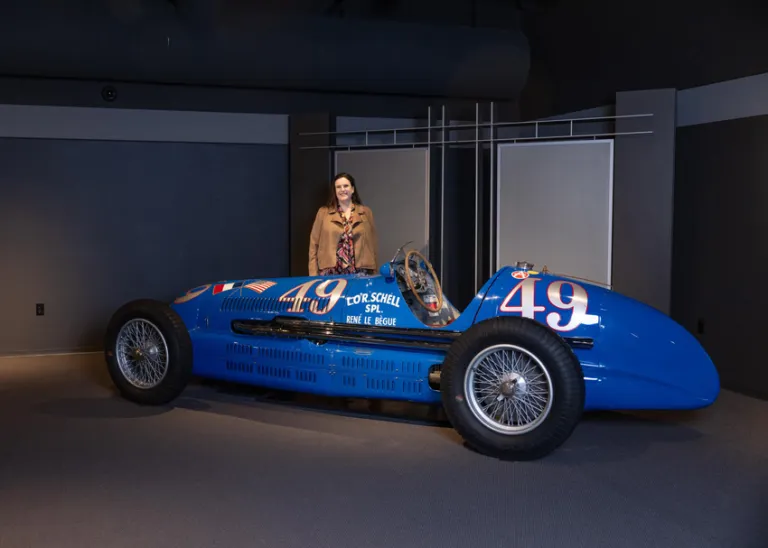
Check out our other Car Masters Reviews...
Season 1Season 2Season 3Season 4Season 5Season 6
VOTE FOR YOUR FAVORITE CAR MASTERS BUILDS!

As you know by now Season 4 left us with a bit of a “that’s it?” cliffhanger moment and introduced us to Nick Smith, “one of the country’s premiere high-end car brokers” and his fabrication crew of Brian and Jake looking to come together “to elevate the Gotham Garage brand.” – whatever that (still) means.

If for some reason you’re new to the show and trying to get caught up, here’s a shortcut to jumpstart you into Season 5, or just a great reminder of all the things you might have forgotten over the last couple of years.

Tune in everywhere you stream, download or listen!

Listen on Apple
Listen on YouTube
Listen on Spotify

Let’s get after it…

Jumping back into the fray, it’s demolition derby night at the Perris Auto Speedway on Episode 1 of Season 5! After what we might call an “off-site team building exercise” it’s business as usual for the Gotham team. The first car on the docket is a 2013 Dodge HEMI Charger that they pick up for $22k for “new generation collector” Tony Nino who can be found on social media sporting cars like Ford GTs, Lamborghinis and the like. Hold up… “You have cars like THAT! What do you want with a 10 year old Charger?” 
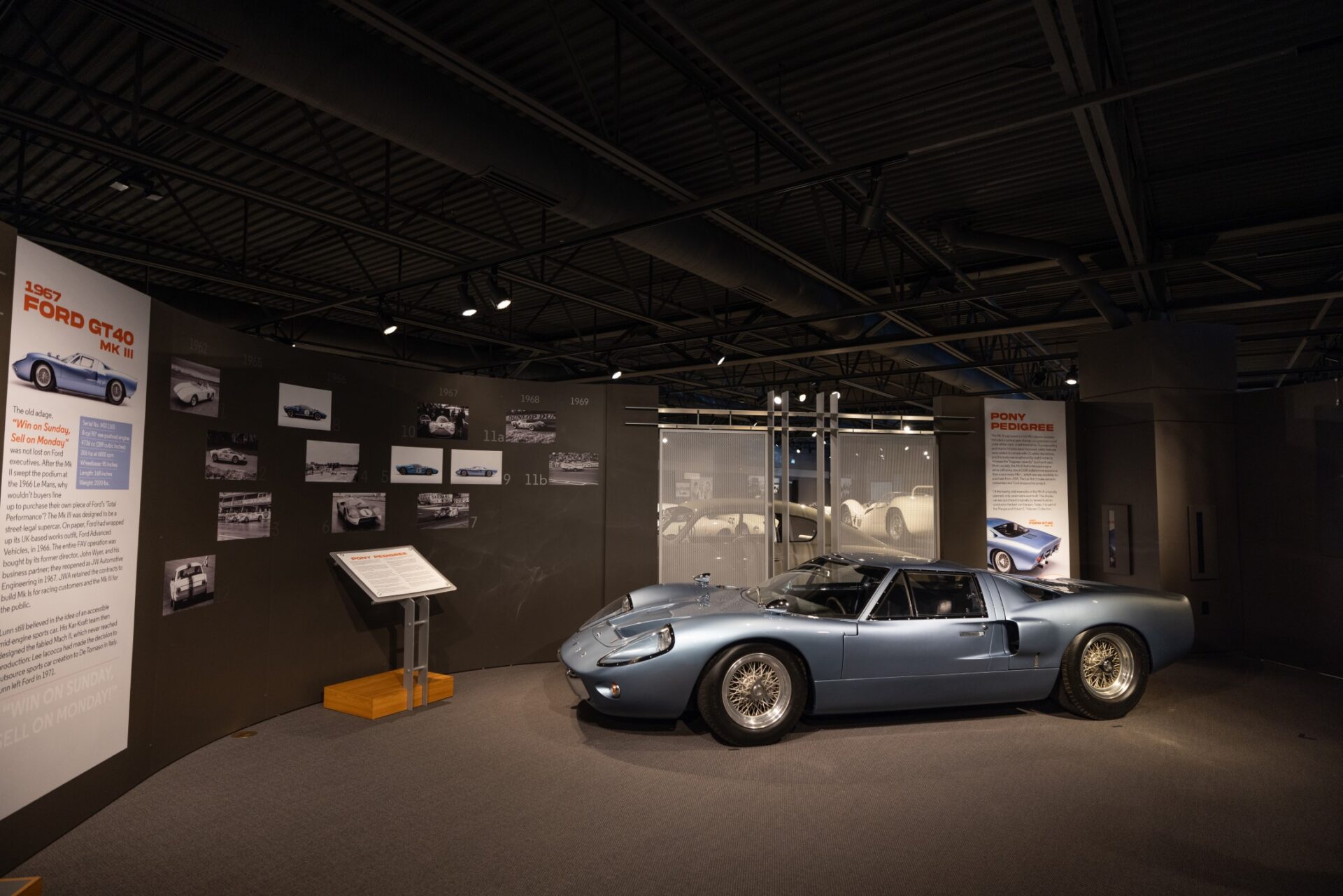
The goal in this first build is to not only “test the skills” of Brian and Jake to see if they are up to Mark’s standards, but turn it into a 1969 Charger Daytona Superbird homage with a $135k payout. Nick continues to push the team about how these customs need to be turned out with precision but also very quickly, to which my wife blurted out “excuse me, but… you can’t be big volume and boutique” and that sentiment is something that unfortunately lingers throughout the rest of Season 5.


Stellantis & Co.

The Charger build wasn’t without its own complications and issues. Number one being they decided to convert the original Mercedes E-class > Chrysler 300 based Charger from a 4-door to a 2-door by removing the B-pillar, shifting it back 14-inches and extending the doors. Part way through the build process, there were concerns about the rigidity of the chassis. A couple of “duh-doy” and colorful expletive’s from my wife later, we noted some serious continuity issues in the filming for the first time on the show. Pay close attention to the door panels during the various testing sessions. One minute they are there, the next they are gone, and so on. All we can say is, careful editing room tricks can provide unnecessary drama.

While the Charger is being completed, the team also picks up a ’68 Plymouth Barracuda with a built 360 V8 for $15k, and begins to devise their famed “Upgrade & Trade” Plan.

This time the goal is Barracuda >> Tesla Model S >> Ferrari 458 Italia for a $200k “6-figure pay day.” This path to success only works if the Barracuda can beat a modern (and possibly modified) Porsche 911 Turbo in a 1/4-mile night drag race. “What in the Fast & Furious is this?!?” my wife exclaimed. The combination of Black 3.0 Paint, orange LED under-glow and a 125-shot of NOS (Nitrous Oxide) to the Plymouth’s already-built V8 engine (instead of a gigantic roots-style blower that we’re accustomed to seeing in previous seasons of the show) is the recipe for winning the race.

For those unfamiliar with “Black 3.0,” it’s touted as “the blackest-black ever created.” The paint lays with a flat finish (think charcoal briquette) that absorbs an advertised 95% of visible light. It’s scientifically intriguing, but seeing the final product you might also consider it an acquired taste.

At this point, we’re starting to realize a couple of new trends. There’s lots of focus on MOPAR and in some ways Stellantis (the parent company of Dodge, Ferrari, etc) in this season, which led us to wonder if they were subliminally sponsoring the show now. The second trend is that the OG Gotham Team would stick to an “Upgrade & Trade” path while Nick’s team was sequestered to the second shop working on the high-end customs. Doesn’t feel like the team is coming together, and it’s obvious there is a difference in management style. But for now, we’ll chock it up to growing pains.


Is there a doctor (of electrical engineering) in the house?

As you can imagine, the drag race went as expected with the help of the “go-baby-go” button affixed to the Barracuda. This opened the door for the team to customize a Tesla Model S for a customer who was interested in doing what people might consider “the unspeakable:” converting it from an EV to a 383-stroker V8. The customer claims that, “this is the best of both worlds” and we’re thinking, if they *can* pull this off, you might be able to have your cake AND eat it, too.

Under immense pressure from “the customer” who wanted this Tesla conversion to be completed in 3 weeks or less, and due to extremely complicated electrical issues that Tony was faced with trying to get everything to work together, they missed their window and the Ferrari 458 deal fell apart.

“Do you remember when the Fast & Furious went into space?” my wife asked, I couldn’t help but chuckle at that one. And she’s right, the entirety of this build – which carries over the better part of two and a half episodes – seems very staged, farfetched, and over produced. We found ourselves asking, “Is there even really a buyer?” The mission became to sell the Tesla for $90k instead of trading it. Ok. Fine. But who is going to buy it?


“Hot Rod-Inspired Furniture” – Are we IKEA now?

Like every season of Car Masters, it’s never one build at a time, usually two and sometimes three simultaneously. This allows the producers to overlay as much of the months and months of work as they can into eight, 45-minute episodes. This also means we spent nearly the entirety of Episode 3 working on “Hot Rod-Inspired Furniture” for one of Nick’s clients looking to outfit his “man cave” with some custom kit. We expected this gentlemen’s bar to be something off the pages of Garage Style Magazine, but in fact is was quite empty and plain and in desperate need of some talking pieces in the room.

As we mentioned earlier, there was a heavy Stellantis presence this season, and therefore what did the team *find* for the custom couch? Why none other than a ’60s Plymouth rear-end! Coincidence? Hmm.

As complicated as it was to convert the Coke machine into a modern sized beer machine and as uncomfortable as the couch looks to sit in, the team did a stellar job. The new furniture looked great in the customer’s home. We also noted that there are more “confessionals” with clients than any prior season. It provides some immediate and direct feedback from the customer rather than someone from the crew saying “yea, they were super happy with that build… right?”


Here I come to save the day!

Shawn is apparently over his head and *surprisingly* can’t find anyone to buy the converted Tesla. Nick steps in to help Shawn and save the day. How much of this is real, and how much is the show trying to prove either of their value going forward, is yet to be determined. Their roles seem redundant.

Four episodes in and the Tesla has become this season’s albatross, lurking on the back burner until they find “the right buyer.” That moment allegedly comes and it’s the typical Shawn high/low price-is-right action. “125k! … 65k! … We can come down to 90k … How about 78? .. . let’s settle on 78.5!” – because the extra $500 really makes all the difference, right? #thepriceisWRONGbob. This ends in us calling shenanigans as the deal falls apart and Shawn is suddenly up against a wall and the plan is back to trading for the Tesla! whomp-whomp.


Is this end of the Gotham Spider webs?

The Tesla deal did end in a trade, “Jimbo” a collector with random tastes negotiated with the team to unload five cars and an additional $35k in cash for the V8 Tesla. Tony calls a “come to Jesus meeting” which ends in a punny “dollars make sense” way.

He urges the team to pursue a bike build, which as we’ve seen in previous seasons are exceptional and can be very lucrative. They pick up a $5k Harley Dyna and create a Black/Brown “Super Villian Bike” for $41.5k (bringing in a tidy $25k profit). At this point the bike is one of the best builds of the season, hands down.

During the bike build, we also got a “meeting with mom,” where Caveman’s mother Saundra stops by the shop for a “spot of tea” with fellow Brit Nick. She’s always a delight, and we enjoy it whenever she can drop in and check on her son during the season, while bringing the team some “biscuits and lemonade.” 


The Fun Builds

Let’s not forget that the Tesla was sold, but also came with five vehicles. This included a 1960’s VW Bus body, a ’35 Ford, a pontoon boat, a square body pick-up and a Yanko S/C labeled Chevelle.

Like every Car Masters season there’s always a set of over the top “where’d they come up with that idea”-style build. In this case, Nick comes up with a M29 Weasel personnel carrier “mini-tank” rat-rod combination (above) that an off-road motorsports park owner is willing to pay $55k to have commissioned (making $23.5k in profit).

Constance ran a tight $10k budget on the square-body while Tony ran the restomod. Gabby Downing, a pro-drifter who pilots a prepared Corvette C5, ends up with the square-body at $32.5k. #spoileralert We’ve reached out to Gabby, and she’s agreed to come on Break/Fix podcast to tell her story and talk about the truck. So stay tuned to the show for more details on that.

Next comes the Hippie Party boat. Of the vehicles sold as part of this lot, this is the one where it really grates on us how one-dimensional Shawn’s selling style is. I was able to hit the number dead-on at 42K-and-$500 before the handshake. (sigh).

The Chevelle is the pay day car, clocking in at $60k. The plan is to use that money as a down payment on a Ferrari. “Now we’re going to *BUY* a Ferrari?” my wife said. Yep, you heard them right. But not just *ANY* Ferrari. 


The Little Green Monster

Earlier in the season, we were teased with the possibility of an upgrade and trade for a $200k pay day with a Ferrari 458 build that falls through. Since then, Nick has been working his network to try and find another Ferrari. The next 3 episodes are focused mainly on the Ferrari and its transformation. There is so much involved in this build, that we actually got together with well-known Ferrari broker, and Break/Fix co-host William Ross from the Exotic Car Marketplace to discuss this car on his show: The Ferrari Marketplace Podcast. Rather than writing it all out, tune into the episode below.

If you didn’t take the time to digest all that, here’s some pictures to lead your imagination, feed your questions, and get you thinking: Would you buy this green 360?


Spoiler Alert! – Season 6 and Beyond…

The 360 does sell, leaving us asking, “What’s next for Gotham Garage?”

The reactions above really capture our feelings about how Season 5 ended. But before the season closes out, there’s one more meeting between the trio of Mark, Shawn and Nick.

They find themselves at a high-end exotics dealership with Nick presenting a “next level opportunity:” a package deal for a Ferrari 612 Scaglietti *AND* a 458 Italia to be “customized” (with no confirmed clients) at the bargain combo price of $290k.

That’s a huge investment for anyone. Even with a Hollywood budget to gamble on these cars, it’s a bit much. The reluctance coming from Mark and Shawn seems genuine, and we begin to see some of Nick’s selling style emerge as he continues to play hardball with them on this deal. “This is the game you wanted to play… If you don’t dare, you don’t win.” #rollcredits.

If you read our previous reviews (or listened to the audio version), you’ll know that we are die-hard fans of this show, its crew, and the work they’ve accomplished. We are a Car Masters #rideordie Family. Our review might come off rather hard to the casual passerby, but it’s not without merit. As we’ve said before, Season 1 (and Season 2) were so good, they are the standard at which everything is compared.

So where does that leave us? We’re hoping for a Season 6. We’re hoping Season 6 doesn’t take another year to get posted to Netflix. My wife commented that she would also be interested in “seeing a spin-off with just Tony, Caveman & Constance” and I tend to agree.

Unless Mark, Shawn and Nick can find a groove that brings the show back to where it was, the alternative is a modern version of Danny Kokers’ “Counting Cars,” where they’ll mod just about anything. We hope for more from this team.

#upgradeandtrade.

Film Review: Grand Prix (1966)

3

Grand Prix stands as a dramatized snapshot of Formula 1 in the mid-sixties. Director John Frankenheimer chose to film real Grand Prix in order to capture the right level of drama and speed, and in so doing produced an amazing document of the 1966 season. It is important that all of the things which happen in the film happened in real life at some time, from crashing into the Monaco harbor, to Ferrari drivers mysteriously left waiting in the pits without a car to practice in for the imminent Grand Prix with, in order to put just a little more psychological pressure on them to go out and prove themselves when – if – the car did arrive*.

To modern eyes, the plot is rather slow moving and schmaltzy, even contemporary reviewers criticized this aspect of the film, but what is captured very well is the notion of the Formula 1 circus, a wonderful and spectacular show which descends on a town, transforms it for a few days and leaves again, like a medieval itinerant monarch. That the season, beginning in the spring sunshine at Monaco, and ending in the September flat out blind at Monza, and the World Championship is the timetable around which all else – engineering, finances and personal relationships – are structured. That the reason men race is for honour and glory, because something inside them compels them to do it, nothing at all like NASCAR where everyone involved has always been there to make money.

The danger aspect may seem overplayed and melodramatic, and perhaps it is, but the fact remains that in that era a Formula 1 driver was statistically more likely to end his career with a fatal accident than retirement. Indeed, this danger was what attracted drivers, and spectators alike – it was this which prompted Hemingway to comment “there are only three true sports – bullfighting, mountain climbing and motor racing; the rest are merely games”.

Indeed, it is that ability in competitors to face danger and stare it down which holds my attention with old fashioned motorsports.

One of the best facets of Grand Prix is the clip above – the coverage of the Belgian Grand Prix at Spa. It was a wet race – a theme at Spa. The other theme at Spa is fast, sweeping corners – the average lap speed was more than 140 mph in 1966, this on closed public roads, at one point featuring a flat out left right kink between two dry stone walls – a small farm, in fact. Using then cutting edge film techniques – helicopters, camera cars moving at racing speed – Frankenheimer captured and wove into his film a race which developed into a terrific duel between emerging talent Jochen Rindt, and Ferrari’s John Surtees. Surtees, the eventual winner, sticks in the mind today because he is famously the only man ever to be World Champion in a car and on a bike. When I saw his car at Pebble Beach last year, alongside his MV Agusta Grand Prix bike, I was thinking of Frankenheimer’s film, and moreover the Spa coverage – that is to say, more than forty years on this remains some of the most compelling and memorable motor racing porn you will ever see.

The Monza sequences too are spectacular, featuring cars racing on both the traditional flat road course and the steep Monza banking, complete with the car breaking bumps and even a car leaping over the top – the result may be dramatized, but it still gives a wonderful sense of what racing in 1966 was really like.

Grand Prix is also compelling for the men who appear in cameo. Juan Manuel Fangio, Jo Bonnier, Bruce McLaren, Ritchie Ginther and Jack Brabham each appear in various scenes – a post race party at Monaco, the driver briefing at Clermont-Ferrand – so many drivers in fact that they run to two screens worth of names in the credits. Phil Hill and Graham Hill play characters with a few lines, often amusing given the characters of the men themselves: Bob Turner ( G Hill ) is a key ring leader in drinking games and beer throwing is victory celebrations, while Tim Randolph ( P Hill) comments “anyone who is that nervous should take up another profession” ironic given what a worrier Hill himself was.

In the scene introducing Eva Marie Saint, Ferrari driver Lorenzo Bandini can be seen standing behind her – the director’s classic technique of filling the backshot with beautiful people. Bandini’s involvement is blackly ironic given that two years after filming he would crash injuring himself fatally at exactly the same point on the course where characters Pete Aron and Scott Stoddard crash during the film.

A key, and I have to say rather hammy plot device is to have characters almost directly translatable to real characters in the pit lane, although only a few names carry over – BRM, for example, and the only irreplaceable thing about Formula 1, Scuderia Ferrari (originally Ferrari did not want to participate, since racing films are generally so lame. Frankenheimer visited him after the filming of Monaco, and showed him what he had; impressed, Ferrari agreed to be involved). Character Scott Stoddard when injured recuperates at his home, a farm, and wears a tartan flat cap such that one cannot mistake Jim Clark; his helmet too has a tartan band, like Jackie Stewart’s, allowing for good continuity between scenes of Stoddard racing and the real race film of Stewart. Scott is fixated on his brother, Roger, continually trying to outdrive him although he is dead and gone. We see Roger in portrait – he is an amalgalm of Stirling Moss and Mike Hawthorn, blond and flat cap driving Moss’ Vanwall. Scott makes an improbably swift recovery from his near fatal injuries, seeming to use plenty of good old fashioned British pluck and not much else – in a manner similar Stirling Moss, or Graham Hill. Stoddard’s team leader is meant to represent Lotus’ Colin Chapman, while the Japanese Yamura corporation clearly represents Honda’s mid-sixties Formula 1 involvement; in that blend of Yamaha and Honda’s later Acura brand, there is a sense life is imitating art ! Like John Surtees, the character Nino Barlini is a champion motorcycle racer looking for a fresh challenge racing cars.

More than this direct translation, there are many details lifted straight from the real world of Formula 1 onto the silver screen: the other drivers discuss Sarti in the same way as contemporary drivers felt about Fangio; when Aron and Stoddard crash at Monaco they have committed the ultimate sin, since they are teammates, and thus not meant to be racing with each other, and their team owner is furious as a result, firing Aron; Sarti himself has a picture of Guiseppe Campari on the wall of his “little place at Monza”; it was Campari’s death at the Italian Grand Prix at Monza which lead to the black flag being shown to the remaining Ferrari team cars and their withdrawal from the event, events which play out again at the climax of “Grand Prix”.

The net of all these real life elements is unexpected and unfortunate – the script is wooden, and the characters somewhat two dimensional; it is rather strange that real people make such unconvincing movie characters !

Aside from the poor script, perhaps the reason the characters are unconvincing is Hollywood’s need to show audiences a familiar, well loved tale – the so called “five act structure”. One of the key plot lines in Grand Prix is Sarti’s growing relationship with Louise Fredrickson, ( Eva Marie Saint) a fashion writer seeing Formula 1 for the first time – a cunning device allowing the film makers to introduce the audience to Formula 1 through Louise . As he falls in love, Sarti re-evaluates his life, and takes a decision to retire – the outlaw gunfighter who’s decision to live in a less dangerous way is triggered by the love of a Good Woman, common to a million westerns. More painful to watch are the scenes concerning Scott Stoddard’s relationship with his wife – a mid sixties take on “modern values” which has dated as badly, but nowhere near as humorously, as the spinning tapes and flashing lights of “Buck Rogers in the 25th Century”:

It seems that film makers need to decide if they are out to make a film about cars and racing, or a film with some appeal for non-car people. In his attempt to compromise, Frankenheimer fails on the human interest side. It is interesting to note that Steve McQueen was Frankenheimer’s first choice to be Pete Aron. However, negotiations fell through and McQueen set out on the road to make Le Mans. More even than Grand Prix, the character elements of Le Mans fail, and indeed the producer left during filming because no script could be agreed upon, and by implication he had despaired of being able to make the film commercial – that is to say approachable for non-car people. Having said this, Grand Prix benefits enormously from Hollywood’s glossy high production values; the art work of Campari and Roger Stoddard are Michael Turner originals and the film won three Oscars, one for cinematography. The opening sequence, by Saul Bass received particular acclaim:

There’s a higher resolution version here.

It was not just Sarti and Louise – and by implication the movie going public – who began to question the danger inherent in Formula 1 in the mid to late sixties. Three time Formula 1 champion Jackie Stewart’s revolutionary safety crusade actually began during the filming of Grand Prix, since the beginning of the 1966 Belgian Grand Prix was marred by a huge accident which took half the cars out of the race, and left Stewart himself trapped in the wreckage of his own car, bathed in petrol nursing broken limbs, terrified of a fire breaking out, awaiting rescue for twenty five minutes. The bitter irony here is that Frankenheimer edited Stewart from the Spa coverage, since in real life Stewart wore Stoddard’s tartan band, and Stoddard was supposedly recovering from his near-death Monaco crash at the time of the Belgian event.

While attitudes may not have changed immediately, by the later sixties not even the most gung-ho driver could avoid considering the implications of his profession. “Grand Prix” features wives and girlfriends in the pits acting as laptimers, a common practice right up to the modern age, but one which speaks to the fact that even if the drivers themselves weren’t worried, the people who loved them always were. Through Sarti’s Spa accident, “Grand Prix” also draws attention to the fact that often spectators were maimed or killed even while the driver was not.

Pastiche as it may be, “Grand Prix” ends up paying a wonderful tribute to the real people who participated in what can be seen with hindsight to have truly been the Golden Age of Motorsport. The tribute is valid not just to the mid-nineteen sixties but, but to the whole “epic” period of the sport, from that first wild city to city Paris-Rouen event up to the increasingly commercialized and technologically complex period specifically covered in the film.

I must also confess some considerable personal prejudice about Grand Prix – somewhere in my Heaven, at the foot of an Alpine pass, there is a black ’66 Shelby GT350 Mustang, with the keys in the ignition and the young wastrel Jessica Walter sat in the passenger seat just waiting for me.

Further reading/viewing

  • Escaping my list but well worth watching is Frankenheimer’s retro seventies thriller, Ronin. Made in the nineties, Ronin features a couple of cracking car chases, and IMHO, some extremely well chosen cars.
  • The Nostalgia Forum is the historic part of the Autosport website. Members have quite the most incredible depth of knowledge on the history of the sport. There is a thread specifically related to Grand Prix: http://forums.autosport.com/index.php?showtopic=26190&hl=grand%20prix
  • It is difficult to explain how much better the film looks on a big modern HD screen. Truly, today you can probably get a better viewing experience in your home than movie goers of the sixties – if you know the film but have not watched it in with modern equipment, you should find time to do this asap.
  • The original music score is quite, quite dreadful – you have been warned.

*remember Old Man Ferrari wanted to be an Opera star when he was young, and seems to have had a flair both for drama and tragedy.


This content was originally featured on JonSummers.net, reposted with permission.