
spot_img
Home Blog Page 31

From Porsche Intern to Podcast Host: Dan Pilling’s Journey Through Motorsports and Tech

What do you get when you mix a lifelong love of cars, a career in cutting-edge technology, and a passion for storytelling? You get Dan Pilling – host of the “Danny P on Cars” podcast and a man whose journey through the world of motorsports is as fascinating as the machines he adores.
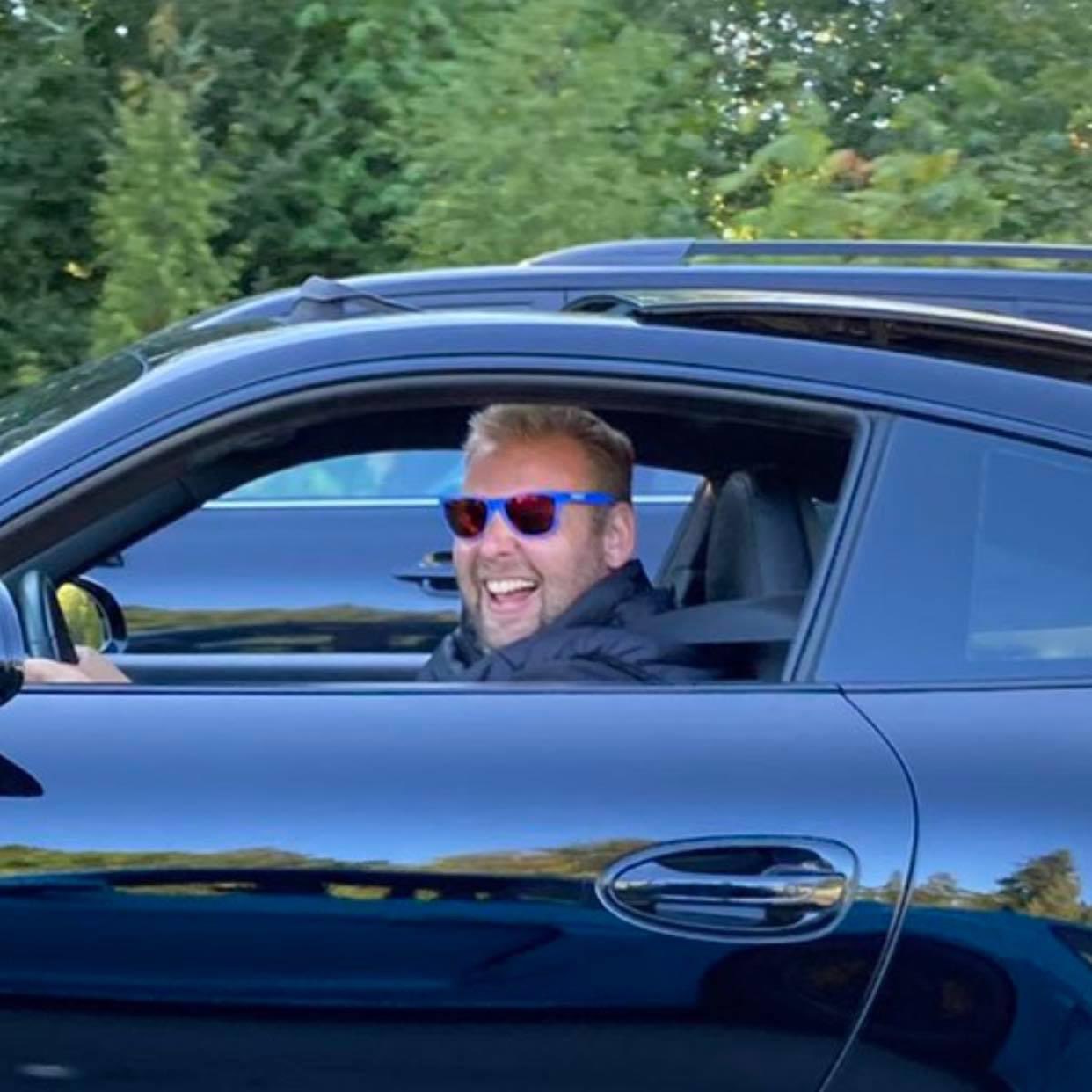
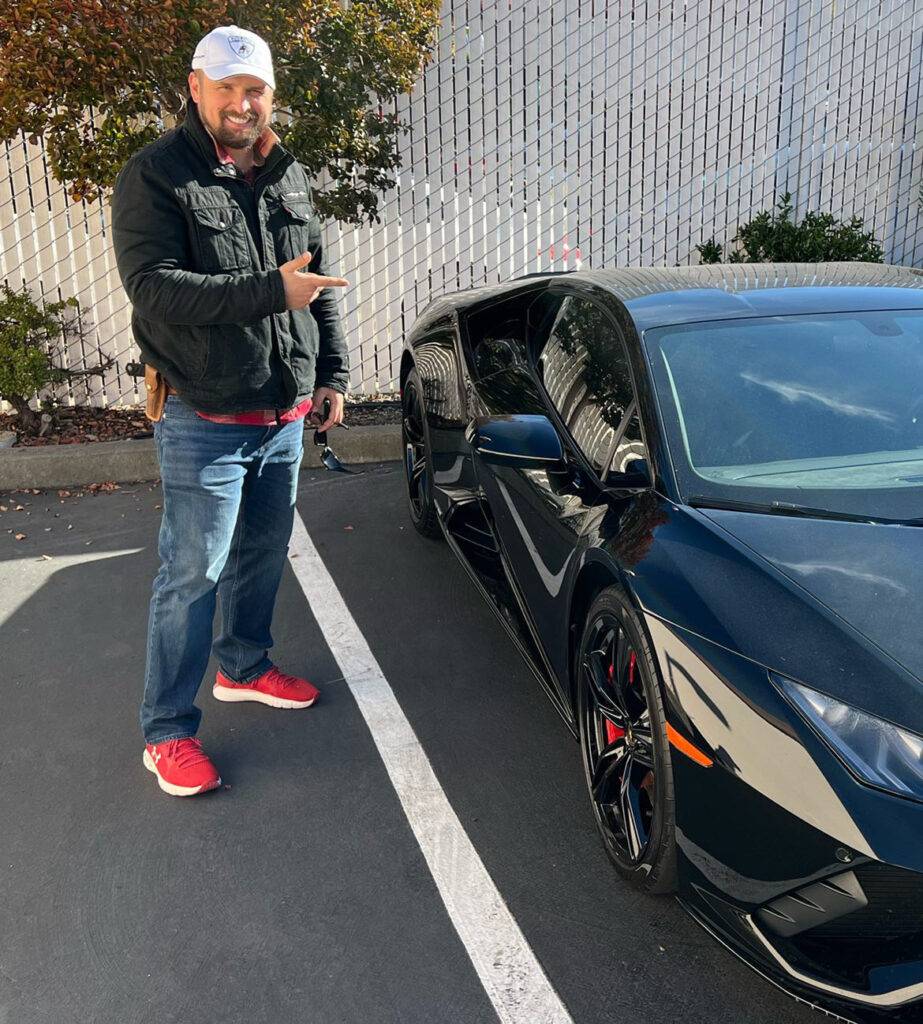
Photo courtesy Danny Pilling

Dan’s automotive obsession began early. As a kid in the UK, he wasn’t just collecting Hot Wheels—he was writing to car companies, asking to visit their factories. His early adventures included trips to Land Rover and even witnessing the Jaguar XJ220 being assembled. But it was an internship at Porsche Cars Great Britain, helping launch the 993 Twin Turbo and organizing a Top Gear shoot, that truly cemented his path.

Tune in everywhere you stream, download or listen!

Listen on Apple
Listen on YouTube
Listen on Spotify

Faced with a fork in the road—automotive engineering or information technology—Dan chose tech. He studied business and computing at Bournemouth University, eventually landing at Microsoft. There, he found a way to blend his passions, working on technical marketing and forging partnerships with Formula 1 teams like Lotus (now Alpine), Williams, and Mercedes.

Dan’s entry into F1 wasn’t through a job application—it was through a tweet. His online commentary about Microsoft’s partnership with Lotus F1 caught the attention of the team’s deputy CIO, leading to a factory tour and a long-standing collaboration. Dan became a bridge between Microsoft and the motorsports world, helping teams adopt cloud computing, data analytics, and cybersecurity tools to gain a competitive edge.

Spotlight

Synopsis

Break/Fix podcast hosts Dan Pilling, a car enthusiast whose passion for autos began early in life, cemented by an internship with Porsche Cars Great Britain. Dan’s career mixed technology and motorsports, collaborating with Microsoft and teams like Lotus, Williams, and Mercedes F1. Moving to the U.S., he continued working with various motorsports teams and recently launched his own podcast, “Danny P on Cars,” to share stories from the car community. In this episode, Dan discusses his journey, car culture differences between the UK and the U.S., his new podcast, and addresses personal automotive tastes and experiences.

  • Let’s talk about The who/what/where/when/how of Dan P? What’s your petrol-head origin story… How did you get into cars? What type of vehicles got your attention as a lad in the UK?
  • One of your bits on your show is “what is your criminal record car?” – in your case a Yugo?
  • The UK has a huge car (& bike) culture, probably more race tracks per capita than anywhere in the world. How does the UK car culture differ from the US? 
  • What did you go to school to study? Computer Science? What were you doing at Microsoft? What was the relationship there with Formula 1? How did you get onto that team? What were you doing/working on? 
  • What advances in technology have you seen during your time in F1?
  • How do the other businesses/disciplines of racing that you’ve experienced compare/contrast to F1? (ie: NASCAR, Indy, etc). 
  • What’s next for Dan P? Any other projects you’re working on? 

Transcript

Crew Chief Brad: [00:00:00] BreakFix podcast is all about capturing the living history of people from all over the autosphere, from wrench turners and racers to artists, authors, designers, and everything in between. Our goal is to inspire a new generation of petrolheads that wonder. How did they get that job or become that person?

The road to success is paved by all of us because everyone has a story.

Crew Chief Eric: Tonight’s guest has created a podcast focused on the people he considers to be part of the same tribe. The tribe of car lovers. His love of cars started at an early age, but was really cemented during an internship for Porsche Cars of Great Britain. He worked in the PR department, helping to launch the 993 Twin Turbo, as well as organizing a film shoot for Top Gear.

Crew Chief Brad: Dan Pilling went on to a career in technology where he had the opportunity to mix his passion with a part of his day job working on the technical partnership between Microsoft and the Lotus F1 team, [00:01:00] now known as Alpine, along with working for teams like Williams and Mercedes F1. When he moved to the U.

S., he worked with Hendrix Motorsport, NASCAR, Honda and IndyCar, and MotoAmerica Superbikes. Dan is here to tell us all about his journey in the world of motorsports and how and why he started his new podcast, Danny P on cars.

Crew Chief Eric: That’s right, Brad. And with that, let’s welcome Dan Pilling to BreakFix.

Crew Chief Brad: Welcome.

Crew Chief Eric: Gentlemen, thank you ever so much for having me. Like all good BreakFix stories, there’s always a superhero origin. So, Dan, let’s talk about the who, what, and how. Where and when of you, how did you get into cars and what type of vehicles got your attention as a lad in the UK?

Danny Pilling: My love of cars has started from a young age.

I don’t remember exactly when, but ever since I can remember, I’ve loved cars. Part of my school projects, I would write to car companies and see if I could go and visit them. And it was mainly around the technology they were using as they were developing out these new cars, et cetera. So it was always this really great passion for cars.

Early trips included [00:02:00] going to people like Land Rover and went to see how they were building the, what was the newest Land Rover. I actually went and saw the Jaguar XJ220 being made. So I’m a kid of the nineties, you know, that was fun, but it wasn’t really on the technology side because they were just assembling a car.

I was really lucky due to chance that I got to do an internship at Porsche Cars Great Britain, and that really just cemented it for me, you know, spending time there was just like,

Crew Chief Eric: wow. One of the most notable supercars of all times, especially in the 90s, the XJ220, but was that up on your wall or was there something else?

Danny Pilling: So I had a Ferrari Testarossa on my wall.

Crew Chief Eric: You’re a petrol head of a certain age.

Danny Pilling: Yeah, there we go. I guess it was either the Countach or the Testarossa, and I had the Testarossa.

Crew Chief Eric: You’re in a very small club there because most people runs headfirst into the Coontosh camp. What about you gentlemen?

Crew Chief Brad: Don’t really think I had any car posters on my wall.

I had three Hot Wheels. One was a red Ferrari Testarossa. One was a white Lamborghini Coontosh. And then the other was a red Porsche 911 or 959 or whatever it was. And I used [00:03:00] to race them around. I always thought the Lamborghini was the fastest followed by the Ferrari and then the Porsche. That’s just the way the world was.

Crew Chief Eric: And you know, that’s the shocking part about that because everybody thinks the Lamborghini can do like a thousand miles an hour and it’s actually slower than the other cars you mentioned.

Danny Pilling: Sort of out of looks, isn’t it? It looks fast. Exactly.

Crew Chief Eric: But you know, I hung up my Kuntosh roller skates pretty quickly, especially in 1987 when the F40 came out.

One poster on my wall. It’s always going to be an F40. That’s for sure.

Crew Chief Brad: The F50 is better.

Crew Chief Eric: Don’t even get me started.

Danny Pilling: Glad F40 though. I’ve been lucky enough to spend some time with some. I’ve not driven one. But they’re just an unbelievable car. It’s just like a go kart.

Crew Chief Brad: They look good sitting on a yacht in the middle of Monaco.

Danny Pilling: Did you see that? That was pretty interesting. The update to that though, that car actually leaked oil onto the teak deck. Oh no.

Crew Chief Brad: Rich people problems beyond first world problems.

Danny Pilling: Yeah. I would just be happy with that car. Forget the yacht, just the car. But imagine what it’s going to cost him now to replace the deck.

Crew Chief Eric: Well, we’re going to get a little bit deeper [00:04:00] into your maybe more technical side of your automotive history

Crew Chief Brad: and get more into your educational and professional background. So when you were in school, what did you study? You started working for Microsoft. Tell us a little more about what you were doing there, your experience and the relationship with that in the car community.

Danny Pilling: When I was 17, I got this internship at Porsche cars, great Britain. And I would say that that was a defining point in my career for me. I kind of had to make a decision. Did I go down the route of going into the automotive industry, learning my craft and doing that, or did I go down to the route of computers and IT and all that sort of good stuff?

And I naturally gravitated to the computers and IT cause I was pretty good at it and I enjoyed it. I didn’t really know what I wanted to do before I went to college. So I was a very last minute call up to go to college and I took on this course. There was a combination of business and computing. One week we’d be doing programming.

The next week we would be doing more on sort of business type topics. And that was a university down on the South coast called Bournemouth university. And off the back of that, I graduated, took on a [00:05:00] couple of jobs and then managed to land this role at Microsoft initially in sales, but then quite quickly moving into marketing.

And one of the roles that I did early on was technical marketing. So I owned the technical audiences for Microsoft in the UK. And really one of the big things there was how do you communicate how other companies are using Microsoft technologies to get benefit in order to help those companies adopt the technology.

And it was funny because Microsoft had just signed an agreement with the Lotus Formula 1 team. And it was a sponsorship agreement around a relatively new product that Microsoft had brought out called Dynamics. The objective there was twofold. One was to use that team as a platform for testing technology and using latest technology, but also getting the brand out there that this Dynamics product that Microsoft had developed was available and was a competitor to other things.

So the partnership was. Both brand and technical. And it was really funny. Actually, I got introduced to the team via a tweet. I was tweeting about the partnership. I was tweeting about other things. So the deputy CIO or IT director at the time reached out [00:06:00] to me and said, Hey, do you want to come and visit?

So you don’t turn down an invite to go and get a tour of a formula one team. It was about the time that Kimi Raikkonen was racing with them and Roman Grosjean and those sorts of names that have, you know, Romans obviously now doing a lot of us racing, but I get to go along to go and get a tour of the factory and.

And I just developed the relationship since that, I would go and meet with the IT team. They would have a connection with Microsoft in the UK versus worldwide, because obviously it’s a large corporate based company in, uh, in Redmond, Washington. And over time I would work with them and help them utilize or help them understand what the technology could do for them.

And I would use them as a reference case when I was doing events. We would hold events there. We would do these large scale events and have them come and keynote and that sort of thing. It wasn’t like a formal relationship where I was the technical partner manager for Lotus F1 team, but it was one where I would go and help them and everyone would see benefit from it.

Over time got to develop relationships, meet lots of great people. And those folks then moved on to other [00:07:00] teams. It’s a very small community, the Formula One community. So generally people tend to move within the business. They don’t tend to go out to other industries like banking or finance and that sort of stuff.

So develop relationships eventually with people like Williams and Mercedes. So, uh, one tweet started it all.

Crew Chief Brad: The relationship with Mercedes and Williams, was it the same kind of thing? Were you also from the Microsoft side introducing and helping them with dynamics and stuff like that? Or what other things were you working on with Mercedes and Williams?

Danny Pilling: Yeah, the technology had moved on by then. So we didn’t have any formal partnerships with them, but because the folks that had moved to those teams had a background in Microsoft, they tended to go down the Microsoft route versus other competitors in terms of the technology they were adopting, you know, Williams specifically.

And actually I had the former CI of Williams on my podcast, a guy called Graham Hackland. Part of the CIO’s role is to introduce new technology to the team, but do it with a business case, talk about the benefits they would enable as a result. And cloud computing was a really big thing during that time.

So one of the things I would do is I would help [00:08:00] Graham with things like the business case for adopting cloud technology. So I remember one specific example where. They were really worried about security. So if you can imagine that you can see where all your information is held, because it’s in a server room in a building versus out in the cloud, where you’ve got no visibility of where that could be enabling them with things like bringing our chief security officer to talk to Graham and help him build his business case for adopting that technology.

So it was less around getting them to do things like keynote and present and share their technical stories and more around helping them be a channel into Microsoft, which is a very complex organization as they went to adopt new technologies.

Crew Chief Eric: I talked about this on another podcast that I was on, Text Transforms with Carolyn Ford, and we talked about the intersection, which is large between the racing community and the technology community.

It’s more than just decals and things as part of the livery of the cars. When you see Amazon and CrowdStrike, they’re part of that team, especially Amazon, one of the largest cloud providers in the world, probably usurped Microsoft in this particular [00:09:00] instance that we’re talking here. But. They’re not just names on the side of those vehicles.

They are part of the team and an integral part of that team.

Danny Pilling: Yeah, specifically F1, but any motorsport environment is a great place to be able to test technology because you’re going to see results really quickly. You can see a direct line between that technology adoption and the impact it’s having with other organizations.

It may take time to see those benefits or those challenges. So it’s a great environment to go. And test things, any technology company will always look at motorsport as a way to be able to accelerate their knowledge, their learning, their adoption. It’s just a great partnership thing.

Crew Chief Brad: Talking about all this technology that you’ve helped get into formula one.

What are some of the advances in technology you’ve seen over time in formula one with your time being there?

Danny Pilling: We’re talking about a sort of 12 year period. You know, I think the first one data and the being able to make decisions and use data for technical and strategic advantage. I remember us releasing a product, I think it was around 2010, where this database solution [00:10:00] had a level of intelligence where previously.

Data would come off the car and be beamed back to the paddock. But when you would get street races like Monaco, there was no guarantee that that data would come off the car and hit the paddock in the order that it came off the car, it might bounce off a wall and then come to the paddock, et cetera.

Right. I remember us introducing a set of features in this database technology where. It would automatically re sequence. So it became an advantage, whichever teams adopted that database technology. If they were using Microsoft technologies, they would see benefit. I think on the collaboration side of things, I talked a little bit about cloud, but being able to recreate the engineer’s environment back in the factory, that’s now been enabled a lot more in terms of just the way things like communication, I was talking to one of the teams the other day, and they’re using the Starlink solution from Elon, but they’re using the maritime version.

Which was interesting to me because, you know, in theory, when they get to the track, they get given a pipe from the organizers, but they’re actually using Starlink as well, but I can’t say which team that is. And then the other thing for me was if COVID had happened, [00:11:00] I don’t know, five years ago, the teams would not have been anywhere near as productive as they were when it happened three years ago.

Cars were designed remotely, which would have never happened five years ago. If you think about the amount of compute power needed to use CAD diagrams, et cetera, to develop these cars, you would have to be somewhere on premises being able to do that, these really super clever people, whereas because of the advances in technology, they were able to collaborate and design these cars.

I mean, there’s so much more, we could do like five podcast episodes on this.

Crew Chief Eric: Of the technology you’ve seen evolve in Formula 1, has any of it made it to your passenger vehicles?

Danny Pilling: Yeah, but I don’t think it’s specific to like the technology I worked in. So, you know, you talk about things like hybrid engines, is it Mercedes are going to release a car that’s got a Formula 1 engine?

You talk about things like DRS and even brake technology, carbon fiber brakes, they were utilized early on. There are a lot of technology, especially on the safety side, but I don’t think it’s as much on the sort of IT technical side of things.

Crew Chief Brad: Wouldn’t DRS [00:12:00] be great to get around traffic?

Crew Chief Eric: Yeah. You know what I use?

I use that skinny pedal underneath my right foot to get around traffic.

Crew Chief Brad: Yes, yes, yes, yes, yes. One of Eric’s gripes about Formula One, as well as he puts it, that he says is basically spec racing and the technology’s all the same with the limitations on the advancement in technology that the teams can do.

I mean, back in the Wild West days when teams could bring out whatever they wanted and it was run what you brung, it’s very far removed from that now with all the regulations.

Danny Pilling: What is interesting is a couple of years ago, they obviously brought the cost cap in, which said that every team must adhere to this set of regulations.

But the challenge is all the teams weren’t starting from zero. They were starting from benefits of previous years, et cetera, and knowledge, the technology piece, there’s going to be a few more seasons before you start to see the effect of the cost cap. So right now you’re still seeing benefits from teams that have had more cash than other teams.

So they’ve been able to adopt [00:13:00] technology further. The cars are designed. Either one or two years in advance, depending on how much money you’ve got, etc. So it’s still a case of innovation is coming through and whoever’s got the smartest designer and that’s definitely an advantage. You look at Adrian Newey versus some of the other designers and definitely his impact, but not just him, the team around him are having an impact on the cars.

In one of my podcasts with Graham, he talked about some of the innovations maybe 10 years ago. One example was the Benetton team, they observed buildings that had to survive earthquakes, have these springs to absorb. So when you’ve got these earthquakes happening, they’re absorbing all the energy. The F1 team saw that and put it in the nose cone.

And it wasn’t till halfway through the season, the other teams found out and tried to copy it. And generally in Formula One, they’ll do two things. You’ll try and bend the rules as much as you can without getting in trouble. And it’s not getting caught. It’s getting in trouble because you submit that to the regulators and say, this is what we’re thinking of doing.

Does it meet the rules? And they’ll come back and say, we think it [00:14:00] complies or we think it doesn’t comply. Right. That innovation still happens and the teams are either trying copy it, which I guess is what we’re seeing with the Mercedes team now on the side pods, because they haven’t been able to go their own way.

So they decided to reset and copy or try and get it banned.

Crew Chief Eric: I really enjoyed the episode you did with Graham. I think that was like episode four or five or so in the catalog. And he touched on something which you alluded to, which was. Making changes until somebody either banned or approved the change that you made.

Now, if you go a little bit further back in the history of F1, Colin Chapman was notorious for breaking the rules. And then a rule would be written because Lotus did something completely off out of spec. So formula one’s always been about that. Push the envelope, find something new. Does it stick or does it not?

There was a period there where. Formula one got a little bit silly with, well, we needed to be more competitive. So we’re going to make everybody drive on groove tires during a dry race. I go back to it’s what you imprint on, which is the time period in which F1, you still had crazy [00:15:00] things like six wheel TRLs and you had flat 12 Ferraris and four cylinder turbos and Porsches with their six cylinder, and they were all running together and everybody was trying to build a better mousetrap.

I look at F1 cars today. They’re huge. The wheelbase is equivalent to a Ford F 150. I mean, Senna’s MP4 is like a go kart compared to Lewis Hamilton’s McLaren right now. They’re night and day different. You look at them and I can’t tell them apart. To me, it’s literally like looking at a spec Miata race.

What I feel like is Formula One is losing its technological edge because somebody else is dictating what the technology is, everybody’s building to that, and what do you end up with? No offense, you end up with IndyCar.

Danny Pilling: It’s an interesting dynamic, isn’t it? Teams try different things, but they learn quite quickly if those things work or not.

You know, back to Mercedes, clearly their approach didn’t work in the same way that the other teams like Aston and Red Bull have. There’s always still some innovation that they’re always looking for that extra 10th, whether it’s the way that they’re presenting the impact of the wind [00:16:00] after it’s hit the car.

So what impact does it have on the car behind, for example? So, you know, they’re thinking about different things, but it’s just, the rules are becoming so much tighter that you don’t have the ability to create a car that has a fan on the back, for example.

Crew Chief Eric: You’re sort of stuck with whatever you designed as well.

I mean, there’s only so much wiggle room now that if you made a bad choice, like you were saying, Mercedes is sort of going back to the drawing board. Utilizing somebody else’s design because that design is approved. Now for them to come up with something completely unique, they got to go through all these boards and change approval process and all this bureaucracy to get it done.

And in the old days, you listened to the episode with Mario about how they developed the ground effects. And how simple it was. And they just kept trying and trying until they found something that worked. And nobody said, no, it’s like, yeah, go have at it. If you can figure out how ground effects work by all

Danny Pilling: means.

It’s just got that competitive. It’s just a different world. Exactly. It’s a space race and it’s still the most advanced form of motorsport in the world.

Crew Chief Eric: I don’t know. There’s an argument to be made about. Sports car and [00:17:00] endurance racing because the GTP cars, they’re very technologically advanced as well.

If you look at the Toyota hybrids, the new Porsche nine, six, three, the Ferrari four nine, nine X the Peugeot nine X eight, any of those prototypes, I mean, there are engineering marvels and I’d say there’s almost more technology given. The space parameters that they have, then there is on board an F1 car.

Danny Pilling: Because the thing with F1 is the testing and the simulation is so regulated, right?

Crew Chief Eric: It is, but the car only has to run for 90 minutes.

Danny Pilling: Yeah. So I guess the point I was making is do these teams doing the endurance racing, do they have unlimited wind tunnel time, for example? Because if they do, then they have the option to be more technically advanced.

Crew Chief Eric: That I’d have to look into specifically what the regulations are around that. But what I know is that when Porsche comes to the table with their design, granted they’re using a Dallara. Chassis. So is I think Cadillac or whoever Ferraris got their own, there’s certain underpinnings to the vehicles, but what they do with the body design, what they do with the cockpit layout, with the gearing, with the engines, they’re all [00:18:00] different.

They’re not required to run a hybrid if they don’t want to. So there’s a lot more freedom in that. But the Testament at the end is after 24 hours, who’s still standing.

Crew Chief Brad: Mercedes results over the last two years have not been what they had expected. And I’m curious. So what the effect of Nicky Lauda’s death, could that be attributed to with their lack of success over the last couple of years?

I mean, I could be wrong, but I thought he was very involved in the technical advancement aspect of the Mercedes car.

Danny Pilling: I do know that they’ve got James Allison there and the team around James, he was at Enstone, he was at Ferrari, super smart guy. I can’t imagine Nicky had a lot of involvement on the technology side.

I think he was more of motivational and supporting the drivers and that sort of stuff. I don’t know enough. I’m sorry.

Crew Chief Eric: We’re going to pause here. You know, we’ve been deep in technical thought. I want to ask one of our newest and probably most favorite pit stop questions, especially for a fan of Formula One and somebody like yourself who’s worked in Formula One, the [00:19:00] GOAT.

Or Goat Teefy, who is the best driver of all time, in your opinion, Formula 1?

Danny Pilling: That is such a great question, and it’s one that could be debated again on numerous vodcasts. I remember watching Senna on TV, just remembering, you know, how much of a complete driver he was. I have a favorite driver, which is slightly different to GOAT, but his stats rank up, which is Lewis Hamilton.

You know, someone who’s won the championship seven times, he’s got to be pretty good. I know there’s arguments to say that his car was better than everyone else’s, but you’ve still got to bring that car home. You’ve got to avoid all the other cars on the track, etc. So I think Senna was the greatest, completest driver, but my favorite GOAT would be Lewis Hamilton.

Crew Chief Brad: There’s definitely a difference between the greatest driver and the most dominant. Driver. Yeah. They’re mutually exclusive.

Crew Chief Eric: You know, there’s another debate that we should maybe have a whole nother show about, which is are the current formula one drivers as talented as some of the ones of years past that would move between disciplines and they could go to NASCAR or Indy car [00:20:00] rally, and they could jump back into formula one car and they would win everywhere they would go.

Or are they just. Yeah. Good in their discipline.

Danny Pilling: A lot of people argue that rally drivers are the most talented based on what they have to do in the environment they have to work in, but you know, how would a rally driver do in a formula one car, but there’s also been various drivers in history that have done it on two wheels and four wheels.

So does that make them more of a goat?

Crew Chief Eric: We’ll put a pin in that. Maybe we’ll revisit it on a future episode. Since you’ve experienced NASCAR and IndyCar and Moto America Superbikes, what about the business side of racing? Is it same same but different? Are they drastically different? Did you draw any commonalities between those cultures?

Danny Pilling: So on the business side, and I’ll probably caveat this with the work I did in NASCAR was probably about five or six years ago, so things could have changed. From my experience, the world of NASCAR and the world of IMSA are looking towards Formula One to try and replicate some of the business things.

Some great sponsorships out there, but I’m sure you talk to any of the teams in those race disciplines. They [00:21:00] would love the number of sponsors and the amount the sponsors are paying in Formula One on their cars. So I think they look for practices, big things like sustainability, for example, is now a big thing that has obviously been in Formula One for a few years.

And it’s now, you know, even more prevalent in IMSA, for example, I think my experience is, is that they all been looking towards Formula One as the glowing light, but the work that I was doing on IndyCar was, I don’t know if it’s the case now, it’s again, a few years ago, but there were only two manufacturers providing engines for IndyCar.

And I was working with one of the manufacturers and they were thinking about the engine they provide as a service to the teams and how do they improve the durability and how do they give more indication of if an engine may fail. So we were doing some work around machine learning. They run these engines on these dynos outside of the car and how do they look for early signs of engine failure, et cetera.

But Formula 1 have been doing that for many years as well. So I think it’s a similar thinking and similar level of discipline.

Crew Chief Eric: Is there a hidden IT joke in there? Is this E A S S, engine as a service. Is that what [00:22:00] you guys

Danny Pilling: are providing? Oh, your engine’s blown up. It’s now in the cloud.

Crew Chief Brad: Just download a new engine.

Danny Pilling: Yeah. Just make sure it doesn’t need a

Crew Chief Brad: reboot halfway around. Did you try plugging it in and unplugging it?

Crew Chief Eric: I didn’t go for blue screen of death jokes. He did work at Microsoft.

Crew Chief Brad: Heard them all before. All right, Danny P, the real reason we’re all here is because we’re podcasters. So why don’t you tell us a little bit about your podcast, Danny P on cars.

Danny Pilling: For me, which I’m guessing is similar to you guys, this was a passion project. I’ve been lucky enough to meet some really great car people in all sorts of disciplines, in all sorts of tribes. And one of the things that happened to me at the beginning of the year is I got laid off from Microsoft. That was part of these big.

10, 000 tech layoff and decided that I wanted to do something as a bit of a passion project. So I set up a podcast. It was always going to be something that gives the opportunity in a vehicle for people to tell their car stories. So whilst the theme is cars, the people is the real thing that we’ve kind of connect on.

It’s in its first season. I’m trying to get a different mix of guests. So every episode may [00:23:00] be slightly different. I was really lucky to meet two gentlemen who started their own podcast called the steering committee. So Ryan and Doug reached out to me on LinkedIn and then Instagram because of the relationship I have with the Peterson Automotive Museum, but I got friendly with them and they actually gave me a lot of coaching on how to do my podcast.

And they were my first guests. So I got the steering committee on to kick things off. But I’m now almost to 10 episodes. I’ll probably be 10 episodes by the time this comes out. I’ve had motorsport folks, an IndyCar driver, a gentleman called Dominic Dobson. Dominic, he raced Indy seven times. He also won his class for Pike’s Peak.

So the hill climb race in Colorado. So he was an early guest. I’ve had quirky guests, a college friend of mine who I’d 20 years. I had no idea what they’d been up to, but they kind of stepped up at the last minute when I had a guest pull out and Simon Hall, he was influenced at an early age by Americana.

And he loved smoking the bandit and his dream was to own a firebird So he actually imported a firebird from the us to the uk. We talked about graham a bit So [00:24:00] graham good friend formula one guy. I’ve just done a two part episode Another brit in seattle is a guy called peter gleason and peter is a good friend He is a passionate bmw and bmw motorsport fan in that episode.

We do a bit of a history lesson We talk about the 70s and what was going on When two brits get together over a cup of tea we tend to talk for quite a while And it just so happens that the very first winning BMW M car, which was a Batmobile, it won in Sebring. He managed to buy that car a year and a half ago.

So we talk about the journey to buy that car. We talk about some of the other cars in his collection. He’s owned cars from famous racing drivers like Johnny Giacotto, but really the podcast is all about cars. It’s all about culture. I talk about it being a tribe because it doesn’t matter what car you own.

As long as you love cars, there’s a commonality there. And it’s just great to be able to share some of the stories.

Crew Chief Brad: Was that similar for you guys? We were in the height of COVID and we were a car club that used to get together 10 or more times a year at the racetrack or various car related [00:25:00] events. All of a sudden we weren’t getting together anymore.

And we tried doing a couple of virtual happy hours. And there’s so many people sitting around telling stories of the good old days, and we thought, well, we should really try and get some of those stories out there of other people. Listen to all these great stories. They can’t just die in our small group.

And I guess I’ve always been talking about, we should start a podcast. But Eric likes to say, the next words out of my mouth are, who cares what we have to say? And apparently there are a decent number of people that care what we have to say. All two of them are loyal listeners. Arbitron rated. Yes. It’s my wife and his wife.

There’s the two loyal listeners. No,

Crew Chief Eric: mine doesn’t listen.

Crew Chief Brad: So yeah.

Crew Chief Eric: Lost

Crew Chief Brad: half

Danny Pilling: your

Crew Chief Eric: audience.

Crew Chief Brad: It started out as more just something for the club. We had some couple fun, kind of quirky, silly episodes.

Crew Chief Eric: We apologize for our first season, like every podcast group does.

Crew Chief Brad: But then we lost someone important to the club, but it’s someone very, very important to Eric.

And he was one of those guys that also had all these stories and… Eric, you know what I’m trying to say. You tell it [00:26:00] better.

Crew Chief Eric: The whole mantra of everyone has a story is something that Matthew used to say all the time. And he was a big proponent and us finally getting off the blocks and saying you need to do this because he kept saying that motorsport is a sport of convenience, not of loyalty.

And that sentiment wasn’t lost on me. And I saw people transition in and out over the last 13 plus years that I’ve been doing this as a coach, not only considering that I’ve been in the motorsport world since I was a kid. And yeah, I look back and I go, whatever happened to Bob and where did Tom go? And suddenly they were here and then they’re not.

And those stories, you heard them a hundred times in the paddock. And then there’s suddenly now whispers on the wind. And so we wanted to capture that. And then it just sort of evolved into. You know, there’s a lot of race car drivers that are getting older, that are, they’re retired and their stories aren’t being shared.

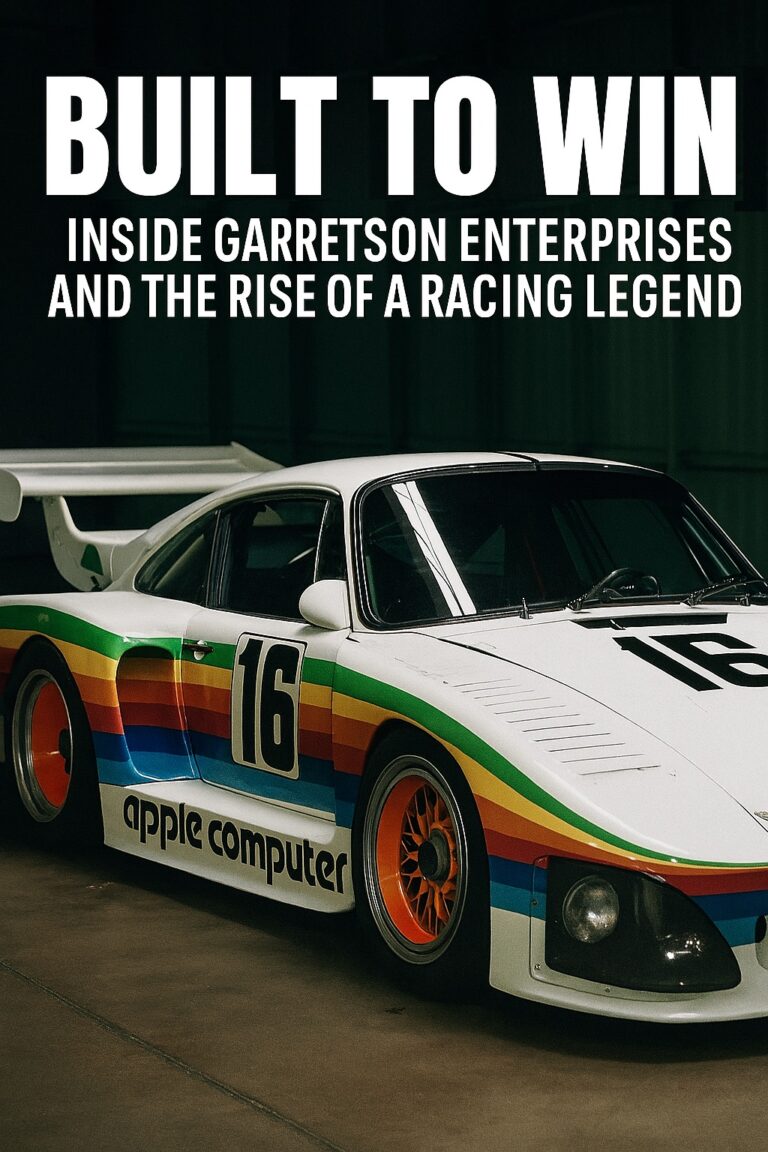
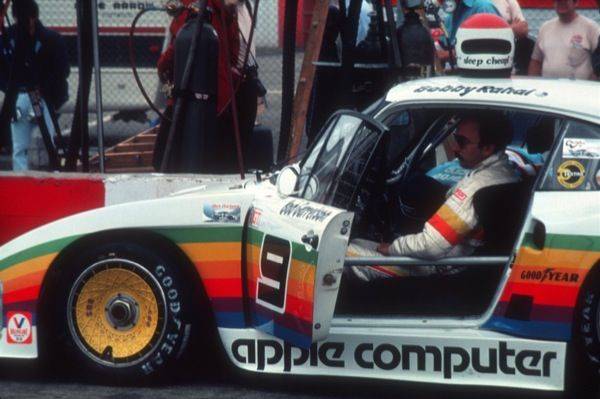
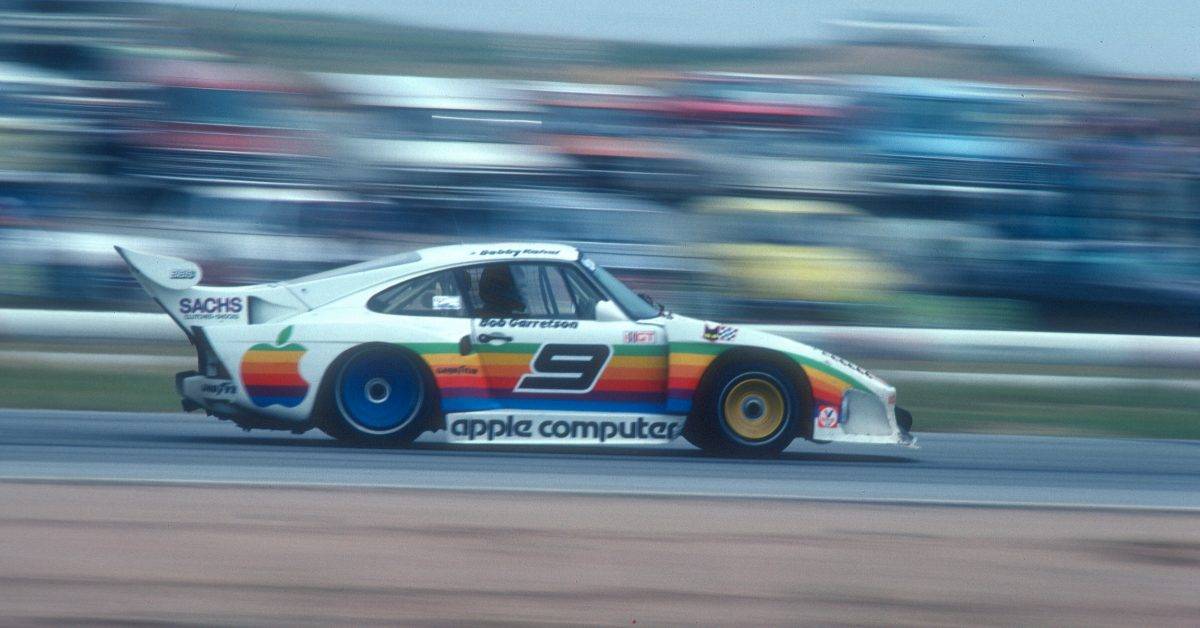
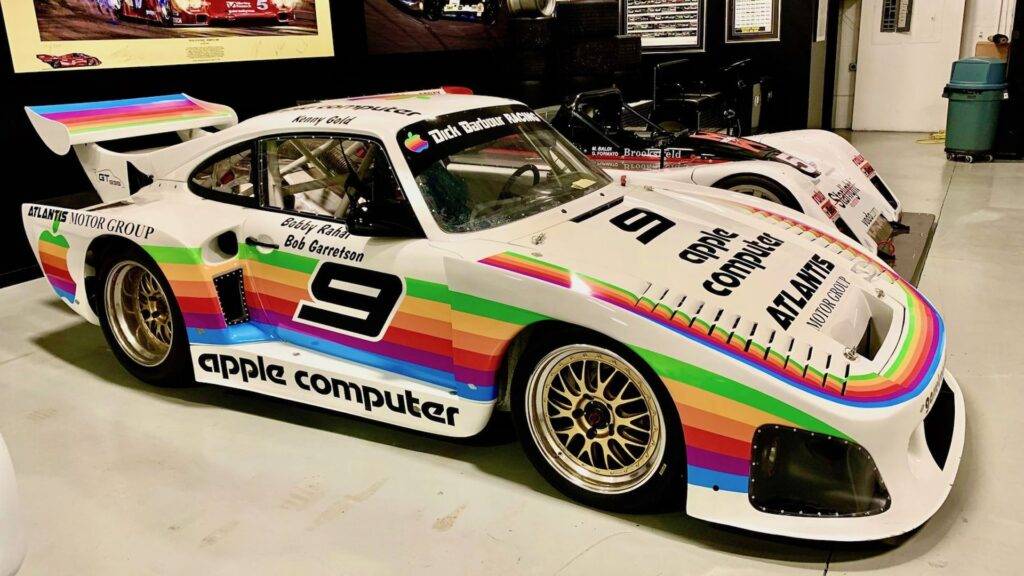
And you tell people you don’t know about the story behind the apple nine 35 and they’re like apple nine 30. What are you talking? Apple had a Porsche. Yeah. And there’s a gentleman behind that and there’s a story behind that and how Steve Jobs and Wozniak were involved in all these kinds of [00:27:00] things. And so you unravel that and it just becomes this, how did we get here?

Moment. In our first season, we had to transition our audience from the written word, because we were already doing journalism, to the spoken word. It just became these interesting stories, these motivational stories, To your point, you came from the UK, you got a job at Microsoft, and next thing you know, you find yourself in Formula One, whether you realize it or not, you inspire other people to go, well, if Dan can do it, maybe I should look into this, maybe there’s a path for me here, that’s what we want to remind people of is that the motorsport and the vehicle enthusiasts.

Community is much larger than people realize there are so many moving parts. It drives so many different industries, so many different jobs. You don’t have to be into cars to enjoy them. Let’s say on a smaller level, maybe you’re marketing, maybe you’re art, maybe you’re engineering, maybe you’re this, maybe you’re that.

And so it all comes together in this really beautiful symphony, but it’s getting to these people’s stories, blossoming the flower and seeing what’s inside to go, well, that’s. How they became who they are. And that’s, what’s important. Not [00:28:00] after the fact that someone’s eulogy and people are trying to put the pieces together.

There is no better truth than living history.

Danny Pilling: That’s super cool. And I need to go back and listen to more of your episodes.

Crew Chief Eric: You only got 200 and some to catch up on. It’s all good. But that being said, let’s talk a little bit more about car culture. Your show, Danny P on Cars, is all about car culture, the journey you’ve made.

You’ve been here in the States now about a decade or so. You’ve worked in all sorts of different industries. Tell us about the culture shock coming from the UK, which per capita, the UK has more tracks and car meets and autocrosses and you name it than probably anywhere on the planet. It’s a very heavy car culture there.

You come to the United States and you move all the way to the Pacific Northwest. How do you compare and contrast European car culture versus the U S

Danny Pilling: yeah, I think the first thing I would say is that growing up in the UK and car culture in the UK, you’re very much in a bubble. You don’t necessarily get exposed to the great car culture that’s in the U S from a motorsport perspective, we have formula one, which [00:29:00] obviously is now becoming much bigger on the worldwide scale and specifically in the U S but you generally had.

Formula One, touring cars, and some rallying. And we didn’t get exposed to IndyCar. We didn’t get exposed to NASCAR. At least for me, there was no real knowledge of all this great history and great car culture. I mean, we would see films like, um, American Graffiti. You would hear about some of these racing legends who are American like Andretti, which I know you folks had him on your podcasts the other week.

There was definitely this bubble. So when I moved to the U. S., it just became a real learning opportunity for me to learn about car culture. Really early on, I sat at a dinner and the son of Dan Gurney was sat next to me and I’m embarrassed to say I didn’t know who Dan Gurney was. So really, this has been a big opportunity for me to just learn a lot more about U.

S. car culture. You know, learn everything from hot rodding all the way through to drag. I went to my first drag race about a month ago in Pomona in California. And again, I was just blown away a completely different set of car culture. So, you know, as you kindly alluded to, that was one of the reasons with the [00:30:00] podcast was to try and investigate more of this and share more of this on a wider scale.

So I think that’s the first difference, you know, just very much you’re in a bubble. I guess you’re on an Island, but you’re very close to Europe. I think we got a lot of different cars, you know, so some cars didn’t make it to the U S and some cars didn’t make it to Europe from the U S you talk about wagons, wagons are a big thing in the UK.

If a manufacturer is making a hot version of a car, take the M three, for example, and you M three M four, they’ll do a wagon version, whereas wagons don’t tend to sell well in the U S so you get the SUV version instead. I think I’m right in saying that in the U S BMW, you didn’t necessarily get the hottest versions of the BMW cars, or if you did, they weren’t necessarily as tuned as highly as the European.

So it’s just a big learning opportunity for me.

Crew Chief Eric: And that’s systemic in the German manufacturers. Cause Volkswagen does the same thing. And obviously the Italians are just making a resurgence now, but you see it across the board where we will never get the Scirocco. It doesn’t matter how many times I beat on Volkswagen of America’s door.

It’s not going to happen, right? The new [00:31:00] golf are three 33. We’re not going to see that. So they got the fun stuff over there, but I’m also envious of what you guys have in the UK. And some of the best tracks are within a couple hours distance. I get it. Everybody in mainland Europe complains. If they got to go from France to Germany, it feels like they’re going.

So far away, but the United States, you can fit Europe in it. Like six, seven times. I don’t know. Everything here is so spread out. I’d love to go from spa to Lamont to Hockenheim to the ring in a day here. That’s not possible, right? Not really anyway.

Danny Pilling: No, it’s very true. But also I think you folks do things bigger.

So I went to Daytona earlier in the year for the first time. I went for a bike race actually, the Daytona 200. And wow, what a facility that is. I don’t know how many hundred thousand people can fit in that, but there’s nothing like that in the UK or even in mainland Europe. Everything’s a smaller scale.

The tracks might be similar size in terms of mileage, but you just don’t have those kind of almost coliseum esque.

Crew Chief Eric: And it’s funny that you lump what [00:32:00] we consider motorsports disciplines Into car cultures. So for us, drag racing is a discipline of motorsport. It’s part of the, let’s say the racing community or the racing culture versus the car collector culture, where then you have the concourse folks, you get the pebble beach crowd and Amelia Island and touring and what we call road rally here, and then the people that do all the car care stuff and collectors in general.

You’re very progressive in the thought that it’s all just one community where we tend to split things into, are you a racer or a collector?

Danny Pilling: Ultimately, there are car people. And then off of that, there are tribes, but those tribes intersect. One week we’ll go to do the NHRA and watch the drag racing. The next week, they’ll be showing a car at Pebble Beach.

For me, it’s very much, you’re not one or the other, you can be many.

Crew Chief Eric: No, that’s absolutely the best way to look at it. We try to extol the idea that Car culture in general is inclusive. And then people have put up these facades and these boundaries to say, well, I’m a hot rodder. I don’t want to deal with the import guys.

And it’s like this tug [00:33:00] of war that doesn’t need to exist. It’s why can’t the Nissan guy and the Ferrari guy and the Corvette guy. Collaborate together in a room and just talk about cars and enjoy it. And that’s what our shows bring to the table, right? Is this intersection of these different communities to say, this is what it’s really all about.

Moving to the Pacific Northwest specifically is a little different than California and even California car culture. It’s this. War between the North and the South, San Francisco and Sacramento, putting out all the new carb rules, trying to stifle the car creators and the builders and all that, and everybody in Southern California is like, send it, man, we’re going to build the coolest new hot rod and Siamese two cars together.

But when you go North past Oregon and you hit the Puget sound out your way, you get a lot of rain and I wonder what the car culture is like compared to California.

Danny Pilling: Yeah. And I’ve been lucky to spend time in both car cultures. And the thing with Seattle is. Obviously, we have bad weather for a good six months of the year.

But I would say that we make up for it for the other six months of the year. On [00:34:00] my latest podcast, I was talking to a friend of mine who’s a BMW collector, and he talked about the Space Needle being a magnet for great cars. It’s not a needle to show world trades, actually a magnet for great cars. So from a car collections perspective, I think we’re very lucky.

We have probably three or four of the finest car collections in North America up here. They’re in private hands, so it’s not always easy to go see them. At one point in time, we had four… 250 Ferrari GTOs in the Pacific Northwest. So for a place that rains a lot, to have those cars was pretty significant.

You know, as soon as you get to the summer here, or at least signs of the summer, things open up. So every Saturday we have various cars and coffees and an event called Exotics, which is, they have a list of which cars are allowed to exhibit and which cars aren’t, it’s that exclusive. Which some people like, and some people don’t like, I just appreciate the fact you can turn up and see some really rare cars.

We have regular different cars and coffees events on Sundays. We have car shows. We’ve got three or four racetracks within stones throwing distance. So I [00:35:00] think the car community is pretty good and it’s very vibrant. Lots of good clubs. I’m a member of the Porsche Owners Club, and you know, every night there’s practically something on you can do, whether that’s going for a drive and pizza or going to one of the tracks for an autocross day.

I think it’s pretty good, but you have to appreciate that come October, you’re probably not going to see those friends in car context for three, four, five, maybe six months.

Crew Chief Eric: Oh, the times I spent in the Seattle and Oregon area, I noticed there was a very large Air cooled Volkswagen and Porsche community.

Is that still true now? It’s been a while since I’ve been out there.

Danny Pilling: Yeah, there is a, a lot of those folks. There is a chapter of what’s known as the R group, which is the outlaws and hot rodders of Porsche. So after California, which is where it was founded, the next chapter was up here in the Pacific Northwest.

So we get lots of classic Porsches and some Beatles and that sort of stuff. But we also have some really amazing like Japanese cars, for example, I live out in a place called Alki, which is a little beach area of Seattle. And it’s a regular route for all the [00:36:00] car community to drive through. So every night you’ll see a different set of cars driving through and you see these JDM cars that have been modified or you see low riders.

So yeah, I think that’s a really good mix. So looking back to the UK, is there anything you miss? Well, I miss a good curry and fish and chips, but that’s not really car related. So I miss being able to drive to racetracks for things like touring cars. You know, we have a couple of really good racetracks that have competitive events on, but we don’t really have anything like going two hours down the road and going to see the touring cars and then maybe the next weekend going two hours in a different direction and seeing the next race in that series.

So I kind of missed that. I miss being able to go see my friends in the Formula One teams. Super lucky to work with three of the teams. Whenever I’m back in the UK, what I would generally do would go for a coffee at one team, go for lunch at another, and then go for a cup of tea at the third team. So I missed that as well.

But yeah, more on the motor racing side of things, I think.

Crew Chief Eric: On your show, you also talk about the collector car world a little bit. I wanted to touch on your thoughts on the rise [00:37:00] in collector cars and prices and how things have gotten out of control.

Danny Pilling: Yeah, I mean, again, that could be a whole series on a podcast.

I think the things for me is it’s very much a generational thing in terms of which cars tend to get the premium collections. Depending on what you grew up and what you had on your wall, then that might be the car that you kind of want. You know, a lot of my podcast guests, they get onto that ladder of car collection because of what they loved as a kid.

They realize that at times it’s very difficult if they miss the ladder. Peter Gleeson talked to me about his love of BMW and… If you talk to a lot of people, the ultimate BMW is the 507 and he never got on the ladder for the 507. Every time he saw them and wanted one, they were too expensive, or he thought they were too expensive.

And then before he knew it, they doubled or trebled in price. The thing is, if you love a car and you want to collect a certain car, then get in as soon as you can, because the chances are that if you love it, other people will love it and go up in value. There is always [00:38:00] a link between motorsport and car collection in terms of collecting classic cars.

You look at the impact that some of these motorsport cars have on used car prices, right? So the most expensive car sold at auction was a Mercedes. That was a historical motorsport car. You look at the 250 GTOs, which previously had been the most expensive cars sold at auction, and then motorsport cars.

They might be road cars as well, but I guess the point I’m trying to land is that motorsport has a massive influence on All up car community collecting, not

Crew Chief Eric: just motorsport. And one of the things about your show is you have this bit called, what’s your criminal record car? I won’t say that my jaw didn’t hit the floor when I heard your answer, because it’s very rare that this car comes up in conversation.

So would you care to enlighten our listeners?

Danny Pilling: Yeah. So part of my podcast, I do a, uh, a bit of background on the guests. And one of the questions I ask is have they ever owned a criminal record car? So what is a criminal record car? Well essentially it’s a car that you’re kind of embarrassed that you once [00:39:00] owned.

Now I want to be really clear on this podcast, for the record, that I never owned this car but I was so close to buying this car that it could have been my criminal record car. So you’ve got a picture of the scene, I’m 16 in the UK, the driving age is 17, so I’m very close to 17. I’m looking for my first car, that summer I’d worked all summer on a building site to pay for my first car, and I guess like a lot of impatient 17, 16 year olds, you kind of go for the first thing you see.

Anyway, at this car dealership, there was a Yugo. Now it wasn’t just a regular Yugo, this was a Yugo with a body kit. So close to buying this car and I guess it’s probably the only time I can be really thankful that my parents stopped me. So I didn’t get it, didn’t own a criminal record car, but it was super close.

But some of the other examples on my podcast, people have bought cars and it turned out to be two cars welded together. I also want to be clear that you can’t have a criminal record car if it was inherited. So if you got your grandfather’s car and it was still an embarrassing car, that’s not a criminal record car because that’s got sentimental value and, you know, lots more.

So criminal [00:40:00] record cars are ones that you’ve actually bought. Do you guys either? Have you have a criminal record car? I know Brad’s got one. Come on, Brad.

Crew Chief Brad: I’m not embarrassed. I’m embarrassed in the condition that it was in. But I’m not actually embarrassed because had it been a running driving car, it would have been pretty cool.

It was a, uh, 924 turbo.

Danny Pilling: Nice.

Crew Chief Brad: So that’s definitely not a criminal record car. Given your definition of a criminal record car, I can’t think of any car that I’ve owned that I’m embarrassed by.

Crew Chief Eric: And I have an interesting caveat to this, which is I never technically owned my criminal record vehicle and now that it’s gone I can openly admit that I fostered for a year a bright yellow 2003 Pontiac Aztec GT.

Wow.

Danny Pilling: You would do hard time or hard porridge as we would say in the UK. If you’re up against the judge on that one.

Crew Chief Brad: I will say that I haven’t owned it, but I do have a deposit in on a criminal record car. Oh, yes you do. Anybody listening knows that I’ve got a [00:41:00] deposit in on a Tesla cyber truck that I’m trying to get rid of.

Danny Pilling: Yeah, I’ve seen one in real life. Have you? There’s one in the Peterson right now in L. A., the Peterson Automotive Museum.

Crew Chief Eric: Interesting, I wasn’t there when I was there the last time, so that’s pretty cool. Did it have working laser windshield wipers?

Danny Pilling: No, no, I didn’t see any dents on the door or the window, so I don’t think it was the one that was there at the launch.

And behind it was the Tesla quad bike, which also looks really cool.

Crew Chief Brad: Yeah.

Danny Pilling: But I think that is a criminal record car, so um, yeah, there’s a sentence to be had there, I

Crew Chief Eric: think. Ha, From your perspective, growing up in the UK, what would you define as a beautiful car? I

Danny Pilling: think for me, any car where you look at it more than once and you discover new angles, or you discover things that you weren’t thinking about the first time you looked at it.

So you’ve obviously got an appreciation for it the first time, but then you look again and you think. How much thought has gone into this car? For me, the most beautiful car in the world is the Mercedes Gullwing. I love the lines on that car. And every time I look at that car, I see another level of detail I haven’t thought about.

Crew Chief Brad: So the opposite [00:42:00] of that question, Brad, would you consider it a terribly ugly car other than a Yugo or an Aztec? Yeah, those are off the list. They’re disqualified.

Danny Pilling: I think again, it’s the thought. If I look at something and it’s just angles, I don’t feel like they’ve put a lot of thought into it and maybe it’s function over design.

Maybe it’s a utility versus a soulful car. I think, you know, things like. The Aztec, but also things like the Fiat Multipla, but I also think that some cars at the time are ugly, but over time, you might appreciate them more or things have changed and you might actually turn and go, well, I thought that was ugly when it came out, but actually now I’d really like to drive,

Crew Chief Eric: you know, being from the UK, I thought you were going to say the Reliant Robin.

Danny Pilling: Oh, you see, that’s got a lot of character because it was associated with TV and film. So in the UK, we had this BBC series called Only Fools and Horses. The main character used to drive one, but it was a van. So it was a Reliant Robin van in bright yellow. You can do a search on the web for it. But, uh, so that kind of transcends it because it’s got this character from a TV series.

Crew Chief Brad: I wonder how fast Reliant Robin van would be around [00:43:00] Nürburgring instead of the transit.

Danny Pilling: Oh, wasn’t there an episode on Top Gear where they put one on a rocket and sent it up? That was one of the best episodes ever.

Crew Chief Brad: That was the fastest Reliant Robin ever. Yeah.

Crew Chief Eric: So let’s take your criminal record and spin it a little bit.

What about a guilty pleasure car? Something you’d like to drive, something you’d like to test, or even maybe own, but are embarrassed to admit it?

Danny Pilling: I quite often search the internet for used cars, and I get to alternation a lot. And at the moment, the cheapest used convertible on alternation is about 6, 000.

And it’s a Chrysler ET convertible, but it looks like a pram. And I just wonder what would that like be like to do on a road trip?

Crew Chief Eric: There’s many cars that fall into that category. One of Brad’s favorite, the Nissan Murano cross cabriolet comes to mind.

Crew Chief Brad: No, no, that is not a guilty pleasure car. That is just a travesty to the automotive community.

Danny Pilling: It’s like two big fingers up. Isn’t it? They ultimately basically,

Crew Chief Brad: yeah. Nissan said the CEO’s daughter wanted to own a convertible [00:44:00] Murano. So they made one.

Crew Chief Eric: So Brad, what is your guilty pleasure card? Do you have one?

Crew Chief Brad: I feel that I would look extremely silly driving around in a Volkswagen Cabrio. But I would love to have one.

Crew Chief Eric: I say the same thing about one of your most hated cars, which is the Fiero. I think it would be fun to borrow and drive around and then just give it back. Just to say that I did.

Crew Chief Brad: We need to convince our resident wheeler dealer to buy one so we can drive it.

Crew Chief Eric: That’s right. And prove that you don’t fit in it either.

Right. That’s true. That being said. It really leads me into another question, which is something I’ve experienced more than once, and I’ve taken ownership and have test driven and written about what we call hero cars. So have you ever had that never drive your heroes experience, Dan? I

Danny Pilling: don’t think I’ve driven a car that’s disappointed me.

I think every hero car I’ve driven has been fantastic. So things like, you know, when I was growing up, I managed to do this work experience, as you talked about. An internship, as you may call it at Porsche cars, great Britain. And that set me on this track for [00:45:00] life of what is that dream car you want to go and own?

And the nine 11 was it? And about four years ago, I was able to buy a nine 11 and that was my hero car for many years. I was working hard and it didn’t disappoint. I think from that perspective, the hero car met and exceeded expectations, but I don’t think there’s been anything where it’s not got to a point where I was like, you know, that car really is overrated.

Crew Chief Eric: For me, it’s been all the movie star cars. They tend to break the illusion that you had about what a Ferrari 308 should drive like, or a Smoky and the Bandit Trans Am, even a DeLorean DMC 12 for that matter, or any number of cars that are on that list from, let’s say, the 80s. Maybe they’re because they’re cars of a certain era, you know, late seventies, early eighties, that kind of thing.

They all are plagued with issues and problems and their own quirks, but that’s also what makes them charming to the collector. There’s very few cars I’ve walked away from that I’ve seen on TV or in a movie or that I considered hero cars. And I went. Yeah, that was an awesome ride. That was an amazing car, even a Renault turbo too, [00:46:00] which is super quirky.

And it was a lot of fun to drive. There were a lot of things in the negative column that left me going, I would never want to own one of these. I gladly drive it all day long, but it takes an extra special, something to cross that bridge when you’re collecting cars to say, yeah, I got to have that. Now I’ll launch a Delta Integrale.

That’s. They’d be a different story. I haven’t driven one yet. I could be disappointed. So I still hold that one in pretty high regard.

Crew Chief Brad: I don’t think this is a hero car, but it definitely disappointed me driving it. And that would be basically any Corvette I’ve driven after watching the top gear reviews of them and any review actually by anybody European.

They always seem to rag on it and say, it’s not as good as the nine 11. And, you know, after driving a couple of many different generations, I totally get it. They’re totally right. It’s just not having actually driven a nine 11 now is no, they’re not anywhere near, and then another car that is a hero car, but I wouldn’t say it disappointed me, but it is definitely not for me is a Dodge Viper after driving one.

That’s where [00:47:00] I draw the line. It’s just too much car for me, especially it being somebody else’s car that I ended up driving. I was way too uncomfortable driving it. And I don’t, I don’t mean like my fit. Yes, I was uncomfortable sitting in it, but just like driving it, I was uncomfortable and on edge the whole time.

Danny Pilling: When I lived in the UK, I would come to the U S for vacation and about three or four times I would rent Corvettes from Hertz and I would have the opposite. And I don’t know whether it’s just the moment, right? You’re there in the moment. You’re on vacation, you’ve come from the UK, you’re in Southern California and the sun is shining and you’re driving a convertible and it’s a convertible Corvette.

But I always really enjoyed them, but I kind of took them for what they were. I wasn’t expecting, you know, the most sophisticated driving machine. I was expecting, um, I guess a muscle car.

Crew Chief Eric: That might be part of our problem is that because we always approach things with a motor sports filter on. And because we coach and we’re in so many cars, weekend after weekend, after weekend, we get to see all the bad sides of a vehicle, whether they’re stock or modified or otherwise.

And there are cars that [00:48:00] you get extremely excited about coaching and then they tend to disappoint you. And you’re like, really? You know, the driver is sometimes like, Oh, would you like to drive it? And you’re like, well, okay, sure. And it still doesn’t change the perspective. It is different from the left seat, but it is what it is.

I agree with Brad. There’s only been a couple of cars that have transcended. One of them for me was the Skyline R32. That car I walked away from completely satisfied. This is everything I expected it to be. And 10 more things on that list. That was an incredible car. To this day, I think it’s still an incredible car.

What else what’s next? What other projects are you working? I can’t be just focused on the podcast.

Danny Pilling: Yeah, I’ve got some fun racing coming up. I’m going to be going to a few races for the super bikes. The thing I will say about bike racing is four years ago, before I went to a race, I would have been the first to dismiss that sport as in that’s just not for me.

I love formula one. I love rally cars. I love touring cars. I don’t really have a space in my heart for motorbikes. I was lucky enough to be invited to go to a local [00:49:00] race in this super bike series, the Moto America, and I just saw a different world of racing. I saw riders who are so in tuned with these bikes.

There’s so much involvement, so much balance. It’s so much more physical than driving a car, with no disrespect to any race driver in the world. And I’ve been hooked. For the last four years I’ve been watching either on TV or going to the races because obviously they’re not two hours drive away always.

But I’ve been hooked. There’s different classes but each class has its own interest. You know there’s these early stage career classes where there’s a girl called Kyla Yakov and she’s kicking the butt of all these young boys. It’s so great to watch. And then at some races like Laguna, they’ll have baggers racing, you know, Harley Davidson type bikes, and they’re going around the track how they can break, how they can take those corners, how they can go down.

The corkscrew is just unbelievable. And then you’ve got the big boys doing the super bikes. You, that’s what I’ve got coming up. I’m gonna be going to two, uh, races in the season of that. And as I say before, before four years ago, I would’ve told you if you’d have said to me, Hey, Dan, go and watch some [00:50:00] super bikes.

I’d be like, you’ll be mad if I’ll enjoy that. But I love it.

Crew Chief Eric: On your first episode, you were talking about the bucket list guests or the interview or the goal for your show. So where do you envision yourself next season? You know, who is on your list of people that you really want to interview and get behind the microphone?

Danny Pilling: You obviously think about that when you conceive a podcast, right? You don’t just conceive a podcast because you want to talk about cars. You think about it because you know that there are cool people who you would love to have on your show. For me, I think the first thing I would love is someone that I don’t expect, but someone of notoriety reaching out to me to say, Hey, I’d love to go on your podcast.

I don’t know who that is, but I know when that email comes in, I’ll be like calling them within 30 seconds of the email coming in. So that’s kind of the first thing I think if I look at. My bucket list, or at least my mental bucket list, it’s people that I find interesting that I enjoy their content. So one example, I’ve talked about this on my podcast a bit, is there’s a lady called Sarah Entuned.

She has a YouTube channel. I think she’d be super interesting to [00:51:00] have. Because she kind of has her own quirks. I think she has an element of Britishness about her, even though she’s American. If you watch her YouTube channel, she evaluates each car and she has categories. And I kind of feel like some of that may be influenced by British TV, like maybe Top Gear or something like that.

So she would be one guest. I would love to have someone like Doug DeMuro, you know, someone who is your guy next door, but has managed to make a very successful career out of YouTube and now car auction sites, and I would love to get, although they say never meet your heroes. Imagine if I could get someone like Lewis Hamilton.

I mean, I think we’re probably talking episode or at least season six by then, but, uh, that’s the dream maybe. So maybe Lewis Hamilton would be the ultimate, but I wondered, like, if you were to recommend three episodes, which episodes would you recommend?

Crew Chief Eric: Would you like celebrities or regular people? Would you want something completely off the cuff?

Our show is a little non sequitur, so it all depends. I’m

Danny Pilling: thinking like, if I’ve never heard your podcast before, which three episodes best represent it? If

Crew Chief Eric: you’re a motorsports fan, I’ll give you the top five. Lynn St. James. Andy Pilgrim, Randy [00:52:00] Lanier, Mario Andretti. And if I throw in a collector car one in there, Dennis Gage.

I’m surprised you didn’t go with Joey Jordan. Joey’s is a Top Gear special. That’s the bonus episode you listen to because it is so different than everything else. That is a coming of age story. That is a man struggling with his own demons. It’s an amazing adventure that he went on basically by himself from LA all the way to Patagonia.

I don’t want to spoil it. Yeah. Listen to Joey Jordan’s great South American adventure. It’s called. Well, I know what I’m doing for the next few evenings. And there’s always episodes that will surprise you. And I don’t want to offend any of our guests because they’ve all been amazing. If you’re looking for those.

Oh my God moments. Some of those that I mentioned are just wow. Like I didn’t really know that person. Even Dennis Gage, you know him from afar, 30 years on the air of my classic car. But do you really know him? And he talks about his humble beginnings on a farm in Indiana and where it led from there, and he’s just like, wow, what a story.

[00:53:00] We shouldn’t be targeting celebrities, although there are a lot of fun to talk to, right? It’s sometimes it’s the thing that gets you to the next thing. And sometimes that guest will bring you to a place you never expected and introduce you to people that were behind the scenes that may be more interesting than that person that’s at the top of your bucket list.

So you never know. And that’s part of the adventure of podcasting, right? Aside from all the technical stuff that happens behind the scenes. Well, Dan, we have reached that part of the episode where I get to ask you our final question, which is any shout outs, promotions, or anything else you’d like to share that we haven’t covered thus far.

Danny Pilling: I’m an ambassador for the Peterson Automotive Museum in LA. Generally what that means is it’s kind of not really official, but I help them secure car collections up here. So we introduce them, I create networks. We videoed Peter’s collection of BMWs on an iPhone and it’s had 77, 000 views. So if you do a search for Peterson Automotive Museum.

BMW car heaven, you’ll see his collection. And we also filmed a rally car collection. So you talked about group B, we filmed dirt fishes, a rally school up here and the owner has a car collection. So we got to film that car [00:54:00] collection as well. Some of the group B cars that he’s got. If people are after an extra podcast, after listening to yours, then I’d ask them to check mine out.

And I would just put a quick nod to my mentors, Ryan and Doug from the steering committee. If you want a third podcast, check those out.

Crew Chief Brad: Eight years ago, Dan Pilling moved over to the U. S. and has been learning all about our car culture ever since. This includes road trips, car events, as well as becoming an ambassador for the Peterson Automotive Museum in Los Angeles.

Dan launched his own podcast earlier this year, Danny P. on Cars, capturing the stories of people he’s met along the way. If you want to learn more about Dan, follow him on socials at D nine N N Y P on Instagram at Dan Pilling on LinkedIn and Dan Pi on Twitter. Be sure to catch his show, Danny p on cars everywhere you stream or listen to podcasts along with his YouTube channel.

Crew Chief Eric: Thanks, Brad. And thank you, Dan, for coming on break fix and sharing your story with us and joining the mosaic of other stories that are in the [00:55:00] catalog. And we hope to do some future crossovers with you. Maybe have you back. Maybe we’ll be on your show, but you’re here in lockstep with a lot of us in this community, trying to get these stories out to people that have never heard them before.

It is an epic task. And I thank you for being part of this, for helping get this. information out there to people and more importantly, keeping the vehicle and motorsport enthusiast community vibrant. Because if we don’t share these stories, then it all just starts to fade to gray. So thank you for what you’re doing.

Danny Pilling: Yeah. Thank you for, um, the opportunity, you know, very honored to be on your podcast. And as I know, as I’m bringing my guests on, it’s not an easy thing to run a podcast and you’ve always got this kind of fear that is your guest going to be okay. You know, are they going to do okay. And. No, thank you for guiding me through the podcast.

And it’s been great fun. Thank you for sharing. Yeah, no worries. Thanks gentlemen.

Crew Chief Brad: If you like what you’ve heard and want to learn more about GTM, be sure to check us out on [00:56:00] www. gtmotorsports. org. You can also find us on Instagram at grandtorymotorsports. Also, if you want to get involved or have suggestions for future shows, you can call or text us at 202 630 1770 or send us an email at crewchief at gtmotorsports.

org. We’d love to hear from you.

Crew Chief Eric: Hey everybody, Crew Chief Eric here. We really hope you enjoyed this episode of BreakFix, and we wanted to remind you that GTM remains a no annual fees organization, and our goal is to continue to bring you quality episodes like this one at no charge. As a loyal listener, please consider subscribing to our Patreon for bonus and behind the scenes content, extra goodies, and GTM swag.

For as little as 2 and 50 cents a month, you can keep our developers, writers, editors, casters, and other volunteers fed on their strict diet of fig Newtons, gummy bears, and monster. Consider signing up for Patreon today at www. patreon. [00:57:00] com forward slash GT motorsports, and remember without fans, supporters, and members like you.

None of this would be possible.

Highlights

Skip ahead if you must… Here’s the highlights from this episode you might be most interested in and their corresponding time stamps.

  • 00:00 Meet Dan Pilling: From Porsche to Microsoft
  • 01:32 Dan’s Early Love for Cars
  • 02:14 Internship at Porsche and Career Decisions
  • 04:18 Microsoft and Formula 1 Partnerships
  • 09:38 Technology in Formula 1
  • 14:15 Comparing Formula 1 and Other Motorsports
  • 22:18 Danny P on Cars: The Podcast Journey
  • 28:14 Car Culture: UK vs. USA
  • 29:44 Exploring American Car Culture
  • 30:04 Differences Between US and European Cars
  • 31:58 The Intersection of Car Communities
  • 33:16 Pacific Northwest Car Scene
  • 36:53 Collector Car Market Insights
  • 38:31 Criminal Record Cars
  • 43:09 Guilty Pleasure Cars
  • 44:30 Hero Cars and Disappointments
  • 48:32 Upcoming Projects and Bucket List Guests
  • 53:22 Final Thoughts and Promotions

Bonus Content

There's more to this story!

Be sure to check out the behind the scenes for this episode, filled with extras, bloopers, and other great moments not found in the final version. Become a Break/Fix VIP today by joining our Patreon.

All of our BEHIND THE SCENES (BTS) Break/Fix episodes are raw and unedited, and expressly shared with the permission and consent of our guests.

Double-Crossed!

Tune in everywhere you stream, download or listen!

Listen on Apple
Listen on YouTube
Listen on Spotify

Learn More

About Danny P on Cars

What is it about cars? Why do we love this inanimate object? Danny P on Cars is a new podcast hosted by Danny P, who is a passionate car lover. In this podcast, Danny P interviews guests who he considers to be part of his tribe and shares their stories about their love for cars and car ownership. The podcast is focused on the passionate people and their stories of cars. Whether you’re a seasoned car enthusiast or just starting to explore your love for automobiles, Danny P on Cars offers engaging and informative discussions that are sure to captivate and entertain. So, get relaxed with your favorite drink of choice and join the ride with Danny P on Cars!

If you want to learn more about Dan, follow him on social @d9nnyp on Instagram, @danpilling On LinkedIn and @danpi on Twitter …. Be sure to catch his show “Danny P on Cars” everywhere you stream or listen to podcasts; along with his YouTube Channel.

From real-time data sequencing at street circuits like Monaco to enabling remote car design during the COVID-19 pandemic, Dan witnessed firsthand how IT transformed racing. He helped teams like Williams build business cases for adopting cloud tech and even supported IndyCar engine manufacturers in using machine learning to predict failures. As he puts it, “Motorsport is a great environment to test technology – you see results fast.”

Dan dove deep into the changing face of Formula 1. While today’s cars are technological marvels, the sport’s tight regulations have curbed the wild innovation of earlier eras. Still, Dan believes there’s room for creativity – whether it’s aerodynamic tweaks or data-driven strategy. “The smartest designers still make a difference,” he says, citing Adrian Newey’s influence at Red Bull.

Dan’s motorsports experience spans continents and disciplines. In the U.S., he’s worked with Hendrick Motorsports, Honda, and MotoAmerica Superbikes. While NASCAR and IndyCar may not match F1’s budget or global reach, Dan sees them adopting similar tech strategies – especially around sustainability and data analytics.


From Layoff to Launch: The Birth of “Danny P on Cars”

After being laid off from Microsoft during a wave of tech industry cuts, Dan turned adversity into opportunity. He launched “Danny P on Cars,” a podcast that celebrates the people behind the passion. From Indy 500 veteran Dominic Dobson to BMW collector Peter Gleason, Dan’s guests span the automotive spectrum. “It’s about the tribe,” he says. “If you love cars, you’re in.”

Photo courtesy Danny Pilling

No motorsports podcast is complete without a GOAT debate. For Dan, Ayrton Senna was the most complete driver, but Lewis Hamilton – his personal favorite – has the stats to back up his greatness. The conversation also touched on the future of racing, the rise of endurance series like IMSA, and the enduring appeal of innovation, even in a regulated world.

Dan Pilling’s story is a testament to the power of passion, adaptability, and community. Whether he’s helping F1 teams adopt cloud tech or giving car lovers a platform to share their stories, Dan is driven by connection. As he puts it, “It doesn’t matter what car you own. If you love cars, there’s a commonality there.”

You can find “Danny P on Cars”” wherever you get your podcasts – and if you’re part of the tribe, you’ll feel right at home.


This content has been brought to you in-part by sponsorship through...

Motoring Podcast Network

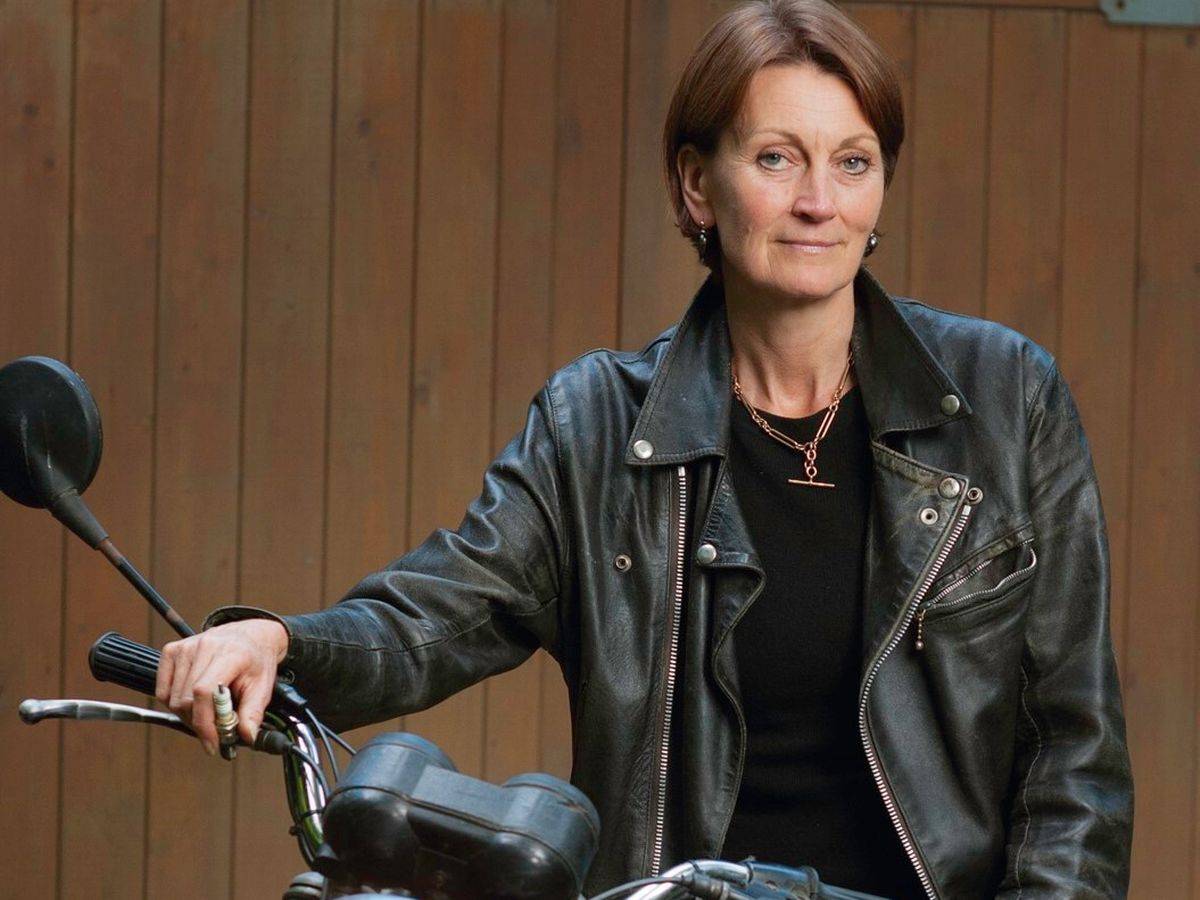
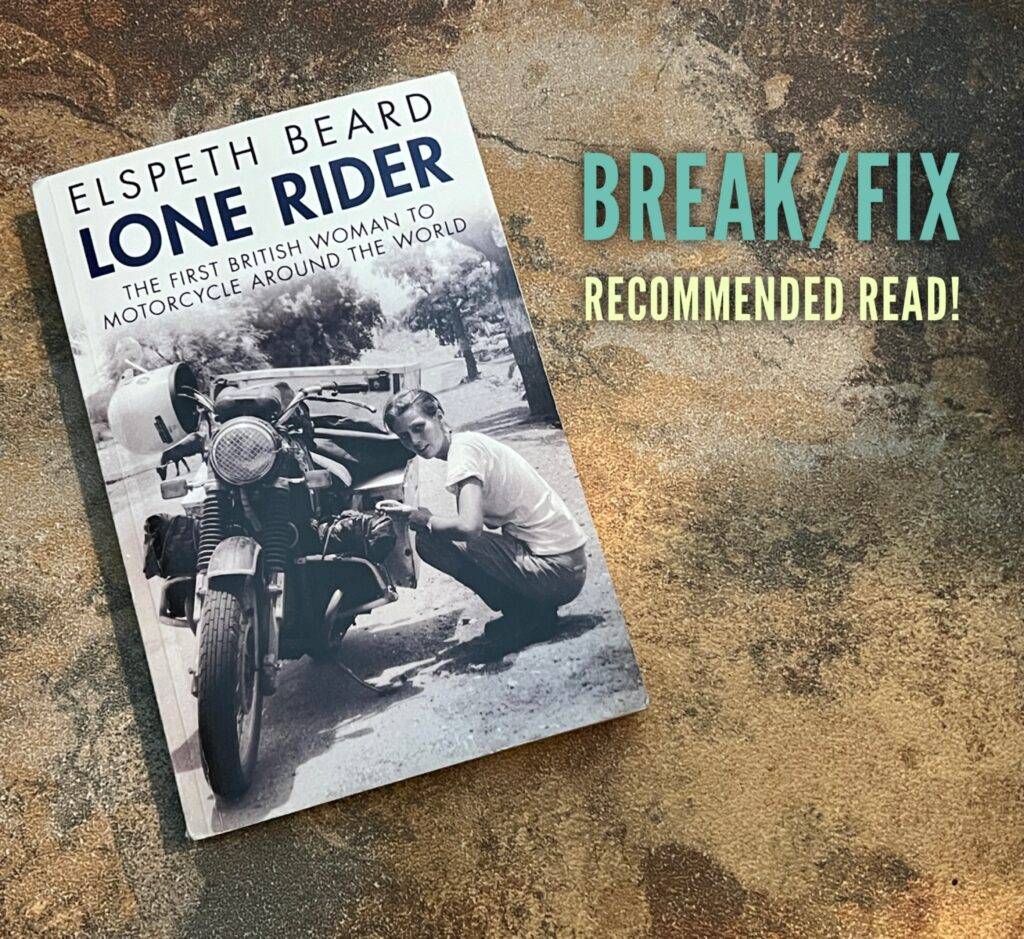
Riding Against the Odds: Elspeth Beard’s 35,000-Mile Motorcycle Odyssey

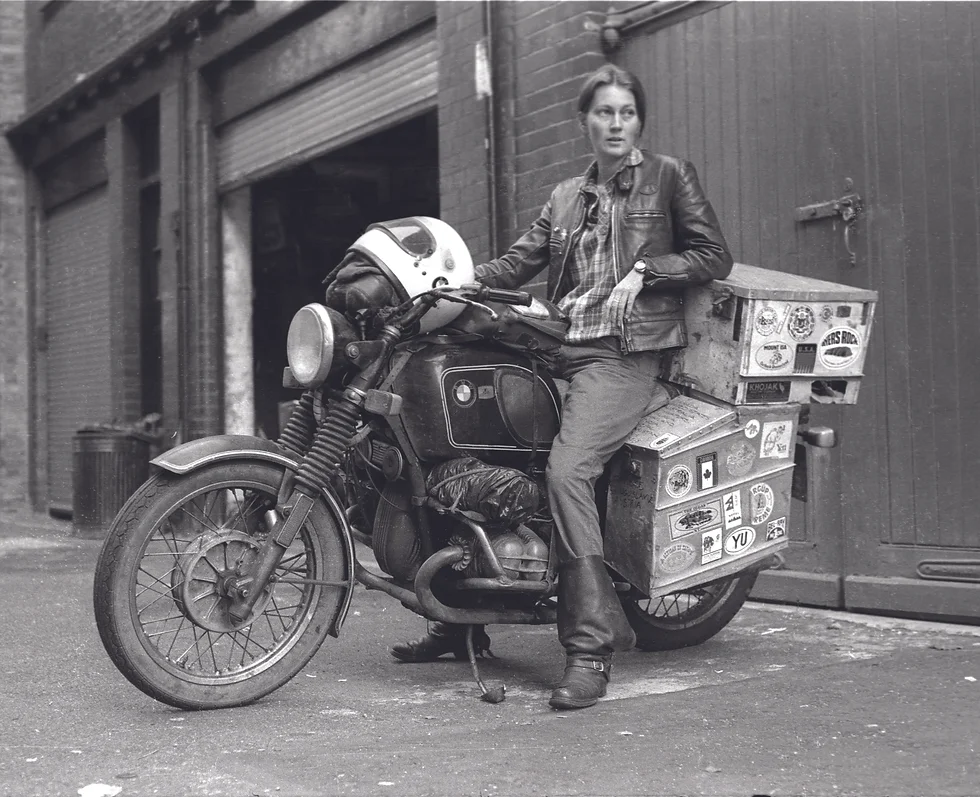
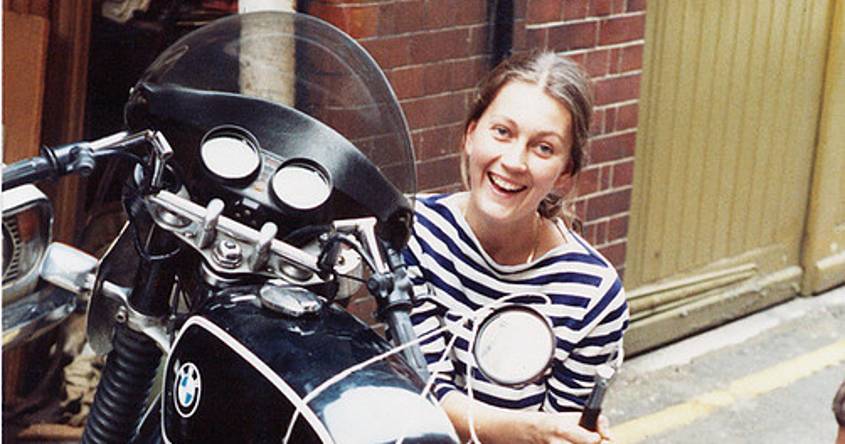
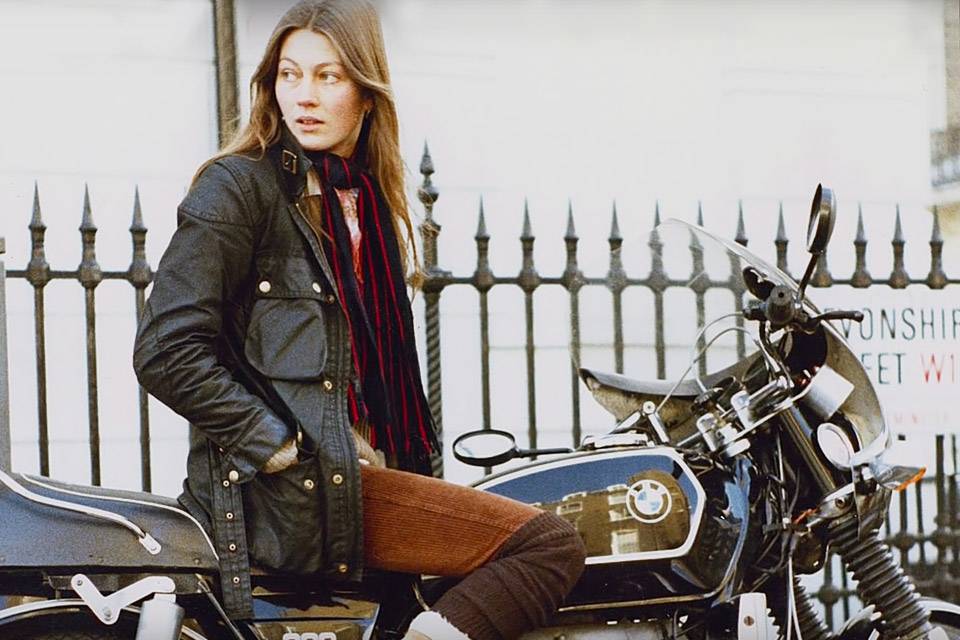
In the early 1980s, a 23-year-old British architecture graduate named Elspeth Beard set out to do something few had dared – especially as a woman. With a BMW R60/6 motorcycle, a backpack full of tools, and a heart full of questions, she became one of the first British women to circumnavigate the globe by motorcycle. Her journey spanned three years, 35,000 miles, and countless moments of grit, grace, and mechanical ingenuity.

Photo courtesy Elspeth Beard

Elspeth’s motorcycle story didn’t begin with a lifelong dream or family tradition. It started with rebellion. Expelled from school at 16, she found herself at a London college finishing her A-levels, where she befriended a group of motorcyclists. Tired of pedaling around the city, she bought a Yamaha YB100 and joined the ranks of London’s two-wheeled commuters. It was practical, not romantic – until it wasn’t.

Photo courtesy Elspeth Beard

Upgrading from a 100cc to a Honda 250, and eventually to a BMW 600, Elspeth began to see motorcycles not just as transport, but as a means of exploration. Trips through Scotland, Ireland, and Europe followed. Then came a solo ride across the U.S. on a BMW R75/5, where the open roads of Arizona sparked a wild thought: “Wouldn’t it be amazing to ride around the world?”

Tune in everywhere you stream, download or listen!

Listen on Apple
Listen on YouTube
Listen on Spotify

Her trusty BMW R60/6 – affectionately called “old girl” – wasn’t just a machine. It was a partner. Elspeth talked to her bike, coaxed her up mountain passes, and promised oil changes in exchange for good behavior. Though she never gave it a formal name, the bond was undeniable.

What made the BMW special wasn’t just its reliability – it was its simplicity. “If I can fix it, anyone can,” Elspeth said. With a basic set of tools and a Haynes manual, she stripped the bike down before departure, replacing seals, cables, and tires. Her mechanical confidence came from childhood, watching her eccentric psychiatrist father dismantle washing machines on the kitchen table. “It took away any fear of taking things apart,” she recalled.

Spotlight

Synopsis

This Break/Fix episode features British adventurer and motorcyclist Elspeth Beard, who became one of the first British women to circumnavigate the globe by motorcycle in the early 1980s. The journey started in 1982 when Elspeth was 23 after graduating from architecture school. Spanning three years and covering 35,000 miles, she traveled across various continents facing numerous challenges, including breakdowns, injuries, and illnesses. Her story of resilience and adventure is shared with the help of Jeff Willis, a returning guest who interviewed Elspeth for his book ‘Human in the Machine.’ The podcast delves into her early inspirations, the impact of her upbringing, the various encounters and challenges during her travels, and her life post-adventure. The episode emphasizes the importance of persistence, adaptability, and the supportive community of motorcyclists. Listeners are encouraged to learn more about Elspeth’s journey through her award-winning book ‘Lone Rider’ and other resources available on her website and social media.

  • How did you get started in Motorcycles? Was there an attraction or just a necessity? 
  • What was the driving factor or inspiration to embark on a round the world journey?
  • Your plan for Survival; as well as Managing Fuel/Speed and Expenses – compromises
  • Language Barriers, Discrimination (race & gender), Struggling with Dyslexia – did that make traveling more challenging?
  • The BMW wasn’t a common bike in the US compared to other brands, during breakdowns or issues; how did you source parts?
  • You seemed to enjoy SE Asia (Thailand, Singapore, etc). Not the biggest fan of India overall? Have you been back? Has your opinion changed? 
  • Was “Lone Rider” written retrospectively or did you keep a journal of all your events over the 3 years and compile it?
  • What did you learn from this adventure, how did it change/mature you as a person? When you look back on it now what are your thoughts/reactions?

Transcript

Crew Chief Brad: [00:00:00] Break Fix Podcast is all about capturing the living history of people from all over the autos sphere, from wrench, turners, and racers to artists, authors, designers, and everything in between. Our goal is to inspire a new generation of Petrolhead that wonder how did they get that job or become that person.

The road to success is paved by all of us because everyone has a story.

Crew Chief Eric: Our guest is a British adventurer and motorcyclist who became one of the first British women to circumnavigate the globe by motorcycle in the early 1980s. Her journey spanned three years and took her across the United States, Canada, Mexico, Australia, New Zealand, India, and throughout Europe.

Jeff Willis: Elsbeth Beard was just 23 years old when she set out on her journey in 1982.

She had recently graduated from architecture school and was feeling lost and disillusioned with her life in London. She decided to take a year off and travel using her [00:01:00] motorcycle as her primary mode of

Crew Chief Eric: transportation. As she rode across the world, Elspeth faced countless challenges and obstacles. She dealt with breakdowns, injuries and illnesses, all while navigating unfamiliar terrain and cultures.

But through it all, she persevered, driven by her love of adventure and her desire to prove that women could be just as capable as men when it came to motorcycle travel. And she’s here with us to share her adventure with you. Joining me to help add ELs Smith’s story to the Break Fix Collection is returning guest Jeff Willis, who interviewed ELs Smith as part of his new book, human in the Machine.

So with that, let’s welcome both ELs Smith and Jeff to break fix.

Jeff Willis: Thank

Crew Chief Eric: you for having us.

Elspeth Beard: Yeah, thank you very much.

Crew Chief Eric: Well like all good. Break fix stories. Elspeth, we wanna talk about your origin, how you got started, especially in motorcycles. Where was the attraction and how you set off on this global journey?

Elspeth Beard: My introduction to motorbikes, I mean, it wasn’t planned or anything like that. None of my family rode motorbikes. My father didn’t, well, it actually [00:02:00] started when I was expelled from school when I was 16. I ended up going to a college in London to finish off my A Levels, which were the sort of exams to get yourself into university.

It was when I was at this college that I met this group of motorcyclists and became friends with them. And at the time I was cycling around London then and I was getting really, really tired of cycling. So Simon, one of my mates, offered to sell me his little Yamaha Y B 100. That was my very first bike.

And in those days in the uk, you didn’t have to take any motorbike test at all. You could buy any bike up to two 50 cc, put L plates on it and off you went. It was brilliant. So that’s exactly what I did. I got myself, my Y B 100, Rick and Nick and whatever, taught me to ride up and down my back road or whatever in London.

And then Monday morning I went off to college for the first time on my bike. But it really was just a cheap and efficient way to [00:03:00] get around London. It was no more than that, and I can’t say that When I got on the bike, I thought, wow, this is amazing. You know? And I had no idea that bikes were gonna become such a major part of my life.

It was just transport. And in London it was the perfect way to get around. I think after a year of the a hundred cc, I got a little bit bored with that, so I bought myself a Honda two 50. And then again, after about a year of that, I got a little bit bored with that. So I bought myself A B M W 600, which was a 60 slash five.

Crew Chief Eric: And that’s the one you brought to the United States on your first trip around North America?

Elspeth Beard: No, when I bought my 600, my 60 stroke five, that actually was the bike where I thought actually you could go places on this it. It was a sudden realization that you could travel on this machine. So I did my first trip around Scotland on my own, then I went round Ireland, then I went round Europe the following summer.[00:04:00]

And then in the summer of 81, I flew out to Los Angeles and I bought myself an old R 75 stroke five. And rode it from the west coast to the east coast, and it was somewhere on that train riding in the open roads of Arizona or something. I thought, my goodness, wouldn’t it be amazing if you could ride around the world?

But I never imagined I would. It was just sort of this crazy thought that came into my mind really that wouldn’t it be amazing if you could, you know, actually ride all the way around the world.

Crew Chief Eric: So one B M W Motorcycle is a purchase. Two, uh, you’re beginning to become a fan, but then the third one, now you’re a collector.

Elspeth Beard: I know. Well, I do rather like the old bms, I have to say, they’re so easy to work on. If I can service them and I can fix them, and I can strip them down and put them back, then anybody can do it. Really. They are so simple. I love knowing that I can fix my bike [00:05:00] anywhere in the world with a basic set of tools.

I mean, it’s pretty amazing, especially now when you think to the, you know, motorbikes these days, which is so over technical and got so much electronics in them. I mean, they’re just a different animal to what it was like. You know, when I did my trip, And I still, now, even today, I like a simple bike when I’m traveling, I still like to know that I can fix it.

Crew Chief Eric: And we’re gonna talk about the journey and the book here as we go along. I mentioned the third B M W, that’s a 74 R 60 stroke six, which is the one you used on this 35,000 mile adventure. And then there’s another one after that that gets mentioned that you purchased after you retired. So you’re four BMWs in and I’m sure a couple more after that.

I’ve owned a few bikes, yes. But I have a question about the stroke six that you rode in the trip and you kept referring to her as she, and in the car community, a lot of us name our vehicles. So I’m wondering, did the stroke six have a name? [00:06:00]

Elspeth Beard: It didn’t actually, I used to talk to her all the time and I used to encourage her and I used to promise her like oil changes if she got me over the mountain pass or she got me to a certain place without breaking down or whatever.

So I certainly had a very close relationship with my bike. To me, she was always a she, I dunno why I would call her old girl quite a lot, you know, come on old girl, let’s get up the hill or something. But I never actually had a name for her.

Crew Chief Eric: So you mentioned turning your own wrenches on these bikes. How did that come about?

Was that just out of necessity? Did someone teach you, were you already mechanically inclined before you started messing with the motorcycles?

Elspeth Beard: I wouldn’t say I was mechanically inclined. I mean, my father was a very eccentric psychiatrist, but he was very much men and make do, he would always fix everything.

And so it was very much part of me when I was a child. You know, he would always have things [00:07:00] apart on the kitchen table. As I grew older, I would start to help him to take things apart. If the washing machine broke down, he’d just take it all apart and I’d help him do it. And I think that took away any fear that I had of taking things apart.

You know, to me it was completely normal. If something was broken and had a problem. You, you know, you just got a screwdriver out and you got the whatever, and you just pulled it apart. You found out what was wrong with it, and you fixed it. And so I very much had that mentality and I am quite good with my hands and I quite like taking things apart.

I used to make, you know, model airplanes and model ships when I was younger. And in 82 when I decided to go on the trip, I realized that in all the countries I was gonna go to, the only person who was gonna be able to fix my bike was me. I wasn’t gonna find anybody. I mean, in half the countries I went to, certainly after I left, you know, Australia, they hadn’t even seen a B M W motorbike before.

So, I mean, you were never gonna find a mechanic who was [00:08:00] gonna know how to fix it. I bought myself a Hanes manual, bought myself tools, the basics, and I just stripped the bike apart before I left because the bike when I left was already seven years old and had 45,000 miles on her when I started the journey.

She was a reasonably well used bike right at the beginning, so I decided to strip her down and I replaced all the seals and the gaskets and I put new cables on tires back. I mean, anything I could think of that would be worth replacing before I left. And I learned a lot about the bike. And also I had friends of mine who had BMWs and so we kind of learned off each other.

I used to go down to the local B M W, you know, mechanic at the dealership and pick their brains and, and ask them questions if I was stuck on so, so I just learned. But I did know my bike fairly well before I left. The only thing I was absolutely hopeless at and still am, is the electrics. I hate [00:09:00] electrics, but the engine, I’m fine gimme anything with the engine, I can do it.

But electrics, it’s a complete mystery to me. Electrics, I prepared myself as, you know, the best that I could.

Crew Chief Eric: You spoke about preparing for the trip and setting about on the trip and things like that. And one of the things. In Lone Writer, your book that chronicles the entire adventure is how you set about going on the trip.

Lone Writer implies that you sort of just did it almost with no reason and no real planning. But it sounds like there was careful preparation, but I’m still very curious even after reading the book, what was the impetus for just saying, I’m gonna leave home and set about going around the globe?

Elspeth Beard: Well, I think I was not at an easy place in my life.

I suppose I’d finished my first three years architectures during my time at university. I met and fell in love with this guy. He sort of finished our relationship about three months before my finals. And so I found it really difficult to work, and as a result I ended up [00:10:00] with a really bad degree. I was sort of questioning whether I should do architecture at all anymore, whether it was the right thing for me to do, and I was just feeling a bit lost really.

Firstly, it was the whole, what am I going to do with the rest of my life? Secondly, I was feeling really unhappy, and I suppose it was the sort of escapism in a way. By that stage, I’d been riding bikes for three or four years. I’d had my B M W for a year and a half. I’d done, as I say, the trips in Scotland, Ireland, Europe.

I’d ridden across America the summer beforehand, and I had had this slightly crazy idea of riding around the world. I just thought, I need some time out. I need to decide what I want to do with my life, and I needed to get away, and so I thought, That’s it. Let’s go. I think that was in the sort of April, may of 1982.

I sort of decided, and then I got myself a job in, in the local hub and I worked behind a bar seven days a week, all weekends, and [00:11:00] I managed to save two and a half thousand pounds and that was it. And that’s what I left with. And I knew it wasn’t gonna be enough to get myself all the way around the world, but I just hoped it would be enough to get myself to either New Zealand or Australia where I could work again, earn some more money and worry about it.

I mean, I think people now, when they plan these trips, because it’s possible to kind of overplan a lot of it, you can sort of plan for months and months and months in advance. It just wasn’t like that then, or I just didn’t approach that trip in that way. I literally, I just did it in stages. And so I had my two and a half thousand pounds.

I had my bike, I’d stripped it down, I’d learned as much as I could about it. And that was it. And in the October, I shipped my bike to New York, flew myself out there, and then I dealt with Riding across America. And then I worried about the next bit, and then I worried about the next bit. I didn’t know whether the trip was gonna take me a year.

I didn’t know it was gonna take me five years. I didn’t know whether I’d be back home in six [00:12:00] months, was very much just sort of doing it on a wing and a prayer, I

Crew Chief Eric: suppose. Whereas the Osage would say, you went on walkabout. There’s no real intention.

Elspeth Beard: Well, I knew I was heading west. I knew that much.

Crew Chief Eric: There’s obviously undertones of heartbreak.

There’s this youthful rebellion. Throw on the leather jacket, get on your bike and just go see the world. But there’s another piece that was described in detail in the book, which was Family Life. For you, and I didn’t know which adjective to describe it best with. My gut reaction initially was maybe dysfunction, and then it switched to indifference, especially on your return home and how you talked about how you spent time putting your journals together, putting together the scrapbooks and everything.

In the photographs you lamented about people not recognizing how big of an event this was. Not just for you personally, but on a global stage. And so I wanted to just hone in on that for a second and talk [00:13:00] about how that also kept you going throughout all this. Was that reluctance to return home?

Elspeth Beard: I actually had a very happy childhood and my parents did have a slightly different way of bringing up children to most parents.

I mean, they actually allowed us a huge amount of freedom and they believed that we should go out and learn from our own mistakes. I honestly think, I can’t remember a crossword from either my mom or my dad and I was quite a pain in the ass when I was, when I was a teenager. I can tell you I was very rebellious at school.

I mean, even when I got expelled from school, they didn’t really say anything. They just kind of took me home and nothing was said and they just enrolled me in this college in London and I just kind of carried on. ’cause they did have this attitude that they shouldn’t have to tell me that that was a stupid thing to do or whatever.

And it was much, I. More powerful if they just left me [00:14:00] to work it out for myself. And so they did have this, what might have came across in the book as slightly detached, but they were always hovering there and watching, but they never really, or they tried not to interfere very much because they did believe very much in letting us go out there and make our own mistakes.

And I think that was probably partly why I had this slight free-spirited mind. I didn’t actually think that much of going off on my own around the world on a motorbike. I just thought, well, that’s what I’m gonna do, you know, because that’s what I want to do. So in a way, their approach and their attitude to our upbringing sort of helped my spirit and my spirit of adventure to go out and do these things.

And although my mom, I mean, it probably was about the only time she did do whatever she could to try and stop me from going. But again, it was never said with a raised voice. It was all just calm. And my father didn’t say anything. At all. He didn’t say a word, and I think he [00:15:00] was quietly quite proud of what I was trying to do, but he couldn’t actually say very much because he knew that my mom was, was so against it.

So it was, I don’t know. It was sort of, family dynamics are always, you know, strange sometimes. Yeah. As you say, when I got back from my trip, their sort of indifference and disinterest. I did find very hurtful, but I think as time goes on and you know, you can kind of look back and you can see things from their perspective a bit more than I could then and now I’m a mother as well.

So obviously I can understand what it must’ve been for my mom to see me disappearing off on a motorbike ’cause she hated motorbikes. Absolutely hated motorbikes. You do get a different understanding and perspective as you get older as to why they reacted and dealt with it in the way that they did.

Crew Chief Eric: I started to theorize that maybe some of that was because you were keeping in contact with your family.

They did come [00:16:00] visit you a few times during the trip in India and other places. There were letters being exchanged throughout the three years. So it’s not like you just vanished like some people do without a trace, and then they reappear one day on someone’s doorstep. So maybe in that sense, they still felt connected to you and your return trip home wasn’t the grand parade that you were expecting.

Elspeth Beard: Yeah, that’s true. I mean, I was actually very good at keeping in contact with them. I mean, certainly in America and New Zealand and Australia, I would phone home every two or three weeks. Which in those days was a real pain in the neck. ’cause you had to walk for miles to find some phone box in the middle of a street somewhere and dial 50 different numbers in to reverse the charges and it was much, much harder work.

So I used to phone home, as I say, every two or three weeks. I mean, after I got to the Far East and India, it got a bit more sketchy because it was really hard to find anywhere, you know, to phone from. I was pretty good at writing letters and I had sort of post restaurant places [00:17:00] where they could write to.

So I used to pick up mail from my friends and family every two months or something. So I definitely kept in contact with them and I used to send these tapes home. I used to record into these tapes and send these tapes home, and my dad used to transfer them from the micro cassette onto a standard cassette, and then my mom would listen to them in the car as she drove to work.

So, I mean, she wasn’t completely disinterested and I think a lot of it was per way of sort of dealing with what I was doing. It was almost easier for her to detach herself from it than try and immerse herself in what I was doing for her and a mother. And now I was on my own and a woman, I was 23 years old.

I mean, it must have been incredibly hard for her to not to worry about what I was doing every minute of the day and all these dreadful things that could possibly happen to me. So I think it was her way of dealing with it, which now I can understand. At the time I [00:18:00] couldn’t understand and I was quite hurt by the total lack of disinterest.

Jeff Willis: Speaking of worrying, I’m kind of curious if you personally ever necessarily worried about much because. As you mentioned, you didn’t have a real solid plan of what to do and where to go, but you did have a very solid feeling of rebelliousness of independence. But this was also at a time where women were not necessarily thought of as people who could do something like this.

You’re a young, beautiful woman going into some of the most dangerous areas in the world. What were some of the plans for self-defense or survival for other challenges like language barriers, discrimination, including race and gender? Did you have any plans for that or was it something that you just dealt with time by time at work?

I

Elspeth Beard: sort of decided right at the beginning that I wasn’t gonna carry a gun or a knife or any weapons at all. I was just not going to do that. And I think one of the advantages that I did have was because, So few women [00:19:00] rode motorbikes, especially big bikes. When I was actually on my bike in all my bike gear with my full face helmet on, most people assumed I was male.

Mm-hmm. So actually when I was riding the bike, I felt pretty safe. I mean, I was always careful. I never rode after dark. I would always find somewhere to stay. I, you know, I’d always start, you know, looking at four in the afternoon, five in the afternoon, make sure I was in somewhere, in a motel, in a whatever.

Before it was dark. I never wore makeup. I never wore jewelry. I cut all my hair off. I wore the most unattractive clothes, baggy trousers, most unattractive clothes I could possibly find. So I think if you’re sensible, I mean, I always used to get a sense when I was. Going into a town or a village, if it didn’t feel right, I would just keep going.

If I went into a, a cafe or a restaurant, and again, it didn’t feel right, I became quite sensitive to all of that, and I would always be looking around [00:20:00] and watching who was around me, and I would always sit with my back against the wall. If in a restaurant, for example, I mean, it’s very simple things, but it made me feel sort of safe for me.

It was just instinctive to do it because it was trying to protect myself and. Trying to minimize the chances of things going wrong.

Crew Chief Eric: Lots of opportunities where you were fortunate to be traveling with other people. Not saying they were there as your bodyguards, but there were adventures with Mark and with Robert and others.

And there were plenty of times where you were in the Outback by yourself as an example, or traveling across the United States on some of the most boring highways you’d ever seen. If I recall the quote correctly, there’s some of that too. And Robert especially, I won’t say he was armed, but he carried a knife and things like that.

So if you were in a sticky situation, I do remember one instance in Iraq and Iran where you made the mistake of going out not covered. But then again, in another instance where you were stopped, I believe, was the Indian father that pushed his daughter into the road. You [00:21:00] didn’t take your helmet off for fear that someone would know that you were a woman.

So there was a lot of really interesting situations that you had to deal with throughout all this.

Elspeth Beard: When I met up with Roberts in India, that transformed the whole journey. I mean, it really did. I mean, all the other riding of the bikes, although I met up with Mark in Indonesia, you know, we traveled on public transport through that.

But certainly all the riding the bike in America, I was on my own. Australia. I mean, I met up with, uh, with Tom and Ewen. We traveled together for four or five days, fortunately, ’cause that’s when I had my first accident. So that was lucky I was with them. And then Southeast Asia, I was largely on my own.

India, I was largely on my own until I met up with Robert traveling with another motorbike. I mean, it was just extraordinary, the difference. I mean, it went from just trying to survive almost every minute of the day, which is what the trip had become to feel like certainly in India to nearly a being a holiday, just having [00:22:00] somebody else there.

Robert was a mechanic as well. So it’s only all these fears scratching my head every time my bike broke down, or, not that it did that often, but you know, it was always a worry to me, would I be able to find the problem, would I be able to solve the problem and fix it? And just having Robert there just made so much difference and it’s company and it’s, you know, it’s just having somebody to talk to and it makes life a million times easier traveling with another bike.

You know, if you are ill, for example, you’ve got somebody who can look after you. I mean, I, I remember in parts of India I’d been lying in this. Guest house on a bed somewhere. And I, I mean, I thought I was gonna die and I had nobody to go out and get water for me, get any food for me, nothing. And I was too weak to get up off the bed.

So it’s situations like that, having somebody else there, it’s just makes so much difference, a lot, lot easier When I was traveling with other people, but most of the time on, on the bike, I was actually riding alone.

Crew Chief Eric: Jeff [00:23:00] mentioned language barriers for those that have read the book or will read it soon, you begin to realize you’ve struggled your entire life with dyslexia.

And I wondered if that posed an additional more complex challenge of reading street signs and maps and things like that. Was that an imposition for you on the journey as well?

Elspeth Beard: No, it wasn’t actually. I mean, in fact, being dyslexic, because your brain works in a slightly different way, dyslexics tend to be very good at reading plans and maps.

And I’m actually a very good map reader, even though I say so myself. But I am actually very good at reading maps, which was very useful. So like in Thailand, all signs would be in like Thai script, but I would see it more as an image or a picture. And I think again, that’s what dyslexic. Your brain works, as I say, in a different way.

It’s more on images, and I’m a very visual person. I see things as images and I actually found being dyslexic more probably an advantage when I was traveling than a [00:24:00] disadvantage. But you don’t know because obviously when you’re dyslexic you only know what it’s like to be. Dyslexic. So I don’t know what it was like if anybody else had been traveling, but um, when it came to communicating with the locals, I was very good at drawing pictures.

’cause that’s another thing that dyslexics are quite good at doing. ’cause where you can’t do certain things, you know, you’re quite good at other things. And so I could draw very well. So I used to just draw pictures, you know, if you want food, you put, you know, your hand to your mouth, you want sleep. So it wasn’t difficult.

I didn’t really have that much of a problem

Jeff Willis: in managing your fuel and your speed and your expenses, first of all, were there any compromises? Obviously things are different there as far as passports, work permits, visas, arranging transport from one space to another. How did you deal with the shipping companies?

What were the expenses like? How did you deal with the actual money exchange and. The fact that the b m BMW’s not a common bike necessarily at that point in time in the US or [00:25:00] overseas compared to other brands. When you had breakdowns, how did you source parts? How did you manage?

Elspeth Beard: There’s an awful lot of questions in there.

Sorry.

Jeff Willis: Yeah,

Elspeth Beard: so what do you want me to deal with first? The money side of it?

Jeff Willis: Yeah, the money side of it. How did you deal with. Paying for all these things.

Crew Chief Eric: And to Jeff’s point, how much did this all cost by the time it was all said and done?

Elspeth Beard: Well, that’s a good question. I left with two and a half thousand pounds and that got me across America to ship my bike from London to New York was 175 pounds, and I flew to New York for 99.

Pound ’cause it was the Freddie Laker era when he was doing all these really cheap flights. And I got across America to ship my bike to New Zealand was really expensive because in those days, the main shipping routes went from America to Australia. And then my bike would’ve had to have gone from Australia to New Zealand.

So to actually get my bike to New Zealand was really, really expensive. I was paying for it to go all the way to Sydney and then Sydney to [00:26:00] New Zealand, and then I was gonna have to ship it from New Zealand back to Sydney. And I just didn’t have the money to do it. You know, I did have to make tough decisions and compromises because I would’ve loved to have had my motorbike and ride around New Zealand, but I just couldn’t afford it.

So I shipped my bike straight to Sydney and then I went to New Zealand and I hitchhiked around the country, which is beautiful. I love New Zealand. And when I arrived in Sydney, I had $50 left. That was it. That’s all I had to my name. It was $50. Fortunately, I had friends in Sydney. I slept on the floor for about a month while I managed to get some work.

I got a job as an architect’s assistant.

Crew Chief Eric: I like to call that one an unpaid internship.

Elspeth Beard: Well, the first one was unpaid internship. It was indeed, that’s a whole nother story. But then I did get paid. I went to another architectural practice and I worked there for about four months, and they did pay me, and I got a job in a pub in North Sydney as well.

So I was [00:27:00] working pretty much all day and all evening and all weekends, trying to save as much money as I could. So I was in Sydney for seven months. When I left Sydney, I had managed to save $6,000 us, I think it was. The $6,000 got me home and I arrived back in London with the thousand leftover, so it was 5,000 from Sydney to London.

I suppose

Crew Chief Eric: I understood that part of the 6,000 was lost during a robbery somewhere between Southeast Asia and India. So I kept wondering how did you make the money back? Did you make money along the way?

Elspeth Beard: No, it was, yeah, so when I was in Singapore, I had all my money stolen, but I carried it in American Express Travelers checks, so I got it all back.

Oh wow. Ah.

Elspeth Beard: I have to say American Express were brilliant. They really were. ’cause we had everything stolen a whole lot. I mean, I had a bit of cash stolen, but most of the bulk of my money was in the travelers [00:28:00] checks. And I was good. I kept all the numbers and I kept all the, so I, I knew exactly what numbers had been stolen and so they just replaced them all

Crew Chief Eric: outside of the unpaid internship in Australia.

At one point, it almost seemed like you didn’t wanna leave. You were reluctant to leave Australia. You kept making excuses and procrastinating, especially on your departure, which was a reoccurring theme throughout the trip. It felt to me like you fell in love with Australia and. You almost were gonna stay there, or am I wrong in that assertion?

Elspeth Beard: No, I think that’s very true. I did in the various places where I kind of settled down for a bit. I mean, not a, I mean there weren’t many. I did find it quite hard sometimes to move on. You know, the road was a cold, lonely place sometimes, and when you’ve got the comforts of someone’s home or you’ve made yourself a little home somewhere, it’s hard to leave all that and push yourself out again.

I often say to people that one of the hardest things. On the trip was actually leaving the first [00:29:00] time, you know, making the step, taking that big step to actually leave for the first time. And I think when you get settled in places around the world, it’s going through the same process again. You have to readjust your mind into thinking you’re gonna be on the road again, and you’re gonna have to look after this and do this and live in a certain way.

And it just took time to make myself actually go. But again, once I was on the road, I was fine. But it’s just that step, you know, of leaving. But I did enjoy Sydney. I, I, you know, I loved Australia and I made lots of friends in Sydney and it was really home from home in a way. And it was quite daunting going out again, having been in one place for seven months and made all these friends, and suddenly you are out on your own, on the open road, on your bike.

Again, having to look after yourself and do everything yourself. It wasn’t easy sometimes.

Crew Chief Eric: So Jeff alluded to probably one of the most ironically, comical parts of Lone Rider, which is the Visas, [00:30:00] passports, and work permits at some parts. The way you described the bureaucracy of different governments and embassies was just off the charts.

Elspeth Beard: Oh, I know. ’cause you couldn’t really plan that far ahead. And I also didn’t really know what countries I was gonna be going to next. I mean, I really didn’t plan very much beyond the next country because things changed a lot. And sometimes you’d have to change route or you couldn’t go to that country.

You’d have to go to another country. I mean, for example, when I was in Northern Thailand, I planned to go through Burma to get to India. Well, all the road orders were closed. No, you can’t go through, you’re not allowed. So I had to turn around and and ride 1500 miles back all through Thailand, all the way down to Malaysia to catch a boat across to India.

So you have to be very adaptable and very flexible and be prepared to just change just like that. And you just get used to thinking like that. So the visas, I would just get the visas literally for the next [00:31:00] country I was going to. And then when I was in that country, I’d get the visas for the next country and I’d work out sort of where I was gonna go or which route I thought I would try and get on.

I was certainly trying to get a visa for, oh yes, that’s right, the work visa for Australia. That was it. Absolutely not isn’t versus is the

Crew Chief Eric: tourist visa, which is a whole nother thing.

Elspeth Beard: When I first, when I tried to get a work visa because I knew I was gonna be working in Sydney, I was pretty sure that’s where I was gonna, I mean, I, I kind of decided halfway across America or something that Sydney, I’d be able to earn more money there than I would in New Zealand.

And I was pretty confident I could get to Sydney on my funds that I had. I think I went into about four or five Australian high commissions all across America and they kept saying either affiliate forms and anyway, they kept saying, no, no, no, no, no. Then when I got to Los Angeles, I thought, you know, I was getting kind of closer and closer to Sydney and then I said, well all don’t give me a work visa, just gimme a tourist visa.

And they said, no, no, no, no, we can’t give you [00:32:00] tourist visa now ’cause we know you don’t have any money and we know you’re gonna have to work there. And I went, oh. So anyway, I shipped my bike to Sydney anyway. And thought I’ll get to New Zealand. And I got to New Zealand and I went to the Australian High Commission in Auckland.

I mean, it was just such luck. I mean, I walked into this head guy or whatever, and I was wearing my leather jacket and he said, oh, he said, are you a biker? And I went, well, actually, yes I am. And so we had this whole thing about what I was trying to do and I said, well, I’m trying to ride my bike around the world and I wanna work in Sydney.

And so he said, give me your passport. And I handed it over and he just opened the page and stamped my work visa and gave it to me. And that was it. You know? So it was just such luck. It’s those moments where, It’s just meeting the right person at a particular time. That can completely change your fortunes.

You know, everything of the whole trip. It’s just meeting that one person who can change everything for you.

Crew Chief Eric: Not only that, but it speaks volumes to the vehicle enthusiast [00:33:00] community in general where we’re willing to help each other out, whether it’s on the racetrack or in an adventure or something like this.

I’ve always found that petrolheads as a general expression for all of us motorcyclists and car enthusiasts alike, we tend to roll up our sleeves and help our brethren and sister and out when we’re in trouble. It’s just something about this community. I know it exists in others, but not in the same way.

There always seems to be these limitations, whereas when it’s dealing with transport it, it opens up in a different way for all of us.

Elspeth Beard: I think that’s very true. I do think it’s particular with, you know, motorcyclists. So I don’t know. I think it’s just different with motorcyclists. We do look after each other and we do help each other out.

I think that’s very true.

Jeff Willis: So Elsbeth, you seemed to have enjoyed Southeast Asia with Thailand and Singapore, et cetera. Obviously not the biggest fan of India for good reason. Have you been back? To India and has your opinion changed?

Elspeth Beard: I mean, I vowed when I finally got outta the country, I would never set foot [00:34:00] in that country again.

I did go back to India actually, but I was asked to be a general manager of around the World Motorcycle tour, taking 23 motorcyclists around the world in 2003. And as part of the tour, of course, we had to go to India. I did return to India, but we did the kinda southern part of India, which is a lot more sort of chilled out and easygoing.

I mean, I think when I was there the first time, I went from right up to Calcutta and then the whole sort of industrial belt, which goes from Calcutta to Delhi. I mean, it’s the most populated, it’s the most, it’s just, ugh. And I think that’s the bit that I traveled through most of the time. I mean, when I managed to escape and I got into Stan where it’s very sparsely populated, and then I went up to lay in the D again, very, I mean, I loved it there, but it was just the multitude of people.

I mean, I never felt in danger and I never felt threatened in India. It was just. The [00:35:00] curiosity of the people. And I think being a woman, you know, they’d never seen A B M W before, certainly never seen A B M W with this huge aluminum contraption on on the back. And then when I took my helmet off and it was a woman, I mean, it was just, they were kind of just blew their minds.

And so I did attract awful lot of attention in India and it did become quite exhausting for me. You know? It really did.

Jeff Willis: I imagine just being a reader, reading some of those things I felt for you in the moment. Unbelievable. Besides the negative experiences, where were some of the most positive experiences of the whole place?

Like what really is indelible in your mind?

Elspeth Beard: I mean, India is a fascinating country. I mean, it really is extraordinary. I mean, the color, the buildings, the temples, the forts, the, I mean, it’s an extraordinary country. It really is. But again, you see, when I started to travel with Robert in India, it got a hundred times easier because all of a sudden when we stopped and we had [00:36:00] 50 people around us, it didn’t kind of matter so much because we had each other we could talk to or look at.

And it’s very different from when you’re completely on on your own, especially a woman on your own, and you’re surrounded by 50 men, just much harder to deal with. But with Roberts, it was much, much easier. I mean, it does have some, as I say, stunning scenery, beautiful buildings, amazing temples. It’s a very colorful country, but.

You do need to be quite strong mentally to travel through it. Certainly on a motorbike, certainly 40 years ago, I’m sure it’s different now. I’m sure it’s easier now or better or whatever, but it was hard work. Plus the fact it was very hot. It was about 45 degrees. ’cause I got there during the hot season and I got very ill in India.

I got distant tree, I got dysentery, I’ve got hepatitis, you know? So I was really, really ill and it makes me very weak and I’d been on the road then for a year and a half. So I was tired, you know, my bike was tired. Every day was a constant challenge, just kind of fixing something just [00:37:00] to keep her going.

It was just hard work.

Crew Chief Eric: Do any of the illnesses or maladies or the accidents that you’ve had, do they still kind of haunt you?

Elspeth Beard: No. When I got back I was ill for about a year. I had a lot of. Problems with my guts and whatever for a year, and I went to the School of Tropical Medicine and were in London and I did all these tests and they found all these parasites and stuff inside me, but I’m fine now.

When I hit the dog in Thailand and broke my toe, that still gives me a little bit of G now. But apart from that, can’t complain. I can’t complain.

Jeff Willis: Your memories are obviously very strong and you can recall all of these things. Very easy. Was this something where, While you were on your trip, you had an idea that you were going to write Lone Writer, and was it being written as you were traveling or was this written more as a retrospective?

Elspeth Beard: No, I mean, I had no intention to write a book at all. Mm-hmm. Absolutely not. But for some bizarre reason, I did keep [00:38:00] everything and I don’t know why I did it. So once I’d ridden across America, I would package all my shipping documents, my insurance. My, any bits of paperwork, my speeding tickets, all these bits of paperwork, I would package them all up and I would send them home.

And I was quite good at taking pictures as well. You know, I was quite a keen photographer, take pictures. And then as I say, when I got to the end of each sort of section or each leg of the journey, I would get the prints developed. I would send the prints home first, and once I’d heard the prints had arrived, I then I, I sent the negatives.

Separately. So I would hope at least I’d have a 50 50 chance of one of them arriving. And then I kept all the letters that my parents and friends had written me. And all this was incredibly useful when I came to write my book. ’cause I wrote my book 35 years after I got back. It was like a year long process just going through all my document.

’cause my parents kept all my letters, I kept [00:39:00] all their letters. I wrote a sort of fairly sketchy di. I mean, I wrote a diary off and on really. I then had all my tapes ’cause my dad had kept all my micro cassette tapes, so I had all of those to use. I took about two and a half thousand photographs throughout the whole trip.

So I had quite a lot. I didn’t do it thinking I was gonna write a book, but I just had this sense that it was important to keep a record of everything. I have no idea why. No idea. After I left Australia, I actually wrote down all my petrol purchases. Again, I haven’t got a clue why. Mm-hmm. So where I bought the petrol, how much I’ve put in, and how much it costs me.

And the exchange rate. So you can work out Exactly. And actually at the back of my book, there’s a whole table of all my petrol expenses. Mm-hmm. Which is a slightly bizarre thing to do, but a lot of the time, I mean, I was on my own a lot. If you’re spending an evening alone in a tent from five o’clock onwards, you know, there isn’t really a lot to do.

And so I would just to keep all [00:40:00] these records, I used to keep a record of where I stayed every single night. I used to check my money, so count my money, how exactly how much money I had left. I mean, I was slightly obsessional with my money because I, I was so determined I was not going to ask my parents for help because they hadn’t really been that encouraging.

I was absolutely determined I was gonna do this and I was gonna do it on my own and I was not gonna ask ’em for help. I used to check my money twice a week. So I’d count my money and I’d work out exactly how much I’d spent in the last like three days. And if there was like 50 cents that I couldn’t account for, I mean it would really bother me and I would have to work out exactly where I’d spent this 50 cents, but I didn’t have a lot else to to do, so it kept me occupied.

Crew Chief Eric: So I wonder if the gas receipts was as a result of the fact that your Speedo cable broke when you were in Australia and maybe you were using that to figure out how far you traveled or how far you could travel, you kind of reverse calculating it.

Elspeth Beard: [00:41:00] Yep. There was that as well. I think I did manage to replace the.

Speedo cable somewhere in Southeast Asia. I think I got a Speedo cable in Kuala Lumpa, if I remember. And I dunno how I got it. I can’t remember. But I did manage to replace it, so then it was working again. But also, you know, the time that you have inside your helmet. I mean, it was hours and hours and hours and you know, you have to occupy your mind with something.

And so I was constantly working out, you know, mileage per gallon and this, and I, and then I would tried it all different speeds and how much difference that made, and I calculate it all again. And it was something to give me, something to think about when I was, you know,

Crew Chief Eric: so I have to say this, for those that are listening to this that haven’t read the book yet, you might be thinking, oh, this reads like a history textbook.

And it doesn’t, it’s not full of facts and figures and dates and names and things like that. It is a love story. It is a struggle. It is a journal. It’s [00:42:00] all things wrapped up into one. And then there’s this just pleasant dry British humor interlaced throughout every chapter. Especially quotes like, you know, that rock that John Wayne fought over.

You know, things like these weird. That I picked on throughout the book that just make you smile and make you chuckle as you transition to the next thought. So for those that are interested in reading it, I highly recommend it. It does not read like a bunch of gas receipts and shipping labels. Yeah,

Elspeth Beard: yeah, yeah.

No, sorry, I didn’t mean. Yeah, absolutely right. It’s just that the information is there at the back of the book, should you be interested in it.

Crew Chief Eric: But what it does conjure is the question about what you really learned from this adventure, how it changed you as a person, how you matured. When you look back on it now 40 years later, what are your thoughts?

What are your reactions to some of the things that you wrote yourself in your own journals and on the micro cassettes and things like that?

Elspeth Beard: Writing the book was a [00:43:00] whole nother journey in itself, which was a very unexpected journey, to be honest with you, because I did my trip and then I got back and I really struggled when I got back.

I have to say, I got very depressed. I found it really hard to readjust. Nobody understood what I had done. Nobody wanted to listen to what I’d done for the last few years of my life. There was no interest. And so I very much sort of packed everything away and it was a sort of portion of my life that I just put in a cardboard box.

It was in a cupboard, and that’s really where it stayed for 35 years. And then I got on with the rest of my life. So I went back to uni. I finished off my architecture. I then bought a Victorian water tower. I spent seven years converting that into my home. I did lots of other trips. I traveled to South America, Africa, I.

I got my pilot’s license, so my life just really just moved on and I can honestly say in 20 years or 25 years, I don’t think I thought about my trip once at [00:44:00] all. I just carried on with my life and it was really going back and looking at my diaries and reading my diaries and listening to my tapes. That was the weirdest thing because I’d never listened to them.

Crew Chief Eric: It’s like time travel.

Elspeth Beard: Yeah. Why would I listen to them when I came home? So I never, I had never listened to them. So I was listening to myself, a 23 year old in the Outback in Australia, and my bike has just caught fire. It was really bizarre.

Crew Chief Eric: Did you ever say to yourself, listening to yourself, what an idiot I was, or was it more rose colored glasses?

Elspeth Beard: No, it wasn’t actually. I actually sounded very, very posh. I sounded a bit like the queen. I got a very high voice and I said, but when my bike caught fire, I was almost just kind of laughing about it. I was like, oh yeah, my bike’s just caught fire. Ha ha, ha, ha. What am I gonna do about this? Oh my. I was so kind of, I don’t know, kind of chilled and relaxed about stuff, which I’m sure I wouldn’t be now, but then I was, and in [00:45:00] many ways I didn’t recognize it was like listening to another person.

It really was. It was very strange. My book is very open and very honest about a lot of the things that happened to me during the journey, and I think a lot of people have been quite surprised that I have been. As open and honest as I have about certain things. You know, it was that detachment that the fact that 35 years had gone by, that I was sort of able to write the book as if I was writing about somebody else, in a way.

But anyway, going back to your first question about how it changed me and actually writing the book, it made me realize. That the bike trip was a very pivotal time of my life, and it sent me off in a direction that the rest of my life took. Once you’ve been out on the road and looking after yourself and dealing with all the problems that I had to deal with on my own, you really do realize, or I certainly felt that there wasn’t anything I couldn’t [00:46:00] deal with or tackle.

I mean, it really was life changing. I mean, after I came back from my trip and then I did my architecture, then I bought the water tower and the water tower I had to buy without planning and consent and whatever, and everybody said, you’ll never get consent. You’ll never, I mean, the council said, well, never.

And I just remember thinking, yes, I will. I’ll just do it because I’ve done all this. I can do anything and nothing was a problem. And I don’t see things as problems. I just see them as things that overcome and things to get through. And I think that’s something I learned from my trip that there really isn’t anything you can’t solve.

There isn’t a problem that can’t be solved. If you are determined and you believe, and that’s the other thing, you have to totally. Utterly believe in what you’re doing is right. 100%. You can’t even have a, a little chink of doubt. You’ve got to Absolutely. When I was doing the tower, I mean the fact the tower should be converted into a house, I mean, I was just, so, this is the only thing this building can be, you know, [00:47:00] used for.

I just didn’t give up every obstacle that was put in my path, I just dealt with it, got rid of it. Next one got rid of it, next one. And after a year and a half of that, I finally got the approvals. And they, everybody said, you’ll never do it. And just like everybody said, you’ll never ride around the world.

And, but if you want something enough and you’re determined enough to do it, you can do it. And that’s what I learned and that’s why now I don’t have any fear of taking anything on or, I mean, I’m a bit of a bully in a China shop sometimes I’m, but you know, I think you have to be like that if you want something enough.

Jeff Willis: Would you ever do the trip again?

Elspeth Beard: No.

Jeff Willis: Why not?

Elspeth Beard: Well, I wouldn’t do the same trip again or something

Jeff Willis: similar

Elspeth Beard: because there wouldn’t be any point, but certainly wouldn’t do it again. Now, I think traveling now is so, so different and I’m so glad I got to travel before technology had taken over our lives. It really was venturing out into the unknown.[00:48:00]

Certainly when I started the trip in America, I’d try and plan like two or three days ahead. You know, I’ll stay here tonight and they’re there the next night and it’s 300 miles and I’ll do there the next. And by the time I got to India, literally if I managed to get to the end of the road as far as I could see it.

That was good. That was it. I just literally planned 20 minutes ahead, half an hour ahead. It was just, everything was instant, that moment, and you just lived every day like that. And you can’t really do that anymore because there’s just too much information, too much, you know, you can plan things too much now.

So I’m really glad that I did the trip when I did. I always think of those from about 75 to about 85, I think was the golden years for traveling, because it’s when bikes or cars, they had reached a stage where they weren’t gonna break down every week. You could actually rely on them. The riding gear was reasonably good.

It wasn’t brilliant, but it was okay. And the world was still there to be [00:49:00] explored. There was no technology to, so it really was the golden age.

Crew Chief Eric: Yeah. And that’s the period of time that’s usually romanticized by the backpack, the bottle of wine and a, a baguette and some brie. And that’s how you travel the world with $50 in your pocket.

And, and it’s very true. And those days, to your point, are long gone. You can overplan everything. A G P S is gonna get you out of a bind versus you had to figure it out. I don’t know where I am. We’re just gonna ride until we see something familiar and then deviate from there. You did mention something before about all the naysayers, all the people that said you couldn’t do what you wanted to set out to do.

And there was one in particular, uh, Mr. David Calderwood. I put him up as your number one rival. That was the tipping point that pushed you over that said, you know what the heck with all of you? I am gonna do this and I’ll prove you wrong. The book didn’t come full circle on your relationship with Mr.

Calderwood, and I wondered if. You ever wrote to him again if he ever reached out to you, and what his thoughts were on the success of your journey?

Elspeth Beard: Well, interestingly, I’ve never [00:50:00] met him, but it was after my book was published. If anything had happened before my book was published, I would’ve put it in it, but it didn’t.

So after my book was published, I did various. Interviews and whatever. And there was one in interview I did with somebody in America, it was a long time ago, I can’t remember. And I sent him the copy of the letter that Dave Calderwood had written me. It’s incredibly condescending, chauvinistic letter.

Anyway, he put it up on the internet. So the letter was winging its way around the internet for quite a few years. And obviously somebody had told Dave Calderwood that this letter was up on the internet. He actually contacted me on Facebook Messenger and he said, oh, hi. You know, um, apparently I wrote a letter to you in the early 1980s, but I don’t remember it.

Um, but if I did, then I’m sorry. That’s all I got.

Crew Chief Eric: I’m roundabout, sorry. I know. I will take that as a win. There’s a lot embedded in that very short [00:51:00] statement, so Yeah,

Elspeth Beard: there is. Exactly. And I only waited 35 years, so there you go.

Crew Chief Eric: There’s another part of this book, and I mentioned it before, is the romance part of this entire journey.

And there’s three major characters in the book, not necessarily characters ’cause they’re real people and there’s Alex who kind of set things into motion. Mark, who is riddled throughout the entire chronology. And then Robert who ends it. For those that have read the book, we all know how Robert’s story ends and I won’t go there, but I do wanna highlight.

Mark and Alex just a little bit. ’cause Mark is the father of your son, Tom, and then Alex seems to just pop up and disappear out of nowhere. Does he still do that?

Elspeth Beard: He still pops up and disappears? Yes, I saw him. I saw him about six weeks ago actually. He just phoned me up. He said, oh, I’m just passing. Can I have a cup of tea or something?

I went, oh, I’m fine. Okay. So he popped up and we had a cup of tea and we had a very nice. Chat and then he vanished up again and I [00:52:00] haven’t heard from him again. Probably pop up again in another year or something. And what of

Crew Chief Eric: Mark?

Elspeth Beard: Tom now is 32, so the need for his parents to stay in contact as obviously as needed as it was when he was younger.

I mean, we get on okay. I mean, he’s got another family now and so he’s got his own life. I mean, it’s 30 years ago, so it’s, you know, we’ve both moved on on our way, but you know, we’re civil to each other. But yeah, it’s fine.

Crew Chief Eric: Are you still in contact with Robert’s family or his brother Herbert or anybody else?

Elspeth Beard: No. Well unfortunately his father had died already, so when I came back and we came back through Europe and I stayed with him before I, I rode to London, we stayed with his mother. So his father had already died I think when he was younger. Mother died obviously quite a long time ago. Herbert, his brother, I haven’t been in contact, but I am in contact actually with some of you know, Robert’s friends.

Motorcycling and, and friends of Roberts who I am in contact with.

Jeff Willis: I think I’ve touched on this. When we [00:53:00] originally spoke, when I was interviewing you for my book, if some young person, whether it’s a young lady or or what have you, came up to you and said, I really wanna ride my bike around the world, just like you’ve said to many others on your start of your journey, what would you say to that person?

Elspeth Beard: Oh, I would say absolutely do it. I mean, no hesitation. At all. Best thing I ever did, really, it was the best thing I ever, ever did.

Jeff Willis: Even with the way things are so different now and all of the challenges. Yeah,

Elspeth Beard: but you know, you, you have to do these things in the moment that you have. I’m sure there were people riding bikes and doing long trips in the, in 1930s and they probably look at my trip and they think, well, why would you bother?

You know, you’ve got decent roads, you’ve got bikes that work all the time and it’s boring. So, you know, we all just have to do it in the time that we’re here, it’s not the same, but still an amazing world out there to see and explore. And I mean, I would say switch off the G P s. That is one thing I would say [00:54:00] to them, don’t try and overplan and switch off the G P Ss and just go out there and get lost and explore and don’t get into this trap of planning every minute of every day.

Mm-hmm.

Elspeth Beard: Which isn’t easy to do because it’s there. I mean, I went to Mexico early last year and a friend lent me a bike and I thought, right, I’m gonna do this the old school way and I’m not gonna use a G P Ss and I’m just gonna have maps and I’m not gonna book any, and actually you couldn’t kind of do it because when you arrived anywhere, all the hotels have been booked out.

Oh yeah.

Elspeth Beard: Because everybody books everything ahead weeks and weeks and weeks ahead. So you arrive in places and there’s nowhere to stay. So unless you book like everybody else is booking a few days ahead, you get places and there’s nowhere to stay.

Crew Chief Eric: What I heard there is she’s not willing to camp out anymore.

I’m.

Elspeth Beard: You’re damn right I’m not. That’s one thing I refuse to do. I’m too old to, to be in a bloody tent, I tell you. Ugh. [00:55:00] Not for me.

Jeff Willis: Do you still ride and do you have a, a big trip planned? What’s your next adventure? I

Elspeth Beard: do. I still ride. I was actually doing a trip in Tajikistan last. May. Wow. And unfortunately, I fell off and broke my ankle, which wasn’t very clever.

Oh, no, no, it wasn’t good. So I’m still doing trips. I’m actually coming over out to America. I’m visiting a few dealerships in Virginia, Mary land, and then I’m flying up to Minneapolis and then Chicago and then home.

Crew Chief Eric: So you mentioned visiting the United States and some dealerships. Does that mean you’re still A B M W fan, rider and collector?

Elspeth Beard: I wouldn’t say collector, obviously. I’ve still got my old R 60 strike six. My trusty, my trusty R 60, which I still ride. She’s still roadworthy and I still ride her. And then I’ve got my R 80 GS basic, which it’s in 1998, so what’s that? 20 odd four years old. I think of her as my modern bike and I know she isn’t, but I suppose that you stick [00:56:00] with what you know and you know, I can service them all.

I can fix them all. I don’t trust anybody else really to work on them. I like to work on them myself. And then I, I’ve actually been invited because this year, you may or may not know, it’s the hundredth anniversary of B M W this year.

Jeff Willis: That’s right.

Elspeth Beard: And they’re having a huge party in Berlin, which I’ve been invited to.

Alright.

Elspeth Beard: And they’ve put this big poster together, which is a collage of about 10 photographs of important people in the BMW’s history. Cool. Awesome. They’ve actually used the black and white iconic picture, which is amazing.

Very cool.

Elspeth Beard: Anyway, so that’s July. I think so. Yeah, it’s good. It’s good. I did actually buy a new B M W and I didn’t like it at all.

Which

Crew Chief Brad: we won’t them.

Elspeth Beard: Um, I dunno, it was just so boring. It was almost too good.

Yeah.

Elspeth Beard: Didn’t have any of the old quirks. It, it had no personality, no [00:57:00] character. No personality. It was like a sewing machine. It was just really boring. I owned it for two months and sold it.

Jeff Willis: What about your son? Does he ride? Is he A B M W guy?

Elspeth Beard: No. Well, he has got a B M W actually, I taught him to ride a motorbike first when he was 17 and he got his bike license before his car license, but then he got a car and then it all got a bit cold and wet for him. And so he doesn’t really ride very much. And then he became a father. I became a grandmother.

Jeff Willis: Ah-huh.

Elspeth Beard: Last year.

Jeff Willis: Congratulations.

Elspeth Beard: Thank you. So he doesn’t really ride very much anymore, but he’s still got his B M W in the garage, but I don’t think it’s been out for. Like two years or probably more.

Crew Chief Eric: What does he think of his mom’s great adventure?

Elspeth Beard: I don’t know really. He doesn’t really say very much. I think he’s very proud of me.

I think. Yeah, I mean he has actually read the book, which was probably not easy for him. Kind of it is what it is. Maybe it, it may, it helped him understand me a bit more. It, you know, I did find motherhood quite [00:58:00] challenging. You know, maybe, I don’t know, wasn’t around as much as I possibly should have been.

I did what I could, you know, we always do the best we can. Mm-hmm. And it wasn’t easy. The circumstances of, you know, with my father dying and, and the water tower and Mark and, you know, I had a lot of other stuff going on and, well, I’d like to hope he’s proud of me. I’m sure he is.

Crew Chief Eric: So, one last little question.

Elsebeth, do you still live in the water tower?

Elspeth Beard: Oh, I do indeed. I do indeed. Absolutely. Absolutely. That’s awesome. I’ll probably live there until I’m crawling up the stairs on my hands and knees in my nineties. Now actually it’s really good. It keeps you incredibly fit. You know, you don’t have to do any exercise.

I never go to the gym. I nothing, I don’t do anything. I just live in the Watertown. I’ve got 90 stairs up to my kitchen. Wow. So I’m up and down those stairs five, six times a day. And I remember I had like a, you know, a nanny, an a girl who came to look after Tom when he was about three and she was about [00:59:00] 15 stone when she arrived.

A year later she was down to 10 stone living in the tower. And then I saw her a year after she left and she was 15 stone again.

That’s awesome.

Elspeth Beard: And, and it’s just taking exercise without thinking about it. That’s what I like about it. You just live there. It keeps you fit and slim and it’s brilliant.

Crew Chief Eric: Well, El Smith, this has been a pleasure and I want to give you the opportunity to mention any shout outs, promotions, or anything else that we haven’t covered thus far.

Elspeth Beard: Well, really o only my book, which you’ve already mentioned, which is called Loan Rider. I’ve also got a photographic book, which I published last year, which I compiled about nearly 500 photographs of my trip, which is a sort of coffee table book and that you can buy on my website, which is www.elsebeard.com.

Nice and easy.

Jeff Willis: Elspeth journey was groundbreaking in many ways. Not only was she one of the first women to undertake such a trip, but [01:00:00] she also did it at a time when the world was much less connected than it is today. She relied on paper maps and guidebooks, and often had to navigate without the aid of G P Ss or cell phone.

Crew Chief Eric: In the end, ELS’s journey took her 35,000 miles and spanned three years, but more than that, it changed her life in profound ways. She returned to England with a renewed sense of purpose and a new found appreciation for the world around her. Today she is recognized as a pioneer of motorcycle travel and an inspiration to women everywhere.

Jeff Willis: To learn more about El Smith, be sure to pick up a copy of her award-winning book, lone Writer, which is available in print and via Audible on amazon.com. You can also check out her website. Elspeth beard.com or follow her on social media at Elspeth Beard on Facebook and at Elspeth Beard on Instagram.

Crew Chief Eric: I cannot thank you both enough for coming on here, Jeff, for introducing me to Elspeth and her story Elspeth, for coming on the show and being an [01:01:00] inspiration to women around the world for being part of the Petrolhead community and continuing to just share this story with everybody.

It is absolutely incredible, and I think it’s just one of the gems in the motorsports and vehicle enthusiast community that more people should know about. I, I’m just in awe of what you did, even though it was so many years ago. It’s still an incredible and fascinating story, so thank you. Thank you.

Elspeth Beard: Thank you very much.

Thanks a lot. Yeah, a pleasure.

Crew Chief Eric: Thank you.

Elspeth Beard: Okay, all, bye-bye. Bye-Bye bye.

Crew Chief Brad: If you like what you’ve heard and want to learn more about gtm, be sure to check us out on www.gt motorsports.org. You can also find us on Instagram at Grand Tour Motorsports. Also, if you want to get involved or have suggestions for future shows, you can call or text us at (202) 630-1770 or send us an email at Crew chief@gtmotorsports.org.

We’d love to hear from you.

Crew Chief Eric: Hey everybody, crew Chief Eric here. [01:02:00] We really hope you enjoyed this episode of Break Fix, and we wanted to remind you that G T M remains a no annual fees organization, and our goal is to continue to bring you quality episodes like this one at no charge. As a loyal listener, please consider subscribing to our Patreon for bonus and behind the scenes content, extra goodies and G T M swag.

For as little as $2 and 50 cents a month, you can keep our developers, writers, editors, casters, and other volunteers fed on their strict diet of fig Newton’s, gummy bears, and Monster. Consider signing up for Patreon today at www.patreon.com/gt motorsports. And remember, without fans, supporters, and members like you, none of this would be possible.

Highlights

Skip ahead if you must… Here’s the highlights from this episode you might be most interested in and their corresponding time stamps.

  • 00:00 Meet Elspeth Beard: The Adventurous Motorcyclist
  • 01:42 Elspeth’s Early Days with Motorcycles
  • 03:37 The Journey Begins: Around the World on a Motorcycle
  • 05:46 Challenges and Triumphs on the Road
  • 06:31 Mechanical Skills and Preparation
  • 09:27 The Impetus for the Journey
  • 13:05 Family Dynamics and Support
  • 18:45 Safety and Companionship on the Road
  • 24:29 Financial and Logistical Hurdles
  • 29:51 Navigating Bureaucracy and Visas
  • 33:06 Reflections on the Journey
  • 35:15 Reflecting on the Challenges and Beauty of India
  • 36:40 Coping with Illness and Hardships on the Road
  • 37:41 The Unexpected Journey of Writing a Book
  • 42:57 The Impact of the Journey on Personal Growth
  • 51:05 Encounters with Past Relationships
  • 52:59 Advice for Future Adventurers
  • 55:00 Current Adventures and Reflections
  • 59:20 Final Thoughts and Farewells

Bonus Content

There's more to this story!

Be sure to check out the behind the scenes for this episode, filled with extras, bloopers, and other great moments not found in the final version. Become a Break/Fix VIP today by joining our Patreon.
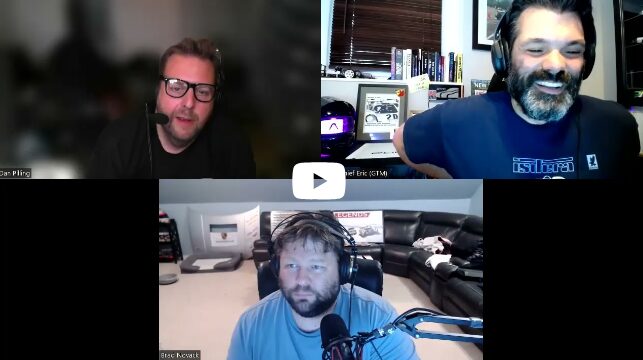
All of our BEHIND THE SCENES (BTS) Break/Fix episodes are raw and unedited, and expressly shared with the permission and consent of our guests.

Elspeth Beard, Live @ Bob’s BMW Motorcycles, 5/6/2023


Learn More

To learn more about Elspeth, be sure to pick up a copy of her award winning book “Lone Rider” which is available in print and via audible on Amazon.com. You can also check out her website www.elspethbeard.com or follow her on social @elspeth.beard on Facebook and @elspethbeard on Instagram

The decision to leave wasn’t just about adventure. It was about escape. After a painful breakup and a disappointing degree result, Elspeth felt lost. She needed time to figure out her life, and the road offered clarity. With £2,500 saved from working in a pub, she shipped her bike to New York and began her westward journey.

There was no master plan – just stages. America first, then New Zealand, Australia, Southeast Asia, India, and beyond. She worked in Sydney for seven months to fund the second half of the trip, living frugally and saving every dollar. “I didn’t know if it would take a year or five,” she said. “I just did it on a wing and a prayer.”

Photo courtesy Elspeth Beard

Elspeth traveled without weapons, relying instead on instinct and caution. She cut her hair short, wore baggy clothes, and avoided riding after dark. With her helmet on, most people assumed she was male – a protective illusion in places where women riders were unheard of.

She faced cultural challenges, language barriers, and gender discrimination. In India, she once kept her helmet on to avoid revealing her identity. In Iraq and Iran, she learned quickly about local customs after venturing out uncovered. But she also found that being dyslexic helped her navigate. “I’m very good at reading maps,” she said. “I see things as images.”

Though most of the journey was solo, Elspeth occasionally traveled with others. Riding with Robert in India transformed the experience from survival to camaraderie. “It was nearly a holiday,” she laughed. Having someone to share breakdowns, illness, and conversation made all the difference.

Photo courtesy Elspeth Beard

But solitude was a constant companion. “The road was a cold, lonely place sometimes,” she admitted. Leaving the comfort of temporary homes – especially in Australia – was often the hardest part. Yet she always pushed forward.


Family, Freedom, and the Return Home

Elspeth’s upbringing was unconventional. Her parents gave her freedom, rarely scolding her – even after being expelled. They believed in letting their children learn from mistakes. This detachment, while empowering, also led to emotional distance. When she returned home, their indifference stung. “I found it very hurtful,” she said. But with time and motherhood of her own, she came to understand their perspective.

Throughout the trip, she kept in touch – sending letters, tapes, and making expensive reverse-charge calls. Her mother listened to her stories on cassette during commutes. “It was her way of dealing with it,” Elspeth reflected.

Elspeth Beard’s story isn’t just about motorcycles. It’s about resilience, curiosity, and the courage to chase uncertainty. Her book, Lone Rider, chronicles the full adventure, but her voice on the Break/Fix Podcast brings it to life with humor, humility, and hard-earned wisdom.

She didn’t set out to make history. She set out to find herself. And in doing so, she paved the road for countless others to follow.


Other Recommended Reads

Reading List

Don't miss out on great book like this one, or other titles we've read and covered as part of the GTM Bookclub on Break/Fix Podcast.
My Travels On Racer Road: Can-Am and Formula 1 in their golden age
DeLorean: The Rise, Fall and Second Acts of the DeLorean Motor Company
A French Kiss with Death
Driving to the Future: Living life following Formula One racing
Tales From the Garage
Geared for Life: Making the Shift Into Your Full Potential
Ultimate Garages
Fenders, Fins & Friends: Confessions of a Car Guy
Racing While Black: How an African-American Stock Car Team Made Its Mark on NASCAR
The Last Lap: The Mysterious Demise of Pete Kreis at The Indianapolis 500
James Dean: On The Road To Salinas
Performance Thinking: Mental Skills for the Competitive World...and for Life!
The Other Side of the Fence: Six Decades of Motorsport Photography
Racing with Rich Energy
Little Anton: A Historical Novel Complete Series
Lone Rider: The First British Woman to Motorcycle Around the World
Iacocca: An Autobiography
Colin Chapman: The Man and His Cars: The Authorized Biography by Gerard Crombac
Paved Paradise: How Parking Explains the World
Shipwrecked and Rescued: Cars and Crew: The


Gran Touring Motorsports's favorite books »

Goodreads

Gran Touring's book recommendations, liked quotes, book clubs, book lists (read shelf)

Guest Co-Host: Jeff Willis

In case you missed it... be sure to check out the Break/Fix episode with our co-host.
Listen on Apple
Listen on YouTube
Listen on Spotify

This content has been brought to you in-part by sponsorship through...

Motoring Podcast Network

Shipwrecked Chryslers and the Forgotten Treasure of Lake Superior

Some say treasure hunting is a relic of the past – something reserved for pirates and myth. But if you’ve ever watched American Pickers or The Curse of Oak Island, you know the thrill of discovery is alive and well. And sometimes, that treasure isn’t gold or jewels – it’s 240 brand-new 1927 Chryslers, trapped in a shipwreck off the icy shores of Michigan’s Upper Peninsula.

Photo courtesy Larry Jorgensen

Author and explorer Larry Jorgensen didn’t set out to uncover a lost automotive saga. It started with a tourist brochure in Copper Harbor, Michigan – a single photo and a short blurb about a shipwreck. But that image sparked a deep dive into a forgotten chapter of Detroit’s industrial history.

Larry’s connection to the region runs deep. As a young news reporter in Green Bay, Wisconsin, he covered the copper miner strikes that eventually shuttered the area’s mines. Over time, he became the go-to guy for Upper Peninsula stories, falling in love with the region’s rugged charm and rich history.

Tune in everywhere you stream, download or listen!

Listen on Apple
Listen on YouTube
Listen on Spotify

The ship in question was the City of Bangor, captained by William Mackin. Originally built to haul iron ore and grain, the vessel had been retrofitted by the Nicholson Transport Company to carry automobiles – an innovative move in the mid-1920s when road infrastructure was sparse and shipping by water was cheaper than rail.

Photo courtesy Larry Jorgensen

In November 1926, the Bangor was loaded with 240 vehicles – mostly Chryslers, plus six elusive Whippets – and set sail from Detroit. But Lake Superior had other plans. A brutal storm battered the ship, causing it to lose its rudder and crash into a reef near Copper Harbor. The crew of 23 managed to escape using a lifeboat, but they were stranded in four feet of snow with no communication and no idea anyone knew they were missing.

Spotlight

Synopsis

This Break/Fix episode delves into the intriguing story of the City of Bangor shipwreck in Upper Michigan, which carried 240 cars, including Chryslers and Whippets, when it wrecked on a reef in 1927. Guest Larry Jorgensen, author and explorer, recounts how a single photograph sparked his research into the event. He details the rescue of the ship’s crew, the subsequent salvaging of the cars over a frozen lake, and the community’s involvement in this unique historical tale. Jorgensen also highlights the challenges in uncovering this little-known story, including missing records and artifacts. Through this narrative, the episode underscores the enduring allure of treasure hunting in various forms.

  • Tell us more about how all this came about? How did you discover the shipwreck of ‘The City of Bangor’?
  • According to experts, there’s been over 6000 shipwrecks in the great lakes region? Why so many? Is there some common thread (or time period)? 
  • How (and when) did the ‘The City of Bangor’ go down?
  • What’s the significance of this loss (esp. to Chrysler)
  • Ships aren’t always just carrying a payload of one thing; were there other items of significance being transported alongside the vehicles?
  • How many vehicles were lost? Where were these vehicles headed to? Who was supposed to receive them? What types/models?
  • Is there a registry of current owners/locations of the vehicles from the ship? How many still exist today?

Transcript

Crew Chief Brad: [00:00:00] BreakFix podcast is all about capturing the living history of people from all over the autosphere, from wrench turners and racers to artists, authors, designers, and everything in between. Our goal is to inspire a new generation of petrolheads that wonder. How did they get that job or become that person?

The road to success is paved by all of us because everyone has a story.

Crew Chief Eric: Some might argue that treasure hunting is a thing of the past, that we’ve discovered, plotted, surveyed, and satellite mapped all there is to discover on this planet. But in reality, treasure hunting comes in all sorts of different forms. Consider for a moment American Pickers on History Channel. Aren’t they searching for treasure?

And with the rise in popularity of shows like The Curse of Oak Island, Skinwalker Ranch, and Lost Gold of World War II, it would seem that treasure hunting is still alive and well.

Don Weberg: There is another facet of searching [00:01:00] that’s especially intriguing to me, and has been brought to the surface as recently as last year.

Take, for instance, the discovery of Ernest Shackleton’s lost vessel, The endurance.

Crew Chief Eric: You’re right, Don. And our audience is probably wondering what this actually has to do with cars. As we reported on drive through episode number 20, March of 2022, there was a shipwreck containing millions of dollars of high end vehicles like Porsches, Lamborghinis, Bugattis, and more.

And this isn’t the first time vehicles have been lost at sea. And with us tonight is author and explorer, Larry Jorgensen, who joins us to talk about a little known shipwreck that cost Detroit hundreds of vehicles. So welcome to Break Fix, Larry.

Larry Jorgensen: Thank you. It’s a pleasure to be here and talk about one of my favorite subjects, which is shipwrecks in Upper Michigan.

Crew Chief Eric: Well, normally we would ask folks about their motorsports or vehicle enthusiast origin story, but in this case, I think we need to dive [00:02:00] right in, pun intended, into the beginning of this story. So from what we understand, this all came about because a single photograph set it into motion?

Larry Jorgensen: Right. I was visiting up in Copper Harbor, Michigan.

That’s way on the tip of the Keweenaw Peninsula in Lake Superior. And when I was up there, I picked up a little tourist brochure. It had a picture and about a paragraph and a half about a shipwreck. The more I looked at it, the more I thought, this is an amazing story. And I started doing research on it.

Crew Chief Eric: You have a personal tie to this particular area of Michigan as well. So what drew you, again, to that photograph, to that pamphlet? What were you doing in the area that drew you back into this whole story?

Larry Jorgensen: Way back when I was, as they say, a news dog for a television station in green Bay, that was my first introduction to the upper peninsula.

So much history up there. I went up because at that time there was a strike of copper miners going on that [00:03:00] ultimately led to the closure of all the copper mines in that area. So I was covering that as a news dog, I was interviewing people and became fascinated with the peninsula of upper Michigan.

After that, I would go up for other stories. After the strike issue was resolved, I just made it a point that if there was something going on, In upper Michigan, I wanted to be the guy up there to cover it. Fortunately, at some point in my career at the station in Green Bay, I got to be the news director.

So it was easy to say, I’m going to take care of this one. I’m going to upper Michigan. We covered a lot of stories up there. We covered the last run of the passenger train that went from Milwaukee to the upper peninsula. We were on that train, covered lots and lots of important stories. Really fell in love with the area and after I got out of television, radio news, because I’m originally from northern Wisconsin, it was easy for me to get access back up there for just [00:04:00] for fun, for snowmobiling.

Back in the late 60s, early 70s, when what is that? That’s a snowmobile. You know, so I’ve got a lot of history with the Upper Peninsula.

Don Weberg: Moving into that regional situation that you’ve got there. You’ve got a personal touch. You’ve got a personal connection to the region. Captain William Mackin, he was the one in charge of the city of Bangor ship.

Does he have any family still around to tell the stories that he told?

Larry Jorgensen: No, he doesn’t. Long since gone. He stayed with Nicholson after the accident. And then finally, as Nicholson changed hands, new owners came in, he was moved on, you know, and he became. The captain of the ship that carries cars to the Mackinac Island hired by the state of Michigan.

And that was his last job. And he did that for many years. I have been able to talk with the granddaughter of the family that actually saved. The crew, after they were finally rescued from the boat and [00:05:00] almost froze to death before they were finally brought into civilization, a lot of them were badly, badly frostbitten.

It’s a wonder they didn’t lose limbs. Those are the kind of people I could find to talk to. Some of the pictures came from the daughter of the captain of the Coast Guard rescue boat. He was, besides being the captain of the rescue boat, he was an amateur photographer. What a man to have on the spot, right?

And there are some fantastic photos, thanks to Captain Glazer and his daughter, who passed the photos on down, and we got access to them. It made the whole book to have access to those photos.

Don Weberg: So there was no loss of life with the city of Bangor accident. Is that right? No loss of life. And how many men were on board or how many people were on board that ship?

23

Larry Jorgensen: after they hit the wreath, the way they got to shore is they were able to chop a lifeboat free from the ice that had already accumulated and they would take the [00:06:00] lifeboat and, you know, back and forth until they got everybody from the ship on shore. Then the problem is. Now what do we do? Some of these guys, you know, were dressed like they just come from Detroit.

We’re going to a party or something. I mean, he had loafers on and you know, they were not prepared for the challenge. They were about to get into a four feet of snow and near zero temperatures to make matters worse. There’s no communications. No one knows. The ship was crashed. Basically what makes it an amazing story is the ship was carrying 240 brand new, brand new as in 1927, Chryslers from Detroit when it hit a reef and the ship was towed.

When you look at the maps of shipwrecks in the Great Lakes, it’s not on there, nowhere. And there’s been 6, 000 shipwrecks on the Great Lakes. This one, for whatever reason, is, I don’t want to say it’s a secret, but it just sort of tucked away. Few [00:07:00] people knew about it, but nobody really got excited about it.

Here it is, a shipwreck where the cars were actually rescued. You know, in those days, it was not uncommon for those big steamers to carry autos. You didn’t have good roads and big trucks hauling autos around. So a good way to transport new autos from Detroit. To wherever, as long as you could reach it on the great lakes was on boats, big steamers.

Crew Chief Eric: So was that a more effective than by rail as well, or did they kind of go back and forth depending?

Larry Jorgensen: They had rail, but they found out that you could get a lot of cars on a big steamer. And water rates are always less than land rates. If you could get there with a ship. You were gonna save money in the process of delivering that car.

And so they used it wherever they could.

Crew Chief Eric: So you mentioned something really interesting, 6,000 shipwrecks on the Great Lakes. Why so many? Is there a common thread here, even with [00:08:00] the ship that we’re gonna be talking about in more detail? The City of Banger, it’s called. What’s the Deal? Why so many shipwrecks?

Larry Jorgensen: You take the history of the Great Lakes, that goes back quite a while and you had a a lot of in the early years. poorly constructed ships, bad weather, no communications, no weather warnings that, hey, you know, such as a storm is coming. So there was a lot of them in the very early years. And the people that study this say, yeah, there’s 6, 000 that have been recorded.

And there’s been people that have said, and there’s probably a lot more that were never even recorded. Now Lake Superior is nasty. It is probably the one that gets the most in the way of shipwrecks because the lake is so big and so deep. I mean, look at the wreck of the Edmund Fitzgerald is a good example.

That hasn’t been that long in history. Basically it got into such a storm that the Edmund Fitzgerald was carrying taconite, iron ore. [00:09:00] And it was heavy. The waves were so big on Lake Superior, one wave lifted up the front of the boat, another wave lifted up the rear of the boat, and the center, where the cargo is, was suspended with no support, and the boat basically broke in half.

I’ve talked to a diver who has gone down to it, and he said, absolutely, that’s what happened. The ship was broken in half, and it is on the bottom of Lake Superior. Like most shipwrecks on the bottom of lakes like Lake Superior, it’s preserved and The water will preserve it forever.

Crew Chief Eric: How many ships are still at the bottom of Lake Superior?

Larry Jorgensen: Lots of them. I don’t know if anybody’s ever recorded that, but you talk to the divers, the great lakes are one of their favorite places to dive because they can go down to and see these ships that are well preserved. It’s cold, fresh water. that preserves them. Every once in a while, you know, you’ll see a story where they have found another wreck and were able to [00:10:00] document it, what it was and so forth.

And occasionally even one will sort of, I don’t want to say surface, but the water will change as such that part of it will actually be seen on shore. Those are not big ships, by the way. Those are smaller yachts, you might call them, that went down in the very early years of traveling on the Great Lakes.

There’s a lot out there.

Crew Chief Eric: Lake Superior is pretty rough. Is it a geological phenomena? A weather phenomena? I mean, lakes generally, they have their waves and their moments, but they’re not usually rough like the ocean.

Larry Jorgensen: I’ve been in Lake Superior when it’s been just absolutely, almost like a mirror. But you get a good weather system come in and that lake gets vicious.

It’s so big and so deep. The weather systems can just really whip up a big lake storm. And that’s what happened to the banger. Keep in mind that the ship was not originally intended to be a auto carrier. It was originally intended to haul. Iron ore, it was [00:11:00] intended to haul grain. It was a basic carrier on the Great Lakes.

Well, the Nicholson Transport Company in Detroit got into hauling automobiles. At one point, they had like 12 ships that their task was to haul automobiles. It took remodeling, if you want to call it that, of the ship. They would put in a good solid lower deck, put in an elevator, On the upper deck, they would completely level it.

Openings where cargo would normally be brought in were gone, completely redesigned to accommodate automobiles. And Nicholson was one of the biggest. At the time of the banger, they had 12 ships. They had converted. into auto carriers. One of them, in fact, was built in the same shipyard, like a half a year after the, uh, bagger.

The two ships were actually owned by the same person, the same group of people that financed building them. And they had them built to be regular cargo haulers [00:12:00] on the Great Lakes. They sold them to Nicholson and that’s how they became auto haulers.

Crew Chief Eric: And to put this in perspective for our listeners, you have to remember that At the time, we’re talking the mid to late 1920s, an auto carrying ship is a relatively new thing.

Larry Jorgensen: It’s a new thing, and if it had been previously used for iron ore or other things, the problem that they ran into with the Banger, and I presume others, they would ride higher in the water than the boat was designed for when it was designed to be an ore carrier. Consequently, when it got into a storm, like the Banger did, it would really get tossed around, and that’s what happened.

It got tossed so bad, the captain lost the rudder, they lost complete control of it, and that’s how it ended up crashing on this reef off of the Copper Harbor. To add to the problem, Captain Mackin, bless his heart, He thought that they had sailed past Copper Harbor, that they were west of [00:13:00] Copper Harbor. He made that determination because he thought he saw a well known mountain that is at Copper Harbor called Broccoli Mountain.

Well, the fact of the matter is they were still east of Copper Harbor in Lake Superior. So the guys finally get off the boat, they get to shore, they say, okay, If we can get to Copper Harbor, there’s hope. At that time, it’s a little town, what, two, three dozen people that are brave enough to live there year round.

So they think, okay, what we need to do is we need to walk east. That’s what we need to do because the captain says we’re west of Copper Harbor. They weren’t. They were east. They wandered aimlessly until somebody realized they were going in the wrong direction. They had to turn around, work their way back.

The one night they got back, they sort of camped out, if you want to call it that, not too far from the abandoned ship, but they were on shore, obviously. They continued along, and it was to the point where they were beginning to think, we’re not going to make it. [00:14:00] Some of them were really badly, badly frostbitten.

As it happened. There was another shipwreck that same time.

Crew Chief Eric: I mean, there were 5, 999 other ones, right?

Larry Jorgensen: Well, this one occurred the same time, and it was east of where the banger was, and a little bit further down on the peninsula, kind of went ashore. In fact, later it was floated and used again. But two of the mates from that ship were able to get on shore, and they walked quite a distance before they were able to get a telephone, whatever a telephone was in those days, and they called the Coast Guard rescue station at Eagle Harbor, and the Coast Guard was out to rescue them, not knowing that here’s this crew from the banger that’s wandering around lost in the Upper Peninsula.

They actually, the Coast Guard crew went by the abandoned banger. not knowing it when they went to rescue the crew. They got the second crew, I think that was about 19 [00:15:00] guys, onto the rescue boat. They’re coming back and all of a sudden the captain of the rescue boat sees the abandoned banger. So he pulls in, no sign of life, obviously.

So they continue on towards Copper Harbor. Well, they get a little further on and there’s a little bay. And they spot these guys struggling through the snow, so the captain pulls in and he yells at them, build a fire, build a big fire, stay where you are so I know where you are. When I get the first crew to safety at Copper Harbor, I’ll come back and get you guys.

Don Weberg: We’re talking about a shipwreck and basically there’s two shipwrecks I’ve always been involved in, which was Titanic. And then there was Andrea Doria, which of course was also carrying a Chrysler, which leads me to believe if you’re going to ship your Chrysler, don’t put it on a boat. Just forget it.

Chryslers and boats don’t get along. But during the whole rescue mission for the men aboard the city of Bangor, there was a sheriff and his wife’s name was Ida. And Ida was one terrific cook.

Larry Jorgensen: Yeah. [00:16:00] Well, the crew from the Bangor finally. Got the Copper Harbor, you know, we got a little town and then we got 50 some rescued ship crew men.

Where are we going to put them? Well, the ones from the other ship, most of them were convinced they could go to Eagle Harbor where the Coast Guard had a facility there for them. Where were the rest of them going to go? Well, there was the Berg home. Mr. and Mrs. Berg said, we’ll take them in. And it was a chore just getting them to the home because some of them were so badly frostbitten.

Covered with snow, just exhausted that it was a chore just to get them the half mile to the house. Mr. Berg had slaughtered two hogs in the fall. So they had pork and they had a cow that was described as the best producing cow in the town and they had some chickens. So they had provisions and they said, we’ll take them in.

Not knowing how long they were going to have them or if when they fed them, if would be [00:17:00] replenished before spring. First of all, the guys came in and they just crashed around the old stove and started to thaw out. One of the children, and this was told to me by the granddaughter, his job was to mop up the water as they Little by little, they, there are fed, the ones that are most seriously injured, cross bit, whatever, they are able to get them to the hospital in Laurium because the same auto dealer in Calumet had been experimenting with this, you know, tracks on, um, like the old Model T snowmobile thing.

In fact, he’s the one that took the insurance agent out to look at the wreck with a snow vehicle. He would take the ones that were seriously injured in his little snowmobile into Loriam to the hospital. The rest of them, little by little, were taken by sleigh into the hospital. This was not an overnight project.

This took a while. They finally got them. All to the hospital, [00:18:00] some of them ended up staying there a couple months before they were able to be released. And I was told that some of them sort of formed a relationship with nurses and decided they didn’t want to go back home. There may be some families in the Keweenaw Peninsula that are directly related to crewmen who were on the, uh, banger.

We haven’t been able to track that down, but it’s a good story that we’ve been told. Anyhow, After this is all done, he runs for sheriff and he’s elected. Well, the county seat is not Copper Harbor. It’s Eagle River, Michigan. So they move there and he’s the sheriff. She’s sort of the undersheriff assistant or whatever.

The story that was told to me by her granddaughter was that when. Someone would commit a crime and would be found guilty, have the choice of paying his fine or going to jail. He would usually select jail because it was known that [00:19:00] Ida was a good cook, just like you said. So anyhow, he’s sheriff. For a full term, he runs for reelection and he is reelected.

His term is to start in January. In December, he has a second term. He’s helping someone who’s stuck in the snow with his vehicle. He gets pneumonia. He dies like several weeks into his term. Who becomes sheriff? Ida becomes sheriff. Not only does she become sheriff, she runs and successfully reelected two more times.

She is written in Michigan history as one of those notable women in history. You know, she was quite a lady. In the book, there is a copy of a Christmas card that they received when they were in Copper Harbor from the first mate of the banger who. His home was in Ohio and he had gotten back to Ohio and he had sent them a lengthy, not just Merry [00:20:00] Christmas, but thanking them for saving the crew, the hospitality, everything they did.

The granddaughter who has told me so much about them, they have a little summer home. She’s from Indiana, but they go up in the summer to Copper Harbor and I met with her twice and the second time she comes up and she says, I’ve been digging through grandma’s boxes and look what I found. And it’s that Christmas card.

She allowed me to take it, to copy it, to put it in the book.

Crew Chief Eric: So at this point, you got two shipwrecks at the same time. One is run aground, and then you’ve got this banger with a big hole in the hole. Taking on water, but it’s not sinking.

Larry Jorgensen: No, it couldn’t sink. It’s high on this reef, you know.

Crew Chief Eric: But the cars are Submerged somewhat or relatively safe.

Larry Jorgensen: Well the cars in the lower deck some water now We need to also add to this. We said there were 240 Chrysler’s there were 240 [00:21:00] cars Six of them were whippets. They were made in Toledo how they ended up in Detroit on that ship I haven’t been able to find out what six whippets were on that ship. And the

Crew Chief Eric: irony in that is that the Willys Overland whippet, for those unfamiliar with the car, eventually would merge into the Chrysler corporation many, many years later, one big happy family.

Larry Jorgensen: We’ve got 200 and some Chryslers, six whippets. Now, when the ship got into this tossing and turning in the storm. There was a string of 13 cars, all chained together under one chain on deck. That chain broke and those 13 cars are on the bottom of Lake Superior.

Crew Chief Eric: To this day,

Larry Jorgensen: to this day, they didn’t make it.

There was another car when the ship hit the reef, it threw the car, this one particular car off. It was so badly damaged. It ended up going ashore, not. And it was [00:22:00] so badly damaged that when they finally got the cars out of there, that one had to be taken out by slay. And ultimately it was sold to an auto dealer in Calumet, Michigan for 25 for parts.

Yeah. So we, we did have some vehicle casualties in this, but basically over 200 of them. We’re able to be rescued if you want to use that term salvage, whatever, and brought to the little town, the Copper Harbor, there’s a couple of pictures in the book of 200 and some Chrysler’s lined up in the town of the town.

There’s a little village of Copper Harbor, probably population. What? 24, 30. I don’t know. You

Crew Chief Eric: know, there’s more cars than there are people there. Yeah.

Larry Jorgensen: A long shot. So now we’ve got them there. The other thing in trying to get the cars there, it’s winter, it’s cold. First of all, they waited for two months until the ice froze around the reef.

Okay. So now we can get the cars [00:23:00] off the boat onto the reef. First, they thought, well, we’ll build a road through the woods to Copper Harbor, which was about six, seven miles. And they got about a mile with that project, and they said, no, that’s not going to work. Somebody said, wait a minute. The ice along the shore is solid.

Let’s drive the cars along the shore. And there was enough ice frozen that you could actually get them, drive them to shore on the ice. Some of the batteries didn’t work. Some of them didn’t even have batteries. So the ones that had batteries that were working, they would drive those to Copper Harbor.

Somebody would take the batteries back, you know, this was the way it went until we got all the cars into Copper Harbor.

Don Weberg: Larry, was there somebody paying for these cars to get off the ship? I’m assuming the insurance would have just reimbursed Chrysler.

Larry Jorgensen: Once the, uh, ship was declared a total loss and that came pretty quick.

The insurance guy was there like very soon after the wreck and declared it. A loss. Walter himself went [00:24:00] up and looked at it and agreed it was a loss. Walter Chrysler decides, Got a ship with a bunch of my cars on it. I want my cars back. In which, in those days, you know, you could get them back and spruce them up a little bit and put them back in the market.

So he hired a salvage company from Duluth. And it was in fact the salvage company. I don’t think Walter paid for it, probably his insurance company did. The salvage company from Duluth came up with this plan. They said, wait till the ice freezes, we can get them off the ship, off the reef, and we’ll get them to Copper Harbor.

So they posted a guard shack out there for two months to watch cars, make sure, you know, and finally, the way I described it, they got the cars off. There’s a great picture in the book. They build a ramp from the reef up to the top deck. So the cars on the top deck would come down and then the cars on the lower deck would be raised to the top deck and they would come down the ramp.

So they finally got them all off. The ones on the top, and again, [00:25:00] photos that we were able to get, show that some of them were so badly covered by ice and snow, you didn’t even know there was a car there. There’s pictures of these guys packing away on ice and snow to uncover these cars on top. So we get them to Copper Harbor.

Now the salvage company, they agreed on a fee of like 140, some 150 a car for every car that is returned to Detroit. So how do you do that? Well, they’re in Copper Harbor. The distance from Copper Harbor to the closest railroad. Goes back to your question. Can they all on rail is about 40 miles sounds simple, except it’s wintertime and that road hasn’t been plowed for a long time.

And you’ve got places on that road where snow is 10, 12 feet deep. Now what that whole peninsula, there’s two counties that make up the peninsula. So there’s two County highway crews that are pressed into action, trying to plow the road open, which they never [00:26:00] plow in the winter. If you live in Copper Harbor in the winter, you better make sure you have provisions till spring.

They work for two weeks. They actually bring in a new type of plow. It’s one of these turbine powered plows. It was just being developed over in Minnesota. And they bring that in to finish up the last 10 miles of the journey. They finally get the road. Oh, in the meantime, they’ve been hauling gas by tanks on slay to copper Harbor, because eventually we want to drive the cars to Calumet to get them on a train, right?

Okay. So we got a road open. We got fuel. We only got two dozen people that live in this town. The salvage company says, tell you what, I’ll pay anybody five dollars to drive one of those cars from Copper Harbor to Calumet. Boy, there were a lot of kids at ditch school that day. And whoever, people just, in doing the book, you talk about talking to Relatives of, you know, descendants of, I’d talk to people [00:27:00] who said, Oh, yeah, my grandfather drove one of those cars, you know, or my uncle, you know, so anyhow, this is where it really gets interesting because think about it, you’re going to be paid 5.

To drive a new Chrysler down this 40 mile road. But you got a Chrysler. We know for sure one of them didn’t make it. Of course, as you do, as you start researching the story, you have people that come up to you and say, I know so and so. When you get closer to Calumet, there’s some side roads, and some of those sort of disappeared, you know.

You got your choice, 5 or a new Chrysler. It doesn’t take anybody real smart to figure that out. And we’ve got photographic proof of this. Well, I’m proof of one of the Chryslers too, but we know the Whippets didn’t go back to Detroit. If the insurance company or Walter himself was paying for this rescue, he’s not about to bring a bunch of Whippets back to Detroit.

That wasn’t part of the deal. He wants his Chryslers back. In the book, there’s a picture of one of [00:28:00] the Whippets that in fact ended up at one of the places in Copper Harbor where the, the crewmen were taken in. Ended up with one of those whippets. Ultimately, it went to somebody else. The picture in the book, the shed it was in is about to fall down.

And here’s this whippet. It ultimately got sold to somebody else for 500. So there’s one whip. Talk to a lady who’s with the historical society, who back when she was very young, bought a whippet at an estate auction. There’s two, the hotel in Calumet has a display on a wall back there, and it has two wooden wheels from a Whippet.

That’s three. So we’re missing three. The best guess is whoever had them when they became immobile, just to the trash yard with them. We’re convinced no Whippets went back to Detroit.

Don Weberg: And the other funny thing too, you know, City of Bangor. She was converted, what, in 1926. That’s when the wreck took place and [00:29:00] Chrysler had only been in business just a little over a year.

It’s a brand new company.

Larry Jorgensen: At that time, you know, 26, 27, 28, those were key years for Chrysler. It kicked them up to the point where they were what, like number four in the industry. They were innovators, so to speak, in those days, they were on to something that people were buying Chrysler’s, that’s for sure.

Crew Chief Eric: To Don’s point, they were brand new Walter Chrysler obviously was known in the community, but the company itself was still basically newborn. And then to shell out all this money between the drivers, the return fees to get him on the trains, you know, obviously there’s money coming back from the insurance company, but he was paying for the insurance.

There was a lot of expense. Because of the shipwreck. And then you kind of wonder yourself, how did Chrysler afford it? Yeah, it

Larry Jorgensen: wasn’t worthwhile. They figured the salvage company cost, and it was over 30, 000. And then they figured another four to five thou to get the cars back to Detroit.

Crew Chief Eric: In today’s dollars, in today’s economy, in 2023, 30, [00:30:00] 000 in 1926, 27 is equal to nearly half a million dollars in payload on that ship.

So that’s not chunk change by any stretch of the imagination. That is a significant amount of money in the 1920s.

Don Weberg: And it makes you wonder, did Chrysler just lose money hand over fist on these cars? I mean, would it have been better to, you know what? Let them go, let the people in Wisconsin have them. I don’t need them, I’ll build more.

How much were each one of those cars worth? They were about

Larry Jorgensen: 850 a car.

Don Weberg: And we saved 200 of them?

Larry Jorgensen: 200 of them. So I guess we have to do the math to figure out if it was worthwhile. Apparently it was.

Crew Chief Eric: In today’s dollars, each car was 13, 348.

Larry Jorgensen: Wow. Pretty costly project, but I guess it must’ve worked out. Okay.

And cars fortunately weren’t damaged. You know, the ones that they go off the ship, pretty good shape.

Don Weberg: Yeah, I don’t know. This sounds like a crazy money losing scheme.

Larry Jorgensen: Maybe it was [00:31:00] more pride than anything. That’s what I’m wondering. Yeah. You know, you can see one of the cars that stayed. On the peninsula, a man bought it from the Chrysler dealer up there, and he told them that he got it off the ship.

He was the same guy that got the damaged one, right? And he sold it to this fam, to the man, and he had it for a couple years, and then he died, and the car was passed on through the family. For 69 years, the one guy that had the car, who was actually the brother of the man who bought it, was so pleased with the car.

He would drive it as much as he could, parades and whatever. He just, he practically lived in it. He put 200, 000 miles on that car. Ultimately, it went through the family. It finally got sold to a person who thought he would go to restore it, make a fortune, and after realizing what that would cost, he didn’t, and he sold it to the [00:32:00] museum and it is in the Eagle Harbor.

Lighthouse museum on Lake Superior, probably about 30 miles away from Copper Harbor. So it kind of went back home.

Crew Chief Eric: We know there’s 13 cars still at the bottom of Lake Superior. So we’ve got any divers out there that want to go check them out. They can, but you know, what happened to the other cars? We talked about some of the whip it, some of them are still lost.

Things like that. Is there a registry? Of remaining vehicles out there. And I’m wondering, have you been able to get your hands on the ships manifest to get an original list of VIN numbers?

Larry Jorgensen: In the book, we talk about the log book and the log book didn’t surface, never available, and then all of a sudden back in about sixties, somebody is going through the woods close to where the wreck was, turns over a log a, a big piece of timber, and there’s just.

Book under there. Like obviously Captain Mackin [00:33:00] wanted to put the logbook there to be able to come back and get it at some point. This guy finds his book not knowing really what he’s got until someone advises him and it ends up at the museum. But the back pages that would have had the serial numbers are gone.

Why? We don’t know, but they’re gone. The museum has had historian come up from Chrysler, look at the car, you know, try to figure out information on it. Yes, it must have been one of those, but there’s no paperwork to track it.

Crew Chief Eric: So there’s nothing even on the Chrysler factory side saying that these cars were put on the ship destined for Minnesota or wherever they were headed to?

Well, I was told how

Larry Jorgensen: much of it is true. I don’t know, but I was told by Chrysler. That those records were part of a lot of records that were destroyed in a fire. Now, maybe you guys know when the fire was, you know, within our lifetime, there was a hundred years. Yeah. I mean, within the past few [00:34:00] decades of this fire in Detroit destroyed a Chrysler archives or whatever, and those records were in there.

I tried that. I tried to find, could not find. I’ve talked to people who are members of Chrysler car clubs, Chrysler enthusiasts, you know, and have gotten nowhere. I even advertised at one point for people who may think they have a car that was on the banger. And I got nowhere with that. That was an effort that went nowhere.

Crew Chief Eric: Those types of ships. To your point, this was converted from carrying ore and things like that. So, you know, designed to carry an extremely heavy payload and obviously cars are larger objects, so they take up a lot of space, but sometimes those ships are carrying other things along with the major payload.

Was there anything else of significance being transported alongside the cars?

Larry Jorgensen: No, only the food to feed the crew. It was strictly cars. And you know, we mentioned in the book, one of the reporters from Detroit said there must’ve been a jinx [00:35:00] on ships who were carrying cars, ironically, about two years after.

The Banger, one of the ships that was also owned by Nicholson, was carrying nashes from Kenosha up Lake Michigan. Bad storm off of Port Washington, etc. An ore carrier coming down from Escanaba smashed into it. It sank like within six minutes with all those nashes on it to this day on the bottom of Lake Michigan, there is the remains of a ship and 200 and some nashes, and it is sort of ingest been referred to as the world’s largest Nash museum.

So there, there were other incidences where cars. Went to the bottom where car haulers were involved in accidents.

Crew Chief Eric: Whether they disappeared or were still at the bottom of the ocean was, as we discussed, pretty significant to Chrysler. So I wonder, you know, without the manifest, without the [00:36:00] records, Chrysler’s lost their documents on their end.

Do you have any idea, other than the whippets? If it was the same model of Chrysler, were they only building one car? Were there different types? Were there like limousines or their convertibles?

Larry Jorgensen: It was the same model. I’ve got a picture of an ad that one of the dealers in Duluth had run promoting. I’m getting these wonderful Chryslers.

And, and as I, I guess the best way to describe it was sort of a mid range. Priced vehicle, the kind of car that anybody can afford. And that’s what the ship was. It was all of them. Something to

Crew Chief Eric: compete with the model a at that point, right?

Don Weberg: Probably the ship, the city of banger, she gets laid up on a reef.

The Chrysler’s get unloaded. The Whippets get unloaded the ice eventually is going to fall and you’re going to have this ship sitting there. What became of the actual

Larry Jorgensen: ship initially in the early stages of what do we do with the ship? There was one salvage company that said, ah, we’ll re float it and [00:37:00] patch the hole and it’ll become sort of a barge type thing, they would use it for hauling stuff.

They actually put a temporary patch on that big hole in the side of the ship and put pumps in there and pumped it out figuring we’re going to do that. Well, guess what? It was too high on the reef. They couldn’t get anywhere to it to get it off the reef. So it sits there, you know, they brought their tug in and they finally gave up on that idea.

So it sits, it sat on that reef for 18 years, people would go out on the shore and they’d look at it. You know, there’s even a picture in the book of in the wintertime. You could walk out to it. There’s a picture in the book of Mr. Berg, the sheriff sitting by the gash in the boat. Okay, 18 years. It’s sincere.

What happens? World War II. We need steel. And finally, a salvage company says, We’ll take care of this. And they go out and they cut it down to the waterline. They salvage as [00:38:00] much as they can for the war. But it doesn’t stop there. I got a picture of the boat when it’s cut down to the waterline, which is just like a floating barge.

There were two guys, they got their names even, that were logging in the woods, cutting down trees. And they saw all this going on and they said, you know, we can make more money if we can go out and salvage some steel than we can cutting down trees. So they come up with this crazy vehicle. It was a old truck type vehicle with a big winch in the back.

And they go out there and they start salvaging the pieces that are under the water. A little dynamite, a little whatever to bust things loose. And they make some pretty good extra money doing that sort of the pirate division of salvage. They weren’t authorized. They just did it, you know, and to this day, occasionally there’ll be something that will come up in the sand.

One of the divers might find under water, a piece of steel or something. [00:39:00] So even at the museum, there are pieces of the ship that were found in that manner. Also in the museum, by the way, there is the captain’s desk, the captain’s jacket, and what’s left of that log book are all in the museum. The desk was given by the captain to the Bergs.

He must’ve been able to get it off of the boat somehow. And he gave it to the Burgs. They in turn have loaned it on permanent loan to the museum. So the captain’s desk was also

Don Weberg: rescued. At the actual wreck site. Is there anything left of the city of Bangor or has it all been salvaged out? And

Larry Jorgensen: it’s pretty well salvaged.

Or is found under the water, small pieces, you know, a foot, a foot and a half of steel or things like that.

Crew Chief Eric: But to Don’s point, is there maybe like one of those Memorial historic placards or anything like that, where you could actually go visit the crash site today?

Larry Jorgensen: You know, we’ve talked about that. It is so remote to get to that site.

It would take some funding to build a [00:40:00] decent trail out there. And one time I’m told there was sort of a handmade sign on the shore saying, this is where, you know, but that’s gone. Copper Harbor now is a big tourist area in the summer, especially. I think somebody would say, Hey, let’s get a marker out here.

Let’s plow a trail, encourage people to go see it. Maybe my book will stir that up. You know, at the end of the book. I make reference to the fact that saying it, it takes a village. Well, I’ll tell you what, in this story, it took a peninsula. It took hundreds of people in a peninsula to make it all happen.

From the sheriff to his wife, to the kids that drove the cars, to the captain of the Coast Guard boat, to the people that just, what can we do to help? Amazing story.

Crew Chief Eric: And talking to many authors, and I’m sure there’s. Folks out there right now listening to this that are, you know, maybe trying to write their memoir or the Great American Novel or whatever it might be, there’s, as you go through the process of writing, you learn that not everything can fit in the [00:41:00] book and things get left to the side.

It’s almost like television, except the blooper reel or the B reel, right? So, in this case, what’s on the B reel of the book? What are some of the stories that you captured in your research process that didn’t make it into the book?

Larry Jorgensen: There is a rumor and I haven’t been able to track it down. But there is a rumor that train, when it went to Detroit, got into a wreck.

And, and there is a person who, and I can’t, I found his son, but he’s gone. In this little thing that I read, he claims to have a picture of some of those cars when they were thrown off the train. Of all the things I’ve heard, that is the Holy grail. That picture and his son lives in lower Michigan. I was able to track him down.

He said, dad’s been gone for 25 years. He said, yes, he was a historian of sorts in the upper peninsula. He was fascinated by it. And I have never seen that picture and never heard [00:42:00] of it. So I’ve got people looking, there’ve been other stories about people have come to me and said, and I’ve got their names, you know, well, my grandpa drove one of those cars and boy, there’s somewhere there’s, but you know, the other.

Photo that’s missing. You think about, now there was a newspaper in Calumet at that time. Now there isn’t, it’s long since gone. I was able to find two articles in the archives that were in that newspaper. It talked about wreck and then it talked about the cars are coming to Detroit and they’re sending a special guy up from Detroit who knows how to load them on these flat cars and get them back and so forth.

Okay. The newspaper. Twice covered the story, at least twice that I could find. Do you think anybody would have thought to go down and take a picture of the cars being loaded on the train? Doesn’t exist. I’ve gone to the archives, even ran an ad in the local newspaper, the daily [00:43:00] newspaper, figuring if somebody’s grandfather or uncle or whatever.

Look, one of those cars here, he probably went to the train when it was being loaded. And maybe he took a picture and maybe there’s one in somebody’s album. Do you know two pictures that are missing for the revised volume? Okay. Return to the bagger picture of was there a train wreck? Did we lose some cars in the woods?

And why didn’t anybody take a picture of them? on the train. Where are those two pictures?

Don Weberg: I wonder if somebody did take that picture and there was no room for it in the paper. Who was the photographer at that newspaper? Maybe it’d be worth it to try and contact that person or that person’s family. I mean, I don’t know.

It’s a long shot of long shots, but think about newspapers. Eric just said it. Not everything can make it in. There’s not enough space for everything to go in. So they sent a photographer, they sent a reporter, they do their story on the train wreck, they take the pictures, they get back home. They print it, they type it out.

[00:44:00] And Oh, there’s just not enough room guys. I’m sorry. We can run the story, but no picture

Larry Jorgensen: could be. And obviously the photographer is long gone, right? What we need to look at is some of the photographers that I have talked to photographers, modern day photographers up there about this, but not about who would have been.

And that was a small weekly newspaper. So chances are the guy that wrote the article, ran the press, etc. may have also been the guy that would have taken the picture. Right. Who was the editor of that little weekly newspaper? Who are his descendants? That may be the answer. Because to show you what a secret, I don’t want to say a secret, but a kind of an unknown story this was.

When I first got interested in this, first place I went, besides a historical association, Michigan Tech University, big university up there in Houghton, they have an archives. And I went to the lady, one of the ladies in the archives, and I told her what I was doing. Now [00:45:00] she’s in the archives in the Keweenaw Peninsula.

When I told her what I was looking for, she said, I’ve never heard of that. She actually had to go to somebody else in the archives who said, Yeah, I think we have something about that. And they didn’t have much. But the lady in the archives did not know the story, didn’t even know it existed. And the other thing that has hampered my research.

The Daily Newspaper in Houghton, which is still in existence, the late 1930s destroyed all of their papers up until then. There’s just too much space to get rid of them. And, you know, I went to the one, uh, historical society in Houghton and she said, those papers don’t exist anymore from that newspaper, they’re gone.

They just. Decided to get rid of them. Didn’t put them on microfiche. Nothing. They’re gone.

Don Weberg: Unreal.

Larry Jorgensen: It’s been a challenge.

Don Weberg: Well, and it’s so funny. You say that there was once a little marker, a little handmade marker, whatever. But then [00:46:00] you met the lady at the archive who knew nothing about this thing. It’s funny how it’s like a split community.

There’s people who knew about the City of Bangor wreck. And there’s people who had no clue, no idea that this ever happened. And I can’t help but wonder why, you know, why, why is it that nobody knew about it? Was it because nobody died? You think about it. If a shipwreck, a plane wreck, when somebody dies, that’s what it makes big news.

That’s when people all of a sudden, everybody knows about it. Nobody died at city of banger.

Larry Jorgensen: Yeah. I think the people that knew about it thought, well, okay. So the thing went on a reef. So big deal. They didn’t realize. The value of the story of the cars. And I didn’t realize the value of that. I set out to do a shipwreck book.

Okay. I thought it was fascinating. You know what’s happened? I’ve got as many people that are interested in vintage cars that have come to me. The book is for sale in numerous vintage car museum gift shops. Blew me away when [00:47:00] I realized that I had created two markets, not just people that like to read about the great lakes and shipwrecks, but all these people that are crazy about vintage cars.

It’s amazing. Besides affecting an entire peninsula. It affects so many people in different ways.

Crew Chief Eric: So what’s next? Are you continuing to research on this story? Are you working on another shipwreck or a different book? What are you up to?

Larry Jorgensen: I am building a file called what abouts file for this one. I may do part two, whatever.

We’ll see what comes up there, but I am writing another book. I’ve written prior to this one, I think my most successful venture. And I write, I write like a newsman, find the facts and put them down. You know, I wrote a book. Called the Coca Cola trail. And that was so successful that I wrote a sequel called return to the Coca Cola trail.

And that book is about people and places, not Atlanta in the history of Coca Cola. For example, chapter [00:48:00] one. Do you know Coca Cola was first bottled in Vicksburg, Mississippi, not Atlanta, Georgia. Okay. And what we’ve done with that book and the sequel is we’ve told the reader where you can go see touch and feel that it’s Coca Cola history.

What it is now and what it was then the book is loaded with historical photos and I’ve had people tell me I’m planning my next trip to see some of these things that are in your book. Again, that was a mission that really turned out successful. What am I writing now? I’m going back to snow country in a way.

I’m writing a book called Make It Go in the Snow. We talk about the vehicle that took the insurance guy to the ship, basically like a Model T, they put tracks on the wheels and they put skis up front in place of the wheel. And there was a guy who invented this in 1917 and patented, copyrighted the name snowmobile.

So what we’re [00:49:00] doing is we’re going from what is the modern day snowmobile. backwards. All these people that came up with ideas. This book will be called Make It Go In the Snow, People and Ideas in the History of Snowmobiles. The stage we went through were snow vehicles, had the tracks on them. There was a heck of an effort.

To power snow vehicles with airplane propellers. And that, that became really big in Canada and it was developed in the United States for a while until they realized it was a pretty dangerous idea and they quit doing that. But we found other things like we found a guy from Chicago who took a model, a Ford, and in just a few months in his basement in Chicago.

Made a snowmobile. This was like in 1919. It’s unbelievable. It’s a big old boxy thing, but it worked and he took it up to Northern Wisconsin. And so it’s that [00:50:00] kind of stuff that we’re writing about things that people probably never heard of in snow vehicle transportation or. If they did, they didn’t hear much about it.

Crew Chief Eric: So Larry, your current book, Shipwrecked and Rescued, tell our audience how they can get a copy if they’re interested in checking it out and learning more.

Larry Jorgensen: Well, the easiest way, and the way I appreciate it is go to my website, shipwreckedandrescued, make sure you got past that, shipwreckedandrescued. com. If you go to the website, I’ll even sign it to you if you want me to.

Yes, it’s available on Amazon. And fortunately. It’s available in a lot of places, Michigan bookstores, lighthouse museums that have gift stores. Like I said before, a lot of vintage auto museums have got the book in the gift stores. You never know where you may see it. You know, I’ve heard this and you walk into a place and there it is.

You know, the cover on the book, when we decided this is too good a story to not really put [00:51:00] some real effort into it, the cover on the book I hired. a artist in the Keweenaw to create that artwork that’s on the cover. I wanted something that would show both the state of the boat and the cars, and he was able to meld that together into one painting.

It’s a fantastic painting.

Crew Chief Eric: Any shout outs, promotions, or anything else you’d like to share that we didn’t cover thus far?

Larry Jorgensen: Yeah, I’ll say this is People want to pursue this topic. If they know something about the banger or they think they know something, or maybe they’ve got that photo I’m looking for, or they just want to talk, email me.

I’ll give you my phone number. Call me up. Let’s talk. You never know where that next little piece will be. Maybe we’ll find it together. By the way, I have to boast a little bit too. We found out about a week or two ago that the book was named, they call them notable. They don’t call them best. I know they call them notable books.

We’re one of the 10 notable books of 2022 [00:52:00] in upper Michigan, the upper Michigan publishers and authors association. That made me feel pretty good.

Crew Chief Eric: Congratulations.

Larry Jorgensen: Thank you. Well, I guess I want to thank Eric and Don for giving me the opportunity to talk about what has become one of the favorite stories that I’ve written.

Thank you very much, both of you. And thanks to your audience for listening to this story.

Don Weberg: Larry Jorgensen first became fascinated with Michigan’s Upper Peninsula and its unique history while writing and reporting for television news in Green Bay. It was by learning of this little known event which resulted in his decision to create a written account which he hopes would share the story of one of Lake Superior’s most unusual shipwrecks.

It’s amazing to think that with all of our advanced technology, there are still items hidden so well they still remain to be discovered. NASA Whether it’s ancient artifacts, well kept barn finds, closed door collections, and even shipwrecks, there’s a reason to continue hunting for [00:53:00] treasure. If you enjoyed this episode and want to learn more about Larry and his quests, be sure to log on to www.

Shipwrecked. com. And rescued. com where you can purchase a copy of his books or follow him on LinkedIn.

Crew Chief Eric: That’s right. And I can’t thank you enough, Larry, for coming on break fix and sharing this really just unusual, but also fascinating story about a shipwreck of Chrysler’s from the 1920s. And it’s people like you that tied together these parts of automotive history that we weren’t even thinking about.

And this is truly amazing. And I thank you. for it and it just reinforces the idea that everyone has a story.

Larry Jorgensen: I think we’ve done it. It’s been a lot of fun and thank you. What a great evening. And Eric, Don, thank you guys. Appreciate it.

Don Weberg: Thank you. Good to meet you, Larry. You

Larry Jorgensen: too.

Don Weberg: Bye

Crew Chief Brad: now.

If you like what you’ve heard and want to learn more about GTM, be sure to check us [00:54:00] out on www. gtmotorsports. org. You can also find us on Instagram at grandtorymotorsports. Also, if you want to get involved or have suggestions for future shows, you can call or text us at 202 630 1770 or send us an email at crewchief at gtmotorsports.

org. We’d love to hear from you.

Crew Chief Eric: Hey everybody, Crew Chief Eric here. We really hope you enjoyed this episode of BreakFix, and we wanted to remind you that GTM remains a no annual fees organization, and our goal is to continue to bring you quality episodes like this one at no charge. As a loyal listener, please consider subscribing to our Patreon for bonus and behind the scenes content, extra goodies, and GTM swag.

For as little as 2 and 50 cents a month, you can keep our developers, writers, editors, casters, and other volunteers fed on their strict diet of fig Newtons, gummy bears, and monster. Consider signing up for Patreon today at [00:55:00] www. patreon. com forward slash GT motorsports, and remember without fans, supporters, and members like you, none of this would be possible.

Highlights

Skip ahead if you must… Here’s the highlights from this episode you might be most interested in and their corresponding time stamps.

  • 00:00 Introduction to BreakFix Podcast
  • 00:27 The Modern-Day Treasure Hunt
  • 01:06 Shipwrecks and Lost Vehicles
  • 01:34 Interview with Larry Jorgensen
  • 02:32 Larry’s Connection to Upper Michigan
  • 04:16 The City of Bangor Shipwreck
  • 05:41 Rescue and Aftermath
  • 06:28 Salvaging the Vehicles
  • 07:51 Challenges of the Great Lakes
  • 14:04 The Rescue Mission
  • 15:48 The Aftermath and Legacy
  • 29:43 The Cost of Salvaging Cars
  • 30:15 Chrysler’s Financial Dilemma
  • 31:02 The Fate of the Rescued Cars
  • 32:28 The Missing Logbook Mystery
  • 34:54 Other Shipwrecks and Lost Cars
  • 36:36 Salvaging the City of Bangor
  • 41:12 The Hunt for Historical Evidence
  • 47:34 Larry Jorgensen’s Writing Journey
  • 50:08 Conclusion and Final Thoughts

Bonus Content

Learn More

Get a copy of Larry’s book Today!

It’s amazing to think that with all of our advanced technology, there are still items hidden so well they still remain to be discovered. Whether its ancient artifacts, well-kept barn finds, closed door collections, and even shipwrecks, there’s a reason to continue hunting for treasure. If you enjoyed this episode and want to learn more about Larry and his quests, be sure to logon to www.shipwreckedandrescued.com where you can purchase a copy of his books or follow him on LinkedIn. 

The Bangor’s crew wandered east, believing they were west of Copper Harbor due to a misidentified mountain. Frostbitten and exhausted, they were eventually spotted by a Coast Guard rescue boat—ironically dispatched to save another shipwrecked crew nearby. The Bangor’s men were taken in by locals, including the Berg family, whose matriarch Ida became a legend in her own right.

Ida’s cooking and hospitality saved lives. Her husband later became sheriff, and when he passed away, Ida took over the role—eventually being elected twice more. She’s now remembered as one of Michigan’s notable women in history.

Walter Chrysler himself visited the wreck and deemed the ship a total loss. But the cars? They were salvageable. A Duluth-based company was hired to recover them. After two months of waiting for the ice to freeze solid around the reef, the team built ramps and began extracting the vehicles—some buried under feet of snow and ice.

Driving the cars to the nearest railhead in Calumet, 40 miles away, was no small feat. The road hadn’t been plowed in years, and snowdrifts reached 12 feet. County crews worked for weeks to clear a path, and fuel was hauled in by sleigh. Locals were paid $5 to drive the cars—many skipped school for the chance to pilot a brand-new Chrysler through the snow.

Not all the cars made it. Thirteen chained together on deck broke loose and sank to the bottom of Lake Superior, where they remain to this day. One was so damaged it was sold for parts. The six Whippets, not part of Chrysler’s inventory, were left behind. At least three have been traced through historical photos and family stories.

In total, over 200 vehicles were recovered and returned to Detroit. At $850 apiece, the salvage operation—costing over $30,000 at the time, nearly half a million in today’s dollars—was a costly but pride-driven endeavor. Chrysler was a young company then, and this rescue was as much about reputation as it was about revenue.

Larry Jorgensen’s research, interviews, and access to rare photographs—many from the daughter of the Coast Guard captain who led the rescue—have brought this story back to life. It’s a tale of grit, innovation, and community, where snowmobiles, sleighs, and sheer determination turned a disaster into a triumph.

So next time someone tells you treasure hunting is dead, remind them of the City of Bangor. Because sometimes, the real treasure is a fleet of frozen Chryslers and the people who refused to let them go.


Other Recommended Reads

Reading List

Don't miss out on great book like this one, or other titles we've read and covered as part of the GTM Bookclub on Break/Fix Podcast.
My Travels On Racer Road: Can-Am and Formula 1 in their golden age
DeLorean: The Rise, Fall and Second Acts of the DeLorean Motor Company
A French Kiss with Death
Driving to the Future: Living life following Formula One racing
Tales From the Garage
Geared for Life: Making the Shift Into Your Full Potential
Ultimate Garages
Fenders, Fins & Friends: Confessions of a Car Guy
Racing While Black: How an African-American Stock Car Team Made Its Mark on NASCAR
The Last Lap: The Mysterious Demise of Pete Kreis at The Indianapolis 500
James Dean: On The Road To Salinas
Performance Thinking: Mental Skills for the Competitive World...and for Life!
The Other Side of the Fence: Six Decades of Motorsport Photography
Racing with Rich Energy
Little Anton: A Historical Novel Complete Series
Lone Rider: The First British Woman to Motorcycle Around the World
Iacocca: An Autobiography
Colin Chapman: The Man and His Cars: The Authorized Biography by Gerard Crombac
Paved Paradise: How Parking Explains the World
Shipwrecked and Rescued: Cars and Crew: The


Gran Touring Motorsports's favorite books »

Goodreads

Gran Touring's book recommendations, liked quotes, book clubs, book lists (read shelf)

Guest Co-Host: Don Weberg

In case you missed it... be sure to check out the Break/Fix episode with our co-host.
Listen on Apple
Listen on YouTube
Listen on Spotify

This content has been brought to you in-part by sponsorship through...
Motoring Podcast Network

The Green Grand Prix

For 17 years, the Green Grand Prix has been quietly revolutionizing motorsports from the heart of New York’s Finger Lakes region. Hosted annually at the legendary Watkins Glen International, this unique event blends time-speed-distance rallying, autocross, and STEM education to promote energy-efficient and environmentally friendly vehicles. But it’s more than just a competition – it’s a movement.

Photo courtesy Green Grand Prix Corporation

The Green Grand Prix was born from a challenge posed by Oscar Kowalewski, a national SCCA champion and motorsports enthusiast. He asked retired teacher and motorsports artist Robert Gillespie, “What are you doing for the kids?” That question sparked a journey that transformed a static car display on the Watkins Glen courthouse lawn into a full-fledged rally and autocross event.

Inspired by the now-defunct Tour de Sol and supported by a coalition of local organizations- including the Sports Car Club of America, the International Motor Racing Research Center, and the Seneca Lake Pure Waters Association – the Green Grand Prix found its permanent home at Watkins Glen in 2014. Toyota stepped in as a major sponsor, and the track generously waived usage fees, allowing the event to flourish.

Tune in everywhere you stream, download or listen!

Listen on Apple
Listen on YouTube
Listen on Spotify

Jason Kellogg, an instructor at Alfred State College and longtime GM technician, joined the Green Grand Prix in 2016. His students, many of whom had never driven a hybrid or electric vehicle, now prepare and compete in the event as part of their senior curriculum. They learn everything from high-voltage safety to battery removal and driveline service, culminating in real-world experience on the track.

Photo courtesy Green Grand Prix Corporation

The rally itself is a time-speed-distance event run on the full Watkins Glen course, including the iconic bus stop and elevation changes. Participants aim for “perfect laps” at an average speed of 45 mph, judged on both lap consistency and fuel economy. Transponders track lap times to the thousandth of a second, and fuel usage is measured either via onboard computers or manual top-off calculations.

Synopsis

This episode of Break/Fix discusses the Green Grand Prix, an event focused on promoting energy-efficient and environmentally friendly vehicles. Guests Robert Gillespie and Jason Kellogg share the history and evolution of the Green Grand Prix, which started 17 years ago. They describe how the event combines education and competition, featuring a road rally and autocross held at Watkins Glen International. The rally, a time-speed-distance event, focuses on maximizing fuel efficiency, while the autocross is for electric and hybrid vehicles. The event aims to engage students in STEM education and familiarizes them with green technologies. The podcast also highlights the importance of smooth driving and consistency for fuel efficiency and discusses potential challenges and strategies for competitors. The hosts emphasize the collaborative effort involving SCCA, educational institutions, and sponsors like Toyota, encouraging listeners to spread awareness and participate.

  • Tell us about this history of the Green Grand Prix. It’s been around for 17 years, but many of us are hearing about this for the first time. Where did the idea come from and how did the program get off the ground?
    • Who is Doris Bovee, why is her story important to the Green Grand Prix?
  • How has it evolved over the years?
  • What is the event like? Is it a competition? Is it a race? 
  • How do students enter the event? What are some of the rules/regulations?
    • Are there different roles? Manager, Driver, Crew Chief, Mechanic – does everyone have a specific task, or all share in the work?
    • Is this designed as an introduction to Formula SAE? 
    • What are some of the limits/restrictions that have been put on the vehicles? Are there different classes? Are all cars electric? Or Alt fuels (synthetic gas or hydrogen)
  • The Green Grand Prix is held at Watkins Glen International each year; what happens on the “day of” the grand prix? (explain the types of activities on the schedule). 

Transcript

Crew Chief Brad: [00:00:00] Grand Touring Motorsports started as a social group of car enthusiasts, but we’ve expanded into all sorts of motorsports disciplines, and we want to share our stories with you. Years of racing, wrenching, and motorsports experience brings together a top notch collection of knowledge and information through our podcast, Brake Fix.

Crew Chief Eric: Their mission for the last 17 years has been to increase awareness of energy efficient and environmentally friendly vehicles. The Green Grand Prix’s goal is to work towards making the Northeast a center for advanced vehicle technologies. This STEM program has brought in over 150 high school and university students from all over, and the focus is on technology, innovation, and new collaboration in the field of alternative vehicles.

Fueled vehicles with us tonight are Robert Gillespie and Jason Kellogg from the Green Grand Prix to share the evolution and future of this program and how you can get [00:01:00] involved. So welcome to break fix gentlemen.

Bob Gillespie: Thank you. Thank you. Good to be here.

Crew Chief Eric: So like every good break fix story, there’s always an origin.

So tell us about the history of the. Green Grand Prix, as we said in the intro, it’s been around for 17 years, but many of us are hearing about this for the first time. So where did the idea come from and how did the program get off the ground?

Bob Gillespie: That’s a great question because there’s another little factoid.

It’s very much unknown and that is that the world land speed record was battled for back in 1899 by two electric cars. It ended up with the winner being Camille Jeannette, say, and he had. A car that was shaped like a torpedo, totally electric, two electric motors went 65 miles an hour, just astounding. So the green Grand Prix started before other forms of Grand Prix racing.

I suppose, as far as I’m concerned, the idea came from a national SCCA sports car club of America champion, [00:02:00] his name is Oscar Kowalewski, very well known. I do artwork of the Watkins Glen races. I had shown my artwork regularly at the track. Everybody meets Oscar. He was very congenial. He would come up and he knew that I was a retired teacher.

And he says, Gillespie, you’re a teacher. What are you doing for the kids? Well, I was just selling my artwork trying to make a few bucks, and he kept saying this every year. Then there was an event in Saratoga called the Tour de Seoul. That was a mini version of a road rally done around a park that had electric vehicles and alternate fueled vehicles.

It went belly up back in 2004. Well, I was a volunteer on the last Tour de Seoul. When that was canceled the following year, I thought, well, you know, maybe I could do something like that at Watkins Glen. Maybe I could bring together some organizations. I knew a lot of people, people in the Sports Car Club of America, people at the International Motor Racing [00:03:00] Research Center, later the Seneca Lake Pure Waters Association, which was a charity, knocked heads together and we decided that we could put together an event.

Which actually it started out being a static car display on the Watkins Glen courthouse lawn. We had five vehicles on display and we were talking about doing laps around the old Watkins Glen circuit. Well, that never happened, but we began by having a road rally around the perimeter of Seneca lake, which was about 80 miles.

And we ran that for a few years. And then I think it was 2014, we were invited by the racetrack to come up and hold it there. So everybody was delighted and thanked them very much. They charged us nothing to use the track. By the way, they still do. We’re very appreciative of them. Toyota is our major sponsor.

They’ve been absolutely wonderful. So we moved up to Watkins Lennon International about 2014. It has kept [00:04:00] evolving since then.

Crew Chief Eric: So Bob, one of the other things you mentioned in all this is your artwork. So little known fact, you’re actually responsible for a lot of the murals in downtown Watkins Glen?

Bob Gillespie: Yes, all except one.

There’s a NASCAR mural that was just done last year or the year before. I didn’t do that one. That’s. Kind of like a beer commercial or something, but that’s not mine. I did the one that’s got the Cunningham and the Ferrari. And then I did the one of Bill Milliken’s Bugatti, which is on the building just south of it.

Crew Chief Eric: So Jason, how about you tell us how you got involved in this origin story of the Green Grand Prix. How do you play into this?

Jason Kellogg: I actually work for Alfred State College. 2016. And about that same time, we also started an autocross event on the track. So the morning is a rally, the afternoon is an autocross event.

So we’re doing what we can to get students involved, experience alternate fuel, electric, hybrid vehicles, learn the technology they’re going to be working on in the near future.

Crew Chief Eric: And there’s another component to the history of the Green Grand [00:05:00] Prix, and that’s in the story behind Doris Bovet. So why is she so important to this event?

Bob Gillespie: Doris Bovet. Was a Glen region, SCCA member. She was a faithful rallyist and she was a teacher. She worked in a public school. She was a lifetime educator and she was also an environmentalist. I found out about that foundation, found out about Doris Bovet. Through a great friend of mine, his name is Dave Davies and he’s in the Glenn region.

So they have been sponsoring us forever. We continue the things that she cared about because the event has evolved to serve auto tech students. It’s environmentally minded and we have a rally. All the things that represented Doris.

Crew Chief Eric: Do you both personally own or drive an alternative fuel vehicle?

Bob Gillespie: I got a 2018 Prius and I’ve had three Prii and I’ve put 240, 000 miles on my first two Priuses.

I got about 85, [00:06:00] 000 miles on this one now, but I plan to drive it for the next few years.

Jason Kellogg: I do not own one yet, but like I said, I do teach it. I’m also a GM tech for the last 20 years. I have been trained in the dealership. I’ve worked on them in the dealership. I’ve serviced quite a few of them. I teach them and work with this event.

So I appreciate the technology.

Crew Chief Eric: So what’s the overall. Expectation, expect the students, have they been working up to this throughout the years? Is there some sort of curriculum that backs this up? Obviously this is grounded as a STEM program, so are there hands-on exercises? Are there things they’re working on?

What’s the takeaway here for people that maybe wanna try this for the first time?

Jason Kellogg: My class is senior automotive students getting ready to graduate in May. And with newer technologies, I mean, they’re going to be working on these cars in the field as soon as they graduate. I actually have a four week course that I teach where students learn the safety aspects of the vehicle, all of the high voltage issues, proper safety gear, all the way to removing the high voltage batteries, putting them back in.

That’s taking the drivelines apart. So in class, in the fall semester, they’ve learned how to [00:07:00] work on the cars, and this event gives them an opportunity to drive them on the road. Say two thirds of my students, three quarters of them, have never driven a hybrid. Probably 90 percent have not driven an electric car.

So this gives them a chance to experience a little bit more than normal, what they’re going to be working on.

Bob Gillespie: I’ve had faculty from other schools that have competed saying that they use this really as kind of a hot dog to hang in front of the wagon in their course. They tell them, you know, in the spring, you’re going to be able to go to the Green Grand Prix.

And so you need to learn this and learn that. And our

Jason Kellogg: students attend the event, compete with it. And our students assist running the event. Our students act as tech inspectors, transponder workers, autocross workers, et cetera. So we compete in it and we help run it.

Bob Gillespie: And, uh, they all look forward to driving.

I mean, everybody wants to drive on the Waukensland track. And somebody who gets to drive for an hour and a half or two hours, how can it get any better than that?

Jason Kellogg: Within the next month, my students will be going through all the cars we have. The [00:08:00] building that I’m working in, we have three classes, 15 students a class.

Each class is going to have two cars a run, and they’re going to go through a car prep before we get there. So be checking the vehicle condition, making sure it’s safe, performing alignments, maximizing angles, stuff like that. That and they’re learning that he can’t just show up the track and compete. We have to make sure we’re going to pass tech inspection for the morning event tech inspection for autocross.

We’ve got to make sure we’re legit. Nelson’s going to fail.

Crew Chief Eric: As we talk about the evolution of the program or the 17 years, you keep mentioning the rally. Jason briefly talked about the autocross, but it’s held at Watkins Glen. So how does this all work? Is there a rally at the track? Are they doing laps of the track?

Obviously there’s autocross lots at the track. So how does. This event play out over the course of the weekend.

Bob Gillespie: It was just a road rally and we figured out a way to do it on the racetrack itself. It’s interesting because it’s a road rally time speed distance event that is run on a world famous Grand Prix circuit.

Usually takes place on opening

Jason Kellogg: weekend of walk

Bob Gillespie: ins

Jason Kellogg: Glenn on a Friday before opening [00:09:00] weekend, the morning event, basically 10 to noon is a on track event. It’s time distance. It’s about 80 miles. Give or take we’re on a track for two hours and there’s different classes for different vehicles, four cylinder hybrid, six cylinder.

You know, different alternate fuels, different versions of Toyota Priuses. Students are timed on our laps. So the drivers with the most number of perfect laps will win certain categories and best fuel mileage wins other categories. So it’s not truly bumper to bumper racing. It’s time distance.

Bob Gillespie: And it’s got that fuel economy aspect.

So we judge these vehicles on two sets of rules. One is. How consistent their lap times were, we hang transponders on the cars. And so we know their times down to a thousandths of a second. And then also we can monitor their fuel economy. Most of the cars that are in the event have onboard computers that tell them miles per gallon.

But if a car does not have an onboard computer, then we require them [00:10:00] to top off their tank before and after the event, we can measure how many miles they traveled and then. From that, we get to their fuel economy.

Crew Chief Eric: So are you using Watkins Glen full course, the NASCAR variant? How is the rally laid out if you’re using the track itself?

Bob Gillespie: For years, we used the NASCAR short track. Last year we used the long course. Of course, that’s got all the elevation changes and it introduced a new challenge. This year, we’re going to use the bus stop also. So we’ll be using the whole thing.

Crew Chief Eric: So is the idea then. To maximize the fuel efficiency by, let’s say hypermiling or something like that.

I’m trying to figure out what the perfect lap is. You guys mentioned that a couple of times. So how do you qualify that?

Jason Kellogg: For example, the average speed is limited to about 45 miles an hour. And the last few years we’ve been announcing at the event, what the speed’s actually going to be to throw another challenge into it.

Well, the elevation changes, you’re allowed about a 10 mile an hour range [00:11:00] difference. You can go uphill a little bit slower, downhill a little bit faster to gain speed to work your fuel mileage to your advantage. But we have to keep the lap times perfect. The morning event, we have a driver and a co driver in the car.

The co driver can use a stopwatch fixed points around the track to help calculate their time. Try to ensure the perfect lap.

Crew Chief Eric: All of this has to be done on a single tank of fuel? Like, there’s no pit stops here, right? But they’re still running for two hours straight.

Bob Gillespie: Well, they do have one pit stop, but that doesn’t involve refueling.

It’s basically a potty break. But that pit stop has to measure four minutes exactly, from the time they enter the pits until they’re at the pit exit. Even the pit stop is a challenge. It’s got to be done just right.

Crew Chief Eric: Let’s dig a little deeper now. So you talked about the cars themselves. Now, are these cars that are provided by, let’s say, Toyota, are these cars that the students have built sort of like a Formula SEAE type of program?

Jason Kellogg: So most of these cars are stock cars supplied [00:12:00] by whoever’s going to drive them. You know, if they can borrow ’em from their parents, if the school has ’em, whatever. For example, I’m representing Alfred State. We bring six cars that are street legal. We bring three Chevy Volts, 2012 to 2013 Toyota Prius, about 2010, a Ford Fusion, about 2009, and a Honda Insight.

This year we’re trying to borrow a 2022 Rivian from a local person to run. So, you know, whatever. Every get your hands on in the past. We’ve had modified vehicles, different aero packages, other items, but usually lately they’ve been mostly stock EVs, hybrids, alternate fuels.

Crew Chief Eric: What do you consider alternate fuel?

Is it a hydrogen car? Is diesel considered an alternate? What’s in that list?

Bob Gillespie: When we used to run the cars around the lake, I think in the final year we had it. There were eight different fuels that our entries had. I think that was the record, possibly nine. So we had a Stanley steamer. He didn’t go the whole distance around the lake.

He went maybe 20 miles and we had a [00:13:00] solar car, same story there. They didn’t make it very far, but we said, sure, come on. And it’ll be a photo op, you know, and then you can explain your project car to all the students. Because really one of our goals was and is. To expose the students to as, as many different technologies as possible and get them really interested in all kinds of things that might be considered offbeat right now, but who knows what the future holds, we did have a hydrogen powered Toyota Prius from the Vermont department of conservation that worked on bottled EVs.

Vegetable oil powered diesels. We had a wood chip car, but we had to blackball him early on because he was stealing the show. Nobody else wanted to know anything else. He was a magnum. He provided the eye candy. This wood powered car was very interesting and very entertaining, but totally impractical.

Crew Chief Eric: Then there has to be some sort of [00:14:00] limitation to this.

Let’s call it competition. It’s not a race. It’s sort of a rally. Let’s call it a competition. Let’s say I’ve got a diesel, even if it’s lowly VW diesel, something like that from 20 years ago. If I set the cruise control, the diesel is super efficient. It’s like barely running at 45 miles an hour. And even on the hills of Watkins Glen with an automatic, the diesel is just going to build boost with the turbo and it’s still pretty efficient.

So how do you do let’s what we would call in the racing world. Some sort of balance of performance. Are there things that the drivers aren’t allowed to do? What are some of the exceptions to the rules here?

Jason Kellogg: One thing is like for diesels, we have different classes. So if we did have a diesel four cylinder, that’d be in its own class.

It’s not directly competing with a gas. Or an electric for fuel mileage. And there are rules. The events is designed lately for students, educate them about the vehicles. And most of the students, this is their first time on a track. So there’s no drafting, stay in the right hand lane. If you’re passing, pass on the left hand side.

Don’t just take [00:15:00] all the apexes, you know, respect traffic.

Crew Chief Eric: So how are passes handled? Are they point buys? I know you talked about get in the right lane, pass on the left, but are you using like typical, almost HPDE style passing rules or how does that work?

Jason Kellogg: Basically since we. I started running the boot last year.

We have a standing rule, the boot’s narrow with all the hills, there’s no passing in the boot. Turn one, we want single file also, but pretty much everything is fair for passing.

Crew Chief Eric: To include the uphill S’s from two to four?

Jason Kellogg: Uh, they usually don’t

Bob Gillespie: there.

Crew Chief Eric: I wouldn’t race car, but you know, hey.

Bob Gillespie: And you’ve got to watch your mirrors also because none of these cars have roll bars.

They’re just street legal cars. And this is a full SCCA time, speed, distance rally, and it’s insured and sanctioned by the SCCA.

Jason Kellogg: Those are concerns we have to deal with. There is a tech inspection. The car is basically have to have safe tires, proper air pressures, lights, windshield wipers. For a stock class, there’s a maximum limit on tire pressure, obviously higher pressure, less rolling resistance.

[00:16:00] You can’t run four spare tires. It got to be street legal, you know? So we do have some rules, but we do have people. And, uh, modified class run different aero packages, you know, they’ll add parts of the car, tails, whatever, trying to, uh, increase aerodynamics and some have done that with success. And we do a little bit pickup trucks.

So, you know, high center of gravity, no motorcycles, stuff like that. So there are some rules for safety SUVs are allowed, not normally, but this year we’re going to try to run one of the Rivian SUVs just came out that has air suspension. And with a low center of gravity of the battery and a floor that can drop right to the ground that has 15 inches of suspension travel.

So as long as he’s all the way down,

Bob Gillespie: We have had SUVs before, mostly hybrids. For example, the, uh, Toyota RAV4 Prime got incredible fuel economy last year. I think I got something like 70 miles to the gallon off an SUV. That’s unheard of. Of course, they were driving 45 miles an hour, but still they’re going uphill, down, and they had to manage everything just right [00:17:00] in order to get that.

And it becomes a game because you get instant feedback from these hybrids with the monitors that they have. It helps you drive it for maximum economy. So it’s a challenge.

Jason Kellogg: So, you know, when I’m there, I bring a… College 15 passenger van. And I give students that are watching rides around the track during the event, staying out of people’s way.

So I think I get the worst fuel mileage.

Crew Chief Eric: How many cars are entered in an event? When we run a track event at the Glen, there’s usually a equation of how many cars per mile.

Bob Gillespie: Usually it’s between 40 and 45. 50 cars is really pushing it. We don’t want a crowded racetrack.

Crew Chief Eric: That’s not bad at the Glen being three and a half miles.

You’re doing better than, you know, 20 cars per mile. So that’s pretty good. You’ll still have trains either way because you don’t have closing rates and things like that. So you do, let’s say 80 miles of Watkins Glen. There’s gotta be some sort of break in there, lunch, maybe some sort of tech talk, and then the autocross is in the afternoon.

Is that how the rest of the day plays out?

Bob Gillespie: Yes. Lunch is [00:18:00] at noon. And we have a seminar, which is going to be live streamed this year. Then in the afternoon, we’re going to have some mock pit stops by the Alfred Motorsports Department on their EBSRs. It’s a sport racing car that’s all electric. And then also Cornell University is bringing their SAE Formula car, which is all electric also.

And they’re going to do two different talks on their car. One in the morning, one in the afternoon, but the autocross I think starts. About 1 45 and runs until maybe 4 o’clock, 4 15, something like that.

Crew Chief Eric: And that’s done with the same cars that were used for the on track exercises, or are there a different dedicated set of cars for the autocross?

Jason Kellogg: Same cars, but we do have different rules. So the morning event. is alternate fuel. You can have fuel efficient gasoline vehicles, diesel, electric or hybrid. The afternoon event, we narrow the field down. It’s strictly only for electric cars or hybrid cars.

Crew Chief Eric: And then you just score that on best run or whatever.

Is that how it works?

Jason Kellogg: Just [00:19:00] regular SCCA. We got a time and the students have the opportunity. They can run 15 runs throughout the day. They really have a lot of fun.

Crew Chief Eric: Are they jumping between cars, trying different ones?

Jason Kellogg: What I do with my students, um, I’m going to be bringing about 45 students from Alfred state.

I have six dedicated drivers. I let them try five or six times to do the best I can. Then we’ll start giving other students rides in the front seat as a passenger. Then they’ll let the passenger try it. So a lot of students get an opportunity to try it and sometimes they’ll swap cars. Just to get the experience,

Crew Chief Eric: I want to know the inside baseball here.

I want to know those super secrets. What are some of the things that people can do to maximize their competitive advantage when they’re out there on the tracks, or there’s some things you can share some tips, or maybe even the pre brief that you guys give to folks that might be helpful.

Bob Gillespie: As far as driving tips go for hybrids, it’s really the same for any car.

I remember when I was a kid, I read a book by Sterling Moss and he said, a lot of people can drive fast, but very few drive fast smoothly. It’s all about smooth [00:20:00] driving and being easy on the car, using all the road when possible, just evening everything out, back off a little bit on the hills, but you can make up for it on the downhill sections.

Hypermiling stuff, but not extreme because you don’t want to drive in a dangerous way, but you just want to be consistent and even on the throttle. It’s just good advice anyway.

Jason Kellogg: Actually, the event is kind of unique because the morning event is designed for maximum fuel mileage and efficient driving. But if you know what autocross is, fastest car wins.

So that’s the opposite use for a hybrid. Fuel mileage doesn’t matter. Tire wear doesn’t matter. Drive it. You know, and we actually have our students practice a little bit ahead of time. We do a mock event

Crew Chief Eric: and then there’s an awards dinner in the evening. So it’s kind of an all day affair, right?

Bob Gillespie: Yeah, we, we try to do it all in one day

Crew Chief Eric: as we kind of, let’s say, wrap up the thought on this, how can people get involved?

How can they help? What kind of help do you need? Do you need volunteers even looking to next year’s program? You know, there’s a lot of logistics. Even after 17 years of [00:21:00] repetitive success, there’s a lot that goes into this. So how can people get involved and what can they do?

Bob Gillespie: I would say that if listeners know someone that’s an educator, either in a high school or at a college, tell them about it, direct them to the website, have them watch the live stream.

It’s something that we want as many schools as possible to compete. It would be great if we had no room for private owners and it was all just. Entries from schools right now, as it is, I think we’ve got maybe two thirds of our entries come from schools and one third private owners of unusual vehicles.

Crew Chief Eric: So gentlemen, as we wrap out here, any final shout outs, promotions, or anything else you’d like to share that we didn’t cover this far.

Bob Gillespie: There’s one big thing I’d like to mention, and that is that this is an event that could be replicated throughout the country. But what would be needed is a Sports Car Club of America chapter that’s near a racetrack that has a good relationship with them, a university or [00:22:00] college nearby that has an auto tech program that’s interested.

And then you have to have a charity because this is an SCCA charity event. It’s a charity road rally and SCCA allows. Every region to have one charity road rally per year. This is it for us. And it’s the same throughout the country. The Doris Bove Memorial Foundation sponsors our event along with the Upstate Toyota Dealers Association.

Is our primary sponsor and has been for years and years, and we are very grateful for their constant support.

Jason Kellogg: We’re also very thankful for Watkins Glen, giving us a use of the truck.

Bob Gillespie: Just watch for the future because I think it’s going to continue to grow. I hope it will be replicated and it’s an awful lot of fun.

Crew Chief Eric: The Green Grand Prix is an annual event that showcases and promotes environmentally friendly and fuel efficient vehicles. The event typically includes demonstrations and competitions that test the fuel [00:23:00] efficiency and emissions of vehicles, as well as seminars and exhibits on green transportation and related technologies.

The Green Grand Prix aims to raise awareness about the importance of sustainable transportation and to encourage the development and adoption of clean, efficient vehicles. To learn more, be sure to log on to www. greengrandprix. com or follow them on social at Green Grand Prix Corporation. on Facebook, Jason and Bob, I can’t thank you enough for coming on break fix and sharing the history of the Green Grand Prix, getting people excited about this.

I’m looking forward to being at this event in person and being able to relay back some of the stories and the antics and things that are going on with this. So very excited to be a part of this this year and looking forward to seeing what happens next.

Bob Gillespie: Well, thank you very much. It’s great to have you promoting our event.

And this is something that people need to know more about. It needs to be discovered.

Crew Chief Eric: All right, gentlemen. Thank you so much.

Bob Gillespie: Thank you, Eric. Thanks.[00:24:00]

Crew Chief Brad: If you like what you’ve heard and want to learn more about GTM, be sure to check us out on www. gtmotorsports. org. You can also find us on Instagram at GrandTouringMotorsports. Also, if you want to get involved or have suggestions for future shows, you can call or text us at 202 630 1770 or send us an email at crewchief at gtmotorsports.

org. We’d love to hear from you.

Crew Chief Eric: Hey everybody, Crew Chief Eric here. We really hope you enjoyed this episode of break fix, and we wanted to remind you that GTM remains a no annual fees organization, and our goal is to continue to bring you quality episodes like this one at no charge as a loyal listener, please consider subscribing to our Patrion for bonus and behind the scenes content, extra goodies, and GTM swag.

For as little as 2 and 50 cents a month, you can keep our developers, writers, editors, casters, and other volunteers fed on their strict diet of [00:25:00] fig Newtons, gummy bears, and monster. Consider signing up for Patreon today at www. patreon. com forward slash GT motorsports, and remember without fans, supporters, and members like you.

None of this would be possible.

Highlights

Skip ahead if you must… Here’s the highlights from this episode you might be most interested in and their corresponding time stamps.

  • 00:00 Introduction to Grand Touring Motorsports
  • 00:22 The Green Grand Prix: Mission and Goals
  • 01:04 Origins and Evolution of the Green Grand Prix
  • 04:01 Involvement and Contributions of Key Figures
  • 04:48 Student Participation and Educational Impact
  • 08:24 Event Structure and Competitions
  • 11:48 Vehicle Types and Technical Details
  • 20:50 Getting Involved and Future Prospects
  • 22:48 Conclusion and Final Thoughts
  • 24:02 Outro and Call to Action

Bonus Content

Livestreams from the 2023 GGP at Watkins Glen.

Learn More

Want to help make an impact today?

Consider switching to non-petroleum based EVOSYN or ECORSA by EVOLVE lubricants in your race cars and passenger vehicles. Made from renewable plant-based oils, good for your vehicle (more MPG and horsepower) and better for the environment. Learn more on this Break/Fix episode.

Tune in everywhere you stream, download or listen!

Listen on Apple
Listen on YouTube
Listen on Spotify

The Green Grand Prix aims to raise awareness about the importance of sustainable transportation and to encourage the development and adoption of clean, efficient vehicles. To learn more be sure to logon to www.greengrandprix.com or follow them on social @green-grand-prix-corporation on Facebook. 

Entries range from stock hybrids and EVs to modified alternate-fuel vehicles. Alfred State typically fields a fleet of Chevy Volts, Toyota Priuses, a Ford Fusion, and a Honda Insight. Past entries have included hydrogen-powered Priuses, vegetable oil diesels, solar cars, and even a wood-chip-powered Magnum that stole the show.

All sorts of alternative fuel vehicles can be entered into the Green Grand Prix, not all of them are strictly production vehicles. Photo courtesy Green Grand Prix Corporation

To ensure fairness, vehicles are grouped into classes based on fuel type and engine configuration. Safety is paramount: all cars undergo tech inspection, and rules prohibit drafting, aggressive cornering, and non-street-legal modifications. Even the pit stop is timed – exactly four minutes from entry to exit.

EVSR is an all electric version of the SCCA SRF (Spec Racer Ford) and all new class of racing; Photo courtesy Green Grand Prix Corporation

After the rally, the afternoon shifts to autocross – open only to electric and hybrid vehicles. Students get multiple runs, swapping seats and cars to maximize learning. The contrast is stark: while the morning emphasizes efficiency, the autocross rewards speed and handling.

The day also includes seminars, live-streamed tech talks, and demonstrations from collegiate teams like Cornell’s Formula SAE and Alfred’s own electric sport racers. It’s a full-circle experience that blends competition, education, and community.

The Green Grand Prix on Break/Fix Podcast

The Green Grand Prix is a charity event sanctioned by the SCCA and supported by the Doris Bovee Memorial Foundation and the Upstate Toyota Dealers Association. Gillespie and Kellogg hope to see it replicated nationwide. All it takes is a local SCCA chapter, a nearby racetrack, an auto tech program, and a charitable partner.

Educators, students, and private owners of alternative-fuel vehicles are encouraged to participate. Volunteers are always welcome, and the event’s live stream offers a window into the future of sustainable motorsports.

The Green Grand Prix isn’t just about fuel economy – it’s about inspiring the next generation of automotive innovators. It’s a celebration of technology, teamwork, and the enduring spirit of motorsports. As Gillespie puts it, “It’s an awful lot of fun.”

To learn more or get involved, visit www.greengrandprix.com or follow Green Grand Prix Corporation on Facebook.


This content has been brought to you in-part by support through...

Motoring Podcast Network

RM Sotheby’s Le Mans Auction

They say there’s a first time for everything… Even though we’ve had great exposure to Auctions through our relationship with Garage Style Magazine and interviewing people from various organizations and auction companies as part of our collaborative work on Break/Fix podcast, I have to admit that I’ve never personally been to a formal auction. I’ve been to the occasional estate sale and gone spelunking at vintage and antique markets on the weekend with my family, but car shopping (for me) is a very digital experience. I avoid the dealerships and used car lots until I know what I really want, but… Le Mans changed all that.

Going to France to celebrate the 100th Anniversary of the 24hr of Le Mans wasn’t by accident, this trip took 3 years of careful planning by my wife and it was a very important bucket list item I wanted to cross off. The entire week was filled with sleepless, action-packed days with an overwhelming feeling of #FOMO (Fear Of Missing Out) as the kids call it. There were lots of “firsts” on this trip and it was all very surreal, and it still is. I’ll be covering more aspects of my European adventure in other Racer’s Den articles, so we’ll focus on this one particular experience: The RM Sotheby’s Auction at Le Mans.

Like many other racing events, organizers try to create an “Olympic Village” ambiance, usually at the nucleus of where pedestrian traffic wanders. A motorsports village is usually comprised of demo booths, vendor tents, some temporary and permanent stores where you can shop for branded gear, cars on display, and often times a pop-up art gallery. You should expect to find this same experience at not only Le Mans but Formula 1 and IMSA weekends, if you’re planning to attend an upcoming race.

There are always exclusive “only available here” memorabilia at these types of events. If you’re a collector or even just an enthusiast, think about what might be worth getting now that could be worth something in the future. It’s a gamble, but think about everyone that bought Ferrari merchandise and now has something precious and coveted as a result of their win.

I’d also like to share some shopping advice: Don’t fall victim to anything you could buy online, back home, or was made available before the event. Often the prices for these items are inflated during race week. Try not to impulse buy. If you have internet access via your phone, a quick search might yield a better deal and the item will be waiting for you at home without worrying how to solve the “How do I get this back in my luggage?” conundrum.

As we browsed all the offerings in the village I wasn’t expecting to come across a RM Sotheby’s tent right across from what became one of our favorite Brasseries to eat at. If you weren’t paying attention, it was actually easy to miss despite its size. The curtains were only open during specific times of day for short periods to keep the venue clear of dust and debris in preparation for the auction. Inside the tent, it was part museum but all business. Buyers were surrounded by “vehicles of note” with some sort of Le Mans history, significance or pedigree.

As I’d mentioned, this was my first formal auction and I’ve always had this fantasy of what it would be like, which has been partially influenced by scenes like the one below from the 1998 film “The Red Violin” starring Samuel L. Jackson.

I won’t say that my illusion has been broken, quite the contrary, actually. There was an anxious anticipation in the room, a quiet tension, as bidders raised their paddles and brokers handled online and telephone bids for each vehicle. It was all handled with the delicate precision of surgeons. While you’re witnessing it unfold, it feels like the car is on the block for an eternity but it’s all rather fast-paced. When a final blow of the gavel landed and a price was settled upon, I suddenly realized I’d been holding my breath and could concentrate again. I can’t say if all auctions are like this, but it was intense and euphoric.

There were too many vehicles to hone in on all of them extensively but I do want to highlight a personal favorite of GSM’s editor-in-chief Don Weberg, a 1993 Jaguar XJ220 C LM which marked Jaguar’s final win at Le Mans after pulling out of the series officially in 1993. This Jag was driven by David Brabham, John Nielsen, and Formula 1’s David Coulthard. It’s 1 of 4 built for the series, in an already small number of XJ220’s produced starting from their debut in 1988. The XJ220 was a supercar that transcended to the level that we would consider “hyper-car” status today. It broke the mold that was solidified by its mainland European rivals, the Ferrari F40 and the Porsche 959. The XJ220 was truly a remarkable car and a step away from the “normal British cars” of the time. With a price tag of “furnished upon request,” you know you have something special if this ends up in your garage.

Other vehicles of note that were available at the RM Sotheby’s Le Mans auction included:

2006 Ferrari F430 GTC | 1954 OSCA MT4 by Morelli (background, left)
1963 Ferrari 250 GTE 2+2 Series III ‘Le Mans Safety Car’ by Pininfarina | 2007 Aston Martin DBR9 GT1 (background, right)
1932 Aston Martin Le Mans ‘LM8’ (foreground) | 1985 Porsche 962 (left rear) | 1984 Lancia LC2 (right)
1991 Jaguar XJR-12 LM

The full list of vehicles still for sale and sold is available here. But the one we were all waiting for was the 1969 Ferrari 365 GTB/4 Daytona. Is it because Ferrari hadn’t won at Le Mans in 50 years? 2023 marked their triumphant return to Le Mans with the LMDh 499-P. Or that we’ve heard William Ross (Exotic Car Marketplace) and Colleen Sheehan (Ferrari’s Online) speak to the collectability of the 365 GTB/4 many times? Actually, it’s because this car is a symbol of “the best of the last,” as it marked the end of the “big body race cars” at Le Mans before classing was forcibly reconstituted to include what became known today as “prototypes.” Cars like the Porsche 917 came on the scene in 1970, changing the way we looked at the sport from then on.

1969 Ferrari 365 GTB/4 Daytona Competizione

Though we couldn’t stay for the entire auction, the bidding on the 365 GTB/4 – when we stepped away – was at $4.2 million, which by some would be classified as “high” for such a car. But I believe we can give this car a pass for being of motorsports significance. It carries a little more provenance than your average GTB/4, and fetched a final selling price of $5.2 MILLION EUROs. Impressive! 

Impressive is also the adjective I’ll use to summarize the entire auction experience. Though I still have many firsts to explore and endure in my life, there are fewer now on my list of vehicle and motorsports “firsts” to cross off. I look forward to my next auction and learning more about the intricacies of the process, and most importantly, taking what I’ve learned from this experience and applying it to our What Should I Buy? debates on Break/Fix. Until then… #neverstoplearning.

Motor Racing as a Mediated Experience: From Le Petit Journal to YouTube

In a compelling lecture delivered at the annual Argetsinger Symposium, automotive historian and Stanford lecturer Jon Summers explored how the stories of motor racing have been told – and retold – across generations. His presentation, “Motor Racing as a Mediated Experience,” traced the evolution of motorsports storytelling from the ink-stained pages of 19th-century newspapers to the infinite scroll of YouTube and beyond.

Summers opened with a reflection on the first motor race, organized by the French newspaper Le Petit Journal. The fact that historians repeatedly use the same image from that publication underscores a central thesis: motor racing has always been mediated. From the very beginning, there was the car, the driver, and the reporter.

Tune in everywhere you stream, download or listen!

Listen on Apple
Listen on YouTube
Listen on Spotify

Throughout the 20th century, print media – dense with text and sparse on imagery—served as the primary lens through which fans experienced racing. Photographs were rare, often grainy, and typically black and white. Yet even these limited visuals captured the glamour and grit of motorsport, from Phil Hill’s fan photos at Monaco to Bruce Anstey’s piercing gaze.

Spotlight

Jonathan Summers is a teaching assistant and guest lecturer at Stanford University. He’s an independent automotive historian, podcaster, blogger and Pebble Beach docent. A lifelong car and motorcycle enthusiast.

Synopsis

This episode of The Logbook, our History of Motorsports series, focuses on Jon Summers’ presentation about motor racing as a mediated experience. Summers, a teaching assistant at Stanford and an automotive historian, traces the evolution of motor racing storytelling from early journalistic efforts and illustrations to contemporary mediums like YouTube and podcasts. He discusses the revolutionary changes in automotive media, highlighting the impact of continuous feeds, real-time social media commentary, and platforms like YouTube, which have become significant archives for racing content. The script also explores the broader cultural impact of these changes, particularly on new generations’ perception of motor racing. Summers emphasizes the importance of storytelling in preserving the history and value of the sport. He concludes with a tribute to Fred Simeone and a call to action for fellow historians to continue the legacy of documenting and sharing racing stories.

Follow along using the video version of the Slide Deck from this Presentation

Transcript

[00:00:00] Hello and welcome to the Gran Touring Motor Sports Podcast Break Fix, where we’re always fixing the break into something motor sports related. The following episode is brought to you in part by the International Motor Racing Research Center, as well as the Society of Automotive Historians, the Watkins Glen Area Chamber of Commerce and the Arts Singer Family Motor Racing as a mediated experience by Jonathan Summers.

John Summers is a teaching assistant and guest lecturer at Stanford University. He is an independent automotive historian, podcaster, blogger, and Pebble Beach docent, a lifelong car and motorcycle enthusiast. Mr. Summer’s recent work has focused on historiography in motor racing, delving into not just what happened.

How these stories were preserved by whom and why from text and still photography through television, and now to YouTube, Goodwood and Grand Tomo. His presentation examines the evolution of the methods in which the stories of motor racing have been told and the history preserved. All right. [00:01:00] John Summers with motor racing as a mediated experience.

All right. Thank you very much, Bob. Thanks for coming, everybody in for listening to me. My name’s John Summer. I’m a teaching assistant at Stanford University and my presentations about motor racing as a, as a mediated experience. A few years ago at this conference, delegates were amused by the way in which the same image cropped up at the beginning of each presenter, was seeking to go back to the beginning of motor racing.

And to illustrate this, we used an image of lip, now a French newspaper, which organized what’s now considered the first motor race. That each historian should use the same image from the same media outlet illustrates how racing has been a mediated experience from its very inception. Those to say there has always been the race, the driver, the car, and the reporter.

We historians tend to talk about the form three instead. This paper [00:02:00] examines how the stories have been told. It’s worth talking about because of the current revolutionary changes in automotive media. At First, motor racing was mediated by journalism and illustration. The car came of age in an era before radio, tv, the internet and smartphones maturing alongside these transformative technologies.

However, while illustrations or photographs were common to almost every 20th century publication about motor racing, there were perhaps only one or two images to illustrate an entire motor race or a complete in new car. Minor stories typically had no illustration. The fullest impression of the event or vehicle in the story came from the written word.

The denseness of the text is illustrated in these images. So my point here is we’ve magazines from about 75 years of history from two sides of the Atlantic, and you’ve got the same whole bunch of text, few black and white photographs to properly discuss the written sources of motor [00:03:00] racing, newspapers, magazines, and books.

And to survey the thousands of automotive writers and publishers thoroughly would require a paper similar in length to this one that I’m giving today. So today my focus is on the present and the future, but what can be said is that throughout the 20th century, innovations in print and distribution steadily increase the reach and scope of racing themed, written word and still photography media.

While many of the first images of the cars and racing were painted or drawn, the first photograph was taken in 1825, and cameras were available to, well todo 11 year old boys by 1912. Hence this very famous Laue image that he was 12 when he took the picture there, or 11 I think. Until the 1970s, these images were typically grainy and black and white, and I’ve got a contrast there, 20 years apart of motorsport there, the [00:04:00] technologies of photography and the car evolved in tandem, developing slowly in the 19th century before becoming the defining technologies of the 20th.

Cars racing and the people around racing have always been considered glamorous and associated with good living as a zeitgeist. Technological object racing cars are marvelous to photograph and even better to film. Can you see? That’s Phil Hill taking a photograph of the Monaco Grand Prix there as a fan and this photograph book that rode and track put together here were the photographs that he took as a racing fan in the 1950s.

Because fundamentally what we’re talking about here is the human adventure, and I want you to look closely into Bruce Ty’s eye there because I feel like this photograph captures the human adventure almost better than any other single thing I could think of. I did have sections on the Moving Image evolution of cinema, and, and I wrote a really interesting section on the [00:05:00] people that tell us the stories of motor racing, people like Murray Walker and Chris Connor Mackey and Darryl Waltrip.

And those were the three examples that I was gonna use, but I, I don’t have the time to cover those, and I really want to talk about the contemporary and the future. I’m gonna talk about the state of the nation here, and I’m gonna focus on Mark Martin, who’s already got a mention and I know he’s very well loved a around Watkins Glen.

That’s why I picked on him particularly, and, and fundamentally what I’m talking about here is I have a worry that motor racing’s place in posterity. You know, I worry about what’s gonna happen after our generation has gone. Basically, with cars becoming as ubiquitous and function as microwave ovens, I worry that people born today will not see our sport as worthwhile.

I believe the way to show its value is to tie the great engineering and racing stories of the past to living artifacts, the cars that have survived. Thinking about effective methods and platforms of storytelling means that I noticed how automotive and motor racing [00:06:00] storytelling has evolved in an age of YouTube and of streaming media, and we can even see that within.

Our conference, that our conference has evolved in the last couple of years to deliver well on this occasion to to deliver some streaming media. I first want to talk about the continuous feed. One very obvious recent development is the idea of the continuous feed. By this I mean that there are so many cameras in cars at tracks, and covering the race itself that no missed gear shift, fender rub, or expletive over the team.

Radio goes unrecorded. It sits there, ready to be dissected, played a thousand times over in frame by frame, slow motion. This is an almost perfect data set and it must be almost unprecedented in human history and it’s available in perpetuity for future historians. One YouTuber. A Mark Martin fan, traces his drivers many close failures to win the NASCAR Championship in precise, point by point, agonizing detail.

In case that’s not enough information, [00:07:00] mark himself. Tells us the story as he travels the country in his rv, and this is his podcast. I knew nothing about that. He does it season by season. You can see there more. We have the telemetry results from cars where the Ferrari Formula One team to provide access to the data set to a biographer of Fernando Alonso questions about how or why or where he was better than his teammates could be answered in terms of raw cornering speed, breaking point, and shift point data.

Not only would we know how much better Alonzo was, we could probably measure it in terms of seconds per lap. We also have live real-time commentary on social media, the impassioned reactions of a moment. I can’t believe the stop and turned in on Hamilton. Are there in digital immortality on Twitter or Facebook documenting the feelings of spectators and participants during the race, not just afterwards.

This is Nicki, louder at the Berg ring, and I want you to look closely. There is the flute, [00:08:00] plats and the cars like, well, half a foot off the ground there, which is kind of puts a swat on my palms just thinking about it, having. Got some air on a bike there not so long ago. But look, one of the revelations of loud as 1976 Bergen crash was that a piece of film of the incident exists.

It was shot by a spectator on his personal CNY camera in the mid seventies. This kind of unofficial filming was uncommon. Now it’s ubiquitous. And let’s creators diligently upload to social media platforms. Accessing this massive repository is impossible, even when shared searching. This material is much like combing through microfiche of newspapers, which was the principle research tool of my teens and twenties, and it was dull and time consuming.

The massive archive personal smartphone videos are akin to the family photo album of the 20th century. It’s in your mom’s attic. It’s covered in dust. It’s an undiscovered archive. The result of this information overload in Formula One has led to a development which far predates both cars and [00:09:00] any communications technology, and speaks to the way that we humans truly communicate with each other and find meaning in the world around us.

Formula One Drive to survive takes its storylines from Formula One, but packages them in an accessible way for a new audience. This novel form is a story, and indeed the show plays like a soap opera opera, a fable over facts with stylized villains and heroes. We may feel this is Banard, but it’s proved a huge hit and has increased.

The viewership of Formula One. Events that were previously impossible to cover properly can now be covered. The Isle Man TT with its 37 mile lap or lamont taking place in rain and at night were difficult indeed, impossible to cover properly in the 20th century. Now it can be done. One-off events like the Indie 500 have a fresh appeal due to the limited time commitment favored by our ever busier society.

This is in contrast, NASCAR or Formula One. With their nine month plus seasons [00:10:00] demanding a high level of commitment to sitting on the couch and watching tv. YouTube is a truly revolutionary technology in the study of motor racing history. This is because it’s become probably the largest repository of racing content in the world where anyone can watch the life feed of races and judge for themselves how good each driver was.

Understanding fan geo’s career is about assessing secondary sources and race results. Assessing Center’s career can be done by watching each of his Grand Prix drives. It cannot be understated. How compelling the shift from secondary to primary source is. For a historian, this can be expressed a different way, apart from a few of his cars and his mechanic’s advice in the on the back pages of magazines.

Almost all of the genius that was Smokey Eunuch is gone today. Formula One, aerodynamicists build their resumes with the insights they deliver in [00:11:00] YouTube videos. During the pandemic, YouTube was solidified as the place to learn to fix your car searches like break job on 2012 Camry or radiator Change on E 46 BMW yield meaningful results.

Why pour over a manual when five minutes watching a video shows you exactly what needs to be done? This tutoring is free, make and model specific. Can be paused and rewatched infinite times, and even allows questions to be asked in the comments section. It’s hard to grasp the scope of the revolution in information narrative and teaching that this represents.

For the last 10 years, I’ve co tutored a class called Tales to Design Cars. By, in this time, my material, the students and the automotive world have each evolved considerably. At first, I used to use a clip of the Seminole Steve McQueen movie Lamore to frame my approach and [00:12:00] introduce myself. And the movie still forms part of the class today.

Back in 2013, McQueen’s movie making and with the Porsche, Ferrari and their five liter V12 engines as central characters remained unusual and distinctive in 20 21, 1 student commented that if he wanted an immersive oral experience, I just watch a 7 87 on board referring to the Master 7 87 Rotary of which there are many films on YouTube and considered by many under the age of 30 to be, quote, the best sounding car.

Close quotes in the life of my class, the Queen’s work has been eclipsed by the breadth and depth of YouTube more. YouTube has allowed scope to do more with a given story to weave race footage and contemporary content into pithy narratives. Explaining nuanced events and races. Illustrations of this are super 100 mile an as bathhurst histories [00:13:00] focusing on a particular driver or car, an Aiden Millwoods Formula One site.

This is also created absurdities, such as Hot Wheels racing as a spectator sport. So that is a one 64th scale die cast in the bottom right. In a way, these people are eating our lunch, as I discussed in my NASCAR Pixar presentation at this conference a few years ago. Truthfully, however, I have to say I think it’s fabulous that so many people are doing Motorsport history, talking and thinking about cars racing and how to document it.

Over the past decade, especially through the pandemic, a distinctive culture of car YouTubers has developed this culture evolved as YouTube began to pay creators meaningful incomes. This is Hoy Tyler Hoover, a Kansas based 30 something, and a talented pitchman with an UN-American willingness to love himself and a deep, passionate love of modern semi collectible cars in need of work.

Sprouting from his success [00:14:00] are a number of other Wichita based automotive YouTubers, Hoy’s mechanic, the Car Wizard, and various other shameless wannabes who launched their channels by buying one of Hoy’s Unrepairable hoop ties. This Phenomena’s not unique. There’s another group based in Utah, absurdly One YouTuber.

The life of Palos, P A L O S, if you’re interested, provides daily updates on the doings of these various automotive YouTubers. Many of these YouTubers became popular during the pandemic, specifically when they bought a Lamborghini. Hoy currently has three financed by the channel, and he’s a judge at the Amelia Island, Concord De La Goz.

For many years, YouTube Strat line was broadcast yourself, and this is what Hove Stratman, Teva, and others like them have accomplished. What happens in front of the camera is different from real life. When we’re watched, we act differently. Yet authenticity is critical with the YouTube [00:15:00] audience. Hoy’s filmmaking.

His hammy, his jokes are scripted and unfunny, but the man, his passion and his car adventures feel authentic and that’s what keeps viewers coming back. In many ways, this is just the same as Car Guys will tell you at shows from Good Guys to Pebble Beach, you come for the cars, but you stay for the people.

I’ve talked essentially about YouTube because this is the archive in which I’m immersed. It’s important to highlight other forms of emerging motor racing narrative, such as podcasts and audiobooks. This long form non-visual content opens up a broader audience for in-depth content. In many ways, this is the ultimate environment for bench racing.

Certainly, Dale an Jr, never seen more in his element than on his podcast chatting with NASCAR figures of his, his father’s, and his grandfather’s generation. Long, complicated stories, which perhaps could not be told decades [00:16:00] ago can now be revealed. The classical art of rhetoric, the spoken word standing alone, is valid.

Once again. The challenge with audio sources is the concentration required to process the dense volume of information. In other words, it’s easy to become lost and, and hence bored. This Mario Rossi, I thoroughly recommend this podcast if, if you have any interest in the history of nascar, this is.

Absolutely ripping awesome story of a disappeared engine builder. The whole Miami vice scene of Southern Florida in the early 1980s, a absolutely awesome, awesome story. The rise and rise of the Goodwood Festival shows the enormous mass market appeal motorsports heritage can have. This will surely grow when most cars are silent and o alert.

The horsey people with their racing and dressage and specialist haulers and even their special laws. Did you know that in Kentucky you can drive an 18 [00:17:00] wheeler on your car license? True story. You can drive an 18 wheeler on your car license, but only if it’s towing horses. Only if it’s towing horses. So in other words, the horsey people, they need to be a prototype for us.

As James talked about. While the Pebble Beach and Amelia Island events have boomed, many car museums are being dissolved and the struggle to remain solvent and relevant cars and coffee style events where you arrive when you want leave, when you want, have become prevalent. That’s how we do the car hobby at the moment.

I wonder if that’s not gonna have an effect on what’s collected and what’s valued. Since traditionally racing cars were considered the most valuable collectible cars, but you can’t very well drive a can-am car or a shadow Formula One car. To the local cars in coffee, and one wonders how long those cars are gonna retain that level of collectibility.

Given that driving video games represent a completely different way to experience motorsport each year. A friend and I have a [00:18:00] fantasy beard at the Pebble Beach Auctions. I’m not a gamer. He is. He was bemoaning the color of a rough ctr. It was powder blue. You may have seen it. Gooding had it. I expressed surprise that he should be interested in a hot rod Porsche that was considered vulgar by contemporaries and is collectible now simply due to the tiny numbers produced.

He responded, but don’t you remember, dude, GranTurismo, they didn’t license Porsches but roof. They were licensed. That’s why everyone wants roofs now, and if you google up some prices for them, if you owned a roof 10 years ago, my word, you’ve seen some price inflation. Recently and again today, the creator of Grand Tourismo Judges at Pebble Beach and the collectibility of modern classics is driven by gaming culture from 20 years ago.

So to sum up and try and tie together what I’m saying here a little bit, old cars and [00:19:00] bikes make a noise and a smell in the way that electric ones soon won’t. Racing cars and bikes are exciting as kinetic sculpture. While the stories of racing are eye-popping, in an age where personal safety and responsibility trump audacity and adventure, this renders our history of interest to future generations.

Today, anyone can do history. The archive method is in your pocket, or right now in my hand. However, the skill and diligence of a trained and experienced historian is not so readily available. This means the curation and evaluation skills are more important than ever. The opportunity for historians is greater than ever now, and in future we can document in ways undreamed of by future generations.

The mechanism to do that is by telling a good story. Just want to conclude now by offering a word on Fred Sim, who he lost just earlier this year. When I first heard the news, my [00:20:00] thought was now he’s gone. Who will step into the breach and just those of you who don’t know who he is, probably the finest collection of unre restored racing cars in the world, if not the finest he and Miles Collier between the two of them, without doubt, the finest.

So this is somebody who’s very much I would regard as a patron saint of the conference almost. And my thought was, when, since Fred’s gone, who’s gonna step into the brief? Who’s gonna take his place? He thought so carefully and deeply about racing cars. AMAs such a significant connection influenced the thinking of the whole movement with his passion for unrestored racing cars, this person can’t be replaced.

But upon further reflection, I’ve come to the conclusion that while I’m not Fred and I never will be him, except for folk like us in this room, there’s nobody else. So I’m gonna do my best to continue Fred’s work and carry on telling stories about racing cars and racing drivers. Thank you all for listening.[00:21:00]

This episode is brought to you in part by the International Motor Racing Research Center. Its charter is to collect, share, and preserve the history of motor sports spanning continents, eras, and race series. The Center’s collection embodies the speed, drama, and comradery of amateur and professional motor racing throughout the world.

The Center welcome series researchers and casual fans alike to share stories of race, drivers race series, and race cars captured on their shelves and walls, and brought to life through a regular calendar of public lectures and special events. To learn more about the center, visit www.racing archives.org.

This episode is also brought to you by the Society of Automotive Historians. They encourage research into any aspect of automotive history. The s a h actively supports the compilation and preservation of papers. Organizational records, print ephemera and images to safeguard, as well as to broaden and deepen the understanding of motorized wheeled land [00:22:00] transportation through the modern age and into the future.

For more information about the s a h, visit www.auto.org.

If you like what you’ve heard and want to learn more about gtm, be sure to check us out on www.gt motorsports.org. You can also find us on Instagram at Grand Tour Motorsports. Also, if you want to get involved or have suggestions for future shows, you can call our text at (202) 630-1770 or send us an email at crew chief gt motorsports.org.

We’d love to hear from you. Hey everybody, crew Chief Eric here. We really hope you enjoyed this episode of Break Fix, and we wanted to remind you that GTM remains a no annual fees organization, and our goal is to continue to bring you quality episodes like this one at no charge. As a loyal listener, please consider subscribing to our Patreon for bonus and behind the scenes content, extra [00:23:00] goodies and GTM swag.

For as little as $2 and 50 cents a month, you can keep our developers, writers, editors, casters, and other volunteers fed on their strict diet of Fig Newton’s, gummy bears, and monster. Consider signing up for Patreon today at www.patreon.com/gt motorsports. And remember, without fans, supporters, and members like you, none of this would be possible.

Livestream

Bonus Content

If you enjoyed this History of Motorsports Series episode, please go to Apple Podcasts and leave us a review. That would help us beat the algorithms and help spread the enthusiasm to others. Subscribe to Break/Fix using your favorite Podcast App:
Listen on Apple
Listen on YouTube
Listen on Spotify

Consider becoming a Patreon VIP and get behind the scenes content and schwag from the Motoring Podcast Network

Do you like what you've seen, heard and read? - Don't forget, GTM is fueled by volunteers and remains a no-annual-fee organization, but we still need help to pay to keep the lights on... For as little as $2.50/month you can help us keep the momentum going so we can continue to record, write, edit and broadcast your favorite content. Support GTM today! or make a One Time Donation.

Learn More

Sixth Annual Michael R. Argetsinger Symposium on International Motor Racing History

After a hiatus of two years due to the pandemic, the International Motor Racing Research Center (IMRRC), partnering with the Society of Automotive Historians (SAH), presents the Sixth Michael R. Argetsinger Symposium on International Motor Racing History. The Symposium established itself as a unique and respected scholarly forum and has gained a growing audience of students and enthusiasts. It provides an opportunity for scholars, researchers and writers to present their work related to the history of automotive competition and the cultural impact of motor racing. Papers are presented by faculty members, graduate students and independent researchers.

The history of international automotive competition falls within several realms, all of which are welcomed as topics for presentations, including, but not limited to: sports history, cultural studies, public history, political history, the history of technology, sports geography and gender studies, as well as archival studies.

  • Michael Argetsinger at a book signing at the IMRRC
  • Michael Argetsinger driving his brother, J.C. Argetsinger, around the original race circuit in Watkins Glen, New York.
  • Michael Argetsinger speaks at the Revs Institute
  • Michael and his teammates catch up on the racing world during a break at the 24-hour Longest Night endurance race at Moroso Motorsports Park on Dec 28-29, 1997
  • IMRRC on Break/Fix Podcast

The symposium is named in honor of Michael R. Argetsinger (1944-2015), an award-winning motorsports author and longtime member of the Center’s Governing Council. Michael’s work on motorsports includes:

  • Walt Hansgen: His Life and the History of Post-war American Road Racing (2006)
  • Mark Donohue: Technical Excellence at Speed (2009)
  • Formula One at Watkins Glen: 20 Years of the United States Grand Prix, 1961-1980 (2011)
  • An American Racer: Bobby Marshman and the Indianapolis 500 (2019)

Though Summers didn’t delve deeply into cinema and broadcast legends like Murray Walker or Chris Economaki, he emphasized the seismic shift brought by video. The moving image transformed motorsport from a textual adventure to a visceral experience. Today, every gear shift, fender rub, and team radio outburst is captured in high-definition and stored forever.

This “continuous feed” of data – telemetry, onboard footage, and social media reactions—creates an unprecedented archive. Fans dissect Mark Martin’s near-misses in NASCAR with forensic precision. Even drivers like Martin now narrate their own careers via podcasts, adding layers of personal insight.

Summers argued that YouTube is the most revolutionary tool in motorsports historiography. It’s not just a platform – it’s the largest repository of racing content ever assembled. Historians can now study Ayrton Senna’s career through primary sources: his actual drives. Compare that to Juan Manuel Fangio, whose legacy relies on secondhand accounts and race results.

During the pandemic, YouTube also became the go-to classroom for DIY car repairs. Need to fix your 2012 Camry’s brakes? There’s a video for that. This democratization of knowledge – free, specific, and endlessly replayable – has reshaped how we learn about cars.


Podcasts, the Return of Rhetoric; The YouTube Car Guys

Beyond video, audio storytelling has surged. Podcasts like Dale Earnhardt Jr.’s and the riveting tale of Mario Rossi offer long-form, intimate narratives that were once impossible to share. Summers praised this resurgence of spoken-word storytelling as a modern form of bench racing – rich, immersive, and deeply human.

Driving video games have also influenced real-world car culture. Summers recounted a friend’s nostalgia for the RUF CTR, a Porsche alternative featured in Gran Turismo. Because Porsche wasn’t licensed in early games, RUF became iconic—and collectible. Today, the creator of Gran Turismo judges at Pebble Beach, and gaming culture shapes auction trends.

Summers spotlighted creators like Hoovie, The Car Wizard, and Stradman – YouTubers who turned their passion into careers. Their channels blend humor, authenticity, and storytelling, echoing the camaraderie found at car shows from Goodwood to Pebble Beach. “You come for the cars, but you stay for the people,” he said.

As electric cars become silent and odorless, Summers warned that motorsports heritage risks fading. He pointed to horse culture – racing, dressage, and even Kentucky’s unique laws – as a model for preserving tradition. Events like Goodwood and Amelia Island thrive, while static museums struggle. Cars & Coffee-style gatherings may redefine what’s collectible and valued.


The Historian’s Role in a Noisy, Digital World

Summers closed with a tribute to Fred Simeone, the late steward of unrestored racing cars. “Now he’s gone, who will step into the breach?” he asked. His answer: us. The archive is in our pockets, but the skill to curate and interpret it is rare. Historians must rise to the challenge, telling compelling stories that preserve the thrill, danger, and humanity of racing.

This episode is sponsored in part by: The International Motor Racing Research Center (IMRRC), The Society of Automotive Historians (SAH), The Watkins Glen Area Chamber of Commerce, and the Argetsinger Family – and was recorded in front of a live studio audience.


Other episodes you might enjoy


This content has been brought to you in-part by support through...

Motoring Podcast Network

Human in the Machine: Jeff Willis on Cars, Culture, and Connection

What makes a car more than just metal and rubber? For Jeff Willis – photographer, writer, martial artist, and lifelong petrol head – it’s the stories, the people, and the memories that turn machines into time capsules. On this episode of the Break/Fix podcast, Jeff takes us on a journey through his eclectic automotive life and his new book, Human in the Machine, which explores the deep emotional bond between humans and their vehicles.

Jeff Willis on Break/Fix Podcast
Photo courtesy Jeff Willis

Born and raised in Eureka, California, Jeff’s introduction to car culture wasn’t palm trees and beach cruises – it was foggy mornings, redwood forests, and busted glass on a 1951 Chevy truck. His father, Kent Willis, passed down a love of cars and motorcycles through hands-on projects and vivid stories. One of Jeff’s earliest memories? Riding in an MG Midget with his sister, feeling like they were in a race car, inches from the ground.

Despite Eureka’s distance from the stereotypical California car scene, Jeff insists the culture was alive and well. His uncle founded one of the area’s first car clubs, the Chaparrals, and local shows and clubs kept the spirit burning. “It never occurred to me that we weren’t part of California car culture,” Jeff says. “Until someone from outside came in and said, ‘This is weird.’”

Tune in everywhere you stream, download or listen!

Listen on Apple
Listen on YouTube
Listen on Spotify

Like many petrolheads of a certain age, Jeff’s bedroom wall was graced by a red Lamborghini Countach. “That was the first supercar that lit my brain up,” he recalls. Ferraris and Porsches followed, but it was the oddballs – the Porsche 928, the Jaguar XJS – that really captured his imagination. “I love those bastard stepchild models,” he laughs. “They’re weird and sexy and cool.”

Photo courtesy Jeff Willis

His Porsche obsession deepened when he met “Porsche Jack,” a former factory worker who had raced, wrenched, and befriended legends like James Dean and Steve McQueen. Jack’s stories – like the time he rebuilt a Porsche 917 engine overnight to get it back on the track – became part of Jeff’s book and fueled his passion for uncovering hidden automotive history.

Spotlight

Synopsis

In this episode of the Break/Fix, we interview Jeff Willis, an eclectic car enthusiast, photographer, martial artist, and author of ‘Human in the Machine’. Jeff discusses his early influences growing up in Eureka, California, his passion for cars and motorcycles, and his experiences in the automotive world. He shares stories about his diverse vehicle collection, his photography career, and memorable encounters with automotive personalities like Christian von Koenigsegg and Chad McQueen. Jeff also talks about his new book, which explores the connections people have with their cars, featuring interviews with notable figures in the auto industry. The episode highlights Jeff’s love for Porsche, the support from his family, and his future plans, including new book projects and a brand to support young racers.

  • Let’s talk about your petrol-head origin story? The who/what/where/when/how of Jeff Willis? Did you come from a car family? What made you into a Petrol-head, did it start as a kid? Or did you come into it later in life?
  • Your dad wrote a book called “An Auto Biography” by Kent Willis; what was that all about?, and did it or he inspire you to become a petrol head? (As well as a writer?)
  • You have a fascination with James Dean, and Porsches? Is that because of the California Car culture? Or something else?
  • You spent a lot of time as an automotive photographer – do you still do that?
  • Lots of eclectic cars in your portfolio  Fiat 124, VW Bug, Early Porsche 928 – why, what else past or future?
  • What is (Hu)man in the Machine about? What inspired you to write the book?
  • As an author/writer – are there any books you would recommend for other enthusiasts to check out?
  • You also freelance for Garage Style Magazine and Exotic Car Marketplace; what else are you working on? What’s Jeff’s future look like? Is there another book on the way?

Transcript

Crew Chief Brad: [00:00:00] BrakeFix podcast is all about capturing the living history of people from all over the autosphere, from wrench turners and racers to artists, authors, designers, and everything in between. Our goal is to inspire a new generation of petrolheads that wonder, how did they get that job or become that person?

The road to success is paved by all of us because everyone has a story.

Crew Chief Eric: Our guest tonight is a car guy, motorcycle enthusiast, martial artist, photographer, and writer. Jeff Willis was born and raised in Eureka, California. And in his new book, Human in the Machine, he explores the relationship between cars and the people who love them. And he’s here to give us a peek, not only into his life, but the stories he captured in his new book and much, much more.

So with that, let’s welcome Jeff to BreakFix.

Jeff Willis: Well, thank you very much for having me here. I appreciate you having me on and I want to say congratulations on so [00:01:00] many episodes. You have a lot of episodes.

Crew Chief Eric: Well, thank you very much.

Jeff Willis: Yeah.

Crew Chief Eric: Everyone has a superhero origin story. So tell us about how you became a petrolhead.

The who, what, where, and why, what influenced you? Did you come from a car family? Did it start as a kid or did you come at it later in life?

Jeff Willis: It started for me when I was a kid. Seeing the joy in my dad’s eyes and the value that cars and motorcycles brought him, my dad really kind of imparted his enjoyment of cars and motorcycles and the memories that they brought him to me.

Very first car or truck that I can remember that did that was a 1950 GMC truck that he bought as a project and then later on after he worked on that for a while sold that. And he bought a 1951 Chevy and the funny story about that is the guy that he bought it from gave him the explanation as to why all of the glass in the truck had been busted and [00:02:00] broken out.

Apparently the wife of the man found something out about him and somebody else and something or other took a baseball bat to all of the glass except the two most valuable pieces of glass, those corner pieces of glass on the five windows. She left those alone, so, somehow, those survived. Later on, he bought a MG Midget and would pick up my sister and I from the babysitter after he got off work.

And that was really, honestly, riding in a sports car, like a race car for us, because we were little, we got to sit in the little car really close to the ground. And it was just a whole holistic experience being in a tiny, small, quick little convertible. And it just was burned in my brain, and from those early days on, um, I was enthralled with cars.

I always had hot wheels and remote control cars, wanted to race my friends and pretend that our bikes were Harleys. And so it started young.

Crew Chief Eric: When we talk to people on the show and you, they immediately associate [00:03:00] California with car culture. And it’s like, Oh, you must love cars because it’s the epicenter of American car culture, the beach boys and, you know, James Dean and all this kind of stuff.

And then you kind of peel it back and you go, wait, Eureka. Where is that? If you quickly look on the map, it is on the water, but it’s northwest of Sacramento towards Redwoods. That’s not where car culture is. What was that like growing up?

Jeff Willis: That’s funny that you say that because that’s what I heard from most of the people that ever visited me or exchanged students that I knew in school.

The first thing they would say would be, where’s the palm trees? And we would say, we don’t have palm trees. We have Redwood trees. It’s a little different. It’s foggy. It’s cold. It’s. 58 to 60 degrees year round. I love that sort of weather. I’m a fog guy myself. I really love that sort of atmosphere, but it was a shock to most people when they would come to California and see that this wasn’t the California of the TV shows and the movies.

That was something that [00:04:00] never really occurred to me growing up because we still had car clubs. We still had car shows. My uncle was a founding member. He actually was the founding member of the Chaparral’s car club in the 60s here. So one of the very first car clubs in Eureka was started by my uncle.

And so for me, it never really occurred to me that we weren’t part of the California car culture because it really felt like we were until someone from outside of the area would come in and say, this is weird. This isn’t what I thought California would be. So yeah, it never really occurred to me.

Crew Chief Eric: For those of us petrol heads of a certain age, as we like to say, there’s certain posters that were on our walls as a kid.

So one of our famous Pit Stop questions here, what was on your wall?

Jeff Willis: Lamborghini. I had a red Countach on my wall, and that was probably the first supercar that really lit my brain up. That and the Ferraris, when we were young, were all that we knew about that were quote unquote supercars. Nowadays, you have 15, 16 different [00:05:00] brands that are considered supercars, which is great, and it’s fun.

Back then, it seemed a little more pure in some sense, where those were it. Those were the upper echelon that everybody loved, that everybody had on their walls. Of course, Porsche was very close. Underneath

Crew Chief Eric: that. So you’re right, because the Porsches at the time, you’re talking about the Kunta, you had the Ferrari tester Rosa, right?

One of the widest cars. Yeah, in production. And then the nine 30 Turbo, which wasn’t quite at that level yet. Porsche hadn’t transcended. And we’re gonna talk about Porsche a little bit more here as we go along ’cause it is a sweet spot for you. But then I remember too, out of nowhere comes Jaguar with the XJ two 20 and sort of breaks the glass ceiling for supercars at that point.

Jeff Willis: The thing about Jaguar, I’m glad you brought them up because that wasn’t something that I immediately thought of when I think of cars that were really influential in the 80s and 90s. However, when I think back to the XJS, that is one of the most beautiful cars that I’ve ever seen. [00:06:00] I kind of like those bastard stepchild sort of.

Models like the 928 Porsche that nobody that’s a purist likes, the XJS that people say it looks like a giant stepped on it or sat on it. I love those cars because they’re weird and they’re strange and cool and sexy and those led to Jaguar. And other similar brands really wanting to make an indelible mark on the automotive culture and community where they weren’t really considered the Ferrari or the Lamborghini or what have you.

So, like you said, when the XJ220 came out, that was mind blowing because everybody was like, where did Jaguar come from with that? That Just blew everybody’s mind. I think that’s a huge piece of the puzzle as well.

Crew Chief Eric: Stepping back into your past, your dad actually wrote a book called an autobiography, a little bit of play on words there by Kent Willis.

You can actually still find that book out there. It’s on Amazon as well. So what was that about? And did he inspire [00:07:00] you to become. a writer as well to kind of deepen your petrol headness, if that’s actually a word.

Jeff Willis: It actually was the opposite. My dad has written a number of books. The first book that he wrote was in the late seventies.

It was on invertebrate biology and it was a college scrapbook for Humboldt State University. Since then, he’s written a lot of other books. One of the most influential that I think that he wrote was about coaching and teaching. He was a coach and a teacher for 42 years, as was my mom. His love of cars, for me, directly translated into something that should be put into book form.

And so I was actually the one that convinced him to write a book about cars and all of the wonderful memories that he had had from when he was hunting deer with his dad in a wagon and Uh, my grandma driving a 63 Nova and him driving an Impala to his prom, all these amazing cars that people drool over now that were a little [00:08:00] more regular back then, he’s got all these wonderful memories that are connected to him.

I said, dad, you have to write some of this stuff down because to me, that’s really the only way that you can create, I guess, what you would consider kind of a time machine. Where you can go back and really kind of experience some of those things that other people experienced and have it written down so that those stories don’t get lost generations to come.

You remember your loved ones, you remember great times that you had. These are all wonderful things that I think through writing are preserved. And I think that’s beautiful.

Crew Chief Eric: As you scroll through your social media posts, you begin to realize very quickly that you’re a Porsche file and you’ve got a thing and you’ve said it more than once publicly too, that you really are fascinated with the James Dean story.

And we had Lee Raskin on here earlier last season, who is a known expert in and Porsche 550s and 356s and things like that. So let’s dive into that a little bit more. I know that’s part of California car culture as well, especially his tragic death and all that. [00:09:00] What really drew you into that world?

Especially that very small snippet of Porsche history. And how did that grow for you?

Jeff Willis: When I was young, I was not a Porsche fan to begin with. I thought the nine 11s were ugly. I thought they looked like squat obese, little turtles that had chubby hips and buggy eyes. And that compared to the Lamborghini that looks like it’s going a thousand miles an hour standing still, it doesn’t equate it wasn’t until later.

When I started to see some of the, like, for instance, the five 14s with the closed wheel base fender skirts, that were the racers that I just thought were incredibly beautiful and the Glockner Porsches in the eighties and nineties, the Kramer K three, even back further in the seventies, the nine seventeens that were just.

Wild and amazing mirrored a little bit of one of my dream cars, the Ford GT forties, that is when I started to kind of really get into the old race car, former race car, kind of car club culture. And a lot of those guys were really into those [00:10:00] old Porsches because. The Porsches were more readily available.

They were more accessible. They were more affordable. And so a lot more people could experience the beauty and the fun and the heart pumping nature of those old Porsches than could say a Lamborghini or a Ferrari from some of those eras. Fast forward to when I was writing my book, I met and befriended a really amazing guy named Jack.

His real name is Jacob, but they called him Portia Jack. He was born and raised in Europe and worked for Portia starting when he was 15 years old in the factory. He got to work on 356s. He got to work on some of the race teams in the 60s and 70s. He was friends with James Dean. He was friends with Steve McQueen, a lot of these guys that were really influential.

I got to have a little piece of a lot of the stories that people haven’t heard of before and put them into my book. So that even further accelerated [00:11:00] my love and my curiosity for Porsche’s. And I became kind of a psychotic about finding more information about these cars. I have, I think, if I’m not exaggerating, probably 150 books on Portia alone in my collection.

It hasn’t stopped and I don’t think it ever will because there’s so much information out there about different models and different stories and races, some of them in my book. I can almost guarantee that nobody has heard of before. Like, for instance, when Porsche Jack saved the day in a race, there was a Porsche 917, I believe it was, that broke down.

There were two of them that they had there. One of them broke down. And so everybody on the other teams was kind of celebrating, oh, we don’t have to compete with two Porsches, just one. And everybody thought that that was kind of the end of the day, because if that Porsche broke down, then they were screwed.

So, and he took the engine out, he drove it three hours back to his shop, he worked on it until three o’clock in the morning, drove back to the race, put it back in the car, got it race ready, and in the [00:12:00] morning, both Porsches came out, and everybody kind of freaked out, like, what magic is this? And he said that the announcer said, this is either the car from heaven or the car from hell, because we don’t know.

How that happened, befriending a lot of people that were in that world and seeing a lot more of the provenance and the history of the brand really kind of got me salivating for more. And that still kind of drives me to find more and more information about it to this day.

Crew Chief Eric: What I love about that is it falls right in line with what this show is really about, too.

It’s a capturing that living history, but B. Those lesser known corner case stories where it’s like, if you never met Portia, Jack, he probably told his closest friends 10 times and they’re tired of hearing it a thousand times over, but to the rest of us is new. And it’s exciting. And it’s that little just moment in time, even in racing history, we’re like, that’s why that car came back out on the track.

And you always kind of wondered, but never knew the story behind it. So that’s really cool that you’re [00:13:00] able to talk to folks like that and bring those stories to light. In your time as a petrol head, obviously you’ve evolved, you’ve blossomed like the rest of us, but you spent a lot of time as an automotive photographer.

So how did you get into that? Did you make that a professional thing? Was it, has it been a hobby? How have you been able to expand that?

Jeff Willis: Started in front of the camera. When I was younger, it sounds a little silly, but I was a model for quite a while. Did some runway stuff, did some print stuff. I was around photography and photographers a lot, and my love of cars had already blossomed and become a thing.

Being around so many photographers and kind of picking up a lot of the little tips and tricks they use, led me to think, Hmm, I wonder if I could merge the two and make something out of that. And so I started taking pictures of friends cars. I wasn’t good to begin with. I still am not great. I’m still learning all the time.

In fact, I… Study the model of camera that I have and some of the tips and tricks that you can use to get better. As I started to take more photos, more [00:14:00] opportunities arose for taking photos for car clubs and some of the events that I put on. I created a couple car shows and so I would create the posters and it just kind of started to snowball from there.

And as I’m sure you are well aware, once you purposefully take a step into this world, you can’t step back out. You start to snowball and things happen and people talk and they let other people know that you’re the guy that does this and things just start happening. Like I would never have ever guessed that I would be on this cool of a podcast, let alone having written a book about cars or anything like that, unless I just took that first lead.

Crew Chief Eric: But along the way, you’ve also met all sorts of interesting folks. I’m going to name drop for our audience. People like Christian von Koenigsegg, while you’ve been out photographing events like the Pebble Beach Concourse, so any other like cool memories or things that you can share about those types of events?

Jeff Willis: Oh my gosh, there are so many people that I met and [00:15:00] people that I met through other people. Portia Jack in fact did a lot of stuff with Leno and Seinfeld and all these other guys and so. It just absolutely blows my mind that I have some sort of a connection to some of these guys that I’ve looked up to for my whole life.

I know that you are in close connection with Colleen from Skunkworks. I followed her for years on Instagram. Never in a million years did I think I would be sitting in her office, interviewing her, looking and photographing her Ferrari collection. And yeah, Koenigsegg and Chad McQueen, the list goes on and on.

And when I was a little younger… I lived in Hollywood working there in a couple different places and I was a personal shopper for some celebrities. Some of the celebrities that I met were actually car people as well. Paris Hilton was a car person. I got to tour her blue Bentley, which was really wild.

Jeremy Piven, Terrell Owens. There’s so many people that I was in direct connection with that I got [00:16:00] to see certain cars and. Learn of their obsessions for certain models and brands and things like that that still to this day really appreciate and can’t hardly believe I was in a movie at one point called The Majestic with Jim Carrey and David Ogden Stiers was one of the supporting actors in it.

And I befriended him on the set. We actually hung out a couple of times, knew that I was a really big car guy. One afternoon he said, Hey, Jeff, come here. I want to show you something. And around the corner, it was that year’s brand new Lincoln. And he tossed me the keys. He said, maybe you want to drive it.

You know, my eyes lit up. I was 18 year old kid freaking out, you know, it was before any sort of voice activated stuff that we have now connected to our phones. And so he said, watch this. Hey, Lincoln, call john smith. And it dialed. And I just was like, what is happening? So many different people. I mean, I could name 100 different people.

But again, it comes back to that love. And like you said, that connection that all of us share [00:17:00] That so many more people than we realize are into this whole scene and this culture and this lifestyle. And all you have to do is ask. It’s the coolest thing. You just have to ask, Hey, can I talk to you? Can I interview you?

Can I pick your brain? And people love to talk about this stuff because they love, you know, the way it makes them feel and the memories. The experiences they get to have

Crew Chief Eric: a little bit of foreshadowing there when we dive a little deeper into your book. But yeah, that is pretty much the premise. There is again, the connections to the cars brought up something really important about Hollywood.

It’s always shocking when you realize how many, let’s say behind the curtain. Car collectors, there are, I mean, you would expect the celebrities, they need to burn their money on something. And you have the ones at the front of mind, like Paul Walker, we all know he’s a car guy name, a collection, Jay Leno, like you said, Tim Allen and so on and lines.

You’re like, they’re noted car collectors, but there’s other folks in that community. That they’ve got their prize possessions, their crown jewels, the cars that they like to flaunt that they bring down to, you know, [00:18:00] whatever cars and coffees going on that weekend, that sort of thing. And to your point, they got some cool stories.

You take an interest in them and say, you’re not in a weird way. Be like, why’d you buy that car? But why this car? Why these customizations like take an interest in them. And to your point, they open up and they want to tell you why they did it that way. And it’s pretty cool. Or you’re going to remind them of, to your point, something that happened when they were a kid.

Is there somebody on your bucket list? Is there somebody that maybe you didn’t get to interview for the book that you still want to talk to?

Jeff Willis: Yes. So I contacted Spike Ferriston. He, first of all, congratulated me on becoming a writer for garage style magazine for my book and stuff like that. But I asked him if I could interview him and he laughed and said, no, and said, congrats anyways.

And he did it in such a funny and fun way. I want to try to knock that door down again and see if I could interview him because he’s another guy that I listened to his podcast quite a bit. He obviously has connections all across the world and great friends with Seinfeld and. I would [00:19:00] love to interview him and or Seinfeld.

I would love to interview Mr. Beast. He’s a guy that I think is kind of a secret car guy. He’s done a lot of really weird YouTube videos where he crushes Ferrari or Lamborghini in a hydraulic press. I would really like to interview him and see if there’s something underneath that kind of. Funny atmosphere that he creates that really kind of makes him tick because there’s other guys that are very similar to him that are very open with loving cars and stuff like that.

He’s a guy that is very humble, which I think is cool. He says he doesn’t need a lot. He doesn’t need a big house. He doesn’t need cars and stuff like that. I don’t really buy it. I think there’s something there that, you know, all of us when we were a kid had some sort of hot wheel or a video game or something that just really lit our minds on fire.

So somebody like that, I would really like to kind of see if I could work my way into the psyche a little bit further than anybody else has.

Crew Chief Eric: It’s funny. At first when you said Mr. Beast, I thought you were [00:20:00] talking about Eric Bana, who is also another known petrol head. And he did a movie called love the beast.

So I highly recommend that to people that want to understand our passion, that opening monologue when he’s driving around and his nine 11 is just. Absolutely amazing. And it really does set the tone for most of us that are passionate about cars. So you’ve done a lot of events, Pebble Beach and so on. And even most recently you’ve written about Velocity and Lufka 8 and things like that.

So what are some of the best events? What are some of your favorites? What are some that you’re looking forward to even just going to, or maybe shooting as a photographer?

Jeff Willis: The most exclusive albeit most laid back show that I’ve ever been to was the Pixar car show. And that was one that I never thought that I would get into.

Obviously, this is a theme. A lot of things that I never thought would happen are happening. But I got to meet a lot of really great car people. I got to meet a lot of people that worked at Pixar that were kind of secret car people that came out with these [00:21:00] fantastic old Porsches and Lamborghinis and old Chevy builds and things like that.

I was dating someone at the time that worked there, and so I kind of hung out at the Pixar campus quite a bit. When I got invited to the car show, which was one of those things that, as a car guy, I had heard about, little rumblings about, but I knew there was no way that the public could ever get in. So when I got invited, I kind of freaked out a little bit.

And that was one of the greatest shows I’ve ever been to. And it was so laid back and Chip Foose was there. Leno stopped by, you know, a lot of the, like we’re talking about the staple guys were there. It was cool to kind of just be hobnobbing around with these guys and kind of just saying, Hey, what’s up?

And, you know, we’re all eating a hot dog and looking at a car together. And it’s these guys that I’ve watched on TV since I was a kid. The other event that is in my mind is the one that you said. Eight was the most well curated event I’ve ever been to in my life. It was the coolest setup where there [00:22:00] was a really beautiful, wonderful juxtaposition of the beauty and art of the cars with the stark, gross industrial background.

It was all stone, weird brick. It was just a perfect mixture of the two. Where it really made the beauty of the cars pop and it was great for photos and the way they set up all the warehouses with, you know, there was a coffee shop in one and there was a group of 917s in the other. And then I don’t know if it was Rolex or Chopard or somebody had a place where they were showing off their 200, 000 watches while somebody with ripped jeans was smoking a cigarette right next to it outside.

It was just all these weird mixtures of all these different kind of. Styles and cultures and stuff that I’ve never seen before, but I really appreciate it. It was so cool.

Crew Chief Eric: So what’s funny about that event put together by Pat Long, one of the Porsche drivers, Yep. Patrick Dempsey, et cetera, right? All those guys together.

They did something similar to that at Petit Le Mans at the end of 2021 [00:23:00] at Road Atlanta. And I was privy to get into that, where they have that kind of style that they used to, where the cars are in these crates, but they’re not in crates. They almost look like model cars. So they had some of the Brumos cars, like Hurley Haywood’s nine 64 turbo, one of the nine 35s and a couple other things.

So they did a miniature version of that at road Atlanta and here on the East coast, that’s as close as I’ve gotten to that type of event put on by the same folks, but it was awesome because the setting was. In the 12 hours there wrote Atlanta. So you’re watching the endurance racing going on. You’ve got this whole hospitality thing and the cars and talking to people.

And so, yeah, it’s a really cool vibe. And if you’re fortunate enough to maybe, I guess, go to Lufka cult nine, you’re listening to this or one of the future ones, definitely check it out. Cause they’re doing some really cool stuff. Love it. Let’s peel back another layer of this bloom and onion here. And let’s talk about your eclectic portfolio of vehicles.

When you take a quick scan through your social media profile, you’ll see things like a Fiat 124 Spyder, VW Bug, an early Porsche 928, and a bunch of other things. [00:24:00] So why, why, why these cars? How did you end up with this motley crew? So

Jeff Willis: the bug, first of all, was one that I’ve always wanted. My mom had a bug when I was a little kid.

And it was funny because my dad said that he hated that car because when I was maybe one or two years old, my mom would put me in the little car seat in the back. And my dad said, as we drove off down the driveway, he would see my little head bouncing around and always worry about our safety. My mom almost got squished in that bug, horrible pun intended.

So she got rid of that, but I always wanted a bug. That was one of my, if not my earliest memory was of the perforated seats. In my mom’s bug, the 70 Nova was just something that is one of the greatest, sexiest muscle cars of all time. I think the Challengers, the Novas, the Camaros, they’re all kind of in that same league.

They have that big, huge back end with the meaty tires and that muscle bulldog look to them. And [00:25:00] I just think those are so badass. The Porsche, like I mentioned earlier, I have a thing for the bastard stepchild model of any brand. And so I really am drawn to that car because not a lot of people in the Porsche world really show a lot of appreciation to it yet.

Yours is a four and a half liter, right? Yeah, it’s a 1980. So it’s the automatic. It would have been cool to have a stick, but I’m okay with that. However, When I got mine, I was looking for that particular car, that model, and I found one, and it was for sale, and it was on Craigslist. I contacted the lady a day too late.

I thought, uh, it’s a little more than I want to spend, but I contacted her, she said, oh, I’m so sorry, I sold it yesterday. I was broken hearted, so I went and I bought a 87 Vette instead. I really love all the 80s cars, the really kind of low profile, making me reminisce of my childhood kind of cars. So I got the 87 Vette, just love that thing, just burn the tires off that thing.

A year and a [00:26:00] half later, the exact same Porsche 928 came back on Craigslist and I called the guy immediately and I said, I got to come over, I’ll take it. I didn’t argue with him about the price. It was a little more than the last person had asked, but he was a chiropractor in the Bay Area that tried to tinker with it himself and didn’t really know what he was doing.

So there were a couple of things that I had to fix and get fixed on it, but then it was just a monster machine. Since then, it’s just been one of the greatest investments I’ve ever made. I, since I bought it in 20, I don’t know what it was, 16, maybe it’s quadrupled in value, which isn’t really that important to me and it’s not really necessarily the monetary value, but everywhere I go, people freak out and give me thumbs up, that’s a cool car.

Oh, I remember when I had one of these or my dad had one or whatever. That’s the other thing that I really love that my dad also really loves in his 51 Chevy five window, getting thumbs up and really kind of eliciting a response from people. That’s [00:27:00] part of the whole fun of driving these cars out in public is inviting people into this chaotic fun that they create and all the memories that stir up and people really reach out to you and start conversations and you make friends.

And I have a number of other cars, but. Those are the ones that really have a lot of meaning and background to me. So,

Crew Chief Eric: so if you had to buy something brand new today, what’s your hot take? Brand new, affordable money is no

Jeff Willis: object. What would you buy? I would either go with Koenigsegg or Pagani. I think those are two of the most beautiful car designs of any generation.

Other than that, I have a real thing for the new Corvettes. The performance of them, the look of them, the affordability of them. All of that appeals to me. But Lamborghini always has my heart. Besides Koenigsegg and Pagani, any Lamborghini. I really like the new Huracans, but I really love the 2004 Gallardo.

The [00:28:00] original Gallardo. I think that’s just such a cool, compact little thing. And that car, I’ve driven a number of them. That is the closest thing that I have ever experienced to being inside a video game. You

Crew Chief Eric: haven’t driven a Nissan GTR then, because it’s exactly like being in a video game. I have not. No,

Jeff Willis: a friend of mine had one and he said it was pretty wild, but I have never driven one of those.

Crew Chief Eric: You mentioned the Pagani and the Koenigsegg. So would those be the sexiest cars of all time? Or is there something else?

Jeff Willis: Gosh, yes, I would have to say I think the Koenigsegg for me, the artistic value of the Pagani and all the little weird details like the little leaf shaped side view mirrors. The other car that I think is probably one of the most underrated sexy cars is the Spyker C8.

The interior of that thing looks like a 1940s bomber that was redone in all chrome or something. It just is so cool and all the [00:29:00] stitching on the leather. Every single thing in that car is very obvious that it was hand done and meticulous and gorgeous. The Spyker C8 would be a very close sexiest car.

Crew Chief Eric: So the opposite of that, do you have an ugliest car?

Jeff Willis: The ugliest car that I can think of would be… What I call the carved turd. And that would be the Tesla.

Crew Chief Eric: Oh! Wow! That’s the first time somebody’s brought up a Tesla. It’s the ugliest car of all time. I

Jeff Willis: just hate Teslas. Everything about them. The background of them. The history of them. The look. Everything. I can’t stand about them.

Crew Chief Eric: Well then you will enjoy our Tesla retrospective episode. Ha ha ha. Ha ha ha. So as we move on, let’s talk about your book, gotten to know you, but let’s get to know the you in parentheses, man in the machine, you have it kind of an interesting way to do the title, the human or the man in the machine. So what is it all about?

And like you said, your dad inspired you to write other people telling you to write, but getting off the [00:30:00] blocks and writing a book is a lot different than writing an article or a short story or an essay. When you sit down to 80, 000 words. It’s a hell of a job. So what got you there?

Jeff Willis: Well, yes, all of the above got me there.

First of all, the title human in the machine. I started with man in the machine. And I thought since I have been interviewing so many women that have really made a big difference in the automotive culture and industry, I thought, you know, it should be human in the machine because especially nowadays when it’s a lot more accepted.

For women to be such a huge part of this industry. I think that should be celebrated. I think that’s really cool. When I interviewed people such as Jesse Combs, before she obviously unfortunately passed away, it really opened my eyes to the fact that a lot of these women are real true pioneers in the sport, in the industry, and they’re doing a lot of really cool things.

That’s one of the big reasons why I [00:31:00] chose that title. The original inspiration did come from my dad writing his book, but the start of it, just like you said, was incredibly hard. I started this journey in 2016, and really started to put it down pen to paper in 2018. And so from 2018, all the way through COVID with all the things that, you know, went up and down, and I stopped, and there were times when I…

It’s that screw it. I don’t want to finish it. I just want to throw it away and never do it again. Through all that up and down, it also was something that I really started to take hold of as far as a motivation to finish. It was a goal of mine to finish the book, to get it published, to get it out there.

My ex wife, Michelle, was a huge help. In formatting and editing and things like that. I definitely have a lot of appreciation for her motivation for me to finish as well. But it was a tough journey. It was a lot of ups and downs in life. But what kept me going is these [00:32:00] stories that I was. Receiving from people I thought to myself.

I can’t keep these just to myself. I have to share these with the world I’m glad I did because there’s a lot of things in there that like I said I don’t think people have heard before that they’ll appreciate and people and stories that Need to be shared and passed from generation to generation. So they don’t get forgotten.

Crew Chief Eric: Amazon right now, if you go look for the book, you’ll see the book jacket on there, but there’s no preview of the inside of the book. So for those folks that are kind of wondering how the book is arranged, is it a compilation of short stories or are you telling a larger over? Arching story that threads all of these people together.

Jeff Willis: It’s more of the former. It’s a bit of a hodgepodge. I took a little bit of inspiration from one of my favorite automotive authors of all time, who I was really lucky enough to interview for the book, Tom Cotter. He tends to organize his books in short story to short story format. My book starts out with a little [00:33:00] bit of my history, a little bit of storytelling and then.

Transitioning into short story to short story and then towards the end transitions into a bit more of a hodgepodge of things that I appreciated about the culture and the industry that I really kind of just had rattling around in my brain that I wanted to get out and On paper, so there isn’t a real strong format followed throughout the whole thing.

It’s a bit more of a free flow thought to paper kind of approach.

Crew Chief Eric: Hyper focusing on the person that you interviewed there. So you mentioned a few Portia Jack, Jesse Combs, Tom Cotter, Afshin Enia from Petrolicious is in the book. Are there any other folks that you might want to name drop that would get people excited to pick up a copy?

So Afshin,

Jeff Willis: first of all, was one of the nicest people I’ve ever met. He was so cool and petrilicious, I just have to say, is one of the greatest things that I have ever come across. He does not any longer run the brand. There’s no [00:34:00] ill thought towards the way it’s run now. But I think something was lost when he left the brand.

When he and his wife were running the brand, that was the most perfect storytelling platform I’ve ever seen for any automotive piece of culture. It was something that helped me get through COVID and not go crazy. It helped me through a breakup and not go crazy. It helped me to find other people like me that had similar stories and I reached out to a couple of them, got to know some people that I wouldn’t know otherwise.

That was just a wild experience in itself because Petrolicious was something that I was very closely connected with for a number of years before I got to talk to Afshin. I got to talk to people such as Elspeth Beard. She was the first female to ride a motorcycle solo around the world. And her book, Lone Rider.

That is one book that I would suggest that people go out and read if they’re interested in a really cool origin story of how someone starts a [00:35:00] journey and really finds a value in the motivation of why and how and the people that you meet along the way and the experiences that you have. Just so many different people that I got to talk to, interview, befriend that have been a part of this book.

It’s just been a really wonderful journey and I can’t thank these people enough.

Crew Chief Eric: For young aspiring writers out there or maybe some veterans that are looking to do their next book, do you have any advice, lessons learned, things that you can pass on? Don’t give up.

Jeff Willis: That’s the biggest thing. I’m not a professional writer.

I didn’t go to school for writing. I’m not a professional editor. But I’m really proud of this book that I created and the stories that have been told in it. It wasn’t an overnight thing that I just said, Oh, I’m going to do this and then boom, it’s done. It’s, it was a long process of gathering information, meeting people, interviewing them, putting the information in a format that could be understood, editing it to where it looked and sounded a little better, doing formatting so it would look good in the book format [00:36:00] itself, finding out how to self publish on Amazon.

I couldn’t afford to hire a publisher to publish for me and buy all my books up front. So I did self publishing on Amazon where it’s a pay as you go thing and I created it. So I, I’m making 1. 04 per book or something like that. So the idea was never to get rich. That’s the other thing that I would give as advice to someone.

Don’t think about the money, or the prestige, or whatever. Think about how your passion is going to be translated, and how people are going to receive it, and how they will best receive it, and understand it, and enjoy it. Because people are always dying for something that will make them feel good, or remember a great memory that they had from when they were a kid, or what have you.

Focus on the passion. Don’t give up. Understand that it’s not as big of a bear or a monster as you think it is. It’s a lot of work, but if you take the steps to get there and you ask people to talk to you, they will. And if you ask people to interview, they will. [00:37:00] Most car guys and motorcycle girls and the like really love To interact with other people that are like minded.

And so you don’t get a lot of no’s when you ask to talk to people about this stuff that everybody loves. So that’s the other thing, just kind of being bold and not being afraid.

Crew Chief Eric: We’ve interviewed quite a few authors on the show in the past, and we always like to ask them, what are some of your recommended reads?

You mentioned one Lone Rider by Esbeth Beard, but are there any others on your list that our listeners should check out? I have

Jeff Willis: a whole stack of them here. The biggest thing that I can say is, think about what really drives you, what you’re passionate about, and then just find stuff about it. There’s gonna be pamphlets and magazines and books and shows and DVDs.

Just go out and search for it. One of my favorite things to do is to go to the local bookstore, to the thrift store, to yard sales, and find little gems that aren’t readily available for the entire public to find. And you [00:38:00] find out little cool pieces of information about the thing that you love that not everybody knows.

And that’s kind of fun to find those little treasures. I would just suggest, first of all, finding the thing that makes you tick. And then doing research on where to find literature about it. Yes, I would recommend Elspeth Beard’s book. There’s a number of Portia books that I would recommend as well.

Because I’m really into that scene now, that culture. My dad’s book, I’ll give him a little plug.

Crew Chief Eric: As you mentioned earlier, you also freelance for Garage Style Magazine and Exotic Car Marketplace. We’ve had both Don Wieberg and William Ross on the show previously, many times actually. That kind of begs the question, what else are you working on?

What’s Jeff Willis’s future look like? Is there another book on the horizon? There is. So my next

Jeff Willis: venture as far as book writing is going to be something similar, but in Europe. I really want to delve into the car culture [00:39:00] there because it’s different over here in the states. We have a lot of stuff like muscle cars, low riders.

There’s a lot of really kind of niche stuff in this California U. S. car culture. Over there, there’s a lot more X Racer type provenance to some of the stories. It’s a really different world over there that I want to explore and see what I can find out about. That, and there is one other really cool thing I’ll plug.

I’m creating a brand. It’s called Ooh Scary Monster. It’s going to be a company that helps young builders, young racers, young riders find sponsorships. Because I know that’s one of the things when I’ve talked to people that are younger or when I’ve thought about things that I’ve tried to do in the past, sometimes you don’t know where to start and all you need is just a little bit of help to kind of get you going and really light that fire and you see.

I always like to say, wouldn’t it have been crazy if somebody like Hurley Haywood that you mentioned earlier, Senna or somebody like that, or, you know, one of [00:40:00] the racers now, what if you sponsored one of those guys when they were young and doing cart racing or what have you? How crazy would that be of being part of that story?

A lot that I want to do with that, something that I really want to get started in the near future.

Crew Chief Eric: Well, Jeff, with that, any other shoutouts, promotions, or anything else you’d like to share that we haven’t covered thus far?

Jeff Willis: First of all, I just want to thank you for having me on the show. This has been an honor and a privilege.

I would like to thank my parents and my sister and my ex wife Michelle, my friends Daniel and Bobby. Everybody else that was a part of the book that I interviewed or talked to, or even mentioned that I was writing a book and they gave me, you know, a pat on the back or encouraging words. I just want to say thank you for all that.

And I hope that people enjoy my book and look out for Ooh, Scary Monster in the future.

Crew Chief Eric: The Human and the Machine is a book about cars, motorcycles, and the people who love them. In it, you’ll hear from well known automotive personalities, authors, stunt drivers, and regular [00:41:00] Joes. To learn more, be sure to follow Jeff on Instagram at darksidesmiley, where he posts photos and thoughts on his continuing automotive journey, as well as a link to his new book on Amazon.

And with that, Jeff, I can’t thank you enough for everything you’re doing. I think this is absolutely fabulous. Congratulations on your new book. And like you said, don’t stop. Keep up the good work. Keep telling and retelling all these stories out there and bringing some of these really cool ideas to the forefront again.

Best of luck. And thank you for everything. Thank you so much for having me.

Crew Chief Brad: If you like what you’ve heard and want to learn more about GTM, be sure to check us out on www. gtmotorsports. org. You can also find us on Motorsports. Also, if you want to get involved or have suggestions for future shows, you can call or text us at 202 630 1770, or send us an email at crewchief at gtmotorsports.

org. We’d love to hear from you.

Crew Chief Eric: Hey everybody, Crew [00:42:00] Chief Eric here. We really hope you enjoyed this episode of Break Fix. And we wanted to remind you that GTM remains a no annual fees organization. And our goal is to continue to bring you quality episodes like this one at no charge. As a loyal listener, please consider subscribing to our Patreon for bonus and behind the scenes content, extra goodies, and GTM swag.

For as little as 2 and 50 cents a month, you can keep our developers, writers, editors, casters, and other volunteers fed on their strict diet of fig Newtons, gummy bears, and monster. Consider signing up for Patreon today at www. patreon. com forward slash GT motor sports, and remember without fans, supporters, and members like you.

None of this would be [00:43:00] possible.

Highlights

Skip ahead if you must… Here’s the highlights from this episode you might be most interested in and their corresponding time stamps.

  • 00:00 Introduction to Break/Fix Podcast
  • 00:27 Meet Jeff Willis: A Multifaceted Enthusiast
  • 01:17 Jeff’s Early Car Memories
  • 02:55 Growing Up in Eureka, California
  • 04:32 Iconic Car Posters and Supercars
  • 06:44 Influence of Jeff’s Father and Writing Journey
  • 08:31 Jeff’s Porsche Passion and Racing Stories
  • 13:03 Journey into Automotive Photography
  • 14:56 Celebrity Encounters and Hollywood Stories
  • 18:22 Bucket List Interviews and Future Aspirations
  • 20:20 Favorite Car Events and Exclusive Shows
  • 21:34 Hobnobbing with Legends
  • 21:47 The Perfect Event: A Blend of Beauty and Industry
  • 22:54 A Miniature Version at Road Atlanta
  • 23:43 Exploring an Eclectic Car Collection
  • 25:01 The Story Behind the Porsche 928
  • 27:29 Dream Cars: Koenigsegg, Pagani, and More
  • 29:15 The Ugliest Car: A Surprising Choice
  • 29:40 Writing ‘The Human in the Machine’
  • 35:19 Advice for Aspiring Writers
  • 38:43 Future Projects and Final Thoughts

Bonus Content

There's more to this story!

Be sure to check out the behind the scenes for this episode, filled with extras, bloopers, and other great moments not found in the final version. Become a Break/Fix VIP today by joining our Patreon.

All of our BEHIND THE SCENES (BTS) Break/Fix episodes are raw and unedited, and expressly shared with the permission and consent of our guests.

Learn More

(Hu)man in the Machineis a book about cars, motorcycles and the people who love them. In it you’ll hear from well-known automotive personalities, authors, stunt drivers and regular Joes. To learn more be sure to follow Jeff on instagram @darksidesmiley where he posts photos and thoughts on his continuing automotive journey as well as a link to his new book on Amazon

Want to read more from Jeff? 

Want to read some of Jeff’s articles? Click on the logo’s below to be taken to his work at each of these providers.

– or – 

Jeff’s father, Kent, is also a published author, but it was Jeff who encouraged him to write An Autobiography – a play on words and a tribute to the cars that shaped his life. “Writing is how we preserve memories,” Jeff says. “It’s a time machine. It lets future generations experience what we did.”

That philosophy drives Human in the Machine, which blends interviews, anecdotes, and reflections on how cars connect us to our past, our passions, and each other. “You just have to ask,” Jeff says. “People love to talk about their cars because they love the way they make them feel.”

Photo courtesy Jeff Willis

Jeff’s journey into automotive photography began in front of the camera – as a model. Surrounded by photographers, he picked up techniques and eventually merged his love of cars with visual storytelling. “I wasn’t good at first,” he admits. “But once you step into this world, you can’t step back out.”

His camera has taken him to Pebble Beach, Velocity Invitational, and even the ultra-exclusive Pixar car show, where he rubbed shoulders with Chip Foose, Jay Leno, and other automotive royalty. “It was surreal,” he says. “We’re all eating hot dogs and talking cars. It’s just people connecting over passion.”


Dream Machines and Bucket Lists

Jeff’s personal car collection is as eclectic as his interests: a VW Bug, a Fiat 124 Spider, a Porsche 928, and a 1987 Corvette. “I love the weird ones,” he says. His 928, a four-and-a-half-liter automatic, was a Craigslist find that doubled in value and tripled in street cred. “Everywhere I go, people give me thumbs up. It’s a conversation starter.”

If money were no object? Jeff’s dream garage would include a Koenigsegg, a Pagani, and maybe a new Corvette. But Lamborghini still holds his heart – especially the original Gallardo. “It’s the closest thing to being inside a video game,” he says.

As for interviews still on his bucket list? Spike Feresten and Jerry Seinfeld top the list, along with YouTube phenom MrBeast, whom Jeff suspects is a “secret car guy.” “I want to dig into the psyche,” he says. “There’s always a story behind the obsession.”

Jeff Willis reminds us that car culture isn’t just about horsepower or heritage – it’s about human connection. Whether it’s a foggy drive in Eureka, a chance encounter at a car show, or a story passed down through generations, the machine is just the beginning. The real engine is the heart behind it.

Want more stories like Jeff’s? Check out Human in the Machine and follow Break/Fix for more living history from across the Autosphere.


Other Recommended Reads

Reading List

Don't miss out on great book like this one, or other titles we've read and covered as part of the GTM Bookclub on Break/Fix Podcast.
My Travels On Racer Road: Can-Am and Formula 1 in their golden age
DeLorean: The Rise, Fall and Second Acts of the DeLorean Motor Company
A French Kiss with Death
Driving to the Future: Living life following Formula One racing
Tales From the Garage
Geared for Life: Making the Shift Into Your Full Potential
Ultimate Garages
Fenders, Fins & Friends: Confessions of a Car Guy
Racing While Black: How an African-American Stock Car Team Made Its Mark on NASCAR
The Last Lap: The Mysterious Demise of Pete Kreis at The Indianapolis 500
James Dean: On The Road To Salinas
Performance Thinking: Mental Skills for the Competitive World...and for Life!
The Other Side of the Fence: Six Decades of Motorsport Photography
Racing with Rich Energy
Little Anton: A Historical Novel Complete Series
Lone Rider: The First British Woman to Motorcycle Around the World
Iacocca: An Autobiography
Colin Chapman: The Man and His Cars: The Authorized Biography by Gerard Crombac
Paved Paradise: How Parking Explains the World
Shipwrecked and Rescued: Cars and Crew: The


Gran Touring Motorsports's favorite books »

Goodreads

Gran Touring's book recommendations, liked quotes, book clubs, book lists (read shelf)

This content has been brought to you in-part by sponsorship through...

Motoring Podcast Network

From Stainless Steel Dreams to Detroit Reality: Tony Vallelunga’s Journey Through Automotive History

When you think of iconic cars, names like Ferrari, Porsche, and DeLorean come to mind. But behind every legendary vehicle is a legion of unsung heroes – designers, engineers, tool and die makers – who transform imagination into reality. On this episode of the Break/Fix podcast, we meet one of those heroes: Tony Vallelunga, Senior Director of Manufacturing and Quality at DNG Motors, whose career spans over four decades in the heart of Motown.

Tony’s origin story begins with a 1957 Chevrolet and a father who encouraged curiosity. From tearing down lawnmower engines to wondering how fenders were formed, Tony’s fascination with mechanical magic led him to pursue manufacturing over mechanics. Detroit’s rich ecosystem of tool and die shops became his playground, and MSI Prototype and Engineering – where he met John DeLorean – became his proving ground.

Tune in everywhere you stream, download or listen!

Listen on Apple
Listen on YouTube
Listen on Spotify

In the late ’70s, Tony found himself operating a 1200-ton hydraulic press, crafting stainless steel gullwing doors for the original DeLorean. “If you can master stainless, you can master anything,” he says. The process was complex: from blueprint to plaster model, to Kurzite alloy dies, to final press. Each panel required multiple dies, and stainless steel’s low ductility made it a formidable challenge.

Spotlight

Notes

This Break/Fix episode hosts an interview with Tony Vallelunga, Senior Director of Manufacturing and Quality at D&G Motors, covering his extensive experience in the automotive industry. The discussion delves into Tony’s early fascination with cars, his technical journey in Detroit’s automotive sector, and his pivotal role in manufacturing the original DeLorean DMC-12. The episode also explores the complexities of tool and die processes, the challenges of working with stainless steel, and modern advances in automotive manufacturing. Tony reflects on the changing landscape of the industry and shares insights into the ongoing development of a new DeLorean model, emphasizing collaboration, innovation, and educating the next generation through STEM programs.

  • How did you start your career? What ties do you have with the DMC-12? Where did you go from there?
  • How has the manufacturing line changed since you started your career in the automotive industry?
  • As  technology starts to replace some of the manufacturing positions, does that open up the door for other opportunities within the automotive industry?
  • How did you find yourself to be the Senior Director of Manufacturing and Quality for DeLorean Next Generation?
  • What gets you excited about being involved with this project?
  • How do you see this program impacting both its participants and the industry?

Transcript

Crew Chief Brad: [00:00:00] BreakFix podcast is all about capturing the living history of people from all over the autosphere, from wrench turners and racers to artists, authors, designers, and everything in between. Our goal is to inspire a new generation of petrolheads that wonder. How did they get that job or become that person?

The road to success is paved by all of us because everyone has a story.

Crew Chief Eric: When people look at a car, they tend to immediately associate it with a brand or maybe just a family name like Ferrari, Porsche. Or DeLorean, but in actuality, it takes hundreds of people to make a car truly come to life from the imaginations of designers to the complex calculations of engineers and programmers down through the manufacturing process with tool and die teams, chassis builders, as well as.

assembly and quality assurance. With well over 40 years of experience in the heart of American automaking in Detroit, our guest has seen it [00:01:00] all. And in the late 70s and early 80s, he could be seen running what was at the time a state of the art 1200 ton hydraulic press, the largest of its kind in any plant.

It was his job to take new development dies and make them into parts for a very special build. He fondly remembers getting the orders one day for gull wing doors in stainless steel, suddenly realizing that these parts were destined for the new DMC 12. With us tonight to talk in depth about the manufacturing side of the automotive business is Tony Vallelunga, Senior Director of Manufacturing and Quality at D& G Motors.

And I’d also like to welcome back my co host, the one and only Kat DeLorean to BreakFix. So welcome to you both to the show.

Kat DeLorean: Thank you for having us.

Crew Chief Eric: Yeah, thank you for having us. So Tony, like all good break fix stories, everybody has a superhero origin. So talk to us about the who, what, when, and where of Tony V, the petrol head.

How did it all get started for you? Did you [00:02:00] come up from an auto making family or did you get interested in cars as a kid and take us on the journey into how you started working in Motown? Well, the

Tony Vallelunga: journey started when I was a kid. My father I had a 1957 Chevrolet. It was fairly new at the time, but he taught me how to do maintenance on it.

But when I saw all the fancy styling on it, all the chrome, the bumpers on the hood and everything else, I was just in awe. I had a curiosity how mechanical things ran. You know, when I was a kid, I asked my father if I could tear apart a lawnmower engine. He said, sure, go ahead. From there, my curiosity was how do we make a fender, how do we get a quarter panel, how do we make cars, what’s involved?

And it just bloomed from there.

Crew Chief Eric: So I’ve heard tell stories of you grow up in the greater Detroit area, there’s certain schools that everybody [00:03:00] goes to. I even met somebody the other day that said, you know, I went to school at the same place that John DeLorean went. Not the same year, but the same place.

They’re all sort of involved in the automotive world at some point and in some way, especially being in Detroit. How did you find yourself coming up through the system? And then where did you end up? Like we know John’s story, right? He started at Packard and then he moved to other places and so on down the line.

So

Tony Vallelunga: My journey started in school, actually junior high. They taught us how to do household wiring, wood shop, metal shop, and so on, carried through high school. I was in on all those classes. I also had three years of auto mechanics. You had auto one, auto two, and then you had the technical course in your third year of high school.

Gear you to whatever you wanted to do after high school. So I thought about, do I want to work on cars? Or do I want to build cars, right? I had an opportunity. Well, I chose to build instead of being a mechanic. [00:04:00] Then I had the fascination of manufacturing. I was just always so curious. Well, being in a Motown here, back years ago, there was a, almost a tool and die shop in every corner.

Crew Chief Eric: I remember the story of Tucker, right? He was doing tulip dye out of his shed.

Tony Vallelunga: Yes, that’s just how it starts, right? There’s all kinds of manufacturing around here, everything you can imagine. I just always wanted to stick with stampings. I had a curiosity how you take a flat piece of metal and turn it into a fender.

It’s truly magical.

Crew Chief Eric: So is that something you went to school for? Is that you learned it on the floor of the factories?

Tony Vallelunga: I learned it on the floor of the factory. There was some schooling, some taught on the floor. It was your choice however you wanted to pursue it. But most everything I learned was on the floor.

Even some of your small shops will have classes and still get credits through whatever classes they give you. You get college credits for it. You could either go part time to college, work full [00:05:00] time, or however you want to do it. But most everything I learned was on the floor. You know, you learn by doing.

Kat DeLorean: Weren’t you in an apprenticeship program, much like we want to help kids go into when you first started?

Tony Vallelunga: Absolutely. You know, the apprenticeship program, you have to have four years of college or eight years experience. So it still will get you the job you need, but it’s just how you want to pursue it.

Crew Chief Eric: So where did you cut your teeth?

Tony Vallelunga: At MSI Prototype and Engineering, right where I met John. That was the start of it. I had worked previously in smaller so called job shops. Went over there and it was a perfect opportunity. We did everything there from woodwork to plaster to foundry. Everything you could imagine for manufacturing.

Everything you ever needed. Just a golden opportunity I had at the time.

Crew Chief Eric: So this would have been circa the late 60s, early 70s then?

Tony Vallelunga: Mid 70s.

Crew Chief Eric: So John had started to have some gray coming in right at that [00:06:00] point. So what was your first impression of him?

Tony Vallelunga: A walking saint. Uh, the only way I could describe it, right?

He was the man of the day.

Crew Chief Eric: Would you say his reputation preceded him, especially all the work that he had done at Pontiac, at Studebaker and Packard, etc?

Tony Vallelunga: And so on, yes. He did very well for himself. We did prototype work, but we knew when John came through, we knew who he was, we knew that it wasn’t just any car, it was a Galwing car.

Not only was it a Galwing car, but it was made out of stainless steel. Totally, totally awesome. Awesome experience to be able to do that because it was unheard of. Did stainless steel before, but never to this extent. They would put stainless steel trim on cars or gas tanks were made out of stainless steel back in the day.

To have a gallwing car stainless steel was the most awesome thing in the world. I knew when we were doing this, it was the most awesome thing in the world. And if you can master stainless, you can master [00:07:00] anything else. What an experience, you never forget it.

Crew Chief Eric: So let’s walk that back and unpack it a little bit.

It’s a bit of a marvel to see how you can take a flat sheet of steel or even stainless steel or aluminum or something else and suddenly it turns into a fender. So for our audience that’s kind of scratching their heads going, well, how does that exactly work? Can you kind of talk us through it? Maybe boil it down and make it easy for folks to understand.

Tony Vallelunga: Start with the designer, right? They give us the blueprint. Back then we turned them into wood models, copied them and plastered. We would do a dye development. So, in order to take apart, we just can’t take the exact shape and say, hey, we’re going to stamp it out. We have to develop curves and shapes for stretch and form to eliminate wrinkles, right?

So, we call that draw dye development. So, the guys who do this can basically, back then, look at a part. See where we need to stretch it, where we know where the wrinkles are going to come in. So they develop the dye along with the part. Once they do that, they copy it [00:08:00] out of plaster, then they pour the dye.

We’ll say, for prototype, we’ll use Kurzite. And Kurzite’s a soft alloy that can be formed and shaped quickly. And once they pour the dye, we have a tracer machine that would cut off the plaster to cut the right patterns in the dye. They pour it, clean it up a little bit, we throw it in the press and it burns.

It’s simple in a way and in a way it isn’t. Once you do the dye development and it’s operational, when you get it running, it’ll run forever.

Crew Chief Eric: But you have to create… tool and die for every panel and component that you’re pressing out, right? So there’s a left fender and a right fender and the doors and the quarter panels and the trunk and the hoods and all that kind of stuff.

It’s a pretty big operation to basically punch out all the sheet metal of a car, right?

Tony Vallelunga: Huge. Very huge. Yes.

Crew Chief Eric: So are chassis also stamped out or sections of them?

Tony Vallelunga: Yes, absolutely. Yes, everything is.

Crew Chief Eric: To describe how big a facility would be to build [00:09:00] a single car, not talking like all of Chevy’s different models that they have, because you have to have tool and die for every single thing, which boggles my mind when you see car designers changing little things every year.

It’s like you have to re up all of your tool and die every time you make a change. How big are these facilities just to create one car, something like the DeLorean DMC 12?

Tony Vallelunga: Massive. Yes, just massive. The dies alone. So, uh, for each die, for each part, there’s a checking fixture. So if you could imagine all these parts that are in a car, all have fixtures to check them on.

It’s just way huge. Way, way huge.

Crew Chief Eric: How many different tools and die are there on average to a vehicle? Regardless of its size versus, you know, we won’t get into convertible versus minivan.

Tony Vallelunga: For each part on a car, it takes three to six dies to make. Usually your outer skins will take three to four, but any other complex parts takes at least six dyes.

Crew Chief Eric: So that’s a layered approach then, you use the first dye to make an initial [00:10:00] shape, the second one to then stretch that shape and continue from there.

Tony Vallelunga: So you have a draw dye, right? It’s the initial form dye. Once that’s developed, the rest of the dyes are pretty fundamental, right? You have a restrike trim.

Maybe a little reform, but the most important part is to get the first draw die developed.

Crew Chief Eric: In the instance of talking about the original DeLorean, why is stainless so much harder to work with than a lot of the materials we use today?

Tony Vallelunga: It’s tough material. We look for ductility and it’s the ability to stretch without breaking.

Stainless steel is tough. It has less ductility, so it takes more work on the die to get it to form certain shapes. It just takes longer. Regular steel has more formability to it than stainless. For most people that do tool and die work, stainless steel is rare. Most people will have a learning curve on it.

Into you get it

Crew Chief Eric: the folks at [00:11:00] Kohler and Delta know how to do when they’re making sinks, right? But they’re all square so it’s not too bad

Tony Vallelunga: Well, right, but you have in a car you have all kinds of exotic shapes, right?

Crew Chief Brad: Exactly

Tony Vallelunga: and remember for most manufacturers even well today we build cars at one a minute.

So these things have to run And if you can imagine all the dyes, right? Well, we can’t run them all the time. We have to dye set them all the time, right? And then various presses. So it’s a huge process. It really is.

Crew Chief Eric: Is there heat involved in the pressing process?

Tony Vallelunga: On rare occasions, yes. Mostly it depends on whether they try not to, right?

But for exotic shapes, yes, sometimes there is heat involved.

Crew Chief Eric: A little bit of persuasion, right?

Tony Vallelunga: Yes, yes. Yeah, that’s very important, right?

Crew Chief Eric: You were talking about the ductability of the metal. There’s also the malleability of the metal, right? Its ability to fold without breaking as well. How different are the dyes for metals versus those [00:12:00] of, let’s say, carbon fiber or fiberglass?

Or are they the same?

Tony Vallelunga: So for carbon fiber, right, you use a type of vacuum form to get your shape, but it still has to be cut and trimmed and holes put in and everything else. But to get your shape, yeah, it’s done the same way. You gotta cast it, get your shape.

Crew Chief Eric: Could you use an old die, let’s say, the left front fender of a DeLorean, and suddenly make it out of fiberglass or carbon fiber instead of stainless?

Or do you have to make a whole new die?

Tony Vallelunga: Yes, it’s a different type of die, yes. It’s a different process. But you

Crew Chief Eric: could use the old die as a mold.

Tony Vallelunga: Yes, once you have the shape, yes. Yes, you can do that.

Crew Chief Eric: We’ve been nerding out here, Kat. Sorry.

Kat DeLorean: As he’s describing all of these processes, I have a picture on my desktop of the old car and the new car.

So if you see me getting lost, it’s because I’m listening to him describe. Doing all of these processes and thinking about how it would apply to manufacturing the new car. Which is kind of [00:13:00] what’s happened to my brain lately. Everything goes back to manufacturing the new car. Tony’s been talking to me for quite some time now about all of the different processes that go into building a car.

It’s always amazing to hear just how much goes into a car in a car a minute. I hadn’t heard that. That’s staggering. Astonishing. Can’t even eat M& M’s

Crew Chief Eric: that fast. I mean,

Kat DeLorean: they’re

Crew Chief Eric: flying through these cars. So on our show, we talk a lot about Design and cars and how styles have changed over the years. And there’s been periods for just certain shapes.

There was the wedge period in the seventies and he had all the boxy cars with round headlights in the eighties. And going back to what you were talking about in the fifties, it was all the big fins and the swooping designs versus. The cars that came before them were very much, let’s say beetle like to use a car analogy.

Are there certain shapes that are easier or harder to manufacture than others?

Tony Vallelunga: Absolutely. [00:14:00] Yes. Yes. Yes.

Crew Chief Eric: So I’m going to guess the square cars are probably easier to make than the round ones.

Tony Vallelunga: Ah, really? Every shape has its own challenge. Never say never, right? Yeah. They the day.

Crew Chief Eric: I can’t believe the guys that were hand hammering out the old car from the 30s and 40s and stuff. I mean, that’s just masterful work in and of itself. I wonder when you look at the DMC 12 versus the DMG and you look at their shapes, obviously they’re radically different. One inspired the other. It’s an evolution of a thought as we talked to Angel Guerrero on a previous episode.

So when you look at it from a more technical approach, you compare the two cars having worked on the original and now gearing up. to tool up and die the new car. What are some of the things that you see on the new design that may pose a challenge in the manufacturing process or something you go, Oh my God, this is so much easier than the early cars were.

Tony Vallelunga: So I I’ll look at something and picture it in my head and I can [00:15:00] envision how to make the dyes were to split them off that right. What will work and not work. I look at the car. And I already have in my head what I would want to do with it. I look at the shapes, and I look what’s easy, what’s going to be hard on it.

Maybe if we made the hood, I would look at it and say, hey, well, maybe we’ll have the hood shape and fenders a certain way. And this is where we’ll body open the hood in a certain area. Because I know in my head that we can make a die to do this. And still have it look right and still be functional. The shapes, how many dyes, right?

It just comes automatic to me. So that’s what goes through my head when I look at a vehicle.

Kat DeLorean: I want the superpower, Tony. I want to be able to like look at a car and just be able to pick it apart and see it. I can imagine in your head like explodes into body panels and you can turn it around.

Tony Vallelunga: It does.

Yeah, I’ll look at it. I’ll look at a shape. Okay, well, that’s doable. And maybe this won’t be doable. So we’re going to change this. And [00:16:00] that’s just how I think that’s my thought process. But yeah, I could just look at it. No, but today that’s all different today. We have Draw dye simulators that will simulate the forming of metal in a dye, right?

A certain way we’re going to tip the dye or shape it.

Kat DeLorean: How has that improved the manufacturing process? So being able to actually use the technology before you have to put it into production. How has that improved the whole overall process? It

Tony Vallelunga: helps most people out who don’t understand draw dyes. Because when they see it in a simulation, it clicks in their head.

Oh yeah, right? So it makes sense. But we didn’t have draw a die simulators years ago. We just knew in our head from doing. Usually a generic fender or a generic quarter panel or a generic door. The guys on the floor know how to make that draw a die, how to develop it. It was all up in our heads, right? They knew where we needed to [00:17:00] stretch, and not stretch, and hold a certain way.

But today, we have Draw A Dice simulators. They’re about 80 percent correct.

Crew Chief Eric: So, you’re already pretty intimate with how to stamp out the Gullwing doors, right? The doors, the doors, the doors. But when I look at the new design, I look at that front end, and as gorgeous as it is, it Kind of throws me for this one piece clamshell similar to like a Viper or a Lotus Elise and with the reverse popping hood like an E30 or a Corvette.

So do you see that as maybe one of the more challenging pieces to create on the new car?

Tony Vallelunga: Yes, absolutely. When you look at a car and you look at all the shapes, right, you have to remember a die and a press only run straight up and down. So when you design your die, you have to design to shape in the tip of the actual, say, we’ll say a fender, right?

What has to be tipped a certain way for backdraft angles, because that press only runs perpendicularly, [00:18:00] right? That’s it. We know this, so we figure out how we’re going to get the shape. Do we need another die to get a certain angle to kick it in? We have to remember that. Press and it goes straight up and down.

Kat DeLorean: Do you think that with the advent of technology, we’re going to lose some of what is gained by somebody like you who has all the knowledge because you understand the process so intimately? We as humans can put together much more disparate information than a computer because the computer has to be told to do so.

And from what you’ve been describing and from working with you, it seems as though these new simulators are going to actually start to cause some loss of innovation in this process because the masters will no longer be able to pull a car apart in their head. And figure out how to do it better.

Tony Vallelunga: Exactly right.

Yeah. Kind of like learning math. We didn’t have calculators years ago. You had to learn and just do it. So once you get a calculator, well you [00:19:00] lose the ability to learn your math skills. It’s the same thing with simulators. You need to learn hands on to really get a grasp on it. These simulators, they’re just aids.

But yeah, same thing. If you have it, then you rely on it as a crutch, but it’s a help. It’s a tool.

Kat DeLorean: There’s some value in what’s learned when you have to work through troubleshoot things. My experience working with Tony, he’s able to come up with some of the most fantastic ideas and thoughts just out of the blue, because you’ll start talking about some component of the car and.

Hearing him describe it, I can now picture every conversation that he was picturing everything in his head and picking it apart. Just listening to this conversation, that’s a masterful skill that has to come from years of troubleshooting. Tony has talked about just some of the ways that he’s been able to innovate.

Solutions that I think have led to somebody who can understand how to change things and bring you to a new way [00:20:00] of doing it.

Tony Vallelunga: Oh, yeah. You have a saying you learn by doing.

Kat DeLorean: Yes.

Tony Vallelunga: Throw you to the wolves and you go to work, figure it out. Because if it’s not you, who else is it going to be?

Kat DeLorean: Tony’s going to teach me how to do it all, including forging and fire, because now everybody in the world wants to do that.

And Tony’s going to teach us.

Crew Chief Eric: You can thank History Channel for that.

Kat DeLorean: Yeah.

Tony Vallelunga: You don’t want to be doing a blindfolded before you know it.

Crew Chief Eric: Let’s rewind the Wayback Machine for a moment. What was one of the most challenging things for you as the tool and die guy on the DMC 12? Was it the gullwing doors or was there something else about the original car that posed, you know, a challenge that you had to kind of adapt and overcome to?

Tony Vallelunga: Uh, the doors were the most challenging. The hood’s flat. That was the easy part.

Crew Chief Eric: Well, isn’t there all controversy over that too, depending on when it was built, the hoods are actually different, or so you guys change something, flap or no flap, I lose track of it. Right, so

Tony Vallelunga: we call those engineering changes [00:21:00] or developments along the way.

So yeah, those are the things we do, right? We either put a flap in or no flap.

Kat DeLorean: When the incremental changes are made, On modern cars on the DeLorean, what happens to the old dyes? Are they able to be modified to be repurposed? Are they just gotten rid of what happens to them?

Tony Vallelunga: No. So small changes, we can modify the diet.

It’s fairly easy. Yeah. There’s no reason to make for a small change to make a whole new bag. You know, not unless you have a radical change where it makes sense

Kat DeLorean: when they get rid of a model year. So the Corvette, you know, see it. So C7. Body dyes, what happens to those, do those get destroyed so that nobody can make them or do they get sent to somebody who can then continue to make them after market?

Tony Vallelunga: Yes, what happens to the old body dyes is they still have to make replacement parts for 10 years afterwards. So for replacement parts, usually before the end of the run, they’ll try to stock up the [00:22:00] warehouse. For service parts, but after that, they’ll have a another company just run service parts. That’s all they do.

They’ll just run service parts for the 10 years for whatever, you know, damage rust. And that’s the way it is after the 10 years. Well, I’d have to say, what’s the demand of the vehicle, right? Perfect example, 55 through 57 Thunderbird. I had worked for the bud company in Detroit in the late 80s. The Thunderbird Club bought and stored the dyes there, and we ran replacement parts in the late 80s for the 55 through 57 Thunderbird.

So, It depends on the demand. So you think maybe you just have to run service parts for 10 years, but that’s not always true, depending on the demand of the vehicle. Of course, DMC is one of them, right? We still need replacement parts 40 years later. So it just depends. But for the most part, they usually have to run service parts.

Crew Chief Eric: Notice he said nobody kept the 58 to 60 square bird dies though. They were like, no, we’re [00:23:00] putting those in the ocean. Nobody wants parts for those

Tony Vallelunga: supply and demand, right?

Crew Chief Eric: Tony, you’ve had a very extensive career in the automotive industry. And like you said, you met John at MSI and, and, you know, you worked at DMC and everything else, but you also found yourself at Chrysler for a long time.

Tell us about some of the cars you worked on. Some of the things that we would notice right away and go, that’s. Car that Tony V built the dyes for. It

Tony Vallelunga: wasn’t all me, right? It was at this point, you know, it’s the company, right? But what I was involved in at Chrysler was the Ram truck, the Dodge Dakota, Jeep Grand Cherokee, Chrysler’s minivan.

And. Part of the regular Cherokee. I had covered all those vehicles.

Crew Chief Eric: I thought you were gonna say like Aries K car, but no, that’s

Tony Vallelunga: Well, you know We did do some stampings for those, right? Well, it’s all good.

Kat DeLorean: Did it Mike work on parts for the Viper though?

Tony Vallelunga: Oh, absolutely. [00:24:00] Yeah He had a little different career than me.

He just stayed

Kat DeLorean: there

Tony Vallelunga: for 40 years and he got the chance to do all the exotic vehicles. Mike, I got to work on the, uh, Ford GT, custom made panels, right? Heaton wall for some of those shapes. He also worked on the Viper. And numerous other vehicles,

Kat DeLorean: Mike is the other gentleman on our team who works with Tony in Detroit, who also worked on the first cars that were built in Detroit.

Tony Vallelunga: Yeah, both Mike and I worked on the DMC together.

Crew Chief Eric: Were you in Ireland then with everybody else?

Tony Vallelunga: No, no, no, no. Everything that all that was done in Detroit.

Crew Chief Eric: And then shipped overseas for assembly.

Tony Vallelunga: Yes, so what happened was the prototype dies were done here in Detroit. And the prototype build was done here in Detroit.

Kat DeLorean: The first 500 cars were actually manufactured here in Detroit with the prototype dies. That’s the story that I’ve been told about.

Tony Vallelunga: So basically the first 500 were done in Detroit.

Crew Chief Eric: Interesting. [00:25:00] So do they still exist? Cause I’ve heard things about the VIN numbers. Don’t start at one and all that kind of thing.

Tony Vallelunga: That part of the story. I don’t know.

Crew Chief Eric: Cause there are the other, the early, early variants. Even there’s the pictures of your dad with Jujaro with the JZD and then the DSV that preceded it and all that kind of stuff. I wonder where those cars ended up. Are they in a museum somewhere? Are they locked in a crate, like, with the dyes?

Kat DeLorean: What’s weird is that I know that my dad had six. That were on our farm in New Jersey. I have a photograph.

Tony Vallelunga: The Peterson Museum has one of their prototypes, don’t they?

Kat DeLorean: There’s Proto 1 and then Proto 2, but there’s also another prototype car that to some extent exists. But the first 500 DMCs, it’s very interesting because you’re not the first person to ask, where are these cars?

Where are these cars? And I have no idea. This is a new mystery that’s turned up. Maybe somebody knows.

Crew Chief Eric: Maybe it’s like when you get a checkbook for the first time [00:26:00] and they ask you what number you want to start at and you just go from there.

Tony Vallelunga: I believe historically they either used the prototypes for crash tests, maybe they weren’t so called street legal at the time, maybe they have to destroy them.

Kat DeLorean: That’s a good point because a lot of the cars were crashed for crash tests. It could be that a good portion of them were crash tested. It could be that the early cars to belong to special enough people that they’re locked away. Yeah, somebody’s really special collection. Yeah, we just don’t know. But it’s definitely a question that has come up quite a few times during this journey.

What happened to your dad’s cars? And what happened to the early cars? And why does it bins all weird? I don’t know. Hopefully we’ll find out.

Crew Chief Eric: You’ve had a, again, a long, illustrious career working in different organizations within Motown in Detroit, and now you find yourself as the Senior Director of Manufacturing and Quality for DNG.

So, what are you thinking? This is [00:27:00] huge.

Tony Vallelunga: Way huge. Way huge. I am so honored to be working with Kat and Jason. and everybody on the car. It’s such an honor. I’m excited. I’m ecstatic. There’s no words to describe it. Grateful. Something I’ve always wanted to do. Whatever I could do to help, because what John has done for me.

Crew Chief Eric: I think a lot of people might be thinking, well, manufacturing and quality, that’s, that’s like after the fact, right? Especially the quality part, but you’re involved. In the process right now, right alongside Angel, who’s refining the design. Everybody else is getting involved, you know, in this massive circus.

That is what car companies are, right? Like we talked about in the intro, it’s so many people to make this happen. So what are you thinking about? You’re obviously interfacing with a bunch of people. What have you suggested? Any changes yet? You know, other things that are on your mind about the new design.

Tony Vallelunga: The new design in my head, I want to make exactly. As [00:28:00] Angel would want the best of my ability and we’re going to give them if we have to change something for a reason, we’re going to talk about it and tell them what I see fit for a form or how we’re going to match up a door to a quarter panel. Or a hood to a fender or vice versa.

That’s what we go through, right? But we want to try to give Angel exactly what he wants, what he’s looking for.

Crew Chief Eric: So have you already started putting together the prototype dyes yet? And I guess the question that we didn’t ask that goes along with that, how long does it take to construct a dye?

Tony Vallelunga: Well, that’s a huge question.

Usually once we get the green light to go, three months.

Crew Chief Eric: And that also depends on the material you’re making it out of.

Tony Vallelunga: Yeah, it depends on the material, right? We’ll have to tune it in to the type of material we use, but the shape will generally be the same. We’ll just need to process a little bit.

Crew Chief Eric: If the [00:29:00] decision gets made to go 100 percent stainless again, do you see anything getting in the way of making that successful?

Or has the manufacturing process for stainless changed? Enough in the last 40 years that it’s it’s just like anything else

Tony Vallelunga: when I first saw the new car design. I pictured everything in stainless and what it would take to make it work. If you could do that in stainless, you can make it out of anything after that.

Kat DeLorean: So this is actually a great time to talk about some of the challenges that arose trying to make the car out of stainless. So we have a couple of different things that we need to address. In creating a car in a company, there’s a whole order of operations that you go in, which was blown away by everybody coming and saying, here you go, let’s skip all the steps.

We have a situation where we have a lot of things before most people normally would, including the whole team of Incredible people [00:30:00] and actually an engine and all sorts of things that we shouldn’t have at this point. One of the things that posed a really, really critical challenge was making the car out of stainless steel, the funding that’s required to do so.

And the challenge of working with the metal in the time that we have to actually build a show car, we are working to address a lot of different things in how we actually manufacture the car out of stainless. And one of the challenges that I’ve given my team is. My father is not the only person that I need to honor in making this car.

It’s also the people who’ve kept his legacy alive all these years. So it doesn’t matter if John would have made it out of stainless today. It has to have stainless to honor the people who really want to see it in stainless. But given what we have available to us today, can we leverage what new technologies, new ways of manufacturing new ideas?

That we can use to make it lighter because the stainless car is heavy. So what can we do to actually manufacture it and still maintain that look and [00:31:00] then have something that’s lighter. A lot of the ways that we’ve come up with, they either work or they don’t. One of the other things that is important to address is the positive intent of the stainless.

which was to make it cost effective for the owner to maintain. So if we can’t make it out of a solid stainless panel for whatever reason, what can we do to honor that aspect? How do we still make it look the same, have the same stylistic aspects to it and be able to meet the challenges. And as we go along, we’re taking notes of the changes and the things that we have to do because it allows us to address the questions such as.

Why does the DeLorean have a Renault Tension? There are reasons for these things. They all have to do with the challenges that we’re currently facing and trying to manufacture this car exactly the way my father did. Tony has been incredible coming up with some really unique out of the box ways that we might be able to actually build this car and keep it 2, 500 pounds instead of 3, 200 pounds, make it actually go really fast and handle very [00:32:00] well.

Tony Vallelunga: If that comes under advanced manufacturing, I would say.

Kat DeLorean: Yeah. It’s been a lot of fun, though, because what we also get to do is think outside the box and brainstorm some pretty crazy and fun ideas, and these guys are brilliant, and I’m having the time of my life learning things I never thought I didn’t know about making cars.

Tony Vallelunga: Well, now’s a perfect opportunity. Time to do this right now, right? So it’s fabulous.

Crew Chief Eric: If you look back in automotive history, we’re sort of repeating ourselves in a way, not necessarily the DeLorean story. What I’m getting at is if you look at the 1920s versus the 2020s in the original twenties, there were all these boutique manufacturers.

And you see it now with the rise in the advent of EVs. Every time you turn around, some new company is developing some alternative fuel vehicle, whether it’s electric, hydrogen or otherwise. And then eventually the market course corrects itself and they get absorbed by the bigger [00:33:00] companies just like they did back then.

The truly inventive survive, right? And then they flourish from that point. I see that. With this car in a lot of ways, and all the things that have been privy to thus far, you know, the kind of out of the box thinking and revolutionary ideas. I think you guys are the pointy end of the sphere when it comes to some of these techniques.

I’m really curious to see how it plays out because. The engine packaging alone makes a huge difference on the body panels themselves because internal combustion engine or a hybrid even for that matter, you don’t have to worry so much as like a negatively charged body like you would end up with an EV.

And then you have issues with if it wasn’t in stainless steel with the painting process and even the Let’s say the car care application process, you have to get specially manufactured waxes and things to work with EVs. A lot of people don’t realize that when they buy a Tesla or Lucid Air or something like that.

So to your point, Kat, there’s so many different pieces of this down to the, how do we do the [00:34:00] LEDs and the brake light to how do we keep it light? How do we make the Bonnie panels and all that? And I think there’s some compromises out there. We talked about this it’s like maybe a composite material, something space age.

Something that hasn’t been thought of before.

Kat DeLorean: There is a huge challenge with building a car in Detroit, which is what we’ve promised and what we are working to do. I want to manufacture it there because I want to be able to give work to the people who are there, which is more important to me than the building of the car, but when you have people who can hand build the car.

Out of composite materials and produce the same car without actually having to build any dyes and you can save money like that. You have an opportunity to produce something that you can actually show people while you work on the manufacturing process. Because you do have to build those dyes. And one of the ways that we’ve been talking about is if you hand build the car out of composite, the stainless panels become something that is much more of a challenge [00:35:00] because then they would have to be hand formed for the car.

That’s a little Pagani area for me when it comes to the price of the car. And I love those cars, but I’d like to not have mine cost that. One of the things that I asked was specifically, can we get a wrap? I was told that that would not translate. white as well. But we are looking into an alternative way to actually create that thin sheet of metal to go on top.

One of the problems that that has is it becomes merely a stylistic component. And then we have the aspect of the body panels could end up in a landfill because they can’t be recycled and broken back down. If we cover the composite with the metal, how can we then recover the materials from it and turn it into something that matches my father’s positive intent?

Because Part of the reason why the panels weren’t stainless was so that they could be sent back to the factory, melted back down and body panels made from crashed cars, making it incredibly cost effective for the owner to actually own. [00:36:00] Now, all of these things are next to impossible to implement into a one off prototype.

So having something that’s going to be affordable in a prototype is not a realistic thing. But we’re using this whole process to find out how do we reduce the cost of manufacture? What materials can we use? What processes? How can we distribute the manufacturing to actually bring the cost down by simply going to unique places never thought of before?

How do we create a new way of doing it and a new way of building the car where we can give both the people what they want and still be able to meet these challenges. If I fail, you’ll know why I failed and how I failed and what needs to be done differently in order to succeed next time. But we’re going to have a car, it’s going to be amazing.

And It better be stainless steel of some kind.

Tony Vallelunga: Yeah. And we’ll get it. Not a problem.

Kat DeLorean: The fun part’s going to be [00:37:00] everybody being able to learn a little bit more than they ever knew before about how this all goes down, because we’re going to take everybody along with us and explain what’s going on to tell my father’s story.

So

Tony Vallelunga: that’s the fabulous part about this, bringing people on board and collaborating different stories together, right. And learning from one another. Extremely happy to be part of this, ecstatic. It’s going to be a great venture.

Kat DeLorean: The way that we’re working together, from what I’ve been learning about how everything’s always been done before, it’s truly a unique experience.

And the way that we’re going about it, the way that everybody has come together to do this, the collaboration, the minds. The people who’ve come forth to participate have astonished me. They’re truly geniuses together. We are definitely my father’s mind. I can tell you that much, which is saying a lot.

Tony Vallelunga: Thank you for orchestrating all this, right?

Kat DeLorean: No, you all found me and said, let’s build a car. And all I’m here [00:38:00] is. To be the person to run the meeting is really all I do. I guess that’s what a leader’s job is. Is to let their people do exactly their great stuff. They truly are remarkable. And I don’t think anybody has ever had this much fun building something as stressful as a car company.

Tony Vallelunga: Well, we try to keep it fun as much as we can, right? There’s a serious side too to it, but we have fun along the way. For sure. I just love collaborating on different ideas all the time. It’s just fabulous. CAD has me really thinking outside the box when it comes to creative and manufacturing.

Crew Chief Eric: With your experience in the industry, I mean, obviously you’re bringing that to the table, which is…

To cat’s point, kind of shortcutting the process and there’s a lot involved in this, but you’re passing that knowledge on right? Rather than us going, how do we use a simulator to make this work? But there’s the other side of the paradigm here, which is the stem program. I [00:39:00] want to address your involvement in that and how you take everything that’s in your.

Vast experience and translate that down to high school and college kids that don’t know a spanner from a wrench at the end of the day. So how are you planning on turning this into an educational moment for them?

Tony Vallelunga: See what their knowledge is at the time and keep it simple enough. To where they understand it and run with it from there.

Crew Chief Eric: So are you going to have them maybe building scaled versions of the dies and stuff to stamp out like smaller models?

Tony Vallelunga: We can do that. Yes, absolutely. 1

Crew Chief Eric: 18th scale, please. That’s, that’s all I’m going to say about that.

Tony Vallelunga: So, you know, what was funny when Kat and I first met, we got on a conversation to ask, can we source some fenders or parts out of stainless?

And my first question is, sure, how many you want? Uh, then it turned into building a car. Okay, then I, I [00:40:00] said, okay, how many you want? Just having that knowledge and to be able to pass it on to somebody. For me, it would be easy, right, but to explain it to somebody, and they can, a person can only grasp so much knowledge at once.

So, you have to be careful and keep it simple in the beginning and work with it and go from there. Once you know the whole process, it’s… Fairly fundamental. It just depends on a person and how fast it clicks.

Kat DeLorean: My experts that I have, what I’ve been asking them along the way is for what I like to call how to put on your socks.

Jason told me about a basketball coach. Who would have his players put their socks on correctly with the seam in the correct place because then they could play longer without their feet hurting. So what we want to do is what are those fundamental things to think about and teach and create muscle memory for What will create a good [00:41:00] manufacturer or a good engineer?

And so each of my experts in the field, particularly useful are people who have that knowledge prior to simulators, it seems, what are the things that we could have the students do that will form this fundamental knowledge that can then be built upon when they go into the job space and create somebody who has a stronger foundation to be able to learn it faster.

And Dan Milliman, in his book, The Complete Warrior’s Way, he was a coach of gymnastics. And he said, he sees natural talent as the ability to learn something faster, not the ability to learn something better. It’s just that other people need more time. To be taught it. So if we can bring people up to that base level by giving them the exercises and the foundational knowledge they need to be able to learn it on the job, just as fast as everybody else, or send them with the skills to know how to ask for what they need to be able [00:42:00] to get what they need to learn it.

The way that everybody else does, then we can create people who can just excel and enjoy what they’re doing. I’ve been working a lot, asking a lot of questions and Tony helped me very early on to map out some of the classes we have. The vocational schools, they start a little earlier in Detroit, but most schools, you can’t take auto shop until junior year.

We want to have something that can actually work with the other teachers and be able to tie their knowledge in their automotive program to other subjects. For instance, How did World War Two impact the automotive industry so that you understand how that happened or what can you learn about your customers in sociology and how that can impact how you design a car because you understand more about humanity, everything that we learn.

As we’re out there experiencing the world, every subject that we take pertains to what goes into automotive design. Because it’s all about the people, the [00:43:00] marketing, the build, the manufacturing, the safety. All of these things have components in all of the subjects we learn. So how do we teach them to think about all of it and put it all together in the end?

And that’s where my experts come in. But I’ll tell you a secret. We are working on virtual reality manufacturing labs. For the students to be able to practice some of these skills and immerse them in things that they normally wouldn’t be able to experience due to safety or location, fun story. I go to a car show in celebration, usually in the spring.

I haven’t gotten since COVID, but it’s an amazing car show and they raise money for make a wish. And I got to meet these two wonderful people, Douglas Saunders and Nick Kambata. They’re just. incredible and so much fun and we’ve become really good friends over the years and they’ve been working on this incredible virtual reality platform that they’re focusing on for what it’s designed for now.

But I said, as we go and build this out, would you consider [00:44:00] working on a virtual reality lab? Hopefully we can make that a reality too, because that would expand access to this knowledge to so many more students. And that’s what we’re trying to do.

Crew Chief Eric: Nice, obviously the program is going to be limited in the number of people that we can put in the seats in the DNG STEM program for the listeners out there, or maybe even folks that are in the industry right now, I happen to know a few myself, any words of wisdom, anything you can pass on to them, maybe some lessons learned in the field that you’d like to share with these folks as well.

Tony Vallelunga: The biggest thing is giving the opportunity to do it. Giving the opportunity in working with a group of people and bounce out ideas off one another is just how it’s done. Pass this knowledge down to everybody we can, to the next generation. What I’m going to enjoy doing. I can eat meat.

Crew Chief Eric: The DeLorean Legacy Project is dedicated to extolling the positive impact of John Z.

DeLorean and his [00:45:00] creations on this world, that continue to this day through the fans and owners of his cars. The DeLorean Legacy Project’s mission is to change the world one person at a time. To learn more about the project, check out www. deloreanlegacy. org Or follow them on social at DeLoreanLegacy on Twitter.

You can catch up with Kat on social media at Kat DeLorean on Instagram at Katherine. DeLorean on Facebook. And you can learn about this stellar new cutting edge technology DNG Motors vehicle in Inspired by Angel, Tony, and a cast of other folks at www. dngmotors. com or follow the cars build progress at dng.

motors on Instagram and Facebook or at dngmotors on Twitter. So Tony, I can’t thank you enough for coming on Brake Fix and sharing your wealth of experience with us, talking us through the old days of both the DMC 12 and the heyday of Motown, sharing some of your [00:46:00] insight on how the new car is going to be built.

So we’ll be keeping up with you and watching the progress. And I think all of us are saying the same thing. We can’t wait to see this thing in person.

Kat DeLorean: I’m going to always thank my team, including you, Eric. Without you guys, I could definitely not be doing what I’m doing right now. I am only as good at this as all of you are helping me be, so always and always, thank you.

Tony Vallelunga: Yeah, thank you. Thank you. Again, it’s everybody involved, right? Extreme cooperation is just fabulous. Thank you for having us. Thank you for hosting us. We’ll be talking again, right? I can’t wait.

Crew Chief Brad: If you like what you’ve heard and want to learn more about GTM, be sure to check us out on www. gtmotorsports. org. You can also find us on Instagram at Grand Touring Motorsports. Also, if you want to get involved or have suggestions for future shows, you can call or text us at [00:47:00] 202 630 1770, or send us an email at crewchief at gtmotorsports.

org. We’d love to hear from you.

Crew Chief Eric: Hey everybody, Crew Chief Eric here. We really hope you enjoyed this episode of Break Fix, and we wanted to remind you that GTM remains a no annual fees organization, and our goal is to continue to bring you quality episodes like this one at no charge. As a loyal listener, please consider subscribing to our Patreon for bonus and behind the scenes content, extra goodies, and GTM swag.

For as little as 2 and 50 cents a month, you can keep our developers, writers, editors, casters, and other volunteers fed on their strict diet of fig Newtons, gummy bears, and monster. Consider signing up for Patreon today at www. patreon. com forward slash GT motorsports, and remember without fans, supporters, and members like you.

None of this would be [00:48:00] possible.

Highlights

Skip ahead if you must… Here’s the highlights from this episode you might be most interested in and their corresponding time stamps.

  • 00:00 Meet Tony Vallelunga: A Journey in Automaking
  • 02:06 Early Influences and Education
  • 03:23 First Steps in the Automotive Industry
  • 04:12 The Art of Tool and Die
  • 05:52 Challenges in Manufacturing
  • 10:20 Innovations and Modern Techniques
  • 14:24 Reflections on the DeLorean DMC 12
  • 21:34 Body Dyes and Replacement Parts
  • 23:06 Tony’s Career Highlights
  • 26:46 Manufacturing the New DMC
  • 28:59 Challenges with Stainless Steel
  • 34:14 Innovative Manufacturing Techniques
  • 38:52 STEM Program and Education
  • 44:53 The DeLorean Legacy Project
  • 45:48 Closing Remarks and Gratitude

Bonus Content

Learn More

Tony’s Bio

Tony Vallelunga

I worked at the prototype house where the DMC-12 was built.  We were not allowed to talk to the customers and if so it had to be brief, and it was for safety also, I was running at the time was on state of the art new 1200 ton hydraulic press, the largest press in the plant, it was our job to take a new development dies and make it work in the press to make parts, in which it can take days to make it work, but remember we had more than one vehicle we were working on, you know some might say it was just another car that came through the plant, but we all knew it was John DeLorean’s and it was a gull wing car done in stainless steel, we all knew John’s history before he came in and how famous he was in the auto industry, so yes it was a big deal at the time, we knew he was coming through the plant, we had everything clean and somewhat staged at the time for John’s walk thru, we all knew at the time that John had some ties to the prototype house because there were four engineers from General Motors who owned the place, so here I am working on a press operating it and here comes John along with two other gentleman walking down the aisle way, at the time we all knew who John was we didn’t know who the other two gentlemen were, I have to assume one was Barry, but I didn’t recognize him at the time, and I don’t know who the other gentleman was, but I remembered John was in the middle obviously was the tallest and the other two gentlemen we’re on each side of him, for me and I have to assume others at the time, it was like the president of United States walking through, yes It has left a lasting impression in my mind that I will never forget, but I knew after that my career was set for life, I knew I always had that experience in my back pocket for the rest of my life, at the time it wasn’t the only stainless steel product that we made there we made gas tanks out of stainless steel also, so after that I worked in various small job shops chasing the dollar, then finally I caught a break I was hired by the Budd company in Detroit, at the time they had the largest presses in North America, they were a high-volume supplier to the big three, and I ran the two largest press lines there, The budd company was where the original Hupp mobile was built in early 1900s and the 55 through 57 Thunderbird body was built there and assembled, the thunderbird club had bought and stored the dies there and while I was there we ran replacement panels for that vehicle what an awesome job at the time to to be able to experience that, then there was a large turnover at the big three for Die Maker’s at the time, and some of us were heading out the door for more money and still being able to be in with the UAW, General Motors and Ford were picking us up as engineers and Die Maker’s Chrysler was just picking us up for the most part as Die Makers so I picked Chrysler because it was close to home, and the rest is history.

To learn more be sure to check out www.deloreanlegacy.org or @deloreanlegacy on Twitter. You can catch up with Kat on social @katdelorean on IG, @kathryn.delorean on FB. You can learn all about new DNG Motors vehicle inspired by Angel’s design at www.dngmotors.com or follow the cars progress @dng.motors on Instagram/FB or @dngmotors on Twitter

Now at DNG Motors, Tony is helping bring the next DeLorean to life. Working alongside designer Angel Guerra and Kat DeLorean, he’s applying decades of experience to modern challenges. From clamshell hoods to reverse-popping designs, Tony sees the car in exploded view – envisioning dies, press angles, and material behavior in real time.

Simulators vs. Experience: The Human Touch in Manufacturing

While draw die simulators offer 80% accuracy, Tony warns against overreliance. “You learn by doing,” he says. His ability to mentally deconstruct a car and foresee manufacturing hurdles is a skill honed through years of troubleshooting – not something easily replicated by software.

Tony’s passion extends beyond the factory floor. He’s helping shape DNG’s STEM initiative, aiming to teach students not just how to build cars, but how to think like manufacturers. From virtual reality labs to foundational exercises, the goal is to create muscle memory and intuitive understanding – skills that simulators alone can’t teach.


Honoring Legacy Through Innovation

Kat DeLorean’s mission is clear: the new car must honor her father’s legacy and the fans who’ve kept it alive. Stainless steel isn’t just a material – it’s a symbol. But with weight, cost, and sustainability challenges, the team is exploring composite materials, recyclable overlays, and advanced manufacturing techniques to preserve the look while improving performance.

Tony’s story is a full-circle moment. He helped build the first 500 DeLoreans in Detroit, and now he’s helping build the next. Whether it’s stamping out Ram trucks, Vipers, or the Ford GT, his fingerprints are on automotive history. And with DNG Motors, he’s ensuring the future is just as bold.


Guest Co-Host: Kat DeLorean

In case you missed it... be sure to check out the Break/Fix episode with our co-host.
Listen on Apple
Listen on YouTube
Listen on Spotify

The following content has been brought to you by The DeLorean Legacy Project and DNG Motors, Inc

Motoring Podcast Network

Built to Win: Inside Garretson Enterprises and the Rise of the Apple 935

In the golden age of sports car racing, amid the roar of turbocharged flat-sixes and the haze of pit lane fuel, Bob Garretson carved out a legacy not with flash or fanfare, but with quiet determination, mechanical ingenuity, and a deep love for the Porsche marque. On this episode of the Break/Fix podcast, we sat down with Bob to trace his unlikely journey from Navy veteran and Silicon Valley engineer to 1981 World Endurance Champion.

Photo courtesy International Motor Racing Research Center

Bob’s story begins in Southern California, where his older brother’s exploits at Muroc Dry Lake sparked a curiosity for speed. But it wasn’t until a high school friend dragged him to a sports car race at Hanson Dam that the road racing bug truly bit. “Those guys got to drive for 20 minutes,” Bob recalled. “We only got 20 seconds in drag racing. I thought, there’s a better deal here.”

After college and a stint in the Navy, Bob found himself overhauling Ford V8s on weekends to make ends meet. But a chance encounter at a Silicon Valley party led him into the burgeoning semiconductor industry, where he invented a critical chip manufacturing component. With newfound financial freedom, he returned to his passion – cars – and began building what would become Garretson Enterprises.

Tune in everywhere you stream, download or listen!

Listen on Apple
Listen on YouTube
Listen on Spotify

What started as a side hustle servicing Porsches in his garage soon evolved into a full-fledged operation. With the help of Bruce Anderson and a few savvy investors, Bob opened a dedicated shop in Mountain View, California. Garretson Enterprises quickly earned a reputation for meticulous preparation and innovation – equal-length headers, custom intercoolers, and bulletproof exhausts were just the beginning.

Photo courtesy International Motor Racing Research Center

Their big break came when Dick Barbour, frustrated with repeated DNFs, handed over his 934.5 to Garretson’s team. The result? A win at the 1978 Sebring 12 Hours with Brian Redman and Bobby Rahal (above). “That was kind of an exciting start,” Bob said with a chuckle.

Photo courtesy International Motor Racing Research Center

Synopsis

In this episode of Break/Fix, we welcome Bob Garretson, a prominent figure in sports car racing during the late 1970s and early 1980s. Bob shares his journey from Southern California, where his passion for cars and racing began under the influence of his older brother, through university, the Navy, and an accidental career start in Silicon Valley. He recalls founding Garretson Enterprises, a notable racing and car service enterprise. Bob recounts his memorable races, including victories at the 12 Hours of Sebring and the 24 Hours of Daytona, and his interactions with legendary racers like Brian Redman and Bobby Rahal. He discusses his experiences with iconic cars such as the Porsche 935 and reflects on his illustrious career and graceful departure from racing. The episode also sheds light on Garretson Enterprises’ legacy, highlighting the camaraderie and unique stories of the Porsche racing community.

  • Tell us about the who/what/when/where of Bob Garretson, how did you get into cars? And eventually into racing? Did it start as a kid? Did you come from a racing family?
  • What’s Garretson Enterprises?
  • How did the Apple 935 come to be?
  • What was it like racing with and against folks like Brian Redman, Bobby Rahal, Al Holbert, Randy Lanier and others. 
  • It’s been said that the Porsche 935 was one of the most challenging cars to drive and master; what was the appeal of that car over others, and what was it like to drive? Did you still hold the 935 in the same regard?
  • What have you been doing in the racing world since dissolving the team? Did you go back to racing?

Transcript

Crew Chief Brad: [00:00:00] BreakFix podcast is all about capturing the living history of people from all over the autosphere, from wrench turners and racers to artists, authors, designers, and everything in between. Our goal is to inspire a new generation of petrolheads that wonder. How did they get that job? Or become that person?

The road to success is paved by all of us. Because everyone has a story.

Crew Chief Eric: Being the owner and driver of a sports car team during the heyday of sports car racing in the late 1970s and early 80s can be challenging, but also very rewarding. Competing part time in both the World Sports Car Championship and IMSA GT Championship, during 1978, Arges accomplished a win at the Sebring 12 Hours, along with veteran racer Brian Redmond and Bobby Rayhall.

Arges won the 24 Hours of Daytona, but despite not winning another race that season, he won the first ever awarded [00:01:00] World Endurance Championship for driver’s title in 1981. He sold his team and retired from racing shortly thereafter. But that’s just the beginning. So tonight, I’d like to welcome back Mike Carr from the Randy Lanier episode as my co host, who is a huge fan of the golden era of sports car racing.

And with that, we are both pleased to welcome Bob Gerritsen to Break Fix to tell his story. So welcome, Bob. Thank you very much for that introduction.

Mike Carr: Very nice to be here with you, Bob. Thank you.

Crew Chief Eric: So Bob, like all good Brake Fix stories, there’s always an origin. So tell us about the who, what, where, and when of Bob Gerritsen.

How did you get into cars and eventually into racing? Did it start as a kid? Did you come from a racing family?

Bob Garretson: Well, I, uh, grew up in Southern California, and my older brother, who is quite a bit older than I am, but he was into going up to Muroc, Dry Lake, and trying to, you know, run the speed stuff. So I thought, well, when I got to drive, I should do the same thing.

So I fiddled [00:02:00] around, but didn’t enthuse me very much. And so then a high school friend of mine saw a sports car race being run at Hanson Dam in the, in San Fernando Valley. Southern California. So we went to that, look at my friend. And I said, look at those guys get to drive for 20 minutes and we only get to drive for 20 seconds.

I think there’s a better deal. So got interested in road racing, then went off to university and do much of anything until I got out of the Navy after graduation, I worked my way through college. Overhauling Ford V8. My dad worked at Warner Brothers Studio and he would find people that needed an engine overhaul.

So I would come home on the weekend, pick up a car, take it home, pull the engine out, tear it all down, send the block and heads and stuff out to the vendors to grind the valves and bore the cylinder and all that kind of stuff. I come home the next weekend. I’m trying to get it all back together and on the third weekend i would come [00:03:00] put the engine back in and deliver the car when i graduated from uc berkeley i want to work for hewlett packard when i was working at hp silicon valley started to go at a party one night a guy.

Telling me about he was starting a new chip manufacturing company. And so I jokingly said to him, well, if you need a mechanical engineer, let me know. Well, he called me up the next day and hired me. So I got in on the ground floor of Silicon Valley was lucky enough to invent something that every chip maker needed patented and all that kind of stuff.

Now I had money to play with and go racing. So that’s what one of my close friends is. Another name you most likely know. Chuck Forge, he had the Johnny Von Neumann car and we got to be friends and he let me drive it a few times and then I got hooked. But by then I had acquired four children and things like that and my wife said, I don’t think it’s a great idea for you to be out road racing.

So I said, well, you know, [00:04:00] okay. She said, I don’t mind if you’re the only one on the track, you know, not competitive wheel to wheel. So I took off and started doing hill climbs and autocrosses and things like that.

Mike Carr: And you’re in your twenties at that point, I presume.

Bob Garretson: Well, thirties almost, but along about them, one of the guys I used to compete against with at Porsche parades and stuff like that was a guy by the name of Dick Barber, which I’m sure you all know.

You know, we used to talk and I would go to Laguna Seca, for example, and I’d see him and he, I’d say, Dick, you ought to have Garrison Enterprise prepare your car. He says, no, no, no, I have a great mechanic and all this stuff. I said, all right, fine. At Laguna Seca, he DNF’d, so that’s why I suggest he ought to have us take care of his car.

So next time I saw him was at Sears Point. Same thing happened. Well, he got pretty ticked off at his people and told him to take the car down to Mountain View, where our shop was. So we started preparing that. Well, the first race it went out to [00:05:00] run was the finale at Atlanta. Of course, wouldn’t you know, in practice, something happened.

And God, here I am saying how wonderful we are and all that stuff. Well, it turns out that the Porsche truck was there and I could get the parts needed and fix it and he finished the first race in these nine thirty four and a half. So next year he bought a new nine thirty five said to him, I said, Dick, you ought to let me drive the spare car.

And he agreed that I said, if you can drive it as long as you’ll drive with renter riders that pay to sit in the seat. The first race was the 78 Sebring race. Brian Redman was just recovering from his big Formula 5000 accident. Joe Hoppin was running Porsche Racing in America, and he convinced Barber that, you know, I guess paid him some money, of course, to put Redman in the seat with me, which is fine.

The owner of the Sebring track was the third driver. And so we went [00:06:00] off and, uh, as the night went on, everybody broke and stuff like that. And, uh, here we go win the race. So that was kind of an exciting start. And I didn’t race many races after that. I did Le Mans, which I crashed on the Mulsanne straight at four o’clock in the morning.

Uh, didn’t really get serious as far as I was concerned about racing until the next year when we ran the whole season. Did, you know, Bond didn’t win any races in my whole career in IMSA. I only won two races. So one of them was Daytona and the other was Sebring. So we went on and ran and prepared the SACS car for Barbara up through 1980.

81, Barbara quit racing. So I was left with what to do. And there was another team of Roy Woods and Cook. Brian Redman came to me and he said, look, a new car coming over, new Lola. Which he is supposed to drive. He said, uh, I want you guys to prepare the [00:07:00] car. The car wasn’t ready for Daytona and the car wasn’t ready for Sebring.

And finally it showed up at Laguna Seca. We brought the car down from Mountain View and ran it. Bobby Rahal drove the 935 at that race. Of course, the Lola T70 won the race, and Brian went on to win the IMSA championship. But at Le Mans in that year, I drove with Annie Charlotte Vernet and Ralph Kent Cook, and we got in a big fight over some stuff, and I was on my own.

But my car that we drove at Le Mans. So I just went and carried on on my own going to the races I could afford. I was, you know, not in the big financial position like those guys cook and stuff. And so I finally had to give up in about August. I just couldn’t afford it anymore. I get this telephone call from Juergen Barth at Porsche.

Juergen says, Bob, are you coming to Brands Hatch? I said, [00:08:00] why do I want to go to Brands Hatch? He says, well, you’re leading in the world championship. You’ve got to come to Brands Hatch. Word got out that some of the guys that I’d driven with, one of them’s sponsor was Flying Tiger Airlines, and he convinced Flying Tigers to fly the car to England and back.

All the crew guys, I said, I can’t, can only take a couple of you. And they all came on their own and stuff like that and we made it over there and we finished second in the race but group C what had been formed so they ran group C cars and group five cars, uh, four are driven by a couple of formula one guys.

Won the race, but we finished second and won the world championship, winning the world championship and then having and going through a divorce. I moved to England and that was, that was it.

Mike Carr: I want to talk to you about your approach to choices in terms of what races you enter. They had sort of a manufacturer’s prize going on, and privateers [00:09:00] were racing a set of races, and then the makers were racing a different set of races, focusing on winning that maker’s trophy.

And it seems like it added up to you not only winning the season, but assuring your place in the FIA Hall of Fame on a limited season of select entries, maybe half the entries were in us and half the entries were in Europe. Which did you focus on?

Bob Garretson: I only did six races out of the 10, five in the United States and one in Europe.

One of the brands hatched the finale, but you know, the old adage, you got to finish to win. We finished every race. That was the goal.

Mike Carr: Another thing that struck me as unusual is Lancia as the maker won that year. Over Porsche and other manufacturers. I’m confounded as to how that happened.

Bob Garretson: The car that beat us at Brands Hatch was a Ford.

It was a Group C car, not a Group 5. This is the thing that kind of upsets me a little bit, is that the race was for the world championship [00:10:00] in endurance racing. Yet they allowed cars that weren’t in that championship to compete and

Mike Carr: a

Bob Garretson: group C car is going to beat a nine 35 every single time, especially if you’ve got two formula one drivers sitting in it and have tested it and all that kind of stuff.

And I just felt that we kind of got cheated a little bit in the quote glory that the team and the effort and Porsche and everybody else put forth. Yeah, we’d won the world championship, but the world championship really didn’t become. A big deal until all the cars were running group C cars and Jackie X was my successor.

And then, you know, it goes on and on and on from there.

Mike Carr: You just laid down an immense amount of information where I want to go back to is how you had a wife who told you that she didn’t want to see you doing wheel to wheel, but you had a race shop. that was better than the shops that were working on competitors cars.

Crew Chief Eric: Behind all this is Gerritsen Enterprises, so let’s talk about what that is, [00:11:00] its history, what it’s all about, and how that was fueling, basically, your racing career.

Bob Garretson: I had a 356 Porsche. And a Ford station wagon,

right? Well, when I was telling you about this Hanson damn race and wanting to get a sports car rather than a dragster, the car I wanted to get was an Austin Healy. So you’ll mark two. I had one all lined up to buy the guide. I was going to buy it from died and his wife sold the car trying to get rid of stuff before she contacted me.

Anyway, when I was in the Navy, I went back to a homecoming. Event at the fraternity house and met the guy that I’d gone to school with there. We got talking about cars and I told him, well, I’m trying to buy an Austin Healey. He said, ah, you don’t want to buy an Austin Healey. He said, come with me. We go outside and there’s a little 356 coupe sitting there.

An early model, uh, not even an A. He said. Come with me. We’ll go for a ride. Well, [00:12:00] that was it. I went after that ride. I had to have a 356. I saved everything up and in January 1958, I bought a 57 356 and that’s where I started having fun driving a lot. I used to autocross and hill climb all the time.

Crew Chief Eric: This comes right at the heels of the whole James Dean situation with him.

Bringing the 356 into the popular view of, you know, Southern California. And then he switches to the 550 and then his untimely death. We covered this in a previous episode with Lee Raskin, but you’re right in the middle of all this. Was that also a factor in you getting your 356 or why it suddenly just was there as a popular car?

Bob Garretson: After, and I couldn’t, and I didn’t get the Austin Healy. I started looking into when I got the HP. I said, there’s seven Porsches sitting out in the parking lot. You know, they’re going to need service at night at home. I had four kids and the wife and trying to buy a house and all this stuff. So I have always was [00:13:00] short of money.

So I approached a few of these guys and you need service on your car and oil change, you know, all this kind of stuff. So I started doing that at night in my garage. One of the guys that worked there knew nothing about cars, but it was very interesting guy by the name of Bruce Anderson. You may hear that rallying around the Porsche world.

So he started hanging around and finally one day he said, can you come with me to my parents house and have a talk with my father? Oh my god, what did I do now? He was getting elderly and wanted to get his sons into some kind of business where they could be independent. So he said, look, if you’ll open up a shop and do this on a full time basis.

With these two kids and not me working full time because I’m staying at HP, I’ll finance the start. So that’s where Garretson Enterprises started. We grew out of a one stall to two stalls to four stalls on a industrial complex. Then [00:14:00] when my mother passed away, my brother and I built a purpose building with seven lifts, a dino room, and all this stuff and started working on preparing race cars.

And that’s where it all got going. This whole thing with Barber started and after he agreed to bring the car down and stuff like that, we decided that, look it, we can’t work on race cars in the shop designed to run for street cars doing everyday service. So we put a hole in the fence in the back and there was an industrial site behind us and we rented a couple of places there and that’s where Garrison Racing was and we kept the name Garrison Enterprises on the cars and stuff like that to advertise the street shop.

Mike Carr: Head of technology at Google, you know, at some point he found himself with some money to do some racing, which good for him.

Bob Garretson: The funniest thing was, I don’t know if you were aware, but Steve Jobs had a 356, didn’t run, but he had a 356 and Wozniak had a [00:15:00] 928. He used to bring to us for service. The, uh, head of, um, public relations or whatever it is, also had a Porsche 911 or some kind that brought it to Garrison Enterprises for service.

And so, one day, a guy was coming to pick his car up and Steve Jobs drove him to the shop. And so I went up to him and I said, you know, you guys ought to sponsor a race car. Steve says, no, no, no, no way. We, you know, what’s that going to do for me? Well, when was the, I came back to pick up his car. See, I didn’t work there.

I never worked at Garrett’s enterprise because I was too busy in the, in the chip semiconductor business. But I used to come every day at lunchtime, every day at the end of the day, spend a couple hours there getting everything working right. And met these guys. And so after was asked about it and he was a little more.

Enthusiastic well, uh, advertising guy said, Hey, I think it’s a great idea. We’re opening a new campus in Cupertino. [00:16:00] I think it’d be just a absolute barn burner. If we had a nine 35 sitting out there on the apron, you know, with all the Apple colors. So I don’t know if you ever saw the Apple car, but in 1980, it was sort of the neatest looking.

935 running so that was a great event and that’s the car everybody that ever. It says, Oh, do you drove the apple car? And I said, yeah, I drove the apple car.

Mike Carr: Do you know how many tributes to that car have been built over the years?

Bob Garretson: Oh, no, I don’t. But there’s a whole bunch of them in Europe. Anyway, the guy that owns my 935 now, you’ll know the name, Adam Carollo.

We’ve heard of him. He’s a comedian, but he’s a nice guy, great guy. Matter of fact, at the last Monterey Historic System in August, I asked him, I said, this year’s races was sponsored by Le Mans, the 24 Hours of Le Mans, because they were trying to get people to come to the 100th anniversary of the race.

They were going to have demonstration [00:17:00] laps. They were trying to get all the drivers and all the cars that ever raced at Le Mans. Come over there. So anyway, I approached Adam. I said, Adam, would it be possible in these demonstration laps, you’re supposed to be following a pace car around and stuff like that, no racing or anything.

I said, would it be possible to drive the nine 35? I mean, I, first of all, I had to get permission from my wife because she doesn’t think I should do it, but anyway, she finally agreed. And so he let me drive the car, which. I mean, I can’t believe I drove that thing competitively. I mean, well, of course, I’m 89 years old now, so just unbelievable.

Just fantastic car.

Crew Chief Eric: It’s been said that the Porsche 935 is one of the most challenging cars to drive and to master. Tell us about that experience. experience, what you can remember of driving it. What’s the appeal of that car over others? Is it one of the best 911s ever? If you think about it in comparison, do you still hold the 935 in the same regard today knowing what you know about all the modern Porsches?

Mike Carr: How did it [00:18:00] compare to the 956?

Bob Garretson: Well, it was 956, of course, a whole different car. It was a ground effects car, 935, you know, had aerodynamics, but didn’t have any ground effects. I never drove a 962, so I can’t really comment on that, but the beauty of the 935 was how much of a beast it was. There was no finesse in that car.

You did it with brute force and… Ignorance and just, I mean, I was absolutely amazed when I drove this car this year and how fast it was. I mean, the acceleration was unbelievable in the day, you know, didn’t have that kind of an impression on you, but coming back almost 50 years later, uh, 40 years later anyway, it’s just unbelievable.

And the other thing that was interesting about the car, it had a locked rear end. Oh, you have to, you know, meet your down shifts and everything or else got squirrelly and stuff like that. And what I noticed was [00:19:00] driving the car this time, when I accelerated, it pulled to the right. And when I decelerated, it pulled to the left.

Come to find out that Adam Carolla and his mechanics that own the car know nothing about tire stagger. So with two different size rear tires, Uh, you’re going to get, you know, different actions on the acceleration and decelerate. So anyway, that’s one thing they’re getting straightened out. Cause he kept complaining.

He kept telling me what do I do to stop spinning out? I spin out. Well, I think this is what happens. He lets off on the gas and all of a sudden the car jerks one way and he doesn’t prepare for it. He’s not a better active driver and anything, but historic races and stuff like that. And most of the people that drive the 935s now, there’s a special limited slip differential made just for the car and they put that in so they don’t have this problem.

Mike Carr: Can we talk about 1981? Sure. So you’re with Redmond. It sounds like he may have been the motivating force to get you on track with [00:20:00] him. Is that right?

Bob Garretson: No. The way Redmond came along with, I told you about Sebring in 78.

Mike Carr: Yeah.

Bob Garretson: Somebody came to Joe Hoffman and said, Can you get Brian Redman a ride in the car?

He wants to start coming back. This was after his big accident in Canada. And so Arbor said, well, yeah, how much are you going to subsidize me for doing this? And it was just at the last minute, basically that he joined the team. So it was myself and Redman and. The guy that owned Sebring at the time was Charles Mendez

Mike Carr: was

Bob Garretson: it?

Mike Carr: You find yourself in your mid to late 40s.

Bob Garretson: When I won the championship in 81 I was 48 years old.

Mike Carr: And I think Redmond at the time was probably about 45. Yeah. And then you’ve got Rahal on the team and he’s a 28 year old kid. Who has found some success in F1 and F3, and his career is just taking off. How did you

Bob Garretson: hook up with him?

Mike Carr: Well,

Bob Garretson: here again

Mike Carr: at Sebring.

Bob Garretson: Wasn’t 78, but it was [00:21:00] one year at Sebring. He had just lost his ride with Wolf in Formula One when Wolf went broke. And so he didn’t have any ride. And so he came down to. Sebring looking around, talking to teens and, you know, asking to get a ride with him and stuff like that.

Mike Carr: He’s dock walking. He’s looking for a job. That’s great.

Bob Garretson: And Barbara said, yeah, you can drive. And so that’s how we got together. And then Bobby and I became. Yeah, even though there’s quite a difference in the race, we became very close friends. My wife and I and Bobby’s parents were great friends. We used to go back and stay with him and do things all the time.

And Bobby’s dad decided he wanted to run the Mille Miglia, you know, the repro of the Mille Miglia. So he asked me to get him a car, so I got a 550 Spyder for him. We ran that three years in a row, you know, things like that. That’s a Bobby and I are just great friends in France. They run a thing called a tour auto, which is a tour around France [00:22:00] and the doing race circuits along the way.

So Bobby and I, Ray Hall and I did that three times and one year, the last year we did it, we did it in a three liter RS 911. So one of the circuits that we’re going to drive is the old Nurburgring. And I don’t know how long it had been since Bobby had driven the course, but he still knew the turns. He says, okay, we’re, we’re going to come around the corner here.

It was a left hander. And he says, you’re going to see all kinds of cars over in the grass, up against the guardrail on the outside. Sure enough, we come up there and come flying around the corner. And there are all these cars sitting there. And you know, he still remembered after 10 years before the last time he raced, he still remembered all this stuff.

You know, just so simple for him. You always knew that he was in control, such a nice personality. Doesn’t have any errors about how great he is and stuff like that. He just, it’s just Bobby nowhere near the driver. He [00:23:00] is, but he’s unbelievable.

Mike Carr: Were you driving against the Randys and the Bob Wallocks and the other drug dealers in the early 80s who would buy a 935 at Le Mans with a bag full of cash?

No, you mean like, uh, Preston? Yes, we spent some time talking about Preston

Bob Garretson: Henn. Yeah. Well, Preston Henn was actually a nice guy, but, uh, just… Well, John Paul Sr. was the guy that was, uh… Real bad actor. And I felt sorry for his son because he had to live under that cloud, but it all right.

Mike Carr: Randy Lanier told us that John Paul Jr.

was the faster of the two.

Bob Garretson: Oh, definitely. John Paul Sr. was not that fast. He drove one of Barber’s cars at Aledega. Well, I didn’t drive at that race, but Arbor was faster than John Paul er in our car. I don’t know if in his own cars and stuff like that what he had, but,

Mike Carr: and then I was thinking of the Whittingtons.

Bob Garretson: Oh, the Whittingtons. Yeah. They now Whittingtons were good drivers. They were competitive all the time. I guess if you can fly AP [00:24:00] 51 Mustang, you can drive a sports

Crew Chief Eric: car, especially at 9 35. I mean, they’re probably on the same scale, right? Yes, that’s right.

Mike Carr: I think AB 51 might be better behaved.

Bob Garretson: Yeah, I don’t think you can spin out as fast in a P 51 as you can in a 935. You

Mike Carr: can’t pull over, but the ground’s pretty far away. That’s

Bob Garretson: right. Yep.

Crew Chief Eric: It’s gotta be a big jump going from autocross and hill climb right into sports car racing, into Camel GT and IMSA. And back then it was a little bit more open.

Everybody was building a better mousetrap, trying to build the best car, trying to one up each other and whatnot. What was it like? Out on track, not just in the 935, but some of your competitors, were there clear advantages and disadvantages between the cars? What was the competition like back then? We’re, you know, we’re talking about some of the drivers right now, but even in your short time, did you have some rivals?

Did you make friends? Like what was it like in those days?

Bob Garretson: That era, everybody was [00:25:00] friendly. I mean, you, you didn’t fear talking to anybody that they were going to get any secrets or anything like that. I think the biggest difference that I found in the racing in that was the preparation of the cars.

There were guys that was spending tons of money that cars were terrible. Put a Bob Wallach in a car and it doesn’t perform like somebody else’s car that he sits in. That’s what we always prided ourselves on is that, well, we tried to make it as good as we, as it could possibly be made. And we did lots of little things.

driving it easier. And we were the first ones to put on big intercoolers. I mean, we built special exhaust systems because Porsche one was made out of 303 stainless and they would crack and break and stuff like that. We made ours out of 400 series stainless because it doesn’t transfer as much heat.

Therefore you get more turbo action and, you know, little things like that. Equal length [00:26:00] pipes was the Porsche one was. Three into one into, you know, we felt that you had to not only outdrive them, but you had to outsmart them. Well, and the poor victim of that, he’s dead now, so he can’t come after me, but poor Bob Aiken, he spent.

Tons of money trying to get things done. There was always some screwball thing going on with his car. This is the 935, not when he got into the 956 or whatever it was. Anyway, that’s just one man’s opinion anyhow.

Crew Chief Eric: As you were coming up through your driving, and then you got onto the big stage on the IMSA and the Camel GT series, Did you have any coaches?

Did you have mentors? Did you have other drivers that you were just chasing them around and learning from them on the fly? Like, how did you develop yourself as a driver going from autocross and hill climb to pro racing?

Bob Garretson: Well, I think in all kinds of racing, the objective is the same thing. You’re trying to win.

You either teach yourself or you find out [00:27:00] somehow what to do. And I think that in my case, it was never driven a 935 until Sebring in 78. He got in the car and away we went. I don’t know, it just sort of came natural, I guess.

Crew Chief Eric: Were there any drivers that you looked up to? I mean, on that roster of names, when you look at those years specifically you race, you’ve got people like Chip Ganassi, you’ve got AJ Foyt, you’ve got David Hobbs, Hurley Haywood, Peter Gregg.

I mean, you were rubbing elbows with all sorts of famous drivers from that era. Were there guys that you were looking up to? Or that, again, you were chasing around the track trying to learn from them on the fly?

Bob Garretson: One of the guys that I thought was absolutely fantastic is Hurley Haywood. Yeah, I mean, you certainly looked up to guys like Wallach.

And I got to drive twice in the 935. I got to drive with Rick Mears and Johnny Rutherford. They were teammates at Watkins Glen two times.

Mike Carr: Did you run with any other indie winners? Yeah, right. I mean, you got Rahal,

Bob Garretson: Mears. Yeah. No, [00:28:00] those are the only ones. I didn’t drive with him, but Rolf Stamlin drove a couple of times with Barbara in the other car.

He was a guy that thought he was the greatest, you know. We were at Sebring one year, and my first wife was with me. Stamlin fancied himself as quite a tennis player. My wife was quite a tennis player too, so they went and played and she beat him. And you talk about a miserable guy for the next, seemed like the whole time from then on, but just a very interesting guy.

I couldn’t feel like we were on the same wavelength most of the time. Wallach was a nice guy. He’s quiet. You had to almost pull the words out of him. You know, it was a shame of what happened to him.

Crew Chief Eric: What about Mike’s number one guy, not Randy, but Al Holbert.

Bob Garretson: Yeah, Al was, he was great because here again, another guy that thought about things to do and didn’t just get in a car and drive.

I mean, he was involved in the car itself.

Mike Carr: [00:29:00] I’m from Doylestown and that’s where Al’s from and his father, Bob, they kind of had a big role in Porsche factory racing in America going all the way back. It was really fun to go to different tracks. This is how I know of you. Because you were racing against him at places that my family would visit with the Holbrook family.

The loss of Al was just huge, but ignoring that for the moment. Watching him race against you, watching you beat him, watching Randy Lanier beat him when he’s driving a factory sponsored 962.

Bob Garretson: I’d like to try driving one.

Mike Carr: It’s what engendered my love for this sport.

Bob Garretson: Well, one of the things about Porsche is that the Porsche world, you’ve got friends no matter where you go in the world.

I don’t know if any other car make has the camaraderie that the Porsche world has. You think about Germans being cold and hard and rigid and all this kind of stuff, yet the factory is open once you’ve like, I was [00:30:00] fortunate to work with them, but it’s a totally different atmosphere. I had a Ferrari for a while.

I used to run the Virginia city hill climb with it and nobody, unless you’re somebody or you got the latest, greatest thing, nobody really wants to talk to you. Porsches are not that way. It’s a different life. You try to explain that. Like my second wife, when we got married, she said, what the hell? You know, next thing you know, she’s immersed in this thing.

And it’s just unbelievable. Anyway.

Crew Chief Eric: This brings up a great question, Bob. So since you left racing, have you really left racing? Where does the story of Gerritsen Enterprises go? Is it still in continuation today? You mentioned the meal Amelia. Are you still up until this point? Are you have you been active in the racing community, even though not being on the big stage at him?

So,

Bob Garretson: no, no, I haven’t. I don’t know if you’re aware, but I did crash at Lamont 1st time. I race [00:31:00] there 4 o’clock in the morning 2 more laps to go on my. I’m going down the Mulsanne straight and come to the kink, which they don’t have anymore. All of a sudden the rear end starts to come out and you forget how fast you’re going and way overcorrected and it went the other way.

And of course I crashed into the barrier and the car flipped over. I counted seven times that we went over, but ended up on all four wheels. And even though he wasn’t a teammate. Brian Redmond stopped and asked if I was all right. And uh, yep. I don’t know if I’ve ever driven at Le Mans, but it’s quite an experience.

And the thing that will always be in the back of my mind is when it rains over there. You go flying down the Mulsanne Strait, we’re doing 200 miles an hour. Other cars are maybe doing 120, 140. You come across this cloud, and it looks like a heavy fog. You pray that the guy in the slow lane that you’re going to pass is [00:32:00] going to stay there.

I mean, you go into the cloud and you can’t see a thing until you come out the other side. And it’s quite an experience. I’ve managed to walk away. The hardest thing on the whole situation was getting out of the damn car because the doors wouldn’t open. I didn’t think that there was no windshield in the car.

I could have climbed out that way. Only the corner workers managed to bend the window frame. Down because, you know, we had to have nets on the windows because we were running into class so I could climb out through the window and didn’t get hurt at all after 81. I did. I think you did into some part of 83.

I drove Daytona in 82 and then 83. We converted the car 935 to basically a 934. They raced as a GTO car rather than a Group 5 car. I drove it a couple times, but just didn’t have any enthusiasm for [00:33:00] them.

Mike Carr: Are

Bob Garretson: you

Mike Carr: satisfied having left the arena when you did? You had had such success, and then you moved on.

Bob Garretson: Oh yeah, no, I mean, I quit on top and that was very satisfying and I, you know, I’m not sorry at all that I ever stopped. I tried to help various people along the way, just like I said, Brian Redman insisted that I prepare his Lola first of all. An English guy came over and became the crew chief finally.

But what broke that situation up was we took Lola T70 and put a 935 engine and gearbox in the car. Problem was we were running out of time. The car was supposed to debut at Le Mans. Well, we got to Le Mans and had never been on the track before, went out there and we couldn’t get any boost. It wasn’t getting to the engine.

The problem was is that the. Framework that supported the intercooler was not sturdy enough. So as the pressure [00:34:00] built up, it opened gaps in the gaskets. And so we started losing boots. So it never did run at Le Mans. And that was the straw that broke the camel’s back as far as me and Cookwood’s racing.

And so I had to go out on my own from there on. So that’s what happened.

Crew Chief Eric: The rest of the history of Gerritsen Enterprises. Is it still around? Does, did it continue on or did you close that chapter too?

Bob Garretson: No, what, what happened to Garrison Enterprises was I had sold my semiconductor business as a company that bought it, wanted me to stay with them and run the business.

Keep it going the way it was or expand whatever happened well i was still racing it was 81 or 82 i guess i still playing around stuff like that and these guys came to me and said look at we don’t like you running around the world doing all this stuff you’re supposed to be running this business i said well business is running i’ve run it the way i’ve run it all along what’s the big problem.[00:35:00]

And he said, well, if you don’t stop, you’re gone. I said, fine. Well, I’m gone because I had a lifestyle and that’s the way I wanted to live. What happened was, was I just said, okay, I’m gone. Take my money and run. And I went over and basically took the English office over and competed with the other companies because the EU had started then so we could supply from England, all the stuff that we used to have to have offices in.

Germany and France. So Garrison Enterprises was functioning. I’d come back three or four times a year or more and find out what’s happening and all those kinds of, well, I came back one trip and the assistant bookkeeper came to me and said, you better look at these things. We don’t have any cash.

Something’s wrong with the money situation. We have to do an investigation, find out that the head bookkeeper was embezzling money because she thought she was a professional bridge player and was gambling on bridge. And then the two brothers that were business partners said, [00:36:00] you know, you’re not here to guys and stuff like that.

Can we sell the business? They had a friend that had a Porsche customer who was a big banker and he wanted to buy the whole. To me having to come up and get us out of debt and all that kind of stuff. I said, you guys sell it. And I left my brother and I kept the building and they paid the rent on it.

When I left, I left my association with Garrison Enterprises. They made it run for a year and then went. So my brother and I sold the building to the Dotson dealership across the way and Garrison Enterprises was no more.

Crew Chief Eric: Knowing what you know now, looking back over your career, your wins, you know, all the people that you’ve met for young, aspiring racers.

That are coming up through the system now. Do you have any advice? Anything you can pass on to them? Words of wisdom? Anything you’d like to share?

Bob Garretson: Well, I think that the young kids today, the drivers are extremely talented, but I don’t think they have a [00:37:00] complete understanding of the mechanics of what’s going on.

And why they do things and why things happen when they do certain things and stuff like that. And I think that’s part of the stuff. I don’t think I have any talent compared to half the guys that I raced against, but I think that I was able to, some cases, I’ll think of them and stuff like that.

Mike Carr: Looking back over the course of your life and career and your racing experience and your success in business and, you know, the people that you’ve met and the interesting life that you’ve had.

Where does racing rank? I’ve

Bob Garretson: made great friends with a lot of people, and some people just unable to make friends with. They, you know, they thought, who’s this punk kid that thinks he’s a race car driver? I, I mean, I admit it, and I’m not the talent that half the guys I race against are, but the thing is that we manage to do what racing’s all about.

We manage to win and do things. So it seems like there’s more ego in things than there used to be. I don’t think that’s [00:38:00] true. I think there’s a, it’s just expressed differently. It

Mike Carr: seems like you got in and then you got out and you drove an epic car.

Bob Garretson: Absolutely.

Mike Carr: You did some amazing things with it. I don’t know how you walked away.

It answers some questions, it leaves more questions.

Crew Chief Eric: But you guys must have some more questions. Sure, Mike does. I don’t want to keep you up all night though, you know.

Mike Carr: I could talk to you for hours. It’s a real pleasure to talk to you. So thank you, sir.

Crew Chief Eric: I have to second Mike’s sentiments there. I mean, I can’t thank you enough for coming on here and sharing your journey into the sports car world, coming up the way you did, and then just gracefully exiting, as you said, at a high point in your career, having that win at Sebringham, the win at Daytona.

And it’s just like. Wow. That’s all I can, all I can keep thinking is, wow, but then you’ve done so many other cool things since then and worked on cool cars and made so many different lifelong friends between the Rahalls and the Redmans and all the other folks that you mentioned. I mean, it’s just, again, thank you.[00:39:00]

Bob, anything else before we let you go? Or Mike, any other questions you want to ask?

Mike Carr: I’m good.

Bob Garretson: Thank you. Well, if you think of anything you want to ask, don’t hesitate. Thank you so much, Bob. Well, you’re very welcome. I enjoyed it myself. Thanks, Bob. Take care.

Crew Chief Eric: This episode has been brought to you in part by the Exotic Car Marketplace.

Founded by BrakeFix guest William Ross, he provides private client services to discreet Ferrari and Porsche buyers as well as sellers. With experience and access to the most desired vehicles in the marketplace, William can source the perfect Porsche or Ferrari you’ve been looking for. To learn more, be sure to check out www.

exoticcarmarketplace. com. Additionally, this episode was supported by the International Motor Racing Research Center in Watkins Glen, who provided the factual data as well as racing results and photographs from their archives, which can be seen in the follow on article alongside this episode. You can learn more about the IMRRC by visiting www.

racingarchives. org.[00:40:00]

Crew Chief Brad: If you like what you’ve heard and want to learn more about GTM, be sure to check us out on www. gtmotorsports. org. You can also find us on Instagram Also, if you want to get involved or have suggestions for future shows, you can call or text us at 202 630 1770 or send us an email at crewchief at gtmotorsports.

org. We’d love to hear from you.

Crew Chief Eric: Hey everybody, Crew Chief Eric here. We really hope you enjoyed this episode of BreakFix, and we wanted to remind you that GTM remains a no annual fees organization. And our goal is to continue to bring you quality episodes like this one at no charge. As a loyal listener, please consider subscribing to our Patreon for bonus and behind the scenes content, extra goodies, and GTM swag.

For as little as 2 and 50 cents a month, you can keep our developers, writers, editors, casters, and other volunteers [00:41:00] fed on their strict diet of fig Newtons, gummy bears, and monster. Consider signing up for Patreon today at www. patreon. com forward slash GT motorsports, and remember without fans, supporters, and members like you.

None of this would be possible.

Highlights

Skip ahead if you must… Here’s the highlights from this episode you might be most interested in and their corresponding time stamps.

  • 00:00 Introduction to BreakFix Podcast
  • 01:29 Bob Garretson’s Early Life and Racing Beginnings
  • 04:12 Career Highlights and Challenges
  • 10:55 Garretson Enterprises and Racing Ventures
  • 14:41 The Iconic Apple Car and Racing Stories
  • 17:38 Reflections on the Porsche 935
  • 19:50 Racing Partnerships and Personal Connections
  • 21:48 Memorable Racing Moments with Bobby Rahal
  • 23:01 Racing Legends and Their Stories
  • 24:22 The Competitive Spirit of the 80s Racing Scene
  • 25:23 Innovations and Technical Insights
  • 30:34 Transitioning from Racing to Business
  • 36:36 Reflecting on a Racing Career
  • 38:29 Closing Thoughts and Farewell

Bonus Content

There’s more to this story…

Some stories are just too good for the main episode… Check out this Behind the Scenes Pit Stop Minisode! Available exclusively on our Patreon.

If you enjoyed this History of Motorsports Series episode, please go to Apple Podcasts and leave us a review. That would help us beat the algorithms and help spread the enthusiasm to others. Subscribe to Break/Fix using your favorite Podcast App:
Listen on Apple
Listen on YouTube
Listen on Spotify

Consider becoming a Patreon VIP and get behind the scenes content and schwag from the Motoring Podcast Network

Do you like what you've seen, heard and read? - Don't forget, GTM is fueled by volunteers and remains a no-annual-fee organization, but we still need help to pay to keep the lights on... For as little as $2.50/month you can help us keep the momentum going so we can continue to record, write, edit and broadcast your favorite content. Support GTM today! or make a One Time Donation.

Learn More

Historical Records (provided by the IMRRC)

For more information on Bob Garretson and other drivers from the Golden Era of Sports Car Racing, look to the International Motor Racing Research Center (IMRRC) for all sorts of historical data and photographs, like those provided in this article, on all sorts of races and drivers! Check out Bob’s Profile on the IMMRC. 

Despite limited starts, Bob’s driving career was punctuated by landmark victories – Sebring in ’78 and Daytona in ’81. But it was his strategic approach to the 1981 World Endurance Championship that cemented his place in motorsports history. Running just six of ten races, Bob focused on reliability and consistency. “You’ve got to finish to win,” he said. And finish he did – every single race.

With support from Porsche and a last-minute airlift from Flying Tiger Airlines, Bob and his crew made it to Brands Hatch for the season finale. They finished second overall, but first among Group 5 entries, clinching the inaugural FIA World Endurance Championship for Drivers. “We kind of got cheated out of the glory,” Bob admitted, referencing the Group C cars that overshadowed their effort. “But we won it fair and square.”

Photo courtesy International Motor Racing Research Center

Garretson Enterprises wasn’t just a racing outfit – it was a hub for Silicon Valley’s Porsche faithful. Steve Wozniak brought his 928 in for service. Steve Jobs, ever the skeptic, once asked, “What’s that going to do for me?” when Bob pitched a sponsorship. But Apple’s PR team saw the vision. The result? The iconic rainbow-liveried Apple 935, one of the most memorable race cars of the era.

Bob mentions on this episode, that his Apple 935 is owned (and vintage raced) by comedian and car enthusiast Adam Corolla. Bob continues to work and coach Adam on how to tune and drive this car; and Bob was able to reunite with the Porsche and drive it once again at the 2022 Monterey Historics at Laguna Seca Raceway.

Bob recently reunited with his old 935, now owned by Adam Corolla, for a demonstration lap at Laguna Seca. “I can’t believe I drove that thing competitively” he marveled. “It’s still a beast.” At 89, Bob remains sharp, humble, and deeply connected to the Porsche community. “It’s a different life,” he said. “You’ve got friends no matter where you go in the world.”

Bob Garretson’s story is a testament to the power of persistence, preparation, and passion. He wasn’t a factory driver. He didn’t have deep pockets. But he built a team, a car, and a career that beat the best in the world. And he did it his way.

As Bob put it, “You either teach yourself or you find out somehow what to do.” For a man who never set out to be a champion, he sure left a legacy worthy of one.


Guest Co-Host: Mike Carr

In case you missed it... be sure to check out the Break/Fix episode with our co-host.
Listen on Apple
Listen on YouTube
Listen on Spotify

And returning with me to co-host this episode is Mike Carr, who some of you might remember from our Randy Lanier episode


This content has been brought to you in-part by sponsorship through...

Motoring Podcast Network

GT Celebration: Racing for the Love of the Drive

What happens when a lifelong passion for motorsports meets a savvy sense of business and a deep respect for racing heritage? You get GT Celebration – a racing series built not just for speed, but for soul.

In this episode of the Break/Fix podcast, host Eric and co-host Charlie Streicher from Max Track Time sit down with Rob Morgan, founder of Morgan Performance Group (MPG), to explore the origins, philosophy, and future of one of North America’s most exciting grassroots racing platforms.

Photo courtesy Morgan Performance Group

Rob Morgan’s story begins in Arkansas, where his first word was reportedly “car.” Raised in a motorsports family – his father raced motocross before switching to four wheels – Rob grew up trackside, absorbing the culture and thrill of sports car racing. By age 19, he was racing street circuits in New Orleans and jumping between Firestone Firehawk series, NASCAR trucks, and prototype Ferraris. His resume includes a full season in the Ferrari 333 SP and stints in the Craftsman Truck Series, all while earning a marketing degree from the University of Arkansas.

Tune in everywhere you stream, download or listen!

Listen on Apple
Listen on YouTube
Listen on Spotify

After stepping away from full-time driving in 2001, Rob launched TrueSpeed in Orange County, California, specializing in air-cooled Porsche sales – before they were cool. The business grew rapidly, expanding into service, race car prep, and eventually trackside support. By 2013, TrueSpeed Motorsports was a full-fledged operation, later sold to Rob’s GM and relocated to Thermal Club.

Rob’s next move? Creating a racing series that gave high-performance cars a second life. “These cars are amazing,” he explains. “There’s no reason they should be put to bed just because they’re not the latest homologation.”

Spotlight

Notes

This Break/Fix podcast episode features Rob Morgan, founder of Morgan Performance Group (MPG) and GT Celebration, discussing his journey from a motorsport-enthused childhood to founding a racing series. Morgan shares insights on his early love for cars, his racing career, and the inception and growth of GT Celebration. He emphasizes the series’ aim to provide a fun, professionally run racing platform for both new and seasoned drivers, featuring multiple classes like GT3, GT4, Cup, Prototype, and M2. Key topics include the series’ structure, class distinctions, BOP (Balance of Performance) approach, race weekend logistics, track selections, and future plans. Co-hosts Crew Chief Eric and Charlie Streicher delve into the unique aspects that set MPG Racing apart from other sanctioning bodies like SRO and IMSA. The discussion also touches on the transition from club to pro racing and the importance of seat time for aspiring drivers.

  • Tell us about the who/what/when/where of Rob Morgan, how did you get into cars & racing? Did it start as a kid? Did you come from a racing family?
  • What led to the founding of GT Celebration? Why start your own racing series?
  • What is the program like? Classes of Racing?
  • Where does GT Celebration race (tracks/schedule, is there a “home track”) 
  • What’s the difference between GT Celebration and SRO World Challenge and IMSA?
  • What’s next for MPG and GT Celebration? What do the next 5 years look like? 

Transcript

Crew Chief Brad: [00:00:00] BreakFix podcast is all about capturing the living history of people from all over the autosphere, from wrench turners and racers to artists, authors, designers, and everything in between. Our goal is to inspire a new generation of petrolheads that wonder. How did they get that job or become that person?

The road to success is paved by all of us because everyone has a story.

Crew Chief Eric: Unparalleled passion for sports car racing is what GT celebration is all about. Founded by Rob Morgan, president and CEO of Morgan Performance Group or MPG for short, he worked to build this racing series from the ground up, utilizing both experience and passion with one mission. Deliver a unique racing platform for drivers and teams to compete in a safe, adrenaline filled, unforgettable environment.

MPG features dozens of manufacturers and a wide range of race cars that compete in one of four series. And he’s [00:01:00] here tonight to explain how it all works and joining me as co host is Charlie Stryker from Max Track Time. So I want to welcome you both to break fix.

Charlie Streicher: Thank you for having

Rob Morgan: me back on Eric.

Thank you. Glad to be here. Thanks for having me. Eric, Charlie, Charles, not sure what you go by, but yeah, thank you guys for having me.

Crew Chief Eric: So like all good stories, there’s always a beginning. So Rob, tell us about the who, what, when, and where of you, Rob Morgan, the petrolhead. How did you get into cars? How did you get into racing?

Did it start as a kid? Did you come from a racing family?

Rob Morgan: My mom said the first word I ever uttered was car. It’s imprinted in my DNA. Car, motorcycle, anything with wheels. I love cars, love racing, grew up around it. My dad actually started in motocross in the 70s. Ended up blowing out both knees and ended up going to four wheels.

I’ll jump ahead a little bit and say that’s actually when MPG was first founded. Morgan Performance Group is actually what he raced under when he started doing SCCA and uh, M-A-G-T-U and Es Dawson. [00:02:00] So, yeah, so I grew up around it, grew up at the racetrack, a lot of trips in the motor home to the racetrack, and it was just an amazing experience.

Not only did I love the cars. And love everything. I couldn’t wait till I could drive them myself, but it was just fun because that’s what we did as a family as well.

Crew Chief Eric: If I’m not mistaken, I detect a little bit of a Southern accent there. Did you grow up in NASCAR country?

Rob Morgan: Well, I did believe it or not grew up in Arkansas.

So I would definitely say that’s NASCAR country for sure. But I, I didn’t drive in NASCAR till. After a lot of years, sports car. So my dad race sports cars. I grew up racing sports cars. That was always what I wanted to do. Not much road racing going on in Arkansas back when I drove. There wasn’t really Cardi.

In Arkansas, I mean, there was probably a little stuff, but that didn’t interest me at the time. So I didn’t really start driving until 1992. I went to driving school at road Atlanta the month after I graduated high school, and then entered my 1st person, fire, [00:03:00] later, so kind of thrown to the walls, but my dad always had the theory that instead of going from an 80, C.

C. 2 stroke. Might as well go straight to the 2 50. My racing career was in cars was pretty similar. So I went from doing Firestone Firehawk to jumping right into an MCGTO car like a year later. So, yeah, I was racing New Orleans Grand Prix street race. I think it. 19 years old when I went NASCAR racing, it was the same way.

I mean, I’d never driven any ovals, definitely not a short track, which was quite the experience doing it for the first time, but went straight to doing the truck series, did some races with Kevin Duran and David Dollar who ended up being my partner later on. But in 1997, I raced a Ferrari 333 SP for a full season.

And then. About five or six truck races. So I don’t think you can get much different and the cars that you’re driving [00:04:00] prototype pickup truck. So it was fire hose. Yeah.

Crew Chief Eric: So you mentioned going to school and racing at the same time. That had to be hard because obviously you need to study at some point and all the races are on the weekend.

And if you’re super committed on the big stage, it’s a week long affair for some of these races. And it’s hard to just drop in, arrive and drive and go. I mean, some people do it, you know, they have that talent. They have that ability. Was school the building block for what became MPG? What did you go to school for?

Rob Morgan: My degree is in marketing management from the university of Arkansas. I was lucky enough to have a lot of good pledge brothers that when I was going off racing, they were taking good notes and I could stay fairly up to date with what was going on. But yeah, I mean, we would leave typically. On a Wednesday afternoon, and I would miss Thursday, Friday, for sure.

And then depending on when we got back, sometimes a Monday, but yeah, it was tough, but that was always the deal with my parents. It’s like, okay, you can race, you can follow this dream and do this. But our caveat is you got to get a [00:05:00] degree first. I mean, you’d have to have a degree to keep doing it.

Crew Chief Eric: So if you grew up in the golden era of sports car racing, as we like to call it around here, who were some of your heroes?

Who were some of the people you were looking up to during those times?

Rob Morgan: I always love John Paul, Jr. The transition from, let’s say, the 935 to the prototypes was always just incredibly interesting to me. And I just thought the prototypes were may came out the March and 962 and some of these other cars were just, I mean, they look like spaceships to me.

And then to go to walk and squint and before the bus stop, watching 962 go down the back straight away and the little whistle that it does when you shift the gear. I mean, it would just give me goosebumps.

Charlie Streicher: Yeah, sounds like you have a bit of a driving background there. And so how did you end up making the transition from being a driver to starting a series

Rob Morgan: back in 2001 when I stopped driving and the craftsman truck series full time, I started a company in Orange County, California called true speed.

True speed when I started, it was [00:06:00] basically just pre own sales of specifically air cool courses and it was kind of before they were cool. I mean, everybody sells them and they’re worth a ton of money now, but I started down 2001, focusing on the 9, 9, 3, specifically turned into quite a business. The euro was so strong to the dollar 06 to 08.

God, I was selling 30 cars a month to Germany. We were selling the car so fast. I started my own service department mainly for our own cars, which turned into clients, which turned into getting a 27, 000 square foot facility. And then I was like, well, I’m doing sales and service to street cars, let’s do race cars.

Crew Chief Eric: It’s a logical conclusion.

Rob Morgan: Yeah, especially it’s an opportunity. Maybe get back in the seat. Right? So, I started that for North America is in Santa Ana, which was close to where I was. Went and met with those guys at the time, the [00:07:00] program I wanted to put together was just basically buy and portion cup cars, refurbishing them through portion motorsport, North America.

So they get the seal of approval and, you know, you’re buying a good car at the time. He’s like, yeah, yeah, yeah, we’ll do that. Then they said, well, what we’d really like you to do is start a premier track side service for cup car owners. Southern California, so that’s kind of what started true speed motorsports, which is still around sold it to my GM back in 2013, they’re located out at the thermal racetrack now.

But, yeah, so I actually went from driving to team owner to sponsor to actually in 2017 did work for world challenge. I was a class manager. Work for Greg Gill and those guys. And from there, and just, I saw an opportunity, it started with the GT three cars, continue to grow it today.

Crew Chief Eric: We’ve had Greg Gill and a lot of other people on the show.

So I’m really kind of interested to compare and contrast GT celebration and some of the other classes [00:08:00] against your experience, obviously in IMSA, but also in world challenge. So what facilitated starting up a whole nother sanctioning body of racing?

Rob Morgan: You know what? It’s a great question and it, and it was very calculated.

So with my experience with True Speed bought and sold a lot of three cars of course, but we ended up doing a lot of race cars. I mean, I bought and sold probably a hundred race cars during that period. And then when I went to work for World Challenge, I noticed that, okay, the new generation of the GT three R comes out the dot two.

Well, to race and pro racing, you got to have the latest and greatest to compete and to win. And so these. 1 cars are still absolutely amazing cars. There’s no reason they should be put to bed. And so they were ended up in gentlemen, racers hands. With the growth of social media and everything else, I see all these cars.

And I’m not taking anything away from NASA or SCCA club racing, but when you got a [00:09:00] $400,000 GT three R racing against or on the track with a Mazda Miata, I mean, the right front corner of the GT three R costs what the, the Miata costs. So I put myself in those. If I were to be able to be in a position to buy one of those cars.

Would I not want to race against light cars? So that’s kind of where the concept came from and providing them a fun and that’s the key word of fun. Because none of these guys have to do it a fun, but professionally run series where these guys, because these guys are obviously all very successful. Well, to do like, things structured and so that’s basically where the idea came from was given these.

And I used to always say this when I was starting it, the guy you’re racing against knows what the car costs. The guys you’re racing against knows what it costs to get the car prep to get to the racetrack. And most importantly, he knows what it costs to fix it. And our guys, a lot of them, they could be running them.

So they could be running SRO. They definitely got the funding and the ability and some of them, like I say, some of [00:10:00] them do have the ability, but just don’t want the hassle.

Charlie Streicher: You know, you mentioned professionally run. So a thing that I was interested to hear about, how do you guys handle the homologation and the BOP?

Do you stick pretty close to how it was back in this series that they were running before? Or do you have your own kind of setup of rules?

Rob Morgan: Nick Lester is obviously my partner. It was a porcumiter for, for many years in Honda and GM. He is the technical side of things, but I’m, I’m technical enough to, to understand what we need to do to make it fine.

Right? And so there’s no way you’re gonna B-O-P-A-A 2012 Audi R eight GT three to a dot two, GT three R. So, what my idea was, and Nick’s drawn the line in the sand where these cars are divided, but we have a red and a yellow. So there’s a split there just because of the generation of the car, the 2012 are a.

Is running against the 997 GT3R, which that alone makes it a [00:11:00] lot easier. And it’s obviously for all models. I’m just using the Porsche and Audi just because I’m more familiar. But then we also, we have this saying, we want to make tech fun again. We know we have to manage and balance these cars somehow, because they were never meant to be run uncorked.

I mean, if you run a GT3R against an uncorked Evo Lamborghini. It would be a joke, so we have to do something. But 1 thing we do is we kind of start look at what SRO and answer doing as far as baseline. We don’t dive deep into the details. What we do is we do a way a minimum ride height and restrictors.

And that’s it.

Charlie Streicher: Allegation question was always the one that was interesting to me. Cause I don’t, you know, like for the P3 car, for example, if you’re testing, you got to move the camera back from where it’s homologated to B& M so that you can actually see the driver’s hands and whatnot, and then move it back to the race, you’ll get a safety infraction.

Have you relaxed any of those [00:12:00] rules specifically around the cars to allow people to Service the car that they want to have, I don’t want to say it’s

Rob Morgan: run what you brought. I mean, it’s definitely an LMP 3 homologated car, preferably 1st generation. We will allow the new ones, but we’re also letting the Orica, the old LNPC open cockpit cars run with us.

So that’s our prototype class. And then we have a prototype light, which is for revolutions, radicals and stuff like that. What I said earlier, let’s make tech fun again. We’re not here to make people jump through hoops for no reason. Quite frankly, as far as like, you mentioned the cameras. I mean, yeah, we want to forward facing camera.

We would love a rear facing camera just because if things do happen, but no, we’re not going to get into the minute details. 1 thing I’ve always said is this is going to morph into whatever it morphs into. Some of that stuff may be needed down the road. We may have to get a little more strict and we may have to change things and which is fine.

But if it’s for the betterment of the sport [00:13:00] and of the series, we’re okay with it. If it’s just do it to do it to say, we can do it. No, that’s not how we do things.

Charlie Streicher: You know, with a lot of these cars, you know, recently out of homologation, they were running on a spec tire, kind of strict rules. Do you guys have an open tire rule or how do you guys manage that?

We’re

Rob Morgan: sponsored by Pirelli. Couldn’t do it without them. They take really good care of us and quite frankly, the early days went to a lot of races and supported us when they shouldn’t have. Just renewed with them for another few more years. The GT Celebration, Cup Celebration, M2 Celebration, all run on the Pirellis.

Pirellis. 1 thing we’ve noticed with the LMP cars is a lot of those guys don’t like running the Pirelli’s on them for whatever reason. Pirelli claims that, and I’m sure the right set up needs to be drastically different from running on a Michelin, but we just don’t want that to be a hiccup. So our prototype class, and then also to with the revolutions and the radicals has a tire for it, but it’s in Europe.

And so we’d have to bring them all [00:14:00] over here. So, to try to motivate people to come over and try us out in the class, we just felt it was best to leave that open and a ratio and everybody really North America, but in Europe was nice enough to allow us to do that. Which they didn’t have to, so we really appreciate them doing that.

At the end of the day, they succeed if we succeed. They looked at the bigger picture, and even though they may not agree with our, where our mindset is, they allowed us to do it, which was very nice of them. If somebody’s cheating at this level, it’s like, there’s no reason for you to be there. But it’s more about having fun.

But we also take the liberty, as well as, we want it to be fun and exciting for the guys. We don’t want. An Andy Wilsock, a Brent Martini to just lap the field, which they can do sometimes, because those are two guys that can definitely race in the upper leagues. But the guys that are maybe not as experienced, have good cars, putting the time in, go to the races.

[00:15:00] We may help them out, help them with restrictor, help them with weight. And it’s mainly just to keep it more exciting for them. We want them to come back. I’m not saying we’re going to let them go 30 miles an hour faster down the straightaway. That’s not what we’re trying to do, but it’s our goal to have the whole field come by within a legitimate amount of time and not the winner’s already in pit lane and the last place guy is crossing the finish line.

Crew Chief Eric: So Charlie segued right into talking about. The logistics of the program itself. So let’s unpack that a little bit more and talk about how the MPG series is broken down. There’s obviously four different classes in there, but you mentioned even within your GT three class, you split between a red and a yellow.

You’re talking multi class in the same session, or is there a run group specifically for red and one for yellow, or how does this all break down? How does a day of racing play out?

Rob Morgan: What we did at our last event, Dakota is kind of a prelim of what we’re going to be doing this year. 1 thing we did, we’ve noticed Nick and [00:16:00] Kelly and I is for this series to grow.

You got to have a different product. You can’t just have 1 product running on the track. I mean, you’re limited as to how much that can grow. So we realize. Over the last few years that having our own product, developing our own product, controlling our own weekends is key to grow in this and making it successful.

Let’s use celebration because that’s at this point now, it’s just a class within MPG. So celebration is GT 3 cars, red and yellow GT 4. And we’re considering now with all the new GT 4 cars coming out, eventually splitting those as well. 1st generation Afton Martin sure as hell can’t keep up with the new GT 4 Cayman.

There’s just no way. I think that’s down the road, but we can see that coming. And then what we’ve done the last 3 years, it will run. When we do have prototypes, we’ve run the prototypes with the GT cars. We’ve moved on from that, and [00:17:00] now we’re going to have a prototype celebration class, a cup celebration class.

Some events we’re going to do into celebration, the BMW 2. so that’s mainly West Coast. A typical Friday is 340 minute sessions. Saturday Sunday is the same schedule, which is a 30 minute practice 20 minute qualifying and then a 40 minute long race. With the prototypes, it’s a little different because a lot of those drivers also have pro coaches like Colin Braun and Matt Bell and some of these other guys.

So we want to find a way to incorporate those guys into coming to some events with their drivers that they coach. So, Saturday event for the prototype will be a 50, 60 minute Enduro. The gentleman will qualify it. The pro will start it. But the thing is, the pros got to bring the car back in one piece for the gentleman driver.

So that’s why we did that, because you put the pros in at the end of the race, might not have all the cars on Sunday.

Charlie Streicher: You partially answered my question. I was going to [00:18:00] ask if you guys were ever considering doing something like an Enduro format. Are you guys ever looking at doing any sort of special events where you run along with another series or something like, you know, like F4, F3 will go and run with any car at a time or something like that.

Is that on the radar at all?

Rob Morgan: A little bit, I mean, our

Charlie Streicher: our

Rob Morgan: road

Charlie Streicher: Atlanta

Rob Morgan: event is with formula drift and so it has been for the last 3 years and it’s actually an incredible weekend. I mean, they’ll bring in 30 to 50, 000 spectators for that event. You go through the festival area road Atlanta before you come back down the hill.

I mean, they’ve got 10 set up. The drivers just love it. Because they actually feel like somebody is there to watch them. And then after the race, a lot of the fans come down to our paddock and look at the cars and get exposed to it. Something they don’t see every day. So we’ve done that a little bit. We tried to do an event at Sebring a few years ago, the week before the 12 hour.

It was with MSAL and P3 and we were going to be a support event. We couldn’t get the traction. Kind of find out. We just think with IGT and PCA [00:19:00] that’s going there that time of year. It’s just. Seabirds overdone, but, yeah, we’ve had some opportunities to go and do that. I mean, we run with the use that guys Porsche sprint challenge from time to time really like working with those guys.

Great group of guys. But as far as big time events, probably not. And here’s why it’s because, like I said earlier, a lot of our guys. Most of ’em for that matter, could, like I say, do SA or SRO, but they choose to run with us because it’s, you don’t have the jacked up hotel prices, you don’t have all this crazy security.

They go, they have fun, they race against their buddies and it, it’s just a low key weekend, and that’s what they enjoy.

Crew Chief Eric: All of this is really exciting. And so I like the fact that you’re giving the opportunity for some of these older cars to still come out and play and folks to be able to utilize the investment that they’ve made in these cars.

So my question is how old is too old? You know, you mentioned driving. The trucks and then a 333 [00:20:00] SP, if somebody was willing to ensure something like a 333 SP to come out and run and prototype, is that allowed? Or is there like a minimum age that these cars need to hit to be allowed to run in the, in the different series?

Rob Morgan: No, it has to fit within that window with that type of car, that type of class. With the prototype edition, we’ve been asked, well, can we do Daytona prototypes? Well, at the end of the day, we have to be able to police it. And we also don’t want it to look like a run. What you brought, we want the cars to look similar, be similar, have similar performance, and that’s where I was talking about.

If we got to split classes up based on the age of the car, then we’ll do that. I mean, we all need car count, right? But at the same time, you got to stick to what the series was founded on and what’s bringing the customers there and why they’re interested. I mean, we’re getting a lot of LMP 3 interest from guys that have been doing HSR and some of these other classes because they’re taking their LMP 3 cars to these events, but they’re classified with.[00:21:00]

LMP two and LMP one. I mean, they’ve gotta beat an LMP one, Audi to . You know, the podium, you’ve gotta draw the line somewhere. It’s gotta fit into that mold.

Crew Chief Eric: And the GT classes obviously make sense. GT three, GT four, like you said, some of the older GT two cars by today’s standards are probably as fast as a GT three car, even though there were class ups.

So I’m sure you guys make exceptions for all that. But I’m really curious about the cup class. Is that specifically relegated to Porsches or do you have like M four competition in there, maybe some S fours, other vehicles like that, that may be competed in world challenge back in the day, what qualifies for cup classing?

Rob Morgan: I’m going to use next terminology. It’s as delivered from Porsche. However, we don’t have any affiliation with portion motorsport North America. And I don’t want this to sound bad, but quite frankly, don’t want to. And the reason I say that is because there are so many cars that have had engines rebuilt [00:22:00] by autometrics out of South Carolina, not rebuilt by portion motorsport.

Well, that car that’s had an engine rebuilt by Gordon and those guys can’t run in a Porsche sanctioned event. And to answer your question, we’re going to go from a 997. 2 to a 992 cup is our window, but the engine doesn’t have to be sealed by Porsche. The gearbox doesn’t have to be sealed by Porsche. It’s given these guys another place to go run.

And some of the mindset behind it was once autometric started racing with us pretty much full time. They’ve got a very large contingency that they take to these bigger events. Road America, for example, there would be 70 cars.

And it’s gotten to be pretty physical. It’s not quality track time, which is what we provide and what we pride ourselves on. It’s not only a lot, but quality. I mean, the most part of me, you want to put on Laguna [00:23:00] 25 to 30. I’m not going to sell a 40 car field at Laguna. I mean, we’re just not going to do that because it starts taking away from the product.

What we’re doing is giving these guys another option because if you have a 991. 1, pretty much the only place you can race it is NASA or some other type of PCA, POC, but just giving them another place to go look at, to go run the car.

Crew Chief Eric: Going back to the race weekend, you mentioned, you know, when you partner with, let’s say formula drift, you know, you have tens of thousands of spectators.

What’s it like for a spectator coming to an MPG weekend? Are there spectator fees? Are the races televised? Like, what would somebody expect going there for the 1st time?

Rob Morgan: So we are starting to get traction. I mean, like I say, we’re going into our 4th year. We do have people that either look at our website or follow the tracks website that we’re going to see that we’re coming and we get quite a few emails about.

What the costs are, but no, we don’t charge a gate fee. The track may, it’s something [00:24:00] like the Formula Drift. They don’t charge a gate fee to get into our paddock. We’re in the old paddock outside the front straight. But most all of our events are come hang out. Check it out. Did have an incident. We were at VAR with USAC.

The track was getting so many people coming out and wanted to see it that the track started charging. Of course, USAC and us, we didn’t see a penny of that, but we don’t care to. And then as far as the TV, I mean, we would love the live stream. It’s not as much for sponsors, which we do have some. Also, we’re going to be announcing some new ones, some pretty nice ones actually come in the next few weeks, but it’s mainly for these guys to say, hey, tell their buddies.

I’m going to race my car this weekend. Check it out on this YouTube channel or what have you. It’s mainly just another avenue to build interest and keep this thing going.

Charlie Streicher: Sounds like the big impetus behind a lot of this is to give guys a fun place and experiential place to race. Is there any sort of hospitality or anything provided by the series to kind of elevate [00:25:00] that?

Rob Morgan: We have a very nice 53 foot transporter that we take to the events. One side is hospitality, the other side is for tech. We always have a, uh, Either a Friday night or a Saturday night beer and wine party with food and some races we barbecue for everybody. Like, because the formula drift thing we run during the day and then they run at night what we’ll do.

I think it’s Saturday night. We do it. There is we’ll do a barbecue have fun, have some drinks and then everybody will go in the golf cart or whatever and go over the formula drift thing. But we’re not far long enough yet to have a typical Ferrari challenge or a career cup type of hospitality.

Definitely looked at it. Yeah. And it’s definitely something that’s interesting. It’s a whole nother event in itself. We’re a small organization. It’s full time. It’s me, Nick and Mallory Kelly pops in every now and then. But yeah, we’re a small organization and we’ve got a business office, but it’s for the most part, we’re doing what we can do to keep this thing rolling between really the [00:26:00] 3 or 4 of us.

Charlie Streicher: I host test events where I offer catering and all that stuff, and I hear you 100%. The second you add hospitality in, it’s a whole other level of community for sure.

Rob Morgan: It is, and it’s nice, and we would all love to do it. It’s just, you’ve got to have somebody full time just taking care of that.

Charlie Streicher: And that actually raised another interesting question.

So it looks like you’ve got some really cool tracks here lined up. I’m seeing Apex Motor Club, you’ve got Spring Mountain, you’ve got Sonoma, Utah, which I love that facility. And it looks like I saw Flat Rock, I think, somewhere on there. Yeah. What goes behind your track selection there?

Rob Morgan: Fly Rock’s interesting.

I’ll get into the other ones as well, but we’ve been talking about our Road Atlanta event. At Road Atlanta, we’re also with Global Time Attack and we see this guy out there running his Cayman GT4 and we walked over to him and said, hey, why don’t you come race with us? And he goes, well, I’ve never done wheel to wheel.

And then we kind of Kelly talked to him a little bit and understood what his experience was. And we said, well, why don’t you come around with us? He’s like, okay. And actually brought 1 of his buddies to, and it was rusty Bill, who [00:27:00] is actually the guy that’s doing the track. We knew that track was coming quite a few years ago, actually.

But, yeah, that’s how that came about. Rusty’s been a good supporter of ours, and I think it’s going to be an amazing facility. I think they’re doing it the right way. Little concern. They’re having supply chain issues and some weather issues. So I hope that doesn’t. Throw a kink in it, but we’re excited about it.

Everything else is destination at the end of the year. We put out a questionnaire. Where would you like to go? I mean, some of the places you’re just, you got to go to. Right? I mean, you got to go to Laguna and red America, which we’re not going to either this year, but there’s stories behind that. But, yeah, there’s just places you got to go to.

We got a lot of feedback and people wanting to go to Watkins Glen. So we’re going there. Obviously, people love, so we’re going to go back there. Laguna, which is my favorite track with their repaid and rents for we quite frankly, couldn’t get a date because we have to run unlimited sound. And with the repaid, they’re given all those unlimited [00:28:00] sound dates to IndyCar teams to test there.

We got put on the side burner with. Elkhart, we just couldn’t get a date. There were dates there that we could nab, but they didn’t make sense with what we already had in place. But the big thing is we listen to our customers, see where the teams are that run with us and try to maximize that.

Crew Chief Eric: So I was scribbling down names cause you’ve been.

Name dropping tracks left and right, you know, between road American road, Elena and the Glen and Coda and Laguna and Sebring and BIR and flat rock and a spring mountain. And I mean, the list goes on and on. Is there a track that you call home?

Rob Morgan: I would say Laguna a couple of years ago, we ran that twice. A lot of the teams like true speed and some of these other flying lizard used to run with us a lot because we were specifically just West Coast the 1st year.

So we got a lot of West Coast support. So I would say Laguna. I love Sonoma. We struggled there a little bit the attraction and I don’t know why and they’re quite frankly, 1 of the best tracks to work with. But yeah, I would definitely say Laguna.

Crew Chief Eric: Let’s talk [00:29:00] about the key differentiators between the MPG racing series, which includes GT celebration, cup celebration, prototype M2, et cetera, versus SRO world challenge and IMSA.

What really sets you apart from those other organizations?

Rob Morgan: I know this sounds kind of cliche ish, but we want it to be fun when Greg Gill and I work together. I always told him, especially growing up around it. I saw it. The backbone of sports car racing was built on the gentleman racer. And they’re the ones that provide these guys, the opportunities field, the cars.

I mean, quite frankly, the manufacturers come in there sometimes and screw that up. The gentleman racer and having fun and go by boat. And go by an airplane, you can just travel. So what we want to do is provide a place that it has structure. We don’t want to be the level of structure of or and so our guys could do that.

I mean, they definitely could. They have the funding and the ability, but they just don’t want to. [00:30:00] Again, I’m not taking anything away from club racing, but they don’t wanna necessarily run club racing anymore. They’ve all done it ’cause they’ve had to get the experience somewhere. We’re between that club level racing and that.

S-A-S-R-O usac, we feel there’s a real gap there that needs to be filled and that’s what we’re trying to provide. Another thing we pride ourselves on is. Kelly Collins, myself and Nick are all owners of the series. We consider ourselves and this is another thing that series don’t typically have the ability that we’re nimble.

I mean, if something comes up, something needs to be decided, whether it’s even changing the schedule of the weekend, 3 of us will sit down in a room, talk about it. And if we feel like we’re not all on the same page, we’ll have a vote majority wins, but we’ll make a decision quick and easy. I mean, it wrote Atlanta this year, whether it looked iffy for the afternoon race.

So we swapped the schedule around, talked to the drivers about it. They were all cool and made qualifying a [00:31:00] race. We ended up saving a race. So you, the other, the guys are going to be out there in a rain race. And at this level, I don’t think many of them would have gone out, quite frankly. It’s

Crew Chief Eric: a great service.

And I think a lot of us see that as well, but it also gives people stepping stones. So you’re not jumping straight out of a spec Miata. Into IMSA, you can work your way up through the system if you want to. I mean, if you have the ability and the talent and the funding to jump from one to the other by all means, but this is a great way to make your way through the system, you know, with a stop in GT celebration or an M2 or whatever it might be with your organization.

So I think this is a really great thing.

Rob Morgan: Thank you. And I mean, uh, you look at a guy like. Let’s say Jason Harward. He ran his 1st race with us. He’s zealous. Motorsport runs in GT America and SRO young guy. Very successful ran actually his 1st semi pro race with us. I knew we weren’t going to keep a guy like Jason in the paddock.

I mean, he’s young fit. Well, to do, we knew it was going to move up, but yeah, [00:32:00] exactly what you said. We knew we could provide a place for him to run and gain experience and go on to the next level. But let’s look at a guy like Jim Slavik or Kevin Westcott older guys per se, they’ve got ability. They can win races, but they have no desire.

To go run in SRO, and I’m sure I’ve had plenty of opportunities, teams beating them up and coming to do events, but it’s not in their wheelhouse and what they’re interested in doing.

Crew Chief Eric: That makes a very valid point. Not only can you move up the ladder, you can come back down too. So if you feel like, you know, the big stage is too big and you want something a little bit more relaxed, you don’t have to go all the way back down to, you know, SCCA if you don’t want to, that you have this stop gap in between, which is great.

But it begs another question because you see it in IMSA and SRO, which is the classification of drivers. So do you guys utilize a metric or a system like a gold, silver, or bronze qualification for drivers or as drivers, just drivers, the car BOP is what it is.

Rob Morgan: Let’s start with [00:33:00] GT celebration, which was the original series and kind of what sparked all this.

GT celebration was founded on bronze drivers and below. What’s crazy is you look at a guy like Andy Pilgrim, you’re technically a bronze, but there’s no way Andy Pilgrim is a bronco. It’s founded on bronze drivers and below, especially in the GT 3 class GT 4, we’ve kind of let some of the, like, Andy’s and some of these other guys come in.

Johnny O’Connell is probably a bronze. James Sopranos is bronze. You get those guys in there and some of the other drivers like it. Hey, I raced against Johnny O’Connell. I raced against Andy Pilgrim, but then. Other guys don’t like it because it’s taking podium spots away from so it’s happy balance. And like I say, as far as BOP and what we do, we really, really try to keep it bronze and below.

If we do have a true silver that wants to come, we’ve crossed that a couple of times. We run them an exhibition. We just put an exhibition class on and they don’t care. Those guys that are at that level aren’t coming to win [00:34:00] trophies. They just want to get the track experience or test or whatever. And they typically don’t care.

But yes, prototypes a little different. I mean, we’ll let pros, we’ll let goals, we’ll let whoever because we want to help motivate. Them to bring the guys that they coach, they’re gentlemen drivers. And the reason, quite frankly, we don’t do an enduro with the 3 cars is they’re just so expensive to operate.

They’re expensive to fix. 1 of those guys don’t want anybody else in their car unless it’s their process and a data lab or something like that. They don’t necessarily want to pay for driver damage. Have a race from Joel Miller getting in the car. Not that Joel would hurt a car, but getting in the car and having something happen.

So where are the prototypes are a lot more cost effective to run.

Crew Chief Eric: Since we’re still sort of talking about differentiators between the MPG series, SRO and MCI, et cetera, as we spent a lot of time last year with world challenge and following them around and being part of the press corps and things like that.

So you kind of learned the inner workings of the series as well. And one of the things that just. Baffled [00:35:00] me outside of not being totally thrilled with balance of power as a concept in general was the way they conducted the restarts of their races. So they do tend to follow a lot of the rules from the European side of SRO, which is interesting into itself.

And I see how IMSA does things, right? If there’s a yellow condition, people check up. And then when it goes green, everybody goes green again. You’re kind of where you are behind the pace card. There’s not this, Oh, we’re going to take a lap and catch up and reorganize and all this kind of stuff. So I saw a lot of fire drills happening in the other series.

So I’m wondering how do you guys handle caution situations and the restart of a race? Cause you know, event after event, it was an interesting debate as how they were going to handle that.

Rob Morgan: At our level. Luckily, it hasn’t been as much of an issue. A gentleman club racing is much different than top level pro racing.

Definitely understand what you’re saying. Been there, done that, wrote the book, but with us, quite frankly, it hasn’t been much of an issue, but my experience with the world challenge, I [00:36:00] was in race control quite a few times and voiced my opinion of what should be done. And I wasn’t listening to, but I know where you’re coming from and I know what you’re saying, but.

If we see that there could be an issue, because we know our group, we know who’s running with us. If we got a slower GT 4 guy between 2 GT 3 guys that we’ve been watching, they’re going to end up racing each other for position at the end. I’ll notify Casey or Kelly will, because we’re watching what’s going on with everybody.

And we’ll say, hey, will you talk to the guys on pit lane and just see if so and so will give so and so a wave bye. And at that point, it’s up to the, uh, the driver, it’s purely for safety and for equipment and they don’t have to. It’s just a question, but we do as much as we can. And with Kelly and myself being racers, we see what’s going on.

We see what’s transpiring. We’re paying attention. And so we try to avoid that stuff as much as we can been lucky so far as car count increases. Those incidents are going to increase for sure, and SRO definitely has a lot of cars. [00:37:00] So that’s going to be an issue. And then we just do what we can to manage it.

And then not to say that that’s an issue, but hopefully someday we get enough cars that we really got to start paying attention

Crew Chief Eric: to that. It becomes a good thing, right? When you get to that point. Which is actually a great segue into our penultimate question here, which is what’s next for MPG and GT celebration?

What’s the next five years look like what’s on the horizon?

Rob Morgan: Verbally agreed. We’re going to have a fuel sponsor. Sunoco is going to be our fuel sponsor. And then Ironclad has always been a, uh, product sponsor buyers and they were. Team sponsor when I had true speed, but they’re big supporters, they did a lot of activation.

They really enjoyed that. They’ve got a new company that bottom out that’s progressing, which is always a good thing for us. When I had this concept and I started it, it was always the intention to grow it into other classes and other. I don’t want to say serious, but additional classes and so now that we’ve [00:38:00] made that step, and this is our 1st full year of controlling all the race weekends ourselves, controlling our own content, it’s going out there and perfecting the product, making it a destination place where people do want to come listening to the driver team owners, what they’re looking for as a place to go race and take their customers.

I think our base is now built and what you see is what we’re going to have for the next 5 years. We’ve got one other exciting thing going that maybe one event this year, we thought it was going to be three, but I think it’s going to turn a lot of heads if it comes together, it’s going to be pretty cool and that would be a VAR.

But, but yeah, it’s just perfecting the product and getting people to come to the racetrack and try us out and I don’t want to sound like I’ve got a big head or anything, but once they do come try the series out, they love it. I mean, the guys love it. Of course, you’re going to have a few here and there that.

Didn’t like this or didn’t like that, but nobody’s perfect. But I mean, it’s a lot of track time. It’s good track time. It’s well [00:39:00] run. And like you said earlier, we got a good tracks.

Crew Chief Eric: So since we’re talking about futures, let’s just take one more quick look down the past. So Rob, if you could. Give some advice to aspiring racers, folks that may be looking to get out of SCCA and NASA and whatever.

And as you look back over your career, maybe some do’s and don’ts for these younger drivers, as they’re coming up through the system, you know, any words of wisdom,

Rob Morgan: it’s all about seat time. If you can get in a Mazda Miata and go drive it all day, Saturday and Sunday, go do it. It’s all about seat time, perfecting your craft.

One of the things. I always used to get asked from, especially when I was driving and NASCAR was who do you think the best driver is in the world? And my answer was always he’s sitting on his couch at home. They look at me like, what do you mean? I said, this sport is not like a stick and ball sport where you can just have the talent and make it.

And that’s where you got to have the funding and the resources to get that shot, to get out there and do it. As much as anything advice [00:40:00] would be is just don’t give up. If you can’t afford to, to necessarily drive, help out on the team, just have that mindset and never give up. And any opportunity you can get seat time, no matter what it is, hop in it.

Crew Chief Eric: Well, with that Rob, any shout outs, promotions, or anything else you’d like to share that we haven’t covered thus far?

Rob Morgan: Touched on a little bit earlier, just Corelli and Orazio and Bob at Frisbee. And like I say, those guys, they’ve stuck it, stuck it out with us. And I cannot thank them enough. And like I mentioned earlier to went to quite a few races where they had no business being there.

I know they lost money. Really appreciate them and those guys sticking with us. Been a growth for us and everybody at MPG and GTC. We’ve been lucky enough to have a few teams that have really supported us and what we’re doing. And Chicago performance with Al has been a great supporter with his driver, Michael.

Speed Club. With Rex and Paul and true speed, of course, my old team and autometrics [00:41:00] is really coming on board and supporting us. And quite frankly, and changing a lot of their program around to be centered around us. So it’s exciting stuff for us. And we just continue that to grow, but couldn’t do it without guys like Alex and Gordon and Paul and Rex and Tyler and the list goes on.

But those guys have been really supportive of what we’re doing. And we, we really appreciate it. Quite frankly, our whole team, just the dedication from Chris and Brock, our logistics guys. I mean, they’re making trips daily. Chris is rebuilding all of our scale pad equipment, reorganizing the tractor trailer truck, and Brock doing all the shuttling.

I mean, it just takes a team effort. Chris Lester, Nick’s son, does a lot of our financial forecasting. Pam, back in Arkansas, does all of our business side of things, and sure as hell couldn’t do it without her. And of course, Mallory, I mean, Mallory has been a godsend, definitely couldn’t do it without her.

Um, great group of people. We get along really well, but when we get to the racetrack, we take care of business, but at the same time, have a good time.

Crew Chief Eric: Where racing, [00:42:00] fun, and camaraderie come together. Racing that’s been designed by enthusiasts. For enthusiasts, that’s the Morgan performance group motto to learn more about GT celebration and the other programs in the MPG series and how you can become part of them.

Be sure to check out www. mpg racing. com or follow them on social at race MPG on Instagram. At Morgan performance group on Facebook and at GT celebration, 3529 on YouTube. So with that, I cannot thank you guys enough for coming on the show, especially Rob for coming on and sharing the newest, hottest racing sanctioning body that’s out there right now.

You know, personal favorite for me, sports car racing. So this is great to see more cars out there, especially these older ones back on the track. Giving them a second life and opportunity for all these drivers to get out there. And thanks to Charlie for coming on the show and co hosting with me and kind of digging deeper into this story.

So thank you both for doing this. No,

Rob Morgan: thank you guys for having me. Uh, really appreciate it. [00:43:00] And I’m glad you guys are behind what we’re doing and believe in it. So thank you very much,

Charlie Streicher: Eric. Thank you for having me back out and Rob. Thank you for sharing the story. This sounds like a really cool series. I think the idea behind creating a fun environment for bronze is to bring this recently out of homologation cars.

Sounds like a great value.

Rob Morgan: Thank you. We believe in it. We’re going to keep charging forward.

Crew Chief Brad: If you like what you’ve heard and want to learn more about GTM, be sure to check us out on www. gtmotorsports. org. You can also find us on Instagram at GrandTouringMotorsports. Also, if you want to get involved or have suggestions for future shows, you can call or text us at 202 630 1770, or send us an email at crewchief at gtmotorsports.

org. We’d love to hear from you.

Crew Chief Eric: Hey everybody, Crew Chief Eric here. We really hope you enjoyed this episode of BreakFix, and we wanted to remind you that GTM remains a no annual fees [00:44:00] organization, and our goal is to continue to bring you quality episodes like this one at no charge. As a loyal listener, please consider subscribing to our Patreon for bonus and behind the scenes content, extra goodies, and GTM swag.

For as little as 2. 50 a month, you can keep our developers, writers, editors, casters, and other volunteers fed on their strict diet of Fig Newtons, gummy bears, and Monster. Consider signing up for Patreon today at www. patreon. com forward slash GT Motorsports. And remember, without fans, supporters, and members like you, none of this would be possible.

Highlights

Skip ahead if you must… Here’s the highlights from this episode you might be most interested in and their corresponding time stamps.

  • 00:00 Founding of GT Celebration
  • 01:20 Rob Morgan’s Early Life and Racing Beginnings
  • 02:49 Transition to Professional Racing
  • 05:43 Starting True Speed and Business Ventures
  • 08:03 Creating GT Celebration Series
  • 10:04 Technical Aspects and Car Classes
  • 15:27 Race Weekend Structure and Logistics
  • 23:29 Spectator Experience and Future Plans
  • 23:43 Event Costs and Gate Fees
  • 24:50 Hospitality and Community Building
  • 26:16 Track Selection and Challenges
  • 28:59 Series Differentiators and Philosophy
  • 32:58 Driver Classifications and BOP
  • 35:41 Handling Caution Situations
  • 37:12 Future Plans and Growth
  • 39:08 Advice for Aspiring Racers
  • 40:13 Shoutouts and Acknowledgements
  • 41:58 Conclusion and Final Thoughts

Bonus Content

There’s more to this story…

Some stories are just too good for the main episode… Check out this Behind the Scenes Pit Stop Minisode! Available exclusively on our Patreon.

Learn More

”Where racing, fun and camaraderie come together” – Racing that’s been designed by enthusiasts, for enthusiasts … that’s the Morgan Performance Group motto.

To learn more about GT Celebration (and the other programs in the series) and how you can become a part of them, be sure to check out www.mpg-racing.com or follow them on social @racempg on instagram, @MorganPerformanceGroup on facebook and @gtcelebration3529 on Youtube


GT Celebration was born from a simple idea: give gentleman drivers a place to race their GT3 and GT4 machines against similar cars, without the pressure and politics of pro racing. “We want to make tech fun again,” Rob says. That means simplified rules, thoughtful class splits (Red and Yellow groups for different GT3 generations), and a focus on fun over formality.

The series also includes Cup Celebration (for Porsche Cup cars), Prototype Celebration (LMP3 and open-cockpit Oricas), and Prototype Light (Radicals, Revolutions, and similar). While Pirelli is the tire sponsor for most classes, the prototype categories enjoy an open tire rule to encourage participation.


Hospitality, Camaraderie, and the Spirit of the Weekend

MPG events are designed to be low-key, high-quality, and community-driven. With a 53-foot hospitality trailer, beer-and-wine socials, and occasional barbecues, the vibe is more “track family” than “corporate paddock.” “We’re not trying to be Ferrari Challenge,” Rob says. “We’re trying to be the best version of ourselves.”

The series also embraces flexibility. For example, in prototype Enduros, pro coaches like Colin Braun or Matt Bell start the race, but must return the car intact for the gentleman driver to finish. It’s a clever way to blend mentorship with competition.

GT Celebration’s calendar reads like a motorsports bucket list: Laguna Seca, Road Atlanta, Watkins Glen, Sonoma, Spring Mountain, and the upcoming Flat Rock Motorsports Park in Tennessee. Track selection is driven by driver feedback, regional team density, and the desire to offer destination-worthy weekends.

Whether it’s a 997.2 Cup car with a rebuilt engine or a first-gen LMP3, MPG offers a home for machines that still have plenty of life – and plenty of stories to tell. “We’re not run-what-you-brung,” Rob clarifies. “But we’re also not going to make you jump through hoops just to race.”

GT Celebration is more than a series. It’s a sanctuary for racers who value the drive, the people, and the legacy of motorsports. And as Rob Morgan puts it, “We’re just getting started.”


Guest Co-Host: Charlie Streicher

In case you missed it... be sure to check out the Break/Fix episode with our co-host.
Listen on Apple
Listen on YouTube
Listen on Spotify

This content has been brought to you in-part by sponsorship through...

Motoring Podcast Network