spot_img
Home Blog Page 7

From Bradenton to the Big Leagues: Jordan DaCosta’s NHRA Dream Is Just Getting Started

Eighteen-year-old Jordan DaCosta isn’t just racing down the drag strip – he’s racing toward a future that’s already catching fire. From humble beginnings in Long Island to the heart of Florida’s drag racing scene, Jordan’s story is one of grit, vision, and relentless hustle. In this episode of the Break/Fix podcast, we sit down with Jordan and two-time NHRA champion Megan Meyer to explore what it takes to go from test-and-tune Thursdays to signing with a professional NHRA team.

Jordan’s journey began in Long Island, where he and his dad would travel four hours to race. Winters were spent wrenching—twin turbos, tube front ends, and underbody paint jobs. When the family moved to Florida, fate parked them five minutes from Bradenton Motorsports Park. That’s where Jordan’s square-body S10 first hit the track. “I started doing test and tune every Thursday,” Jordan recalls. “It was a ten-second truck, and I felt ready.”

Tune in everywhere you stream, download or listen!

Listen on Apple
Listen on YouTube
Listen on Spotify

Soon, he upgraded to a faster S10, running 9.50 index events and learning the ropes. But it wasn’t until he met Wes Buck of Drag Illustrated and business manager Kevin Canto that the hobby turned into a career.

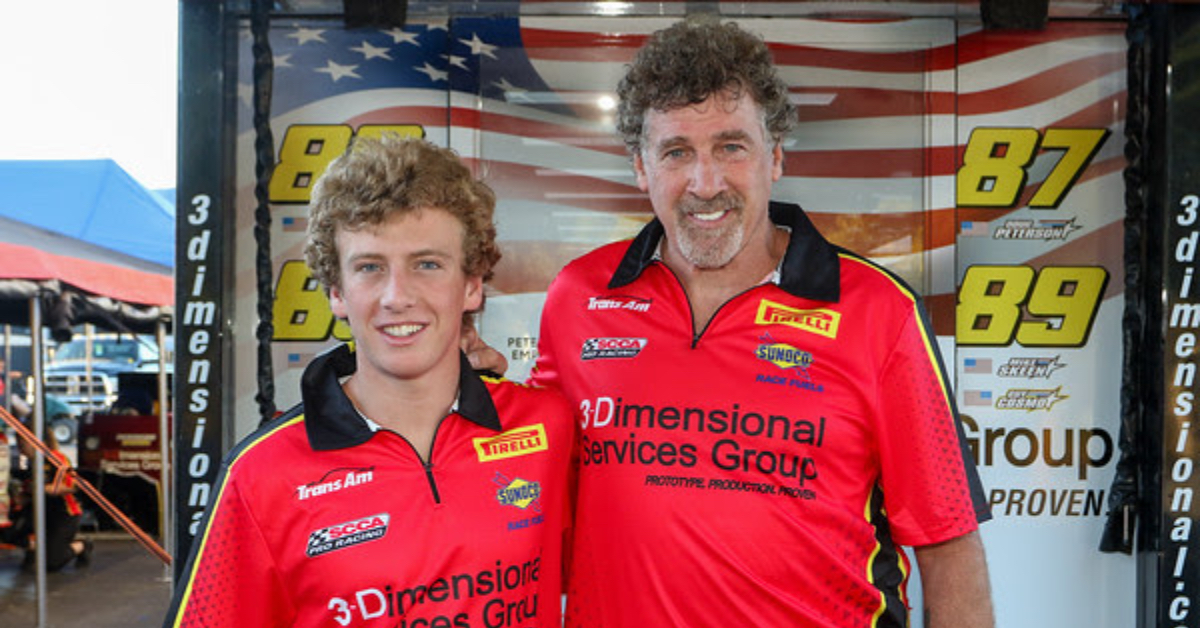
Photo courtesy of Jordan DaCosta @jordandacostaracing

Jordan’s approach to racing is as much about business as it is about burnout. He sends 100–150 emails a day to potential sponsors, targeting COOs and marketing execs from companies outside motorsports. “I watch NASCAR, F1, and see who’s sponsoring other sports,” he explains. “You don’t want the companies already in the sport – you want to bring new ones in.”

His strategy? Treat racing like a startup. From merch tables to vendor partnerships, Jordan’s presence at the track is a full-on activation. And it’s working. He’s landed meetings, built a local sponsor base, and even helped brands like Steel Supplements and Omni Energy become official partners of major events.

Spotlight

Synopsis

In this episode of the Break/Fix podcast, host Crew Chief Eric, along with returning guest and two-time NHRA Drag Racing Champion Megan Meyer, interviews Jordan DaCosta, an 18-year-old emerging talent in drag racing from Bradenton, Florida. The discussion covers Jordan’s early interest in motorsport, nurtured by his father, and details his quick rise from hobbyist to professional driver. They explore the challenges and dedication required to transition from local events to joining the prestigious Bishops Motorsports Pro Sportsman NHRA team. Jordan talks about balancing school and racing, his aggressive marketing efforts to secure sponsorships, and the importance of vision and persistence. The conversation also includes advice from industry greats and the value of networking and marketing in racing. Jordan shares his future ambitions in drag racing and the importance of evolving with the sport.

  • Joining us for this episode is returning guest 2x NHRA Drag Racing champion Megan Meyer, who you might remember from our Panel episode earlier this spring.  
  • How did you get involved in Motorsports? Did you come from a racing family? What drew you in? When did you realize this was more than just a hobby for you?
  • Drag racing is all about precision—what goes into preparing both yourself and your car before a big race?
  • What has been the most challenging moment in your racing career (so far), and how did you overcome it?
  • Can you share a race that stands out as your most memorable and what made it so special?
  • When you’re not behind the wheel, what do you do to stay sharp and improve your skills?
  • What advice would you give to aspiring drag racers who want to follow in your footsteps?
  • What’s next for Jordan DaCosta? Any big goals or upcoming races that fans should keep an eye on?

Transcript

Crew Chief Brad: [00:00:00] Break Fix podcast is all about capturing the living history of people from all over the autos sphere, from wrench, turners, and racers to artists, authors, designers, and everything in between. Our goal is to inspire a new generation of Petrolhead that wonder to. How did they get that job or become that person?

The road to Success is paved by all of us because everyone has a story.

Crew Chief Eric: We return to the world of drag racing with Jordan DaCosta, an 18-year-old drag racing phenom from Bradenton, Florida with an unwavering passion for Motorsport.

Megan Meyer: Currently piloting a nitrous powered s. 10 Jordan competes in major Florida national events showcasing his exceptional talent and determination on the track.

His journey doesn’t stop there. Jordan recently announced a future in the NHRA as a professional driver with the prestigious Bishops Motor Sports Pro sportsman team.

Crew Chief Eric: That’s right. And joining me tonight is returning guest two time NHRA [00:01:00] Drag racing and champion Megan Meyer, who you might remember from our panel episode earlier this spring.

So welcome back to the show, Megan.

Megan Meyer: Thank you.

Crew Chief Eric: And with that, let’s welcome Jordan to break fix. Hello everyone.

Jordan DaCosta: How are you guys?

Crew Chief Eric: All right, Jordan, it’s tradition on this show that everybody starts out with a superhero origin story, but in this case, we’re at the origin of your origin story. So tell us about the who, what, when and where of you, how did you get involved in Motorsport?

Did you come from a racing family? What drew you in? You’ve only been doing this for about two seasons now?

Jordan DaCosta: Yeah, I’m on my second season now. We just ended here in Florida ’cause it’s actually different than the NHRA. But it started out I was pretty young. Used to go drag racing with my dad. He raced a stick shift car.

We lived in, uh, long Island, New York, so we’d have to travel four hours to go to every race. I remember, you know, when I was little, painting the underbody of the car, cutting out the front end, putting a tube front end in it. Every winter we would switch the turbo, do twin turbo, set up single turbo. And then we made [00:02:00] the move to Florida and we just so happened to be able to find a property five minutes away from Bradenton Motorsports Park.

I got my first square body, S 10. I started doing test and tune events every single Thursday. To really just learn and it, it was a ten second truck, I felt ready to start doing events there at Bradenton, we were able to find another S 10 that was faster. I could do like a nine 50 index in it and then still progress as I grew as a driver and learn more.

So I started doing that, and then I didn’t really take it as serious. I just did it as a hobby and then. All of a sudden I met Mr. West Buck at Drug Illustrated and he gave me a lot of great advice and so did Kevin Canto, which is now one of my business managers, and helps me a lot today with everything.

And I started getting sponsors about a season I. After starting,

Crew Chief Eric: you know, you brought me back to the Fast and Furious Vin Diesel. You owe me a ten second car. You know, that kind of thing. It [00:03:00] sounds like your transition from making it a hobby to a profession was pretty quick, and it sounds like you had a plan underneath of you, and you’ve got some people helping you along.

So what were some of the challenges to getting to this point? Now you’re signing with the team, and we’re gonna talk about that more as we go along here. What did you discover along the way? Is it as easy as people make it out to be, to get into Motorsport? Or have you faced with some issues?

Jordan DaCosta: No, it’s not easy at all.

I’m sure Megan can agree with that. Doing it for so many years. I knew it wasn’t going to be easy. I knew it was going to cost me a lot of time, and you know, I fully was dedicated to it. I still am. I’m a very driven person. I’ve always been a natural leader. I’ve always been hardworking. I’ve been working since I was 14, so I, I knew that if I.

Kept going, even though I didn’t see the results in the beginning right away, that I could get to this point. I’m a big vision person. I could vision myself 10 years from now and I’m big on that. And you know, just to get to where I am today, I [00:04:00] never really thought it would’ve happened, but I’ve envisioned it a year ago today.

It’s definitely a challenge, that’s for sure. But I try to keep my head high and keep pushing and keep doing what I’m doing. I’m always evolving and learning and changing new things on the business side on. The mechanic side and everything in between. My whole program

Crew Chief Eric: for our listeners out there who are keeping up with all the different personalities that we have on here, we recently had another young and up and coming driver who’s working through carting to get to imsa and he talked about the struggle about balancing school at a young age with driving.

Yeah. Here you are at 18. The last two years. Drag racing now into NHRA. How are you striking a balance between school and work?

Jordan DaCosta: Yeah, so this year I actually switched to online. It just worked out better because of my schedule here in Florida. You know, I’m, I go to races from Wednesday or Thursday all the way to Sunday.

I was always out of school when I was in 11th grade. You know, this year I did online and I was able to actually finish my whole year’s worth of work before my season even [00:05:00] started here in Florida in two months. So I’ve been done since September and I’ve been fully focused on the business side during the day.

And then I have a job at night where I work in my dad’s shop and then racing on the weekends. So I’ve been fully into this, you know, for about a year now, like just totally dedicated to building my name and progressing as a driver and business person.

Megan Meyer: I wanna go back to what you just said about visioning leadership, the business side of racing.

’cause I know firsthand that it is. So important to really work on the business side of it. Not all racers realize that you do need to treat your career like it’s a business and not just, Hey, I wanna go drive a race car. ’cause it’s fun. So when you’re not behind the wheel and now that you’re, you’re done with school, can you tell us more about.

What you are doing on the business side, and then also what you do to stay sharp for racing, for your driving and, and especially now that you’re gonna be stepping up.

Jordan DaCosta: Yeah, so my day to day I like to send about a [00:06:00] hundred to 150 emails a day to companies, preferably COOs, CFOs, you know, people, um, on the marketing side of, you know, the bigger companies.

Now that I need a larger amount of funding, I’m finding myself needing to find those bigger companies. Not so much the local ones anymore. So I, I send up the one 50 a day and I actually find those companies based off of, I’ll be driving around and I just see this company, I think about it, I’ll write it in my notes and that’s how I go.

I watch nascar. I watch F1. I see who’s sponsoring other sports. And also a big thing I think you’ve also talked about on your social media is you don’t really want the companies that are already in the sport, you want the ones that are outside. ’cause those are the ones. That have the funding, that have the pockets to be able to help you and to even just bring them into the sport and just doing that, you bring a new fan into the sport.

So that’s also our goal too, to bring new fans in. So that’s something I’ve been focusing on my day to day, and it’s a lot of fun. You get a lot more, [00:07:00] no answers than not even knows. But you know, out of a hundred maybe you’ll get three people that answer you. You can get some meetings set up. I’ve had some good meetings so far, so it’s pretty exciting.

The opportunity is definitely what excites me the most. Thinking about, you know, what the potential could be with X company.

Megan Meyer: Yeah, yeah. Well, and sharing that vision is so important. And going back to what you said. I like to tell racers like, it’s like imagine you have a a pizza or like a pie. If you’re going after a company that already is sponsoring people in motorsports, you’re just taking a smaller piece of that pie instead of bringing a whole nother dish to the table exactly like what you said.

So I’m so glad that you understand that. And even the fact you had mentioned you might get more, no responses than nos, but just that experience. Of that repetition of sending them out, learning what to say, you know, I’m, I’m sure you’re changing it every time because you’re learning what works and what doesn’t work.

And even just the fact that like if you do get a no, that’s still like a step [00:08:00] in the right direction because it does help you learn those losses help you get closer to your win. And, and you’re definitely well known within the drag racing world because you do stand out because. Not very many racers in our world are putting in the work that you do to get your name out there.

Jordan DaCosta: Thank you.

Megan Meyer: So that’s why when I heard from Chris Bishop that you’re gonna be joining the team, it’s like, oh, that’s a no brainer, because you’ve just been doing so much work to get your name out there. Congratulations. Thank you on that and I’m very excited to follow you. So I do wanna talk about how have you seen the sport change since you first started and the fact that you have raced, you went from New York to Florida, have you seen it change very much?

And then also where do you think it’s going in the future? I’ve seen

Jordan DaCosta: it change a good amount. You know, it’s more focused on the social media now, not so much. As what it used to be years ago and just driving. There’s so much more marketing partners needed nowadays because everything just has rising in price.

[00:09:00] Even you see in nascar, they have new sponsors every single weekend. Sometimes you see that on drag cars too. It’s just evolved so much in the past couple of years that we are bound to change with it.

Crew Chief Eric: So let’s switch gears here a little bit. Let’s talk a little bit more about the finesse of drag racing, because you hear different opinions about it, right?

In terms of motor sporting, some really awesome things going on, like we talked about on the panel with Megan, you know, gender parity and you know, a lot of young people in drag racing, which is absolutely awesome. But there’s a lot of talk around, you mentioned Formula one is super popular, even sports card endurance racing.

And you know, you take this turn like this and your entry speed and your exit cornering and how much did you try? And there’s all these nuances to, let’s say, road racing. And I think a lot of that is lost in translation with drag racing. ’cause it, it’s such a short run. Yeah. But it’s so powerful of a run in that short amount of time.

So what I wanted to do was kind of highlight how it is for you right now. ’cause you’re in the middle of it. If you talk to. Legendary drivers. If you talk to retired drivers, you know the old saying, the older we get, the [00:10:00] faster we were. And again, some of this stuff is lost in translation. So can you kind of walk us through the day in the life of a young drag racer?

What’s it like for you? What’s it like being at the starting line and all that adrenaline and the. Car prep and everything that goes into it.

Jordan DaCosta: Yeah, I, I’m an overthinker and I, in the mornings, like on any race day, so like Thursday, you know, you have your qualifying. Friday I have your qualifying. Then sometimes, in my case it’s elimination Saturday and goes into Sunday as well.

I like to get there early. I’m always first, I love the trailer organized. I like to have all my merch set up. I’ll go in early before my parents and my other part-time help comes in and helps me. So I’ll come early set up. I like to sit in the car in the lanes a lot earlier than most do because I like to just sit in the silence and kind of think about my run and what I wanna focus on in that run.

See where I need to improve. Let go of the button different. Try something, you know, new. Like right now, we just did a lot of changes to my car, so I had to [00:11:00] learn how to drive on a radio tire, which is a lot harder than slicks. A lot more times in a radio car, you’ll smoke the tires than in the slicks that I had.

So I had to learn how to go through tire shake wheeling too. Like I had to learn how to pedal it differently and shift at a different rate and be used to a higher wheel speed with those radials. So there’s definitely a lot involved in driving a drag car. It’s not about just holding it and you know, going straight, especially for me, there’s.

You know, I have nitrous, so I’m watching, you know, after my burnout, my nitrous pressure, and I have to purge it down to a certain number, and there’s buttons you gotta hit in between all of that and things that you gotta make sure are going right to be able to go down the track as safe as possible.
Crew Chief Eric: Up until this point, you’ve been working with your dad, prepping your own truck, and you are the master of your domain and you’re very.

Sensitive to the car you, like you said, you gotta purge it down, you gotta do this. If it doesn’t sound right, it’s not running right. We gotta tear it down. But now you’re signing up with a team where the car will probably be provided. How is [00:12:00] that gonna be different for you? What’s that transition like going from driver mechanic to just pro driver?

Jordan DaCosta: Oh, I’ve definitely thought about this. It’s definitely gonna be weird. Definitely gonna, you know, want to get my hands dirty in the pits and help the team as much as possible. But it’s definitely gonna be nice knowing that. They have so much knowledge in their class range. The whole team just, they know what they’re doing and I have full trust in them in the tuning side and everything.
Even their coaching, they’re gonna be coaching me a ton because it’s a total new avenue and class I’m going in. I’m gonna be driving three different classes for them in my first race. So it’s definitely gonna be a huge learning curve for me. I’m excited to be able to go there and I have to fly in ’cause they’re actually in Minnesota, so I have to fly in a day early and then fly out a day after because I still want to help them, you know, bring everything back and go to their headquarters as well.

Crew Chief Eric: Other disciplines of motorsport, even the roundy round stuff. Road racing especially, there are practice days. Do you [00:13:00] get that opportunity in drag racing? Do you get to practice with the cars before?

Jordan DaCosta: Yeah, so my divisional races I’m doing with them I think are Friday races, are practice days. But because it’s an NHRA divisional race, I actually have to relicense in all of their cars.

So I’m actually flying up there for a week, the beginning of next month to meet the team. ’cause I haven’t even met them. I haven’t been to their shop or anything, meet them, start to learn how to drive the cars and license. Three different cars so that I’m prepped and ready to go for my first race and not have to worry about licensing on that Friday test day in three classes and try to, you know, scrim that in the schedule.

Are you nervous? I am nervous. I’ve never traveled to a drag race and just raced by myself. I’ve always had, you know, my dad with me and my parents there, so it’s definitely gonna be different, but. I’m also a very independent person. I’m very excited. I’m definitely counting down the days until I get there.

Megan Meyer: I can speak from Chris’s experience because that’s how we run our program, is we provide the [00:14:00] cars, the team, and we just have the drivers fly in and show up. I have worked closely with Chris before in the past, and I know he has trained multiple drivers, so he knows what he’s doing. He is a professional, so it’s like the best team, I think, out of all the NHRA that you could race with.

And yeah, it, it is. So important that you do come in early and like you get to know the team, get to know their setup, learn how they organize their stuff, like what you had mentioned, even just going to their headquarters because sometimes we do get drivers that go through our program and they don’t put in that extra effort.

They end up being the ones that stay with us for the shortest amount of time. You could tell, like they just don’t have that much passion and drive for it. Clearly you do. So I feel like you’re gonna be very successful with Chris and his team. Thank you. So, yeah. Yeah, you’re welcome. So what do you think will be the most challenging moment?

For you going from radials in a drag truck to Super Street?

Jordan DaCosta: I’d say just driving a car, it’s totally different than a truck. And I’ve actually thought [00:15:00] about it a lot ’cause I’ve, you know, sat in drag cars before, like friends of mine. But it’s a total different view and I’m a shorter driver, so we’re definitely gonna have to adjust the seat and do a lot of adjustments.

But you sit a lot lower. My truck is pretty low, but it’s. Still a lot different, you know, than a normal car. So I think that’s gonna be a big adjustment for me. And then also, I didn’t announce this yet, but I guess I will hear, I’m gonna be driving their super comp dragster as well. I’ve never even drove a dragster, never been around a dragster.

I’ve always wanted to. So that’s gonna be a whole new adjustment as well, and I’m really excited for that opportunity with them as well.

Crew Chief Eric: So I’m gonna ask you again, are you nervous?

Jordan DaCosta: I’m nervous. I’m nervous. Excited.

Megan Meyer: Yeah. Well, that’s awesome. Super accomplished. So much fun. It is very intimidating. At first, I remember the first time that I made passes in my super comp, we brought our super comp dragster to Frank Colley.

So I got to license there and because my dad knows nothing about Super comp Dragsters, right? He like, he [00:16:00] can do top alcohol dragster, you know, with his eyes closed in his sleep. But don’t ask him to do anything with bracket racing ’cause he does not know how to do it. He does not care. So we actually, yeah, we had to learn from someone else and it took us a long time to figure it out.

So it will be much easier for you going with a team that knows what they’re doing. Yeah. And they can tell you exactly what to do. Yeah. When to do it. But that’s awesome. Congratulations. Yeah. Super comp is so much fun. Thank you. I wish I could still do it, but we sold my card and so I, I can’t anymore, but you know, maybe one day.

I’ll buy another dragster. Yeah. I wanna go back to your past and talk a little bit more about the truck. So do you have a certain race that stands out that’s the most memorable one that you have? And what made it so special for you?

Jordan DaCosta: I would say, you know, it’s a series, so it’s the Drag Illustrated winner series.

That whole series just changed my whole perspective as a driver, a team owner, and an influencer. So that race. I was able to bring in my title sponsor, which is a local [00:17:00] store, Bradenton performance supply. They’re five minutes down the road from the track, so we were able to get them as a vendor spot and I was able to actually park next to them.

So just the marketing was amazing, that whole series that we were able to be next to each other, you know, having their name on the side of the car and you know, their little storefront, you know, at the track there. I was able to actually park on the pro mod side, and I was the only index car on that side, so I got to be next to Kai Kelly.

I was across from Stevie Fast Jackson. I was next to Erica Enders, Antron Brown, you know, all the big names and the stars, and you know, they actually came up, talked to me, gave me advice, and, you know. Telling me I have a cool setup and all that cool stuff. So it definitely inspired me and to see the humbleness from all the other drivers.

But another thing that kind of stood out to me was I started making these hats that say JDR for Jordan DeCosta Racing, and I sold out of them every single race. So then what I started doing, because I realized there was traction from it, I started making sweatshirts and [00:18:00] shirts and selling that. And then I also made a marketing table for.

All of my sponsors that may have business cards or like a lot of my other brand deals like Dream Giveaway or Racers Club, we have coupon codes and stuff like that. And I saw a big progress from that. It definitely opened my eyes to, and also even because I’m not one of the stars of that series, you know, I’m not in a pro mod, believe it or not, I had people asking for autographs and stuff and it felt, you know, really cool and it.

Just pushed me to, you know, wanna work harder and want to do more to get to where I want to be like the other drivers surrounding me.

Crew Chief Eric: Well, Megan, you’ll recall, you and Erica, when we were on the panel together, shared a sentiment about how the highs are extremely high in drag racing, but the lows can be very, very low.

So Jordan, you know, you talked about some of the good things, those lows teach you a lot in life in general, but especially in Motorsport. So what’s one of the most catastrophic things that have happened that you’ve learned from, or failures that you’ve grown from, from your time in Motorsport so far?

Jordan DaCosta: You know, [00:19:00] there’s a lot of failures all the time.

I mean, finishing my second season off, obviously this season was a lot better than my first, my first, I went without any round winds or anything, and my goal for my second season was just. To get a round win, not even an event win. I didn’t care. I just wanted to win a round because bracket racing and index racing is very hard and I had to learn how to finish line drive and you know, do all that critical stuff of the driving side.

And just as much as getting my car dialed, we had the hardest time getting it dialed. We’ve had issues. We had to change transmissions, we changed drive shaft rear end, we changed nitrous systems. We had issues where the car would just shut off. So. That low felt very low, like I couldn’t escape out of it.

And then the next season came and now I have 10 career round wins and one event win in just a season. It went from really low and you know, not giving up, but still feeling bad about it to going into the next season, trying to be positive, and then doing pretty well. So I’m happy with this. [00:20:00] Last season.

Crew Chief Eric: That brings up another good point. You’re rubbing shoulders with some big names and you’re making your way. You’re just starting out. So when you look over the history of drag racing and NHRA and you’re talking to these people and listening to their advice, what do you think separates a good drag racer from a great one?

Jordan DaCosta: The good ones are great drivers, but the great ones are great drivers. Business people, marketers, and they could do just about anything, not just the driving ’cause the driving is great, but we’re also, like Wes Buck says a lot, you know, with Drug Illustrated, we’re characters. We’re the stars of the show. We need to kind of show that off.

And now that everything has evolved in the past couple of years with social media, we need to follow that trend. Let’s start vlogging. Let’s start a podcast. You know, let’s evolve with the sport. So the great ones evolve. The good ones just. Stay driving.

Megan Meyer: That’s really good advice. And is it so true? And I share that online too as well.

’cause you kind of see the ones that just, they stay stuck in their [00:21:00] ways and then over the years they just kind of fade off and then new talent like you come in. So speaking of Wes, what has been some advice that Wes has given you or Kevin that you could pass on to those aspiring drag racers who want to follow in your footsteps?

Jordan DaCosta: When I first started out, when they saw my car and there was no sponsors, it was just a plain black truck. And they were like, you need to start, you’re young, you are business hungry, and we think you could be a potential star. And they started off telling me, you know, try to find the local guys. So I started off finding local companies and.

I’m lucky enough to have about 10 local companies that are on the car and have been helping me and helping me in the future. One of them is actually a local restaurant that sponsors the Drag Illustrated Winter Series food for us. So I met him from them and he’s actually sponsoring my 2025 season in my truck here.

[00:22:00] And then he’s also sponsoring my 25 season with Bishops Motorsports. So I was able to bring him into the NHRA side and he’s. Such a fan and it’s just so exciting. But also, Kevin, now that we’re looking for, you know, those bigger corporate ones, he helps me with a lot of my wording. So he’s like definitely the punctual guy, uh, that helps me spruce things up a bit.

He’s always telling me I’m going too low on my packages. He wants me to go higher in price, but they just really support me and, you know, every step of the way they’ve. Always had my back no matter what. They’ve always introduced me, and that’s another thing, just networking. You know, if I never met them, I honestly do not know what I’d be doing today without them kind of pushing me forward or giving me that contact.

Talking to everybody is a must.

Megan Meyer: So the local companies that you are bringing on, what is it that you are giving to them in value in exchange for, you know, the exposure that you’re offering for ’em?

Jordan DaCosta: Yeah, well of course you start off with placement on the car and then, you [00:23:00] know, some of my other deals are.

More so I guess ambassadorships, you promote them on social media. Another perk of, you know, having them local is I offer when they go to car shows to be featured in the car shows with them to go to all their brand events and stuff like that and kind of speak out and do a lot of community engagement, which helps a lot with their sales.

And I also try to help a lot of my companies that I’m with try to get into the track as a vendor depending on, you know, what business they have for instance. A local company we have here is Steel supplements. They’re also parent company is Omni Energy. For the past two years of the winter series, they’ve been the official energy drink of the winter series, so I gave that connection to them.

So you also want to connect them to other things that can help grow their brand. Other than just a name on the car and posting social media stuff as well.

Crew Chief Eric: All right, Megan, let’s turn the table. What advice would you give Jordan?

Megan Meyer: You are so far ahead of other races. That’s

Jordan DaCosta: what everybody says, but I, I [00:24:00] could have it my way.

I’d be a pro today. Tonight.

Megan Meyer: Yeah. Well, it does take time, I gotta tell you that. Yeah. Yeah. So it took me three years. Of just training for top alcohol dragster before I even did a, a professional, you know, an HRRA. So it takes time, but you are learning so much that’s gonna pay off so far down the road.

’cause yeah, there’s even racers that have been racing for 20, 30 years that still haven’t figured out, like the things you just said. The importance of networking is so key. So my advice for you is to just keep your head down. Just keep trying to grow your network. You never know who is watching you either at the track or online.

There’s so many times I have heard from brands where they won’t wear their logo on their shirt or a polo when they go to a race because they don’t want to be treated differently because people see, oh, you know, they’re associated with this company. So they’ll just wear, you know, a regular [00:25:00] t-shirt and they’ll just observe and see how drivers interact with fans.

Or are they just sitting on the golf cart, you know, just on their phone the whole time, not talking to anyone? Do they have a clean pit space? Like do they take care of their car? I have heard multiple times from brands. Saying that they’ll interact with someone like on Zoom or email or phone call, and it sounds like a great deal, sounds like someone they would wanna partner with.

And then they go and see them at the Track incognito style and realize, oh, that’s not actually the person that we want to represent our brand. So I feel like you’re on that right path. Just stay professional in person and online. You never know what could haunt you one day. So just make sure you know, you’re not posting anything negative or bad or saying anything bad about someone else out there.

And just, you know, stay positive. Interact with every single person you meet at the track. Treat them all like royalty, no matter who they are. If it’s a little kid or a old man or someone, you have no idea who they are. Yeah, because you never [00:26:00] know. What they do or what connections they have that could help you in the future.

Of course. Thank you.

Crew Chief Eric: Racing is one of the places where the nice guys don’t finish last. They usually come out ahead. That being said, dovetailing off of that, I will bestow some wisdom if I can. And to your point about bringing these new ideas to the paddock and the things you’re doing to promote yourself, we had the opportunity to.

Sit down and chat with Matt Marelli a couple years ago and he, you know, was friends with Ken Block and then he eventually took over the Mint 400 and a lot of other off-road events out west and I went to visit him at the Mint. You know, we got to chit-chatting. He was taking me around and I said, you know, Matt, this seems awful familiar to me.

Like there’s certain aspects of other motorsport at this event. And he goes, yeah. Because I went and checked them all out and then I took the best of that and brought it home with me. So I tell you the same thing is go check out other motor sport disciplines and learn from them what they’re doing, how they’re marketing, how they’re getting their sponsors, and if you can take that back home with you in some way and that propels you, that’ll give you a leg up on your [00:27:00] competition.

Yeah, for sure.

Megan Meyer: Yeah. Yeah. And Matt’s so good at marketing. The mint is on my bucket list. I wanna go there someday.

Crew Chief Eric: It’s an awesome event. I can’t recommend it enough.

Megan Meyer: Yeah. Alright, so Jordan, for you, what would you say to the next Jordan, so the 10, 12, 15-year-old that’s watching you, looking at you move up through the ranks, what would you say to them?

Who wants to do what you’re doing right now?

Jordan DaCosta: Look down and never look up until you’re where you want to be. I’m big on like a not giving up. I know that’s what everybody says, but if you truly believe it and you vision it in your head, when you envision it in your head, it’s going to happen. It could be the craziest idea of me in a top fuel car in two years, right?

But if you believe it, it’s going to happen. It doesn’t matter how long it’s going to take. It could take 10, 15, 5 years. It doesn’t matter. So if you have the right vision for yourself and it’s not a vision from somebody else, you could do anything you want.

Megan Meyer: Such a coincidence that [00:28:00] you said that because I am rereading this book, think and Grow Rich by Napoleon Hill.

That’s exactly what this book is all about, is about visioning and making it come to life. If you haven’t read this. You should read this.

Crew Chief Eric: I

Jordan DaCosta: haven’t.

Megan Meyer: Okay, good. Yeah, so that’s exactly it.

Crew Chief Eric: Yeah. My SAT word for the day to summarize that is tenacity. That’s what that all boils down to. Jordan, you made a reference there to keeping your eyes down, meaning looking down the strip, you have a lot of strip ahead of you still to come.

Yes. You’re on a fast track to becoming a professional driver and maybe your. Clinching your first NHRA championship somewhere here down the road, but what’s your five, 10 year outlook? What’s next for you? Is drag racing what you wanna do forever? Are there other disciplines of motorsport that you wanna explore?

What are your goals? What are you keeping your eyes set on

Jordan DaCosta: right now? I’m definitely trying to focus on joining this new team and, you know, making them happy, helping them grow as much as possible, as well as myself. I definitely see myself. Down the line, progressing with the team in class. [00:29:00] So if that means moving up in dragsters or in cars, I would like to do that.

And I definitely could see myself staying in the sport for a very long time because I do want to become a, a full-time pro driver and I definitely always want to stay in the sport, even if that was not to happen. But I know at the right vision it will, just as much as, you know, I want to drive, I want to be on the business side as well, so.

Investing my time into a team I think is definitely worth so trying to help Bishop’s Motorsports grow, not just for myself, but also for them. It’s a big deal to me, so I’m excited for that as well.

Crew Chief Eric: Well, Jordan, we’ve reached that part of the episode where we like to invite our guests to share any shout outs, promotions, thank yous, or anything else that we haven’t covered thus far.

Jordan DaCosta: My first race is June 8th in Minnesota at Brainerd International Raceway. We have title sponsor, poblanos Mexican Bar and Grill, so I wanna really thank them for coming on board for the 2025 season and I [00:30:00] hope to make them proud of my new team. Proud.

Megan Meyer: Known for his focus, grit, and dedication. Jordan has set out to make a name for himself in the professional racing world through hard work, passion, and perseverance and visioning.

He’s determined to turn his dream of becoming an NHRA professional into reality when not racing. Jordan is also seeking ways to connect with brands that align with his values and racing goals. His enthusiasm for motorsports and his entrepreneurial spirit are the core of his success. And he’s always looking for ways to grow and improve, both personally and professionally.

To learn more and keep up with Jordan’s progress and hear about his first race, be sure to follow him on social media at Jordan DeCosta racing on Instagram.

Crew Chief Eric: And with that, Jordan, I can’t thank you enough for coming on the show and sharing the beginnings of your Road to Success story with us here on Break Fix and some of the.

Exclusives that you dropped with us, we are rooting for you. We are gonna be watching you and we are wishing you the best of luck [00:31:00] and hope to see you with an A HRA championship title under your belt

Jordan DaCosta: one day. One day. Definitely. Thank you guys so much for having me. It was nice talking to you guys and the advice was really helpful.

Megan Meyer: Yeah,

Crew Chief Eric: and Megan, a pleasure as always. Thanks for coming back.

Megan Meyer: Yeah, thank you for having me back, Eric. Glad to be on. Thank

Jordan DaCosta: you guys.

Crew Chief Eric: We hope you enjoyed another awesome episode of Break Fix Podcasts, brought to you by Grand Tour Motorsports. If you’d like to be a guest on the show or get involved, be sure to follow us on all social media platforms at Grand Touring Motorsports. And if you’d like to learn more about the content of this episode, be sure to check out the follow on article@gtmotorsports.org.

We remain a commercial free and no annual fees organization through our sponsors, but also through the generous support of our fans, families, and friends through Patreon. For as little as $2 and 50 cents a month, you can get access to more behind the scenes action, additional pit stop, minisodes and [00:32:00] other VIP goodies, as well as keeping our team of creators.

Fed on their strict diet of fig Newton’s, Gumby bears, and monster. So consider signing up for Patreon today at www.patreon.com/gt motorsports. And remember, without you, none of this would be possible.
Highlights

Skip ahead if you must… Here’s the highlights from this episode you might be most interested in and their corresponding time stamps.

  • 00:00 Meet Jordan DaCosta: The Drag Racing Prodigy
  • 01:11 Jordan’s Racing Journey Begins
  • 03:09 Challenges and Triumphs in Racing
  • 04:36 Balancing School and Racing
  • 05:24 The Business Side of Racing
  • 09:12 The Finesse of Drag Racing
  • 11:43 Joining a Professional Racing Team
  • 18:35 Advice and Reflections
  • 28:32 Future Goals and Shoutouts

Bonus Content

There's more to this story!

Be sure to check out the behind the scenes for this episode, filled with extras, bloopers, and other great moments not found in the final version. Become a Break/Fix VIP today by joining our Patreon.

All of our BEHIND THE SCENES (BTS) Break/Fix episodes are raw and unedited, and expressly shared with the permission and consent of our guests.

Learn More

Guest Co-Host: 2x NHRA Champion, Megan Meyer

Megan Meyer is a highly accomplished drag racer who made history in the NHRA’s Top Alcohol Dragster (TAD) category. As the daughter of legendary racer and team owner Randy Meyer, Megan grew up immersed in the world of drag racing and quickly established herself as a formidable competitor. Her precision, discipline, and natural talent behind the wheel propelled her to back-to-back NHRA Top Alcohol Dragster World Championships in 2019 and 2020, making her the first woman to achieve consecutive titles in the class.

Photo courtesy Megan Meyer – https://randymeyerracing.com/megan-meyer/

Beyond her success on the track, Megan has become an influential figure in the motorsports community, inspiring the next generation of racers—especially women in drag racing. After stepping away from full-time competition, she has focused on mentoring young drivers, managing the family’s racing team, and expanding her presence in the motorsports industry through media and branding initiatives. Her legacy as a fierce competitor and dedicated advocate for women in racing continues to shape the future of the sport. Check out the panel episode featuring Megan from Issue-33.

Tune in everywhere you stream, download or listen!

Listen on Apple
Listen on YouTube
Listen on Spotify

Tune in everywhere you stream, download or listen!

Listen on Apple
Listen on YouTube
Listen on Spotify

Balancing school and racing wasn’t easy. Jordan switched to online classes and finished his senior year in just two months, freeing up time for business development and working nights in his dad’s shop. “I’ve been fully into this for about a year now,” he says. “Totally dedicated to building my name and progressing as a driver and business person.”

  • Photo courtesy of Jordan DaCosta @jordandacostaracing
  • Photo courtesy of Jordan DaCosta @jordandacostaracing
  • Photo courtesy of Jordan DaCosta @jordandacostaracing
  • Photo courtesy of Jordan DaCosta @jordandacostaracing
  • Photo courtesy of Jordan DaCosta @jordandacostaracing
Jordan’s mindset is what sets him apart. He’s a self-described “vision person,” constantly evolving his program – mechanically and mentally. Whether it’s switching from slicks to radials or learning to pedal through tire shake, he’s always adapting. “I sit in the car early, in silence, and think about my run,” he says. “What do I want to focus on? What do I need to improve?”


From Solo Driver to Team Player

Now signed with Bishops Motorsports, Jordan is transitioning from wrenching his own truck to flying in as a pro driver. He’ll be racing in three NHRA classes, including Super Street and Super Comp Dragster – his first time in a dragster. “I’ve never traveled to a race alone,” he admits. “It’s going to be different, but I’m excited.”

Megan Meyer, who’s worked with Chris Bishop’s team, reassures him: “You’re going with the best team in NHRA. They’ll coach you, and you’ll learn fast.”

Photo courtesy of Jordan DaCosta @jordandacostaracing

Jordan’s first season ended without a single round win. But he didn’t quit. In his second season, he racked up 10 round wins and one event victory. His most memorable moment? Racing in the Drag Illustrated Winter Series alongside legends like Kai Kelly, Stevie Fast Jackson, Erica Enders, and Antron Brown. “I was the only index car on the pro mod side,” he says. “They came up, gave me advice, told me I had a cool setup. It was surreal.”

He also launched his own merch line – JDR hats, shirts, and sweatshirts – which sold out every race. His marketing table featured sponsor materials, coupon codes, and business cards, turning his pit into a brand activation zone.


Advice for Aspiring Racers

Jordan’s takeaway? Great drivers aren’t just fast—they’re business-savvy, media-ready, and always evolving. “Good ones are great drivers,” he says. “Great ones are marketers, characters, and stars of the show.”

Megan echoes the sentiment: “You never know who’s watching. Stay professional, treat everyone like royalty, and keep growing your network.”

Photo courtesy of Jordan DaCosta @jordandacostaracing

Jordan’s licensing week with Bishops Motorsports is just around the corner. He’s nervous, excited, and ready to take the leap. With a strong team behind him and a mindset built for success, the future looks fast and bright.

Known for his focus, grit, and dedication, Jordan has set out to make a name for himself in the professional racing world. Through hard work, passion, and perseverance, he’s determined to turn his dream of becoming an NHRA professional into reality.

When not racing, Jordan is always seeking ways to connect with brands that align with his values and racing goals. His enthusiasm for motorsports and his entrepreneurial spirit are at the core of his success, and he’s always looking for ways to grow and improve both personally and professionally. To learn more, and keep up with Jordan’s progress be sure to follow him on social media @jordandacostaracing on Instagram.


This content has been brought to you in-part by sponsorship through...

Motoring Podcast Network

Leipert Motorsport’s Journey at Monza Unfolds

0

The “Temple of Speed”, the Autodromo Nazionale Monza in Italy, became a stage of great expectations and bitter disappointments for Leipert Motorsport. For the second round  of the Lamborghini Super Trofeo Europe – again with four cars – the team, supported by PROFICAR, travelled to Italy full of confidence. However, despite excellent preparation, impressive lap times and promising grid positions, the longed-for podium finishes and victories failed to materialize.

Even in the free practice sessions, it was clear that Leipert Motorsport was ideally positioned. All six drivers quickly found their rhythm, achieving several promising starting positions in qualifying. These were the best conditions for a successful weekend.

#44 Thalin/Bergman (SWE) – Pro-Class

In the first qualifying session, Manz Thalin (pictured above, cover photo) secured sixth place on the grid in the PRO category, while Calle Bergman took Pole position overall with an impressive lap in the second qualifying session. The Swedish duo then confidently worked their way up to fourth place in the first race. A breakthrough seemed within reach in the second race. Starting from Pole position, Thalin and Bergman led the field for long periods, until contact in the battle for victory resulted in a disastrous spin eight minutes before the end. Instead of the well-deserved first victory of the season, they finished eighth.

#70 Gerhard Watzinger (USA) – Lamborghini Cup

Photo Courtesy Liepert Motorsport, SCIARRA GIANLUCA FOTOSPEEDY

Gerhard Watzinger confirmed his strong form with fourth place on the grid in the first qualifying session and Pole position in the second. In the first race, he took the lead early on when he was in first position when he went off the track during an overtaking manoeuvre shortly before the end of the race and crashed into the crash barriers. The race was neutralised and finally stopped after a further lap – sixth place was a small consolation. Due to the damage to the vehicle, a start in the second race was no longer possible.
#88 Pablo Schumm (SUI) – Pro-Class

Photo Courtesy Liepert Motorsport, SCIARRA GIANLUCA FOTOSPEEDY

Swiss solo driver Pablo Schumm put in an impressive performance in qualifying, finishing fifth and third on the grid. However, he also met with fate: a spin in the first race cost him many positions – but at least it was enough for tenth place and one point. Schumm was again doing well in the second race until a collision caused by his team-mates shortly before the end through no fault of his own, forcing him to retire in fifth position with suspension damage.

#99 Rytter (DK) / Pretorius (ZAF) – Pro-Class

Photo Courtesy Liepert Motorsport

Rytter secured second place in the first qualifying session, despite heavy traffic. Pretorius experienced multiple interruptions in the second qualifying session and could only finish eighth on the grid. Rytter had a commanding lead in the first race until a moment of carelessness at the Ascari variant led to his retirement. Pretorius started from the back of the 40-car field in the second race after experiencing problems on the formation lap, but fought his way up to 11th place with impressive determination. Rytter then took over and secured sixth place, which was a commendable outcome given the challenging weekend.

A note from managing directors Marc Poos & Marcel Leipert:

“We can’t remember the last time we clocked up so many kilometres in the lead without achieving a podium finish. That is bitterly disappointing. However, the team worked perfectly and the drivers did a great job. Now, we’re looking ahead: we’ll be back in full attack mode at Fuji and Spa!”

The next chapter will follow soon. From 27 to 29 June, Leipert Motorsport will compete in the Super Trofeo Asia race in Fuji, Japan, while the Lamborghini Super Trofeo Europe event in Spa-Francorchamps will run in parallel from 26 to 28 June. The team aims to return to the podium in both series with its six cars.


About Liepert Motorsport

Leipert Motorsport was founded in 2002 and became one of Europe’s top GT-Teams in Sprint- and Endurance-Racing. Spreading its GT-Engagement even wider across the continental borders, this step is the logical consequence for the German team after being a front runner and championship winning team in multiple competitions.

B/F: The Drive Thru #57

In this episode of the Drive-Thru, sponsored by organizations like CollectorCarGuide.net Project Motoring and others, hosts discuss a variety of automotive and motorsport topics. The episode kicks off with a humorous and anecdotal segment where they talk about the frustrations of high-performance driving events (HPDE) costs and track day logistics. They move on to recounting personal stories, including a funny encounter with doppelgangers and technical issues with their own cars, such as a Jeep transmission issue and a blown turbo in a VW Beetle. The conversation transitions into reviews and opinions on new automotive releases, including electric vehicles from Volkswagen and Alfa Romeo, and industry news like Italdesign being put up for sale. The hosts also discuss speculative mergers in the automotive industry and highlight bizarre news stories about road rage and speed camera ticketing. The episode wraps up with discussions on top-tier motorsport events, including upcoming Indy 500 predictions and Formula 1 races, seasoned with some light-hearted takes on the increasing corporatization of F1 races.

Tune in everywhere you stream, download or listen!

Listen on Apple
Listen on YouTube
Listen on Spotify

Showcase: Wrenchturner’s Woes!

An All-American Made Car Would Likely Cost Around $400,000

 ... [READ MORE]

Does Driving With The Windows Down Hurt Your MPG More Than AC?

 ... [READ MORE]

VW Is Making A New GTI, But Not The One We Want

An ID.3 GTI is rumored to arrive next year with around 335 hp ... [READ MORE]

Game Over: Porsche Is Ending Gas Boxster and Cayman Production

The sports cars have entered their last months of production.  ... [READ MORE]

One Of Italy’s Most Famous Design Houses May Be Audi’s Next Big Sacrifice

Following a dismal 2024, Audi could be looking to sell the famed Italian design firm ... [READ MORE]

Toyota Contacted Nissan After Honda Merger Failed: Report

Toyota owns stakes in Subaru, Mazda, and Suzuki.  ... [READ MORE]

Watch Hammond and May Lap The Top Gear Test Track One Last Time

With Top Gear long gone, two of its most famous hosts visit the legendary Dunsfold Aerodrome for one last lap.  ... [READ MORE]

Cadillac Blackwings Help U.S. Secret Service Learn How to Drive Stick

 ... [READ MORE]

**All photos and articles are dynamically aggregated from the source; click on the image or link to be taken to the original article. GTM makes no claims to this material and is not responsible for any claims made by the original authors, publishers or their sponsoring organizations. All rights to original content remain with authors/publishers.


Shownotes & Supporting Stories

For a list of all the articles and events referenced on this episode check out the show notes below.

EVs & Concepts

Lower Saxony

Lowered Expectations

Motorsports

News

Rich People Thangs!

Stellantis

Tesla

VAG & Porsche

TRANSCRIPT

Executive Producer Tania: [00:00:00] The drive-through is our monthly news episode and is sponsored in part by organizations like Collector Car guide.net Project, motoring Garage Style Magazine, the Exotic Car Marketplace, and many others. If you’re interested in becoming a sponsor of the Drive-thru, look no further than www.motoringpodcast.net, click about, and then advertising.

Thank you again to everyone that supports the Motoring Podcast Network, grand Touring Motorsport, our podcast Break Fix, and all the other services we provide.

Crew Chief Eric: Uh, you ready, Tanya?

Sure. I’m doing one last,

Crew Chief Brad: okay. I’ve got, I’ve got my notes. I’m, I’m good to, all right.

Crew Chief Eric: You ready?

Crew Chief Brad: Yes. No. Yes.

Crew Chief Eric: All right. Bring us in.

Crew Chief Brad: Welcome to Drive through episode number 57. This is our monthly recap where we put together a menu of automotive motorsport and entertaining quote unquote, car adjacent news.

Now, let’s pull up the window, number one for some automotive news. How’s everybody doing?

Crew Chief Eric: We’re doing [00:01:00] well. We’re gonna talk about how we’re doing.

Crew Chief Brad: Yeah.

Crew Chief Eric: That’s our showcase of

how y’all doing.

Crew Chief Brad: Is it really? It is. I just, it just tied right into that. Look at that. I right on top of that, rose.

Crew Chief Eric: It’s like those where I posted on Discord, those mints, they’re called judgments.

The, the Golden Girls judgments.

Crew Chief Brad: Oh my God. You need to find some of those and bring them on Sunday.

Crew Chief Eric: Could have bought them. They were right there. But I was given the Bob Ross happy little Trees, mints. I mean, they’re all like Altoids or whatever at the end of the day, right?

Crew Chief Brad: Yeah, yeah. But the judgments you could give to somebody and said, you’ve just been judged,

Crew Chief Eric: Tanya’s doing comparative shopping on HPD events.

’cause the prices are outrageous.

Executive Producer Tania: Yeah.

Crew Chief Brad: I, I have not looked at any of the pricing or anything. How bad is it?

Executive Producer Tania: You know what? Just tell me upfront The cost don’t make me go through, pretend like I’m registering. I wanna register based on the cost. I don’t wanna go through the steps to register to then find the cost.

Why is this complicated programming

Crew Chief Brad: that’s really dumb [00:02:00] because they want you to commit.

Crew Chief Eric: Uh oh, she’s having heart palpitations. It must be bad. It really boils down to what we’ve been saying for a while. There’s a lot of track days that are Tuesday, Wednesday, you know, you gotta take half the week off ’cause you got a trailer out there, you got a trailer back, and then it’s like $9 million to go to some track and you’re like, it’s not even a top tier IMSA track like Road Atlanta or Watkins Glen or

Crew Chief Brad: VIR.

You gotta pay. More money you have to burn vacation days, which is more, more money.

Crew Chief Eric: Yep. And

Crew Chief Brad: then you’re driving on like Jefferson.

Crew Chief Eric: Correct. For seven, $800.

Crew Chief Brad: That is stupid. And then nobody wants to instruct anymore. So they’re hurting for instructors.

Crew Chief Eric: Yep.

Crew Chief Brad: Feel like the HPDE is kind of going through a swan song right now.

Crew Chief Eric: We have hit a breaking point where we were trying to do the math and there are certain sanctioning bodies in the amateur club racing space where it is cheaper to go racing than it is to go do high performance driver’s education. [00:03:00] As an example, like at VRG event doing vintage racing, if you have a vintage car, one that qualifies, it is cheaper to go do that than it is to go run Summit Point on a de weekend.

It doesn’t make any sense. And at the end you’re going door to door, you don’t have to worry about point buys, everybody’s licensed and you get a trophy.

Crew Chief Brad: And if you don’t care about being competitive, then you don’t need to burn through brand new Hoosiers every session and shit like that. You just go out and have fun.

Crew Chief Eric: Yeah, exactly. Like I said, this month’s showcase is gonna be a little bit more personal, a little, little more anecdotal, if you will. Right. We got some stories to share. Mm-hmm. And I gotta start off with this one, Tanya, correct me if I’m wrong. You and I went out to dinner together the other night, walked into this place.

I turned to her and I said, oh my God. Look, it’s Daniel. It’s Mountain man Dan spitting image. It was his cousin, that’s for sure. We’re like, man, Daniel’s here. Holy cow. So then we’re sitting down to eat and Tanya like taps me and she’s like pointing out the window. I did a

Executive Producer Tania: double take,

Crew Chief Eric: dude.

Executive Producer Tania: This [00:04:00] guy was

Crew Chief Eric: your Doppel gang.

Executive Producer Tania: I thought you walked in. And I was like, oh. Oh

wait. No,

Crew Chief Brad: really?

Executive Producer Tania: Yeah. Same

color

Crew Chief Eric: hair, same height, same haircut, same like everything. We’re like Brad is here where we got the Daniel Doppelganger. This is incredible.

Crew Chief Brad: So what I didn’t tell you all was I was in Maryland hanging out with Daniel, trying to get my Simpson back and it didn’t work out.

Good luck

Crew Chief Eric: on that.

Crew Chief Brad: Yeah. Yeah, he is probably sold it by now. Desiree’s probably wearing it for some reason.

Crew Chief Eric: It is a harness after all.

Crew Chief Brad: Hey, are we talking about Daniel or Gus?

Crew Chief Eric: Oh, no. Oh, those are some memories. BaZing.

That’s some

Crew Chief Eric: memories,

yeah.

Crew Chief Eric: Talking about track days. There’s a lot of hand ringing going on right now in terms of, you know, who’s going back to the track.

And there’s a lot of commotion on Discord today about, you know, back in the old days and we used to go to the track and there’s, it’s like, yeah, but a lot of people sold their cars. During COVID told them before [00:05:00] COVID, before COVID, slightly after COVID. People have been getting out of HBDE for a while and there’s been sort of a consumer and customer shift.

But the problem is, you know, you hear about these events, we’re full, we’re sold out, blah, blah blah. And you’re like, how? How? You’re charging like a thousand dollars a day to go to these racetracks. And it’s like, what?

Crew Chief Brad: They’re full and sold out the way. Tesla’s autopilot is autopilot. That’s how they’re full and sold out.

Crew Chief Eric: And you know, I had a conversation with several other instructors and, and even my wife, I haven’t decided yet. I did the CI gig a couple years ago. I’ve done some coaching on and off you. We went to VIR the last time, you know, all that kind of stuff. And it’s just like. My problem is I’m not stuck in the past.

My car’s not slow by any stretch of the imagination, right? But cars that people are bringing to the track, compared to the cars that we were bringing to the track 10 years ago, might as well be pirate ships and the Starship Enterprise. And there’s this level of like, [00:06:00] do I really wanna get into a 200 mile an hour hypercar and try to rein somebody in that just wants to go full Ricky, Bobby?

I don’t know. Maybe it’s, I’m getting old. That’s what it is.

Crew Chief Brad: Uh, no. It’s called intelligence

Crew Chief Eric: wisdom. We call it wisdom, right?

Crew Chief Brad: We call it wisdom. Yes. Through experience, we gain wisdom. And I’m the same way. You were coaching longer than I was. And yeah, I do not want to sit right seat with anybody ever again.

And I didn’t even have nearly as bad experiences as you’ve had. It’s just coaching wasn’t for me. And that was the only way I could afford to go, especially now with little kids. And I don’t have a car, so I’d have to borrow somebody’s car or rent a car or something. Coaching was the only way I was gonna go.

I just completely lost interest in, in coaching, you know, even before COVID, I was just like, man, I gotta sit right seat with somebody again. God, such a pain in the ass. Which is the last event that I did. I actually paid for the Audi Club event at EIR in November. I was like, I I, I just paid for that event.

Crew Chief Eric: Pay to play that way you’re left alone.

Crew Chief Brad: Exactly. Exactly. And I, I, [00:07:00] I only get eight sessions out on track, but they’re my sessions until I break the car. So I get two sessions. Yeah. You’re

Crew Chief Eric: not doing 16 sessions right. Where it’s like you gotta go in eight sessions of somebody else’s runs as well, you know?

No.

Crew Chief Brad: And then there’s nothing better. Nothing sweeter than packing up at like 10:00 AM on a Sunday wave and bye to all your friends who have to stay there till 5:00 PM and then drive six hours away.

Crew Chief Eric: Ah. Don’t remind

Crew Chief Brad: me. See ya. I’ll be home by like afternoon snack. I’ll be home before you guys leave. Yeah, right.

Coaching sucks. I’m just gonna put it out there.

Crew Chief Eric: There’s some very altruistic things about it where you’re like, I’m giving back and we’re teaching at future generation of drivers and blah, blah, blah, blah, blah. But it’s sort of weird too, like the looks you get from people when you’re like. Oh, well you drive that old thing and I’m like, yeah, and you got a R eight.

That’s awesome.

Crew Chief Brad: Yeah. And I’m still gonna pass you. Yeah,

Crew Chief Eric: right. So all that aside, I mean it is getting more and more expensive and I think it is not just [00:08:00] a changing of the guard, but it’s also due to the economy. Things got really expensive during COVID. Inflation is real, as we know really what we do. It’s a luxury, right?

And it’s a fantasy and we’re living out our boy racer dreams and you know, going and having fun with our discretionary income and you know, all that kind of thing. But right now things are so crazy. Is it worth going to go spend 700 bucks at Summit Point when I used to spend 200 bucks? And so you’re kinda like, let me pump the brakes for a second and be smart about this.

Because with all the dozing and the layoffs and the constant consternation that’s out there, we just don’t know what’s going on. And to boot, now we gotta retract. Some of the stuff we talked about last month with our trouble with tariffs episode.

Crew Chief Brad: I also think we should make a clarification that we’re not retracting the highest seat in all the land is retracting.

Crew Chief Eric: Do we even have tariffs anymore? Like I don’t know what the heck’s going on.

Crew Chief Brad: No. We still do tariffs to do chips because? Chips, because [00:09:00] tariffs.

Executive Producer Tania: No, they’re still all out there. That’s for sure. The automotive ones held. But then previous agreements with Mexico and Canada aren’t being voided. So basically certain parts that are being imported from those countries are not impacted by the tariffs.

So they’re not seeing a tariff, but like everything else still is. Brad sweatpants are, we know that I, I don’t know. Because then how do other cars imported?

Crew Chief Brad: Yeah.

Executive Producer Tania: Those are still, I guess, subject to that particular country’s particular randomly assigned tariff rate.

Crew Chief Brad: I, I’d hate to be the person who has to account for audit and track all of that.

Crew Chief Eric: I just wanna know where the money goes. We’re imposing all these tariffs and where is the money going if it’s actually being collected to lower our deficit. Right. You know, I’m not gonna get into that discussion, but this goes back to our anecdotal showcase for this month. So we’re at dinner after we saw your doppelganger and this mountain man [00:10:00] van clone that was out there.

Crew Chief Brad: What did I order? Where was I?

Crew Chief Eric: It was barbecue joint. You ordered a barbecue, place some, yeah, some ribs and

Crew Chief Brad: some cornbread. Definitely got the pulled pork then. Yeah, yeah,

Crew Chief Eric: for sure. Right? Yeah. So as we’re sitting there enjoying our meal, talking with our friends who we hadn’t seen in a while, they were telling us about their new car buying experience, and I’m trying my best poker face because we talk about this stuff every month and I’m like, if you don’t have to, don’t do it.

Blah, blah, blah. You’ve heard me rant about this and I’m just like head in hand. Again, trying not to show my cards and I understand why. You know, their son is now of driving age, so they gave him mom’s van and she’s sort of lamenting about missing the van and she lived outta the van for so many years and she loves her van and blah, blah blah, and this and that.

And they tell us this story about, you know, there’ve been a Toyota family for a long time and she wanted to get like a RAV4 hybrid. But you know, the fictitious countdown timer, like our DeLorean timer, if you remember that was rolling down and you know they gotta buy a [00:11:00] car before the tariffs hit. Like a long story short, they ended up buying a Honda and she’s.

Not really in love with it. She’s sort of okay with it. So it made me stop and think for a second. Maybe it’s my tinfoil hat. Was all this a scam to get people to buy new cars because the automotive market has been soft for the last couple years and people are keeping their cars longer.

Crew Chief Brad: Yes.

Executive Producer Tania: Yes and no.

Okay. I think the tariffs exist. I think there’s a certain amount of sensationalism and panic that went with the communication of it. Oh, what was I just listening to? Where they were talking about tariffs and this, that, and the other, and there’s actually, there’s people taking advantage of it. Like we said, what would happen?

Right. How do you know what a company’s doing? And there’s people that have no right to be charging tariffs and they’re just marking stuff up. Because they can, because everybody else is marking stuff up. Yeah. That’s very real. And that’s happening. I’m seeing in my own world right now at work and procuring stuff where it’s like our prices are rising.

Oh, and look, there’s a line here at the bottom that says tariff and literally like tariff, [00:12:00] blah, blah, blah. And it’s like, okay, now you just have this extra chunk of money that I’m paying for. What

Crew Chief Eric: again?

Executive Producer Tania: Where’s the money going? Allegedly into the Department of Treasuries, bank account, Uhhuh. So is it a scam?

I, I don’t know. Did the automotive industry and others probably take advantage of, you know, fanfare and hype? I. To drive some extra sales at the end of the month. Probably, no doubt. In theory, it shouldn’t apply to what’s on the lot already because they’ve already been imported, they’ve passed through customs, so it should only apply to vehicles assembled, post the line in the sand or whatever.

And then any other cars that are coming off the boat from other countries. How fast is the inventory moving? I don’t know. Who are you to say that you know, X, Y, ZBMW from Germany off the line was here or not here already? Yeah. Right. Like I, I think it’s unfortunate the consumer loses. All the time because at the end of the day, yeah, it’s the person bringing it in.

Who, who’s gotta pay the tariff to us. And you know what they’re all gonna do is it [00:13:00] all ends up back to the consumer. ’cause they’re gonna raise their prices to cover it. I’m like,

Crew Chief Eric: and I couldn’t do the math. Maybe it was the barbecue sauce or something that was affecting my reasoning, but buy another used car for a 16-year-old.

Executive Producer Tania: And you know what, I was thinking about this the other day in that thought process. And I think there was something else I was listening to. I listen to a lot of like WTOP these days. So I I, I hear a lot more. Oh my

Crew Chief Brad: God, you move into Eric’s neighborhood and all of a sudden you’re Eric.

She’s worse. I’ll listen to NPR, but I won’t

Crew Chief Eric: listen to WT

Crew Chief Brad: P oh NPR.

That’s right. NPRI had

Executive Producer Tania: a long drive. And the music selection and the radio banter gets old pretty fast into the drive.

True, true.

Executive Producer Tania: At any rate, so they have the relevant news. Conversations that they get you up to. Speed. Right up to speed. Look at that segue. Anyway, so I think they were even saying something and it prompted my thought and back to that night in that conversation and I was thinking, okay, the year 2025, you’ve got a kid that’s coming to driving age and you go [00:14:00] and they need a car.

What’s wrong with buying them a used car? Because the used cars that are in the bracket to buy now, ’cause everyone’s argument’s always safety, right? Oh, it’s gotta be safe. Ugh. Well, a car that you’re gonna go buy that’s 10, 15 years old. Is way safer than when we, yeah, were 16 and we’re getting the 10 to 15-year-old car, and it was perfectly okay then.

But like the car in my background right now, I mean it’s safe. Sure. Got no airbag so it’s not safe. But back then it was no big deal. Today you go and be like, oh, I’m gonna get a used Corolla that’s 10, 15 years old that used Corolla. Is. A hundred times safer than this 40-year-old car. And that was my first car.

So like

Crew Chief Eric: what’s wrong with getting somebody a used car? And to your point, have you seen those crash tests where they take your favorite car, the Malibu, and like run it up against like a 1950s Cadillac that’s like the size of a school [00:15:00] bus and it’ll just destroy it? Like it’s absolutely bonkers how strong the cars are, even from like 10 years ago.

To your point.

Executive Producer Tania: Well, I was even thinking like, you could go back at this point 20 years ago. Oh yeah. A 2005, which actually is my daily driver. I don’t think it’s a death trap. It’s got all the airbags, curtain, this, the other steering wheel, dashboard, all that stuff. I don’t have all the nannies. This is what reminded me of it.

It was an article on LinkedIn and the person was talking about how when you’re buying the cars for kids these days, you should absolutely be buying them a brand new car because again, it’s the safety and this that and the other. And people were making arguments about, well, no, like an older car with less nannies makes them a better driver.

They’re just gonna get complacent with all this automated turn signal and the blind spot detector thing where CAR is doing it all for them. Like, no, you don’t need to. And I, and that’s what got me thinking of this, I’m like, again, the 20 years minus 2025, that car is still perfectly safe for somebody to drive.

Yeah, yeah, for sure. It’s a lot different story than. In 2000 and you went back 20 years. The [00:16:00] 1980. Yeah. And you’re like, oh, I want this 1980 car as my first car.

Crew Chief Eric: And that also drove us into another part of the conversation. So I asked, ’cause I was really curious and Brad, you were on the, what should I buy for my first time driver in Teenage Driver episode?

And if you remember, we were pressing one of the panelists about what it was gonna cost to ensure a 16-year-old new driver in 2025. Oh, I forgot about this. Right. Good shit. So Rob

Executive Producer Tania: Lores, if you’re listening, brace yourself. Holy crap. So I was expecting, she was like, yeah, you know, had to go through the insurance.

We got the quote and she’s like, you will not believe what it was. And in my head I was thinking, okay. ’cause she, what did she say for the two of them? It, they were only paying like 2,500 bucks or something. Yeah, something like that. Maybe. Or not even that. Yeah, I don’t even know if it was that high. I can’t remember.

But something in that neighborhood of 2000 or something. So I said, in my head I was thinking, okay, probably doubled. So I’m thinking like, okay, you’re probably not at like close to five grand or something. No, [00:17:00] ON to the G times three. Literally $15,000 is what the insurance company quoted to add their son 15 GT FO one, five and three zeros.

So then she said, oh, hell’s no, basically. And I don’t know what ensued and da, da da. At the end of the day, it came down to around the 5,000 number that we were all kind of guessing was gonna be it. But the original quote was 15,000. How

Crew Chief Brad: did the insurance company justify that number? He’s mail and 16 done.

But still, it doesn’t fucking matter.

Crew Chief Eric: Do you remember when you got insurance at 16? I remember when I got my first bill and I was paying more than my parents.

Crew Chief Brad: Yeah, I was, what my mine was, it was $3,600 a year and I was. Working to pay car insurance. Yeah. For a car I could only drive to [00:18:00] work.

Yep.

Self-fulfilling prophecy, I think that’s called is a circular reference.

Crew Chief Brad: Yes. And I only needed the job to pay for the car insurance.

Executive Producer Tania: And you needed the car to get to the job that you needed to pay for the car insurance. To pay for the car to get, exactly, exactly.

Crew Chief Eric: So when the train leaves Boston and the other one leaves Arizona, how many Lito’s pizzas is that?

Crew Chief Brad: It’s not enough. Lito’s pizzas. Okay. So 15 grand. I feel like you’re in a world of hurt.

Executive Producer Tania: No wonder you gotta get paid $40 an hour to work at McDonald’s.

Crew Chief Brad: I feel like they need to sue the insurance company for predatory. Yeah. Policies because that is absurd. Not even that. The policy that they landed on, is that with the same insurance company?

Executive Producer Tania: Yes, I think so.

Crew Chief Brad: Okay. Then what did the insurance company do to justify that 15,000 fucking dollars?

Crew Chief Eric: I don’t know. ’cause I asked her too, like when I got insurance on my car. ’cause it was old when I got it, and I’m sure you did this too. Our parents are sort of like liability only on the car, do the personal injury protection like you’re supposed to.

That’s state [00:19:00] required. That way you know if something happens, but write the car off. Yeah. You’re buying a cheap car. You wouldn’t put full coverage on a 20-year-old car with a 16-year-old driver. It just doesn’t make any sense. Right.

Crew Chief Brad: But, but but, but if you’re buying a brand new car and you’ve got a loan on it, you need concrete.

Yes. It’s, you need collision, you need liability, you need the bells and the whistles. And there’s your 15 grand on top of a $40,000 car.

Executive Producer Tania: Well, they gave in the old minivan, so that wasn’t necessarily the case.

Crew Chief Brad: Oh, true, true, true. But I mean, just say people in general that are saying you need to buy a brand new car.

Executive Producer Tania: There’s other people

Crew Chief Eric: that

Executive Producer Tania: would do

Crew Chief Eric: something like that.

Crew Chief Brad: Yeah. People with no brains.

Crew Chief Eric: So granted, there’s some mitigating circumstances here. They’re adding a third car, which is her new car, versus he’s getting the hand me down. But then he’s the new driver and all those, you know, amortization tables that they go through, all that kind of stuff.

But what I thought was really interesting,

Crew Chief Brad: but there’s more,

Crew Chief Eric: well wait, there’s more. Get out your slap chop for this one. I kept thinking we saw doppelganger Brad. I was like, Brad is hose man, two boys. They get to driving age, it’s gonna be like a million dollars to insure these [00:20:00] kids. Right. But what she told us was, it makes no difference.

Now, male or female, they have leveled the playing field. There is parody

Executive Producer Tania: quality baby.

Crew Chief Eric: Yeah.

Executive Producer Tania: But we burned our brass for

Crew Chief Brad: not to vote, but to pay more for car insurance.

Crew Chief Eric: So I’m basically screwed as well. I’m like, oh my God,

Crew Chief Brad: this is why you buy an old piece of crap car.

Crew Chief Eric: But see, the thing is I keep telling the wife, we gotta buy ’em now and then just park ’em in the driveway until it’s time because the price of used cars is going back up again like it was during COVID because of all the shenanigans that’s going on.

So it’s like when you get to driving age. You’re gonna spend 30 grand on a used car for a 16-year-old kid and then have $15,000 worth of, it’s insane. It’s absolutely bonkers. Just that gives me the agita just thinking about it. You know what I mean?

Executive Producer Tania: Who knows. Even how the automotive landscape changes, I would assume in the next 10 years is probably not gonna be so drastic.

But I don’t know anymore [00:21:00] the world like,

Crew Chief Eric: I mean, unless they start introducing the sodium batteries and all this other kind of stuff, even the EVs, you can’t,

Executive Producer Tania: it depends, like somebody wanted to be a jerk. What if there’s mandates that say cars have to have X, Y, Z features on them? Yeah. I’d have to bend all my cars.

Crew Chief Brad: Do you mean like rear cameras?

Executive Producer Tania: Cameras forward cameras, yeah. Automatic braking because all the new cars have to have all that stuff. Yeah. So what if there becomes. Even like airbags and stuff. Oh, it becomes illegal. Suddenly you can’t be driving a car other than if you’re towing it to a car show or something like your cars have to, you know, blah, blah, blah.

Those kind of things. Like suddenly there’s a whole swath of the used market that what do we do? Crush ’em all. I don’t

Crew Chief Brad: know. It’s so funny to me that they’ve got all these features that are mandated as standard for safety reasons, which you would think, oh, if they make the car safer, then the insurance could, should go down.

Never does. But then they also make the cars more expensive, which means they’re more expensive to replace and repair, which makes the insurance costs go up. So you’re always screwed.

Crew Chief Eric: [00:22:00] And the driving tests are even simpler now than when we were started driving. Did you know that they don’t even do parallel parking anymore?

Stuff like that is like not even on the test. And I’m like, are you? You kidding me? Especially on the East coast, if you don’t know how to parallel park out here, I don’t know what you’re doing because every city is a gajillion years old and that’s all you can do, whatever. Anyway, so to Tanya’s point about the automotive landscape, jalopnik another one of our favorite sources for automotive news.

Put an article together estimating what it would cost for an all American made car, let’s say in the next five years. Tanya, what is that number That they just, my God, $400,000.

Executive Producer Tania: What’s the insurance on? $400,000 car.

Crew Chief Eric: $4 million, right? I don’t know. It’s a lot. So Brad, this leans back into your dashboard confessional about why it’s cheaper to keep her.

And oddly enough, I always used to think it was like a track thing. You know, when we used to go to the track, I. And one car would break and then they would all like [00:23:00] systemically have like a pandemic of their own and then everybody’s in the pit trying to like fix their cars. And it was, it was really weird coincidence.

So you’re talking about your car and all this kind of thing. And then I suffered a near catastrophic failure on the Jeep and a knock on wood, I’ve had no issues with it in the last 11 years

Crew Chief Brad: except for the oil, the oil line. You had an oil line issue from the turbo.

Crew Chief Eric: Well that’s what I’m getting to, right?

Crew Chief Brad: Well it came back

Crew Chief Eric: different. So I had one in the beginning where it was smoking in the cabin, but they fixed that under warranty. It was a BS thing. Yeah. This would’ve left me debilitated on the side of the road. So long story short, I found out that the transmission cooler line was rubbing into the oil pan, and it had cut itself a hole.

And if it vibrated the wrong way, it would just start puking transmission fluid everywhere. I thought it was, the oil pan was leaking. And I discovered this after a couple days of driving into the city, as I tend to do when my wife’s outta town, to, you know, drop the girls off and stuff. And so it got to the point where it was puddling in the driveway like significantly.

And I’m like, Ooh, we got a big [00:24:00] issue. Got under there, figured it out. And I figured, all right, I’ll order new part. We’re in the middle of tariff time. I will bite the bullet. The Jeep has been a workhorse for years. It’s dependable, it’s reliable. I love it. It’s a great place to be and all that. And I order the part from a Mopar Parts place in Texas.

I’m like, yeah, exciting. It’s, uh, it’s 200 bucks. I’ll change it. It looks like it’s gonna be a pretty big job. No biggie. I’ve done worse. They call me two days later and they’re like, so the part you ordered is not the part for your Jeep. The part you want is no longer available. What? Oh, you’re kidding me.

Right? So I started looking into it. It has to do with the diesel, it has to do with the transfer case, the way it routes, you know, they only made 35,000 of those particular Jeeps in two years. Like global production numbers were very, very low. So a lot of this very specific parts are starting to disappear, which has got me a little bit nervous.

So I started calling around, trying to see is there new old stock somewhere? Is somebody sitting on one by chance? Nothing, nothing, nothing, nothing, nothing, nothing. So I, two options I’m gonna take to the fab shop and have it all ripped out, [00:25:00] replaced custom made lines, and you know, pay the piper do that.

But my first course of action. Was the tried and true fix it with some Volkswagen parts.

Crew Chief Brad: Oh well yeah, that’s how you fix anything.

Crew Chief Eric: That’s how, yeah. So once again, the legend continues. Mm-hmm. My Jeep is back on the road, although I need to do, I now need to refill the transmission ’cause I don’t know how much fluid I’ve lost.

So it’s still parked, but it is no longer leaking. So this is awesome.

Uh

Crew Chief Eric: oh. Yeah. The Jeep’s been down, which means I’m driving the wagon again.

Crew Chief Brad: I didn’t realize you had stopped driving the wagon.

Crew Chief Eric: Wait, do I not know this story? No, no, no, no, no. So like, I’ve had to go on some excursions now, like I drove up to Watkins Glen with it and like all these longer trips because you know, I had all this stuff planned and it’s not gonna stop me and I, the car’s 23 years old now.

It’s like I’m not worried about it. It’s been reliable too as all get out. But this goes back to the conversation of when we were younger, you in the old days, the good old days, we were beating our chest. We had our first cars and [00:26:00] it didn’t matter if the AC worked because what did we have? We had AC 2 55 rolled the windows down 55 mile an hour, except when it’s the rainy season and it’s humid and it’s gross and you have no air conditioning, that is the most disgusting place on the planet to be.

Oh, and by the way, when you get stuck in traffic with a VR six, uh, where does all the heat from the engine compartment end? In the interior.

Mm-hmm.

Executive Producer Tania: That’s like this car here. You have this blast of

air. No matter

Executive Producer Tania: what, it

Crew Chief Eric: burns your leg. I had to go to a meeting and I had to drive quite a ways. I got stuck in track.

It took me three hours to get where I was going and first gear most of the way. And I’m just like, please God, don’t let me have like big armpit, sweat stains. It was like a sauna in there. I was just dying. And then you try to crack the windows and then shit’s all fogging up. Oh, it was awful.

Crew Chief Brad: So I’m gonna give you a life hack.

What you do is you find a gym, right? You a national chain with the most [00:27:00] locations.

Crew Chief Eric: Okay?

Crew Chief Brad: You sign up for the national membership, get in. I heard about this. You take a change of clothes with you and then you shower. Right by wherever your destination is. Planet Fitness. Yeah, yeah, yeah. Yes, yes. You sign up Planet Fitness, $20 a month gets you the black membership, which is the uhhuh, all the, the national membership.

And then you can shower anywhere. You take a change. Clothes

Crew Chief Eric: in the context of Big Brother is always listening. They always say Your phone is always listening or recording or doing whatever. It’s like, who cares? Popped up in my feed, you know, after I lost 10 pounds of sweat, another op article, windows down impact on miles per gallon versus air conditioning.

And I’m like, oh, here we go. So I read the article and it’s always the same old story. Parasitic drag of the air condition on the motor, chew up miles per gallon, especially the hotter it is, yada yada, yada. So if you can deal with AC 2 55, like when we were young and dumb, you’re gonna get better gas mileage.

So I will say in testament to that, would you like to guess what I was getting on the highway out of a [00:28:00] 23-year-old, six cylinder.

Executive Producer Tania: I can’t guess. I don’t

Crew Chief Eric: care

Executive Producer Tania: what.

Crew Chief Eric: He is like, it’s better than my truck.

Crew Chief Brad: Yeah. My, my, yeah. My truck sits solidly at 16.

Crew Chief Eric: I am proud of my vr. 6 28 miles to the gallon.

Crew Chief Brad: 28 is impressive.

I was gonna say 21.

Crew Chief Eric: Right. 28 miles to the gallon. That’s damn good. And that’s not some BS computer figuring out, that’s literally, I drove this far and I pumped that much. That’s what I consume from full. So even if I’m off by a couple miles, let’s say it’s 26, dude, that’s pretty damn good for let’s say almost 25-year-old car.

Crew Chief Brad: We’re a quote unquote performance car.

Crew Chief Eric: Yeah. And I’m chipped and everything else. It’s like, come on. But that’s not the end of our Volkswagen drama, is it Tanya?

Crew Chief Brad: Well, there’s more

Crew Chief Eric: act now for just 9 99 a month. So you know Tanya got her diesel back on the road, right?

Crew Chief Brad: I did not. You do the motor swab?

Yeah.

Fresh motor and all that. We want me to talk about my

Executive Producer Tania: beetle woes.

Crew Chief Eric: We have a mystery on our hands.

Executive Producer Tania: We started off talking about track days, this, that, and the other, right? Yeah. I [00:29:00] haven’t done a track day. I didn’t do any last year because I was driving the beetle all year and I said, I can’t risk my only car now.

Something happening and then I don’t have a car to drive. Granted, the VR six would’ve been at my disposal had I needed it,

Crew Chief Eric: which you used it for a time, which I did have

Executive Producer Tania: to use a couple times. But nonetheless, I said, you know, I’m not gonna do any track days. We end up doing any, we’ll share the other VR six or something and blah, blah.

So in hindsight, I think it was very good that I didn’t do any track days. I started having this mysterious issue where I was watching the temperature gauge go really high and then it would suddenly swing back down and then it would go really high and swing back down and then settle back and be like normal.

And that’s my secondary temperature gauge the actual. Temperature gauge of the car doesn’t exist, and it’s just a colored light that changes for you. Mm-hmm. Never went red to indicate that there was some sort of catastrophic temperature situation that was happening. So I’m like, okay, maybe my gauge is going bad, you know, blah, blah, blah.

This was also winter time. This was also around the time when it was literally [00:30:00] below zero Fahrenheit in the area, which I think was also a blessing. So cars running fine, running great poles, all this stuff. I got the other car back running.

Crew Chief Eric: It was just before. It was

Executive Producer Tania: just before I was about to get the other car back running.

We said, oh, let’s take a look at it, see what’s going on. Realize the coolant wasn’t circulating. We opened up the thermostat. Thought it looked kind of funny when you looked in on the water pump. Thought, oh, maybe the water pump blew up somehow, you know, and it’s not circulating. So we said, while we were at it, we swapped to an open thermostat, blah, blah, blah.

Put all that back together. Turned the car back on, trying to get things flowing again, diagnosed this, that, and the other. Long story short, suddenly it starts billowing white smoke out the back and like the temperature’s rising, the coolant’s not flowing. We’re like, shut it down. I bring it back, park it in my garage.

Next thing you know, I’ve got an oil puddle that magically appeared. The car doesn’t drip a fricking dot of oil. Suddenly I have a puddle of oil under it. Long story short, I guess whatever we were doing when we were running it, trying to diagnose [00:31:00] it and get the coolant running, I blew up the turbo.

Crew Chief Brad: Holy crap.

Executive Producer Tania: I got oil coming out the exhaust pipe. That’s how blown the turbo is. Milkshake oil coming out the exhaust, that thing shot. We started taking it apart, pulled the water pump out to find that the water pump’s perfectly fine. And I got worried ’cause we changed another thing at the same time while we were at it, we’re in it 42 draft oil catch can, we swapped it so we closed off the top.

So basically, I think it started frothing the oil because I, I pulled like the dipstick out to check and suddenly it was like milky looking and I was like, holy shit. The head gasket like, what’s going on? Oh my god. Before we touch anything, I drained some of the oil, took a sample, sent it out. ’cause like if the head gasket is blown, the whole thing’s coming out, there’s no point in doing a timing belt service, this, that and the other.

Right. Oil sample came back, said everything was fine. There was no trace of any coolant in the oil or anything. So I think whatever we did with the catch can was bad that it wasn’t. Freezing and it like frost the oil or whatever. Fine, we’ll figure that out. Meantime, when we’re going to like investigate the coolant and [00:32:00] all that stuff.

The antifreeze, shimmers, like glittery, nail polish. Oh

it’s

Executive Producer Tania: crazy. Like fairy dust inside, like metal shavings, like very, very fine, fine. Like everywhere.

Crew Chief Brad: Awesome.

Executive Producer Tania: But the water pump came out perfectly fine. Nothing wrong with it spins, no signs of any damage. The bearings all good. So you know, mystery saga continues.

And the other alarming thing that happened when all the temperature stuff in the winter, I had no heat in the car. And I thought at first because everything, the car was running great and blah, blah blah, but I would have no heat. So yeah, it was fun times at zero degrees. In a car that had no heat, car actually seals pretty well that car.

So I started taking apart the dashboard, which is still half apart. ’cause I was thinking, okay, maybe something happened in, in the, the doors, like the door flaps weren’t opening, so the heat’s there, but it’s not coming out and this, that and the other. But all that looked fine, da da da. So anyway, they finally got to tackling it again this past weekend.

I think it was. Did the timing belt service, put the auxiliary water pump in. I got a new radiator ’cause we [00:33:00] figured okay, the water pump was fine. The thermostat’s not the problem. This isn’t the problem. That’s not the problem. Maybe the radiator collapsed and that’s why there’s all the metal shavings. So ordered a brand new radiator.

The radiator is ancient. Who cares? They’re not that expensive. Put everything back together. It’s like still not really circulating the coolant with a hose. We were able to put the water everywhere through to the system and eventually there was some air still in it. So we got some of the air out and then I started finally feeling like heat coming through.

I think there’s a problem with the temperature sensors, which I just got today. So we’ll replace those on the radiator and the one that controls the fans because the fans weren’t turning on, which is kind of weird as the car was getting up the temperature and we’re sitting there and I’m like, the fans should be coming on now and they’re not.

Shut it back down before I Cher NOL something else

Crew Chief Brad: and the fans work.

Executive Producer Tania: So I turned the AC on and then the fans started spinning. So the fans do work, but if the thermostat and the switches and the things aren’t telling what the temperature to turn the fans on when the coolant’s getting hot, so be it.

Nonetheless, I don’t have my track car still for [00:34:00] like, it’s been months now. I think I got the other car up at the end of February, early March.

Mm-hmm.

Executive Producer Tania: And the beetle went down. Basically the same time two weeks before.

Mm-hmm.

Executive Producer Tania: And then I was borrowing the VR six and uh, it’s been down ever since. So all this track dock, I can’t go ’cause the car’s not fixed

Crew Chief Eric: and I can’t go ’cause I can’t tow.

Crew Chief Brad: Wow. So if I recall correctly, there was the motor from the Gus.

Executive Producer Tania: Yes. This whole saga. It was, if we have to pull the motor because something catastrophic happens, you’re

Crew Chief Brad: putting the gus in. Yeah.

Crew Chief Eric: Yeah. We’re putting in a 300 horsepower. Four cylinder in it. Yes. A hundred percent. Yeah. Then maybe it’s time. So, so Tanya,

Crew Chief Brad: did you blow up the beetle on purpose?

Crew Chief Eric: No.

Crew Chief Brad: To get the Gus

No.

Crew Chief Brad: You should have, years ago. Not at all.

Executive Producer Tania: I was very upset thinking that, like something with, of course, like the head gasket blew and then I Chernobyl the whole motor. I mean, I’m very upset that, that I unnecessarily, accidentally, basically killed the turbo. But [00:35:00] hopefully that won’t be too much of a tragedy.

The Beatle will ride again. That’s all I’m saying. Well, it’s just that it’s so tight in there. Uh. The nightmare of getting that out. That turbo worries me though. I did watch a video of somebody, I was like, all right, lemme see how bad it’s, well,

Crew Chief Brad: it’s not that bad if you just take the whole motor out.

Executive Producer Tania: Well, they didn’t.

They didn’t,

Crew Chief Brad: but you should.

Crew Chief Eric: So the joke has always been with the Beatle service position in engine out. Yeah. Tell ’em about what you discovered in the Bentley manual.

Executive Producer Tania: So the last time we had the bumper off, I don’t even know how we got the bumper off because the way the car is designed, so where the headlights are, there’s a piece of the fender that comes down and meets the bumper and in behind in all encapsulated that you can only stick your finger through.

There’s these two torques and it holds part of the. One side of the fender to the bumper. Somehow we managed to take this off another time. How we got them back on, I don’t know. We, honey, I shrunk the kids and somehow got in there and like twisted the thing. It’s [00:36:00] impossible. So I, I said, let me look up some videos like have take the bumper off the beetle.
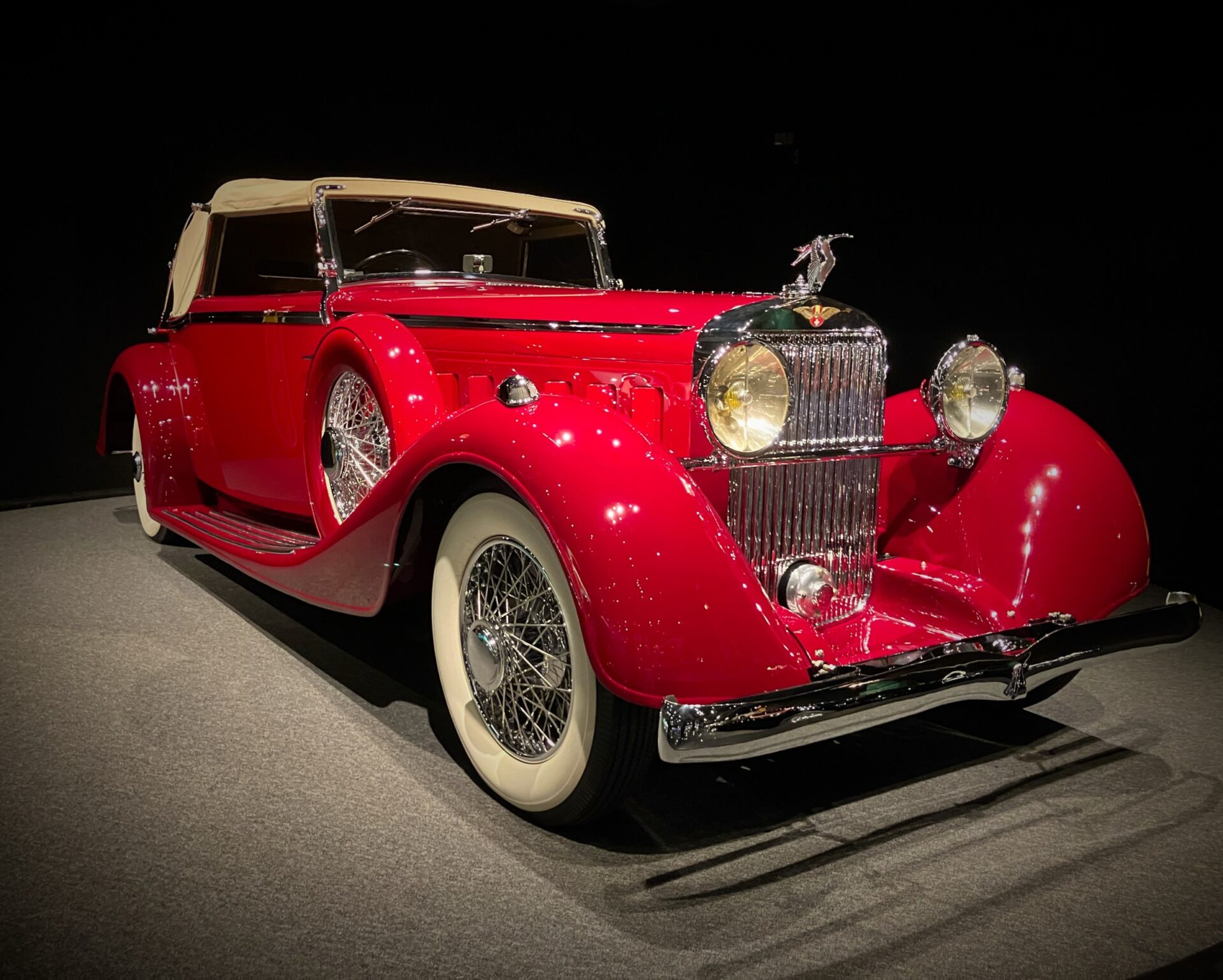
And then I watched somebody do it and I was like, huh, lemme look at the Bentley manual. Oh, they said the same thing. The way to get the bumper off is you take the fenders and the bumper off all as one piece and you take all of it off. So all of it is off my car right now. Holy

Crew Chief Brad: crap.

Crew Chief Eric: Like I walked into her garage and I’m like, what did you do?

And it looks like a dune buggy because the way the frame rails come down, it like cuts the nose off. It’s wild. Very mad maxi. It’s pretty cool. And then what’s really neat is the timing belt job becomes whoa, really easy when you take the headlight out. ’cause you could just put your hand in sideways. Yeah.

Which you can’t do on a golfer, a Jetta. So I’m like, oh, this is awesome. So you just dismantle half the car. And then you can do the job. It’s no problem.

Executive Producer Tania: I was always really worried about like taking the fenders off. I was like, oh my God, we take the fenders off and every, everything, like they’ve never been off that I know of and it’s like [00:37:00] all your panel gaps are never gonna line up anymore, so it’s gonna be a disaster when it goes back together.

But actually there’s like studs, so it’s like you can’t misalign it ’cause it only goes on one way. Right? So I’m like, okay, this, this isn’t that bad. Then they, they actually thought about this since apparently the service position has Take it all off.

Crew Chief Brad: Eric, I think you need to send Tanya on a trip or the next time she goes on a trip, you need to take the beetle apart and put the gus in and she’s just gonna come home to a 300 horsepower beetle.

That’s what needs to happen.

Crew Chief Eric: That was the plan. That’s a built boater. It’s ready to go

Executive Producer Tania: except for the minor custom things that do need to still be done to be it, it needs a

Crew Chief Eric: downpipe once it goes in, but it’s gonna be a rocket ship for sure. ’cause I mean, you remember that car VIR It would just leave people.

It was like say

Crew Chief Brad: yeah. So I, I say just do that. Just do that. Stop messing around with a motor that you haven’t even fully diagnosed yet. Just do the Gus ran when parked.

Crew Chief Eric: A hundred percent. All right, so as we wrap out our anecdotal showcase here, I mentioned, you know, I was driving to the city. I’ve been on these [00:38:00] long trips lately, and you know, I got some windshield time listening to podcasts, listening to old drive-throughs and memories gone by and stuff like that.

Aw. I did some car spotting while I was on the road as I like to do, because, you know, I don’t get bored. I’m just constantly looking around. Right. First up on the list. Remember how last month we were talking about the new facelift, Tesla Y and how? Oh ha ha. That must be ai. They put the cyber truck front end on it, blah, blah, blah, blah.

No, that’s for real. It actually doesn’t look bad. I’ll be honest. I never thought the Tesla model Y looked bad. I was always thought it was funny. It was made with Home Depot parts. But the thing is the redesign is interesting. The rear end is also interesting. They made it, it almost looks like a previous generation Dodge Charger with that kind of skinny light going across the back.

So all in all, I kinda like it. I’m not saying I’m gonna run out and buy one, but I got to see it in person. It looks better than it does in photograph ’cause it does look fake in photos. So on top of that, did a quintuple take? If I could do one, I got to see, ’cause I didn’t think they existed. I think they’re like Tyrannosaurus Rexes.

[00:39:00] The new two door ev. Dodge Charger. That thing is awesome. It looks really cool. Too bad it doesn’t have the thump of a Hemi coming out of it, but it looks badass. It is low. It is wide. At first, you kind of think it’s like some modified challenger. Because it’s two door instead of, you know, the typical four door charger that we’re used to the last couple years.

But with that skinny grill, oh, it just, it is menacing. It is tough. It’s terrific. Like I really, really liked it. And honestly, if it had a gas or a hybrid option, I would go look at one, like to go just to test drive one, because I was really, really impressed with its stance and the way it just stands out on the road.

And it was a really pretty color too. And I was just like, oh man, that’s super cool.

Crew Chief Brad: Yeah, I can’t say I’ve ever actually seen one on the road, but I know that the dealers are selling ’em for like $10,000 under MSRP ’cause they can’t move ’em.

Crew Chief Eric: They’re also, they’re stopping

Crew Chief Brad: already.

Crew Chief Eric: They’re discontinuing it in one [00:40:00] year.

It’s like the shortest production run of any stellantis product because they can’t move ’em. Well the problem is they’re built in Canada. Ah, there we go. Tariffs. Oh, there we go. There we go. Boom. None that maple syrup. And then finally, the last one, and I know Tanya saw one too, about the same time period.

It’s the first time I’ve seen one. Again, they’re wild. There’s rare as hen’s teeth, and that’s the new Z 400, which, you know, I am still very much in love with that car. The redesigned one that’s coming out with the double grill, I think that’s even better looking. But this one, at first, I couldn’t tell what it was.

I just see this black, low wide, big wheels tires, and I just hear this V six sound coming tinted windows, and I’m like, what is that? And it’s coming at me, right? It took me a minute to figure it out. But there’s that peculiar style of the new Z headlights where it’s sort of like the Nike Swoosh thing.

It’s got going on with the LEDs and that’s when I recognize it. But in all black DCH chromed with a body kit, oh dude, it is [00:41:00] tough. That is a angry looking car. And when he went by just from the back with the red lights and kind of reminiscent of the 300 ZX turbos, it was like, holy crap. That is a. Good looking car.

Much like the three 50 Z was a really good looking car when you fixed them up. And did the whole JDM fast and furious stuff to ’em? Yeah, so I think the new Z 400 really wears aftermarket stuff really, really nicely. So mad props to that guy. Oh dude, I’m in love all over again with the ZI

Crew Chief Brad: love the three 70 Zs.

I like the redesign above the three 50. Like I, the three 50 was, it was a nice looking car, but I, I liked, I really liked the three seventies. A neat little benefit to doing the weight reduction mod on myself is that I. My ass is smaller. The cars that I would never have dreamed of being able to drive are now, I mean, my height is my height.

I mean, I’m, I’m, I can’t do anything about being six four, but with my body getting smaller, my chest size is getting smaller. You know, I, I can [00:42:00] foresee fitting in cars like maybe A BRZ or the new Z, or I don’t know about the sra ’cause the SRA is tight for someone who’s sub six feet tall. So probably not that.

But I’m adding all these cars to my list of potential future purchase within five to 10 years or so. And I’m gonna have to add the 400 Z to that list because I like them in the pictures and I’d like a three 70 Z. But who knows what’s gonna happen. But being able to fit in some of these smaller cars that I could not fit in before, it’s a neat little benefit.

Crew Chief Eric: And the new Z, you’ve heard me say it before ’cause I’ve sat in one, to me, it’s. The Japanese 9 28. It’s a big grand tour. There’s a ton of space once you get in it because it’s real low. Yeah. Once you sort of drop in it, you realize, you’re like, man, I got like a foot of headroom in here. And unlike the supra, to your point where the roof cuts off really fast.

Yeah.

Crew Chief Eric: You at six four could get in a Z with a helmet on. I think there’s plenty of space in there.

Crew Chief Brad: The problem is, if I go and look at one now, I’m gonna wanna bring it home

Crew Chief Eric: a [00:43:00] thousand

Crew Chief Brad: percent. I, I, I can’t do that. So I, I have to wait. And that’s why I asked last time when we were talking about this, because the last time we discussed the, how the production numbers and the numbers sold.

It’s outselling the super now. That’s a good thing for the used car market in a couple years. ’cause that, that means there’ll be a lot more of them to choose from when I’m ready to buy.

Crew Chief Eric: For sure. Sweet. Well that concludes our, our little adventure. We should probably move on and talk a little bit more.

Volkswagen, Audi in Porsche. I don’t even know what to think about this. So there’s a new GTI coming, but it’s not your grandma’s. GTI,

Executive Producer Tania: what is it? The ID 3G TI That is it an electric car?

Crew Chief Eric: Uh, Uhhuh. They are going whole hog on this electric thing at Volkswagen. We’re gonna talk a little bit more about that in a second, but I don’t like it.

I don’t,

it’s a horrible. But, but it’s not great. It’s a
Crew Chief Brad: Chevy Spark.

Executive Producer Tania: Yeah. Thank you. And that’s the side profile that I just got stuck on. It has that shape and this weird two-tone. Yes. [00:44:00] Doesn’t do anything for it. It’s almost like the inner color. I’m like, Hmm, that back that, if you just tilted that up a little bit, that’s a Mark four right there.

Let’s talk about the price. How much is it?

Crew Chief Eric: $54,000.

Executive Producer Tania: And it’s made in Germany. So we gotta add what’s their tariff? Roulette wheel. 60,000 on top of that. Yeah.

Crew Chief Brad: But it’s gonna have 335 horsepower. Yes. One of the most powerful GTIs produced.

Crew Chief Eric: It’s gonna have 335 electrons. Are they really horsepowers?

Crew Chief Brad: Are horsepowers even really horsepowers?

Crew Chief Eric: Well, you know, the Aussies have always rated their cars in kilowatts, so I guess maybe that’s, we’re moving to that anyway, so it’s all good. Kilowatt kilowatts of power that way it’s neutral. It doesn’t matter if it’s ice or if it’s electric, it’s how many kilowatts of power does it generate. Then you don’t have to worry about torques either because it’s just power generated, boom.

Done.

Crew Chief Brad: And to this, say it’s gonna be rear wheel drive too.

Crew Chief Eric: I believe so. ’cause all of like the ID four and all those, unless you get the all wheel drive package, they mount all that stuff in the rear because all of the electronic stuff is in the front, which is why it doesn’t have a FR like [00:45:00] every other electric car has, you know, you get a standard hatchback, that’s how it’s laid out.

Executive Producer Tania: So at the current terra rates, it would hit just that $60,000 just under a $54,000 GTI. ’cause it’s 10% on Germany right now.

Crew Chief Eric: I told you the GTI was gonna be 60 grand. One of these days. It’s coming sooner than you think.

Crew Chief Brad: What is the difference then between that GTI and the GTI in the next article?

Yeah, so the New Eagle.

Yeah. What, why is that different than the ID three? It looks better.

Crew Chief Brad: This is the two door. So the ID three is a four door and the ID two is a two door

Executive Producer Tania: for a second. I was like, is this the interior green in the eighties? No, it’s not even close.

Crew Chief Brad: The back end is mark five,

Executive Producer Tania: a

Crew Chief Eric: hundred percent. Mark five with the, uh, Ioni five rear taillights on it.

Yeah. Now this could be a rendering. I don’t know if they’ve actually built this thing. They’re claiming front wheel drive instead of rear wheel drive, which people are, are mixed about that. I mean, I think it looks cool. I don’t think they’re ever gonna build this because didn’t Volkswagen already say no more?

Two [00:46:00] doors. They were done. No more two doors forever.

Crew Chief Brad: I There’s a scene for the rear doors. Yeah, it’s just, it doesn’t have a traditional door handle.

Crew Chief Eric: So it’s like a veloster then where the rear doors sort of hidden into the body work.

Crew Chief Brad: Yeah. Which I think looks really cool.

Crew Chief Eric: I think I would buy a Hyundai.

Crew Chief Brad: I’m charged up for it.

Like the article says, get charged up, get get charged up.

Crew Chief Eric: That’s some bad dad jokes right there. My man. That is terrible. I, I’m
Crew Chief Brad: a bad dad, so there you go. I’m

Executive Producer Tania: confused though by the naming conventions though.

Crew Chief Brad: What can be confusing? GTI and e golf GTI

Executive Producer Tania: and ID 3G TX. But they’re all GTIs. And they’re both a ev.

So what’s the difference? There’s not, there’s nothing GT

Crew Chief Brad: about any of ’em really. No.

Crew Chief Eric: This is like Audi’s S line or Porsche’s, whatever. It’s just

Crew Chief Brad: the, the Lexus is F sport.

Crew Chief Eric: It’s just becoming a badge.

Executive Producer Tania: So regardless of the GTI and E golf is a regular aline, but the ID three golf, which is just an e golf. Is the S line, [00:47:00] maybe the Rs.

That’s my confusion. They’re both golfs at the end of the day. One’s an e Golf electric, and the other’s also an electric.

Crew Chief Eric: You have a better chance understanding Sumerian than understanding what’s going on in Volkswagen right now. Okay.

Crew Chief Brad: So I think it’s less that and more think Range Rover and Range Rover Sport.

Oh

yeah. I could see

Crew Chief Brad: that for Bronco and Bronco Sport, I, I don’t think the new GTI is actually. The same car, the ID two looks nothing like the ID three. The ID three actually looks quite bigger, so they’re probably not the same.

Crew Chief Eric: I think the only real GTI left is the golf R, the

Crew Chief Brad: marked four. Well, there’s that too,

Crew Chief Eric: but no, in today’s money it’s a golf R.

The golf R is still ICE powered. It’s

Crew Chief Brad: Which is the GTI That’s not called A GTI.

Crew Chief Eric: Yeah, but it’s the only true. It’s the only purebred versus these other things, which we’re gonna slap GTI badges on it because we’re trying to entice a new generation of people into the GTI lifestyle. Right? Yeah. Or [00:48:00] whatever you wanna call that.
Crew Chief Brad: It’s like the Ford Mach E.

Crew Chief Eric: Yeah, we’ll call it Mustang because

Crew Chief Brad: the Volkswagen Mustang, the Eagle Golf Mustang. There you go.

Crew Chief Eric: To continue Volkswagen and Audi and Porsche’s. Infinite wisdom. And we alluded to this a while ago. That they were gonna do away with gas engines in the Boxer and the Cayman. But now that is coming to fruition allegedly.

I think that’s a bad

move. It’s weird because when a bunch of other manufacturers are reversing course
Crew Chief Eric: now double down, stubborn Volkswagen way of doing things, and it’s your bestselling cars too, like the Boxer and the Cayman outsell the nine elevens, because the nine elevens are so expensive, right? If you’re looking for a sports copay or a sports convertible and you go to Porsche, you’re gonna buy one of those two.
I mean, unless you have 250 grand like we talked about last time for a GT three R Rs, because why settle for base nine 11 when you could have a track car? Why settle you peasant? God, it’s so lame to go ev in these cars. It’s gonna [00:49:00] drive the used market of a Cayman and a boxer through the roof, though

Crew Chief Brad: it’s gonna come out before the new Tesla Roadster.

Crew Chief Eric: I’ll bet money on

Executive Producer Tania: that. Who’s buying these? Who’s the market? Who’s affording it? ’cause at the price that the gasoline ones are at, I mean, EV’s not gonna be cheaper anyway.

Crew Chief Eric: But that’s not all that Porsche’s up to. Alleges alleges. Yes, that’s a good word for it, that they are gonna have a road legal version of the Porsche 9 63.

And for those of you that don’t know what the 9 63 is, watch any WEC or IMSA race from the last. Three years, and you’ll see the Porsche 9 63. It is an LMP one GTP hypercar prototype.

Executive Producer Tania: What are the rules around this kind of thing? Because I don’t wanna be the Debbie Downer poo-pooing things, but why does this need to be street legal?

First of all? Second of all, how can it be street legal? This thing would pass no N-H-T-S-A safety standards of any [00:50:00] kind. This thing is going to give you the most insane rock chips if you’re ever behind it. Big ass tires that are completely exposed. Can you imagine the missiles that it send at your glass?

Crew Chief Eric: It’s going back to the like 19 96, 97, right? Brad? With the nine 11 GT one and they made the Stren version, so they had like street versions of the LeMans car. I guess they’re trying to do that again. Who’s gonna buy that other than to buy it and put it in a museum? How much

Executive Producer Tania: is this? This thing is gonna be rich people things.

Oh, on steroid for sure.

Crew Chief Eric: So

Executive Producer Tania: yes, it’s gonna be a

Crew Chief Eric: one-off model.

Executive Producer Tania: Yeah.

Crew Chief Eric: And you’re gonna sell one of them. Didn’t they do this with the nine 18 as well? There’s like a street version you could buy of that Brad?

Crew Chief Brad: I believe so, yes.

Crew Chief Eric: It’s not out of their wheelhouse. I just wasn’t expecting it with the 9 63 because there is nothing.

Street about that car. You can’t put groceries in it, even if you wanted to. And I wouldn’t take that to the track. It’s too much car.

Executive Producer Tania: Haven’t we already done this with the 9 59? And that like didn’t turn out very well. [00:51:00] Yeah, it wasn’t a good street car. Uhhuh. Why are we doing it with this?

Crew Chief Eric: Which isn’t even worse because somebody at Porsche thinks it’s a good idea.

Okay.

Crew Chief Brad: Because we’re talking about it,

Crew Chief Eric: aren’t we though?

Crew Chief Brad: And we’re talking about the brand. These cars aren’t really. For people. I mean, they’re kind of unobtainium, they’re kind of fantasy, but they get people talking about the brand and you shoot for the 9 63, it’s like, oh my God, look at that car. It’s the poster car.

You can’t afford one. You’ll never be able to afford one, like the richest person that you know would never be able to afford one. You can get yourself an electric boxer.

Crew Chief Eric: Mm-hmm. That’s true. And you can feel like you’re part of the team, right?

Crew Chief Brad: Yeah. It’s like I’m supporting Porsche. Yeah. I’ve got a Porsche.

Got a nine. A nine. Four four. I don’t have a nine 11. 9 4

Crew Chief Eric: 4. Man, you’re taking us back now. All those 9 44. 9 24 guys going. They are Porsche, I promise you.

Crew Chief Brad: Oh, I drive a Porsche. Oh yeah. What kind of PORs you got? Oh, like cayenne to egg. I, I, I drive the [00:52:00] spice.

Crew Chief Eric: Well, this next one is what we should really be talking about.

And I know this hits hard for Tanya.

Crew Chief Brad: Do we need to like put her on the couch with a pillow? We

Crew Chief Eric: need to, we need to play taps for this. I’m gonna have to go seek therapy.

Executive Producer Tania: It’s sad. So the Ital design firm, which is Giros design firm, basically, and he’s very famous for. Many cars that people would know, especially during the eighties.

Volkswagen, Audi, the DeLorean.

Mm-hmm.

Executive Producer Tania: Various BMWs launches this that, I mean, the, the list of cars that he’s designed, iconic cars, including the one here in my picture, were designed by him. And so apparently they’re gonna sell off the design firms or dismiss

Crew Chief Eric: them. There is a for sale sign in front of etal, design

Executive Producer Tania: layoff.

Boom, you’re gone.

Crew Chief Eric: I mean, did he die? He’s still around, right? Did he retire? The way I read it is Audi bought 90% of the shares back in like 2015 or something like that. And then when Juro officially retired, he sold the rest of his [00:53:00] shares to Volkswagen and Audi, and so they own it outright. In their infinite wisdom.

We’re gonna build something like the 9 63 streetcar that nobody’s gonna buy and spend all that r and d and all that time and all that money doing that. And then they’re gonna sell off one of the most famous design firms that’s right up there with Pinine, Farina and other names that you know and let that go because they’re trying to save money.

It’s like, wait, what? Here’s

Executive Producer Tania: the question. And it’s actually something I was thinking about recently as well, because you keep seeing these hosts and things and it’s, it’s all AI basically renderings of cars and whether they be reimagination of older cars in a more modern flare. And honestly, it’s like most of the ones I’ve seen, please hire AI because it’s doing a far better job aesthetically than the humans.

So is this a move to go, I can just have the AI do my designs now. I don’t need this team [00:54:00] of 7,500 people that come up with crap, basically. Right.

Crew Chief Eric: That’s fair.

Executive Producer Tania: I don’t know. Is that the future? Are there gonna be even more layoffs for automotive designers? Because hey, AI can do it cheaper, faster,

Crew Chief Eric: better. The only problem with that though is we’re always mining old ideas.

So AI is really good at refining and combining old ideas. It’s really good at doing that, but it can’t come up with unique, new creative thought. And that’s where humans have to come in and say, you know what? We are gonna move that line like this a little bit because we wanna catch the air a certain way.

Like I don’t think we’re at that level until you teach the AI

Executive Producer Tania: to think,

Crew Chief Eric: well, once the AI thinks like that, that’s Skynet. That is Terminator time. That’s the goal. We got issues. All right, so let’s switch gears and talk about Lanis.

Crew Chief Brad: Wait, wait, wait, wait, wait, wait, wait, wait. What about our Mercedes and BMW News?

We’ve got like nothing.

Crew Chief Eric: We covered it for the year. [00:55:00] Didn’t we? Took care of it for the next five years. We’re good.

Crew Chief Brad: So what about that BMWM two? That was designed to look like a redesigned 2002. It actually looked really, really sweet.

Crew Chief Eric: I have a filter that says, show me nothing from these brands. I might have seen that

Crew Chief Brad: it was like a, like a khaki color almost, but it was really, really cool looking.

I would’ve definitely ignored it. But that was another AI rendering, right? Yeah, it was.

Crew Chief Brad: No, I think BMW actually built it. I thought, oh,

Crew Chief Eric: alright. Right. Well. Audi Volkswagen. Porsche divorcing themselves from retail design. Ferrari did the same thing to ping Farina.

Mm-hmm.

Crew Chief Eric: A lot of people are kind of up in arms.

The new Ferraris are ugly as a result of not being associated with Ping farina. Right. And, and so I kind of wonder, to your point Tanya, are they using computers more now to design things? I personally like the look of the 2 96. I think it’s cool. I think it’s a throwback to some of the earlier cars. I’m not a big fan of the F 80, although everybody says, oh, the F Eighty’s amazing, blah, blah, [00:56:00] blah, blah.

I’m like, that’s outta my range. Right. If I was gonna buy a Ferrari, kind of like the Porsche discussion, I could maybe. Buy a 2 96. I can’t buy, you know, anything bigger than that.

Executive Producer Tania: There’s something about this that doesn’t say Ferrari to me.

Crew Chief Eric: No, it says Acura NSX.

Crew Chief Brad: It says McLaren to me.

Crew Chief Eric: Yeah, it does look like a McLaren.

A hundred percent. You’re right.

Crew Chief Brad: We talked about all this before. I mean, and Matt Yip. Mickey rest in peace. He had an entire series of articles and stuff about like the car design and how it suffered so much just for the pursuit of function over form.

Crew Chief Eric: Yeah. He used to always say, you know, there’s only one design that cheats the wind.

All the cars are gonna end up looking the same.

Crew Chief Brad: Yeah. And I feel like we’re closing in on that. Yeah, especially in the performance car. In the hypercar, in the supercar market, because nobody cares about what they look like anymore. The whole point is about their performance.

Crew Chief Eric: Well, the performance numbers of their stren 2 96 GT three, whatever they got going on over there, [00:57:00] 900 hearse, pers, that’s it.

I mean, they could do more, but 900, that’s nothing to sneeze at.

Crew Chief Brad: Just wait till they all start using Dara chassis,

Crew Chief Eric: right?

Crew Chief Brad: They can make the company so small and just be engine manufacturers, engine suspension components, and put those into a Dara chassis and then slap any old badge on it they want.

Crew Chief Eric: Meanwhile, over at Alpha Romeo.

Crew Chief Brad: What is this thing?

Crew Chief Eric: I think it’s a rendering. I’m not a hundred percent sure. All I got was a front end shot of the new stelvio,

Executive Producer Tania: despite my accolades to the quality of ai. This might be a knockoff AI or something. When you see those ais where they show the first with like eight fingers on the one hand, Uhhuh, and it’s like, oh yeah, this is the future.

Good luck.

Crew Chief Brad: It’s not ai. It’s ai. Yeah.

Crew Chief Eric: Well this looks like a cylon, like do you remember Battlestar Galactica? Yes.

Crew Chief Brad: I was just about, I was trying to think of, I was thinking of the giant sentinels from X-Men.

Crew Chief Eric: Similar too, but this it’s just, no,

Executive Producer Tania: hold on. I’ve got the real picture for [00:58:00] you. That isn’t it. So the 2027 Stelvio, this is it.

Crew Chief Eric: Oh. God, what is that? Ugh, I think, Ugh. There’s vomit in my back of my throat. That is terrible.

Crew Chief Brad: This is like if Stelvio was designed in Jersey.

Crew Chief Eric: Well, they went with that classic late 1940s Formula One grill with the alpha male written across it like you’d see on a, what was it, the

Executive Producer Tania: that Then that’s fine.

Crew Chief Brad: Which looks totally outta place. It does on a car of this century. The

Executive Producer Tania: problem is the shape of it’s not right, like the writing thing, fine, whatever. I could get over that, but it’s like the shape of that.

Crew Chief Eric: Is not right. It’s the Mandalorian’s card. That’s what that is. Look at it. Do you see it? Make it gray.

Hit the horn and it just says, this is the way, this is the way. Did you guys hear these rumors that Stellantis might be merging with Reno? I had not heard that. Well, I read about it. Apparently it’s, it’s not true. So it can’t be, well, it’s not happening. But I thought about that. Got my spidey sense tingling.

Stellantis [00:59:00] merges with Reno. They already have Citro and, and eo. They got all the French manufacturers that are left and then by proxy they would own Alpine and Nissan. That would make Stellantis the largest car manufacturer in the world. I

guess.

Crew Chief Brad: Is that really something to be proud of? Because whenever we talk about the largest manufacturer of the world.

It’s never conversations about how they’re making great products and the cars are all awesome and I’m so glad that they’re the num. They’re number one. It’s always, they’re the largest manufacturer in the world and they make shit. Tell me I’m wrong. No, you’re right. Who is it now? Volkswagen now the VA group and they make complete shit before Volkswagen.

It was what? General Motors?

Yeah.

Crew Chief Brad: They make complete shit. You get to be the biggest because you either you mergers and acquisitions of failing companies. Yeah. So you just make your sinking ship bigger.

Crew Chief Eric: This whole Nissan pokey pokey that’s been [01:00:00] going on. Right. We talked about how Honda was gonna merge with them and then, you know, I found this rumor about St.

Lantus and Rene, which meant they would’ve ended up with Nissan too. And then I come to find out that Toyota had reached out to Nissan after the Honda merger had failed. I was like, okay, that’s interesting. And you know, you hear the, even today they were talking about, you know, the head of Toyota’s, like, if a car can’t be fun, then don’t bother making it this.

Coming from the people that make the Camry, the car for people

Crew Chief Brad: who hate cars. The 300 horsepower Camry.

Crew Chief Eric: Yeah. I mean, it’s not your grandma’s Camry anymore.

Crew Chief Brad: No,

Crew Chief Eric: but the reason I stopped at this motor, one article is that it had these really great pictures of this new Nissan that they’re touting right now.

But a lot of people might not realize. And this is where I got excited is that this is the R five, the new one that we’ve been talking about. That’s like $250,000 reskinned as a Nissan. Just like the Duke was a reskinned Reno, Cleo. But you didn’t get the manual transmission. I keep thinking, is this [01:01:00] coming to the states?

Like are we gonna actually get the new R five by way of Nissan? We need to go test drive this car. Yeah, that’ll

Executive Producer Tania: be crap.

Crew Chief Eric: New Nissan Micra.

Executive Producer Tania: So it’s a micro ma mi, micro Malta. Ma. What is it? Altima? They’re all Altimas.

Crew Chief Brad: It’s the Ultima.

Crew Chief Eric: I think this is the coolest new Nissan next to the 400 ZI think this is neat.

I like this. It’s cute.

Executive Producer Tania: I added one. Oh, the Fiat we, we haven’t had much there, but. Click this and look how cute their little new

Tuck. Tuck is. I saw this the other day and I was gonna post about it. Isn’t this just the oppe? Who cares? I don’t care. It’s beautiful. I’d love

Executive Producer Tania: to see one of those,

Crew Chief Brad: oh, look at this cute little thing.

It’s a K car

Executive Producer Tania: pretty much. Which there’s also news about those starting to

Crew Chief Eric: make

Executive Producer Tania: a return

Crew Chief Eric: apparently. Yeah. And laws are changing around K cars where they’re becoming actually more acceptable. There’s one running around here now. [01:02:00] Some guy brought one in right hand drive and he runs around town with it and he’s, he’s got this thing on the back, like if you see me post on Instagram and tag me, I think it’s really cute.

But he takes that thing out on the beltway and I’m like, good Lord. If it does 60 miles an hour with a tailwind and a semi pushing it, that’s a lot. Good night.

Executive Producer Tania: Apparently Colorado has passed a law that it allows them starting in 2027. Yeah, so there you go. Geez.

Crew Chief Eric: Heidi loves crap like this. It’s a three wheel.

This is a Vespa with a bed on the back,

Executive Producer Tania: but they’re only gonna be in Africa in the Middle East. So changes are, we’re not gonna see one roaming around Europe.

Is that because they can’t sell these to the little old Italian guys?

Executive Producer Tania: Probably not, because theirs are still running after 900 years. That’s why

Crew Chief Eric: they’re like, I’m not buying anything new now.

The thing is in Italy you can drive these without a license. So I’m wondering if that’s still the case. I’ve also added on another recent article. You’ve been hiding Fiat News from us. What else is going on?

Executive Producer Tania: [01:03:00] So there is the Grand Panda four by four,

Crew Chief Brad: the Granda.

Crew Chief Eric: It’s the Granda

Padana

Crew Chief Brad: I Donna Pan Granda Padana.

Executive Producer Tania: It’s a concept so who knows, but they’re calling it a direct air to the eighties. Panda four by four,

Crew Chief Eric: except

Executive Producer Tania: that the front

lights are from the Hyundai Santa Fe that’s out right now.

Executive Producer Tania: That’s problematic. And we have time to change that. ’cause this is a concept. Oh, I see how it works. It’s kind of cool. The little side panel where they have the two-tone thing and if you notice it says Panda.

Ooh.

Executive Producer Tania: I still like the other concept that they came out with a couple years ago that was like that electric panda, that thing amazing. Still needs to be built. They need to go back to that and restart.

Crew Chief Eric: You just need to import an original panda. They’re old enough now. Maybe I should go shopping later. Yeah.

Alright, so random EVs and concepts. Tanya, you brought this to my attention. I didn’t know Amazon was getting into the EV game. The

Executive Producer Tania: pickup truck. Yes. The Bezos backed slate. The affordable EV [01:04:00] truck to outdo the anti Tesla, as they’d like to say. It’s minimalistic. I think it has like roll up windows, all that kind of stuff.

Like that’s the level of minimalism that it has and its starting Price point alleges to be $20,000 after federal EV incentives.

Crew Chief Eric: Why do these look like Broncos?

Crew Chief Brad: Nineties? Broncos?

Crew Chief Eric: The white ones in la Kind of Broncos.

And is that a bad thing?

Crew Chief Brad: Probably the same thing as those Mahindra.

Yeah,

Crew Chief Brad: because they bought the rights to the old Jeep design, so they own the rights to like the, the Willie’s design.

They can’t make ’em and sell ’em street legal, but they can make ’em

Executive Producer Tania: Well, the other thing with these is I believe they’re all configurable. And so you see the picture of the Bronco, it’s the pickup truck that they put the cab on the back. Oh, okay. And then they put the seats in. And so it’s, it’s able to be converted into the five seat SUV versus the two seat pickup truck or whatever.

And apparently it has a payload capacity of 1400 pounds, which if you wanted to compare it to a [01:05:00] maverick that has apparently 1500 pounds. How many

Crew Chief Eric: bags of mulch is though? It’s a lot of bags of mulch. I like it. Actually, I, I think it’s cool. I wanna see this get made. I’m gonna do a Brad question. What gets made first this.

Or the scout,

Crew Chief Brad: it’s made first. Uh, definitely this, which do I want to come first? The scout,

Executive Producer Tania: what you should do is look at their website because with the customizable stuff, just scroll across the cars. You just hit ’em. Like look at all the color configurations apparently you can do, and like different wheels you get, but it’s all like the same car, but it’s like, which Lego piece do you wanna swap in and out?

Crew Chief Brad: Does it come with a prime membership?

Executive Producer Tania: You can order it on prime and get two day delivery?

Crew Chief Brad: Is a drone gonna deliver it?

Executive Producer Tania: It’d be interesting to see one on the road. So unlike the Tesla, you can reserve this for only $50.

Crew Chief Brad: Oh wow. They’re undercutting. They did the undercut.
Crew Chief Eric: Fully refundable.

Crew Chief Brad: Fully refundable. As long as you don’t cancel that credit card.

For whatever reason,

Crew Chief Eric: Tanya brought us another one in the category of EVs and concept [01:06:00] cars. I never thought I’d say this. Ever in my life. Oh, it’s the

Crew Chief Brad: Russian Ionic five.

Crew Chief Eric: This Hugo, I’m gonna say it again. This Hugo

Executive Producer Tania: is really cool. It’s not terrible actually. That’s the sad thing. But the front of it reminds me of like the EV charger.

Yes. Al or

Crew Chief Eric: something. Let’s bear in mind this is a model. Yes. Car, right? Correct. So a lot of people are like, oh, I gotta look at the build quality. It’s already crap. They can’t even remember. It’s like a shoebox size model. Yeah. It’s like a one 18 scale model because you know, that’s all youo can afford anymore.

What is,

Crew Chief Brad: is

Crew Chief Eric: it, is this

Crew Chief Brad: a car for ants?

Crew Chief Eric: Yes. I think this is really cool.

Executive Producer Tania: I mean, if they could actually make it. Be affordable. It

Crew Chief Eric: wouldn’t be horrible if there’s worse looking things than this. The question is, will the build quality be reminiscent of the originals?

Executive Producer Tania: Hmm. Are they just melting down old Hugos and recycling the parts

Crew Chief Eric: here and, all right.

All right,

Crew Chief Eric: well, I’m, I’m in it. Um, we’re gonna put a pin in that. We’re gonna keep an eye on it. We’re gonna [01:07:00] skip over. Lost and found this time, there was really nothing to report, nothing from Chuck LED Duck, nothing from Chuck LED Duck or Gray Chevrolet. But Brad mentioned before that we didn’t have any Mercedes or BMW News.

That was a good thing. I’ve been biting my tongue this entire time because we went straight to the uncool wall with a brand new Mercedes. This is another model, right?

Executive Producer Tania: This isn’t,

no,

Crew Chief Eric: this is for

real.

Executive Producer Tania: No, this is like a paint drawing. The paint app on your computer rendered this,

Crew Chief Eric: and people are saying. And I quote the Mercedes Vision v

Crew Chief Brad: vis-a-vis

Crew Chief Eric: is damn sexy.

And I’m like, am I blind? Did I miss something? So when I saw

Executive Producer Tania: the front

Crew Chief Eric: end,

Crew Chief Brad: it’s a large mouth bass.

Executive Producer Tania: Reminds me of the cars Pixar movie. Yes. And it looks like Doc Hudson so bad, who is voiced by late great Paul Newman. It looks like the Doc Hudson character.

Crew Chief Brad: Why are his headlights doing suddenly? [01:08:00]

Crew Chief Eric: I, it’s, it’s a Mercedes.

It’s looking down on you. It’s giving you side eye.

Crew Chief Brad: It’s side eye. Yes. It’s, and it’s name is. Gustav

Crew Chief Eric: it is ugly is what it is, and that’s why I put it up on the uncool wall immediately. You can go vote on it now with like 75 other cars that we have on the list, but this is ugly from the word go.

Executive Producer Tania: This is some CGI though, like

Crew Chief Eric: they didn’t actually

Executive Producer Tania: build one.

This is just computer simulation, but

Crew Chief Eric: this is the garbage that comes up in the news now. It’s stuff like this because

Crew Chief Brad: there’s nothing else to talk about,

Crew Chief Eric: but we’re gonna get rid of etal design and we’re gonna let computers design the next generation Mercedes. Again,

Executive Producer Tania: to contradict what I said earlier, this is the bad ai.

Actually, this is probably human that did it. That’s the problem. Horrible. It’s what it is.

Crew Chief Brad: It looks like a carp. A

Crew Chief Eric: carb carb. That’s unfortunate. So switching to lowered expectations.

Crew Chief Brad: Lowered expectations.[01:09:00]

Crew Chief Eric: I read this headline and that’s all that needs to be read. California thinks driverless, big rigs are a great idea. What could possibly go wrong?

Executive Producer Tania: I think that since we’ve clearly, we’ve mastered self-driving in. Regular cars. They don’t wig out when they see the sirens, the flashing lights and crash into stationary parked vehicles.

And as we saw from a couple episodes ago where there was that comparison with the the Roadrunner painting and the Tesla blew right through the self-driving. All this, clearly it works flawlessly in a three, 4,000 pound vehicle. Couldn’t be anything but gangbusters. When you got 19,000 tons coming, nothing could go wrong.

This is Stephen King,

Crew Chief Eric: this is Death Race 2000. What are you talking about?

Crew Chief Brad: I only see this being a good idea. If it’s hauling other Teslas and it’s hauling them off a cliff,

Executive Producer Tania: this is maximum [01:10:00] overdrive. Yes,

Crew Chief Brad: yes. Greatest movie.

Executive Producer Tania: Hundred percent. Okay. That’s what could go wrong right there. Let’s all go watch that movie and then see the future.

From the past

Crew Chief Brad: fact. Let’s go back to the future with maximum overdraft.

Crew Chief Eric: Speaking of what could go wrong, one of my favorite sections on top gear. Remember when they’d always start one of their little mini challenges with how hard could it be? There’s been a lot going on with Top Gear and as we know, top gear’s officially off the air after they had that accident and that three wheeled Morgan at the old test track with the new crew and there was some lawsuits and somebody got injured and all that.

So top gear went off the air, everything went dark, and then the Grand Tour finally closed. But now Hammond and May are back without Clarkson doing some top Geary stuff, and I don’t even know what to call it because it shows up on Amazon Prime. But then they were spotted at the old Top Gear studio and doing laps around the track, which is kind of cool and fun, but also really sad.

If you watch the video of Hammond. [01:11:00] In May going around, and I think it’s May’s Porsche Tecan, and they’re doing like a slow lap of the track. You don’t realize how long they’ve been away from the old top gear set, like how many years have gone by. But you also begin to really realize how old they’ve gotten.

We’ve grown up with them, so you really don’t realize it, but then you, you kind of watch May and he’s, he’s sort of got the shakes a little bit, you know what I mean? And he’s, and he’s struggling to like remember certain things. And

Executive Producer Tania: he also almost killed himself in that tunnel. In Sweden? Yeah. Or Norway or whatever.

Yeah, in that

Crew Chief Eric: Subaru. The Mitsubishi, yeah, yeah,

Executive Producer Tania: yeah. The Lancer, the Evo, um. So who knows what traumatic brain injury he sustained from that. Actually, legitimately,

Crew Chief Eric: I don’t think he was right after that accident to be honest with you, but it was a nice little trip down memory lane. It’s fun to see them doing stuff.

I watched most of the new Grand Tour special, which all it is is just a best of retro clipse from previous Grand tour episodes, and they’ve got Clarkson in there doing the voiceovers and [01:12:00] everything, but that’s not what got me excited. What got me excited about Top Gear Again is that it’s now available as a dedicated channel on Pluto tv.

You can watch Top Gear 24 7 and it’s freaking awesome to go back and watch. And my girls were already fans of some of the Specials and the Grand Tour and so I got to introduce them to things like the Bolivia special, or remember when they did the Olympics and they did the Mini Cooper off the ski jump or the cop cars and stuff like that.

And so they’ve been getting into it and it’s kind of cool ’cause I’ll catch even my young one or she’ll bring Pluto up on her tablet and she’s watching Top Gear. I think it’s absolutely fabulous that this is now available. And if people didn’t know, I’m like, go get Pluto tv, it’s free. Scroll down to Reality Television and there’s a top Gear channel.

Boom, done. Mark it as your favorite and watch it whenever you want. It’s awesome.

Crew Chief Brad: Fantastic. Well now I, now I know what I’m doing with the rest of my life.

Crew Chief Eric: We gotta switch over to rich people, things sponsored by a garage style [01:13:00] magazine because after all it doesn’t belong in your garage. Right. Just when you thought you had everything, Brad, I found something you need in your garage.

How about a golf live Cushman golf store? Take a look at this thing. Available. Mecom auctions, I’ve looked up to see what it’s sold for. They don’t list the price. They’re keeping that hidden. Somebody bought this thing. Don’s writeup over garage style reads. We know just by virtue of its uniqueness and super cool golf paint scheme, that if he’d had the chance, Steve McQueen would’ve bought this thing.

Executive Producer Tania: Okay. This is a three wheeler

Crew Chief Eric: Uhhuh, if you

Executive Producer Tania: want this or the new Fiat Tuck. Tuck.

Crew Chief Eric: I want the new Fiat.

Executive Producer Tania: I want the new Fiat

Crew Chief Eric: because at least I have a roof over my head

Executive Producer Tania: and you can put something in it. It’s got a truck bed. This thing’s useless. I don’t think Brad’s six foot four could fit in this. His knees would be in over his shoulders, behind his head.

Crew Chief Brad: I would have to high tower it. Yes, I would have to rip the seat out and sit in the back and kind of stretch [01:14:00] my legs across both seats and just shift in the center of my legs.

Crew Chief Eric: See, and this is where you sit. On it and not in it. Right. There’s a big difference. Yes.

Executive Producer Tania: See, he would sit in the seat, but I think his legs would be over the dash, so to speak, and then he’d just reach down with his hand.

Crew Chief Brad: Then push the pedal, control the gas pedal. Yeah. Yeah.

Crew Chief Eric: Alright, Brad, well if you didn’t like that one, okay. That’s too flashy for you and Tanya said it was useless. It doesn’t do anything. You can go with the standard edition Cushman tow Cart, which Don writes this three wheeler is Sure to make life easier in a number of situations.

And while it’s a little rudimentary compared to some of the other items on offer in this particular collection, we wondered if it might be the tool you’ve been looking for and that every garage needs No.

Executive Producer Tania: Okay. Okay. So it’s got a fricking engine hoist on the back of it. That’s the best part. Unless you

have a garage that’s a warehouse.

That’s useless. It things awesome. I think Brad could sit on that one. Yeah. Just spread leg out a [01:15:00] little bit

Crew Chief Eric: wide. But yeah, this is the kind of stuff that shows up at these auctions though. And so I’ve made it a point now to try to pull some of this stuff out. This is rich people’s shit. Nobody in their right mind.
Maybe Daniel. They

Executive Producer Tania: literally half-ass cut the legs of an engine hoist.

Crew Chief Eric: Yep.

Executive Producer Tania: Fricking using cotter pins.

Crew Chief Eric: Yep.

Executive Producer Tania: To hold that MFer down in there. Yep. You are gonna tell me that you’re gonna lift an engine and that aint gonna rip out.

Crew Chief Eric: You’re gonna flip it over is what you’re going to do that Oh God. You try to lift a big block, 4 54 with that, you’re gonna end up with an engine on the ground and that thing’s standing up.

Sure. You know, you could have maybe,

Executive Producer Tania: maybe convinced me with the, without the engine hoist because it has a toe hitch on, it has got a little bit of bed that you could have put something in

Crew Chief Brad: at least four bags of mulch

Executive Producer Tania: at best. But it’s a shame.

The price is unknown.

Crew Chief Brad: Zero. It did not sell. They’re lying to you.

That’s gotta [01:16:00] be a five figure sale. I guarantee it. Again, I would take the took, took.

Crew Chief Brad: Don’t forget, if you’re looking for that extra special automobilia to complete your garage, office den or man cave, be sure to check out garage style magazine.com for a list of upcoming auctions and events, along with a curated list of items going up for sale all over the country, because after all, what doesn’t belong in your garage.

Crew Chief Eric: Thanks for that, Brad. It’s time we switch to Are you faster than an interceptor? Nailed it.

You might have an advantage. Just a slight advantage right now. ’cause GM is donating cars to the Secret Service so they can learn how to drive manual transmission.

Crew Chief Brad: Well, the secret’s out.

Crew Chief Eric: Secret’s out, but they’re doing it in Cadillac, [01:17:00] CT Black Wings till they get a handle on that. You might outrun ’em even in that, Hugo that we talked about earlier, but not for long.

Crew Chief Brad: Can I join the Secret Service just to drive the Black Wing and then quit immediately after?

Crew Chief Eric: Can I be a secret service trainer? That’s a cool job. I want to be their de instructor.

Yeah,

Crew Chief Eric: Tanya. We did that Cadillac special event at VIR that one year. Remember that?

Yeah, I remember that. She still traumatized

Executive Producer Tania: all the hearse pers.

Yeah. There was too many hearse pers You didn’t like all them hearse pers Not when I was in the right seat. I didn’t. Appreciate them, especially spinning at the top of rollercoaster, entering rollercoaster with you in your student’s car coming at us at my door

particular.

Executive Producer Tania: But I shall preface this section by most of these have not been curated by me, but you will know the one that has been curated

Crew Chief Eric: by me, of course.

But I am shocked, and again, maybe it’s Big Brother that’s listening out there. There’s so many of these articles that are popping up [01:18:00] now about the police and traffic and all this kind of stuff. So I find them entertaining and you know, Brad put it into universe. Are you faster than an interceptor? And one of our long, longtime fans of the show, Mark Hewitt wrote this month, Brad, he reached out.

Oh,

Crew Chief Brad: oh my god, mark is alive. What’s going on? Mark?

Crew Chief Eric: He sent us an article. About how the state of Virginia, your new home state, will use technology to slow those chronic speeders and other states are rushing to join in.

Executive Producer Tania: Haven’t we talked about this?

Crew Chief Brad: Aren’t they gonna use those revolutionary items called cameras?

Executive Producer Tania: No, no, no, no, no, no. But they’re actually gonna rate limit you. Like slow your car down. Yes. What? So your car would have to be chipped, forcing you to

Crew Chief Eric: put something in the car. Yeah. They’re either gonna flash the ECUs, which again brings up a question of whether or not that voids your warranty or the manufacturers on board with that.

You know, do you have the right to do that? Or they’ll put in some other device that will basically electronically speed limit the car to whatever [01:19:00] speed they want it to be, which. Realistically, I’ve said before, with GPS technology, with an ev, they’ll be able to do this in the near future.

Executive Producer Tania: Well, not even an ev any, the new modern cars that have the built-in GPS systems, they can easily do it with all the infotainment system.

Crew Chief Eric: If it’s 45, it’s 45, and if you slam that pedal to the floor, it’s gonna do 45. So they haven’t set exactly what the speed is going to be for stuff like this. Because here’s the problem, do you set it to the state maximum, which might be 55, but on some roads it’s 65. And in other places in Southern Virginia it’s 70, or do you make it 70?

And now these people can still go 70 anywhere they want when the speed limit’s 55. So they’re still speeding. So there’s a problem with this scenario.

Executive Producer Tania: Well, they started talking about super speeders and super speeders, someone going more than 20 miles an hour over the limit. Then they go on to talk about all the people doing over a hundred miles an hour.

And I’m like, okay, well those are very two different things. Yeah, yeah. [01:20:00] Well it’s 20 miles an hour over what and where a 20 mile school zone and you’re gonna blast through there at 60 miles an hour. Probably not a great thing, a stupid 35 mile an hour limited back country road through farmland where there’s nothing but grass on either side of you.

If you did 55 and it’s straight and flat and you can see it’s not the same thing. Now going through there at a buck 20, probably not a good idea at all. But this is tricky. There’s so much gray area and it goes back to previous conversation of the speed limits are still ancient in a sense. They’re based off of corvets going down the road that couldn’t keep it in the lane and crap like that.

And with modern braking and all this stuff, and even all the stupid nannies. In the cars, some of the speed limits should actually be higher.

Yeah,

Executive Producer Tania: like 20 over a speed limit actually might not be beyond the capability of the road and the car on it. This is again, a slippery slope.

Crew Chief Brad: Why is Virginia getting away from their old tried and true throwing people in jail?

Crew Chief Eric: That takes too [01:21:00] much time and there’s too much crowding?

Crew Chief Brad: Probably. Probably.

Crew Chief Eric: But that’s okay. Because the state of Florida has proven that speed cameras are effective in the great capital city of Tallahassee, they are earning $318,000. I’m gonna say that again. $318,000 a month. From their speed cameras and they want more.

They

Executive Producer Tania: plan to install 23 more cameras thinking they can generate 18.6 million annually. That’s some good numbers.

Crew Chief Brad: Can I own speed cameras? Like people own vending machines,

Executive Producer Tania: can franchise speed cameras?

Crew Chief Brad: Can I franchise some speed cameras and just set ’em up at random locations?

Executive Producer Tania: Yeah, I’ll just take a percentage of that.

I, you know, I don’t even, 1% of 18.6 million. That’s not bad.

Crew Chief Eric: Yeah, every day.

Crew Chief Brad: Uh, I will say 10%. Perfect. You can keep the 90. I don’t care. Just gimme 10%.

Crew Chief Eric: But that’s okay. As we know, and the DMV over 50% of the cameras don’t work because we don’t have the funding to keep ’em going and they’re all broken,

Crew Chief Brad: you would think that they would fund themselves.

Crew Chief Eric: Again, it’s like tariffs. We [01:22:00] don’t know where the money is going.

Crew Chief Brad: Hashtag corruption.

Crew Chief Eric: So the great state of Washington not to accused with the city of Washington, DC also has speed cameras all over cities like Seattle and whatnot. In recent times, more than 8,000 drivers in the state of Washington have received speeding notices.

In the mail, but they’re not being fined.

Crew Chief Brad: That’s a very west coast thing.

Executive Producer Tania: Well, no, I think it’s ’cause they’re new. So there’s a, like, there’s a grace period like warning you, Hey, you would’ve gotten a ticket and this is going to go into effect.

Crew Chief Brad: Hey, hey, hey. I saw you. You better slow down Mr.

Crew Chief Eric: Well, according to the article, they actually break out what the fines would be.

And all that. And so again, it gets into this conversation about many people are like, Hey, you run through one of those cameras on the highway, you pay the fine, who cares? You don’t get any points because they can’t validate who is actually driving the car. It could be anybody. It could be a rental for all that matters until we get the forward facing stuff that we talked about on a couple drive throughs to [01:23:00] go.

But I just think it’s, to your point, Brad, it’s so West Coast, it’s so polite. Like, I’m gonna send you a letter.

Crew Chief Brad: Do they include like a donation envelope like you do at church? It’s like if you would like to donate to the cause so that we can continue to mail you letters about how fast you were driving and how bad of a sinner you are, please, please just send us a check for $5 and absolve your sins and

Crew Chief Eric: the

Crew Chief Brad: next

Crew Chief Eric: time they send you the little address labels with your name on it.

Crew Chief Brad: Very Salvation Army. Oh my God. Yes. Please accept these labels as our generosity. Welcome to the neighborhood. Thank you so much for being a kind human and only speeding. 10 over the speed limit and not 50.

Crew Chief Eric: Well, in, in talking about that.

Crew Chief Brad: Well, before we move on, I just wanna say I was in Maryland a couple months ago and I blew through a speed camera.

I was doing like 60 and a 30. Oh, well it’s on, um, New Hampshire Avenue [01:24:00] six 50. Yeah. Down there in the very rural part of Montgomery County. But I knew the camera was there. They keep moving the camera, like different locations and I thought I had already passed it and apparently I didn’t. So I never got a ticket.

I mean, this was a couple months ago. I never got anything. Nothing has happened. Could still

Executive Producer Tania: show up. Or sometimes they’re off. So you might have lucked out. Yeah. No, no.

Crew Chief Brad: It was, it was on, I saw the flash and I was like, well, I’m done, but I don’t care ’cause I don’t live here, so bye-bye. Send me my a hundred dollars ticket and I will pay it.

My little church donation and I’ll talk to you all later. I kept on going. I floored it to like 70 or 80 after that. I was like, well, shit, I’m already getting a ticket. Who cares? Now

Crew Chief Eric: it’s the next camera’s 10 feet down that you know.

Crew Chief Brad: Yeah.

Crew Chief Eric: Well, speaking of feed limits and whatnot, North Dakota is the next state to raise its interstate limit to 80 miles an hour.

Executive Producer Tania: They could lose it to a hundred. There’s a population of a thousand in the whole state, and this is the hot news over on the drive. Thanks for that. They’re just raising at [01:25:00] five miles an hour. It’s

Crew Chief Eric: already 75. What do people do on those roads when they’re by themselves? Do they just do like a hundred or do you do 80?

Like is 80 fast enough at that point because you’re so bored, it should just be infinite.

Crew Chief Brad: I’ve always felt that iregardless of whatever the speed limit is. People are gonna go the speed that they’re comfortable going. True. So on like a back road or something, the speed limit could be 45. I’m comfortable doing 50 55 on that road, so I’m gonna do 50, 55 on a highway.

You know, I don’t need to go anymore than 70, 75 miles an hour, especially on like a road trip or something. I just set the cruise control and go. So I think most people are just gonna go whatever speed they’re comfortable going, regardless of whatever the speed limit is,

Crew Chief Eric: comfortable and

Executive Producer Tania: capable.

Crew Chief Eric: When you’re locked in at 72 miles an hour and somebody blows by you and they’re.

Up your butt doing 90, 95. And it’s like, guys, the speed limit’s 55 or 60, we’re already going well over. You’re doing double or what, you know, you’re trying to do double. Are [01:26:00] you in that much of a hurry?

Crew Chief Brad: Well, see, that’s the thing. When you’re driving in New Jersey, you know there the, the speed limit signs all have an invisible one in front of the number that you, that you can’t.

So they’ve got special glasses that they wear. Oh, got it. With the Jersey vision. And whenever you see a jersey plate, you know that they operate from a different law system.

Crew Chief Eric: Well, meanwhile, in California, it was a bad day at CarMax, California.

Crew Chief Brad: No Santa Party.

Crew Chief Eric: Did you guys see this? Dude who apparently was super unhappy with his appraisal on his Subaru Outback.

Executive Producer Tania: This person should be thrown in jail and that’s it.

Crew Chief Brad: No, he should be thrown in a mental hospital.

Executive Producer Tania: Probably has some sort of Yes. Mental instability. Because what rational, sane person goes, oh, I don’t like this. Hmm. The next logical course of action is for me to drive my car through a CarMax and wreck everything.

That really helped the appraisal value of this car. Right?

That’s what I was thinking too. I’m like, where’s the [01:27:00] logic in this? There was none.

Crew Chief Brad: That’s the problem. Nobody, nobody has any logic.

Crew Chief Eric: He trashed that car. He trashed the CarMax too.

Executive Producer Tania: Not only is his own personal insurance. Not gonna give him a red scent on this because there’s camera footage.

I’m sure the insurance company’s gonna see it. So if he was thinking he was gonna get a better value from insurance than the appraisal, you’re outta luck. And now you gotta pay for the damages on this building.

Crew Chief Brad: I think he just had the red mist. He was throwing a tantrum like a toddler. He did not know what was going on.

He was completely irrational.

Crew Chief Eric: And at first you think maybe this is one of these staged bs, TikTok Instagram videos, but this is real footage because why would you do this? Why would you damage a building? Why would you damage a business? All these people are like running out of the way ’cause they don’t want to get hit.

So it’s for real. But what got me was, if you go scroll down into the comment section, I love that there’s a Florida man, Tampa Bay comments. My car’s not worth that much. Oh, I guess I’ll just permanently ruin my life and the lives of people [01:28:00] around me. I was like, Lord man, calling it the way it is.

Executive Producer Tania: All right.

Now we’ve saved the best. Finally, let’s get to real Florida men’s story. Even though we’re not going to Florida, the women of the East Coast right now are going through something. Apparently last month we had the crazy lady in Virginia who got on the other person’s car in a road rage incident, ripped the windshield wipers off that poor woman’s car.

Well, this time in Pennsylvania, this woman in her road rage, rage got out of her car and took a deuce on the hood of the other persons.

I’m sorry. I have to excuse myself,

Executive Producer Tania: ladies and gentlemen, listeners, Eric is dying in the back right now.

Crew Chief Brad: I love the little disclaimer. You can view the original video, but warning.

The video is graphic and could disturb some viewers.

Executive Producer Tania: They’ve censored it out though, so you don’t get to see.

Crew Chief Brad: No, you don’t get to see how healthy Oh no. I was looking for the two girls. One cup. Damn.

Crew Chief Eric: Oh, no, no, no. You’re [01:29:00] telling me there’s video footage of this? Somebody

Executive Producer Tania: videoed it. Yes, they videoed it, but they censored it.

Crew Chief Eric: My God. They say defecate so many times. It’s almost a drinking game. This is insane. They don’t really show it. That sucks.

Executive Producer Tania: The shite grin, this woman has. Oh my God.

Crew Chief Eric: I love the tagline. Crappy situation.

What compels people? Is it drugs? Probably.

Crew Chief Brad: Karen was so mad

Crew Chief Eric: the video was shot by a 17-year-old named Greg said he was driving to his friend’s house when he saw two women in a confrontation and pulled out his phone and started recording. So he’s like, oh look, cat fight.

Crew Chief Brad: It’s like, that’s not the cat fight I envisioned, that’s not what American Pie told me.

That is

Crew Chief Eric: unreal.

Executive Producer Tania: Hold on, I’m not done yet because apparently. The suspect goes by the last [01:30:00] name shithead on her Facebook, believe it or not, allegedly is an only, well maybe you can’t believe it. She’s an OnlyFans model. Oh, that’s some dark stuff

Crew Chief Eric: right

Executive Producer Tania: there.

Crew Chief Eric: But she has more subscribers than

we do now. You have to wonder, was it a stunt?

Crew Chief Brad: Yes, a hundred percent.

Crew Chief Eric: It had to have been, had to have been for her OnlyFans page. Except she got caught. Well,

Executive Producer Tania: she got arrested and I got a bunch of charges against her, so I don’t know how good of a stunt that is.

Crew Chief Eric: Lewd act in front of a minor.

’cause the guy filmed at 17. He is not an adult yet.

That’s

Crew Chief Eric: true. That’s what they’ll get her on

Executive Producer Tania: an idiot. Well, public defecation is illegal too. It depends on the state. I don’t know what Pennsylvania law is.

Crew Chief Brad: They can ride motorcycles with no helmets. I’m pretty sure they, they can,

Executive Producer Tania: they can dump out in the sidewalk

Crew Chief Brad: public.

Yes, those laws are related. Same, same, but different.

Crew Chief Eric: The no helmet laws in Pennsylvania do boggle. My mind when I was coming [01:31:00] back from the Glen, you spend a lot of time in pa and there was a guy running alongside me or running past me, and I’m like, dude, you’re doing like 85, 90 mile an hour, like weaving through people on your big old Harley with no helmet on.

I was like. You’re an organ donor, I guess. ’cause I mean, I don’t get it.

Executive Producer Tania: It’s not even that. That would be my first concern. Getting hit by a bug. Yeah. And I have had that happen through the open window of the car that hurts. Now imagine a rock. You could go blind.

Crew Chief Eric: That’s why

they wear those bit viper sunglasses, you know?

Ah, whatever. People are dumb Darwinism.

Crew Chief Brad: Pennsylvania’s just like letting that work itself out.

Executive Producer Tania: Well, and it’s like, okay, the law’s the law, but you could still wear the helmet.

Crew Chief Eric: Yeah. That’s the smart thing to do.

All

Crew Chief Eric: right,

folks. Well, it’s time we go behind the pit wall sports

Crew Chief Eric: news.

Well, the first up is

Executive Producer Tania: we have to report sad news.

The passing of the legendary or celebrated engine builder. Ed [01:32:00] Pink, who died at the age of 94. He’s known for many v eights motors in nascar, Canam, IndyCar, drag racing. He pretty much, I think, was the guru of these motors. He even consulted on with singer tuning flat sixes and Porsche, I think they said his last build was a couple months before he even died, like.

Just doing it like croaked basically, I guess the motor sports world has

Crew Chief Eric: lost legend there because we are still in time. I wanna mention again that Laman is almost here and the A-C-O-U-S-A is sponsoring not one, but two viewing parties over LAMA weekend. The first one will be hosted in conjunction with the A RCF, the Automobile Club of Florida at Sebring International Raceway.

That’s a start to dark event, just like last year’s viewing party at M1 Concourse. And you’ll also be able to sign up to do hot laps of Sebring International while you’re there. So that’s an added bonus to that event. And the second, [01:33:00] A-C-O-U-S-A viewing party is held in conjunction with our friends at the Simone Foundation Museum in Philadelphia, and that’s a full 24 hour event with camping around the clock, demos of lamont’s vehicles, all sorts of stuff.

Details on that event are in our show notes. And guess what guys? We just got added to the playbill. I am gonna be doing a live. Evening with a legend from the Simione Museum at 7:00 PM on Saturday night of Lama. So tune in for that. There will be a live streaming option and we’ll make that available to you guys as soon as we have it.

Do we get to know in advance who it is or is it a surprise As long as nobody cancels, it’s gonna be Harley k Clarkston. Izzy would say, who’s that? Steve. He is member number one, the Club de Pilt. He’s actually the owner operator of the Mirage Racing team. He took over in the mid 1970s and bringing many, many wins to mirage and golf racing through the middle and late seventies, and then carrying on much, much later.

So, [01:34:00] very interesting guy. I’ve talked to him before. I’m really looking forward to interviewing him there. Live in front of an audience at the A CO viewing party.

Crew Chief Brad: Do we wanna mention IndyCar predictions for the Indy 500? Sure.

Crew Chief Eric: What you got?

Crew Chief Brad: Uh, well, I gotta go with willpower.

Crew Chief Eric: SSVG running IndyCar. That tells you how much I know.

Crew Chief Brad: I actually don’t know who’s burning. I, I think there are a couple female drivers, I don’t know, but not of a man. What, what’s her, I can’t remember her name.

Crew Chief Eric: All I’ve heard about indie cars so far is all this drama about Penske and the cheater parts, and they got disqualified and people got fired or they got moved to the back of the pa.

It was like all this drama and I don’t really know what it was all about. You know, we cover Indie 500 month, right? Because it still takes a month. There’s all this qualifying and all this testing. They

Crew Chief Brad: qualify like a week ahead of time and all this other stuff.

Crew Chief Eric: Yeah, there’s so much stuff going on that you kind of lose track because it takes forever to get to the race and a lot of things happen in between.

So I’m not saying that I’m toning it out, but I have dedicated my life to formula. Uh. [01:35:00]

Executive Producer Tania: Isn’t a rookie sitting on pole Pretty 500.

Crew Chief Brad: Yes. I don’t know. I bring it up. I did exactly zero research. I just know that it’s this weekend and I’m probably gonna watch it a a little bit of it with my host on Sunday.

Crew Chief Eric: So a typical Brad fashion.

Crew Chief Brad: Yeah.

Crew Chief Eric: Watch that Or watch the Monte Carlo Grand Prix. Both. They’re on different times. No, you get to choose one.

He’s torn. Apparently

Crew Chief Brad: the Monte Carlo Grand Prix is Monaco, correct? I am I just being an idiot?

Crew Chief Eric: Yes.

Crew Chief Brad: Okay. Yeah. I’ve never heard it called the Monte Carlo Grand Prix.

Crew Chief Eric: It’s in Monte Carlo

Crew Chief Brad: idea. I don’t know.

I would watch Monaco a thousand percent.

Okay.

Crew Chief Brad: Fun fact, my wife and her family went to the Monaco F1 race about 10 years ago.

Wow.

Crew Chief Brad: Her dad’s a big F1 fan and they went to Monaco for the race.

Crew Chief Eric: Wow.

Crew Chief Brad: Look at that.

Crew Chief Eric: Well, since you’ve ushered us into formula, uh,[01:36:00]

Crew Chief Brad: predictions for Mona,

Crew Chief Eric: it is a snooze fest. Yeah, it’s a procession.

Executive Producer Tania: Sounds like it might rain during qualifying. There’s a slight chance, but looks like there’s sun during the race, so there you have it.

Crew Chief Eric: No. Yeah, wherever they qualify is where they finish, unless somebody wrecks and that’s pretty much that.

Or Ocon tries to take ’em all out again. One or the other.

Crew Chief Brad: I’m gonna predict Lance stroll is not gonna win.

Crew Chief Eric: I was gonna say.

Hold on. I’m gonna do the Great Carac for a minute. And Louis Hamilton, eighth place?

Crew Chief Brad: No, I think Louis Hamilton’s gonna get sixth place, please. I think Alonzo’s gonna win.

Crew Chief Eric: No Alonzo’s too busy just being a jerk. Like does he want everybody to hate him? I read these articles about Alonzo and he is just like, I don’t get it.

Like if you’re done with Formula One, retire,

Crew Chief Brad: he’s not done. He’s not done with this.

Crew Chief Eric: Oh, is that what it is? Yeah. He’s not done with the money. The Benjamins. No,

Crew Chief Brad: of course not. Okay.

Crew Chief Eric: Okay. God. He drives me nuts [01:37:00] though. He’s got such a chip on his shoulder and I was hopeful there because the Mila race last weekend was one of the most exciting races we’ve seen so far, at least to a point.

And it was like, oh look, Alonzo, he’s up near the front and then it was like boom, garbage back of the pack. I realized he is there to tow Lance stroll around. He is paid to be in front of Lance. And just do lead follow while a race is happening. It’s like a de it’s ridiculous.

Executive Producer Tania: It’s not a bad gig, I guess.

Crew Chief Eric: Yeah, dude, I would be so pissed.

Executive Producer Tania: Depends on much money he is getting.

Crew Chief Eric: Go do something else. Go race, WEC or imsa.

Crew Chief Brad: But what, what else does he have to prove? He’s won Lama, hasn’t he won an F1 championship? Yeah, a couple of them. So what else does he have to prove? Who gives a shit what you think? Fine.

Crew Chief Eric: Did he win Indy as well?

Crew Chief Brad: No, he, his car broke down.

Crew Chief Eric: Ah, okay. So he doesn’t have to triple crown. He was, he was in the

Crew Chief Brad: Hondas. That kept breaking down, I think.

Crew Chief Eric: Well then he should go do like the Berg ring 24 or something different. I think

Crew Chief Brad: he’s gonna go do whatever [01:38:00] the hell he wants and he doesn’t care when any of us think he’s got his money, he’s got his championships in two different motor sports.

He’s fine. Go run to car, go Valentino Rossi and go to motorcycles. Go the other way.

Executive Producer Tania: I’m not sure that transition works as well.

Crew Chief Brad: Uh, it, it, it does not, it is a very different discipline. That’s when,

Crew Chief Eric: uh, like Hockman went to go do rally and he is apparently the only finished person without rally jeans in his DNA and he was absolutely terrible at it.

Crew Chief Brad: Does he have NASCAR jeans instead?

Crew Chief Eric: Oh, like gimme, yeah. No, no, no, no. Alright, so continuing the saga of the Tizi and Ferrari and Lewis and all this happy horse hockey Miami. Is a terrible track.

Crew Chief Brad: It’s a terrible event. Yeah, boy, it’s a waste of time.

Crew Chief Eric: Terrible track. It sucks. But there was a moment of just absolute radio glory.

It’s the funniest thing. So Tanya, do you remember it was like after all the rain debacle and weather, it was gonna rain, whether it was gonna rain, there was all [01:39:00] that stuff at the beginning. So it was a little bit exciting. And then once there was no more call for rain, it got super boring and everybody just kind of fell into place.

Much like with some of the other tracks. There was that moment though, where Lewis is fighting with LeClaire over the radio because one is arguing that the other one is holding them up and the team orders And the team wasn’t giving him the, give him the point by let him through, right? Yes. So Brad, did you see this race?

Crew Chief Brad: No, but I think I saw clips of what you’re talking about.

Crew Chief Eric: So Le Claire at some point is like, all right, give me back the position, blah, blah, blah, blah, blah. So he is gotta let Le Claire through. And Hamilton didn’t really want to. Although he made a big stink about having better tires and he really didn’t gain anything by being in front of Le Claire.

It’s like, because the Ferrari’s are like, I don’t know, they’re just dog shit. They must be four cylinders while everybody else is six because they can’t get out of their own way. To that end, he lets Le Claire through, and then his engineers like on the radio and he is like signs, 1.6 signs, one point whatever.

Signs, signs, signs, like signs is behind him. And [01:40:00] then Lewis is like, do you want me to let him through too? And I just died. That is the funniest thing I’ve heard in Formula One in like forever Apparently it like went over like a lead balloon, right? As it should. But I was like, I was not expecting that from Hamilton for him to like sort of bite back and be like, Hey you, why don’t we let me let signs pass too?

He’s very frustrated.

Crew Chief Brad: Was this the same race where he said that it like, just, just go have a tea or something like that?

Crew Chief Eric: Yes. Yeah. That was later because he is like, the strategy was complete bunk and he’s like, these guys don’t know what they’re doing. And it was just, it’s an absolute mess and obviously he’s comparing them to many years of being with Mercedes.

That race in Miami was, it was boring. The second half was whatever. Other than that, it was. Yeah, it was boring.

Crew Chief Brad: It seems like over the last couple years, Ferrari has just not been able to figure out a strategy that works.

Crew Chief Eric: So why did he go to Ferrari? It was stupid. Uh oh. It’s about that. It’s about that again, it’s about the tariffs.

I got it again. How

Crew Chief Brad: many championships does [01:41:00] he have? What does he actually have to prove? I don’t care what he says in public facing. Yeah, but what does he actually have to prove? Absolutely not a God thing. It’s collect the

Crew Chief Eric: paycheck.

Crew Chief Brad: Yes, exactly.

Crew Chief Eric: Like I’ve been saying. So Emila the, uh, Emelia Romania Grand Prix.

That was a good race. That was exciting. Lots of interesting stuff’s happening. Suddenly the Red Bull is fast again. The McLaren’s, you know, they want to take each other out. I think Lando is kind of playing dirty. I don’t just let Ptri do his thing. He’s faster than you get out of the way. It’s all these games there too.

But I think Le Claire. You really got to see some of his true colors come through at that race. He got angry and he was driving in anger and I think it was hilarious. And there was that moment there on the radio too where he’s like, is this what racing has become? Right? Where it’s all BS team politics and they can’t just race anymore because we have to go to Plan Delta, we have to go to plan this and that, blah blah, blah and all this shit.

It’s like, just let ’em drive. Just let them drive. Stop screwing around with [01:42:00] tires and pit stop nonsense. Build a better mouse trap. Go out and race the hell out of ’em. And let’s see who wins. But Tanya, you kept talking about turbo mushrooms during that race. The Ferrari cars

Executive Producer Tania: have a problem and it’ll be interesting.

Whatever that problem is, is ever unearthed because they are incredibly slow and sluggish. They barely can pass each other. They can’t keep up with the fricking Williams, with DRS wide open. They can’t make a pass. Everything is super slow. But then there’s moments where it’s like he got the turbo mushroom in Mario Kart, and suddenly like he’s raking people in and like the lap times are coming down and it’s like, holy crap, here we go.

Let’s go. And then suddenly it’s like, do. And the mushroom ran out and is back to being turd. They can’t get it out its own way and accelerate like what is wrong?

Crew Chief Eric: That, or the geral wore off one or the other.

Executive Producer Tania: Even LA Clare’s car is the same thing. Yeah.

Crew Chief Eric: Personally, watching some of that video of the [01:43:00] Incar when they’re running for top speed, even with DRS open, they’re like an eighth gear foot to the floor and the thing just hangs there at like 6,000 RPM in the wrong part of the rev range and it just, it won’t pull.

And I turned to Tanya as we were watching. I said, I think the Ferrari needs to redesign their transmission. I think the gearing is wrong. And that’s keeping those cars behind. If they could shorten up their gear pack a little bit, six, seven, and eighth gear, maybe they could get back some of the speed that they’re missing.

But if you’re sitting there in eighth gear. At 6,000 RRP M doing 190 miles an hour and it won’t pull, what is it geared for? 300? Like, it doesn’t make any sense. Those stupid engines turn like 14,000 RPM. You’re barely in the power zone at that point. You might as well just leave it in seventh at that point, you know?

So I, I think they’re gearing is maybe what’s killing them. And then we’re gonna hear excuses about the floor design and this and that. And the wing here. And the wing there. I think it’s the transmission. I think that’s the achilles heel of the Ferrari.

Executive Producer Tania: And we heard Hamilton, I [01:44:00] think it was even in the last race, keeps complaining about the brakes.

The brakes are very different. The design is different than what he is used to from Mercedes. He mentioned before that he’s never had to engine break one of the cars before. And he’s having to learn how to do that here and it’s okay. So maybe one to chalk it up to he is progressing the violin, singing a song, complaining.

But at this last race. LeClaire through qualifying in like practice was bemoaning the brakes. Like, my God, my God, my God. Apparently they were like behaving. So I don’t know what their technology or their brakes is, but it would, they’re

Crew Chief Eric: electric.

Executive Producer Tania: They would behave one way in a certain time and then suddenly they were behaving differently at another time.

And it’s like if your brakes don’t work, if they’re not carrying the right speed or decreasing the speed in the zones and, and having the right power to come out, and if they have a sluggish motor, the transmission’s not geared correctly. I mean, they’re losing time everywhere.

Crew Chief Eric: Yeah.

Executive Producer Tania: They can’t get outta their own way.

Crew Chief Eric: It’s horrible.

Executive Producer Tania: I mean, LA Clara’s not a bad driver. He’s [01:45:00] fighting and we could say the Louis Hamilton’s not a bad driver either, right? And he’s doing crap. But then you see that them when they’re side by side with the other cars and it’s like the disparity is kind of evident. They are not competitive against the Red Bull or the McLaren.

We’ll see how it changes. What race number

Crew Chief Eric: is this, like 10? Uh, I don’t know that there’s been that many, but my prediction has held true by the third race. He wasn’t gonna do any better than where he is at,

Executive Producer Tania: but if the car is a problem. Then it’s not fair either,

Crew Chief Brad: because where are the Mercedes?

Crew Chief Eric: They’re at the front doing better.

Antonelli started like second at Amala. It was insane. You guys told me the Mercedes is inferior. They don’t know how to build a car, blah, blah, blah. And now they’re like kicking butt. I don’t

Crew Chief Brad: think anybody said that.

Executive Producer Tania: The Mercedes as last year’s season. So Mercedes fell off and they were wildly uncompetitive.

You talk about how,

Crew Chief Eric: yeah, yeah.

Executive Producer Tania: Ferrari can’t accelerate and get out of its own way. It was pathetic. The Mercedes as the season last year, [01:46:00] wound down their improvements. You could see they were doing better. The Mercedes was becoming more competitive. So whatever they’ve done coming into this year, yes they have a more competitive car.

So maybe had he stayed with Mercedes, it’d be a whole other story right now

Crew Chief Eric: because Russell’s doing great. Antonelli’s doing great. Guess we’ll see. Too bad. Super disappointed in Ferrari this year, but I’m gonna tough it out. I promise you guys we’re gonna, we’re gonna ride to the end. That

Executive Producer Tania: would’ve been the last five years as well.

So I mean.

Crew Chief Eric: And you wonder why I don’t watch. I’m telling you guys spend a year following IMSA and WEC and you will see much better racing than the garbage that Formula One is putting out. And now we’re gonna bring Mickey Mouse into the equation. Now there’s partnerships with Disney. Once I read that, I was like, thank God this is the only year I can go back to watching real racing and not this trash.

He acts like somebody put a gun to his head

Crew Chief Eric: doing it for you guys. You called me out. You said, I didn’t know we told you to watch Drive to Survive.

Crew Chief Brad: Yeah. You’re not a real fan unless you watch Drive to Survive.

Crew Chief Eric: Well, [01:47:00] let’s correct that. Emmy Award-winning drive to Survive. Let me puke a little bit.

Executive Producer Tania: Emmy Award-winning.

Crew Chief Eric: Yeah, yeah, yeah. It’s like giving yourself your own. Yeah. It’s such garbage. Whatever. No, thank you. There is no reason to watch Drive to Survive if you watch the races. I mean, I’m just gonna flat out say that,

Crew Chief Brad: but you don’t get all the drama.

Crew Chief Eric: Ah, you know what’s gonna have a bunch of drama in it, this Brad Pitt movie, are we gonna go see it?

I mean, eventually I will see it when it’s at the bargain bin. Free 99 on your streaming service.

Executive Producer Tania: Preferably, but I, I guess I could spend money on it. I think I have a gift card.

Crew Chief Eric: Wow. I’ll use someone else’s money to watch this terrible movie. Third one of the night. Brad Pitt movie, or completely unrelated, but car adjacent the Paul Walker story.

Which would you watch?

Crew Chief Brad: I need more information. Is it any Brad Pitt movie or

Crew Chief Eric: the Brad Pitt Formula one movie is what I’m referring to.

Crew Chief Brad: So driven two or the Paul Walker story?

Crew Chief Eric: Yeah. Yeah.

Crew Chief Brad: Um, I would rather [01:48:00] sit there and watch Sesame Street with my kids for two hours.

Crew Chief Eric: Again, you’re gonna be able to watch Disney with F1 soon enough.

So that’s the future.

Crew Chief Brad: That’s the future. That means SPN owned by Disney too. So yeah. Yeah.

Executive Producer Tania: Wait, is that what the partnership, is that like you’ll be able to stream Formula One on

Crew Chief Eric: Disney? I haven’t read into it. All I saw were pictures of Mickey Mouse with a Formula One car and I was just like, I’m done. I’m out.

Executive Producer Tania: No, I’m not out. ’cause if you regular streaming Disney Plus, if you’ve got a subscription to it now you can watch Formula One without paying another subscription to the F1 channel.

Crew Chief Brad: Can we rename the F1 drivers with cars characters? Oh man, that’d be so funny. The winner of this year’s championship becomes Lightning McQueen.

Executive Producer Tania: Mm.

Crew Chief Brad: And then we’ve got the other guys, I don’t remember their names.

Executive Producer Tania: Oh, is there gonna be a Pixar Cars? But F1,

Crew Chief Brad: there was an F1 car. He was Italian in cars too.

Crew Chief Eric: Yes. I just don’t see F1 TV giving up the goat to Disney. Giving them the rights? No, I don’t

Executive Producer Tania: think that’s what this is. They’re trying to appeal to the very younger crowd by like [01:49:00] partnering to have the mascots.

But then I would question, do young kids even watch Mickey Mouse? Henry likes it.

Crew Chief Eric: It still on. Okay. Maybe it’s the other way. Formula One is trying to bring Disney up to its level, not the other way around.

Crew Chief Brad: They gonna move the Miami race to Orlando.

Crew Chief Eric: It’ll be on an oval and it’ll be run by Indy cars.

Crew Chief Brad: Oh wait, wait.

They already do that. Go 45 minutes east and just run it at Daytona.

Executive Producer Tania: Well, I guess we’ll have to report on the developments of this as they come to light in the upcoming months.

Crew Chief Brad: Yes.

Crew Chief Eric: Meanwhile, our Motorsports News is brought to us in partnership with the International Motor Racing Research Center. We just concluded the first center conversation of the year. It was all about the history of Niagara Dragway. You can check that out on the IRCs YouTube page. Pretty cool. We live streamed [01:50:00] it at the same time.

It was a lot of fun, learned a lot about Niagara Dragway and EV and its influence on drag racing. The East Coast in general and some of the famous names and people that were there is very, very well done center conversations. So mad props to KIPP and the team over at the I-M-R-R-C for putting that together.

We look forward to more center conversations throughout the year, and if you hadn’t heard the I-M-R-R-C sweepstakes is back, you can win a 2025 Porsche nine 11 T with a manual transmission or take a $75,000 cash option. Details on how you can enter the sweepstakes and continue to support the ongoing efforts of the International Motor Racing Research Center are available@racingarchives.org.

And then click on sweepstakes from the upper right corner. And now it’s time for our GTM Trackside Report, sponsored by the northeast region of the Audi Club of America.

Executive Producer Tania: Are you ready to discover the exhilarating world of track driving this season? Step into your driver’s seat and experience the thrill of pushing your car to its limits in a safe, [01:51:00] controlled environment perfect for those who have always dreamt of getting on track.

Here are some upcoming A CNA events you might want to check out. Social Trans am Memorial Day Classic at Lime Rock. Saturday, May 24th through Monday, May 26th. Social, IMSA Salem, six hours of the Glen Watkins, Glen New York. Sunday, June 22nd, two day HPD at Club Motorsports. Tamworth, New Hampshire is a June 23rd, 24th Monday, Tuesday event.

Also two-day HPD at Palmer, Massachusetts, Saturday and Sunday, July 19th and 20th. Another two-day HPD at the Watkins Glen International Raceway in New York, Wednesday, Thursday, event August 13th and 14th. And lastly, rounding out the summer here with September 15th and 16th, NJMB Thunderbolt in Millville, New Jersey.

A Monday Tuesday event for experienced track enthusiasts. These events offer a fantastic opportunity to refine your techniques and challenge your precision on the track. Reconnect with the vibrant community of drivers and instructors who share your passion and enjoy the friendly [01:52:00] and supportive atmosphere.

Wish your limits improve your handling skills and take the opportunity to make every second on the track count. Feel free to visit www.nqclub.org. Discover more events like this on our motorsports calendar@club.gt motorsports.org. Then click events.

Crew Chief Brad: If you’re not quite ready to hit the track, don’t forget that you can find tons of upcoming local shows and events at the ultimate reference for car enthusiasts, collector car guide.net.

Executive Producer Tania: Be sure to jump back into our podcast catalog and check out other programs we offer like screen to speed, the Ferrari marketplace, the motoring historian evening with a legend, the logbook break fix, and of course the drive through. And remember, for everything we talked about on this episode and more, be sure to check out the follow on article and show notes available@gtmotorsports.org.

And

Crew Chief Brad: if you enjoy our various podcasts. There’s a great way for you to support our creators on the MPN. We’ve got lots of great extras and [01:53:00] bonuses to explore on our expanded Patreon page. So if you’d like to learn more about our bonus and behind the scenes content and get early access to upcoming episodes, consider becoming a break fix VIP by clicking the blue Join for free button in the middle of the page when you visit patreon.com/gt Motorsports.

And a thank you to our co-host and executive producer Tanya and all the fans, friends and family who support Grand Tour Motorsports and the Motoring Podcast Network. I. Without you, none of this would be possible.

Crew Chief Eric: His arm is still bigger than my thigh. I mean, I’m just gonna throw it out there. He’s got calves of a God.

Crew Chief Brad: True, true. You mean I don’t sound like Steve Buscemi or something?

Crew Chief Eric: No, no. Little bit more the dude. The more the Lebowski, the

Crew Chief Brad: dude. It really, really ties the room together. Really brings the room together. Let’s see where, oh, where is my notebook now? Oh, where[01:54:00]

the research that I, that I, that I did. You know, just now what is, what is that? Okay, here we go.

Dun dun.

Crew Chief Eric: Oh, true. And we’re out.

Well here, we’re in the drive through line. Me and her. Cars in front of us, cars in back of us all just waiting to order. There’s some idiot in a Volvo with his bright on behind me. I lean out the window and scream, Hey, what ya trying to do blind me? My wife says Maybe we should.

Crew Chief Eric: We hope you enjoyed another awesome episode of Break Fix Podcast, brought to you by Grand Tour Motorsports. If you’d like to be a guest on the show or get involved, be sure to follow us on all social media platforms at Grand Touring Motorsports. And if you’d like to learn [01:55:00] more about the content of this episode, be sure to check out the follow on article@gtmotorsports.org.

We remain a commercial free and no annual fees organization through our sponsors, but also through the generous support of our fans, families, and friends through Patreon. For as little as $2 and 50 cents a month, you can get access to more behind the scenes action, additional pit Stop, mini sos and other VIP goodies, as well as keeping our team of creators fed on their strict diet of Fig Newton’s, Gumby bears, and Monster.

So consider signing up for Patreon today at www.patreon.com/gt motorsports. And remember, without you, none of this would be possible.

Highlights

Skip ahead if you must… Here’s the highlights from this episode you might be most interested in and their corresponding time stamps.

  • 00:00:00 Kicking Off Episode 57
  • 00:02:05 HPDE Costs and Challenges
  • 00:03:26 Personal Anecdotes and Doppelgangers
  • 00:16:17 Insurance Woes for Young Drivers
  • 00:23:09 Volkswagen Troubles and Repairs
  • 00:38:08 Car Spotting Adventures: Tesla Model Y Facelift, Dodge Charger EV
  • mpressions, Nissan Z 400 Enthusiasm 00:43:26 Volkswagen’s Electric GTI
  • 00:48:14 Porsche’s EV Transition
  • 01:10:19 Top Gear Nostalgia
  • 01:12:55 Rich People Things: Auction Oddities
  • 01:16:24 Are You Faster Than an Interceptor? Speed Cameras & Speed Limiters!
  • 01:31:47 Motorsports News and Formula One Drama
  • 01:50:43 GTM Trackside Report
  • 01:54:45 Wrap-up & Farewell

Track Side Report

  • Are you ready to discover the exhilarating world of track driving? This season step into your driver’s seat and experience the thrill of pushing your car to its limits in a safe, controlled environment. Perfect for those who have always dreamt of getting on track … here are some upcoming ACNA events you might want to check out:
    • Social: Trans Am Memorial Day Classic @ Lime Rock; Saturday – Monday, May 26th 2025
    • Social: IMSA Sahlen’s 6Hrs of the Glen – Watkins Glen, NY; Sunday June 22nd, 2025
    • 2-Day HPDE @ Club Motorsports – Tamworth, NH; Monday & Tuesday, June 23-24 
    • 2-Day HPDE @ Palmer, MA; Saturday & Sunday, July 19-20
    • 2-Day HPDE @ Watkins Glen International, NY; Wednesday & Thursday, August 13-14
    • 2-Day HPDE @ NJMP Thunderbolt, Millville NJ; Monday & Tuesday, September 15-16 — along with tons more events at https://www.neqclub.org
  • For experienced track enthusiasts, these events offer a fantastic opportunity to refine your techniques and challenge your precision on the track. Reconnect with the vibrant community of drivers and instructors who share your passion, and enjoy the friendly and supportive atmosphere. Push your limits, improve your handling skills, and take the opportunity to make every second on the track count.

MORE DETAILS ON OUR MOTORSPORT CALENDAR

Would you like fries with that?


There's more to this story!

Be sure to check out the behind the scenes for this episode, filled with extras, bloopers, and other great moments not found in the final version. Become a Break/Fix VIP today by joining our Patreon.

All of our BEHIND THE SCENES (BTS) Break/Fix episodes are raw and unedited, and expressly shared with the permission and consent of our guests.


UnCOOL-wall! 

People are calling this design “Damn Sexy!” – Did we miss something? Do you agree? Cast your vote for this vehicle and 60+ more on our uncool wall!

Now is your chance to rate some of the best of the worst from our Drive Thru NewsParking Lot Gold and What Should I Buy? series. Vote early and often!


Support our Creators!

We hope you enjoyed another awesome episode of the Drive Thru! We remain a commercial free and no annual fees organization through our sponsors, but also through the generous support of our fans, families, and friends through Patreon.

For as little as $2.50 cents a month, you can get access to more behind the scenes action, additional Pit Stop mini-sodes and other VIP goodies, as well as keeping our team of creators fed on their strict diet of Fig Newton’s, Gummy Bears, and Monster. Consider signing up for Patreon today. And remember, without *YOU*, none of this would be possible!


This content has been brought to you in-part by sponsorship through...

Motoring Podcast Network

NHRA Champion: Megan Meyer

No stranger to the life in the fast lane, Megan Meyer grew up at the drag strip since day 1 watching and learning as her dad, Randy Meyer, chased the NHRA series. Megan worked as the marketing, photographer, and a top-end and bottom-end mechanic for the family-owned Top Alcohol Dragster, where she learned the techniques of the race car as well as what it takes to acquire sponsorships, leading her down the path of motorsports marketing.

Photo courtesy Megan Meyer – https://randymeyerracing.com/megan-meyer/

After earning a degree in graphic design while racing with her little sister at their local dragstrip on weekends after class, Megan competed in a full-time capacity for the Randy Meyer Racing Team driving one of their NHRA dragsters where she had an incredible season earning rookie and driver of the year before winning the 2019 and 2020 world championship and re-setting the oldest track record in the NHRA.

Watch the livestream

In this episode of ‘Screen to Speed,’ powered by INIT eSports, host Lyubov Ozeretskovskaya talks to Megan Mayer, a two-time NHRA World Champion drag racer. Megan shares her experiences growing up in a racing family, her early memories, and how she became a professional drag racer and setting a track record during the COVID-19 pandemic. Megan also delves into her transition from full-time racing to focusing on marketing and family life. She now runs the Motor Sports Marketing Tips Agency, helping racers with marketing, graphic design, and securing sponsorships. The discussion covers the uniqueness of drag racing, the importance of finding the right sponsors, and her upcoming plans. Megan’s insights highlight the evolving role of women in motorsports and strategies for aspiring racers. So buckle up – Screen to Speed starts now!

Tune in everywhere you stream, download or listen!

Listen on Apple
Listen on YouTube
Listen on Spotify

Highlights

Skip ahead if you must… Here’s the highlights from this episode you might be most interested in and their corresponding time stamps.

  • 00:00 Meet Megan Meyer: Two-Time NHRA World Champion
  • 01:12 Megan’s Early Racing Memories
  • 02:38 Going Pro and Winning Championships
  • 20:22 Balancing Racing and Personal Life
  • 22:35 Marketing Tips for Racers
  • 26:57 Women in Drag Racing
  • 29:27 Advice for New Drag Racers
  • 30:48 Megan’s Future Plans and Where to Find Her
  • 32:45 Closing Remarks and Sponsor Messages

Transcript

Crew Chief Brad: [00:00:00] Welcome to Screen to Speed, powered by Init eSports. In this podcast, we dive into the journeys of remarkable individuals making waves in sim racing and bridging the virtual with the real. From the thrill of digital circuits to the roar of real life racetracks, we explore the passion, dedication, and innovation that drives the world of motor sports.

We’ll hear from athletes, creators, and pioneers sharing their stories, insights, and the powerful ways sim racing is connecting communities and creating pathways into motor sports. So buckle up Screen to speed starts now.

Lyubov Ozeretskovskaya: Hi everyone. Welcome to Init Talks. Uh, happy to see everybody here. We got, uh, wonderful Megan Mayer, uh, tonight with us. Uh, she’s a two time in each [00:01:00] our. A world champion. Uh, welcome, Megan. Thank you so much for taking your time and being with us today.

Megan Meyer: Yeah. Thank you for having me on. I’m excited to be here.

Lyubov Ozeretskovskaya: Yeah. So let’s start, you literally just, uh, grow up, uh, as a drag racer, you know, from your childhood. So, uh, tell me about your earliest memories and how you actually get and all this, uh, things started for you.

Megan Meyer: Yeah, so I was born into it, uh, since day one. My dad was racing, um, and he got started when he was a kid with, uh, his oldest brother.

So, um, and I have a little sister, so we’re second generation drag racers. And, um, yeah, like I just instantly loved it, you know, grew up at the racetrack, watching my dad drive. Um, my sister and I would help him work on the cars whenever he needed help. Uh, you know, the race shop was just our garage, so, you know, we’d [00:02:00] spend nights and weekends out there working.

Um, and then when I was 10 years old, we got a junior dragster, which is what the kids can race. And um, my sister got one as well.

Crew Chief Brad: And yeah, we

Megan Meyer: just loved it. It was so much fun. Even now, all the experience that I have, I still think that racing as a kid was the most fun that I’ve ever had with racing. Um, and just, you know, learning as you go, of course, you know, there’s a lot of bad times and you don’t win every single race unfortunately.

Um, but yeah, it’s still so much fun. Um, and then from there, I just worked my way up through the ranks as I got older. And then in 2016. Teen was when I, uh, decided we went pro with it. Um, and just with my dad’s team and my dad’s car, and so he stepped out. He’s no longer driving. I got to. Step in and drive the car.

And I did it, uh, full-time for five years [00:03:00] and that’s when we won the two championships. And, um, we’ve, we had a really successful career with it. Um, and so now I just race part-time. I just go for fun. I don’t do any competition anymore. Mm-hmm. Um, but yeah, just still try to, still try to have that competitive side with it when I can.

Lyubov Ozeretskovskaya: Uh, definitely when you’re in childhood, you got really bright, uh, memories. Yeah. And, uh, bright experience, uh, can agree with you in this. Uh, can you tell me more, uh, about the, the first race, which you did, and, uh, what emotions you get and, uh, what actually, uh, the most exciting thing, uh, for you in drag racing?

Yeah,

Megan Meyer: I do remember like my very first race that I did, um. And I, I remember it because I got second place at my first race, and then I won the second race, which they were back to [00:04:00] back. Um, but that’s only because there was like very little cars that actually showed up. So I didn’t have like many cars to beat.

Um, but yeah, so instantly, you know, I’ve just hooked because I, I started off so well with it. Um, and yeah, I feel like we had, you know, did pretty good with it. Um, I also remember, I. With the car that I raced professionally, which is called Top Alcohol Dragster. I do remember the first race that I did with that.

Um, it was actually 2015, so I know I said 2016. Um, but the year before we were, for actually a few years, we were going through the whole licensing process and what it takes, um, ’cause you have to be able to go a certain speed on the track before NHRA will. Let you come race. So we were just taking our time with that because at that time I was in college and um, you know, my dad and I agreed that I wouldn’t race until I was done with school and got that outta the way.

And so we took our time [00:05:00] with it. Um, but actually the summer before I graduated, ’cause I, I graduated in December, um, the summer before, he let me do two races and they’re just the ones that were closest to home. But it was cool because my dad also, those were his like, last two races and I didn’t know that at the time.

Mm-hmm. Um, I thought my dad would keep driving, um, but I didn’t know he was gonna completely step away from it. But it was just cool because I got to race. Um, with my dad, we didn’t actually get to race against each other. Mm-hmm. Um, ’cause we do a ladder system and, um, so we weren’t in the same brackets, but if we both would’ve made it to the final round, we would’ve met.

Um, but I fell out early. He did make it to the finals, but, um mm-hmm. I didn’t make it that far, but yeah. So it’s cool, like to be able to, that’s the only time I’ve ever got to three. With like, alongside my dad. Um, [00:06:00] so yeah, it’s just cool to have that memory even though, you know, we didn’t win the race or anything like that, but, but yeah, it’s just, you know, I love doing it with my family.

I haven’t raced with another team. I’ve been fortunate enough for, um, we have built up a good business with the race team, so we are able to sustain it. Um, and I know that’s not always the case and it, it’s very hard. Um, and that’s where having good sponsors. Come in, really help students. Um, but we also have amazing work on the curve that us good cars to go and compete and race with.

Uh, it’s just, it’s, it’s a lot of fun. Uh, there’s a lot of downtime ’cause of drag racing. It’s super fast for short of time. It’s just everybody’s just tinkering. Trying to find that, you know, one little thing we can do just to make the cars go faster the next time. Because with drag racing, it’s all about speed and you wanna be the first to the finish line, and everybody’s trying to [00:07:00] just find that that perfect tune up and the perfect parts to be able to make it go faster.

Lyubov Ozeretskovskaya: That’s really cool that you had opportunity to race, uh, with your dad together. I think it’s a, you know, really warm, uh, moment for you. I remember that race, uh, with my dad in Kar when I started. I was, uh, like in the, uh, junior class he was in, do. Class and, uh, we’ve been on track together. That was really fun, uh, for us.

I know that you weren’t just a driver, so you, uh, worked as mehan and a photographer also. So can you tell me more about this and, uh, how this actually influenced into your, uh, racing career?

Megan Meyer: Yeah, yeah. So growing up when my dad raced, um, ’cause back then it was just a part-time thing, more of a hobby for him.

Um, it wasn’t. Actually a business, but we did have a couple partners and, um, so I had to learn marketing. I had to learn how to take [00:08:00] his pictures and videos and how to write up press releases and send our results to our partners and friends and family that wanna keep up to date. And this was before we had social media.

Uh, we had a website. But that was it. And so I had to see the website after every race. And then, um, yeah, and then also we have to work on the cars too. And so my sister really, uh, grew to like part of it. So she went on to be, she’s a mechanical engineer. And, uh, anytime she comes to the racetrack, she wants to work on the car.

She doesn’t want to do anything else. Whereas I took the side of the marketing role, the business side of it. Mm-hmm. The admin side. And so, yeah, so like we compliment each other really well, but we definitely don’t cross over and we can’t do the other referrals job. Um, but yeah, so yeah, so that’s just where I, I fell in love with.

The marketing, branding, um, social media. ’cause then that, you know, [00:09:00] came later on. Uh, yeah, I love all that side of it. And, uh, graphic design, doing our shirts and, and videos and all that type of stuff. I find that fun.

Lyubov Ozeretskovskaya: That’s really cool. So you actually help your, your sister. It’s, it’s really nice, uh, the, the whole family in this, uh, racing.

It’s really cool. Um, yeah. Can you tell me more about, uh, how you fell in love with, uh, graphic design and, uh, what are you doing, uh, right now in, uh, in this.

Megan Meyer: Yeah. So, um, I really didn’t know anything about graphic design or really anything about marketing. It was just like kind of what I learned working with my dad and just what I heard from what other people were doing. And, uh, so it really wasn’t till I got to college, I was able to, my first graphic arts class, um, ’cause they didn’t have that in the high school that I went to.

’cause we went to a really small school. And so yeah, I went to college knowing nothing about it, but I knew [00:10:00] that I wanted to learn graphic design ’cause I knew it is something that can help out with the race team. That was my whole purpose. Um, yeah, it actually, it led to, um, uh, this, that I have now. I just did this stuff for our own team.

Um, but then a couple of friends would be like, Hey, can you make us a card or Can you make us a t-shirt design, or, mm-hmm. Can you help me with social media? And so then I just was doing freelance work on the side, and I did that for, I. Oh gosh. Um, I think like five, six years. And then after that, um, you know, after working with a bunch of clients and, and it was just growing year after year and working with a couple other local businesses, um, too.

Um, then 2019, uh, was when I decided to get into more of the educational mm-hmm. Part of it and do more. Coaching and consulting. So that’s my main focus [00:11:00] now. Um, I’ve started up the Motor Sports Marketing Tips Agency and so we do both. Um, we focus on the graphic design, the marketing needs. Anything that I.

A driver or a race team needs, um, to help promote their brand or build their brand. Um, I wanna offer all those services, but then also if they need help with social media management or, um, help with their content, or if they need help and advice with how to get sponsors, um, we also offer that site as well.

So my dream one day is to have, um, a company where it can just be a one stop shop where. Any type of racer can come and we can help ’em with anything that they need.

Lyubov Ozeretskovskaya: Mm-hmm. It’s a really nice goal, I think, um, because, uh, definitely the social medias is so, are so important, uh, nowadays and, uh, for drivers to find their sponsors to go in, uh, [00:12:00] racing career.

Uh, let’s jump back a little bit to, how was it for you to be. Uh, the rookie of the year and, uh, win, uh, two championships.

Megan Meyer: Yeah. Oh, that was so much fun. Um, my rookie year, I won one race, um, which is awesome. But, you know, we went to a lot of other races and, and we actually had a really bad year. Um, I, we blew up five motors, which we haven’t done that. And a really long time before that or after that, thankfully. Um, but yeah, we just, we went through a lot of parts that year, had a lot of damage.

Um, but. You know, it’s just so cool because I was nominated to be the rookie driver of the year, and um, so, you know, it’s just really honored to get an award like that. Um, even though we didn’t win that many races, um, but still we had, we had a lot of fun doing it. Um, and then. And then like, fast forward a few [00:13:00] years winning the championship.

Um, it’s just, it’s cool to look back and see how much you’ve grown and changed over the years, even though we’re always just like, go, go, go. And, you know, we’re doing the same thing every single weekend, but you, you know, you learn, you get faster at some things, you get more efficient and, um, and then, yeah, like just as a driver, like just learning, um.

I know, I like, think of it like just, you know, just like putting walls up and not trying to let emotions get to you. Um, not trying to let another competitor try to mess me up, like just get in the zone. Mm-hmm. And do my job. And do the exact same thing every single time because when the driver’s consistent, the tuner and the crew can make changes on the car and the motor mm-hmm.

And the tuneup to work around the driver. Um, and it’s like [00:14:00] one thing now that we really try to focus on, um, ’cause now with my dad’s team, we have a lot of new drivers that come in and we coach ’em. And we train ’em. And, uh, usually they stay with us for a few years and then they move on to other classes. Um, yeah.

So we just try to make, like, teach them, Hey, you just need to be deadly consistent. Mm-hmm. Every single time. So that way it’s everybody else’s job easier.

Lyubov Ozeretskovskaya: Mm-hmm. So actually just, uh, like in road racing or in oval, like everywhere. Uh, can you tell me more because I’m curious, uh, about drag racing. Uh. The, the reaction I think is also really important.

Yeah. And you have to do this, uh, consistently. Uh, so how the, the training actually looks for the driver who’s coming to the drag racing.

Megan Meyer: Yeah. So it’s, I. It’s funny because it’s very little training, um, with drag racing, really, it’s just all about seat time. Um, and, and [00:15:00] it’s all about your mental strength mm-hmm.

As well. Um, because like I was saying, like you, like you, you can’t let outside sources affect you once you’re inside the car. And so yeah. With drag racing, the driver’s most important job is to have a really good reaction time and, and cut a light when. It goes from yellow to green and um, you just got to train yourself to stare at the light bulb and see like, when it starts to fade out.

’cause that’s when you wanna step on the gas. Mm-hmm. And, um, yeah, it’s, it’s really hard to train for that though. So I will use, uh, blaze pods, which are these pods that light up. And then there’s an app on your phone that you can set like different sequences so you don’t know, which. Gonna light up. So you gotta tap the one that does.

Um, I like to use those. But, um, and, you know, it helps sharpen your skill, but there’s nothing that compares to actually being in a car while it’s [00:16:00] running. Mm-hmm. Having, you know, the vibrations, your heart is racing, um, you know, you might be stressed out, you got adrenaline pumping. Um. And, you know, you’re worried about beating someone else.

Like, there’s just nothing that compares to when you’re in that zone. Um, so we really, like in drag racing, there’s really not much practicing or training that you can do. Um, you know, you just need to be overall fit and healthy. Um, but other than that, honestly, it’s just about getting as much seat time as you can.

Lyubov Ozeretskovskaya: So just, uh, to get used to the speed and, uh, vibrations and everything and be actually focus on only on the car and only on lights, uh, to, to do everything in time, right? Mm-hmm.

Megan Meyer: Yeah. Yeah. And with drag racing, you only got one shot. Mm-hmm. So if you mess up, then you lose, um, there’s not another lap that you can do, you can’t restart three.

So yeah, you’ve just gotta. [00:17:00] A hundred percent every single time you get into the car. ’cause you only get one shot.

Lyubov Ozeretskovskaya: Mm-hmm. Uh, so talking about, uh, this one shot, so you’re breaking in, longstanding and then Shere, uh, track record. So tell me more about this. How’d that feel? And, uh, what did you do in this day?

Yeah.

Megan Meyer: Yeah. So that was, um, during one of the biggest races of the year. It’s like our Super Bowl race that we go to. Uh, but then also it was during COVID and so, mm-hmm. You know, it’s kind of. Like we were in the later half of the season. Um, but still, you know, everybody’s gotta wear masks. We gotta all stand apart.

There’s not very many fans there. Um, and so, you know, it’s just different being at the track when it’s like that. Uh, but yeah, we just, we ended up having like the absolute perfect conditions with. Weather with the track, with how the [00:18:00] car was set up. Um, and thankfully Driver did her job and didn’t mess up.

Um, yeah, it was during eliminations and I had no idea. Um, like I know obviously we try to set the car up to be as fast as possible, but that was, uh, very like. A lot more speed than what we normally do. And so I, you know, I, I just didn’t see it coming. Uh, and honestly, I didn’t know exactly how fast we went until I was able to get off the track.

And then what we do is we have time slips that are printed. And so the guys, whenever the crew guys come from the starting line to where we’re at, at the very end of the track, they pick up that time slip. And bring it to the driver at the end. So I have to just sit there and wait. I don’t know what my time was like.

I know I won because I can see the wind light. Um, but I don’t know how fast I went or anything of the details of the race. [00:19:00] And also it was. Very laid out. So a lot of the track staff had already left and gone home. Um, there wasn’t any like TV crew there like, ’cause there was already, I believe there was like, like a rainstorm that came in so everything got pushed back and so a lot of people left and so, yeah.

So there wasn’t very many people at the track. And then we just like set the world record and then there’s like nobody there to see it. So thankfully, you know, there was like a little bit of, you know, people recording on their phones and stuff like that. Uh, but yeah, it’s just like, I didn’t believe it because the car fell fast, but it, it didn’t feel like it was like a crazy amount faster.

Mm-hmm. Um, I just knew it was longer to run. So once they told me. The record is 5 0 9 and um, and yeah, we’re just like, what? Like no idea. So yeah, we had, we had a good celebration that night, but couldn’t stay up too late because we still had to keep [00:20:00] racing the next day.

Lyubov Ozeretskovskaya: Mm-hmm. That’s

Megan Meyer: nice, but which we did end up winning, so, which was awesome.

Lyubov Ozeretskovskaya: Oh, it’s, it’s, it’s really cool that, uh, everybody like, okay, we’re going home. And you set the world record at the time and, uh, yeah, that’s, uh, yeah,

all. I think after this. Uh, so you won two, uh, championships and you decided to stay step away from racing and, uh, focus on marriage and motherhood. Um, how was it to make this, uh, decision for you? Was it hard to, to like, uh, stop racing and, uh, do different thing for you? Mm-hmm. Yeah, it honestly was

Megan Meyer: not a hard decision, which I know, kind.

Um, but I was just getting burnt out on all the traveling, um, you know, media sponsor stuff, all this stuff. It just takes a toll on you when you’re doing it just [00:21:00] nonstop. And this was five years in with my. Professional career, but total it was like, um, I think it was like 15, maybe more years that I had been racing nonstop.

And so I was ready for a break. Um, and then, yeah, like trying to have a serious relationship at home when you’re gone all the time is really hard trying to date long distance. And so, um, I, you know. For the sake of our relationship that I needed to be home, I needed to step away from racing. And at the time I was just, you know, I was ready to take a break.

And, um, so yeah, so it wasn’t a hard decision for me and, um, I don’t regret it at all. We’ve got, I. An amazing family and, um, but yeah, so we’re just slowly trying to get back into it. But like I said, I’m not doing anything super competitive. Mm-hmm. Um, just the like really fun races that we go to. Um, the guys let me hop back in the car when I can.[00:22:00]

Lyubov Ozeretskovskaya: Yeah. You know, it’s really nice that you, uh, decided to change your focus and you actually take it easy, uh, because for some people, you know, to stop racing and do something different, like jump into motherhood or like. Some other stuff as well. Uh, it can be really hard decision, uh, because, uh, this is what you’re doing the whole life Yes.

From childhoods and, uh, it’s really nice that you decided that, okay, like I, I can do this. And, uh, then you just jump into marketing and, uh, and doing it right now. Um, so can you tell me, uh, yeah, as we’re talking about the marketing, uh, what the biggest mistakes which you see, uh, drivers doing to not reach their sponsors and teams as well.

So what they actually can make, uh, better, uh, to bring, uh, those important sponsors into their, uh, careers.

Megan Meyer: Mm-hmm. [00:23:00] Yeah. Well, there’s, there’s a lot. Um, but really it’s all about your strategy. And so, um, most racers think that they can offer, you know, hey, most companies just want the exposure and the advertisement, and that’s really not the case anymore.

Um. Advertising is really cheap right now, and so if a company wants an advertisement, well they could go and get it themselves somewhere. Mm-hmm. Whether that’s on, you know, social media or. Traditional or TV or streaming or anything like that, there’s a lot of different avenues and it’s pretty cheap. So, um, you know, back in the day that was the case, but that’s really not the case right now.

And so adver, the advertising part of it, um, has really decreased in value. But what’s more important is the relationships that you build. Mm-hmm. Um, networking, being able to actually be an extension of a company’s marketing departments and not just [00:24:00] advertise for them. So trying to sell their products, going to events that they don’t normally go to, try to sample.

Products, um, anything like that. And, um, the biggest challenge that I see with racers is that they’re, you know, they’re struggling with that, but then also they’re not reaching out to the right companies either. Mm-hmm. Um, sometimes it’s, Hey, you see this company sponsor another racer, and you think, oh, well.

They’ve got money to sponsor them. They should have money to sponsor me. Um, but you don’t know exactly why they sponsored that racer, you might think. Mm-hmm. Oh, you know, they just wanted the advertising. Or maybe it’s just a friend or something like that, but some, something deeper and there might actually be a business deal going on there as well.

So. There’s not a, a company’s got gonna be the perfect fit for every racer that’s out there. So you need to find the ones that are the perfect fit for [00:25:00] you. And, um, actually I’m gonna be hosting a free event where I’m gonna teach racers about this, and so I haven’t, I. Told anyone about this yet, so you’re one of the first ones to know.

Um, but yeah, it’s, it’s, it’s a prospecting challenge that I’m gonna host and I’ll work with you. It’s five long event, um, just virtually. And so we’ll meet every day just for a couple minutes and I’ll help. Work with the racers and, um, show them exactly, hey, these, these are the steps that you should follow to find those right companies first, because it’s a lot easier when you find maybe 10, 20, 30 companies that would, would be a really good fit.

Mm-hmm. Versus trying to reach out to a hundred different companies that they’re never gonna get back to you. Right. Mm-hmm.

Challenge, it’s totally free to do. It’s just gonna be on Zoom and then we have a Facebook group [00:26:00] with it as well. But if anyone wants more information, um, they can just go to motorsports marketing tips.com/challenge and all the information is there and they can register for free there if they want to.

Lyubov Ozeretskovskaya: It’s nice. Uh, so guys, don’t forget to join this and, uh. Gain some new experience, uh, new skills, uh, for your, uh, career. Um, yeah, I think that, uh, you know, reaching big companies with big names, it can be really hard sometimes. And, uh, as you said, yeah, you, you can reach like 20, 30, uh, companies and it will be like.

Better and, uh, more effective, uh, by the end of the day. And, um, I think I agree with you. And also we can see in nascar, for example, we can see that on cars, uh, a lot of, uh, little sponsors. Yeah. And, uh, I think it’s, uh, really working well. Um. Speaking about, uh, being the [00:27:00] female, uh, drag racer, uh, in this industry.

So how do you feel? Do you feel any pressure, anything like this on you to being the women, uh, in this one?

Megan Meyer: So there’s really not that much in drag racing. And I think that’s because it’s just become more normal mm-hmm. To have female drivers against the males. And it’s just been happening for a lot longer than it has in other motor sports. So, um, I feel like drag racing does have kind of that advantage over other sports, but you know, we lack in some other areas.

Um, but yeah, it’s just, I’ve. I’ve been able to watch so many amazing women race mm-hmm. Before me and stuff. And um, yeah. I just see it growing more and more each day and it’s really cool to especially see little girls that are getting into it and it’s like, oh yeah. Like I was, I was a little girl, you know, just getting into racing one day and so, [00:28:00] yeah.

So we always try to encourage ’em. Um. But what’s awesome is the males that we race against, there’s not too much, um, you know, prejudice against us. Like they do kind of treat us like they’re allies or like we’re equal competitors because we know it’s more about the car that you’re driving versus the driver that’s in the car.

Mm-hmm. Um, and so, yeah, so like. Performance is all about the car. Um, you know, the driver of course has to do their job and get a good reaction time, but other than that, like the car’s doing all the work. So, um, so yeah, so I feel like there’s not too much, um, you know, we’re not treated very differently. Um, whereas like I, I know in other motorsports that’s not the case.

Mm-hmm. And so, yeah, I feel like. With drag racing, uh, we’re just kind of have had that, um, for a longer time to be able to get to where we are now.

Lyubov Ozeretskovskaya: I think there’s a goal for like road [00:29:00] racing and for ovals and, uh, the rest, uh, racing categories to reach this level to, um, have girls like on the same level as, uh, as boys.

And, uh, here’s no difference, like, uh. That we can be equal in this. And that’s really cool that it’s happening already in drag racing. Um, so probably we gotta hope for other racing categories as well. Um, yeah. So what advice, uh, would you give to, uh, anyone who’s entering the drag racing from your side to Yeah.

Um, good

Megan Meyer: question. Um. I would say for someone that’s new, um, you know, don’t, don’t be afraid to ask questions. Um, really everyone at the track is usually really friendly and can help you out. Um, whether you need parts or equipment, you know, anything like that. I feel like, [00:30:00] um, you know, we’re all pretty open and, and willing to help new people.

Um. But also I would say like. Yeah, I mean, just like, you know, you find your group and um, you stick together and help each other out. And, uh, it’s, you know, it’s funner when you’re racing with friends and you’ve got your group, your community there at the racetrack versus when you’re alone. ’cause um, I have tried to step out into other motor sports and I have felt alone and.

Lost and didn’t know what I was doing and it didn’t stick with it. So, um, so yeah, so just being able to like find that group that you, um, really connect with can be super helpful, um, for when you’re starting out and for longevity.

Lyubov Ozeretskovskaya: That’s really nice. Um, and, uh, can you tell me about your plans for this year and upcoming years and also where our viewers can find you online and, uh, also jump [00:31:00] into your courses and, uh, like communicate with you in social medias?

Megan Meyer: Yeah. Yeah. Well I have done one race this year, which was, um, two weeks ago. And then I will be doing, um, two more races later on this summer. Um, so I’m very excited for that. And then, um, my little sister is going to come and compete with me, which she has had a few years off ’cause she’s also. Pursued marriage and motherhood uhhuh.

And so this will be her first time coming back in a few years. So excited to have her back. But also, um, she, it’s funny, like she’s my favorite person to race against because we do a lot of mind games and like, you know, we’re always trying to mess each other up as much as we can. And so it makes it like fun and competitive.

Mm-hmm. Even though. And then it’s like, you know, someone loses at the end of the day and then it’s like they’re all pissy and you know, then you gotta [00:32:00] deal with. That. But um, but yeah, so it’s, it’s fun. Um, yeah, so we’ll be doing that this summer and then, uh, yeah, anyone can find me on Instagram and Facebook at Megan Meyer Racing, and then you can go to, um, Motorsports Marketing Tips is also on Instagram and Facebook, and I like to, I try to do as much as I can there, just giving out free advice.

Whether it’s about social media or marketing or sponsorships. So you can check out the videos and posts that I have there. And then on my website I have a blog. Um, we also have templates and courses there. Um, so yeah, so just depending on where you need help with, um, you know, hopefully we have something that could help out the racers.

Lyubov Ozeretskovskaya: Hmm. Awesome. Amazing. Uh, thank you so much Megan, for being with us. Uh, you’re absolutely amazing. I wish you good luck in your, uh, marketing way and, uh, to help other drivers to grow in the drag racing. Uh, thank you so much. [00:33:00] Yeah, thank you so much for having me. It’s been great. Really appreciate it. Yeah, guys, thank you so much watching.

Uh, we’ll see you next time. Thank you. Bye-bye.

Crew Chief Brad: Innate eSports focuses on SIM racing events in digital tournaments. They bring eSports content to fans and sponsorship opportunities to brands while maximizing audience reach across multiple sports industries and platforms. eSports is a woman-led company where diversity, equity, inclusion, and accessibility is in their DNA and their platform aims to combat bullying and cheating to help make the eSports world as safe and fair as possible.

To learn more, be sure to log onto www.initesports.gg or follow them on social media at init eSports. Join their discord, check out their YouTube channel, or follow their live content via switch.

Crew Chief Eric: This episode has been brought [00:34:00] to you by Grand Touring Motorsports as part of our Motoring Podcast network.

For more episodes like this, tune in each week for more exciting and educational content from organizations like The Exotic Car Marketplace, the Motoring Historian, break Fixx, and many others. If you’d like to support Grand Touring Motor Sports and the Motoring Podcast Network, sign up for one of our many sponsorship tiers at www.patreon.com/gt Motorsports.

Please note that the content, opinions and materials presented and expressed in this episode are those of its creator, and this episode has been published with their consent. If you have any inquiries about this program, please contact the creators of this episode via email or social media as mentioned in the episode.

Megan stepped away from the driving duties to pursue marriage and a pregnancy and has since returned to the cockpit as a part-time driver. She instills her passion for motorsports marketing by creating courses and trainings for race teams and drivers all over the world. She has helped hundreds improve their social media, branding, and acquire sponsorships.

Copyright INIT eSports. This podcast is now produced as part of the Motoring Podcast Network and can be found everywhere you stream, download or listen! 


More Screen to Speed…

Dive into the journeys of remarkable individuals making waves in sim racing and bridging the virtual with the real. From the thrill of digital circuits to the roar of real-life racetracks, they explore the passion, dedication, and innovation that drives the world of motorsports. They hear from athletes, creators, and pioneers sharing their stories, insights, and the powerful ways sim racing is connecting communities and creating pathways into motorsports.

INIT eSports focuses on sim racing events and digital tournaments. They bring eSports content to fans and sponsorship opportunities to brands, while maximizing audience reach across multiple sports, industries, and platforms. INIT eSports is a woman-led company where Diversity, Equity, Inclusion and Accessibility is in their DNA, and their platform aims to combat bullying and cheating to help make the eSports world as safe and fair as possible. To learn more, be sure to logon to www.initesports.gg today or follow them on social media @initesports, join their discord, check out their YouTube Channel, or follow their live content via Twitch.

At INIT eSports, founder and CEO Stefy Bau doesn’t just settle for the ordinary. She creates extraordinary experiences by producing thrilling online competitions and real-life events that transcend the boundaries of the eSports universe. And she’s here with us on Break/Fix to share her story, and help you understand why you need to get more involved in the world of eSports. 

Tune in everywhere you stream, download or listen!

Listen on Apple
Listen on YouTube
Listen on Spotify

When Fred Met Osca: A tale of two Maseratis

In the annals of motorsports history, some stories lie tucked away, waiting for the right voice to revive them. Trevor Lister’s When Fred Met Osca is one such tale – an intricate study of two ambitious Indianapolis-bound Maserati’s that never quite made it to the Brickyard, but instead found purpose half a world away on the race circuits of New Zealand.

Photo courtesy of the Society of Automotive Historians

Fred Zambuca wasn’t just any racer – he was a post-war tinkerer, driven by the spirit of Kiwi ingenuity. Starting with surplus vehicles salvaged from his father’s yard, Fred built a racing legacy with unconventional tools: a DeSoto-based special gave way to a 1930s Maserati 6CM, and eventually two Maserati 8CLT machines originally constructed for Indianapolis 1950 but never raced.

Tune in everywhere you stream, download or listen!

Listen on Apple
Listen on YouTube
Listen on Spotify

Fred’s journey culminated in a daring 1956 trip to Italy, returning with three exotic cars – including the elusive Indy-destined 8CLTs. Though plagued by chronic overheating issues and destined for obscurity, Fred gave them new life, launching his own Scuderia Zambuca on Kiwi soil.

Photo courtesy of the Society of Automotive Historians

One of the presentation’s most compelling revelations is Maserati’s approach to car identification. Instead of serializing chassis, the factory assigned identities based on engines—creating a unique naming tradition where the engine’s configuration defined the car. Take the 8CTF, for example:

  • 8C: Eight cylinders
  • TF: Testa Fissa, or fixed cylinder heads

This approach muddled historical records but gave fascinating insight into Maserati’s manufacturing logic. Lister, alongside fellow historian Donald Capps, explores how these conventions complicate our understanding of surviving cars, especially when engines were swapped and re-serialized.

Photo courtesy of the Society of Automotive Historians

This presentation considers the short competition life of two cars intended to run at Indianapolis in 1950 that ended up in New Zealand six years later.

Spotlight

On leaving high school at the end of 1966, Trevor Lister was apprenticed to an engineering company that designed and built all types of materials handling equipment, along with road and farm vehicles. He was employed primarily in the drawing office, along with stints on fabrication and assembly in the workshop.

Lister entered the University of Canterbury on a Public Service Scholarship, graduating with a double degree in Physics and Mechanical Engineering. On graduation he worked in the Ministry of Transport in the setting and administration of Motor Vehicle Safety Standards. This led to a secondment to a national research and development organization where he was responsible for research on a wider range of alternative motor vehicle fuels, and also to an International Consultancy in that area. On completion he returned to his foundational automotive design skills and motorsports hobby. In semi-retirement Lister took up teaching and tutoring pre-apprenticeship students in mathematics, and the science behind automotive engineering. In full retirement he took on the role of Classic Motor Racing Club of New Zealand newsletter editor.

Synopsis

This episode of The Logbook, our History of Motorsports series, delves into the brief racing history of two Maserati IndyCars brought to New Zealand and their identity issues. The presentation by Trevor Lister, narrated by Revel Arroway, follows Fred Zambuca and his family’s racing endeavors post-World War II. Initially racing with a DeSoto Special, Fred eventually acquired and raced two HCLT IndyCars. The episode discusses Fred’s modest racing success, the technical and historical conundrums related to the car engines, and the significant roles these cars played in both New Zealand and international motorsports. Finally, the episode touches on Trevor Lister’s extensive background in automotive design and his contributions to documenting motor racing history.

Follow along using the video version of the Slide Deck from this Presentation

Transcript

Crew Chief Brad: [00:00:00] Breakfix’s History of Motorsports series is brought to you in part by the International Motor Racing Research Center, as well as the Society of Automotive Historians, the Watkins Glen Area Chamber of Commerce, and the Argettsinger family.

Crew Chief Eric: When Fred Met Asuka by Trevor Lister This presentation considers the short competition life of two cars intended to run at Indianapolis in 1950 that ended up in New Zealand six years later.

In 1956, two brothers traveled to Italy intending to purchase a car to race back home. They returned with three, two IndyCars and a 1930s 6CM. The first part of this paper covers the modest racing history of these cars in New Zealand. The second explores an identity policy that popped up while exploring the role of the engines in setting the tipos and individual identities of these cars.

The policy did not set chassis numbers nor even give engine numbers. Rather, it set out to describe the features of the engine as used on a particular car, for instance, as it applied to the [00:01:00] 1938 8CTFs. The eight C part of the description tells us that there are eight cylinder engines and the TF bit that these particular engines had fixed cylinder heads taken together, we get an eight CTF car, but eight CTF is an engine description, not a car one, the conundrum to be explored in this presentation.

On leaving high school at the end of 1966, Trevor Lister was apprenticed to an engineering company that designed and built all types of materials handling equipment, along with road and farm vehicles. He was employed primarily in the drawing office, along with stints on fabrication and assembly in the workshop.

Trevor entered the University of Canterbury on a public service scholarship, graduating with a double degree in physics and mechanical engineering. On graduation, he worked in the Ministry of Transport in setting administration of motor vehicle safety standards. This led to a secondment to a national research and development organization where he was responsible for research on a wider range of alternative motor vehicle fuels and also an international consultancy in that area.

On completion, he returned to his [00:02:00] foundational automotive design skills and motor sports hobby. In semi retirement, Trevor took up teaching and tutoring pre apprenticeship students in mathematics and the science behind automotive engineering. In full retirement, he took on the role of classic motor racing club of New Zealand newsletter editor.

This presentation has been narrated on behalf of Trevor Lister by Revel Arroway from Your Listening to Radio Revel podcast. When

Revel Arroway: Fred Met Aska, Part 1. The Zambuca Family. Fred was the eldest of five brothers. Post World War II, he joined his father’s business trading from a yard beside their family home.

The yard included a large shed that contained war surplus army equipment, including trucks, cars, and motorcycles. When an itch to race came along, the shed contained the wherewithal to do so, in the form of a stripped out DeSoto that gave up its chassis and running gear to become a typical Kiwi special.

In time, it was replaced by [00:03:00] a string of obsolescent Maseratis, an HCM in 1953, and the two HCLT Indianapolis cars mentioned above. These two HCLT cars are the focus of this presentation.

Fred raced from 1950 to 1956 with modest success. The photos show the HCM and the DeSoto Special, caught mid spin with its prominent waterfall grille. Between Fred and its next owner, the DeSoto had a working career from 1951 to 1957. Not bad for a Kiwi Special. But by 1953, Fred was looking for something a little faster.

He had hoped to buy a New Zealand domiciled Alfa Romero Tipo B, but the car went elsewhere. So it wasn’t until the following year that he parted [00:04:00] company with the DeSoto, upgrading to a Maserati HCM, imported from England. Towards the end of 1954, Fred ran the HCM in the Australian Grand Prix, this on a road not previously used for racing.

A period race report described the HCM as being, quote, almost uncontrollable on the bumpy Queensland country back roads. Staying a little longer in Australia, Fred fared better on a smoother surface, setting a new Australian speed record of 158 miles per hour, 254 kilometers per hour, in the 8CM. Back in New Zealand, and now much better acquainted with the car, Fred qualified on the second row of the grid for the 1955 New Zealand Grand Prix.

A spin into the hay bales early on compromised his race, but he came home a creditable second. 7th, and the second New Zealander home, [00:05:00] when Fred met Oscar Part Two, Change in the Wind. Change was already at hand, with the local rear engine Coopers now showing an ability to compete with the older, but more powerful pre war machines.

More Coopers were on the way, but Fred chose a different path for his 1956 season. Where others went small, he went big, going for a more powerful version of the older breed. The HCM went to a new owner, and Fred went to Italy. He returned with three cars, and a plan to both race the cars himself, and to hire them out to others.

A Scuderia Zambuca, if you will. What was on offer in Italy was a pre war 6CM. and the two eight CLTs that had been built for use at Indianapolis in 1950, but couldn’t be [00:06:00] completed in time for that race. Fred and one of his brothers found them in a dark corner of the OSCA works while looking for suitable cars for their Scuderia.

Other accounts say the cars were at the Maserati factory in Modena. Maybe, maybe not. The Asuka brand was a path of retreat for the Maserati brothers following the expiration of their 10 year service agreement with the Orsi family. There are instances where the Maserati brothers took on upgrades and repairs to orphaned Maseratis, Bira’s 4.

5 liter Asuka being an example, but whichever workshop they were in Fred purchased both cars. These two orphaned cars have been dubbed as 8 C L T. They were commissioned by Francesco Roll for an attempt at the Indy 500 in 1950. However, the nominated driver, Farina, decided to focus [00:07:00] on the upcoming Formula One season instead.

It didn’t help that the cars were serial overheaters that couldn’t be modified and repaired in time for shipment to Indy. Accordingly, the cars never went beyond their 1950 test sessions, and still hadn’t turned a wheel in anger the five years since. So, when Fred took the cars on, he was taking a big gamble.

Their first race outing ever was at the January 1956 New Zealand Grand Prix, one for Fred, and the second for the Scuderia. The second car failed to qualify, with Fred on the third row of the grid. He lay 8th halfway through, at which point his car demonstrated that the problems that had prevented it running at Indianapolis were still in play.

Fred trailed home 12th, with the new owner of his older HCM claiming 8th place position. The overheating problem was handled by an [00:08:00] instruction to the Scuderia drivers to not exceed 4, 000 rpm. How very apt. The cars could easily run to 6500 RPM, at which point valve bounce would set in. Both cars still exist, one in the United States and the other in New Zealand.

Sadly, Fred Zambuca raced the cars only once, and then only one of them. In May 1956, he suffered a brain hemorrhage and died. Both cars were sold to Frank Schuter via Fred’s estate. One of them, car 3036, raced on, courtesy of Frank who acted as custodian for the cars, overhauling them both while squeezing in a half dozen or so of race entries with car 3036.

The last recorded race entry for car 3036 was in the 1961 New Zealand Grand Prix, after which it found a new owner in England, and is now in the United States. In due time, the second car, [00:09:00] 3037, found its way into Southwards Motor Museum, where it has rested since 1963, when Fred met Oskar, Part III, the 8 CTF family.

The Orsi family enabled the Maserati family Grand Prix race car development work to continue, resulting in the 1938 1939 HCTF, the eight cylinder, fixed head engine known as the HCTF, Was first named by the Orsi family who kept this arrangement throughout their manufacturer with engines identified as eight CTFs in 1938.

The HC bit tells us that these were eight cylinder cars and the TF bit tells us that their engines had cylinder heads fixed Test. The visa taken together, we get an eight [00:10:00] CTF car. Remember though, eight CTF is an engine description. Not a car description. First emerging in 1938, the HCTFs were well capable of taking on the German teams in terms of speed, but were unreliable when raced.

The first of them made its race debut in Tripoli in May 1938, and from that point on, this engine family, and its later progeny, can be split into three subgroups. Uh, keep in mind that the existing Formula One teams had been put on notice that from 1947 onwards, supercharged cars would be restricted to no more than 1, 500 cc, a stricture that essentially finished the eight CTF racing careers in Europe.

Little wonder, then, that a number of them ended up in the Americas, or elsewhere. The early eight CTFs, subgroup [00:11:00] one, three off. Two cars ran in Europe in 38, commonly identified as 30 30 and 30 31. Note that it was standard Maserati practice that engines set the identity of the cars into which they were fitted.

As noted earlier, the numbers in the letters of the eight CTFs tell us that we have cars carrying 30 31. Eight cylinder engines with integral cylinder heads, testa fissa, or fixed heads. So, 3030 and 3031 are, strictly speaking, engine numbers, not chassis numbers. Also note that the C, the F, and the T all relate to specific engine features, not chassis or running gear features.

The first two HCTFs found their way to Indianapolis in 1940 and stayed there for many a year. [00:12:00] Car 3032 had managed this trick a little earlier, but had been found on delivery to have cracked cylinder blocks. A replacement engine was provided, held to be engine 3033. If that be true, then we may have an identity point to explore.

The HCLs, subgroup 2, two off. The cars that went from Italy to Indianapolis in 1940 included an HCL driven by Raul Rigante, on his way home to Argentina. This car was identified as the Transcripts provided by Transcription Outsourcing, LLC. just in time to go into wartime storage. It later emerged in the hands of [00:13:00] Pascual Puopolo in the post war Temporada races from 1946 to 1952.

As an aside, Pascual was one of Fangio’s companions on the Auto Club of Argentina mission to the USA and Europe in 1949. A similar car, identified as the 3035 was entered by Scuderia Milano for Biloresi to run at Indianapolis, with some success in 1946. Returning to Italy, it later turned up driven by either Farina or Villoresi, or both, accounts vary, in the 1948 Temporada races.

In his 1961 autobiography, Fangio’s account of who drove what and where in 1948 places Villoresi in a Quote, 1500 cc, four cylinder Maserati and Farina in a quote, three liter four CLT. This firsthand [00:14:00] account places farina in the HCL and REI in a four CL. It also puts a fly in the ointment by quoting the T bit as part of the description for this car.

T for tubular. But again, Maserati practice was that engine numbers determined the identity of the car they were placed in, and the chassis number was the same as that of the engine. All in all, there is no ground for calling either of these cars anything other than HCTFs, as they have all the distinguishing engine features of the earlier cars.

The 1950 HCLTs, subgroup 3, Our two target cars make up the last group. They were built to run at Indianapolis in 1950, and intended to be driven by Farina and Roll, these two looking to take advantage of a new arrangement in Formula One by [00:15:00] which drivers placing at Indy also qualified for World Championship points.

But, these cars became no shows when overheating problems were encountered while testing the cars in Italy. Troubles that couldn’t be rectified in time for the cars to make the trip to the USA, after which they were tucked away either in the Maserati or Oscar workshops, accounts vary. There they stayed until Fred Zambuca and his brother took them back to New Zealand in early 1956.

They made their first ever race appearance in the 1956 New Zealand Grand Prix, identified as 3036 and 3037. These two cars were the final iteration of the underlying 8CTF design. Their engines were built from two 4CLT units end on end, with fixed cylinder heads and four valves per cylinder, this time in a scaled up 4CL chassis with a dose of extra wheelbase to hold it all in.

[00:16:00] Hence, 8CLT describes the New Zealand cars. Here again, as they have all of the distinguishing engine features of the earlier cars, There is no ground for calling these cars anything other than HCTFs.

Postscripts. Fun times following engines. A few years ago, Trevor Lister and Donald Capps took a good hard look at the processes used at Maserati when identifying their race cars. This work was directed specifically at the 1950s Maserati 250F Grand Prix cars, but their findings also held good when applied to other Tipos, including Maserati, that is, 1928.

Put simply, the cars were identified according to the engines that went into them, not their chassis identification. Further, when a car received a new or replacement engine, the car was re identified according to the number of the [00:17:00] replacement engine, not the original engine. engine. Trevor and Don’s work on the 250Fs is available on request.

It then occurred to them that the car identifications quoted in the available histories were as much the gift of the commentators as of the factory that made them. Below is a straightforward example of this, illustrating what happened at Maserati when the identification tags were handed out.

Postscript 1, a bit of calibration. In 1934, Maserati began manufacture of a new design of six cylinder race cars. These were assembled on the existing chassis of the 8CM. If the chassis number was set in the car ID, then these new hybrid cars would carry identities in the 8CM sequence, but not so. The six cylinder engines in these cars set the identity of these cars, not their [00:18:00] brand new 8CM chassis.

These days, we call these cars 6CMs, that is, six cylinder engines. Monopostos. A caution. The 6CMs referenced above had engines quite different in character from those of the 8CMs from whence they got their chassis. That is, they had six cylinders rather than eight and a displacement beginning at 3. 3 liters that eventually reached 3.

7 liters. Despite this, they still share the engine numbering sequence of the earlier 8CM 3. 3s. Stretch the approximation a little and consider that 3. 3 and 3. 7 liters are still less than 4 liters. So, the 3. 0 bit, as the first two digits of the engine number, is not compromised. Postscript 2. This table follows the 3.

0 liter 30xx sequence of engines from 1930s [00:19:00] onwards, beginning with the HCMs of 1933. These engine numbers start at 30 05. The 30 bit tells us that we are looking at a 3 liter engine, and the 05 bit denotes that this is indeed the 5th engine of that size ever made by Maserati. The table below starts in 1933, and ends with the introduction of the 300S sports cars in 1955.

This is not the end of the 30XX series of engines. In 1955, the 300S sports cars appeared in the lists, bringing their engine stream with them, which is not surprising, given the five year gap between the end of the 8CLs and the rise of the 300S. What is surprising is that there is a 14 engine gap in the engine numbering sequence between these two streams of three liter engines.

That is a lot of standalone or replacement engines. Any help solving this [00:20:00] mystery would be appreciated. Postscript three. These photos show José Freulein González racing an Argentine Mecánica Nacionale car at about the same time that Fred was finding his feet with the DeSoto Special in New Zealand.

Half a world apart, yet the resemblance between the two cars is remarkable. A situation that often occurs when digging into Argentine and Kiwi race history, a topic perhaps for next year’s symposium.

Crew Chief Eric: This episode is brought to you in part by the International Motor Racing Research Center. Its charter is to collect, share, and preserve the history of motorsports, spanning continents, eras, and race series.

The center’s collection embodies the speed, drama, and camaraderie of amateur and professional motor racing throughout the world. The Center welcomes serious researchers and casual fans alike to share stories of race drivers, race series, and race cars captured on their shelves and [00:21:00] walls and brought to life through a regular calendar of public lectures and special events.

To learn more about the Center, visit www. racingarchives. org. This episode is also brought to you by the Society of Automotive Historians. They encourage research into any aspect of automotive history. The SAH actively supports the compilation and preservation of papers. Organizational records, print ephemera and images to safeguard, as well as to broaden and deepen the understanding of motorized wheeled land transportation through the modern age and into the future.

For more information about the SAH, visit www. autohistory. org.

We hope you enjoyed another awesome episode of Brake Fix Podcast, brought to you by Grand Touring Motorsports. If you’d like to be a guest on the show or get involved, be sure to follow us on all social media platforms at GrandTouringMotorsports. And if you’d like to learn more about the content of this episode, be sure to check out the follow on [00:22:00] article at GTMotorsports.

org. We remain a commercial free and no annual fees organization through our sponsors, but also through the generous support of our fans, families, and friends through Patreon. For as little as 2. 50 a month, you can get access to more behind the scenes action, additional Pit Stop minisodes, and other VIP goodies.

As well as keeping our team of creators fed on their strict diet of Fig Newtons, Gumby Bears, and Monster. So consider signing up for Patreon today at www. patreon. com forward slash GT Motorsports. And remember, without you, none of this would be possible.

Highlights

Skip ahead if you must… Here’s the highlights from this episode you might be most interested in and their corresponding time stamps.

  • 00:00 When Fred Met Asuka: The Journey Begins
  • 01:18 Trevor Lister’s Background
  • 02:23 Fred Zambuca’s Racing Career
  • 05:31 The 1956 New Zealand Grand Prix
  • 09:16 The 8CTF Family and Engine Identity
  • 16:17 Postscripts and Reflections
  • 20:34 Closing Remarks and Credits

Livestream

Bonus Content

Special Thanks to Revel Arroway

This episode was narrated on behalf of Trevor Lister by Revel Arroway from You’re Listening to Radio Revel podcast. In Season 5 of Revel’s show, he has created a new series called Keyhole Witness. He looks for inspiration in mysterious, unsolved, sometimes conspiracy-ridden urban-myth-type events and made up stories about them. Sometimes creating a world that explains the unexplained, sometimes revealing, thanks to his research, other slants or aspects of the story than that which is repeated again and again across the Internet. Revel is a podcaster, writer, artist and is open for additional voice acting engagements upon request.

Tune in everywhere you stream, download or listen!

Listen on Apple
Listen on YouTube
Listen on Spotify

Learn More

If you enjoyed this History of Motorsports Series episode, please go to Apple Podcasts and leave us a review. That would help us beat the algorithms and help spread the enthusiasm to others. Subscribe to Break/Fix using your favorite Podcast App:
Listen on Apple
Listen on YouTube
Listen on Spotify

Consider becoming a Patreon VIP and get behind the scenes content and schwag from the Motoring Podcast Network

Do you like what you've seen, heard and read? - Don't forget, GTM is fueled by volunteers and remains a no-annual-fee organization, but we still need help to pay to keep the lights on... For as little as $2.50/month you can help us keep the momentum going so we can continue to record, write, edit and broadcast your favorite content. Support GTM today! or make a One Time Donation.

Fred’s bold venture with the 8CLTs came to an abrupt end—he raced only once before suffering a fatal brain hemorrhage in May 1956. The cars, numbered 3036 and 3037, passed into new hands, eventually split between a private owner in the U.S. and a museum collection in New Zealand.

Photo courtesy of the Society of Automotive Historians

But Trevor Lister’s presentation isn’t just about the cars—it’s about the characters who moved them across continents, and the bureaucratic quirks that shaped their identities. The 8CLTs were more than machines; they were puzzles, historical artifacts wrapped in engine codes and racer dreams.

This episode is sponsored in part by: The International Motor Racing Research Center (IMRRC), The Society of Automotive Historians (SAH), The Watkins Glen Area Chamber of Commerce, and the Argetsinger Family – and was recorded in front of a live studio audience.


Other episodes you might enjoy

Michael R. Argetsinger Symposium on International Motor Racing History

The International Motor Racing Research Center (IMRRC), partnering with the Society of Automotive Historians (SAH), presents the annual Michael R. Argetsinger Symposium on International Motor Racing History. The Symposium established itself as a unique and respected scholarly forum and has gained a growing audience of students and enthusiasts. It provides an opportunity for scholars, researchers and writers to present their work related to the history of automotive competition and the cultural impact of motor racing. Papers are presented by faculty members, graduate students and independent researchers.The history of international automotive competition falls within several realms, all of which are welcomed as topics for presentations, including, but not limited to: sports history, cultural studies, public history, political history, the history of technology, sports geography and gender studies, as well as archival studies.

The symposium is named in honor of Michael R. Argetsinger (1944-2015), an award-winning motorsports author and longtime member of the Center's Governing Council. Michael's work on motorsports includes:

  • Walt Hansgen: His Life and the History of Post-war American Road Racing (2006)
  • Mark Donohue: Technical Excellence at Speed (2009)
  • Formula One at Watkins Glen: 20 Years of the United States Grand Prix, 1961-1980 (2011)
  • An American Racer: Bobby Marshman and the Indianapolis 500 (2019)

This content has been brought to you in-part by support through...

Motoring Podcast Network

Your Gateway to the eSports Olympics

The MOZA RACING Team USA Talent Scout Events are kicking off in 2025 to uncover the next generation of American sim racing champions. Through a series of high-stakes competitions across NASCAR, IndyCar, and GT3 formats, top racers will compete for a chance to represent Team USA on the global stage. Init Esports is the official sim racing organizer for Team USA and affiliated Olympic nations. In partnership with MOZA RACING, we’re bringing together racers from across the country—building an inclusive, competitive scene where skill, speed, and determination are everything. Designed with Olympic-grade integrity, the Talent Scout Events emphasize diversity, elite performance, and equal opportunity.

With the next event locked in for June 21, 2025 at a virtual Watkins Glen International raceway, fans and future racers alike are encouraged to tune in live on Twitch.tv/InitEsports or watch on your favorite eSports TV channel to witness top-tier competition and the debut of MOZA Racing’s expanded role.

Event Details

  • Race Dates: (as listed above) March 29 – December 6, 2025
  • Start Time: All races begin at 8:00 PM Eastern
  • Race Duration: Each event runs 1.5–2 hours
  • Categories: Open Entry Class & Women Only Class
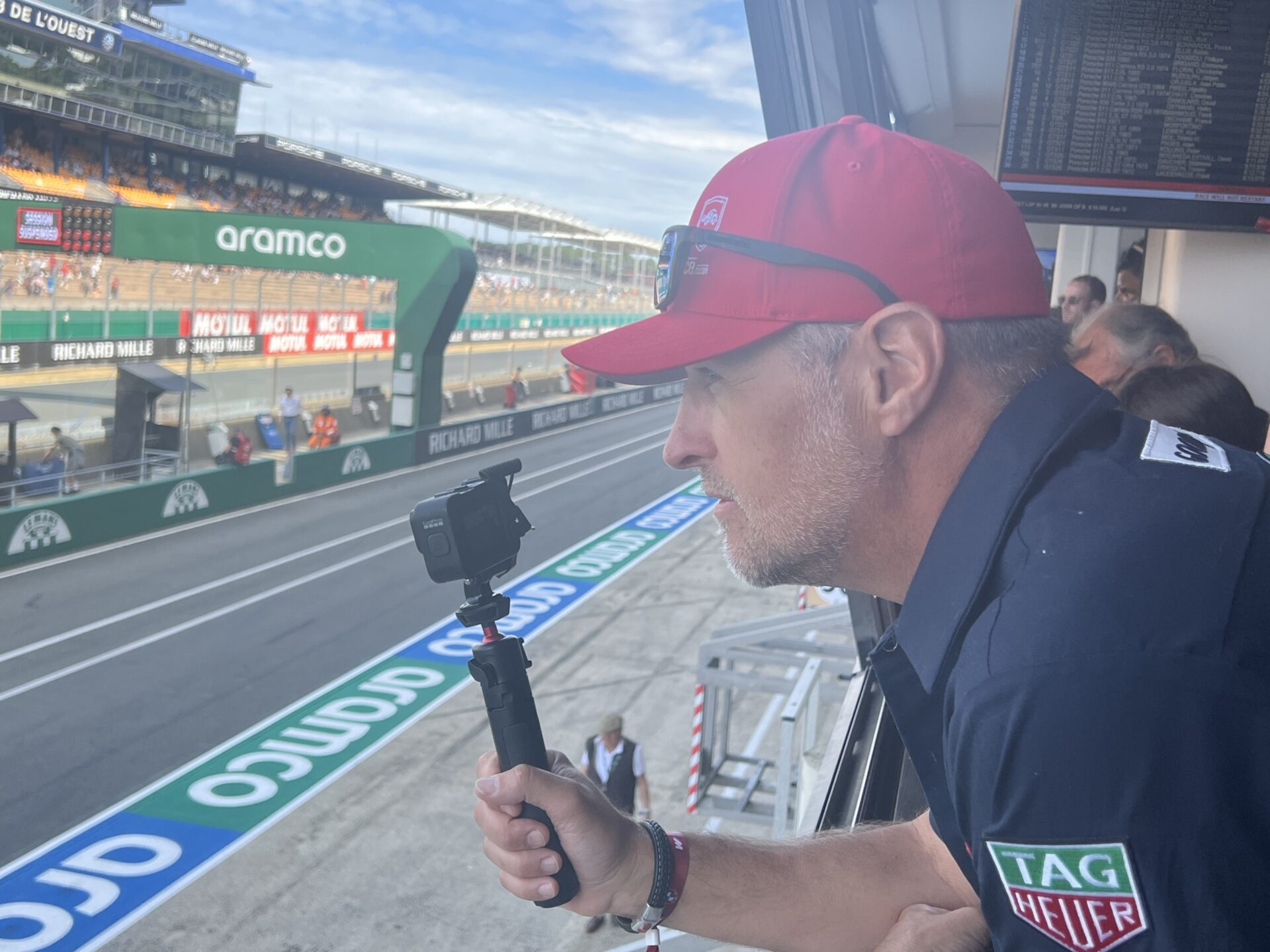
  • Total Races: 7 online events across multiple disciplines
  • Race Formats: GT3, IndyCar, F4, NASCAR, Toyota GR86
  • Platform: iRacing (Official platform)
  • Giveways: There will be a giveaway at each round for the winner, random participant, and also someone in the audience!
  • Broadcast Information: Live on Twitch.tv/InitEsports and TV via eClutch; Replays available on YouTube; Powered by: MOZA RACING — Exclusive hardware partner Prizes, giveaways & elite sim gear await top performers!

If you have what it takes to represent Team USA, you can still sign up here. The 2025 program samples many different disciplines allowing an opportunity for everyone to take part!

MOZA Becomes Official Hardware Partner of Team USA Talent Scout Events

MOZA Racing is a global leader in sim racing hardware, known for delivering high-performance, precision-engineered equipment designed for competitive racers and enthusiasts alike. With a commitment to innovation and community engagement, MOZA continues to set the standard for the future of sim racing.

This landmark partnership unites MOZA’s cutting-edge technology with Init Esports’ mission to identify and train the next generation of Team USA esports athletes. The Team USA Talent Scout Events, created and operated by Init Esports, and run on iRacing are the ultimate proving ground for sim racing talent—providing equal and inclusive opportunities for both men and women to shine on the global stage. Built with Olympic-level integrity, these events ensure that diversity and representation are not just ideals, but foundational pillars of the program.

“MOZA Racing is a brand that embodies precision, innovation, and community—everything we strive for in this journey to build a competitive and inclusive Team USA roster,” said Stefy Bau, CEO of Init Esports. “Together, we will elevate the sim racing experience across the board and showcase the future of American sim racing.”

MOZA Racing shares Init Esports’ vision for growth and excellence—especially as sim racing rises to prominence on the Olympic stage. “MOZA is thrilled to empower Team USA’s future stars,” said Mandi Liu, MOZA Racing Business Developer. “This isn’t just about equipment—it’s about fueling a movement. From grassroots to the Olympics, we’re proud to support a program that champions inclusivity and peak performance.”

Please support Init Esports sponsor MOZA, if you need new products https://mozaracing.com/?ref=akrtnoee


About Init Esports

Init Esports focuses on sim racing events and digital tournaments. They bring eSports content to fans and sponsorship opportunities to brands, while maximizing audience reach across multiple sports, industries, and platforms. Init Esports is a woman-led company where Diversity, Equity, Inclusion and Accessibility is in their DNA, and their platform aims to combat bullying and cheating to help make the eSports world as safe and fair as possible. To learn more, be sure to logon to www.initesports.gg today or follow them on social media @initesports, join their discord, check out their YouTube Channel, or follow their live content via Twitch.

At Init Esports, founder and CEO Stefy Bau doesn’t just settle for the ordinary. She creates extraordinary experiences by producing thrilling online competitions and real-life events that transcend the boundaries of the eSports universe. And she’s here with us on Break/Fix to share her story, and help you understand why you need to get more involved in the world of eSports. 

Tune in everywhere you stream, download or listen!

Listen on Apple
Listen on YouTube
Listen on Spotify

Leipert Motorsport celebrates success at the Lamborghini Super Trofeo Asia in Shanghai

0

It was a successful weekend for Leipert Motorsport. At the second round of the 2025
Lamborghini Super Trofeo Asia at the Shanghai International Circuit, the Wegberg-based team celebrated an impressive overall victory, pole position and several additional top-five finishes. Supported by PROFI-CAR, the team delivered an impressive performance.

2025 Lamborghini Super Trofeo Asia, Round 2 , Shanghai International Circuit, Shanghai, China. 16 May, 2025. Photo courtesy Leipert Motorsport GmbH.

Strong preparation and convincing qualifying sessions.

To optimize preparation for the race weekend, Leipert Motorsport completed intensive test drives. Drivers JiaJun Song (China, #89, AM classification) and Ethan Brown (Singapore, #27, Pro classification), who shared a car with Jacob Riegel, performed well in practice and qualifying. Brown took pole position in the first qualifying session, while Song achieved fifth place on the AM class grid. Riegel qualified fourth in the Pro class in the second qualifying session, while Song started from second place in his class.

Race 1: A dominant start-to-finish victory.

Ethan Brown made an immediate impact in the first race. He got off to a perfect start, took the lead and continuously extended it. After a confident stint, he handed the Lamborghini over to Jacob Riegel, who brought the car home to a controlled finish. Their well-deserved reward was overall and class victory in the Pro classification. JiaJun Song was less fortunate. Although he was leading his class at the start, he had to retire from the race on
lap nine due to a sudden alternator defect.

2025 Lamborghini Super Trofeo Asia, Round 2 , Shanghai International Circuit, Shanghai, China. 16 May, 2025. Photo Courtesy of Leipert Motorsport GmbH

Race 2: Setbacks and a strong fightback

The second race got off to an unfortunate start with a collision: Jacob Riegel was forced into a spin after making contact with another car on the first lap, which cost him valuable time. Several safety car phases made it even more difficult for him to catch up. Nevertheless, the Riegel/Brown duo performed strongly — Brown even set the second-fastest race lap. This was enough for fifth place in the overall and Pro standings. The team is thus defending second place in the championship standings for the time being. Despite suffering from food poisoning, JiaJun Song fought his way to the finish line and took fifth place in the AM classification. This result earned him valuable points in the title fight, putting him just five points behind second place in the championship.

Fazit und Ausblick Summary and Outlook

Managing directors Marc Poos and Marcel Leipert came to a positive conclusion. “Winning the first race from start to finish was a strong statement. Although we couldn’t match this performance in the second race, our overall performance was very good. Our riders have improved significantly and we are looking forward to the upcoming LST Asia events. Jacob Riegel made a phenomenal comeback and impressed from a standing start. Nikolas Pirttilahti will join the team in Fuji and fight for victory alongside Ethan Brown in the #27.”

From 30 May to 1 June, Leipert Motorsport will be competing in the second round of the Lamborghini Super Trofeo Europe at the Autodromo Nazionale di Monza in Italy. The team will be there with four cars. The next Lamborghini Super Trofeo Asia event will take place from 27 to 29 June in Fuji, Japan.


About Liepert Motorsport

Leipert Motorsport was founded in 2002 and became one of Europe’s top GT-Teams in Sprint- and Endurance-Racing. Spreading its GT-Engagement even wider across the continental borders, this step is the logical consequence for the German team after being a front runner and championship winning team in multiple competitions.

Ferrari and the Indy 500: A Story of Ambition & Missed Opportunities

Ferrari is synonymous with speed, prestige, and dominance in Formula 1. But did you know that Ferrari once made a serious attempt to compete in the Indianapolis 500? While their involvement was brief, it remains a fascinating chapter in motorsport history. Read on to explore their involvement in the Indy 500, or tune into the Ferrari Marketplace Podcast episode below!

Tune in everywhere you stream, download or listen!

Listen on Apple
Listen on YouTube
Listen on Spotify

The year was 1952, and Ferrari was at the height of its Formula 1 prowess. Many might not be aware, but The Indianapolis 500 was a part of the F1 World Championship at that time, a strange anomaly considering that European teams rarely ventured across the Atlantic to participate. But Ferrari decided to break the trend, sending a fully backed factory entry driven by Alberto Ascari, along with three privately entered Ferrari 375s.

Photo courtesy of the Exotic Car Marketplace

The 1952 Ferrari 375 Indianapolis Prototype

Ferrari’s primary attempt at the Indy 500 came in 1952 with the modified 375 F1. Originally designed for Formula 1, the car had to undergo significant modifications to meet the unique demands of the Indianapolis Motor Speedway, and while Ferrari’s participation was ambitious, the team quickly faced challenges:

  • Chassis Adjustments: To increase stability at sustained high speeds, Ferrari lengthened the chassis. This modification shifted the weight distribution but introduced handling challenges unfamiliar to their European engineers.
  • Wheel Selection: Ferrari opted for Borrani wire wheels instead of American magnesium alternatives.
  • Tire Compatibility Issues: The car had to run Firestone tires instead of its usual European compound, which altered grip dynamics and required adjustments to suspension setups.
  • Aerodynamics & Drag: Indy’s oval layout demanded different aero tuning than road circuits. Ferrari’s limited experience in optimizing for continuous left turns likely contributed to some of their performance shortcomings.
  • Engine Adjustments: Additionally, the Ferrari 375’s high-revving engine, designed for short bursts of acceleration in F1 road circuits, lacked the low-end torque needed for sustained oval performance. The power curve (and gearing) was also likely mismatched for the wide-open throttle demands of the Indy 500.

Despite their best efforts, the Ferrari team had made a crucial mistake: they stuck with their Borrani Wire Wheels instead of switching to more durable magnesium wheels, despite advice from their American counterparts. That decision ultimately led to disaster.

Photo courtesy of the Exotic Car Marketplace

Ascari managed to qualify in 25th place – far from ideal but enough to make the grid. Despite initial struggles, he worked his way up to ninth during the race. However, his effort was cut short on lap 40 when the Borrani wheels failed under sustained load, forcing him to retire.

Despite this blemish on his record, interestingly, the 1952 season turned out to be one of Ascari’s most dominant. Of the eight World Championship races that year, he won six, securing the F1 championship title despite missing the Swiss Grand Prix due to his commitment to the Indy 500.


Ferrari’s later attempts: Engine Experimentation & Technical Exploration

Ferrari didn’t give up after 1952, but their future flirtations with the Indy 500 were half-hearted at best. They attempted collaborations in the late ’50s, experimenting with engines in various chassis but never seeing real success.

  • Mid-1950s Engine Testing: Attempts to pair Ferrari-built engines with Curtis Craft chassis revealed difficulties in integrating Italian power units into existing American designs.
  • 1973 Scouting Efforts: Ferrari discreetly sent engineers to Indy disguised asMario Andretti’s Uncle Franco” to analyze race technologies, but no formal entry emerged.
  • 1986 Ferrari 637 Prototype: Perhaps the most ambitious IndyCar project came in 1986 with the Ferrari 637 (below), a stunning single-seater designed specifically for Indianapolis. Sadly, the car never saw competitive action, and the project was ultimately scrapped because of FIA politics and shifting priorities which led to the project’s cancellation. The 637’s advanced aerodynamic package and bespoke engine technology were transferred to Alfa Romeo racing program.
Photo courtesy of the Exotic Car Marketplace

What Could Have Been?

Ferrari’s limited involvement in the Indianapolis 500 offers an intriguing case study in race engineering and adaptation. While their efforts never materialized into sustained participation, the technical aspects of their approach reveal crucial lessons in aerodynamics, chassis tuning, and strategic miscalculations. Had they persisted with a proper development program… could they have won America’s most famous race? Could an Indy success have cemented Ferrari’s presence in the U.S. earlier?

Photo courtesy of the Exotic Car Marketplace

Ferrari’s brief encounters with the Indianapolis 500 truly emphasize the importance of specialized engineering for oval track competition. Their failure to incorporate race-proven materials (such as magnesium wheels) and fully adjust their aerodynamics and engine characteristics to the track conditions led to their ultimate withdrawal.

Had Ferrari persisted in refining its Indy package – leveraging its renowned powertrain development alongside American chassis expertise – the outcome could have been vastly different. Instead, the lack of sustained investment and adaptation prevented Ferrari from gaining a foothold in America’s most iconic race. And although Ferrari never conquered the Indy 500, their brief involvement remains an intriguing “what if” in motorsports history; an untold story of risk, adaptation, and the pursuit of racing glory!

Tune in everywhere you stream, download or listen!

Listen on Apple
Listen on YouTube
Listen on Spotify

Cobra’s Celebrate 60 Years of Performance at Pebble Beach

One of the most intimidating cars of its era, the Shelby Cobra 427, marks its 60th Anniversary this year. Named for the 427-cubic-inch Ford engine that powered it to dominate SCCA racing and set a performance benchmark that stood for years, the “big block Cobra” earned iconic status from the day it was introduced.

To celebrate this anniversary, a Shelby Cobra class will take to the show field at this year’s Pebble Beach Concours d’Elegance, honoring the model’s legacy of speed, design and evolutionary performance.

“Carroll had a strong personal connection to Pebble Beach, racing and winning here in the 1950s and later sharing his cars at the Concours, so we are honored to feature his Cobras this year,” said Concours Chairman Sandra Button. “The design, performance, and historic wins of these iconic race cars highlight the legendary pairing of Carroll and Shelby American with AC Cars and Ford Motor Company.”

Carroll Shelby, an automotive legend, is popularly known for his groundbreaking work with high-performance sports cars, such as the Le Mans-winning Ford GT40, but he first made his mark as a race driver, winning numerous races, including the last Pebble Beach Road Race, triumphing at Le Mans and competing in Formula 1.

The Shelby Cobra came into being in 1962, pairing an AC Ace chassis with a Ford 260-cubic-inch V8 that was replaced by the larger 289 engine. The ultimate iteration, the Shelby Cobra 427 — with a new chassis, coil suspension, and powerful 427-cubic-inch engine — was introduced in 1965.

“Ford’s ‘Total Performance’ era of the 1960s was epic, equaled only today with the company’s global motorsport program,” stated Edsel B. Ford II. “Carroll Shelby was vital to our dominance in the sixties and his 427 Cobra put an exclamation point on that success! I am delighted that these iconic cars will be celebrated on this anniversary year.”

Four versions of the 427 Cobra were produced and will be showcased  “Comp” (competition), S/C (semi-competition), Street and Narrow Hip  in addition to the first production and last production Cobras.

“The Shelby Cobra remains an automotive icon even 60 years after its introduction,” said Aaron Shelby, grandson of Carroll Shelby and board member of Carroll Shelby International. “Few cars have achieved the fame and staying power of the Shelby Cobra. Not only does it represent performance, this sportscar represents American ingenuity! Simple but effective, it was created with grit and determination.”

The Cobras are coming… The Cobras are coming… to Pebble! 

  • 1962 Shelby Cobra 289 First Production Roadster
     
    This is the first Shelby Cobra Production Roadster to be sold to a customer. It stands as the only Cobra to compete in the Tour de France Automobile. It was initially powered by the 260-cubic-inch engine and later fitted with the more powerful 289 engine.
  • 1966 Shelby Cobra 427 Narrow Hip Roadster 

    Known for its rare design and powerful engine, the 1966 Shelby Cobra 427 Narrow Hip Roadster features a narrower track version of the Shelby Cobra. This Cobra is one of just 32 “Narrow Hip” 427 Cobras produced by Shelby American and is one of only ten that remain in original unmodified configuration. 
  • 1966 Shelby Cobra 427 Competition Roadster 
     
    This 1966 Shelby Cobra 427 Competition Roadster raced in Sports Car Club of America events at famous tracks including Meadowdale, Wilmont Hills, and Road America. It retains all of its original components including drivetrain, body, and chassis.  
  • 1966 Shelby Cobra 427 Roadster 
     
    This road-going 1966 Shelby Cobra is recognized as one of the most authentic 427 street Cobras, complete with original components throughout.  
  • 1967 Shelby Cobra 427 S/C Roadster 
     
    This 1967 Shelby Cobra 427 S/C Roadster is one of just 29 original S/C versions–one of the most revered Cobra models of all time.  
  • 1967 Shelby Cobra 427 Roadster
     
    This 1967 Roadster was the last Shelby Cobra 427 built. It has been restored using all its original components including hardware, wiring, vinyl, leather and more. 

This small yet significant display of Shelby Cobras will celebrate the automotive vision of Carroll Shelby highlighting the key elements behind the legacy of the Shelby Cobra 427 and its transformative impact on the world of motorsports, a legacy that continues to be celebrated.


About Pebble Beach Concours d’Elegance

First conducted in 1950, Pebble Beach Concours d’Elegance® has grown to be the world’s premier celebration of the automobile. Only the most beautiful and historic cars are invited to appear on the famed 18th fairway of Pebble Beach Golf Links®, and connoisseurs of art and style gather to admire these masterpieces. Charitable donations raised by Pebble Beach Concours d’Elegance® now total over $41 million.

Related events include Pebble Beach Tour d’Elegance® presented by Rolex, Pebble Beach RetroAuto™, Pebble Beach Classic Car Forum™ presented by Alliant Private Client, and Pebble Beach® Auctions presented by Gooding Christie’s. Pebble Beach®, Pebble Beach Golf Links®, Pebble Beach Concours d’Elegance®, Pebble Beach Tour d’Elegance®, Pebble Beach RetroAuto™, Pebble Beach Classic Car Forum™, and Pebble Beach® Automotive Week are trademarks, service marks and trade dress of Pebble Beach Company. All rights reserved. For more information, please call 831-622-1700 or visit pebblebeachconcours.net.


Thanks for stopping by!
Don Weberg - Editor-Publisher-Founder, Garage Style Magazine

Adrian Fernandez: From Mexico to Le Mans – A Legend’s Journey

Evening with a Legend is a series dedicated to the icons of the 24 Hours of Le Mans, bringing their stories to life for fans around the world. In this episode, we sit down with Adrian Fernandez, a trailblazer whose path from Mexico to the podiums of Le Mans is as inspiring as it is improbable.

Photo courtesy of Agencia Reforma

Adrian’s racing journey began in 1981 at age 15, sharing a Volkswagen Beetle with his uncles in the 24 Hours of Mexico. That grassroots start ignited a fire that would carry him through karting, Indy Lights, and eventually a decade in IndyCar. But the dream was always bigger. “Every time time I reached a goal, a new dream appeared,” Adrian recalls.

Tune in everywhere you stream, download or listen!

Listen on Apple
Listen on YouTube
Listen on Spotify

Determined to break into Formula One, Adrian moved to Europe in the late ’80s. With no sponsorship and limited resources, he worked as a mechanic and instructor at Brands Hatch, even sleeping in train stations and smuggling himself across borders to stay in the racing game. “I gave everything I had. I lived in a mechanic’s house, worked jobs, and hid in trailers to cross borders. That’s the kind of life I had – and I still made it.”

Photo courtesy Wikipedia; by Nate Grigg – Racing 194

His time in England, racing at Silverstone, Donington, and other legendary circuits, laid the foundation for his technical mastery and eventual team ownership.

Synopsis

This episode of Evening with a Legend features racing driver Adrian Fernandez. The focus is on Adrian’s experiences at the 24 Hours of Le Mans, where he made notable appearances from 2007 to 2012. The discussion begins with Adrian’s early career in Mexico, his progression through IndyCar in the United States, and his eventual transition to endurance racing. Insights include Adrian’s meticulous preparation for Le Mans, his adaptation to different racing categories, and the challenges of night driving in GT cars. The conversation also covers the broader impact of Le Mans on Adrian’s career, his post-racing involvement in motorsports, and advice for aspiring drivers. The script concludes with reflections on the evolution of motorsport safety and Adrian’s current life focused on family and personal enjoyment.

  • You started racing in Mexico in 1981 at the age of 15, then quickly moved up and spent 10 years stateside racing in CART/INDY CAR, building up your skills and reputation. Talk to us about how you got to LeMans in 2007. How was the deal put together? 
  • Let’s talk in more detail about 2007; You’re the first LMP2 driver who’s joined us for EWAL, can you talk to us about those cars? How do they compare to others you’ve driven at Le Mans. Some people view LMP2 as “the Spec Class” – do you feel that way as well? Does that make the racing more fun?
  • 2010 – Back again at Lemans, this time in the LMP1 Aston Martin; how did this attempt compare to 2007? 
  • 2011 – Luck did not favor Adrián in 2011, when his LMP1 Aston Martin AMR-One could barely complete two laps during testing. What happened?
  • And your final attempt in 2012, a bit of vindication for the 2011 false start? But this time you were in a GT (production) class car. What was it like running among the LMP1/2 cars?
  • Any advice for aspiring Latino drivers that want to make a career in professional racing?

Transcript

Crew Chief Brad: [00:00:00] Evening with a Legend is a series of presentations exclusive to Legends of the Famous 24 Hours of Le Mans, giving us an opportunity to bring a piece of Le Mans to you. By sharing stories and highlights of the big event, you get a chance to become part of the legend of Le Mans, with guests from different eras of over 100 years of racing.

Crew Chief Eric: Tonight, we have the opportunity to bring a piece of Lamar to you, sharing in the legend of Lamar with guests from different eras of over 100 years of racing. And as your host, I’m delighted to introduce Adrian Fernandez. In 2007, Adrian made his debut at Le Mans, taking home a second place in a V8 powered LMP2 prototype.

This was the first podium for a Mexican driver at the Circuit de la Sarthe since the 1960s. [00:01:00] Three years later, in 2010, Adrian found himself back at Le Mans, this time behind the wheel of Aston Martin’s LMP1, finishing fifth in class, sixth overall. Returning for the 80th running of Le Mans 2012, Adrian and Aston Martin took home a third place finish in the GTE Pro class, covering 322 laps without failures or problems.

And with Adrian’s help, the team achieved the fastest lap in their class of 3 minutes 54. 928. At that point, Adrian had the distinct honor of driving the Aston Martin to the checkered flag, and on September 12th of 2012, he announced his retirement from racing, thus concluding his relationship with Aston Martin.

But that wasn’t the end of his involvement in the world of motorsports. And with that, I’m your host, Crew Chief Eric from the Motoring Podcast Network, welcoming everyone to this evening with a legend. Adrian, welcome to the show.

Adrian Fernandez: Thank you. How are you, Eric?

Crew Chief Eric: Great. I’m glad you’re here. Let’s go back in time a little bit and talk about your road to Le Mans.

You started racing in Mexico in 1981 around the age of [00:02:00] 15, and you quickly moved up and spent 10 years or so racing stateside in kart and IndyCar, building up your skills and your reputation. So talk us through how that all led you to Le Mans. Was that a goal of yours to race at Le Mans? How was the deal put together?

Adrian Fernandez: I started in the 24 hours of Mexico. You know, that was my first race, 24 hours of Mexico in a Volkswagen Beetle with my uncles sharing the car. So my whole career went through basically every time I managed to get where I wanted to be like certain steps, then, you know, new dreams, new goals. Came to be able to make it.

So first for me was to raise formula one and, uh, at some stage, because I didn’t have the age, I started racing at 19 years old. So it was not the right age when I was there in Europe. So then IndyCar was more like the right fit for that. And so I moved to IndyCars in 93, 92, I did Indy lights. And in IndyCar, I stayed there all the way through until the [00:03:00] separation of Kart and Tony George.

And then I went to IRL, did the 2004 full season. Some of my sponsors, they didn’t really want to continue there. So at that point, really was. I was just searching to see what else I would do. I still had my own team with my partner, Tom Anderson. So we continued to do the IRL. And at a certain point, we decided to go with Honda to do the, uh, Ford Karts.

First with the Grand Am in 2006. And then in 2007, basically we started this program with the, uh, the American Amount Series with the LMP2, we work on the development of the engine and all that stuff. And basically that was my introduction to sport cars, to endurance series and, uh, 12 hours of searing and six hours of the glen, et cetera, et cetera.

So that’s really how I got to sport cars in that respect.

Crew Chief Eric: So you mentioned that you had raced in Europe earlier in your career, especially when you were doing open wheel and looking to get into formula one, where had you turned [00:04:00] laps in Europe?

Adrian Fernandez: As soon as I realized that I did everything I could in Mexico, I realized that I was not going to go anywhere.

If I stay in Mexico, you know, I have achieved everything I wanted to do, and I felt that I was stuck. So really I wanted to go the road to formula one and we had the Grand Prix at the time, but we didn’t have Mexican drivers. So I say, you know, this is the perfect opportunity. But there was no help, no sponsorship.

I mean, as big as it is now in Mexico, in that time, there was nothing. I was actually the first guy after the Rodríguez and a few guys that tried, but didn’t make it to the top and consistently stay there. I was the first guy to actually just dig my way through it, try to make it in racing in Europe. But I couldn’t get the sponsorship where I didn’t, I couldn’t even find 5, 000, 10, 000 in Europe.

I mean, I couldn’t, I was working as a mechanic. I was an instructor in Brown’s Hatch with Jeff Brabham and other good friends from England, when I didn’t find the money to race in formula four, I was already committed with a mechanic to do everything. I gave him all my savings. And [00:05:00] when the sponsorship was going to give me the other part of it, he’d say, well, sorry, I cannot help you.

I said, now I’m stuck. I’m living in the house of the mechanic that is going to work with me. He’s going to do the team for me and everything. And now I have no money. So I asked my dad, what do I do? And also come back home. You know, what are you doing? You’re crazy, you know, blah, blah, blah. So I thought about it and I said, no, I’m not coming home.

So I found a job. I found my job in Poland, but I have no money. I went through France and I didn’t have the visa. So I have to return. I have no money. I had to sleep three nights in the train station. before we crossed this time over through Belgium. And at that time I convinced the driver to keep me in the box, you know, in the trailer.

I hid for four hours and two boxes so I can go through it with no checkups. So I smuggled in two there because I didn’t want That’s the type of life that I had. And I still make it, made it. So that’s what I’m saying. You know, it was just very tough. So at that time in 87, 88 and 89, I really did all the circuits in Europe, especially in [00:06:00] England, you know, Silverstone, Trotstone, Donington.

I mean, you name it, all of them. It was a very good for my career because the experience that I got there, it was just incredible. I mean, it was the best racing. And even though it took me a while to, because I was, I stay in the same series for three years because I have no money and I was working at the beginning as a mechanic and things like that, but it gave me a lot of experience.

experience, which it made the base for me eventually to have the knowledge and things like that to own my own team and do the different things that I did in my racing career. So it was a very, very good decision to go to Europe at the time.

Crew Chief Eric: So a lot of drivers that go overseas and go to Europe, they end up cutting their teeth at some of the most famous tracks in the world.

You talk about spa, you talk about Silverstone, Monza, the list goes on and on, but then there’s always in the back of their minds. Le Mans or Nurburgring, but usually Le Mans because Le Mans is the biggest race in the world. And so for you, when you were there, was that ever a thought that was crossing your mind?

Like one day I want to [00:07:00] drive at Le Mans.

Adrian Fernandez: Yeah, it was. I mean, it was like, I wanted to drive Monaco. I wanted to drive the Indy 500. I wanted to drive the Daytona, you know, the big races and like Le Mans was one of the big ones. And Pedro Rodriguez won there and it was a very special race for us in Mexico.

We have knowledge about the race. And obviously Le Mans was like the jewel of the endurance racing. So yes, through my career, I always thought about it, but I never had the chance or the opportunity until I finished my career in IndyCars and just had this great relation with Honda to really start racing prototypes in America with an American Le Mans Zero, which was very competitive.

I don’t know if you remember, you know, we had the Penske’s, Porsche Penske’s and, you know, Andretti was there and eventually Gilles Deferran was there. And I mean, it was just a very strong and competitive series at the time. So, yeah, I mean, I got in love with it and it’s just so special to race those cars at that level because those cars are super fast.

Crew Chief Eric: So you put together the deal for your first run at Le Mans. In 2007, that was with [00:08:00] teams. I tech in the LMP two car. Yeah. What was it like going to Lamar the first time? What kind of impression did it make on you and coming from open wheel to endurance more so than let’s say ALMS in a much longer format and a track you’ve never seen before.

How different was it to drive that LMP two car at Lamar?

Adrian Fernandez: Lamar is my favorite racetrack and I will say the most challenging because of the high speeds. So I really. took my time to prepare myself very well. Firstly, that race that we did in 2007 was all orchestrated by Honda because Honda was looking into doing their own programming in the future in Le Mans.

So basically they took me as a driver and they made a deal with SciTech at the time for me to race there and for them to get an experience. about what was Le Mans all about it. So at the time we have small simulators, just very basic. We didn’t have, you know, the high tech simulators that you have now, but at least it gave me an idea of where the track was going and then just as I got there, you know, it’s a track that you [00:09:00] cannot just drive around 80 percent of the track is roads that people just go from town to town.

What I did is I took a scooter and I went corner to corner taking pictures because as a race car driver, especially in Le Mans, everything is about references. You know, you have to have a good reference to every turning point and breaking point, especially you’re going so fast, like in the Mulsanne straight, you know, it’s, uh, at night you go so fast.

that stopping into the first chicane, if you miss a little bit, your breaking point, you blow the chicane. So basically I went through with a scooter and I started looking at buildings, you know, there is a bar, there is this and that. And, you know, I took photographs of all of this while the test was happening and all that, with all this information that I got, I really, really got very well prepared.

And I remember that the Japanese driver. Karuaki Kurosawa, he had more experience. He’s already raced in Le Mans. So he did a few laps. And then that’s the other thing. You don’t do many laps before the race because the laps are so long. It’s not like you do 20, 40, 30 laps. No, [00:10:00] no, no. You do maybe seven laps.

And the other guys, 10 laps, you know, just not many laps. So that’s why I did my homework in terms of knowing where every breaking point may be, references and all that. So I didn’t feel like lost because otherwise it takes you forever to learn the track. And I did my labs and I told the guys, I said, don’t put any lab times.

Don’t show me any lab times. The first time that I went there, I said, don’t show me anything. Just let me be. Just going to go out and I know I’ll be fine. I just want to learn it. And I took my time and eventually I was starting better, better, better, better. And, uh, I mean, and then I was. Quite fast to the point that I qualify the car because I was the fastest of the drivers.

And, uh, we put the car on the pole, so that was very satisfying for me. But like I said, I did the homework and I walked the track. I check everything. So I didn’t feel like I was in a man’s land. So that was key.

Crew Chief Eric: So how different was the setup of the Le Mans prepared LMP two car versus the one you were running here in the States?

Adrian Fernandez: I mean, the cars are very. I mean, this [00:11:00] was an open cockpit, the same as I was driving in with a Lola chassis and then eventually the Acura chassis in the American Le Mans series. But the difference between the racetracks in America to Le Mans is that it’s so long. So you’re going super fast. You know, there, there is quarters of eight years, six years.

I mean, the entry of the Porsche corners and all that section is extremely fast to the point that if you make a little mistake, I mean, it’s over. It’s not like there’s nothing like a little mistake. It’s almost like the Indy 500. You’re not a little mistake. You’re on the wall. It’s the same there. So you have to have a lot of respect for the track.

It’s all about the speed. So it feels different in that respect because you’re going so fast. Nothing compares all the race tracks that we race in here. Sebring. Searing is super slow compared to them on wood tracks, but it’s just different setups, techniques, everything. For example, Sebring is super bumpy.

One year we wanted Luis Diaz and myself, just two drivers. I drove six hours and a half of total for the 12 hours. And I was absolutely done. I mean, [00:12:00] just because of the vibration and the bumps and everything in Lamonts is the other way around. It’s extremely super smooth. The track. And the nice thing about Lamonts is that the tire Keeps the grip lap after lap after lap.

So it’s really a pleasure and it’s very enjoyable to drive Le Mans because the tires then they don’t really dip. They stay very consistent and it was just fantastic to drive. So it’s just another technique, but it’s beautiful.

Crew Chief Eric: And I know I keep bringing up LMP2 cars and LMP2 cars because actually you’re the first.

Legend to be on evening with a legend that’s campaigned an LMP2 car. And oftentimes it’s one of those classes that we overlook. It is extremely competitive even to this day, but people view it like a spec class. And it’s like, ah, it’s LMP2. You know, I’m more interested in the LMP1 prototypes or what’s going on in production car.

And even TV coverage doesn’t often give enough light on the LMP2 class. So it’s fun to sort of pull these threads and learn from a driver. What LMP2 is really like I’ve heard from some other drivers. Coming from open wheel to prototypes, not [00:13:00] necessarily LMP2, they’re like apples and oranges, there’s no translation between the two.

And I often wondered, is that really true? How close is the downforce? Are they very similar handling wise, or did you have to relearn as you transition from one to the other?

Adrian Fernandez: First thing you have to relearn because you’re not the only driver in the car. You know, you’re sharing the car with somebody else.

So basically everything is a compromise from the seating position to the setup. So basically you have to really work with your teammates to be able to get the best setup and the best feeling for everybody because it doesn’t matter if I’m very quick and my teammate is not that quick because he doesn’t fit well or he doesn’t like what we make to the car.

It just doesn’t matter. So it’s a compromise. The LMP2 that we drove in those years that I competed in the American Le Mans series with Acura, those cars were extremely fast. I mean, super fast because after that they tuned down the engines, but 2007, eight and nine, the cars were extremely fast. In that respect, the car performance and speed up through the corners [00:14:00] was.

In some ways, very close to IndyCars. So really, the things that you needed to work a lot, like I say, working with your teammates, working in a compromise setup that it works for everybody, learning how to, uh, manage the car, not destroy the car. Obviously, these days, even in my days, you can push. 10, 10, all the time, the car and the car, they survived the other 12 hours, 24 hours is a go.

But at the same time, you know, it’s a long race, so you don’t want to do stupid mistakes. And you just really want to have a little reserve just to make sure you don’t make any mistakes. And you drive through the night. Sometimes you drive through the night in rain and things like that, that you don’t have in IndyCars.

IndyCars, you always have lights. The races are very short compared to Le Mans. I remember one year, 2010, with the LMP1, I was driving with my good friend Stefan Muka and Harald Primat. And Harald Primat had a problem through the night, and he couldn’t drive after one hour. And I just came out of the car. I was just getting ready, you know, you have your motorhome, you take a shower, you have your physiotherapist, you eat, [00:15:00] you do all the things.

And I was starting to get ready to go to sleep. And the team called me that they had an issue with him. And that if I would be able to replace him, he had, uh, an issue with, uh, cramping and things like that. So I jumped in the car. I didn’t rest much three years. Yeah. Three and a half hours after I came out of the car and I drove almost four hours straight.

And I say almost four hours, because it was like three hours and 55 minutes, because you cannot exceed in those days. You couldn’t exceed more than four hours. Otherwise you get a penalty, but I was fine. I was fine. I could drive. I was. Not sweating. I was just, I remember that thing that I did so long, actually the engineers and everybody went to sleep in the, in the trucks.

I was not hearing any, anybody was completely dark. There’s not even lights. The only part that there’s some lights is in the permanent course, but the rest is just absolutely night. So you just see your lights of the dash. The lights of the other cars, but it’s so peaceful and you’re just basically, it’s like diving at night, which is so beautiful.

But I was calling my engineer and nobody was answering like for two, three laps. I was getting [00:16:00] worried, you know, even though I knew exactly more or less when I had to get into the pit, but sometimes it gets a little, uh, scary if you don’t hear back from your team.

Crew Chief Eric: Glad you brought us into 2010 and the LMP1 attempt with Aston Martin.

And so I wanted to focus in on something you just said. said, we’ve heard from other drivers about the changing conditions at Lamar. What are the most stressful times when the sun is starting to come back up or what inevitably starts to rain, but almost four hours in the car, a lot of drivers these days don’t do those long stints like that.

They do two hours at a time. And you know, then they have the maximum amount of drive time and all those kinds of things. How do you stay focused for four hours in the middle of the night when you’re just by yourself? How do you not, let’s just say, get bored or. How do you keep your pace consistent? Lap after lap for four hours.

Adrian Fernandez: Just training. I have always been a very disciplined person, very disciplined athlete. Even in my days of IndyCars, I always worked to the maximum and more. I was very good with everything I did, you know, and the type of training physically that I used to do. It [00:17:00] was also about concentration and focusing and things like that.

For me, it was just natural. I felt I was very good at it. Barely made any mistakes. I’ve never crashed in Le Mans. So I was just very pure concentration. And to the point that, like I said, you know, I can drive for four hours and I didn’t have any problems with getting tired. In IndyCar, one of the challenges that I face when I enter IndyCar is that I have a very small bone frame.

You know, my bones are tiny compared to, for example, people in those days like Mario, Andre, Nigel Ma, Paul, Tracy, ARDI, et cetera. So the indicators in those days were so physical that you needed four or five LAP to do a, a good lap in qualifying, and the four feet lab were the best. And I couldn’t do more than three laps good.

And, uh, so the X track, which was in the fourth or fifth lap, my body was completely done. Physically, I just couldn’t turn the steering wheel. We have no assistance of anything. We have no traction [00:18:00] controls. We have no power steering control. And we have 1000 horsepower. Those cars were really a beast. I mean, you have physically.

I remember Ari lying like a night before the start of the Laguna Seca race. We were instead of talking about the car or whatever it is we were talking about, are we going to make it, you know, physically because it was so physical. So I learned a technique to relax. Obviously I changed the way I work out and everything, you know, less cardio, more, more weights and things like that.

But then I work a lot on relaxing my muscles through the straights. A technique that I learned and I applied very successful work with my engineer because we have this deficit. So how are we going to make it? So one, physically you have to work on this. So I learned how to relax my muscles on the straight and just put the effort on the, you know, so some people are like very tense, you know, even in the straight, no, no.

And in the straight I was just relaxed, just basically putting the minimum amount of effort just to keep the car on the line. And then when you get to the corners and all that, that’s when you put the effort. So that really [00:19:00] takes a lot of effort out of each lab. And that’s how I managed to improve because of the strength that I, that was, I was lacking.

And then because we were not qualifying so good, John Ward and myself, we work on just how are we going to fight with these deficits? So basically we work a lot on how to save fuel. And if you remember my days of IndyCars, we were the first one that we were so good on saving fuel. So I always managed to do one lap or two laps more than the guys when they came into the pits.

And that was how we compensate the lack of strength in those days. Within the cars to be able to win races that transfer it to Lamont. So same with Lamont, some guys who, when they come and you know, the speed and everything, they are very tense and they get tired more and all that. And I was extremely relaxed on the straight.

You have a such a long straight. So I was very relaxed driving the car in that respect, putting minimum effort into my muscles and just. Focusing on the track, but you’re going so fast, you know, [00:20:00] you’re going so fast, but you have to relax. And once you put everything in contest, you know, everything slows down in your mind.

It’s like a machine, you know, lap after lap after lap. And the only thing you have to worry is about somebody went off, there’s gravel, or there’s certain things that normally when there’s a driver change, you have to be ready, like half an hour before you get into your shift to getting back into the car.

And at that time, you put your earplugs, your radio, and you start talking to the driver that is driving the car. And he’s telling you the last three laps or two laps or the last lap, he tells you, you know, be careful in here, be careful in there, there’s a little bit of oil, or the track is okay, don’t worry, because you have to perform.

Once you get out of the pits, even if it’s 3, 4 in the morning, you know, a little chilly and all that. And you’re like sleepy or whatever. I mean, you have to jump on the car and you have to go and you have to be within three, four tens or, or the same lap times that the other guy got was, I mean, you have to be really on it because the competition is so strong, but it helps to listen to the driver that is coming out to see how is the track, how is the car, any [00:21:00] problems, blah, blah, blah.

And that’s the big difference when you were asking about Indy cars and sport cars, you know, the endurance. A competition is just that, that you’re sharing the car with somebody else. So you’re a team in that respect that you normally don’t do that in IndyCar. That’s a lot of fun and it’s very challenging.

Crew Chief Eric: So let’s catch everybody up. 2007, you come home with a second place finish in LMP2, your first time at Le Mans.

Adrian Fernandez: Yeah.

Crew Chief Eric: With all the preparation that you did, it paid off. I’m sure you couldn’t have been more happy with those results. Yes. You come back in 2010 running an LMP one car for a totally different team, totally different car.

And you come in fifth, sixth overall.

Adrian Fernandez: Sixth overall. We finished fifth in class and, uh, it was with Harold Priman and Stefan Munchen. We finished, uh, fifth in class. Yes.

Crew Chief Eric: Another year goes by the 2011 season comes around and I didn’t mention this in the introduction because your luck sort of ran out at Le Mans that year and you had some problems with the LMP1 Aston Martin AMR1.

So what happened?

Adrian Fernandez: David [00:22:00] Richard wanted to do his own engine, his And, uh, the way they designed the car, especially the engine, they run out of time to produce a good engine. Um, basically they were having so many problems, both cars retiring within. We started, we did one lap just as that after the door lock corner, you know, in the Molson straight, just 200 meters into the Molson straight, basically I broke first and then Darren Turner was driving the other one.

He broke a hundred meters ahead of me. And that was it. One lap in a quarter. That’s what we did. That was very hard on Aston Martin, in Debbie Richard. And it was just a tough day for the whole team.

Crew Chief Eric: But that didn’t stop you. No. Another attempt in 2012 at Le Mans. So how did that work? How did you move then into the GT production class?

Again, running for Aston Martin. Why the invite to go into production and not maybe another LMP2 or LMP1?

Adrian Fernandez: So this is what happened at the end of 2009, we see us and myself, we won the LMP2 championship in the American Le Mans series. At the same time was the end [00:23:00] of my team, Fernandez Racing, I closed the doors of Fernandez Racing.

And the reason was we had the crisis of 2008. And we did very good with Fernandez Racing. I wanted to, uh, keep the team, but it was very difficult to keep sponsors and a lot of things. At that point, you know, I’ve done everything in my career. I was, you know, I was very successful in most of the championships and cars that I competed.

So I was in a good position myself. And for me, the most important part of my life at that point was to put a lot of attention on my family. That was like as much attention and dedication I put to my race career. I wanted to put that into my family. I was just burned out. I was living in Miami. I didn’t want to go on and live in Indianapolis or somewhere else.

And I mean, I had different opportunities, but I was done basically. We decided to sell the team and Lowe’s USA helped me to get this deal with Aston Martin. They sponsor us. They paid for my salary and the deal was for three years. So basically I was going to drive whatever David Richard [00:24:00] wanted me to drive there and whoever he would put me to drive with because I was at that time, I was not an owner driver.

I was just a driver. So basically he wanted, first, the LMP one was the first time 2010 with him. Then 2011 was his project. It was our LMP one also, but it was just a total disaster. And actually that year we have to jump back to the other car that we had to the LMP one. You know, the beautiful, I don’t know if you ever heard it, but the, the aftermath, they call it BO nine 60, which was the Lola Chelsea, beautiful Chelsea.

With this B12 Astro Matthew was beautiful, sounding beautiful. So in 2011, we went back. After we saw that the AMR one was not working, we went back to the Lola chassis and we finished the season. So for 2012, David say no more LMP1 or LMP2. Obviously Aston Martin makes a lot of cars, you know, especially, you know, the Vantage GT and all those.

So they had always a program there. So, but basically they wanted to have the top [00:25:00] drivers. Driving in the pro team, basically that was my year that I just did GT, which I never done before in my life. I did a few NASCAR races in Mexico and things like that. And I did, uh, a few reasons on the, all of a sudden when I tried to go to NASCAR in 2005, six, seven, and it was challenging to be honest, driving the GT was the most challenging because I was driving with Darren Turner and Stefan Muecke.

These guys were extremely good drivers in GTs. When you come from cars like the LMP1, LMP2, and driving all your life single seaters, Indy cars, things like that, type of driving is just very precise, very small movements, etc. You know, when you jump in a GT, you know, the car moves a lot more. You have to get used to that movement and trusting the car and things like that.

So I really had to work really, really, really hard on it, but I managed to have a great season with them. I worked really hard on looking at how the car felt and everything. And I was always within two tens of them. So it was a great season [00:26:00] and basically a great finish for my career in terms of racing, because that was my last race.

And we finished third,

Crew Chief Eric: you know, when you follow. The WEC and even the IMSA schedule, not all of the races do the quote unquote, the bigger cars, like the LMP twos and LMP ones run the whole season with the GT cars. It’s a little bit different when you’ve got all the classes running together, like at Rolex or at the Glen and places like that.

So when you got to Lamar running the GT, even though you had been running it in the rest of the season, I’ve heard a lot of other drivers. Say that when they took a step into a production class, they spent a lot more time driving than their mirrors, than they were used to.

Adrian Fernandez: Yeah, that’s the horrible part of it.

I remember very well because, you know, I took my dad there because I, I really thought it would, that was going to be my last race. So he was with me there. So we started driving and in practice, I did race some at night and I was extremely uncomfortable, especially, you know, I was 50 years old. My eyes are not as good as when I was 35 and I was struggling at night.

The most [00:27:00] difficult part of it, first the lights, you know, you get these lights and obviously your marks are not as good and now they have better systems so you don’t get blinded. But you see the lights and you think that he’s there and you want to turn that part of it that you are not secure. If he’s there or he’s not there, it’s very difficult, especially in those years.

Now they have much better system to know if they turn, if the other guy is there or not. So it was just very, very difficult in that respect. So what I told my guys, Stefan Mucha and Darren Turner, and I said, how old are you? Is 20 something, you know, and you 31 or 32. Okay, good. See you in the morning. I’m not driving at night.

I took the right decision of not driving at night. They did all the work. They did a fantastic work. Fantastic drivers. And I drove in the morning and David Richard let me, uh, finish the race, cross the finish line. And, uh, that was very special.

Crew Chief Eric: A lot of drivers that tell their Le Mans story, it’s a turning point for them as a driver.

And for you, it was towards the end of your career, actually at the end of your career, as you decided to retire after the [00:28:00] 2012 season and move on to other things, still involved in motorsports, which we’ll get to, but everybody’s tends to agree that. Lamar changed them as a driver for the good. Sometimes maybe for the bad, but generally for the good.

So how would you say that Lamar changed you or what did you walk away from the experience with? What did Lamar teach you as a driver?

Adrian Fernandez: To be even more disciplined because any small mistakes, you know, like the Indy 500 is a tough race, but it’s just two hours and a half, maybe. Max, but Lamont says 24 hours, you know, you’re driving with different classes, different speeds.

So basically it just teaches you a lot about awareness and respect the other classes, respect the other drivers and be more disciplined within yourself. Every time you make any decision. When you’re driving, and that’s why Le Mans, it makes you a better driving in all aspects.

Crew Chief Eric: As you retired from racing, but you didn’t retire from motorsport.

You got involved with Sergio Perez in formula one and trying to promote the next generation of Mexican drivers coming up through the [00:29:00] system. And so you’ve been involved in motorsport for your entire life. When you look back over your career, working with Sergio, working with a lot of other drivers, do you have any advice for aspiring Latino drivers who want to make a career in professional racing?

Adrian Fernandez: Yes, of course. I mean, the main thing is that if you really want to become a professional race car driver and make an impact, you have to really take it with all your your arms. I mean, you have to be completely involved on it 10 10 all the time because it just takes so much. The competition is so tough.

There’s so many good drivers. So you have to always look at how can I be better than the other guys? And there’s so many good drivers around, you know, that the difference between the good drivers are not so good. It’s very small. It’s just the good drivers, exceptional drivers are the drivers that can stay in that limit for a long time and they don’t make mistakes.

They can adapt to different type of cars. If the car is not good or bad, they can adapt and they can go through adversity and things like that and still be there and make the results. And that’s what it takes. And to do [00:30:00] that, you know, your life has to be balanced, meaning you have to have. Time just to think about racing.

If you have other businesses, other distractions, family, or a lot of family or other distractions, you know, it’s difficult. I mean, look at Max Verstappen. He finished one race and even sometimes in the weekend of the Grand Prix, he’s racing online, you know, with the simulators and after the races. He’s racing on Monday and Tuesday and Thursday with a simulator.

He’s so sharp mentally because he’s on it all the time. And that’s how the level of competition it is. So if you really want to do this, you have to really put everything on it. You have to be very selfish because you have to really dedicate a lot of your time to it. And sometimes, you know, I miss a lot of weddings and special events for my family.

I have to leave Mexico. I have pursued my dreams and that takes a lot of sacrifices. It’s done. Nah. A lot of people don’t do it a hundred percent and they do it 98%, 97% or, or like that. And [00:31:00] sometimes that two 3% makes the difference between the good drivers and the exception of drivers.

Crew Chief Eric: Do you know of any pathways for younger drivers to come up through the system?

Is it easier now? Are there any incentives for Latin Americans and Mexicans to come into the US and European racing programs?

Adrian Fernandez: You know, I, I have not been so attached to racing. I mean, I watched the races. Because I like to race. I watched IndyCar races. I watched Formula One and I watched some NASCAR races because my good friend Daniel Suarez is there.

But for Mexican and for a lot of the Latin drivers, the doors now are open. When I went to Europe, the doors were shut and I had to open them because there were no opportunities to have sponsorship. Nobody believed that you can make it. Now it is proven. So now the work is that you have to go and knock at the doors of the sponsorship and convince them that this is what you want to do.

And they tell you, no, it feels bad, but you have to keep knocking at more doors. And because now it’s easier to really make it in terms of make it to different [00:32:00] categories. Like I tried to do, it’s easier, but I will probably say it’s more difficult to make it to the top in terms of Formula One, because there are so many drivers now.

They all know the techniques and all that, because it’s all out there. In my days, you have to walk the track. There was no simulator. They have no, I mean, you have to find yourself out now. All the information is out there. So that’s what I’m saying. So it’s in the old days, the difference between exceptional drug and a good driver was bigger because of the knowledge that we didn’t have now, because they have everything, they have all the tools now, the small details.

on your commitment to racing. That’s what makes the difference.

Crew Chief Eric: So let’s say non drivers, enthusiasts, you know, somebody walks up to you, Adrian, and says, Hey, I heard you drove at Le Mans. I’ve never watched an endurance race before. Why should I watch such a long race?

Adrian Fernandez: American Le Mans series, endurance racing is not easy to watch.

You just have to be very passionate about it because there’s too many drivers, too many classes. But when I race a sport car, so I mean, all those times the fans were really knowledgeable about [00:33:00] the drivers and the brands, everything. It was like a big family. And same with Le Mans, you have so much history there.

If you like cars and you start reading about all the stories about Le Mans and the Porsches and Ferrari and Ferrari versus Ford, et cetera, et cetera. And then you get there and you see the atmosphere, the place. I mean, it’s just, it’s overwhelming. It’s just beautiful, but obviously you have to like racing.

And these days, you know, uh, the young generations have three kids. The span of attention is very, it’s very short. They want things very quickly. And that’s why like NASCAR, you know, to watch a NASCAR race. Now it’s just more difficult in the old days. Remember, I mean, you have all the red, everybody watching the races stay there.

You know, I raised in those era, I raised against Dillon, her seniors, junior, all those legends. And he was, all the people were there because racing was in their blood. So now we just have to educate the new generations and like what is happening with Formula 1 because of COVID and Netflix and they did this [00:34:00] documentary on the racing, you know, people got cooked because of the personality of the drivers and everything.

And the same with me when my career became a boom in, in, in the nineties. It was because people knew about the drivers, we have very good television coverage and everything, and people really got really hooked into it. It was very special. So now it’s the same. It’s just, you know, we just have to educate the public in terms of endurance racing.

What’s it all about? Make small stories and all that. So, yeah, but I mean, as a driver is for me, it’s just one of the best. And I, I, I put Le Mans as my favorite racetrack in my entire career.

Crew Chief Eric: One of the things you touched on there was seeing a lot of change over the years and over your many years in the motor sports world, in your professional career.

And then afterwards you’ve seen a lot of change. What do you think is one of the best things to have happened to motorsport in your time in its involvement, or one of the best things that’s ever happened to Lamont? You came after the course redesign and the building changes. You didn’t get to see all [00:35:00] the stuff in the eighties, but there’s a lot out there.

So what do you think is one of the best? Things that’s happened.

Adrian Fernandez: Yeah. I say safety, definitely. I mean, I was one of the first drivers to test the Hans device. It felt weird. It felt like, really, we have to use this, but the safety aspect of it is just incredible. And then the halo, but all these things, I had also a terrible accident.

I don’t know if you remember, but in Michigan and one of my wheels came out and went into the public and it was just horrible and after my accident, the fences went up on the track and more in. And they start putting tethers in the uprights to attach the tires to it. So that was a big improvement in terms of safety, the halo and many, many, many other things.

So I I’ll say the aspect of safety, not just on the cars, but the tracks has made it much better. Since I started driving to when I finished driving, I lost 14 friends that they’re actually practicing testing or erasing. So that’s a lot of drivers. You know, my career was span of 32 years, but losing 14 friends, that’s a [00:36:00] lot.

That’s way too many. So, yeah, I say safety is the main thing. Obviously, the track has improved a lot. Le Mans. For example, my last race, you know, with the GT and the following year, I forgot his name from Denmark. I think was his name, got killed in, uh, Petra rush, just little things because it was a real and they had a tree on the back and things like that.

So I’ll say the safety is the main, main, main point. Obviously the cars are becoming also a little less physical, but more degrading in terms of your steering wheel, which in the old days, we didn’t have that many things on the steering wheel. We have them in different areas, so it’s more there. So basically you just have to train your, your mind, your brain to work with this little steering wheel where you have everything in our days, we didn’t have any, I, I actually, I used to, I remember I used to say to my engineers, you know, the less bottoms you have in my steering wheel, the better, you know, I don’t want destruction because it was already physically very, very hard.

And, you know, I just bought, um, a BRM from Pedro Rodriguez. [00:37:00] 1970. And the car is, uh, difficult to drive. It’s very, I drove it in the last year in the Monaco Grand Prix Storix. That’s when you realize how racing was so much more for the driver, more difficult, more challenging, especially physically, because the position wasn’t the right one.

You didn’t have the right steering wheels. The pedal position was not right. The cars were not that strong. They were very dangerous. Et cetera, et cetera. So when people start comparing drivers from different generations, eras, I always say, listen, you cannot compare, you know, you cannot compare, you cannot put me a modern Formula One driver and put it in, in the cars that I, I, we used to drive or other areas.

So they find you errors. Where if you have an off, you probably most likely are going to get killed or get burned because the cars were like that. So when, you know, for example, in a corner, you take flat out in Formula 1 these days, if you don’t make it, you go in, in a off lane, it’s all paved, no worries, offline, you know, off limits, like they call it these days.

Our off limits [00:38:00] was the wall, the trees, you know, the, the grass, the rocks, the fence, whatever. So in that respect, everything has changed a lot that has improved, which is good. In some ways, it’s good. In some other ways, I think they have taken a little bit too far, especially with these four wheels out of the line and all that.

I think that’s so stupid. I think they should put natural limits on tracks. And if you want to go up there, well, there’s no grip or you’re going to go into the wall. It’s still with the safety protocols that they have these days, they can still do that. But obviously always, always there is a compromise.

Well,

Crew Chief Eric: I’m glad you brought up driving historic cars because as we wrap up here, one of the final questions I want to ask you is if you could go back to Lamont today, all things being equal and drive maybe a car from 2023 or the 2024 season, what would it be? Or because this year we have the opportunity that we’re running the Lamont’s classic for the first time in many, many years, would you go back to Lamont and drive one of your previous cars or one of your [00:39:00] competitor’s cars?

Adrian Fernandez: I think I would love to have driven the GT 40, you know, the GT 40 that Pedro Rodriguez drove on typical, you know, the, the engines when they were fighting with, uh, Ferrari and all that, the GT is just a beautiful car. I’m actually trying to get one because I would like to drive it actually in Le Mans, in the Le Mans classics, you know, with the old cars, but that’s the car that I would love.

It’s just a beautiful car. Another car that I like is the 970, you know, from Steve McQueen those days. That’s another car that I love. It’s another beautiful car, but I think I like better the GT40. Just imagine in those days they didn’t have chicanes and they were flat out and if you jump in these cars if you see the 917 in the front it’s just little shoes.

There is nothing in front of your pedal to protect you if you hit the wall. I mean, you’re going to be just as much when the car is going to be like this. It’s just incredible that in those days through Le Mans and all that, what they did and the speeds they were doing in those days in these cars is incredible.

I mean, that’s a [00:40:00] Molson straight took forever. I mean, probably some guys smoke a cigarette those days.

Crew Chief Eric: To paraphrase something I heard Derek Bell once say, driving the 917 was like being strapped to a lawn chair that could do 200 miles an hour.

Adrian Fernandez: Yeah, yeah, yeah, yeah. Yeah, yeah. I mean, I, I know him well and I, we talk about it and you know, I drove a lot of the cars that were very unsafe and sort of like when I started my career, but it’s incredible that in those days you don’t think about it, you know, even the truck that I used to drive, you see some of the pictures of my early days and you see people there, people there, whatever.

That was how racing was. And you, you just didn’t think about it. It was like, okay, well, you hit him and kill him. Well, that’s part of the sport, right? Sublime to think that, you know, now we’re thinking, you know, now is so scrutinize everything, safety drivers, everything, uniforms, fire, this, that. In those days, I mean, even the seatbelts and so many things that were not so safe as they are now.

Crew Chief Eric: What’s next? Is there more to the story? Are you done with motorsport?

Adrian Fernandez: No, [00:41:00] you know what? I have learned to close the circles. I live a beautiful life now. I have three beautiful kids. I have a beautiful wife. I have a 16 year old boy, a 17 year old girl, Valentina Nico, and then I have a four year old, Adrian Junior.

And like I said, I sacrificed so much and I was very selfish where I didn’t have other life but racing. I was so, so into it and so perfectionist in everything I did, that I miss a lot of those things. So now I just love my life because I’m just Adrian Fernandez. I’m not the Rayska Frapper. I go out, I can be myself.

If they don’t recognize me in the better, I can do the things that I didn’t do for so many years. And I absolutely love it because I had a fantastic career. I’m here. I’m still in one piece. I did a lot of good friends. I. I own my own team, I competed in different series. I won in most of them. I made my money doing racing, which not many people do that.

You’re right. Everything I have, I made it from racing. And also my career [00:42:00] teach me a lot of other things. So I’m in another thing investments and I’ve done very well, but it’s my own schedule. I don’t like schedules anymore. I don’t fancy that, you know, they invite me to the Mexican grumpy or to these, I don’t fancy that anymore.

I spent so much time, you know, I was an FIA steward also in formula one, apart from being a manager of Checo Perez. And I mean, those are the worst jobs because you know, you’re not looking after yourself, you’re looking after somebody and they don’t hear you all the time. So it’s, that’s not very nice. I, a lot of people want me to manage them.

I don’t do that anymore. I help them. I give them advice and I, I say, I help you for free. One day, if you become big, just invite me to one of the races. To be with you and we have a nice dinner and that’s it. That’s your thank you. And I’ll be happy, but I don’t have to get involved. I don’t have to go through the headaches.

I already have them, you know, because racing is tough, especially that I, I was the driver. I was the owner. I sold the sponsorship. I never had a managers. So I did everything myself and I did it very well, but I was extremely exhausted. So now this balance of life that I have here, where I am, I have a [00:43:00] beautiful museum here in Miami with some of my race cars, memorabilia, and I work here.

We have. Great partners with other collections of cars. It just cannot get better. Some people, sometimes they don’t let it go, you know, and they want to stay, stay attached. I see it with a lot of people, you know, drivers and they keep driving. You know, you see, I mean, I drove the 32 years. So what else am I going to prove?

You know, it’s a Lamont, you know, like I do Monaco that’s for fun. I don’t care if I win or if I’m bad last, I don’t care. I mean, what am I going to prove? I don’t have to prove anything I’m done. And that circle in my life is closed. It’s just the best part. A lot of people who cannot do that, then they start getting a lot of problems with themselves because they want to be that light.

They want to be in the spotlight. And they want to be there. It’s just, I don’t care if I’m in the spotlight. I don’t care if they look at me. They recognize me. In the 90s, I was big. You know, I was very That’s fine. I enjoy it. But that circle is closed. Now I do other things and I enjoy it a lot.

Crew Chief Eric: Have your kids expressed any interest in going into motorsport?

Or is that just part of [00:44:00] dad’s past?

Adrian Fernandez: No, I, you know, I took Nico, Nico because he’s, uh, two years younger than Sebastian Montoya. Juan Pablo Montoya is a good friend of mine. They used to live here in Miami. We were neighbors. The kids went to the same school. So when Sebastian, Sebas was starting to drive go karts and all that, I took Nico a few times with him and all that, but he was never, he didn’t really, didn’t like it that much.

He enjoyed, but like, if I invite you to a ride in, in, uh, Fairground or something like that, but nothing special. He never asked me again and I didn’t. So he has been playing soccer since then and he’s a fantastic soccer player, which I love it because I also do different things. And sometimes I think about it.

Do I want to spend the rest of my life going to the tracks again and the weekends and all that? It’s just too much. Now I live in other things. I do other things. And it’s just so your life is full. In terms of experiences and everything, when you do everything the same, that’s why I don’t do podcasts or [00:45:00] anything like this, because if I speak the truth, most of the time it’s, it’s going to be in trouble.

And now these days with social media that you have to be politically correct and all that, I mean, it’s all that bullshit. You know, I don’t want to get into that. I don’t need it. I don’t live from that. It’s just a great balance in my life at this moment. And I enjoy a lot of what I did. You know, I had a fantastic 31 years.

It was just a wonderful journey. And, you know, I’m just glad that I’m still here because I lost a lot of good friends that I love and that I like, you know, I’m very blessed to be able to be here with good health and enjoy my family and do the things I love to do.

Crew Chief Eric: As we wrap out here, I’d like to pass the torch to David Lowe, president of the ACO USA for some parting thoughts.

David Lowe: Adrian, on behalf of the ACO and the U. S. members. I just want to thank you for an incredible evening.

Adrian Fernandez: Thank you.

David Lowe: It was about Lamont, but it started to sound like a TED Talk, which is a big compliment. You touched on a lot of points that people don’t touch on in our evenings, and you brought [00:46:00] a different flavor to it, and I really appreciate that.

And I say that on behalf of the members. I personally thought it was an incredible evening. Thank you so much.

Adrian Fernandez: Thank you, Dave. Anytime, and thank you, Eric.

Crew Chief Eric: And on behalf of everyone here and those listening at home, thank you, Adrian, for sharing your stories with us. Since 1981, when Adrian entered his first auto race, the 24 Hours of Mexico, in Mexico City at the age of 15, he made racing a permanent part of his life.

In the 90s, he would enjoy many successes behind the wheel of an Indy car, along with his four attempts at Le Mans from 2007 to 2012, propelling him to even higher heights, becoming the manager for another up and coming Mexican driver, Formula One’s Sergio Perez. With over 30 years of professional racing under his helmet, Adrian is a model for many of us to continue to aspire to.

To learn more or to keep up with Adrian’s latest adventures, be sure to follow him on social at adrianf007 on Twitter and Instagram. We hope you enjoyed this [00:47:00] presentation and look forward to more evening with a legend throughout the season. And with that, Adrian, I can’t thank you enough for coming on the show and sharing your stories with us.

And whether you realize it or not, you continue to be a role model for up and coming drivers from here on out.

Adrian Fernandez: Thank you, my friend. Thank you, Eric. Stay well, my friend. Good luck. Ciao. Ciao.

Crew Chief Eric: This episode has been brought to you by the Automobile Club of the West and the ACO USA. From the awe inspiring speed demons that have graced the track to the courageous drivers who have pushed the limits of endurance, the 24 Hours of Le Mans is an automotive spectacle like no other. For over a century, the 24 Hours of Le Mans has urged manufacturers to innovate for the benefit of future motorists, and it’s a celebration of the relentless pursuit of speed and excellence in the world of motorsports.

To learn more about or to become a member of the ACO USA, look no further [00:48:00] than www. lemans. org, click on English in the upper right corner, and then click on the ACO Members tab for club offers. Once you’ve become a member, you can follow all the action on the Facebook group ACO USA Members Club and become part of the legend with future Evening with the Legend meetups.

Hello. Hello. Hello.

Crew Chief Eric: This episode has been brought to you by Grand Touring Motorsports as part of our Motoring Podcast Network. For more episodes like this, tune in each week for more exciting and educational content from organizations like the Exotic Car Marketplace, The Motoring Historian, Brake Fix, and many others.

If you’d like to support Grand Touring Motorsports and the Motoring Podcast Network, sign up for one of our many sponsorship tiers at www. patreon. com forward slash GT Motorsports. Please note that the content, opinions, and materials presented and expressed in this episode are those of its [00:49:00] creator, and this episode has been published with their consent.

If you have any inquiries about this program, please contact the creators of this episode via email or social media as mentioned in the episode.

Highlights

Skip ahead if you must… Here’s the highlights from this episode you might be most interested in and their corresponding time stamps.

  • 00:00 Adrian Fernandez’s Le Mans Journey
  • 01:56 Early Racing Career and Challenges
  • 03:20 Transition to Endurance Racing
  • 07:54 First Le Mans Experience
  • 10:50 Challenges and Triumphs at Le Mans; The Art of Endurance Racing
  • 21:45 Aston Martin and Later Years
  • 24:49 Transition and Challenges of GT Racing
  • 25:58 Final Race and Reflections
  • 29:03 Advice for Aspiring Drivers
  • 34:37 Changes in Motorsport: Safety Innovations
  • 38:32 Historic Cars and Modern Racing
  • 40:55 Life After Racing
  • 45:35 Closing Thoughts and Farewell

Bonus Content

There's more to this story!

Be sure to check out the behind the scenes for this episode, filled with extras, bloopers, and other great moments not found in the final version. Become a Break/Fix VIP today by joining our Patreon.

All of our BEHIND THE SCENES (BTS) Break/Fix episodes are raw and unedited, and expressly shared with the permission and consent of our guests.

Learn More

Evening With A Legend (EWAL)

Evening With A Legend is a series of presentations exclusive to Legends of the famous 24 Hours of Le Mans giving us an opportunity to bring a piece of Le Mans to you. By sharing stories and highlights of the big event, you get a chance to become part of the Legend of Le Mans with guests from different eras of over 100 years of racing.

We hope you enjoyed this presentation and look forward to more Evening With A Legend throughout this season. Sign up for the next EWAL TODAY!

After a successful run in IndyCar and a stint in IRL, Adrian transitioned to sports cars in 2006 with Honda, racing in Grand-Am and the American Le Mans Series. In 2007, Honda orchestrated his debut at Le Mans in an LMP2 prototype with Team SciTech. “Le Mans is my favorite Racetrack – Fast, Smooth, and Unforgiving. I prepared by riding a scooter corner to corner, taking pictures of buildings and landmarks to memorize braking points.”

That preparation paid off. Adrian qualified the car on pole and finished second in class – making history as the first Mexican driver to podium at Le Mans since the 1960s.


From LMP2 to LMP1 with Aston Martin

In 2010, Adrian returned to Le Mans in Aston Martin’s LMP1 program, finishing fifth in class and sixth overall. But the race was far from easy. “Harald Primat had to drop out mid-race, and I drove nearly four hours straight through the night. It was peaceful, surreal – like diving a night.”

His discipline and physical conditioning, honed during his IndyCar days, allowed him to push through exhaustion and maintain pace in the dark.

Photo courtesy Wikipedia, By Brian Snelson – originally posted to Flickr.

Adrian’s 2011 Le Mans campaign with Aston Martin’s AMR-One prototype ended in heartbreak. The car failed just one lap into the race due to engine issues. “It was a tough day for the whole team. Both cars retired almost immediately”


A Graceful Farewell in GT

In 2012, Adrian returned for his final Le Mans in the GTE Pro class, driving an Aston Martin Vantage GT. Despite never having raced GTs before, he adapted quickly and finished third in class. “GTs were the most challenging. The car moves more, and you have to trust it. But I worked hard and stayed within two-tenths of my teammates.”

Photo courtesy of Agencia Reforma

That race marked the end of Adrian’s professional driving career. He took the checkered flag and retired on a high note.

Adrian’s insights into endurance racing reveal the mental and physical demands of sharing a car, managing fatigue, and adapting to changing conditions. “You’re not just driving – you’re part of a team. You have to compromise on setup, seating, everything. And you have to be ready to perform, even at 4 a.m. in the rain.”

Photo courtesy Adrian Fernandez

Adrian Fernandez’s story is one of grit, adaptability, and relentless pursuit of excellence. From sleeping in train stations to standing on the podium at Le Mans, his journey embodies the spirit of motorsport. “I’ve never crashed at Le Mans. I always drove with respect, focus, and love for the race.”


ACO USA

To learn more about or to become a member of the ACO USA, look no further than www.lemans.org, Click on English in the upper right corner and then click on the ACO members tab for Club Offers. Once you become a Member you can follow all the action on the Facebook group ACOUSAMembersClub; and become part of the Legend with future Evening With A Legend meet ups.


This content has been brought to you in-part by support through...