
spot_img
Home Blog Page 3

Mobil 1 Official Lubricant of Veterans Race of Remembrance

Raleigh, N.C., 30 Sept. 2025 – Mobil 1™ will serve as the Official Lubricant of the inaugural 12-hour CrowdStrike Veterans Race of Remembrance Powered by AWS Veterans Day weekend (Nov. 7-9, 2025) at VIRginia International Raceway.

This multiclass event designed for and benefitting programs for military veterans in the U.S. and Canada is the first of its kind in North America and crowns a weekend of action at the fan-favorite track that includes the Radical World Finals, Mustang Cup and a poignant trackside Remembrance Day service. Along with the racing action, off-track special events will include a Heroes Dinner and veteran expo.

Mobil 1’s support of the event continues a three-year partnership with event host Operation Motorsport®, a non-profit that works with medically-released/retired military veterans or veterans with a service-connected disability in the U.S. and Canada. From 2023-2025 Mobil 1 supported Operation Motorsport’s racing efforts at the Race of Remembrance in Anglesey, Wales, an event hosted by Mission Motorsport.

Hosting an event of this magnitude in North America is a monumental effort that wouldn’t be possible without partners like Mobil 1.

“For many of the veterans we work with, the CrowdStrike Veterans Race of Remembrance Powered by AWS will be the highlight of their time with us,” said Tiffany Lodder, executive director, Operation Motorsport. “It’s literally life-changing. We hear stories about how important coming together as a team is for our beneficiaries and while many of our programs are supported by donations, an effort this big simply wouldn’t be possible without the help of our corporate partners. We are proud to have a company like Mobil 1 show their dedication to veterans by supporting the CrowdStrike Veterans Race of Remembrance.”

Operation Motorsport’s four-car effort will be supported by Random Vandals Racing and Powersports Garage and will be operated by a joint American/Canadian team of 18 beneficiary crew members, 10 volunteers and 16 drivers, continuing the organization’s mission of delivering Team, Identity and Purpose to medically transitioning service members and disabled veterans.

Tickets for the CrowdStrike Veterans Race of Remembrance are free for active duty servicemembers and half-off for veterans with a code from Gov.x.

For tickets:
https://virnow.com/operationmotorsport/

For the provisional event schedule, 2025 Sporting and Technical Regulations: https://operationmotorsport.org/veterans-race-of-remembrance/

For corporate partnership opportunities, team entry inquiries or sponsorship activations, please contact: Jonathan Vance at Jonathan.Vance@OperationMotorsport.org


About Mobil 1™
For more than 50 years, the Mobil 1 brand has been trusted by drivers to keep their engines running longer. Our products combine the latest technology and innovation to exceed the toughest standards of vehicle manufacturers and tuning shops—so consumers can get the most out of their time behind the wheel, both on the road and on the track. Turn every day into an adventure with Mobil 1 products, the world’s leading synthetic motor oil brand. Learn more at www.mobil1.us and follow @Mobil1Racing on Instagram and X.

  • Mobil 1 continuing support of veterans’ efforts as Official Lubricant of inaugural 12-hour, multiclass endurance event at VIRginia International Raceway
  • Mobil 1 to supply four-car Operation Motorsport racing team at the CrowdStrike Veterans Race of Remembrance Powered by AWS

About Operation Motorsport

Operation Motorsport® is a Veteran Led and Operated, Canadian Registered Charity, based in Brighton, Ontario, serving Canadian Service Members and Veterans and is based on three core values: Team, Identity, and Purpose. Operation Motorsport supports the recovery of medically releasing or retired Service Members affected by military service through Motorsports opportunities. Our motto is One At A Time.

Tune in everywhere you stream, download or listen!

Listen on Apple
Listen on YouTube
Listen on Spotify

About the Veterans Race of Remembrance
The CrowdStrike Veterans Race of Remembrance Powered by AWS is the first of its kind in North America endurance motorsport event, to be held annually over Veteran / Remembrance Day weekend at VIRginia International Raceway. In the spirit of the original Race of Remembrance, which was founded by Mission Motorsport in the UK in 2013, the USAC Sanctioned motorsport racing event weekend honors the service and sacrifice of military veterans, while providing a platform for recovery through motorsport. The 2025 event features a 12-hour multi-class endurance race, Radical World Finals, Ford Mustang Cup, and a poignant trackside Remembrance Day service. The event unites veterans, racers, teams, and supporters in a tribute to those who have served. LEARN MORE.

From Camshafts to Culture: “ISKY” Races Into LaFemme Film Festival

LOS ANGELES,  “ISKY”, a dynamic documentary that tells the bold story of Ed Iskenderian, a legendary pioneer in the hot rod culture, will screen as part of the 21st LA FEMME INTERNATIONAL FILM FESTIVAL {LAFIFF} at the Regal Theaters at L.A. Live in downtown Los Angeles, on Friday, October 17th at 8PM.  A Vigilants Production, written and directed by Cheyanne R. Kane and produced by Cheyanne Kane and Kerry Ann Enright, with cinematographers Battiste Fenwick and Orlando Duguayand edited by Guy Shaham.  

Photo courtesy Deborah Gilels, LA Media Consultants

ISKY centers on Edward Iskenderian, a true pioneer in the world of hot-rodding and drag racing. The documentary tells the story of Edward and his crew of bold, brilliant mavericks – John Athan, Mickey Thompson, Vic Edelbrock, Don “Big Daddy” Garlits, and Bones Balogh, among others – who helped create not just a new motorsport, but a cultural revolution. With little formal education, no corporate sponsorship, and no institutional support, these self-made racers and engineers fueled a movement that became a multibillion-dollar global industry.

The film is about grit, genius, and gearheads who used blood, sweat, and raw talent to forever change the art and science of performance racing. Edward’s journey – from the son of Armenian immigrants and a high school roadster builder to a humble legend of motorsports – is at the heart of ISKY.

Photo courtesy Deborah Gilels, LA Media Consultants

“I felt compelled to make this film, ISKY. I wanted to capture the essence of a man who dared to dream. I discovered Edward and his crew of daring mavericks allowed their curiosity, imagination and perseverance to revolutionize and influence an automotive era,” says director Kane. “ISKY is not just about racing—it’s about how a tight-knit group of dreamers and builders inspired generations of engineers, racers, and designers. Edward and his fellow pioneers didn’t just build cars. They built a legacy.”

“ISKY” will screen at the Regal Cinemas at LA Live, 1000 W Olympic Blvd, Los Angeles, 90015 on Friday, October 17th at 8PM. 

For more information or to interview the filmmakers, contact Deborah Gilels at L.A. Media Consultants at gilelsdeborah@gmail.com or 818-648-9513.

Screen to Speed: Alessia Dallafontana

Alessia Dallafontana is carving her path—one lap at a time. From her first electric kart to podium finishes in Mexico and a bold move to Spain, Alessia’s story is a testament to passion, resilience, and the power of dreaming big.

Photo courtesy Alessia Dellafontana Instagram @alessia.dallafontana

For Alessia, racing wasn’t just a hobby – it was a revelation. “Instead of love at first sight, it was love at first drive,” she recalls. A spontaneous family outing to a karting track after watching Formula 1 ignited something deep within her. The adrenaline, the butterflies, the thrill – it all felt like home. “I’ve tried many sports,” she says, “but nothing felt like karting. The smile under my helmet says it all.”

Tune in everywhere you stream, download or listen!

Listen on Apple
Listen on YouTube
Listen on Spotify

Racing can be dangerous, and Alessia’s family knew that. But their support never wavered. “They’ve always been there,” she says, “making sure I’m doing what I love.” That emotional safety net gave her the courage to chase podiums and push through the tough transitions – from electric karts to gasoline-powered machines.

Watch the livestream

Switching from electric to professional combustion karts wasn’t easy. The sound, the feel, the speed – it was a whole new world. “At first, it was tough,” Alessia admits. “But with time, training, and commitment, I adapted. Now I feel confident in this new way of driving.”

Her journey reflects the broader evolution of motorsport, where electric and hybrid technologies are reshaping the future. Alessia’s early experience with EVs positions her perfectly for this shift.

Highlights

Skip ahead if you must… Here’s the highlights from this episode you might be most interested in and their corresponding time stamps.

  • 00:00 Meet Alessia Dallafontana
  • 01:01 Alessia’s Early Racing Journey
  • 03:35 Family Support and Challenges
  • 04:50 Transition to Professional Racing
  • 08:19 Life in Spain and Racing Academy
  • 11:15 Adapting to New Challenges
  • 16:54 Future Goals and Inspirations
  • 20:24 Balancing Life and Racing
  • 27:35 Advice for Aspiring Female Racers
  • 30:33 Closing Remarks and Acknowledgements

Transcript

Crew Chief Brad: [00:00:00] Welcome to Screen to Speed, powered by Init eSports. In this podcast, we dive into the journeys of remarkable individuals making waves in sim racing and bridging the virtual with the real. From the thrill of digital circuits to the roar of real life racetracks, we explore the passion, dedication, and innovation that drives the world of motor sports.

We’ll hear from athletes, creators, and pioneers sharing their stories, insights, and the powerful ways sim racing is connecting communities and creating pathways into motor sports. So buckle up screen to speed starts now.

Lyubov Ozeretskovskaya: Welcome, everyone. Annie talks. Happy to see everybody here. Uh, today we got Alessia Della Fontana with us, uh, welcoming this hour.

Alessia Dallafontana: Thanks for having me. [00:01:00]

Lyubov Ozeretskovskaya: Yeah. So let’s start. I know that you’ve been in, uh, electric carting, uh, all your way. Start right away.

Alessia Dallafontana: Yeah, I did start it in electric racing. And I think that the thing that, you know, hooked me was obviously, um, the speed, you know, that shut off adrenaline, but I think also that constant feeling, you know, of butterflies in your stomach.

Mm-hmm. You know, it. It’s, it’s a nice feeling, you know, sometimes it’s, you know, related with, with nervousness and all that stuff, but I don’t know, for me, it’s like a reminder that I’m doing the thing that I love and that I’m really, um, into it and, you know. Making everything possible to do it right.

Mm-hmm. I don’t know. It’s like that reminder that I’m doing what I love and that I’m doing it [00:02:00] right.

Lyubov Ozeretskovskaya: That’s awesome. So that was more like fun for you, right? When was like you, uh, decided that that’s your dream to.

Alessia Dallafontana: So it’s funny, it was, um, a weekend of Formula One race and I was watching it with my family and after that we decided, um, to go to a cartoon track, you know, just to have some fun.

Mm-hmm. Um, but the thing is I really loved it. Um, I say like, instead of a love at first side, it was like, love at first drive. I don’t know. I, I enjoyed it so much that I asked my dad if it was, if it would be crazy to, to try it as it’s as a sport. Um, I mean, I’ve always been like. A very sportive person.

Mm-hmm. You know, trying many disciplines at school level competitions, but you know, always there, um, searching new sports. [00:03:00] Um, but yeah, now that I look back, um, nothing felt how Hearting feels like. I don’t know. Um, it’s a feeling I can’t really express with words, but I think that the smile underneath my helmet says, you know?

Mm-hmm. And it’s, yeah.

Lyubov Ozeretskovskaya: Nice. So you, you just, uh, felt like. Hey, this, this is, uh, uh, like my job, which I want to do and I want to sing Driver. Yeah. And actually the formal one inspired you. Uh, yeah. Think in that way. That’s awesome. And yeah, you mentioned that, uh, you went on with your family. Uh, can you, how family react?

Uh, like, you know, that’s dangerous sports, of course. And, uh, maybe they worry about you. Yeah,

Alessia Dallafontana: yeah. So yeah, obviously they’re, sometimes it gets scary, you know, it’s, it’s. It’s a tough sport. Yeah. And sometimes it can be really dangerous, but I think that, um, I don’t know, they’re always been there [00:04:00] supporting me and making sure I am doing the things I love and achieving all my dreams.

So yeah, I think they. Play like a crucial role in this journey because, well, for me, um, I don’t know. Family is, it’s really important and, you know, having their support, um, keeps me motivated, you know? Mm-hmm. And it just, yeah, the reminder that. Yeah, as well. I’m doing the things I love, the people I love support me and yeah, I, I’m really grateful with them for, for being by my side in this journey.

Lyubov Ozeretskovskaya: It’s really nice that, that’s real few more tough times on the racing track and to adapting to the cars. Uh, can you about started in cars and then you moved to professional cars? Uh, yes. In Mexico, you, uh, earned P two. And how do the podiums. [00:05:00]

Alessia Dallafontana: Well, obviously they felt amazing. I mean, one of, uh, every driver’s dream is to be on the podium and Yeah.

You know, it was like my first dream. It’s becoming a reality and mm-hmm. Yeah, it’s, it’s, it’s an amazing feeling, but for me it was also like that boost of confidence. I mean, it made me realize that I belong in this world and I felt proud of myself because, because, um, those result, those results were, uh, the product of my hard work during my first months of my.

Of my current journey

Lyubov Ozeretskovskaya: also. Tell me about your view started with electric cars and driving cart with, uh, with engine. Yeah. Uh, how does it feel? Was it different? Uh, you know, we got a lot of EV cars, uh, nowadays on the roads. Yeah. Uh, what do you prefer from your side?

Alessia Dallafontana: I mean, obviously the, I felt a [00:06:00] huge change, you know, because, um, the electric guard, well, at first.

They, they don’t have the same, you know, the same sound, you know, it’s not the same. Mm-hmm. The same sound. Also the feeling changes, the driving changes, you know, because it’s, it’s a different track, a different engine and yeah. One runs with full battery and the other one has electrical parts and also aing with gasoline and all this, this stuff.

So. Yeah, it was, it was a huge change because, well, also the speed, you know? Mm-hmm. Um, the change of speed is really, really, it impacts you, so. Yeah, I did felt it like a, a big change. And at the beginning it was tough for me, you know, because I, I was used to a way of driving with the electrical cards.

Mm-hmm. And when changing to the professional cards, well I, I needed to [00:07:00] adapt to these new, um, way of driving. So, yeah, at the beginning it was tough, but with the time and training and. You know, compromise it. It changed, you know? And now, and now I feel more. You know, more, more confident mm-hmm. In this new other way of driving.

Lyubov Ozeretskovskaya: Yeah. You know, definitely I started from, uh, ing, like I started in professional ing right away, but I had some endurance races and rent cars. Uh, definitely, uh, because professional cars. They’re lighter. Um, yeah. Yeah. And, uh, you know, accelerate in a really fast way. So yeah, it’s, it’s really cool that you jump into this because, uh, I think nothing with Scar was, uh, especially if you ever going to try them.

Yeah. They’re really fun. Yeah. Yeah,

Alessia Dallafontana: yeah. Yeah. I’m looking forward for, uh, trying Yeah. The, the shift during the season. So, [00:08:00] yeah, we’ll see, we’ll see that big change.

Lyubov Ozeretskovskaya: Yeah. But you know, also physically they’re really hard. Uh, so then I raise an open wheelers and I can say that open viewers a little bit easier than driving in, uh, the, the shifter cart.

Yeah,

Alessia Dallafontana: I can imagine.

Lyubov Ozeretskovskaya: Yeah, they’re really hard to drive. Um, so you moved Spain actually to join, uh, car championships here? Yeah. Uh, what actually decided.

Alessia Dallafontana: So I found a sports academy. Mm-hmm. And we decided this change because, um, what the academy offered. So in Mexico, I couldn’t always balance school with carding.

You know, I trained on track as much as I could, and I kept a basic gym routine. Mm-hmm. But now that I’m in the academy, I can attend to school, uh, train and track, train with a physical trainer, uh, [00:09:00] have sessions with, um, I don’t know, nutritionist, psychologist, and physiotherapist. Mm-hmm. When it’s needed and all within a schedule that allows me to do everything.

Uh, yeah, I mean, I miss Mexico a lot, but Spain has been like a, a great opportunity to keep growing as an athlete.

Lyubov Ozeretskovskaya: Uh, why don’t you think that you, uh, actually try racing here or you really, uh, like European, uh, motor sport? Yeah.

Alessia Dallafontana: Well, I mean, I think that, well since little, I, I’ve always wanted to, to live in Europe, you know?

Mm-hmm. It’s, it. There are places that I, I really like, and I don’t know, it was more of, I found an academy in Spain. Mm-hmm. And, um, yeah, I, it was more like, oh, I found this opportunity and I’m taking it. Mm-hmm. So. [00:10:00] It’s not like I was looking for many options and then I choose one. No, it was more like I saw the opportunity and, um, well, obviously after talking to my family and all this stuff, I, we, we, we made that decision, you know?

Mm-hmm. And well, it, it was also like a personal thing because my parents were looking forward to, to, to move to Spain. Mm-hmm. So. Although I’m in Barcelona and they’re in Madrid, you know, having family closer and yeah, they keep, you know, achieving their dreams, you know, their goals, moving to Spain and start a new life here.

And obviously being as much as, um, close as much as they can to me. So we’re. Together. Mm-hmm. So, yeah, it was more of like, oh, we have the opportunity, we take it and well, it, it also, um, turned [00:11:00] out that it was like a family goal to move to Spain. Mm-hmm.

Lyubov Ozeretskovskaya: That’s really nice that your goals kind of, uh, met and, uh, you got, yeah.

Uh, only one way, like to Spain and, uh, yes. Here and develop. Cool. Um, yeah. What’s the biggest, ch, biggest, uh, difference between racing? What,

Alessia Dallafontana: so, in Mexico, the, the passion is huge and the atmosphere is very supportive. While in Spain, the structure is more demanding and competitive mm-hmm. With bigger greeds and stronger rivals.

But at the end, both exes have. Being important. You know, I mean, Mexico gave me my first steps and you know, that first confidence and Spain pushes me to keep evolving.

Lyubov Ozeretskovskaya: So actually that big, uh, I know that, so in, in car, nice way, like all the stuff, um, where that Spain is more like, uh, motorcycle, uh, con uh, yes.

But on the other side, I [00:12:00] think also got not only one card circuit. Right. Um, so. Now you can mean the Valencia champ. Tell me more about this. What the hardest part of,

Alessia Dallafontana: so I think that the hardest part has been, you know, adapting to the intensity and consistency required, I mean. The level in Spain is very high, so you have to be at your best in, in every single session.

So I think, uh, that part of adapting, you know, because also Mexico and Spain, although we have the same language, they’re. They have different cultures. So it’s, I mean, I am, I’m, I’m 18 years now, but 17 years of my life, I, I, I lived in Mexico and yeah, I was pretty used to a way of living there. Um, and now moving to Spain, you know, it’s a new whole, um, adapting process.

Process. And. Probably, you know, [00:13:00] that part of adapting has been, uh, quite tough. But with the time, it’s, it’s, it’s easier now.

Lyubov Ozeretskovskaya: Uh, so you like adapting to life and together adapting to the championship? Yeah. And uh, cart and everything like, uh, together in one moment actually. Yeah. Okay. Yeah. Uh, pretty much. So you moved to Spain like, uh,

Alessia Dallafontana: yeah.

It was a year ago. Yeah. Mm-hmm. In September last year it was.

Lyubov Ozeretskovskaya: Okay. So still got a lot of time, mission, and uh, yeah. And definitely you go to, um. So what’s, uh, what’s the one moment you’re the most proud or find this, uh, academy?

Alessia Dallafontana: So, I mean, I, I, I don’t think I have like a specific moment. It’s more like through the whole year.

Mm-hmm. And it’s, um, you know, I’m really proud of my progress throughout the season, you know, my [00:14:00] individual evolution. You know, at the beginning it wasn’t, it wasn’t, um, what did you say? It wasn’t easy. Um, I mean, that part, I needed to adapt to different things and obviously the first impact is really high.

But, you know, with the time and, um, the people around me has, has made this progress progress, um, easier. Mm-hmm. And yeah. Um, looking back now and to all those moments, I am, I am really proud of, of that progress and yeah, always, um, keep head up and, you know, keep this progress. Evolving, you know,

Lyubov Ozeretskovskaya: it’s nice. So enjoy the moment, the people.

Yeah. Uh, who are with you. It’s actually really nice to have. Uh, so now I’m in some racing and then we got all these, so I’m really happy that in Spain with ing, uh, because Thank you. You know, ING can be sometimes, uh, yeah. Because you know, young guys, they’re really hot. [00:15:00] They, they just want to win all races so some spices can happen.

So yeah, it’s really cool that you adapt, uh, in a nice way to support. Um, so what plans do you have, uh, this year and, yeah.

Alessia Dallafontana: So for this year, the plan was, uh, competing at the Valentine championship and trying a test and like, you know, a testing session from, um, the Spanish championship. Mm-hmm. And I actually had the test, um, last weekend and in two weeks I have the last competition of the championship.

So for. This year, you know, 2025, um, you know, it’s finishing the season with that last race and, you know, um, for the next season it’s, you know, giving that step to the Spanish championship. Mm-hmm. You know, I agree. Uh, a bigger greed, um, more. More competition, you [00:16:00] know, and yeah, pretty much that, you know, giving that, that step forward.

Mm-hmm. And keep open in carting. So yeah. I’m, look, I’m looking forward to, to the Spanish championship.

Lyubov Ozeretskovskaya: Uh, what class are you?

Alessia Dallafontana: It is, uh, in carting and it’s X 30 senior.

Lyubov Ozeretskovskaya: So this is like, uh, an adult class. Yeah. Because I know that, uh, you know, when I was in ING can get into adult class 10 years old. Yes. So now you can feel like this.

Yeah. Yes. Alright. Yeah. Yeah. The,

Alessia Dallafontana: I think this, this category has like, uh, from 15 years to, I don’t know, probably 50, 60. Yeah. Yeah, yeah. Yeah. I think you can, yeah. Yeah, you can definitely. I think there’s not like a limit on. Mm-hmm. About, you know? Mm-hmm.

Lyubov Ozeretskovskaya: Yeah. All right. And you mentioned that you’re inspired by F1.

What do you want? Like, would you like to open or maybe would like to, let’s just talk like, [00:17:00] uh, that’s your dream or something. Uh, or maybe you can, yeah. Take, uh, like both the opportunity.

Alessia Dallafontana: Yeah. So as you mentioned, you know, I feel very connected to their mission of giving visibility mm-hmm. And opportunities to, to women in motorsport.

And I mean, obviously seeing girls competing at such high levels, um, proves that it’s possible, you know, and it motivates me to, to keep working hard and I do that. Well, I hope that one day I can also inspire younger drivers as these drivers, um, inspire me. But yes, I think that probably my main goal. It’s, um, you know, formula raising.

I know it’s the, it’s, it’s the thing that I’ve been watching all these years and I really enjoy, and I can feel it through the tv, you know, and I’m, I’m, I’m really excited. Uh, I mean, I’m always [00:18:00] open to new categories, you know, and it will be nice either to try an endurance or a gt, you know? Mm-hmm. Just to, you know, have all the options and, you know, just to clarify in my mind, you know, and notice that there are different options mm-hmm.

From where I could continue. But yeah, I think that my main goal is from your racing.

Lyubov Ozeretskovskaya: Of course, it, uh, depends on the budget which you’re going to have. Yeah. Because yeah, formal. So yeah, it’s really cool that you like, okay, let’s take this opportunity and like you can jump to GT car anytime or into the formal.

It’s really nice. Um, you also mentioned that you. Like formal E Tell me more about, uh, how do you solve racing? Like, uh, are we going to have only, or you think that, uh, in,

Alessia Dallafontana: yeah, so I mean, I think that the future of electric racing is very promising. You know, Motorsport is evolving, you know, categories like F1 want to go to zero.

They have the zero project [00:19:00] and. Yeah, young drivers like me will, will have the chance to grow alongside this change. Um, obviously it’s not just about performance, but also about sustainability and innovation and yeah, I would really love to be part of this, of this transition. Um, yeah, I mean, I think, I mean the, the mission is it’s, you know, really innovative, but.

For example, formula One, I think they will achieve their zero mission, but I think that other categories will stay with the normal engine, with gasoline and the, you know, that war of the engine. Mm-hmm. But yeah, I think they will start to play with that mix of electrical part and then gym part.

Lyubov Ozeretskovskaya: So like, uh, hybrids?

Yes. Like a P Yes. Class and lemon. Yes. Maybe we got also hybrids, the formal one, also the hybrid. Uh, yeah, they got the system so. I [00:20:00] think, you know, when, uh, we’re talking about, uh, hybrids, like on the road hybrid, uh, because like it’s more effective. You not connected to the charger all the time for racing Play more.

Yeah. Uh, from braking, in my opinion. Uh, only ev because ev cars, they heavier than hybrid. That’s a factor is really crucial in racing for sure.

Alessia Dallafontana: Yes.

Lyubov Ozeretskovskaya: Uh, you’re also finishing the high school and academy, so how you balance in your life? Is it hard for you to study, exercise it, the racing driver at the same time?

Alessia Dallafontana: Yes. So obviously the academy has been like a, a huge help on this part of balancing school and and sport. Yeah, but also like the school part has been very supportive. You know, if. I need to be out for the weekend, you know, uh, from Thursday, let’s say Thursday and Friday, I miss school. So, [00:21:00] um, I don’t know if I miss a, a lesson outta class or if I miss a test.

Um, the school helps me, you know, they, they, they give me, you know, this extra week to maybe study for the test and then, um, making it, or if I. In the case I lose, um, I don’t know, a lesson. Uh, the teacher, it’s, it’s there for helping me. You know, if I don’t know, for example, I ask for, um, my friends for help, and if I don’t really understand it or I’m not like fully into it, I can go to a teacher and mm-hmm she will help.

Because they’re really supportive in this, in this part, you know? Mm-hmm.

Lyubov Ozeretskovskaya: It’s really nice. So you kind of like, uh, can miss some lessons and then like go to and work on the topic and then Yeah. Do test and it’s really nice. Um, you also got sports, uh, psychology. Um, from my side, I see that Central Hills.

Part of our life for sure. It’s a [00:22:00] big part of the sport. What excite you about the university?

Alessia Dallafontana: Yeah, yeah, so I mean, I’m really inspired by my, you know, my own experience. I mean, as you say, as you mentioned, sorry, our head is crucial and you know, at all times we need to be really focused and. That may sound easy, but applying it, it can be complicated.

Mm-hmm. You know, the mind can play, play some tricks that if you don’t know how to control them, it can play on the wrong side for yourself. So, for example, at the first, at first, I, I didn’t have a psychologist and from time to time it was tough, you know, to get out of my own thoughts. Mm-hmm. But. I mean, I obviously had, uh, my family there supporting me and, you know, trying to help, but it’s not the same, you know.

So when I arrived to the academy, I started [00:23:00] having sessions twice a month. Mm-hmm. And during race weekends. And that really helped me, you know, to be more confident, to stay concentrated. You know, I learned to deal with all these mm-hmm. Intrusive thoughts and also these feelings and yeah, simply to clear my mind to, to clear my mind.

And yeah, I think that with a clear mind, performance is better. Mm-hmm. So, yeah, I, I appreciate all this help so much that now I truly understand how important our mind is. And I mean, eh, personally, I’ve always been like a very sensitive person. Mm-hmm. And I’ve always liked helping others. So while watching, I don’t know, interviews from drivers, I noticed that there are many drivers that are dealing with these struggles and I don’t know, maybe, um.[00:24:00]

There’s not enough help to, to these kind of situations. So I don’t know, these kind of things makes me put myself like on their shoes. Mm-hmm. And, you know, to really understand them. And yeah, my goal is that one day I would, um, you know, like to help these, uh, or other drivers, you know mm-hmm. With sports psychology, because, I mean, it’s.

Very, it’s, it’s at very, it’s very, um, a dedicated, um, subject and it needs to be treated well, you know?

Lyubov Ozeretskovskaya: Yeah, absolutely agree with you. It’s,

Alessia Dallafontana: yeah. Um, it’s very important and I would really, I would really help like to help others.

Lyubov Ozeretskovskaya: It’s really nice that it would like, uh, because you know, you’re talking about other sports, I think they had.

Cycle like long time, like lot longer than in racing for sure, because in racing, uh, you know, people rather rely [00:25:00] on them themselves, uh, than on this. But, uh, right now I think everybody on this part, we got our minds and we have to work with an everything things. There’s a lot of calm down before the race do after the race.

Yeah. It’s really nice that you’re interested actually. Yeah. Racing. Um, do you have any before the race? Calm down to,

Alessia Dallafontana: so, um, uh, I don’t think I have any ritual. You know, I’ve always heard other drivers saying they put first the right glove and then the left one, or first one shoe, and then the other one, I don’t really think I, I have this type of rituals, you know, I just go for it.

The first one is, mm-hmm. You know, I, I really don’t mind which one goes first, but, um, you know, before a race, I, I really like, you know, just to. Stay calm, you know, avoid stress, be with myself, maybe listen to some music, you know, just to disconnect from everything and everyone. Mm-hmm. [00:26:00] Um, this year I’ve been trying to get used to, to, um, you know, stretch.

Mm-hmm. Before every race. Because at the cart you get like many, many stress, you know, physical stress. Yeah. Maybe from a turn or this kind of stuff. So, um, yeah, I really like to stretch just to make sure I won’t injure myself. And I also like to, um, we have these like lights and play with mm-hmm. Uh, so like,

Lyubov Ozeretskovskaya: uh, how do you say it?

Play with reaction? Yeah.

Alessia Dallafontana: Yes.

Lyubov Ozeretskovskaya: Reaction test, something like,

Alessia Dallafontana: yes. Just to, um, you know, also train, um, your mind. Mm-hmm. You know, to. You know, get warm, you know? Mm-hmm. And yeah. Uh, when I’m already in the cart, you know, before getting out of track, you know, just to breathe and constantly remind that, you know, because sometimes we’re really focused on what we are doing and we need to be [00:27:00] concentrated in many stuff, you know, the turn or maybe the drive in front of us or behind of us, or maybe, uh, alongside us or.

You know, paying attention at many things that sometimes we forget to breathe and to be relaxed, and that’s when, uh, mistakes arrive. But yeah, you know, just to constantly remind myself to, to be calm, to breathe, and. While staying focused.

Lyubov Ozeretskovskaya: So you just said think we got a lot of, uh, calm down, uh, our mind because when you’re less stressed, you are more focused.

Cool. And so can you give advice to girls who would like to, to car center jump into Formula Driver alongside with, with guys? So what advice give to them?

Alessia Dallafontana: So first of all, and I think that it’s the most important thing, it’s don’t let your dreams leap away. You know, I think, um, that dreams are very important and that you always need [00:28:00] to, to catch them.

Hmm. And yeah, I mean, I think that a good first step is to go to the nearest carting track and, you know, ask for advice. You know, maybe talk to local drivers or maybe, um. Go to the local teams, you know, each one of them will have different, uh, things to offer. Mm-hmm. And after discussing with your family, and you can make a decision, you know, with the, the, the best decision for yourself.

And yeah. But I think that always keeping in mind that there is always a way in, you know, and if the door doesn’t open, there is always a window. So don’t give up because there, there is always a way in, you know?

Lyubov Ozeretskovskaya: Yeah. Here’s a lot of opportune. Round out, not joining, uh, open wheelers, ut cars with some racing, which is moments.

Uh, so yeah, a lot of different options. Track and inspire people, people [00:29:00] as you help them as well. Uh,

Alessia Dallafontana: yeah. And I also think that, you know, being grateful with the people who support you, you know? Mm-hmm. Because at the end, it’s a big family, you know? Um, your family is there, your friends are there. Obviously your team is there, but I also, um, would like to add that this, the, the support of sponsors is really important, you know, and I mean, car is very demanding at, at all levels and, you know, well, I’m always looking for new sponsors.

I would like myself. Um, to thank and mention these two sponsors that been helping me throughout this year. Mm. Eh, we group that is a last Mile logistics company and WBA group. A leader in digital transformation. They’re based in Spain, but they’re operating worldwide. Worldwide. And [00:30:00] I mean, they help companies grow and push boundaries, which is like the same spirit I carry with me in sports.

So, yeah, I think that one of, um, the biggest, uh, advice I would give is to always be grateful because there is a huge family from behind that are supporting you and. Yeah. I think that without them, this wouldn’t be possible. So yeah, always be great with this opportunity.

Lyubov Ozeretskovskaya: Yeah, for sure. Uh, you’re right. And also can tell, viewers can find you, like follow your career, going to see you in formal one and, uh, would like to see your way, your journey.

Alessia Dallafontana: Yeah. Yeah. Well, I mean, in social media, I am with the same name, with these. Fontana. Mm-hmm. Pretty much in every social media I have the same name, so, yeah. Okay. So [00:31:00]

Lyubov Ozeretskovskaya: just, uh, buy the naked and find, uh, yeah, pretty girl. Please follow it through. Thank you. Yeah. Once again, thank you so much. You’re really positive.

Uh, I like your wives. Uh, wish you luck in your racing career. And yeah. Thank you. Hopefully we’re going to see you in formal one.

Alessia Dallafontana: Hopefully I’ll be waiting for you. Yeah, no, but thank you for having me. Yeah, it’s, it’s a great opportunity and I’m, I’m really thankful with you guys for it.

Lyubov Ozeretskovskaya: Yeah. Once for,

Alessia Dallafontana: for having the chance, you know, to, to talk with you.

Lyubov Ozeretskovskaya: Yeah. Thank you so much, uh, for your time.

Alessia Dallafontana: See you.

Crew Chief Brad: Innate eSports focuses on SIM racing events in digital tournaments. They bring eSports content to fans and sponsorship opportunities to brands while maximizing audience reach across multiple sports industries and [00:32:00] platforms. eSports is a woman-led company where diversity, equity, inclusion, and accessibility is in their DNA and their platform aims to combat bullying and cheating to help make the eSports world as safe and fair as possible.

To learn more, be sure to log onto www.initesports.gg or follow them on social media at init eSports. Join their discord, check out their YouTube channel, or follow their live content via switch.

Crew Chief Eric: This episode has been brought to you by Grand Touring Motorsports as part of our Motoring Podcast network.

For more episodes like this, tune in each week for more exciting and educational content from organizations like The Exotic Car Marketplace, the Motoring Historian, break Fix, and many others. If you’d like to support Grand Touring Motor Sports and the Motoring Podcast Network, sign up for one of our many sponsorship tiers at www.patreon.com/gt Motorsports.

Please note that the content, opinions and materials presented and expressed in this episode are those of its creator, and this episode has been [00:33:00] published with their consent. If you have any inquiries about this program, please contact the creators of this episode via email or social media as mentioned in the episode.

A Leap to Spain: Racing, School, and Self-Discovery

At just 18, Alessia moved from Mexico to Spain to join a sports academy that balances racing with education and wellness. “In Mexico, it was hard to juggle school and karting,” she explains. “Here, I train on track, work with a physical trainer, and even have access to a psychologist and nutritionist—all while attending school.” The move wasn’t just professional – it was personal. Her family relocated to Madrid, making the transition a shared dream.

Photo courtesy Alessia Dellafontana Instagram @alessia.dallafontana

Alessia speaks candidly about the mental challenges of racing. “Our minds can play tricks,” she says. “At first, I didn’t have a psychologist, and it was hard to get out of my own thoughts.” Now, with regular sessions, she’s learned to manage stress, stay focused, and breathe through the pressure.

Her experience has inspired a new goal: to one day help other drivers as a sports psychologist. “Performance improves with a clear mind,” she says. “I want to be part of that support system.”

Advice for Aspiring Female Racers

While some drivers have quirky pre-race rituals, Alessia’s approach is grounded in mindfulness. She stretches, plays reaction games, and listens to music to center herself. “Sometimes we forget to breathe,” she says. “Staying calm helps avoid mistakes.”

Photo courtesy Alessia Dellafontana Instagram @alessia.dallafontana

Alessia’s message to girls dreaming of motorsport is clear: “Don’t let your dreams slip away. If the door doesn’t open, there’s always a window.” She encourages young women to visit local karting tracks, talk to teams, and explore all the pathways into racing- from open wheelers to GT cars to sim racing. Her story is a reminder that motorsport isn’t just about speed—it’s about support, strategy, and soul.


More Screen to Speed…

Dive into the journeys of remarkable individuals making waves in sim racing and bridging the virtual with the real. From the thrill of digital circuits to the roar of real-life racetracks, they explore the passion, dedication, and innovation that drives the world of motorsports. They hear from athletes, creators, and pioneers sharing their stories, insights, and the powerful ways sim racing is connecting communities and creating pathways into motorsports.

INIT eSports focuses on sim racing events and digital tournaments. They bring eSports content to fans and sponsorship opportunities to brands, while maximizing audience reach across multiple sports, industries, and platforms. INIT eSports is a woman-led company where Diversity, Equity, Inclusion and Accessibility is in their DNA, and their platform aims to combat bullying and cheating to help make the eSports world as safe and fair as possible. To learn more, be sure to logon to www.initesports.gg today or follow them on social media @initesports, join their discord, check out their YouTube Channel, or follow their live content via Twitch.

At INIT eSports, founder and CEO Stefy Bau doesn’t just settle for the ordinary. She creates extraordinary experiences by producing thrilling online competitions and real-life events that transcend the boundaries of the eSports universe. And she’s here with us on Break/Fix to share her story, and help you understand why you need to get more involved in the world of eSports. 

Tune in everywhere you stream, download or listen!

Listen on Apple
Listen on YouTube
Listen on Spotify

Copyright INIT eSports. This podcast is now produced as part of the Motoring Podcast Network and can be found everywhere you stream, download or listen! 

How Post‑War Europe Raced Back to Life!

0

In September 1945, Europe was still reeling from the devastation of World War II. Cities lay in ruins, economies were shattered, and basic necessities were scarce. Yet, astonishingly, just weeks after the guns fell silent, the streets of Paris echoed not with the rumble of tanks, but with the roar of racing engines.

Why, in a time of hunger and hardship, did nations pour precious resources into something as seemingly frivolous as motor racing? And how did they manage it at all?

Photo courtesy Skip McGoun – Society of Automotive Historians

These were the questions posed by Skip McGowan, Professor Emeritus of Finance at Bucknell University, in his lecture The Best Years of Our Lives: The Rebirth of Post‑War European Motor Sports. His answer reveals a fascinating blend of economics, culture, and human psychology.

Tune in everywhere you stream, download or listen!

Listen on Apple
Listen on YouTube
Listen on Spotify

Skip’s research into early 1950s Grand Prix racing uncovered two distinct types of constructors who built new cars after the war:

  • Britain’s “gearheads in overalls” — small, entrepreneurial outfits like Cooper, Connaught, Vanwall, and BRM. These were passion projects, often run by engineers and mechanics funding their own dreams.
  • The Continent’s “gearheads in suits” — corporately connected teams like Gordini, Maserati, Lancia, Mercedes, and Ferrari, backed by industrial giants or national interests, often with government ties.

Spotlight

Skip McGoun is the William H. Dunkak Emeritus Professor of Finance at Bucknell University and was a long-term Visiting Professor at the University of Ljubljana in Slovenia and at the University of Donja Gorija in Montenegro. He has presented and published on the history and culture of finance as well as automobile history and culture and served as Area Chair of the Vehicle Culture Section of the Popular Culture Association.

Synopsis

This episode of The Logbook, supported by the International Motor Racing Research Center, explores the rapid revival of motor sports in Europe following World War II. Presented by Skip McGoun, the discussion delves into the financial and material resources, and motivations behind post-war racing. It contrasts entrepreneurial capitalism in Britain with national capitalism on the European continent, highlighting key figures and organizations in the early Grand Prix scene. The presentation also examines the psychological and cultural factors, such as the lingering wartime intensity and mechanical interest of returning soldiers, that fueled the resurgence of car racing as a means of maintaining the high-adrenaline experiences they had during the war.

Follow along using the video version of the Slide Deck from this Presentation

Transcript

Crew Chief Brad: [00:00:00] Break Fix’s History of Motorsports Series is brought to you in part by the International Motor Racing Research Center, as well as the Society of Automotive Historians, the Watkins Glen Area Chamber of Commerce, and the Argo Singer family,

Crew Chief Eric: the best years of our lives, the rebirth of post-war European Motor Sports by Skip McGowan. World War II in Europe left both victorious and vanquished countries devastated. Yet, within weeks of the end of hostilities on September 9th, 1945, an automobile race was held in Paris’s bla Deone. This presentation addresses the questions, where did the financial and material resources for an active postwar racing program come from?

And perhaps even more importantly, why were they expended in what many might regard as non-essential or perhaps even frivolous activity? Skip McGowan is the William h Cock Emeritus Professor of Finance at Bucknell University and was a longtime visiting professor at universities in Slovenia and Montenegro.

He has presented and published on the history and [00:01:00] culture of finance, as well as automobile history and culture, and served as area chair of the vehicle culture section of the Popular Culture Association.

Skip McGoun: My interest in motor sports really has been what’s under the table. You know, if you read my little bio in the brochure, what did it look like at the end of World War ii?

Okay, so we had this classic image, and yeah, it maybe looked like that for a few days, you know, maybe even a few weeks or it looked like that in New York City. But there are other places where things were very, very different. The end of World War II looked like this in Britain. It looked like that in France, Germany, Italy.

But what surprised me was that within weeks of the end of World War II, there was an automobile race in the bar de bologna. So the question I had been asking myself, maybe it’s two questions. How and why did this happen? First of all, there’s the question, how is we’re looking at a place where there was considerable.[00:02:00]

Deprivation. You know, there were shortages of food, shortages of cash, shortages of all sorts of materials. So how did they manage to put together a racing program so quickly? But the other question, of course, is why were these scarce resources devoted to motor racing? I mean, because obviously there are a lot of other things that could have been done with them at the time.

To approach this, and I cannot pretend that this is any sort of scientific approach, but I took a look early 1950s Grand Prix racing shortly after World War ii. Of course, they were racing automobiles that had existed before the war, but what I was interested in was when new vehicles started being built.

So I took a look at all the vehicles that had raced in the early to mid fifties, and I came up with a list of those that had been designed and built after. The end of the war, and that had raced in at least several races over several years, [00:03:00] not just the ones that maybe were one and done that showed up and then disappeared again, but ones that hung around for a while.

These were the major players, and the Hess represent the cash flows. I’ll get back to this a little later, but I wanted to show this down because what I wanted to focus on here were the constructors, you know, as kind of the heart of this whole process. So who were the people who built the new vehicles that participated in this very early Grand Prix racing?

And it turns out there were 10 of them, five of them were from Britain, five of them were from the continent. The five that were from Britain were largely constructed by. Businesses with mechanical interests. To kind of rephrase that a bit, they were built by gearheads in overall playing with their own money.

I don’t mean this to be pejorative because honestly, the more I read about the folks who did this, the more respect I had for them and not just respect, I liked them. These were people I would’ve liked to have known, and this is who they were. We had [00:04:00] HWM Cooper, connot Van Wall. And BRM. Now, the continent was a little different.

These were businesses that were more or less corporately connected, and I would describe them as gearheads in suits playing with someone else’s money. So they didn’t wear overalls, they wore suits, they didn’t use their own money. They were using someone else’s money. So we had Gordini Maserati. Macho Mercedes, and of course Ferrari.

Just a few observations here to begin with. The groups illustrate two different forms of industrial organizations. The British companies were really representative of what you might call entrepreneurial capitalism. Really, this applies almost across the board in the industrial structure. Britain was dealing with individuals who started their own businesses.

Maybe they grew, maybe they didn’t, but it was a very individual thing [00:05:00] versus what we saw in the continent, which you might refer to as national capitalism. The idea being that there were groups of related industries. They were associated with certain financial arrangements. They probably had close connections with the government.

So we had really smaller organizations, larger organizations, but as I say here, the motoring industry or the racing in. Was really representative of something that was much broader phenomenon. Now, I did use the term gearheads, but the idea was that regardless of the type of organization, it all involved someone that had obvious personal motivations in racing, talking about money, which was kind of how I entered into this interest.

Was construction really a real business or was it something else? Now, the more I looked at this, I realized that what went on there, and not surprisingly, [00:06:00] because we’re talking about the same era, was what we’re seeing in these early days of post-war racing seemed to me to resemble the early days of rock and roll.

You had garage bands, and in the case of Connot and HRM, these were literally garage bands. They built their cars within their garages. Cooper began as a garage band, but it’s kind of like a garage band. They got a recording contract. Okay. So they were able to kind of move upscale from their origins. We also had groups with wealthy parents, so Van Wall.

Was an interest of Tony Vanderwell who had made money with thin wall bearings. And in the case of Maserati, lots of details here. This was Ori who had a lot of other industrial interests. Okay. And Maserati was among them. So the racing activities received contributions from these other larger industrial [00:07:00] concerns within the group.

You had groups with what I might call gullible parents. In other words, someone was willing to. We’re able to convince someone else that racing was a good idea from a business standpoint. So supposedly launch of getting involved in racing would help sell launches. This is the one, honestly, with Mercedes that kind of baffles me because it’s like, okay, if we race, we’re gonna sell Mercedes.

And we had an unfortunate person who was abandoned by their parents. Gordini was very closely associated with sim c. But Simcock kind of cut ’em loose when the cars deviated too much on the track from the ones that he was trying to sell. You hear little bits and pieces of launch A going bankrupt and all of its.

Racing assets being transferred to Ferrari, and you see little bits and pieces suggesting that Fiat was the one that [00:08:00] orchestrated this transaction. And I can’t help but think that somehow the Italian government was involved. In preserving the presence of the country or some sort of, you know, national Italian product within racing.

This was certainly the case prior to World War ii, and I’m not sure that this industrial governmental relationship. It wasn’t still in effect after the war. VRM is a little different. Okay. We had this group of really significant British industrialists coming together to produce kind of a British automobile.

I’ve not seen anything that indicated a direct involvement with the government. But at the same time, all of these folks were plugged in, you know, and if it was necessary in some way to have the government kind of grease the skids for this project, I’m sure that they were able to arrange that it could [00:09:00] be done.

Bottom line is pretty much every one of those vehicles and every one of those constructors was depending upon some sort of handout from someone. The only one of these that I think you might argue as a business would be Cooper, but Cooper. Was probably the only one that actually turned into a success at actually selling a product that someone wanted to pay for.

They started out as a garage band, like a lot of the others. So then the question is, aside from these handouts, was there any other money flowing in. To this process that might have turned it into some sort of business. So here’s where I get back to this. So we did have two sources of cash flowing in. One was from sponsorships and the other was from the promoters.

Even those cash flows are not so easy to understand. First of all, the sponsors had to make money. So you assume that, okay, the sponsors were using this as. Kind of a marketing tool, [00:10:00] but it’s hard to value marketing. You really can’t say that, look, you know, we put this much into sponsoring racing, and we can expect to get this much in sales out of it.

You know, I did make a presentation about this last year, and there are lots of intangible benefits that companies believe they can realize from sponsorships. So it would be hard to argue that this is like a strictly business activity. Promoters had to not lose money. One of the things that I always found interesting was it looks as if these promoters of these races immediately after World War II were not money making organizations.

They were clubs, regions, just. Creating some sort of activity, and I noticed in the presentation it was mentioned that NASCAR kind of stepped in as a business because the aaa, and I forget which the other organization weren’t making a go of this. Again, it does not appear that originally this could even be referred to as a [00:11:00] business, but at least they could count the cash at the end of the.

Okay, so they could say, look, you know, we’re providing this service, we’re getting this much money in. As a result of doing that, that’s almost as close as it came to business. There had to be more going on. Obviously something else was driving this revival of racing right after World War ii. So quickly keep in mind the two questions that I posed up front were how.

And why this was happening. So the how, at least in one sense was that we’re seeing handouts in various ways to construct these vehicles. You know, we’re seeing money coming in from sponsors for something that the sponsors felt they were getting out of it, although I can’t help feeling that these almost were handouts from sponsors as well.

Yeah, sure. You can kind of sell that and say that this is a marketing expense, we’ll put this money in. But basically, and people wanted to go to the races, they wanted to [00:12:00] hang out in the pit areas and meet the drivers and those sorts of things. So, you know, hard pressed to consider that business. And a lot of the races were organized as mainly just, you know, kind of public events.

You know, the money there is pretty peculiar. There were other advantages that kind of facilitated. Racing right after World War ii. First of all, one was that a lot of the businesses in the war really had made money, so the money kind of came out of the war. Vanderwell, I imagine, made quite a bit of money selling bearings during the war.

Another thing was there was a surplus of reasonable pavement. It was not necessary to really spend a whole lot of money constructing facilities. I mean, this could be done on the old aircraft tarmax that, you know, were existing from the war. There was a lot of scrap around. It was interesting to, I mean, I may get this wrong, but you know, Cooper’s original chassis, they took the front ends from two old Fiats and cut ’em in half and put them together back to [00:13:00] back.

But of course, I think what was interesting is the fact that this could be done so inexpensively that they created kind of a market for inexpensive vehicles that other people would purchase. But yeah, there was a lot of stuff flying around that they could work with. And finally, nationalists sentiment was still running high.

You know, the Italians were still interested in having a. Italy compete in some way. The British wanted to see Britain compete in some way, so you come out of the war with actually some profits from the war. You come out with some good places to race. You come out with kind of a desire still to compete.

But I think there’s more, and I think it’s a little more subtle. When I read a lot of the, uh, things that are written about this area and about the early post-war racing, a lot of times they say, well, people just wanted to get back to normal. People wanted to get back to doing the sorts of things that they had done before the war.[00:14:00]

Forget about the war. Get back to normal. Remember, this is racing. This isn’t like going bowling like I see on the billboard out there. The question is why racing? We need to consider. The people who wanted to get back to normal weren’t the same people that were normal before the war. They came back differently.

You know, I chose this image because, you know, there’s a suggestion that the original biker gangs after World War II were, you know, were made up gis. So yeah, okay, we wanna get back to normal. But the people who were getting back to normal weren’t the same people. How are they different? I don’t know how accurate some of these characterizations are.

We turned into Gearhead Nation. Everyone in the war to some extent, had to deal with something mechanical. They had to know how to take care of it. They had to know how to repair it. So we had a nation of people that were really mechanically inclined. And [00:15:00] mechanically interested and in support of that.

Now you can read this quote from Raymond Mays. And Raymond Mays was certainly noted for using hyperbole when it served his interests, but he anticipated this phenomenon when he was soliciting contributions in order to. Create BRM. Okay, so one of, one of the rationales he gave was that this would exist.

He saw all of these people coming out of the war with this mechanical aptitude in the mechanical interest. Second, people wanted it fast and loud. I’m not sure that this is anything new, but the war had been fast and loud. And people wanted to continue with the fast and loud, and this is the one I think is maybe the most subtle, but the most significant people came out of the war as adrenaline addicts.

Life was just never as exciting. You know, I [00:16:00] remember reading about the settlement of the West. You know, after the Civil War. I can’t help thinking what it was. A lot of people came out of the war saying, look, running a general store in Connecticut just didn’t have that thrill anymore. So I’m gonna go out and do something a lot more interesting.

And I happen to run into this in one of the emails that I get from the Veterans Administration, so maybe this wasn’t just a post-World War II phenomenon, someone thinks that there is still such a thing as an adrenaline addiction out there. So my underlying argument was that despite what the literature often says, people just wanna get back to normal and do normal things.

Racing was not a return to post-war normal. It was a continuation of the wartime intensity. It was a way for people to capture the best years of their lives. Now, I don’t know how many of you have seen the movie or remember the movie [00:17:00] Dana Andrews before the war had worked at a soda Fountain, comes back from the war and you know, these three guys were sharing hop back to the hometown.

Frederick Marsh had been a banker. I can’t remember what Harold Holland’s job had been before the war. I wanna focus on Dana Andrews. Okay. He was working at a soda fountain before the war. In the war. Obviously he had been a captain and he was a bombardier, and I think a beat 24. Big difference between pre-war, life and life in the Army Air Corps.

So he comes home and it turns out his wartime marriage essentially fallen apart. He shows an interest in Frederick March’s daughter Theresa Wright, which doesn’t exactly make Frederick March too happy. You know, you, you can kind of picture, this is actually a C, great movie. You can picture the situation he’s in.

Can’t go back to doing what he did. He can’t go back to normal. [00:18:00] So what happens in the movie is he ends up in an aircraft boneyard where all of the surplus equipment is being torn apart and scrapped. So he climbs into a B 24 and he sits down in the Bombardier’s position. And you kind of get the parallels there.

The aircraft was post-war surplus, but in a sense he’s kind of looking at himself as post-war surplus as well, and the foreman and the, uh, scrap art comes up to him as what, what are you doing there? And is subsequently kind, you know, sympathetic that he’s returned to the best years of his life, which was sitting in a plexiglass canopy.

Dropping bombs. Probably the only person in greater danger than he was was the tail gunner, but it was the best years of his life. It didn’t just happen in a movie. You can read this closing quotation that really [00:19:00] zeroes in on the motor racing situation. Okay. Abe Caee was one of the principals in founding HWM.

So you can see that he raced, of course, before the war, raced after the war, which was probably the closest he came to what he had done during the war, which he always regarded as the best years of his life. So the how of racing. People who had a personal interest in this in one way or another we’re able to scrape together the money and the resources to do it.

The key though is why did they do it? And to me, I think this provides one of the best explanations of why they did it. They just weren’t the same people they were during the war and racing might have been an activity that was as close to recapturing that emotion as anything else they could do. Thanks very much.[00:20:00]

Kip Zeiter: Thanks. That was great. Do we have any questions or comments on that?

Alana Roberts: So I have a, I guess a sort of a, maybe a similar analogy to your thesis here is, uh, a while back I watched Peter Jackson’s, they shall never grow old. It’s a fabulous World War I documentary. And I wonder if there’s a connection between the lost generation, right?

These men that were just killed in mass numbers and early racing where they almost became sort of desensitized to death.

Skip McGoun: You’re referring to the post World War I?

Alana Roberts: Yes. Yeah.

Skip McGoun: Uh, yeah. Actually, I had studied the history of Bentley and how Bentley got started. Bentley was building cars for World War I aviators.

Okay, because they were the people from the gentleman sportsman segment at the time. He was building cars for them and they were engaged in as closely as they could to what they felt during World War I. Although it turned out, of course, a lot of people ended up [00:21:00] putting really heavy his Dan bodies on his automobile.

So kind of created like a, like a. Puzzle in terms of what a Bentley really was, but this was who Bentley was building vehicles for. It was it. You’re right. It was the same thing was the racing.

Audience Q&A: You mentioned nationalism, the desire for people in England, France, Germany, to have a car they could take pride in.

So with that in mind, wouldn’t the governments, even though their resources were stretched and limited, and especially when you look at your opening pictures of people in despair, wouldn’t those governments wanna fund events that would give them hope and excitement and a reason to be excited instead of just living in a pile of rubble?

Skip McGoun: I don’t know enough about the original situations in each of those countries, but I agree with you a lot of. Research can be done on the direct and indirect support. I tend to think at the time, and this is just [00:22:00] off the top of my head, governments didn’t have a lot of resources. They had run up considerable debts during the war.

Sure. It was tough. It was maybe, I suppose, moral support in a way. If they could ease up on regulations or maybe make sure that supplies one thing, were available for something else, whatever they could do that didn’t

Audience Q&A: cost anything. Even if they could clear the streets to a lap race to go through a particular,

Skip McGoun: but I suspect that this was definitely happening in Italy and there were only hints.

Of it happening in Britain of a governmental connection? Well, as and Zo Ferrari said, so much of this stuff is under the table and it’s really, really difficult to find information as to what really went on from this political and and economic standpoint. I think it’d be a great opportunity for someone in scholarship and people are kind of, it’s just nibbling around the edges.

Crew Chief Eric: Anyone else have any questions? There’s a comment from John Summers dovetailing off what you said. [00:23:00] He said, Sterling Moss’s success was in part reverence in Britain is down to the idea of Britain winning abroad and then taking your mind off of the reign and the poverty and everything that was going on at home.

So I guess to your point about nationalization and patriotism and all those things, so he just wanted to throw that out there to be in concert with what you’re saying.

Skip McGoun: Well that, and I know that the British automobile industry after World War II was highly expert oriented to earn foreign exchange. You know, the government was encouraging companies to produce the automobiles that could be sold in the United States to earn money.

Luke Chennell: I wanted to ask a question about your concept of entrepreneurial capitalism versus national capitalism, and in particular, I’m interested, I think, in how that manifests in the United States. And if you’ve thought through the post-war dimensions of construction of special automobiles in the United States and how that differs or is similar to the British perspective, the

Skip McGoun: literature on that subject is like massive because it’s, this is not just automobiles.

[00:24:00] This is. Pretty much across the board. A lot of it had to do with the way capital is allocated in the different areas. And in Britain and the United States, companies would raise money, presumably at arms length from capital markets, which is today. We still see that stock ownership being much more common in the United States and Britain, whereas.

On the continent, financing generally went through banks with close relationships to industrial combines. Just for one example, in Germany, they’re doing everything they can to try to get people used to the idea of investing in stocks and having a better investor connection with the companies as opposed to the companies being connected to the larger banks.

In fact, they designed the stock exchange to make it look exciting. If you ever get a chance to go to Frankfurt and go to the stock exchange, well worth the visit all for show, but that’s the reason behind it. [00:25:00]

Audience Q&A: This may be related, it’s somehow connected to what you’re talking about, but I had read somewhere along the line that one of the reasons death was tolerated so much in auto racing was that.

People were looking to replace their World War II heroes, which often were killed in plane crashes and fighter pilots and so forth. That auto racing became that outlet for a hero. And yes, it was high risk and it often included death, but it was accepted. But that. How those heroes were formed and are made,

Skip McGoun: and it was the vicarious thrill of imagining that was you.

I’d

Crew Chief Brad: have to disagree with that. I don’t think anyone goes to the fact to see people fail in,

Skip McGoun: oh, no. Uhuh. No, I’m not saying that. It’s just the idea of going to the track to feel as if you’re the hero. You’re driving fast. Being on the edge. Yes. Yeah, that’s that part.

Audience Q&A: There were so many drivers killed.

Skip McGoun: Oh no.

I started, [00:26:00] no, I completely agree with you on that, that that was not, the

Audience Q&A: tolerance was there for period, and I’m not suggesting that either, but I just was an interesting concept that I read and I just think, yeah, sometimes still. Yeah. Is that possible?

Lyn St. James: I’m just gonna question your flow chart. Yeah, all, all of the arrows went, the money went to the drivers and I don’t think that was true.

Pardon? I said the flow chart that you put up, all of the arrows went to the drivers. Like they were the ones getting the money. And I don’t think that’s true.

Skip McGoun: The air, no. The arrow simply means they got something.

Lyn St. James: Yeah. Maybe, you know, I’ve talked to even the ones that did survive, they might

Skip McGoun: have gotten something, although, you know.

That did change over time. Yeah.

Lyn St. James: Well, and many times they were, they were the sources many times as well. When you go back, even in post World War ii, the, the wealthy, you know, sporting gentlemen were the sources of some that money. But anyway, I just was commenting ’cause it was like, no, that’s not true. [00:27:00] Not a whole lot.

Well, and the other thing I’m just as a personal experience that when I went to Bonneville in 2017, I was just really amazed at the bottle of Salt Flats. That, and, and of course this is. Will passed post World War, but how many of the people that run and build cars and run at Bonneville were ex-military?

I mean, they almost all talked about that. And I mean, it was a real act, you know, an activity that the military was a, this was a place for them to go racing and, and to use their skills and have fun and, and camaraderie and all of that. So it was a culture that really attracted, uh, military people. Mm-hmm.

Just share that

Kip Zeiter: actually, a lot of the Bonneville cars were, yeah. Great analogy. Anyone else have any other questions? Thank you, skip. That was great.

IMRRC/SAH Promo: This episode is brought to you in part by the International Motor Racing Research Center. Its charter is to collect, share, and preserve the history of motor sports [00:28:00] spanning continents, eras, and race series. The Center’s collection embodies the speed, drama and camaraderie of amateur and professional motor racing throughout the world.

The center welcomes serious researchers and casual fans alike to share stories of race drivers. Race series and race cars captured on their shelves and walls and brought to life through a regular calendar of public lectures and special events. To learn more about the center, visit www.racing archives.org.

This episode is also brought to you by the Society of Automotive Historians. They encourage research into any aspect of automotive history. The SAH actively supports the compilation and preservation of papers, organizational records, print ephemera, and images to safeguard, as well as to broaden and deepen the understanding [00:29:00] of motorized wheeled land transportation.

Through the modern age and into the future. For more information about the SAH, visit www.auto history.org.

Crew Chief Eric: We hope you enjoyed another awesome episode of Break Fix Podcasts, brought to you by Grand Tour Motorsports. If you’d like to be a guest on the show or get involved, be sure to follow us on all social media platforms at Grand Touring Motorsports.

And if you’d like to learn more about the content of this episode, be sure to check out the follow on article@gtmotorsports.org. We remain a commercial free and no annual fees organization through our sponsors, but also through the generous support of our fans, families, and friends through Patreon. For as little as $2 and 50 cents a month, you can get access to more behind the scenes action, additional pit stop, minisodes and other VIP goodies, as well as keeping our team of creators.[00:30:00]

Fed on their strict diet of fig Newton’s, Gumby bears, and monster. So consider signing up for Patreon today at www.patreon.com/gt motorsports. And remember, without you, none of this would be possible.

Highlights

Skip ahead if you must… Here’s the highlights from this episode you might be most interested in and their corresponding time stamps.

  • 00:00 Post-War Racing Revival
  • 01:18 The State of Europe Post-WWII; Early Post-War Races
  • 03:28 The Constructors: Britain vs. The Continent
  • 05:29 Financial and Material Resources
  • 13:14 The Influence of Nationalism and Sentiment
  • 15:34 Adrenaline and the Need for Speed
  • 18:53 Conclusion, Reflections and Q&A Session
  • 27:48 Closing Remarks and Credits

Livestream

Learn More

If you enjoyed this History of Motorsports Series episode, please go to Apple Podcasts and leave us a review. That would help us beat the algorithms and help spread the enthusiasm to others. Subscribe to Break/Fix using your favorite Podcast App:
Listen on Apple
Listen on YouTube
Listen on Spotify

Consider becoming a Patreon VIP and get behind the scenes content and schwag from the Motoring Podcast Network

Do you like what you've seen, heard and read? - Don't forget, GTM is fueled by volunteers and remains a no-annual-fee organization, but we still need help to pay to keep the lights on... For as little as $2.50/month you can help us keep the momentum going so we can continue to record, write, edit and broadcast your favorite content. Support GTM today! or make a One Time Donation.

Post‑war racing wasn’t exactly a thriving business. Most teams relied on Handouts from wealthy patrons, industrial backers, or sympathetic corporations. Sponsorships that were as much about goodwill and prestige as measurable marketing returns. Promoters – often clubs or regional organizations — who staged events more for community spirit than profit.

Photo courtesy Skip McGoun – Society of Automotive Historians

Material shortages were eased by wartime leftovers: surplus airfields became racetracks, scrap metal became chassis, and mechanical know‑how was abundant thanks to military service.


So why Race at all?

The “how” of post‑war racing is intriguing, but the “why” is even more revealing. Skip argues that racing wasn’t about returning to normal — it was about continuing the intensity of wartime life. War had created a mechanically skilled population – veterans who could build, fix, and innovate with a taste for speed and noise (the fast and loud thrill of combat). And as he puts it, an Adrenaline addiction – a craving for danger and excitement that peacetime jobs couldn’t satisfy.

Photo courtesy Skip McGoun – Society of Automotive Historians

Nationalism also played a role. Italy wanted Ferraris on the grid. Britain wanted to see Union Jacks in the winner’s circle. Even cash‑strapped governments found ways – sometimes quietly – to support racing as a symbol of resilience and prestige.

For many, racing was the closest they could get to the camaraderie, risk, and purpose they’d known in uniform. It was, in Skip’s words, a way to relive “the best years of their lives.” In the end, post‑war racing wasn’t just about cars. It was about identity, belonging, and the human need to chase something bigger – and faster – than ourselves.

This episode is sponsored in part by: The International Motor Racing Research Center (IMRRC), The Society of Automotive Historians (SAH), The Watkins Glen Area Chamber of Commerce, and the Argetsinger Family – and was recorded in front of a live studio audience.


Other episodes you might enjoy

Michael R. Argetsinger Symposium on International Motor Racing History

The International Motor Racing Research Center (IMRRC), partnering with the Society of Automotive Historians (SAH), presents the annual Michael R. Argetsinger Symposium on International Motor Racing History. The Symposium established itself as a unique and respected scholarly forum and has gained a growing audience of students and enthusiasts. It provides an opportunity for scholars, researchers and writers to present their work related to the history of automotive competition and the cultural impact of motor racing. Papers are presented by faculty members, graduate students and independent researchers.The history of international automotive competition falls within several realms, all of which are welcomed as topics for presentations, including, but not limited to: sports history, cultural studies, public history, political history, the history of technology, sports geography and gender studies, as well as archival studies.

The symposium is named in honor of Michael R. Argetsinger (1944-2015), an award-winning motorsports author and longtime member of the Center's Governing Council. Michael's work on motorsports includes:
  • Walt Hansgen: His Life and the History of Post-war American Road Racing (2006)
  • Mark Donohue: Technical Excellence at Speed (2009)
  • Formula One at Watkins Glen: 20 Years of the United States Grand Prix, 1961-1980 (2011)
  • An American Racer: Bobby Marshman and the Indianapolis 500 (2019)

This content has been brought to you in-part by support through...
Motoring Podcast Network

Hoarder or Historian?

0

There’s an admittedly thin line between collecting and hoarding. Finding balance in the automotive and motorcycle ruins of forgotten Americana – and not becoming the weird old hoarder the neighborhood avoids – is a tightrope walk at best.

Every car guy with oil-stained coveralls knows that guy. The one whose garage looks less like a workspace and more like an archaeological dig through sedimentary layers of American motoring culture. Buried beneath dusty stacks of yellowing Car and Driver back issues and rusty license plate frames lie the fossilized dreams of a nation that once celebrated auto and motorcycle culture.

Jeff Willis on Break/Fix Podcast
Photo courtesy Jeff Willis

I am, regrettably, that guy.

The question that rattles through my car brain: At what point does the acceptable pursuit of “collecting” cross into the realm of “clinical hoarding?” When does the connoisseur become the cautionary tale?

Harvard’s Jenette Restivo – who I assume has never felt the full-body rush of finding an original “Goddess of Speed” Packard hood ornament at an estate sale (I have!) – defines hoarding as the obtaining of “an excessive number of items they don’t need and storing them in disarray.” But what exactly constitutes excess in a culture built upon the beautiful excess of horsepower and chrome? What appears to be disorder to the untrained eye may well be a complex filing system decipherable only to its creator – a kind of automotive Library of Alexandria, albeit one that might require tetanus shots to navigate.

Photo courtesy of Jeff Willis

When I think of myself at a great estate or yard sale early in the morning, salivating at the idea of automobilia treasures just leaning over the side of the tables, waiting to be scooped up by my hot little hands, I’m reminded of that Seinfeld scene where George knocks over women and children to escape a building when someone yells “Fire!”

It’s not far off from my own exploits. Just for reference, here’s the scene:

Cut to George sitting in the back of an ambulance with an oxygen mask on his face.
GEORGE (to the EMTs): It was an inferno in there! An inferno!
ERIC: There he is! That’s him!
ROBIN’S MOTHER: That’s the coward who left us to die!
GEORGE (hoarse): I... was trying to lead the way. We needed a leader!
ROBIN: But you yelled “Get out of my way!”
GEORGE: Because! As the leader... if I die, then all hope is lost! Who would lead? The clown?
FIREMAN: How do you live with yourself?
GEORGE: It’s not easy.

The origin of “petroliana” – that wonderful amalgamation of petroleum and memorabilia -suggests something almost sacred: relics of our petroleum saints. These are the material artifacts of what historian James Flink called “America’s love affair with the automobile,” though perhaps “love affair” understates the relationship. It’s closer to religious conversion, complete with its own iconography: the Shell scallop, the Texaco star, the anthropomorphic Sinclair dinosaur promising prehistoric power in every gallon.

To collect petroliana is to preserve American optimism – to keep alive the faith that once believed the open road led to transcendence. Each dented oil can and faded road map represents a small piece of the great American story: the idea that wheels, whether two or four, equal freedom, and that the next town might hold everything you’ve been searching for.

But there’s a darker side to the equation. A more sinister psychology. The collector – particularly the middle-aged male collector (and yes, we must acknowledge the gendered nature of this pathology) – is often attempting to reconstruct a vanished world. We are archaeologists of our own childhoods, seeking to reassemble the sensory memories of Saturday mornings spent at Dad’s side as he performed weekly automotive rituals: leaning over his 1951 Chevy five-window pickup, checking the oil, topping off the radiator, the satisfying ding-ding of the service bell as the attendant emerged (there’s only one of these stations left in our small town), wiping his hands on perfectly faded 501s, leaving stains that proclaimed allegiance to Valvoline or Quaker State.

The hunt itself becomes a drunken, intoxicating stupor. There’s something primal about the garage sale prowl, the flea market reconnaissance, the delicate dance of feigned disinterest while internally calculating the fair market value of a model Porsche 928 still sealed in its original box. We become nerds of nostalgia, following a nervous system-driven circuit that connects suburban driveways to rural junkyards, united by the shared delusion that somewhere out there lies the Holy Grail: the unrecognized treasure, the widow’s ignorance transformed into our enlightenment.

Photo courtesy Jeff Willis

Yet we must confront an uncomfortable truth: Much of what we collect is, objectively speaking, junk. Mass-produced crap designed for obsolescence, now treated with a carefulness it never had even when it was new. The metal window squeegee was never meant to outlive the winter for which it was purchased, yet here it sits, forty years later, almost completely rusted away, carefully preserved in a climate-controlled display case like a fragment of the True Cross. Indiana Jones would shake his weary head.

The places we hunt reveal our desperation: garage sales where we practice beggary, pick-and-pull graveyards where we scavenge among automotive corpses, Craigslist’s digital Wild West where every transaction teeters between treasure and catastrophe. We haunt thrift stores with the dedication of anthropologists, forever hopeful that some donated box might yield a cache of vintage Porsche promotional materials.

Photo courtesy Jeff Willis

The economics of this obsession follow their own perverse logic. A rusted Porsche 356 emblem commands prices that would make a Sotheby’s art dealer blush, while equally rare artifacts from lesser-appreciated marques gather dust at reasonable prices. A brand’s social status determines value far more than its actual historical significance.

Isn’t it crazy that we hunt and peck for small pieces of American history – preserving the artifacts of industries that built America- while simultaneously contributing to its material excess? We are both historians and hoarders. So the question remains: Is it a hobby, or a probby (problem)?

In the end, maybe it doesn’t matter that much either way. Both represent attempts to find methods to the madness, to create meaning through collecting, to hang on as long as we can to as many things as we can, in hopes of warding off the inevitable ending – including the golden age of American motoring these pieces celebrate. Everything ends. Or does it?

Maybe it’s the feeling that should be the lasting part. The love. Sometimes the “things” feel like members of the family. Which, I believe, is the whole meaning of life: FAMILY.

We gather these small pieces of our collective past not because we are sick, but because we are nostalgic for a time when America’s relationship with the automobile represented possibility rather than problem, liberation rather than limitation. Every dented oil can and faded road map is a small act of rebellion against a present that has forgotten how to dream in horsepower and chrome.

So I say, keep collecting. The future will thank you for preserving the beautiful pieces of our automotive and motocycular past – even if your spouses and storage units suggest otherwise. After all, someone has to be the custodian of the dreams that built America, one garage sale treasure at a time.

Just remember: It’s only hoarding if you can’t find the couch. And if you can’t find the couch, well… maybe it’s time to buy a bigger garage!


Contributing Writer: Jeff Willis

In case you missed it... be sure to check out the following Break/Fix episode to learn more about our featured writer.
Listen on Apple
Listen on YouTube
Listen on Spotify

Reimagining the Mid-Engine Revolution: A Technical What-If of Beating the Mercedes-Benz W196

0

In the annals of motorsport history, few machines evoke the engineering prowess and post-war resurgence of Mercedes-Benz like the W196. But what if the trajectory of Formula One had bent differently? What if a coalition of Italian and Austrian engineers had mounted a credible challenge to Stuttgart’s Silver Arrows in the early 1950s – ushering in the mid-engine revolution years ahead of its time?

Courtesy Karl Heinz-Mertins

Continuing where he left off last year, Dr. Karl Heinz-Mertins, a mechanical engineer and mechatronics expert with decades of cross-disciplinary experience, invites us into an alternate history. His speculative analysis, grounded in real-world technical feasibility, imagines a scenario where a fictional Italian conglomerate – Unione Automobili (UA) – emerges as a counterforce to Mercedes-Benz, leveraging mid-engine design, aeronautical principles, and a bold engineering philosophy.

Tune in everywhere you stream, download or listen!

Listen on Apple
Listen on YouTube
Listen on Spotify

The Historical Context: Mercedes Reawakens

By 1951, Mercedes-Benz had reemerged from the ashes of WWII, unveiling the luxurious 300 series and signaling a return to racing. Their early foray into motorsport with pre-war Silver Arrows in Argentina proved underwhelming, as two-liter Ferraris outpaced their aging three-liter machines. This embarrassment catalyzed a more methodical approach: the development of the 300SL sports car and, eventually, the W196 Formula One car.

Courtesy Karl Heinz-Mertins

Mercedes’ engineering culture – defined by rigorous subsystem testing, conservative innovation, and component-level optimization – set a high bar. Their evolution strategy favored incremental gains over radical departures, a philosophy that would shape the W196’s front-engine layout and fuel-injected powertrain.

Spotlight

Dr. Karl-Heinz Mertins (“K-H”) holds degrees in mechanical engineering and a doctorate in mechatronics/ag engineering from the Technical University Berlin, Germany. In more than 35 years of engineering and business experience in Europe and the US, he focused on product innovation and new business incubation, applying cross-disciplinary methods with cross-cultural considerations. His work included experimental work on intelligent mobile equipment and wind energy systems in multinational corporations and start-ups. His enthusiasm for F1 goes back to the 1961 season.

Synopsis

This episode of The Logbook, delves into an alternative history of motorsports, exploring how an imaginary Italian automobile group could have rivaled Mercedes-Benz’s W196 in the 1954 Grand Prix season. Led by engineers like Robert Eberan von Eberhorst, the team focuses on a mid-engine layout, leveraging aerodynamics and innovative engineering techniques. The narrative includes a probabilistic SWOT analysis and historical insights on post-WWII automotive development, emphasizing the importance of strategic differentiation to outperform Mercedes. Dr. Karl-Heinz Mertins, with his extensive engineering background, presents both real and hypothetical scenarios, highlighting key technological advancements and the speculative potential of an Italian conglomerate challenging the dominant Silver Arrows.

Follow along using the video version of the Slide Deck from this Presentation

Transcript

Crew Chief Brad: [00:00:00] Break Fix’s History of Motorsports Series is brought to you in part by the International Motor Racing Research Center, as well as the Society of Automotive Historians, the Watkins Glen Area Chamber of Commerce, and the Argo Singer family.

Crew Chief Eric: How to beat the Mercedes-Benz W 1 96. An alternative history accelerates the Mid-engine Revolution by Carl Heinz Mertons. The new two and a half liter formula of 1954 raised the bar for engineering excellence and cost of entry to the pinnacle of motor racing. With Mercedes-Benz, leaving the shadows of World War II and becoming an accepted participant in motor racing, again, the Grand Prix community had to anticipate a full out effort of a new generation of Silver arrows.

Indeed, new standards were set with a series of W one ninety six variants born out of vast corporate resources supported by components suppliers like Continental Bosch, and so. In this story, the imaginary Italian UNE automobile previously formed of National Legacy Manufacturers [00:01:00] other than Fiat takes on the role of Auto Union Ag of the 1930s as an antagonist of Mercedes-Benz and Promoter of the Midian layout, a probabilistic SWAT analysis reveals what it would take to beat the mighty opponent for s Stuttgart.

This is the start for a motley crew of Australian and Italian engineers led by Robert Ein Hors to create a victorious challenger. The prescribed engine configuration is a compact V six and homage to the launch of brand breaking with Italian traditions. Emphasis is put on chassis development where innovations and tires breaks, and aerodynamics will provide decisive competitive advantages.

Dr. Carl Hinz. Mertons holds degrees in mechanical engineering and a doctorate in mechatronics and engineering from the technical University of Berlin, Germany. In more than 35 years of engineering and business experience in Europe and the us, Carl has focused on product innovation and new business incubation, applying cross-disciplinary methods with cross-cultural considerations.

His work included experimental work on intelligent mobile equipment and wind energy systems in [00:02:00] multinational corporations and startups. His enthusiasm for F1 goes back to the 1961 season.

Karl-Heinz Mertins: Like many people in racing, I’m bending the rules a little bit here, speaking to a society of historians. I will talk a little bit about the real history, but then we are often to an alternative history and give a picture of what could have been instead of what was.

So, uh, the question is how to beat Mercedes-Benz at the time when it wasn’t quite clear. That they would enter the um, 2.5 liter formula one race season in 1954. And so the model designation of W 1 96 wasn’t known yet. So it’s kind of blanked out here in the title. Let me give you a timeline of where this all starts, and then I will talk a little bit about what happened here on the left side before we get to [00:03:00] 51 in 51.

And all this is somewhat relevant to the story that I will tell in, uh, 51 Mercedes got back out of the destruction phase into the reconstruction and started building cars again. But not just any car. They started unveiling the, uh, 300 W 180 6 as an internal code, and it was a challenge to Rolls Royce to Packard, if you want.

So they wanted to really reestablish the company as a provider of luxurious cars and, and set the standard. Shortly thereafter in this presentation happened at the, uh, Frankfurt Automobile Show in April. Shortly thereafter, the board approved that the company should go back to racing and there was a green light given for.

A sports car project. First, the 300 SL to ease into [00:04:00] motor sports again after World War ii. Now, what happened before, other was of course, the World War II and before it ended, there were plans, particularly in the us the Morgenthal plan that foresaw that, uh, Germany should really be brought back to the Middle Ages and should have no.

Industrial capabilities anymore. The facilities that had survived the World War should be dismantled or destroyed, and, uh, it should be an agrarian society that, that would go forward and not be a threat to mankind going forward. Well, that plan, fortunately, didn’t come to pass. Instead, there was of course, an activity, some of that on the table, and some of it was under the table.

There were of course some of the, uh, Mercedes engineers that formed informal networks, and they were thinking about plans of what could they do and how could they survive, and at some [00:05:00] point go back to the former glories again. That happened and that led to things like the Unimark, of course, a utility vehicle, kind of an agricultural tractor, and of course that kind of responded to the Morgan for plan.

Of focusing on agriculture and not on things like racing or luxury cars. That machine, uh, was very successful. It was developed. It was very little means and, uh, with external help and the binger brothers chipped in and there were other. People that had allocations of sheet metal out for milk cans and and so forth.

And they all contributed because at the time, in 45 when the war was lost, Germany was under military rule and the area around Stuttgart was about the American. Administration then, and so material were scars and had to be applied for and to be a good reason as to why you wanted some material and you couldn’t ask for material for race cars, for example.[00:06:00]

Wouldn’t have been a good proposition. Moves on from there. Pretty quickly, the Arkansas plan gets replaced by the Marshall Plan. Money flows into Europe and the reconstruction is pretty fast and furious. So there were some activities already at the beginning of 51. A couple of the, uh, pre-war one 60 fours.

We’re brought to, uh, Argentina to run in one Cyrus at a couple of races. And the idea was, well, we were so successful with those pre-war silver arrows, we could probably just dust them off and use them again in, uh, this new age. It turned out they were not that successful, was the, uh, moving force behind all this.

He had a, a delegation going to Argentina with these cars engineer responsible for those who, how was not in the delegation. So things were probably not perfectly set up, [00:07:00] but those cars, three liter mercedeses were beaten by two liter Ferraris. And it was kind of a shameful event from a Mercedes perspective because the DNA of the company was indeed.

You make the best cars you can make and when you go racing, you go for the win. You’re not settling for second places. They had to rethink the solar operation and scale back a little bit. Go back to building a sports car and focus only once the dust settled and it became clear how Formula One would be organized in the future, that there would be indeed a new one.

A formula that would give preference to naturally aspirated engines, and it would start in 1954. It became clear. Now, that was the new goal for Mercedes, but in the interim, they were working on a race car that they could build out of this luxury car. Kind of a clumsy way to do it, but nevertheless, it turned out to be [00:08:00] quite successful around the same time, at the end of 1951.

Alfa Romeo, who had had two very successful years with the LF Fetas, decided that that wouldn’t be a long term proposition going forward with those cars. They were at the end of their development potential, and you couldn’t increase the uh uh, compression ratios and the supercharger pressures and so on, and you couldn’t deal with the fuel consumption that increased exponentially.

So the abandoned racing. Completely. Now if, if you are a competitor in this Grand Prix racing scene and you think about, well, I have to compete with Mercedes again, they’re not doing things half baked. You have to have the financial strengths. And you have to have the intellectual strength to build a true competitor, a good car that can indeed meet and beat Mercedes-Benz.

It takes something. So here [00:09:00] is where I, we are off into La la land if you want. So during 1952, where could a group come about that would make a challenge for Mercedes, not in France? I think, you know, the CTA arsenal was. Rolling disaster and would not have yielded a real competitor in England. BRM was a, uh, bureaucratic mess, and it wasn’t really going anywhere fast, and it was also too much looking backwards to the 1930s technology wise.

So I could see that scenario in Italy. If you reconstruct something like the ion that had been very successful in Germany and had provided this competitive product to Mercedes in form of the, uh, mid-engine silver arrows that were initially designed by failure net Porsche and. Engineering office and then, uh, Nan Ho in particular [00:10:00] insourced more and more of that activity.

So I suggest something like this, and. Bil should, uh, happen in northern Italy and it would be where, you know, out in Germany was pretty much mandated by the banks that they had to support the capital in Italy, the IRI, the state holding. To which Alpha Romeo already belonged, would be a good vehicle to provide some serious competition to fiat, which totally dominated the uh, Italian auto scene volume wise and value wise, something needed to be done because frankly, I think people with some foresight knew that companies like ER and Alpha Mayo.

By themselves couldn’t survive long term. Hindsight tells us that they didn’t, but we’re back in 1951 ish, two ish. This could have happened. We could have had a conglomerate of different, uh, brands that would cover different segments [00:11:00] in the marketplace. They could even have an, um, a foreign branch in France.

ARD would be a, a good candidate. In those days, you couldn’t trade easily across country boundaries. So Fiat had sim. In France, we would have ARD and uh, we would have a luxury segment where Luncher would play a big role. Ista Fch would also be integrated, the name rights would be acquired, and you would establish the luxury and the top end of the range.

With that brand, there would be an entry also, in terms of a tubial. Vehicles and the scooter, a pretty rugged scooter from is O was available. So we have already the low cost entry brand is O auto vehicle that makes this ISTA and they also made the scooter. So we cover that. And also in addition, goes back to last year’s presentation.

We also have a branch that [00:12:00] deals with ag tractors ’cause that helps. Uh, developed the metso join region in Italy, and that’s, uh, one of the motivators why. IRI will support the sole effort. This sole effort needs also to be joined by Pelli, which has an interest in promoting their tires. And altogether, this could be a competitor or could be the financial resource, intellectual resource to provide a real competitor to Mercedes.

So we have a few individuals here that will constitute the core team. But the head would be Robert Horst, who had ample experience in mid-engine cars at Ion before the war. After the war. He was involved in the Alia 360, which also was designed and outsourced and relocated team of Porsche engineering.

Fer. Porsche was incarcerated at the time in France, but his son and some of the old [00:13:00] team members were working there. I put here Kois as kind of the project manager in place as the right hand of Iran. Horst, who was certainly the intellectual mastermind, but not necessarily involved in all the nitty gritty.

So Nico is, will take care of that. He has, um, experience at the Alfreda program and we bring in. Different generations. I think from my own professional experience, I think it’s always very helpful when you have multiple generations on a team, not just an inbred group, so to speak, of gray beards. You need some of them, but you don’t want to have the.

Whole team of them. So we recruit and those are real people. Of course, as you know, Kalo Kitty and Choto Sini, both are already at Alpha Romeo. It makes sense to rely on them a lot for chassis and for development and test and so on. They’re enthused and they come very importantly [00:14:00] from the University of Pisa.

So they have at least in, in. Case and degree in aeronautical engineering, and we’ll see later on that taking license from or learning from aeronautical designs and skills and technologies makes a lot of sense when you want to build a world beat a race car. On the engine side, we lean more on the ER personnel.

There is of course Francesco Lio, who pretty much developed the V six engine at Luncher. The principles, at least the angle of 60 degrees. It goes back to him. He analyzed the dynamics of various V angles and when you look at the history of Blanche and you know, they experimented with everything from 11 degrees.

Downwards or upwards and 60 degrees is obviously the ideal, but there’s also a solution with 120 degrees later on. Dillo found [00:15:00] that already in the 1940s, so he is obviously a member of the team. Then, uh, the kina is maybe a more practical engine designer who can detail. An engine war, and he has shown that already as, as a long term launcher engineer, I couldn’t get any biographic information on him.

Maybe that’s where some librarians can help me in the future. And then of course, this fellow here. We’ll learn more about him. Jose Mika, who retired in 1950 from the Porsche engineering team. We’ll rehire him as a consultant because he’s a specialist in aerodynamics, and we understand aerodynamics will play a big role if we want to beat Mercedes.

And it’s also important to work very closely with the tire manufacturer. So we want to have somebody. I’m not particular about the name from Pelli, from the tire partner because suspension, layout and design [00:16:00] will have to be very closely coordinated with the tire capabilities. And so you want to have the tire people on your side.

It’s one of the lessons also from the Solar Arrow pre-World War II, where Mercedes worked very closely with Continental and that was very helpful to them. Porsche and uh, ot. We’re not quite as engaged with Continental, and it was to their detriment sometimes. So the first task of this newly formed team was before you start designing anything, you know, go by this ancient wisdom here.

If you know you’re enemy and you know yourself. You need not fear the result of a hundred battles. So find out as much as possible about Mercedes. Where are they going? What can you expect from them? Rather than focusing just on your own thoughts and say, we know best how to build the best race car.

Anticipate what your enemy or your competitor will do, and then not copy them. The goal is not to copy them. You cannot [00:17:00] out Mercedes. Mercedes, you know, if you try. It’s a losing battle. You have to do something. You have to look for unfair quote unquote advantages, and you have to do something different.

For example, mid-engine layout as opposed to what is most likely mercedes’s solution, the front engine. And then as mentioned before, aeronautics holds. A lot of nuggets of wisdom and a lot of technology pieces you want to adopt. So you won’t send out people like Ka Kitty to snoop around what’s going on in aeronautics and at the universities that still teach that there wasn’t too much actual building and designing going on after World War.

’cause of restrictions by the Allied forces. So what can you expect reasonably from Mercedes-Benz? Well, we know the company wanted and did indeed, uh, recover from the ashes. There was a lot of rebuilding going on because Mercedes had a very loyal workforce and a lot of people that had [00:18:00] survived World War II went back to remove some of the rubbles and to secure some of the machinery and repaired and to improve on it.

Uh, it’s pretty obvious that AU and Auer will stay engaged. Auer already in his sixties, you can imagine, tend to relive the old days, the glory days of thirties, and that’s why he pushed for, you know, this early engagement in Buenos iris in 51 because you thought, Hey, we have the goods still here, and why don’t we just refresh a little bit when we.

Uh, had been successful with, I think Rudolph, by his nature, was more interested in a clean sheet design and be more in the times then rather than looking backward. What you know about Mercedes is they are very methodical in their development. They’re not just going from the drawing board quickly to the foundry.

And to the machine shop and then assemble and go to the racetrack. That’s not their way of doing things. [00:19:00] They will work on components, test the components to death, assemble the components to subsystems test again in the lab, the systems and subsystems to death. When that all works out, then they have a car, and then they will also test it first on a lab with a rolling surface.

And before they ever hit the tracks, they will know a lot about the vehicle and its capabilities, and then they will go out to the track finally. And then there’s only small modific. Necessary some tuneups. And this leads to a situation, this is one of my rocking horses here that I like to think about and talk about, and that’s the evolution strategy as it applies to, uh, technical systems and developments.

The speed of progress. You can say it depends on the mutation size. How much do you change you? You start typically with some known platform, state of the art, and if you do very little, there’s [00:20:00] practically no progress. If you move on, you get onto a pretty steep curve of rapid progress. And, and there’s certain window within you can operate.

If you’re too low here with two small steps of improvement, you’re not accomplishing much. If you’re going overboard, you end up here, you end up in a alia situation or in, um, a Monaco TRS comes to mind in a freeboard design of a, uh, grand Prix car, which was basically a, an airplane without wings. You know, the, there was a, uh, a radial engine at the front.

It was. Hanging over the front exel and mass distribution was something like 70% front and 30% rear, which is a recipe for disaster. Of course, you don’t have to be a specialist in engineering to see that. So that was a design that fell somewhere into this part of the, uh, evolution window. Clearly overshot.

You want to avoid that. Mercedes was more in this conservative pioneering mode. [00:21:00] Some people have characterized the company as. Conservative pioneers, they’re going for progress. One example would be that we learn in real history later on, you know, they go from carburate to fuel injection and it’s an incremental improvement, but it’s one that’s solid and it brings some progress.

It’s very measurable, but they wouldn’t go completely to a rotary engine or something right off the bat. There will be a tight budget. Don’t expect any state subsidies or payments. Directly or indirectly, because Germany didn’t have much surplus to throw around. They had hardly been able to cover the basics.

But there would be technical inputs, of course, from suppliers that Mercedes had a tradition working with like Porsche Continental and then the fuel supplier. It was important too because the fuel in those days was free. Formula didn’t prescribe commercially available gasoline. You could brew your own mix, [00:22:00] which they certainly did.

And then there was of course the engineering force within the corporation. You could always ring up a colleague or meet over lunch and get some inputs and so on. So there was quite a bit of intellectual property and capability there. Now Mercedes obviously lost the uh, local nemes. Out on Yon, there was no chance that out on Yon would get back racing.

They hardly survived and they were cut into two pieces. One in East Germany and one in West Germany, or one in the Soviet zone. The other one in the American Zone. Uh, so there was no chance for that. So when they did something, it, it would have to have some benefit for their serious production side of the business.

And so it’s very likely, very probable that they would stick to the front engine because all their commercial. Products would be front engine taken a little dive via Edmund MLA in the 1920s. The, um, say this or [00:23:00] the Bens our age var, but that didn’t last very long. And so very unlikely that they would make a jump that would to them look like going.

Potentially, uh, down the drain, they would probably hang onto the swing AXLs or pendulum AXLs because that was also their bread and butter product. Now, one would expect that they would modify this thing a little bit because we know swing AXLs and we’ll get to that in a moment, are not the ca meow for Good Road ho.

So a case in point for all this, looking more toward what they have and what they want to commercialize is the uh, W 1 94 project. This 300 SL first generation, that’s an excellent model to study. If this case for this question that we have in front of us here, you see this? AU on the 300 representative car and very luxurious and expensive and a dream car.

You know, for most Germans, it was totally an Tanium, and yet [00:24:00] it showed, you know, we’re back again and that would be the basis for this sports car that would go race. So they had an engine and they had to live with this engine because unlike Italians, they didn’t jump right into making five different engines.

Very quickly, they stuck with the block and with what they had to work with rather than tooling up very quickly. I’m amazed, and some people have written with amazement and with appreciation that, for example, designed 25 engines in five years, which was nuts for a small company like that. Mercedes had this one engine.

Which was already an overhead camshaft engine. So a good start, but it was heavy, a boat anchor if you want. So it had to be augmented with other designs that were within the realm of possibility. And one was obviously aerodynamics. And that brings me to this image here, because in 1939 when the, uh, Italians, when they thought they were smart in prescribing, [00:25:00] that the uh, grand Prix of Tripoli was for water tourette.

Cars instead of regular concrete cars. They thought, well now our feas will have a good chance to win this race. Mercedes, at that time when they still had the pockets designed, the purpose built W 1 65 and sent to cars to Tripoli and, and ended up one two. But during qualification, they had to learn the better lesson that a four cylinder Maserati with a streamlined.

Body work got the pole position. It was faster than the Mercedes cars. Unexpected in a way because the engine was clearly inferior. So I think they must have gotten a bit of a lesson there that, hey, we have to look at the, uh, drag reduction and, and so on. Also, again, to, um, study subsystems and obviously roof came up with the, uh, space frame.

Concept, a very light frame to offset the high weight of the engine, but it was an unknown quantity and not many people [00:26:00] have had built these types of delicate space frames. So they built a very quick mule car to test this concept early on before they ever went too far down the pike and designed this final 300 sl.

Super light, but they did. And then to reduce the drag coefficient and to reduce the uh, frontal area, they angled or tilted the engine at about 55 degrees from horizontal to simply reduce the hood height and thereby increase there speed. And here you can see Charles Faru and Alfred Auer looking into the engine bay of that final product at the mall.

So continued lessons to be learned from this. First of all, you learn Mercedes. They don’t go full four out and design everything from scratch. On the other hand, they’re willing to stretch the envelope, you know, to design solutions. Again, somewhat dictated of course by the space for want to have a deep [00:27:00] door sill and threshold.

They came up with the first iteration of the. Following doors that just reached down to the lower edge of the window, and you had to kind of wiggle yourself into the driver’s. When it first got to the Elia in 52 with this scar, the, uh, inspectors were a little bit. Leery to accept that as doors and, and so it was a test for the subsequent LA Mall array, and I think they got into the lia was this type of door, quote unquote, later on for lamo.

They changed it to the tall wing doors as we know them today. And that was in reaction to and knowing that they would. Meet less leniency with the French authorities and with the Italian authorities. Of course, in those years we’re talking 1952, they also experimented with something that was a little bit out of the ordinary and a little bit advanced or too advanced for Mercedes.

One could say this [00:28:00] aerodynamic brake system. Some people will argue that was mostly shown during the time trials to confuse irritate competitors. It was never meant to be really used in racing. This was a little flimsy and it was taken down before the race began. But we also learned from this development that Mercedes was willing to accept imperfection.

For example, when you look at the engine compartment, it has no ventilation. There is no way to get the air out in an ordinary or in a very optimized way where you help reduce overall drag. They fix that later on by having some openings, yet the side, but not in this first generation of the, uh, 300 ssl. So that was one, and then they stuck to this somewhat questionable.

Pendulum rear suspension. Nevertheless, they were victorious in LA Mall and then particular at the car Pan Americana, which was quite an achievement for something that was built from bits and pieces [00:29:00] that were originally meant for a luxurious car. Working. On the other hand, what learned from there for the on automobile team is we prefer chassis over engine power battalions.

Typically, were interested in, for Ferrari in particular, the race car was a big engine, very powerful, and the rest was just a means to move forward. Chassis was never really his. Preference in those days, at least in this case, our team will think differently and will work with Pelli closely to introduce the radial tires, which Pelli had developed at that time.

Not for racing, but for passenger car applications. Uh, sports car applications, Chira. Let’s see, 67, and we add on a competition on version of that tire. We’ll use it for our dream car. Yeah, of course. That also means the driving style has to be adapted to that. It’s not totally easy from people [00:30:00] who grew up with cross supplied tires.

They have some difficulties and that will require also very methodical testing. Let’s look at other components that are important. The chassis frame itself is very important ’cause you want to have a very stiff chassis, and the flexibility has to be in the suspension system and not like letter frames or the frame itself was the spring system for most parts.

We have some lessons to learn from Alia, for example, but this Porsche design very strangely has this space frame, but it doesn’t make use of triangulation. You don’t see that any of these, uh, square gaps are broken up with some triangulation. Very strange. I’m not sure. What their motive was ’cause they were not under weight restrictions.

Really, to me that seems like a half-baked solution, knowing the quality of the engineers that were involved. Alpha Romeo with [00:31:00] the feta, particularly when they ran to the end of its usefulness and modified it to the uh, 1 59, which had the rear axle had also. At least some specimens had this additional framework here.

So you see the original letter frame, oval profile here, and then you can see they already made some augmentation added basically, and upper gird and did, uh, the reinforcement between the two girders quite well, but there was only a partial solution because it didn’t have any lateral connection really.

But it was better than nothing. What makes more sense is a true 3D space frame, as you can see in some of the airplanes of the time. That’s where one of our references to aviation comes in the space frame of a Boeing Stamen plane, which was a training plane. For the most part, it gives us a good idea of spatial triangulation of the frame.

Then, [00:32:00] of course, we can even go further. But this is one bridge too far. I would argue for race car designers, you could use the geodesic fuselage of British airplanes were successful in World War II and were very immune against partial destruction. They could take a lot of damage and could still go back to the base.

You see some spinal framework here that is then cla it by aluminum or fabric. Whatever the material of choice was. This is a little bit too much for race car. It’s also not as easily scaled down from the airplane size to the car size, so this is a more likely and more successful solution. This could be foreshadowing of Mono Cox structures, but again, that’s one or two bridges too far for the time.

Keep in mind, race car designers are also people and they work and concern themselves about their daily lives and their continuation of their careers. If they go too [00:33:00] far away, it goes back to that evolution function. If they veer out too far from the known. They risk that they have a big failure, and having a big failure with something that’s a traditional design is tolerable.

You can always say, well, everybody else did something like that. If you risk and stick out your neck too much with something that’s totally unique. And it fails everybody and their brother will say, well, you shouldn’t have done that. Right? Could be a career modifying event, but we’re talking about wheels and suspensions.

Let’s start with wheels. First state of the art were wire wheels, and particularly Bani was one of the favorite suppliers for that, but that was also a fairly flexible wheel, and it needed tuning and adjusting and maintenance. Cooper early on after World War ii. Changed over to cast electron wheels, and part of the reason was that it was easier to get aluminum mag magnesium in England after [00:34:00] World War II than steel still was rationed and a lot of aluminum was found from war efforts and equipment.

So that was one thing. And it was also good for Cooper spare part business. It was a an OEM wheel that couldn’t easily be replaced as something else. But more importantly, in the US Heli, brandand had introduced already and proven the, uh, magnesium cast wheels machined then to fit, and that won the 1952 in the 500, and it became commonplace.

So I’m wondering why people in Europe didn’t look at those. Developments and said, Hmm, there is an advantage here. We save some unsprung weight and we get a more rigid product. That is obviously proven on high speed oils. And then let’s look at suspension systems quickly. ER had already introduced with the first generation of the aurel, a semi trailing [00:35:00] independent rear suspension, uh, which you can see it.

Top view of here would be the a coil spring and the attachment points to the chassis, and it’s the drive shaft the wheel. So this would be a start, we think for. Uh, development for an optimized rear wheel suspension, independent suspension. For a race car, it has its pros and cons as well, but you can play a lot with the different angles and orientations of components.

You can do that in 3D and get some reductions in tow, in and in Canberra. Change with the, uh, spring deflection. So there’s probably something to be found. Now we assume that a Mercedes must stick with the pendulum axles, maybe in this format, but it, it’s the one that gives you the highest roll center, and that’s not very popular really for race cars.

You can really get to the point where you check up the one wheel and it leads to [00:36:00] instabilities. You have pretty steep kember angle changes. It’s not the best thing for a race car, so we assume that it as well modify that you try to make the, uh, pendulum lengths as long as possible. So you could do something that goes underneath, uh, could even to the opposite side, and you could crisscross the links there.

So I would expect they’re putting myself into it. 1952 that it would work on some of this stuff. And what we see here is an interesting car from New Zealand and it dovetails quite well with people that came back from World War ii, had aircraft experience where aircraft mechanics, a couple of folks in New Zealand built their own car.

They had studied and read about the Aon. Mid-engine configuration and they said we can build that too, and we can go to the scrap yard or to the, um, auction places where you can buy cheaply. The surplus [00:37:00] from the army and from the air Force, and that’s what they did. So they built their own interesting car and it had a very low pivot swing axle arrangement, which is shown here in a, in a picture of the renovated or restored version of this car here.

This is, looks almost like it’s over restored, but it’s interesting. You see very long arms of this swing axle. They almost merged to, to a single axis of rotation down here, very low. And they also pilfered some Lio struts from airplanes and used them as spring and damper. Very innovative and very interesting.

Car. Not too much is known about this. RA four vineyard, which worked with a four cylinder standard Vanguard engine, slightly supercharged, and it had 2088. C. So it was a formula Lire car and didn’t qualify for a Grand Prix, but it was pretty much [00:38:00] only raised in New Zealand, but it has been restored in England and it will come to a couple of events in Florida.

One is uh, Moda Miami and the other is Amelia. So you will see if you get there, you will see the sky in real life. And can see more than from these pictures, but an interesting way that tinkerers worked on something that made a lot of sense and they had a lot of fun with it. One of the mechanics was then the driver, and he managed to participate at Lady Wig Ram Trophy runs for several years was modest success.

Brakes of course are important for the race car. What can you do there? Obviously, ventilated drum brakes were the industry standard fin processes were often used to bond strongly and have a low thermal resistance between the iron liners and the aluminum body. With fins, different shapes of fins. [00:39:00] But by 1952, disc brakes became already a possibility for race cars.

And again, that’s a technology that comes from airplanes. Yeah. During World War ii, a lot of airplanes, British American used already a form of. Disc brakes and there were several manufacturers. Dunlop was one of them. Dunlop worked with Jaguar on, on sports cars and growing with BRM and got that to science already.

And then, uh, Tony Derval, who had already started his own activities with the thin wall specials that I want also to have the latest technology in brakes. And he worked with Goodyear and got some disc brake systems there. But we can assume that that technology was off limits for Mercedes. I cannot imagine that any of these companies, particularly Dunlop, that helped Jaguar, would also help Mercedes to beat the snot of Jaguar.

I think that was off limits, and I think Mercedes understood that. And so they were. [00:40:00] Working with these aerodynamic breaks that we saw already, this roof mounted effort. And there’s also a, uh, patent that was issued to Auto Neon in 1941. Fortunately, that image didn’t make it, but it’s a German patent that was issued, and that shows an aerodynamic break, basically a wing that you can flip up with.

Server power from the engine and assist in braking, probably tailored to those records trips that people made on the auto barn, but it could be used in Grand Prix racing as well. There was nothing. That would prohibit that Anyway, that would be one way to get around the, this great embargo that I would think was prevalent.

The other thing is driver position is one thing, particularly with the front engine car, the typical bomber seat, you know where you sit pretty upright, like in an arm chair or the chairs you’re sitting on, the driver. Sits very upright and provides quite [00:41:00] an obstacle to the aerodynamic profile. And fortunately, this picture came across here and that is in, uh, what is called Zenger.

He erased this thing that was. Based on the Volkswagen 64 or Porsche 64 project, got one. You know, he was an Austrian, so he was close to the Austrian Porsche office at the time. So he got one of these, uh, 60 fours, which they were intended for the, uh, Berlin, Rome long distance arrays. That never happened, if I recall that correctly.

So he got that and you have to consider and had a, a pretty severe motorcycle accident. So his right arm was not useful to him and he needed to be able to lean on the steering wheel when he changed gears. So he had a shifter on left hand side. And he leaned forward on the steering wheel to shift gears.

So it was a bit of an aberration. He needed that kind of seating position. But you can see [00:42:00] here it’s unfortunate. It’s, uh, not the optimum solution when you have a rear engine or mid engine. In our case. On the other hand, what we learned from aeronautics, and particularly from glider planes or sail planes, there was a development going on at the, uh, polytechnic in terrain in, uh, 1953 in particular, there was a new Chro d Olo Avela that was founded, and it was kind of an operation in the corner of a lab first.

But the, uh, team there wanted to change the whole composition of sail planes. ’cause in sail planes, they have no engine. Obviously you need to have a very low frontal profile. You need to have very low drag coefficient. And what they introduced was a leaned backwards position of the pilot. It’s almost a position like you find in or found then in the, uh, say the low grand Prix cars, particularly the [00:43:00] monocoque versions, you know, and they could also beef that up with, uh, some scientific investigations.

I have the source given here that there are optimum angles for body parts. And they’re not 90 degrees. And so the upright sitting position is not necessarily the best, particularly if you don’t have to have high steering forces to work with, which was one of the reasons why people set so upright or why NASCAR drivers also hang on close to the steering wheel, at least the past.

But in the case of a front, well of a, um, car with mid-engine, there’s not much load on the front ax. Excellence of the steering effort, it’s much lower. So you can get by with this more relaxed. Leaned back sitting position and it’s now a standard practice of course in sail planes. But in 53 that was something that was, was pretty new, in fact it was unheard of.

And people were wondering, can the pilots do that? And they had some test flights and they felt, Hey, this is great actually. And so, [00:44:00] uh, we sent of course Kalo Kitty around different universities. Naturally he has to go to, to and to Milan and understand what’s going on there. And so he comes across this and the innovator and the young man who wants to make his place in the history comes across this and says, Hey, why don’t we experiment with that and reduce the frontal area of foreign Grand Prix.

And that goes on with, with engines also quickly talking about different engine choices. It seems quite reasonable for the two and a half liter formula, first of all, that it shows the, uh, naturally aspirated one and the, uh, supercharged version that was allowed at 750 cc. The penalty for supercharging was just too high.

So you look at the 2.5 liter engine and you ask yourself, how many cylinders do you really need? You need 16 cylinders or 24 or or four, maybe six is a good compromise. Very likely [00:45:00] because you can see Jaguar was very successful. Was there six cylinders? Mercedes had just proven, uh, with the, uh, 1 94 project that, hey.

We can win the races and championships with six cylinder engines. And of course, they had slammed it at Mercedes, their engine. That was brought to an even more dramatic fact in the Cummins Diesels special of 1952 that participated in the Indy 500, and there was Freddie Cummins desire to prove that diesel engines could be very successful in any application, including race cars.

So you built this special. Car with the Watson chassis, elongated and modified in many ways, but he chose to tilt the engine practically by 90 degrees. So the crankshaft is about here, and this is the cylinder head. Now this was, uh, overhead valve engine, as I understand it was turbocharged and it was, was tilted for minimum front area.

So you could think Mercedes should think [00:46:00] about those lines as well. In our case here for mobility, we say, well, Landa is really our flagship brand and it relies on V six engines to a great extent. Why don’t we also make our racing engine just like, say that D 20 V six lunch here that they had already at a 60 degree cylinder angle.

Makes good sense. It’s a short engine. It allows more space for the reclined driver position. So let’s do that. But maybe we should change the angle as. The Vergilio had proposed you can do that 220 degrees to make a shallower engine. So I put in this image here, which to be honest is not from the time we’re talking about this, uh, a more recent South African aircraft engine, and it’s a 120.

Degree V six cylinder engine, just to show you what the, the form factor would look like. I think that would give a pretty optimal [00:47:00] configuration for a, uh, mid engine configuration that minimizes the frontal area and the, uh, a drag coefficient. That’s it. So we assume that Mercedes will do this and, and use an inline six system, which we can’t know at the time that that was the wrong assumption.

Uh, I can live with that. And fuel injection is almost inevitable. And the, um, question is, can you even go as far as direct injection into the combustion chamber, or do you allow for an indirect injection ahead of the, uh. Inlet valves. Mercedes obviously had some experience in the, uh, DB 601 aircraft engine of World War II with direct injection, and we know that Schonberg, who was the engineer involved, was parked at the time, still at a small company.

Mm-hmm. Called Good Broad until he got through his deification process and then could join Mercedes again. [00:48:00] Very likely that he would push for an adaptation of this kind of injection. On the other hand, Italy had quite a lot to offer in terms of indirect uh, injection. Fellow Avi Fudo had patented the application in in 1937, a solution for.

A very smart electrical injection. Very much like most cars that we drive today have their injection system and no electronics obviously. ’cause that wasn’t invented yet, but the basic makings were already there. And this thing raised in the, uh, Elia of, uh, 1940. There was an alpha Romeo, two and a half liter six C equipped with this type of injection system.

And it ran on a mix of palm oil. I understand. And some other non-conventional fuel component. ’cause that was when Italy was in this archy. Mode and couldn’t import a lot of [00:49:00] mineral oil. And so it was a, a theme that fit into the landscape and it, it demonstrated and also in a gera motorbike, as I understand that the system worked quite well.

It got forgotten for quite some time, but you could see electromagnetic injection valves here, actuated and timed by a distributor system. Very much like your time, the ignition. So it was not a continuous injection. Like say the Hillborn system in the US would’ve been. So that’s basically what we decide, or we leave it to the engineering team.

Do they want to go with a speaker direct injection that they also have at their disposal within for Mayo, or when they go with something like this indirect injection. So then we say our, our special source will be the emphasis on aerodynamics and we want to create downforce. And we saw this picture of the TAD yesterday that was explained to us.

You can see the fellow who was behind it was a, uh, who was behind [00:50:00] the patent that you see figures from here. And you can see that he not only had side wings, but he also had an elevated wing with end caps and all the makings of a modern aerodynamic concept. So we put all this together into a final product and we think we can beat Mercedes.

On a good day, not always, but on a good day.

Thank you, Carl. I think we have some questions.

Don Capps: My thing that strikes me always when you have these discussions, why wasn’t this sort of analysis carried out then? It’s very capable. Everything’s there. Mm-hmm. So why was the contemporary thinking not along these lines? Because it’s, I know it is just retroactively.

Yeah. But all that was available then.

Karl-Heinz Mertins: Yeah. And I limit myself particularly to the availability of technology bits and pieces. [00:51:00] In hindsight, it’s very easy to throw in electronics, for example, which wasn’t available then. But a good answer of that is. I think I mentioned it briefly, people want to survive in their organizations, right?

And for example, if you’re in it, at least in the time when computers first came up, if you specified IBM computers, you were home free. It didn’t matter that they were not as functional performance wise. They may have had bad service whatsoever, but it was IBM. And so if you were issuing the purchase order for IBM computers.

You survived easily, even if things fell by the wayside, if you would’ve specified some more exotic, more powerful computer and it would’ve given you difficulties. Everybody points at you and says, you, why did you do that? You know, how could you do that? So it’s always safer to stay with the incumbent solutions, and it takes [00:52:00] risk.

It takes the right personalities to venture out a little bit. And with this. Evolution window, you have to be really careful not to go too far out and and fail. So I think there’s more incentive for playing it safe than being too daring. And there’s a herd mentality. So if everybody uses Webber Carburetors in rating, why should I do something different?

Right? But if you want to beat the other guy, as I mentioned, you cannot out Mercedes. Mercedes, don’t even try it. You have to do something different and you have to take the risk and to be willing to risk. I think Iran Horst had demonstrated it throughout his career that he was willing to do that. Thank you, Carl.

Thank you.

IMRRC/SAH Promo: This episode is brought to you in part by the International Motor Racing Research [00:53:00] Center. Its charter is to collect, share, and preserve the history of motor sports. Spanning Continents, eras, and race series. The Center’s collection embodies the speed, drama and camaraderie of amateur and professional motor racing throughout the world.

The center welcomes serious researchers and casual fans alike. To share stories of race drivers race series, and race cars captured on their shelves and walls, and brought to life through a regular calendar of public lectures and special events. To learn more about the center, visit www.racing archives.org.

This episode is also brought to you by the Society of Automotive Historians. They encourage research into any aspect of automotive history. The SAH actively supports the compilation and preservation of papers, organizational records. [00:54:00] Print ephemera and images to safeguard as well as to broaden and deepen the understanding of motorized wheeled land transportation through the modern age and into the future.

For more information about the SAH, visit www.auto history.org.

Crew Chief Eric: We hope you enjoyed another awesome episode of Break Fix Podcasts, brought to you by Grand Tour Motorsports. If you’d like to be a guest on the show or get involved, be sure to follow us on all social media platforms at Grand Touring Motorsports. And if you’d like to learn more about the content of this episode, be sure to check out the follow on article@gtmotorsports.org.

We remain a commercial free and no annual fees organization through our sponsors, but also through the generous support of our fans, families, and friends through Patreon. For as little as $2 and 50 cents a month, you can get access to more behind the scenes action, [00:55:00] additional pit stop, minisodes and other VIP goodies, as well as keeping our team of creators.

Fed on their strict diet of fig Newton’s, Gumby bears, and monster. So consider signing up for Patreon today at www.patreon.com/gt motorsports. And remember, without you, none of this would be possible.

Highlights

Skip ahead if you must… Here’s the highlights from this episode you might be most interested in and their corresponding time stamps.

  • 00:00 The Challenge of Beating Mercedes-Benz
  • 03:01 Mercedes-Benz’s Post-War Comeback; The 300 SL and the Marshall Plan
  • 08:59 The Shift to Mid-Engine Layout
  • 12:28 The Italian Engineering Dream Team
  • 18:45 Mercedes-Benz’s Methodical Development
  • 26:43 Lessons from the 300 SL
  • 29:04 Chassis Design, Radial Tires, Space Frame and Aviation Influence
  • 33:26 Innovative Suspension Systems
  • 38:39 Brakes and Aerodynamic Innovations
  • 40:43 Driver Position and Engine Choices
  • 47:20 Fuel Injection and Aerodynamics
  • 50:29 Concluding Thoughts and Acknowledgements

Livestream

Learn More

If you enjoyed this History of Motorsports Series episode, please go to Apple Podcasts and leave us a review. That would help us beat the algorithms and help spread the enthusiasm to others. Subscribe to Break/Fix using your favorite Podcast App:
Listen on Apple
Listen on YouTube
Listen on Spotify

Consider becoming a Patreon VIP and get behind the scenes content and schwag from the Motoring Podcast Network

Do you like what you've seen, heard and read? - Don't forget, GTM is fueled by volunteers and remains a no-annual-fee organization, but we still need help to pay to keep the lights on... For as little as $2.50/month you can help us keep the momentum going so we can continue to record, write, edit and broadcast your favorite content. Support GTM today! or make a One Time Donation.

Enter UNE Automobili: A Fictional Challenger with Real Engineering

Karl’s imagined Unione Automobili draws inspiration from Auto Union’s pre-war mid-engine designs and Italy’s fragmented post-war automotive landscape. The proposed conglomerate includes storied marques like Lancia, Alfa Romeo, and Iso, unified under an Italian-state holding company. The goal: to create a technically superior, mid-engine Formula One car capable of challenging Mercedes on merit.

Engineering the Advantage: Chassis, Suspension, and Tires

Unione Automobili’s (UA) strategy hinges on exploiting Mercedes’ likely adherence to front-engine architecture and swing-axle rear suspension. Instead, they opts for:

  • Mid-engine layout for optimal weight distribution
  • Radial tires from Pirelli, offering superior grip and reduced rolling resistance
  • Space-frame chassis inspired by aviation triangulation, enhancing rigidity without weight penalties
  • Semi-trailing arm rear suspension, allowing fine-tuned camber and toe control

Aerodynamic downforce also takes center stage. Inspired by wartime aircraft and early patents, UA explores elevated wings with endplates and integrated airflow management—decades ahead of their mainstream adoption in F1. Drawing from glider design and sailplane ergonomics, the engineers propose a reclined driver position to reduce frontal area and aerodynamic drag. This innovation, borrowed from the Polytechnic of Turin’s 1953 sailplane experiments, anticipates the low-slung cockpits of future monocoque racers.

While Mercedes likely sticks with a heavy inline-six, UA embraces a compact 60° V6, honoring Lancia’s engineering legacy. The team even considers a 120° V6 layout for reduced engine height and improved packaging. Fuel injection – either direct or indirect – is a given, with Italian patents from the 1930s offering viable solutions.

Courtesy Karl Heinz-Mertins

Strategic Engineering: Know Thy Enemy

Unione Automobili’s approach is not just technical – it’s philosophical. Quoting Sun Tzu, Karl emphasizes in his lecture, the importance of understanding Mercedes’ methods to anticipate and counter them. Rather than mimic Stuttgart’s strengths, UA seeks “unfair advantages” through differentiation, they key being: mid-engine layout, advanced suspension, and aerodynamic innovation.

While this alternative history remains speculative, Karl’s is grounded in real engineering principles and historical context, and he challenges us to think critically about innovation, risk, and the evolution of motorsport technology. It’s a reminder that sometimes, the best way to win isn’t to follow the leader – but to redefine the race.

Photo courtesy Aldo Zana; Society of Automotive Historians (SAH)

This episode is sponsored in part by: The International Motor Racing Research Center (IMRRC), The Society of Automotive Historians (SAH), The Watkins Glen Area Chamber of Commerce, and the Argetsinger Family – and was recorded in front of a live studio audience.


Other episodes you might enjoy

Michael R. Argetsinger Symposium on International Motor Racing History

The International Motor Racing Research Center (IMRRC), partnering with the Society of Automotive Historians (SAH), presents the annual Michael R. Argetsinger Symposium on International Motor Racing History. The Symposium established itself as a unique and respected scholarly forum and has gained a growing audience of students and enthusiasts. It provides an opportunity for scholars, researchers and writers to present their work related to the history of automotive competition and the cultural impact of motor racing. Papers are presented by faculty members, graduate students and independent researchers.The history of international automotive competition falls within several realms, all of which are welcomed as topics for presentations, including, but not limited to: sports history, cultural studies, public history, political history, the history of technology, sports geography and gender studies, as well as archival studies.

The symposium is named in honor of Michael R. Argetsinger (1944-2015), an award-winning motorsports author and longtime member of the Center's Governing Council. Michael's work on motorsports includes:
  • Walt Hansgen: His Life and the History of Post-war American Road Racing (2006)
  • Mark Donohue: Technical Excellence at Speed (2009)
  • Formula One at Watkins Glen: 20 Years of the United States Grand Prix, 1961-1980 (2011)
  • An American Racer: Bobby Marshman and the Indianapolis 500 (2019)

This content has been brought to you in-part by support through...
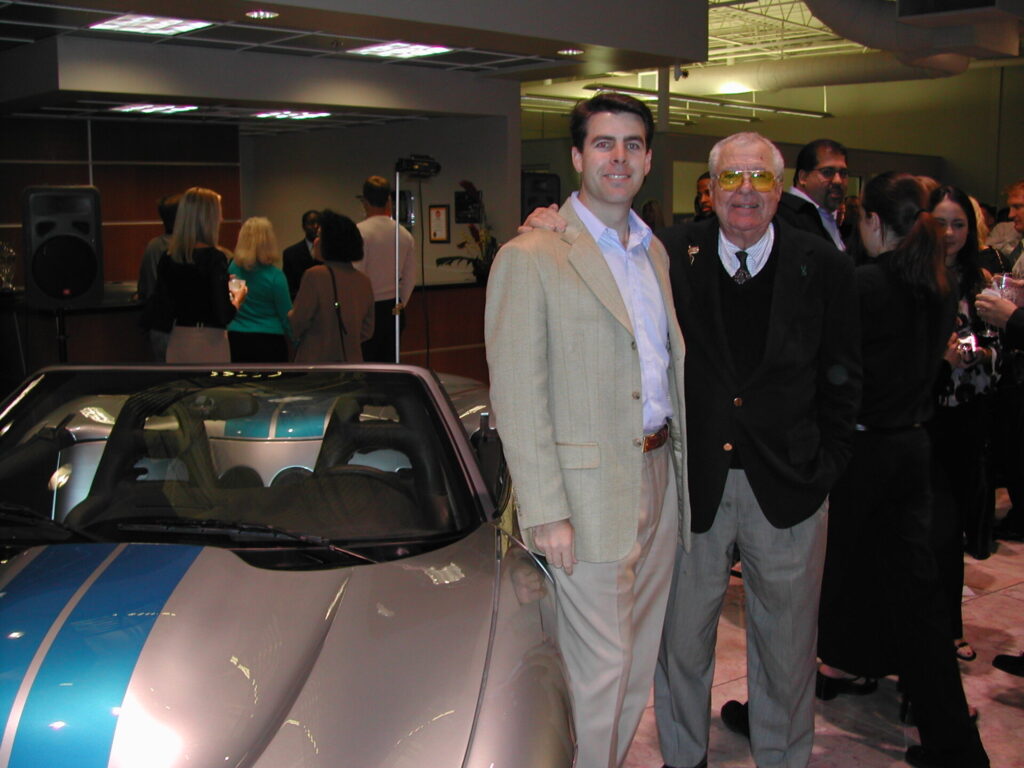
Motoring Podcast Network

The Paddock Monterey Inaugural Event A Success

MONTEREY, CALIFORNIA (Sept. 11, 2025)The inaugural Paddock Monterey premiered on August 15, 2025, at Bayonet Black Horse Golf Course on the Monterey Peninsula, drawing car enthusiasts, car clubs, and collectors for a relaxed, open-format celebration of car culture. The debut emphasized camaraderie, photography, and conversation over competition, setting a welcoming tone during Monterey Car Week. Chairman Tanya Kosta reflected that launching The Paddock Monterey had been a dream realized, adding, “On behalf of our team, thank you to the vehicle owners and clubs, our sponsors and vendors, the Bayonet Black Horse staff, volunteers, and media partners for helping us launch this event with such wonderful support.”

Photo courtesy The Paddock, photo by Matt Engdall

At the center of the event, RADwood delivered a curated display of more than 50 vehicles from the 1980s and 1990s. DJ DP Fonix kept era-defining music flowing across the show field as guests danced, and a Pee-wee Herman lookalike won top honors in the men’s category of the fan-favorite costume contest. RADwood’s traditional Raddest Ride award went to Ed Bolian (above), automotive influencer and founder of VINwiki, who shared, “The Paddock Monterey was an awesome expansion of Car Week and a lovely afternoon of true automotive enthusiast fellowship. The lineup of cars was incredible. For me, the chance to bring home the Raddest Ride trophy for the Victoria’s Secret Lamborghini Diablo from a breathtaking lineup of RADwood cars was the icing on the cake of a truly incredible Car Week.”

Photo courtesy The Paddock, photo by Kyle Wong @k.w.pics

Across the field, headliners and activations anchored the program: Kevin Kay Restorations’ Aston Martin DB5 “Bond” tribute, showcased with working gadget demonstrations—plus a Siata and Aston Martin DB4—led into a strong presence from members of the Aston Martin Owners Club celebrating the marque’s 75th anniversary in the Americas. Sponsor Saleen honored (above) 25 years of the S7 with an elevated podium display; sponsor Superformance assembled an impressive row of Cobras led by founder Lance Stander; sponsor Shelby American’s display included the Super Snake; and a dedicated Spyker gathering marked 25 years, with founder Victor Muller mingling with owners and autographing cars. Further sponsor activations included Drako Motors’ attention-grabbing lineup, Vossen Wheels’ premium fitments displayed across multiple exotics, and Franco Uomo’s stylish male models circulating throughout the event in exceptional fashion and style, adding sartorial polish on the show field. From wonderful 1932 Ford Roadster to  a stunning 1959 Jaguar XK150S to an adorable 2026 FIAT Topolino, there was truly something for everyone’s taste.

Photo courtesy The Paddock, photo by Igor Braslavsky Media

Handcrafted highlights throughout the show field united modern-day coachbuilders and their bespoke builds—Luke DeSimone’s ZC10 Azzurro (above), Craig Kennedy’s reimagined Alfa Romeo TZ, Rob Ida’s The Black Cat, and Chris Rünge’s hand-formed Helios and RS010—drawing steady crowds. Director of Car Selection Clarence Habovstak described the event debut as an exciting new chapter for Car Week, noting, “I am proud to have played a role in curating such a dynamic and diverse showcase. Thank you to everyone who helped bring it to life.”

Photo courtesy The Paddock, photo by Cindy Meitle

The VIP Experience inside the Bayonet Black Horse Clubhouse proved especially popular, offering elevated food and beverages alongside display vehicles such as the new FIAT Topolino, with sweeping show field views. Operations Manager Samantha Tobias said the inaugural year was a true success, explaining, “It was filled with energy, community, and an unforgettable good time for all who joined us. Thank you to all the volunteers and suppliers who stepped up to make it possible—we could not have done it without your dedication and support in creating a truly memorable experience.”

On the show field, vehicle owners enjoyed exclusive access to the Grand Hospitality Tent, sponsored by Monterey Motor Club. The tent provided light food and refreshments, as well as a place to relax and take in the program. The sponsorship also gave Monterey Motor Club the opportunity to showcase an intriguing concept video to car owners, offering a preview of the forthcoming high-security, elevated automotive storage facility planned for the Monterey Peninsula.

Photo courtesy The Paddock, photo by Igor Braslavsky Media

General Admission guests enjoyed access to a dozen carefully selected food trucks and additional food and beverage vendors, while multiple retail vendors offered everything from art to jewelry. A highlight was the Mr. Car Week tent—in collaboration with the Automobilia Collector’s Expo held earlier in the week—which brought several expo vendors to The Paddock.

Attention to infrastructure also elevated the event. A low-profile stage set against the Monterey Bay backdrop was framed by sponsor Meguiar’s® flags waving in the Monterey Bay breeze, while Glastonbury Inc. powered the program with a professional-grade sound system and a massive hilltop video screen that allowed those on the second and third show fields to watch the stage activity. Event Manager Steven Shonk noted that the team aimed to create a world-class yet approachable atmosphere, reflecting, “From the stage set against Monterey Bay to the flow of the show field, it was rewarding to see our vision come to life and resonate with the crowd.”

Photo courtesy The Paddock, photo by Igor Braslavsky Media

Giving back was also central to the mission. During online registration, vehicle owners were invited to donate to local charities including Global Empowerment Mission, The Food Bank for Monterey County, ALL IN Monterey County, and Sweet Grace, Inc.

The inaugural Paddock Monterey was supported by sponsors including Adobe Road Winery, Aerovault, Drako Motors, FIAT, Franco Uomo, Glastonbury Inc., Kindred Motorworks, Meguiar’s®, Monterey Motor Club, Saleen, Shea Homes, Shelby American, Superformance, and Vossen Wheels, with media partners Ferrari Market Letter, Highline Autos, KMBY Radio, My Car Quest, VeloceToday, and What’s Up Monterey helping share the story.

About The Paddock

Launched in 2024 by International Car Week, The Paddock was established to provide a premier platform for car owners and aficionados to display their vehicles against the stunning backdrop of the Pacific Ocean. The event promises a serene retreat at the Bayonet Black Horse, known for its beautiful landscape and peaceful environment. The Paddock is a multi-marque companion event to the Concorso Italiano event which is celebrating its 40th anniversary in 2025. It is designed to serve a broader audience of car owners and enthusiasts in a fun, relaxed, yet upbeat atmosphere. The Paddock is the second event in a one-week series of events to be rolled out at Bayonet Black Horse by parent International Car Week, ultimately maximizing the use of the Grand Hyatt Resort currently underway on the property with an expected completion in three years.

Media Contact:
Cindy Meitle/CAR PR USA
+1 480 277-1864
media@internationalcarweek.com

Precision, Propaganda, and the Pursuit of Speed: The 1939 Nazi Record Week

0

In the waning months before World War II, Germany staged one final act of automotive bravado: the 1939 Record Week. This was not merely a motorsports event – it was a meticulously orchestrated display of technological supremacy, national pride, and propaganda. Held on a purpose-built stretch of autobahn near Leipzig, the event showcased the pinnacle of German engineering, with Mercedes-Benz leading the charge in a bid to dominate land speed records.

Photo courtesy Aldo Zana; Society of Automotive Historians (SAH)

The 9.4 km stretch of autobahn selected for the 1939 Record Week was no ordinary road. Designed with precision, it featured:

  • A wide, flat, arrow-straight surface
  • Gentle curves at each end for acceleration and braking
  • Overpasses built with single arches to eliminate central pillars – minimizing risk at high speeds
  • A concrete-paved median to extend usable width

This infrastructure was a deliberate evolution from earlier record attempts on the Frankfurt-Darmstadt autobahn, which had proven perilous due to narrow lanes and obstructive bridge supports.

Photo courtesy Aldo Zana; Society of Automotive Historians (SAH)

Aldo Zana, the Italian historian presenting the lecture (featured below), unearthed archival evidence suggesting that two distinct Mercedes record cars were present—one Class D and one Class B. Subtle differences in exhaust placement and bodywork confirmed this, despite Daimler-Benz’s official records omitting the second car. The Class B car, likely a W125/3, had been quietly retired due to engine unreliability.

Tune in everywhere you stream, download or listen!

Listen on Apple
Listen on YouTube
Listen on Spotify

With Auto Union absent – still reeling from the loss of Bernd Rosemeyer and internal technical setbacks – Mercedes-Benz stood alone. To avoid the optics of a one-horse race, organizers invited a diesel-powered experimental car and motorcycles to fill the roster. But the spotlight remained on Mercedes.

Key technical highlights:

  • The W154 Grand Prix car, fitted with a 3.0L M154 engine, was adapted for a standing-start Class D record attempt.
  • A fully streamlined variant of the 1938 car was also deployed, achieving a flying-start speed of 406 km/h—an unprecedented feat for a 3.0L engine.

Driver Rudolf Caracciola, already a record holder, piloted the W154 to new benchmarks:

  • 1 km: 165.89 km/h
  • 1 mile: 204.02 km/h

These figures represented significant improvements over previous records set by Italian driver Emilio Materassi in 1936.

Spotlight

Aldo Zana is an Italian motor historian and journalist. He started writing articles for motor magazines in the mid-sixties as a freelance editor of Autosprint and Rombo weeklies, developing an inclination towards history and historic cars and races. Since the late Eighties, he has become a regular contributor to Italian and foreign historic car magazines; his recent automotive books include a history of the Sports-Prototype FIA World Championship; the lives and races of Italian drivers; the motor racing scenario of the Fifties; and the story of the forgotten Milano car shows 1901-1947. Zana is a long-time member of SAH and Aisa (Italian Association of Motor Historians), former member of the History and Museum Commission of ASI (Italian National Historic Car and Bike Association) and Ugis, the Italian guild of science journalists.

Synopsis

This episode of The Logbook, our History of Motorsports series, delves into the history of Nazi Germany’s efforts to dominate the realm of motorsports through the ‘Record Week’ events held from 1936 to 1939. Presented by motor historian and journalist Aldo Zana, the script details the strategic integration of high-speed automobile achievements into Nazi propaganda, highlighting key vehicles, records, and drivers of the era. The focus is specifically on the last edition of ‘Record Week’ in 1939, illustrating Germany’s efforts to claim the world land speed record and analyzing the cars and technical challenges faced. Additionally, it reflects on Zana’s extensive career and his contributions to automotive history.

Follow along using the video version of the Slide Deck from this Presentation

Transcript

Crew Chief Brad: [00:00:00] Break Fix’s History of Motorsports series is brought to you in part by the International Motor Racing Research Center, as well as the Society of Automotive Historians, the Watkins Glen Area Chamber of Commerce, and the Argo Singer family.

Crew Chief Eric: The Nazi record walkin for record weeks 1939, the final act of an automobile speed folly. Alana Nazi Germany turned the automobile’s high speed into a propaganda tool for its technical and industrial supremacy with its domestic motor industry having fallen behind the US and France. The political establishment pushed for dominance in Grand Prix racing, launched an automobile for the masses and developed a wide network of motorways.

Connecting racing cars, high speed, and the motorways was the record walk. An annual event launched in 1936 to conquer the highest speeds on a motorway. The last edition in 1939 was a relatively low key event shadowed by the prior year’s sensational Mercedes-Benz speed record, and Bernard Rose Meyer’s death.

[00:01:00] Nevertheless, the propaganda machine aptly broadcast the speeds reached on an arrow straight. Level and wide. 10 kilometer motorway stretched north of leap Zg purposefully built for the record weeks and the conquest of the world. Land speed record by a German driver on a German car, on German soil. After a quick recap of the 1936 through 1938 editions, Aldo discusses cars shown in the 1939 Daimler, Benzs and Haag, as well as clear some mysteries left unsolved through the decades.

This presentation will also cover the records established by Italian and British drivers three months before World War II began. Alana is an Italian motor historian and journalist after a PhD in theoretical physics at the Milan University and at the cern, the European Physics Research Center in Geneva.

He switched to a managerial career in corporate communications while continuing with motor journalism. Zana started writing articles for motor magazines in the mid sixties as a freelance editor of Auto Sprint and Romble Weeklys developing an inclination towards [00:02:00] history and historic cars and races.

Since the late eighties, he has become a regular contributor to Italian and foreign historic car magazines. His recent automotive books include a History of the Sports Prototype, FIA World Championship. The lives and races of Italian drivers, the motor racing scenario of the fifties, and the story of the forgotten Milano car shows from 1901 to 1947.

Aldo is a longtime member of the SAH and the Italian Association of Motor Historians, former member of the History and the Museum Commission of the Italian National Historic Car and Bike Association, and the Italian Guild of Science Journalists. Our next presentation

Kip Zeiter: is a Zoom

Crew Chief Eric: presentation

Kip Zeiter: done by Aldo Zana.

Aldo Zana: Okay, good evening ladies and gentlemen. I’m here talking hopefully in, in a understandable English. I apologize for my heavy Italian accent, but I will talk about something relating to Germany, so it will be a bit difficult understand an Italian [00:03:00] speaking about something German. But anyway, I will try to do my best.

I will talk about the record week organized by the Nazi of a governmental state in 1939. In 1939, German racing car and the drivers dominated Grand Prix racing. So the dominant started with Mercedes Band in 1935 by Rose Meyer. The new auto Union star driver won the European Championship 1936. In 1936, the Nazi organization for motor racing launched a special event in order to concur.

The total superiority of the German racing car and promoted ban the highway. The new, so the first record or speed of the record was in 1936 on a flat, and they are they straight section on, on this, uh, ban or highway [00:04:00] between Frankfurt. Airport and there was 25 kilometers, and it was carefully, uh, arranged, organized for having all, all the record for the five kilometer and five miles on this, uh, stretch of ban.

The record was held for three years. You can see from this slide how difficult it was to drive very fast on this motorway because it was a two lane quite more than for the time, but with some grass median and bridges crossing the highway with a central pillar. So that was very dangerous. And in 38 they held a special event only on one day long in 1930.

By Mercedes Benz in order to correct the failure they had in the record, the record week on 1937 [00:05:00] in that, that morning, the cold morning, January 28th, Mercedes, the new W 25, or, I’m not sure because there are. Definite document about the name of the chais of the car. So I think it was 1925 R, but someone written that it was W 1 25, number 11.

So anyway, car driving this Mercedes Benz, which the astonishing speed of 432.69 KPM. That is 268 80 street MPH. In the same morning, the auto union was on the motorway or the highway with, with a special model of from line backhand, they call it. So the, the record car. That was modified in 1937. Rosa Mayer [00:06:00] had a accident and the car destroyed after having lost ground effect, and so it was a beautiful day for Mercedes.

Was a tragic day for the German, uh, motor of fault. After that, we came to the 39 record walk. That was the final end of the record walk. And the site chosen for the record walk was a new stretch of, uh, the auto band under trash between lighting and Berlin. It was a 9.4 kilometer long tri, that’s right. And that’s flat.

And they decided to pay over, in other words, to put concrete on the center of the medial center. So the, the usual truck white or 27 meter that is 88.6 feet. Overpasses, very laboratory build in a single arch [00:07:00] without a central pillar in order to avoid any danger for the the driver. The length of 9.4 kilometer was very strange, but was forced by the presence at one end of an an YVIP, uh, land, and they didn’t want to destroy or two.

Disturb the poor lazy whip. So there were two small gentle bands at the end of, uh, the flat and the strip section in order to have some more space for, uh, breaking and acceleration, but with 1.5 kilometers, slightly less than one mile for breaking was too short. But anyhow, they went there. So, uh, the new record walk was scheduled for October 28th, but the highway was not ready.

So they, they postponed it to February 29 and that was the, the, the record week [00:08:00] of 29. And the only player available was Mercedes Band. Because Alion having lost Rosa Mayor in 1938 and lacking the wisdom of Professor P who left the company at the end, 1937. Alto refused to participate in such, uh, gamble of, uh, no speeds that em to share l.

Only Mercedes were available to avoid the embarrassment of a single player, single category event, and was called at the very last moment with a diesel engine car, which in order to try for a new record, something absolutely unknown until now. Uh, diesel, can you imagine a diesel engine record car was not so fast, like a normal high speed car available on the street.

There was also a BMW Motorbike Fisher Station in order to [00:09:00] conquer the record of liter class. Record decided by Mercedes Band was a standing start, class D like Delta record. So was something completely different from the 38 a period record. And they used, uh, grand card W 1 5 4, number 11, with a special semi lined body.

Already decided for the three Polygram pri. So the engine was a three liter M1 54.1 14. The driver was, Carla was holding the record of the previous year. He was forced to do the same record for a limited speech. So, uh, not car started starting start. You can see the wide of the highway, but Carola chose to run on one [00:10:00] side because it thought that the center line was too difficult to drive because of too many dirt.

So the record was on the kilometer, 1 65 0.89, and on the mile 200 0 4 2 0 4. It was a kind of easy triumph, auer, very happy, welcoming, Chala coming back. The all record was already set in 1936 by, uh, an Italian driver with the German sound in name of full manic, and he did the record on the Luca motorway, uh, near Florence in Italy.

It was an, an easy improvement of one 16.6% on the kilometer, and 23.6% on the mile. And on, uh, February 14th, the final day of the record, car drove again the three liter [00:11:00] car W 1 54 to improve by, uh, 1% your record. Then on February nine, the second day of the record walk, Mercedes used their fully streamline car of 1938, but with three liter engine for the Class D Delta flying star record and car achieve.

On the return run a speed of 400 or six kilometer per hour. So it was an, an astonishing result because first time that a three liter car went beyond 400 kilometers per hour. So you can see the equivalent of kilometers for Israel in miles in MPH doesn’t mean anything. But for European, for German especially, 400 kilometer per hour mean something.

So the press was very keen on the [00:12:00] record. Uh, there are many, many articles about the new record claiming that 400 KPM uh, record. While the pr, uh, department of Mercedes Bank while record by Ann was nearly owned by the people, only the, the officials and the, the record with the 1.9 liter diesel engine 35 BHP was very low.

Nothing. The aerodynamic was very fine and the driver was a company engineer, was a producer of agricultural tractor. Use the record the 96.9 MPH to claim the quality of the engine. Then there is a final act after the record. Okay. On June 2nd, 1938, the final, there were two recommended. One was [00:13:00] Italian Count Ani, and another was an Englishman Goldie Gardner.

And they choose the So Ban to establish the record for small classes. So Goldie Gardner was a very famous British recommend in in his career. He had 1 52 National, international, and overall Records and noted that Go Gardner was limping due to round inflicted by the German force during the grading rate war, but he didn’t care to head again to Germany to satisfy his first for the record.

Noted that in less than two months, UK and Germany will be at war again one day or other. So Gordon Gardner was there and he went with a small engine and 1.1 liter engine for cylinder engine supercharge. Of course the [00:14:00] MG EX 1 35, he went to 3 29 KPH record on the mile. So. Was astonishing speed that was noted that he choose to try to run on the central band.

They other Recomme man was called Jovani. Joi would drove a small 370 CC G motorcycle with a special trainline body that was like an next shell, and he reached 1 72 KPM for the kilometer. He also did the 10 kilometers record and he, he told later that there was difficulty keeping him awake during the, about 20 minutes of driving back and forth on that highway across a flat and fifth refinery.[00:15:00]

So that was it for the 1939 record and for the south section of the highway. But there is a small mystery about the Mercedes car. First of all, in the South, that February 8th, there were two record cards, not only one, not only the Class D record card. But there were two, the photos of both car were mixed up in, in the Daimler Band Archive, and I found these photos, which clearly show two record cars, not only one.

I iLIGHT the exhaust on the car, and this is quite different from the Class DW 1 54 car. There are different small differences, very subtle, but you can note the difference. And on the left you have the old, the W 1 52 [00:16:00] slash three car, so the plus B Bravo cars. On the right you have the Class D Delta car.

So you, you, you notice there whole difference, but there are different, there were two cars, but the problem that Diamond Bank decided to cancel W 1 25 car because with a fellow, because it didn’t work, the engine was very out and refuse it. So in, in Germany, er was not a consider in. Now if you allow me, I will tell you the real story.

So it’s this car. This car, the Mercedes. The 80, 19 39 was the car designed for the absolute land speed record. And at that point, held by the by, by the British. The car was decided by Professor Porsche 13, 19 37 and, uh, the, the [00:17:00] shape of, uh, the body with the long tail in order to have the center of pressure behind the center of gravity, the two winglets at the side, on the, on the center of gravity.

And the engine was supposed to be a IRO engine, Daim Band 6 0 0 1 or 6 0 3, and the car by full 1939 was up completely, but it never run a single centimeter, a single feet. On its own power. You can see on this photo that, uh, the engine is on site, but it was only tried once on a test bed and it was, uh, a disaster.

So they did, they stopped any progress on, on that car. The original, uh, drawing by Porsche was very interesting. That was the first one in 1937. In order to obtain [00:18:00] downfalls, they used to have, uh, a wing, an inverted profile wing under the two real wheels. But the solution was too difficult, so they did opted for the two winglet.

The two winglet on the center of gravity was absolutely useless, but it took 30 years and the formula one 40 years to understand the real reason why the winglet very used it. And the wing above the, the rear wheel were effective. So more or less the, the so straight was billed for this car. Which was absolutely impossible to run on it because it was too short and not the, the car would’ve, the brakes in 1.5 kilometer to stop from 600 kilometer per hour was absolutely impossible.

But anyway, they did it. And they obtain money from the [00:19:00] state for this car and which is still exist while the frame is somewhere in the LER factory of Mercedes. The body displayed in the Mercedes Benz Museum is the last item of the speed section is on the wall after the accident. Looked above the cafeteria.

A very sad end for a car whose existence was raised by heating the heater himself and issued the order to win the land speed record for German. He wanted a German car, a German driver on German soil. This is the reason why the de access was built. It explained the IT 39 record walk was the dress rehearsal for the future long speed record comp.

That’s it, sir. I thank you and we’ll we’ll open to question if any.

Kip Zeiter: Take a few minutes, stretch your legs and we’ll see you in a few minutes. Thank you.[00:20:00]

IMRRC/SAH Promo: This episode is brought to you in part by the International Motor Racing Research Center. Its charter is to collect, share, and preserve the history of motor sports spanning continence, eras, and race series. The Center’s collection embodies the speed, drama and camaraderie of amateur and professional motor racing throughout the world.

The Center welcomes serious researchers and casual fans alike to share stories of race drivers race series, and race cars captured on their shelves and walls, and brought to life through a regular calendar of public lectures and special events. To learn more about the center, visit www.racing archives.org.

This episode is also brought to you by the Society of Automotive Historians. They encourage research into any aspect of [00:21:00] automotive history. The SAH actively supports the compilation and preservation of papers, organizational records, print ephemera, and images. To safeguard as well as to broaden and deepen the understanding of motorized wheeled land transportation through the modern age and into the future.

For more information about the SAH, visit www.auto history.org.

Crew Chief Eric: We hope you enjoyed another awesome episode of Break Fix Podcasts, brought to you by Grand Tour Motorsports. If you’d like to be a guest on the show or get involved, be sure to follow us on all social media platforms at Grand Touring Motorsports. And if you’d like to learn more about the content of this episode, be sure to check out the follow on article@gtmotorsports.org.

We remain a commercial free and no annual fees organization through our sponsors, but also through the generous support of our fans, [00:22:00] families, and friends through Patreon. For as little as $2 and 50 cents a month, you can get access to more behind the scenes action, additional pit stop, minisodes and other VIP goodies, as well as keeping our team of creators.

Fed on their strict diet of fig Newton’s, Gumby bears, and monster. So consider signing up for Patreon today at www.patreon.com/gt motorsports. And remember, without you, none of this would be possible.

Highlights

Skip ahead if you must… Here’s the highlights from this episode you might be most interested in and their corresponding time stamps.

  • 00:00 Nazi Germany’s Speed Propaganda
  • 01:17 Overview of Record Weeks (1936-1938)
  • 03:04 The 1939 Record Week
  • 04:50 Mercedes-Benz and Auto Union Rivalry
  • 06:14 The Final Record Week
  • 15:07 Mysteries and Technical Details
  • 19:46 Conclusion and Q&A; Closing Remarks and Credits

Livestream

Learn More

If you enjoyed this History of Motorsports Series episode, please go to Apple Podcasts and leave us a review. That would help us beat the algorithms and help spread the enthusiasm to others. Subscribe to Break/Fix using your favorite Podcast App:
Listen on Apple
Listen on YouTube
Listen on Spotify

Consider becoming a Patreon VIP and get behind the scenes content and schwag from the Motoring Podcast Network

Do you like what you've seen, heard and read? - Don't forget, GTM is fueled by volunteers and remains a no-annual-fee organization, but we still need help to pay to keep the lights on... For as little as $2.50/month you can help us keep the momentum going so we can continue to record, write, edit and broadcast your favorite content. Support GTM today! or make a One Time Donation.

Perhaps the most ambitious project was the never-raced Mercedes-Benz land speed record car, designed by Ferdinand Porsche in 1937. Intended to break the absolute land speed record, it featured:

  • A long-tail body for aerodynamic stability
  • Twin winglets near the center of gravity
  • A proposed Daimler-Benz V12 aero engine (DB 600 series)

Despite its advanced design, the car never ran under its own power. Engine testing was unsuccessful, and the project was shelved. The autobahn stretch built for its attempt proved too short to safely decelerate from projected speeds of 600 km/h.

Photo courtesy Aldo Zana; Society of Automotive Historians (SAH)

In June 1939, just weeks before war erupted, British and Italian drivers returned to the autobahn for final record attempts:

  • Goldie Gardner, a decorated British veteran, achieved 329 km/h in an MG EX135 with a 1.1L supercharged engine.
  • A 1.9L diesel-powered car producing just 35 bhp – produced a modest top speed of 96.9 mph – however, the aerodynamic design was notable, and the record attempt served as a proof of concept for diesel viability in performance contexts.
  • Count Giovanni Lurani added diversity to the technical showcase by reaching 172 km/h over 1 km on a streamlined 370cc Guzzi motorcycle, noting the surreal monotony of the flat, industrial landscape.

These records, set in the shadow of impending conflict, marked the end of an era where speed was both a technical pursuit and a political statement.

Photo courtesy Aldo Zana; Society of Automotive Historians (SAH)

This episode is sponsored in part by: The International Motor Racing Research Center (IMRRC), The Society of Automotive Historians (SAH), The Watkins Glen Area Chamber of Commerce, and the Argetsinger Family – and was recorded in front of a live studio audience.


Other episodes you might enjoy

Michael R. Argetsinger Symposium on International Motor Racing History

The International Motor Racing Research Center (IMRRC), partnering with the Society of Automotive Historians (SAH), presents the annual Michael R. Argetsinger Symposium on International Motor Racing History. The Symposium established itself as a unique and respected scholarly forum and has gained a growing audience of students and enthusiasts. It provides an opportunity for scholars, researchers and writers to present their work related to the history of automotive competition and the cultural impact of motor racing. Papers are presented by faculty members, graduate students and independent researchers.The history of international automotive competition falls within several realms, all of which are welcomed as topics for presentations, including, but not limited to: sports history, cultural studies, public history, political history, the history of technology, sports geography and gender studies, as well as archival studies.

The symposium is named in honor of Michael R. Argetsinger (1944-2015), an award-winning motorsports author and longtime member of the Center's Governing Council. Michael's work on motorsports includes:
  • Walt Hansgen: His Life and the History of Post-war American Road Racing (2006)
  • Mark Donohue: Technical Excellence at Speed (2009)
  • Formula One at Watkins Glen: 20 Years of the United States Grand Prix, 1961-1980 (2011)
  • An American Racer: Bobby Marshman and the Indianapolis 500 (2019)

This content has been brought to you in-part by support through...
Motoring Podcast Network

Leipert Motorsport Wins in Malaysia!

0

The fifth and final stop of the Lamborghini Super Trofeo Asia before the World Final took Leipert Motorsport, supported by PROFICAR, to the historic Sepang International Circuit in Malaysia. In extremely hot but dry conditions, the team took on the challenge with two cars: the #27 was driven by Ethan Brown as a solo driver in the PRO class, while Brendon Leitch (NZL) and JJ Song (CHN) competed in the PRO-AM classification with the #89. With a strong performance in practice and qualifying, as well as a victory in the second race, the team made a clear statement.

Strong performances in practice and qualifying

Already in free practice, both cars showed a consistently fast pace in Sepang and  confidently established themselves in the top 5 at all times.

In the subsequent qualifying session, the #27 car with Ethan Brown (PRO) confirmed its strong form: in Q1, he placed third in his class, but had to start three places further back due to a penalty from the previous race. In Q2, Brown stepped up his game and secured second place in the PRO class with a strong lap.

The #89 car with Brendon Leitch and JJ Song (PRO-AM) also impressed: after finishing seventh in Q1, Leitch secured pole position in the PRO-AM classification in Q2, underlining the duo’s strong starting position.

2025 GR Toyota Gazoo Racing Australia Scholaship Series, Round 5, The Bend, Tailem Bend, South Australia, Australia. 5 Sep, 2025. Photo courtesy Liepert Motorsport, Photo by Lamborghini

Race 1: Comeback after a difficult start

Brown’s #27 (PRO) started the first race from the fifth row, while the #89 with Leitch and Song (PRO-AM) started from the eighth row. Initially, neither car was able to maintain the strong pace they had shown in qualifying and lost a few positions in the early stages.

As the race progressed, Brown showed fighting spirit, worked his way back into the top five in his class and finally crossed the finish line in fifth place in the PRO category. In the #89, Leitch took the wheel in the second half of the race, made up several places and, together with Song, brought the car home in seventh place in the PRO-AM classification.

Race 2: Dominant performance by Leitch and confident victory for Brown

Both Leipert cars started the second race from excellent positions: Brown took his place on the second row in the #27 (PRO), while Leitch and Song (PRO-AM) started from pole position in the #89. Both cars made the most of their starting positions and led the field. In the first half of the race, they built up a comfortable lead of just under 8 seconds over the second-placed cars in each class.

In the second half of the race, Song took the wheel of the #89 and initially defended the lead, while Brown was in third place overall with the #27, which was equivalent to the lead in the PRO class. However, a safety car phase saw the lead melt away. After the restart, Song lost a few positions in the close battle at the front of the field. Brown took full advantage of the situation, took the lead and clinched the first victory as a solo driver for the #27 – a well-deserved triumph after a strong performance at his home race!

Lamborghini Super Trofeo Asia, Round 5, Sepang International Curquit, Sepang, Selangor, Malaysia. 7 Sep, 2025; Photo courtesy Liepert Motorsport, Photo by Lamborghini

Up Next, The World Final in Misano!

Managing Directors Marc Poos and Marcel Leipert were satisfied after the race weekend in Malaysia and stated: “The weekend in Sepang was a big challenge for us – the extremely hot conditions demanded a lot from both people and equipment. We are therefore even more delighted that we were able to secure our second victory of the season in the PRO class with Ethan Brown. Leitch and Song also put in another strong performance, even though they were somewhat unlucky to be held back by the safety car phase in the second race. Overall, it was a very positive weekend, which has left us feeling motivated going into the final championship races and the World Final.”

After its successful outing in Sepang, Leipert Motorsport is now looking ahead to the big highlight of the season: the prestigious Lamborghini Super Trofeo World Final will take place in Misano Adriatico, Italy, from 6 to 9 November. The program will initially feature two more Lamborghini Super Trofeo Asia races, before teams and drivers from the Asian, European and North American series compete in the actual World Final.

Leipert Motorsport aims to build on its previous performances and fight for top positions in both the classes and the overall standings, with the hope of repeating last year’s title win.


About Liepert Motorsport

Leipert Motorsport was founded in 2002 and became one of Europe’s top GT-Teams in Sprint- and Endurance-Racing. Spreading its GT-Engagement even wider across the continental borders, this step is the logical consequence for the German team after being a front runner and championship winning team in multiple competitions.

From Pit Lane to Home Garage: Installing a Lift Like a Pro

0

In motorsports, precision and preparation are everything. Whether you’re watching a Formula 1 pit crew execute a flawless tire change in under three seconds or admiring the engineering behind a Le Mans prototype, one thing is clear: the garage is where performance begins.

Choosing the Right Type of Lift

For enthusiasts who live and breathe horsepower, bringing that same spirit into your home garage starts with the right equipment—and nothing transforms a workspace quite like a professional-grade lift. Whether you’re restoring a vintage Ferrari, tuning a track-day Mustang, or simply making room for your daily driver, installing a lift is your first step toward a garage that works as hard as you do.

Photo courtesy Kevin Duffy; photo by Gran Touring Motorsports

So you’ve decided to install a lift in your garage – congrats!

Whether you’re a weekend wrench-turner or planning to store vehicles more efficiently, a lift can be a game-changer. But before you click “buy” and have one shipped to your driveway, there are several key factors to consider. First things first: what kind of lift suits your needs? 

  • Two-post lifts: Great for maintenance and repairs.
  • Four-post lifts: Ideal for storage and heavier vehicles.
  • Scissor lifts: Compact and versatile, but with height limitations.

Each type has its pros and cons, so think about how you’ll use it – maintenance, storage, or both.

Space & Height Considerations

Photo courtesy Kevin Duffy; photo by Gran Touring Motorsports

If your garage isn’t built yet, aim for 9 to 12 feet wall/eave height, with extra clearance at the ridge. For full-height lifts (typically 70–84 inches), you’ll want enough room to comfortably walk underneath the raised vehicle. Also consider:

  • Ceiling height
  • Vehicle height when lifted
  • Lift dimensions and weight capacity (commonly 6,000–10,000 lbs)

It’s smart to choose your lift first, then build or modify your garage to match its specifications.

Concrete & Structural Requirements

Photo courtesy Kevin Duffy; photo by Gran Touring Motorsports

Your lift’s stability depends heavily on the concrete it stands on. Here’s what to keep in mind:

  • Minimum 3,000 PSI concrete mix
  • 2x2x2 ft pads under lift legs for added strength
  • Avoid shortcuts—hire a trusted concrete contractor, not someone’s cousin’s friend

In earthquake-prone areas like California, reinforced concrete is even more critical.

Electrical, Air Supply, Safety Features & More!

Check your garage’s electrical draw rating and air supply. You may need to upgrade your system to meet the lift’s requirements. Planning this early can save headaches later.

Photo courtesy Kevin Duffy; photo by Gran Touring Motorsports

Safety should be your top priority. Look for:

  • Telescoping arms for better vehicle stability
  • Single or dual-point safety release systems
  • Upgrade options like frame cradle pads, truck adapters, and column extensions
Photo courtesy Kevin Duffy; photo by Gran Touring Motorsports

Where to Buy & What Brands to Trust

A great place to start your search is www.eastwood.com. They offer vetted brands like:

  • Tuxedo
  • BendPak

These brands are known for solid ratings, reliable lift capacity, and strong safety features. Buying through a reputable third-party vendor also gives you better support for parts and repairs.


Planning Your Garage Build

If you’re still in the planning phase, here’s what you need to know to make that upgrade with the precision of a race engineer.

  • Check local permits, setbacks, and HOA restrictions
  • Get quotes from trusted builders, and mention the lift early so they can adjust the concrete specs
  • Know your local concrete cost per square foot to evaluate bids
Photo courtesy Kevin Duffy; photo by Gran Touring Motorsports

Just like a race team doesn’t roll into the paddock without a plan, your garage deserves the same level of forethought and precision. From concrete specs to lift types, every detail you dial in now sets the stage for smoother pit stops, cleaner builds, and safer operations down the line. Whether you’re chasing lap times or restoring legends, a well-equipped garage is your personal paddock—where performance begins and passion lives. With the right planning and research, installing a lift can be a smooth and rewarding upgrade. You’ve got the info—now go make it happen.

Good luck, and happy torquing!

[EDITORS NOTE] Special shoutout to Break/Fix podcast guest Kevin Duffy from 924S944.com for sharing his garage and lift construction pictures with us for this article. Learn more about his story in the following article.


Contributing Writer: Jeff Willis

In case you missed it... be sure to check out the following Break/Fix episode to learn more about our featured writer.
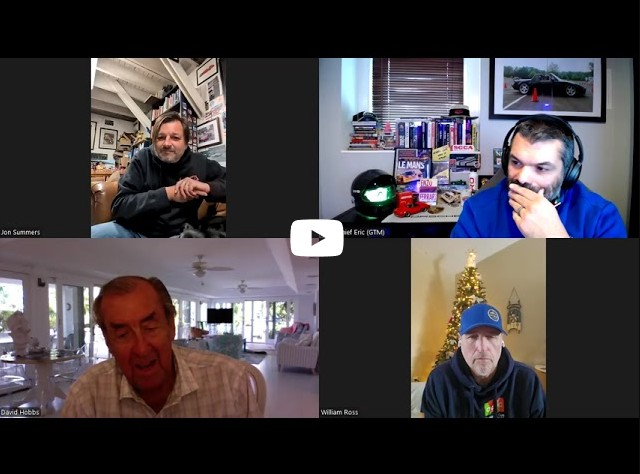
Listen on Apple
Listen on YouTube
Listen on Spotify