
spot_img
Home Blog Page 40

So Many Dynamos: Maureen McVail’s 22-Year Journey to Empower Women in Motorsports

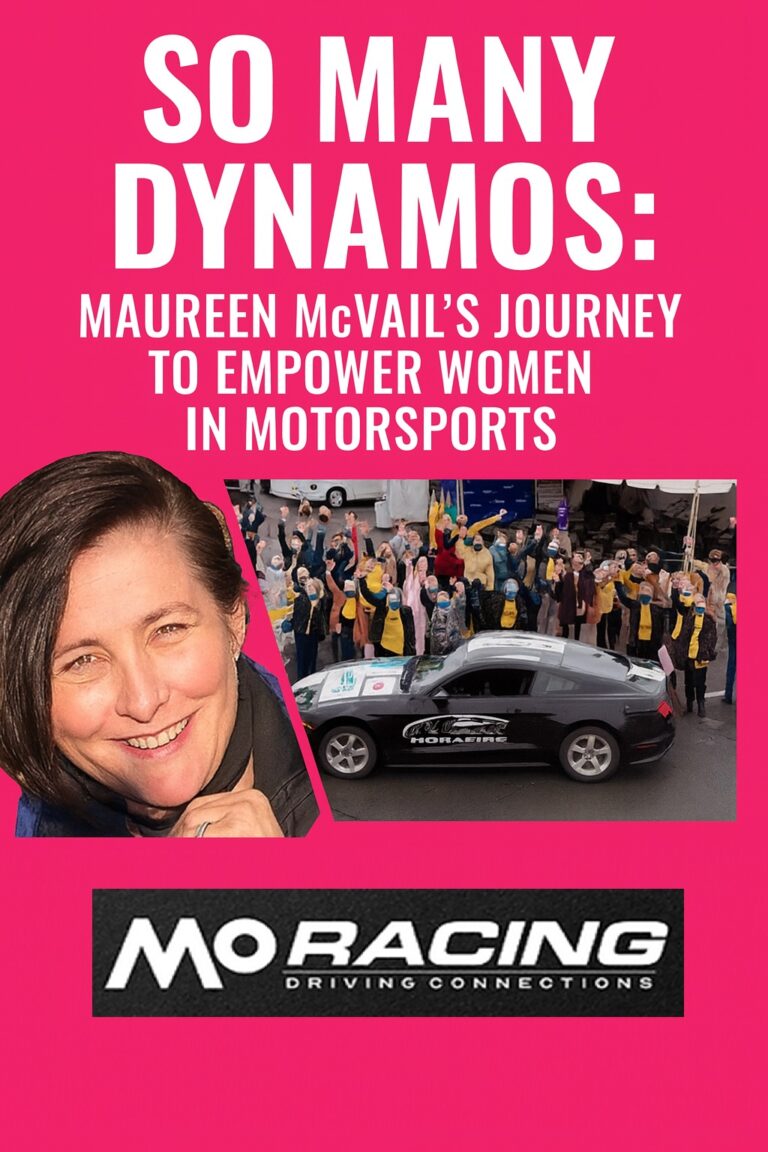
What do you get when you mix a linguist, a Porsche Carrera, and a passion for empowering women in motorsports? You get Maureen McVail, founder and Chief Innovation Officer of MORacing (Motorsports Opportunities) – a grassroots movement built to inspire, mentor, and amplify women’s roles in auto racing. Her story, shared on the Break/Fix podcast, is a 22-year journey of grit, gear, and galvanizing change.
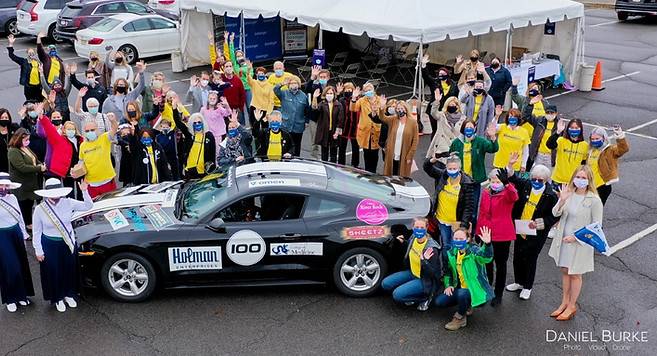
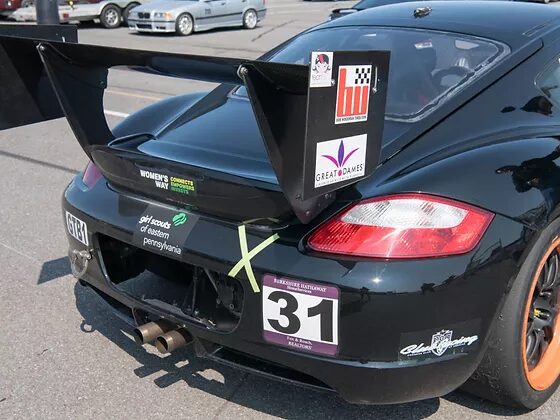
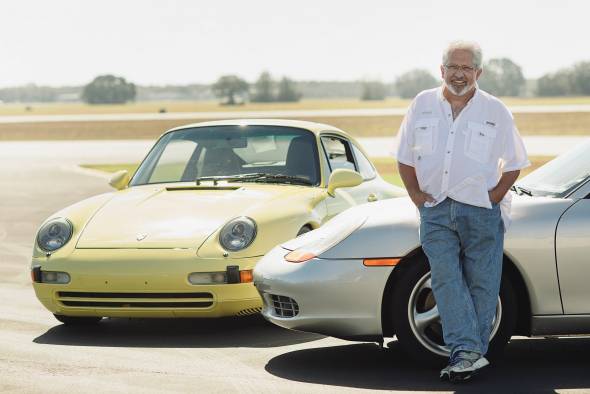
Photo courtesy Maureen McVail, MORacing; photo by Daniel Burke

In 1999, Maureen made a choice that would change her life. Faced with the stereotypical “mom car” dilemma, she opted out of the minivan and into a 1984 Porsche Carrera. That decision wasn’t just about horsepower – it was about identity. She brought her seven-month-old son home in that car and soon found herself addicted to high-performance driver’s education (HPDE) events at Pocono Raceway.

“I used to joke that Mario Andretti was my real father,” Maureen quipped, reflecting on her innate love for driving despite growing up in a family of educators. Her first manual transmission experience came in a Mercedes-Benz 220D, and she’s been shifting gears ever since.

Tune in everywhere you stream, download or listen!

Listen on Apple
Listen on YouTube
Listen on Spotify

Over the years, Maureen’s garage became a revolving door of iconic cars: a modified Cup car, a Porsche RS America, a BMW M3 with 200,000 miles, and a Ford Mustang that led the “She Leads Road Rally” to Seneca Falls. Each vehicle played a role in her mission to get more women behind the wheel – literally and figuratively.

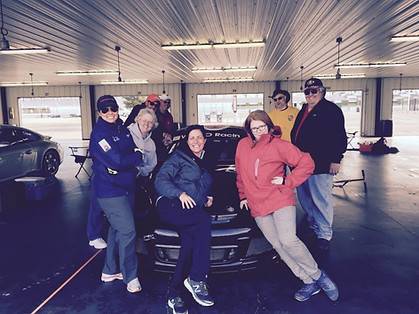
Photo courtesy Maureen McVail, MORacing

She’s loaned out cars to women for DE events, hosted co-ed roundtables at the Simeone Museum, and co-owned race cars in Porsche Club Racing. Her approach? Hands-on, inclusive, and always with a touch of humor.

Spotlight

Synopsis

The Break/Fix podcast episode features Maureen McVail, Founder and Chief Innovation Officer of MORacing, who shares her 22-year journey in motorsports and her mission to empower women in the field. Maureen recounts her personal experiences as a ‘petrolhead,’ including purchasing a 1984 Porsche Carrera instead of a minivan and getting hooked on high-performance driving. She emphasizes the importance of creating opportunities for women in motorsports through initiatives like MORacing, which aims to inspire, mentor, and facilitate participation in auto racing. Throughout the episode, Maureen discusses her collaborations with notable figures like Pippa Mann and highlights the significance of male allies in her journey. She also addresses challenges in the industry, advocating for inclusion and diversity while sharing her vision for future developments in motorsports education and community engagement.

  • There is a lot more to the MORacing story than meets the eye, so we think it’s fair that we start with Maureen “ the Petrol head” – how did you get into motorsports? And how did that lead up to the foundation of MORacing?
  • As we know there are so many different forms of Motorsports to choose from, which disciplines does MORacing focus on, and what types of services do you provide to aspiring female driver?
  • Let’s talk about some of the work you’ve done with Drivers like Pippa Mann, etc.
  • Persuading men to view you as a peer and to take your interests seriously, has to be challenging – what steps did you take to overcome these obstacles?
  • Some folks often confuse the need to be in STEM programs or “Hard Sciences” as a requirement to get involved in, have an interest, or learn about racing. Is it really that geeky?

Transcript

Crew Chief Brad: [00:00:00] Break Fix podcast is all about capturing the living history of people from all over the autos sphere, from wrench, turners, and racers to artists, authors, designers, and everything in between. Our goal is to inspire a new generation of Petrolhead that wonder. How did they get that job or become that person?

The road to success is paved by all of us because everyone has a story.

Executive Producer Tania: Michelle Mutan, Janet Guthrie, Lynn St. James Danica, Patrick Simona de Silvestro, and the late Sabine Schmid. These are names many of us recognize in the racing Hall of Fame and without women like our guest tonight, a woman who avidly promotes the empowerment of women in motor sport with boundless enthusiasm, encouraging women’s participation in all roles of auto racing.

Countless new names would be left off this list. Motorsports opportunities or MO racing for short was created to inspire, mentor and amplify opportunities to drive crew or [00:01:00] avidly spectate at the racetrack. Joining us on Break Fix to tell us all about her Motorsports journey and how she built MO Racing is Founder and Chief Innovation Officer Maureen McPhail.

Crew Chief Eric: Tanya, and as Maureen has mentioned to us behind the scenes, this story is 22 years in the making and we welcome her to break fix, to share that story with everyone. So welcome, Maureen.

Maureen McVail: Thank you so much, both of you, for a wonderful invitation.

Executive Producer Tania: Normally we would just jump right into the who, what, where, or when of.

Whatever, or whoever we’re we’re talking to or about. But we realize there’s a lot more to the mo racing story than meets the eye. So we think it’s fair that we start with Maureen the Petrolhead, and see how she got into motor sports.

Maureen McVail: In 1999. I had a newborn, my second son, and instead of getting a minivan, I got a 1984 Porsche Carrera and knew that it belonged on a racetrack and not on the streets.

Crew Chief Eric: But what drove you to that? Pun intended.

Maureen McVail: I love it. [00:02:00] The honest story is I was married at the time and now have a wonderful co-parent. We divorced and I will not say it was over the driving stuff, but might have had something to do with it. Instead of getting an engagement ring, I wanted a black Wrangler geek to show that my true love wanted to marry me.

He promised the black Wrangler g. Then after our second child was born, I didn’t see the Black Wrangler Jeep yet. So I changed it and I said, now I want a black Porsche. And so we went out searching and looked around and found a beautiful 1984 Carrera, which I brought my then seven month old home in one of those baby carriers in the backseat.

And I did not think that was terribly unsafe because. Porsches are made of steel up.

Executive Producer Tania: I’m gonna say, I’ll look that a car is way more practical than the ring.

Maureen McVail: I like where your head was at. Yeah. So again, having a toddler and mommies and mes [00:03:00] expecting me to show them my new van. I took my 1984 Carrera and got addicted driving in high performance driver’s ed at Pocono Raceway.

After that first time around driving, I knew I was hooked. Then in 2000 through 2005, I drove that same Porsche, and of course it got more and more modified, and I did some of the work myself, including changing the brakes at the track, changing out brake pads.

Crew Chief Eric: So Maureen, were you always a petrolhead?

Because this is already into your adult life where you go, I want a Porsche. What drove you to a sports car?

Maureen McVail: I come from a family of educators. My dad was a classical music professor, my mom a teacher, and I always mention, ’cause I’m so proud, she had her master’s from Harvard. So she was no shrinking violet because I did not have any automotive background.

I swear that this is just natural. I used to joke that Mario Andretti was my real father and that did bother my real biological father who [00:04:00] sent me a Christmas card once. Loved Mario. But anyway, that aside. In 1972, my father was on sabbatical with the entire family and we bought, we noticed I was probably 11.

I still think I had something to do with it. Bought a Mercedes-Benz two 20 diesel oil, and that is what, five years later, I learned how to drive in stick shift, which I believe and. Tanya maybe can help me with this is I’m trying to find out what percentage of women drive manual transmission so we can figure that out together in the future.

Executive Producer Tania: It’s a very small percentage.

Maureen McVail: Yes, very small. A single digit.

Crew Chief Eric: I think the number is increasing though, because I know a lot of women that have said as they’ve gotten older, they’re like, I wish I learned, or I. Bond Day bought a manual and I learned and I’m like, wait, you drive a manual? Really? I’m always pleasantly surprised, but I’m always like, yes, another person driving a manual.

I get excited about that. I think it’s a good thing.

Maureen McVail: Your enthusiasm for them Driving stick is the same as my enthusiasm. I [00:05:00] know that I’ve personally had an impact on at least 15 people joining High Performance Driving and some of them buying a Miata, which is fine with me. I don’t care what it is. Just so you enjoy driving it.

People who borrowed my car are now HPDE addicts. Then a big time move. I sold that highly modified 84 Carrera, and I bought a friend’s modified cup car. Yes, that is a cup car with a very tall first gear, which I stalled out several times. Oops. My first time driving it after I went sideways in turn nine at Watkins Glen, after a year of driving the cup car, I said, okay, it’s for sale so that I don’t sell it all.

Crumpled up. Sold that and went to a RS America, which I drove and also we campaigned and Porsche Club racing. So my co-owner of that car is a guy, but he’s one of the girls. Anyway, we’ll get to that later. Then [00:06:00] in 2011 I bought a 9, 9, 6 for myself for street driving and then started loaning that car out for de events.

Two women drove it at Sebring in uh, driver’s ed. I had it shipped down and shipped back. I’m in the Philadelphia area, so that was quite a feat. 2011, I mentioned the 9, 9 6, but it also, a key time in that date is I had a co-ed event for the women’s round table, which had only had women gatherings and I had that at the Symon Museum, which you should look up if you have not been in the Philadelphia area, is a premier car collection.

And Dr. Fred Simeon is wonderful, so I’m very proud of that. I had a gathering there. We had an opera singer and people bring in Porsches and of course the 50 some cars there on display. So that brings us to 2012 through 2019. Of course, I selling the other ones out from under me. My Cayman S was co-owned and we [00:07:00] ran that in GTB one Porsche Club racing.

When I say we ran it, I did not drive. I was semi-retired by now. My reaction time is not as great as it used to be. I still enjoy driving, but I find it, it’s much more competitive now. So I’ve never raced myself. I have co-owned a race car and ran a racing team, so that brings us to 2020. After selling the G GTB one, I got a Ford Mustang for a women’s She leads road rally.

Say that 10 times fast. She leads Road Rally, which I was the Pace car. We had a police escort in and out of Philadelphia and in and out of Scranton where we had a pit stop going to Seneca Falls, please look up Seneca Falls and see what it means as far as women’s development. And it was the first Women’s Rights Convention back in 1870 something.

The road rally was a huge success, even considering it was done during COVID. We had 25 cars and [00:08:00] about 55 people. Probably without COVID it would’ve had busloads of people. There was a lot of interest in it. I also wanna add to my resume. I bought in 1998, M three, which was one of my favorite cars, which I lent out to have women drive in.

DE had 200,000 miles on it and it was a wonderful car and I really regret selling it. And finally it brings us to 2022. I just purchased a 2008 9, 9 7, and I am learning about it. And my goal with this car is that I will do personally all of the work on it. Of course. Using a friend’s lift. So that brings us to the present.

Crew Chief Eric: Looking at your driving history over the last 20 plus years, somewhere in there, the idea for mo racing was born. So what was the driving factor? What was the catalyst that suddenly you woke up one day and say, I need to do this, and why?

Maureen McVail: I’m into Palindromes because I’m a linguist and I [00:09:00] have a bachelor’s in Russian, and no, that doesn’t help anything and it’s coming in helpful.

Now I can read what’s going on in the news. The palindrome that I use kind of as my motto is so many dynamos. You can read it both directions. So many dynamos is the same both ways. And back to the percentages again. I know that more than 50% of the world is occupied by women and they are driving force, quote unquote.

I wanted to see more women around at the track, and so basically I’m admitting to you I’m a sexist. I believe that there should be more women. Men who treat them just as drivers, which is what led me to want to do more racing because I had male allies and the male allies, to me is the best part of what I’m doing because I get men who say I have daughters or I have sisters, or I, my mother were petrolhead as you call them, or car enthusiasts.

So that’s what got me going. I [00:10:00] wanna ask

Crew Chief Eric: you one that normally I think we would make almost consider it a pit stop question, but this is important to the story that we’re telling here today, and that’s the development of these alternate motors sports events like the WF one W series. There’s all these Yeah, the W series.

I wanted to get your take on that construct, that idea, and how you feel about the future of that or, or where it should be going.

Maureen McVail: And now I’m going to tread very gently because there are different opinions on the W series and my personal opinion is I don’t wanna piss anybody off. My thrust of what I’m saying is that men and women can compete on the same level.

Therefore, the Women’s Series is not a great thing because it’s kind of a showcase. Now, I will say that my male allies who bring articles to me and constantly are saying, you should meet so and so and such and such. Bringing it back to Don [00:11:00] Cox, he believes that the Women’s series is a great thing because it’s spotlighting the women drivers.

Not that they’re women, but that they’re drivers who are women. So that’s my take on the Women’s W Series and Pippa Mann got really involved in arguing the other side of that, meaning I think she’s with me, that men and women should be able to compete using the great neutralizer called a car.

Crew Chief Eric: The machine that propels us all to fast in the same way, regardless of who’s behind the steering wheel.

Executive Producer Tania: So what exactly did MO racing start? What are you guys into? Are you strictly HPDE? Are you doing all

Maureen McVail: branches of Motorsport Mo racing started 2016. We chi the 9, 9 6 down to Seabring. Where I had a coach ready for two friends that flew down, so that’s when Mo Racing started, but it was under a different name.

If you’re familiar with Shift Up now, shift Up was originated between Lynn [00:12:00] Keho and myself. In fact, I’m very proud to have designed the logo. But anyway. Shift up was then renamed to shift up. Now when Lynn and I separated my interest being HPDE and Lynn’s interest being the athletes that she has, and I believe Lynn has now given shift up over to Pippa Man.

Who I wanted to mention should be in your lineup of women that you mentioned early on, plus again, so many other dynamos, Catherine Legg, et cetera, et cetera, et cetera. There’s so many, it’s hard to keep track of, but Pippa Man is now heading up, shift up now. So Mo racing started then. I just didn’t name it yet.

Still don’t love the name because I’m not a racer. I am a race car and race team manager and crew chief, and. Many bottle, washer, whatever you wanna call it, it’s still going on. And you asked what we are involved in and we is, there are two women that help [00:13:00] with the website and communications, and this really is just growing now, I swear it’s manifesting itself as we speak because I just met and spent some time with Beth Coretta last Tuesday, a week ago today in Indianapolis, where she was a keynote speaker.

Speaking of which, I do some speaking engagements, which is not my forte, but I am really good at giving clinics and workshops to the likes of Girl Scouts. All girls schools, girls can do anything. Group religious groups, I don’t care who it is, young. Kids who drag their feet and they’re like, okay, what are we doing now?

And then when they get to sit in the race car and change the lug nuts on a race car, they definitely have a smile and a grin on their face. And I know that somebody out of that group is going to pursue a STEM career. Whether they know it or not. And that’s my goal.

Crew Chief Eric: So our audience might be surprised to know that you’re actually friends with one of our previous guests on Break Fix, [00:14:00] a lady by the name of Miss Mary Hague, who was on here talking about her STEM program known as Moon Mark, where they’re doing a lunar race.

And Tanya was on that episode as well. Mary and I go back, she’s friends we met at the track and uh, always a delight to have on the show, but you’re personal friends with her, obviously coming up through the Philadelphia area. So in the vein of that episode that we did, we talked a lot about. Dem and a lot about inclusion and diversity and things like that.

Well, you mentioned your

Maureen McVail: prior podcast with Mary Hague and I happened to just go to the auto show with her last Friday, so we were hanging out and I brought my 26-year-old son along and the two of them met that evening and chatted for hours. It seemed like Mary is the best. She’s another dynamo of so many dynamos.

Crew Chief Eric: A lot of folks often confuse. Getting into racing with having to have some sort of engineering or technical background. I wanted to get your opinion as you’re working on these clinics as to what are some of the barriers to entry into racing? Is it [00:15:00] really as difficult as people make it seem? Is it really that geeky?

Do you need a background in hard sciences to get involved in racing?

Maureen McVail: It’s not difficult to get involved ’cause I use myself as an example. I was a mother of two toddlers and have a bachelor’s in Russian and do not speak English terribly well. And I registered, showed up and my first event happened to be with the BMW Club even though I had a Porsche.

People are welcoming into this. And it is not at all necessary to be mechanically knowledgeable or anything geek like you can just show up and have some fun. And the impetus for me to do it was to go fast.

Executive Producer Tania: I’ll circle back to the clinics thing ’cause I find that very interesting. You mentioned that you’re just from the Philadelphia area, so are you across the United States having impact, or right now you’re localized in the northeast, Mid-Atlantic region, or what’s the goal there?

Maureen McVail: The goal is to have worldwide, let alone nationwide. I’m dating myself here by having home economics. We [00:16:00] learned how to sew, hems and cook. So instead, I think there should be car maintenance class, maybe a three to four series workshop or class. And along with check balancing, um,

Crew Chief Eric: that’s called race car budgeting.

Maureen McVail: Call that Porsche dollars. Get it. Porsche.

Crew Chief Eric: There’s a Porsche tax. Don’t forget.

Maureen McVail: Oh yes. Trust me.

Executive Producer Tania: I just went through that. I think your clinic aspect is really great. So what are you doing there specifically? Like what are some of the activities? Is it you got your race car there and you’re doing demonstrations, or are you doing even mini STEM type?

Activities, they’re building something or

Maureen McVail: I have a handout that, number one, I let them try on fire suits and helmets. And again, this was all pre COVID because with COVID I haven’t done any workshops or clinics, which makes perfect sense to me. Prior to that, just engaging the kids in safety and asking me questions and you [00:17:00] know, saying, oh, the guy’s being macho.

I’m sorry, I’m being sexist again. But the young men are always showing off and saying, oh, I would be able to really race really fast. I always say to them, you can race really fast in a straight line, but what if you have to turn right? You know, like at Watkins Glen in the bus stop. So I don’t use that terminology with them.

It comes more naturally and flows when there’s a bunch of kids around. Revving the engine. Talking about safety first. Put your seat belts on no matter what. At any point in the car, I get them to sign my helmet and pledge that they will in fact tell all of their friends and family members to put their seat belts on the second there, butt hits the seat, and sometimes I bring in Lori Johnson again.

Somebody else I’m giving a shout out to. Laurie Johnson’s of Lady Start Your Engines, does workshops and clinics and sometimes I let her take over and do the clinic, and she is wonderful. She’s a mechanic. Right now I’m [00:18:00] located in the Philadelphia area, and of course we went to Seabring in 2016. This is obviously something that should be offered.

I don’t care whether it’s under the auspices of MO racing or just becomes part of the curriculum for middle school and lower education so that we can get some petrol heads developed. By age 10

Executive Producer Tania: if we need more of that. And not even just for, you know, no offense to the men out there, but there’s a lot of guys that dunno how to change their own, uh, wheel or tire either.

So,

Maureen McVail: exactly. And that brings us to the male allies. Again, I have a personal story about that for the people who are behind the scenes of mo racing. My co-owner of the car is a coach and racer and. Without him, I would not be doing this. He and my pals that we do two-wheeled Tuesdays, which is we hang out in the garage and have beers and work on cars.

And the personal side of the story is one of the guys that I hang out with [00:19:00] actually had breast cancer. So how’s that for non-traditional and stereotypes and breaking the biases? There you go. I have somebody on my team who does a lot of work on radio with me in such day of event who had breast cancer and survived, and it happened to be a male.

Executive Producer Tania: It’s rare, but it, it can happen, unfortunately.

Maureen McVail: Yes.

Executive Producer Tania: I mean, it sounds like you’ve been very fortunate with all the male allies as you’ve gone through this journey. Have you had the opposite? Because I’ve been doing HPD events for years now, and even before that in non-competitive go-karting events where you’re just going to the, you know, indoor.

Tracks for fun and, and unfortunately I’ve been the recipient of the not ally side of things where I had a guy on the go-kart track try to take me out. He t-boned me and his cart was about two inches from hitting my helmet. ’cause that’s how far he rode up. Out of anger that I was. Faster than him in a non-competitive event.

Oh, and I’ve gotten, and that’s something unfortunate. Fortunately, the male friends of mine and [00:20:00] family members may or may not have spun him out later.

Maureen McVail: All right. Payback is, you know what, in retaliation

Executive Producer Tania: of having witnessed it, you know her hand. I’m sorry that

Maureen McVail: happened to you.

Executive Producer Tania: It’s unfortunate, you know, and I, and I go to the track and I get the guys that are really excited when they see you and they’re like, wow, you’re changing your tires yourself.

That’s so cool. And they stare at you like they’ve seen, I don’t know, some foreign animal they’ve never seen before. Or I’ve gotten to people that kind of laugh at me. You’re going on the track in that. Really. And then after I’ve done a session, they, they come back up and they’re like, wow, you’re really fast out there.

I’m like, thank you. Okay, good to me. That’s great. Thank you for your bias. I mean, have you been lucky and been on the fortunate side of the allies or have you experienced some of the, the negative stereotyping?

Maureen McVail: Well, you just reminded me of one of my favorite stories. I was at Summit Point. Changing out my own brake pads at the track and everybody wanted to help.

And I said, [00:21:00] absolutely not. I wanted to do this myself so that I know that I can do it. And I actually had one of my male allies stood there as I was working, turned people away who were offering their help. Hmm. Because I had it covered. If we’re gonna name drop now, I’m gonna name drop. Don Cox was my instructor.

At Pocono and Don Cox should mean something if you follow Penske Racing at all. He was the chief engineer for seven Indie wins and many, many, many other inventions and things like that. He was my instructor and has been my bow and pal and buddy, whatever you wanna call it, for the last almost 20 years.

Do I ever get the sexist garbage of, where’s your husband? Are your sons here? What are you doing here? Kind of thing. You ask if I had luck. I think I created my luck in that. I don’t have any tolerance for being treated any differently, and my [00:22:00] passion and dream is to someday have an all women’s racing team.

Have nobody know that it’s an all women’s racing team until everybody takes their helmets and gear off at the end. You know, flowing hair of whatever color. Preferably not blonde, but yes, us

Executive Producer Tania: brunettes need our time in the light.

Maureen McVail: Damn straight.

Crew Chief Eric: So I have to ask this question. Because both of you have probably similar experiences, but on different ends of the pendulum swing.

And what I mean by that is a couple of years ago, Tanya stepped out of doing DE and became a coach. And Maureen, you’ve been a coach for many, many years. What I mean by sharing in the experiences, probably being the only female coach in the room and then dealing with that come game day, you know, being in the right seat.

So maybe you guys wanna discuss what that was like from both sides and compare swap stories.

Maureen McVail: Well, let me clarify. This is particularly important that I am not an instructor. I loan out my car and I’m an advocate for women, and I’m well [00:23:00] known as a pest, but I have never sat right seat because I thought that people were crazy to do that.

Tanya, nothing against you, but I had two sons that I was bringing up. I always said, we are wearing helmets, we have the harnesses, and we’re all going one direction, so we’re safer. But I just never felt comfortable. I think I could have been an instructor, but I never went that route. I went more the route of running a car.

We campaigned, like I mentioned, a couple cars and Porsche Club. So Tanya, tell me about your instructing. That’s fantastic to me. Again, small percentage.

Executive Producer Tania: It is small percentage. I’m honestly getting more accolades than I deserve ’cause I really haven’t had a chance to do much. In terms of instructing, thanks to COVID, I was able to get out at a few events and then, you know, we all locked down and haven’t done anything for a couple years, so maybe this year.

Come out of hibernation even so, I mean, not even being a coach, just attending [00:24:00] HPDE events, it’s usually me, and maybe you see two other women in the paddock that aren’t there supporting somebody else. They’re actually getting in the car and and running.

Crew Chief Eric: They say that you are the culmination of all of your previous instructors, especially in HPD, right?

You everybody has a natural driving style for the street, but when you come to the track. You are this homologation to use a racing term of all of your instructors, good, bad, or indifferent. You’ve learned something from everybody to the point that you guys are making. It’s very rare to see a woman in the classroom.

They’re teaching amongst the men, and I’ve had the privilege of having several female coaches over the years, and I’ve taken a lot more away from those coaches than I did. Even some of the men, one, especially Ms. Ellen Gutar. Thank her because her teaching style, especially when I was running with PCA many years ago, was so different that it opened my eyes up and I borrowed some of her techniques that I still use today when I’m teaching my students.

It’s different, but again, I have to give her a big shout. And I [00:25:00] think Tanya too, there was a Canadian coach that she had running a Mustang convertible many years ago at an event we went to that you had an awesome experience with.

Executive Producer Tania: Yeah. When you said that, I had to think, I was like, I haven’t had very many women coaches, and now as I’m.

Think back, I’ve had three in the early days when I was still being instructed and whatnot. Sounds like a lot, but it really isn’t because they were basically each, the only woman there at that event

Crew Chief Eric: and they partnered you up because you know, it’s like, oh, you drive a front wheel drive, we’re gonna put you in a front wheel drive car.

There you go. Yeah.

Executive Producer Tania: They were three different events, but basically, yeah, they were each the only woman instructor at. Any of those events in a sea of, I don’t know, whatever, there’ll be 20, 30 male instructors. So yeah, I mean, it’s definitely a different perspective when you’re in the seat with a female. I, I don’t know, their style is just slightly different.

You know nothing against the men and it’s. I don’t even know if it’s necessarily, you just have a different understanding ’cause you both are female. You, you know, in the back of your minds this is like a big deal that you’re [00:26:00] here both doing it together and you’re in the sea of other men and it feels really good and empowering when you’re passing, you know?

Yes. The guys and their, you know, no offense, their Porsches and I’m in this low horsepower car, bye. And it’s like you got that girl power moment going on that you don’t quite get the same thrill or empowerment if there’s a male instructor in the car. Not that it’s not exciting to still pass people, but

Crew Chief Eric: I’ll flip that coin around and I’ll openly admit, we men can be hyper aggressive sometimes, and I actually found that the female coaches that I had.

You kind of check that at the door, and I will admit that they were actually more technical. As much as we pride ourselves as men is being super technical and knowing all about, you know, it’s a 13 millimeter and you turn it to this torque spect, that’s all just nerd Wikipedia stuff. But when it came down to the finesse part, the really technical aspects of driving it was more like learning how to dance.

There was a rhythm to it, loved it. And there was just a different way of teaching that. Again, I’ve embraced that and I loved it, and it was one [00:27:00] of those things that it was just. So refreshing and, and yet so rare at the same time, I hate to say with, I can get in cars with other guys, and I, I kind of know what I’m gonna get.

It’s written right on the packaging. I’m making a gross generality here, but every once in a while there’s that bluebird that just appears and you’re like, wow, that was amazing. I. Totally blew my mind. And those are the types of experiences that I’ve had over the years with female coaches. So again, I wanna encourage more women to step up and get out of intermediate group.

You know, we do see women out there on the track and, and take the chance, get in the right seat and become a coach.

Maureen McVail: I was gonna say, you’ve just. Talked about my mission at MO Racing. In order to be an instructor, you have to be an advanced student and in order to be an instructor you could potentially be a racer.

Hint, Tanya, you would be welcome anytime. Thank you. Come construct or guest drive my new used 9, 9 7. Seriously, that’s an open invitation. You just gave me a flashback. I am in the reason Toter region, which is Philadelphia, greater area, [00:28:00] and I think it means. Monster Slayer in German, recent to has a lot of female instructors, of which I really learned a lot, and you just gave me a flashback at Summit Point, her saying, come on, why are you lifting a little, you, you know, you’ve got this, you’ve got this, and you can pass these guys.

They’re not as good as you. And to have that voice in my head was incredible and so empowering. And then there were several. Women coaches, and I mentioned that Pippa mam, I had her come and instruct two female drivers. She jumped in with our chief instructor and he absolutely was in heaven because she can really instruct and I think she has the record for the fastest time in the 500 for a woman.

Wow. So she was quite

Executive Producer Tania: a instructor and coach. There’s a lot of things you’ll hear. They actually say that not to toot our horn, that women tend to actually be, you mentioned they’re more technical giving the instructions, but they also, [00:29:00] there’s a lot of evidence that women can tend to be a little more technical in their driving style too.

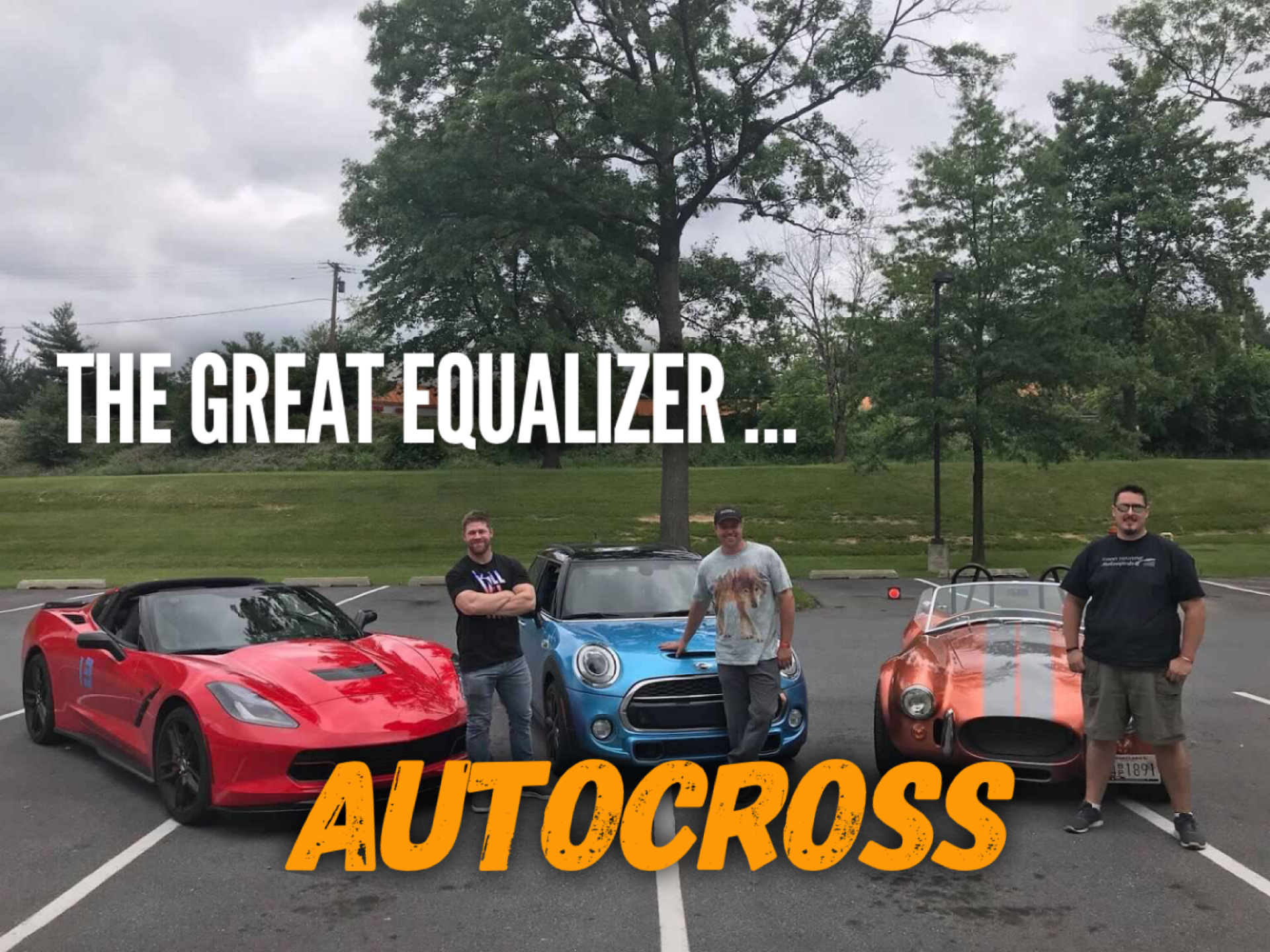
They’re a little more consistent. They’re a little more precise. They don’t quite get that red mist as easily as the men folk do sometimes. And I remember. Many years ago, our father was very big into autocross, chair of autocross, and he set up the courses and, and did all that stuff. And he even did pro solos.

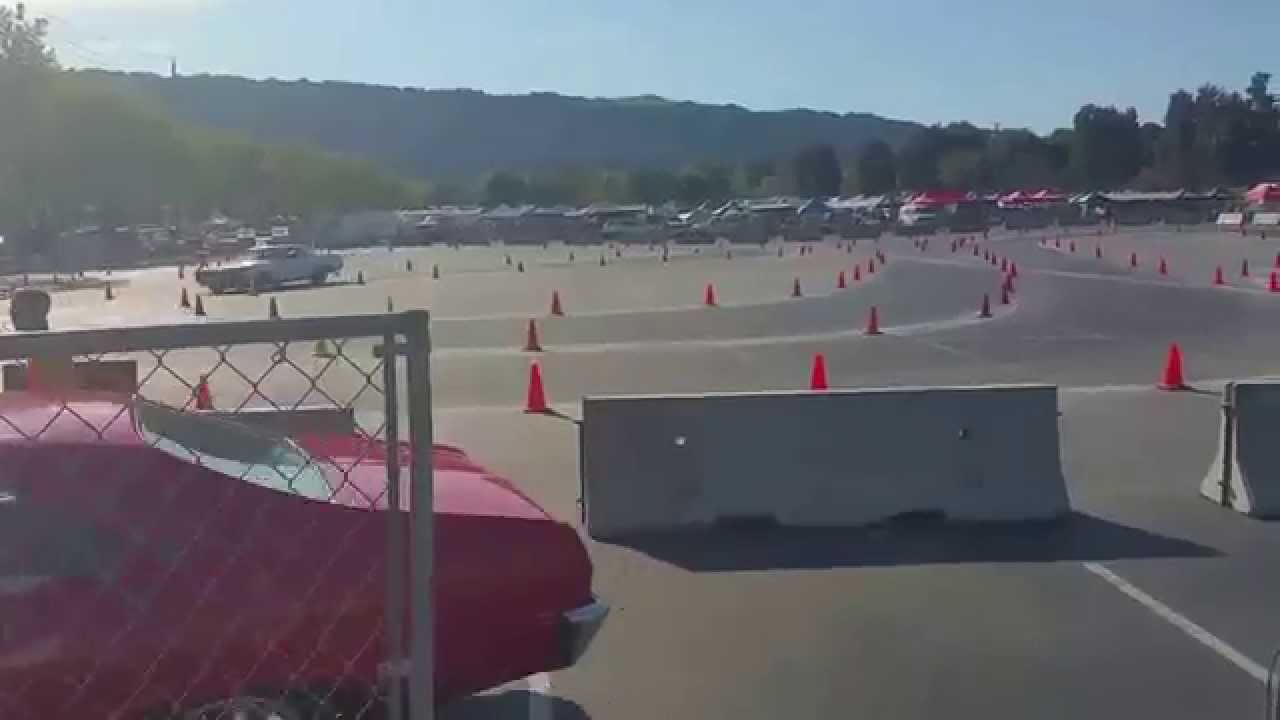
He was competitive, you know, top of game and things like that. And he would host the driver’s clinics. They were always at the beginning of the autocross season where you’d, you’d have, like for people who are unfamiliar, they’d set up. Little skid pads and slalom and late breaking and threshold, breaking miniature exercises, and you kind of go around to each of these stations all day long.

You would practice the techniques and then it would culminate in an actual alto cross where they’d set up the big course and then you’d go do laps. And I participated in one of these, and this was. Very early in my general driving career, I don’t even remember if I was licensed yet, or I, I might’ve had to have been to [00:30:00] participate.

I forget the name of the guy. He had the Green nine 14. One of my instructors for one of the, uh, Ken. Ken,

Crew Chief Eric: not,

Executive Producer Tania: yes, Ken. He, Ken. Ken is my instructor for some of the, the late breaking exercises, and I remember him telling me that I actually had an advantage over the men because. The way we depress the pedals on the balls of our feet versus not is something of an advantage to us as women.

’cause of the, basically the shoes we wear and the way we’re used to walking. And so we actually have a little more finessing control than than guys generally do. So that’s kind of always stuck with me too and found it funny, the differences between men and women.

Crew Chief Eric: But at the end of the day, the machines that perel us can make us all equally fast.

Right. Love it.

Maureen McVail: You’re stealing all my lines.

Crew Chief Eric: Sorry, Maureen. What can I do? Right. If you could change something about racing even on the local level to make it more inviting, especially to women, what is that thing that needs to change to just drop the wall down? Make it even easier. I know you’re [00:31:00] doing a lot of work, but as you assess all these organizations, if you could give them one recommendation, one piece of consulting to make it more inviting, what would that be?

Maureen McVail: Make it into kind of like golf outings. Instead of having golf outings, we should have country clubs. At racetracks, you become a member for a nominal fee. Not some crazy country club fee come out on a Wednesday night or Tuesday night. Saturday or Sunday and you bring your family and they spectate or come along with you sons or daughters or whatever and drive.

I would like to normalize it. That’s what I would like to see happen. The more women

Executive Producer Tania: there would be would be nice just to show that, you know, we belong there too, right? I mean it think it’s stereotypes that get built from when we’re young that the girl gets handed, the Barbie doll. The boy gets handed Matchbox car and the two shall not cross when who cares?

Everybody can do or play with, you know what they want and there’s nothing. They should hold women back from something [00:32:00] like a car. We can all learn this stuff. So I think it’s great. When you talked about the clinics of introducing that early on to young girls, or even if eventually young boys are in the program too.

Crew Chief Eric: Yes.

Executive Producer Tania: Um, but specifically, you know, young girls. So that they know that they don’t need to be afraid of this stuff because it, in the long run, it’s detrimental to women because as they get older and they haven’t been exposed to this, they’re taken advantage of. We know this. You bought your first car and you needed to go to the dealer, the auto body shop, or the auto repair shop and get your car worked on, and the guy sees the woman walking in and he ain’t just.

Sit back and he is ready for the ride. ’cause he knows he is gonna sell blinker fluid, uh, Uhhuh, unfortunately to her or something. I love it. Right. And I love it. You know, I’m, I’m not trying to put our gender down. I mean, it happens to the men folk too. Let’s be real. There’s plenty that don’t know a lug nut from the windshield wiper blade either, but.

Seems to be [00:33:00] forced or

Crew Chief Eric: perpetuated on women a lot more. Maureen, in 2019, you left your job at Drexel Institute’s, uh, women’s health to become a mechanics apprentice. What led you to do that? What, what made you make that decision?

Maureen McVail: I actually left the Institute for Women’s Health and Leadership where I was the event specialist for 16 and a half years, loving my job every single day because of what I got to do, making a difference.

In women’s lives. I had this dream that I had reached my pinnacle there and wanted to start mo racing as a true initiative, and then had life events with my father being ill and then passing away, et cetera, real life things. Then COVID. It really started taking off and manifesting itself, so to speak. I knew that this was my passion and that I would certainly not have a lot more time in my life that I could resign from a job and pursue it.

So again, my timing was a little off. With a pandemic starting [00:34:00] now, I feel it’s picking up again and it’s going

Crew Chief Eric: to come to fruition. What’s the hardest thing about being a mechanic

Maureen McVail: that is? The true physicality of it. I am no spring chicken. I just rotated tires this morning and I balanced tires and I did my own rear brakes on my BMW.

I can do almost anything that I’ve been taught in the last year plus, but lifting is something that I find to be a challenge, but if I really want to, I use my tools. In other words, I can change out tires not high up on the lift, lower down, I can do it. It’s just, I wish I had the rock. I wish I had his muscles and my brain power.

I, I understand that

Executive Producer Tania: part. I often am, uh, get foiled in my endeavors when I don’t have enough strength to un loosen some bolt that I can’t get off, and then it’s like deflated and defeated. Can you come help me?

Maureen McVail: They need your help too. Yeah. I’ll bet you you’ve [00:35:00] helped somebody else out.

Executive Producer Tania: It’s not that I didn’t know what I was doing, it is just I need to go to the gym more.

Crew Chief Eric: My answer to her usually is, do you have a longer cheater bar?

Executive Producer Tania: And normally I don’t. Trust me, I’ve thought of it.

Maureen McVail: You had mentioned women walking into the dealer, et cetera. Also women being told that they need a new air filter. And a new battery being taken advantage of that they had a new air filter six weeks ago.

Mm-hmm. So that price gouging, I love to teach to be aware of that and simple things like if you’re going out in high heel shoes in your car, that you should have an old pair of sneakers in the trunk. To, to be realistic, I don’t wear high heel shoes anymore. I’m old. So for those of you out there, male and female who wear high heel shoes, make sure you have some sneakers in the back of your car.

Executive Producer Tania: There’s nothing more exciting when you go to put the clutch in and your foot slides straight off because you’ve got no traction underneath that high heel shoe.

Maureen McVail: Exactly. [00:36:00] Exactly.

Executive Producer Tania: You only gotta do that once. And you realize, yeah, look, flip flops in the car is a good idea barefoot. Sorry. But

Crew Chief Eric: racing shoes are my preferred way to go all the time.

I wear Pilates as my daily shoes, so it’s all good. Well, I,

Executive Producer Tania: I, I can’t wear Pilates to work, you know,

Crew Chief Eric: but that’s, it’s all good. Mine are pink, by the way. My daughter’s bought them for me for Christmas, so I’m very proud of that fact. I love it.

Maureen McVail: Love it.

Crew Chief Eric: Maureen, let’s dive a little deeper into some of the drivers you’ve worked with.

You’ve name dropped Pippa man a few times. Is there anybody else of note that’s working with you on the program or have you worked with on other programs as well that Menfolk might recognize?

Maureen McVail: Menfolk would recognize? Don Cox because for the last 20 years we’ve been hanging out, so to speak. The amount of knowledge that he has imparted on me and the fact that these other drivers are like, do you realize how smart he is?

Et cetera, et cetera. So. I actually have crewed for him where he actually has depended on [00:37:00] me, and this is a former Penske chief engineer, so that’s a lot of pressure. I could take any named race car driver and they’re probably not as picky as he is. So names of race, car drivers know Pippa’s, probably the most recognizable and Christina Lamb.

Is a hell of a driver and she was down at Sebring and we entered A BMW into the Enduro race and they actually won in their class. Amy Dikes, Christina Lamb, you know Sue Bame, who is a banker and another person who is an attorney. And then I had somebody come out with their son, a mom and son. Team names are not big because I’m trying to really do this on the grassroots level.

Those are the type of people I’m after. And then I’ll pass whomever along to shift up now, or now you guys. So for the named drivers, there’s not a lot other than Pippa. But a lot of potential good drivers. You have to start somewhere.

Executive Producer Tania: [00:38:00] The work you’re trying to do is incredibly important because without the representation, it’s critical for every gender or, you know, race or et cetera, is if you don’t see others like you in that profession or in that area, in that whatever, then you have a hard time seeing yourself there.

And so having that representation and getting people to realize it has nothing to do with gender or anything. It’s just if you try and you apply yourself, you have the capability and capacity to do these things. Now, you might find that you don’t like them, and that’s perfectly fine, but don’t limit yourself.

To, oh, boys play with matchbox cars. So I couldn’t possibly, so I think it’s wonderful what you’re doing. Keep, keep going.

Maureen McVail: Well, we call that you have to see it to be it that if you just take it for granted that Lynn St. James was driving her pinto. Yes. She drove a Pinto and her famous story is she drove it into a lake or a pond or something.

For real. If you can see [00:39:00] these other women doing it, then you can be it. And I’m also not just women, I believe that any minority or unrepresented group should also be involved. So I am very excited when I see somebody of color, you know, either over the wall tire changer, I can’t think of her name right now, but NASCAR Tire Changer and numerous other people.

A good friend of mine is the safety steward for Reason Toter. She’s out there in the pits telling everybody what the hell to do on grid. She is a powerhouse and her name is Svia Fernandez.

Executive Producer Tania: Yeah. So in this vein of, you know, getting the representation out there and, and you know, having other young women or other women see women behind the pit wall or in the car, or either side of the pit wall, what obstacles are you facing and, and how are you overcoming them in regards to getting men on board and really, truly.

Seeing these women that are changing the tires or helping [00:40:00] read the data, having those guys see them as true peers and really taking them seriously,

Maureen McVail: seeing somebody in action is the best way to get things done. So I am trained in motech data acquisition and I also, I dabble with AIM data acquisitions, getting guys to believe in me when I can say, here’s where you are not.

Full on the throttle. Here’s where you are breaking early. Here’s where you’re breaking late. Here’s your fuel consumption. Your whole suit is broken. It’s 110 degrees. Now what are we gonna do about it? Et cetera, et cetera. All kinds of things that, again, action is the best example I think. Proof

Executive Producer Tania: is in the pudding.

Maureen McVail: Thank you.

Crew Chief Eric: So that actually leads into another great conversation we’ve had many times before. There’s this fallacy that you need a race car to go racing. So when you’re talking to young ladies that might be interested in motor sport, how do you get them to overcome that and realize they can just show up with their daily driver?

Maureen McVail: Well, that’s exactly what I say is [00:41:00] you can show up with your daily driver and in fact, that is a much better experience. What I find in the high performance driver’s ed, is people showing up in twin turbos and crazy, crazy fast cars that they should not be driving. Yes, that’s the mother in me. As novices that we learned with Momentum cars.

Porsche Cup car is a beautiful race car and I was really lucky to be able to purchase that and drive it for a year. And my mentioned before my race car engineer had something to do with that car. He had modified it completely, so it was like a go-kart wrapped around me. Now I went to that extreme of the cup car.

The other thing for daily drivers is I’ve taken and lent my BMW 3 28 xxi to some women drivers and my son to do hooked on driving. I actually more enjoy a streetcar and learning how. It can perform to driving an all out race car because you have to start as a novice anyway. And so [00:42:00] again, I would love to have a driving school.

I was lucky enough to do Skip Barber, which they gave me buy one get one free because of their belief in my MO racing. There should be a MO racing school that brings your streetcar, have it teched, and go out and drive with instructors like Tanya.

Executive Producer Tania: I mean, it’s a very intimidating sport. A lot of people, you know, they find out, you know, I kind of do this, and they’re not necessarily car enthusiasts at all, so they’re unaware that these type of activities can even happen.

And you know, they have that wow moment. It’s like, really? Well, what do you drive? I’m like, well, I drive X, Y, Z, or I’ve driven X, Y, Z. And they’re like, wow. And I’m like, you could take your Toyota Corolla if that’s what you drive, or your Honda Civic, your Honda Accord. I’ve seen it. I was like, I told ’em, I’ve seen a Honda Accord out there playing Jane.

And you know, that person wasn’t passing the Porsches down the straits, but they were having a good time and they were learning something, and that’s all that matters. So there’s [00:43:00] also that intimidation that people have that they think they can’t get into it. When you’re exactly right, just take your streetcar.

All you gotta do is make sure you have some decent tires with some tread on them. You know, your brake pads and your fluids all fresh and go out there and you’re not trying to be type of man and all, and all the, the great women that are out there right now. You can be that person. Also just in your regular car, just get out there and learn the basics and then, you know, if you find it’s for you, you can step up to the cup car or you know, whatever.

See where life takes you.

Maureen McVail: Well, Tanya, you’re gonna have to come and visit because I’ve been trying to get New Jersey Motorsport Park to have a Wednesday night open trap and have that exact same thing happen. Of course. I think the biggest obstacle there is good old insurance concerns about somebody getting hurt, et cetera, et cetera.

To me, my dream would be instead of going golfing, you go on a weekend and you have open track for a half a day or a full day. It [00:44:00] doesn’t have to be for the whole weekend. I mean, sometimes it’s exhausting in the summer. Yeah. It’s it just go and have. Talk to me in a year or a year and a half and we’ll be talking about that happening.

Awesome.

Crew Chief Eric: Some group out there was doing a women’s track day.

Executive Producer Tania: PCA down here has been advertising like so far all year that in October there’s a women’s only like HPD event. I think it’s like. Mid late October, which I don’t

Maureen McVail: wanna discourage them from doing those things, but that to me kind of goes in the category of W race series.

Crew Chief Eric: Right, exactly. Um,

Maureen McVail: I want there to be blended so that women don’t get treated any differently.

Executive Producer Tania: Like in their regard. I could see it maybe as being attractive to at least pull them in at first. Maybe some women that are intimidated. So. Agreed. Agreed. Hopefully it could it be positive in that respect and then they start realizing and then coming out to the blended events.

Maureen McVail: I completely agree.

Crew Chief Eric: And so if a young lady walks up to you today, let’s say, you know, round about 10 years old and asks [00:45:00] you the question, Maureen, why do you race? What would you tell her?

Maureen McVail: Because it’s the slowest that I go in my life. I’m multitasking at all times doing various projects, being a mom, being a employee, being a mechanic, being all kinds of things.

When I’m racing, I’m going so fast. That I cannot be managing thinking of I have to pick up the dry cleaning or I have to cook something, which by the way, I don’t cook the going fast in a safe environment and the fact that you, whoever that person is, you can do it too.

Crew Chief Eric: Maureen, as we wrap up here, are there any shoutouts promotions, upcoming events, or anything else you’d like to share?

Maureen McVail: My goal is to make sure everybody know, even if I’m repeating myself. Everybody knows these fabulous things are going on. First off, I think you might have noticed that NASCAR was going to give $10 million through Bud Light as a sponsor for Women in Motorsport and Chip Nessi and PNC Bank [00:46:00] just announced on International Women’s Day, a Women in Motorsport campaign.

They didn’t give a dollar amount with it, but I’m sure it’s significant. And I’ve had the pleasure of meeting Chip GSI and Roger Penske and Roger helped Beth Perreta out and Simone Destro as her driver at Indy 500. She, again, is stealing some of what I would like to do with the women race car team. But remember, I want them to be.

Known as women after they win? Yes. No need to beforehand.

Crew Chief Eric: Maureen, you actually bring up a really good point and because I want to talk about something that happened a while ago, you know, international Women’s Day. We do a lot of social media posting and things like that, and I sat on it all day and sometimes there’s events like that where I’m like, you know what?

We’re not gonna say anything. We’re just gonna let it go. Moment of silence. But it took me all day because I just had these thoughts ruminating in my mind and I didn’t know. Exactly what I wanted to say, and then it sort of hit me later in the day. I remember as a kid, and I’ve said this many times on this show, I always wanted to be a rally driver.

I grew up in the group B era. It [00:47:00] was one of those things that has stuck with me. It’s what got me hooked on motorsports. Even though I know rally’s not a big deal in the United States. It’s, you know, very huge everywhere else. But here. And at that time as a kid, you know you’re looking up to your idols, you know?

Yeah. You had names like Volta Royal and Ola Ari Vain and people like that. But then there was Michelle Ton. When I posted on International Women’s Day, I made it a point to be very direct about what I wanted to say and to highlight her because you see all this other stuff and I’m like looking back at the eighties and the late seventies, ’cause she ran for Renault and other teams as well.

She was a pioneer. In motor sports as a female being out there. I mean, the other names that we listed, you know, there were a few that came before many that came after, but I looked at her going of all the motor sport that there is rally’s one of the most difficult, requires some of the most just risk taking, but also finesse at the same time.

And it is a ballet. And so I’ve always looked up to her as one of my motor [00:48:00] sports heroes. And if you ask me to line up. Three, five people that I wanna shake their hand and meet them. Sabine Schmidt would’ve been one of them, and Michelle Zu right next to her. Right? So I wish there were more people like that, that want to be like her and do that and be rally drivers too.

Uh, so I just wanted to bring that up because that hits close to home for me. I know it hits close to home for my family. And those are the kinds of stories I’m trying to pass down like yours to my daughters as they look to the future and, and go into driving and hopefully into motor sport.

Maureen McVail: Or if not, if they want to take a ballet, that’s fine too.

But what we’re doing is combining the two. Absolutely. Uh, the whole idea of dancing with a car is at a technical track like Shenandoah, which is a small track near summit on the same grounds. That’s where one of my favorite instructors taught me how to dance with the car. That’s exactly what he said. And how to apply the brakes to get more steering input, all kinds of technical stuff [00:49:00] that I won’t.

Bore you with, I would invite everybody to visit mo racing.net. Leave your comments there. Email me, contact me, love to hear your feedback. Other than mo racing.net, I want to shout out to Vet Motorsports. I think you’ve had Pete on the show, Mary Hague of Moon Mark we had mentioned earlier, and again, that’s Lori Johnson of Lady.

Start Your Engines. Little plug there, commercial for her. Shout out to all the male allies out there. Again, without them I wouldn’t be able to do it. And the Red Cross for any of those drivers out there, I am a transportation specialist. We pick up the blood and plasma and take it from the central lab out to hospitals, and some of it is stats.

In other words, you can’t be caught speeding, but you can certainly utilize the fact that you have a Red Cross van. So I pull it right into the front of the hospital, put my flashers on, and I’m able to take [00:50:00] in the cases of blood platelets. So shout out to Red Cross and any other car enthusiasts that’s out there.

So stay tuned and if you have any suggestions, I’m open to them. Watch out for what we’re doing because hopefully in a year or so it’ll be standard. Get it standard

Crew Chief Eric: manual. Save the manual.

Executive Producer Tania: Yeah. So we thank Maureen for sharing her journey and the great work she is doing with MO racing to empower women in all facets of motor sports.

Mo Racing provides the concierge service partnering with established high performance driving programs, and they would love to get you on the track. So if you are interested or want to learn more, be sure to check out their website at www.mmoang.net or follow Maureen on Twitter at mc vail Maureen, or on Instagram at Maureen McPhail.

Crew Chief Eric: Maureen, we cannot thank you enough for coming on Break Fix. This has been an awesome chat that we’ve had tonight and we [00:51:00] look forward to the MO racing success and getting more women in the paddock and behind the wheel out there coaching all the things that we talked about. So again, we can’t thank you enough for the work that you’re doing, and we wish you the best of success here in the 22 and Beyond Seasons.

Maureen McVail: And thank you. It’s been a pleasure speaking with you. Thanks so much for the invitation. Thank you, Maureen.

Crew Chief Brad: If you like what you’ve heard and want to learn more about gtm, be sure to check us out on www.gt motorsports.org. You can also find us on Instagram at Tour Motorsports. Also, if you want to get involved or have suggestions for future shows. You can call or text us at (202) 630-1770 or send us an email at crew chief@gtmotorsports.org.

We’d love to hear from you.

Crew Chief Eric: Hey everybody, crew Chief Eric here. We really hope you enjoyed this episode of Break Fix, and we wanted to remind you that GTM remains a no annual fees [00:52:00] organization, and our goal is to continue to bring you quality episodes like this one at no charge. As a loyal listener, please consider subscribing to our Patreon for bonus and behind the scenes content, extra goodies and GTM swag.

For as little as $2 and 50 cents a month, you can keep our developers, writers, editors, casters, and other volunteers fed on their strict diet of fig Newton’s, gummy bears, and monster. Consider signing up for Patreon today at www.patreon.com/gt motorsports. And remember, without fans, supporters, and members like you, none of this would be possible.

Highlights

Skip ahead if you must… Here’s the highlights from this episode you might be most interested in and their corresponding time stamps.

00:00 Meet Maureen McVail: Founder of MORacing
01:36 Maureen’s Journey into Motorsports
08:41 The Birth of MORacing
14:53 Challenges and Triumphs in Racing
22:21 Women in Motorsports: Coaching and Mentorship
27:22 Encouraging Women in Racing
28:51 Women as Technical Drivers
29:12 Autocross and Driver Clinics
30:47 Making Racing More Inviting for Women
33:03 Transition to Mechanics
36:23 Representation and Role Models
40:49 Daily Drivers in Motorsport
45:34 Future Plans and Shoutouts
50:22 Conclusion and Contact Information

Bonus Content

Learn More

Maureen McVail – Auto.biography

Let me start by pointing out I had zero exposure to cars growing up.  I started my “Petrol Head” passion at 16 when I learned how to drive stick on our 220 Mercedes Diesel. 

My parents were both educators.  My father a classical music professor and my mother an extraordinary teacher.  Neither of whom were automotive enthusiasts.

  • 1999 – 1st HPDE at Pocono in ‘84 911- hooked immediately!
  • 2005 – Sold ‘84 Carrera for Cup Car with full cage
  • 2007 – Sold Cup Car and purchased RS America. Co-owned with driver and MMM managed logistics and data acquisition.
  • 2010 – 2016 – Purchased and sold GT-3. Campaigned RS America as co-owner and crew chief.
  • 2016 – 2019 – CaymanS campaigned in PCA Club racing. BMW M3 owned and rented for DE.
  • 2019 – present – Sold CaymanS and have been racecarless during the pandemic.

I knew Porsches are stock racecars, so I started my driving in HPDE and loved it.  I “retired” from driving in 2017.  As co-owner and crew chief for 2 racecars, I have lived my fantasy of having a race team.  (Which I still plan to do.)

Shift-up was started in 2016 and I was co-founder.  I left that pursuit up to my co-founder. Shift Up Now was later developed and now expertly run by Pippa Mann. I hired Pippa to coach several female drivers at PCA HPDE at WGI.

My passion is to focus the spotlight on SO MANY DYNAMOS in order to illuminate the varied women drivers.  “If you can see it – you can be it” is a driving force or motto of MORacing. 

In 2020 I developed and implemented a Road Rally from Philadelphia to Seneca Falls and back to celebrate women’s right to vote.  25 cars with 50 people with a stop at WGI.

I have guided and/or sponsored over 15 women (one mother and son duo) to get on track with various clubs. That means there are numerous new HPDE drivers because of MORacing. I have conducted numerous workshops and have spoken to Girls Schools and youth groups. I have donated to a mini-scholarship at Lincoln Tech for female techs. I have recruited for and attended numerous Porsche and BMW Experiences.

Currently I am an apprentice at an automotive shop where I have learned and successfully performed oil changes through tire balancing and much more.

MORacing officially took shape in 2016, though its roots go back further. Originally co-founding “Shift Up” with Lynn Kehoe (now led by Pippa Mann), Maureen branched out to focus on HPDE and grassroots engagement. Her clinics and workshops – often held at schools, Girl Scout events, and community centers – introduce young girls to the thrill of motorsports through fire suits, helmets, and lug nut challenges. “I let them sign my helmet and pledge to always wear their seatbelt,” she said. “Somebody out of that group is going to pursue a STEM career – whether they know it or not.”

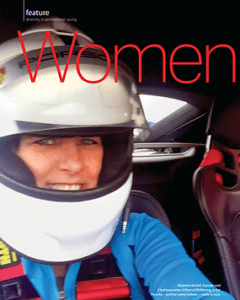
Photo courtesy Maureen McVail, MORacing

Allies, Adversity, and the Road Ahead

Maureen’s journey hasn’t been without bumps. She’s faced sexism at the track, but she’s also cultivated a strong network of male allies- many of whom are fathers, brothers, and sons of women who love cars. Her dream? An all-women’s racing team that competes anonymously until the helmets come off. “I created my luck,” she said. “I don’t have any tolerance for being treated differently.”

She’s also quick to spotlight other dynamos in the field, from Mary Hagy of Moon Mark to Laurie Johnson of Lady Start Your Engines. And while she’s not an instructor herself, she’s a fierce advocate for women stepping into coaching roles, like Break/Fix co-host Tania, who recently made the leap.


Association for Women in Science (AWIS)

The AWIS is for individuals seeking equity for women in science, engineering, technology and math, AWIS provides career development, networking, mentorship, and leadership opportunities. In addition, our thought leadership, research, and advocacy benefit all women in science. Maureen was featured in a recent article in the AWIS Magazine. Learn more about AWIS | Download a copy!

Maureen’s story is a testament to what happens when passion meets purpose. From wrenching on her own 997 to organizing rallies and clinics, she’s proving that motorsports isn’t just for the elite – it’s for anyone with the drive to participate.

Her motto? “So many dynamos.” It’s a palindrome, a linguistic nod to her degree, and a perfect metaphor for the women she champions – powerful, resilient, and moving forward no matter the direction.


This content has been brought to you in-part by sponsorship through...

B/F: The Drive Thru #22

This episode of the Gran Touring Motorsports podcast ‘Break/Fix’ features the monthly news segment ‘Drive-Thru,’ where the hosts discuss various automotive and motorsport news. They begin with a light-hearted poem about the seasons changing and delve into an in-depth review of the Nissan 400Z, including its design, colors, and performance insights. The conversation then transitions to Formula 1 news regarding VW, Audi, and Porsche’s potential entry into the sport by 2026, as well as other motorsport updates. The hosts also discuss pop culture vehicles such as the upcoming reveal of the new DeLorean, interesting Lego releases, a tragic incident at a dealership involving a Jeep, various recaps of prominent car events, and local news on track side reports. Additionally, there are updates on Formula 1 races, particularly the Miami Grand Prix and Spanish GP, and other domestic automotive updates, including Dodge’s plans for the Hornet and the Peugeot’s nine X eight lineup for Le Mans. Lastly, they cover some peculiar incidents, such as a Maserati driving down the Spanish steps in Rome and diesel mistakenly being dispensed as gasoline at a station in Glen Burnie, Maryland.

Tune in everywhere you stream, download or listen!

Listen on Apple
Listen on YouTube
Listen on Spotify

Showcase: Demystifying the Nissan Z 400

Crew Chief Eric's Personal Impressions of the new Nissan Z-400

Spring has sprung, the grass has rizz… I wonder where all the NISSANs is??? - More info about the NISSAN 400 Z, and my trip to California to see it!  ... [READ MORE]

What the Z shares with the legendary R32

Everyone modifies an old Nissan sports car ... except for one part. ... [READ MORE]

Old vs New - How does the Z stack up?

More first impressions on the new Z 400 seeing it side-by-side with the classic 240. ... [READ MORE]

Camissa's Sports Car Shootout: Z vs Supra vs Mustang

How fast is the new $50k Nissan Z? — New Z vs Supra vs Mustang Mach-1 — Cammisa's Drag Race Replay ... [READ MORE]

How *BIG* is the new Z?

Photographs can be deceiving - we talk more about the size/shape of the new Z. Is it a sports car, or Grand Tourer?  ... [READ MORE]

Am I a Z-man?

To buy or not to buy? THAT is the real question. Do we take the plunge or wait for something more? ... [READ MORE]

**All photos and articles are dynamically aggregated from the source; click on the image or link to be taken to the original article. GTM makes no claims to this material and is not responsible for any claims made by the original authors, publishers or their sponsoring organizations. All rights to original content remain with authors/publishers.


Automotive, EV & Car-Adjacent News

For a list of all the articles and events referenced on this episode check out the show notes below.

Domestics

EVs & Concepts

Formula One

Japanese & JDM

Lost & Found

Lowered Expectations

Motorsports

Rich People Thangs!

Stellantis

VAG & Porsche

TRANSCRIPT

[00:00:00] Hello and welcome to the Gran Touring Motorsports podcast, break Fix, where we’re always fixing the break into something motorsports related. The drive-through is GTMs monthly news episode, and is sponsored in part by organizations like h hpde junkie.com, garage riot, american muscle.com, hooked on driving and many others.

If you’re interested in becoming a sponsor of the Drive-through, look no further than www.gt motorsports.org under about and then advertising and sponsorship. Thank you again to everyone that supports Grantor Motorsports, our podcast Break Fix and all the other services we provide. Wait, am I saying it?

Welcome to Drive-Thru, episode number 22. This is our monthly recap where we’ve put together a menu of automotive motorsport and random power adjacent news. Now let’s pull up the window, number one for some automotive news. Hey guys, you know what? We are closing out May. This is airing actually on the [00:01:00] 31st.

You know, spring is almost over as well. I heard that the other day. That summer was already over. I said, really? So it’s gonna be winter next week, weeks practically 2023. I was like, summer hasn’t even started, but it’s over. Well, I mean, if you live in the dmv, it’s winter goes into summer, like a light switch, which led me to write a little poem.

You know, I wanted to share it with you guys. Aw, yeah. So it goes like this. Real simple. Spring has sprung, the grass has rise. I wonder where all the Nissans is. Wow Snaps for that poem. That’s that DEA education right there coming through. I can, I can hear it. Don’t quit your day job. It leads us into our showcase this month.

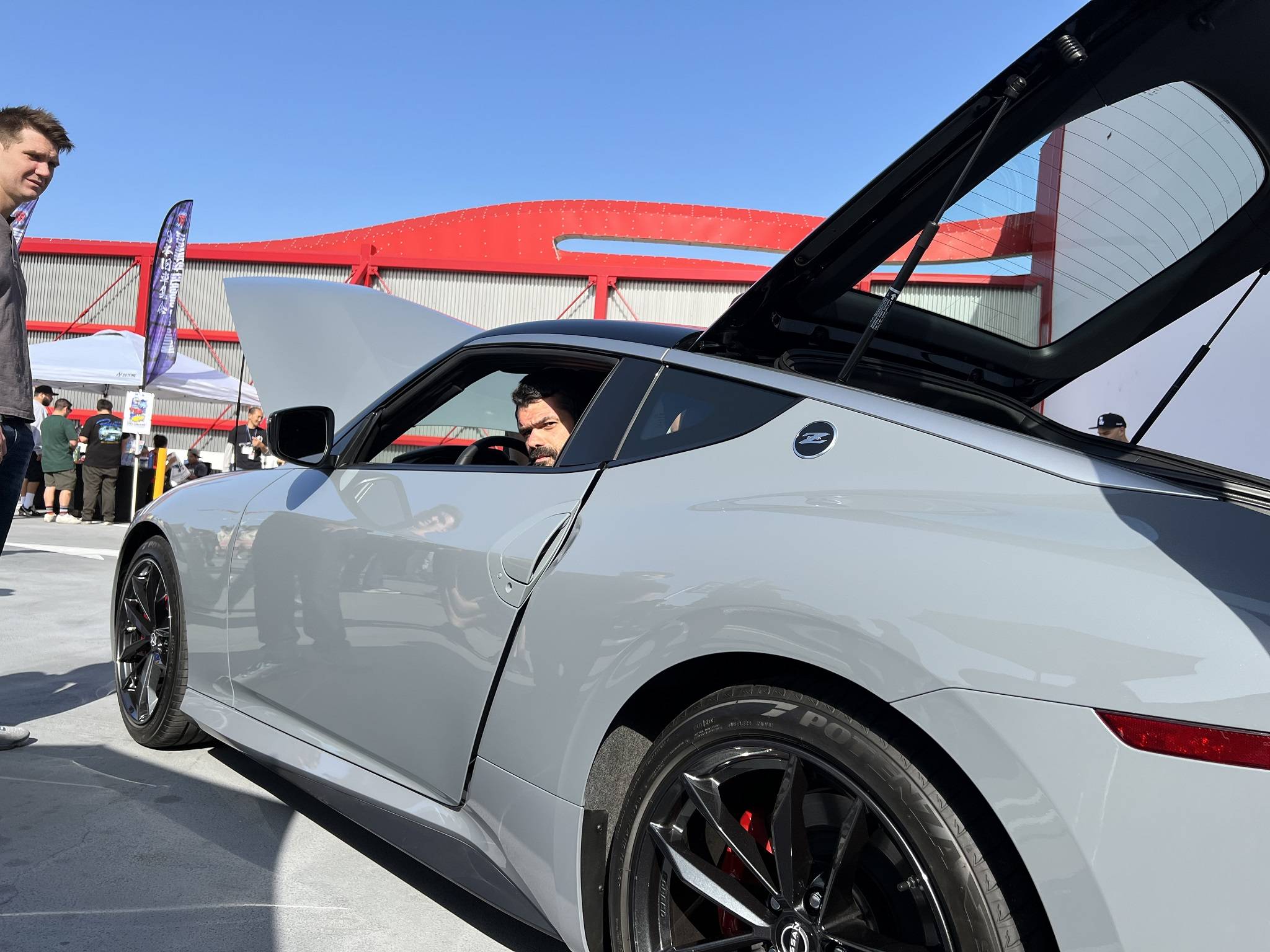
I wanna start off by talking about the Nissan 400 Z, the proto, the just the Z, whatever you wanna call it, and my epic trip to California to see it. [00:02:00] So if you guys remember last month I reported about, you know, seemingly new information about the Z and all these kinds of fun things. Cause I’m partially obsessed by it.

And you know, I told you that local dealerships are saying August, August, August, I’m hearing now closer to October for the release. And if you guys are following anything on social media about the Z, the press cars are absolutely everywhere right now, which means they were also available to see in person.

You just kind of gotta keep track of where these press cars. I was fortunate enough to have to go out to LA for work and at which point I reconnected with one of our previous guests, Paul Willsey, who took me all over, you know, LA and, and the Canyons in Santa Monica. And we had an absolute blast. And as part of that, we got wind by way of one of our friends over at SRO Motorsports that there was an exclusive, you know, event going on at the Peterson Auto Museum, which I’ll talk about more here in a little bit.

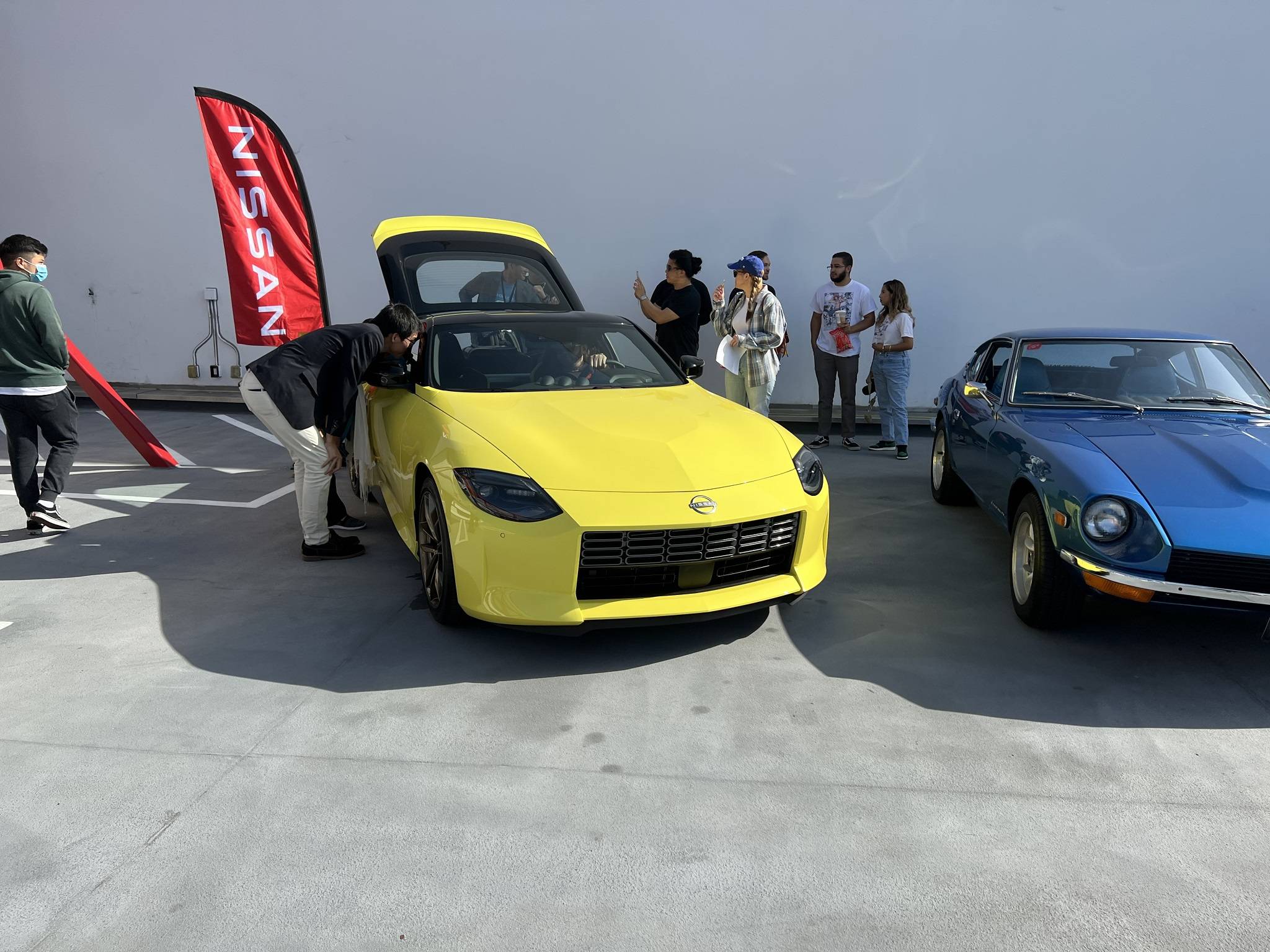
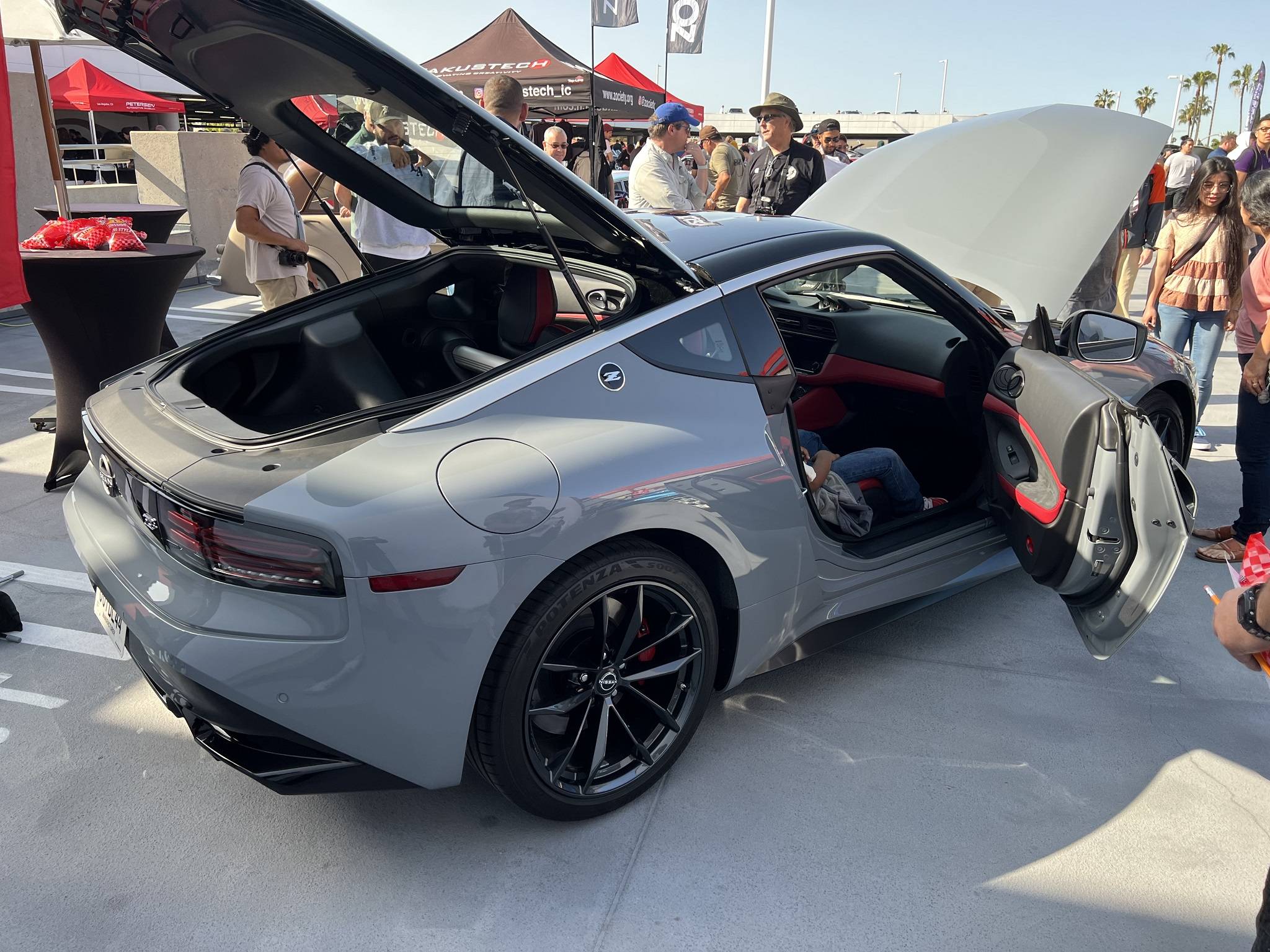
Where the Nissan Z was gonna be shown publicly. It happened to coincide with a [00:03:00] J D M Nissan event that they were having there at the Peterson and. I have a bunch of pictures and I’m gonna, you know, have them available in the show notes as well about the Z and what it looks like and this and that. I tell you what, first impressions are everything, and you put it in order.

I don’t know what to think. He’s not going to put it in order. What? Let me put it in. You can’t get over The French dreams were crushed. Never drive your heroes or sitting in them. He didn’t have those lowered expectations. So first of all, the two that were there at the Peterson were in Canary yellow and battleship gray.

Two of what I feel are the most unattractive colors that the car could come in. A lot of the other press cars come in, Ruby red and this electric blue, and you know, all these other colors that you’ve seen throughout social media and videos and whatnot. This wasn’t the color black, so it was not murdering color.

And I was immediately turned off by that a hundred percent. The thing that stuck out to [00:04:00] me immediately that I didn’t notice until I saw the car in person was this chrome strip that goes from the A pillar down to the rear haunches, I guess maybe certain angles or colors, or it wasn’t there in the prototype or whatever.

It just sticks out to me like a sore thumb when I saw it in person. Maybe cuz it was reflecting in the California sun. I don’t know. But it just annoyed me in today’s day and age in 2022 to produce a sports card with an obscene amount of chrome on it. Just, oh God, that turns me off. Like I immediately said to myself, that needs to be wrapped or painted flat black, one or the other.

Isn’t Nissan big on doing the like midnight edition vehicles? Maybe that’s like the next version. Midnight edition, 400 z. You can get it with your midnight edition Murano. It could be. They must have something else. Toyota has the midnight editions because I thought we rented one when we were in Texas. It was the midnight edition [00:05:00] Murano, or we didn’t have, what did we have?

Was it a Murano? I can’t remember. Might have been Murano. It wasn’t a cross Cabrio. That’s what I know for Stam. Sure. I don’t think it was that. Then a midnight murdered out edition. It was all black. Yes, but it, it was terrible. And that’s beside the point. What I’m getting at here is when you see this new Z from the front outside of this chrome thing, it immediately got my attention.

It’s very angular. It is very reminiscent of the old two 40 Zs. You know, there were tons of two 40 Zs and two 80 s and two 60 s to compare it to at this event. So you’re like, oh, old versus new. I have pictures of them side by side. I like the front. Everybody makes fun of the big rectangle grill. It needs it, it’s gotta suck in a ton of air to cool that motor into turbos and everything else.

I’m totally fine with it. The profile of the car outside of the chrome, it looks really good. When you get to the back, it also looks really good, but you feel like you’ve looked at three different cars as you’ve walked around it. The back feels like you’re looking at a late nineties, [00:06:00] 300 ZX turbo. It is so big.

You think the Mercedes s Ls has got a big butt. You think the nine 11 has got a just a huge rear end and here comes the Nissan. It’s just massive. So I’m like, okay, I, I can put up with that. It was exactly what I thought it was gonna be. It is longer than, and lower than the three 70 z. There’s a lot of people saying it shares a lot of stuff with the three 70 Z fine, whatever.

But it’s not up on stilts. It’s very low, it’s very wide. It’s a big car, you know, it’s sitting on like, I don’t know, like twenties or 20 twos or something. I mean, it, it just, it almost looks like a matchbox car in some respects. So I’m there and I get introduced to like the PR people from Nissan and this and that.

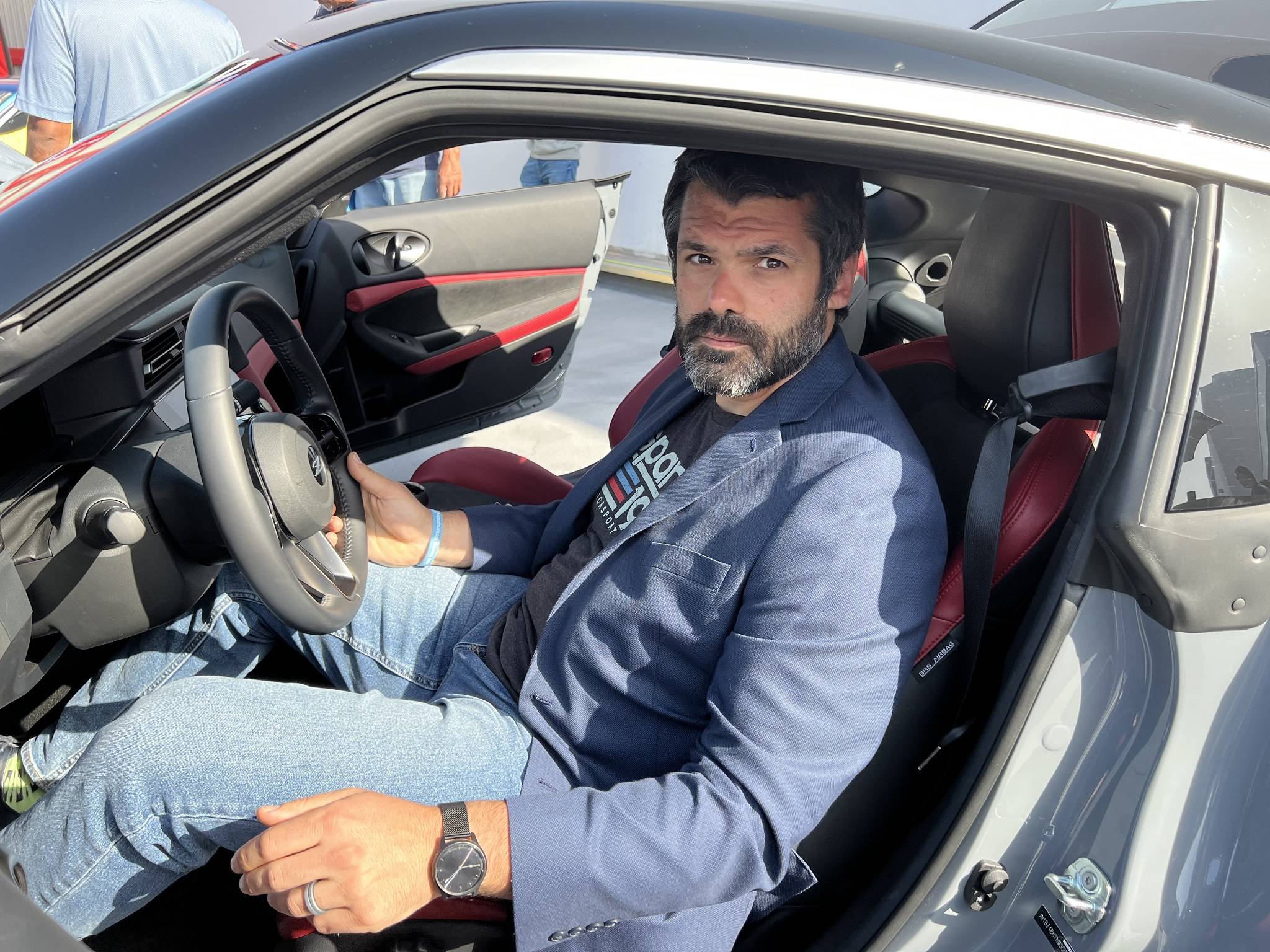
And they’re talking to me and I’m talking to them, asking questions and you know, trying to get some more definitive answers about the car. And one of them turns to me and says, Hey, do you want to, do you wanna sit in it? And I’m like, well, I mean, there’s a bear shit in the woods. Of course I wanna sit in it.

So I hop [00:07:00] in the car and there’s pictures of me in the car and things like that. And the first question out of his mouth, you know, as I’m kind of looking at the interior, and I’m really not saying anything, which, by the way, the interior is very beautiful and plush. It’s a great place to be as much as you want it to be for a sports car.

Nothing too outrageous, but not as utilitarian as a Porsche. So he asked me, he’s like, so what do you think? And I turned to him and my first response was, well, there’s plenty of space in here for my helmet. And he looked at me puzzled. I said, you have to understand, I coach in a ton of different cars, and this is the first modern sports car I’ve gotten into where I don’t feel like I.

I’m gonna be cramped if I’m in a student’s car, if this was my personal vehicle, you know, you compare it to like the Supra, where the roof line cuts off really, really fast. And if you’re over, you know, five foot eight, you gotta either rotate your hips or scrunch down or this and that. It, it’s just, and the Corvette similar to where it’s, it’s a very tight cockpit.

The Z is so big, it has a lot of room. It feels more like a grand tour than a [00:08:00] sports car. So if I want to compare it to something not visually, I would compare it to like a 9 28. It’s a Japanese 9 28. That’s what it is. Am I underwhelmed? Maybe a little bit. I’m hearing really good things about the performance from the people that have gotten the opportunity to drive one.

I have still not yet gotten the opportunity, and I hopefully will soon. That might be a deciding factor. Also, the price is a big thing, right? You’re still hearing pretty low numbers, reasonable at the, you know, upper forties, low fifties, things like that. But who knows, right? With surcharges, dealer markups.

So that’s been my experience with the Z thus far. So there’s a couple other articles that came out in the meantime since I’ve been back from California, and one of them Brad shared with me, which was, what are the things that the Z shares with the legendary R 32? What is the answer to that question?

Nothing. I mean, what it’s a two-door. Is that it, like it comes in a blue color? No, it, it’s not all wheel drive, right? It, it is not some, some little thing. It doesn’t have a [00:09:00] VR six in it, right? Well, no, the, the skyline was an inline six turbo. The Nissan is a V6 twin turbo. What it shares in common, which, oh, nevermind.

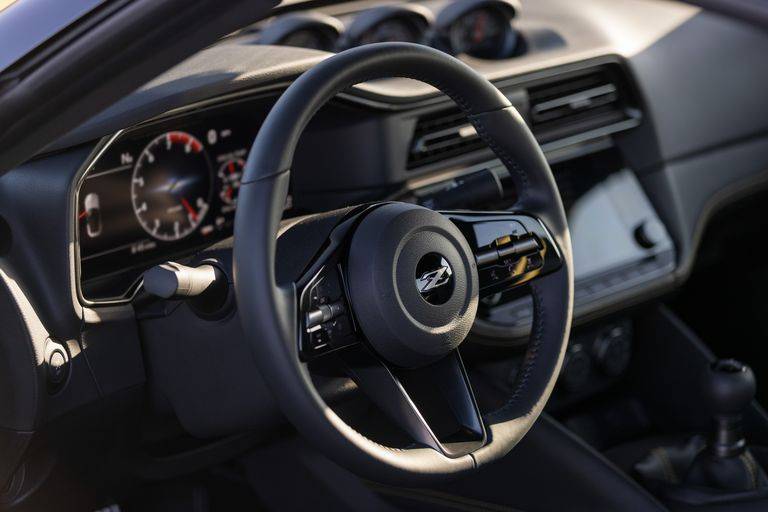
It was a want, want moment is apparently the steering wheel design. But even when I looked at that, it’s like comparing a modern G T I to the original one from 83. Oh, we’ve got a three spoke steering wheel, wheel spoke steering wheel. We’ve got another three spoke steering wheel. I’m like, whatever. All right.

So. Yeah. Other than that, I don’t really think they share anything in common. I, I have my Audi has a three spoke steering wheel. You’re pretty special. I don’t know what my car has. Momo three spoke. Do I share with these two? So the other thing that, you know, since we’re talking about the Z, the other thing that’s on my list of, let’s say in the negative column against the car is Jason ESSA’s latest drag race shootout that he did on the Haggerty YouTube channel.

And it’s between the Z 400, the Supra, and the current top of the line Mustang GT [00:10:00] 500, or whatever the heck it is. Excuses aside, right? Everybody’s saying, oh, well if the, if the Z had better tires, if the Z had better tires, it would’ve done better. The end result here is it got spanked by both the Supra and the Mustang.

That’s not boating well for its performance. No, no, not at all. I mean, I don’t know if it’s fair to compare it to a Mustang, but compared it to the Supra, I feel like is a more, I dunno if it’s, if it’s a bigger grand tour then, I mean the Mustang’s pretty close to a grand tour. What’s the weight on the Z?

Uh, that I haven’t been able to confirm yet. Unfortunately, as I 3,600 pounds as I’ve read it, not all of the body panels are equally magnetic, meaning that I think they’ve taken some playbooks out of older cars where some panels are aluminum and some are steel, and not everything is actually metal to try to keep the weight down.

But 3,600 pounds at 400 horse, that’s pretty heavy. All things considered. I mean the Corvets lighter than that obviously, but it’s in a totally different category. The Mustang is about the same weight. I think the super’s a touch [00:11:00] lighter. 3,300 pounds worth of super. Yeah, that, that’s quite, that’s significant actually.

300 pound difference. So again, it’s a 9 28. That’s what I keep thinking now, and I’m like, well, does that still make it as palatable? It, it’s not gonna be a track day superstar. It’s gonna be a B road bomber. It’s gonna be a lot of fun on a mountain road or a mountain run or a cruising or something like that, you know, and maybe an everyday sports car.

But not, you know, hey, I’m gonna go set the world on fire at New Jersey Motorsports Park or some point, or v i r or something, you know, I’d rather almost have an old three 50 Z that’s modified, weighs less. It’s naturally aspirated and you can have a lot of fun with that as well. So, I don’t know. I’m really Well that’s where you’re doing, I mean, that’s a completely different discussion.

Oh, I would much rather have a car that’s modeled specifically for the track as a track car than a car fresh off the showroom floor. I mean, you can say that about anything you can, but it’s kind of what gets you up in the morning. I almost think I would have more fun with the stock three 50 Z in a way, because it’s more nimble, [00:12:00] less computers.

More of a driver’s car cuz it was built 20 years ago. I mean, that’s kind of what I’m thinking too. And then you do some mods to it. Coilovers wheels, they look good. They sound good. Well, you haven’t driven it so you can’t say you can’t peculate. Yeah, I don’t, you dunno if it’s, you don’t know if it’s more or less nimble.

I, I understand which, where you’re going with this. I mean, it’s kind of why they took the Miata back a step to be more in line with the Nas. Far as like the engineering, you know, they, they tried to go back to, they got away from the bloated Ford n c to a more NA based n d. So I understand what you’re saying.

Where it seems like the Z 400, your first impression is it’s not going to be like that. It’s gonna be kind of a bloated, but I agree with Tanya. You should really, I wouldn’t write it off just yet until you get a chance to drive it. I agree. But the other thing that’s now stuck. In my craw and I, I gotta blame Paul for this a hundred percent.

Mm-hmm. We went out in the canyons with his bone stock, 99, 2 and a half liter boxer, [00:13:00] 200 horsepower or whatever it makes, and two 10 or something like that weighs 2,700 pounds soaking wet from the factory. And it was amazing. I forgot what an original boxer was like. I drove one so long ago that it’s like you kind of put it out of your memory and I’m like, for what?

He paid for that you could have one of those with a ton of money left over, not do anything to it, and have an absolute blast. Now is it gonna turn a bunch of heads and people go, Ooh, ah, it’s the latest and greatest. That’s unfortunately the old timer in me that goes, there’s plenty of old cars still left to enjoy.

So this is what puts the Nissan back a minute. Like I got super excited about it and I’m just like, I don’t know, but. I think it still holds true everything we’ve talked about so far. It’s kind of the last of the line. It’s last of these stick shift, rear wheel drive, ice powered coops, right? These, even if it’s a grand tour, there aren’t many coops left either.

A sports coupee, let’s call it what it is, and there’s something to be said about that. So yes, [00:14:00] I’m still holding out final judgment to drive one. I mean, please, if you’re listening to this, convince me that I’m wrong, that I shouldn’t give up on the Z, but right now, The scales have definitely been tipped.

I’m, I’m not really sure where to go from there. So if we pull the Z out of your future garage, what do we put in it? Uh, you know, I know you’re gonna run out and buy a 99 boxer, or are you still on the Alpha Romeo 1 24 train? There’s a lot of cars on that list and I just don’t know yet. I don’t know. I, I mean, I’ve been salivating after the Alpha four C as well.

I think that’d be a lot of fun. It would cost less than a Nissan Z, but then you give up the manual. You do. And you’re a purist. That’s true. That is very true. I am a dinosaur, so I don’t know. There’s a lot to think about. You know, there’s a lot to think about. I think we have some upcoming, what should I buy episodes that might change our listeners’ minds as well.

So I’m gonna leave, I’m gonna put a pin in that until we revisit those later this season. Enough of that. Enough of that. We need to move on. Right? We, we can, we can talk about Nissans till we’re blue in the face. But you know, you guys are big into Formula One and I hear some exciting news [00:15:00] coming from our friends at vw, Porsche, Audi.

Yeah. Some of our favorite brands. They’ve announced that they are coming to Formula One in looks what? 2026 It looks like. Not soon enough. 2026. We gotta wait that long. I mean, is that when they’re bringing out the next generation of car that they just brought out? The new generation. Now we’re waiting for that.

It seems like a three to five year timetable in Formula One. Will they be running 20 inch wheels then? Are they waiting for Trump to become president again and, and reduce the cafe uh, requirements? Vw, the parent company of Audi and Porsche, et cetera. They’re making a push to put Porsche and Audi in Formula One, not just in engines, but actually have their colors being run on a car.

I don’t know which, I don’t think that has been said at all. It looks like Audi is, has an agreement with McLaren, I guess, for power plants. Both of these agreements are for power plants. Porsche will be powering the, the Red Bulls. I don’t even think there’s an agreement. I think there’s a. We on this side wanna do this?

Howdy [00:16:00] Porsche, and then McLaren’s like middle finger. We don’t want you. And I’m sure there’ll be negotiations, at least that was my understanding. So maybe it’s all for nothing. Maybe they’re gonna power the Andretti car. But the question is with that is are they gonna let another team in and have 22 drivers, or is Andretti gonna have to buy out somebody?

Haas? You know, I personally, I think Gene Haas is looking to get out of Formula One because it’s a loss leader for him. I mean, this year the team’s been doing a lot better. Than they have previously, but still, I think he’s been looking for an excuse to get out of Formula One for a little while. What do you do?

Driver shuffle Or you just kick Schumacher to the curb? Well, you keep Schumacher cuz you got rid of the Russians. No, you can’t because Andretti wants to have American drivers on an American team in Formula One. He can put Schumacher on the B squad and keep him as a test driver for the team and not break his contract.

Yeah. But once you get a taste of that sweet, sweet Formula one drive, you don’t want to be a test driver anymore. I mean, I’m sure there [00:17:00] might be some other team. I’m sure there’s like, you know, some other team that wants to kick somebody out out. Maybe they could swoop, swoop up or. Magnussen at this point.

I’m sure that Mercedes wants to get rid of Hamilton since he hasn’t done Jack’s shit this year. How quickly is they’re disrupt fired? I’m tired. I mean, I can say that because I already know he’s a much better driver than anybody else in the world, so I don’t, I don’t care. Yes, Louis, you’re better than me, but you’re still gonna get kicked off the team.

It’s either you or Toto. Totally ain’t going nowhere. Nah. Yeah. So Audi and Porsche want again, formula One. They just need to find a team that they can give power plans to. I think they should go ahead and extend the field. Why not? I do too. I don’t think it would hurt. It’s not like there’d be that much more traffic.

Do they? Yeah. They just gotta get around the back markers of Williams. There’s another team, right? For the taking, Williams is already under new own new, uh, ownership. Didn’t they do a documentary, like basically showcasing that they were dead? I mean, what, what’s going on? What’s going on? You know, there’s this show on [00:18:00] Netflix called Drive to Survive.

No. Where they talk about all of this stuff. It’s been on for four seasons now. No, three seasons. Four seasons. Tonya, correct me if I’m wrong, three, four seasons. Yeah. There’s a lot of information out there. Eric Uhhuh. There’s a lot of information on ancient aliens too, so I’ll just continue watching that.

You go ahead and watch WRC with your 10 foil hat and us normal humans are gonna stick with f1 if you’re okay, since you brought up wrc. You know what? Let’s talk about cool stuff that’s happening in the world of rally around the Audi e-tron. The car, shall We? Nothing is pretty sick looking. It is pretty sick.

And the journalist that the article that we’re referencing here actually got an opportunity to drive it on a test course, and I thought it was pretty interesting. Some of the questions that we had were actually answered about this vehicle, which isn’t a full ev, it’s a hybrid. Ding, ding, ding, ding, ding.

That was our biggest question, right? Which is, how the heck are they gonna get power to charge this thing up when they’re on the dekar rally? Please tell me it’s a [00:19:00] diesel. It’s not. Oh yeah. I mean, their answer was like straight up, like, we don’t have the battery technology. You can’t do this like you won’t make it, which is fair.

So there you go. They put a two liter turbocharged force cylinder on it. So does it get to carry the badge e-tron though, right? I mean, maybe it does cuz the A three e-tron was a hybrid, but whatever. That’s all just badge engineering. The thing that I thought was amazing though is the technology, the MGU technology, which we talked about on a previous episode, and this is why it comes back to Formula One.

Volkswagen had proposed the MGU technology for f1 and now I understand what it is. In simple terms, it’s what I’ve been preaching about for years now, that we need to go the direction of diesel electric hybrids like they do in trains. The difference is the VW Audi MGU Power plant is a gasoline version of that.

It’s a two liter gas motor that runs at somewhere [00:20:00] between 40 506,000 R P M to maintain this like perfect power output to feed the electric system to then, you know, get the car going where it’s going. So I was like, ah, there we go. Okay, so I’m not crazy. This is doable. They are doing it. Diesel is taboo, so we have to do it with gas.

But the one thing I thought was comical is when the journalist was talking about just the sound that it makes, cause it’s, it’s basically running at the high end of the RRP M range for a two liter all the time. It’s just kind of obnoxious. But can I just say we’re overlooking the most important feature of this vehicle?

It’s something it shares with the greatest Nissan ever made. The R 32, it has a three spokes steering wheel

that solidifies its legend dirtiness right there. The two liter motor. It’s not powering the wheels at all. It’s literally only So it’s a generator? Correct. Okay. That, that’s, so that’s kind of cool. But it’s a high [00:21:00] strung generator. Had they used a diesel, think about the range. They could have gotten a gallon of diesel, probably would’ve.

They would’ve gone, I don’t know, 500 miles and it would’ve idled at 1200 rpm. Instead, this thing has to burn its brains out at 4,500 to 6,000 RPM to generate the power needed to run the electric system. That’s nuts. It’s so inefficient. I guarantee if this was pre 2015, pred Diesel, diesel, diesel, it would be a diesel.

A hundred percent. It would’ve been a three, three cylinder TDI in there. What kind of earplugs are the drivers wearing to my point, right? To deal with this. Holy crap. Can you imagine a high strung four banger that you can’t shift gears for like the next 10 hours? This sounds like an rx. It sounds like an RX seven.

Hey, what does that share in common with the R 32 Nissan Shoot me now. Oh wait, that’s a three-sided. Nevermind. Rotor, not a steering wheel. That’s a Dorito. So we’re gonna stick with the EVs for a moment. We’re going back to Volkswagen. They are resurrecting. [00:22:00] Yes. Thank you Tanya. They are resurrecting the scout nameplate and bringing out an EV brand scout offroad, like you’re talking international scout.

Right. I’m talking like minor league baseball scouts. That’s what I’m the Boy Scouts. What are we talking about here? The Boy Scouts? The Girl Scouts of America? Yeah. No, yeah. They’re resurrecting the international scout to be an EV off-road, I guess to compete with the new ev. Hummer will. It’s probably gonna be a lot cheaper cuz it’s gonna be smaller than that.

The Ford Bronco and the Jeep, they want to get in on that sweet suite four by four monies. Just to segue of our hot second, I was in traffic and turned my head the other day and oh, there’s a Bronco next to me. Like, oh, very nice. Very, very nice to see. Nice. And then I got behind it and I was like, uh, it was a little less nice to see from this angle.

Was it a Bronco or the Bronco Sport? Uh, I think it was the sport. My memory is already like erased it. So it’s, so it’s basically the, the Land [00:23:00] Rover freelander or whatever the hell escape, the thing was escape. It’s the four escape. It’s just so like I really like it from the side and from the front, but then like the back is just like too narrow at the top.

They wanted to do like the safari roof, like on the old discos and stuff. It’s got that kind of shape to it. Or the Volvo SUVs kind of have that scalloped rear and I get you on the sport, the Bronco itself, if you see one of those in person, they’re big. I mean it’s like a Ford Explorer big, like you won’t miss it, that’s for sure.

So back to the scout, I was wondering how did they do this And apparently they bought, when did they do this? That’s when did they buy International? They 2020. What? So it says here, international Harvester sold the proto S U V Scout from 1961 to 1980 with the truck maker going belly up in 1985. After nearly 80 years of production, BW acquired what was left of International in 2020 with its purchase of Navistar International Core.

Interesting. They bought the parent company, so [00:24:00] they, they also bought the rights to, because International makes rigs and stuff too, right? They make tractors, they make motors. I mean, so this is, this is all under that Navistar International umbrella, I’m assuming? Yeah, I think it’s cool. It just feels out of place because international is such an American brand.

Such an American thing. I think what a lot of US associate international more with Ford. Than we would with vw. It just seems weird that VW bought them and Ford didn’t, you know? Yeah. You know, this is nothing like Fiat buying your Jeep or anything like that, right? I mean, by way of Mercedes. Come on now.

Yeah. We need, we need the Germans making America’s most beloved military sport suv. Was this America’s most beloved? It was a flash in the pan. No, but the, the Jeep Willy’s was, and it’s kind of funny that Mercedes owned Jeep. I think it’s cool, but again, you have all these neat things in Europe, like the Amar Rock and all these other trucks [00:25:00] that you’ve already built.

Why do we need the international and does anybody care anymore? I mean, I guess they’re gonna try to play the nostalgia card. Yeah, that’s the real question. It’s like, I don’t know. Yikes. I mean, who’s gonna. Buy this with a VW badge on it? Well, it’s gonna have a scout badge on it. I think they’re gonna brand it as its own thing.

It’s like, it’s like Hummer. Hummer is its own ev brand now. So Scout is gonna be, no, no, the German equivalent. It’s like those bags you buy or whatever, blah, blah, by Michael Kors or DA by Versace instead of Prada. It’s Prado. What? Yeah. Yeah. It it? No, it’s, it’s S Scout. It’s scalp by Volkswagen. Magnet Box Scout by Volkswagen.

Terrible. Yes. The People’s Card. The People’s Scout. I mean, I would go test drive when I’d go look at one in person, would I bring it home? You’d have to really convince me like the stats on it would have to be stellar. It’d have to be better than the rivian, which we already know is like the king of the hill right now when it comes to these ev u v pickup, smaller size things.

So I, [00:26:00] to be fair, you’re not, uh, you’re not really a four by four person per se anyway, so I would never expect you to take home one of these, or a Bronco or a Wrangler or a Hummer or any of those. I’m always looking for something to replace my diesel guzzling, $6 a gallon Jeep Grand Cherokee right now.

Okay. Yeah. How about the cyber truck? No, that’s a hard, hard task. So yeah, but none of the things like Brad just named off would be suitable replacements for your use case though. So a thousand percent, no, of course not. But you, you know what else isn’t a suitable replacement for the use case at hand? The Nissan yet another 400.

Well that too, but anything named ID whatever at this point, because they’ve introduced yet another one called the ID five gtx. I’m really confused. Oh my God, I love this. How is it different than the ID four? Although [00:27:00] than the back and Mike is rolling his eyes and could tell us, like the back I guess is a lot more sloped.

I get you there. At first I went, Ooh, this is maybe gonna be like a carrado thing, you know? Cuz it kind of has that side profile, like maybe like a little tails gonna pop out almost, you know? Right. And then you get to the back and you’re like, wait. It looks just like the ID four. The other thing that turned me off immediately.

Okay. Immediately soapbox the ID five is the coop version of VWs. Familiar ev, but changes the standard car. And that’s the other thing I got confused by. How is this a coop of the ID four? It’s the same size or bigger, I think it said. I just want to confirm that I’m not crazy because I’ve had this discussion with Brad a million times about what’s a hatchback and what’s a liftback, and what’s a coop and what’s a not, so I went back to the dictionary again for the thousandth time, and I’m gonna read you verbatim what the definition of a coop pay [00:28:00] is, or a coop, a car with a fixed roof, two doors and a sloping rear end.

It has four doors. Got too many doors. Uh, not, I believe BMW coined the term Grand Coupe. It’s a Grand Coupe from the South on that ugly thing. Did they make like three of them? Yeah, they made a bunch. The Grand Coupe is supposed to be like the two door Benzs and the, the six series bmw, which was a big car, but it was two doors.

But they made a four door version. And then the, the Mercedes has the cls lies, lies. It’s all lies. It’s all lies. Well, to me, it looks like from the side, Volkswagen didn’t just buy international Scout, they also bought Eagle talent because that one line that goes down the side of the car and the back end with the tail, it, this is an Eagle town from the side dude.

And then it’s, it’s got this badge gtx. There ain’t nothing gt even related to the eye about this thing, man. Well, that’s what the, the, the author says, they’re like, don’t be thinking this is [00:29:00] like g t i Cause you’re gonna be disappointed. Don’t be thinking, you know what? It does happen. And we covered this a long time ago.

Oh, we did? I forget what the whole GTX thing was supposed to be. Terrible. Yeah. But it does have a three spoke steering wheel though. Oh. So it, it has lineage in common with the Nissan R 32. Perfect. That’s great. Well, it’s kind of a three spoke. It’s a split three spoke. This goes back to the definition spoke.

It’s a for spoke, but only one of the spokes is split. So it’s a 3.2, 2.5, but it shares a steering wheel with blah, blah, blah, blah, blah, blah, blah, blah, blah. So if that wasn’t disappointing enough, there was another article that came across my desk this week, which made me feel super old. So old I, I was wondering how you were gonna react to this one.

I, I cried a little because. Guess what folks? The golf R, which started with the R 32, which is actually the successor of the Beetle R s I [00:30:00] now celebrates its 20th anniversary and I bought one of these new, I would still have that car had it not been stolen. And then I realize, shit, it’s a 20 year old car.

That’s a long time. Yeah, I got really confused at first. I was like 20th. Like what? Like the 20th anniversary came out so long. What is this? What are they talking about? Well, the sad part. And then I was like, holy crap. No, the R 32 20th anniversary, Jesus. Right, because the 20th anniversary G ti I was in 2003, which makes the GT’s 40th anniversary next year in the United States.

And I’m like, talk about feeling old, right? That’s the mental gymnastics that I did. And I’m like, oh my God, the car that epitomizes, let’s see, my personality, my soul is as old as I am. And I’m like, ah, this is terrible. That said, I hate the new one. So they had the picture there. Awesome. R 32 and the Golf Rs and I, [00:31:00] I just like to look at the R 32.

I was gonna say who wore it best? I feel disrespected. That seems no offense. Mark five R 32 in here. All right. All right. I’m gonna call you out on this. I remember while ago we used to say Car in the world. Yep. Was a mark five Volkswagen, and suddenly it.

I think the Mark five Jetta specifically, but the mark five golfs and GTIs and stuff too. They were terrible. They were ugly, ugly, ugly cars. When I, when it first came out, I thought I was looking at the new Corolla. That’s how terrible I thought it was. I thought someone took a mark four, they put like an air pipe onto it and just blew a bunch of air into it and expanded it.

I think they’re, I think they’re hideous. I will give you the taillights look like a Corolla. Yeah,

but I also said that it was mainly the Jetta, cuz it looked like a Corolla at the same time because they looked so [00:32:00] different from the front. Oh, they’re completely different. They’re completely different. Oh, oh, okay. One’s a coop. That’s why it’s a coop. A it’s a very coupe. And the other’s a liftback.

Technically it doesn’t have a sloping back. So it is a hatchback and not a coop. A coop doesn’t have a, it doesn’t have, it’s got only have two pillars. No, so it’s very simple in Volkswagen terms. The Rocco is a coop and the golf is a hatchback. End of story. But then the ID five is a coop. It is not riddle me that bad man.

It has four doors. We gotta go back to this again. Technically it’s a five door, but, you know, whatever it is. What, what does Urban Dictionary say? Let’s go to, we’re moving on. That’s what it says. It says Stop this nonsense, moral of the story. We don’t like the Mark eight. We think it’s stupid. I, I’m not a fan.

And, and you know, and it goes against everything I’ve ever said that the even number generations that got it right. Now I’ve been proven wrong. I hate it. I hate it. Maybe they’re switching to odds and the golf nine is gonna be amazing. Well, the, the golf is [00:33:00] gonna cease to exist at some point, right? I mean, yeah, let’s face it.

I mean, I’m biased, but I don’t know. I like the R 32 when they went with the big chariot wheels and then the, the air dam front bumper, the big low bumper and the front and the back and the little tail. I mean, it really cleaned the look up. Very nice. Of the mark fours, the mark the beetle was a coup. The mark fours the best looking.

It’s the best golfs in my opinion. And I hated them at first, you know? But that’s a whole nother story. We’ll get into that at a later time. Mm-hmm. So we need to switch now to our domestic news, brought to you in part by American muscle.com, your number one source for OEM and performance replacement parts for your Chevy Ford or Mopar.

You probably noticed that we skipped over STIs. But we’re not really skipping over them because we don’t have a lot to say about Ford or Chevy this month for whatever reason. So we’re gonna talk a little bit more about Dodge Chrysler and everybody under that family tree. I’ve been watching a lot of the [00:34:00] European, you know, social media feeds following some of the magazines and other car markets and things over there.

And I, I get to see things that I salivate over that I know that we’ll never get. And this has been going on for years. In the last year there’s been pitches and positions over a new C U V called the Ton, or the Tonal, if you wanna pronounce it in the English Way by Alpha Romeo. And I said, oh, that’s cute.

Alpha’s building another S U V. They already have the Stelvia, who cares? In the last month, there’s been pictures released of the Dodge Hornet. And I went, oh, that’s the Alpha Rome male I’ve been looking at for the last year, basically. That’s exactly what, it’s what I take issue with on the Hornet. Is the name.

If you know anything about classic mopars muscle cars or whatever this thing does, they’re not deserve this name. I’d rather you pick the duster, the shadow, the spirit. Any of those car names would be better than the Hornet for this C Uuv. That’s just my opinion. Why? Why can’t this just be the new journey?

That’s what I was thinking too. [00:35:00] Right. I don’t know why they chose Hornet. Maybe again, this nostalgia player. Exactly. Yep. Badge engineering. But the question is, Does it have a three spoke steering wheel? You know, I do not see any pictures of the inside, but I’m going to guess that it does have a three spoke steering wheel.

Cause all the other cars on our list that we’re talking about today have three spoke steering wheels. So they are all direct descendants of Nissan’s Greatest car ever made. The R 32 skyline, you know it isn’t, but is also under the STIs banner. Peo, we don’t talk a lot about French cars, and I personally do have an affinity for French cars.

I think they’re, they’re quirky. They’re, they can sometimes be cute. They’re a little odd. Don’t talk to me about Citroen, but, you know, I was gonna say, what, what, what do you think of the, uh, cevo, you know, the two cv? That’s not the worst. It’s the ds, but I’m gonna, I’m gonna table that for now. Yeah. The DS stands for D sucks.

Freaking cockroach on wheels. Hate that car. That said, we hinted last year, I think it was about this time on the drive through about the PEO nine X [00:36:00] eight, if you ever noticed, PEOs got this interesting battle between Porsche and them for numbering their race cars. And apparently there were lawsuits years ago about using 900 series, you know, you can’t use nine zero, can’t do this, blah, blah, blah, back and forth.

So they’re always poking a pointy stick at Porsche when they build their next race car. So the nine x eight, it’s real. It’s been revealed. There’s pictures of it. It’s freaking awesome. I cannot wait to see this car at Lamont’s. I can’t wait to see a French brand in the L M D H class fighting alongside of everybody else.

I think this is gonna be awesome. I think you’re forgetting that Nissan did it a couple years ago with the front wheel drive, whatever the heck that car was. That barely made it a few laps. Is this front wheel drive too? Uh, it is not. This is your classic prototype layout? Yes. They want this thing to actually survive more.

The first third, wait, wait, wait. Go back to what you just said. The classic prototype isn’t the whole thing about prototype is, is this one of a kind? It’s like there’s no classic formula. It’s something [00:37:00] completely new in engineering and everything. How is there a classic prototype formula? I mean, aren’t they all spec classes now?

They’re all building to a certain design regulat negotiation? Uh, I don’t think LMP one is. Well, does LMP one even exist anymore? Uh, I think so. I don’t know. The jury is still out on whether or not Dodge will be entering a clone car, running a different badge to have two cars in the field been teased a couple times.

Dart this number will be 2016. I’m really excited about that. I mean, obviously we already have entries from Cadillac, Ferrari, Porsche, now PEO officially and others. I mean, the L M D H class is stacking up for the hundredth anniversary of Lamont’s, and I, like I said, I cannot wait to be walking that paddock and seeing it in person.

It’s gonna be absolutely phenomenal. So my hat’s off to them. Speaking of anniversaries, there’s another anniversary to celebrate. Happy Birthday Toyota. Yay. Wait, what? Happy Birthday Toyota 4runner. Oh God. How old is that? Am I gonna feel like a dinosaur? It is the [00:38:00] same age as US. Years Young Edition. Oh God.

Really? 40th anniversary, special edition 2023. Toyota 4runner will be coming to a dealership near you and it’s limited to 40. 40 copies. Okay, that’s just lame. That’s Toyota for you, but it’s got some cool decals. Hey man. 17. It’s coming with. Bronze, 17 inch wheels. You know, I really feel like they missed an opportunity to use copper.

They went a little throwback though with these tri-colored pin striping, which isn’t really pinstriping. They’re really wide, but still the striping down the side. Well, the sun, the sunset striping. Yeah. Which came on their campers and stuff, right? I mean, like, I don’t know. Maybe the 4runner had it, I guess.

Yeah. You know, some of the older runners had it. So going back to my trip to the Peterson as an example, remember we talked about the Alpha Wolf? That truck that looks like the original 4runner from Back to the Future. I actually got to see it in [00:39:00] person. It is a hundred percent legit what we thought it was, and it’s freaking amazing.

The truck from back to the Future wasn’t a forerunner though. Was it Toyota? Yeah, the 4runner is the SUV V. It was like a T 100 or something like that. Or a Tacoma. It was not a 4runner. That pickup truck. No, because at that, that other company, that one company is trying to make a knock off one of it. What is it, alpha?

It was, it was a Toyota SR five. SR five is a package SR five pickup. That’s what it’s listed as the back to the features SR five pickup trick. Oh, I see the original 4runner. Ooh, that takes ugly shit. Now I do believe there was a 4runner that you, well, happy birthday Toyota Runner. You have aged gracefully.

You, you could take the back off of the 4runner. I think some of the earlier ones, kind of like you could with the old Broncos. This is knowledge. We are dropping truth bombs on you people left and right. Meanwhile, over in the Honda Camp, this month’s break. Fix guest, Annika Carter reviews the 2023 Acura Integra for a [00:40:00] girl’s guide to cars.

So I wanted to get your guys’ opinion on what you thought. Now that we’ve seen more pictures of it and looked at her article, I still stand aside my dislike of using the name Integra for this Acura TSX evolution. Don’t you mean the, the Acura Civic Hatchback. I thought it was the Honda Cross Tour v6.

Could be. It is. I thought the red interior though, really cool. The interior does look good. I will give it that. For a Honda, it is a step above what I expected, but looking at it in, in relation to other vehicles, her standing next to it, stuff like that, I was like, this thing is big. Like really big and they had the classic Integra there, like the original boxy first gen Integra, and I’m like, man, that thing is microscopic in comparison to this thing.

I don’t know. I’m with Tanya. Three spokes steering wheel. Does it? Does it? Does it? Oh my gosh. You’re right. It is going to sell millions. It is a derivative of the crx because it has a three. Spoke to [00:41:00] What does this have in common with the crx? Nothing. It weighs three times as much. You can put one in the trunk.

I will say the trunk space is reminiscent of the two thousands integra’s. The way they built a proper lift back, it looks humongous when you open that rear hatch. Actually, whatever, like those cars. Whatever the first photo of this car was when the whisper started and there was that yellow photo, and it wasn’t even like necessarily 360 views of anything, that first initial teaser photo.

There was such promise there. Such promise, and then we got the real photo of it and it was like, what hot trash garbage is this? It looks nothing like this thing you teased us, which could have been really nice. But it says Integra. Well then I want it to be different, but that’s just me. It’s dumb. So let’s move on a little bit.

We’ll switch to random EVs and concepts that we might actually be excited [00:42:00] about. So going back to my trip to California, I saw so many cars I took. Probably 1200 pictures if that was the low number on all the stuff that I took. And the Peterson was an amazing experience. I’ve never been to an auto museum that big, so pretty, just so many different things.

And then I actually got access to the vault, which I thought was more interesting than the actual show floors themselves because that’s down in the basement. That’s where they keep the cars, you know, that aren’t on the floor or being changed in and out, all this kind of thing. There’s really nice, very well educated docents downstairs that can guide you around.

They’ll talk you through, you got questions about cars. I got to see the United Nude try five mile an hour golf cart thing that we talked about that sold for like a gajillion dollars that’s down there. Magnum PIs, actual Ferrari’s down there, the Batmobile, you know, all those kind of movie cars are down the uh, I got to see from Gotham Garage.

Remember we talked about rust to riches and all that. Mark Talley’s, Mach five, Corvette, C4 based. [00:43:00] Movie cars in there and I got to see the exner that he had built. I mean, I stood six inches from it and it was just like, wow. You know, to see all these cars in person that we talk about on this show that we read about or see on TV was amazing.

I’ve never been to a museum like this before. I’ve been to other private collections, other museums, you know, usually those museums are combination of private collections, but the Peterson is like topnotch. Which by the way, if anybody’s listening to this, I have two tickets to the Peterson that I will mail you if you are interested.

Free admission that are good through the 30th of June. So email us at crew chief@gtmotorsport.org or call or Texas at (202) 630-1770 and I will send them out to you. First person to hit us up. They are yours free of charge. That said, I saw so many DeLorean when I was in California that Peterson has one of the factory gold DeLoreans.

And I got a picture of it and all that. That was [00:44:00] really cool to see in person. I took some pictures for you, Brad, because remember we’ve talked a lot about how tall is that car? How big is that car? Put it in reference to my height. It comes up to my waist at 43 inches tall. It’s been so tall. So tall. Yeah.

It needs to be lower. Six inches in stock Trim. It got me thinking though, we talked a lot about last month, you know, they teased us the corner of the back end of the new DeLorean. It also got me thinking about the cyber truck that we talked about with its misaligned body panels and its color mismatch and this and that and I, I started to think about it.

I was like maybe that color mismatches on purpose, because it was on purpose on the DeLorean, they had a hard time color matching the stainless steel to the front grill. Right. The front grills are always like a darker color, you know? Cause they’re painted versus the body color. Yeah. I suddenly realized, you know, there’s another car.

That has that same styling to it. And I wanted to go back and see if it came from the same design house as the DeLorean, you know, from Etal design from Giro. And it turns out that the [00:45:00] 1975 launch of Beta Monte Carlo, which has that same panda bear look in the front with the two-tone nose and all that was not penned by Juro.

It was penned by PanIN Farina. I started thinking, well, I wonder if Juro got his influence in the seventies when the DeLorean was being designed right, even though it came out in the eighties, if he got that from PanIN Farina. So a hundred percent speculation there, right? It’s a little trip down memory lane.

It reminded me that I needed to revisit the website cuz Tanya had said they’re going to be revealing more of the car as we get closer to Pebble Beach. Well, guess what? Pebble Beach is the week this episode releases in four days. Two hours, 51 minutes and 54 seconds. 53. 52 50. There’s a countdown on the DeLorean website.

Can we just say that? Let’s just give our impressions of the DeLorean as if we just saw it. Wow. The new DeLorean. It’s freaking amazing. I gotta say, this is the best looking car I’ve ever seen [00:46:00] next to the new Kunta for me. I know people have their own fossil tage, but whatever. This new DeLorean, oh my god.

Best looking car ever. Eric, what are your impressions of it? Have you seen the rear end? Oh, I’m an ass man. Yes, I have. I didn’t know if you were being serious or not. I was kind of being dumb, but also serious. Okay. He’s setting it up. All jokes aside, there is a new picture. It’s more than just the quarter panel that’s sitting waiting for you on delorean.com.

As you count away, the minutes left to the official reveal at Pebble Beach, and I have to say I’m a little confused. By what it’s, it says DeLorean right there. You’re in the right place. I mean, I know what it is. Here’s what I don’t get. The other picture we got gave me this almost, I don’t know, fantasy of like the Nissan 400 z, where it’s like, oh my God, it’s gonna be, and then when I got the full perspective of the back, the cockpit looks really tight.

It’s got wide hips. Mm-hmm. But it [00:47:00] also doesn’t look anything like the 2021 etal design concept that was Penn by, uh, angel Guerrera that they actually built. One of which I thought they were gonna take that modify for production use, which looks really, really cool. And I’ve posted pictures of both of these in the show notes so you guys can see it.

The 2021 one-off concept is a gorgeous car. I thought they were going with that. Those front shots you see in the teaser video, they’re doing this V thing with the goaling door. So it’s gonna have this maybe b kind of nose, like an Alfa Rome male. Nothing like the concept car they built. A year ago, so now I’m really confused.

What is this new jewelry gonna look like? And I’m not sure if I’m gonna like it. It’s a tester. That is the impression I get from it a hundred percent. I don’t know. I’m just gonna not get excited anymore. How about that? I’m just gonna leave this page up and I will revisit it on 31st, and we’re gonna talk about it next month when we get to see all the pictures from Pebble Beach.

[00:48:00] So stay tuned folks. Write in, let us know what you think. If you get to see the DeLorean before we do, because. I don’t know. May I might need to be convinced. I’m really disappointed though. Huh? You really just gotta drive it a hundred percent. The real question is, does it have a three spoke steering wheel?

That’s what I was gonna ask. I did figure out why the 2021 concept car wouldn’t work though. If you look at it closely, it wasn’t designed for goldwin doors. If that is the keystone centerpiece of the design, that prototype they did last year would’ve never worked. My guess is it was like a financial thing and they, they didn’t want to pay the money for that design.

The new one will probably be a four door coupe lifted. It’s gonna be a a a four door lifted. S U C V S U C U V. Speaking of what’s old is new again. So, Brad, we gave you an action item last month. Did you call some dealerships to see if you could buy a Dodge Dart? You know, I. I’m going to disappoint our audience here.

I did not get a chance to call any dealerships. I meant [00:49:00] to call Chuck LeDuc, but I completely forgot. So I’m gonna have to table this discussion, Chuck. Just know that I’m gonna be giving you a call sometime within the next month. I’m hoping that you can tell me that you’ve got some new Dodge Darts for me to not buy.

But I did go on cars.com and I checked to see if I could find a brand new Dodge Dart. They’re not listed what? But you. You know this was the first time in two years. No, I know. Well, cause they finally sold all out. It only took them six years. But can still buy a brand new 2016 Dodge Viper ACR R. Oh really?

How much. Only $800,000. Whoa. At Deon Chrysler Jeep Dodge Ram 800,000. That’s pretty good. Good for them. Do they have a dealer rating of 4.2 on cars.com? No. Go out of out of five. It’s only 200 miles from here. So when we go to test drive the Nissan Z, why don’t we just go ahead and make a detour up to [00:50:00] DeCozen Chrysler Jeep Dodge Ram.

See if we can take this bad boy out for a drive more than you can afford PAL taxes. I found something interesting. You know, somebody wasted the time to put together a listicle called the bestselling cars from the year you graduated high school. Talk about things that make you feel old and depressed.

This has gotta be the saddest automotive article I’ve ever read. Oh, snap. Really? Let’s take a trip on this road. I’m gonna take a guess, Tanya, and say that the car of your year was the Toyota Camry. No. Oh my gosh. It was this Chevy Cavalier. So it’s the best selling car by year for like 40 years or whatever.

You just, oh my God. Wait, let’s scrap that. Who cares about your high school? Can we hone in on how the Ford Tour, was it 1992? 19 93, 19 94, 19 95, 19 96. Bestselling car. Dang. Does that even [00:51:00] matter? Because starting people didn’t trust the Japanese. Starting in 1997 until now, everything listed is a Toyota Camry.

So, not true. Not true. Not true. In 2001, the Honda Accord beat it probably by like three cars. I’m sorry, I mistook it for a Toyota Camry. Cause they all look the same. How many of these are are beige? That would be Matt Yips favorite thing. Oh, these are all terrible. Every one of these makes me sad. Wow. I mean, there is not a single impressive thing on here that’s not true.

Hey, now the old mobile cut list was the best selling in 1978 and 79 and 80 and 81 odd, but they’re, and then again, in 83 with the Supreme, only because it got ousted by the Ford Escort. I mean, come on. These are all terrible. You know, here’s an honorable mention. It only shows up once on this list. What’s the only car, I think to show up once on this list?

The solarity. The celebrity. Look at [00:52:00] that. Look at that. That is the worst 1986 Chevy celebrity. That is trash. I, I’m with Tanya though. How the hell did the Taurus beat out the Accord and the Camry for like four straight years? None of this, you know, they, they, they went to the bubble Taurus and that’s where I want none of this.

Okay. I wanna know really. 1987 Ford Escort. You’re showing the GT version. Really? I don’t remember ever seeing GT Ford escorts on the road. They were always the sold seven of those. Yeah, they were always the hideous, like the 88 version. That picture would’ve been even funnier if the guy was driving from the right seat and not the left.

Cuz then it would’ve been like, oh, okay. Again, this is the worst automotive journalism ever. Thanks. Car driver. Wow. I mean, it is what it is. If those were the top selling car and the sales numbers are the sales numbers, yeah. I mean it’s, you, you, it’s not the the journalist’s fault. Although I must say 2016, I really would’ve thought it would’ve been the Dodge Start.

These are like the best [00:53:00] selling cars in middle America. I don’t understand where they got these numbers from because nevermind, nevermind. We’ve already done the world map. Remember we did that last year where it’s like best selling cars on the planet. It’s like all Toyotas, and somehow it’s like Day Cs, Senderos or whatever.

Fine, but the Ford to whatever, get outta here. Hey, Lisa wasn’t an Impala. You know, my expectations are completely lowered, so lowered expectation, we don’t have anything. What, just, just a little update though. Uh, the DeLorean will be revealed in four days, two hours, 41 minutes and 37 seconds. 36, 35, 34, 33. Do we have Tesla news?

Are we remiss? You know, I’m okay with being remiss. Might be the first time really not highlighting anything. It’s not to say that there isn’t any Tesla news. I mean, there’s Elon Musk news. Yeah, can, can we do, can we go [00:54:00] inception style and do car adjacent to Tesla adjacent news? I mean, you know, he’s under some allegations now at the moment, and apparently like suddenly we, Tesla has hired all these like magnificent lawyers.

It’s like really the same time that you are being accused of misbehavior. Okay. Whatever. Oh, I thought we were gonna talk about his purchase of Twitter. Oh, that, oh yeah, there’s that too. Tweet, tweet, tweet, tweet, tweet, tweet. Which is like on hold. Did he say it was a, didn’t he say it was a flaming pile of crap?

Lots of things. He says lots of things though. I, I, I don’t know that that was on hold. Twitter put hiring freezes in and all kinds of stuff. Apparently like it, it’s on hold until they show him the bot accounts or something. I don’t know. Yeah, cuz he, I guess he was under the impression that it had more genuine accounts than it actually does.

The value is probably inflated because of the bot users. Yeah. And now there’s so much orchestration that you’re posting once and it’s going everywhere. I mean, [00:55:00] come on. Social media, whatever. Let’s talk about cars. Somebody wants to talk if, tweet me if you use Twitter. All right. Well there better sports.

14. Hook me up. I would be remiss if I didn’t, I would be remiss if I didn’t say this. Apparently they’re rolling out an update to the, I thought it is driving magnificence, uh, cause they’ve been doing that beta testing. How many spokes does that steering wheel have? God, not enough. It’s got a steering wheel.

None. Which one has a dumb yoke thing now? Or whatever? Because you don’t need a steering wheel. You don’t need a, a traditional round steering wheel. Right. Have you seen the car where the tr where the steering wheel slides across the front? I believe we talked about that. Be right hand drive or left hand drive and the, and none.

No, no. This is a new transformer thing. I saw it. And then the seats can rotate. So it can be a one seater. A two seater. Like it’s bizarre. Imagine you’re how generate more seats. Imagine you’re on a road trip and you’re like, oh man, I’m getting [00:56:00] sleepy. You know, I’m driving your passenger’s like, oh, I got this slide steering wheel over in driver’s seat.

So, so what if you’re both sleeping? You, you just throw your hands in the air and say, Jesus, take the wheel. Does it just automatically go into the heavens? You hope, you, you hope that there’s not an emergency vehicle on the side of the road for your carrine into when you, that’s the secret Tesla command now to activate Jesus.

Jesus, take the wheel. Exactly. It’s like open butt all, all over again. But speaking of Jesus taking the wheel, there is new promises that this time next year you will not need a human. The babysit pilot. Tesla. We are there folks. So we’re just gonna send full autonomous level. 9,000. Ian will be here one year.

Approximately. Approximately. Give or take two decades. Take 10. Yeah. What, what’s, what’s the standard [00:57:00] deviation of that? Are we, are we playing cornhole? I mean, what the hell is this? We’re playing butthole. Jesus, take the wheel. So, so wait, does this mean eight by three spokes wheel, so, so if we don’t need a human, does this mean I can just program my car to go to the grocery store and get my milk for me and then bring it back?

Oh snap. You know, you’re right. Cuz curbside pickup, just be like Tesla, Jesus. Take the Tesla to the curbside pickup and then bring it back. That’s right. Hey, no, that’s Johnny Giant. Just go ahead. Yeah, just go ahead and put the milk in the passenger seat. It’s fine. And no offense, offense. Jesus is driving.

No offense to Jesus. Let’s just put that out there. He’s laughing too cuz he is like his, only God knows when this is gonna happen as he knows what not. Jesus is like, I want nothing to do with that fool. I tried to tell him, but he didn’t take the sign. I showed up in his toast and he wet listening. Wow.

And on that [00:58:00] note, I gave him the three spoke steering wheel and everything. Yeah. Momo just announced we only make four spoke steering wheels. Oh Lord. Okay. So we, we, we are remiss, we have no lowered expectations. What are the rich people up to? The rich people are up to buying more Lego sets. So they bought all the collector cars they can now they’re built, they’re buying fake cars.

No, but you know, sometimes prices for Legos are a little bit pricey. So we dump this one in the rich people saying this is the, you have disposable income saying this is up there. Yeah, this is definitely up there. Not necessarily off par, probably with the Lego prices, but for a mere $399 and 99 cents, you too can own this 3,778 Lego piece set of the Ferrari Daytona SP three.

To quote Donovan for garage ride on this one, it’s about damn time. Somebody at Lego was a motor sports enthusiast. They got a lot of new sets coming out. [00:59:00] That speed category theme, if you will, they go by themes, the speed theme speed champions is what it’s called. It’s exciting to see that grow. So can you actually buy this from Lego or with like every other Ferrari, you have to sign up and get on Ferrari’s special waiting list and you have to buy it directly from Ferrari and then you don’t actually buy it, they just lend it to you when you want to play with it.

Then you gotta give it back when the new one comes out. You gotta give it back when the new one comes out to stay on the good side. It is legitimately on Lego’s website coming soon, so it’s not up for pre-order or available yet, but it is there on their website along with. The Ferrari 4 88 GTE E Number 51.

Yeah, that that one’s been out for a while. I’ve seen that one in person as well as the retired. Unfortunately, you can’t buy this one. Ferrari F 40 Now car related as well. If you are a Transformers geek, Lego is also going to be revealing on June 1st, the Optimist Prime [01:00:00] Lego sets. I am excited about that because if they make Optimist Prime, it means they have to make other characters like Megatron and Star Screen and Jazz and Wheel Jack and all those, right?

They gotta all be correlated though, unfortunately. Now, for a price comparison, the Optimist Prime, which does not bring the cab, which I’m a little bit disappointed with, oh, so for a hundred sixty nine, ninety nine and 1500, 1000 508, 1500 pieces. One 70. So, okay. That’s about the size of the Voltron that they did, right?

It stands at in truck mode. It’s five and a half inches tall, 10 and a half inches long, and four and a half inches wide. And when he’s standing, he’s 13 and a half inches tall. I think Voltron was about 18 inches tall. So, but yes, I’m very excited. I want this and then you shall have it. This is a truck. I shall have middle class people doing middle class things.

Yes. [01:01:00] Still playing with our action figures. What’s up? So we’re moving on to Florida. I think we’re moving south. I know this is sad. So this person had just purchased a 2006 Heritage Edition Ford GT for $704,000 from a Barrett Jackson auction. And this is like golf color livery and, and drove it off the golf course and crashed it.

Was quote, unfamiliar with how to drive stick shift. That’s the best part. Why do you buy a car with a manual if you don’t know how to drive a stick? Was it Jerry Stiller? Is that who it was? Is he driving through Del Boca Vista? I mean, if you look at the pictures, He looks like he’s driven through the golf course like the guy did last month while he was evading the police, burying his car in the water hazard and all that stuff.

Well, here’s the question. How unfamiliar are you with driving stick shift that you totaled this [01:02:00] $704,000 vehicle? Probably about five minutes after you bought it at 35 miles an hour. The problem is the wheels were engulfed in smoke because he dumped the clutch and that was the end of that, right? If you’ve ever watched anybody with like their first time behind the wheel of a Toyota Camry, all the herky jerky, and then finally they get frustrated and they dump it, it’s probably exactly what he did.

He looped the car off the golf course and down into the ravine, and that was the end of that. I mean, he alleges, I don’t want people to think I was racing at 90 miles an hour. I was going 35, a hundred rpm. Yes. The crash occurred as he shifted up into second gear from first, not while downshifting, as the official report had said, Guarini claims, old tires, muddy pavement, and a fresh detailing were all factors causing the 550 horsepower supercar to swing out [01:03:00] and hit a tree.

Not stupidity. At which point. It triggered multiple airbags, disabled the vehicle and caused it to slide far enough after hitting the tree that it blocked a sidewalk again. Oh my God, those people aren’t gonna be able to get around for hours. I mean, how unfortunate. I do like the comment here, forget his license.

They need to revoke his man card. Well, hold on a second. Speaking of the license, he was issued a citation for driving with a suspended license, so he shouldn’t have even been driving the car to begin with. Isn’t that driving on the sidewalk? Like that chick that drove the uh, the big wheel? You know she lost her license when she was in college cuz drunk driving.

So she was driving a big wheel down the sidewalk to get to the bars. What’s the statistics on the number of suspended licenses in Florida? I mean, he might not be in a minority. Well, allegedly it was a clerical error, he says Okay. Well, it’s gonna cost him 700 grand to fix that car. [01:04:00] Beautiful car, by the way.

But yeah, that’s unfortunate to see that happen. He’s, he’s gonna repair it then he’s gonna sell it on Craigslist. Garage kept, never wrecked. I’m bring a trailer. No, no low balls. I know what I got. Yeah, exactly. Speaking of escaping the heat, we’re gonna go straight into the heat in Texas. There is a YouTube clip of a hit and run probably when you’re thinking hit and run like, oh, you know, dude sideswipe somebody, God forbid if they hit a person literally in the hit and run.

None of these things, sort of these things. You’d think this was Florida, but it was Texas. Someone on the highway in the main roads caught video camera, I guess dash cam video of like parallel Highway Road, some exit ramps of this. I don’t even know what car it is cuz it’s too far away to see, but it looks like it’s probably like an Altima or something like that.

Ford gonna car Tesla. Was it a Ford Taurus? It was an Impala people. It was a goddamn Chevy Impala.[01:05:00]

That would be perfect. That would be perfect for this story. He just came back from Home Depot and I guess some people would say, well, hey, There’s the reason why you need a pickup truck. Cause you gotta haul some wood. And if you had a pickup truck you could have put it in the bed, not straight out the side of the car through the windows.

So it’s sticking out. He probably, even with the pickup truck, he still would’ve done it this way. He probably, are we talking perpendicular to the car? We’re talking perpendicular to your direction of the drive train of the car. Yes. So they made a T. Okay. Okay. I see the logic here. Wait, they’re eight foot two by fours and a lane I think is about eight feet.

I, I gotta double check my, oh no, these, these look like 12, 14 foot two by fours stand corrected. So this MF effort, because, sorry folks, that’s what this person is. He’s going at a clip with his 12 by fours hanging out [01:06:00] through the glass and he proceeds to miscalculate his spacing of course, and there’s like wood posts and like signs and he starts what wiping out and the car books.

And then he hits this poor S U V that’s standing in a back up lane of traffic trying to like exit. And he just like broadsides it with the 12 by four. Keeps going. As if nothing happened, just keeps driving down the road. Maybe he’s unconscious because the wood like bashed him in the head cuz it was probably like going straight through the driver’s window and not even the backseat window.

He was still steering though I wanna talk about was on autopilot. Jesus with the Tesla wheel through the Tesla. This is unofficial. I wanna talk about the guy at Home Depot that helped him load the wood through the windows of his car. Are you liable at that point if you’re Home Depot? Because I once had a Costco person tell me they wouldn’t load something cuz they couldn’t be responsible for it being loaded incorrectly.

I didn’t know [01:07:00] Costco sold mulch.

It was not mulch only the finest. The finest signature Kirkland’s mulch for me. Redwood mulch, although, you know, could you return the mulch at the end of the season if you were unhappy with it? Only if you’re a gold customer. That’s the Walmart return policy. No, but that’s Costco’s as well. He could return anything at any point in time.

That’s, that’s nor Nordstrom too half used bag of mulch. I didn’t like this. I need a refund. All right, well, don’t be that idiot. Don’t let those Home Depot people load your car or lows, you know, just who knows who it was. Next time you need to buy some Longwood, Mr. Altima, Tesla Impala driver, probably Impala driver.

Just call Uber Eats, they’ll deliver. Hell, you’re a wood chuck. Miss your dinner. [01:08:00] More fiber. I can’t use these GrubHub coupons people sent me for anything, so I might as well use them at Home Depot. I need fiber. All right, so let’s go north. We’re just gonna ping pong around the country here, local to some folks in the DMV area in Glen Benet.

If you’re in the know, you know it’s Glen Benet and not Glen Burney. We fancy, fancy, fancy in the Glen Benet. Hi. How you doing? How you doing? How you doing? How are you doing? Not so well these people, I would say, cuz if you went to the fuel station to fill up your car and unknowingly filled it with diesel fuel, I, I’d say you had a bad day in the Glen Benet.

Apparently Wwo, apparently that’s what’s happened at a shell station. Come on, shell be better. Someone, I guess probably the, the trucker that came in to fuel the, the tanks mistakenly put diesel fuel where the gasoline should be. Wmp Wamp. That’s real bad. Who’s liable [01:09:00] there? Did they give you a new motor for all the ones that just blew up?

Uh, these are great questions. Although what car was this? That the repair cost was only $800. It was a Chevy Spark. It was an Impala. Let’s be real Impala. The motors are junk. They just gave her a whole new car for $800. It says, she said a blue Chevy Spark star. No, the spark is the be the Be spec monster.

Oh yeah, monster. The Spark is our favorite new B spec car. True. True. Yeah, so be careful. I mean, there’s not much you could do cuz unless you could tell the smell was different as soon as you started pumping, like you wouldn’t know. So that’s really unfortunate. At least, maybe it was only relegated to one car.

If it was multiple cars, that would’ve been terrible. But you know, they use a shared pumping system so there’s no way that, unless it was a tiny gas station that, you know, not every pump was affected by that. I mean the cleanup costs alone were probably crazy. Oh. I mean, that is a nightmare. They probably just had to trash all of everything that was in those tanks and then have to get ’em cleaned and all that.

All. Well, they could have [01:10:00] probably pumped the fuel into the diesel tanks cause it wouldn’t have diluted it that much by volume, depending on how much was in there. If they combined it with other diesel and if they didn’t have enough room because. Let’s be real. You know, you go to the station, there’s 12 gasoline pumps and there’s one diesel pump.

Yeah. There’s a lot of truckers getting free diesel that day then or something to get it outta there. So I will say this is a good psa, something I learned, you know, from similar stories. You sniff the handle before you put it in your car. No. You know, very close. No, always you lick it. Always keep your receipt from pumping gas because if something is to happen, you need proof of purchase.

Now she said she filed a complaint with Shell Corporate. I mean, she hasn’t heard back yet. Not surprised. She continued to drive the car with a bad knocking sound. So, because it probably wasn’t pure diesel like you all were alluding to. It was probably a mixture of gasoline and diesel, but which at that point you could pump some of it out the tank, thin it out in the system, you know, all that kind of thing.

Yeah. But the damage might have [01:11:00] already been done if it was. Mis detonating, right? True. But that spark motor isn’t like, you know, a Ferrari engine where you’re worried about, yes it is high tolerances and things like that, but still whatever purebred race card that the spark is. But anyway, just keep your receipts from the gas station in case they do F up like this.

Just it gives you some sort of proof that you were there and smell the nozzle first. It’s good for you or, or taste? No, do not taste it. Do not taste it. Do not smell it either. We don’t recommend that. But speaking of, would you say sports cars, something like that? High powered machines? Mm-hmm. We’re gonna jump across.

Ponds to Europe to another butthole that decided to take their Maserati on a little joyride through Rome. Oh, that sounds like fun. Are we talking like the old Rendezvous movie where the guy at three in the clock in the morning is driving his Ferrari or Mercedes? There’s all sorts of speculation, you know, through the streets of France at high speed to meet with his lover [01:12:00] for the sunrise.

No. How beautiful would that have been? No. Instead, this was an ass hat who decided to drive his Maserati down the famous and historic Spanish steps. Oh dang. Didn’t they do that in a Bond movie? Yes, but in the Bond movie, I’m sure that was fake and didn’t cause damage. Oh, dang. To this part of history. At any rate, it’s only gonna cost 1.5 million euros or approximately 1.6 million US dollars to restore these steps.

Or actually, sorry, they, or they already, these steps already went under a restoration that costs that much. They were recently restored at the tune of 1.6 million US dollars and now this person drove down them and destroyed them. He wanted ’em to look like they did before, so he figured he’d just drive his car down there.

I mean, there’s something to say about that. I mean, and the question is, how drunk was this person? I guess he was taking a shortcut. The funny thing is like there’s surveillance camera and like dude stops like the middle of the steps. At what point did you realize this was a bad [01:13:00] idea? I guess halfway down this staircase, we’re not talking like three steps staircase, lots of stairs.

I’ve been to the Spanish steps. It is big. You could go down it in a car, you could definitely go down it in a dirt bike or a motorcycle or something. But I wouldn’t advise it just as you can. Doesn’t mean you should. You should. Yeah, you should really just go down it on foot. Florida mans brought to you by what not to do.

Now, unfortunately, it will end on a less funny note. Very disturbing note, and a very, just like, I cannot believe it’s a very sad thing that happened. A Jeep owner dropped his Jeep off at the dealership. I’m gonna get an oil change done. You know, nothing atypical here, right? Well, unfortunately, this turned into a huge tragedy when the 19 year old mechanic who was going to do the work, I guess didn’t know, again, was unfamiliar with driving a stick shift, went to move the car in the bay.

A more senior mechanic, 42 years old, was, I do not know why you would do this, but was standing in [01:14:00] front of the vehicle and I guess he lurched it forward and whatever happened, whatever those circumstances were, he struck that man and he ended up dying from that hit. That is very tragic. Unfortunate to happen.

The worst, well, not the worst part. The worst part was this man died, but the unfortunate icing on this cake, the guy that dropped off the Jeep who had nothing to do with this. Is being sued for the death of this man, and I do not understand this. Wait, wait, wait, wait, wait, wait, wait. What? What? Yes, yes. There is a lawyer for the victim’s family and they are suing the owner of the Jeep, not the 19 year old mechanic or the dealership.

They’re suing the unsuspecting, uninvolved patron to the dealership. Not the guy that didn’t know how to drive a stick and apparently didn’t have a driver’s license. This is insane. Fox News, whatever. You must be suing the dealership. They asked the lawyer, we can’t because of a legal standard that’s involved [01:15:00] because the accident happened at work and involved two employees.

You can’t sue the boss in that situation. What. I don’t understand why they’re suing anybody at this point, like other than the 19 year old. This doesn’t make any sense. I clearly don’t understand these laws are aware of how they’re written, but I think it’s absurd and I hope that a judge would just take this and be like, out of my courtroom, because this is ridiculous.

I mean, the closing thought on this is insane, right? Where Fox News comes back and says, so you’re suing the owner of the car who’s getting his oil change. You had nothing to do in this case. And the lawyer says, I have to do that. It’s the law. Wait a minute. So they’re gonna go to court on this, they’re gonna fight it.

Obviously this unsuspecting owners like whatever. And the attorney comes back and says, again, you know, when you hand your car over to anybody, including the valet or person at the service desk at your local dealership, you better be able to trust that person. Granted, I don’t, I don’t take my car very often to a dealership or any third party mechanic, but that never even crossed my mind that if they took my car, like it’s [01:16:00] common practice for a dealership to take your car for a test drive after they’ve done a repair, they’ll drive around the block or something.

So you’re saying they are involved in vehicular manslaughter and I get sued. And I was sitting at home, or they rob a bank and you go to jail because you’re the getaway car. I mean, it, it all turtles happen. So there’s a link to another article within this article. Oh, inception. That basically, basically it’s because there’s a statute known as owner’s liability.

That means the owner of the car is legally responsible. That’s bullshit. If the owner, if the owner gave permission to the driver to drive the car, the owner is negligent. That’s, but the owner didn’t give permission to the 19 year old. He gave it to the service manager, possibly. Then, if that’s the case, I want everybody that’s gonna be touching my car that I need to sign consent, that they’re allowed to drive it.

That doesn’t happen at the dealership. When I turn the car over, some schmuck behind a desk writes me up, copies, my VIN scans, the thing, I don’t know who’s jumping in that car. I didn’t approve for them to drive it. The law is called vicarious liability. It means the owner is [01:17:00] automatically liable for the negligence of the driver.

That’s bullshit. You know what this tells 100s? You know what this tells me? Never, ever, ever, ever, ever, ever, ever, ever, ever, ever, ever let anybody else drive your car. A thousand percent. Never take it to the dealership. Never, never, never, never, never, never. I don’t, I can’t say enough nevers. That’s the most absurd.

Like that law needs to be changed. I get it. You let your friend drive your car and they do some bullshit or something. Maybe that’s a different law, but like you’re taking your car to a service. You can’t do it yourself. You don’t have any other choice a lot of times, and you are on the hook. That’s not right there.

There needs to be some other clause in here that says, no, it’s the responsibility of that dealership or that mechanic company, whatever. I, I just, my boggles my pissed me off when I read this. So, so, so let’s see. What can the Jeep owner do separately from the lawsuit from the Hawkins family? The owner of the Jeep has some options too.

He can and has sued the dealership. So basically [01:18:00] they’re suing the Jeep owner and then the Jeep owner can go back and sue the dealership. So is this just a dumb Red Robin thing? Like Yeah, yeah. Sue me, but I’m gonna sue him. So, really, I’m, I’m the, the funnel for your money. Yeah. Yeah. So he’s the middle man and basically it goes on the Jeep Owner’s insurance.

They pay out as much as they’re willing to pay out, and then the dealership is responsible for the remaining, which, by the way, the lawsuit is for 15 million. The insurance company has already paid out $100,000, so the dealership with all these different lawsuits, and Peter suing Paul is on the hook for 14.9 million.

And in the meantime, this is now flagged on your insurance and no one’s ever gonna insure you again because you have a 15 million lawsuit against you. I that involves vehicular manslaughter. I mean, come on. Yeah, this is, this is just a terrible story. Basically, know the laws wherever you live and learn to change your own oil.

Yes, I’m learning to change your own oil. It’s not that expensive and it doesn’t take that much time. It’s actually cheaper [01:19:00] than taking into the dealer and everybody gets aggravated. Oh, I have to go to the dealer all day. Wait for an oil change. It would’ve taken you an hour and you could have bought all the supplies and needed at Walmart, but whatever.

Yeah. But what happens when you have to take your car into a service that’s bigger than an oil change? Well, you know, that’s fine. But this oil change is gonna cost this guy unsuspecting or otherwise a lot of money. He’s not gonna get away Scott free. He’s wasting his time. He’s having to go into courtrooms.

Yeah. Lawyer are gonna go up. It’s insane. I mean, this is gonna cost, you know, that $19 oil change or whatever that the dealer promised him is gonna cost him six figures, if not more. It’s insane. The last line in this article, when you hand your car over to anybody, including the valet or the person at the service desk at your local dealership, you better be able to trust that person.

Yeah, I’m gonna trust somebody. I don’t even know their name to drive my, oh my God. This story just gets me all kinds of irritated and upset and angry for this cheap owner. I’m sorry, dude. And on that note, well I guess it’s time [01:20:00] that we go behind the pit wall. Talk about motor sports news. Before we do just an update, the DeLorean reveal is in four days, two hours, eight minutes, and 27 seconds, 26, 25, 24, 23, 22, 21.

And we’re gonna talk about two disciplines simultaneously. And generally these two disciplines don’t go together and that’s nascar. Formula One, they should go together. Aren’t there plenty of Formula One drivers that have made the transition to nascar? Juan Pablo Montoya comes to mind. Well, I mean, there is the guy from, um, Ricky Bobby and then, uh, Cole Trickle.

Cole Trickle, exactly. But what are we really on about kidney riken in making his return to the motor sports world? The voice man. Yes. And he’s gonna be driving what Brad? A NASCAR 90 91 Chevrolet Camaro at the Watkins Glen International Raceway up in Watkins Glen, New York. So he is gonna run on a road course in a nascar.

So that’ll be interesting. [01:21:00] Well, it’s a limited road course. It’s not the full, he’s not gonna do the tow and then all that jazz. But this seems to be a new concept that Track house racing is pushing to put more overseas drivers Formula One drivers and IndyCar drivers alike in NASCAR Cup series stock cars.

I wanna know if he’s gonna be using a three spoke steering wheel. They have that pad in the middle. You seen those? You know, that would be new for him though. Right. It’s true. Did they even have spokes on their steering wheels? They’re like rectangles with handles on them. Yeah, with about 500 buttons.

You’re right. Nobody knows what they do. Buttons and switches. I mean, good for Kimmy is NASCAR that desperate? That’s my question. His retirement, he must have got it really bored really quickly. You see it all the time. I mean, Mika Hocken went to W R C and Olivier Panis went to touring car and I mean there’s there.

I mean, they go wherever they go, right? Valentino Rossi is left motorcycle racing to go racing cars. I. He’s the s R o. [01:22:00] Okay. Yeah. So Kimmy Renan is going to be driving NASCAR on Watkins Glen. Uh, I mean I guess I would watch that NASCAR race just cuz it’s something different. When is that race? It’s in the article.

Has NASCAR season started? That’s how much I pay attention to nascar. I know the answer. Yes. I thought NASCAR started in February. Wrong answer. NASCAR season never ends then How do you know when it begins? Nascar, it’s a never ending story. Okay. NASCAR is gonna be at the Glen August the 20th. When are we at the Glen?

We are at the Glen July the 21st through the 24th. About a month early. Darn. Well since we brought up Formula One, you two are the resident experts. And I’m just gonna bring up a couple of things that I noticed this past month. And we gotta start with the Miami Grand Prix. You mean Monaco Light with the fake marina and all that other stuff going on there?

The thing about that that I thought was ironic, the Miami Grand Prix boss. He admits to being shocked by the financial [01:23:00] loss that they took on the race. And I’m like, yeah, you went out of your way to build this ridiculous track with all this fake stuff like Disney World, but you oversold the ticket sales and yet you still lost money.

I mean, a race in its first year, especially in a new place, isn’t gonna make money. It’s gonna make money in its third year because then you’re still paying down the investment. But I mean, what did he expect? You know, I gotta say the Miami Grand Prix, the spectacle, the fake marina and all that jazz, the helmets is, that’s exactly what you would expect from a South Florida rendition of the French Riviera Grand Prix, which Michael is coming up this weekend, by the way.

And I thought that the, uh, the helmets were the coolest part. You know, Lando with his basketball, Danny Rick, with his Ace Ventura thing, you know, all that stuff, you know, really lending itself to Florida and whatnot. I, I didn’t watch the race. I know you guys did. I don’t even remember it. The track was that good.

Mm-hmm. Underwhelming. [01:24:00] Cause I didn’t hear much from our members as well. I mean, normally there’s a big loo about every race. This, I think the one thing I heard was this track is trash. Lots of things that I heard were, it was basically the fire festival of the F1 season. Yeah. But at least it happened, right?

Because fire Festival has yet to go off. Oh, it’s okay. He’s outta jail. So Fyre Festival actually happened. They got a whole bunch of rich people together on an, an island in a foreign country. There was no music, but they had a festival for minute there. I thought you were gonna talk about Ibiza off the coast of Spain, but you know, Hey, whatever.

It’s, no, no, they were down to South America somewhere. Yeah. Let me just call up my buddy jaw rule and see if I can get the details. I’m trying to think. I like, I think it was a pretty boring race. Like nothing really. I say boring race and there was like five DNFs, but that’s terrible. Oh, is that, that’s, no, that’s not the race.

Where Schumacher and like VE crashed each other out. No, that was this past weekend. That was the Spanish grand. No, no Vedo and yeah, I think Vedo and Schumacher was this race. [01:25:00] Okay. And it didn’t, I’m looking at a picture right here of, uh, so Vettel took himself, well, Vettel got taken out, but Schumacher kept going.

I think probably, yeah. That’s also the race where Vettel claims that he got robbed while he was there at the Spanish camp Pri and laughingly. I heard from somebody going, did he also claim that they stole his talent at the same time? I was like, that’s a good one. That’s really good. That’s clever. So that race was a good race.

The but Miami not so much. I don’t, I can barely remember it. I do remember thinking it was boring. Everyone spread out and like that. But how is it gonna be portrayed in seasons five and six of Tribe to Survive? Because all the drama llamas are gonna be so excited to see the behind the scenes of the Miami Grand Prix.

Well, they’ll be basketball helmets and butt slaps and all that stuff. Well, it is confirmed that there is gonna be a fifth and sixth season of Drive to Survive, which I’m not gonna watch on Netflix cuz I’m not. Which will be interesting to see if, if they’ve taken any of the, uh, feedback [01:26:00] from F1 to tone down their dramatizations.

I’ll put it this way, and I don’t watch the show, but I was thinking about that because we talked about it last month or the month before. If you took the drama away from Drive to Survive, all you’d have left is a boring F1 race. So just watch the F1 race. Well, if you took the drama out of it, you’d have season one and most of season two I would say.

And then like I haven’t watched the fourth one yet. But they definitely increase it in the later seasons. So the bigger question is, with all this drama, is Ferrari cheating? What’s all this nonsense about the tires considering? Unfortunately, the car died in the Spanish gp? No, I don’t think they’re cheating.

At least they weren’t in that race. Uh, let me guess. Christian Horner started poking his nose into what Ferrari’s doing, saying the Ferrari was cheating. I guess because Mercedes and Toto Wolf are out of the way right now. I mean, although Mercedes did a lot better. In this [01:27:00] race. George Russell did get a podium.

He did. Had an unfortunate incident not happened with Hamilton. At the very beginning, I would question whether or not he would’ve been on the podium. Oh, you mean before he ran into Schumacher? No, before K Mag took him out on like Oh, oh K K A. Yes. Point five of the lap. I don’t think it was K Ag that did it though.

It was Hamilton driven into him. No, guys, none of that matters because cleric wrecked Louds. Seventies F1 car at the Monaco Grand Prix too, right? That was not his fault. Brake exploded. Yeah, upon braking, and he had no brakes. You think you would check those things before sending a vintage car out onto the track?

Well blame whoever the heck is the steward of loudest car. Apparently they don’t have enough checklists. Apparently not. There’s a still shot of it and you can see the brake pads or the road or whatever. I mean, it was just like you just saw like this explosion. You could see the parts like out of the car and it was like, and then he hits the wall.

How much is that gonna cost fix? I mean, it’s been [01:28:00] wrecked before. So, well, the last bit of Formula One news that came across our desk, the F I A clears Aston over Red Bull’s F1 similarities after an investigation. What? Aren’t these cars all the same? No. Well, I mean, Aston was in trouble last year as well for allegedly copying the Mercedes design.

Basically, they’re like the Hyundais of the F1 sport because they see what everybody else is doing that’s successful and then they copy it on their own designs. I think allegedly last year they said that Aston bought the previous year’s design for the Mercedes car, and that’s why they were doing so well.

This reminds me of Queen versus vanilla Ice. Yes. Dun dun, dun dun, dun dun. Not dun dun. Yeah. Yep. Yeah, exactly. Yeah. Okay. Got it. Well, I guess it’s time we wrap up with some local news. Upcoming local news and events brought to us by collector car guide.net, the ultimate reference for car enthusiasts. First off, our [01:29:00] apologies for the incorrect location of the Porsche swap Meet.

Last month, all the info and collector car guide was correct. The PORs Swap meet is no longer held in Hershey, but in Carlisle. So look for that event to be held there next year and beyond. We still ended up in Hershey and had a great time, so I just, I just wanted to add that. Well, good for you. Did you see any three spoke steering wheels?

They didn’t belong to Nissans, though, the legendary R 32. So let’s see what’s coming up for June. We have the sixth annual Chesapeake Bay Motoring Festival on Saturday, June 4th on beautiful Kent Island, Maryland Sunday, June 5th. Marks the sixth annual Real Steel Car and Truck Show in East Berlin, Pennsylvania.

If you have time to take off from work, join the Northeast Cuatro Club as they take a three day extended cruise to Wampum, Pennsylvania home of pit race for some activities there. Monday, June 6th through Wednesday the eighth. Two big events being held at Dominion Raceway, the Souls for Souls event on June 10th and 11th, as well as the cars late model stock tour on [01:30:00] June 18th.

Gm Carlisle and the Chevelle Nationals are being held on June 24th. Corvette Club is holding its first autocross of the season at a new location, prince George’s Stadium in Bowie, Maryland on June 26th. Side note, I will not be making that one, but I will be making the one in October and I’ve got a couple other people coming with me more news on that one coming later.

And the first of many Independence Day celebrations to be held is Freedom Fest 2022 on June 26th in Frederick, Maryland. And tons more events like this and all their details are available over@collectorcarguide.net. That’s right Brad. And it’s time for the hpd junkie.com Trackside report. So what’s coming up in June?

I found some interesting news coming out of Summit Point Motorsports Park. Guess what, for the second time, in about five years now, summit Point has been sold. The announcement came earlier, what this week? Yeah. The Zader Holdings company was purchased by Parsons Group, a federal systems integrator. They announced today that they’re acquiring Zader and Summit Point, Motorsports Park, and the Summit Point [01:31:00] training facility is not part of the sale, so they’re being basically divested from that.

The current owners of ZA Tour will continue to own Summit Point, and the current staff and management people like Edwin, who we interviewed earlier this year will remain in place. Jeff Johnson, the current Zader vice president, will continue to lead the efforts and the long-term commitment to motor sports at Summit Point.

So that’s good news for us. It just means a change in branding. All that Zader stuff will come off of the signs. Who knows what they’ll be called. Next week, but Summit Point is here to stay at least for the foreseeable future. You can come and join GTMs at Pocono Raceway on Sunday, June the fifth with Emra, the Eastern Motor Racing Association, where they’ll be running the Pocono Raceway Southeast configuration with nascar.

Turn one. Some news from hooked on driving. They are happy to announce that they’ve added yet another N J M P date at Thunderbolt on June the 24th, and it will be an open track day for solo drivers. They said, come on and off as you [01:32:00] wish. It’ll be a nine to six open track day with a one hour lunch break.

They are limiting this to 50 cars, so that’s gonna mean a massive amount of open space on Thunderbolt, which is an extremely technical track. One of my favorites as a matter of fact, and they’ve also opened their novice run group for the July 7th through eighth and July 31 through August one. Events at N J P.

These were solo only before. Now they’re including a novice group and they’re opening up both of those events. So look for more details on Hooked on driving.com under the Northeast region for details on how to register for those events. In case you missed out, check out the other podcast episodes that aired this month after 40 years as a leader in the car care industry.

Chuck Bennett, founder of xmal, helps us understand why. Sometimes it’s not the car you need. It’s the car that needs you. Accompanied by Patreon, Minnesota called Einstein’s Packard, where Chuck tells us more great stories about famous peoples and their beloved cars that he’s worked with. We are honored to have had [01:33:00] Barbie the welder, share her amazing life journey with us, explain her artwork and passion while discussing pieces she’s made for Harley Davidson, sema, and more the world’s foremost expert on all things.

Porsche 3 56, 5 50. Spider and actor racer James Dean. Mr. Lee Raskin gave us an in-depth history lesson surrounding the rise and tragic fall of James Dean, but how it also acted as a springboard for Porsche in the us. Up and coming driver and Instagram influencer, Annika Carter talked about what it’s like moving up through the ranks in club racing while supporting her own team, turning wrenches herself, as well as some advice for women looking to get into motorsports and becoming an automotive journalist at a girls guide to cars.

Thank you to everyone that came on the show this month. Please be sure to look forward to more exciting episodes in season three. And be sure to check out our Patreon for exclusive behind the scenes extras in Pit Stop Minisodes. I also hear a rumor that you guys will be recording live from racetracks this year.

That’s right Tanya. We’re [01:34:00] gonna be on site with SRO GT America this year a couple times. First up here in June at V I r where we’re gonna be reconnecting with previous guests of the show. Folks like Rob Holland and others folks, that’ll be on subsequent episodes later this season. So if you’re in the area, you’ve never been to a touring car or gt.

Three GT four race. Come on down to v I R that week in June. You can look at their schedule on Gtam america.us and join us there. We’ll, again, we’ll be recording live and meeting all sorts of people, and then we’ll be back at it again at Watkins Glen in July with SRO as well. And then probably later in the year.

So I’m looking forward to that. How about you, Brad? Anybody you wanna, anybody you wanna rub elbows with somebody you wanna meet? Yes, all of them. All the drivers. I wanna meet them all. I wanna meet everybody. And if you’re gonna be at some of those races, please come up, say hello, tell us how much you love the show, that one listener that we have.

Please make sure you come up and say Hi. We really appreciate meeting our listener. That’s true. And we’re gonna have some swag while they’re there. You know, you can’t meet us in person. We’re gonna do some live recording, like you [01:35:00] said. And if you’ve got a story you wanna share, pitch us an idea, let us know.

I mean, we’re all ears, right? So everyone’s got a story. And yeah, look out for the yellow card that’s gonna be floating around the paddock. All right, so no big shout outs to new Patreon supporters this month, but if you’re looking to have, oh, wall, I know, and if you’re looking to help us out and keep the lights on and keep the momentum that the show is building going, you can log onto patreon.com/gt motorsports, and even the littlest contribution helps.

You can set up your own custom amount or choose from one of the pre-prescribed tiers that’s there, and each one of those comes with different benefits, some swag, et cetera, et cetera. We really thank you in advance if you’re looking to support us, and it really does go a long way and remember that. For everything that we talked about on this episode and more, be sure to check out all the follow-on articles for this episode and others, and show notes are available on gt motorsports.org.

We have some other shout outs. Anniversaries, Shane Cease and Ethan Pinkard are celebrating eight years with G [01:36:00] TM and Darren Palato, who found us via hooked on driving and joined our Northeast region in May. Welcome aboard. We’d also like to thank of course Tanya, our co-host and executive producer for all the wonderful work that she does on the show and all the members who support G T M.

Without you, none of this would be possible. And last but not least, just one more countdown. Check-in for the DeLorean Big reveal on 5 31. We have four days, one hours, 45 minutes, and 23, 22, 21, 20 19. 18 seven. This episode brought to you by the letter Q three spoke steering wheels and Jesus took the wheel is for and three spoke steering wheels coming to every vehicle in the world.

Sounds like a bad porn. Now, which part of it? Jesus, take the wheel. The devil down shifts the straightaway. [01:37:00] I wanna say something, but I’m not cuz it’s inappropriate. Say whatever you want. Yeah. 16 seconds, 14 seconds, 13 seconds.

Here we are in the drive through line. Me and her cars in front of us, cars in back of us all just waiting to order. There’s some idiot in a Volvo with this bright sun behind me. I lean out the window and scream. Hey, watch your trying to do Blind me. My wife says. Maybe we should.

If you like what you’ve heard and want to learn more about gtm, be sure to check us out on www.gt motorsports.org. You can also find us on Instagram at Grand Motorsports. Also, if you want to get involved or have suggestions for future shows. You can call or Texas US at (202) 630-1770 or send us an email at crew chief gt [01:38:00] motorsports.org.

We’d love to hear from you. Hey everybody, crew, chief Eric here. We really hope you enjoyed this episode of Break Fix and we wanted to remind you that GTM remains a no annual fees organization, and our goal is to continue to bring you quality episodes like this one at no charge. As a loyal listener, please consider subscribing to our Patreon for bonus and behind the scenes content, extra goodies and GTM swag.

For as little as $2 and 50 cents a month, you can keep our developers, writers, editors, casters, and other volunteers fed on their strict diet of Fig Newton’s, gummy bears and monster. Consider signing up for Patreon today at www.patreon.com/gt motorsports. And remember, without fans, supporters, and members like you, none of this would be possible.[01:39:00]

Would you like fries with that?


There's more to this story!

Be sure to check out the behind the scenes for this episode, filled with extras, bloopers, and other great moments not found in the final version. Become a Break/Fix VIP today by joining our Patreon.

All of our BEHIND THE SCENES (BTS) Break/Fix episodes are raw and unedited, and expressly shared with the permission and consent of our guests.


Other episodes that aired this month…


This content has been brought to you in-part by sponsorship through...

From V6 Mustang to Spec Miata: Annika Carter’s Unconventional Road to Racing

When Annika Carter first dipped her toes into the world of cars, it wasn’t because she grew up in a gearhead household. In fact, her family wasn’t into cars at all. Her journey began with a bribe – her parents offered her a car if she chose an in-state college in Georgia. That decision would unknowingly ignite a passion that would take her from YouTube tutorials to wheel-to-wheel racing.

Photo courtesy Annika Carter

Annika didn’t want to blend in. She passed on the typical Camry and set her sights on something sporty: a V6 Mustang. It wasn’t manual at first – her parents didn’t trust her with a stick – but that changed. Soon, she was modifying the car herself, learning everything from lowering springs to coilovers through YouTube. Her Mustang became her first track car, scraping over speed bumps and turning heads at car meets.

Her entry into the car scene was serendipitous. A business card from the Athens Area Mustang Club left on her windshield led to car meets, friendships, and eventually, a track day at Road Atlanta. That first day on track? “The best day of my life,” she recalls.

Tune in everywhere you stream, download or listen!

Listen on Apple
Listen on YouTube
Listen on Spotify

As her Mustang became less practical for daily driving, Annika picked up a 1992 Miata (below) – cheap, cheerful, and named “Steve.” Steve became her project car and daily driver, teaching her the mechanical side of car ownership. Eventually, she added a second Miata to the stable: a fully prepped Spec Miata race car bought sight unseen from Ohio.

Her fleet grew to include a Ford Expedition tow vehicle, a diesel truck, and a Fiat 500 Abarth named “Bart.” The Fiat, with its unassuming looks and turbocharged heart, became her sleeper dream – “I’d love to gap a muscle car in a Fiat,” she jokes.

Photo courtesy Annika Carter

Annika’s racing career began in Spec Miata, a series known for its close competition and identical cars. “It’s not about power – it’s about technique,” she explains. In Spec Miata, bump drafting and strategic overtakes are the norm. Drivers wait for the smallest mistake to make their move. It’s a discipline that rewards precision and patience.

Her Mustang, despite being a V6, earned its own reputation. With a custom plate reading “ITSAV6,” she made sure everyone knew exactly what passed them on track – whether it was an Audi R8 or a Porsche.

Spotlight

Synopsis

This Break/Fix episode features Annika Carter, a performance driver with a remarkable journey in motorsports. Annika shares how she entered the car world despite not coming from a car-centric family and progressed rapidly through high-performance driving education (HPDE) and competition school with NASA. She details her experience transitioning from a V6 Mustang to racing in Spec Miata, discussing the different driving styles and challenges. Annika also touches on her setup routines, setbacks, and future goals, including a desire to race at Circuit of the Americas. She emphasizes the importance of making motorsports accessible and inviting to women and shares insights on coaching, mentorship, and maintaining the fun in racing. With 68,000 Instagram followers, Annika uses her platform to inspire and engage the racing community.

  • Let’s start off by talking about your Motorsports past. How did you get started? Who/What was your motivation? What attracted you to race?
  • What do you do to prepare for an event/race? Do you have a workout routine? How do you mentally prepare? Do you use simulators?
  • Do you do any coaching? 
  • What does your racing schedule look like? What tracks are you running at? So far, which is your favorite, which is the worst, what’s on your bucket list?
  • If a young girl walked up to you today and asked, Why do you race? What would you say? 

Transcript

Crew Chief Brad: [00:00:00] BreakFix podcast is all about capturing the living history of people from all over the autosphere, from wrench turners and racers to artists, authors, designers, and everything in between. Our goal is to inspire a new generation of petrolheads that wonder How did they get that job or become that person?

The road to success is paved by all of us because everyone has a story.

Crew Chief Eric: Our guest tonight has many years of performance driving experience. She has driven racetracks with names like Road Atlanta, AMP, Barber Motorsports Park, Carolina Motorsports Park, VIR, and Roebling Road to name a few. In the summer of 2017, she joined the National Autosport sports associations, high performance driving education program, and rapidly progress from HPD level one to level four, all while completing NASA’s licensing school in a single season.

Fast forward a bit. She began [00:01:00] her racing career in spec Miata campaigning her own car and ultimately hopes to proceed into professional racing, starting with the Mazda MX five cup series, joining Donovan. From Garage Ride and I tonight is Annika Carter. She’s constantly working to better herself behind the wheel.

She believes everything is possible and is fully dedicated to fulfilling her goals on track. And we welcome her to BrakeFix to share her story. So welcome to BrakeFix, Annika. Thank you so much for having me. A pleasure. So let’s start off talking about your motorsports past. How did you get into cars?

Annika Carter: It’s kind of funny how I got into cars.

Cause I didn’t grow up as a car person. My dad is not a car person. My brother is not a car person. I’ve actually made my brother into a car person recently. When I was looking at going to colleges, my parents essentially bribed me to go to school in state by offering to buy me a car. It was just that much cheaper for me to go to school in state.

Cause here in Georgia, we have a state funded scholarship that essentially pays for all of [00:02:00] your tuition at a state school. So my parents were like, Hey, That’s cheaper to buy you a car. Let’s do it. I’ve always liked to, you know, stand out a little bit from the crowd and, you know, drive the same thing that everyone else drives, wear the same thing everyone else wears.

So I didn’t want to just get a Toyota Camry. I wanted something, you know, a little sporty, a little different. Was initially looking at Scion FRSs, didn’t know anything about them, just knew I liked the way they looked. Went back and forth with my parents because they wanted me to have something bigger and finally settled on a V6 Mustang.

Then I didn’t want my Mustang to be like everyone else’s Mustang. So I decided I wanted to modify it. And I am 100 percent YouTube certified in car modifications. I learned everything I know on YouTube. The very first project I ever did on my car was Lowering Springs. Great place to start. Didn’t start easy.

Just dove right into it, you know, just kind of first started getting into cars just by modifying my car. After I’d done a couple of little things to it, I was at school in Athens, Georgia And I went to Home Depot for something and someone from the Athens [00:03:00] Area Mustang Club left a business card on my driver’s side window, like inviting me to go to their next meet.

So I started getting into the car meet scene through the Athens Area Mustang Club there, started making more car friends. Became friends with some people who happened to work at Road Atlanta about a year or two after I bought my car or got my car. I put coilovers on it. All my friends were like, Oh, you can’t put coilovers on your car and not take it to the racetrack.

So I did naturally. That’s, you know, someone says you can’t do it. You got to do it. I just remember that first track day was like the best day of my life. I remember halfway through just thinking that like, this is so much fun and just decided that that was what I wanted to do.

Crew Chief Eric: Was it a manual Mustang?

Annika Carter: My parents didn’t trust that I knew how to drive stick.

It is manual now.

Crew Chief Eric: Good, good. Nothing worse than a V6 Mustang is a V6 Mustang with an automatic, right?

Annika Carter: No, right? I will take the V6 automatic Mustang jokes. I have made them.

Donovan Lara: Nice. I

Annika Carter: will still take the V6 Mustang jokes. I still own one.

Donovan Lara: Having a Mustang, can you tell us if there’s any truth [00:04:00] behind all of the memes that we see about Mustang drivers, uh, not being able to At cars at cars and coffee?

Yeah.

Annika Carter: I would say in some way there is truth to it. Really, it’s it’s starting to become Chargers now, I feel, but really Mustangs, and now Chargers, are like the easiest way to Get a lot of horsepower. And so think like when you’ve got a young kid who can, you know, spend 30, 000 and get 450 horsepower under his right foot, like he’s going to do stupid stuff.

Right. It happens.

Crew Chief Eric: Your first cars would be six Mustang. And then you didn’t make that your race car forever. And you found a couple of cars since then. So what’s the progression and where are you at now? What is, what’s the fleet look like?

Annika Carter: The fleet is larger than it should be. So I started with the V6 Mustang.

That was my first car became my first track car. I started tracking it. It started getting less and less practical for the road, especially because it was lowered. I put on a splitter, it’s scraping over every speed bump. So I decided that I wanted to get myself something practical to drive [00:05:00] every day.

Okay. And naturally my practical car was a 1992 Miata. They’re cheap. You know,

Crew Chief Eric: did you change your mind and go from a Mustang to a Miata because you were passed by one on the track? Is that how it went down? That usually happens.

Annika Carter: Believe it or not. No, it was the cost. Cause spec Miata is a lot, a lot less expensive to run, but I have passed a Corvette in my Miata at Road Atlanta.

And then in my Mustang, I actually, I got a custom plate for my Mustang that says it’s a V6. Because I would pass people on the track and they would think that’d be the thing. It was a GT and I like had to, you know, prove to them that it was a V6. So like that way, when I passed, you know, the Audi R8, which happened or, you know, your Porsche or something like that, I just want them to know immediately that they got passed by a V6 Mustang.

It’s necessary.

Donovan Lara: The flip side of that is I had a Japanese turbo. I’ll spare which one it is back in the day. And my tag said V8 this. Please do that. Do some racing. And it was always, it was, you know, that, Oh, you know, I’ve got a big V8. I can smoke, you kind of thing. Back when I was doing things [00:06:00] I probably shouldn’t have.

Annika Carter: I would love to get my Fiat to that point just because the Fiat is such a cute car. Like you don’t think anything of it. Like it’s just adorable. I actually had like a person come up to me at the post office once and ask me what kind of fuel economy it made because they thought it was like one of those little econo boxes, like a smart car.

And I was like, No, it, it’s not. And then I started it and I saw her like do a double take. He’s like, yeah, it’s so like inauspicious. I like would love to be able to, you know, pull up to a stoplight and when that guy in the V eight muscle car pulls up next to and he’s reving thinking he’s, you know, all cool and everything, just gap him in a fiat.

It would be so great. .

Donovan Lara: I was, I was really surprised. I think you and I talked about the last time I went to the dragon and there was a fiat in front of us and

Annika Carter: yeah.

Donovan Lara: Just through the corners. It was incredible.

Annika Carter: Bought my Miata, his name is Steve. So Steve, I named before I ever bought it. I just thought like a Miata.

It’s got a cute little face. It needs to have like a generic name. So his name is Steve.

Crew Chief Eric: You gotta say it like they did in, what was that? One of those Pixar where it’s like Steve . Right?

Annika Carter: I, I’ve always said it’s spelled with a period at the end. Like it’s just Steve

Crew Chief Eric: full [00:07:00] stop. Yeah. Yes.

Annika Carter: That is my street Miata.

A lot of people get confused. I have two Miatas now I do. So I bought Steve. He became my daily driver slash my project car. And I learned a lot of what I know about cars, about mechanics on cars on that car on Steve, just because the Mustang, a lot of stuff didn’t break. It was like, I was just modifying and making stuff better, but on Steve, I was actually having to fix things at one point, like there was this.

Rhythmic thumping vibration that I couldn’t figure out what it was. So I just replaced everything. I literally did the drive shaft and the axles and the wheel hubs just at the same time, because I was like, yeah, it’s going to be one of them, but yeah. So got Steve had those two for a while, started getting closer to doing competition school, had to buy my first set of track tires for the Mustang.

At that point, I was a college student working at a restaurant and those tires were quite expensive. So I realized I had to find something a little bit more affordable to race. And I also wanted to get into a series where I would have a large group of people to race with. And that’s where I started looking into Spec Miata.

Cool thing about Spec Miata, even though our cars aren’t [00:08:00] very fast, super close racing, all the cars are essentially identical in horsepower and torque, they have the same suspension. They limit you on their tires. I mean, they limit. Pretty much everything you can do to the car. And we’re getting classes of, you know, 20 to 30 cars instead of five.

And it’s fun when you can race someone first through third, or you can race someone fifth through 10th, or you can race someone if you’re in 18th, 19th, and 20th. I

Donovan Lara: heard in spec Miata that essentially you stay in line until an opportunity rises, but if you jump out of line, they’ll. They’ll basically close you off and make you circulate to the back of the pack.

Annika Carter: Yes. In a way it’s kind of like that when you get your group of really evenly matched drivers. So let’s say you’re like places one through seven or something like that. They’re all be really evenly matched. They’re probably all running within a couple of tenths of each other on lap times. So they’ll be running in a line doing what’s called bump drafting.

So close behind someone you’re getting the draft going a little bit faster and you bump them down the straight. And yeah, when you’re in that situation, you just follow and you’re waiting for that car in front of you to make a little mistake. And once you see them make that little [00:09:00] mistake, you go for it.

Sometimes, too, you’ll be in the line and you’re watching for where you might be stronger than the driver in front of you. So you might notice that they’re pulling on you going, you know, out of turn 11, but you’re pulling on them into turn 1. So maybe next time going into turn one, you’re gonna try to outbreak them because you know you’re stronger than them in that corner because the cars are so evenly matched.

It relies very, very heavily on technique and driver skill. Bought my spec Miata out of Ohio, actually sight unseen, had it shipped to me. Started racing that, let’s see, I got that in November of 2017. Started racing that in 2018 I had to get a trailer because I, uh, was initially street driving my race car to the track.

Which like fully stickered, fully caged race car driving it to the track on the street. It’s a miracle I didn’t get a ticket because 500 percent not street legal. I got my trailer and bought a 2011 Ford Expedition as my first tow vehicle because they were cheap and trucks are expensive. So I owned the Expedition and The entire time I owned that car, I was shopping for a diesel truck.

And a year and [00:10:00] a half after I bought it, I found a great deal on a diesel truck, four and a half hours away. Impulse bought that. Kept the Expedition as a daily driver because at that point, Steve was getting his engine rebuilt. And then traded in the Expedition on my Fiat 500. What’s the Fiat

Donovan Lara: called then?

Annika Carter: The Fiat’s name is Bart.

Donovan Lara: Is yours an Abarth?

Annika Carter: Yeah. Oh yeah. So mine has still has the factory turbo on it, but I have a bigger turbo I’m going to be putting on hopefully in the next couple of months, fingers crossed.

Crew Chief Eric: I would blend the two worlds. I’m still after a one 24 spider, which is a Miata with the Abarth power plant.

Right. So it’s the best of both. Turn up the wick on that thing. Make 300 horse and call it a day.

Annika Carter: The Fiat.

Crew Chief Eric: That’s what I call it. The Fiat. Exactly. I’m going to ask this pits up question. Like we always ask, what is. the sexiest car of all time?

Annika Carter: Oh, that is such a difficult question. My first car obsession, when I first got into cars, which was relatively recently, I got into cars as an adult and then got into real estate and had to buy an adult car and bought a 2021 Mazda 3 Turbo.

So I have six cars. But was [00:11:00] the Viper ACR, specifically the ACR and the most recent generation of it. Don’t ask me chassis codes and stuff because I don’t know. But I also have a soft spot for pretty much anything McLaren, especially the Senna. And I had the chance to see a Senna in person when I was in Greenwich, Connecticut last year, along with a bunch of other fantastic cars that I’m never going to see again in my life.

Crew Chief Eric: So we did a Viper episode recently. So I have to ask, you know, there’s the quote unquote classic Viper, which is the blue with the white stripes, which I don’t necessarily agree that is completely classic since the first Viper was red. So what’s the best color combination for a Viper since you said that is the sexiest car of all time?

Annika Carter: Any and all?

Crew Chief Eric: So if you had to buy, if you had to buy one today, what color would it be?

Annika Carter: I mean, the one that first drew my attention was the gray with red and black accents. And probably like if I had to buy one, I would go with that because my theory is always go with a neutral colored car because then you can add bright colored accents.

Or in the future, wrap it. And [00:12:00] if you start with a bright colored car, you can’t add bright colored accents ’cause like your car’s already red or blue or something like that. And then if you do wrap it, your door jambs just really stand out like a sore thumb .

Donovan Lara: So I’m looking at your Instagram over here and now the car’s purple.

Was it purple before

Annika Carter: purple for a couple of weeks?

Donovan Lara: Where do you, so you do that all yourself, right?

Crew Chief Eric: I was going to say the, the color of your Fiat currently is not so neutral. It’s that metallic purple,

Annika Carter: but the car is great. See, so like when I, if I cut it cleanly in the door jams, like it doesn’t hurt your eyes going from the purple to the gray.

You don’t even really notice it. Or like the under of the underside of the hood being gray, you don’t really notice it. Whereas my Miata. is red and I’ve wrapped it black. It bothered me so much in the trunk. I actually painted the trunk black inside of it. And at some point I will be pulling the engine and painting the engine bay black.

Cause I just hate like the car’s black and you open the hood and it’s like red in your face.

Crew Chief Eric: See, that goes back to my theory that everybody should just buy black [00:13:00] cars. And then you paint over top of them or wrap over top and then you don’t have to worry about it. It’s all black,

Annika Carter: black, white or gray.

Yeah. Honestly, black or gray. Cause white would stand out a lot too. Cause white’s pretty bright.

Crew Chief Eric: Exactly. So if we flip that, we take the inverse of that question. What’s the ugliest car in your opinion?

Annika Carter: Um, the Nissan juke. Interesting. Okay. I jokingly call it the Nissan puke. I’m not a fan of that one. I don’t know why that’s the first one that comes to mind, but it is on cube.

I don’t like the cube either, like the asymmetrical rear window. Yeah.

Crew Chief Eric: But you know, what’s really funny about the juke that a lot of people don’t realize it’s the closest we’ll ever get. To driving a Renault in this country. It’s a Renault Clio underneath, but the center of gravity is completely wrong because it’s up on stilts and it’s super high as a CUV.

But I’m still like, but, but maybe sort of, but no, unfortunately it’s a joke. Right. But Hey, they stopped making it. So it’s all good.

Annika Carter: I feel like the Duke is very polarizing too. Like I’ve talked [00:14:00] to people, not necessarily car people. I feel most car people who I talked to about the Duke are like, yeah, no, we don’t like it.

But I’ve talked to people who aren’t car people and they’re like, Oh, I love it. And I’m like, how

Crew Chief Eric: are

Annika Carter: we thinking about the

Crew Chief Eric: same car? It’s like the key of soul. And you’re like most car. It’s completely soulless. It’s boring. And somebody else,

Annika Carter: it’s so cute. And I’m like, What

Crew Chief Eric: are you talking about?

Annika Carter: Hey, my friend who has a Kia Soul only still has it because it’s paid off.

That’s literally the only reason he still has that car. Because he doesn’t have a car payment.

Crew Chief Eric: We asked that question recently. Would you buy a Chevy Spark? Would you drive one?

Annika Carter: No.

Crew Chief Eric: Under no circumstances. Absolutely not.

Annika Carter: Throw some race tires on it and some coilovers and you probably could have like a really fun spec race.

Crew Chief Eric: That was my justification was it would make a really cool B spec car with like a Fiesta and a Honda. you because they’re all gutless. So you’re out there just having fun in it. You know, it’s like, who cares? It’s a Chevy spark. So let’s get back to talking about [00:15:00] spec Miata racing for just a second. You go from D E to spec racing and it’s a night and day difference.

The conditioning, the whole process. How did you find the experience? What was it like as somebody coming to motorsport here in the last couple of years and going from, you know, Hey, this Miata on a track day that was, you know, let’s call it street prepared to use an autocross term to a fully caged SSM car.

Annika Carter: It’s different, really any car. Once you go from like your track car to your race car, it’s a very different feeling. Like even my Mustang when I made it full race car. Race cars low key want to kill you, like all the time. They kind of feel like, even a Miata, I know it’s silly to say this with a Miata, it makes 115 horsepower.

I, this is going to sound silly, but like race cars in and of themselves just feel a little wild. They’re just so bare bones. Going from, you know, something that has, and especially with the Miata, right, we’re going from something in the Mustang, I have traction control, I have ABS, I have power steering, to something that has none of that stuff, plus is caged, bare bones, [00:16:00] like, pure race car, it’s just a very different feeling, and it’s really hard to explain, and I think people who haven’t driven race cars have a hard time, like, understanding, too, just how different it can be, because they’re like, oh, my street car’s fast, But race cars just have such a different attitude to them.

And the biggest difference for me is just the difference in how you drive, even a V6 Mustang compared to a Miata. So a Miata is a very momentum based car where you do very little braking, and you’re just trying to carry as much speed as possible. You’re either flat foot on the gas or flat foot on the brake.

It’s one or the other. And you’re not doing a lot of time flat foot on the brake and the Mustang. You’re still having to, even the V6, you’re still having to feather a little bit. Learning that new style of driving was very different to me, but it did ultimately make me a much better driver. The next time I got into my Mustang,

Crew Chief Eric: you mentioned, you know, you didn’t come from a car family.

You weren’t predisposed to it. You didn’t have an auto crossing background or carting. Like some other people that we spoke to, you jumped right into HPDE, which is very similar to a lot of people that are listening to this episodes. Okay. I’ve gone to the track a couple of times. And then you made [00:17:00] that leap into club racing, right?

Let’s What was it like to go through the program? We interview a lot of the organizers sometimes and they, and they talk about it, but you’re the first person to come on here and express what it was like going through the progression. So do you want to take us through what that was like day one to then receiving your license, let’s say a year later,

Annika Carter: for me, I think it was relatively easy because I kind of had a mentor through the whole process.

I got hooked up with NASA because I’m bringing my Mustang to a drag racing shop and when I decided I wanted. To get into road racing. I called the owner just cause I knew he had done racing and said like, Hey, do you have any idea of how we can get started in road racing? I’d been reading through SCCA and NASA rule books.

And just those rule books make absolutely no sense if you haven’t seen them before. And if you’re not familiar with racing. It might as well be in a different language. And he gave me the information of Jerry Mulkey, who’s a coach and instructor with NASA and Jerry lives in North Carolina. And he actually drove down from North Carolina to [00:18:00] Georgia to Atlanta motorsports park for a track day to meet me and instruct me at that track day.

He told me about the NASA program and how it worked. And so he kind of walked me through the whole process. He was my instructor the entire time. He’s a lead instructor. So he was able to sign me off the whole time. So it was very easy for me because of that. So I would say, you know, if you’re coming into NASA or SCCA and you’re deciding you want to get your competition license and get into amateur racing.

If you know someone who already does it, and if you can ask them questions, it really is going to help you. And if you don’t know anyone message me because I get messages all the time. And I make a point to answer, cause I want to share this community with as many people as possible. And if you want to get into racing, I want to help you get into racing.

But I think that’s really the easiest cause it can be a little. confusing. If you sign up for a track day, you don’t know who a lead instructor is. You think you want to be a higher level, but you’re not a higher level. With NASA and SCCA, you have to be signed off by a lead instructor. And then you’re like, well, who do I talk to?

Who is that? I don’t know who this person is. I don’t know [00:19:00] who the race director is. And it gets very confusing.

Crew Chief Eric: The difference between the DE schools And the competition school, did you get a lot out of, you know, the D sessions are sitting here talking about safety and going over the track, things like that.

Did it translate well as you graduated from one program to the other? Or did you see them as kind of two different schools of thought entirely?

Annika Carter: It does translate. pretty well. DE is a lot more just like fundamental based. HPDE1 and HPDE2, the first two levels of DE, the classes to me were incredibly boring and the same stuff over and over again.

Be ready to hear what the flags mean. About 50 million times. I mean, I’m exaggerating 50 million, but maybe not 50. Like you’re going to hear that over and over and over again. And people talking about this isn’t turn in. This is an apex. This is a track out. Make sure you break in a straight line. Make sure you steering wheel straight again.

When you get back on the gas, things like that. And I felt that the classroom for the first two levels was very similar and kind of the same stuff and I tuned out a lot. [00:20:00] But once it got, I got into HBDE3, most of those people are starting to think about going into time trials and racing. So they would talk about fire safety, they talked about like different levels of SFI rating for suits and gloves and helmets and things like that.

I think they did a little bit of talking about trail breaking and string theory and just some more complex techniques. So that was where the classroom actually started getting helpful, but then you only have, I think, one or two classrooms a day. You’re not going as much either competition school. I guess it’s a little bit of a different path because HBD classes fundamentals competition school is really the rules of competition.

They’re not yeah. teaching you how to be a good driver in competition school. It’s just so the school itself is just today. They’re just teaching you how to be a safe driver and how to follow the rules. They literally tell you, at least at the NASA competition school, don’t go off track. Don’t push yourself to the point where you’re going to spin or go off track.

You do that, you fail. Period. Because they don’t care that you’re fast. You could be the slowest driver out there. They just care that you’re paying, you know, watching your mirrors, paying attention to [00:21:00] everyone else around you. And then there’s a written test too, about the rules. And you need to, you know, get those questions right as well.

Crew Chief Eric: So there’s plenty of people I’ve heard stories where they just jumped right into club racing to your point. It’s like, Hey, the point is to be safe, be predictable. You know, these kinds of, they don’t care if you’re fat, the fastest guy or the slowest guy. But do you think, Looking back over your experience that HPDE prepared you to go into club racing.

Maybe you were more predictable and situationally aware and all those things, rather than just coming straight off the street.

Annika Carter: I think yes and no. I think it depends who you run HPDEs with. HPDE is very different from racing in that you always leave courtesy room between you and other cars. And the second you get into competition school, they’re not doing that anymore.

I was bump drafted for the first time in competition school. Immediately, you’ve got cars right up next to your door, and you don’t do that in HPDE because you’re being nice. It’s a different kind of traffic management. It’s much closer driving, but HPDE does still help. You know, if someone’s never been on track before and was thrown into a club race, they would be scared shitless [00:22:00] because from driving on the street to driving in a club race.

Yeah, it would be, it would be a major shock. So HPDE is good to help get you that seat time. But more than anything, I think HPDE exists to improve your personal skill. So they do like weekend schools where it’s three days. They train you during those three days and you have the potential to graduate with your competition license.

And if you go and do one of those, like you can sit there and you can tell me every single rule in the CCR, the club codes and regulations, you can sit there and you can tell me exactly how to go through a corner, but you might not necessarily be able to translate that when you get into the driver’s seat.

So even if you decide to get your license through a school I would still encourage you to just go and choose some of your favorite track day organizations and still do track days just to translate what you know, into what you can actually do in the seat.

Crew Chief Eric: And it’s a good way to learn the tracks and under a lower pressure situation.

You never want to go straight into competition going, this is my first lap at VIR. And you’re like, yeah, you’ll figure it out. I suppose.

Annika Carter: My first lap at VIR was in qualifying. Nice.

Crew Chief Eric: That’s a good way to do it. I mean, [00:23:00] trial by fire.

Annika Carter: No, I did a track day at Daytona before I, okay, no, VIR, I think is the only track that the very first time I drove it was in qualifying.

Yeah. Oh wait, no, that’s a lie. Gingerman, Gingerman in Michigan. Also very first time I drove it was qualifying.

Donovan Lara: Okay. Can I just say the first time I was on VIR, it was getting dark in a car where the front wheels were pointing in at each other and everybody else had already been on the track for about three hours.

That was,

Annika Carter: that sounds like fun.

Donovan Lara: Yeah, came in and gave it off to the next guy and they went from there. But

Crew Chief Eric: Donovan learned the first rule of being a race car driver is making up excuses for why you got to send it, my man, you got to send it. So that being said, did you dabble in time trials at all? I want to get your feelings on, on that discipline of motorsport.

What’d you think of it?

Annika Carter: I have done one time trial event. It was after I started racing Spec Miata. I brought my Mustang and did time trials with it. And it was fun. It’s different from wheel to wheel racing. I think I personally prefer wheel to wheel, but time trial is like safer. [00:24:00] So I felt more comfortable doing that with my Mustang because I didn’t want, you know, to have to buy a new fender for my Mustang.

If you go into wheel to wheel racing, there’s always a chance that, you know, something might happen and you might need to be buying a new body panel.

Crew Chief Eric: You’ve dabbled in different forms of road racing. Do you have any desire to try other disciplines of motorsport like rally or drag race or even autocrossing?

Like what’s your goal? I mean, we mentioned in the intro talking about, you know, MX5 cup and things like that. What’s your long term plan? Do you want to go pro? Do you want to go IMSA? Do you have a desire to drive at Le Mans? Like, what are you thinking about? What are you dreaming about?

Annika Carter: So I have actually done one autocross event and it was in my Mustang and it was fun, but Mustangs aren’t very good autocross cars.

So it probably would be more, have been more fun if I was in a Miata and maybe I would have gone back if I had been in a better autocross car, I have done a couple of drift clinics. I enjoy drifting. I would love to get better at it because it’s made me a better road racer learning how to drift. And I think ultimately, like, if someone were to offer me a seat to drive in Petit Le Mans or Le Mans or something like that, like [00:25:00] I would literally cry because that would be like lifelong dream.

That would be amazing. At the end of the day, professional racing is hard and professional racing is especially hard when you’re self funded and you’re having to find your own funding for it as much as I would love to do that. I think at the end of the day, the most important thing to me is for motorsports to be fun.

So if that means that I stay where I am because it keeps motorsports from being a full time job and makes it so I can, you know, go and enjoy my weekend when I’m actually there and not worry that I’m spending 200, 000 on this weekend and I better not ruin it and yada, yada, yada, then, you know, that’s what matters the most.

Crew Chief Eric: That’s very, very true. So let me ask you this question. If not making it a full time thing, you do have some goals in mind, but is there a goal track, a track that you still want to drive somewhere you fantasize about? This is the dream course, you know, place you want to take your Miata and go run.

Annika Carter: I really want to run Koda.

And I was supposed to run it a couple of years ago, had some issues with the car and wasn’t able to go. And it was so sad. Probably not Koda in the Miata, probably Koda in something [00:26:00] with horsepower.

Crew Chief Eric: I was going to say, cause you mentioned in the Miata, it’s either all on or all off. I think you would be all

Annika Carter: on,

Crew Chief Eric: there is no breaking.

Annika Carter: You’d be sitting there sipping tea on the back straight.

Crew Chief Eric: You’ll read war and peace.

Annika Carter: Yeah. So

Crew Chief Eric: speaking of that, so far of all the tracks you’ve been to, what would you say is your favorite outside of your dream track of Coda? And maybe your least favorite as a driver

Annika Carter: favorites, VIR for the longest time. It was road Atlanta until I went to VIR because VIR is very similar to road Atlanta, but it’s got a little bit more of a technical aspect to it.

Yeah. I guess it was the second time I drove VIR was in my Mustang. It was right after I put the big wing on it. The uphill S’s, when like you actually have more power than a Miata, and you just have your foot flat to the floor. So much fun. So much fun. I love it. Least favorite track? I have a least favorite.

I don’t know if I can have a least favorite. Cause racing’s fun.

Crew Chief Eric: That’s true. But some people will say, you know, maybe, and I want to be careful, you know, cause I don’t want to single out tracks and say, Oh, they’re terrible. But some drivers will say this track [00:27:00] is not fun to compete on, right. Maybe because the way it’s built or the way it’s structured.

So you ever had one where you walked away from the weekend and went, man, that was just. Terrible. I didn’t enjoy it.

Annika Carter: I mean, I’ve had weekends I didn’t enjoy, but not because of the track. If you have, you know, that bad weekend because your car broke down or you made a stupid mistake and ended up in a sand berm on the first lap of qualifying and they’re done that.

Donovan Lara: Nelson ledges.

Crew Chief Eric: I like Nelson. So actually that’s a great segue into how you prepare for a weekend because there’s two sides to this where you need to prepare the car. And as you said, you’re YouTube certified, you’re doing a lot of your own wrench turning. And so you’ve got to get the Miata ready or you got to get the Mustang ready or whatever you’re running that weekend, but you also have to yourself prepared for the weekend.

So let’s talk people through that as a pro am driver. What’s it like? What’s your routine? Do you work out? Do you mentally prepare? Do you use simulators and how are you preparing your car?

Annika Carter: I actually don’t prepare my cars myself anymore. I store them at a shop called Pro Auto in South [00:28:00] Carolina and he gets them ready for me.

So I just pick up my trailer and go. Which is a huge weight off my back, but when I was first getting started and I was prepping on myself because I’m working a full time job and trying to do this, I would take note at the end of my previous event, like what needs to be done? Like, Hey, I know I need new brake pads.

I know I need rotors. I think my wheel hub’s going bad. And then over the next three, four weeks till my next race, I would make a point to get those things. You know, get the parts ordered and get those things done. And then of course, you know, racing, you want to do an oil change pretty much every event. I do them every event because it’s a lot harder on the car than driving on your street on the street.

Please don’t go 7, 000 miles on a race motor.

Crew Chief Eric: Please don’t changing the oil. Yeah.

Annika Carter: Like I have, um, a system of when I do fluid changes. So I do, um, oil every event. I do brake flushes every event as well. Just like a quick bleed, not a full flush. And then trans and diff, I’ll do every three or four events.

Just go ahead and flush them. Make sure those fluids are good too. And of course I have so many cars. I have a [00:29:00] whiteboard in my garage to keep track of it because I can’t, I can’t keep track of that in my head. For getting myself ready. It’s difficult with a job and I wish I could get myself prepared a little bit more.

Not going to lie. There have been times back when I was still working in the restaurant where I would get off my shift at 10 or 11 PM, go get my truck, go pick up my car and drive to the track and get there like four or five, 6 AM and then, you know, sleep. I have done a track day on no sleep as well. I’m like two hours of sleep.

Don’t recommend it. Please don’t do that. Do what you got to do. And then a lot of my prep just comes in my daily routine. Like when you say working out, like I don’t do any sort of special working out for the races. It’s just, you know, trying to stay on top of it every day. The one thing actually that I do on race weekends is I actually focus on staying hydrated, which I don’t do at all in my daily life.

I’m terrible about drinking water, but when I’m going to the track and when I’m at the track, I will drink some damn water.

Crew Chief Eric: Do you also use like, as part of your gear, are you using anything like a cool suit or anything like that? Because it does get [00:30:00] very hot in the car, right?

Annika Carter: Yeah, I have a cool suit and my cool suit decided to break on me in August in Savannah, Georgia, right before my race.

I like put it on, put the, you know, put the ice in the cooler, put it in my car, didn’t think anything of it, plugged in, started my car to go to grid and it wasn’t cooling.

Crew Chief Eric: Oh no. Yep. Yep. To learn these new tracks, some of them you said you dropped in and drove for the first time during qualifying. Other ones you did through DE.

Do you use any simulators to help you learn the tracks or watch other people’s videos or anything like that?

Annika Carter: I wish I had a sim. I want one very badly. When I was supposed to drive Koda, I did borrow a sim that was at ProAuto, the shop that my cars are at, and drove on that a couple times. But usually I don’t use Sims just because I don’t have easy access to one.

My usual go to is videos on YouTube. Major tracks. There’s usually some really good videos. Like Road Atlanta has a fantastic video that literally like points you through where to look and all the different marks on the concrete to like to position your car over and when to start turning in. And so often [00:31:00] you can find videos like that.

And if not that, you can find at least a school line video. And then I’ll just watch that on repeat. Again, when I was prepping for Koda, cause that was the most recent new track that I was prepping for. And I really was so excited to drive there. So of course I did extra prep, but I also I’ve connected through social media with a professional driver who had driven there.

And so I sent him a message and said like, Hey, I know you’ve driven here before. Do you have any pointers? His name’s Simon Tibet. I got, I think I’m, I don’t know if I’m saying his last name, right. I have to give him a shout out because he was amazing and he literally emailed me like an essay. Down to, be careful tracking out in this corner, there’s a really big bump.

If you hit it like this, you’ll go airborne. If you hit it like this, you’ll be fine. Like literally down to those little minute details. It was amazing.

Crew Chief Eric: So how do you find The simulators, you know, the digital world versus the real world. Did it translate well for you? A lot of people say, Hey, I can’t drive with my eyes.

I just got to get in the car and do it. What did you think about all that?

Annika Carter: It took a lot of getting used to. The sim that I drove on for Coda wasn’t one of the full sims [00:32:00] either. It didn’t have the, um, like the seat didn’t move. It had just the steering wheel. I don’t know the technical terms for it, but like where the steering wheel kind of vibrated and gave you some feedback, force

Crew Chief Eric: feedback.

Yeah.

Annika Carter: Yes, that, and it took me a lot of getting used to, but I did get to the point on it where I was running like appropriate track times or lap times for that car. I’ve gone to Andretti’s and driven on their like big giant Sims before. And I think it’s the same thing with that. It just takes a lot of getting used to.

Donovan Lara: You guys are in your element. I’m just enjoying watching the YouTube channel right now. So on the

Annika Carter: subject of driving with your eyes. I am awful at Forza, terrible

Crew Chief Eric: That’s okay. You’re, you’re in good company there. There’s plenty of people that aren’t good at it. We have many virtual racing leagues to prove that.

So in your resume, it also says that you do some coaching and obviously you’ve seen Seeked out private coaching and have had mentors and things like that. So how has the coaching experience been for you as you give back to the NASA community and the other communities that you’ve grown up through?

Annika Carter: I really enjoy it.

So I’ve done track day [00:33:00] instruction with just different track day organizations, and that’s always fun because usually you’re matched up with someone who’s very new to driving, sometimes who’s not. It’s their first time at the track. Sometimes it’s their first ever track day to me. That’s almost the most special just because like I said, I love sharing what I do and getting more people involved in it.

And so if I can take someone who’s never done this before and get them excited about it, I’ve done my job. And then coaching wise, I’ve done some coaching with primal racing school at Atlanta motor sports park. And that was fun because I got to drive a radical, but that’s one of those. Three day racing schools.

So that was, you know, you get to kind of walk people through from honestly their first time ever on track to watching them build their skills and, and get a little bit, you know, get better and get to the point where they might graduate with a competition license.

Crew Chief Eric: So is it true what they say when you first sit in the right seat, you suddenly notice all the mistakes of your student and you become a better driver yourself because of that.

Annika Carter: Yeah, I would say so. I think so. Because you have nothing to do but focus on what they’re doing wrong. Like, you feel like you’re a [00:34:00] terrible instructor if you’re sitting there not saying anything. So you like, you have to find stuff to critique. So, I mean, I would say so. Yeah.

Crew Chief Eric: Looking at the years ahead, you mentioned, you know, racing is tough, especially when you’re self supported, you know, traveling all over the place.

You know, they talk about the starving artist, or you see, you watch those films about the waitress that goes off and she wants to be an actress, and it’s like, It’s the same thing in racing, right? You got to get there somehow. So what does your racing schedule look like over the next couple of years? What tracks are you running at?

You know, things like that.

Annika Carter: It’s kind of a big question mark right now. I underwent a big career change and I’m trying to get my feet under me with that. Last year, I was trying to race and do that at the same time. It was incredibly beyond stressful. I got towards the end of the year. So I go to SEMA to kind of meet with my sponsors and meet new sponsors and try to, you know, work on my budget for the next year, I almost didn’t even go to SEMA because I suddenly looked at my calendar, had two, three weeks until SEMA didn’t have my booklet made.

My deck didn’t have that made. Hadn’t made new [00:35:00] business cards, hadn’t booked a hotel, like literally just had my pass and that was it. Ended up going and then never really ended up following up with anyone from it. Because like, that was the point when I realized I was like, yeah, this is kind of too much, I have no free time and racing is getting not fun.

Racing is becoming a job. So this year it’s calm down, take a break, let it be fun. I know I’m going to be at VIR later in the year with a, um, a charity event actually, so I’ll be posting about that later and I’m going to be doing, um, I did a charity event at Barber. This past December for Children with Special Needs.

That was so much fun. It was it was so wholesome. I absolutely loved it. We were giving rides to special needs children’s and their families around Barber and I’m going to go on a tangent real quick. The first child who I had in my car. He was I think four. The helmet didn’t even fit him, right? Like he could hardly hold his head up because the helmet was so big.

I buckle him in the seatbelts, like almost going across his face because he’s so little. And of course, when we’ve got this kid in the car, like I am not going 10 tenths. I’m going like half [00:36:00] of one 10th. And so I’m going on, you know, I get on track and I go to take the first corner. I’ve been, I’m in my Fiat and I go to take the first corner.

And next thing I know, I feel something hit my shoulder and I look over and the kid, he’s sitting there with his hands under his legs. Yeah. not supporting himself and he’s like falling over and his head’s on my shoulder. So as I’m driving barber, I’m helping this kid sit back upright, grabbing his hand like, Hey, you need to hold on to the door.

Like, make sure you’re holding on. It was so cute. It was adorable. So I did that event this past December. I’m going to be doing that again. I’m going to be focusing a little bit on getting some of the projects in my garage done because I’ve really missed out on the mechanic side of things. Having someone else prep my cars for me and I miss that.

And then we’ll just kind of see where it takes me.

Crew Chief Eric: Let’s talk about that for a minute. So what are you working on? What’s in the garage? That’s actually, that’s Donovan’s question, right? What’s in your garage? What you doing?

Annika Carter: The current project car is the Fiat. I am, like I said, I have the big turbo for it.

I bought that almost a year ago now. So I’ve had it for a while, [00:37:00] but I went from the car being 100 percent stock. To buying a big turbo. And I didn’t want to just do everything in one go. The company that I bought it from Euro compulsion, they create the turbo. It’s a board out stock turbo. Essentially they create the tunes for it and they create a lot of the parts for it.

And they have their tunes are phased. I hate using that word because it feels so like street racer kid. Like my phase tunes, I hate it, but my stage tunes, that’s what it is. So what I’ve been doing is I’ve been going from like phase one, phase two, and then phase three is the big turbo. So, um, let’s see if I can remember everything I did put on coil overs.

And I did do the, uh, the rear sway bar. It didn’t do the front. Cause I want the car to three wheel because that’s necessary. If all four tires are on the ground, you’re not trying hard enough. That’s front wheel drive life. Yes. I love it, but I went ahead and I’ve done massive front mount intercooler. I put in coil packs from the Alfa Romeo four C I’ve done downpipe and full exhaust.

I’ve done the waste gate. I’ve done the blow off valve. Oh, and the clutch, which don’t even get me started on that. That was awful. Don’t ever do a Fiat clutch on [00:38:00] jack stands, rebuilt axles. And so at this point I just need to put in gauges, which I just grabbed from my storage unit today and should be getting started on those soon.

And then the big turbo,

Crew Chief Eric: do you know what your power numbers are going to be? Or do you have a goal

Annika Carter: according to Euro compulsion? Who’s done this on their cars? I should be about two 30 wheel up from one 30.

Crew Chief Eric: That’s significant for a 1. 4 liter. Yeah. That’s awesome. That’s good. It’s going to be quick. So then what’s the plan?

What are you going to do with it? Just run around, go into cars and coffee and being a menace?

Annika Carter: I mean, track it. I already have.

Crew Chief Eric: Oh, perfect. That’s good.

Annika Carter: That’s almost definitely the car that I’ll be taking to BIR this summer

Crew Chief Eric: because it comes up a lot. We call it fun wheel drive. So do you prefer the front wheel drive Fiat or the Miata?

I mean, granted, dollar for dollar horsepower wise, they’re in totally different categories, especially after you do the big turbo, but driving style wise. They are different, which do you prefer?

Annika Carter: I like front wheel drive better in the wet, but I like rear wheel drive. I think better in the dry. I say, I think just because I’m more comfortable with rear wheel drive in the dry, I feel more comfortable.

So I feel like I’m faster in real driving the dry. [00:39:00] But the first time I drove the Fiat on track, my second session was like soaking wet and I had so much fun. I had the guy who builds my cars in my passenger seat. I scared him, which is always my goal. If you’re in my passenger seat, I’m always trying to scare you.

The liftoff oversteer is just.

Crew Chief Eric: Right. Isn’t that awesome? It’s like, you get somebody in your car and they’re like, it’s not supposed to do that. I’m like, yeah, it is when it’s dialed in right. It sure does. Yeah.

Annika Carter: And then I had to force myself to stop driving before I broke something because I had to drive the car home.

Oh, and, um, when I had it at, uh, so when I had it at Barber for the charity event, I got one of the adults in my car. And of course, when there’s an adult in your car, instantly send it. I don’t know, Barb, the turns at Barber, but some of like the back like S kind of areas. If you take it right in the Fiat, you just like popping it a third, your foot’s flat to the floor.

And it just like the way the front with front wheel drive, you just kind of get that little slide, but because you’re giving it gas, like it’s such a controlled slide, it feels great.

Crew Chief Eric: You know, I, I could sense the enthusiasm as we’re telling these [00:40:00] stories and we’re talking about things and it kind of turns me to get another question that I think is important, especially being a woman in motor sports.

If a young lady walked up to you today and said, Annika, why do you race? What would you say to them?

Annika Carter: Ultimately, I do it because I love it. When I first got into racing, I fell in love with it because it was my escape, because I am a very type A personality. I always have something on my mind. I was in school at the time.

I was always thinking about my next assignment, test, whatever it was, always stressing about something. But when you get on track, you can’t do that. If you’re thinking, Oh, I have a test on Monday. While you’re going through turn one, you’re not going to make it through turn one. That 30 minutes of that HPD session that I was on track, it was just me, the car in the track.

And so that’s why I fell in love with racing in the first place. It’s just that it was my escape.

Donovan Lara: You have 68, 000 followers on Instagram. How has having that kind of following on Instagram affected you and your racing?

Annika Carter: I wouldn’t have an Instagram if it wasn’t for racing or cars, I should at least say I didn’t have an Instagram account until I was a freshman in college.

And one of my friends guilted me into making [00:41:00] one. And then one of my car friends guilted me into making it about cars. So I started doing that and then it just kind of started growing and I would not have one if it wasn’t for racing, but it has definitely helped in the like sponsorship realm, just because it gives me an extra something to provide, you know, as far as, Return on investment for my sponsors.

I mean, I keep saying this, but I really enjoy sharing what I do with everyone else, ultimately, I don’t have it for me. I have it. Cause I want to share with, you know, everyone else out there. And I want to share with hopefully young girls or at least their dads. You can then show it to them to see that, you know, anything is possible.

And it really means a lot to me when I have people reach out to me and I’ve, and I’ve had this, let’s say like, Hey, you’ve inspired my daughter to do this, or you’ve inspired me to go and try to do this. And so that means the world to me when I see that there’s kind of a dark side to social media too, and you get a lot of criticism.

You kind of have to learn to have tough skin and take it with a grain of salt and ignore it. Sally McNulty out in Arizona, we became really close friends through Instagram and kind of became [00:42:00] teammates and everything. And she’s amazing. And I love her, but we will literally, like when we get frustrated about a comment on Instagram, instead of like going, you know, and actually replying to that person and giving them what the attention that they want and all that.

We’ll just send it to each other and say, Oh, look what this dummy said. So, you know, now, now all of, you know, if you follow me and you say something stupid, I will be laughing about it with Sally.

Donovan Lara: Yeah.

Annika Carter: She’s amazing. I love her.

Donovan Lara: Since you’ve been involved in cars, how have you seen the scene change for women?

Annika Carter: It’s become a lot more inviting for women. I’m pretty recently involved in the car scene, involved in racing. So I think really since I started, it has, the change hasn’t been too drastic. But when I talk to people, women who’ve been in the scene for longer than I have, it really used to not be very inviting to women.

It was like, you know, Oh, you’re a woman in the car scene. Like, Oh, you’re doing it for attention. You’re doing it because you think guys are going to pay attention to you if you have a cool car or something like that. And now it’s really getting to the point where we see women in the car scene and we’re like, Oh, wait, that’s really [00:43:00] cool and praise them for what they’re doing instead of criticizing and assuming that they have different motives for doing what they’re doing.

Crew Chief Eric: How would you recommend that? Racing organizations or the motorsports disciplines or even at the grassroots level like HPD, how should they change their programs to make it more inviting for women that are interested in motorsport? I

Annika Carter: don’t think the programs necessarily need to be changed. I think it would be nice to see more female instructors and female coaches.

And female role models, you know, in order to get that, you need to get more women in the sport. So that’s kind of counterintuitive, right? But I don’t necessarily feel that the programs that were in place made it harder for women. I just think maybe showing the women who are already in the sport a little bit more showcasing them a little bit more might help just so, you know, when a woman goes and does a DE and she’s the only female in the entire DE1 class, which will probably happen.

She can see like, Oh, there are women who are doing this. Like I’m not the only one. And I think really it comes down [00:44:00] to not so much the organization, but just the other people in that DE1 class. Right. So there’s the one female, well, the 29 men, like it comes to them to make her feel included in not a weird way to like, don’t make her feel included by going up to her and trying to hit on her.

Like make her feel included by going and talking cars with her.

Crew Chief Eric: And that’s exactly to the point I was driving at pun intended is that maybe the way the marketing is. presented, it needs to change in such a way that it’s not just a flashy car on the cover or some dude looking all, you know, hyper masculine.

It’s like maybe an equal representation to say, Hey, there are women at these events. Like I always find that to be funny when you look at the post weekend photos, it’s always, you know, the same 16 gray Mustangs on track or whatever, but there’s never pictures of the people. So I often sit there and go, well, who was at this event?

Who was driving that Mustang or that came in or that Miata? No. You know, was it Annika or was it Bob or who was it? Right. So I feel like sometimes it’s a missed opportunity in the way we represent the events and that the marketing has to change to be more [00:45:00] inviting to everybody that might be interested.

Donovan Lara: Do you think it should happen sooner than that? Because at the point that somebody is ready to sign up for a D they’ve already found it. And you know, it makes me think about, you know, we try to encourage women in the sport to through garage, right. Right. Getting involved with events and things. And it, and it makes me think about things like the fast and furious movies.

Really? Those are kind of the first time. That we saw women, you know, kind of equal to men and racing and driving cars and things. And it became cool. It wasn’t just kind of a guy thing. So, you know, I wonder, and maybe my, I guess my follow up question to that is prior to getting to the level where somebody would want to get involved in a D how do we raise the awareness, I guess, or the make it more inviting for more women to get into the sport.

And, you know, Get involved.

Annika Carter: That’s a tough one. I was kind of going to go the same direction. I think it’s not only just women for sure, but just kind of everyone. A lot of people until they really dig deep on the internet, have a hard time even seeing track driving, not even just racing, but just track driving as being feasible.
To do like, you know, male or female, and I’ve [00:46:00] actually, I had the honor of being part of a group that kind of went out to try to fix that a little bit called track shaker. And so he made a website that’s supposed to be kind of your one stop shop for getting on track. And I do think, you know, I was happy I was involved in that because they’ve got me and they also have a woman named Tracy who does some of their instructional videos too, right?

So we’ve got women who are doing instructional videos for people who are beginning to think about getting on track. But past that point, as far as like, how do we help more women even consider, maybe I want to do this. I don’t, I don’t really know. That’s, that’s a tough one. Are

Donovan Lara: you doing video stuff? Are you on YouTube at all?

Annika Carter: I am about to be, hopefully it’s not going to be, it’s not going to be racing. It’s going to be more like car review related. I guess I’ll be doing some articles for that too. But so like this week I have a CX5 from Mazda 2022 CX5. I saw that you posted

Crew Chief Eric: about that. Yeah.

Annika Carter: So it’s a group called a girl’s guide to cars and it’s literally just women who review cars and it’s supposed to be, I get, you know, going back into women in motor sports and women with cars, right.

It’s supposed to be a little bit more like comfortable for women [00:47:00] to hear from a woman. And it’s supposed to be a little bit more like, Hey, what’s it like to live with this with my kids or something like that. So I’m going to be doing some reviews with them, but because of that, I was like, yeah, I might as well try doing a YouTube.

Crew Chief Eric: So I often think because I have two daughters, you know, and I want to leave something behind for them. And I want them to obviously be interested in motor sports, but I wonder, you know, as we’ve talked to other folks on this show about like STEM and STEAM programs is catching boys and girls at a younger level, where it’s more of an even playing field for everybody and say, how do we engage them in the education world?

I was even talking with some people about, Hey, do you know about the formula SE program? They’re like, what? Like you guys are in academia. How do you not know about this? Right. These existed different colleges and universities. So I’m wondering if maybe people view cars as too complicated, as too difficult, being super nerdy.

And like, you need to be an engineer to understand how a car works and you’re working on your own stuff. I’m working on my own stuff. I mean, I didn’t go to school to be, you know, to turn wrenches. Would you say it’s really that [00:48:00] hard or is it more of just kind of get over your fear and try it?

Annika Carter: I mean, I would say working on cars is not that hard.

And I’ve had that conversation with a lot of my friends. Like I, I have many friends who will ask me like, Hey, like, will you help me change my brake pads? Will you help me change my oil? And I will not help someone unless they help me help them. If one of my friends asked me, will you help me change my oil?

I’ll say, yeah, I will teach you how to change your oil. But no, I do think a lot of people, you know, they’re like, Oh my gosh, you work on your own car. Like that’s so complicated. At the end of the day, it’s really not, if you take something out, just put it back where you found it.

Crew Chief Eric: That’s how I grew up understanding it too.

If you can take it apart without breaking it, you can put it back together.

Donovan Lara: Okay. Many times I have done things like clutch jobs and ended up with five or six extra bolts that I just kind of hid somewhere. So maybe not for all of

Annika Carter: them. If you throw them away, you can pretend they didn’t exist.

Crew Chief Eric: Nice. I, that doesn’t usually fly in the GTM DIY garage.

There’s usually no leftover parts. We’re usually buying more because we’ve broken something. No, all kidding aside, I think this has been a really great conversation and it is a challenge for all of us. [00:49:00] to engage the younger audiences, to engage both men and women, boys and girls all the way through.

Because as we’ve said many times, there are so many different disciplines to motor sport. It spans the entire gamut, right? From go karting to motocross to drag racing, to road racing and rally and everything in between. It’s bigger than people realize. But the touch points are always the same. They’re always grounded in petrol.

Let’s call it that, you know, even though we have the evolution coming, it’s this brotherhood and sisterhood in motor sport and bringing us all together. And we need to keep that going. We need to keep that torch burning. We need to figure out how to engage more women, more diverse audiences, more kids and things like that, because otherwise it all just.

Kind of dies on the vine. And I’ve said it before and I’ll say it again. Vehicles are more than appliances, right? There’s more to it. There’s science, there’s engineering, there’s art, there’s all sorts of different things that you can get passionate about. And we see that in, in you too, Annika, and how you’ve come up and where you’re going and taking things.

And so I really appreciate everything you’ve shared with us and your backstory. So [00:50:00] Annika, I know that we’ve done a bunch of shout outs and promotions throughout the episode. So we probably don’t want to revisit that, but let’s remind people how they can get in touch with you, where they can find you on social and things like that.

Annika Carter: My Instagram is where I’m most active. My Instagram is my name with an underscore. You probably don’t know how to spell it. It’s A N N I K A. C A R T E R underscore. If you send me a message on there, I promise I will answer unless it’s something creepy that I won’t answer. But if you ask me a car question, I will answer.

I always try my best to answer everyone the best I can. You can also reach me if you want to do email. My email is on OnykasRacing at gmail. com. Again, my name is. Spelled A-N-N-I-K-A. There’s gonna be an S on the end of that, and then racing@gmail.com. And I have a website. It is annika’s racing.com, and I have some merch on there too.

So if you want stickers, that’s pretty much what my merch is because stickers are amazing. So if you want some cool stickers, you can go there and see those as well.

Crew Chief Eric: And you’re always looking for new sponsors, right? So if there’s anybody interested in looking to sponsor, um, [00:51:00] spec Miata or whatever you’re racing next year, to reach out to you, right?

We gotta get. We got to get you to petite Lamont somehow. Right. Yeah. Right.

Annika Carter: Is this, is this what I should also say? Oh, and if you’re looking to buy, sell, invest in real estate in Georgia.

Crew Chief Eric: And on that note, Annika, I can’t thank you enough for coming on the show. This has been an absolute pleasure and a great look into an up and coming star.

Right. And getting people interested in pursuing this themselves to say, Hey, I can do it too, right? Look at what she’s done. And I really applaud you for being able to share your story. Engage with people, mentor them as well. That’s super important. You know, I’ve never been a fan of drivers. They’re like, Oh, I’m just in it for the trophy at the end, right?

This is all about community. This is all about sharing and us growing together. So again, thank you for everything you’ve done so far and good luck this season and all the seasons to come.

Donovan Lara: Thanks for being on the show. And you know, we’ve graduated as followed you for a long time on Instagram. So it’s a pleasure to get to talk to you in person.

Annika Carter: so much. I appreciate it.[00:52:00]

Crew Chief Brad: If you like what you’ve heard and want to learn more about GTM, be sure to check us out on www. gtmotorsports. org. You can also find us on Motorsports. Also, if you want to get involved or have suggestions for future shows, You can call or text us at 202 630 1770, or send us an email at crewchief at gtmotorsports.

org. We’d love to hear from you.

Crew Chief Eric: Hey everybody, Crew Chief Eric here. We really hope you enjoyed this episode of Break Fix, and we wanted to remind you that GTM remains a no annual fees organization. And our goal is to continue to bring you quality episodes like this one at no charge. As a loyal listener, please consider subscribing to our Patreon for bonus and behind the scenes content, extra goodies, and GTM swag.

For as little as 2. 50 a month, you can keep our developers, writers, editors, casters, and other volunteers fed on their strict diet of Fig Newtons, Gummy Bears, and [00:53:00] Monster. Consider signing up for Patreon today at www. patreon. com forward slash GT Motorsports. And remember, without fans, supporters, and members like you, none of this would be possible.

Highlights

Skip ahead if you must… Here’s the highlights from this episode you might be most interested in and their corresponding time stamps.

  • 00:00 Meet Annika Carter: From HPDE to Professional Racing Aspirations
  • 01:33 Annika’s Journey into Cars and Racing
  • 04:30 The Evolution of Annika’s Car Collection
  • 07:57 Spec Miata Racing: Close Competition and Techniques
  • 15:01 Transitioning from HPDE to Club Racing
  • 17:01 Navigating the Path to a Competition License
  • 24:12 Exploring Different Motorsports Disciplines
  • 25:38 Dream Tracks and Favorite Circuits
  • 27:02 Reflecting on Bad Weekends
  • 27:26 Preparing for a Race Weekend
  • 27:55 Car Maintenance Routine
  • 29:40 Staying Hydrated and Cool
  • 30:20 Learning New Tracks
  • 32:42 Coaching and Mentoring
  • 34:06 Future Racing Plans
  • 35:21 Charity Events and Projects
  • 36:44 Garage Projects
  • 39:56 Women in Motorsports
  • 45:25 Engaging the Next Generation
  • 49:55 Final Thoughts and Contact Info

Bonus Content

Learn More

Shoutouts on this episode include: Pro Auto (South Carolina), Track ShakerSimon Tibbett, Euro CompulsionNASAPrimal Racing School (at AMP), Barber MSP, VIR, Racing for ALSSally McNulty and A girls guide to cars

Photo courtesy Annika Carter

Along with all the racing, charity work, and many other projects Annika is involved in, she also takes the time to work with Track Shaker as a certified instructor. Her favorite track is VIR, and she offers private coaching through her website www.annikasracing.com

To keep up with Annika, all her projects and racing career be sure to follow her via IG @annikacarter_ or check out her website annikasracing.com 

Annika’s transition from HPDE (High Performance Driver Education) to club racing was guided by mentorship. Jerry Mulkey, a NASA instructor, became her coach and helped her navigate the confusing world of rulebooks and licensing. With his support, she progressed through NASA’s HPDE levels and completed competition school in a single season.

Photo courtesy Annika Carter

Driving a race car, even a Miata, is a different beast. “Race cars low-key want to kill you,” she laughs. They’re bare bones, no traction control, no ABS, no power steering. The transition from street car to race car is jarring, but it made her a better driver. “You’re either flat on the gas or flat on the brake. There’s no in-between.”

Annika’s motorsports dreams stretch far beyond Spec Miata. She’s dabbled in autocross, drift clinics, and time trials. She dreams of racing in the Mazda MX-5 Cup and even Le Mans. But she’s realistic about the challenges of professional racing, especially when self-funded. “If someone offered me a seat at Petit Le Mans, I’d cry,” she admits. “That would be a lifelong dream.” 


Guest-host on “A girls guide to cars” @agirlsguide2cars

You’ll be seeing more of Annika in the coming weeks and months as she joins the team from “A girls guide to cars” where she reviews all sorts of vehicles, including the new Acura Integra. Tune-in/Subscribe to their YT channel today.


The Aesthetic Side of Speed

Annika’s cars aren’t just fast—they’re stylish. She wraps them herself, choosing neutral base colors for maximum flexibility. Her Fiat’s metallic purple wrap turns heads, but underneath, it’s still gray – her preferred canvas for future customization.

Photo courtesy Annika Carter

Annika Carter’s story is one of grit, curiosity, and relentless self-improvement. From YouTube tutorials to bump drafting in Spec Miata, she’s carved out a place in motorsports on her own terms. Her advice to aspiring racers? Start with track days, find a mentor, and don’t be afraid to ask questions. She emphasizes the importance of mentorship: “If you want to get into racing, message me. I want to help you get into racing.”

Because sometimes, the road to racing starts with a bribe for college – and ends with a six-car fleet and dreams of Le Mans.

Annika Carter on Break/Fix Podcast
Photo courtesy Annika Carter

Guest Co-Host: Donovan Lara

In case you missed it... be sure to check out the Break/Fix episode with our co-host.
Listen on Apple
Listen on YouTube
Listen on Spotify

The following content has been brought to you by GarageRiot. The Social Media Network for Vehicle Enthusiasts.

Remembering James Dean: The Actor Who Drove Flat-Out

At Gran Touring Motorsports, we often celebrate the legends of racing – Senna, Earnhardt, Clark, Lingenfelter. But in this episode of Break/Fix, we turn the spotlight toward a name more often associated with Hollywood than with horsepower: James Dean.

Joining us is Lee Raskin, Porsche historian and the world’s leading expert on James Dean’s life behind the wheel. What unfolds is not just a tribute to a fallen icon, but a deeply personal journey through motorsports history, nostalgia, and the enduring allure of speed.

Photo courtesy Lee Raskin

Lee Raskin’s love affair with motorsports began on a sweltering July day in 1953 at Offutt Air Force Base in Omaha, Nebraska. Hosted by General Curtis LeMay, the grassroots SCCA event featured names that would become legends – Masten Gregory and Carroll Shelby. Nine-year-old Lee got both their autographs, launching a lifelong obsession with racing.

From collecting Road & Track magazines to identifying cars by their exhaust notes, Lee’s passion only grew. By 19, he owned his first Porsche – a 1960 356 coupe – and never looked back.

Tune in everywhere you stream, download or listen!

Listen on Apple
Listen on YouTube
Listen on Spotify

Lee’s connection to James Dean began not on the track, but in his sister’s bedroom. After Dean’s fatal crash in 1955, she transformed her room into a shrine. Among the photos, Lee was drawn to images of Dean with his Porsche Speedster. That visual—an American icon beside a European sports car – ignited something.

Years later, Lee noticed inaccuracies in articles about Dean’s racing life. He began writing letters, then articles, and eventually books to set the record straight. What started as a childhood fascination became a mission to preserve the truth.

Spotlight

Synopsis

In this episode of Break/Fix, we interview Lee Raskin, the leading expert on James Dean, to delve into the lesser-known motorsports accomplishments of the young actor. Lee shares his early passion for racing and his journey to becoming an authority on James Dean. The conversation travels through James Dean’s introduction to car racing, his acquisition of a Porsche 550 Spyder, and the tragic accident that claimed his life. Lee offers insight into the myths surrounding James Dean’s death, the so-called ‘curse’ of his car, as well as the subsequent history and restoration efforts behind Dean’s Speedster. The episode underscores the importance of safety advancements in racing while paying homage to James Dean’s pioneering role in American motorsports.

  • How did you get started down this particular path in motorsports? What drew you to the James Dean story. Was it through Porsches/PCA? Or something else?
  • James Dean was an accomplished actor and American heart-throb, his most popular films being East of Eden and Rebel without a Cause. But many might not know that he was also an avid Motorsports enthusiast and amateur race car driver?
  • Let’s talk about the Crash.
  • Let’s talk about “the Curse” – It is theorized that James Dean’s death was not his own fault, but rather that of the car. Some have also said that this particular Porsche 550 Spyder has it’s own dark and unsettling past. Legends, myths and other tall tales surround the James Dean story, and some go as far as to say that someone building Dean’s 550 died during the construction of the vehicle at the Porsche factory and their soul “haunted” the vehicle after its completion. So let’s get into a bit of fact vs. fiction and unpack this curse.
  • In the end, it’s important that we do highlight one important aspect that is missing from the Dean story: SAFETY. A lot of engineering and thought has gone into vehicle design since 1955 to keep drivers and passengers as safe as possible on the roads. And even more research and development has gone into racing cars, to make sure we lose our heroes to old age, rather than faulty or insufficient equipment. 

Transcript

Crew Chief Brad: [00:00:00] Grand Touring Motorsports started as a social group of car enthusiasts, but we’ve expanded into all sorts of motorsports disciplines, and we want to share our stories with you. Years of racing, wrenching, and motorsports experience brings together a top notch collection of knowledge and information through our podcast, Brake Fix.

Crew Chief Eric: There are so many men and women that we have lost over the years. Ayrton Senna, Dale Earnhardt, Jim Clark, Peter Brock, John Lingenfelter. The list continues. Many other motorsports organizations have written and will continue to write about those heroes every day. But on this episode of Brake Fix, we are choosing to explore the life of someone lesser known for his motorsports accomplishments and more for his acting and the tragic story surrounding his death.

Today, we take a moment to remember the race car driver and actor James Dean. And with us to unpack his story is the world’s [00:01:00] foremost expert on all things related to James Dean, Mr. Lee Raskin. Welcome to Break Fix, Lee.

Lee Raskin: Hi, Eric. It’s a pleasure to see you again. And I’m very excited about talking about My favorite actor racer, James Dean.

Crew Chief Eric: So before we get started on the James Dean story, I think it’s important that we set the stage on you, Lee, the petrolhead. How did you get started down this particular path in motorsports? What drew you to the James Dean story? Was it through Porsches or the Porsche Club of America or was it something else?

Lee Raskin: Well, I think it’s a, it’s a combination of a lot of things. I first, we’ve got to do a back flip to Lee Raskin at the age of nine. I grew up in Omaha, Nebraska, July 4th of 1953. I asked my father to take me to the first sports car races at Offutt Air Force Base. that were being hosted by none other than General Curtis LeMay.

Oh, wow. I don’t know. I just fell in love with foreign cars. [00:02:00] I was buying, uh, Road Track and Sports Car Illustrated. This was an opportunity to go to see some of these cars that I had read about. It was the first race that they held. And actually, Curtis LeMay was really an advocate of the sports car club of America.

And this was his way of getting grassroots racing throughout the country. He was using all the Air Force tarmacs. It was a natural. So I remember it was about a hundred degrees that day. There were no grandstands. We just sort of sat on the hillside behind snow fences, wasn’t a real safe environment.

Certainly was up close and you could smell the rubber and the castor oil. It was really great. After the race, they had brief ceremonies and my father said to me, he said, go up and get some autographs. I had a program, bought that for 25 cents. And he said, go over to those two guys standing there. They’re the ones that finished first and second.

And he gave me a ballpoint pen, and it’s the first time I ever had a [00:03:00] ballpoint pen in my hand. And I went over and I introduced myself, and I got two autographs, first and second. First was a guy, a really young guy, uh, he was just 22 years old from Kansas City, and they referred to him as the Kansas City Flash.

His name was Mastin Gregory.

Crew Chief Eric: Oh wow.

Lee Raskin: And the person that finished second, nose to tail, was this big tall guy wearing bib overalls, and his name was… Carol Shelby. No way. And those are the first two autographs that I collected among thousands, by the way, you know, today. And I still have that. I still have the program.

So that was my introduction to sports car racing. And I went back the next year, they held it again on July 4th. It was just as exciting. And by that time I had done a little study. So I knew Porsches and Morgans and Austin Healey’s and Ferraris, and I could identify them. And back then you almost could identify them by the sounds.

Of course, the Porsches [00:04:00] were rear engine and the Austin Healey’s were a little bit louder and, uh, they were six cylinder cars. And the Ferraris, they just roared around the track as well as Maseratis. In the third year, 1955. My sister was watching James Dean on black and white television. And of course, we only had one television in the household, as did everybody else.

And James Dean was starring on live TV in General Electric Theater, Philco, Schlitz. Both my sister And all her girlfriends were enamored over this great young star, James Dean. Of course, I was 10 years old at the time and I was watching him as well. And then in September, the headline said, actor James Dean killed in car crash.

My sister was absolutely devastated. And she created a shrine in her bedroom, floor to ceiling photos of James Dean. And there were two or three photos that I [00:05:00] particularly liked. Those were the photos of James Dean and his Porsche Speedster that he was racing. And of course I had seen the Porsches, not the Speedster, but the Coupe back then in 53 and 54.

The Speedster was a brand new model that came out in 1955. If I was on my best behavior, she would let me enter her shrine and let me read the articles and look at the photos. I think that’s really when it started. And of course, I was 10 years old and by that time I was collecting plastic model cars, Revell and Monogram and Aurora.

I would spend my 50 cent allowance a week to buy those cars, and I bought every sports car that came out. And I only wish that I kept them, but unfortunately somewhere along the way I maybe blew them up as a 4th of July celebration. Later on, I got into my bicycle, and of course I put cards on the folks and made noises, and I made noises.

Somewhere around [00:06:00] the late 50s, there were records that were produced by Riverside Records, and they were sounds of Sebring and Cuban Corners, and there were all these great sounds of sports cars racing. Sebring and you could identify, you could listen to them. And my friend and I would play games with each other, like which car is this?

And which car is that? Of course, my favorite was the Porsche at that time. Stayed in touch with what was going on with sports car racing. There wasn’t, there wasn’t any more racing at Omaha. It was just there for two years, but I was still buying my road and track and sports car illustrated magazines. And then there was sports car graphic.

And I learned about the races. The Mille Emilia, the Targa Florio, Le Mans, Sebring. And I liked the endurance races because they weren’t over in 25 laps. They went on for hours and hours and you had factory teams. And it’s something that is like chewing gum. It stuck with you. You loved it. And you couldn’t wait year after year for those races [00:07:00] to take place.

And I couldn’t wait to get the morning paper after a race at Sebring and Le Mans to find out who was winning. When I was 13, I begged my father to let me buy a third hand. I would call it as a mini cycle, but it was called a doodle bug. It was made in Iowa, had a Clinton, two and a half horsepower in in Omaha.

You could drive those on the streets. In 1958, my father, my sister and I moved back from Omaha back to where he grew up in Baltimore, and I took my motor scooter with me and of course, The police were always chasing me because it was illegal to drive that on the street. You had to have a license and you had to be 16.

At 16, I bought a Yamaha motor scooter, drove it 15 miles each way to school, went to college and took my motorcycle with me. And then after my first year of college, I begged my father to let me buy a used Porsche.

Crew Chief Eric: That

Lee Raskin: was a pretty big step. It was [00:08:00] 1, 500. It was a 1960 Porsche. Coupe, 1964. I bought it, took it to college.

I had the very first Porsche on the campus of the University of Alabama. Everybody else was driving Fords and Chevys and trucks, too. I had a Porsche.

Crew Chief Eric: This would have been a 356 Charlie, right? A C. Yeah, this would have been

Lee Raskin: a B.

Crew Chief Eric: Right on the borderline. Yeah.

Lee Raskin: Yeah. And I, and that was the beginning. That was my first Porsche at age 19.

The rest is history. I was always trading up. Sometimes I had two Porsches. Sometimes I had three. I’ve had a lot of models, not every model, but I’ve had a lot of models and Porsche became my favorite mark. Although, a lot of people know me as racing a Morgan, racing an Arnold Bristol, and racing an Elva Formula Junior, so I guess I’m a multi marked person.

Somewhere around 1977, I, uh, was reading stories about James Dean in some of the Porsche magazines, the Porsche Club of America, Panorama, [00:09:00] 356 Registry. And I said, you know, that’s not what I remember. That’s not what I saw. And I saw where a lot of individuals were writing articles about James Dean and they really didn’t know what the hell was going on.

They had the cars wrong. They had the events wrong. They had his crash wrong. I wrote letters to the editor, you know, and I tried to straighten things out. And then a lot of my friends said, you know, Lee, you should be writing these articles. And that’s, When things started to happen for me, not only did I write articles, I decided to write books.

That’s been my life since 2004. I haven’t stopped. I always thought James Dean would be like, you know, a fleeting moment in my life, but it isn’t. I realized that I emulated him. I grew up in a very similar fashion of James Dean. I lost my mother when I was 10. He lost his mother when he was nine. I had a little motor scooter that I drove to school.

So did he. I had a Porsche when I was 19. He waited a little longer until he was… [00:10:00] And then I got involved in racing. I never thought that I was James Dean behind the wheel, but I always had a lot of respect for what he did. And it wasn’t until recently that I realized that James Dean really perpetuated the Porsche in California sports car racing.

In his first two races, he was on the podium. So he was really the first. actor, racer in Hollywood to be serious about his newfound sport, and that was automobile racing. And of course, he traded his 356 Speedster in after a year and bought a 550, and he was on his way to his fourth race when unfortunately he had an accident.

It was a moment in time that was unguarded for both James Dean and the person that he ran into. At his death on September 30th, 1955, this is when James Dean’s legend actually began.

Crew Chief Eric: And we’re going to unpack that as we go through the episode, getting [00:11:00] people familiar with the entire story. As I’ve said many times on this show before, Oftentimes for many of us as petrolheads, it starts with a poster on the wall.

And for you, it was photographs of James Dean and his Porsche and things like that, that inspired you to become the petrolhead that you are today. So for those of you that are listening, you know, as we’re diving deeper into this, understand that James Dean was an accomplished actor in American heartthrob.

His most popular films being East of Eden and rebel without a cause. But many of you that are listening to this might not know that he was an avid motor sports enthusiast and amateur race car. driver. So Lee, without dragging this out further, let’s begin right there with his racing career and expand on his motor sports past.

So where did that begin for James Dean? James Dean

Lee Raskin: really got his motor sports start on two wheels. And when he was just barely a teenager, He had a little whizzer motorbike. He took a Schwinn [00:12:00] bike and they took a whizzer, which was a small three or four horsepower engine, and they put it on the bicycle and he drove the hell out of that.

I mean, he just drove it as fast as he could, everywhere he could. Everybody heard him because it was loud. It was unmuffled. He graduated to a little a 125 CZ, a Czechoslovakian motorcycle, which incidentally has been preserved and it’s in the Fairmont Museum in Fairmont, Indiana. And he drove that to school and he got the reputation and the nickname, they called him One Speed Dean.

And that was, he, he drove that wide out. As a matter of fact, he was a bit of a daredevil in order to be a little more aerodynamic on his motorcycle. He would lay prone. He’d be holding the handlebars with his feet out the back. He would try and get it past 40, 45 miles an hour, which was the top speed.

James Dean graduated into, uh, some larger [00:13:00] motorcycles. When he left Fairmont, Indiana, after graduating high school, he went to California to, uh, live with his father in Santa Monica. Then he moved on to New York. He had a Royal Enfield 500cc, and then he bought an Indian TT, which was a really neat motorcycle.

I guess it was probably a 1952 or 53 that he had in New York. And it’s interesting, as he needed some service on the motorcycle in New York, he went to a motorcycle shop in the village. He became good friends with the mechanic. He also was a starving actor, and his name was… Steve McQueen. So James Dean met Steve McQueen and vice versa, and they shared their love for bikes.

It’s interesting that Steve McQueen had an MGTC in New York City, and James Dean admired that, but didn’t have any money, so he was still on a You know, his two wheel Indian as he was discovered by Ili [00:14:00] Kazan in 1954 to start a co star in East of Eden playing the role of Cal Trask. He left his Indian bike in New York, came to California, immediately had some money in his pocket and bought a used MGTD.

His best friend said to Jimmy, you know, I don’t see what you, you’d like about this car. It’s awfully loud and it doesn’t go very fast. And, uh, Jimmy must’ve listened to him because he traded up, he traded the MG for a brand new 1955 Porsche Super. 356 Speedster.

Crew Chief Eric: Is there any backstory to how he went from English Roadster to Porsche?

Because have they established their foothold yet, especially in America? Were they still considered a boutique manufacturer at that point? What drew him into the brand? I mean, you had so many other things to choose from in those early 1950s.

Lee Raskin: That’s an excellent question. [00:15:00] The MG was very popular as well as Austin Healey’s Triumphs.

They were cheap cars, they sold new for around 2, 200, 2, 300, some less, 1, 800. The Porsche Speedster was the brainchild of Max Hoffman, who became the largest Porsche importer and dealer in this country. And Hoffman was the one that said to Dr. Porsche, we need to create a car under 3, 000 to compete against the British cars, not only on the street, but on the racetrack because amateur racing through the SCCA.

Was becoming very popular on the East Coast and the California sports car club on the West Coast. So the Speedster was created in 1954 and it sold for 29. 95, under 3, 000. If it, it sold without a side view mirror. So if you wanted a [00:16:00] mirror, it was an extra five or 6 and that took it over 3, 000. So that was their marketing program.

Brand new, stripped down Porsche Speedster, fast, light, fun, perfect car for California, on the road, on the racetrack. And James Dean, being in California, had befriended John von Neumann, who owned Competition Motors, and he had taken a test drive of a Porsche Speedster. And von Neumann said, look, there’s a new car coming out, it’ll be a super, it’ll have a larger engine, and it’ll have a three piece crankshaft.

Wait a few months, We’ll order this car for you. You’ll be able to race it and the car came in in February of 1955. Jimmy traded in his MGT D and bought the car for 29. 95 and immediately within that month took it racing, competed in the novice race at Palm Springs, won the novice race and qualified for the main event in [00:17:00] under 1500 cc’s, came in third to Ken Miles and Sy Yetter, and Miles of all things was disqualified in his race.

Bye. flying shingle special because he was using aviation fuel. So Cy Yetter, who had, uh, raced Ken Miles first MG special became first and James Dean was bumped up to second. And, uh, within two months, for May Day, he raced at Bakersfield in May of 1955, and finished third in the first group, and then ninth in the main event on Sunday.

Immediately, with that speedster, he was not only driving on the street, But he was racing him. And of course in those days, and days following, you could have a race car, you could drive it on the street, you could take it racing, and you could drive it home, if everything went okay. James Dean was busy filming, he had just started Rebel Without a [00:18:00] Cause after the Palm Springs race.

In March of 1955 and after Rebel was completed, he got a break and he was able to race at Bakersfield. Warner Brothers was not very keen on his racing. They thought something could happen to him and he was lined up for five or six movies. and they didn’t want anything to happen. They didn’t want him to get injured while he was racing.

James Dean had a pick and choose. As soon as the movie was over, he had a few weeks, and if there was a race, he was in it. So his third race would have been Memorial Day weekend. the end of May, and it was a Santa Barbara. He drove his speedster up there. He missed practice because he had to do a stage call or costume call for giant.

And of course he didn’t tell them that he was racing and he wasn’t able to get up there until Sunday. So he hadn’t raced in the preliminary on Saturday. I suspect if you and I were in that situation, they would say tough luck. You weren’t [00:19:00] here, can’t race. But James Dean was James Dean and he was a rising star and it was good promotion.

So they let him race on Sunday and he was racing against some of the competition that he had raced against earlier, but also some new names, I think that he just got ahead of himself. And he qualified further back. What’s interesting, in those days, you didn’t qualify by lap time, fastest lap time. You sort of put your hand in the hat and you picked a number out.

So he came up with a, with a bad number. He was 18th in the grid. So he had never started back that far. And I think that he, as I said, got ahead of himself. On lap four, lap five, he went wide. Hit a bale of hay, over revved his engine, and burned a piston, and he was a DNF that did not finish. And so, here’s James Dean driving his car up, he didn’t have a ride home.

So there are some very famous [00:20:00] photographs taken of James Dean and others pushing the car up on a transporter. So he had a long ride home with his mechanic friend, Bill Tunstall, in the cab of a truck with the damaged car on the, on the back. And they took that to Competition Motors. Within a week or so, he was on his way to Martha, Texas to begin filming Giant.

So he did not race in June, July, or August because he was busy filming. And he lost the edge. And he kept saying, you know, I need a faster car. This car’s not fast enough. So he actually had made a deal with a racer by the name of Jay Chamberlain, who had a Lotus dealership right outside of Warner Brothers in Burbank.

And he agreed to purchase a Lotus Mark 9. Actually, it might’ve been an 8 or a 9. We’re not sure. It was in transition. He put down a deposit. As you know, Lotus was like Morgan. [00:21:00] They made racing car bodies. But they used other engines, so Morgan used a Triumph and the Ford and the Lotus used Coventry Climax and also a Crystal engine.

But James Dean decided he wanted a smaller V8. And having grown up in Indiana, close to the Indianapolis 500, he chose to use an off the engine, Offenhauser, which was made in Los Angeles. He made a deposit for a used Offenhauser. Coffee and he was going to put a v8 in there the british car manufacturers.

They were never in a hurry. So he wanted this lotus to be ready for September because he knew it would be finished filming giant and he wanted to race at Salinas because that was fairly close to Mendocino in terms of having filmed East of Eden in that, in that area. It’s sort of like going home again.

He knew that he had a big fan base. Any case, the Lotus was not going to be [00:22:00] ready, so he canceled the order. He had told John von Neumann, I’d like to buy a 550. Von Neumann said, well, they’re not going to be coming in until September. And by the way, you’re not really qualified. You don’t have enough seat time to race a 550.

Why don’t you finish out the season in your super speedster? Jimmy was relentless. He said, no, I, I want this 550. And as it turns out, he got his way because of five that were delivered through Hoffman to Von Neumann, someone backed out of the deal and a car was available. He traded his super speedster in for 3, 000.

He had to come up with 3, 800. He really had a deep pocket because he was making some, you know, some good money, uh, having just filmed a giant. And so he asked his agent to take, uh, advance 3, 800, came up with 6, 800 and the 550 was his. And he settled on [00:23:00] the car on September 21st, 1955, which would be nine days just before the Salinas race.

Crew Chief Eric: Let’s put 6, 855 in perspective. What does that come out to in today’s currency with inflation?

Lee Raskin: Well, it probably comes out close to 150, 000. They’ve only made 9550 spiders. Most of them were erased. About half of them survived. And today, like Jerry Seinfeld sold a 550 for several million dollars. The auctions today at Amelia Island, they’re going to be offering 550 spiders for four and five million dollars going forward.

It’s a lot of money for a car, but they only made 90. So they’re fairly rare. And most of them have a fairly significant race history in as much as some very famous drivers raced 550s. At Lamar at Sebring at [00:24:00] Watkins Glen and California as well.

Crew Chief Eric: More so than the body and the coachwork itself, the other significant part about the five 50 is it was the four cam Porsche motor as the first time it was introduced, basically in a production car, considered a production car.

Yeah.

Lee Raskin: The Furman engine was developed specifically for the five 50. It was used. During 1954 through 1956, then they not only put them into the 550 race chassis, but they also stuck them into the Carrera Coupes. And those cars were very significant in racing as well. You know, to find a four cam Porsche 356, that car is approaching a million dollars today.

Uh, in value. They were fairly rare. The engine is a double overhead cam. It was very, very rare. Highly engineered. Almost a bulletproof engine. But you needed a good mechanic. You needed someone that was really trained. And incidentally, James Dean [00:25:00] befriended Rolf Widerich, who was sent over from the, uh, factory in Stuttgart to work specifically with Johnny von Neumann in developing their racing program.

So he was the mechanic of choice. in Southern California for all the racing cars, the four cam especially, but also the cc flat fours.

Crew Chief Eric: Curiosity question. There’s later four cam engines, for instance, used like in a 904. Is that a derivative of the five fifties engine or is it a different engine?

Lee Raskin: No, it’s a derivative, and it’s just an improved engine.

And the interesting thing about the 904, that was in the line. The 550, 550A, RSK, RS60, and 61 were type 718 Porsches. that basically were just improved. The engineering was improved. The aerodynamics were improved. The 904 was the first plastic fiberglass Porsche and that was [00:26:00] a fixed coupe. They also made a few open cars.

They used the 904 Carrera engine, which is a very similar engine. They also put a, um, think an eight cylinder engine and a few of those that were raced in endurance races, like the Targa Florio and the Mille Miglia.

Crew Chief Eric: Where did the lineage for that four cam four cylinder stop? Was it with the 904? Did it continue on at any point?

I actually

Lee Raskin: stopped at the 904 because the 906 was a six cylinder engine, and then they used an eight cylinder for some of the Bergmeister cars, the 908, 909, 910. The models didn’t hang around very long. It was 3 56, 5 50, uh, RS 69 0 4 9 0 6 9 0 8, and then, you know, went all the way through nine 17. The car that really stuck was the successor to the 3 56, which would be the six cylinder nine 11, and then the 9 14 6.

You know, the nine 11 was created in 1963, and here we are. [00:27:00] 2022, the 911 is still around. It’s, you know, it’s got a long shelf life.

Crew Chief Eric: That’s very true. Although the original 901s as they, as they were dubbed back then versus a 992, like today, they are years apart. It’s like the original Star Trek versus whatever we come up with now.

Right. I mean, they were definitely ahead of their time compared to other offerings on the road and other marks and whatnot. Lotus was very similar. They were changing models constantly. And those numbers that follow the Lotus was all the revisions, right? The Mark 1, the 2, the 8, the 9, you know, the Super 7s, the 7s, those became Caterhams, so on down the line.

So I find that interesting. But switching back to the 550, what you have to realize about this James Dean story is it’s very compressed. Everything happens In just a matter of a couple of years, and especially in that last year, it’s almost super compressed. There’s so much going on between the movies between the races between changing cars and then [00:28:00] inevitably the crash, which we’ll talk about here in a little bit.

It’s just, it’s almost mind blowing how much was going on on almost a day by day basis. I do want to touch on one more, like, bit of, I guess, trivia that surrounds the 550. It’s been a long standing ideology in the Volkswagen Audi community that we have a tradition of naming our vehicles. And a lot of us know that James Dean called his 550 the Little Bastard or Little Bastard.

So why or how did he come up with this particular name for that car?

Lee Raskin: Well, there’s um, fact and then there’s fiction. The interesting thing is, I’m constantly battling the fiction. It’s just a lot of folklore, you know, it’s uh, unbelievable. A lot of myths about James Dean, about his racing, and then the curse of James Dean and the car.

The Little Bastard is a very unique name. When you think about this and you take a step back, James Dean was probably the [00:29:00] first to put some kind of nickname on his race car. Going through the chronology of racing, there were names, specials that were built, but James Dean may have been the first to put a name, and not only just a name, but a name that was, you know, kind of taboo.

Little bastard. One story has it this way. He had befriended an individual who was a stunt driver at Warner Brothers. His name was Bill Hickman. And actually, Bill Hickman became not only famous because he accompanied James Dean. On that fateful day going towards the race at Salinas, but after James Dean’s death, Bill Hickman became a very famous stunt driver in the French connection and even more famous as a stunt driver in bullet driving, driving the Dodge.

I’m not sure whether it was a charger or challenger. Charger that crashed into the [00:30:00] gasoline station and blew up. That was his claim to fame, Bill Hickman. In any case, Bill Hickman kind of, uh, befriended James Dean and he called James Dean a little bastard and James Dean called him a big bastard. So they had that running commentary back and forth.

But I actually think the name Little Bastard came from a situation where James Dean had just finished making the movie East of Eden, and he was living in a trailer on the Warner Brothers set.

Crew Chief Eric: Okay.

Lee Raskin: It was convenient. There was no rent being charged and it was very comfortable for him, except Warner Brothers said, you’re done with the movie.

It’s time to move on. Jimmy didn’t leave the trailer. So Stanley Warner said to one of his assistants, I’ve had enough. Get that little bastard off the lot. Anyway, James Dean heard about that, sort of tuck it [00:31:00] away. When he bought the Spider, he wanted to name it. He said, I’m going to name this the little bastard and I’m going to show Jack Warner who’s out front.

And in addition to that, all the drivers behind me are going to know that the little bastard is winning the race. Oh, nice. So I think that was it. The Little Bastard, as we know it, was in a fancy script, the tale of his 550. Most people thought that George Barris, the car customizer, painted it on. Because George Barris said, I painted the Little Bastard on there, as well as the 130 and the pinstripes.

It’s not true. The person that painted it on was the other customizer by the name of Dean Jeffries. And Dean Jeffries told me personally in 2004, you know, I’m really tired of George Barris taking credit for this. Yes, we had shops next to each other near Compton, but I painted it. James Dean came to me. He was an artist [00:32:00] himself and he had doodled the little bastard on the tail of a 550 and said, I want you to paint this on.

By the way, my provisional numbers for the race are 130. So he painted the little bastard in permanent gloss black. Dean Jeffrey said it was called one shot black. And then the numbers were painted on in a washable black because it was a provisional number. The car was silver with red tail stripes with a two millimeter gold leaf border.

Were not painted by Dean Jeffrey’s or George Barris. They came from the factory that way. There’s a whole story about tail stripes and why Porsche was using those and we can talk about that was very unique to James Dean’s car number 550 055. I’ve done a lot of research, and I believe that this car originally was destined to be part of the factory team of endurance cars, but for some reason it wasn’t completed.[00:33:00]

Until July, the racing season started much earlier in the spring in Europe, and I don’t think this car was included. And so it was finished up with red tail stripes and sent, you know, as a customer’s car. The tail stripes were used by the Porsche factory to delineate. The cars that usually traveled in a packet, say Le Mans, one, two, three.

They had similar numbers like 32, 33, 34. And, and the drivers interchanged some of those cars. So it may have been difficult at night, especially at night when the cars came through to know who was in what order. So they had tail stripes, red, blue, green, yellow. They use the colors rather than the numbers to keep score.

And so that’s how the tail stripes were created. And Porsche was one of the first to use that. I think Alfa Romeo probably used it as well. So James Dean’s car, silver with red tail stripes, was very unique. You would think that maybe a Dean [00:34:00] Jeffries, painted the gold leaf, but no, it came from the factory.

Crew Chief Eric: So another question about James Dean, before we kind of move on to the tail end of his compressed racing career, he’s often portrayed as a loner, right? You see him, you know, infamous pictures in black and white leaning up against the car, cigarette in his mouth, you know, he’s got that rockstar appeal.

Obviously plenty of people tried to emulate him later, you know, even so much as to be tongue in cheek, like shows like 90210, right? Where they had characters that were basically modeled after him, et cetera. You know, he went from nobody to somebody almost overnight. Was he really a loner in real life? Or is that the way he’s depicted, but from the way you’ve described, he had this whole racing family that he was a part of.

So what was it, loner or petrolhead? You know, which was he first?

Lee Raskin: I think he was a chameleon. I honestly believe, depending on where he was and who he was with, it brought out his persona. [00:35:00] Everybody characterized James Dean as being a rebel, wearing a red jacket. Because of Rebel Without a Cause, he played Jim Stark, and he was a, you know, tormented teenager trying to find himself.

a little boy lost, so to speak. That’s really how he was marketed by Warner Brothers, and I think the teenagers gobbled it up. They loved it, especially the girls. But James Dean was a very compassionate person, and he actually was meek at times. Although he could be outspoken, but I think he was outspoken on the set because he knew How to market himself.

One thing that I really noticed was that James Dean at age 24 knew how to get publicity. He always had a photographer with him. And not only that, he took the photographers to the races. He knew it was good marketing. Yeah, I think 90 percent of his photos had a cigarette. That was part of his persona. But you never saw James Dean off the set in that red jacket.

That was merely a prop. I [00:36:00] wouldn’t call him fashionable, but he was a pretty cool guy, wore boots, he wore jeans, he wore a v neck t shirt when no one else was wearing a v neck. I think that he got a big kick out of that. And he had a lot of friends. He could have been your friend and my friend, and yet we wouldn’t have known each other.

And that goes for men as well as women. And he had his own set of racer friends, and the racer friends didn’t know the acting friends. He, uh, he had one friend, Lou Bracker, who he got involved in racing, but Lou lived in that area, West L. A., knew a lot of people, wasn’t enamored over Hollywood, but became James Dean’s good friend.

and then became a racer. And actually after James Dean died, Lou Bracker actually got hold of his speedster and raced it for a year and became a really good Porsche driver through 1956 and 57. I’ve heard a lot of stories about Dennis Hopper, for example, said, Oh yeah, I, I love James Dean. We were really best of friends, but I’ve never seen a [00:37:00] photo of Dennis Hopper and James Dean together.

Other than, you know, on the set of Rebel Without a Cause and Giant. Dennis may have thought that, and Dennis may have said, you know, I was invited to go to the races with Jimmy, but I don’t think so. I think that if everybody who said they were invited to go to the races, that they all got together, they would have needed to rent a bus with all those people.

Crew Chief Eric: You were talking about, you know, early on about your sister. You know, kind of fawning over James Dean and he was a heartthrob as described, right? And so there are a lot of ladies pined for him and he was an object of desire. Did he have a lady on his arm or was that sort of interchangeable, just like his friends and scenes like his cars too, in this short amount of time?

Lee Raskin: Yeah, no, I agree. Listen, he died at 24. Whoever thinks they’re going to die at 24, although everyone says, well, James Dean had a death wish. No, I disagree. He didn’t. That’s just something that got concocted by a lot of writers. One of the things that I noticed, and I mentioned earlier, I read all these articles and I said, that’s not the way it was.

[00:38:00] And so I started interviewing a lot of his friends over the years. And I’m lucky that I did because most of them passed on. James Dean would be over 90 years old today, born in 1931. Most of his friends and acting friends have since passed on. But I had the good fortune during the 70s and 80s to have telephone interviews or interviews in person.

I had better fortune of recording them. There are a lot of people that say, well, how do you know? I said, not only do I know, I’ve got the recorded voice. No, this has to be, attribution is the best source, you know, in putting together a book or a film. A lot of his racing friends have passed on, but it was great talking to them.

They didn’t think James Dean would be a great racer. They thought he was, it was a publicity stunt, but he had the tenacity and he had the passion for speed.

Crew Chief Eric: He had the right car, let’s not forget.

Lee Raskin: He fortunately, his craft was acting and he was making a boatload of money that he could have a Porsche. He could afford a, not one Porsche, but two Porsches [00:39:00] or Lotus or anything that he wanted.

A lot of people think, well, He was just in it for, you know, the publicity. No, he was serious. I think that he could have been a better driver if he had more seat time. As I mentioned, he was busy filming. He missed a lot of races and some of his competitors had raced and they were getting better than he was because they knew the tracks.

The first time you’re learning, the second time you have a little bit more confidence when you race. I’ve learned that over the years.

Crew Chief Eric: Do any other actors attribute their passion for racing to James Dean? You already mentioned Steve. McQueen, but they came up at the same time. I’m thinking of people like maybe Paul Newman or others that have gone down the same path.

Do they ever credit James Dean’s that, or did they come to it on their own?

Lee Raskin: Excellent question. I had the good fortune to meet Paul Newman at Seabrook in 1977. I was curling for a very famous Baltimoreian by the name of Bruce Jennings, who had the nickname of King Carrera. And we were [00:40:00] competing in the EMSA series.

under, uh, G. T. U. Smaller C. C. S. Paul Newman came to sea break as a co driver for Bill Freeman in Beverly Hills. Porsche. They also had a G. T. U. Car and Paul had never driven at night. And so Bruce Jennings offered to give him a chalk talk at night. Paul Newman came with the popcorn and we sat down. I got to listen and Bruce said, you know, you may think there aren’t any markers at night, but there are and I’m going to point them out to you and you’re going to need these markers for breaking and for turning.

And it really helped Paul Newman. So I got to meet Paul and Paul always said, you know, I raced Sebring once and I didn’t want to race it again. It was a race that I love to hate because it was so difficult. And of course, Bruce Jennings had been racing it for umpteen years and once finished third overall in 1962 in a RS, a 61.

I got to know Paul Newman over the years. I would see him at Lime Rock at some of the vintage racing. I actually [00:41:00] raced against him in a race. He was. Racing a Brumos 914 6. I was on the pole. I was probably qualified 15th or 16th of the 356 group. And by lap six, I saw him coming around the corner in my mirrors.

He was going to lap me. And I just pulled over to the right, pointed out to the left and let him pass. And my biggest thrill was that he took his hand off that steering wheel and gave me a huge wave. Oh, that’s awesome. And I wish that I could have recorded it. But I got to interview Paul Newman in 2004 because he had driven his first Porsche in a movie called Harper.

And it was an old clapped out speedster. And he told me that was the first time that he had had a Porsche. Since that time, he had bought many Porsches because he loved that car so much. But I asked him, I said, you know, you competed against James Dean for roles and James Dean won, you know, and they both competed for Rebel Without a Cause and also for, uh, East of Eden.

And I said, did you ever talk about cars? He said, Lee, cars were the [00:42:00] furthest thing from my mind. I was never, ever concerned about racing cars. I had never seen a car race. You know, on the East Coast or the West Coast. And I knew that James Dean, you know, was really a motorhead, but I wasn’t. It’s something that he picked up.

Coincidentally, he went to Lime Rock Park and a friend of his said, why don’t you take the 356 around? And he got the bug. He loved it. And he had just such a natural eye hand coordination. He was a tremendous driver, and starting at the age of 50, which is incredible. Most people are retiring at the age of 50.

Exactly,

Crew Chief Eric: exactly.

Lee Raskin: Steve McQueen, on the other hand, was also a motorhead, mostly on motorbikes, and was really tenacious and fearless. But he didn’t have the money to get into racing until he became more successful.

Crew Chief Eric: So let’s get back to the James Dean story. Let’s get back to this late summer, early fall 1955 and pick up the story from there.

And let’s unfortunately get into his tragic demise, [00:43:00] right? The crash itself.

Lee Raskin: Well, I mentioned that he missed a lot of racing, a lot of seat time, and he said to his mechanic, I need a faster car, I need a faster car. Well, the guys he was competing against, and they were the same people at most races, more people were buying Porsches, and they were beating James Dean because they were familiar with the track.

I think that James Dean was not a Phil Hill or a Sterling Moss. I think that he was tenacious, he was passionate about racing. But his goal was to put the pedal to the metal, and he really lacked the nuances of, you know, how to approach the apex of a turn, when to brake, when to accelerate, uh, when to shift.

I think that he just tried to race as fast as he could. And there wasn’t a race that he was in where he didn’t have some metal to metal contact with somebody. He was seriously myopic. He needed glasses. He couldn’t drive without his glasses. I am too. When I raced, [00:44:00] I wore contact lenses for the sole reason that when I wore my glasses, I had no lateral vision.

So I couldn’t see a car that was coming up on either side of me. I was really at a disadvantage as with a lot of people. So that’s something that I’ve analyzed about James Dean, that his lack of clear vision or being 20 20 was a deterrent to his racing. So, James Dean wanted a faster car. I mentioned that he tried to buy the Lotus, which would have been a sports racer, but he was lucky enough to get the 550.

It’s interesting, someone asked me, well, how did this 550 qualify on the street? It was a race car, wasn’t it? I said, yep, it was aluminum and it weighed 1300 pounds. But it had lights, it had a horn, it had turn signals. It did not have windshield wipers because it had a plexiglass windshield. But other than that, it was a street car.

And of course, the reason it had headlights was because Porsche was using this for night racing as well, for the [00:45:00] endurance racing. So it made sense. In California, this car qualified, it was streetable. So he got a license on it. He had nine days from the time he bought it. on September 21st to get this car prepared for the race at Salinas and the plan was that they would put it on a rented trailer.

He didn’t own a trailer, although he’s having one made. It wasn’t finished yet. Rolf Witterecht got him a trailer from another Cal Club racer. They borrowed the trailer, two axle trailer. James Dean had bought a Ford station wagon as his tow vehicle. So it had a hitch on it. They realized that the car, it needed to be run in.

It just didn’t have any miles on it. So James Dean was trying to break it in, but he was also finishing up Giant. He was like running from pillar to post, from acting to racing. And they were, they would go out at night, Bill Hickman and he, and they would put a couple, a hundred miles on. It wasn’t enough.

So they put it on the trailer. That’s the thought. And they’ll tow it. Rolf Wittereg, strictly by [00:46:00] the book, said, No, you’ve got to break this car in. You and I will drive it to Salinas, and the Ford station wagon with the empty trailer will follow us. So that was the scenario. On September 30th of Friday, James Dean had dropped the car off the night before.

Rolf Wittereg, the mechanic, did the valve clearance, changed the plugs, changed the oil, set the timing. And they were running a little bit behind, and Rolf said, I want to put on safety belts for you. So he installed safety belts on the driver’s side, but not on the passenger side. They left about an hour and a half late.

They left almost at two o’clock. They headed out Ventura Boulevard. A couple of famous shots that were taken by Sanford Roth, who was the photographer that took photos earlier during the day at Competition Motors. It shows a car coming up on James Dean on Ventura and then passing him. Stanford Roth took those shots in black and white.

These are the only photos that we [00:47:00] have. Right before they left Competition Motors on their way, they stopped at a gas station. The most famous photo and the last photo of James Dean alive was taken at a mobile station in Sherman Oaks. where everybody filled up their tank. Sanford Roth did not take that photo.

It was in color. It was taken by the mechanic with a Leica 35 millimeter using color film. So the photos that show up in color, there’s three of them. Sanford Roth, the photographer, didn’t take them. He was shooting black and white. It took me years to figure that out because everybody thought that they came from one camera.

They did not. There was no interstate, so they headed up I 99, which is Sepulveda Boulevard, went through the Grapevine, south of Bakersfield, on 99, at Wheeler Ridge. California Highway Patrolman was traveling south, they were going north. It was a divided area. He did a yo yo and followed them, pulled them both over for speeding.

James Dean was ticketed for 10 miles [00:48:00] over the limit. Bill Hickman, who was driving the station wagon with the trailer, he also got a ticket because California had a law, maximum 45 with a trailer. So he got, he got busted for 15 miles over the limit. CHP officer, his name is Ovie V. Hunter, who recently died, has been interviewed over and over again.

I had the good fortune to talk to him many times, and he told me about how he pulled him over. He heard the car, he saw the car. There was a curiosity because it was a sports car. Hunter was about six foot two. Spider is 39 inches high from a tire to the plexi and he was fascinated by the car but he left with parting words he says you better slow down or you’re not gonna make it to Salinas and James Dean said well you know it car’s not running right unless it’s going at least 80 miles an hour they sort of laughed it off.

Anyway, he took the ticket and folded it into thirds, put it into his shirt pocket. This was at 3. 30 in the afternoon. To do the chronology, [00:49:00] you can figure out when he left, when he got the ticket, they took the racer’s road. They did not go through Bakersfield because the racer said it’s too slow. There’s a traffic signal in every street corner.

Take the racer’s road. You can go as fast as you can. So it was a left. On these two lane highways, it’s about 50, 60 miles. And they would end up at Blackwell’s corner, which is at route 466. Blackwell’s corner was a small coffee restaurant, gas stop back then. And, uh, James Dean, when he pulled in flagged down.

Bill Hickman, because Hickman didn’t know that he had stopped there. He had actually seen a Mercedes 300 SL Coupe, and it belonged to Lance Raventlow, and his co driver was Kessler, so he knew Raventlow was going to the races, so they stopped and they chatted for a while. Raventlow and Bruce Kessler left, I’d say about 10 minutes before James Dean, and they agreed to meet at Paso Robles for dinner [00:50:00] at little after six o’clock.

So here we are at five o’clock at Blackwell’s Corner. James Dean told Sanford Roth and Bill Hickman, we’re going to have dinner at six o’clock. They took off. It basically is a very interesting stretch of road. It’s the desert. It’s flat. And then it goes through an area called the Polonio Pass, and then all of a sudden it shoots down about 45 degrees to the floor of the Chalem Valley.

Today, it’s a two lane, three lane highway, but it was a country road, single lane, 22 feet wide, which meant that each lane was about 10 feet wide. And I’ve traveled on it. There’s still remnants of the road. I don’t know that I would have the balls to drive 80, 90 miles an hour down this curvy road. It’s unbelievable.

Scary. Really scary. But that’s what James Dean was doing. And as they approached the Chelan Valley down the Antelope grade, they passed a Pontiac with two individuals in it. I’d say about a 30 [00:51:00] to 45 seconds before the junction before 66 and 41. It’s a wide junction at Chelan. And the husband said to the wife, boy, look at him.

They were going about 78 miles an hour. And they figured James Dean was exceeding 85, maybe 90 miles an hour when they passed him. And as they passed the Pontiac, an oncoming car was forced off the road because the road was so narrow. So it’s interesting. James Dean didn’t let up. I think that he came so fast behind this Pontiac that his closing speed was scary.

So scary that he whipped to the left to pass the car. He couldn’t stop. He would have run into the car. 30 seconds later. There was a horrible accident, a car coming the other way, a 1950 Ford Custom that was, had a big engine in it, was turning left. In a conventional turn, you would use your turn signal, in those days you might stick your left hand out, horizontally.

Signaling that you were making a left turn. This driver [00:52:00] did not. He cut across the junction at a 45 degree angle. So he crossed over the center line and then all of a sudden he saw an oncoming vehicle. He couldn’t have imagined that this vehicle 39 inches high was traveling at 85 or 90 miles an hour.

And it was, and he spiked his brakes to stop. He couldn’t stop and he went back on the gas and then he realized, I’m in trouble. So he really jammed on his brakes, laying another patch, 30 foot skid. He practically was stopped in the westbound lane. James Dean saw the car, made a racing maneuver, went to the right, on the power, no brakes, no brake lights were seen by the witnesses.

But in that mid engine Porsche, he lost it. The low center of gravity caught up with him. The rear end came around counterclockwise and he hit his left front into the left front of the Ford that was practically stopped. Dean pushed the Ford 45 feet in the [00:53:00] reverse lane, spiraled up 45 degrees and turned over.

actually turned over and landed on its wheels 40 feet westbound. So it was flying in midair as it rolled over, did a barrel roll. All this has been speculated back and forth, but it was the witnesses that said no brake lights. And we saw something fall out of the car as it was turning over. That would be the mechanic, Rolf.

He fell out of the car. And he’s lucky that the Porsche didn’t land on top of him, because he landed about five feet away from where the car was. And he didn’t have belts. No belt, the passenger side. James Dean had a belt, wasn’t wearing it. So there was some speculation by other witnesses saying, well, no, the person wearing the red shirt.

which would be Rolf the mechanic. He was driving. James Dean was wearing a t shirt, not a red jacket. That red jacket wasn’t in the car. That was at Warner Brothers. He was wearing a v neck white t shirt. This 15 year old witness [00:54:00] said, no, the man wearing the red was driving. No, he wasn’t driving. The car was upside down, so he, the right side became the left side when he saw it.

The reason I know all this, despite what everybody else wants to say, is that James Dean’s left foot got crushed between the clutch and the brake pedal. Crushed. He was captive in that car. Rolf flew out, James Dean’s seat broke loose and flew out, and James Dean was stretched, which was not uncommon in a race car accident, left foot still mangled and crushed between the brake and the clutch, his body was stretched in that little cockpit, and he wound up hanging over the passenger door.

If it weren’t for the witnesses and if it weren’t for the ambulance driver that had to use a crowbar to extricate him, there could have been more speculation about James Dean letting Rolfe being the driver. There was no reason for him to be the driver in the first place. That speculation goes back and forth.

I see it every [00:55:00] day. Despite the fact that I’ve written about it over and over again. That’s part of the myth that he wasn’t driving.

Crew Chief Eric: I mean, you’ve probably done the math yourself, but have any mathematicians or even scientists sat down with you to say, okay, a 1300 pound car hitting basically almost a stationary 55 Ford, which probably weighed somewhere in the neighborhood of 3000 plus pounds to move it 45 feet.

Can you back calculate how fast he was going at the time of impact? Cause he’s had to have been doing. Almost triple digits to push a car that heavy that far. It’s like a missile.

Lee Raskin: That speculation has been ongoing for 25 years. As a matter of fact, I’ve been involved in most of these TV documentaries. The interesting thing is they interview me and then I don’t know who they’re interviewing besides.

So they went to a company called Failure Analysis around 2005, maybe before then. And they did a lot of computer mock ups. They made several mistakes. First of all, they didn’t get the testimony of Mr. and Mrs. Robert White, who were directly behind [00:56:00] James Dean and said, no brake lights, somebody fell out of the car.

The car veered to the right and it flipped over. They didn’t pay any attention to that. There’s a reason for it. They were going to Portland, Oregon. There was a deposition. There was no FedEx back then. The deposition was mailed by postal service. It didn’t show up until after the inquest. So it was never put into the trial, into the inquest.

All right. So that’s number one, but it’s readily available. I mean, I, I have it. I’ve used it. I make reference to it. The second thing is they said that James Dean’s car upon impact turned into a top. It was spinning around, but there are no marks on the ground or. you know, on the on the road or the ground.

If the car was spinning around, there would be impact of all four tires. That didn’t exist. And then two witnesses said the car did a barrel roll, the inertia was 90 degrees up, and then it went over. They said, well, if it’s going faster, You know, he would have been 100 feet down the road. No, the [00:57:00] momentum was going up.

The inertia was up. 1, 300 pounds and you’re right. I think the Ford weighed about 2, 600 pounds. If you look at the crash photos, you’ll see that the left front wheel was crushed against the back, the firewall. It was moved three feet. That’s solid steel. You know, everybody said, well, well, you know, if James Dean had been wearing a seatbelt, if the car had been made more safer, well, that’s all speculation, but we’re talking about 1955, and this is a race car, right?

It’s not a passenger car. There were no safety guidelines back then. I’ve been through this two or three times. There’s been computer analysis every single time. And these people are paid serious dollars for their services. They didn’t do their homework. I’m not saying that they should have talked to me, but they just, didn’t do their homework.

on the road, but there ar that have come to me and is from other acc[00:58:00]

Today, the state of California, Caltran, is actually going to build a ramp over 466, is now 46, to avoid the accident of people turning left. That road sees produce trucks hauling ass at 90 miles an hour. As a matter of fact, when I’m there and I’m looking at the crash site, the biggest thrill for these guys is to honk their horn, to let everybody know, I know what’s here, it’s James Dean’s crash site.

Crew Chief Eric: So that brings up a really good point. As you’ve just said, the site itself hasn’t changed much. The surrounding area has. You can go there and see it today with your own eyes, and it has a history of incident. It has a history of accidents and whatnot. So it kind of begs the question, when you look at the scenario, whoever engineered that intersection, etc.,

where is fault placed? Is it placed on the Ford? or on the Porsche on James Dean or the other people and how does it play out? How do you see it?

Lee Raskin: Maybe because I’m a lawyer, maybe because I understand the [00:59:00] law and maybe because I went to the 1955 motor vehicle code, you know, for some answers. The two California highway patrolmen came.

You had a serious accident. You had a fatality. They had to try and organize what was going on. There were cars, place was crowded, they needed more help. They didn’t get it. They had an ambulance that took James Dean and the mechanic Rolf to the Paso Robles Hospital. They tried to sort things out. The CHP officers had never seen a Porsche.

They had never seen a race car, they had never seen a damaged race car. They couldn’t figure it out. They’d say, well, he’s going faster than 55. Well, yeah, he’s going faster than 55. Well, here’s what I did. I went to the graphs. I went to the Porsche 550 books and I looked at the transmission and what gear you had to be in.

The RPM versus. The speed, James Dean was in fourth gear. He hadn’t shifted down the third. You wouldn’t [01:00:00] go into fourth gear unless you were going 80 miles an hour. And you know, 80 to 125, that was the range of the fourth gear. There weren’t any brake lights. I don’t think he took his foot off the gas until, you know, possibly the impact.

You know, he was clipped pretty good because his riding height was the same height as the grill and the headlight of that Ford, he took a huge hit. There was no protection for him. I looked at the speed. Everybody likes to say, Oh, it’s not James Dean’s fault. Poor James Dean. Well, they both were speeding.

Donald Turnipseed was a college student under the GI Bill at Cal Poly. Every Friday he was booking home to his pregnant wife in Tulare and he’s driving a hot rod fifties car with, you know, with a big engine. I think that Donald Turnipsey played a game every weekend to see how fast he could get home from A to B.

When he made that left turn, he never slowed down and braked and then made a left turn. He just went diagonally [01:01:00] across the roadway because he didn’t see anything coming. His attorney said, keep your mouth shut. He did say, when I saw him coming, it was too late. Yeah, it was too late, but he didn’t make a decision.

If he had veered over to the right, they probably would have missed each other. But he kept advancing. I think that the California Highway Patrol didn’t understand the dynamics of that crash. I refer to this accident as an unguarded moment for both individuals. There was an inquest on October 11th.

Donald Turnipsey was a local boy in a very conservative area. It’s 1955. James Dean was a young actor. That bought a 7, 000 German car who was carrying a former Luftwaffe soldier, not that many years after the war. At the inquest, James Dean, this is Lee the lawyer speaking. had no representation. Rolf Witterich was in the hospital, drugged up.

They interviewed him, he [01:02:00] didn’t know A from B when they interviewed him. His testimony should have been thrown out. No one represented James Dean. Donald Ternosy was represented. The attorney told him to keep his mouth shut. Just say you didn’t see him until it was too late. There was a jury. They met for less than a half an hour.

They came back. They found no fault of either party. If you or I have been driving that Ford and made that left turn, failure to yield to an oncoming vehicle, creating a fatality, we would have been charged. At least Donald Turnipseed should have been charged. With a misdemeanor fatality, he wasn’t charged at all.

Crew Chief Eric: Did he come out of the crash pretty much unscathed? Did the Ford protect him? His nose,

Lee Raskin: his nose went against the wheel. He may have broken his nose. That’s all. Okay. The windshield was cracked. So his head may have hit the windshield too. He wasn’t wearing a seatbelt. He’s very lucky, but 2, 600 pound car.

It’s a pretty big car. And you know, incidentally, I’ve never [01:03:00] driven a 1950 Ford. But I’ve driven 1954 Ford sedan, you know, they were known for a lot of stability at 60 miles an hour, making a left turn. He may have been close to being up on two wheels when he made that turn and he was practically stopped.

So it’s. three speed gearbox. He had no torque to get back on the power at that point. He was practically stopped at that point. I’ve gone through the accident back and forth. I have a lot of competition. You know, a lot of people that are Dean fans, they don’t want to see any blame towards James Dean. He was a victim.

The way I see it is they both were speeding, they both were at fault, but Donald Turnipsey was more at fault because he caused the fatality.

Crew Chief Eric: And you mentioned earlier there was this flash point in the James Dean story where suddenly arises myth and legend and then we start talking about fact and fiction, but one of those.

Let’s call them tall tales that has grown out of the James Dean ethos is talk about this curse. [01:04:00] And it’s theorized that James Dean’s death was not his own fault, right? As we’re talking about here, but rather that of the car. Uh, some have said that this particular Porsche 550 Spyder has its own dark and unsettling past.

They try to paint this ominous picture. Legends, myth, and other tall tales surround this story. And some go as far as. say that someone building the 550 actually died during the construction of the vehicle and his soul haunted the car after its completion at the factory. Yada, yada, yada, right? The stories go on and on.

The fish was this big, but let’s dive into a little bit of fact versus fiction and unpack. This whole curse story and this whole curse idea,

Lee Raskin: Eric, that’s what keeps us going. There’s no question. I mean, we’re talking about 66 years later, you know, we’re still talking about the curse of James Dean and all these myths.

Well, besides me, there are other famous motorsport journalists like Matt Stone and Preston Lerner. Who, you know, have pretty good [01:05:00] reputations. They’ve come to the same conclusion I have. We’ve all debunked a lot of the curse and the myth. So, we have this crash, September 30, 1955. The car is a mess, and it’s towed back to Competition Motors.

by John von Neumann. We have James Dean dead and preparing, you know, for his burial in Fairmont, Indiana. Rolf was in the hospital for a couple of weeks. Von Neumann made arrangements to have a very famous German surgeon look at him to save his leg. He almost lost his leg because it was so badly twisted.

James Dean is racing against amateur racers, same guys, same races, and one particular person that he raced against was a doctor. His name was William Eskridge, who lived in Burbank, not far from Warner Brothers. Not only was William Eskridge a good orthopedic surgeon, he was a brilliant engineer, and he was racing specials that he built himself, using, by the way, an Offenhauser [01:06:00] engine in one of them.

When he heard about the wreck, he said, you know, this is my lucky day. I just bought a roller, a Lotus from Jay Chamberlain without an engine. I’m going to buy that Porsche and I’m going to put the four cam engine up front. It’s never been done, but I can do it. And he used an MG transmission and Austin Healey gearbox, the rear end.

So he bought the car from the insurance company. James Dean’s sole heir was his father. He didn’t have a will. So he was paid off. They gave him about 5, 000, maybe a little bit more for the car. The salvage company got hold of the wreck and sold it to William Eskridge, right down the street from where he lived.

He was first up. He bought the car for 1, 150. 1, 150. What did he get? Practically an undamaged engine. Transmission was slightly damaged because it had been locked in fourth gear, so that needed to be cleaned out. And he bought movable parts. He bought [01:07:00] instruments and suspensions, and he took what he wanted for his Lotus, and the rest of it was junk.

And he gave it to someone that was supposed to take it to the San Fernando dump. But somewhere along the way, those individuals knew George Barris, and George Barris wound up with the carcass. Never bought it, got it for free. George will tell you if you’re still alive because he’s written about it. I bought the car.

No, we didn’t buy the car. William Eskridge bought it. Eskridge created the POTUS, P O T U S. Think about that. He should have copyrighted and trademarked the name, POTUS. President of the United States. He named this Lotus, the POTUS, and I have photos of. POTUS on the car. It was brilliant. He’s got a 4 cam engine mounted up front and he’s winning races.

And he’s racing against, who’s he racing against? Von Neumann and Richie Ginther in 550s. He’s almost beating them. He races the car, he’s got some problems, but he’s sorting it out. [01:08:00] In October of 1956, which would be a year after James Dean died, they’re racing at Pomona. which was on the schedule. Pomona was always an October race, and he’s racing the POTUS.

Previous to the race, he gave some parts to his orthopedic friend, Dr. Troy McHenry, who also had a 550. But McHenry wasn’t as accomplished as Dr. Estridge, wasn’t a good driver. They’re both competitive. Good friends, but competitive. But down deep inside, Troy Henry wanted to beat him. So he decided he had an accident at Paramount Ranch before Pomona.

He decided he’s going to lighten up his Porsche, which was 1300 pounds. He’s going to make it a thousand pounds. He’s going to remove some of the steel and some of the aluminum, and he’s going to substitute that with fiberglass. What he created was a loosey goosey car. No stability. Everyone likes to say, well he’s got suspension parts, he’s got the transmission, he’s got this and that from James Dean’s car in his [01:09:00] car.

No, he did not have any of those parts. He may have had them in his garage, but they weren’t on the car. This is something I’ve been battling for years and years and years. How can I prove it? Well, I couldn’t interview Troy McHenry, but I interviewed plenty of people that knew that.

Crew Chief Eric: Isn’t it extra challenging though, because the Germans, unlike the Americans, you know, we have the fabled numbers matching cars, right?

The numbers matching system, the Germans back then, they didn’t serialize everything to the vehicle the way the Americans did. So doesn’t it make it harder to track down what part belonged to which car and all that?

Lee Raskin: Yes and no. Trailing arms, yes. Transmission, no. Because on the Kardex, we know the transmission number of the 550.

Troy McHenry didn’t have it on his car. After he died, they disposed of the car. It went one direction, the other parts went another. A racer by the name of Al Qadrobi, and also a good mechanic, Got hold of the transmission, opened it up, fixed the fourth gear that was [01:10:00] stuck. See, that’s another thing. That transmission wasn’t gonna work in anybody’s car until it got fixed.

It was stuck by the accident. Kodroby fixed it, kept it for a while, didn’t use it. It was sold to a person by the name of Ned McHedry, a Porsche guy near San Francisco, who then sold it to another Porsche phile by the name of Jim Barrington, who lived in Piedmont, just north of Berkeley. Barrington never used it, and when I was writing about James Dean in the 80s, Barrington got hold of me and said, I got something of interest for you.

He sends me this photo of the transmission resting on some old tires under his front porch.

Crew Chief Eric: No, not Porsche,

Lee Raskin: but porch, his front porch. Up close, he took a photo of the serial number, which matched my cardex. Jim Barrington owned James Dean’s transmission. And he had three disassembled 550s that were for sale.

He sent me a copy. If I had had a spare 14, [01:11:00] 000, I could have bought one. I just bought a Speedster for 6, 000 and that was all I could afford. He had three disassembled cars. One car was 550 029. Didn’t mean anything to me then. It wasn’t until decades later that I realized it was Troy McHenry’s car.

Crew Chief Eric: Oh wow.

Lee Raskin: Troy McHenry’s car he had all cobbled up. So what goes around comes around. It’s really amazing. Okay. Troy McHenry dies, didn’t die because of James Dean’s parts. A lot of people say, well, he was cursed, he died. No, what happened was he was in a hurry, had taken all these parts. He was fiberglassing the car.

He had an accident before. He needed to have a new Volkswagen steering arm put in, and he was putting it in right before the race. In a Porsche, 356 Porsche, you have two halves with a coupler and four bolts that holds the coupler together for steering. Original was a Volkswagen part, then it became a Pitman part.

This was pre Pitman. [01:12:00] He was putting it together. He put the four bolts in, but what did he forget to put on? The four nuts. On lap two, he’s in third place, Eskridge is in front of him and Richie Ginther driving by Newman’s car is in first. I have actual footage of this. He’s coming along and what I didn’t know was he’s waving furiously at his pit crew that something’s wrong and he’s pointing, but nobody knows what’s going wrong.

Well, about 15 seconds, 20 seconds, 30 seconds later, he lost his steering and he drove directly into a tree. and killed himself. How do I know this? I interviewed a guy by the name of Al Moss, who was already in his 80s. He’s the one that created Moss Motors, the famous aftermarket British parts in California.

Moss was on the supervisory team or the judging team. I guess it was the, um, like a commission. If you did something wrong, you had to, you had to meet with them. The bottom line is he inspected the car, he saw the [01:13:00] nuts and the bolts were missing. The two halves weren’t even joined when he saw it because they completely fallen apart.

How freaky is that? Somebody was in so much of a hurry. I once forgot to tighten my lug nuts and I’m driving down the road about one block and I realized either I have a flat tire or my right wheel’s gonna come off. We’ve all made mistakes like that. He made a fatal mistake. That part of the curse, I’ve dismissed.

He wasn’t killed because of James Dean at all. A lot of people would like to say it was. So, George Barris has this carcass. He said that he’s going to rebuild it, but that was a herculean task. He could never do that. So what he did was he cut off all the cobbled mess, the crumbled mess, and he took sheet metal and he welded it on and Dean Jeffries told me that he saw Some of George Barris’s men with two by fours smacking the aluminum to simulate the closest thing to an accident.

So if you look at photos of the car that really crashed, and then the cars that went on display with the [01:14:00] National Safety Council, they’re not even related. So George Barris is making money doing this. George Barris also makes money by sending his Hot Rods on a tour. He had a circus tour of cars. In 1960, in Baltimore, I went to the Baltimore Auto Show.

Crew Chief Eric: Okay. And what

Lee Raskin: did I see? The little bastard over in the corner, and nobody was paying any attention to it. They all wanted to see the Fords and the Chevy Dragsters, the 406 in all the Hot Rods. Nobody cared about James Dean’s car anymore. Nobody knew what it was. It was traveled around. It was on a dolly.

It was on a skid. You know, it couldn’t even roll it. And it went from show to show to show. So I’ve got all these advertisements through the fifties photos. In my book, I’ve shown the chronology of how this car was displayed. And then you can see things coming off the car. It has tires. It doesn’t have tires.

It’s got a front end. Doesn’t have a front end. It completely changed it around. The things were missing. [01:15:00] After a while, it was just a piece of junk and nobody wanted to see it. My speculation, Eric, is that the music culture of the 60s brought on the demise of this car. Why? Well, it was being advertised as speed kills.

You speed, you die. Here’s James Dean’s last sports car. That’s how it was advertised. By 1960, the Beach Boys and the Hondels and Jan and Dean were saying, no, faster, faster, faster. The music culture took over, dragsters took over, and James Dean wasn’t important anymore. And going into the 70s, I can’t picture James Dean wearing a flowered shirt and bell bottom pants.

Crew Chief Eric: Which actually brings up a really great question that I’ve been thinking about the entire time. Had James Dean not selected a Porsche, had he selected, let’s say a Corvette, right? Because the C1 Corvette came in early 1953, late 1952. Would Chevy have benefited the same way Porsche did? Would it have made the same [01:16:00] impact?

Obviously it changes the whole equation about the accident and all of it, but would it have painted a different picture? Would he be the James Dean that we know of if he was driving a Corvette or does the Porsche just really fit his story more than anything else?

Lee Raskin: Without the Porsche, we don’t have a story.

I’ve said this a long time ago. If the Porsche had been on the trailer, we wouldn’t have a story. Two Fords would have come together, and James Dean might not have been killed. Here’s the interesting thing. 1955, Corvette had been out for What two years, 53, 54, 55, I don’t recall actually seeing a Corvette racing until the later 50s.

I know that they did race. I know they raced at Sebring. The Corvette didn’t handle very well. The brakes were insufficient, the tires were insufficient, the suspension. In all the programs that I have from California at the time James Dean raced, I never saw a Corvette listed in the program. So let’s put that aside.

If James Dean had been driving something other than a [01:17:00] Porsche, he might have been driving an Austin Healey or a Triumph. Most of the current generation has no clue what an Austin Healey and a Triumph are. Here’s the thing. He was killed in a Porsche. Porsche! came down on John von Neumann. They would have liked to cut his head off.

They were so humiliated and embarrassed that he sold a car and someone was killed in it. Nine days later, recklessly, they wouldn’t talk to John von Neumann. They were so angry at him and Portia didn’t mention his name. Ever until the Boxster came along in 1993, created in 19, actually 1989, 1993. It was shown at the Detroit car show auto show and went into production in 1997.

And when they finally mentioned James Dean and they came out with a anniversary special, but it wasn’t painted silver with a red interior, the prototype was. But the anniversary special, they made 1, [01:18:00] 954 of them. That was the first year of the spider. That’s when they started to compare the spider to the Boxster.

Boxster saved them from going bankrupt. It’s the first time they mentioned James Dean. I have the ad. I have the ad that they came out with. They really didn’t mention it until 1997. They were humiliated. There wasn’t any mention of James Dean in the museum. And when they didn’t mention him, they had Donald Turnipsey driving a Studebaker.

Somebody told me that in the museum and I sent him a letter and I said, you’re way off. Porsche almost got to be a partner with Studebaker in 1953. They were going to make a sports coupe, but that fell through, but they were just so far off to answer your question. It’s the Porsche that is so important.

The Porsche that keeps this legacy going. Why? Because everybody wants to have a Porsche or a Porsche, depending on how you want to pronounce it. One syllable or two. The closest thing is to the Boxster. It’s a real roadster. It’s a two seater. It looks like a 550. [01:19:00] The generation today, they can equate the Boxster to James Dean, closer than a 356.

They don’t really talk so much about the Speedster. They don’t really know too much about it.

Crew Chief Eric: And, you know, that’s funny because I associate more with the speedster than I do with the 550. I always kind of forget about it because your point is it is so limited number. Granted, I have a 550 model here in my office amongst all my models and it sits next to a 356 speedster.

Speedster next to a 19 89, 9 11 speedster, right? Yeah. I put all three together and going back, I guess in my formative years too, looking at shows like Beverly Hills 9 0 2 1 oh, where they painted this modern picture of James Dean in the character of Dylan driving a black speedster. My brain always goes there first, and because, look to your point, he only spent.

Less than two weeks with that 550. For me, it just never clicked that the 550 was Dean’s car, except for that was the car that he was killed in.

Lee Raskin: I always thought that the fame, the legacy came from the [01:20:00] speedster. And what I’m about to tell you, and you’re one of the first to hear this, is that James Dean Speedster went missing for five decades.

Crew Chief Eric: Really?

Lee Raskin: Yeah, I’ve written about it in my book. Lou Bracker, his best friend, traded his normal in for James Dean Speedster, raced it a few times, and then it was sold to someone in Hollywood, around the Hollywood area. He took it to Portland, Oregon, traded it. They didn’t believe that it was James Dean Speedster.

They called the California Motor Vehicles and they said, Here’s the number. Can you verify this? MVA sent Union Porsche in Portland a telegram that said first owner James Byron Dean, second owner Lou Bracker, third owner is this man named Jenner, and then Jenner traded the car. Now the car has been, it’s a race car now, no bumpers, no top, you know, got a roll bar and it went through several other individuals and then it [01:21:00] was.

Parked in somebody’s backyard in Portland, Oregon with a tarp over it for about 20 years. Now, when they lifted the tarp, you know what they saw? Moss. A mess. Yeah. It was rusted. It was rusted in half and it was sold and it went to the UK. It’s just a mess. Nobody could make this a car again. It was sold to someone in France who had it for about 10 years.

And he finally sold to someone in Eastern Europe who collected pre A cars, but it never owned a speedster. And he bought it as a parts car. And then one day, three years ago, his girlfriend gave him a book called James Dean at Speed by Lee Raskin, which had the VIN number in it, 80126. And he said, my God, my God, I own this car.

The car is in Eastern Europe. It’s been restored. It’s about to make its debut. There are some legal problems in the registration because someone decided to make a bogus speedster with a fake VIN pin. So there’s two [01:22:00] VINs with the same number. I’ve spent the last two years working with. This person working with France, working with Italy.

It’s a long story. It’s going to be in my new book, but James Dean Speedster is alive and well. It’s going to make a debut pretty soon.

Crew Chief Eric: That’s awesome. And you know, that’s actually a great segue to talk more about your research, where you’ll be appearing, you know, other shows, podcasts, books that you’ve written.

So let’s expand upon that for a moment before we get into our closing thoughts.

Lee Raskin: I was encouraged after writing articles, other people were writing books, they were paying me for, you know, my content, my archives, you know, some of my friends said, you know, Lee, you can do the book, you know, you’re much better than these people, you know, and I did, I wrote the book, I went to David Bull, who was a great publisher, and we worked together, and we came out with James Dean at Speed in 2005, prior to that, I had worked with Chuck Stoddard, Jim Perrin, Don Singh, Steve Heinrich, we put together a wonderful book called Porsche [01:23:00] Speedster Type 540 Quintessential Sports Car.

That book today, if you go on eBay, the top end, you might find it for 2, 000. Maybe you can buy it for 350. Very rare book. It is the epitome of what went into the Speedster. Got all the great stuff from Dr. Porsche. Ferry Porsche, Max Huffman’s got a lot of original archival detail. I wrote about the celebrities, James Dean, Paul Newman, Steve McQueen, Richard Boone, Paladin, he had a Porsche, a few other people.

So, but others wrote about how the Speedster was created. From there, that was my springboard. Uh, I wrote about James Dean at speed. I ended it at the accident on September 30th. I always knew that I wanted to do something else. 10 years later for the 60th anniversary, I did James Dean on the road to Salinas.

And I really got into heavy detail about the ownership and the accident, the inquest, the miss facts versus fiction. It’s full of [01:24:00] attribution. It’s really good stuff. And now 10 years later. I decided to do James Dean and the 356 Speedster because I knew the Speedster was out there. So we cover a lot of what I’ve written about before, but we cover the restoration of this car, finding the car.

Porsche has never given up on Speedster. I mean, they, they’ve made five new variants since the 55 Speedster, you know, all of a sudden in 59, they decided, you know what, we’re not going to make the Speedster anymore. They made the convertible D because people complaining. Not enough creature comforts, they put roll up windows, a nice convertible top, but the Speedster, or that body, stopped in 1959.

When I bought my Speedster, nobody really cared too much about it. It was a stripped down car, a lot of them were raced. I bought mine for 5, 000. A friend of mine’s father passed away. He’s got it on, bring a trailer today. The last I looked at it, it was 190, 000. Probably going to sell for 250. Car that I bought for 6, 000 is worth 250, [01:25:00] 000.

Imagine that. Crazy, isn’t it? Insane. Insane. Crazy. You may have seen my speedster. I showed it, you know, in Porsche club for years and years and years and took been best in show. And then someone came along with a good friend of mine had a little nicer speedster and, you know, I started finishing second, but.

I had this car for 35 years, a wonderful car. I rarely drove it. It only had 4, 000 miles and with my hands on the steering wheel, just didn’t drive it very much. I was afraid to drive it.

Crew Chief Eric: In addition to the books, you’ve been recently on a bunch of podcasts and you’ve been on the History Channel. Do you want to talk about those as well, where people can find more parts of this story and other places you’ve been quote unquote published?

Lee Raskin: I always wanted to put this James Dean thing down, but it’s impossible. Every day, there’s something on the net or I get phone calls or I get an email. I love doing the podcast. Like I get to tell the story I’ve done like three or four of them. They get better and better and better. Next week, I’ll be going to New York to be interviewed.

Just like you’re interviewing me [01:26:00] about the curse. It’s going to be for William Shatner’s. episode series called the unexplained and by the history channel. It’s exciting. I’m very excited about it. I’ve done a lot of TV documentaries. Each one believes that it’s going to be the best ever. Some of them are better than others.

I decided it’s about the budget. It’s about how much money you have. and who you can interview and where you can interview. There are new facts that I have that I haven’t shared yet. They’ll be in my coming book. There’s always something that pops up. I just saw something the other day. Somebody sent me an email.

I’m not going to mention a name, but he’s published books about restoration of Porsches. And he got an email from someone in Germany that has a steering wheel who says Rolf Wutterich, the mechanic, gave his father this steering wheel. It’s a Spyder steering wheel. It’s fairly rare, probably worth about 10 grand.

But that just popped up and all these things just pop up. There’s always somebody, you know, James Dean’s [01:27:00] glasses have never been found. These are his glasses. I’m wearing his glasses. These are his frames. They’ve been duplicated. I wear them. I don’t think I’m James Dean when I put them on or take them off, but his glasses were obliterated in the accident.

So every time I’m at the accident site, I’m sort of pawing the ground, looking for the glasses. They’re out there somewhere. Well, he had a pair of racing goggles that I have photos of that. over his glasses at Palm Springs. I spoke to his friend Lou Bracker that said they both bought them. They came with three interchangeable lenses.

One was real dark, one was amber, and one was clear. At the accident site, one of the witnesses saw the glasses on the ground, made mention of it in his testimony. About two years ago, I was contacted by someone at Blackwell’s Corner, the person that owns it, saying that this woman came in saying that her mother was at the accident site, picked up a hubcap that belonged to the Porsche, which is not true [01:28:00] because the Porsche didn’t have a hubcap.

Right. The Ford did. And her husband said, don’t touch that. It’s an accident scene. She picked up the goggles and she put them in her pocketbook and took them home. and kept them and died. She told her daughter they’re James Dean’s goggles, racing goggles. The daughter sold them to the owner of Blackwell’s Corner and they’re on display there.

I haven’t been offered, but at some point I’m going to ask the owner if he’ll let me. Try them on. Now, I am not afraid of any curse. I’m not afraid that when I put those goggles over my eyes, that I’m going to die. I might even see better. I don’t know. But isn’t that amazing? Two years ago, three years ago, these goggles pop up 60 years later after his death.

So there’s always something that happens and there’s always something to write about. That’s the most amazing thing. Somebody is always coming to me. I can’t give it up. Here’s the most amazing thing, is that we’re probably in the midst now of trying to make [01:29:00] a film using a CGI character of James Dean, a James Dean duo, to create him digitally.

I would be used as the consultant for his mannerisms. Oh, that’s cool. And I’ve been involved in the script. It can go two ways. It can be James Dean revisiting who he was, or it can be about James Dean, the artistic genius that I believe that he is, and be a completely new venture. And it would be good for this generation to see that this person that was compassionate.

He was artistic, could have been, you know, somebody really important down the road. And that’s what I would like to see in a film. So there’s a lot going on right now.

Crew Chief Eric: Let’s close out with one thought. And it’s, I think it’s an overarching thought on this entire story. In the end, it’s really important that we highlight The most important aspect of the James Dean story, which is safety.

A lot of engineering and thought has gone into vehicle design since 1955, keeping [01:30:00] drivers and passengers as safe as possible on the roads. There’s also been a lot of advocates for this, both on the commercial side from folks like Lee Iacocca, on the racing side from folks like Sir Jackie Stewart, pushing the boundaries to make racing and driving safer.

Even more research has gone into racing cars right into motorsport. A lot of people don’t realize that what happens in the motorsports world does trickle its way down into passenger cars. It takes several years to get there, but those advancements in racing have helped to keep other folks up to their old age and continue to be these heroes rather than dying because of faulty equipment or reckless.

Dangerment or whatever it might be. So I just want to remind people that safety is paramount. We talk about racing and how glamorous it is. And on this show, episode after episode, the overarching thing is that there’s positives to even tragic stories like James Dean’s.

Lee Raskin: I think it’s a significant point.

Something that I’ve. thought about. I see a lot of commentary. Someone will write a story, you [01:31:00] know, it could be Esquire, could be just some kind of motorsport rag, shows up on, um, you know, on the internet. And then you have 200 comments. The comments go from thoughtful to the absurd. The thoughtful ones are usually from individuals that know a little bit about James Dean and what happened.

The absurd are from individuals that speculate or just talk about hearsay. The safety aspect, I hear a lot. Well, he could have survived if he had been wearing his seatbelt, if he hadn’t been driving so fast. Those ifs exist in just about every incident. Where I live in Maryland and most other states, the seatbelt is mandatory.

You get fined if you don’t have a seatbelt on. I’ve raced for 25 years with a six point belt, with a Snell helmet that had to be replaced every five or six years, and belts as well. You don’t replace them, you don’t get to race with Nomex clothing and shoes and socks. And when it’s 90 degrees out, I don’t [01:32:00] mind telling you, and you probably know it’s uncomfortable.

That’s

Crew Chief Eric: for sure.

Lee Raskin: I’ve been involved in a couple of incidents. Fortunately, they were my own incidents. You know, spinning out, going down a track backwards into an Armco. Not a lot of fun. I was never injured or hurt or anything. Car was damaged. That’s spirit of racing. But I’ve also seen fatalities. In amateur racing at summit point at Sebring, uh, you know, have I been upside down in a car?

Yes, once, but I would never ever think about racing without the right equipment because I know what the dangers are. 1955 versus 2022. We’ve come a long way. We wear seatbelts, we have airbags, we have additional structure in our door panels, energy absorbing parts, we have better brakes, electronics that warn you of faults, tire pressure, brakes, whatever.

A lot of this has been developed for racing, as you say, and it does trickle down and it’s expensive. So it has to be [01:33:00] incorporated into a car. And that’s why cars are selling on an average of 40, 000 to 50, 000 a piece because of the expense. When I interviewed some of the racers from James Dean’s era that raced SCCA, They told me that there were deaths all the time.

Why? Before 1961, there were no roll bars, and when they had roll bars, they were square roll bars. They weren’t roll bars, but you had to have something there. Now the roll bar’s got to be inspected, it’s got to be up to spec, it’s got to be spec’d. I would never cheat on safety. If this is what I had to wear, this is what I had to wear.

90 degrees and I was sweating, and I had a mustache and I had to wear a balaclava, well, that’s the way it is. Cut your mustache off and it’s one less thing you wear. Why? Well, because it’s gonna save you if there’s a fire. I had a fire bottle and pressed the button and hopefully it worked. Fuel cell? Of course.

Riders like to say, oh, James Dean died in a fiery crash. No fire. Did he have a full tank of gas? No. He did not gas up [01:34:00] at Blackwell’s Corner. There’s a reason for it. He gassed up at the Mobil station on Ventura Boulevard. He got free gas. Mobil gave away free gas. If you wore their Pegasus, and James Dean wore it proudly, Mobil gave away free gas at the races.

So you gassed up when you got there, and before you left, you gassed up. So James Dean had probably less than an eighth of a tank of gas when the car crashed. Probably was a savior for him of not having a fire. The gas tank didn’t rupture, but he had very little gas in there. So if he had a full tank of gas, it may have come out and exploded.

Anyway, we don’t know about that. But that’s another reason why we race with fuel cells, because gasoline has killed more drivers. Fires have killed more drivers, you know, in the 40s Famous drivers. I see a lot of conjecture about what if, what if Porsche has capitalized on James Dean’s accident and the accidents of hundreds of other racers.

They’ve made [01:35:00] safer cars. If you have a fiberglass car, you know, whether it’s a Corvette or a Lotus. You may have a problem. You don’t have the integrity and I’ve seen these cars come apart in races, you know, all that’s left is the frame. So yeah, I think there are more injuries, you know, that can happen in a fiberglass car, but I think racing in general has improved look at NASCAR.

I mean, it’s all structural. It’s just a facade around the, you know, a steel structure. It’s as safe as you can get. Dale Earnhardt’s death, freak accident. He wasn’t going that fast. He just, you know, he just hit it head on. It was just a trauma. And there may have been some problems with the seatbelt. You know, there was some speculation on that.

But as a result,

Crew Chief Eric: we all wear Hans devices or equivalents now because of that. That was, yeah, I forgot about the Hans device.

Lee Raskin: That’s something that’s not a comfortable thing to wear. Oh, jeez. Tell me about it. And look at the expense. See, a lot of people look at the expense. Look at this expense. They’ve got to buy a new, you know how many helmets I have?

I’m sure you do too. I have a big collection of helmets. You’re barely worn,

Crew Chief Eric: but they’re worth every penny though. At the end of [01:36:00] the day,

Lee Raskin: you are my first helmet is actually like a Steve McQueen bell helmet, the exact same helmet, you know, with the little visor. The funny thing is it’s all friable.

Everything inside is just all junk, you know, it didn’t hold up. Whether it’s the humidity or condensation, I don’t know, but that’s the life of a helmet. And then I would see some drivers that would get pissed off and they would throw their helmet down. And you know what? Probably cracked and they were still going to wear it, you know, the next race.

That wasn’t a good thing to do. Yeah, safety is really important. And I think Porsche has really capitalized and other manufacturers have capitalized. And we don’t really appreciate that for a reason, because we don’t think anything’s ever going to happen to us. We don’t think our car is going to have a flat tire and roll over.

But it does happen if you go in 85 or 90 miles an hour and you have a blowout. It’s hard to control.

Crew Chief Eric: And that can happen on the street as well as on the racetrack. So anything can happen.

Lee Raskin: I’ve seen this ad. James Dean would have lived if he was driving a new Porsche. Something, something similar, silly and similar to that.

I’ve [01:37:00] seen that on the internet. Well, that’s pure bunk. There’s no comparison. It’s apples and oranges.

Crew Chief Eric: If you think about it, he was driving the newest Porsche of the time. That was the cutting edge car at that moment. It makes no sense. It’s complete bunk.

Lee Raskin: Getting down to the accident, and I’ve said this over and over again, and I actually borrowed this from Jim Barrington.

The accident at the Shillam Junction between two individuals. They were in a hurry to go somewhere was an unguarded moment.

Crew Chief Eric: Just to wrap that whole thought up there before we close out. I mentioned earlier, you know, with James Dean, his life been different. Had he chosen a Corvette or chosen, like you said, an Austin or a Lotus or something else, right?

I would have changed probably the whole course of what we’re talking about, but. In the case of the accident, if you replace the five 50 with a 3 56 like a coop or even his speedster, I know that they couldn’t go as fast as the five 50. They were heavier. But would the outcome of the accident been any different had he been in his speedster versus [01:38:00] the five 50?

I know it’s total conjecture, total speculation, but just your thoughts on that.

Lee Raskin: Well, I think the structure of the 3 56 would’ve been, uh, more of a preventive vehicle in terms of being hurt ’cause it had structure. Look, the Porsche was only 39 inches high and I have a nice photo of the replica Porsche next to the Ford Custom, 39 inches high and the Ford’s twice as tall.

What was, how

Crew Chief Eric: tall was the 356 in comparison to the 550?

Lee Raskin: 356 is about five feet high. Speedster would be, um, probably about 45 inches high. You know, the speedster didn’t have a lot of protection either. The doors were very light. The 356 scoop had the structure because it, you know, had a top and a frame, the door frame and the door was heavier.

I think that what we’re really talking about, we’re talking about the Ford, which was really a tank.

Crew Chief Eric: Yeah, exactly.

Lee Raskin: And so whatever ran against it, you know, there could be some damage, but. It goes to show you Donald Turnipsey wasn’t hurt. He had a bruised [01:39:00] nose. His head hit the windshield. His nose hit the steering wheel.

Pretty well protected. But James Dean had no protection. Whether it was James Dean or Joe Blow, there probably would have been a serious injury, if not a fatality. Here’s what I’d like to address. James Dean was 24. If this hadn’t happened, if James Dean had zagged rather than zigged, in other words, James Dean went to the right is an instinct because he saw more roadway.

You know, he thought he could get by, but he lost it. The car came around. If he had gone to the left, he probably would have missed Donald Terpsey, but he may have run into the car that was behind Donald Terpsey head on. Who knows? It’s a millisecond. I think about this all the time. What did Donald Turnipseed see?

He saw a car coming. He had no idea that the car was moving at 85 or 90 miles an hour. The average person couldn’t comprehend that. A small sports car like that, they’d never seen that before. I’ve been in accidents before. How do they happen? Boom. You’re lucky if you see it happening. Most people don’t. It just happens.

I see these videos [01:40:00] on, um, you know, my phone all the time. Accidents where they have a camera in the car and truckers and all these crazy accidents and you hope it doesn’t happen to you. You hope that you’re not there. They’re really terrible. Most of them are in Europe, but I see them here too. What I’d like to talk about is that if James Dean had lived, if there hadn’t been an accident, he had raced and he got through that.

I think that James Dean may have had an accident somewhere else a different time. I think that James Dean was driving over his head. in a car that he really didn’t have any knowledge of. He needed more seat time in that car. Most of the drivers say that that car was over his head. He wasn’t ready for it.

Crew Chief Eric: And I think that’s part of the moral of the story. That was a point I was going to drive home, that safety is always paramount, but we talk about it several times on this show and various. different guises and episodes where the number one mod you should make to any car is actually seat time before you do anything else.

Learn to drive that car before you modify it or before whatever, because [01:41:00] you never want to have a car be beyond your limit and you need to grow into those vehicles. But again, this car was new to him. He was only nine days into it. And Come to think of how many other mid engine vehicles there were out there.

He was a bit of a pioneer. There weren’t too many that were, you know, road legal that were just out there and about. So it was all new territory, but unfortunately he was taken away too soon and it makes it a sad and tragic story. So, you know, as we’re talking about this. And closing out, who knows what his racing career could have been like.

Had he made it to that race in Salinas the next day, would he have won? Would he have given up on acting altogether and jumped head first into racing for the rest of his career? Who knows? Many other actors have flirted with racing names like Steve McQueen. You mentioned Patrick Densi, Michael Fassbender, Paul Newman, which we talked about just to name a few.

Allegedly James Dean’s dream was to compete in the Indy 500. Had the crash not happened, maybe we wouldn’t be speaking about James Dean, the actor, but [01:42:00] rather James Dean, the Indy 500 winner. Unfortunately, we’ll never know. All we do know is that a young and talented life was taken from us way too soon, and the motorsports history books are at a loss without them.

Or are they? Because Lee has been filling in the gaps.

Lee Raskin: I agree with you. And I’ve written about this just recently. Unfortunately, the James Dean story usually ends with his tragic death. I see James Dean as an artistic genius. I think that he was, he was interested in photography, directing. I think that he was a superb actor.

He really understood the method acting. And I think that he was well ahead of his time in terms of racing. I would have hoped that, you know, he would have been successful with the 550. Perhaps he would have realized that Salinas, that he wasn’t going to be a winner, that he needed more time to be more patient.

I would have hoped that that would have happened. It didn’t happen. The one thing that I’ve come away with recently is that [01:43:00] James Dean as an actor slash racer was really the first celebrity for Porsche. To have won, to been on the podium, back to back races, despite what a lot of people thought would be grandstanding or for publicity, he was the real deal.

And he really did promote, despite his death in a Porsche, he really has promoted The spirit and the legacy of Porsche’s racing by what he accomplished in the months of March through May of 1955, he was a pioneer and he was successful at it and you can’t take that away. And that’s something that I’d like to promote a little bit more, especially now, since we have found his speedster and hopefully we can bring that car over from Europe and we can bring it to, you know, Amelia Island or some Porsche events.

And people can actually see what the car was like and put back. It’s completely authentic. Now, I wouldn’t say that it’s a monument, but [01:44:00] it’s certainly a tribute to James Dean, what he accomplished. And I would hope that Porsche, you know, we’ll finally recognize that. And get on board where, where I’m headed.

I hope that they will.

Crew Chief Eric: So Lee, I can’t thank you enough for coming on the show. This has been fantastic. This has been an education and this is yet another story in the corners and the depths of motorsport where it ties us all together. It brings us together and it gets us thinking, right? And this is why we enjoy doing these types of episodes with folks like yourself to remind us that there’s more than just turning laps when we talk about the motorsports world.

So thank you.

Lee Raskin: I want to thank you. It’s good seeing you again and I want to thank you for your energy and your energy brought out, you know, my enthusiasm. I love talking about this. I think that there’s a generation out there that would love to know more about James Dean and you’re bringing it to them and I commend you on that.

Crew Chief Eric: So again, Lee, thank you so much for coming on the show. This has been absolutely fantastic. And maybe we’ll follow [01:45:00] up with you soon to see where this story progresses, because as you said, it never seems to end. So no, it won’t,

Lee Raskin: it won’t end. It’s going to, it’s going to go. I’ve always said, James Dean lives on.

Crew Chief Eric: That’s right, listeners. If you enjoyed this episode, be sure to check out our Patreon for a follow on Pitstop Minisoad. So check that out on www. patreon. com forward slash GT Motorsports and get access to all sorts of behind the scenes content from this episode and more.

Crew Chief Brad: If you like what you’ve heard and want to learn more about GTM, be sure to check us out on www.

gtmotorsports. org. You can also find us on Motorsports. Also, if you want to get involved or have suggestions for future shows, you can call or text us at 202 630 1770 or send us an email at crewchief at gtmotorsports. org. We’d love to hear from you. [01:46:00]

Crew Chief Eric: Hey everybody, Crew Chief Eric here. We really hope you enjoyed this episode of BreakFix, and we wanted to remind you that GTM remains a no annual fees organization, and our goal is to continue to bring you quality episodes like this one at no charge.

As a loyal listener, please consider subscribing to our Patreon for bonus and behind the scenes content, extra goodies, and GTM swag. For as little as 2 and 50 cents a month, you can keep our developers, writers, editors, casters, and other volunteers fed on their strict diet of fig Newtons, gummy bears, and monster.

Consider signing up for Patreon today at www. patreon. com forward slash GT motorsports, and remember without fans, supporters, and members like you. None of this would be [01:47:00] possible.

Highlights

Skip ahead if you must… Here’s the highlights from this episode you might be most interested in and their corresponding time stamps.

  • 00:00 Introduction to Grand Touring Motorsports
  • 00:39 Remembering James Dean
  • 01:15 Lee Raskin’s Early Motorsports Journey
  • 04:14 James Dean’s Early Life and Acting Career
  • 11:34 James Dean’s Racing Career Begins
  • 23:08 The Story Behind James Dean’s Porsche 550
  • 34:04 James Dean’s Legacy and Influence
  • 41:27 A Memorable Encounter with Paul Newman
  • 41:44 James Dean’s Passion for Racing
  • 42:56 The Tragic Crash of James Dean
  • 44:12 Analyzing the Crash
  • 46:16 The Aftermath and Speculations
  • 01:03:52 The Curse of James Dean’s Porsche
  • 01:14:34 The Evolution of James Dean’s Porsche
  • 01:15:03 The Impact of 1960s Music Culture
  • 01:15:44 Speculations on James Dean’s Car Choice
  • 01:17:08 Porsche’s Reaction to James Dean’s Death
  • 01:20:00 The Rediscovery of James Dean’s Speedster
  • 01:22:15 Lee Raskin’s Research and Publications
  • 01:29:46 The Importance of Safety in Motorsports
  • 01:42:56 James Dean’s Legacy in Racing and Acting
  • 01:44:10 Closing Thoughts and Future Prospects

Bonus Content

There’s more to this story…

Some stories are just too good for the main episode… Check out this Behind the Scenes Pit Stop Minisode! Available exclusively on our Patreon.

Learn More

To learn more about James Dean, or talk to Lee follow him on instagram @leeraskin or check out his books available today on Amazon. And for more information on “The Curse” check out Crew Chief Brad’s write-up.

Dean’s motorsports journey began on two wheels with a Whizzer motorbike and later a 125cc CZ. In New York, he befriended a young Steve McQueen over shared motorcycle woes. But it was in California, flush with earnings from East of Eden, that Dean bought his first sports car: an MG TD. He quickly traded up for a 1955 Porsche 356 Super Speedster.

Dean wasn’t just a weekend warrior. He raced at Palm Springs, Bakersfield, and Santa Barbara, often placing on the podium. His passion was real, and his talent undeniable. But Hollywood wasn’t thrilled. Warner Bros. feared injury would derail their rising star.

  • James Dean Porsche 550 Spyder Last Photo Color
    Photos courtesy of Lee Raskin
  • James Dean Porsche 550 Spyder Last Photo Color
  • James Dean Porsche 550 Spyder
  • James Dean speeding ticket Porsche 550 Spyder
  • James Dean crash scene
  • James Dean crash scene
  • James Dean crash scene
  • James Dean Porsche 550 Spyder
  • James Dean crash scene

The 550 Spyder and the “Little Bastard”

Dean’s hunger for speed led him to trade his Speedster for a Porsche 550 Spyder (above) – chassis 550-055. Lightweight, mid-engined, and powered by the legendary four-cam Furman engine, it was a serious race car. He named it “Little Bastard,” a cheeky nod to a Warner Bros. executive who once tried to evict him from his trailer.

Contrary to myth, the nickname wasn’t painted by George Barris but by Dean Jeffries, a customizer who followed Dean’s own sketch. The car’s red tail stripes hinted at its original purpose: a factory endurance racer that never made it to Le Mans.


A Compressed Legacy

Dean’s racing career was brief – just three races in the Speedster and one planned in the 550. But in that short time, he became the first Hollywood actor to take racing seriously. He wasn’t posing for photos; he was chasing podiums.

On September 30, 1955, en route to Salinas for what would have been his fourth race, James Dean was killed in a collision (below). He was 24. In that moment, the legend was born.

Photo courtesy Lee Raskin

For Lee Raskin, James Dean wasn’t just a movie star or a tragic figure. He was a kindred spirit—a fellow petrolhead who lived fast, loved Porsches, and left a legacy that still echoes in the paddocks and pages of motorsports history.

As Lee reminds us, sometimes it all starts with a poster on the wall. Or in his case, a photo in his sister’s shrine.


Other Recommended Reads

Reading List

Don't miss out on great book like this one, or other titles we've read and covered as part of the GTM Bookclub on Break/Fix Podcast.
My Travels On Racer Road: Can-Am and Formula 1 in their golden age
DeLorean: The Rise, Fall and Second Acts of the DeLorean Motor Company
A French Kiss with Death
Driving to the Future: Living life following Formula One racing
Tales From the Garage
Geared for Life: Making the Shift Into Your Full Potential
Ultimate Garages
Fenders, Fins & Friends: Confessions of a Car Guy
Racing While Black: How an African-American Stock Car Team Made Its Mark on NASCAR
The Last Lap: The Mysterious Demise of Pete Kreis at The Indianapolis 500
James Dean: On The Road To Salinas
Performance Thinking: Mental Skills for the Competitive World...and for Life!
The Other Side of the Fence: Six Decades of Motorsport Photography
Racing with Rich Energy
Little Anton: A Historical Novel Complete Series
Lone Rider: The First British Woman to Motorcycle Around the World
Iacocca: An Autobiography
Colin Chapman: The Man and His Cars: The Authorized Biography by Gerard Crombac
Paved Paradise: How Parking Explains the World
Shipwrecked and Rescued: Cars and Crew: The


Gran Touring Motorsports's favorite books »

Goodreads

Gran Touring's book recommendations, liked quotes, book clubs, book lists (read shelf)

This content has been brought to you in-part by sponsorship through...

From Scrap to Sculpture: The Epic Journey of Barbie the Welder

In the world of metal art, few stories shine as brightly – and burn as fiercely – as that of Barbara Parsons, better known as Barbie the Welder. From humble beginnings in upstate New York to live welding exhibitions at SEMA and the Sturgis Motorcycle Rally, Barbie’s journey is a testament to grit, passion, and the transformative power of art.

Barbie the Welder on Break/Fix Podcast
Photo courtesy Barbie the Welder

Barbie’s path began in auto mechanics, a field she pursued through vocational school and college. But the industry’s sexism proved too toxic, and after seven years, she walked away. She found herself hauling scrap metal and selling parts on eBay – working seven days a week for barely enough to survive.

Then came a moment of cinematic inspiration. While watching Castaway, Barbie was captivated by a brief scene of a woman welding angel wings in a barn. Sparks flew—literally and metaphorically – and Barbie knew, without a doubt, that she was meant to be a metal sculptor. She hadn’t welded before, hadn’t used cutting torches, and didn’t consider herself artistic. But the fire was lit.

Tune in everywhere you stream, download or listen!

Listen on Apple
Listen on YouTube
Listen on Spotify

Determined to follow her calling, Barbie saved for nine months to afford a 104-hour night course at BOCES in Elmira, NY. Supporting a family of five on $10,000 a year, she relied on food stamps and subsidized housing. Her welding instructor, Jim Ostrom, became a pivotal mentor, encouraging her hands-on learning style and helping her land a job at Cameron Manufacturing and Design.

Barbie spent five years at the custom fab shop, absorbing everything she could from master fabricators. But she never lost sight of her goal: to become a full-time artist. She bought a garage with a house attached, saved for equipment, and began sculpting after hours – reverse-engineering horseshoe and silverware art she found online.

Spotlight

Notes

This episode features “Barbie the Welder,” who shares her story of transitioning from an auto mechanic dealing with sexism to becoming a renowned self-taught metal sculptor and welding artist. Barbie describes her journey beginning from a small town outside Watkins Glen, New York. She recounts the pivotal moment that inspired her to take up welding, driven by a scene from the movie Castaway. Despite financial constraints and lacking formal artistic training, she pursued her passion by taking night courses and learning through practice. Her dedication led her to work at a custom fabrication shop and eventually become a full-time artist. Barbie discusses her breakthrough moment with viral hot dog cookers and how social media played a critical role in her success. Additionally, she shares experiences from notable commissions for Harley Davidson and Stanley Black & Decker and highlights her efforts in motivational speaking and advocacy for skilled trades. Barbie underscores the importance of showing her craft, especially to inspire other women in welding. Her story is a testament to perseverance, passion, and the transformative power of art.

  • What inspired you to get into welding?, and more importantly becoming an artisan in such a challenging craft.  
  • Did you already have a background in Art? Did you go to formal welding school? 
  • You have to source metals from all different places, many of those come from the Automotive (and Motorcycle) world; how do you look at a rotor, or a piston, wheels, whatever and say… this is going to become a statue? How does that transformation occur?
  • Many might now know that you’re also a motivational speaker with sessions like Welding & Skilled Trade Careers” – “Honor Thy Art; How To Be An Extremely Successful Artist” – “The Inspiration Blueprint; How To Design & Create An Inspired Life” 
  • How are you encouraging other young ladies (or any aspiring welders) to get into this craft? 

Transcript

Crew Chief Brad: [00:00:00] BreakFix podcast is all about capturing the living history of people from all over the autosphere, from wrench turners and racers to artists, authors, designers, and everything in between. Our goal is to inspire a new generation of petrolheads that wonder. How did they get that job or become that person?

The road to success is paved by all of us because everyone has a story.

Crew Chief Eric: Creating sculptures for various corporations such as Harley Davidson and giving live exhibitions at events including the Sturgis Motorcycle Rally, Americaid, and SEMA, this maker came from humble beginnings starting her newfound passion 20 miles outside of Watkins Glen, New York.

And with the help of social media, she became an overnight success with her often gothic inspired self taught art and unique style of welding Barbara Parsons, better known to many of us as Barbie. The welder is tonight’s guest on break [00:01:00] fix here to tell us about her epic journey into the world of artistry and welding.

So welcome to break fix Barbie.

Barbie the Welder: Thank you. I’m so grateful to be here. Gosh, I’m going to hire you to do my intros for wherever I go. That’s amazing.

Crew Chief Eric: Thanks. Let’s get into it. What inspired you to get into welding and more importantly, becoming an artisan in such a challenging craft?

Barbie the Welder: I actually came out of high school with a background in auto mechanics.

I went to BOCES for auto mechanics. I went to college for auto mechanics. It was my first love, I dealt with a lot of sexism and at the time wasn’t able to handle it. I did the best I could handle it, but just definitely didn’t handle it. And after seven years, I left and just fell in love with it and worked for myself for a while.

Hauling scrap metal and selling stuff on eBay, which was better than working for someone else, but very low income for me, even though I was working seven days a week. Sat down with my neighbor one day to watch a movie, Castaway, starring Tom Hanks. And in the beginning of this movie, there’s this [00:02:00] woman welding these giant angel wings.

And she was in a barn welding, and it was dark, and she’s got like this just giant sculpture and there’s like sparks going everywhere. And between the wings and the sparks, like it just spoke to my soul. I cannot put it into words, but I just knew at that moment that I needed to be a metal sculptor, even though I didn’t feel like I had any artistic talent whatsoever.

Or had never welded before and never even used cutting torches, not even for mechanics, which if I had first year mechanics, I would, but I knew I need to be a sculptor. And so I spent the whole rest of the movie trying to figure out how I could make that happen.

Crew Chief Eric: So you don’t know what’s in the box either, then you thought you thought about welding the whole time.

I don’t

Barbie the Welder: know who Wilson is. I don’t know if they do get off the island. I have no freaking clue. I just literally just. I spent that whole time just, yeah, I don’t know how

Crew Chief Eric: I you didn’t already have a background in art, but did you ever dabble with pen and ink or any other, you know, medium of art where you could express yourself?

Or was it when you [00:03:00] first went into welding that you started to discover that you had natural talent in art?

Barbie the Welder: So if someone held a gun to my head before that and said, draw a picture of a dog, I would have died. Just completely, not really just, I felt like I had zero artistic talent. My mom tried to get me to do calligraphy.

I was homeschooled first through fifth grade. She tried to do calligraphy. I remember her having an art box of just like different art supplies. My water colorings were awful. Like just everything bled through the page. Like I’d try to do one and the whole book would be soaked. I mean, just like, there’s just, there was no evidence that I could be successful.

whatsoever.

Crew Chief Eric: You obviously had to go to a formal welding school, right? Not to be confused with fabricating. So what was that journey like going from, you know, working every day, hauling metal, doing those things to suddenly finding yourself back in school with a craft like welding.

Barbie the Welder: I actually took a night course for BOCES.

It was 104 hours over the course of six months. Uh, my local BOCES in Elmira, New York. It took me nine months to save up for, I was [00:04:00] making 10, 000 a year supporting a family of five and was relying on government subsidized help with my housing and with food stamps to help feed my family. It took me nine months to save up the 1, 200 for the school.

I already knew that I was in love with welding before I ever picked up a torch. And when I finally got to go into school, like the first thing they let us play with was a plasma cutter. It really was a magical experience for me, like all the way through. Like literally like the universe just opened up and said, how can I help you?

I made that decision to be a sculptor. And just one amazing thing after another just kind of happened as far as like. My teacher had never taught before in his life. He was 25 years at Jim Ostrom. Thank you, Jim. I love you so much. 25 years at the local welding supply shop where he would travel around to like the local companies and make sure they had the welding supplies you need, he would help them get that stuff for whatever reason, decided to be a teacher.

Now he did it for the one year and the one year old, like what a just amazing. He taught the way my dad did [00:05:00] where he was like, be safe. Don’t go, don’t burn your eyes. Go have fun kind of thing, which he taught way more than that. But it was like in the style of my dad, where it was like, let’s go and work hands on, he wasn’t like, let’s go read everything that basic safety stuff.

I went to work and it just was my style of learning. And so he deeply encouraged me from day one to push myself and to try this and try that. And he saw my passion. He knew what I wanted to do and really just helped really guide me into getting a job at a local custom fabrication shop. Where after six months of school, I went to work at that custom fab shop and thought I knew what I was doing and like learn more in the first 40 hours of work.

Like it’s whole different from being in school and welding a straight line or Jim would have me, he’d say, we need a rack for this material. Here’s one of the racks that we have. He’s like, make something like that that’ll hold the metal. And I went through the scrap bin and got the stuff I needed and copied it.

And he saw that I could do that. And so he pushed me to go to [00:06:00] work at the local custom fab shop. Which I didn’t want to go to work at because I dealt sexism on mechanics and thought that I would get the same thing in the welding industry.

Crew Chief Eric: Looking at your background, you were there for a short time in the fab shop.

And like I said, a lot of us like to pretend that we can weld really well, especially those straight lines on tubing and things like that. There’s some really great fabricators out there can make some really cool stuff. And especially in the car world, if you can dream it, you can make it right. But when you go to sculpting, it’s a whole different.

Scenario. You’re right up there with people that are painting and carving and marble and working in clay. It’s a whole different way of working with the metal. And we’ll talk about that and talk about your transition into that. So you’re there, you’re working at the fab shop and then suddenly you decide that’s not for you, right?

Just like it wasn’t for you in the automotive world. So you decided to quit your full time job and become an artist working out of the house. How hard was that? What was that translation like? And what was it like starting your own business?

Barbie the Welder: Oh, I didn’t know what I [00:07:00] was doing. So I actually worked at that custom fab shop for five years, learning to weld and fabricate before I left to be a full time artist, but I already knew before I took that job that I was going to quit that job to be full time as an artist, that’s a whole reason that I got started in welding to begin with.

I learned from brilliant welders and fabricators at Cameron Manufacturing and Design, that custom fab shop, and then took those skills into, I bought a garage that had a house attached to it, and I saved up again, I got the welders, and I was working part time after work for about 9 or 10 months. Starting to weld stuff, starting to weld art, and teaching myself how to weld art.

I, like, as an artist, I’m completely self taught. I was googling metal art, and I would find something that someone else had made, and I’m like, okay. I would reverse engineer, and I was simple stuff, like horseshoe art or silverware art, like very, uh, basic metal sculpture. And so I would look at it and be like, okay, like…

I can cut that horseshoe in half. And if I do that and I move it 90 [00:08:00] degrees, it’s going to make a toilet paper holder or whatever it was. I was just making any kind of stuff that I was like, that’s cool. How can I do that? And went from that to, um, learning more complicated stuff, but. Stepping away from a very deeply secure job, the best pay I’ve ever had in my entire life, the respect that I had for my co workers who are just brilliant fabricators and just that camaraderie that you have in a, like there’s a brotherhood in the trades, my family, they’re still my family.

I love these guys just deeply for what they taught me because of the, you know, the knowledge they taught me, I was able to step out and do this. It was scary as heck. I know I was walking away from insurance, my two sons, medical insurance. I was walking away from 401k and a paycheck every week. Had I known what I didn’t know, I never would have laughed as far as like, I had no idea I was running a business.

I didn’t know I was going to step up like, Oh yeah, I’m going to start an art business. I just needed to weld art. That’s all I knew and pass that like, and I never dawned on me [00:09:00] like about making money. It would just be goofy to say out loud, but it’s the truth. Like I just, I have no frigging clue about branding market sales.

I didn’t know about social media, leveraging that and, you know, and using that and like, I posted a couple of pictures on Facebook, which was the only platform I had at the time. Oh, I made this, but I was so scared to show people what I made because it was. Something I’ve been working towards for about seven years.

I think it was at that time, literally like this journey where everyone just thought it was bat crap, crazy. Like my parents thought I was silly to go into welding. My husband told me, no, I couldn’t go into welding. And then I made a defiant decision since I was the one making the money. I was like, this is what I’m going to do.

And it’s like all along the way, like people were just like that silly. But then once I. Got that job and I was welding is making money. My parents were like, Oh, my daughter’s a welder. This is awesome. She’s very secure in what she’s doing. When it was time to quit my job, I knew in my heart it was time to go.

My mom cried and my dad told me it was the worst mistake of my life to walk away from that job, which was so hard to do [00:10:00] because like it was made harder. Like I was already halfway out the door and then they start talking like this. I’m just like, am I making a mistake? And the thing is. My desire to sculpt was so great.

It was hard to go against what they were saying. Cause like they’re intelligent people and I know they want the best for me. They want that security. They want it for the boys. Just my need to sculpt was so great that it was pretty much everything else. I need to do this for me and just listen to that and went for it.

The first nine months of being full time is how, like, the first day I’m just like, oh yeah, I’m gonna crack a beer at lunch, it’s gonna be amazing, which it never happened. God, I sat in here for nine months and I made art, selling things, because I just didn’t understand, like, and I’m not a dumb person, but it just, the money never dawned on me.

I didn’t get into this to make money, I got into it to make art. Thankfully, I got into it to make art, because had I got into it to make money, You wouldn’t know who I was. I still be working back at Cameron because the money there is amazing and the benefits are even, you know, even better. I just, I [00:11:00] sat in here and I sculpted.

It was magical for a while because I was working full time in here and I’m working 16 and 18 hour days versus, you know, six hour days in here.

Crew Chief Eric: Right.

Barbie the Welder: And so I was going through supplies a lot more, and then I also wasn’t selling anything. And so the money I’d saved, I’d cashed in my 401k. I had taken a personal loan out the day before I went full time as an artist.

Like, yes, I’m gainfully employed. Figuring that, like, worst case scenario, I would use that loan to pay that loan back. But it would give me that, you know, that cushion and a little bit of savings. Through extra work and really poor decisions in a relationship, I ran through… Uh, I had a guy see me, uh, like, cashing in my money.

I had low self esteem at the time and chose a relationship with a human being who I thought loved me. And he was looking for the money, you know, my decision, he used me for my money and then kicked me to the curb. And it was a physical kick to the curb. So grateful for it because it is definitely. Made me into a stronger person.

Never would I ever come close to letting anything like that happen again, [00:12:00] but at the time it’s what I needed because that’s what I gave myself, made it harder on myself, but I’ll tell you what, man, it’s definitely coming back from all of that. And what I’ve done is it’s built me into someone that I’m so proud of today.

Hated myself in the beginning. I like hated myself most of my life. But through welding and through my journey, like I gained self esteem a little bit. And then as I grow myself as an artist and a business owner, which I know I own a business today, growing myself into someone I deeply love who I am, I respect who I am.

And that’s just complete difference. But that’s because of the art and the things we build, build us.

Crew Chief Eric: Absolutely. As you leverage social media to your advantage, I, I saw that you started going down the path of a lot of other makers, which is to leverage things like Etsy and things like that. People looking back probably want to know what was one of the first things you sold out on the open market?

Oh my gosh.

Barbie the Welder: The first thing I made was a three tier chandelier and I owned that for a year and a half. Actually, the first thing I ever made as [00:13:00] art was I was still working at that custom fab shop and I’d taken these punch outs from metal and arranged them into three daisies and I pulled stuff out of the scrap bin and I Made that for my mom and dad for Christmas.

They still own it. And I told them like, that’s going to be the most valuable one. I made another Daisy after that for myself, which I think ended up breaking because I’m tough on them. So very simple things were just like tack welded together, which is still art. And we all start there. We start with those simple things for me.

I just kept pushing myself to, you know, like, I still like on a daily basis, like push myself hard to improve myself over myself, but yeah, like the first pieces were like, I love flowers. And I welded those. I fabricated a bunch of stuff, designed and made a, basically like a hat hanger, like a jacket hanger, it’s like a shelf.

And then it had my boy’s names on it. And then it had three bolts for like, you can hang a sweatshirt or hang a purse or hang something off of it. Well, I hang my purse off of it because I still use mine every day.

Crew Chief Eric: So what was the item that [00:14:00] really took off? What really set the stage for you? And it was all downhill from there.

Yeah.

Barbie the Welder: This is a horrible question to ask me, but you want the truth that I don’t want to swear yourself. My big dick hot dog cookers.

No shit. Like once I figured out the whole selling thing, which is still taking me, like I’m still learning on a daily basis, but. What I learned is I needed to go and set up and sell at shows. Was at the beginning of like basically taking my whole, you know, my whole shop and set, you know, setting up. I was welding live.

I started like this live welding thing I was doing. I was figuring out like what stuff would sell and I would travel back home and I would hammer out a bunch of stuff real quick and then travel the next show. I was going up and down the east coast, basically sleeping in the back of my truck, you know, setting up for the weekend and then welding for three or four days during the week and travel.

It was amazing. Holy crap, it was crazy, but, and it was like selling on, on Etsy is what allowed me to reach people worldwide from my one car garage and, you know, in a very small town, [00:15:00] but, uh, it was a big dick hot dog cookers. Someone else had made one and I saw it. I’m like, that’s badass. So I made it and I made a picture of it, like out back with two hot dogs on it.

Get the picture. What it looks like. Just go Google it. My YouTube video will come out. Because of my social media following, thank you to everyone who supports me on social media, I’m so deeply grateful for you. It goes viral, and then I’m selling these things like on a regular basis to where I’m literally like, every week I’m sitting down and making like 40 sets of these things, and I’m selling the set.

I’m literally paying my truck off with these hot dog cookers, and like it’s my electric bill, I’m finally starting to feed my belly, like I’m not scared that I’d like to be shut off or I’m going to lose my house. Like it finally got to a point where I’m just like, and that’s what did it was.

Crew Chief Eric: A lot of us have probably been introduced to, you know, metal working and things like that through the popularity of shows on history channel, like forged and fire.

I know my wife and I get really excited watching that it’s night and day compared to what you’re [00:16:00] doing, right? But I’m not here to say that I have some sort of concept of how metallurgy works and, you know, tempering and all that kind of stuff. But what I find is a comparison is that understanding of sourcing metals from different places.

And on a show like Forge and Fire, it’s always like, here’s a crushed car, take it apart and turn it into a sword, you know, you’re like, okay, whatever. But in your case, you’re looking at metals from all over the place. And obviously you have the background and doing that from salvaging and scrapping and whatever, but how do you take something from the automotive world or even the motorcycle world?

You look at a rotor or a piston or a set of wheels and say, I’m going to turn this into a statue of Liberty or something like that, how do you go from raw? to production. What is that journey like for you? And where do you start?

Barbie the Welder: It’s completely a practice in the beginning. Like I said, I was looking, I was Googling metal art and I was looking at what other people were doing.

And that’s where I started was by looking at what other people were doing and copying it. And that’s where you start. And what that does is you do that enough and spend [00:17:00] enough time copying other people, you know, taking their design and maybe twisting it a little bit and making, you know, putting your unique twist on it or copying it directly.

You start with that. But what happened for me anyway is one, I’m very just, I feel like out of school, like even in school, I was able to do it. I could see something I could make it. And that’s, you know, I took that to the, to the Googles. But then after doing that enough times, it’s just starts training your brain and with practice anything gets easier.

And so then I started seeing, like I made a man out of silverware, that’s an arm, that’s a leg, that’s a head. This is really cool. Like there’s a body. But then I started having like all these like cast off pieces, like the ends of silverware because I was using one part and not the other. And I was sitting there one day and I go.

The way it’s just spread out of the table. I’m like, that’s an Indian headdress. Like that would be really cool. And so it just kind of progressed from copying other people too, because I’ve spent so much time, like if you bend the fork here at 90 degrees, you’ve got a hand and you’ve got, you know, you’ve got an arm and like, here’s the spoon is the head and [00:18:00] like the rest of it’s like the body and then you go, like just that practice of seeing it.

I was able to take that and just transition into making my own designs and one of a kind stuff that other people weren’t making. And again, it started simple. Like I said, the Indian headdress was just the ends of silverware, like they’re very ornate to begin with. And I love that. Just take them and just weld them together.

Now here’s an Indian headdress. And I saw the Indian headdress and I go, a turkey tail. And then like, okay, I can weld a turkey. And how would I make a turkey? And like, gobbler thing. And there’s this little belly, the forks or feet. And it’s just that practice. But the more you do that, your brain is literally just making these amazing connections.

You’re talking, I’ve been welding for 15 years. I’ve been full time as a sculptor for seven and a half. But when I say seven and a half years as a full time artist, it’s like, 16 and 18 hour days and it’s barely like I just started taking days off last year, like no kidding, it was no days off for a long time.

And so my art has progressed the way it has because of deep focused [00:19:00] work over a long period of time.

Crew Chief Eric: I mean, it’s really incredible what you can do when you’re looking at objects just laying around. I mean, it’s pretty neat when you can abstract from that. But then there is abstract art, right? The really crazy stuff that you see.

But then. There was a transition in your art as obviously as you progress, you become a master and all these kinds of things. And for the folks that aren’t seeing this video in the behind the scenes on our Patreon, there is a pretty famous piece of work that you’ve done and it’s hanging behind you in your shop.

And that’s Davy Jones, right? Similar to the one in the Disney Pirates of the Caribbean movie. And it’s a tool holder, but that’s not made from scraps of spoons and forks and things like that you found around the shop. How do you forge something like that? Or how do you weld something like that? How did that come to be in other pieces?

Very similar to it in your portfolio.

Barbie the Welder: So I did start with the spoons and forks and horseshoe stuff, which is, I feel like an amazing like entry into metal sculpture. From there, I was doing the [00:20:00] shows and setting up and I was welding. Like I said, I was coming home and hammering out, like I was mass producing stuff because I knew what was selling.

And it was like the horseshoe stuff, like 45 is a great price range. And so I was doing that for a long time. I say a long time, time gets away from me. I was doing that for, it was a couple of years of, of doing shows like that. Social media was growing. I was teaching through YouTube. And so people were like, once I learned how to do stuff, I was going over on YouTube and teaching other people how to do it because of being self taught.

I’m like, how wonderful would it be to put that out there? Now it sure as hell didn’t start out. And they’re like, Oh yeah, let me teach people metal art and write books. And what the hell, it just doesn’t make sense. I was teaching people and I was mass producing stuff. It was feeding my belly, but it wasn’t feeding my soul.

It was literally like crushing my soul to mass produce this stuff. And I was so grateful, like so grateful, like my truck’s being paid and my house is being paid and my electric’s on. And you know what I’m saying? Like I got a steady stream of SpaghettiOs going on that I could like, you know, I got like a case of SpaghettiOs instead of one can [00:21:00] like moving on up, you know.

But it was feeding my belly and not my soul. Because I was having to mass produce this stuff. I’m just like, I don’t mean any disrespect in this, but like traveling to the shows, it was just so time consuming and I’m like, my art is just staying stagnant. I’m like, I want my art to really improve. And I was like, the way to do that is I want more shop time.

It’s a lot of travel time and I love the fact that I got to go out and I got to, you know, I got community, I got other entrepreneurs that are setting up and that was just so wonderful. I love to travel, which is wonderful, but I also slept in my truck every night and got my son sleeping in the front of the truck.

And I was like, it was rough, but also very grateful for that. So I was like, I made a decision. I said it to Shimon Kami Fair, which is a local event. It was like a five or six day show. And it was like 70 some hours of sitting in my booth and not welding. And I sat there and I’m like, you know what girl, you’re going to learn how to sell online.

And I did 48 shows in 52 weeks that [00:22:00] year. I said, you get three shows next year, pick your three favorite, whether it’s a social show or a monetary show, pick your three favorite, and you’re gonna learn how to sell online. Now I didn’t know how I was going to do it. But I knew I needed to, because I knew I needed to go back to sculpting things that really made my heart happy.

And I wanted my art to improve. I was making some bigger pieces. And at that time, I’m like, I think 250, 350 was like my top for what I was charging. You know, and those were like more one of a kind, but it was a lot of those hot dog 45 bucks for a set of two. And I can hammer out 80 of them in eight hours, like no kidding.

And it was soul sucking for me. I came home from that show and I just started going on. YouTube and Googling like how to sell online. And it was the social media is what, you know, like where it led me to was like, just build up the social media, Instagram and YouTube around 2015. And just started really going to town on figuring it out.

And so I had finished out the year with shows, which, you know, [00:23:00] was good, but I was making enough money to basically. Pay for and travel to the next show and maybe have like, maybe like a hundred bucks extra, and now you’re talking, I need food. No, when they say starving artists, I did in the beginning, but that’s because I didn’t understand about sales and branding and marketing.

So, and I didn’t even know those terms back then, other than sales, which. I kind of sucked at, um, thank goodness the art was good because I really didn’t have to say anything. I would like sit in the booth and I would be super like nervous about it. Someone would come in and be like, Oh, does your husband do this?

Like literally my name was on, you know, behind me. And like I put Barbie, the welder, a little banner I got on Vistaprint and they’re like, Oh, does your husband know this? And I’m like, yeah, I’m just a pretty face. Like it just, it was kind of harsh, you know, thank goodness I had a good sense of humor.

January 1st, I’m like, you know, no more shows. I stopped booking stuff. And it was awful for about three or four months. I didn’t sell diddly shit. And I was like, like, bitch, you made a mistake. Like you [00:24:00] made a mistake. This is such a, like, no money came in. They had like my like 10 bucks, you know, like 35.

Like, I mean, like, I literally was just like, I’m going to have to do something different because I can’t pay my mortgage. You know, there was like never enough for savings kind of thing. And I also didn’t make good money decisions. So I was out buying like, you know, seat covers for my Jeep. But I should have, I was a major problem also in my business.

They were keel flush seat covers. They’re like waterproof. They’re amazing. After like the third or fourth month, like, I mean, just like every minute that I wasn’t working in my shop. I was working on my business. It’s sort of like zero downtime. And when I was traveling, like the last couple of years I was traveling, I’m playing like Zig Ziglar on sales, like audio books, like listening to that, like it was like Tony Robbins and Oprah.

And like the people that I like, I built this community of entrepreneurs around me that deeply helped me improve myself. It started helping me improve my business. And probably somewhere in there was the idea of like, you know, I really need to like. The art needs to improve because [00:25:00] I’m just not happy, like, shitting stuff out.

All due respect to everyone that bought my stuff. But it was pushing myself like that. After a couple of months, because of working on social media, learning a little bit more about sales, I was showing my stuff in a unique way because of teaching on YouTube. It was drawing people to what I was doing. It started taking off a little bit here and there, a little bit there, you know, starting to make a couple hundred dollars a month versus 30 and 40, you know, and then, like, There was a couple of big sales where like I sold something was like 850 a ton, just like mind blown over because I’m just like, that’s a month’s worth of, you know, pays my truck and pays my house, which I had the time my son, actually my oldest son moved back in with me to help me pay for my bills because I couldn’t afford it.

His friend moved in with us. And so I like only had to pay a third of my bills because these guys were covering my ass, which so dang grateful for that. I did not bend for them. Like I probably still wouldn’t, I probably wouldn’t own the house.

Crew Chief Eric: So the techniques used to create Davy Jones are [00:26:00] very different than those of the Indian headdress.

How did you go from one to the other? And what’s it like to create a sculpture more like Davy Jones?

Barbie the Welder: Oh man, that makes my heart sing. It started with a local entrepreneur as part of a group commissioned a sculpture of a sad angel and framed it out in quarter inch round barn and then took 18 gauge steel and sheeted it like the outside of it like patchwork.

When it got to the hands, I tried and tried and couldn’t figure that out of how to get that to look good, but it just, it just made the hands look like mittens and it was awful. I had the idea to take five eighths inch round bar and sculpt it into hands, like cut a little notch in a finger and bend it.

That was my very first true, like, sculpture, like, not only just sculpture, that sculpture alone, because The guy just took a huge risk on me because I said I could do it and he just, there was no proof whatsoever. He literally just took me on my word. That was my first masterpiece. And not only did I learn how to make larger sculpture that way, cause it was just problem [00:27:00] solving.

I’m like, how can I, so asking myself, how can I make the body? So I was taking pictures of me sitting on the floor and like that position. And then just looking at that picture and referencing measurements off of it. But getting into those hands and having that not work out the way I thought it would, I started seeing that and I was just like, Ooh, that’s a game changer for me.

Not only was it a masterpiece sculpture, like a true, in my eyes, it’s my first tattooed on my arm, true masterpiece sculpture, but it was physically sculpting metal versus tack welding something on that right there. Something shifted in my mind. And that’s when I started seeing metal in a whole new light.

Crew Chief Eric: So what are some of your favorite pieces that you’ve been commissioned to make?

Barbie the Welder: The number one favorite piece ever would be, uh, two sculptures for Harley Davidson, which blew my Freakin mine. Wild. Wild, wild that uh, I had that opportunity. And not only one but two of them. Like here I am, this, again, self taught [00:28:00] artist.

Crew Chief Eric: So what was some of the hardest ones to produce that you look back and go, man, I don’t want to do that ever again?

Barbie the Welder: Oh my gosh. The first one for Harley Davidson was for um, the 35th anniversary of Hogg, the Harley owners group. That one was, up until that point, by far the hardest sculpture I welded.

Because I welded it live at Sturgis, you know, with a little 110 welder and a 50 foot extension cord. And I had no idea if it was going to work, but I told them yes, and then showed up and figured it out when I got there. Like literally just kind of handed my ass like, holy crap, I hope this works. But normally to make a masterpiece sculpture, I’m looking at three weeks minimum time in my shop by myself without distractions.

I had nine days at Sturgis. I had a 10 by 20 tent set up with all my art to sell. And then I’ve got hundreds of people a day coming over and talking to me and want to know my story and want to, you know, and I love people. So I’m just like, but also like I need to get this done. And so that was finished two hours [00:29:00] before I presented it on stage to Harley Davidson.

Other one, like just deeply having to push myself and just that first one was, was one of them. And then the one I just finished recently, which actually hasn’t even been unveiled yet, but made a sculpture for Rock the Trades, which is owned by Stanley Black and Decker. And it is a six foot tall tradesman, a man that represents.

All the different jobs and careers and skilled trades is completely made out of quarter inch round bar. And then people from all over the country sent in tools, special to them, special to their parents, special to their grandparents. And those tools are welded into him. It’s ridiculous because the entire thing is TIG welded.

And most of it, all this TIG welded. And it took me approximately five months to create, which is about two months longer than anything I’ve ever done, but it is by far my best sculpture I’ve ever created. Deeply proud of it. And I’m super honored to work with rock the trades with Stanley black and Decker, DeWalt craftsmen, just the deepest honor [00:30:00] to be able to represent tradesmen and showcase skilled trades careers that are just, there’s so many amazing opportunities in it.

I, through my journey, become an advocate for the skilled trades because of how it’s built me. And how much joy that I find in that just got done speaking Saturday at a local sheet metal workers union. And two more days I’ll be going up to Buffalo and speaking to the American Welding Society up there.

And it’s just, it’s just a mind blowing deep honor.

Crew Chief Eric: With Watkins Glen International being in your backyard, is there any Barbie the Welder statues in the works for the racetrack or anything that we should be looking out for when we’re downtown?

Barbie the Welder: No, we need to talk to you about that. Like why, why not? Who can I sculpt?

Like who would be like the most amazing person to sculpt for that? Wow. Yeah. I feel like I need to make a phone call. I’ve actually set up and sold at the track and a wine festival that they had up there. Have not made a sculpture for the track yet. In fact, I’ve not made a sculpture for any track yet. I was at Richmond last year and, uh, yeah, I feel like there’s [00:31:00] a couple of sculptures, definitely.

We have an amazing history in our, in our town, man. I love. I love this area. It’s incredible.

Crew Chief Eric: Barbie, not every project is a success. Let’s be serious. So how do you learn and grow from the mistakes you’ve made and the and the failures and was there ever a worst idea ever or a project that you’ve put to the side and haven’t touched in quite a while that maybe you regret starting or it’s one of those you’ll get around to it as we say.

Barbie the Welder: So I definitely have no regrets whatsoever in anything I’ve created, but I have failed my way to success. I literally have turned every failure into a stepping stone, and I have paved my way to a very happy, successful life. And it’s just like one failure after another, and it’s fall down seven times, get up eight.

That is like the only way to be an entrepreneur. And I think the only reason I’m here is because I did go into business to make art, it had nothing to do with money and thank goodness. And I think that’s why most businesses fail is because if you go into [00:32:00] business to make money and you don’t make money, there’s nothing left.

But if you go into business for a passion, like when the money’s not there, the passion is. I definitely have a 10 foot dragon sitting out in front of my house that I started sculpting in 2018, I believe it was. I have a six foot tall garage door. Ask me why I made a 10 foot tall dragon. Like sometimes just happens in here.

It’s a magical place. I come in here and I go, you know what? I want to, I want to weld a dragon. Freaking love dragons. And so I started making a dragon, but like I go into the zone and it just like things happen. The only way I could describe it is literally like I’m in the back of myself and I could see my hands moving.

I know I’m doing it, but it’s almost like AI, right? Like it’s just almost like this AI experience. And Jesus, I just had like this next thing I know, I’m just like, what are you doing? And it’s like this 10 foot tall dragon. I had to cut his head off to put his legs on and then I had to take him outside to weld the head back on to make sure it was, you know, like symmetrical.

Is that the [00:33:00] right word I’m looking for? It was like proportionately right. And then I’m like, what the hell? Here I am like at the time where I’m not financially in a good position. That I’m making this dragon. I didn’t have anyone to buy it. I’m pouring time and resources into it, and I couldn’t even weld it in my shop because it doesn’t fit.

There is a picture of me sitting on it, out in front of my garage door, and this is like the last time I welded on it. It’s got a couple scales on it. It’s amazing. I want to finish it so bad, I don’t have the space to do it. And I am working on selling my house this uh, this summer and moving to Daytona Beach, Florida because of the car culture and the bike culture that’s there because I’m madly in love with all of that.

And I’m just like, I just, I literally looked at the dragon today. His name is Argon. I’ve named him. It’s awful because I have to look him in the eyes when I walk past him to get the mail. And I’m just like, I love you, buddy. I’ll get you soon. And just, it may or may not be a lie. I’m not sure what to do with them when I move.

If I move this behemoth, I’m going to [00:34:00] have to drive him to Florida, which is going to cost money. And take time. And so I’m just like, Oh my gosh, like what to do. So it definitely was one of those things where the art comes through me. Like I work purposefully, but also like with Davy Jones, like making him knew I needed the hammer holder.

It’s the whole purpose of making him and I still look at it and I’m in shock that I did it, if that makes any sense,

Crew Chief Eric: I mean, it’s absolutely breathtaking.

Barbie the Welder: Oh, thank you so much. Like, I know I did it, but it’s also just very surreal. Like. I look at stuff I make, I’m mind blown and gobsmacked that I could do what I do.

I still push myself on a daily basis to do better. I’ve got a five foot tall Phoenix I’m starting tomorrow that I’m stoked on. It’s not going to be done until I blow my own mind on that. As far as like, it just has to be better than anything I’ve ever done. And like really push the details and like the, the feathers and just everything and just make it look like it’s literally ready to fly.

I constantly surprise myself and I don’t even know sometimes. Like I know what I’m doing, but [00:35:00] also it just. Oh, I wish I had better words to tell you just how, like, how much I’m in love with what I’m doing, and how honored I am to be able to do this on a daily basis, and how shocked I am that I can do

Crew Chief Eric: it too.

So you mentioned earlier, and many people might not realize that you’re also a motivational speaker, and you have sessions with titles like, Welding and skilled trade careers. Honor thy art, how to be an extremely successful artist, the inspirational blueprint, how to design and create an inspired life.

But there’s one in particular that got my attention and it says, and it reads, fuck you, fuel, how to turn shit into sugar, learn how to take every negative thing you’ve experienced in life into fuel for success. I love that by the way. I think it’s very catching, but what are these all about and how does somebody.

Get involved or attend one of your seminars.

Barbie the Welder: Those three books, the inspiration blueprint, the underlay arts, another one, and then the, the fuck you fuel. Those are books that I’ve written through my entrepreneur [00:36:00] journey. What I’ve learned and how I’ve molded and shaped my life into a life that inspires me.

Without needing motivation, companies will hire me and have me come out and speak to their people. I’ve spoken for the AWS a couple of times. Last one was just, I spoke at Fabtech. That was about being an entrepreneur, like how to build an online business. I have several subjects that I speak on. It is.

Just crazy that I get to do that, but yeah, like a company will have me come in. I built a sculpture for a company and they had me come in and spend time with their employees because they wanted some of my juju to rub off on them. And it kind of, kind of went from there, but I’ve spoken to the AWS a couple of times.

I’ve spoken at schools and everything else. It just like from third grade up to like seniors at both ages. It’s very, very cool. But it’s because of what I’ve built in my life. Like I just wanted to make art. It was a very selfish. I call it selfish. It was just a very selfish mission. I just need to make this art.

And what’s transpired out of that is I turned into a teacher through how [00:37:00] to, you know, how to weld art videos on YouTube. I’ve written three how to weld art books, which is just weirdest thing ever. Because English was my We’re subject in school. And then the other three books, which are how to run an art, like how to create an art business.

Like the actual business part of like the social media and how to get, how to get sponsors to like, to give you stuff and how to like have them pay you to work with them, um, different stuff I’ve learned, but yeah, the speaking is like scary as heck at first. I definitely sweat a lot. I tell people I’m like, I’m not a speaker.

I’m a welder. I’m just going to hang out here and we’ll talk about some cool stuff. As cool as I get to go into places and, you know, hopefully through my journey, like my, my ups and downs, it, uh, I get to inspire someone to go out and live a life that. Inspires them instead of needing motivation to get out of bed every morning or working in a job that they’re not happy, you know, like life is so dang short.

It’s it’s mind blowing to me that to stay in a place like the money is good, but it’s like, it’s feeding your belly, but it’s not feeding your soul. So [00:38:00] it’s finding that soul mission and then staying in that as much as possible. I

Crew Chief Eric: think you hit on the word of the day for this particular episode, which is inspiration.

And it’s really important to note that as we record this, we’re doing this during International Women’s Month. And so I want to ask you some really pointed questions, you know, as one of few female guests on the show, and we’re building that out as we go along, but I want to understand how you’re using your craft and your art to encourage other young ladies to, or other aspiring welders to get into this profession.

Barbie the Welder: It’s Showing up and running my welder, not my mouth, I think is most of that. It’s just showing my skills is going out there and putting my best foot forward and letting my work speak for itself. I am people power. It’s not, you know, one sex or the other or whoever. It’s just, I love to show people how amazing the careers in welding are or any skill trade is just by going out there and doing the best possible work that I could do.

Like when people [00:39:00] think of welding they think of like an industrial building or a bridge or pipeline and that’s usually like, that’s where it ends, or you know working in a factory which these are all amazing, amazing career opportunities in welding. The whole just build us, whether in our paychecks and our pockets and our, our, our souls.

Art for me is like, it’s been a gateway drug to show people how amazing welding is and that there’s and showing up and doing the best possible work I can, and then showing that on social media, whether it’s whatever platform it is. But when, when I show up and I’m showing skills, other women can see themselves.

In a career in welding because I’m there or because other women are there and other women are showing it on social media. I encourage all women, if you’re comfortable doing it, show your welds on there, like show, you know, show what you’re doing, show you in your welding hood because we’ve got less than 5 percent of all welders are women, which is mind blowing to me because I see a ton of them, but I also, I seek them out and I [00:40:00] do everything I can to raise them up.

Even if it’s just like liking their posts that they make. But when I show up and I show myself, you know, as a woman, you know, in the welding industry and showing my skills, other women see that like she can, so can I, and the more women that do that, we’re going to bring more women into the industry.

They’re going to see how empowering it is, how amazing it is, like how good it feels, but then also how damn good it pays too. This is deeply rewarding career.

Crew Chief Eric: I think you touched on something that some of our previous female guests have hit on, which is see me, be me, right? And we talk about that, especially diversity in the paddock and things like that.

If you don’t see yourself there, you won’t be there. So it’s important to, like you said, to show off your craft. You know, even if you’re learning is to get that encouragement from other people, it helps build your esteem as you talked about it earlier. And so that leads into my next question, which is looking back over your long career now in welding, and there’s still a long future ahead.

What kind of advice would you give to somebody starting out learning how to weld? [00:41:00]

Barbie the Welder: Don’t judge your day one against someone else’s day. Look to someone else to see what they’re doing and say, yes, I want to get there, but don’t judge yourself against what they’re doing. Don’t look at Davy Jones and say, I can never do that.

You need to look at what you’re doing and then work to improve yourself over yourself every single day.

Crew Chief Eric: So Barbie, if a kid came up to you tomorrow, especially a little girl and asked you, why do you weld? What would you say?

Barbie the Welder: Oh, that’s such a great question. Welding gives me freedom to make whatever I want.

Crew Chief Eric: I like it right to the point. With that said, Barbie, any shout outs, promotions, or anything else you’d like to share that we didn’t cover up until this point?

Barbie the Welder: So grateful for everyone that likes and shares and comments and follows my social media. My shout out is to all the people that support me online.

Without you, I wouldn’t be where I am doing what I’m doing. My business is completely online and from my very small garage and my very small town, I’ve sold art to clients in 15 [00:42:00] different countries and worked for major corporations and had displayed the most amazing experiences. And that’s because of people on social media that take their special, their limited time on earth, that they will spend time messaging me, writing to me, commenting and stuff, sending me stuff like.

I’m so damn grateful for my support of following on social media. Grateful for you guys. Love you to the moon and back of a zillion times.

Crew Chief Eric: Barbie. That said, you know, I want to thank you as well for taking time out of your day to sit and talk with us and tell your story yet again. And you know, maybe one of these days, hopefully before you move to Daytona, or maybe when we’re down for Rolex, we’ll get to see you around Watkins Glen or one of the tracks.

So I think it would be awesome to talk more about this and expand upon it and get people to meet you and, you know, maybe learn about Barbie, the petrol head, or maybe the motorcyclist or, you know, the other secret things that we don’t know.

Barbie the Welder: Oh, yeah, that’d be amazing. I listen, last year was my best race year ever.

I was at [00:43:00] Richmond and. Pit box, uh, seats at Richmond was amazing with Al. I was at the N H R A nationals out in Indy, and I got to go to my first 4 0 1 race, like literally the best racing year ever. Oh my gosh. I’m not sure I’m gonna top at this year, but I need to get started.

Crew Chief Eric: more to come on that. So to check out all the amazing artwork that Barbie produces through her welding, be sure to check out her website, www.barbiethewelder.com.

click on sculpture gallery or follow her on social at Barbie the welder on Facebook and Instagram. You can also touch base with her on LinkedIn or check her out in action via TikTok and better still you can learn some new techniques through her YouTube channel. And as always, details on everything we covered in this episode will be available in the follow on article on gtmotorsports.

org. So Barbie, I cannot thank you enough for coming on the show. This has been an education and an inspiration. And I think all of us look up to you [00:44:00] as a mentor for those of us that want to weld and those of us that can or claim that we can, you know. Looking at your work is absolutely amazing. It’s stunning.

And it continues to get more and more impressive as every day goes on. So we look forward to some of these new reveals that are coming out here in months to follow. And again, thank you for coming on the show and talking to us.

Barbie the Welder: I’m so grateful for your time and hanging out and getting a little peek into my life today, man.

I’m so grateful for you.

Crew Chief Eric: Well, we thank you as well.

Crew Chief Brad: If you like what you’ve heard and want to learn more about GTM, be sure to check us out on www. gtmotorsports. org. You can also find us on Instagram Also, if you want to get involved or have suggestions for future shows, you can call or text us at 202 630 1770 or send us an email at crewchief at gtmotorsports.

org. We’d love to hear from you.

Crew Chief Eric: Hey everybody, Crew Chief Eric here. [00:45:00] We really hope you enjoyed this episode of BreakFix, and we wanted to remind you that GTM remains a no annual fees organization, and our goal is to continue to bring you quality episodes like this one at no charge. As a loyal listener, please consider subscribing to our Patreon for bonus and behind the scenes content, extra goodies, and GTM swag.

For as little as 2 and 50 cents a month, you can keep our developers, writers, editors, casters, and other volunteers fed on their strict diet of fig Newtons, gummy bears, and monster. Consider signing up for Patreon today at www. patreon. com forward slash GT motorsports, and remember without fans, supporters, and members like you.

None of this would be possible.

Highlights

Skip ahead if you must… Here’s the highlights from this episode you might be most interested in and their corresponding time stamps.

  • 00:00 Introduction to BreakFix Podcast
  • 00:27 Meet Barbie the Welder
  • 01:16 Barbie’s Early Inspirations
  • 03:35 Learning the Craft
  • 06:40 Transition to Full-Time Artist
  • 12:47 First Art Sales and Breakthrough
  • 15:55 Evolution of Artistic Style
  • 21:56 The Turning Point: From Shows to Online Sales
  • 23:46 Struggles and Breakthroughs in Online Business
  • 25:56 Creating Masterpieces: The Evolution of Sculpting
  • 27:45 Major Commissions and Challenging Projects
  • 30:06 Advocacy and Speaking Engagements
  • 38:08 Empowering Women in Welding
  • 40:55 Advice for Aspiring Welders
  • 41:40 Gratitude and Future Plans
  • 43:19 Conclusion and Contact Information

Bonus Content

There's more to this story!

Be sure to check out the behind the scenes for this episode, filled with extras, bloopers, and other great moments not found in the final version. Become a Break/Fix VIP today by joining our Patreon.

All of our BEHIND THE SCENES (BTS) Break/Fix episodes are raw and unedited, and expressly shared with the permission and consent of our guests.

Learn More

To check out all the amazing artwork that Barbie produces through her welding, be sure to check out her website www.barbiethewelder.com then click “sculpture gallery” or follow her on social @barbiethewelder on FB and IG, you can also touch base via Linkedin- or check her out in-action via tiktok, and better still you can learn some new techniques through her youtube channel.

Eventually, Barbie made the leap. She quit her secure job, walked away from insurance and a 401(k), and dove headfirst into art. The transition was terrifying. She didn’t understand branding, marketing, or sales. She posted a few pieces on Facebook but was afraid to show her work. Her parents were skeptical, her husband said no, and even she questioned her decision.

Photo courtesy Barbie the Welder

But her need to sculpt was greater than her fear. She worked 16–18 hour days, cashed in her 401(k), took out a personal loan, and poured herself into her craft. A toxic relationship drained her finances and self-esteem, but Barbie emerged stronger, more determined, and deeply proud of the person she was becoming.

So what was the turning point? Believe it or not, it was a cheeky creation called the “Big Dick Hot Dog Cooker.” Inspired by a viral design, Barbie made her own version, posted it online, and watched it explode. Orders poured in. She was making 40 sets a week, paying off her truck, keeping the lights on, and finally feeding herself without fear.

Barbie the Welder with Davey Jones Hammer Hanger
Photo courtesy Barbie the Welder

From Forks to Davy Jones

Barbie’s early sculptures were made from scrap – forks, spoons, horseshoes. She taught herself by copying others, then began to innovate. A pile of silverware scraps became an Indian headdress. That led to a turkey. Then a man made of silverware. Her brain, trained by years of practice, began to see art in everything.

Eventually, she outgrew the craft show circuit. After doing 48 shows in 52 weeks, she vowed to scale back and focus on selling online. It was a rough start, but she immersed herself in sales training, social media strategy, and entrepreneurship. Her art evolved, and so did her business.

One of her most iconic pieces is a sculpture of Davy Jones, inspired by Pirates of the Caribbean. It’s a far cry from her early silverware art – complex, haunting, and masterfully forged. It hangs in her shop as a symbol of how far she’s come.

Weeping Angel by Barbie the Welder
Photo courtesy Barbie the Welder

Building a Life Through Art

Barbie’s story isn’t just about welding. It’s about reclaiming self-worth, defying expectations, and building a life from the sparks of inspiration. She’s taught thousands through YouTube, written books, and continues to sculpt pieces that feed both her belly and her soul. As she says, “The things we build, build us.” And Barbie the Welder has built something truly extraordinary.


This content has been brought to you in-part by sponsorship through...

Battle against Brake Dust, Remastered

It’s been a hot minute since we talked about Car Care, especially the Battle Against Brake Dust. In two previous articles we’ve tested products, we’ve developed short cuts and techniques, and in some cases we’ve won a few key battles… but have we actually won the war to keep our wheels clean?

That remains to be seen considering that when I wrote Part 1 and Part 2, it was in “the before times” and now, nearly 3 years later there are all sorts of new products we wanted to pit against our reigning champion ArmorAll Extreme Wheel Cleaner. Does this cheap alternative still have some fight left in it? Let’s find out.

Let’s set the stage

Like all things at GTM, this contest was bigger-and-badder than the previous battles. This time I employed some help with this all-day affair with big thanks and shoutouts to my wife (Jess) stepping in to keep this honest. **Be sure to swipe through all the slideshows throughout this article for different parts of the process we went through.  

  • Two sets of dirty Team Dynamics. Hyper Silver and Powder Coated White; as you might recall from Parts 1 & 2 of the Battle Against Brake Dust!
  • The Contenders: (from left to right) - Zymol Wheel Cleaner, Jenolite Rust Remover, Armor All Extreme Wheel Cleaner, Griots Heavy-Duty Wheel Cleaner, Jay Leno's Garage Wheel Cleaner, Chemical Guys Diablo Wheel Cleaner and... Heavy Duty DAWN because it cuts grease, while you do dishes.
  • Let's pair up the easier wheels against our champ... Armor All vs Zymol, Jay Leno and Chemical Guys.
  • And because all of these remaining contenders are considered "Heavy Duty" cleaners, we put them up against the grease and grime of the White Wheels first. Note: the Chemical Guys Diablo Cleaner was used in both initial rounds, and was our "pick" going into the competition.
  • We got this cool new brush for wheel cleaning, it's non abrasive and really easy to use.
  • Despite getting new wheel cleaning tools, we'd be remiss if we didn't default back to the deep cleaning power of our "water rotary" the trusty Brush Hero Pro.

**Important note: The Silver wheels are coated with Zymöl Wheel Coat, as mentioned in Battle Against Brake Dust: Part 2. And our focus is really the White wheels for the bake-off.


The Incumbent: ArmorAll Extreme Wheel Care

What is there to say about our reigning champion that hasn’t already been said before… it’s a cheap and powerful clean. 

Results: The ArmorAll Extreme Wheel Cleaner only needs about 30 seconds to start working versus its much slower competitors and was the only product where you could visibly see the grime melting off the wheels. The packaging is littered with warnings and even boasts needing very little, if any scrubbing. The ArmorAll Cleaner was able to penetrate and loosen the track residue, not 100%, but let’s see how it stacks up against the rest.


The Hopeful: Chemical Guys Diablo Wheel Cleaner

We’ve used “Car Guys (not to be confused with Chemical Guys) Wheel Cleaner” by the gallon for years, and have loved it for the daily drivers, and it does an OK job on the race cars. It was never a contender in this fight, but it was a rather affordable “do everything” soap in the gallon refill jug. However, many enthusiasts have told us, “if you like that, you’ll love Chemical Guys Diablo, it’s the same but BETTER” – which is what made it our “gut pick” going into this battle.

Results: uh huh, sure, mmmkay … same, same but completely different. Diablo is now sold on the shelves at big box stores for right around $10. For everyday use, I’m not sure I could tell the difference between it and things like Black Magic, Adams or anything else in the same price range that we’ve tested before. For track and hard to clean wheels, there are stronger options out there. #disappointment – note: we actually went back over the wheels treated with Diablo later, using Griots which did a nicer job.


Complete Surprise: Jenolite Rust Remover

Not marketed directly as a wheel cleaner, this British product has been around since 1939 and is designed and advertised to remove rust, grime and hard build up from just about anything metal. You’ve seen those ads on Instagram where they take a rusted cylinder head from 1953 and make it look new with some spray? … this isn’t *THAT* stuff, but maybe? 

  • According to the directions, the Jenolite needs to be "applied evenly" so we used a micro-sponge (generally used for applying wax to vehicles) to distribute the solution
  • The Jenolite become a bit of a jelly as it works.
  • Since the Jenolite takes 15+ minutes to be effective, you have time to go do other things, but while you're away it begins to turn the grime white and calcify it.
  • Using simple tools like a tooth brush you can knock off the dried grime and it drops like powder.
  • Jenolite recommends that you "buff off" the solution before you rinse it. This is time consuming, but effective.
  • Time for the big guns!

Results: Clocking in as the second most expensive cleaner we tested, the Jenolite Rust Remover is NOT a spray and rinse product. The longer it sits, the better. Spray it on, watch the grime turn white and calcify and you can either chip it off (or scrub it off), buff, then rinse. The Jenolite definitely requires lots of time and elbow grease to be effective. Is it powerful – Yes; time consuming – certainly. If you’re in a hurry, you might want to try some of the other options first. Overall, we were extremely impressed with the Jenolite solution and may experiment with it and other offerings more in a future battle.


The Underdog: Jay Leno’s Garage Wheel Cleaner

We literally saw Jay’s cleaner for the first time while cutting through the car cleaning aisle at Walmart, had a chuckle saying “really?!? wtfn!” – so for $11.97, how bad could it be? –  why wouldn’t we try it?

Results: As you can see from the pictures Jay’s cleaner does a heck of a job! What isn’t shown here are the wheels we went back and re-cleaned with Jay’s after the competition was over, when cleaners like Diablo fell short. Jess said one of the funniest things when reviewing this soap, “OMG the smell… it’s like a bottle of cheap cologne and regret” – we still laugh about that now, because it’s 100% true. The scent that they chose is unappealing, but it gets the job done! Everytime we use Jay’s we remain utterly in shock at how it melts away grime. #whatsthatsmell

There are some rumors flying around that Jay’s wheel cleaner is nothing more than Adam’s Wheel Cleaner rebadged. We’d beg to differ, and as we saw in the original Battle Against Brake Dust, the Adams wasn’t all that impressive and we’d be willing to bet in a bake off of just these two products Jay’s would win. However, we have not yet had an entry from Jax Wax come through and from what I’ve learned might be a closer match up. #round4. 


The Unexpected Guest: GYEON’S Q2M IRON

Porsche Al came to us recently with a submission from across the Pacific. Something he found online known as “GYEON’S Q2M IRON Remover” designed for cleaning hard to fight stains and doubly marketed as a wheel cleaner – sounds a lot like Jenolite, right? Rather than wait until the Battle Against Brake Dust, Part 4 – we figured we’d slide this new contender into the mix and see how it stacked up.

  • Shake well before use... CHECK!
  • Spray on this clear skunk smelling solution onto your wheels, dry or wet and wait for the magic to happen.
  • The power of clean... getting darker!
  • As it lifts the grime and break dust, the chemical changes from clear, to purple, to dark purple to yellow/brown.
  • With some quick rinsing everything comes right off.
  • We did a second coat, and then passed over the wheel with the mighty Brush Hero, and here are the final results. NOT BAD!

Results: As you can see from the pictures above, we were pretty impressed with GYEON’S Q2M, it is available on Amazon only, and comes in at a hefty $33/litre, yes… $33 PER LITRE (or a full gallon refill jug at $109). That said, you really need to read the directions before use. Do not use in direct sunlight, wear eye and skin protection, be in a well ventilated space – its unclear what hazardous nuclear material this is made of, but it’s legitimately caustic, has an atrocious lingering skunk smell … that said – it does work! 


Honorable Mention: Dawn Heavy Duty Degreaser

Oops! You caught us… we did slip some “dishwashing liquid” into this battle. The Dawn Heavy Duty Degreaser actually started off as our “control cleaner”, why? We know what to expect from it: Dawn is “tough on grease and safe for ducks” and all that. This super-concentrated version of regular blue dawn is effective as a general cleaner. Wash the car, wash the wheels, wash your pets, and your BBQ grill all on the same weekend – it’s all good. We do think Dawn deserves a place with all the run of the mill cleaners we’ve mentioned before. But for those that don’t want to spend $10 on less than 1-litre of wheel soap, Dawn is always a cheap and effective alternative, just expect to work a little harder for the results, adding Dawn to a spray bottle doesn’t help either, you have get in there and scrub!


Facts & Figures

Rinse first?Y
ColorClear
State ChangeLiquid > Gel
Scrubbing?Very Little
ScentMint
GlovesN
Time"Time to Lift tough soils"
Price$24-$28 / 24oz
Cleaning Power
(1-10)
6

Rinse first?Y
ColorClear-ish
State ChangeDark Purple
Scrubbing?No
ScentFruity & Funky
GlovesN
Time30-60 seconds
Price$11.97
Cleaning Power
(1-10)
8

Rinse first?N
ColorBlue
State ChangeWhite
Scrubbing?100%
ScentPeaches
GlovesN
TimeInfinite
Price$25 / 56 oz
Cleaning Power
(1-10)
5

Rinse first?Y
ColorClear
State ChangePurple
Scrubbing?Y
ScentPerm Solution
GlovesN
Time3-5 minutes; 2 coats
Price$21.99 / 35 oz
Cleaning Power
(1-10)
7

Rinse first?N
ColorClear
State ChangeLiquid > Calcifies
Scrubbing?100%
ScentMusty
GlovesRecommended
Time15 minutes
Price$31.99 / litre
Cleaning Power
(1-10)
9

Rinse first?Y
ColorStrawberry
State ChangeN
Scrubbing?Y
ScentBubble Gum
GlovesN
TimeN/A
Price$9.99-13.99
Cleaning Power
(1-10)
3

Rinse first?N
ColorClear
State ChangePurple to Brown
Scrubbing?Very Little
ScentSkunk
GlovesY
Time3-5 minutes
Price$33 / litre
Cleaning Power
(1-10)
9

The Final Four

4th Place – Zymöl Wheel Cleanerman, do we love our Zymöl around here. The Zymöl wheel cleaner is hard to find, but has all the natural properties, ingredients and scents you come to expect from any Zymöl product. But as a detergent, it does better than the average wheel cleaner on every day wheels and only requires a light mist to be effective, which means despite the price you won’t be using a lot of it. It did a respectable job on the harder to clean race wheels, but compared to the new podium, it unfortunately fell short.

We tied the Jenolite Rust Remover with Zymöl for it’s sheer ability to disrupt all the other cleaners we tested. With more time and experience we feel the Jenolite could be extremely effective.

After many rounds of cleaning, scrubbing… lather, rinse, repeat. We settled on the 2 strongest contenders to try and tackle our champion: ArmorAll. This left us with Griots and Jay’s.

3rd Place – Griots Heavy Duty Wheel Cleaner. We’ve seen these products in many of our friends garages, especially folks with high-end cars and collections. Griots is “the one you’ve seen in the magazines” – but is it really worth it? We have to say that value per ounce, roughly $22 for 35-oz bottle sets it surprisingly in the middle on price. You don’t need much Griots in order to get the job done, unlike other products that require complete saturation or multiple applications. We liked the Griots a lot, and it might become part of the line of solutions we employ, but it lost points when we went back over it with Jay Leno’s wheel cleaner and more grime started to come off.


The New Podium

ArmorAll dethroned? Say it ain’t so!  – Yes & No, we dropped ArmorAll to 2nd place for a couple of reasons. 1). The ArmorAll solution is becoming harder to find, and when you can find it, the markup suddenly makes you avert your eyes to other options. 2). It’s definitely EXTREME, it works well, there is no doubt, but do you want to always suit up like you’re going on a lunar exploration every time you clean your wheels? 3). Jay’s is acid-free which also helped it edge ahead.

Initially, it was a tight race between Griots and Jay’s. Griots is really quite good, we like it, and if you’re brand loyal … buy it! like Zymöl products, Griots is designed to work together as a solution so it makes sense to add it to your collection of car care products.

If you’re more budget conscious and want something that can tackle your daily drivers,  tow rig, trailer wheels, and the race car… #askushowweknowJay Leno’s Garage Wheel Cleaner is for you, and is our new Battle Against Brake Dust champion!

Jay’s is available at every big box store, its cheap, and really works… just hold your breath. LOL #cheapcologne. – STAY TUNED FOR LATER THIS SEASON WHEN PART-4 OF THIS COMPETITION COMES OUT. DO YOU HAVE SOME SUGGESTIONS FOR PRODUCTS WE SHOULD TEST? CONTACT US

Waxing Poetic: The Zymöl Story with Chuck Bennett

Sometimes it’s not the car you need – it’s the car that needs you. That mantra has fueled Chuck Bennett’s four-decade journey from a curious BMW club member to the founder of Zymöl, a company that redefined automotive care with natural ingredients, scientific rigor, and a whole lot of heart.

In this episode of Break/Fix, Chuck shares the origin story of Zymöl, a tale that begins in Bischofsheim, Germany, where carriage restorers used rancid animal fats to achieve mirror-like finishes. Inspired but repulsed, Chuck returned to the U.S. determined to create a plant-based alternative. What started as a personal quest soon became a garage-born revolution – complete with canning jars, coffee urns, and a wife who finally said, “Either stop or sell it.”

Tune in everywhere you stream, download or listen!

Listen on Apple
Listen on YouTube
Listen on Spotify

After placing a modest black-and-white ad in The Star magazine, Chuck was summoned by the local postmaster – not for a reprimand, but to collect six overflowing mailbags of orders. That first ad netted $40,000 in sales and launched Zymöl into the stratosphere.

Zymol Car Care Assortment

Spotlight

Notes

This Break/Fix podcast episode features Chuck Bennett, founder and CEO of Zymol, a company renowned for its high-quality car care products. Chuck shares the story of his accidental foray into the car care industry, inspired by his trip to Germany to explore his ancestry. He meticulously developed a natural wax alternative free of animal fats, resulting in the creation of Zymol’s signature car wax. The discussion covers the evolution of Zymol, the importance of properly caring for a car’s paint, innovative products like the graphene wax, and the compatibility of Zymol products with various surfaces including musical instruments and horses. Chuck emphasizes the need for attention to detail in car care, proper washing techniques, and the significant impact of following directions when using their products.

  • History of Zymöl (over 40 years in this industry); Where did the name come from?  Are you a chemist/chemical engineer?
  • What types of Products does Zymöl offer?
  • Zymöl in Motorsports
  • Car Care – 101: “The wash is as important as the wax”
  • Special techniques & Zymöl events.

Transcript

Crew Chief Brad: [00:00:00] BreakFix podcast is all about capturing the living history of people from all over the autosphere, from wrench turners and racers to artists, authors, designers, and everything in between. Our goal is to inspire a new generation of petrolheads that wonder How did they get that job or become that person?

The road to success is paved by all of us because everyone has a story.

Crew Chief Eric: Sometimes it’s not the car you need. It’s the car that needs you. That’s the motto that has fueled 40 years of love and passion in the world of automobiles, aircraft, boats, horses, and even musical instruments. Using natural ingredients, oils, and waxes, Zymol products enhance any finish without harsh chemicals or abrasives.

And with us tonight to tell the Zymol story, educate us on proper car care, and recount some great stories [00:01:00] is the founder and CEO of Zymol. Chuck Bennett and co hosting with me tonight from the drive through is Tanya. So I want to welcome both Tanya and Chuck to the show and let’s get into it.

Executive Producer Tania: Great.

Crew Chief Eric: So I got to say, I have been preaching about Zymol for many, many years.

I got exposed to it because we were trying products a long time ago. On a car that was very difficult to wax, you know, an unclear coded red Volkswagen Audi product, trying all sorts of different things. And I kind of fell in love with the whole Zymol series of products. This is already 20 years ago, and I’ve been using it ever since.

So I’m really excited to do this episode with you, Chuck. So let’s start off and talk about how you got into waxes and 40 years in this industry. How did you get started?

Chuck Bennett: It’s interesting how I got started and how the company started back in the late 70s. I had gone to Germany. And the idea was, I had seen [00:02:00] a movie that was on television, like a miniseries called Roots, and it really impressed me.

It impressed me with finding your ancestry, getting in touch with where you came from. My great grandmother, who was, by the way, disowned from her family for marrying outside of her station, she married a Dane. And her actual name was, Her last name was Rothschild. She was one of the Rothschild babies.

Where she grew up was a place called Bischofsheim, Germany. So I decided to go to Bischofsheim and sort of get the feeling for where my great grandmother came from. That’s about as far back as I could touch with our family. In Bishop time, it’s, it’s on the Tal River. It’s a wonderful, beautiful place.

They’re known for a few things. One of the things they’re known for is wine. They’ve got great wines. They’re known for great food. They’re also known for restoring horse-drawn carriages. Okay? The original like Landau kind of carriage in Germany at that time, they kept up the approach and the technique of restoring a [00:03:00] carriage with the materials that were used originally on that carriage.

As an example, wood was sanded to an almost perfection, and then it was covered with clay. That clay was sanded. Then they used an enamel paint on these beautiful horse drawn carriages. The black carriages looked like light came in near it and bent around corners. To get into the carriage like they were metal.

They were incredible. I noticed when they were done restoring these carriages when they were done rubbing them out and doing what they were doing that they applied this God awful product on the side of the carriage. I will tell you right now that if I went to a football stadium and I had a container of it and I opened it up, I’d probably clear out half of the stadium odor.

The odor was just the worst you possibly could imagine. Well, what it was was animal fats that had become rancid. There was lards, there was suet. It was the worst thing you [00:04:00] could possibly smell. But the results were phenomenal. At that point I had had a Nivea container. I always liked to do a little moisturizing.

I hate to say it, but I do still trying to look good at almost 75 years old. What I did was I dumped out my Nivea and I got some of their product and I put it in the container. It reminded me a lot of that Lederkrantz cheese. Okay, mixed up with that fish that that goes bad in Norway that they want to put, uh, they have a plan to camp that fish fish.

Crew Chief Eric: Yeah. Yeah.

Chuck Bennett: Yeah. Now, the scariest part was coming back to the United States and I’m saying to myself, What happens if, you know, like a dog gets a whiff of this container because stuff was coming through the container and I’ve got to open this container up and then explain to somebody that it’s not Nivea.

It stinks this bad and they want me to put it on my skin. So I was lucky. I went through customs. It was no problem. I got back here to the States and being a [00:05:00] vegetarian, by the way, I am a vegetarian. I’ve been one since I was 24 years old. This is all for myself. I was not interested in making a company.

This is for myself. Being a vegetarian, I can’t make a product for myself that contains these animal fats. I decided to look at different kinds of plant fats that had fatty esters that were pretty close to what these animal fats were. Very hard to find. I was able to find an interesting plant fat that had an LDL count, which is one of the highest that I’ve ever seen, which is carnauba.

Carnauba is a super LDL. Low density lipoprotein in its natural form, carnauba wax is harder than a concrete block. Wow. And we can get into that later on, we can explain all that stuff. So I had a friend of mine who was working at the time for a pharmaceutical company in New Haven, Connecticut. And she introduced me to an engineer and I sat down and I explained what I was trying to do and he [00:06:00] said, okay, let’s see what kind of oils and plant fats can combine and maybe we can break down this car now, Bob.

And he decided that the best thing he could break the car now but down with was citric terpene. Tanya, you’re familiar with terpenes?

Executive Producer Tania: Uh, it’s been a while.

Chuck Bennett: It’s been a while. Citric terpene, it’s the pressings from the skins of things like oranges and lemons and limes and tangerines. And they press the oil out, and then what they do is they go ahead and they distill the oils.

So you’ve literally got an all natural solvent, which will help you dissolve, which will help you create an emulsion using the carnauba and your plant oils in this citric terpene. So we created a, if you will, a wax, in essence, a wax. And I tried it out and it was terrible, didn’t work. It was like, I went ahead and rubbed Vaseline all over my car.

I said, Oh, Jesus, what am I going to do? I went back to Mr. [00:07:00] Patel and I said, we’re going to do, we have a problem. He said, maybe it’s because there’s no biological activity. There’s nothing that’s making this want to become a wax again. You’ve got a pomade. You don’t have a wax. We need some bioactivity in there.

He said, do you know, there is an animal. That converts plant oils to a wax, and really what he meant was an insect. What we were able to find was the reagent through a company in Chicago called Signal, even though it was, it was synthetic because we didn’t want to kill bees that bees use to convert plant oils to waxes.

So we applied the reagent to our mix. Still at this point, no interest in starting a company. This was for me. Let me tell you about my car and the reason why I wanted to do this. I had a 1977 BMW 530i in Topaz, gorgeous color. And I was using the commoditable [00:08:00] products that are on the market. When I waxed that car and I looked at my applicator cloth and I said, wait a minute, that’s the same color as my car.

That can’t be good. If I’m trying to wax my car, why am I all of a sudden noticing the color of my paint on my applicator clothes? And it’s simple. It’s because the kinds of braces and the kinds of solvents that were being used, we’re doing a very nice job and dissolving my paint surface. So I said, okay, I’ve got to make myself something that’s not going to do that.

So I made the product in my kitchen. Oh. The interesting part of this is, is that I belong to the BMW car club of America. A few of the members of the BMW car club, when I would go to a monthly meeting, had seen how nice my car looked and they made comment about it. And I said, well, I’ve got this sort of wax that I’ve made.

And of course, everybody said, Can I have some? And I started giving these products away. Well, I was giving a lot of those products away [00:09:00] and I was using canning jars to put the products in. About a year and a half after I was doing this, it got to a point where my wife looked at me and said, we need to talk.

I just want you to know that last month you gave close to 1, 500 of our money away making these products. I said, how is that possible? You bought these raw materials. You bought two 50 cup coffee urns as you’re making the products in. You’ve been buying all these canning jars. This has to stop. She says, either you stop doing it or you sell it.

So in Connecticut, there was a wonderful restaurant called the, uh, Silver Inn. And it was located in Wallingford, Connecticut. That’s where we had BMW Car Club meeting. And I had talked to Mark Luckman. At that point, he was the director of the BMW Car Club. He was coming in to say hello. He granted me 15 minutes up in front of everybody.

I got up and said, everyone, you know who I am? And [00:10:00] applause. Yes, yes, yes. You know who you are? You got this great stuff. And I said, well, I can’t give it away anymore. Cause it was like somebody who had gone out and keyed every one of their BMWs got to see their faces. So I said, uh, well, I don’t know what to do.

I just can’t give you these products anymore. And somebody in the back, in fact, I remember his name, Rick Oviatt raises his hand and he says, uh, why don’t you sell us the product? And I’m thinking about

Executive Producer Tania: money,

Chuck Bennett: sending the products. Okay. Well, I could do that, but I have to figure out what it’s going to cost.

So I go back and I’m trying to figure out what it’s going to cost me to sell this product. The scary part, the scary part was that it was probably going to cost me per container around 12 to 13 to make up a container of that product. And this is a

Crew Chief Eric: 1980s dollars, right? So this is

Chuck Bennett: 1980s dollars. Yeah. And I said, okay, I could sell it, but I need to make a profit because I’m going to take some of that money and [00:11:00] plug that back into the business so I can buy more materials.

What am I going to do to figure out what I should write says that. And at that point I had talked to my brother and my brother says, look, he said, it’s costing a 12 to 13 bucks to make it. Are you including your labor in there? He said, no, what labor? He’s well, somebody has got to be making it. I said, yeah.

He says, Look, why don’t you price it at 19? Okay. He says, Yeah. He says to me, he says, everybody’s got a 20 bill in their wallet, especially car guys. They’re going to want to buy it. I said, okay. So I contact Mark Luckman for the BMW car club. And I said, Mark, I would like to advertise my product. In the roundel magazine, they said, okay, so I came up with an ad and the ad was the container of our products and the title of the ad was, this is the first car wax and you should not gloss over.

Crew Chief Eric: That’s good. I like that.

Chuck Bennett: I have to tell you, I had a friend of mine [00:12:00] helped me create the ad. When I talked to the people at the BMW car club. The money they wanted for me to do an ad in there was like insanity. I said, Oh Jesus, what am I going to do? So my brother said, why don’t you contact the Mercedes Benz club and see what they charge for advertising in the star magazine?

I said, okay. So I contacted the star magazine and they said, yeah, well, let’s place. The ad is going to be 800. If we do it in color. And if you do it in black and white, it’s 350. I said, well, I’ll do it in black and white. So it was a great ad that had a little coupon thing at the bottom where someone could cut that out and do a coupon and add an address.

I had to get a post office box. So I went down to Brantford, Connecticut and got post office box, seven 20 little post office box. So the ad ran, nothing. I don’t hear anything. I’m not getting any letters coming in, nothing. I go to the post [00:13:00] office box, like every other day, I hear crickets and there’s moths that have come flying out of it.

I said, okay, this was one of those ventures on my part that I’m going to stick to what I was doing. And by the way, what I was doing at that point, for a living, is that I was a computer hardware engineer that was working for a whole bunch of different companies, helping those companies move. Computer engineering into robotics.

That was my job. Wife still couldn’t figure out what the hell am I doing playing with this stuff. So I get a phone call at my office. At that point, I was working for Wang labs. I don’t know if anybody knows who Wang labs was up in low mass.

Crew Chief Eric: I worked for a derivative of Wang. So I I’m with you. In

Chuck Bennett: fact, my office was down the hall.

From Fred Wang, who is Dr. Wang’s son, right? I get a phone call. The phone call is from the postmaster in Brantford. And he says to me, I’m going to try and do the voice. He [00:14:00] says, Mr. Bennett. I says, yeah? He says, I need to see you in my office tomorrow. Jesus. Yes, sir. Can you tell me what’s wrong? He says, no, I’ll talk to you when you get here.

I called the wife and I said, listen, I don’t know what I, you know, maybe there’s some, some laws that I’ve broken by advertising products in a magazine, or maybe we need to have a federal license to do this stuff. Or maybe the federal trade commission doesn’t like the fact that everybody else is wax on the market.

It’s like 2 a container. And here I am at 19, obviously something’s wrong. So I get up that morning, I had a cup of coffee and it was like shaking all over the place, get in the car and I drive down there and walk in, there’s like a window, right, knock on the little shelf on the, on the window, and it opens up and I said, I’m here to see, I don’t remember what the postmaster’s name is, but I’m here to see him.

He says, hang on. So I said, okay, next thing I know, the window opens up and there’s bags, [00:15:00] mailbags being thrown at me through the window. There’s about six mailbags. Whoa. And the postmaster pieces his head out and he says, It really aggravates me when people get a small post office box and they know they’re going to get this kind of reception coming in the door from doing some marketing or advertising.

He said, you need a bigger post office box. Mr. Bennett. I said, what is all this? He said, it’s a response to whatever you’ve done. So here I am. I’m down there. It’s in the morning. I’m trying to carry out these bags and get them into the car. It wouldn’t all fit in the trunk. They got some in the back seat. I drive home.

The wife at that point was working. I call her up. I said, you need to come home. We got a situation. It’s okay. She comes home. We open up the bags and it was orders. There were orders after orders after orders. There were people that were sending not only checks, but they were sending cash. Wow. And little notes to say, like, [00:16:00] here’s a 20 bill.

Keep the dollar for the future. Thank you. And this is crazy. Our first ad netted about 40, 000 in sales. So I sat back at that point and I said, wow, let me see computers that make me crazy, right? Spending my life, trying to figure out what operating system failure is going to, is going to determine what my life is like over the next.

30, 60 days, or maybe doing this. I decided at that point to get ahold of a couple of really great people, some engineers that were in the packaging business, you know, I decided I was going to go ahead and rent a garage and I’d move. Manufacturing from my kitchen into a garage, and I did. We started manufacturing product.

I designed a container, which is design all wax container. That’s patented. By the way, it’s a patented container. Oh, and there’s there’s all [00:17:00] kinds of things. Strange things about that container. We’ll tell you about it as well. The company has grown from this I’m working in my kitchen to a worldwide company.

I mean, if we sell in just about every single country on the planet, except for ones we can’t sell to, I wish I could like Cuba, there’s a few Asian countries I’d like to sell to. One of which is a got this little guy who’s got a funny haircut. It’s got lots of nice cars. I’d like to sell everywhere. I’d like to be.

I have people take care of their cars, love their cars. And you’re right. It’s sometimes it’s not the car that you need. In most cases, it’s the car that needs you. And there are lots of people who have got wonderful cars. There’s people that have got 1970s, you know, seventies Pintos in the garage that they’re massaging, that they love.

Why would anybody own? Why? Because they love the car. There’s all kinds of. Wonderful automobiles in the hands of wonderful [00:18:00] people that need to keep the dream alive. That’s our goal. Helping people keep the dream alive. We’ve done some pretty incredible things. We’ve branched out and created some other products.

One of the hottest products that we’ve got. Is our HD cleanse. I don’t know if you’ve ever used bleach g cleanse. I, I

Crew Chief Eric: ha I own it. I, I have an assortment of zy products. Yeah. And HD cleanse.

Chuck Bennett: HD cleanse is like an exfoliate for paint. And the interesting thing about HD cleanses, it removes hairline scratches in paint.

And the more you use it, the more hairline scratches are going to be relieved from the paint without abrading the paint. You’re not using a polishing agent that can strip clear coat or strip paint off a car. And especially today, when the average paint on a car today is anywhere between four to six mils, that’s all there is.

So you’ve got to be very careful what you use on, on a car today. The older cars have got 20, 30 mils paint. You can scrub like crazy with those cars. But you still have to [00:19:00] be gentle with paint. Waxing a car, treating the finish of a car, is very much like either baking, or it’s like making love, or it’s any of those things.

You’ve got to be gentle. You’ve got to have a little finesse. You’ve got to work, you’ve got to be mentally in tune with the automobile and you’ve got to care about it because you’re responsible for it. So HD cleanse became a instant hit with people that wanted to resurrect their paint and get their paint to a point where they could apply a wax to it.

Because for years, people had believed that all they had to do was wash the car. And wax it. That doesn’t work.

Crew Chief Eric: I will get into that in a little bit, but Chuck, I got to pause you here because wow, I think this is the most epic origin story we’ve ever had on break fix. So I want people to kind of digest everything you’ve said, but there’s some important fallout here.

Number one, I made a really interesting connection. Finally, I understand why Zymol has been the number one recommended wax for BMW and the BMW [00:20:00] club. I never realized that until now, but also I think a question falls out of this. Where did the name come from?

Chuck Bennett: Oh, well, I was sitting there and trying to come up with a name.

You know, there’s all kinds of things that were in my head, regal wax, and just stupid, stupid things. I like names that sort of name what the product is to sort of tell you what it does. Now, the waxes we make are enzymatic emollients. They’re zymes. They have a reagent in them. It’s like beer. It’s like sourdough bread.

There’s, there’s a live culture inside those containers. You know, that culture gets added after we blend everything and we’ve got the temperature to drop in those containers. And that’s when we add the culture to it. So enzymatic emollients. So I’m looking at this word, two words, actually. I said enzymatic emollient.

There’s a sign there and it’s oil. We’ve got plant oils. What’s the German word for oil? O with an umlau, L. O E L is a German word for oil. [00:21:00] Seim, oil. Put the two of them together. Seimel. That created Seimel. And I’ve got the original press type lettering. You know what press type lettering was? Back in the 70s and in the 80s there were these letters you could buy sheets and you’d put the sheet down on a piece of paper and you’d rub it and it would transfer the letter onto the sheet you’re working with.

I have the original press type lettering of the logo, Zymol. And the only thing that’s changed since then was the original logo was just the word, and now the logo is the word with double rules. Two rules above, two rules below. That’s the Zymol logo. That’s where the name came from. It is an explanation of what the product is, an enzymatic emollient.

Crew Chief Eric: Coming out of the computer and computer hardware world, now you’re a chemist, chemical engineer. What do you consider yourself after 40 years of doing this?

Chuck Bennett: A frustrated entrepreneurial scientist who has absolutely made every possible mistake Right. All I can tell you is, [00:22:00] is that if my mistakes were cow manure, you’d have no place to walk I made every possible mistake you could make.

There was mistakes in packaging, mistakes in blending, mistakes in raw materials that we bought. It was really crazy. And one of the things that I was able to do is to solicit help from the vendors that supplied Me raw materials, people that supplied me, coconut oil, people that supplied me, Carnauba people that supplied me things like banana oil.

A lot of these companies have got biochemists that work for them. And you can get a lot of help from these companies because they have those people working there. And of course, the more help they give you, the more that they can get their product embedded inside yours. Carnauba as an example. Carnival comes from a palm tree called the Copernicus Seraphira.

That palm tree grows in three places in the world, actually four now. It grows [00:23:00] in Brazil. Brazilians are well known for their carnival. It grows in Egypt. It grows in Africa, but it grows in South Africa. And it grows in Brooksville, Florida.

Crew Chief Eric: You were equatorial until that point.

Chuck Bennett: Yeah. We have our own Carnauba orchard.

Is that

Crew Chief Eric: specifically for Xymo? You have your own?

Chuck Bennett: We have our own Carnauba plants. We treat them differently than everybody else. Let’s go back to Carnauba from the world. Brazilian Carnauba is used in almost everything. It’s used in candies, cosmetics. It’s used everywhere. If you’re, have you ever eaten an M& M?

If you’ve eaten a Tic Tac? They contain car now. You get back, you can look at the package and it says it right up. That’s what gives it

Crew Chief Eric: the glossy quote unquote candy coating, right? Well, it’s,

Chuck Bennett: it’s, it’s, it’s the binder that binds the sugar together. Remember that when you mix low density lipoproteins or even high density lipoproteins with sugar, you get some monstrous triglycerides.

Executive Producer Tania: You’ve got too much in your body. It’s a bad thing.

Chuck Bennett: If you’ve [00:24:00] got too much, if you’re trying, if your triglyceride level is too high. There’s a good chance your cholesterol level is going to be totally out of whack. They use that. In Egypt, they use the carnauba there to wax thread. Okay. They wax thread in Egypt because when they’re making wonderful cotton sheets and all those things, they need to wax the thread so it doesn’t get burned out while it’s in the loom.

It has to flow smoothly through the loom. So they wax the threading with the car now in South Africa, they use the car now, but for jewelry molds, it melts in about 180 degrees and it’s very solid. Once it becomes because it gets back down to to ambient room temperature. And in our car now, but here in Florida, we actually Treat the plants like maple trees and we sapped them.

We don’t just, they don’t take, we don’t take the car now, but from the fronds. Now the rest of the world takes the car now, but from the fronts, they send person up to the tree and they take the fronds off and they drop them down. [00:25:00] Somebody down below chops them all up. Puts them in a 55 gallon tank of warm ether, and what happens is all the fats come to the top, they pour the fats off onto a mold, which is sitting on the ground, and the dirt, they pour the fats off onto that, it hardens up, they take the bricks and they shift them up.

There’s a few companies that you can get Carnauba from. The leading Carnauba purveyor in the United States is a company called Koster Kunin. And Koster Kunin is located in two different locations, uh, well three. There’s, they’ve got one in Holland. They’ve got one in St. Louis, New York, and they’ve got one in Connecticut.

They have the ability to process carnauba. And I’ve been in a plant where they process carnauba. They have to use a steam turbine to do it. And they drop these bricks into this one and a half ton bladed system that spins at about 26, 000 rpm. In an explosion proof room. And what happens is it chops the carnauba up.

And the carnauba becomes a powder. And it floats inside the [00:26:00] vessel. And they suck the powder off. While the dirt and sand and everything else and insects fall to the bottom. Wow. That’s how they process carnauba. There’s different types of carnauba. There’s brown carnauba, which is from the oldest of the fronds.

There’s yellow carnauba, and then there’s different grades of yellow carnauba, and there’s white carnauba. And white carnauba is most expensive because it comes from the upper fronds. Carnauba back in the 80s was going for around 15 a pound. Today it’s in the neighborhood of about 150 a pound. It’s pretty expensive material, and it’s very hard to get that, because if you’re getting Brazilian carnauba, it’s coming in by boat.

We all know what the supply chain crisis looks like. It’s pretty crazy trying to get raw materials. It’s one of the biggest challenges that my team has is getting raw materials. So we use Carnauba in almost everything we make. It is the wax of choice. And we’ve gone from using micro fine Carnauba [00:27:00] to today’s marketplace where we use nano fine.

Car, ba. And on top of that we use car, ba, sap, and car Ba. SAP is one of the materials that’s in, uh, as an example, a product that we make called Field Glaze. Field Glaze is used every day. It’s used at the Aston Martin factory. Every single day. They shoot the cars with field glaze. as they’re moving them from one section of the factory to the next, just to prevent scratches from happening and abrasions to the paint.

Also, our spray glaze is using liquid Carnauba. We’ve gone through different suppliers of Carnauba, but we’re sticking with the guys that we know. Make the best of the products that are out there. Raw materials that are out there. As the company progressed, we got tapped on the shoulder by lots of people who wanted us to help them in their endeavors to win at different events all over the world.

Crew Chief Eric: So Chuck, you know, you alluded to a bunch of things as you were describing, you know, the origin of the company and talking about natural [00:28:00] products. You know, we talked about carnauba wax and things like that. So I’ve noticed, and I appreciate, and I kind of show off to other folks, Hey, check out smell. You got to smell this, right?

Especially the cleaner wax. You smell that coconut, you smell the banana, the wheel wax has mints in it. Like it’s very prominent, the natural ingredients that are in Zymo. You don’t find that in pretty much anything else. But I’ve also come to realize in talking to you outside of the show that Zymo offers products, not just for cars.

So do you want to elaborate on that and how you got into developing products for not just cars?

Chuck Bennett: First, let’s talk, we’ll go back and talk about the aromas. You know, we’ve gotten complaints about the aromas.

Crew Chief Eric: What?

Chuck Bennett: Yeah. One of the most pungent smells is banana tosafirols. They are very, very strong. We use the oil from something called a burrow banana.

Yeah. The burro banana is a three sided banana. It’s a short, fat banana. If I were to open one up in my factory, just open a banana up in my factory, in fact, we had [00:29:00] a young lady who was allergic to bananas that worked for us. And we had to let her go home and spend the day at home when we were making products.

that contained banana oil. This stuff is just mind blowing how strong it is. But we’ve gotten actually complaints from people that said, I hate that smell. I mean, there are a lot of people that don’t like the smell of coconut. They don’t like the smell of bananas. We use spearmint oil. in our wheel cleaner.

Yep. They don’t like the smell of spear metal. We’ve had that happen. Let’s go and talk about one of the things that I think is, is really fun is musical instruments, which turned out to be a bit of a disaster. My son, who’s a very, very good bass player, calls me up one day and says, dad, you’ve got to go on.

I think it was either the Gretsch or Rickenbacker website. He says, there’s a bunch of guys on that site that are talking about using your cleaner wax on their guitars and their basses, he says, and they’re all excited about it. I said, not good. What do you mean? Not good. I said, the wax matrix in [00:30:00] our cleaner wax is too heavy.

If you have an acoustic instrument and you’re putting that wax on an acoustic instrument, you’re insulating the tonality of the wood. You are taking that wood and you’re dampening it by putting wax out. He said, well, some of these are solid bodies. I said, well, the solid bodies. That is not my, not my worry.

I said, your hollow bodies and your semi hollow bodies. That’s my worry. I log into that website. It’s a, like a factory website. Tell people who I am. Got a whole bunch of responses from people. I said, wow, you’re, you’re, you’re really, do you play? Yeah, I play, I play bass, all that stuff. And I said, well, why are you, why did you get on board?

What prompted you to get on board? I was very, very upfront. I said, because I want you to stop using my cleaner wax on your instruments. Boom, that tight. Why? I explained. And of course I got like Rick Troviat. Why don’t you sell us the product? I got one guy who sent me up, uh, sent a message to me that said, why don’t you create some products for musical [00:31:00] instruments?

I said, wow, that’s a whole different animal. That’s a different kind of wax matrix. I contacted my son. I said, would you be willing to let me send you some products and you can test it on your collection? He says, not a problem. Dad is I’ve got some instruments here. I didn’t have a question. This big up at the time.

I said, we’ll test it out. So over the course of about 18 months. We created product, tested it, threw it away, just finally got ourselves to a point where we’re able to create some very interesting products. We decided to do a show that’s called the NAMM show, N A M M. The NAMM show happens in Anaheim, California during January, and then in July it happens in Nashville.

The one in Nashville is called the Guitar Show. The one in Anaheim is the big major NAMM show and the NAMM stands for National Association of Music Merchants. It’s a misnomer because it’s international.

Crew Chief Eric: So sort of like SEMA for the car guys, right?

Chuck Bennett: Right. So I’m at the NAMM show and I’m displaying some of our products, talking to people about them.

We had a [00:32:00] booth, we had 50 inch screens. We did s going to do it. We’re gonn felt somebody tapping me I turn around and it was Martin guitar company. An he says, I just want to t Forever. He says, and I love your product. He says, what is this? I explained the situation that we’ve gotten involved in creating products for musical instruments.

What I can tell you now is there isn’t a single guitar that leaves the Martin factory that doesn’t have Zymol all over it. Wow. They use our products on their fretboard. They use our products on their pickups. body of the guitar. Even some of our products are used to polish the finish on the guitar. I’ve got to tell you about the motorcycle world.

Crew Chief Eric: Oh, right. Two wheeled friends. Yeah.

Chuck Bennett: Got two wheeled friends. Remember I mentioned Bob Sinclair? He

Crew Chief Eric: did. And actually I was going to lead into that because we got to talk about motorsport at some time.

Chuck Bennett: Okay. Bob Sinclair was the avid motorsport [00:33:00] king, if you will. He was a crazy, crazy guy. I’ve spent hours with Bob Sinclair and Mario Andretti and all these guys, all these race car drivers.

We’ve been out to Baja Cantina out in California, 2 a. m. in the morning, drinking Negro Modellas and getting totally toasted. Great, great times, right? After a pebble event that Bob was out there, which happens in August, then we go back home and the fall sets in and the winter sets in. And Bob lived in Connecticut as well.

Bob was the, the CEO for Saab, Saab Cars. You know, mid November, Bob calls me up and he says, Bennett, we’re going to Milwaukee. I said, when do you want to go? He says, tomorrow. It’s snowing to beat the band out in Milwaukee. I said, it’s colder than Connecticut. They’ve got dogs frozen to fire hydrants out there.

I don’t want to go to Milwaukee. He said, we’re going to Milwaukee. I said, okay, I said, what are we going, what are we going to do in Milwaukee? He said, we’re going out to see a friend of mine, Willie G. Davis. He said, we’re going out to see Clyde Fessler. You’re going out to see the guys that [00:34:00] run Harley Davidson.

I said, okay, you still have that wax, he says to me, that rebels gasoline, right? I says, yeah, I gave you some, Bob. He says, yeah, I used it. It’s incredible. They were going out to show it to him. He said, make sure you bring some. I’ve already taken care of the flight. He says, you got to meet me, he says, at the Hartford airport.

Gonna meet you there, he says, at about nine o’clock in the morning. He called me at eight o’clock at night. Now I’ve got to go back down to the shop. I’ve got to get some product, get a whole kit together. Sure enough, we get on a plane, go out to Milwaukee and we meet everybody. I meet Willie G and I meet Clive Fessler.

The guy said, you’ve got to wax your refills gasoline, right? I said, yeah. He says, we’re going to test it. We go out on a loading dock and I’m freezing my butt off and they bring out a brand new black, full dresser. And he says, wax that tank. I better do it quick. I said, there’s a temperature out here. He said, No, it’s, it’s, it’s okay.

He says, it’s okay. He said, Nick, it’s about 26 degrees. We’re good. The paint was fresh. I take the wax and I rubbed it in between my hands to [00:35:00] get the carnauba soft enough. And I rubbed this wax all over the tank. He says, what are you going to do now? I said, well, I’m going to wait a few minutes and I’m going to buff it.

Okay. So I waited a few minutes. It was a little tough, but I was able to buff it. The tank looked beautiful. He says, okay, we’re going to get it to test. So the guy comes out with a bucket of gasoline and a rag, rag in the bucket. Willie G takes the rag, drapes it over the tank. Gasoline’s like pouring out of this rag out of the ground, out of the floating duck.

He said, let’s go to lunch. I’m standing there and I could feel the blood draining out of my head. Let’s go to lunch. We’re going to leave this rag, soaked in gasoline on the tank. Let’s go to lunch. We go to lunch. Now I didn’t eat a damn thing. We go back, William G. takes the rag off, it’s still damp, and the tank is cloudy.

He says, well, he says, that looks like a problem. I knew exactly what had happened. The carnauba in the wax is hygroscopic. It loves moisture. As the gasoline evaporated, the moisture in the air was getting to the carnauba. So I said, leave it [00:36:00] alone. What do you mean? Don’t touch it. So he stood there and watched it

Executive Producer Tania: and

Chuck Bennett: all of the cloudiness went away.

It was bright and beautiful and deep black. Willie G looks at me and says, so wow. He said, I want 10, 000 kits delivered. He says to us within the next 90 days. So Bob and I get back on the airplane. I said, Bob, I haven’t got any way of making 10, 000. He says, that was what Willie G said. You turn it over to Clive Fessler.

Clive Fessler gets all the engineering people. All the art design people, the label people involved. He says, you’re not going to have to ship them anything. He says for a year, he says, don’t worry. So Harley Davidson with sold our Zymol talent was the name of the product. T A L O N. Of course we couldn’t sell it.

We weren’t allowed to sell it. And just recently we’ve gotten a release from that exclusive. That we can now sell the talent product. So it’s a wax that repels gas.

Crew Chief Eric: So this actually leads into another great story, but [00:37:00] I want to preface this with something really, really important. Oftentimes, as I try to instill in people, Hey, you should try out Xymo, you should do this.

I always get the, it’s so difficult to work with this and that. And I have to explain people, first of all, You should really read the directions and number two, you basically brought up a good point, which was it needs to react with the environment, with the ambient temperature has to be the right temperature to work with.

It needs a lot of oxygen. It reacts to that. And that curing process is super important to the wax itself, especially the cleaner wax and the carbon and some of the other ones, and we’ll probably expand upon that more when we talk about car care stuff, but I think it’s, it’s funny the way you describe this and it’s all based upon the way you built it.

Yeah. In our other talks that it’s not just oxygen that reacts with the wax. There’s another one of these specialty products that you came up with, which is very different and it relates a hundred percent to the motorsport world. So do we want to, do we want to talk about,

Chuck Bennett: we’re talking about fast.

Crew Chief Eric: That’s right.

Do you want to explain what fast means [00:38:00] first before people get like, what are we talking about?

Chuck Bennett: Friction augmenting surface technology. Bob Sinclair again had contacted me and said, listen, I’ve got some friends of mine. One of them is named Bob Snodgrass, and he runs this race team called Brumos Racing.

He’s never

Crew Chief Eric: heard of him.

Chuck Bennett: I hadn’t heard of him. And he said, listen, he said, they really need something to help them go faster. I said, what are they driving? He said, you serious? I said, yeah, what are they driving? They drive Porsches. They drive Porsches. Okay. So he said, what can you do to reduce the coefficiency of drag on the cars?

Well, you know, we use different reagents. The reagent that we use really reacts with oxygen. There are different kinds of materials that react to carbon dioxide and react to water. He said, okay, he said, well, why don’t you come up with a product? He says, we’re going out to this place called Delmar up in California.

And he always did this to me. He would talk to me on a Thursday and say, we’re leaving tomorrow on a [00:39:00] Friday. I said, no, what do we go? That’s not, no, nevermind, Bob. What time do I have to be at the airport tomorrow? He says, well, we’re going to head out to California tomorrow. He says, probably fly out somewhere 30, 10 o’clock.

So we fly out to California, go to the Del Mar race. And that’s where I meet Hans Stuck and Hurley Haywood. Two of my heroes. We go out there and Hans Stuck, you know, he’s, he’s like Lurch. Do you ever meet Hans Stuck? Not in person,

Executive Producer Tania: no.

Chuck Bennett: The guy’s like 6’10 He’s like, how he can fit into that portion was beyond me.

In fact, he’s had them modify the portion. We’re able to take the seat and move the seat back far enough that he could get his legs stretched out. At that point, he says, my leg is in comfortable position to have the gas pedal all the way to the floor. So I said to Hans, I says, Hans, what about the break?

He says, what’s that? Awesome. Nevermind Hans. I got, I got the picture. We took this product. Now we’re there. We had gotten some containers of CO2. [00:40:00] We put the wax on the cars and we shot the cars with CO2. We shot them to a point where we ended up with ice forming on the outside of the cars. That alone psyched up everybody or psyched out everybody that was standing around the competition wanting to know what we were working on.

In fact, one of the officials came over and said, you know, what are you guys doing? Just preparing the surface for racing. As I told Hans, I said, Hans, we’ve waxed parts of the car that we should wax. And there are parts of the car that you need to have drag. You need some downforce in certain areas. We’ve got it nailed down.

I said, but be careful because the car is not going to feel like it’s going through the wind anymore. You’re not going to get the resistance that the car Normally feels that day that we were out there was time trials and stuff. Hans takes his car out times. There’s about four laps and he comes back. He jumps out of the car.

God’s honest truth runs over to me, grabs me and picks me up like I’m a sack of potatoes. And he’s hugging me. [00:41:00] And he says, This is fabulous. He says, This is just fabulous. I said, Okay, Hans. I said, I guess you’ll like it. He says, Oh, he’s, I’m never going to just drive a car again without your product on the car.

So Bruno’s team used our product. Then at that point, Bob Snodgrass knew one of the people from the America’s cup. And we sent our guys to put fast America’s cup racer. We’ve got the pictures of it when it was at Rockefeller center. It was on display at Rockefeller center in New York. So we put our wax on that.

We have different boat race teams that have used it. Do you ever hear of Sutphin Marine? Sutphin Marine, they’re power boat racers. They don’t know if they still race at all, but they wouldn’t drop their boat in the water without Simon Fass being on the

Executive Producer Tania: boat.

Chuck Bennett: The interesting part of it is, is that the wax, when it gets near water, it’ll cause a bubbling effect in the water.

So you’ve got less drag on the water. Really interesting stuff. We got caught putting this product on The America’s team boat, and they told [00:42:00] us that we had to remove it. So I built a wash and the wash contained more fast. Just watched it right. And added more fast to it. Now I get a call from BMW and they said, we need you to come to Rhode Island.

It was the petite Lamont. So we need to have you apply fast because he had heard about it to our cars. Me and a good friend of mine. Marty Sals, he’s a great guy. He’s a terrible lawyer and a wonderful motorhead. We go out, coat the cars, you know, wearing our jumpsuits. We’ve got tanks on our back. We shoot the cars.

I kept telling the guy from BMW, I need to talk to your drivers. I need to talk to them. And I finally got a chance to talk to them. And you know, the funny thing about race drivers is that some of them will listen and some of them don’t talk to me. You’re an engineering lowlife. Please don’t talk to me.

So I went ahead and I said, guys, these cars are not going to react the way [00:43:00] you have had them react before. The coefficiency of drag is severely reduced. That kind of feeling you’ve got when you are up against the air. And you’re in a turn is not going to be the same. It didn’t listen. They didn’t make it to the third turn.

Both of them went into the wall. We had other people try this technology.

Crew Chief Eric: Do you guys still make fast?

Chuck Bennett: We still make fast. In fact, one of the things that we did, we took fast and we packaged it small and gave it to the U S ski team to try it out on their skis. I’ve been wondering about skis this whole time.

All right. Here’s the best part of this. One of the people of the U S ski team decided to wax one ski with our fast technology product. That sounds like a terrible idea. Went down a Hill and immediately corkscrew it into a tree. I don’t think I should probably sell this stuff. We did. We haven’t sold it because what happened was.

The report came back, somehow, one of [00:44:00] our attorneys, Paul Belling is his name, uh, he’s now living in Germany. He’s got a great life there. I loved doing his voice. He said, uh, Chuck, now you can’t sell this stuff. He said, you’re going to kill people. I said, if people are brave enough to put wooden boards on their feet and go down a mountain full of ice, I mean, how am I, how is what I’m doing going to kill them?

Come on, you can’t do it. Liability, liability. You should never listen to lawyers. I probably should have taken this stuff out and sold it. And then we may do it again anyway. We may, we may bring out that ski wax anyway. It’s awesome. We’ve supplied the U. S. Olympic luge team with some of our fast technology years and years ago.

And of course, our logo has appeared on all these, our logos appeared on the Brumos race cars. The logos were on the, uh, Seffen Marine. Then, my wife is an avid horse lover, and we woke up one morning and she said, you know, we make [00:45:00] all these great products. Why don’t we make something for the horses?

Crew Chief Eric: So you’re talking saddle waxes and other things?

Oh,

Chuck Bennett: we already had those products. We already had leather cleaners, leather conditioners. She was more interested in hoof care. She was interested in shampoos. She was interested in conditioners, coat conditioners, mane and tail detanglers, those kinds of things. So I said, yeah, we could look at that. I said, what’s the main goal here?

She says we need to stop flies from getting at them. We had moved to Florida in 2009. There’s a big difference between the fly community in Florida and the fly community up in Connecticut. Down here, the flies got their own council. They park themselves on horses here. I mean, it’s crazy. And then, of course, you’ve got cows everywhere.

Cows breed flies. It’s incredible. We found out very quickly that we couldn’t actually make any products that would repel flies. You [00:46:00] know, there are some products that will. We’ve got a natural extract from chrysanthemums in our soap, or horses. If you take the extract from a chrysanthemum and you go ahead and process it by squeezing out the essence of, uh, in the chrysanthemums, And then go ahead and distill that you end up with something called pyrethrins when the majority of pyrethrins are garnered from chrysanthemums and the flowers of chrysanthemums.

And what they’re for is that they cause insects to stop breathing. It’s a very interesting material. It causes the insect to literally suffocate, but we don’t have pyrethrins, but we do have extract of chrysanthemum in our shampoo and in our conditioner. So we created some products and they’re very, very popular.

The horse care people love our products. And what’s interesting about that marketplace is that, you know, when somebody waxes their car, you know, the car doesn’t decide that [00:47:00] after it’s done getting waxed, it wants to roll over on its back in the nearest mud puddle. Which is what it’s supposed to go. And we’ve tried our products on different horses and different parts of the world.

In fact, we brought some product with us to London. We brought some products that they, they tried it on some of the, the Bobby’s police horses. And then we brought it over to Ireland to, um, uh, Ben and breakfast there called Puddin Hill. And they had a great stable. And we tried some of our products on. on their horses.

And then everybody was very, very pleased. We’re doing very well with our, with our horse care products. Our horse care products are called equine skies.

Crew Chief Eric: Oh, interesting.

Chuck Bennett: Yeah. It’s, uh, in fact, we’ve just been notified by Amazon. They’d like us to put a store up on Amazon of our horse care products. We’re trying to keep up with all the different dirty and need to be shiny surfaces on the planet.

I’ll never be able to go after all,

Crew Chief Eric: which is actually a great segue into talking about some car care. And I know you’ve got some interesting techniques, which we’ll, we’ll get [00:48:00] into, but I want to start with a quote you gave me when we were talking before the show, which is the wash is as important as the wax.

Let’s start with that idea and build from there. Why is the is important as the wax. And what’s The best or proper way to really wash a car when you’re prepping it for, you know, a car show or even just for yourself or, or you know, just getting it ready, getting it shined up.

Chuck Bennett: We were sponsor of the two thousands.

It’s either 13 or 15 Ferrari national events here in the United States. We were the sponsors. I’m always, we have an event that we’ve always done at different events like Porsche Parade at the BM bmw, October Fest. Anytime we’ve gone to a car club. We’ve done an event, StarFest. There’s an event that we’ve always done, which I know Tonya would love.

It’s called Suds and Sugar. And what it is, is that we have a demonstration, and hopefully they’ve got their kids with them. We teach people how to wash their car properly. And we have a company come in and make [00:49:00] ice cream sundaes for everybody.

Crew Chief Eric: I’m digging this. Yeah, so everyone’s

Chuck Bennett: sitting there with these ice cream sundaes.

Big. I mean, big ice cream sundaes, right? They’re watching what’s going on. And the reason why I like the whole idea of the ice cream sundae is that I want to kick everybody’s endorphins through the roof. Don’t put in that elbow

Crew Chief Eric: grease, right?

Chuck Bennett: Yeah. I want them to, I want them to see, to be, you know, right there with us when we’re working on the car.

The first thing that people should realize when they wash a car is it has to be a top down effect. You always start from the top of the car and work down. And you need to be able to wash your car with a good sponge, not the kind of sponge that, like a sea sponge, which traps dead sea animals and shells in it, which will put all kinds of interesting patterns on your car, that within, um, A few thousand years when they find that body panel, they’ll try and figure out what you were trying to write, right?

Okay, so you want to have a closed cell sponge that holds a lot of water and a lot of suds. [00:50:00] You need a good car wash product that doesn’t try and shine the car. at the same time. Products that are out there to try and shine a car at the same time. Generally have anywhere between a 20, 000 centistoke to a 50, 000 centistoke silicone blended into the soap.

You don’t need to have, be putting that on your car. That’s not what we’re trying to do here. We’re trying to Wash the car. You need to have a five gallon bucket. That bucket needs to be filled with lukewarm water, lots of good soap in there, a good soap. If you can’t buy a good car wash soap, then what you need to do is you need to get some ivory soap in the bar form.

You need to take that ivory soap in the bar form, I need to find a way to grind it all up and use some of that soap with a couple of tablespoons of salad oil in the wash water.

Crew Chief Eric: Interesting. So cheese grater and some olive oil here. We’re making olive oil. Ivory just

Executive Producer Tania: came out recently, a liquid form of ivory soap.

Chuck Bennett: I know we’ve got it, but [00:51:00] it’s not the original ivory. The original ivory soap is tallow based. Tallow is animal fats. That’s why the ivory bar would float 99, 100 percent pure. That’s why the ivory bar would float in water is that it was pure tallow. And they got it to become a soap by using lye in the mix with the tallow, the liquid ivory.

In fact, I’ve got some here in the house. I happen to like it a lot. I shower with it. But it’s not the original towel. So you shave it, you take your salad oil and you drop some salad oil in the wash water. It may be advisable, no matter what you’re using for a car wash, to take a tablespoon of salad oil and put it in your wash water.

Crew Chief Eric: Would you recommend that even for the Zymo Auto Wash? I would.

Chuck Bennett: I would. And the reason why? Is it breaks up into millions of tiny beadlets that adhere to the silt on the car and help you slide it off the car instead of you dragging it off the car.

Crew Chief Eric: So I’ve heard the same thing from detailers saying that if [00:52:00] you use the old tide.

Powdered detergent. It does the same thing. It’s supposed to lift and shift the dirt, but it’s a bit of a clarifier. It strips the paint.

Chuck Bennett: No. Tide should be used as a silicone cracker to get silicone or sealant, paint sealants off the car. In fact, I went ahead and answered it to the young fellow today who wanted to know how to get the sealant.

He had gotten one of these ceramic sealants, which really aren’t ceramic. I had it done to his car. And now he’s got, you know, what he calls cobwebbing all over the car. I told him, I said, you need to First things first, you need to get that sealant off the car. You go to your laundromat, buy a couple boxes of Tide soap from the laundromat.

The small boxes, you take the two boxes, mix them in a five gallon pail of water and wash the car with Tide. Tide is extremely strong. And it has a lot of phosphates, so it’ll crack silicone, you’ll get it off the car. But let’s go back to using a regular car wash. Try and get a good car wash. We make a good car wash.

There are lots of companies that make good car washes.

Crew Chief Eric: Love the smell of it, by the way. It’s fantastic.

Chuck Bennett: It has [00:53:00] coconut oil, it has banana oil in it. We’ve gone ahead. and try to to create a product that’s pleasing to use and that doesn’t dry out your hands to a point where you feel like you’ve got to moisturize your hands for the next three weeks.

There’s a lot of car washes that’ll do that. It’s the pH of our car wash is somewhere around A six and a half, considering that your water in most towns, most cities is anywhere near an eight is made on the scale of the PHQ is a little bit on the alkaline side, you’re going to balance that out and hopefully get you close to a seven.

Alright, so now we’ve got the salad on there. Next thing you should do is that you need to wash the car with both hands, one hand empty, one hand with the sponge, you take your soap water, you squeeze it off onto the top of the car, or a fender, if you move to that part, or a hood, and you use your bare hand and you run your bare hand over the car first.

Touch the car with the [00:54:00] sponge. Use your bare hand. But you want to find if things stuck to the paint. That bug protein is a wonderful glue for taking a small stone and gluing it to the top of your car or a fender on your car. And there you go, giving archaeologists a time again, trying to figure out what the hell you wrote on your car.

2000 years ago. Because you’ve scraped this stone again all over your car. So hand first, hand first. Once you are satisfied, there’s nothing stuck to the paint. Also gives you an opportunity to be one with your car. To understand whether or not you’ve picked up some stone damage or whatever. And you do that, then you use your sponge.

Let’s say that I did half the roof of the car. I rinsed the entire car. I don’t just rinse the roof. I don’t rinse the half of the roof. I rinse the entire car. Now I do the second half of the roof. I rinse the entire car again. Then I move down, and I move down to the hood. Do half the hood. And I rinse the entire car.

You keep rinsing the entire car. Every time you [00:55:00] wash something on the car, rinse the entire car. Remember that this hand, if you’re left or right handed, is the hands, the magic hand. That’s the hand that’s going to tell you what’s stuck to that paint surface, or where you’ve got some damage, or where you have to be careful, or what needs some special attention.

It’s a simple way to wash a car. It always top down. And when you get to the belt line, that’s the beginning of the rocker panels, you get to the belt line. At that point, you change your water. You change your sponge. And you go to a new water, new sponge, and a little more carwash mixed in. It’s got to be just a tad stronger.

What you’re really trying to get off that paint surface, and you’ve got to think about this for a moment, is not just road silt and bug proteins and acid rain deposits and all that. The biggest culprit that kills paint surface on the cars is the catalytic converter of the car in front of you. American cars are very interesting.

They [00:56:00] use sulfur based cats and the operating time it takes for that cat to get up to full operating temperature is five, zero minutes, 50 minutes. The average commute for most people is 30. So while you’re sitting behind that Suburban and you’re on the 405 or wherever you are, whatever highway you’re on, and you’re trying to get to work, that catalytic converter in that Suburban is spinning hydrochloric acid at a pH of about two all over your car.

Nice. You’ve got to get that stuff off of there because when it dries, it’s not active anymore. The moment that it gets moist again, The moment you get some dew, the moment it obtains any form of moisture, it becomes an active acid again. So washing your car is probably the single, the most important thing you can do.

And believe it or not, it’s the place where most cars get damaged by their owners, because they don’t know how to wash a car.

Executive Producer Tania: So I’m hearing you’re not a [00:57:00] fan of car washes.

Chuck Bennett: Well, I got in a lot of trouble. I got in a lot of trouble. I’ve been interviewed a lot on about different magazines. I’ve been on air with different radio shows.

I could ask that question. Chuck, what do you think of automated car washes? I said, well, there’s a lot of automated car washes that use different kinds of soaps, different kinds of cleaners. One that really, that really stands out in my mind is the car wash that doesn’t use any soap. It’s 100 percent environmentally correct.

And of course, the announcer went, wow, that’s great, Chuck. Tell us all about it. I said, well, what happens is, is that it takes all the dirt from the car in front of you or the 10 cars in front of you. It runs it through a filtration process and it takes out the dirt in certain micron size and then air blasts it with water at your car to clean your car.

So literally what they’re doing is they’re sandblasting your car. And this guy was on air and he said, no shit. I said, yeah, I’m telling you that’s what they do. [00:58:00] And automated car washes. There’s ones with brushes, there’s touchless, there’s all of this. You’ll find that, that a lot of people stop going to an automated car wash when they realize that it didn’t do a good job, the ones that really do clean the car are using different kinds of detergents.

that will strip the wax right off of a car. Now, let’s talk about the offense that a lot of guys and gals make at home when they wash their car. They go and they grab that stuff on the kitchen sink.

Executive Producer Tania: One safe for ducks.

Chuck Bennett: One safe for ducks.

Executive Producer Tania: The blue, the blue stuff. Yeah.

Chuck Bennett: The blue stuff. There’s, what is it?

There’s joy. There’s

Executive Producer Tania: uh, gone.

Chuck Bennett: Ajax. Yeah. All right. It’s interesting about Zymol Wax. Zymol Wax is made from fats and oils. Carnalba is a low density lipoprotein. It is a fat. It’s a solid fat, but it’s a fat. Coconut oil, banana oil, orange oil, any of these oils. These [00:59:00] are fats and oils. Now, that stuff that’s sitting on your sink, what is it designed to remove from your dishes?

Crew Chief Eric: Grease, fats, and

Chuck Bennett: oil. So, wait a minute, if I take this stuff out to my car, if I’ve just spent all that money on Zymo, and I wax the car, and I want to wash it, and I go grab that Dawn, yeah, I’m not going to hurt any ducks, I’m going to grab the Dawn, and I’m going to go out there, and I’m going to put that Dawn on my car, and I’m going to wash it, and then I’m going to call Zymo and say, I got a problem that it doesn’t beat up anymore.

You know what our people have been trying to do? What did you wash your car with? First question out of our customer service. What did you wash your car with? That is the

Crew Chief Eric: first question you asked me. I had a problem as well. And you’re like, what did you wash your car with? I’m like, uh,

Chuck Bennett: yeah, I mean, it’s very interesting.

People sort of get disassociated with what the right thing to do is. And that’s, I don’t know why that happens, but You know, maybe it’s just that they’re expecting miracles to happen all at one [01:00:00] time very quickly. First of all, the W in wax means work.

That’s what that W means. Okay. You’ve got to be ready to go and work on your car. We have customers, many, many customers that will call up and place an order on a Monday. And they want us to get the product to them before the weekend, because they’re going to go spend time commuting with their car.

They’re going to go into their garage, put on some music, they’re going to break open a bottle of Pinot Noir. They’re going to work on their car for four hours. They’re going to be with their automobile. It’s not a problem loving your car. We’ve got this stigma that somehow socially has been pushed around.

Gee, uh, uh, do you like your car? Yeah, I like this car. Do you love your car? Uh, I don’t know. People are nervous about saying, yeah, I love that car. You know, I absolutely love it. I’ve got a car that I love. I’ve got a, a 1990 500 [01:01:00] SL panoramic. It’s got a glass roof. I bought it off of a friend of mine. We bought the car brand new and his wife didn’t want it.

And, uh, the car sat in his garage for shit, almost 10 years. And I said, I’ll take it. We’ve slowly, but surely had to replace a whole lot of goodies on this car. But I love that. And that car loves me. I know it. And cars have personalities and some of them have quirks. Some of them, hell I’ve got a 1984 Mercedes Benz, one 90 E 2.

3 16. Oh, my wife can’t start that car. Won’t start for her. I walk out there, I talk to her, I rubber fend her. I sit down, I tell her how beautiful she is and how I’ve missed her

Crew Chief Eric: all this while the fuel pump is priming. But yeah, go ahead.

Chuck Bennett: Yeah. And I turned the key and I can hear the cold start valve clicking away and I turned the key and fired her up.

There we go. Going back to what we talked about, washing the car. It’s the simplest and the most important protection you can [01:02:00] give your car is to wash it correctly. The next thing is, is cleaning the paint. People tend to put all kinds of things on their cars, waxes. They never clean the paint. They never get the paint ready for wax.

You know, like when we brought out cleaner wax, there were a lot of people that said, you guys are out of your mind. You’re going to make a wax that has no petrochemicals, that doesn’t have any petrol solvents at all. No, we are going to make a cleaner wax that’s water based. At all. You can’t make a water based, what are you, out of your mind?

Well, we’re not out of our mind. We can make a water based cleaner wax. In fact, we’ve just recently reformulated our cleaner wax to add SiO2 to it. SiO2 is one of those magic, it’s not a word, it’s a, it’s a, a naming convention for, A product which is actually fused silica and the fused silica has been ground to nano size.

Well, I will say this, I’m going to get a lot of people that are going to react to this. All of those so called ceramic coatings for cars [01:03:00] are Yes, they’re not real, but they’re just not real product. And they claimed me to have the SIO two in the product. And that was, that’s what makes them ceramic. SIO two is a polishing agent.

There’s no way to make it stick to a car. You couldn’t make ceramics stick to a car. If you’ve ever been to a ceramic studio and you’ve seen when they’ve taken ceramic and they then put it into a, you know, a 9, 000 degree kiln, there’s no way to do that with a paint surface. There’s no chemicals you can make that will make SiO2 stick to a paint surface.

What you can do is you can take 60, 000 or 300, 000 centistokes silicone. Which, by the way, is a hydraulic fluid for, uh, silicone hydraulic fluid. And you can take that and put it on a paint surface and give a detailer a high speed wool pad buffer and have them burnish that stuff into your paint surface.

Not cool. Because at that point, that silicone heats up enough, it [01:04:00] causes that silicone to permeate your clear coat. And you can end up with little cloudy sort of marks that you think are water spots that you never get out. It’s now it’s silicone sitting in between your clear coat and your color coat.

There are a lot of people that swear up and down by these ceramic coatings. We’ve never produced a ceramic coating. We won’t produce a ceramic coating because they’re just not real. What we have done though, is we now have SiO2 and HD cleanse, fabulous polishing agent, and by the way, the particles are nano sized and it does an incredible job.

It’s scary when you think about what companies do to create product. We call it SSDC. Same ship, different container. SSDC. There’s a tremendous number of companies out there that are doing that. They haven’t changed the formulary of their products since the 60s. Back when cars were getting waxed, cars were painted.

They didn’t have enamel paints. Cars back in the [01:05:00] 30s and 40s and in the 50s. They used lacquer paints, and they painted the cars with 26, 30, 35, 40 mils of paint. So what people would do is that they would get some kerosene in a rag, and you’d wipe the car down with kerosene in a rag. It would take off a little bit of the paint.

The car would look great for about three or four days. One of the first guys that came out with a commercial wax was Ben Hirsch and Ben Hirsch started this little company up in Illinois called Turtle Wax. We are good friends with the people at Turtle Wax. We know them. At one point, Turtle Wax was a distributor for our products.

They would distribute our products to the stores like AutoZone and Pep Boys and all of those guys. We didn’t have any way of distributing those because we didn’t have an EDI computer system, didn’t have sales people. That was a whole foreign market to us. They’re probably one of the sharpest companies around.

They don’t subscribe to SSDC, but there’s a whole lot of ’em out there that do. We’ve, for years have tried to get people to understand when they’re working on their [01:06:00] cars, there’s no magic. It’s good product, safe product, product that’s safe for you and your kids to use. We’ve never had anyone call us up and say, geez, you know.

I think the smell of your product or your fumes have made me sick or any of that kind of stuff. We’ve never had any of that, but primarily, uh, what we love to do is build product, build great products. That’s what we like to do, and hear from customers that they love us and that’s what else could we hope for.

Right. That’s awesome.

Crew Chief Eric: One of the things you had said to me was, so when you’re done waxing your car, can you see the wax? And that’s actually a really important and yet loaded statement. I know the answer, but I’m wondering if our listeners know.

Chuck Bennett: We’ve done a lot of events. We’ve gotten up and I’ve gotten up and I’ve shown people what Carnauba bricks look like.

Try to tell people that you can’t buy a product that says it’s 100 percent Carnauba because you wouldn’t be able to do anything with it except maybe use it as a weapon. I mean, yeah, I don’t know. The brick. 100 percent carnauba is solid as a rock. [01:07:00] I had a question come up, and I remember this question. It was at a Miata Club event, and the people that belong to the Miata Club really love their cars.

You talk about naming their cars. It’s, it’s incredible. I had this one customer say to me, how do I know when I’m supposed to wax my car? I said, well, let’s talk about this for a moment. When you’re done waxing your car, Can you see the wax on the car? Oh yeah, yeah, yeah. Really? You can see the wax? No, no, I guess I can see the shine.

Okay, so you can see the results of you waxing the car. How do you know when the wax is? Well, the car looks like it needs to be waxed. So you need to realize when a car looks like it’s begging to be waxed. You’re not seeing the loss of car wax. You’re seeing new paint damage. You need to keep that in mind when your car is begging to be waxed, it’s doing it for a reason.

It’s because the paint is being damaged. I have to tell you, the crowd went silent when I said that. It was like all the lights split and they all understood what we’re talking about.

Crew Chief Eric: It goes back to that magic hand you were talking about. [01:08:00]

Chuck Bennett: We like very much to have people contact us and say, what’s the proper methodology?

What’s the proper products I should use, which products should I use in a row? We try to help people understand that. And we get a lot of phone calls from customers that say, geez, you know, I bought X, Y, Z product and I put that on the car and then I put your product over it and it doesn’t seem to work.

Yeah, I would think that would happen. That’s like running into your kitchen, making up pancake batter and putting turkey gravy in the pan. And trying to make pancakes on top of turkey gravy. It’s not gonna happen. We try and tell people that, you know, the Zymol products really are engineered to work with each other.

There’s a system there. And if you follow the directions, and that’s something that I want to circle back and talk to you about. You mentioned about Directions. Tanya, it is your chance to try man. Tell him real men don’t need directions.

You know, it’s like, you [01:09:00] know, why, why Ikea doesn’t have written directions and they’ve got pictures on all their stuff.

Executive Producer Tania: Cause it saves them a lot of time and cost in those manuals.

Chuck Bennett: And it doesn’t give them any phone calls. What do you mean? Well, as an example, on the back of our waxes, it says, please refrigerate after opening.

Yep. We’ve had customers and we at least one or two a week will call up and say, back of my container says to refrigerate after open. Does that mean I should stick it in the refrigerator?

Well, yeah, that’s an indication that we want you to put it into your refrigerator. We’ve had customers do some of the darndest things. We had a guy wax the seats of his, white seats of his Cadillac Convertible with our Zymol carbon. He figured that if it works on the paint, it’s got to work on my seats.

We try to give people directions that are fairly simple. A lot of people still don’t follow the directions. We’ve had [01:10:00] people make Zymol tests on YouTube and not follow the directions.

Crew Chief Eric: So that’s a really important point that you bring up because I have baked off Xymo products with friends of mine’s that do detailing.

It’s like you said, you know, bust out the beer or the Pinot Noir. It’s a whole day affair. And they’re sitting there like, look how cool I am. I can do this. I got my buffer and I’m done in 20 minutes and I’m sitting there and I’m putting things on, wait things for dry guys. I’m going to go get a sandwich.

I’ll be back. They’re like, what are you doing? And then when it comes down to it, we actually get back to what we were talking about before, which is the feel. The finish. You can’t see. Yeah, the car, their car looks shiny. So does mine, but you rub your hand across it and the Zymol feels like butter and their stuff just kind of feels like whatever, but I follow the directions.

I’ve been using this stuff for a long time. You have to put the time and effort into your point, love into the process to get out of it. What you, what you want, but please continue.

Chuck Bennett: That’s right. And Zymol products, by the way, are designed to be used by [01:11:00] People call up and say, jeez, you know, the Christmas or my birthday or whatever.

And I got a new buffer. Can I use Xymo with a buffer? Our customer service people ask the magic question. Are you a technician that does this for a living? Is it when the answer is no. And we tell them, well, keep all the packaging, take that wonderful gift back to the store that they bought it from and pick out something else.

I will not stand behind anybody using a buffer unless they do it for a living. And by the way, you can show me where you’ve got some great restoration results. You’ve done some great things using that buffer. I’m interested. I was at a place one time where a guy came up to me and said, Well, what do you think of my car?

Just out of detail. He was proud. It was all scalloped. I don’t know what to tell the man.

Crew Chief Eric: Get your eyes checked lately. I mean, I, I will say this. I have used a buffer with Zymo once and I have regretted it. I know better, but I was really struggling with this one car in [01:12:00] particular and this hood. And I’m like, It didn’t matter what kind of elbow grease I put into it.

I didn’t seem to have just enough oomph. I don’t know what it was. I used a buffer and I realized as I was doing it, at which point it was the point of no return. I was like, I’m heating this up too much and it’s reacting to me doing this. And I had to start all over again. And I was like, now I’ve done this three times and I’m aggravated.

I don’t know, again, it’s one of those things, you know, RTFM, as we say in my world, read the freaking manual. So it’s super important to follow those directions, but I

Chuck Bennett: got to use that. I got, that is great. Read the freaking manual. Oh my God.

Crew Chief Eric: But yeah, so granted it takes me six times longer than anybody else to get the job done, but.

At the end of the day, when you compare car for car for car, even similar cars, you know, coming from the same factory, it’s like, man, that Zymolt feels really, really different. And it’s very buttery. It’s very smooth. The scent is addicting. [01:13:00] Like we’ve been talking about, you have to put in the time and the effort to get out the results that you really want.

There is no quick solution when it comes to detailing these cars at a high level.

Chuck Bennett: No, there isn’t a quick solution. The difference between going to a five star restaurant or going to McDonald’s.

Crew Chief Eric: Absolutely.

Chuck Bennett: You can get it done. Brick of McDonald’s, but it’s not going to be the same.

Crew Chief Eric: I want to touch on something before we kind of wrap up this entire thought.

You had some special techniques for detailing your car that I thought were kind of interesting. And I’m just going to lob this one up for you. Let’s start with black textured trim. What’s your hot take on dealing with things like that?

Chuck Bennett: One of the problems that happens with black textured trim, if you use a product that contains any kind of polishing agent, um, Even if you use a product like our cleaner wax that has a polishing agent, the SiO2, the SiO2 will stick to black trim.

People say to us, how do I get that black again? How do I make that look good again? There’s lots of ways to do it. One way to do it, which I don’t recommend, is to use brake [01:14:00] fluid. on that black trim, which I know a lot of people have done. And the moment you get brake fluid on a paint surface, it dissolves it.

You don’t want to do that. My favorite is either Jif or Skippy crunch peanut butter. You need to go buy a medium toothbrush and take a little bit of that peanut butter and put it in a And like a, a rambutan they call them, and you warm it up in your microwave oven a little bit, and you go out there and you spread the peanut butter over the trim, and you rub it with that toothbrush.

What that peanut butter does, the peanut oil gets underneath whatever is sitting on that black trim, it’s not supposed to be there, and starts to lift it, and the crunchy peanuts themselves act as the abrasive. And they break down before the plastic does, and you just wash it off. And it does a wonderful job at cleaning up the black trim peanut butter.

That’s

Crew Chief Eric: awesome. Listen,

Chuck Bennett: we’ve had one of the other secrets to Zymol is you can ice the surface. Let’s say that you have a car that you really want to get an [01:15:00] extremely deep finish on. We did this with a Ferrari Dino and it was in yellow Ferrari Dino around California. It was Bill Weiner’s car. He was showing it at Pebble, and his guys did a pretty decent job of preparing the paint.

They didn’t have it to my satisfaction. So what we used was Zymol Concord Wax. Put it on with your bare hands, spread it out, and before we buffed it, we took bags of ice that were rolled in towels. We placed them on the surface of the car, let it sit there for about 10 minutes, pulled them off, took some more Concord, rubbed it on the current, Concord that was there.

And then we iced it again. Then we went ahead and applied one more coat of Concord. Let it sit, took on microwipes and very slowly worked the wax into the surface. We stretched out Carnauba on the surface. When the Carnauba got cold and started to warm up again, it absorbed the moisture from the towel.

When we got done with the car, it looked like someone had shot the car [01:16:00] with about 20 coats of clear, great service, great finish.

Crew Chief Eric: And that’s actually one of the questions I get a lot when, you know, showing off Xymo products as well. How do you know when it’s ready? And I say all the time, if you can run your finger across the wax as it’s curing and it doesn’t leave a streak, then it’s ready.

And at that point, it comes off as a powder. It’s actually super easy to remove because it’s fully bonded at that point. And you could just wipe it down, almost like you were just, you know, kind of just. Wiping the car off like you’re investing. Exactly. It’s super easy. But if you have to work or put in a ton of elbow into that Zymol, you haven’t waited long enough.

Chuck Bennett: People use too much of it. That’s the other thing. If I had investors in my business, I would not make them very happy because an eight ounce container of our wax. Will last a motorsport enthusiast, like five years, you’re going to get at least 20, maybe even 24 full waxings out of that eight ounce container.

A little bit goes a long way with Simon.

Crew Chief Eric: That was the Braille cream [01:17:00] model too, right? Yeah. A little dab will do.

Chuck Bennett: A little dab will do. Yeah. Yeah. Yeah. That is, that’s very interesting. Wow.

Crew Chief Eric: So let’s just quickly talk about some new products. That are coming out or have just come out on the market. I know you clued me in because we’re talking about ceramics and SiO2, but there’s actually something cutting edge that Xymo is putting out there.

So do you want to expand on the graphene wax?

Chuck Bennett: Yeah, we’ve got a couple of different products that we’ve played with. We’ve been looking at the kinds of material that would provide someone who loves their car, a finish on their car. That was. Almost permanent. We’re the first company to come out with a graphene based product.

We didn’t invent graphene. Graphene was found by a couple of engineers back around 19, I think it was 1991 at Manchester University in England. They were actually able to separate graphene from graphene oxide, which is what’s in a pencil. Graphene is a [01:18:00] two dimensional material. It’s missing its third and fourth atoms.

The military has been Looking and working with graphene, they have made some new tiles for spaceship re entry. They’ve actually made a t shirt that’s bulletproof. It’s a hundred times stronger than carbon steel and it’s as flexible as water. And this is what makes graphene so really interesting. We contacted a couple of different companies that have got real graphene.

We did some testing. We bought the equipment. We bought a shearing homogenator. We ordered the graphene and the graphene had to come in in glass containers. You can’t come in packed in anything else except glass. Otherwise it’ll permeate the material you’re sitting on. We decided to look at producing what’s known as a graphene colloid.

Colloids are one step beyond an emulsion. We produce these graphene colloids, and we then took oils in particular. We took Lotus leaf extract oil, and we [01:19:00] took Carnauba resin, which is from our, our liquid Carnauba, and we homogenize those together with graphene. There’s some interesting things when you put it on a car and we’ve had lots of problems trying to convey what our graphene product does to a customer, because it’s hard for them to understand it.

When you put it on the paint surface of a car, it finds its third and fourth atom. If you clean the car surface and there’s no wax on it, it will find its third and fourth atom. And at that point, it becomes part of your car. It’s no longer a coating. It’s no longer a wax. It’s not a sealant that we’ve put on the car.

It now becomes part of your paint. It becomes part of the metal on your car. It becomes part of the metalized plastic on your

Executive Producer Tania: car.

Chuck Bennett: The questions we’ve been asked about our graphene product is, How long does it last? It lasts as long as the paint does on your car. If you wanted to shine the car up even more a little bit, you could use our spray detailer over it.

But if you want to take your paint and you want to take all the surfaces of your [01:20:00] car and you want to harden those surfaces, graphene is the way to do it. And we brought our product out immediately, three or four companies popped up and said, well, we’ve got graphene, we’ve got graphing, they’ve got graphing oxide using number two pencil lead in their product and they’re calling it graphing.

We’ve done some interesting cars. We’ve got a blue three 56 that we use the graphing product on that is staggering. Absolutely staggering. The same owner has a anthracite 9 11 target that we used it on. We’ve used a graphene product on our Ford F 350 Super Duty 99 Dualty that we used to haul around our horse trailer.

The truck looks brand new, literally looks

Executive Producer Tania: brand

Chuck Bennett: new. We’ve got a bunch of people across the country that have used our graphene product. There’s a fella that runs a magazine. It’s called garage style magazine. Have you ever seen it? Don out there runs it. Donna’s moved from California to Texas now, and he’s got an old Mustang that he decided to clean up real well and try a graphene product on, and he’s still [01:21:00] talking to himself, understand how this stuff works, the finish you get.

on the graphene is pretty scary. Look, that happens to the surface, especially if you’ve done the right paint prep, you’ve really cleaned up the bank. And by the way, we’ve got an odd name for the graphing product. It’s our atomic graphing shield. Okay. It sounds

Crew Chief Eric: futuristic.

Chuck Bennett: Well, it’s not so much future.

We’ve gotten some complaints about the name. Some people have said, Atomic graphene shield. I mean, did you guys watch back to the future a few times? It’s

Crew Chief Eric: very German. If you think about it, it describes what it does. I mean, that’s how like a lot of German vocabulary is, right? It’s just a description.

Chuck Bennett: Atomic, atomic graphene shield. It is, it is an atomic product. It’s graphene. And it does shield the car. There you go. So that’s a product that’s new. We’ve got two new products that we’re working on with Martin guitar. And we have one more product in our factory. We’ve got a bunch of [01:22:00] panels from this company that’s in Santa Clara, California that builds EVs.

We’re going to be letting this product out on Amazon on an exclusive basis. We’ve got a product that is for electric vehicles. It’s a positive ion product. The mix is positive ion. And the reason why we chose to go positive ion is because the bodies of true electric cars, not so much hybrids, but true EVs are forced negative charge.

They have a negative charge on the body of the car that is a forced negative charge. It’s not just grounding. It’s a forced negative charge. It’s an old british car and it’s as an example. That’s a Lucas car.

Crew Chief Eric: That’s a story for another day.

Chuck Bennett: That’s the story of another day. Lucas, Lucas light switch on, off and flicker.

The interesting thing about our product for electric cars, if you were to take a look at any of the electric cars, whether it’s a new new Audi’s, Mercedes. No, the teslas, [01:23:00] the batteries that run the motors are not the same batteries that run the rest of the car. They don’t use those batteries to run the rest of the car.

The voltage is too high. The amperage is too high. If you were able to actually touch the connectors on the battery that runs that car. You’re going to die. No question about it. That’s serious stuff. There’s another separate battery in there that’s designed to negatively charge the body. That’s so in case there’s any leak of any current from any of the batteries that run the car, it’s going to ground out.

We noticed that our standard waxes didn’t do very well on EVs, so we decided to come up with a new product. I think it’s on our website now. The product is called ION. It comes with a container that has a bag in it, and the product is sitting in the bag in the container, and you pump the container up, which pressurizes the outside of the bag, which lets you spray it, and it’s a metered spray, and it comes out in a mist.

And there’s some videos on YouTube of our product ION that you should be able to find interesting. So, [01:24:00] in January, we’re going to let that product go to Amazon and let Amazon sell it exclusively.

Crew Chief Eric: So Chuck, looking back over the incredible history of Zymol, 40 plus years now, and the love and passion that you’ve put into developing these products that take care of cars for all sorts of applications, but also for airplanes, boats, horses, musical instruments, and such down the line.

I mean, it’s absolutely fascinating. And for the folks out there that are maybe still non believers, it’s time to give Zymol a try, put it up against the products that you have And remember to read the directions first and, and, and see how it stacks up and see how you like it, keep up with the developments that they’ve got going.

All these new products are fascinating. I mean, they’re at the front end of some really, really cool things. So if you want to learn more about Zymol, be sure to check out www. Zymol. com for more information or follow them on Instagram and Facebook. At Zymol underscore official. [01:25:00] So Chuck, I can’t thank you enough for coming on break, fix, sharing these stories, telling us about the history of Zymol and, you know, sharing your passion with all of our listeners.

This has been absolutely fantastic.

Chuck Bennett: I thoroughly enjoyed it. It was, it’s lots of fun. And I’m happy to talk to anyone who contacts the company and says, Hey, I’m going to talk to that Bennett character because I’ve got a problem with my car. And, uh, we want to hear about the problems. We want to, we want to solve problems.

That’s what we’re here for. That’s what the company was built on. Was built on solving what kind of problems people had with their, with their finishes on their cars.

Executive Producer Tania: Your passion and authenticity has been refreshing to see. So it’s been a delight listening to all your stories. Thank you, Chuck. Thank you.

Crew Chief Eric: That’s right, listeners. If you enjoyed this episode, be sure to check out our Patreon for a follow on pit stop, mini sowed. So check that out on www. patreon. com forward slash GT [01:26:00] motor sports, and get access to all sorts of behind the scenes content from this episode. And more,

Crew Chief Brad: if you like what you’ve heard and want to learn more about GTM, be sure to check us out on www.

gtmotorsports. org. You can also find us on Instagram at grandtorymotorsports. Also, if you want to get involved or have suggestions for future shows, you can call or text us at 202 630 1770 or send us an email at crewchief at gtmotorsports. org. We’d love to hear from you.

Crew Chief Eric: Hey, everybody. Crew Chief Eric here.

We really hope you enjoyed this episode of Break Fix, and we wanted to remind you that GTM remains a no annual fees organization, and our goal is to continue to bring you quality episodes like this one at no charge. As a loyal listener, please consider subscribing to our Patreon for bonus and behind the scenes content, extra goodies, and GTM swag.

For as little as 2 and 50 cents a month, you can keep our developers, writers, [01:27:00] editors, casters, and other volunteers fed on their strict diet of fig Newtons, gummy bears, and monster. Consider signing up for Patreon today at www. patreon. com forward slash GT motorsports, and remember without fans, supporters, and members like you.

None of this would be possible.

Highlights

Skip ahead if you must… Here’s the highlights from this episode you might be most interested in and their corresponding time stamps.

  • 00:00 The Zymol Story Begins
  • 01:51 Chuck Bennett’s Journey to Germany
  • 05:14 Discovering the Secret of Carnauba Wax
  • 08:30 The Birth of Zymol Products
  • 28:22 Expanding Beyond Car Care
  • 32:49 Zymol in the Motorsport World
  • 42:09 BMW’s Call to Rhode Island
  • 43:23 Ski Team’s Fast Technology Mishap
  • 44:52 Horse Care Innovations
  • 47:57 Car Wash Techniques
  • 01:02:32 The Truth About Ceramic Coatings
  • 01:17:22 Graphene Wax and New Products
  • 01:24:05 Conclusion and Future Directions

Bonus Content

There’s more to this story…

Some stories are just too good for the main episode… Check out this Behind the Scenes Pit Stop Minisode! Available exclusively on our Patreon.

Learn More

Check out www.zymol.com for more information as well as follow them on IG/FB @zymolofficial – and don’t forget to check out the newly reformulated “Zymöl Cleaner Wax”

Zymöl’s waxes aren’t just waxes – they’re enzymatic emollients, alive with culture and crafted from exotic plant oils like burro banana, coconut, and carnauba. Chuck’s commitment to natural chemistry led to innovations like HD Cleanse (a paint exfoliant) and Field Glaze (used daily at Aston Martin’s factory).

He even built a carnauba orchard in Florida, treating the trees like maple sap producers rather than harvesting fronds soaked in ether. The result? Nano-fine carnauba that’s safe, effective, and deeply respectful of the finish it protects.

Beyond Cars: Guitars, Horses, and Harley-Davidsons

Zymöl’s reach extends far beyond the autosphere. Martin Guitar uses Zymöl on every instrument that leaves its factory. Harley-Davidson once ordered 10,000 kits of Zymöl Talon, a wax that repels gasoline. And the equestrian world embraced Zymöl’s Equine Skies line, featuring chrysanthemum-based shampoos that naturally deter flies.

Zymöl’s FAST (Friction Augmenting Surface Technology) was born from a challenge: help Brumos Racing go faster. By applying wax that reacts with oxygen and CO₂, Chuck reduced drag so dramatically that Hans Stuck lifted him off the ground in celebration. The technology later made its way to America’s Cup boats, powerboats, and even the U.S. Olympic luge team.

Photo courtesy Chuck Bennett, Zymol

Because the Wash Is as Important as the Wax

Chuck’s detailing philosophy is part science, part ritual. Wash top-down. Use your bare hand to feel for debris. Rinse the entire car after each section. And never – ever – use dish soap. Zymöl waxes are made from fats and oils, and dish soap is designed to strip them away.

For textured black trim? Chuck swears by warm crunchy peanut butter and a toothbrush. For deep finishes? Ice the surface between coats. And always — always — read the directions.

Photo courtesy Chuck Bennett, Zymol

The Future: Graphene and EVs

Zymöl’s latest innovation is the Atomic Graphene Shield, a colloid that bonds with the car’s surface at the atomic level. It’s not a coating – it becomes part of the paint, metal, and plastic. For EVs, Zymöl developed ION, a positively charged spray designed to work with the forced negative charge of electric car bodies.

Photo courtesy Chuck Bennett, Zymol

Final Thoughts from Chuck

Zymöl was built to solve problems – not just polish cars. Chuck’s passion, authenticity, and relentless curiosity have made Zymöl a beloved brand across industries. Whether you’re waxing a Ferrari Dino, a Ford Super Duty, or a fretboard, Zymöl invites you to slow down, connect, and care deeply.


This content has been brought to you in-part by sponsorship through...

B/F: The Drive Thru #21

0

In this episode of the Gran Touring Motorsports podcast, ‘The Drive Thru News’, hosts discuss a variety of automotive and motorsports-related topics with a humorous twist. The episode, titled ‘Drive Thru #21,’ covers the hosts’ banter on a range of subjects including April Fools’ pranks, pickup trucks, autonomous vehicles, and the latest in motorsports news such as Formula 1 and IndyCar updates. They also delve into car-related stories like a Michigan man’s school bus chase, a Florida man’s high-speed dare, and a Tesla Model Y comparison. The episode offers insights into upcoming car show events, track days, and charity drives, blends in history segments on vintage cars, and throws in a movie review of ‘Fast Nine,’ concluding with various shoutouts and a call for guest hosts for future episodes.

Tune in everywhere you stream, download or listen!

Listen on Apple
Listen on YouTube
Listen on Spotify

Showcase: Pick-em-up Trucks!

U.S. Now Requiring New-Vehicle Fleet to Average 49 MPG by 2026

Under NHTSA's new CAFE standards, total fuel costs are expected to fall, but new-car prices are expected to rise by about $1100 per vehicle. ... [READ MORE]

2023 Ford F-150 Rattler Debuts as Entry-Level Off-Road Variant

Ford adds yet another package to the F-150 lineup, with the 2023 Rattler adding off-road equipment to the base XL trim level. ... [READ MORE]

2023 Chevy Silverado Police Truck Is Good for On- And Off-Road Pursuit

Chevy's first pursuit-rated pickup truck has huge 16.0-inch front rotors, a locking rear diff, and an available 2.0-inch suspension lift. ... [READ MORE]

Elon Musk Promises Tesla Cybertruck in 2023 at Giga Texas Plant Opening Party

Cybertruck to begin production 2023 at Giga Factory - WAIT!?! - SIDE MIRRORS? ... [READ MORE]

**All photos and articles are dynamically aggregated from the source; click on the image or link to be taken to the original article. GTM makes no claims to this material and is not responsible for any claims made by the original authors, publishers or their sponsoring organizations. All rights to original content remain with authors/publishers.


Automotive, EV & Car-Adjacent News

For a list of all the articles and events referenced on this episode check out the show notes below.

Domestics

EVs & Concepts

Formula One

Japanese & JDM

Why Hundreds of Mazdas Tuned to 94.9 Broke Simultaneously

Lost & Found

Lower Saxony

Lowered Expectations

Motorsports

Stellantis

Tesla

VAG & Porsche

TRANSCRIPT

[00:00:00] Hello and welcome to the Gran Touring Motorsports podcast, break Fix, where we’re always fixing the break into something motorsports related. The drive-through is GTMs monthly news episode, and is sponsored in part by organizations like h hpde junkie.com, garage riot, american muscle.com, hooked on driving and many others.

If you’re interested in becoming a sponsor of the drive-through, look no further than www.gt motorsports.org. Under about and then advertising and sponsorship. Thank you again to everyone that supports Grantor Motorsports, our podcast Break Fix and all the other services we provide. Welcome to drive through episode number 21.

This is our monthly recap where we’ve put together a menu of PT Cruisers, HHR Dodge Darts, bags of mulch and autonomous driving level 12. Now let’s pull up the window number one for some April Fools. What up April? Fool? Can you believe it? April? [00:01:00] We’re, we’re already into April. We’re already almost out of April.

That’s true. This is airing on the last Tuesday of the month, like it always does, but you know what’s coming up next? It’s not an April Fool’s joke. It’s one of the things that Tanya despises most in the world, her favorite vehicles. We’re gonna kick off our showcase of the Drivethrough this month, talking about pickup trucks.

Pick.

I don’t despise them. It’s a very strong accusation. She just would never own one cuz she doesn’t understand the point. She might understand the point as we get through this conversation though, cause we’re gonna talk about some really cool stuff. I just don’t have a need to drive to work. Need gas guzzling pickup truck.

You don’t need to haul 1500 pounds of mulch everywhere you go. All right. Hold on a second. Not usually, no. I’m gonna say something. I was at our [00:02:00] local Lowe’s this weekend, and I kid you not, I did not go there for mulch, but the line to get in, you would’ve thought they were given away free hamburgers and frosties.

At Lowe’s, there was 45 pickup trucks waiting to have mulch bags forklifted into their beds. I was like, what in the heck is going on? Absolutely insane. But I get it. If you need to buy a pallet of mulch, What are you gonna move it with? Oh my God, those people need to talk to the people at my Lowe’s, because half of the parking lot is taken up by pallets of mulch, right?

It is a bit of a maze. Do not park over by the garden center at all that that is for sure. Now, I mean, I could probably get half a pallet in my Jeep. It would take me some time to move the bags around. Can’t just drop it in there. But I would also probably take my landscape trailer and drop a pallet on that.

So I don’t, I don’t know. How much property do these people have? Do they need a pallet? Mulch, couple bags and I’m [00:03:00] good. Why aren’t you just having someone come dump a load of mulch, which tends to usually be cheaper than buying overpriced bags? That’s the question of questions of all questions. And I think I’m gonna start a mulching business cuz obviously there’s revenue to be generated there.

But I will say this, they didn’t get my dollars buying mulch because I haven’t bought mulch in like 20 years because I replaced all my mulch with gravel. Because you know what? It doesn’t biodegrade. It lasts forever and it always looks the same. It’s freaking amazing. Top tip gravel. I feel like we need a mulch economist to come on the show and kind of tell us, you know, how the mulch business is going.

Which podcast crossover is that with? Is that like Better Homes and Gardens between Two Ferns? Where? Where’d the Lilly Flume or something? Yeah. Perfect. What was the one from Letter Kenny? It’s Crack an Egg. Yeah. Cracks Crack an egg there. There you go. Uh, so why don’t we crack Jimmy Crack corns? Nobody cared.

So why don’t we crack an [00:04:00] egg over the new Rattler? Is it new? I thought it looked like an F-150. Yeah. You mean the F-150? FX four? I’m looking at it. It looks like a bargain basement worker truck. I don’t get this thing. I think that’s the point. It’s supposed to be a more in entry level truck with some of the higher level features that a lot of people overspend for off-road equipment to the XL trim.

Yes, like 18 inch wheels aluminum, which are terrible for off-road. You don’t want anything aluminum. You’re gonna destroy them. There are eight versions of the Ford f150. This is a little bit of badge engineering is what you’re saying? It’s exactly what it is. Yes. Do you remember the original lightning where it had that kind of grill that looked, you could paint it any color you wanted because it really didn’t go with the rest of the body?

Like this reminds me of that. Like if you went two-tone on like that style of F-150 back then, it’s reminiscent of that era with this plastic grill and everything’s got going on. [00:05:00] I mean, looks wise, it looks like, as Tanya indicated, it looks like an F-150. It, I mean, it does come with some cool things. It comes with, uh, an electronic locking, rear differential hill descent control, shock absorbers and tuned for off-road, which, what does that mean?

Where the hell that mean? Maybe they’re a little bit softer than the standard. They’re also skid plates protecting the fuel tank transfer case and front differential and the Rattler is fitted with all terrain tires and you get a Rattler badge on the fenders and a Rattler graphic with a snake skinned look on the side of the bed.

I mean, so, so this reminds me of the Audi A four s sport line or the Mercedes a m g sport line or the Lexus I S F. Sport line. That’s not actually the ISF sport in anyway and G or, yeah, it’s, it’s exactly as Eric said, badge engineering. I love the one comment though at the bottom from this guy [00:06:00] whose handle is basically P farina and he says, I’m waiting for the side winder package, which gives you four wheel steering on a base truck and the constrictor, which has smaller cup holders props to you.

PanIN, Farina, I’m, I’m with you a hundred percent. This is awesome. But yeah, a bunch of badge engineering. And to be honest, it’s not that off roadie either. It’s just some plastic, it doesn’t have like those Subaru style rubber made fenders or anything like that. It’s got black wheels, a black grill and like rubber bumpers.

I’m like, okay, whatever. Well, it does have altering tires, so it’s more off-road capable because you can’t just run down the tire rack and buy yourself a set of altering tires probably for cheaper than they put on this truck fair or anything like that. But, but you can get it with the FX four option.

What? What’s the delivery charge on that? Well actually it says a thousand dollars. So why wouldn’t you? I mean base price is what, 39 grand I [00:07:00] think it says for this thing, which for a pickup truck, by today’s standards, we all like grasp at our hearts going, oh my God, that’s pretty cheap. It is pretty cheap.

Respective to today’s current prices, you know? Yeah. And usually with pickup trucks, they throw about, $5,000 on average and incentives at you. So yeah, you could probably get this truck out the door for 37, 38, something like that. Well, let’s talk about another pickup that is surrounded by body cladding and plastic.

That’ll probably be the bullseye for a heat seeking Tesla in the near future. Maybe a heat seeking cyber truck. Ooh, well, how about the new 2023 Chevy Silverado police truck with off-road pursuit mode. Wouldn’t these just be park rangers? I don’t know that right. My local, that’s exactly what I was thinking.

My, my local Frederick County sheriff is gonna be hightailing it down in the woods after some pot growers. I mean, didn’t we already do this on Walker, Texas [00:08:00] Ranger? Didn’t he drive a Silverado? I mean, what is this fall guy with his blazer? I mean, come on you to your point, painted that, you know, puke green, that the, you know, Maryland state preserve, guys drive around into the park Police, this isn’t anything new for gm.

They put some, you know, cherries and berries on top. Big deal. I think the park rangers, they’re all still driving square bodies. They’re the only people in the world, aren’t they, though, that are driving? Every time you see a, a square body, it’s green. A hundred percent. It’s a park ranger. Well, you know, this thing has the same motor as those square bodies.

It’s the same old 5.3 liter V8 they’ve been making for like a hundred years. They bumped it up to 355 horsepower. Ooh, strapped to a 10 speed automatic, I hate to say 3 55 horse out of 5.3 liters is pretty pathetic when you think about like what a 2.0 turbo can do. Granted, this truck weighs like, you know, 7,500 pounds.

Why would they put 20 inch wheels on a police vehicle? I, right. I [00:09:00] guarantee you, your local law enforcement agency isn’t gonna want to spend $2,500 for tires. Look, it’s got 16 inch front rotors, a rear locker, and a two inch lift kit. All right, come on now. That’s worth, it’s at least 25 grand. Destination charges.

It. This is the, the Chevrolet puff at her. I don’t know it, it’s cool. Okay, let’s look at it this way. If this is a police interceptor granted for off-road, they don’t need the speed package, I ju I don’t see this doing highway pursuit though. That’s for sure not. With Tesla’s doing zero to 60 in sub three seconds, Fords had the f150, one of the various.

F150 versions as a police, whatever you wanna call it, pursuit or responder or whatever, down south. I mean, in Texas, a lot of the constables, um, you’d see them in murdered out black pickup trucks, which you weren’t quite sure from the front if it was the SUV or the pickup truck till you kind of saw down the side.

But, [00:10:00] so wait, you had constables in Texas or did they have the big tall like Bobby hats and the Billy clubs like Keystone, GOPs? Like did you call them the constabulary? Call them the Poppo.

We need to call Constable Walker. Speaking of which, did Walker have a first name? Can somebody answer that for us? Like that was his first name and last name. And his last name. It’s like Wilson. Wilson from Home Improvement. Right? He’s just Walker Cordell. Oh, was it Cordell Damn Was Cor. His name was Cordell Walker.

All right then the Mystery Salt Constable Cordell Walker, the real question is, what did he drive? Probably a Ford. I thought it was a Chevy. No. Did he drive a ram? Yes, he drove a Dodge. He’s a Mopar man. Oh, apparently a 1995 Dodge Ram 1500. Oh yeah. But you know what? If Chuck Nora’s roundhouse kicked [00:11:00] that Dodge Ram, it probably turned into our next pickup truck.

Good one. Yes, indeed. He would roundhouse kick it into a cyber truck. Oh. Oh my God. This picture with Elon Musk and the cowboy hat, who the, what the hell is going on this? Was this the cyber rodeo? What to mean? So, because it’s Texas and rodeo’s a big deal every year he’s got the gigafactory that’s just opened.

And to commemorate the launch of the Gigafactory in Giga, Texas, he held cyber rodeo. And it was a whole spectacle of sight and sounds and this, that and the other. And they rolled out a allegedly hand-built prototype of this cyber truck, which, which prototype number is this? Because I thought we already saw like the prototype where he busted the glass that was unbreakable.

But [00:12:00] anyway, I guess some people that were there took some scrutinized photos and video and whatnot and some of it’s been released and people have just been like railing on them for the same old stuff. Fit and finish. There’s like zoomed in pictures you can find where the door panels are completely misaligned.

You can totally tell body panels are different colors of gray or whatever, paint. It is, it’s different colors of stainless steel, it’s different colors of stainless steel. Whatever the hell this thing is made of. I don’t even remember cause I don’t care, you know? Well, in defense it’s a prototype, so it’s not a finished product.

Let’s criticize it when it’s finished and people are like, they hand-built it, they couldn’t take two extra seconds for the, like, masking tape to align the doors correctly. Like people are going on about, like, it’s held on with like packing tape and stuff like that. Typical things. Tesla needs to hire that guy who built the Lamborghini in his basement.

Right. That guy had better fit and finish. Right. And he used Home Depot parts. He’s already in, he’s a master [00:13:00] right there. Again, it was a fanfare event. Uh, I don’t know how many thousands of people you could go buy tickets to see this. Yes, they unveiled, you know, this prototype. I thought one of the most interesting things was the side mirror that is now seen.

Wait, wait, what? What, what did you, did you just blaspheme? I just blasphemed. There is a side mirror. Liar on the car. No way. Clearly they’re not winning. Probably that national highway transportation battle to not have any mirrors. There’s also a photo of the most gigantic windshield wiper plate like ever.

So the lasers are still in, uh, in design development, I guess I will say, to fit the design of the cyber truck being from Starfox 64 or whatever the, exactly where it’s from. I noticed that the, the side mirrors are reminiscent of the old Volkswagen flag mirrors like you would [00:14:00] find on like a Jetta or a Rocco.

I was like, what the hell are these? So these mirrors supposedly are designed to be removable that way in the, in the future when he wins the battle that you do not need side mirrors because you have cameras that relay that information to your dashboard. The owner can thusly, remove, said obtrusive. He doesn’t understand the market.

It needs to be like all Dodge Ram owners that leave their mirrors permanently extended and don’t own a trailer and never will. That’s the feature that the cyber truck needs to have. Make those suckers even bigger. Or the people that go to the car wash and have their mirrors folded in for like three hours as they’re traveling down the road.

I’ve done that before on my Jeep, cuz I have the retractable mirrors and then I’ll back out of a parking spot. Cause you, you’re like tight in the city kind of deal. And I’m like, why the hell can’t I see anything? And I’m like, oh shit. I’m staring at myself like that’s enough to scare [00:15:00] anybody that, that’s a hundred percent true.

That’s why I don’t have any mirrors in my house. You know what I mean? Nobody wants to see this thing. Well the bigger news, Brad, is for your a hundred dollars deposit is it is allegedly coming. Cyber truck at some point at some time. Happy. Happy. Joy. Joy. And you know what you get for that, Brad? Oh, 11 foot.

Wouldn’t your wife ran some side mirrors? And I can haul all the mulch I want. Can you, do I take it to home?

No, no tire rotation. Just 12 bags of mulch in the truck. Dude, I can take my lawnmower and the truck to no depot for service. They’ll rotate the tires, change the oil for me. Oh, there’s no oil in the cyber truck. That’s right. So when you own one of those, do you get to put stickers? You know, like we put stickers on the race car, you know the ev, everyone’s worth five horsepower.

So on the cyber truck, do you put like Cub Cadet and John Deere sticker and Toro on the side? Craftsman. Yeah. So that said, there are some changes coming to the market. We hear it all the time. You know, there’s introductions of new [00:16:00] petrol engines coming out, which we’re gonna talk about here in a little bit.

But there’s also. Regulatory changes coming thanks to the evolution. And there is now talk about a new mandate by 2026 for 49 miles to the gallon. So I’m kind of wondering how that’s gonna affect a lot of these trucks, especially the light duty vehicles that we’re seeing pop up like the, the Rattler and the Maverick and some of these other trucks that are out there.

I mean, it’s inevitable, right? I mean, they’ve always been talking about increasing every couple years trying to creep up the mpg, which is interesting how you’re doing that by making the cars heavier with bigger motors. But we’re gonna also be more fuel efficient. I mean, I know there’s lots of things with, you know, computers, electronics around the fuel injection and all that.

And the newer automatic transmissions are, are more efficient. Or give you more efficiency and whatnot, but is that really enough to make up for our nine point 10 million liter V [00:17:00] thousand v6? But isn’t this all offset by for every 707 horsepower Dodge Demon? They offset it with a 2016 Dodge Dart that averages 50 miles per gallon.

Is that how they’re doing the math? It isn’t it the, the, it’s for the entire fleet. It’s an average of 49. So if you’ve got a car that does 10, you better have a car that does like 70 to offset it. And do electric cars play into this as well? I, I didn’t see, I don’t think it should because it, it shouldn’t, I mean, I hope it doesn’t.

Yeah, empg versus MPG is like apples and chainsaws. It doesn’t compute, it never will. It’s just range factor, right? How far can you go per, what is it? 33.6 kilowatts, which equals one gallon of fuel. So that’s the only comparison you can make. We talked about that in my boring math lecture a couple months ago.

So go back and visit that again. But to your point, if that’s the fuzzy math that they’re doing, they better have some three cylinder [00:18:00] diesels on the other end of this equation, getting 80 miles to the gallon. Cuz otherwise it’s not gonna work. Or Corolla. Gr Yaris is three cylinder turbos. You know that?

Yeah. So it’s, it’s for the entire vehicle fleet that it’s the average. So if, if, if Ford’s making a 500 horsepower Mustang, they’ve got a 95 horsepower Ford focus somewhere out there, that which. Offsets it, which to their point then they say, sticker on any individual vehicle would probably be more in the thirties range, but we’ve been targeting 30 miles to the gallon for 30 years.

Now. How can we not achieve this? Why is this such a big deal? Well, cause we keep making the cars heavier and the motor’s bigger. Yeah. And, and for the, the four years that Trump was in office, I believe he halted this too. He kind of scaled some of that back. It goes back to my point about efficiency, right?

Everybody loves to beat me back when I say this, but. 355 horsepower out of 5.3 liters is pathetic. I’m gonna say it again. It’s pathetic. [00:19:00] Out of 5.3 liters, if you gave it to the Germans, they’d be making 900 horsepower because that’s how they think. We have these lazy engines, they’re big and they’re gas guzzlers because they don’t make any power.

Everybody go, ah, 400 horsepowers, nothing. It’s a joke. But in their defense, they’re also not as tightly wound. They’re not as high strung, so they’re more reliable. You theoretically should be able to get more miles out of them. I mean, yes, W can get 500 horsepower out of, uh, A much smaller motor, but then that motor’s blowing up, you know, for various reasons, whatever.

So they, they’re a little stressed. I will give you that. I will give, but there’s gotta be a compromise out there. Is it a supercharger? Is it a turbocharger? Is it a smaller motor? You know, what is the right answer answer’s diesel. I just wanna remind people the answer’s diesel, but you know, whatever that means.

Well that’s what Ford, that’s what Ford’s been doing the last couple years when they brought out the turbo [00:20:00] sixes and everything. I mean, they took the diesel formula applied to, but that turbo six is pathetic. I mean, let’s be real, 365 horsepower or whatever, and 400 plus pound feet of torque and then you slap a tune on it and you’ve got a hundred more horsepower and 150 more torque.

It’s not pathetic, but it’s, it still sounds like a Pontiac from the eighties and it can’t get out of its own way. Do you want the sound or do you want the fuel efficiency and the power and the durability? I mean, put the car enthusiast to the side. Alright, I’m gonna take a page of the Italian playbook for a minute and we’re gonna talk Ferrari for just a second.

They’ve been making high strung, high horsepower, small V8 s forever strap, a turbo to a three liter v8. I’ve got the sound, I’ve got the power, I’ve got everything I need, and they can be built reliable. Part of the problem with reliability whoa, is that we’re building them out of garbage. I’m gonna stop you right there.

Build reliable. How many 150, 200,000 mile Ferraris are out there with those motors? [00:21:00] Show show point. Show me one. Just show me one. And how many million mile Toyota tundras are there out there with these 4.6 liter, 5.7 liter motors. So they, they last forever because they’re not doing anything. They’re lazy.

Yes, exactly. I get you. Which, you know, I, I’m okay with a lazy motor that doesn’t do anything that I can have. Basically the next generation drive after me. But again, going back to my point about the power numbers, 400 horse out of 5.7 liters like your tundra. What’s the torque number? If the torque isn’t double?

That torque, by the way, is what you feel, right? It’s how far you push the wall after you crash into it. That’s the more important number. The horsepower numbers are irrelevant. That’s why I look at it. I go, these torque numbers suck. You’re not gonna make the torque out of a gas motor that you would out of a diesel.

I’ve been saying for years now, we should be going diesel electric hybrid, run that diesel at a constant ILE to provide power to the EV and just go to town. [00:22:00] Where do we get that technology from? We get it from trains. I’ve been saying it forever, but we don’t wanna go there. But then you kill the baby seals.

With your noxious gases and dense stuff. Well, I, I, yeah, I guess you’re right. I don’t know what to say. Granted, I can’t go to Lowe’s and pick up mulch with my original Ford Ranger from, you know, 1978. You know, it’s just not possible right now because the Ford Ranger from 1978 doesn’t run anymore. Very true.

But you know what does run are these next three trucks that we’re gonna talk about and a special guest truck in that list. Did you all take a look at this video? Yes. Jason Camisa now with Haggerty due to shootout between the Dodge Tyrannosaurus racks are the TRX against the current Ford Raptor. Twin Turbo six cylinder Eco-Boost and the Rivian.

I’m disappointed that the T-Rex doesn’t have smaller front wheels, right? It should. It should. It should. [00:23:00] Small wheels, you put the wheels from the demon on the front that way, you know, has the little tiny, the skinnies. Yeah. I was not surprised by the turnout of this video, but that I was shocked by the end of the video.

So, Tanya, do you wanna fill us in on what happened here with your favorite pickup truck that you admittedly said on a previous drive to episode you could consider at least test driving?

I very much enjoy the styling of the Rivian. The Chev Rivian. Is that what we’re calling now, Ian? Why? Why do you say that? Isn’t it a GM product or is it not a GM product? What is that? I think G GM dumped a bunch of money into Rivian, but they’re still a separate entity. But they, they just stole their design for the Silverado.

GM was represented in their shootout by proxy on behalf of Rivian. So let’s continue with how this went down. Ford has a 12% stake in Rivian. I don’t think GM has any stake in [00:24:00] Rivian. Oh, okay. That makes sense. Before we get into this, can I just say why, who is spending 80 plus 90 plus thousand dollars for a pickup truck?

That was shocking to see the price tag of the Rivian. I didn’t really realize it was clocking in that high. I’m talking, I’m talking about all three. All three of ’em are 80 plus. Yeah, I mean, the Ford F-150 Electric’s gonna be like a hundred grand or whatever, right? Who? I mean, cyber truck’s gonna be ridiculously expensive.

They all are. How are, how can people afford this stuff? We’re only gonna be able to afford what we have today. That’s what it’s gonna boil down to. I, I can’t afford a hundred thousand dollars pickup truck. It’s not gonna happen. I mean, they’re already a hundred thousand dollars now after incentives and discounts and dealer surcharges and destination fees.

I mean, I, I don’t get it. Maybe that’s why there’s the 10 year loans. I mean, for me, the math doesn’t work out for others. If you can explain it to me, please, by all means, you know, let me know. But when you’re in the a hundred thousand dollars range, there’s a lot of cars to pick from and 80 grand [00:25:00] on a used nine 11 GT three and drive a $20,000 Nissan Sentra and probably still have money left over.

Not for any maintenance on the Porsche, but the point is at a hundred grand, that’s, that’s a lot. Like I said the other day regarding a different car, if I’m spending a hundred or over a hundred grand, it’s going to be red and rhyme with Ferrari or BA or or Babo Babo. I, I’m at the end of the video. Was that a stock GMC Cyclone?

It was a stock GMC Cyclone. You like that? My ma man. My man, yes. And that was the designer creator of the GMC Cyclone driving it, riding in it on the trailer. So spoiler alert, they do this shootout between the three trucks and at the end they rerun the shootout with the rivian towing the cyclone. And I thought that was freaking fantastic.

Which I would’ve wished they had done all three of them towing something. Yes. That would’ve been awesome too. I was very impressed with the Rivian [00:26:00] capabilities. I mean, the Rivian smoked the, uh, what? The T Rx. Oh yeah. And the other one, the, the Raptor was just like nowhere sound, it still beat the raptor while it was towing?

Yes. I mean, not by a ton, but it was by a hood length, which is a lot. No, which is why I would be interested to see like the ram towing. What is that comparison like? How much stress was it to the batteries to tow versus would the Rivian have won that or would the Ram still have come out ahead? Is anybody really surprised that an all electric beats a gas motor and drag race though?

No. This is just like the Tesla shootout. No, it’s not really that different. No. What I am surprised by is that a 30 year old GMC Cyclone, is my math correct, a 30 year old GMC Stock Cyclone waxed, a Ford F-150 Raptor by almost a second. Now granted there’s like a 4,000 pound weight difference between the two, but the power output of that old, you know, [00:27:00] GM Turbo six, it’s not super fantastic By today’s Sanders, the cyclone didn’t ask to be lighter.

It was made lighter. Yeah. You know, maybe a Ford made the F-150 Veloc giant, jumbo Raptor or whatever the hell lighter, you know, or all cars in general were made lighter. They’d be a little faster. Well, we can’t because they have to have 1900 airbags. The real race. Was them not towing another vehicle? It’s how many pallets of mulch could they pull in a quarter mile and see who was the fastest?

I mean, that’s, that’s what we’re doing here, right? We’re we’re hauling mulch. There would be a top gear special, three pickup trucks. Go into Home Depot loading up the max they can with mulch getting to wherever destination, who can get there the fastest, and how much gas did they burn doing it, you know, well obviously the Rivian Knot, how many stops did it make on the way?

But I will say, we talked about the T Rx on a previous episode about the laps that it [00:28:00] did at the Berg ring and, you know, cooking the brakes. And that was comical. And I, I very much enjoyed that. I would’ve liked to seen them complete the lap at Willow Springs and see what the handling was like between the trucks, not just the straight line speed, because maybe the Raptor has an advantage being a little lighter than the T Rx and a little bit more down low grunt coming out of the pocket instead of having to wait for the supercharger, stuff like that.

See how far the Rivian would’ve gone, you know, do a nice 10 minute session. I mean, I’m not asking these cars to do a full half hour like we do on track, but that would’ve been a cool shootout as well. Not just straight line speed. I know we always focus on that quarter mile time. You know, the road isn’t always straight.

That test is irrelevant to me. Even, I mean, even the handling test, if they actually did a couple laps at whatever track they were at, I mean, all that stuff is irrelevant for a pickup truck. I wanna know how much it tows, how fuel efficient it is. While towing because my truck, I stopped for fuel every 225 miles towing a car.

Ask me. I know. [00:29:00] Yeah. Ask me how I know. So I will say this, the rivian definitely earned some brownie points with me. As I was watching that, I said to myself, you know, I could see replacing my diesel Jeep with that, but not at that price point. That’s a lot of coin to swallow, to basically have something that tows similarly to what I already have.

Now, to your point, I can get 400 plus miles out of my Jeep when I’m towing the race car. So I don’t have to stop as often. You know, what is that longevity of the ev tow truck look like? You know, when you’re pulling a race car or you know, happening to get a pallet of mulch at your local lows yet to be determined, right?

But those are the real tests. That’s the stuff that I think consumers are really waiting for that we’ll never get. Have you seen the newest from Audi, the newest s line badged thing that isn’t an s that Brad was talking about? No, they’re, um, possibly bringing to production something called the urban sphere.

The what, what, what? It is what looks to [00:30:00] be a minivan, which would be a first for Audi. It’s a 396 horsepower electric concept. Minivan. The good news is it’s not going to be in the United States. Wa wa I don’t know how I feel about it. On the one hand, I’m like, that’s good because these things are, it’s kind of weird looking, on the other hand, whatever.

I mean, I don’t know why Audi needs a minivan, which is also something I struggle with. Like, let Volkswagen have minivans. But that’s a personal Yes. The, the, the, the politics and the dynamics here make no sense. And then what happens is, so Volkswagen has the ID buzz and now Audi has whatever this Q seven is, cuz that’s the first glance.

That’s what I thought when I saw it. Then Porsche goes, well, we need a minivan. Gosh, no. It shall be turbo.

It’ll be cold. It’ll be the ring in seven and a half minutes. Oh my gosh. You know who’s buying minivans? Nobody. When I take my kid to school every single [00:31:00] morning, I see zero minivans. I see a crap ton of SUVs of various shapes and sizes I have not seen in the last three, four months. I have not seen one minivan in that parking lot.

Well, apparently there’s not minivan drivers in the United States, but this is going to be marketed for China. That makes perfect sense. Which on the one hand I’ll say this is smart for Audi to come up with a minivan because when I look at this also it reminds me of something else. A shoe. Hi robot. No, something.

The Chinese copied off another Volkswagen Audi product. Aren’t the Chinese just gonna copy? This is gonna be an udi. Exactly. They have the punk cat Aura or the Aura Punk cat or the Aura Ballet cat. Where they copy the The Bele. So I’m like, I feel like we’re cutting to the chase here. Like don’t try to like make our Q seven into a minivan.

We’ll just give you the minivan. Here it is. I don’t like it. I don’t get it. No. Thank you. [00:32:00] Yeah. And, and to your point, I think they should finally separate the portfolio and say, look, Porsche’s gonna build the sports cars. Let’s get rid of this Panamera. That’s an A eight. I hate to break it to you folks.

It’s an A eight L underneath, you know, all that garbage, cayenne, whatever. Volkswagen builds the vans and the trucks and whatever, and Audi builds the luxury sports sedans, and Porsche builds the sports cars. End of story. Like I, I get that they’re doing the reusable recyclable platform and everybody can have their cake and eat it too.

But we already saw this with STIs where they finally separated the lines and said, Ram is making trucks. There’s no Dodge pickups anymore. Dodge is doing this, and Chrysler’s doing that, and Fiat’s doing this other thing. And it just doesn’t make sense to have all this proliferation just because somebody wants to badge on the front of the hood.

Isn’t that what got GM in trouble with? Yes. The Buick. The Buick and the Oldsmobile and the Cadillac and the Chevrolet in the Metro. Yes, and all that. They were all the exact same [00:33:00] vehicles. They were competing against themselves. Right. But they didn’t want to talk. They didn’t talk to each other and Exactly.

They were competing with themselves and then they just, Ford was running away with it with the F-150, because who the hell wants a GMC or a Silverado or whatever? Who knows the differences between them? There aren’t any, by the way, I’m, I’m waiting for the Ford and Aconda. Right. So it’s all, or Python or whatever the next one is.

It’s all good. The Ford Cobra. Oh, there is a Ford. Oh, wait, wait, wait. Yeah, that does exist, but you know what doesn’t exist? And has been teased for many, many years. Is the coming, the shadowing, the grand pedigree of racing. Audi and Porsche are in talks and coming and debuting their Formula One team. I dunno if it’s so much a team or they wanna provide engines.

Well, Volkswagen was supposed to provide the motors, so who is it now? But it probably gives more prestige to come from Audi Porsche. It’s the same BS they did with the 180 Turbo. Oh, I know, I know. When they, when, when VW created the 180 T, then Audi suddenly said, well, we invented it. Like, get outta here.

It’s all the same motor, it’s all [00:34:00] the same stuff. That Block has been around for 40 years. Get outta here. You know, Porsche was in port one back in the day, you know, they were an indie car as well. I wanna see them come back because I’m tired of Mercedes and Ferrari. I wanna see some, some mixes in there. I wanna see them come back and do actually launch a factory team.

Correct. Agree. Agree with I want to sell their crap to somebody else. Correct. And you can see them actually use it, because then this ends up like Formula Atlantics or Formula Mazdas. It’s like, cool, all p you know, or like the Indy cars all powered by this motor and everybody’s got a different chassis. I don’t know.

I, I don’t like that. But yes, to your point, I’d love to see a factory, Porsche team back in Formula One, you know, kicking ass and taking names, but, you know, whatever. Who knows? Stop teasing me. It’s been 30 years of teasing me. I’m, I’m done with it. So our friends in the lower Saxony, oh, the rest of the lower Saxony, if you will.

We’ll start with Mercedes. Just a couple nuggets here to share. So some headline news. You know, Mercedes-Benz drives an electric car over [00:35:00] 620 miles without stopping to charge and still had 87 miles of range left. Boring. Didn’t Jeremy Clarkson, didn’t Jeremy Clarkson do this in like a diesel jack? Yeah.

But didn’t he drive around with it in neutral and the engine off most of the time? I mean, whatever, whatever you mean. He got hooked to a tow truck and it towed him. Mm-hmm. What part of the way? No, so they’ve got their eq, XX lineup, whatever. So they got this, it, it’s basically a concept car. Um, it’s called the Mission xx.

I think it’s the most a, like, it’s got the lowest drag coefficient of anything. So it beats out the Teslas and, and, and everyone else right now. So that’s attributing to its efficiency. Not to mention that apparently it’s probably something like the size of a Miata, cuz it’s like a two door Roadster size.

So it, it’s small, it’s lightweight, it’s super aerodynamic. Who knows what they’re doing with their battery technology, but they’re [00:36:00] alleging that they got over 600 miles, which is pretty huge. It looks like the McLaren speed tail. The long tail. Yeah. Yeah, yeah. Obviously Mercedes has a lot of technical background and and technical expertise given all the things they do in Formula One and blah, blah, blah.

So, you know, if they’re stretching their legs here, I mean, I think that’s pretty cool from a mechanic scientific side of things. So I like it. And then I don’t like, there’s so many weird angles on this thing. There’s so many things that I appreciate. I see where they drew inspiration from. You know, even going back to the days of the silvers arrows and stuff like that.

To your point about it being small, being two door, you know, this and that. All of those things are huge negatives because, you know why? It’s not designed by somebody who drew three boxes and two big wheels like they were in kindergarten, because that’s all we buy nowadays, like we talked about in the first segment.

Oh, yeah, yeah, yeah. No one, like two people buy this. Yeah. Nobody’s gonna buy this. This is to unusable. It’s impractical. Granted, it’s a [00:37:00] study in science and engineering, but it’s not applicable. It’s not practical. So make me a Ford Raptor that can have a coefficient or drag of 0.17 called cyber truck. I’ve never seen a brick aerodynamic ever.

Even when you shave its corners. But you know who’s gonna buy this thing if it actually does come out and they do sell it or whatever. The same people that bought the, uh, the BMW I eight, those are who, who are gonna buy that I or the people that didn’t buy the I eight because they’re Mercedes fans and there was nothing available for them at the time.

Right? Ha. Hashtag brand loyalty. Make this more ammg. S lse. Yeah. Go windows. Keep it two cedar. I could see that from Give it to bra. My money can just get 500 miles. Of of M P G E if that’s what it takes, you know, from the front it is reminiscent of the old sl. Like that is true with that shape, with that roof.

I could see [00:38:00] gold wing doors being adapted to this pretty easily and it would be kind of sick. The wheels are ugly and it, it takes away from the car. And I’m not a fan of the backend to Brad’s point. It’s like the, the McLaren long tail or speed tail. But yes, this has potential, they could do something with this, you know, what would really make it sell a 600 horsepower giant V8 in the front that would smash.

I mean if, if they’ve gone, you know, extreme, like what can I do? And what they can do is, you know, almost 700 miles or whatever. That’s pretty cool cuz then if they’ve done something different with their battery technology or any other technology that’s inside it, they can translate that to something else.

Right. And maybe now it’s not 700 miles to the gallon, but it’s four 50 consistent or 500 and people can swallow that, right? Yeah, yeah. The range anxiety goes flat. 70, 70 degree ambient temperature, sunny days with a, you know, the earth is flat surface not in 40 degrees or hashtag [00:39:00] ultimate driving machine.

That’s something else. Um, hashtag no side mirrors. If you’re looking for a more traditional Mercedes, you don’t like that. Mission xx. Their e Q s lineup is expanding and they will be bringing. If you’ve been something even less attractive to market, I’d rather have that mission xx. But hey, this thing looks good from a three quarter roof angle only, that is underneath the crusher.

That is the actual picture I’m looking at. You know, what they’re doing is they’re, they’re beating Audi to the punch with the issue with the, uh, the main, yeah. This way is just like the Audi. Yeah. Yeah, this is their, their s u v in their e q s lineup, which they hinted at, but is actually finally happening and supposed to release, I believe, next year.

So, you know, sorry, it’s gonna be releasing later this year. So if you’re waiting for a Mercedes s u v, your weight’s not much longer. 207 inches. This takes a yacht, you might as well put a sail on it. Good [00:40:00] lord. It’s huge. Maybe I should consider it then. Oh yeah. But you can’t see out that back window. I think I got more glass in my TT than this thing does.

Good Lord. Moving on. True. Now, speaking of the ultimate driving machine, which you just mentioned, BMW’s unveiling its electric I seven with 300 miles of range. Who cares about any of that? What do you think about what it looks like? Uh, because we know what all the I BMWs have looked like in the past. All right.

All right. It’s a really weird looking stretched. So, nine, five.

You know, it’s funny you say that at first, I, I was thinking one of the, you know, kind of Korean off-market, you know, genesises that we are not gonna get here, or what are those? Like limousines. But then I thought about it more and because I’ve said many times, the new BMWs look like owls and I, I can make Star Trek references to like Kardashians and stuff.

This one in particular reminds me if you [00:41:00] remember that flashback episode of Picard on Star Trek where they tell the story of how, you know he got punctured in the heart by the kins and that guy comes over and says, human play Dom John. That’s what this thing looks like, dude. It’s straight up Nokin. It’s terrible.

I don’t remember that part from Star Wars. When was that? When did that happen? Star Wars. So Star Trek. This is the way, this is the way. Wait, wait. Battlestar Galactica. What? That sea pillar looks just like the, the SOB 95. The most recent. It’s terrible. Five’s terrible. This is terrible. The wheels are terrible.

It’s terrible. It’s ugly. This double like stacked headlights thing is weird. They did that reminds me of the Jeep Cherokee from like, what was it, 2014 ish where it had the triple, triple headlights because they did the light and they’re like, oh, this isn’t gonna pass tech. So they had to redo the lights, but we left 12 feet of grill in the front.

You know, I thought they were getting smaller. They were supposed to be, but apparently not. On all the models. Not on this in the back. Did [00:42:00] you look the back? Oh. Oh, that’s a Bengal. That’s a Bengal backend. That is just terrible. Riddle me. This Batman. It’s an ev, right? Yeah. Well, well rhetorically nod. Yes.

Yeah. Why is the hood 12 feet long? What engine are we putting there? Why is there a grill? Ray, I don’t understand any of this design. I mean, granted, I don’t want it to look like a porous, like every other EV prototype out there, but I, I just don’t get this. That’s exactly what actually it, it looks like a manatee.

Oh, oh God. B m w please. This is like the early two thousands all over again. Well, you know what’s not like the early two thousands is this rather striking new Ferrari that has debuted, they’re calling it the 2 96 g t s. It is supposed to be still in the three series family. The three series being the 3 0 8, 3 28, you know, and then obviously they became the four 80 eights and all that kind of stuff.

Now they’re going back to the old 200 numbers where [00:43:00] it all started from with the Dino 2 46. I saw the pictures of the coop last month and I wasn’t a hundred percent sold, but when I saw the spider, I really, really like it. I think it looks much better as a convertible or as brother as a targa than it does as a coop.

I mean, it’s a Ferrari. It’s gorgeous. It’s blue too. Can you believe that? Yeah. I don’t know. I like it. The front end does remind me of an inata though. It does a little bit. It does a little bit. I will give you that. I will give you that. Is it smiling at me? Let me see. Does it smile? Maybe it’s the blue color that’s, that’s throwing me.

Well, the other ones, the coop was in like a burgundy, which is also a, not a weird color for a Ferrari, but not normal. Like we’re all used to the ketchup and mustard. But you know, they’re coming out with some new colors, so I gotta give ’em props for that. But I also gotta give ’em props for these power numbers, right?

So this is a v6. Turbo hybrid. It is 120 degree v6, and if you don’t know why that’s important, just go Google it and you’ll understand [00:44:00] the sound is gonna be freaking awesome. But the power numbers are staggering. They’re quoting 819 horsepower from this hybrid. I mean, that’s absolutely bonkers. The rear haunts actually look very similar to the Dino design.

They definitely took some of the Dino designs they did and put it into the rear of the car. It also looks a lot like the Bugatti Divo. I will say it took some, it looks like it has some inspiration from that, especially in Blue. That’s where my mind immediately went because Blue I usually associate with Bugatti almost right away.

So it kind of has that feel to it as well. So you asked about the power numbers. I mean, they’re obviously very impressive. This, I guess is what you get when they spend billions of dollars in testing in f1, you know, and you know, technology testing and all that research and development and then it trickles down into the road cars.

Yep. This is exactly what you get and we need more of this. Absolutely. And you know what else is fun? I don’t know if anybody paid attention or not to some of the packages that [00:45:00] the vehicle comes in, but just like the old days, like the early eighties, this is coming in A G T B package. It’s coming in A G T S package and then there’s actually an Aceto ano package as well, which is a commemorative edition.

Fiorano is also one of the factory guys, but also was the test track is named after him as well. And so the GTB historically has been the lighter version in a 3 0 8 s. It was the Carbureted version and the GTS has got fuel injection then so on down the line. But it is gonna weigh. 150 to 200 pounds less.

But that doesn’t really change the overall cost when this thing clocks in at nearly 325 grand. A little bit outta my price range, especially when the rivian is already outta my price range. But it’s gonna be something fun to look at at the next Amelia Island concourse when somebody brings one out. Can I move my a hundred dollars deposit from the cyber truck to one of these?

Think I can. I can do that. Exchange You, you might get this before you get the cyber truck, that’s for sure. Even if you’re saving your [00:46:00] pennies. I think so. See, which bank do I wanna rob? That said, Ferrari’s doing all this development. They’re bringing back the 120 degree v6, twin, turbo, hybrid, all that kind of stuff.

But on the other side of lanis, now they’re talking about. Inline six cylinders. Why not inline 126 cylinders? Why aren’t they going bigger? Why are they going smaller? Well, like the Packard with the inline eights, right? They were like a mile long. So quick question, are these actually STIs motors or did they contract with BMW as well?

I’m wondering that myself. Three. Three liter Line Six Twin Turbo. I mean that’s got B M W written all over it. It does, and if you read the article, the author basically mentions in there that a lot of these specs and dimensions are very similar to the BMW in line six. So I’m wondering what’s going on here.

The other thing that doesn’t make sense to me is to Tanya’s point, why would you wanna put a longer engine in a vehicle than the compact pen aar, which has been around forever. So why don’t we [00:47:00] work on the pen AAR and make it a more efficient engine? It’s a 90 degree v6. I mean, I don’t get it. Why not? I think we go the opposite route.

We add two cylinders to the Panesar and a supercharger, and we just go full bore. Just. I believe that’s called, you make 250 horsepower. Yes. The, the Dodge Dart. S r t, Damian. Damian. Well, this one’s, this one’s being called the hurricane. Uh, let’s just, hopefully this doesn’t turn out like the movie Twister.

That’s all I’m thinking. Well, good for STIs. They’re saying that they’re gonna put this in Jeeps, Dodges, and Rams and other brands. I mean, isn’t that all they have now anyway? I mean, what else? How do they, do they make the hurricane more efficient with the tornado?

The Velociraptor? No, the two of the old tornado like thing that you could install on your car for $75 mail-in order, 25% more fuel efficient. I think the guys at Mighty Car Mods have already [00:48:00] myth busted that one. It doesn’t work for a minute there. I thought you were gonna talk about the O Appeal todo, which is just a bad pronunciation of the word tornado.

So, you know, whatever. I’m sorry, we, we don’t talk about Oldsmobile on this channel. There’s a whole nother podcast for that. Yeah, there’s, there’s an Oldsmobile, the Owner’s club that you can talk to all three of them. Yes. So that being said, it’s probably time that we slip into the dms of domestic news brought to us by American muscle.com, our number one source for OEM and performance replacement parts for your Chevy, Mopar or Ford product.

So what do we got this month in domestic news? I hope you’re not looking to buy a Ford Mustang Mach e I’m sorry, I said that wrong. A Ford Mach E in the United States because they’re all sold out. Is that because chips? I think it might be partially both. There’s been such high demand from consumers, but at the same time, the shortages and this, that and the [00:49:00] other are making the, they can’t keep up with that demand.

So I think they’ve just said we’re done for 2022. Wait for 2023. There was like a hot second that I saw these everywhere and then I realized, I actually saw like the new key, the same one, the Kia or the Hyundai that has the same rear lights. So I don’t think I’ve actually seen a mach on the road. I’ve seen all these other Kia copies that from a distance.

You think it’s a Mach e cuz they’re very similar in the back. So, Are they really selling? Like is there somebody out there that has one? I’ve seen a couple. I’ve, I, yeah. I’ve seen in several machs, but not to go off on a tangent. You mentioned the Hyundai. The Hyundai. I’ve seen the IO Ionic five or whatever.

The Ionic five. Mm-hmm. I swear I, every other car I see on the road is an Ionic five. You’ve actually seen one in person now. What did you think? I’ve seen, I’ve seen several I’ve, they were all over the roads around here. Wow, there’s nothing else. All those m cu, all those Mach customers traded in their machs for, well, what were you driving when you encountered it?[00:50:00]

Truck. Your truck or various vehicles? The truck or my wife’s car. The car. What did you think of it? Because I drive what should be a comparably sized car, and I thought it was huge when I came up on it, on the, compared to on the highway or something. It is huge. Like I thought in photo it was gonna be much smaller.

Like, I mean, it’s not like, you know, an u v or anything like that, but it’s just like slightly bigger. It’s like a Corolla, like a Corolla hatchback is appropriately, its size and this thing is bigger or taller at least than like a Corolla hatchback. It, it reminded me of a many countrymen or a cheap renegade in size.

That’s actually not that big, bigger than it looked in pictures and my expectation of what I thought it was going to be based on photos was not that. So like I had that moment of like confusion. I will say they’re very cool looking in person though. I like them. I don’t hate them. I think they look pretty nice.

You, you can’t buy a [00:51:00] 2022 Machi. Sorry. That’s a shame. You know, I still want once you can by a 23 Brilliant. Pre-order one today. Brilliant. It’ll be released in 2024. Yes. It’ll still come out before this cyber truck. So you were talking about, let’s say STIs might be copying or borrowing or contracting with B M W to get engines.

We know that Toyota has partnered with B M W now in the past, also talked in the past about GM partnering with Honda and there’s some additional news on that as well. GM and Honda are teaming up to build a $30,000 electric car. Oh, an electric car for the masses, which was promised to us by a different.

Vie manufacturer, of course. Is this $30,000 after the tax credit or before? It’s $30,000 as early as 2027. So by that time it’ll be like $60,000 and there will be no tax credit at that point. Yeah. Present value of money, I mean, we’ve heard this [00:52:00] before. I, I mean, I feel like this is, this new $30,000 EV is in syndication.

You know, it’s, it’s a rerun, but like we talked about last month, these cars are clocking in on average in the middle to high forties. That’s what it is. That’s the entry price if you’re gonna buy an ev, not even just EVs like new cars in general. Yeah, I mean, I think we, we found out last month or one of the previous months that they were like averaging in the mid thirties.

That’s average for a brand new vehicle. We’d pick up on something I just happened to see in this article that mentions Honda launching an electric s u v called the Prologue. Ooh. Like not the prelude, the prologue, but why would we make it an s u v with that name? Like, that’s actually kind of a cool name.

They could have made like an electric prelude or something called it The prologue. Oh know, it’s, this is some of our club members Prelude. Some of our Prelude Club members are salivating the, the sound of this news. No, no. You salivate over [00:53:00] Integra. No, you salivate. Salivate over the prelude. Oh, wait, that’s one one.

Club member. Prelude. Prelude. I think one of our club members is the only person keeping preludes on the road. Yes. Has two of ’em. He is doing a great job. It’s amazing. It’s making one. He’s got three actually. Oh, he’s got damns. That’s a monopoly. Do not Peco. Do not Pesco do not collect $200. Well, Brad, since you are our resident subject matter expert when it comes to all things Corvette, what have you got for us this month?

I have a 2024 Corvette Nomad. S U v. That’s right folks. You asked for it. It’s coming. Wait, did you say Chevy Nomad? I mean, I know you love the Chevy Nomad. Yes. Chevrolet Corvette Nomad. Wait, say that one more time. Chevrolet. Corvette Nomad. So is this like the Raptor? Razorback Rattlesnake, velociraptor? What are we talking about here?

Is this a [00:54:00] special package I’m hearing in 0 6, 0 7? Maybe zero nine. You know something special? Sure. From the photo, from the spy photo. I thought it was a Chevy Cobalt is that HHR is back. I thought it was a Honda Civic hatchback. What the hell is this? Is this for real? It’s, it’s April Fools is what? It’s Oh, you, I got you.

I got you. I was gonna say, dude, I’m having a heart attack if Corvette’s making ans u v, I know Ferrari’s going that way, but Corvette really we’ll just wait for it. The real joke will be on all of us in a couple years when they do unveil the Chevrolet Cor Corvette. Cve u. Can we call that one the Corvet?

Didn’t they already make a Corvette? S u v They called it the Trailblazer Ss No, the s s R was the Corvette. Oh, no, wait. That was a pickup truck. It was a pickup truck. It was a Corvette pickup truck, which goes in line with our showcase pickup trucks. But it, but it wasn’t a Corvette pickup truck. I mean, it had, it had a smaller motor.

It wasn’t until [00:55:00] later that they brought it out with the larger motor. But you’re right, the, it had 5.3 liter. The SS Trailblazer was basically a vet vet truck body. Yeah, I mean, it had, it shared nothing with the vet, not even the motor, because the motor came from the GTO without any changes. So it’s an LS two.

I mean, granted, I owned one of those fantastic truck track truck a hundred percent developed by a lot of the Corvette guys and was designed to be run on the track. That thing was awesome, but I don’t see the SS trailblazer returning and this Chevy Corvette nomad thing. Better not happen. Meanwhile, as I throw up in the back of my throat a little bit, we switch over to some JDM news.

And you guys remember Mark Shank? He filled in for Brad a while ago. He’s also been on our nineties. What should I buy? Episode? And he is actually gonna be on some subsequent episodes here later this year. Spoiler alert, he sent us a little gem about a neat little life hack for anybody that owns a Mazda built between the years [00:56:00] 2014 and 2019.

It sounds like from the video, I think it’s not so much a life hack as anti theft device thousand percent. It does speak to cybersecurity a little bit in the sense that the more computers we add to cars, the more vulnerable they become. And when computers are vulnerable, they’re exploitable. And this particular exploit, without getting too nerdy, basically folks in the Seattle area tuned into their local radio station on the FM HD channel of 94.9, and it basically bricked their infotainment MFIs and just about.

Everything not related to the engine in those particular Mazdas on that wonderful Sunday afternoon as they were listening to N P R. But what also transpired is that because those cars are technically out of warranty, there are no claims that can be made other than maybe a class action lawsuit against Mazda, and you’re [00:57:00] out about 1500 bucks to replace that infotainment system in your Mazda.

So stay away from channel 94.9 as it will freak out the system and go from there. And by the way, this is not the first time that there have been, let’s say, subpar programming or bugs in the system where. These digital channels have caused the computers and the cars to go crazy things like percent signs, which are often used in c language to, you know, replace strings and numbers and things like that in the, in the variable sequences.

Uh, yeah, that’ll cause the computers to freak out and whatnot. So I thought this was, this was interesting. This definitely talked to the nerd side of me. So if you’re interested in diving into a little bit more on that, it is in our show notes. You can check it out. There is a radio tower or some sort of telecommunications tower that I encounter on a particular stretch of my commute, which freaks my car radio out on an [00:58:00] almost 20 year old car.

It’s bizarre. It does it. And yes, I have a cassette player. Yes. I use a car cassette adapter and it freaks out the car cassette adapter in this like half mile stretch static, and then another radio channel that wasn’t The radio channel that I’m tuned to starts playing through overlapping with whatever music I am playing from like my phone.

It’s bizarre. There’s like this dead zone space. Is there a voice that saying, help me, help me? No, no, no, no, no. It’s, it’s Georgio SLOs comes on and he’s like ancient astronaut theorists. It’s aliens. You can tell me what’s going on. I’d love to not know the nerdy details. Oh lord. But let’s nerd out about.

Tanya’s favorite car on the planet right now. The GR Corolla. Oh yeah. So we got new information on the Corolla. We have confirmed some things from [00:59:00] last month’s drive-through about this particular vehicle. What did we learn? It’s gonna be a three cylinder, basically the same motor from the Yaris. Power numbers are understated.

Yeah, lies. Lies. Toyota’s been lying to us, but in a good way. And for insurance purposes. Yeah, Eric likes to say it’s fake power. I don’t know how it’s fake. P someone who owns three turbo cars says it’s fake power, but you know it’s a hundred percent fake power, dude. I’m telling you it’s not. There’s no replacement for displacement.

But that being said, my hairdryers work really well. But Toyota has been fibbing a little bit to be on the safe side and probably coincide with insurance regulations. That three cylinder turbo that comes in the, both the G R R S and the Corolla is reported 30 to 40 horsepower less than what it actually makes in Dino testing.

How about that? So that means that little three cylinder turbo is putting out close to 300 horsepower. That’s. [01:00:00] Awesome. Woohoo. What do you say, Tanya? It’s time to upgrade. Oh man. It’ll be interesting when the article comes out that reveals the price point. Let’s make some guesses, I think. I think we should take a guess.

45. I’m gonna start at 45. That’s my new answer for everything. 45 0 0 1. Alex Bob, $1. Bob. $1. Need to check a stat first so you’re gonna look up how much the Yas costs. No. I wanted to know how much a Toyota Carroll hatchback costs cuz in terms of size. That is more accurate. Um, wait, are we talking interestingly, the curl hatchback is gonna weigh almost 200 pounds less than the GR version.

Wasn’t the GR coming with all wheel drive with theist stuff? Yes it is. Yes it does. It’s also coming with like carbon fiber roof and other stuff too. It’s also reinforced. It’s got more welds and Yeah, that’s true. To offset the 400 pounds they put in it. Yeah. Yeah. So that’s not too bad. So the Toyota [01:01:00] Coroll hatchback, the 2022 Ms.

MSRP is at 20,009 15. What about the XR edition? I think which is the top of the line Corolla right now. My guess is a new loaded Corolla is about 30. They don’t list that as a new, but, um, used, they’re 26, 28, so there’s a possibility this new GR Corolla could come in sub $40,000 probably, I’d say maybe 32 to 35.

Mm-hmm. Well, I, I’m guessing closer to 40, it’s gonna beat the Gulf R. I think that they’re gonna make a point to beat the golf R and the Civic type R and then you got the dealer markup, so it’s gonna be a $40,000 car that you pay $150,000 for.

Well, speaking of dealer markups, I also have some new exciting news on another car that, well, at least I know I’m salivating over. Do you wanna take a guess of which one that is? The uh, is it bringing the Dodge Dart back? Uh, no. [01:02:00] The Aztec definitely not. Nope. I’m talking about the Z, the proto or what I like to call the 400 Z.

So I got some new news. I’ve been calling around some dealerships trying to figure out what the heck is going on with this car. I have been salivating over it for quite a long time and the deciding factor, as Brad says, is I gotta put my ass in the seat and figure out if it’s really worth it at the end of the day.

So after calling around a bunch of places, I did get some new information from some high volume dealers and they’re saying that the 400 Z has been delayed and it should be available for us to go look at sometime in late July, early August at best, and that’s when we’re gonna start test driving. That said, I also asked some other questions and I wanted to know, you know, truth or lies is what the prices are coming in at.

And they’re saying, Nissan has told the dealerships the base price on the new 400 Z is $45,000. All optioned out, which I don’t know what kind of [01:03:00] options a, a pure sports car would have. They’re talking mid fifties and I’m like, damn, that’s really reasonable. It’s still a lot of money, but really reasonable for what you’re getting.

Is it when you could get a GR Corolla? Rear wheel drive. That’s all I’m gonna say. The purists are gonna go with that. Depends on what you’re looking for. Three cylinders, a fury, twin turbo. Six cylinder. 400 horsepower. Was that horrible commercial with the uh, oh gosh. That horrible, weird, mad Max commercial, wasn’t it for like a, some Nissan back in the day?

Yeah, it was the other, the Nissan 300 sec or 300 zx, what was it? Something The turbos? Yeah. The, the, the uh, Ridley Scott. Yeah. Yeah, that’d go. That was so turbos kick. Spin. Yes, and the turbos kick. Terrible. That said, I think this car is gonna be awesome. I’m hoping it’s smaller than a three 70 Z. It kind of sits, I’m [01:04:00] hoping it’s a little longer than the three 50 was sleek low, like a two 40, things like that.

I really do want to see it in person. I asked about colors. I was told it’s going to be introduced in the following colors. Black, silver, metallic red teal, and that canary yellow that you’ve seen. You know, in all the press releases, I’m hoping for the signed Eugene Levy edition and then followed by some, maybe some dots and colors.

I asked if some of those classic seventies dots and colors were coming and the one of the dealerships said there’s rumor that metallic gray, burgundy and orange, which was a two 40 Z color, will also be available, not day one, kind of second run of cars, but no mention of browns, Brad. So I, I am very sorry to tell you that you cannot get a metallic brown Z at the moment.

In addition to that, Nissan dealers are taking deposits on 400 Zs, but they are not taking pre-orders. There are no guarantees right now. You cannot lock in a 400 Z if you want to. So probably [01:05:00] because they’re still unsure when the proto or the 400 Z is gonna get here. But I am stoked to go drive one. And I was visiting with our resident Z-Man not long ago, and I literally said, Hey, and I got three words out.

He goes, when are we gonna go drive it? He didn’t care about any of the details. He’s like, when are we gonna go drive it? So I think there’s a bunch of us here at GTM that are excited about this car and can’t wait for it to hit the dealership lots. Where are the horsepower numbers on? 400. 400. That’s all right.

My GR Corolla is gonna have like three 50 when it’s all said and done.

Is that from Boltons from Advanced Auto or what? What? No, that’s just, you know, it’ll say it’s like two 70 on the sticker, but really it’ll be three 50. Well, I will say in direct competition to this, I did confirm what Brad said last month, which is that the Supra is coming with Emmanuel, but only with a four cylinder turbo.

And that’s enough [01:06:00] about that. That is enough about that. Because who wants a Supra with a four cylinder? It’s like, who cares? The same people that bought the super before the na, oh God. If I’ve said it once, I’ve said it a thousand times, nobody aspires to own a rental car. Is that true anymore? I mean, the Passats gone.

Are they still, I don’t know. There’s a lot of people that bought in palaces and can you still freaking get those at the running? Alright, hold on a second. You know, it says you bring that turd up yet again. Have I noticed a trend? Cuz every time we mention Impalas, I see them for like the next week.

Everyone that I see has tinted windows all the way around, including the windshield. And I wondered to myself, What the hell is going on with these impalas with tinted windshields. And then I realized the owners are so embarrassed that they exactly own an Impala. They have to tint the front windows too.

Exactly. That makes perfect sense. Everyone I see has [01:07:00] blacked out steel wheels. All the hubcaps have fallen off. Even the brand new ones like the 2020s or whatever the, whatever the year the last one came out, that would’ve came from the factory with eighteens. Nope. They all opted for the 16 inch steelies times are changing.

So maybe we will start wishing to, if only I could own that rental car. If you’re into the electric scene, which actually this is a great way to maybe go test drive some electric cars if you’re electric curious. We’ve already heard that Hertz is, has a purchase agreement with them, but they are expanding their EV lineup and they are going to be taking orders of pole stars.

So if you’re curious about that little electric car, uh, they’re taking 65,000 over the next five years, I guess, you know, because a lot of the Tesla, Tesla ones are showing up at like the California hertz at, at the different airports. I don’t know how will widespread this will become across the United States, but [01:08:00] check out your local Hertz if you’re interested in test driving.

A an ev wait was, was I supposed to be excited about that? Hey, this, this is the best we have right now. When was the last time anybody rented a car? Well, before, I guess Eric’s renting a car next week. I mean, I’m Ubering. Oh, see who? Who rents cars these days? Other than like 70 year old grandparents? Well, me before we couldn’t go anywhere.

And what did she get? Impalas and Malibu. So you know, Hey, whatever. Uh, actually I have gotten a fricking Malibu before, God, I can’t remember what my last Roma car was. Did you have that Jeep Renegade? I had a Jeep Renegade once in Hawaii. That was really cool. Especially going up into some of the high mountains.

It was kind of helpful for some of the different terrains. The Volkswagen, whatever the heck it is. Tiguan, the newer one a couple years ago, I can’t remember cuz there was one right before Pandemic locked us all in. But see you, you also rent cars internationally? Yes, I did. Yes. So, so that’s, that’s that’s different.

Yeah. [01:09:00] Domestic and international. Yeah. Cause you rented that Poeo, what was it, a 4,002 or whatever it was? Yeah. Mm-hmm. You wrote an article about that? Yeah. It’s pretty cool. Mm-hmm. At any rate, what I would love and I would go run it tomorrow if it was awkward. It hurts. Oh my God. It’s a new DeLorean. Oh my God.

Oh my god. Oxygen, I’m dying. I see. I’ve seen those left rear quarter panel. I’m having a heart attack. Exactly. So we are going to just get. Little snips and tidbits of this thing until August when apparently it’s going to be more largely revealed at some Concord Elegance, um, in Long Pebble Beach. Excuse me.

But they’ve, they’ve leaked a shot of just the left rear quarter panel of the back. I mean, I am sweating. I am palpitating goodnight nurse. I am sweating. You don’t get to see much, but I wanna see more. God, God damn. I [01:10:00] mean, what you do see is incredible. It’s the sexiest rear end I’ve seen in a long time.

It does remind me of the Z though, and I’m, I’m hooked. So I’m telling you, this card is a close second. The problem is, like we said, it’s gonna be 175 grand, but I tell you what, if it wasn’t, if it was even 90 grand, let’s say like the Rivian, I might even half consider it and go, you know what? Screw it. I’m gonna sell everything.

And I’m gonna have an electric DeLorean because if it looks as good as this left rear quarter panel and taillight would propose the rest of the vehicle looks like, I mean, it is gonna be a stunner. What I don’t want it to be is that. I looked across the room and I saw the flowing hair and then they turned around and it’s fucking garel.

And you’re like, you know, I don’t, I just, I don’t wanna get, I don’t wanna get my hopes up too much that it’s horrendous. I mean, considering the design house that’s backing this, yes, I should [01:11:00] keep my expectations low, but I shouldn’t have to. I shouldn’t have to. Has Giro ever disappointed us? I don’t think so.

I don’t think so either. And you know what, it’s funny, we mentioned him quite a bit on this show and his laundry dis is really long. And I tend to spout out, you know, the Rocco and the Mark one golf and then lunch at Delta and things like that. But there’s other cars on that list. Things like the BMW M one, which looks awful lot like the DeLorean, the Maserati Spider, and there’s some other vehicles.

I mean, his list of cars are just epically iconic and I cannot see him putting out a turd. This car is going to be just the revelation of all time. Like I, I think we’re gonna look at the new DeLorean and go, it’s right up there with. The the third Gen RX seven and the Mark four Supra and the Audi R eight.

It’s gonna be one of these designs that 30 years from now are gonna go. Do you remember when the new DeLorean came out? It’s gonna be freaking ballistic. [01:12:00] I read this other article that along the lines of DeLorean the, that at first I thought was an April Fool’s joke, but it didn’t come out on April Fools.

And since this is the April Fools episode, I’ll go with it. What if DeLorean made a group B rally car? And I’m like, okay, well you’ve, you’ve got my attention. You start talking about rally. I’m into a group B era especially, and I’m also thinking to myself, okay, would that really work? So let me answer that question first.

For any of the people out there thinking, yeah, that would, that’s never gonna happen. Most of us forget that the DeLorean is a rear mountain engine, very similar to a nine 11. We would all think it’s a mid engine, like a Lotus Esprit, and it’s not. How does that work for Rally? It would work for Rally because if you look at the Alpine reno, like the uh, the A one 10 and things like that rear mounted engine, just like a nine 11.

So, okay, it’s a possibility, it’s probable, we’ll go from there. But as I started to read the article, I was just like, the bottom paragraph itself just didn’t float with me. This whole thing about [01:13:00] John DeLorean sourcing turbos from Legend Industries and blah, blah, blah, blah, blah, and all this kind of stuff, and.

Spoiler alert. We have an episode coming soon where we actually spoke to a DeLorean aficionado, a DeLorean owner, and he clued us in on a lot of things and did some myth busting and whatnot. In the article, it says, you know, by 1984, the company collapsed in a year, and the DeLorean that were produced and sold in 1982 and 1983 were just leftovers that were never finished on the assembly line from the original 1981 run.

So there’s no way in hell that they were talking turbos and all this other kind of stuff for the DeLorean when they couldn’t even get this car right to begin with. Right? It went through so many iterations within a single year. There’s, according to, you know, this expert, there were tons of changes in that, you know, 12 to 18 months that there’s no way, so, awesome Pike Dream.

I like the idea of a DeLorean rally car, but [01:14:00] at that time period, Would it have competed against the giants from Poeo and from Audi and Lancia? No way. The rear wheel drive rally cars were out, so it would’ve been a backmarker even if it made quadruple horsepower. Everybody else was making rant over. I enjoyed seeing it in, in a little bit of livery.

I did too much to whoever this, this person who took it upon themselves to, you know, graphically change, do some Photoshop artwork. But nonetheless, it was kind of cool to see it with the extra headlights, rally lights and everything. But the real question is, what does the new one look like as a rally car?

We’ll have to wait till later this year for those you wait on baited breath, the edge of your seat ease you. Now how about this To wrap up random new EVs and other concepts, we haven’t been giving any attention to this little Netherland startup. Wait, are these the guys that created the, the house that broke down, that they had the trailer, they had the [01:15:00] wings, like a bat and all that stuff that we talked about?

You know, that’s a really good question. I wanna say no, but who knows. At any rate, we have got our EVs battery powered, this, that and the other, and we talked about hydrogen and other forms of motive other than gasoline and diesel. We haven’t talked so much about solar.

Yeah, right. So you laughed. But this startup company designing what they call the Lightyear solar electric vehicle, so s e v, the, I guess the, the, it’s called the Lightyear one. The company is Lightyear. Wait, wait, wait, wait, wait, wait. So we got Volkswagen with the ID bus and then we got the Lightyear. We got the Lightyear with the one it’s called the one the buzz light year.

Get outta here. The company is Lightyear. They’re promising a range of 450 miles on a single charge from their ultra efficient year one. [01:16:00] It only takes 30 years to check. No. No. Apparently it doesn’t. I don’t know that it’s necessarily ultra fast, but apparently it does. I think, I thought I saw, if you go to their website, into their technology page, which is a lot of interesting things that they’re doing, but I believe it recharges.

70 kilometers a day just from its solar panels. Is it the size of a greyhound? I mean, it’s uh, it looks huge. I mean, to be effective with solar panels, like who is it? Fisker That was toying with the solar roof. Tesla’s tees. The solar roof. Yeah. Every single college engineering department plays around with solar technology.

With solar and it never seems to work out. There’s a festival around it. Yeah. Well, they’ve got the Dutch on it, so do not worry. They will solve this problem I have. It’ll be made of balsa wood and have fake names from Nordic Myth. I’m sure. I have no doubt. Oh wait, [01:17:00] that’s, that’s idea. Nevermind. They have 53 square feet of solar panel on the roof.

I mean, the whole back thing is like, I don’t know, the latest in solar technology, blah, blah, blah. All the double curved arrays and yada yada, yada. And they’ve got like independently controlled motors on each of the wheels. You know what looks just like this? That Mercedes we talked about about 10 minutes ago.

Yes, yes. Weren’t the Dutch the ones that were experimenting with solar roads and solar sidewalks and things like that as well? I don’t, they’re all about that. Solar. I don’t remember. They might have been because there’s also like, I think there’s some other countries that were doing the roads that recharge.

Yeah. When you drive on them and stuff. I don’t know. It’s cool. At any rate, at least from a technology, engineering, science, et cetera, et cetera, it’s pretty interesting. It’s kind of exciting to see that what you can do, so whether or not this actually takes flight are, are the solar, are the [01:18:00] solar panels from Solar City?

What to infinity? I’m very, and see engineering scientifically very fascinating. Would love to, you know, see one, understand more. Practically speaking, I’d be worried. How much does it cost? If somebody, like you’re at your kids’ baseball game and someone LOBs a home, run over the parking lot right onto the roof of your S U V.

There are two places this will never be sold. North Eastern Russia and Alaska, where it is like dark six months out of the year. So not gonna happen. There’s no places will not be sold. I’m sure the Netherlands target market right now is, is anywhere in Russia? Shouldn’t they be doing wind power? Isn’t that their thing?

Like windmills that like stick to that. We’re gonna see cars with propellers on the back of, well, I guess with that it’s time to move on to Brad’s favorite section, lost and Found. [01:19:00] What have you found that should stay lost? We talk about it and we joke about it all the time. The Dodge Dart. Well folks, someone actually bought a brand new Dodge Dart in first quarter of this year.

Are you serious? Yes. Come on. How many more of these are sitting around? I think it’s like a game these days. Dealers are just sitting on ’em waiting to like pop, so they get a little article out there. This car was discontinued in 2016, as we’ve said many times before, month after month after month. First of all, what is crazier that a dealer had one to sell or that someone actually walked into the dealership and said, I wanna buy a Dodge Dart?

Is it not? I know it hasn’t been made for six years. Is it that competitively priced? I don’t know. What was the deal markup on it? Let’s see. I mean, it had to have been well priced to make someone go, I’ll yes, I’ll [01:20:00] buy that car instead of this brand new one over here. It had a stick shift. That’s why it sat on the lot cuz nobody knows how to drive a manual anymore.

Let’s be real. That’s the real answer. Some brave soul is grinding second gear as we speak in their brand new leftover 2016 Dodge Dart. Why does it Hertz pick all these up? Because they don’t make an electric dart because nobody wants to be that miserable Impala or dart. So should these dealerships and manufacturers continue to sell 2016 Dodge Darts, or should they manufacture or buy them back from the dealer, repurpose the semiconductors and chips to newer vehicles that they could sell for more.

At this point, from an accounting perspective, they’ve had to write the loss down on that unsold inventory for six years. I mean, they might as well just give the damn thing away at this point because they’ve lost everything on it. I wonder how many of these cars are actually still [01:21:00] floating around on dealer lots.

I want, we need to start calling Dodge dealerships and finding out if they just call Brad, that’s your mission for next month. Call all the Dodge dealerships in the DMV and go, do you have a Dodge Dart for sale? And see how many of ’em say yes. I only need to call one dealership and say, can you do a nationwide search on brand new dodged arts?

No. You gotta write down the reactions. You gotta tell us how many people hang up on you, how many people laugh at you, ask you if you’re crazy, and then ask them. If they say yes, ask them if it, it comes in a manual. You know how I need to call? I need to call Chuck LeDuc. Oh, we’ll leave that where it is.

That was a fun trip to the dealership. But speaking of things that are sitting around, I really enjoyed this article from the New York Auto Show where six racing and inspired vehicles from the eighties and nineties were put on display. I love seeing stuff like this. I thought the mix was pretty cool, especially because some of the vehicles that were in this [01:22:00] lineup were definitely not sold in the United States.

I’m digging the Ciro and BX four tc. As French cars go, and I’m not the biggest Citron fan, as we all know. I really like the bx. I think it’s cool. It looks like the backend of a Audi sport Quattro and the front end of, what was it, the Chrysler Conquistador or whatever, where the hell that car was? The Con Conquest.

The Conquest tsi. Yeah. Yes, which was the Mitsubishi ion. Yes, you’re right. It’s a drunk Frenchman. Looked at it. You are cuatro and said, yes, but we are French. We can do better. This is what we got. But it’s not fantastic, but it is rather awesome in how weird it is. What do you think, Tanya? You love square cars like this.

It’s quirky. The headlights are what throw me. I do not like that. The headlights are not even with the corner lights. That’s a cient thing. You have to get over that. [01:23:00] Oh, it just, it throws me. Cause I’m like, and then the hood doesn’t line with the end of the fender and I’m like, those lines are killing me.

But if I look down the side of the car, I love the flared out fenders on the front in the back. It looks like something out of trauma. If this car wasn’t all white, let’s say the grills were like a smoked or a, like a satin black. A set of like mesh b b s wheels from like time appropriate with a nice thick lip on them.

Maybe all yellow french headlights in the front, you know, some other accents. This thing would be sick. We wouldn’t even be talking about like what it looks like. I think the problem is it’s, it’s very much refrigerator white and that draws you into the other aspects of it. The front end does look like it’s made of Legos, but that’s very, very citro.

The, the, the, the fender flares are made from recycled matrix printers. A hundred percent. A hundred percent. Like this is built out of a fax machine. But you know what, if you gave me one of these, I would [01:24:00] drive the shit out of it. Like I. I, I like this car a lot. I think it’s cool. Yeah, I think it’s cool. The other car that I really liked on this list, I mean there’s other cars on this.

Oh, the Ford RS 200, I mean the Ford RS 200. I hate to say it’s commonplace. The other car that’s on this list for me is also French, and a lot of people probably don’t know about mvs and the Venturis. The Venturi are freaking awesome. They were the French answer to like the Pantera and the Lotus Esprit.

These things look like the Ferrari F 40 evolution. The GT P cars from the Fr, I mean, they’re just fantastic. I would love to drive one of these. I’d love to just touch one of these. I think they’re gorgeous. It’s a noble, before Noble was correct, in my opinion, outside of Bugattis, which are French, This is the sexiest French car, in my opinion.

Like hands down, like this is the sports car of sports cars and it goes like unrecognized a lot of [01:25:00] times in the history of automobiles. Like the venturis are really cool. They had different models and they had the 300, they had the Atlantic. This one is a bit r as the 400 trophy edition with the big, you know, center lug wheels and, and all that.

I, ah, it’s just freaking awesome. Now there is one car on this list. Did you guys notice I actually drove one of these. Yes. And I wrote an article about it. And that was the Ult R five Turbo. Turbo Dose two. That’s right. This thing is a little pocket rocket. Wasn’t that article also titled Don’t Drive Your Heroes?

Uh, that is very true. I enjoyed it and hated it all in the same three hour span that I spent with it. I love these cars. I love the idea of these cars. They’re quirky as all get out super awkward, but they’re just full of life and personality and they have period appropriate turbo lag as I’ve said many times.

But the thing that’s impressive about what was a shit box that they turned into a, a [01:26:00] hot hatch race car is from 1.4 liters. It’s like just this screaming little dragon and it just lights up the world and you feel like you can just attack every corner on every B road. It was a joy to drive and a misery at the same time because of just how awkward it is.

And I don’t know. I still love it, but I still hate it. I’m happy for the experience. Shout out to Alan for letting me drive his and giving me the keys for several hours to really spend some time with one of my heroes. Uh, as disappointing as that was. That said, we would be remiss if we didn’t talk about Tesla.

You have some Tesla things to talk about. I do. And if you remember our Patreon special, a couple drive-throughs back. I ranted about city traffic and whatnot and you know, I got the opportunity to revisit the city yet again, and I started to notice. A lot of Model Ys. [01:27:00] I don’t see them that often. And you know what?

I started to look at them and look at them cuz they were everywhere. Just, I was in Northern Virginia and I’m like, wow, I’m in the land of the Teslas, especially the Model Ys for a half second. I was like, you know, they’re not bad looking. They’re really not bad looking. That, that I could, I could learn to live with this amphibious, you know, duck bill, front end platypus thing.

Because from the back it looks better than the three, it’s not as aggressive as the S Right. I saw a couple S’s on the road in all black. They looked at the Batmobile until my wife sent me this link from Instagram that. I posted in our show notes and when you see it, you can’t unsee it. And that’s because why?

Because it looks like he who shall not be named are we talking about Lord Voldemort’s. And when you see that Instagrammer and when you see that wonderful service announcement, you can never unsee it again. And you realize, yes, all Teslas look like Lord Voldemort. And that pretty much sealed it for me.

[01:28:00] It’s never gonna happen if, if nothing else. That little Instagram quick, uh, video is worth her, her her fi her the final moments of that video are amazing. A reenactment. It’s fantastic. Yeah. So we talked about the cyber rodeo earlier, besides, you know, the cyber truck, this, that, and the other. There was another unveiling about another little project going on with Tesla and Elon Musk.

So we’ve, and at first I thought this was like, I was like, oh, it’s more hyperloop stuff. Did we decide not to put a, a model three through the loop, but more traditional looking little train car? No, no. Sort of similar, but no. This will go on the roads and it is being called the Robo taxi, and I think it is very much what that name implies.

It’s an autonomous. Taxi Johnny Cab. Yes. If you Google Johnny Cab and go to images for people who are not [01:29:00] familiar with Total Recall starring Schwarzenegger, this thing does look like a Johnny Cab. Oh my God. All my nightmares are coming to be realized. This is horrendous. No, I get it. It has a place in cities like New York and LA and Chicago, et cetera.

I can see it working. I mean, autonomous buses, you know, it makes sense. The Johnny Cab thing aside, which I didn’t go to initially, I don’t hate it. And it’s funny cuz the rendering shows, uh, lax terminal too on it. That that’s what it’s servicing, which, yeah, that makes total sense. Can we replace, if you’re from the Virginia area, can we replace those nasty, weird bus things at Dulles Airport with like this, those things are awesome.

They are leftover props from Empire Strikes Back. They’re the at a s from the Planet Auth. They’re amazing. They’re a staple at Dulles. They’ve been there forever. Gosh. Yes, they have. And apparently they still run. So kudos to that engineering marvel. I, I like to see stuff like this. Cause I think [01:30:00] bustling cities, it makes sense to go electric for vehicles that are just shooting back and forth all day long or sitting there idling.

We don’t need to be polluting the environment for that. And you’re never going too far away with cabs necessarily. If you’re inner city, you’re at airports or things like that where it makes sense. You can go back and charge you. You, you shouldn’t have range anxiety. You know what else makes a lot of sense, especially if you’re in the city.

Uh, trains, light rail, subway, monorail, which is fine if you have new cities, but if you have an established city that doesn’t have the space, the real estate for that, that’s the problem. That becomes really expensive. Or you’re demolishing in infrastructure that’s already there. Well, what’s more, what’s more expensive?

A dollar per mile on the Johnny Cab or getting on the light rail, which you could go less than a dollar per mile, which that’s still pretty expensive. If you, which, if you consider the price of fair on the DC Metro, like that’s a loaded statement. Like less than a dollar per [01:31:00] whatever the hell he said will cost less per mile than a bus ticket.

Okay, bus ticket. I don’t honestly know how much a bus ticket costs. Not to offend anybody that rides a bus, you know, just, no, I just, I have not, other than like Megabus those big buses and I can’t remember how much that ticket cost. I haven’t had the o opportunity in the United States to really ride buses, have done it in other countries, and they’re not that expensive.

They’re like pennies. I don’t know what this, less than a cost per dollar is cuz he pushes this in other countries. He’s gonna be, need to be far less than a dollar per mile to compete. My expectations are thoroughly lowered, lowered expectations. Well, since we’re still talking about Tesla, this next one was pretty cool, but it goes into that atrocity category.

If you will, you take a 1950 Jag bar mark five and you power it by a Tesla. And I’m like, okay, well we’ve done EV swaps before, not a big deal. But the more I [01:32:00] look at this, did they graft the body onto a Tesla? Not just swap out the drive, train and retrofit into this JAG because it’s got the Tesla wheels, it’s low to the ground, it’s different suspension, all this kinda stuff.

So I’m proud of the tenacity that it takes to do a project like this. You know, the, the fortitude and the then the money. But I don’t know if I would’ve ruined a classic Jag like that. I think he made the Jag better. You’re probably right. He made run. He right. You right. Made it Jags that run Tesla powered.

No, but so sticking with our EVs here. So obviously there’s a lot of different companies out there that are piloting autonomous vehicles and doing a lot of beta testing, blah, blah, blah, blah. So there’s one particular company out in California, in the San Francisco area whose self-driving car was pulled over by the Poppo.

It, it didn’t hit him first. It didn’t hit him first. No. Did not hit anything much to the police officer. Surprised when [01:33:00] he got out of his vehicle and went to go to the driver’s side door. He realized that there was nobody inside the car. And there’s somebody like standing on the street corner, he’s like videotaping this whole thing.

So then you know, you kind of see him looking in or whatever, and then he like goes to walk back to his cruiser. As he walks back to his cruiser, the autonomous vehicle takes off, takes off, crosses the intersection and then actually pulls over, puts its hazard lights on and pulls over and stops and then does not take off again.

And the police, like you see like speed up behind and pull over again. Him and the accompanying officer get out and they’re all like circling the vehicle. There might have been a number on the car. So they called the company that was running this autonomous vehicle. The autonomous vehicle did not get a citation.

I think that’s pretty funny to see a like what did the autonom, what did the programming say? Cuz the light was red and there was a car in front of it. The light turned green, the car in front took off, the [01:34:00] autonomous car waited. The police officer approached. I’m wondering like if it realized there was a pedestrian there and wouldn’t take off, cuz it looked like the brake lights were like flashing a little bit like it was pumping brakes.

And then when it registered the police car or the police officer backed away. It was like, oh, I can go now. Cause the lights crashed. So then I don’t know long it would’ve pulled over again. You know, this occurred to me, you know, we were talking earlier about the, the hack for the Mazdas and the software and things like that.

If you guys remember in the middle of the night, one of the road conditions is you can have the traffic lights flashing where they’ll flash yellow or red and things like that. And you’re supposed to treat that either as a yield or as like a stop sign and then keep going cause it’s the middle of the night and there’s barely any traffic there.

I’m wondering if in the rules of the programming of these autonomous vehicles, that particular red flashing is in the sub-routine and it thinks it might be in the middle of the night and it’s does like a stop sign thing. And then when all is clear, it takes off. And this might be what’s tripping. [01:35:00] The police cars might be tripping this sub-routine in the logic system.

Right? And they need to differentiate to look for different colors. Well, this did happen at night, but there we go. I don’t know why it happened. There wasn’t really much explanation, but that’s kind of pretty funny. Does anybody have control of the vehicle from afar, like a drone to where they can take control of the vehicle if they need to at a certain point?

Isn’t that what the OnStar button’s for? I would assume. Assume somebody in the vehicle to push it. I would probably assume that they must have an over the airway of taking control. Control vehicle. Yeah. Stopping it. Opening the doors. Cause the doors are locked. Cause the key tried to like open the door and it wouldn’t, we’ve got those type of autonomous vehicles that are, you know, obviously it’s, it’s tech for when we all get level 537 autonomous full self-driving capability in our Teslas and we can read books and play games and roll the seat back and sleep.

And then there’s a lot of companies that are also doing it to, like Domino’s wants to deliver your pizza with its little mini autonomous [01:36:00] pod thing. Right. Didn’t Amazon try that with the drone? Sure. Delivering your packages. But how do you feel about GM is patenting autonomous tech to train new drivers?

Without a human instructor, it couldn’t be any worse than what’s on the road today.

Let’s answer this with another question. How successful have you ever been doing computer-based training on your own? Right? So if you can’t figure out how to use Microsoft Word by yourself, you ain’t gonna figure out how to drive. Just cuz you play Microsoft Flight Simulator doesn’t mean you can go fly a plane just cuz you played.

Mario Card doesn’t qualify you to drive a car. This I, this scares me. Like, I’m sorry. This is just like all the things we’ve talked about in high performance driving where they want to take the coaches out of [01:37:00] the car and do high performance education remotely. It’s impossible. Why? Why, why though? Like, and I don’t think it makes sense, but I could get almost the rationale in that scenario where it’s like, okay, you’re minimizing when the oh shit moment happens in something very catastrophic.

Bodily injury, you’re minimizing it by having one less person in the seat. But what is the data around how many people are getting into huge accidents or dying from their in-car student driving instruction? I, I wanna know how the risk reward system works in this autonomous driving instructor. Do you earn Mario coins, like as you go along?

Like how do you know if you’re doing a good job? Like how do you get feedback from this? I mean, we talk about those systems for high performance driving, like the Garmin where it’s supposed to coach you without a coach. Like I was, like, I was just alluding to, I, I don’t see this working with a 15 and a half year old, you know, with their learner’s permit.

What happens when that 15 and a half year old is like some [01:38:00] super hacker and like, brings his laptop in there, hooks into like, oh geez, your system disables it and then it goes for a joyride for 10 hours. Uh, you know, I don’t know. Uh, well, they, they don’t wanna drive, so it doesn’t matter anyway. Right. But, but that’s a, that’s a subject.

We won’t go there. It would probably be easier to teach people via TikTok versus autonomous. You’re right. That’s true. Don’t even get me started on that. More effective. Well, they’re definitely not learning how to drive from movies like the Fast and the Furious. Really. I thought that was a really good source of accurate driving information.

You know, I told you guys I was eventually gonna watch drives to Survive. Guess what? You didn’t April Fools. Yeah, I didn’t. What I did watch is fast nine. I finally got around to watching it and you know, we had debated for a while doing an, an entire episode surrounding this movie, but I’m gonna save you all 45 minutes of your life.

You’re never gonna get back because it’s not even worth showcasing the [01:39:00] movie as an episode. I don’t know if you that bad. I don’t know if you two have seen it, but I’m gonna put it this way. I haven’t seen a Fast and Furious movie this bad since the fourth one where it was all CGI i’d and they’re flying out of that mountain in Mexico and all the cars are like airborne.

It was ridiculous. Even my wife was like, this is the stupidest movie I have seen in probably 10 years. And that encapsulates a lot of the older Fast and the Furious movies at this point. It’s just so ridiculous. It doesn’t even try to take itself seriously. It, it completely jumped the shark, cool cars, all that kind of stuff.

The story is exactly like you see all the memes, family, family, family. Every two seconds it’s family, my family. And you’re like, oh my God, stop. The soul crushing part is they explain away Tokyo Drift using Kurt Russell, who is quote unquote Mr. Nobody, and saying that he somehow faked Han’s death. It was all like this thing, it’s, it’s such bs.

And then they bring back [01:40:00] Caleb Temple Buck from American Gothic, you know the The star. Ooh, the star of Tokyo. Ooh, really? And he’s like the redneck rocket scientist in this movie. Like Brad love this because he builds this rocket powered Fiero, which then they launch in into space where Tyrese and Ludacris are like in this Firo and they’re using it as a missile to take out a satellite.

And I mean, the whole thing is just absolutely. It is beyond belief, like how ridiculous it is. Did they have to pay Elon Musk royalties for the idea of launching a car in the space? Question they must have. It was the same color as the Tesla that they launched into space. Did the fear come in that color?

Yeah. Oh yeah. It’s like a reddish burgundy color. Yeah, absolutely it did. I feel like I only ever saw him white from the blood of brown people it hit. So I’ll say this. It’s so bad you have to watch it. It’s just horrendous. Ous at atrocious. [01:41:00] I saw it opening that we, whatever weekend it was first released, uh, for home.

I will say I am anxiously waiting for fast 10 reality sets in and people will argue with me about this, but the best in the franchise. Was five and six. They are one movie split into two pieces. They tell a complete story. It was very much Oceans 11, you know, fast nine. They’re super spies and it’s like, next up, you know, GI Joe and Cobra are gonna show up.

I, I I, this was, it’s like 18. I thought this was it. I thought the franchise is done. Oh. Oh, you’re funny. Oh yeah. Really funny. Get at is this, is this like how uh, everybody retires and he comes back two, two days later. Yeah. This, this is like the role Tom Brady retired two days later. He is back channel. You heard one’s 34th retirement tour.

You heard there’s an animated series, like Fast and Furious Super Spy thing on one. Yeah. That’s been on Netflix channel. Sorry, Netflix for like years. Oh my God. Yes. Yeah, it’s called Initial D. Right. Which that kind of stuff makes sense as a cartoon. Yeah. [01:42:00] You can suspend all of my realities when they’re cartoon characters.

Yeah, no, a hundred percent. Like everything makes sense. Well, when they do all this live action, which isn’t how the Fast and the Furious franchise. Started, it’s just gradually became more and more ridiculous with each passing movie. But a lot of these movies where as we digress here, they’re taking things that were never human.

And then, yeah, making ’em live action. Just make no sense when you put actual human beings, leave ’em as cartoons. The best part of that movie was Helen Muren. Yes. She was awesome. I agree with that. She was amazing. We really liked that part. Jess, uh, absolutely enjoyed that part. Going back to what I said before, five and six when they were doing that whole Italian job thing, you know, trying to go in that direction.
I thought that was awesome. So it’s five was the one in Brazil, right? Yeah, that was by far my favorite. That I actually really like Tokyo Drift too. This new one. It’s just the love child of Fast and Furious four and Hobbs and Shaw, where Hobbs and Shaw was over the top [01:43:00] too. It’s just weird. And I will say they needed to stop with the whole Brian and, and pay and homage.

And then at the, as you know, spoiler alert, at the end of Fast nine, he shows up in the gtr, but you never see him get out of the car. I was like, guys, just stop. Just stop. It’s done. We know. Okay. Fa. Family, family, family. Oh my God, it’s so terrible. What are they all like 197 now? Uh, it’s, it’s pretty pathetic.

That said, I’ll watch the new Kingsman movie. Like they’ll all merge, it’ll become one universe. That’ll be Fast. 10. It’ll be Marvel, mass Universe. Oh, the, the, the Fast and Furious multiverse. It’ll be like the Matrix movie where you’re not sure if it’s John Wick or The Matrix, like what the hell’s going on with Keanu.

Same thing with Vin Diesel. It’d just be Riddick. I mentioned earlier, you know, we had that Patreon special double episode from the other drive through where I ranted about city traffic. And you know, we talked about some of the unbelievable things that you see on the road this time. [01:44:00] As I was spotting Model Y going down 66 in Virginia, I noticed something else that absolutely left me gobsmacked and I must have done 10 double takes because I could not believe what I was seeing.

I don’t know if this vehicle had autonomous driving level 12 or otherwise, but what I witnessed is incredible. You might think might be an April Fool’s joke, but it is not. I kid you not, I bullshit. You not. I looked over and I saw a man. With Barba SA all over his face. Barbasol, by the way, is a brand of shaving cream and he was straight razor at 65 miles an hour going down 66.

And I was like, you got to be shitting me. Like I have so many questions. I’m sure you guys do too, and I am unable to answer any of them. Can you imagine straight razing going down the highway, the neck area. It’s a little bit of a delicate, [01:45:00] delicate area that I would be a little cautious. Yeah, that’s a, that’s a future Darwin Award winner.

Well, yeah, there’s a, don’t understand all this, uh, blood everywhere, you know, and where do you wash the blade? Where’s your basin of hot water and your after shave and you’re rolled up hot towel. You know all these things and things that you might need as you’re shaving. Like where, where are you flicking the shaving cream?

Cuz once you’ve done a, a pass, you’re, you’re shaving, you’re flicking it onto the.

The after the after shave and the towel and all that’s built into the, uh, the airbag. So when he, it comes out and it cleans him up, oh crap, you know, just skip the straight razor and use theta airbag a hundred percent. In all seriousness, after a while I felt really awkward cuz I kept looking at this guy and I kept trying to match his [01:46:00] speed and I’m like, this is unreal.

At one point I did drop back to make sure that his license plate wasn’t from Florida, because if it was. I think I could have believed it a little bit more. Oh my gosh. Only in Virginia. There’s all kinds everywhere, unfortunately, or fortunately. But speaking of Florida, man, we’re actually gonna start with Michigan, man.

Oh no, this one’s all right. The Michigan man’s arrested after stolen school bus Chase, and, and immediately you’re going like, really? There was a chase involving a school bus. Were there kids in the bus? No, this happened at 8:20 PM at night. Bus was in, you know, a lot behind a locked fence, which he busted through with the bus.

How did he get to the bus first? Those are details, you know, he probably climbed the fence. I don’t know. He took a bus to the bus. He took a bus to the bus. He was just walking down the [01:47:00] road, having to see a school bus, you know, Hey, I think I might wanna go first. Spin. The best part of this is wheels on the bus go.

I was waiting for somebody to do it. The best part is to quote, police said they tried to stop the bus, but it quickly took off. What kind of bus was this? It was that drag bus. Have you seen that thing where it stands up on its ass and shoots flames? It’s the drag bus. It’s a Tesla bus. It must have been because how, how you had trouble keeping up with this.

I don’t even, okay. Yeah. Unfortunately, he did like crash into somebody. Um, luckily they only had some minor injuries from that, but only, only in Michigan. The one in the laws he broke was a malicious destruction of property greater than $999, but less than 20. That was for that fence. At today’s prices, [01:48:00] that’s, uh, their, their prices.

I they, what, what the hell did they pull him over for? They couldn’t have gotten him for speeding because I’ve never been, they pulled him over for stealing a bus. Well, how did they know it was stolen? I mean, I’ve never seen a bus. Cause it’s nine o’clock at night and the bus was jacked because there was a chain lick fence dragging underneath the bus.

But let’s go south to our Floridian friends. So don’t do this kind of stuff. People, oh my gosh, what dumb people? Florida man drove 112 miles an hour on shoulder. To impress girlfriend. Isn’t that legal Now? I thought they changed the laws on that. The real question is, what was he driving? 112 miles an hour.

Not a bus. Sad. Florida. It’s Florida. Brevard County. My guess is a Pontiac Sunfire can Can a Pontiac Sunfire hit 112 miles an hour downhill with the [01:49:00] wind. Not even with a Tesla, Florida flat. There’s no Florida flat, and the cop had to accelerate to 125 miles an hour to catch him. Actually, it was probably a Chevy Lumina.

Ooh, ooh, Aluma. That’s that’s a pull that haven’t seen one of those forever. This was on Interstate 95 also. This is a big highway road. Please don’t do this. People looking at the driver, it was definitely a Crown Vic. Now that could get 212 miles an hour. It’s gotta be like a 2005 Dodge Charger. You know, something like that that nobody the other, the other great thing is he told the cops that he was showing off to his girlfriend, who apparently was allegedly following in a separate vehicle.

So was she also doing 112 miles an hour down the shoulder to follow him? So allegedly in a separate vehicle. And she’s allegedly a real person. That’s true. The alleged girlfriend, it’s a sweater on the back of a chair. [01:50:00] He was talking about Siri and his cell phone there. It is a light month for Florida.

They’re just coming out of winter in Florida. That’s true. That true. Yeah. They’re hibernation. That’s true. And I think that’s the case for Dill Pickle here. What?

Yes, he is affectionately known by the cops. The deputies nicknamed him Dill Pickle. It’s like Chuck Duck. So if you haven’t watched, duck is a real person. He sold me that. So if you haven’t seen the short little video from the Marion County Sheriff’s Office dash cam of this, you should probably check it out because Dill Pickle led these

dill pickle led these guys on a chase through some really narrow forest wood area. It’s called rally. Do [01:51:00] you notice what I noticed, what he’s driving, because he’s quote, rallying these narrow roads. You can’t see the pickup truck. He’s driving, but the pickup truck has a full tow bed on the back. Like he’s towing.

No, he’s, he’s towing a trailer. He’s towing a trailer, evading the police, chasing through the woods. My guess is it’s an F two 50 diesel from like the nineties, and it’s definitely a landscape trailer. I mean, he wins, he wins the day on that. I mean, props to try and to do a, a chase through the woods with a truck and trailer.

Oh man. He saw the, he saw the video with the Rivian Drag Race and he said, hold my beer

Dill Pickle. Unfortunately, dill Pickle crashed into a tree and was apprehended by those deputies. I think we have the tagline for this episode now. Pickle Rick. Well, folks, [01:52:00] I guess it’s time we go behind the pit wall for Motor Sports News. What’s hot this month in the world of Motorsport there? Brad F1 started not too long ago, and Mercedes is middle of the pack.

Ferrari is leading. Woo. It’s about time. Yep. Yep. Red Bull had yet another car failure. Yep. Yep. Red Bull is proving to be as reliable. What radio station? What radio station were they tuned to? 94 9. NPR Sweaty Balls. I believe there’s a race this weekend, but I think there’s a race every weekend. It’s, uh, Emilio.

Yeah, they’re in, uh, they’re in Italy. Are they in Molo? No. Otdr, Enzo, Dino Rio SpaghettiO is the Emilio Oman. They’re, they’re in mlo whatever, former home of the San Marino Grand. Anyway, there’s Dope Pickle Weekend. Uh, there’s a F F1 race. This weekend we got Bill pickled, Dick Trickle and Coltran. Think[01:53:00]

so other than that, it’s been pretty light in Motor Sports News. There was an announcement this year that at the upcoming joint IndyCar IMSA weekend at Detroit, because you know, when they close down the streets, they wanna run as many races as they possibly can. So they’re offering free entry on Friday, June of the third for the Chevrolet Detroit Grand Prix.

So if you’re interested in getting in on that, check the show notes for this episode and it’ll take you to where you can learn more about how you can get those free tickets for Friday, June the third at the IndyCar and IMSA Detroit Grand Prix. For the upcoming local news and events, brought to us by collector car guide.net, the ultimate reference for car enthusiasts.

We have the 34th annual Apple Blossom Festival and car Show coming up on May 1st at the Frederick County Fairgrounds in Maryland. The 13th annual Vaga Bonds car and truck show in East Petersburg Park in Pennsylvania. On May 7th, May [01:54:00] 14th, the Audi Club Potomac Chesapeake chapter is holding their annual spring fun run starting in Mitchellville, Maryland.

Lots of back road driving, uh, ending up with a nice scenic lunch. Spring Mills ffa. Car, truck and Tractor Show will be held on May 21st in Martinsville, West Virginia. There will be a Street Survivors Memorial Day show on May 29th at the Glen Burnie, Maryland Elks Lodge, and tons more events like this and all their details are available over@collectorcarguide.net.

It’s time for the hbd junkie.com Trackside report. So what’s coming up in May in our general area. Well, I got some news the other day from New Jersey Motorsports Park that they are starting up again. Their outdoor carting league at the Tempest, which is their carting track on campus alongside of Lightning and Thunderbolts.

Those did kick off in March and they run about every five weeks on Wednesday evenings with a couple week break in between. And they’re running those leagues throughout the season. And you can learn [01:55:00] more at njp.com/rental-cart-league if you want to get in on that. And so we are looking forward to actually running the Tempest later this year at our Summer Bash.

Annual celebration along with the folks over at Emra. So if you’re interested in learning more about that, our details for our Summer Bash eight is gonna be up on our website soon, so look forward to that. I also got a recent press release from the Audi Club, especially the Northeast region. They were a little late to the game, releasing their schedule for this year, and they finally published it.

And they have a bunch of events coming up starting in May. They’re gonna be at Limerock a whole bunch of this year. They’re also gonna be at Palmer in July. They’re gonna be at the I S A series event, which is where they run the G T L M and gt uh, ECAR. None. The prototypes usually show up at Limerock because it’s so short.

They’ll be there onsite, you know, Audi corrals and all that kind of stuff. On Friday, July the 16th, they’ve got some [01:56:00] other summer drives. They’ll be at Watkins Glen in August. They’re doing another event at Thunderbolt in New Jersey, also in October. And they also added. Pit race to their schedule in June, and then last but not least a sudden add-on adding an advanced only solo day, Saturday, August the 27th at Limerock Park.

So lots of stuff going on in the Northeast region, especially with the Audi Club. I mean, this is probably the biggest track schedule they’ve had in quite a long time. So if you’re looking to hook up with a new group, try something new and go to some of these iconic tracks like Limerock, like Palmer Pit Race, Watkins Glen, et cetera, check out the Audi Club.

So you go to audi club.org and then jump from there into all the different schedules in all the different regions around the country. On top of that, there’s been yet another addition to the hooked on driving Northeast Calendar for 2022. They’ve added yet another Watkins Glen date. They will be at Watkins Glen from April 29th through May [01:57:00] one.

Yes, that’s right. Another three days at Watkins Glen here in late April, early May. And as we mentioned last month, as a reminder, they have added another V I R full course date for July the 22nd through 24th, and that is also another three day weekend to the H O D calendar. So good to see that more track dates are opening up.

So keep an eye out for that. And if you wanna learn more about all of the available track days around the country, be sure to check out h hpd junkie.com. In case you missed out. Check out the other podcast episodes that aired in April. We are excited to announce our working relationship with s Rro Motorsports GT America series, powered by a w s and CrowdStrike.

We got to interview president of SRO America, Greg Gill, and talk about the future of GT three, GT four and touring car racing, along with some healthy debate over balance of performance and much more. We talked with veteran S E C A, autocrossers, Tom Hill and Todd Lilly about their [01:58:00] experiences racing two very different cars, a turbo Miata, and a modified 66 G T O.

And we tried to figure out who makes the hotdog and who tells the lies in a full length pit stop, Minnesota available on our Patreon. We got the history and details on the amusement park of Motorsports, better known to many of us as Hyper Fest when we chatted with Hyper Fest founder Chris Coto from the National Autosport Association.

Thank you to everyone that came on the show this month and we look forward to more SRO sponsored Break Fixx episodes later this season. And don’t forget if you’re tuning in for the first time, you’ve got only 112 episodes to catch up on. So we have some new Patreons for the month of April. Big shout outs to our new Patreon supporters, Bob and Jen wreath from the great state of Texas for becoming G T M supporters through Patreon.

We salute you. And by the way, your medium size schwag is on its way. And remember, for everything that we talked about on this episode and more, be sure to check out the follow-on [01:59:00] article and the show notes available@gtmotorsport.org. And a couple other shout outs, we have some anniversaries. Todd Lilly, as we referenced earlier from the autocross episode, uh, that he was this year’s GTM or award recipient and celebrating one year with gtm, along with Graham Clemson and his low cost Super seven.

We look forward to seeing them both Trackside this year. That’s great and a special thanks to guest hosts. No one. That’s right, Brad. But if you are interested in subbing in for Brad or Tanya on a subsequent drive-through episode, you’re more than welcome to throw your name in the hat. Let us know. We’d love to have you on the panel to come and debate the month’s news and give us your comic input or comic relief or whatever it might be.

And they’re always a good time. They’re always a lot of fun. And we appreciate past guest hosts that we’ve had on the drive-through, and we look forward to seeing them again later this year. So if you’re interested in that, be sure to reach out to us at crew chief@gtmotorsports.org. Any other shout outs we got there, Brad?

[02:00:00] Um, that you know Tanya. Thanks. Oh, geez. Not her again. And to all the members who support G T m, without you, none of this would be possible. Now we’re gonna gear up for the second half of the episode, right? What the F are you talking about? Hashtag April Fools. I so hate April Fools. The older I get, the more I despise it because I look online and I see, oh my god, that’s kind of weird, but it could be kind of cool.

Yeah, yeah. Look at this. And why the hell is that person doing that? And it’s like, check the date, check the date, check the date. Loser. Like, I mean, next thing you know you’re sending a thousand bucks to a Nigerian prince. You know that’s how it all starts. Or a hundred dollars to Elon Musk. That’s your bad decision.

You gotta look at that. And that’s a wrap.

Well, here we are in the drive through line. Me and her cars in front of us, cars in back of us all. Just waiting to order. [02:01:00] There’s some idiot in a Volvo with this bright son behind me. Ilene out the window and scream, Hey, watch. A trying to do blind me the wife.

If you like what you’ve heard and want to learn more about gtm, be sure to check us out on www.gt motorsports.org. You can also find us on Instagram at Grand Tour Motorsports. Also, if you want to get involved or have suggestions for future shows, you can call or text us at (202) 630-1770 or send us an email at crew chief gt motorsports.org.

We’d love to hear from you. Hey everybody, crew Chief Eric here. We really hope you enjoyed this episode of Break Fix, and we wanted to remind you that G T M remains a no annual fees organization, and our goal is to continue to bring you quality episodes like this one at no charge. As a loyal listener, please consider subscribing to our [02:02:00] Patreon for bonus and behind the scenes content, extra goodies and GTM swag.

For as little as $2 and 50 cents a month, you can keep our developers, writers, editors, casters, and other volunteers fed on their strict diet of fig Newton’s, gummy bears, and Monster. Consider signing up for Patreon today at www.patreon.com/gt motorsports. And remember, without fans, supporters, and members like you, none of this would be possible.

Would you like fries with that?


There's more to this story!

Be sure to check out the behind the scenes for this episode, filled with extras, bloopers, and other great moments not found in the final version. Become a Break/Fix VIP today by joining our Patreon.

All of our BEHIND THE SCENES (BTS) Break/Fix episodes are raw and unedited, and expressly shared with the permission and consent of our guests.


Other episodes that aired this month…


This content has been brought to you in-part by sponsorship through...

HyperFest at 20: How a Wild Idea Became America’s Ultimate Automotive Festival

What started as a risky experiment to get tuner kids onto racetracks has evolved into one of the most eclectic, immersive, and beloved automotive lifestyle events in the country. HyperFest, now celebrating over two decades of tire smoke, off-road dust, and musical mayhem, is more than just a motorsports gathering – it’s a rolling tribute to car culture in all its forms.

Photo courtesy HyperFest; Matt Rocholl

Chris Cobetto, founder of HyperFest and regional director for NASA Mid-Atlantic, didn’t set out to create a mega-event. He was just trying to fill seats at his NASA track days. Back in 2001, NASA was a West Coast phenomenon, and Chris was pioneering its East Coast expansion. But the tuner crowd—240SXs, Civics, and the like – weren’t showing up. So he asked: “What if we made the track day feel more like a party?”

Tune in everywhere you stream, download or listen!

Listen on Apple
Listen on YouTube
Listen on Spotify

A chance conversation with Mike DeFord from Carlisle Events sparked the idea: combine a car show with track time, drifting, and music. Throw in a VHS tape of Japanese drifting (yes, VHS), and HyperFest was born – equal parts grassroots hustle and gearhead dreamscape.

The inaugural event at Summit Point Raceway drew just 800 attendees – far short of the 10,000 hoped for. But the smiles were real, and the vibe was electric. Drifting made its East Coast debut, with a young Vaughn Gittin Jr. winning the first US Drift Nationals. Bikini contests (later swapped for Daisy Dukes), live bands, and a chaotic mix of motorsports disciplines set the tone for what would become a rolling circus of automotive fun.

Spotlight

Notes

This episode of Break/Fix podcast features Chris Cobetto, founder of HyperFest, and Matt Rocholl, social media and marketing director for HyperFest. They discuss the inception and evolution of HyperFest, a premier automotive lifestyle event now in its 20th year, initiated as part of the National Autosport Association’s (NASA) growth on the East Coast. The discussion covers the event’s multi-faceted activities including road racing, drifting, off-roading, rallying, and unique contests like the Power Wheels downhill race. They reflect on operational lessons, challenges faced, and the festival’s impact on the automotive community. Looking forward, they anticipate the continuous growth and potential expansion of HyperFest, emphasizing the importance of family and community in motorsport culture.

  • Hyperfest celebrated its 20th anniversary this season, but let’s talk about how it all got started? Why? How?
  • What is Hyperfest all about? Is it a festival? What kinds of “events” go on during the course of the weekend. Let’s talk about a few?
    • Drifting (ridealongs, bash, games, demonstrations)
    • Tire Rack Ultimate Track Car Challenge
    • Time Attack / Time Trials
    • Koni Power Wheels Attack by Red Line Oil
    • Hagerty Car Show presented by SpeedTrendSociety
    • National Auto Sport Association Road Racing
    • Off-Road Experience presented by Chaos Fab Shop (obstacle courses, trail runs, ridealongs)
    • X-Force Exhaust Burnout Contest & Sound Off
    • Hawk Performance HyperDrives (where you can drive your own car on track with an instructor)
    • Motul Rally Experience featuring Exedy Rally Rides, RallySprint, and RallyCross
    • Kaizen Autosport Racecar Ridealongs
    • Club HyperFest
    • Helicopter Rides
    • HPDE: High Performance Driving Event
    • Off-Road Rides
    • Models
    • Karting
    • Vendor Midway
    • Kid Zone
    • PRS Air Guitar and Shred Contests
    • Spectator Games
    • Camping (tent, car, trackside, family, RV)
  • Where was Hyperfest held this year? How can you run so many events in one place?
  • For someone that has never been to a Hyperfest event before, what should they expect? What does it cost?
  • Where will Hyperfest be next year? What does the next couple of years look like? What does the next 20 years look like?

Transcript

Crew Chief Brad: [00:00:00] Break Fix podcast is all about capturing the living history of people from all over the autos sphere, from wrench, turners, and racers to artists, authors, designers, and everything in between. Our goal is to inspire a new generation of Petrolhead that wonder. How did they get that job or become that person?

The road to success is paved by all of us because everyone has a story.

Crew Chief Eric: Hey everybody, crew Chief Eric here. I wanted to give you a heads up before we head into this episode that we did have some technical issues with the audio. We’ve done our best to make corrections so that it’s easier to listen to. But unfortunately, you know, there’s always challenges with internet connection, the different systems that people are using, the audio quality itself.

So please by all means, sit back and enjoy this episode. The content in it is amazing, but our apologies for the quality right up front with activities taking place on [00:01:00] asphalt, dirt, mud, grass, and even in the air. From camping with your friends and family, riding with world-class professional drifters, or enjoying music from a variety of artists.

Hyper Fest is the destination for those who want to be immersed in one of the premier automotive lifestyle events and offers numerous activities to enjoy both on and off the track over the course of an entire weekend. With us tonight on Break Fixx to talk about the 20 year evolution of Hyper Fest is founder Chris Coto, who you might also recognize as a lead from the National Autosport Association, also known as nasa.

And joining us in the conversation tonight along with Chris is Matt Rockel, social media and marketing director for Hyper Fest. So welcome to Break Fix, Chris and Matt. Hey, how are you doing, man? Good to be here. Just celebrated its 20th anniversary here at the end of the 2021 season. But before we get into that, why don’t we talk about [00:02:00] how it all got started.

Why, where did the idea come from and where was the very first hyper fest?

Chris Cobetto: I was scared is really what it came down to. I had started the NASA Mid-Atlantic region. It was actually called NASA Virginia at the time. At that time, the National Autosport Association pretty much existed just in Northern California and Southern California.

When we started the East Coast, we were the only region. There are now 13 regions. We technically made NASA national and for what it cost to run a track out, I was really just trying to figure out a way to get a lot of the tuner guys on the track. At the time I had, I had another job. I was, I was working in the medical industry when we started nasa.

In my travels, I would find these guys, you know, in the Hondas and in the, the two 40 sxs and that sort of thing, and. They revealed his road racing types of cars. I would talk to ’em and say, Hey, you know, you guys know that you can take your car to the racetrack and put that thing on a real racetrack, right?

And they’d be like, really? At the time I was, I’d be in Northern Virginia. And some points about hour, hour, 20 minutes from. Depending how you are, they had no idea that [00:03:00] you go and take your own car in the track, and certainly one of those guys to come out and put butts in seats basically on the track. It got me thinking about how I could do a car show or something along with the regular NAS event.

Oddly enough, I get a phone call outta the blue from a guy named Mike De Ford who was working with Carlisle at the time, and Carlisle car shows in Pennsylvania. He was a NASA guy. From California to Carle, Pennsylvania to take over the Al Sport Compact Show at the time. Made it a pretty big success.

Called me. ’cause he was just trying to get people to, uh, he had some extra slots for vendors and like nasa and said, Hey, you’re the local guy. I wanna come up. So I went up there and I displayed and, you know, talked to people and he and I just became friends and, I don’t know, one night, probably after a glass of vino and a and played a pasta, we were talking about, Hey, wouldn’t it be cool to do a Carlisle type of event, like the car show and everything else, but do it at a red course and introduced.

More people. And really that’s how the idea of Hyper Fest got born. And the main idea really was just, Hey, let’s do a car show. And then he sent me [00:04:00] a video and he said, do some drifting. I’m like, what the heck is drifting? And he sent me a videotape. This is 2001. So he sent me a video tape. I couldn’t understand a word because all the Japanese, but it was smoky and it was cool.

I said, we have to have this set hyper fist, and that sort of started the whole circus. Let’s do everything that we would think would be cool as kind of dorky car guys and put it all in one spot. That’s really how it started. But you know, like I said, I was scared and the reason I was scared is because I have a lot of money that I had to pay the tracks if I didn’t get participating in NASA events.

I was just trying to fill the top of the funnel with new people and get them involved, what we were doing and, and I loved the sport. I mean, I loved road racing. Yeah. It took me a long time to find club racing. You know, I always wanted to race, but my exposure was always MSA stuff, and that was just very expensive.

And I didn’t realize there was this whole club level type of thing out there till a good friend of mine took me and his dad was racing at Summit Point, and I went, oh my gosh. It opened my eyes and realized that it’s actually [00:05:00] within most people’s grasp is to go take a car on track. As Matt will tell you, when I get ahold of something that I like, I’m hard to get to be quiet about it.

Shut up. The high is really sort of an extension of my own voice.

Crew Chief Eric: Here we are at Circa 2001 Summit Point Raceway High Fest is born at about the same time as the E 46 was debuted, right? So we’re gonna put it in perspective for our petrolhead of a certain age. But what did the first hyper fest look like?

How many cars showed up? How did it go? Did you feel that you had succeeded in achieving what you wanted and And you went to Hyper Fest too, or was it Yes. Yeah, we could have done better. Let’s try again.

Chris Cobetto: I think if I would’ve had no expectations, it would’ve probably been a wonderful thing. But you know, our expectation really was to have 10,000 people out there, and I think the first year we had 800.

And so I went into it really with the expectation that. We would have the crowds like we do now, you know, back then. So that was a little disappointing. However, in terms of proof of concept, and honestly the smiles that got generated by [00:06:00] everybody that was out there, it was enough to say, Hey, let’s try this again.

And actually we did two of them. The first year we did one at Summit Point, we did the other one on the R down at Charlotte. One was in, I think, July, which was very hot. The other one was September at Charlotte, which is also hot. And, um, you know, it just sort of went from there. I don’t, I don’t know that I would say that it was exactly how I’d en envisioned it, because to a certain extent, you know, you’re trying to find content that is going to appeal to car guys and still be able to manage that in a new event for the most part.

Yeah, I mean, we got the first one done, so from an operational side, it was great. We had the bands there, we had. Bikini contest has turned into the Daisy Dukes contest later on, which we don’t do that anymore at at BIR. You know, we had the drifting that took place. If you gotta to Summit Point and you run the main track through the carousel, basically down five the whole way through nine, you talk to any of the Drifters, it’s one of the best tracks that they can run on.

It’s great for spectators too. Y Vaughn Gitten [00:07:00] Jr. Was the winner of the very first US Drift nationals, which had this genesis that I professed. We claim and, and believe this is correct, that we were the very first pro drifting ev in the country. And they were terrible. All of ’em were there. Yeah. I mean, they were entertaining, but from a completely different, Vaughn was actually the least terrible out of them all.

Crew Chief Eric: That’s generally how you

Chris Cobetto: win, right?

Crew Chief Eric: That’s right. That’s right. It’s the least worst.

Chris Cobetto: The

Crew Chief Eric: least worst.

Chris Cobetto: Uh, he obviously has gotten much better. He’s just a great guys. And then we had think the next year, the year after that we had Forsberg win it and uh, we’ve had a lot of guys come through that are out pro kind of stuff.

But anyway, to the original concept, yeah, it was exactly what we had sort of thought about and it was nothing like what we had sort of thought about. It was definitely in the end, I saw a lot of guys like me or just goofy car guys, petrol heads, gearhead, and they had never seen anything like it. And when you see that on somebody’s face that you feel a brotherhood with, you know you want to keep doing it.

Crew Chief Eric: So like any [00:08:00] project right at the beginning, everybody’s bright-eyed and bushy tailed and excited to get things off the ground. And then there’s a bunch of lessons learned. The more you do it, obviously you did it twice in the first. Season and then I profess, let’s say, I guess three and then four, and then so on, on the line.

If you count them in in sequential order, right? What did you learn in those first couple of years? How did you get to year five, right? Because that’s always a big milestone for a lot of projects. And then you get to like the seven year itch. Like, do we continue? What do we do? How do we change? We can’t keep repeating the same thing and over, over again.

And once you cross that hurdle. The next 13. It’s like, how did you get there? Right? So walk us through the evolution process of Hyper Fest.

Chris Cobetto: We just really wanted to put a good show on, you know, I mean we did a tour in 2003, uh, in which we did Pittsburgh, Charlotte, summit Point and Cal Speedway. And then the following year we.

Let’s see. We did Charlotte Summit Point and Sonoma. We only did three that year. You know what I learned really from that was that the market wasn’t ready for the event. We were too far ahead, really, [00:09:00] of the market. That sound bad to say that I don’t, I don’t mean it to sound like I’m some master sooth there.

Reality is the vision we had was not yet understood. It was way too subtle for the market at the time, which was, you know, a bunch of clear taillights and bad, really large exhausts. On Honda Civics, the higher performance side of kind of what this event represented was just loss on the aftermarket. You know, you get to seem, uh, it seemed like 90% of the, and this is not right, but it seemed like 90% of the, the people that were just filet were like the clear taillights and stickers and things like that.

Crew Chief Eric: It’s okay, Chris. 27% of all statistics are made up anyway, so it’s all good. What we learned really was,

Chris Cobetto: I think on the operational side, what people liked, what got people. Interested. Certainly I learned a lot about marketing to that group of individuals, but I would say really the biggest thing was sort of the operational side and what pieces and how to place them.

I learned that there are a lot of people who [00:10:00] will say they’ll do something but don’t. I’ve learned that when you find somebody who really, you know, knows what they’re doing and does a good job for you, that you do whatever you possibly can. Make sure that they stick around. It’s just critical because this thing is such a detailed monster.

You have got to have some really excellent people in each one of the categories. Yeah. Don’t, and learning how to manage my own expectations.

Crew Chief Eric: Absolutely. I mean, a, a lot of what you’re talking about is like managing any large business or, you know, group of people. I mean, there’s all that, you know, HR. Side of things, but also don’t take this the wrong way.

It sounds like a logistical nightmare because there’s so many events going on within the larger umbrella of high professor. We’ll dig into that a little bit more as we go on. Let me ask you this two goals here, because the original goal was bring, as we call them, the stance bros, right? And tutor crowd into the de world to help foster nasa.

So A, was that successful? B. What was the biggest flop in maybe those first five years where you’re like, man, we [00:11:00] should have never done that?

Chris Cobetto: There are two NASA national champions that got their start Hyperdrive Hyper Fest. A typical Dasa HPD is a two day event. At the time it was about $250 a weekend.

It’s now doubled that inflation, but. We were trying to get people on the track. I’m like, man, if I can get somebody on the track, I gotcha. And so that particular car that you see behind me, the license plate says Track dealer. I just need to get ’em on the track. So we did these things called Hyperdrive, which is a 20 minute session on a track.

With an As instructor, you start to go through all the classroom. So after to go through all the tech, it basically, it becomes a taste test. That was the way that I wanted to introduce them to the road racing side. And sure enough, you know, we have two national champions. A lot of people podium actually at NASA Nationals, their first event ever was a hyper driver.

We have a guy in Honda Challenge right now. He was in the car show and he had spent oodles of money on the show car, said, Hey, I’m gonna go do this cyber drive thing. I went home from Hyper Fest, started ripping the car apart and turning it into a race car. So I would say I would consider that a success.

I mean, I think [00:12:00] that, you know, to introduce people to NASA and keep sort of filling the top of the funnel with enthusiasts. I think that that was a very good. In terms of something, being a, a flop, really, I don’t know that we’ve had anything that’s really major as a flop because you know, we’ve just always been just so methodical about the things that we added and every time we added it, being sure that there was some sort of demand for it, and then also coming up with the logistics to make sure that it happened correctly.

I’ll tell you a funny story regards to music. We have an excellent partner who’s been with us forever. Paul Reed Smith Guitars. They’re based outta Stevensville, Maryland, and they provide. Guitars for a lot of people. I mean, know for Santana and for Navarro, and you know, mayor, the list goes on. They had a relationship with Theory of a Deadman.

It was a bro deal, basically. It’s been long enough now. I’ll tell you what it was. It was $10,000 that, you know, we were gonna pay those guys to play. Had a great stage, all the rest of that kind of stuff. And it was in July. It was in July, and it’s tend to be thunderstorms in the Mid-Atlantic area. [00:13:00] Well, there were a lot of storm that were coming through and we’re getting phone calls from the airplane ’cause the air of a dead man was still in an airplane doing loops around BWI.

If I could call anything of fail, they couldn’t get out there in time for us to hit the sound curfew that Summit Point had with their neighbor. So I had to stroke a check for $10,000 for fear of a dead man in play.

Crew Chief Eric: Oh man.

Chris Cobetto: I guess maybe that was a flop.

Crew Chief Eric: If it’s you win some, you lose some, right? They’re all lessons learned.

The program continues to evolve as a result of it, right? You take other precautions, you change measures, et cetera. But as I look over the 20 year history of Hyper Fest, I wonder though if it gave way to programs like Grid Life, which started in 2013. I wonder if they found their inspiration through Hyper Fest.

Of course they did.

Chris Cobetto: Chris is a good guy. You’re great to show up there. I think they’re very fortunate in the fact that they had their idea at the time the market was ready to accept it, because that was about the time we started seeing interest, you know, in Hyper [00:14:00] Fest from the marketplace that was out there, and that when I say that, I’m talking about the manufacturer’s sponsorship and things like that.

People that you would typically see it seem, and now it’s gangbusters. I mean, this type of lifestyle event is really the way to go because it’s multifaceted. It used to be, if you go back in the sixties, seventies, eighties, really into the nineties, you know, the race itself was the show. You know, with the advent.

Of internet and phones and and everything else that’s gonna take your attention away. You really have to come up with something that’s going to be multifaceted in order to keep people going. But I know that there was an event called GT Live, like Grand T Live. Those guys were outta California and I knew the guys that ran that.

They came out to Cal Speedway when we were out there, Cal Speedway, and they saw that and they decided to put a, a Los Angeles spin on it and do some traveling. They didn’t end up lasting. I don’t exactly know why they folded. That was one that was definitely a copycat. There’s some others that have sort of come around, takes a lot of work.

I don’t think people realize exactly the dedication that goes into putting one of these things on. So it sounds like a real sexy idea until [00:15:00] you deal with a logistical monster that it really is.

Crew Chief Eric: You know, we’ve been talking a lot about the origin and the history of Hyper Fest, but for those that are tuning in and listening to the story for the first time, we haven’t gotten around to explaining what Hyper Fest really is.

Let’s talk about that. Is it a festival? Is it a track event? What kinds of events go on during the course of the weekend and let’s expand upon some of those.

Chris Cobetto: Oh man. I mean that’s the greatest thing about Hyper Fest is all of this stuff is going on and most difficult thing about Iker Fest is all this stuff that’s going.

The idea is that really, I’ve had Jeeps, I’ve had go-karts, I’ve had four wheelers, side Byside, race cars, motorcycles, everything that is on wheels. My kids bought power Wheels when, you know, when they were young. They play with power wheels. And so I’m a card dork, you know? And so we just, I’m like, all right, well we have some space over there.

How can we fill that up? There’s some space over over there, so how can we fill that up? And so the idea is that if you’re a petrolhead, you may have your particular [00:16:00] discipline. You may like road racing, or you may love drifting, or you may be an off-road guy, whatever it happens to be. You can appreciate all the other things.

Even though your main goal, you may be a road racer, I’m still kind of looking over there going, that’s pretty cool. 30 fives on that Jeep. Or Hey, you know, that’s, how do you get the angle on that drift cart? Whatever it happens to be. There’s a natural tendency to sort of blend, you know, and fold into, into all the different types of disciplines.

But anyway, it’s centered around road racing, so really it’s centered around road racing and drifting for the most part. And we started this at Summit. VIR has got a phenomenal off-road set of trails, a couple off-road optical courses. And so if you want here side by side or you have your four by four truck, Jeep, whatever it happens to be, and you wanna come out and you wanna play in the dirt, you can do that.

NASA sanctions rally as a, as a showcase for everything NASA does. Rallies part of those things. And you know what? There’s a rally course. There’s a rally course at Summit Point. There’s a rally course at BIR.

Crew Chief Eric: I gotta ask for everybody that’s listening. That’s been to BIR, [00:17:00] myself included. I’ve been there like a hundred times.

Where is all this offroad stuff at the I Rx? I’ve never seen it.

Chris Cobetto: Well, it’s hidden and that’s one of the challenge honestly, that we’ve run into. When you come in, before you make the left to go down the hill, go across the bridge. If you just keep going straight and go over to the where the go-kart track is, if you know where that is.

Yep. If you’re standing in the go-kart track parking lot and the go-kart track is actually behind you. Directly to your left is the rally course straight ahead. It’s actually a, um, geet shooting range, but we turn that into a rally slash off-road course, and if you kind of go up on top of the hill and it’s back in the woods, there’s a really, really good optical course.

The trails are the whole way along the Dan River. And so basically the, if you’re going down the front, straight of the main track of the full chorus, BIR, over onto the left hand side is the river. Between the trees and the river, there’s a trail, and so that trail goes the whole way, wraps around. Turn 17 goes the whole way down the back street [00:18:00] and all through the hills and everything back there.

It’s an amazing facility that’s 1300 acres. We do our best to try to use up every inch of it.

Crew Chief Eric: I’m having one of those eighties NBC moments. Now it’s like do like the more you know, right. Like I would’ve never known that. Now that I know I’m gonna be looking for it though. Hey, don’t feel bad,

Chris Cobetto: man. I didn’t know it was there either.

For the longest time. That’s really cool.

Crew Chief Eric: But you know, and jokingly, we played around with Za messing around with the infield of VIR and created a rally cross track. Yeah. That’s as close as we ever got, uh, to doing that. And now I’m like, next time I go down to VIRI gotta check this out. This is pretty cool.

It’s.

Matt Rocholl: The greatest thing about Hyper Fest is you can walk around, you can see something for 15 seconds and decide you wanna go see something else. There’s never nothing going. So like with every other event, there’s typically only one thing to do and that’s, you could have multiple stages and you have different acts, but that’s the only variation of experience that it with Hyper Fest, it’s so.

[00:19:00] So broad and all encompassing that you can see three, four things at a time. Chris has said this a lot in conversations that I’ve had with the average road course driver was like 40 to 60. One of the main reasons that I was brought in first place was to try to bridge that gap and really make them realize that it’s not as.

Much out of reach as you make the fact that there is so much going on with my generation and below, everything is soin. Even to show someone a post is difficult challenge, having so much to do and look at is great as you can get those people to pay attention, if that makes sense. I mean, that’s just something that I’ve noticed that’s very unique, the powerful asset for us to have so many things going on for the whole team.

It can be very stressful when you see it all come together and you’re just either. Riding your pit bike around or your golf cart or whatever it is, which is the fact that you’re not only immersed in motor sports, but most of the people that are riding [00:20:00] around are riding around and that’s not something you see at any other festival.

You try to drive a moped through the middle of a crowd at a electric daisy carnival or some kind of music festival, you know, you probably get tack. It’s welcome. It’s like, bring your toys and literally have as much fun as you want. You know, as long as you’re being safe. And that’s another thing, it’s like constantly seeing like negative publicity about festivals and injury.

Stuff like that. And here we are with one of the highest potentials for injury, but we don’t have, because it’s like Chris has done an amazing job curating some very positive vibe. You see it most in the NASA pad. Whenever I’m around nasa, Mid-Atlantic. It feels like your family, you know, as cliche as that might sound like Chris doesn’t market.

It just does it. He makes you feel polluted. I think that’s why at the core of it so strong.

Chris Cobetto: I’m the last of six kids. I love Thanksgiving and Christmas because it was bonkers. You know, we had tons of people, you know, it’s [00:21:00] just even more fun when you have 15,000 people out there.

Crew Chief Eric: I mean, I’m not trying to date you, Chris, but it feels like Woodstock for car guys, right?

I mean, it’s kind of like one of those deals

Chris Cobetto: we actually thought about using that as, as a tagline. Oddly enough, I don’t know if you know the history of BIR, but basically it started in 1956, I think, or 57. It got shut down in 1974 by the farmer that they had the land in. Then they reopened again in 2000, whatever.

They’re getting the permits and stuff from the county. They were talking about the use of the facility for things that were other than basically road racing stuff. They said, no Woodstocks. We figured Automotive Park could probably a better tagline.

Crew Chief Eric: It’s, it’s a close second, that’s for sure. It would be kind of cool to use that tagline if you did historics though, right?

Some cars from the period. It’d be kind of neat. A themed hyper fest. I guess I’m full of ideas of here all week. Try the veal. On this list, if you go on the website, hyper fest.com, tons of events on there from drifting to the track events, time trials, you’ve got the car shows, road [00:22:00] race offered experiences.

You talk about you got the exhaust burnout, all this kind of stuff, and then there’s one that sticks out. We’ve actually talked about this event on several of our drive through news episodes because they are just so common gold every time they surfaced, which is the. Coordinate Power wheels attack by Redline oil.

Let’s unpack. Going down a racetrack in a power wheels. I want talk about the wrinkles. I wanna talk about the limpets. I want to know all about where this came from ’cause it’s awesome.

Chris Cobetto: I’ll give you the history. Chief Operating Officer of VIR, Dave’s Kerrigan Smith. He was just an awesome, awesome guy. Lot of fun.

Brian Egger, who is sort of a compadre in this, who is a, he’s actually a Formula D judge. We’re doing a. We’re thinking about, Hey, let’s take these Barbie cars, call ’em Barbie cars, Barbie Jeeps, and let’s do one of these crazy things down on the backside down through the woods. And we looked at the hill that was there.

Let’s. Would be awesome, but we’re probably gonna hurt somebody. So we sort of tabled the [00:23:00] idea. Well, it never really left Kegan’s mind. And one day he’s out there with his 6-year-old daughter and had talked about doing it on the rollercoaster, which is from turn 14 down through 17. His daughter who has a ton of guns, man, I, I wanna do that, I wanna do that.

And so Kegan apparently convinced his wife, this would be just fine. Got her at the top of the rollercoaster in the pickup truck behind her, with his wife in the passenger seat, and she started going down. He is following her in the pickup truck, and he started 20 miles an hour, 25 miles an hour, 30 miles an hour, 35 miles an hour as Carrigan puts five miles.

His daughter, she got started getting the depth wall in the steering, and my wife’s going, wh what? I can’t believe you let her do this. To her credit, she bailed out, driver’s ready to hit the grass, and it was, it was all done. That’s where we got the idea. You know, I’d love to say that I came up with it. I just propped.

Kerrigan was the genesis of it. The first year we did it, I think we had about 20, like 28 people that participated in it. The rules are simple. You got a power wheels car, [00:24:00] can’t modify the wheels, so you can’t put rubber anything on the wheel through the plastic wheels. You have to pull the motor, pull the battery out, the red deck, soapbox derby, you know, I mean, you have free wheel down this.

We’ve had Andy Laley, pro road racer came in second. He was in a firetruck. James Clay has run the thing. He’s been our show twice now. Just wanted to point that out. James is great. Like, oh, that’s so much fun. The cameras went down. He is like, woo. Those things are a handful.

Matt Rocholl: Noah said, uh, fielding shredder ran it this year.

Chris Cobetto: That’s right. Fielding shredder ran it. But I mean, the main thing is, is that it’s a goof. I mean, you win a hundred bucks, we don’t wanna make it worth cheating or spending a lot of money on, although I’m apparently certain it might be a little something that’s not exactly stock on some of these vehicles.

So border

Crew Chief Eric: balancing, maybe just to get a other stick.

Chris Cobetto: That’s right. It’s, it’s about fun. You know, this year we decided to introduce some elements from Mario Kart, and we built some jumps that have the, the lit arrows on them. You’ll see that some of the videos that, that are coming out and people dress up, what it’s turning into is it, do you ever see the, uh, I think it’s the [00:25:00] Fluen Toin Fluen to Flu talks from Red Bulls, right?

Yeah, the, exactly the. It’s a lot like that, you know, in that people are showing up and dressing as Batman and they’re running their Batman power wheels. You know, we have somebody dressed up as Luke Skywalker. They had the, a speeder car, had one guy dressed up as, oh, what’s her name from Frozen beard and everything, and like a frilly dressed in a frozen sleigh.

That’s a power wheels thing.

Crew Chief Eric: It’s great. So what, so what you’re saying is miniature lemons race is what it really is. Kind of Anybody Mel upside down yet?

Chris Cobetto: I haven’t seen that yet, but. If somebody watches this video, I’m sure it’s coming next year.

Crew Chief Eric: There’s a lot going on, you know, between the vendors and cart racing.

Obviously VIR has available. You’ve got kid zones, you’ve got contests, you’ve got concerts. I mean, that sounds like a lot of stuff going on. In what, two and a half days? Does anybody actually sleep at Hydrox? Not there

Chris Cobetto: near the patriot circuit. Depends on who you ask. That’s exactly right. There are people who do get a chance to sleep, and there’s some [00:26:00] people that basically between the gallery and patriot circuit, that’s where the stump championships happen.

It’s not official types of DJing happens, but it’s thumping pretty good up there. I might maybe once or twice have visited that group on a Saturday night. I do enjoy. I do enjoy me some stump. Do you have any idea what, do you know

Crew Chief Eric: what stump is? I can only imagine. Now please enlighten me.

Chris Cobetto: This is a Gabe.

So basically what it is, is you get a huge stump and literally a wooden stump. Oh, and this is

Crew Chief Eric: not what I was thinking. Okay?

Chris Cobetto: Oh no. This is the Gabe. You know, you stand around, everybody gets a nail. You tap your nail in a circle right around the ridge of the ridge of the stu. You tap your, your nail in, and you have to have it in there enough that it’ll stand up and then you get a hammer.

Everybody has a hammer. Everybody stands in a circle. Everybody has a goal, is. Hammer everybody else’s nail in. So you’re the one that has your nails still sticking out, even if it’s just a little bit. So the rules are if you take the hammer and you flip it up in front [00:27:00] of you and you grab it, you get one hit.

Now, the thing is, is that once you grab the hammer, you can’t adjust it. So however you grab it, that’s how you have to hit it. Let’s see. If you throw it under one leg, you lift a leg, you throw it up under one leg and grab it, that’s two hits. Okay? Again, you can’t adjust it. If you adjust the hammer, you lose.

You gotta pass it along. If you toss it behind your back and you catch it like this, you get three hits only in the way that you caught it. It just kind of goes around the circle and you try to nail everybody else’s nail. And if you’re the last one standing, you win. And I gotta tell you, Brian Edgar from us Drift, and the guy who runs with stuff, and also Formula Judge, he is just like stupid good at this,

Crew Chief Eric: again, hidden talents of people, right?

But then again, I don’t know. How to even react to this, but my mind is still processing what you just explained. I, I guess that leads me to, I gotta come to the next Hyper Fest. Come check this out, because it’s one of those believable, when you see it type of moments, talking about expectations for somebody who’s going to Hyper Fest for the [00:28:00] first time.

Obviously hyper profess moved around a lot over the years. It was at Summit Point. Quite a bit. Now it’s at VIR, it’s found a new hall. So if I’m going to BIR for hyper for the first time, what should I expect? Like how does it work? Am I presented a schedule? Like if I’m going to the INSA race of VIR, I mean, how do you figure out what to do and where to go and, and where does it cost and.

What are some of the rules for all these different events, especially the events where people can bring their cars?

Chris Cobetto: Depends upon what you’re doing, right? You know, if you’re doing a hyperdrive, it’s basically nasa, HPDE rules is really what it comes down to. You need to have a helmet. We do have some loaners for the Hyperdrive people.

If you’re HPDE during the entire weekend, you’ll bring your own helmet with. What I would say is that, you know, you take a look at the schedule and take a look at the map ’cause it’s a really big facility and really take a look at what you wanna see, take a look at what time those things take place. We do our best to try to not put things on top of each other.

Sometimes they over they, they will overlap just because that’s, there’s so much going on. We do our best really to, to buy them. My suggestion would be if I were [00:29:00] coming, if you don’t have a golf cart or some sort of a paddock vehicle. You plan on renting one there, or you plan on bringing something along with you, because once you’re parked, that’s pretty much it.

There is so much going on that if you like to camp, there’s a lot of space. It’s a beautiful facility. It’s just gorgeous. So I would say if you can get on. And find a camping. People really like the track side camping. That gets sold out very quickly, but they really like that a lot. Really pick what it is that you want them to do because in terms of the cost, we try to keep it as reasonable as we possibly can, but there’s a lot going on.

We are less than some of the other events out there. Do that on purpose, because I really do want to have people to come and have fun, and once they come through the gate, that’s a limited number of drifting ridealongs. It’s a limited number of rally ridealongs, offroad, that sort of thing. You know, we charge for those things.

So you have a ticket to get in. I mean, literally if you get on right now, it’s what? $60? I think 60 bucks is an early bird. We have a limited number of those. Those are gonna run out here pretty soon. 25 left. There are 25 left of those. [00:30:00] Okay. $75 will be the next ticket. That’ll be the main ticket. Price.

Once you get to the event, it’ll go to 90. So it behooves people to try to get their tickets early. Camping’s pretty inexpensive to camp for the the weekend and car camping. 60 bucks. If you’re there for three days, you buy it. Right now you have three days of fun. Plus you’re camping for $120. That’s less expensive than just about any other type of festival like this that I know.

Plus, you can

Matt Rocholl: divide your camping spot up.

Chris Cobetto: Right.

Crew Chief Eric: What does that, let’s say, general admission ticket get you access to, you mentioned that the ride-alongs are a separate cost and there’s a limited number of those. Camping is a separate cost, that’s an add-on. What else does that general admission get you access to?

Just kind of roaming around and seeing the other events. If you wanna be in like, let’s say the power wheels of that, do you have to pay for that separately? Obviously the de has its own cost, so what is included in general admission and what is a rider?

Chris Cobetto: So in general, admission, you know, you obviously get to spectate with everything.

If you wanna participate in games like the blind [00:31:00] driver, golf cart, Alan, we basically have a golf cart out there. The driver has a blindfold on the passenger, is the one that is telling him where to go. Two carts that compete against each other through. Of course, whoever makes it back to the start finish line, first wins that doesn’t cost anything and can win some, some significant prizes there.

PRS, if you like to play guitar and you play guitar, we have a shred contest, which you can win a seven to $800 ball. Reach guitar if you think you to know how to perform, but really don’t play guitar. There’s the PRS Air guitar contest and so you can jump in there and if you’re really, really good at an air guitar contest, you get the prize of it real.

PRS Guitar, Paul Reid Smith guitar, you can participate in, uh, the Power Wheels downhill simulators. And, and that doesn’t cost you anything. It doesn’t cost you anything for the burnout contest. Doesn’t cost you anything for the, the sound off. And all these things have prizes associated with them. Either, either chake kind of stuff or cash or gift cards, you know, that, that sort of thing.

The kid zone doesn’t cost anything. You go in there, we have bouncy houses and things get a huge soccer ball that they moved around. And then there are a [00:32:00] lot of the vendors have. Activation as part of their marketing packages where you know, you might be able to get a ride with Bon getting JR because you love Monster.

You might be able to get a ride with that MLZ, that sort of thing. And all that stuff is free. There’s really a lot of stuff to do and see with your entry.

Crew Chief Eric: For the folks that want to come down to do the HBDE part, obviously there’s also gonna be coaches. And if they’re running a standard HPB weekend, maybe a club race mixed in there in a time trial, as is the NASA formula.

Do those folks get to enjoy and experience other parts of hyper profess? Is there enough time? Is it more of a limited or not maybe as many run session de as we’d expect? I mean, how does that time get divvied up? Or is it just everything’s so busy? Everybody’s hyperfocused on their different parts of hyper fast.

I

Chris Cobetto: think if you come out and you run the racing and the HPDE side, you’re probably both focused on what you are doing on track. But the reality is that we don’t shorten any sessions and we don’t skimp on any sessions. For the HP, it is a regular NASA week and that [00:33:00] we just overlay this circus on top of those individuals that are participating in the HPDs, the racing.

They’ll have time to get out and see some things. We tend to wait. The entertainment stuff on Saturday toward the afternoon and into the evening. So, you know, we’ll finish track operations at five 30 to six 30. You know, we have a lot of racers that they take their racing suit off. You know, they put their Batman suit on, grab their Power Wheels car, and they can make the power wheels thing.

And then they’ve got somebody meet ’em up at the burnout contest with their car and they go out there and do the burnout contest. So there is time, and we do that on purpose because we want the people that are our regular NASA people or anybody that’s doing the HPDs to still be able to enjoy the festival portion of this.

Crew Chief Eric: Obviously if you’re participating in the different motor sports disciplines that are going on, they’re gonna follow the rules and regulations of the different disciplines within nasa. So if it’s rallied, it’ll follow that in HPDE club racing, et cetera. So all the standard tech, everything that goes on with those events that you’re used [00:34:00] to doing on a regular weekend still apply in the case of hyper fast.

Okay. And that’s the easy part. Getting everybody organized in tech for the power wheels downhill. That’s a challenge. One question that always comes to mind when you’re talking about Des or any motor sport events in general, does track insurance cover hyper fest? You’re talking about if you’re a de person, is it considered because it’s a festival and part of something larger?

Is track insurance still available for an event like High Fest?

Chris Cobetto: Oh, sure. Oh yeah. I mean, if you go to Haggerty. Haggerty will write it because like I said, it’s, it’s a regular NASA event and we tend to separate out the NASA paddock. Not so much that we’re trying to be exclusive, it’s just that we have 525 registered drivers that are participating just in the regular NASA stuff.

The time trial, ultimate Track car challenge, you know, that we put on for grassroots motor sports, the racing and the the HPD stuff. If you take a look at the number of drivers that we actually have participating, whether it’s drifting or off-road, [00:35:00] rally, whatever it is, you start to creep into the 900 participants.

You start adding in riders and everything else, it goes well beyond a thousand for somebody who is actually physically doing something in a car or in, you know, something on wheel.

Crew Chief Eric: So what’s attendance like in the last couple of years at Hyper Fund? What are the numbers looking like in terms of people being there?

Chris Cobetto: 2019, we were just about 11,000. For 2020 we didn’t have it. And for 2021, you know, it’s interesting, we were just about the same as numbers. Slightly lower by like I know 80 people or something like that for 2021. And I think this particular year, if you take a look at the way the ticket sales were, you know, we opened up ticket sales.

I wanna say that it was in May. We broke the internet. I mean, that’s how many people were trying to get on to buy the things. I think we were expecting 200 to 250 people to hit the site at one time. We were having 1200, 1500 people hitting the site at one time. We, we weren’t prepared honestly for that. We are now, our tickets were 300% higher than same [00:36:00] time prior to in 2019.

And then the Delta variant started creeping into things and you could actually watch as the scare and concern, you know, with the Delta variant happened. You could actually see the ticket sales sort of start to drop. And we did. We had people that were like, Hey, you know, we love this event. We had people that saw some of the videos that we put out day of.

We got messages going, ah, that should have come from our perspective, given COVID and all the goofy stuff that happened, it was still a good year. We certainly expect that to grow pretty substantially from me.

Crew Chief Eric: So are tickets available through hyper fest.com or do you get ’em through Motorsport Reg, where we, you know, sign up for all our other Motorsport events in this area?

How does that process work?

Chris Cobetto: We don’t use Motorsport Ridge as ticketing. We actually talked to them about doing the ticketing, but again, it goes back to all the stuff that’s going on. Motorsport Ridge does, I think a great job for regular events, but it’s something like this. They just couldn’t handle it.

They couldn’t handle the ticketing and, and all the different nuances are there with Piper Fist. So we’re using a customized [00:37:00] system, but either way, that’s the backend side of it. Yes, if you wanna get tickets, you go to Hyper Fest, do hit the Get tickets button, and you get tickets. Go from there.

Crew Chief Eric: I noticed as I was looking through that there’s a bit of a kind of bundle package, the grassroots experience package.

Do we wanna expand upon that a little bit? Tell people what it’s all about. Is that a all in one? All you can eat sort of a deal

Chris Cobetto: in a way. We haven’t confirmed what those s are going to be like this year. It wasn’t an all you can eat type of a thing. It’s very difficult to do an all you can eat type of thing because if you do, that gets pretty costly pretty quickly.

Yeah, I don’t know. I still have to actually, the conversation with GRM in terms of what packages that we’re considering, likely what’ll happen is it’ll get in some third parking, camping and some access sort of VIP type of access to places.

Crew Chief Eric: What we were just talking about is a great segue into the future of hyper fast.

So big question. Is hyper profess gonna be a DIR next year, or is it moving? Are there gonna be multiple ones beyond 22? [00:38:00] What do the next couple of years look like? And let’s put our thinking caps on. Let’s talk about the future, the distant future. What’s the next 20 years of hyper profess look like?

Chris Cobetto: Good Lord.

I’m still alive. If one just about killed me this past year, we’re going back to VIR. It’s a wonderful facility. Every time we do one of these things, I wonder if they’re gonna want us back, but, uh, but VIR is phenomenal, you know, you know, one of the owners there, you know, Connie Ome is just, she’s awesome.

You know, she gets it. She loves everything from the emphasis stuff to the crazy lawnmower racing, you know, and, and power wheels down. She loves it all. As a matter of fact, I was riding around in a golf cart with her a couple years ago and we’re sitting there and she brought it up. We’re trying to figure out where we’re gonna put a, a demolition derby, her idea.

Just a second. Yeah, no, we’ll be back there in May and there’s no plans to move at any place. You know, number one, that facility is gorgeous. Number two, as a multi-use facility, there really is not another facility out there where we could duplicate this. Completely on the same facility. Are we thinking about some other [00:39:00] venues?

Yeah. Summit Point actually still is a good place maybe, but that would be an augmentation. It wouldn’t be a substation, you know? It would be an augmentation to the thing. There’s a pretty well known circle track where the raid course. Conversation with today. There’s another track actually that’s on the East Coast.

The facilities are, are pretty good. So if we expanded, you know, we thought about going to California, you know, we’re, we’re open to just about any place. And the cool thing about Hyper Fest is that we can expand it to pretty much any road course across the country. I don’t necessarily have to run the road racing of the HPDE side of it.

I have NASA regions all over the place, so I can call Northern California and say, Hey, we wanna run a hyper fest in Sonoma. Jerry Kunz wind’s the guy who started all of NASA a million years ago and he still runs the Northern California chapter, and he’d be like, yeah, man, let’s figure out how to do it.

His answer, just like mine, it’s always yes, unless the logistics say no or make you say no. Yeah. Where we go in the next couple of years, you know, we’d like to maybe expand it out to one or two more events. I think that [00:40:00] we’re probably gonna keep it somewhat close to home on the East Coast, just because that’s where our assets are, but we’ve done it in California before.

Know what it takes to put one on out there. So we may do that too, as a matter of trying to find the facility. It’s in a good enough spot geographically that is willing to work with us. Preferably, uh, an independently owned track. ’cause some of the ones that are owned by the corporations tend to be little more strict guidelines with what you’re allowed to do.

Crew Chief Eric: So it dawned on me the one event I didn’t see on the list, and I’m wondering if maybe this is in the future and I could see it happening at VIR. Have you guys thought about bringing in the Auto Cross? Guys?

Chris Cobetto: We talked about it a lot actually. There really isn’t a spot. It’s very difficult to do it if the skid padd was extended and there was some talk about may make the skid pad a little bigger, but that’s still a pretty small pass for.

A typical autocross. There was actually an autocross. They ran up in the south paddock and that was run by, and it was, it was an employee, I can’t remember exactly who it was at BIR, but they wanted to do it. I’m like, yeah, sure man, whatever go have at it. [00:41:00] And that lot was just so small it, it really wasn’t that much fun.

And I love autocross and I wish there was a big enough spot out there to make one That’s. One of the challenges that we have, even if we did what do on the Skid pad, is where do you stage the cars? Because there just is no space right there. Can’t put ’em on the main road if you put ’em in the grass and it’s wet.

I mean, it’s just, it’s a logistical problem, not a content. Wish we had it kind of a problem.

Matt Rocholl: The way that I would answer the Where do you see hyper? What would be our focus rather, A lot of attention has already started to go into it. We’d like to see more so of developing it from just a festival or once a year into a household lifestyle brain.

A lot of that happens when we do more events, so we definitely see some kind traveling circuit. Sort like they would still carry the core of Hyper Fest, but where I could see it going is that each one would vary in its own way, depending on location, bring [00:42:00] in different cultural styles. Stylistic element that might retain better to that area of the country.

Something to add. We had our first international attendee, somebody flew from England. Come to Hyper Fest

Chris Cobetto: International baby.

Matt Rocholl: Yeah, we’re getting the, we’re getting the word out. Um, I think a lot of hyper fest marketing for years was done solely by word of mouth stuff. We’re moving into the digital age, getting word out there, and that’s something that.

I would love to see grow year after year and it seems to be working. Our demographic is shifting a little bit. We’re seeing a lot more younger crowd start to get interested in anticipating. That’s great to see as we know that the future of the festival is secure

Crew Chief Eric: actually. All very good points. And leads me to a question I generally reserve for our fit teams.

Which is, how do you see that, what we call the [00:43:00] E revolution or the evolution? Impacting future of Hyper Fest and or how is your team embracing the change in the automotive landscape as more and more EVs are coming on the scene?

Chris Cobetto: Well, I mean, aside from wanting him to drop a Prius from a helicopter at some point, it’s just.

I like ev stuff, right? I love new technology. I sometimes don’t really appreciate the optimism of EV vehicles being a panacea. However, I think that, you know, Elon Musk did a great job of, of making ’em sexy and fast. And the styling can be, obviously, you know, beauty is a the beholder, but a plaid is a fast, fast vehicle and you cannot deny that.

So if you’re a performance guy. I like anything fast. I mean, I just like fast stuff. You know, when you drive one of those things, you can’t help it to be impressed. They come with some limitations with regards to track time and, and racing. A lot of the tracks are slow to embrace it because if you don’t have chargers, you do a 20 minute session and a pla that a [00:44:00] 25 minute session and pla.

You’re done. You have to charge the thing up, which takes a while. You have to have the chargers that are, that are available. The only track that I know of, you know, I haven’t traveled to them all, certainly, but the ones that we’re associated with is Summit Point. I think they have three or four chargers at Summit Point.

That’s it. As it continues to grow, you’re gonna see more and more of these cars. But really the limiting factor is going to be how do they get charged. Our schedule is such that we’ve got enough time in between races, time in between HPD sessions. Somebody could plug in. And you know, on a supercharger and getting enough juice to continue, you know, throughout the day.

From an EV perspective, and when I say ev, I don’t mean an electric vehicle, I’m talking about emergency services perspective. You know, there are some logistical things you have to make sure that the fire guys are aware of and most of the tracks. Knowing that whether it’s a hybrid car, high performance, hybrid cars that have the electric side of it, register full electric, they already know the safety crews from the tracks already really know how to handle that stuff.

It’s four wheels and a motor man. I mean, you know, four patches, rubber on the track. You know, we’re all efficiency [00:45:00] experts, right? We’re trying to get around the track in the fastest amount possible. It doesn’t matter to me what power plant is. Help it to love the rip of normally aspirated Ferrari V eight or V 12 an A line six from BMW an S 52 or an S 54 Uncorked is just beautiful.

That’s the only thing I could, that that just bugs me, man. About the sound, I mean, the electric things don’t make any sound. They’re a performance, but I’m old school man. That power is, is I want something loud, I want something to rip. But either way, we’re all brothers in speed, as far as I’m concerned.

Whatever weapon you bring to the table is what you think that you can wield. Best way, and let’s go have fun on some wheels.

Crew Chief Eric: Well, guys, this has been a lot of fun learning about the circus that is hyper fast. So, you know, I use that term lovingly because it really does feel like maybe the American version of Goodwood, the festivals of speed and the revival kind of combined into one event in that flare that we [00:46:00] have here stateside.

So. To Chris’s point, we are all brothers and sisters in speed and in motorsport, and this is a great way to pay homage to that, get us all together a few times a year and celebrate our petrol inspired and petrol fueled enthusiasm at a festival like this. With that being said, presented by Grassroots Motor Sports Hyper Fest is the largest automotive event on the East Coast, touted as the automotive amusement park and 2021 marked the 20th anniversary of Hyper Fest and we’re looking forward to Hyper Fest 2022 and we bet you are too.

So for more details on Hyper Fest, visit www.hyperfest.com and follow them on Facebook at Hyper Fest One. Or on Instagram at Hyper. So congratulations to Chris and his team on 20 successful years of Hyper Fest and many, many more to come.[00:47:00]

That’s right, listeners, if you enjoyed this episode, be sure to check out our Patreon. Follow on pitstop Mini, so check that out on www.patreon.com/gt motorsports and get access to all sorts of behind the scenes content from this episode and more.

Crew Chief Brad: If you like what you’ve heard and want to learn more about GTM, be sure to check us out on www.gt motorsports.org.

You can also find us on Instagram at Grand Tour Motorsports. Also, if you want to get involved or have suggestions for future shows, you can call or text us at (202) 630-1770 or send us an email at Crew chief@gtmotorsports.org. We’d love to hear from you.

Crew Chief Eric: Hey everybody, crew Chief Eric here. We really hope you enjoyed this episode of Break Fix, and we wanted to remind you that GTM remains a no annual fees organization, and our goal is to continue to bring you quality episodes like this one [00:48:00] at no charge.

As a loyal listener, please consider subscribing to our Patreon for bonus and behind the scenes content, extra goodies and GTM swag. For as little as $2 and 50 cents a month, you can keep our developers, writers, editors, casters, and other volunteers fed on their strict diet of fig Newton’s, gummy bears, and monster.

Consider signing up for Patreon today at www.patreon.com/gt motorsports. And remember, without fans, supporters, and members like you, none of this would be possible.

Highlights

Skip ahead if you must… Here’s the highlights from this episode you might be most interested in and their corresponding time stamps.

  • 00:00 Technical Issues Disclaimer
  • 00:52 HyperFest Overview
  • 01:25 Meet the Guests: Chris Cobetto and Matt Rocholl
  • 01:57 The Birth of HyperFest; Early Challenges and Successes
  • 05:24 First HyperFest Event
  • 08:05 Lessons Learned and Evolution
  • 13:34 HyperFest’s Influence and Market Readiness
  • 15:02 What is HyperFest?
  • 16:38 Off-Road Adventures at VIR
  • 21:50 Unique Events at HyperFest
  • 24:15 Introduction to HyperFest 24:45 Fun and Games at HyperFest
  • 27:51 Logistics and Planning for Attendees
  • 29:49 Ticketing and Costs
  • 30:54 Activities and Events
  • 37:46 Future of HyperFest
  • 43:13 Embracing the EV Revolution
  • 45:41 Conclusion and Final Thoughts

Learn More

Presented by Grassroots Motorsports … Hyperfest is the largest automotive event on the East Coast touted as “the automotive amusement park” and 2021 marked the 20th anniversary of HyperFEST. We’re looking forward to Hyperfest 2022, and we bet you are to, so for more details on Hyperfest visit https://www.hyper-fest.com/ and follow them on facebook @hyperfest1 and instagram @hyperfest 

Bonus Content

There’s more to this story…

Some stories are just too good for the main episode… Check out this Behind the Scenes Pit Stop Minisode! Available exclusively on our Patreon.

HyperFest’s early years were a whirlwind of experimentation. Chris and his team took the show on the road, hitting tracks from Pittsburgh to Sonoma. But the market wasn’t quite ready. The tuner scene was still dominated by clear taillights and oversized exhausts, and the deeper performance ethos of HyperFest flew under the radar.

Still, the team learned what worked: hyperdrives (20-minute taste tests of track driving), curated content, and the importance of reliable partners. Operational excellence became key, and the event slowly grew into a logistical monster—one that required serious planning and a dedicated crew.

Photo courtesy HyperFest; Matt Rocholl

Success Stories and Stumbles

HyperFest’s original mission – to funnel tuner enthusiasts into NASA’s HPDE program—has paid off. Multiple NASA national champions got their start at HyperFest. One Honda Challenge racer even began his journey in the car show before converting his ride into a race car.

As for flops? Chris recalls paying $10,000 for Theory of a Deadman to perform – only for the band to be grounded by thunderstorms and sound curfews. Ouch.


A Festival Like No Other

So what is HyperFest, really? It’s a motorsports Woodstock. A rolling celebration of everything on wheels. From road racing and drifting to off-road trails, rally courses, and even power wheels downhill races, it’s a choose-your-own-adventure weekend for petrolheads.

At VIR, the off-road trails snake along the Dan River, hidden from view but rich with terrain. There’s karting, concerts, contests, and a thumping nightlife around the Patriot Circuit. It’s a place where you can ride your pit bike through a crowd and be cheered, not tackled.

The Power Wheels Downhill: Pure Gold

One of HyperFest’s most viral events is the Redline Oil Power Wheels Downhill Attack. Born from a dare involving a 6-year-old and a rollercoaster section of VIR, it’s now a staple of the weekend. The rules? Strip the motor and battery, keep the plastic wheels, and let gravity do the rest. Costumes encouraged. Past participants include pro racers like Andy Lally, James Clay, and Fielding Shredder.

Culture, Community, and Controlled Chaos

HyperFest isn’t just about cars – it’s about connection. Chris describes it as a giant family reunion, where 15,000 people share the same passion. Matt Rocholl, HyperFest’s social media director, sees it as a bridge between generations, helping younger enthusiasts realize that motorsports aren’t out of reach.
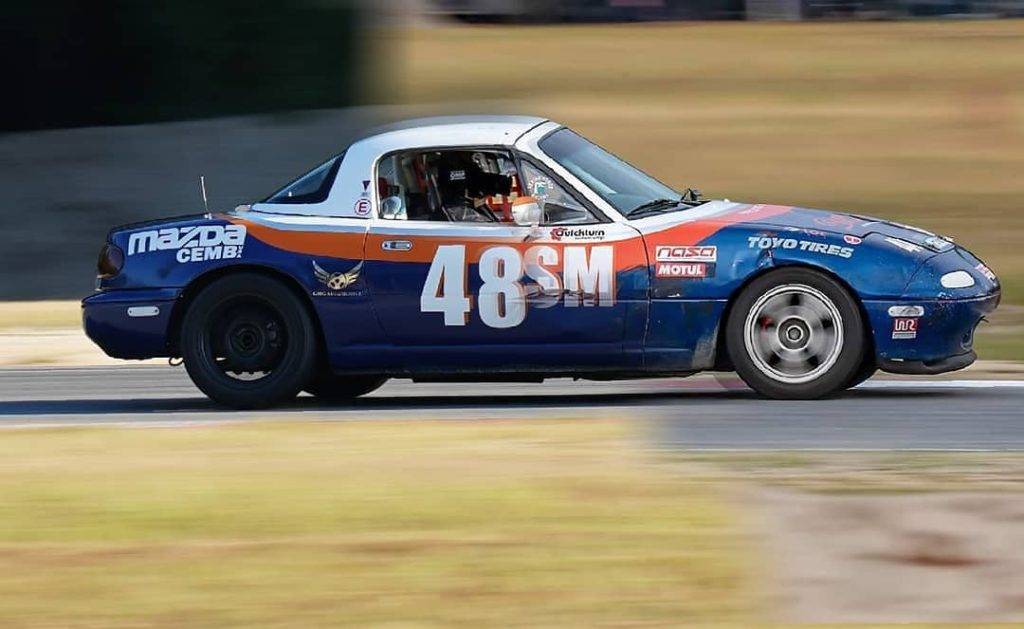
With its blend of high-octane action and laid-back camaraderie, HyperFest has become a blueprint for modern automotive festivals. It’s inspired events like GridLife and outlasted others like GT Live. And it’s done so by staying true to its roots: fun, inclusion, and a relentless love for all things that roll.


This content has been brought to you in-part by sponsorship through...

Cones, Camaraderie, and Car Control: A Deep Dive into Autocross with Tom Hill and Todd Lilly

Autocross – or “solo” as it’s known in SCCA circles – might look like a sea of orange cones in a parking lot to the uninitiated. But for seasoned drivers like Tom Hill and Todd Lilly, it’s a gateway to precision driving, lifelong friendships, and a whole lot of tire smoke. In this episode of Break/Fix, we unpack the world of autocross: its history, its quirks, and why it continues to be one of the most accessible and addictive forms of motorsport.

Autocross is a timed motorsport event where drivers navigate a tight, technical course defined by traffic cones. Speeds rarely exceed 65 mph, but don’t let that fool you — it’s a full-send experience that demands razor-sharp reflexes, vision, and car control. Unlike drifting or gymkhana, autocross emphasizes precision over style, and every thousandth of a second counts.

Photo courtesy Crew Chief Brad, Gran Touring Motorsports

For many, autocross is the first step into motorsports. Todd transitioned from motorcycle racing after a few too many broken bones, while Tom returned to autocross after a hiatus, trading project cars for a C4 Corvette and later a Miata. Whether you’re coming from karting, rally, or just looking for a safer thrill, autocross offers a low-barrier entry point with high rewards. And here are some variants you might want to remember:

  • Pro Solo: A drag-race-style autocross with mirrored courses and a Christmas tree start.
  • Track Cross: Autocross on a racetrack, often with cones to modify layout and limit speed.
  • Time Trials: A bridge between autocross and wheel-to-wheel racing, focused on consistent lap times and precision.

Each offers a unique flavor of competition, and many autocrossers eventually explore these disciplines.

Tune in everywhere you stream, download or listen!

Listen on Apple
Listen on YouTube
Listen on Spotify

Notes

This episode of Break/Fix features a detailed exploration of autocross, a motorsport event that often puzzles outsiders. Originating post-World War II as time trials within the Sports Car Club of America (SCCA), autocross involves navigating a car through a course marked by orange cones in a large parking lot, emphasizing handling over speed. The hosts discuss the sport’s history, key skills such as precision driving, and the importance of walking the course for successful navigation. Guests Tom Hill and Todd Lilly share their personal journeys into autocross, compare it to other motorsport disciplines like track racing, pro solo, and track cross, and discuss the preparation, classing, and scoring intricacies involved. They delve into technology and data usage in improving performance, safety measures, and the overall community and camaraderie surrounding autocross events. The episode also touches on the complexities of car preparation, the varying characteristics of different autocross venues, and advice for newcomers to the sport.

  • For many folks AutoCross has been a gateway, or transition into Motorsports. For some, they went from Karting to AutoCross to Track and beyond. How do you get into AutoCrossing?
  • When you see an AutoCross “course” it can be a bit intimidating, people often joke that it’s just “a sea of cones” but there is a reason/purpose for the layout.
  • One of the most important things every AutoCrosser learns is to “visualize the track” and that oftentimes comes in the form of walking the course, why is this so important?
  • When you really get into AutoCross, it can become really complex, from the Timing/Scoring, Classing and especially the car prep side, let’s explore this. 
  • Is AutoCross safe?
  • There are other variants of AutoCross, like Pro-Solo and TrackCross – expand on the differences? 
  • Like in circuit racing (ie: Track) we have our favorite and least favorite “tracks” is the same true of AutoCross? Aren’t all Parking Lots the same?

Fun Fact: When the Sports Car Club of America (SCCA) was founded in 1944, some of the first events it held were local time trials, also known as Autocross. BUT As we said in the intro… outsiders looking at an AutoCross for the first time might be thinking, “What are these cars doing driving around a parking lot with cones? Is this some sort of driver education program? Defensive driving clinic?” How would you explain AutoCross to someone that’s never seen it before?

Transcript

Crew Chief Brad: [00:00:00] Grand Touring Motorsport started as a social group of car enthusiasts, but we’ve expanded into all sorts of motor sports disciplines and we want to share our stories with you. Years of racing wrenching and motorsports experience brings together a topnotch collection of knowledge and information through our podcast.

Break Fix.

Crew Chief Eric: On this episode of Break Fix, we’re gonna chat about a discipline of motor sports where outsiders often ask What in the world is going on over there? You know, the one, that form of racing many of us started with, where you attempt to navigate your car through a defined course made up of orange traffic cones on a large parking lot composed of tight technical layouts.

These races put handling and driver ability above engine output and outright top speed. So if you haven’t guessed by now, we’re going to be exploring the world of autocross, also known as solo, with my guest, Tom Hill and Todd Lilly, both [00:01:00] seasoned SCCA, autocrossers here to help us really understand what is autocross.

So welcome to Break Fix, Tom and Todd.

Todd Lilly: Hello. Hi. Thanks.

Crew Chief Eric: Good to be here. Did you guys know that when SCCA started in the mid 1940s, you know, just at the tail end of World War ii, some of the first events they held were time trials known then as autocross.

Todd Lilly: No, I didn’t. Did not know that.

Crew Chief Eric: But as we said in the intro, outsiders looking at an autocross for the first time are thinking, what are these cars doing?

Driving around a parking lot with a bunch of cones? Is this some sort of driver education program, defensive driving clinic? How would you guys explain autocross to somebody that’s never seen it before?

Todd Lilly: First of all, you know, my mom, she, you know, it’s like, oh, you do autocross. I thought you drove your car on pavement.

Everything, everybody thinks motocross or something and they’re like, oh, you, it’s like dirt bikes, right? I mean, that’s the first one you gotta dispel.

Tom Hill: Absolutely. But the, uh, other items you mentioned, driver training, safety and all that, I was sort of classified as all the [00:02:00] above. The stuff we do out there teaches you skills that are actually useful in avoiding accidents and being a better driver on the road.

Plus it, you know, gets all of that driving excitement out of your system so you’re a more mellow, uh, driver on the road.

Crew Chief Eric: So when I was growing up, people always used to say autocross is all about precision driving. And nowadays if you say that, they go, wait, you mean drifting? They’re not the same thing.

Todd Lilly: The, and well, the precision part. I mean, you’re, you know, sometimes you’ll be classed or ranked the thousands of a second or even better, you know, so it, it’s absolutely a little wobble or a sneeze. And there goes first place. Some of my other friends, I say, Hey, you know, how fast can you do a u-turn? That’s pretty much all, you know, it’s like, how fast can you avoid a pedestrian?

Can you do a u-turn? Can you, can you do those? You know, ’cause they’re like, man, how fast do you go? Your car looks so fast and you’re like, well, it’s like 25 miles an hour in a, in a street car maybe.

Crew Chief Eric: And not to be confused with another discipline of motor sport, which actually falls under the rally category, partially drift, which is gym kana, which is also sometimes [00:03:00] done on large parking lots.

But those are larger defined courses with walls and barriers and as we refer to it in autocross, one cone turnarounds, like they’re going around a hay bale, things like that. So we wanna make sure that people understand what autocross is, is really about here.

Tom Hill: Like you mentioned, lots of traffic cones.

It’s a bit of a, uh. Mental exercise. I mean, if you’re on a track, you’ve got a fairly defined area, right? You’ve got the pavement and you’ve got the grass. Uh, you typically wanna stay off the grass. Well with autocross, the course is actually laid out in that big parking lot and, and it’s in the cones. The cones really don’t define the course per se, you know, they’re the limitations and all that sort of thing, but the course actually is in there.

You have to be able to go out there and walk the course. Understand, you know, what the path is gonna look like and be able to develop some vision there. And that’s one of the more challenging aspects of it, I think.

Crew Chief Eric: Absolutely. And we’ll explore that more as we get deeper into the conversation. Let’s kind of talk about beginnings.

You know, there’s always an origin story. In this case, we’re not gonna talk necessarily about the history of DER Cross. [00:04:00] Let’s talk about your guys’ history and CROs. So for many folks, autocross has been a gateway into other motor sports. I mean, Brad and I, and unfortunately Brad isn’t here with us on this episode.

I know he loves the autocross. We autocross through high school and college. You know, I grew up with my dad being a national pro solo champ, things like that. So I was always around the autocross course, but it led me to other things. It led me into time trials. It led me into track and HPDE and all these other kinds of things.

And for other folks, maybe they started in carting and found their way into autocross. How did you guys get into autocross? Let’s start with Todd.

Todd Lilly: Well, you know, I was in California and doing, uh, I. Pseudo motorcycle racing. I drive at about 110%, but I have about 89% skill. So you know, a separated shoulder and some other, other broken bones and stuff.

And they had a autocross club at where I worked that they set up in the parking lot. Same thing. What? What are you guys doing? You’re driving around some cones and then you know, I got outta motorcycles and in at a 97 Trans AM [00:05:00] V eight and took it out there and spun it around. Dig donuts. Slid all over the place and went really slow.

Right. And that, and that’s how, you know, and then it went to ESP. So then you had, you know, sticky tires and started throwing money at suspension and brakes and training. Of course, lots of training, lots of seat time. So it really was, wanted to save my skin going from motorcycles to some other sort of cheaper, you know, I, I looked at racing, but, you know, I couldn’t even afford, I was run, had a production class Ninja two 50, right?

Which is basic beginner motorcycle. And even just keeping that going, I was like, man, that I don’t know that I want to get into actual racing, going to the racetrack, putting that additional time into it. So, I mean, that, that’s how I got started.

Crew Chief Eric: Would you say that that’s what attracted you to the sport, is maybe getting out of motorcycles?

The risk had become too high and then it was like, Hey, I’m more protected. Four wheels, this seems safer, or was it something else? Well, you

Todd Lilly: know, and also in California, I, I’d gone to Thunder Hill quite a bit, Laguna Seka, and on the motorcycle. So it was, you know, big, long, [00:06:00] straight. You’re set up for the corner, you’re waiting, you’re waiting turn.

Set up for the next corner. You’re big, long, straight. You’re waiting, you’re waiting. You know, I really enjoyed the cornering and the G-forces. Autocross is just all corners. There’s any straight, you know, somebody messed up the course or it’s like a 4th of July course or something where, you know, they say, oh, you know, we’ll let you get up to 75 miles an hour or something.

But don’t tell anybody.

Crew Chief Eric: So Tom, how about you? How did you get into auto crossing?

Tom Hill: A long time ago, a friend of mine, uh, his dad was doing this auto cross bent and I had a, uh, a 1980 Honda Accord that I had, you know, worked on, put bigger tires on that sort of thing. So, you know, my initial auto crosses were, were back in those days, back in the, in the mid to late eighties.

And I, I ran some and then, uh, sort of gave it up later on. This was probably about 15 years ago. I was, uh, thinking about building some other, another car. But then I had sort of had this crisis of conscious where I was thinking. What am I gonna do with this car? Once I build it? It’s gonna be some kind of fast, hot rod.

Can’t [00:07:00] really rip up and down the uh, highways and byways anymore. There’s too much traffic, so I thought, well. Hey, what I’ll do is start autocrossing again. I actually got rid of the project cars that I had and I went out and bought a, a c four Corvette and started Autocrossing. The thing I like about it is I, I’ve done some track days, you know, those are fun.

Uh, but I’m, I’m with you, Todd. It’s kind of compared to autocross, it’s, I don’t wanna really say boring, but the autocross, like you say, is all turned all the time. I mean, you’re either setting up or you’re turning or you’re speeding up, you’re slowing down tracks. A lot of times, you know, you go to the turn, you turn in, you hit the apex, you accelerate.

I mean, it’s fun, but it’s just the pace is a little slower. Plus it seems to be harder on the car, on the track. Almost every time I would go to a track day and come back and have to replace brakes. Plus with autocross, I’m lucky we’ve got a good site here locally. I can go autocross and come home, mow the grass.

You can go get your uh, you know, motor sports on, but still be home in time for dinner.

Crew Chief Eric: Let’s settle A little debate between the track guys and the autocross guys. ’cause I know we’ve [00:08:00] all dabbled in both and you hear the arguments both ways. To your point, Tom, oh, it’s a little bit slow, it’s a little bit boring, this and that.

It’s repetitive being at the track, but then you hear the same thing about the track guys talking about auto costs. I gotta wait around all day for three runs that are gonna be a minute or less. And if you’re lucky to, to Todd’s point, some of these 4th of July courses that are a minute and a half long, oh my God, that, that’s a stretch for an autocross.

I don’t wanna say which is better. Which is right. Maybe they both are, maybe they, they both have their pluses and minuses, right?

Tom Hill: Oh yeah. I feel like any people that are involved in motor sports. That’s drag racing, drifting track stuff all across. I mean, they’re all part of the family and I think, like you said, they all have their pluses and minuses and certain things appeal to certain people.

I’m not saying track stuff’s boring. I’ve never actually done any wheel to wheel racing, so I would imagine that would be pretty exciting as well. You know, I was out doing the, the track days, so, you know, you’re just out there kind of goofing off when you get right down to it. You gotta like picking up cones if you [00:09:00] want to do all the stuff.

Todd Lilly: I like hitting them. Yeah,

Tom Hill: yeah. But, but I think that really, that working the course gives you an opportunity to stand out there and watch what other people are doing. You know, I find that that actually helps me do better when I’m driving the course. If I get to watch a bunch of cars go by, and especially if you’re on one of the tricky corners, you get to see what works and what doesn’t work.

I’m with you. I mean, all across hell, I, I went one time to an event in Georgia. I drove, uh, eight and a half hours to get down there. Like I say, I’m gonna get six runs. They’re 30 seconds, 40 seconds a pop. Well, my accelerator pedal broke on the first run, so I got about 30 seconds of driving for my, you know, 16 hours worth of transit time anecdote on that.

So a

Todd Lilly: regular, regular autocross then, huh?

Tom Hill: Yeah, no. Oh, that was so frustrating. But when I, the first time I went to nationals, we ran out of daylight when I was running my class. I burned a tank of diesel fuel for each run that I got on the course at National. Geez. So [00:10:00] it took me five tanks of diesel to get there and back.

So, yeah. You know, I, I understand, but I do feel like those 30 seconds, 45 seconds, 62nd runs, I mean, it is. Pure excitement the whole time.

Crew Chief Eric: It is full send, as we call it, around here. There is no room for error and you are pedal to the metal, that’s for sure.

Tom Hill: That’s what I like about, of course, I haven’t ever done wheel to wheel, so I’d like to,

Todd Lilly: I did some lemons and I, I, you know, it’s sort of like what you’re saying, that the autocross is continuous Absolutely.

At the edge of your seat. And I did, you know, lemons wheel to wheel sort of, you know, the difference between, uh, track days where you just set up, turn in apex and you know, gas on the way out, wheel to wheel. You’re like, oh, I need to get around this car and then still make the corner. So it’s like, okay, I’m gonna do a Chicago box around to that guy.

Oh, the car is sliding a little bit. I slide my car all the time in autocross so I know what’s going on. And then, you know, changing different lines and stuff. So I think the autocross experience really helps out all of your screw ups on the racetrack. Every time I’ve screwed up, [00:11:00] you know, it’s been like, oh, well I’m sliding, I know what happens next.

Right. You know, but if it was just racetrack experience, I’m like, oh, I do not wanna slide. I don’t wanna. Change lanes suddenly. I don’t wanna, whatever, where autocross gives you the chance to do all that stuff, reasonably safe, put ’em together and it’s pretty fun. Unless it, you know what I mean? But yeah,

Crew Chief Eric: I do, I do.

And, and it can be summarized in a small phrase, which is car control. Every discipline of motorsport brings something else to the table. And I always approach motor sports as this broad brush thing that you can learn something from every discipline and it makes you a more well-rounded driver. For instance, if you started in carts, what did they teach you?

Other than that, carts are really slow compared to anything else you’re ever gonna drive except for Miata. But we’ll get into that. I gotta take a pot shot at Tom a little bit. What I’m getting at here is. It teaches you Racecraft. That’s one of the best places to learn how to be in a pack of other cars like a Spec Miata race.

As you grow into motorsport, things like that, [00:12:00] autocross brings car control, which to your point, Todd, when you’re in a on a racetrack and the car suddenly breaks loose on you, it becomes instinctual how you’re gonna react to that, you know? And, and rally brings different things. They all bring something to the table.

So, like I said before, I don’t know if one is necessarily better than the other, so much as they’re all stepping stones to where we want to go. Eventually. I don’t know what everybody’s goal is gonna be different. Some people live in the world of autocross forever. So let’s kind of expand upon that and talk about.

How do you get started in autocross? What does it take to get going? What do you really need? Are there schools and how do you get better at this particular sport?

Tom Hill: What you need is a checkbook, a pulse, and a car with a good battery hold down and that right there will get you started in autocross.

Crew Chief Eric: Well, there’s about 50 of those at the Hertz rental lot.

So, uh, yeah,

Tom Hill: yeah, just make sure the battery’s tied down. That’s the, seems to be the number one thing that flunks people on tech inspection, but to me it’s all about showing up and doing it. There are plenty of stools. The group that I ought to [00:13:00] cross with is very good about helping people out, and that’s one thing I’ve noticed amongst the auto crossers is, you know, you’re fighting the clock when you get right down to it and people are just very willing to help out.

I mean, they’ll help their competitors out if their car breaks and they’re like, here’s the part you need, put it on. Let’s go a benevolent organization, if you will. They’re, they’re looking to help so the local people can help get you started. We have a driving class. Our, uh, club does the EVO schools that they do before most of the national event.

So there’s lots of ways to get training. The whole key is really just getting out there and getting behind the wheel and doing it to it.

Todd Lilly: The Evo schools, you know, you’re throwing a little bit of money at it, but like you said, autocross, I would jump into anybody’s car. Not that I’m, you know, know what I’m doing, but I mean, anybody that has an idea of where to go could jump into anybody’s passenger seat and just point and say, okay, left.

Well, you know, look to the right or whatever and give somebody directions, whereas. A track day, I’m probably not gonna jump in your car and, you know, and, and let you go full, you know, so autocross, you can have somebody sitting in the passenger seat telling you where to [00:14:00] go, what to do, and how to do it, basically.

Crew Chief Eric: So I gotta give a shout out though, the era that Tom came up in same era that my dad came up in and autocross, he went to the Dick Turner Autocross School. You could still find a lot of those classic eighties autocross training videos out there on YouTube and whatnot. We’re gonna link to that in the show notes, so shout out to them.

But to your point, there’s the Evo schools, a bunch of other ones. If you wanna learn really about autocross,

Todd Lilly: you show up, like you said, with 50 bucks or whatever it is, and a car with a battery that’s tied down. Really. You just gotta show up. You’ll show up and there’ll be somebody there with, you know, their mom’s Tercel or what you see kids bringing out their, whatever, you know, whatever their parents happen to have, and bring it out there and drive it and see what happens.

Crew Chief Eric: Autocross seems to be a little bit more open than say, track events where, you know, we have the broomstick test and this test and it can’t be a convertible and this other thing and up and down and PDQ and it can’t be an SUV, you know, all that kind of stuff. It’s more inviting. You got a card to your point and it’s got a battery tie down, let’s go.

Let’s have some fun. And even the coaching style isn’t [00:15:00] nearly as formal, right? I don’t ever hear about certified CROs, coaches like there are on the track side of the world, you know, everything’s so. Regimented and political when you go to the track world, right? It’s very different, but obviously the speeds are higher, safety’s a bigger concern, you know, things like that.

We’ll dive into the safety of Otter Cross as we go through the conversation, but that’s good to know, right? Just run what you brung as they used to say, right? Come out, have a good time, and learn something new. And that’s usually when you get bit by the Otter Cross bugged. It’s almost like, like I’ve said before, it’s like golf, right?

17 really crappy holes, and it’s that one run, that one hole that makes a difference and then it brings you back every time, right?

Tom Hill: I’ll echo it again. The first time you’re driving on the street, after you’ve been autocrossing for a while, if something happens. You put your autocross skills to use to avoid an accident, you’re like, Hey, you know, this is worth it from, uh, not just a fun perspective, but, you know, staying alive on the, uh, on the, on the streets, on the mean streets.

Right.

Todd Lilly: My wife also drives a GTO with me, co drives it and, you know, she had a [00:16:00] Jeep Cherokee daily driver, California, of course, all the best drivers out there. Not on the freeways though. So, you know, some sort of freeway snafu. You know, somebody parks their car in front of her and she, you know, does basically a Chicago box with a Jeep Cherokee.

And she says, man, that guy that, you know, he pulled out in front of me, you know, ’cause it was on a on ramp, right on ramp stuff going. She’s like, I noticed I was on the gas. As I was, you know? Right. So she ga gassed it out, you know, the Jeep started to lean a little bit. She just gassed it and you know, added steering input.

And she’s like, so I noticed I had my foot on the floor going around the on ramp. I’m like, well, that’s good. You didn’t run into anybody. You didn’t flip junkie old 200,000 mile.

Tom Hill: If she had not been autocrossing, that would’ve

Crew Chief Eric: likely been an accident.

Todd Lilly: Yeah, absolutely. I was happy she raced with me.

Crew Chief Eric: And I think the thread we could pull out of that is one of the things that Autocross teaches you, even though the speeds aren’t nearly as high as say like a track lap, is that you find the limit of your vehicle very [00:17:00] quickly and then you can work backwards from that.

And so even at that lower speed, you know, kinda limited, let’s say the second gear, third gear on, on some courses, on some lots. I mean, you can still get the car outta shape and then learn how to walk back from that, which is really, really good.

Todd Lilly: Definitely learn the limits of braking. I mean, you definitely learn the limits of braking and you know, braking and steering that they don’t normally go together.

Tom Hill: You mentioned that in Chicago Boxes side. I remember. I can remember. You know, it’s funny, maybe you had a similar experience, but I remember the day that the Auto Cross thing slowed down for me. I was charging into a Chicago box. I was breaking a hundred percent. I was turning a hundred percent. So that means I was basically going straight, I was heading towards the back of the box.

And you know, these things aren’t that big. And I remember having the thought, you know, Hey knucklehead, take your foot off the brake. And I did. And the car turned. But it, it was weird because normally I, by the time I would’ve had the thought about taking my foot off the brake, I would’ve been through the back of the Chicago box making the workers run.

It was literally like a, almost like a switch flip, where suddenly at that [00:18:00] point forward, the cones weren’t coming at me as quickly.

Crew Chief Eric: I mean, it just slowed down. But you guys mentioned something a couple times this Chicago box, and people were probably thinking, what is this? What is this box? What? There’s boxes on the parking lot now.

It’s a type of gate. And so autocross uses a series of gates, you know, um, decision cone gates, slaloms, increasing, decreasing, all these kinds of things. And so we outlined that as well. There’s a link in the show notes that to kind of better explain what our guests here are talking about tonight. But what I wanna kind of address is when you see an autocross course.

It’s really intimidating. People often joke that it’s just a sea of cones and there is a rhyme and reason to this layout, and that’s the point that I’m getting here too. When we’re talking about Chicago boxes and Slaloms and so on. Obviously the goal is to navigate the course any way you can as quickly as possible.

And Tom alluded to this, the cones kind of define the boundary, but not necessarily the path you need to take. What should someone expect to learn or get out of this discipline of autocross and how do you [00:19:00] reshape it based on driving style and car and things like that?

Todd Lilly: Some courses like, you know, I’ve done good guys and my company, they had a real small lot.

I mean, some courses are literally a sea of cones and the only line you can really drive is. Inside of those cones, but it’s really hard to tell where the corners are because there’s so many cones and you just, you get lost the, the cone in the front versus the cone in the back. And we’re gonna talk about walking the course, but I mean, sometimes you have so many cones that you know you really need to pay attention.

As far as your preparation for the course.

Tom Hill: The first field that you have to develop, you’re gonna succeed at autocross is making sure you’re in control of your eyes and where you’re looking. So, you know, when you look at that sea of cones, there may be 25 cones out there that are defining a couple of features you’re gonna have to go through.

But there’s probably gonna be like five or six of those cones that you really need to be paying attention to, separating the week from the chaff and just training your eyes to look ahead. All across speeds, say 30 miles an hour, [00:20:00] you’re going about 45 feet per second. So if you’re looking close to the front of the car, if you’re not looking 50 feet ahead.

You’re essentially looking at stuff that’s already happened. First primary skill thing I harp on when I’m talking to uh, uh, novices is make sure that you’re looking in the right place.

Crew Chief Eric: And to your point, Tom, you mentioned earlier about working the course and watching from that vantage point. When I would work the course, I would always laugh because I could always tell when somebody was driving what we call gate to gate, they could only see the gate that’s basically right in front of the car and they couldn’t see the path in front of ’em.

Somehow. They like a rat finding the cheese at the end of the maze. They made it to the end without going off course and, and all that kind of stuff. It’s just interesting how we all visualize the course differently. And I always felt, and I don’t know about you guys, if you ever done the events where they chalk the boundary of, of the course, I feel like that’s cheating.

Like it just makes it too easy.

Tom Hill: But it seems like when we do that, there’s always a few places where the chalk, it winds up going away because. That’s not really a [00:21:00] boundary on the course, it’s just sort of a guideline. That’s right. And, you know, you probably, uh, uh, need to go out a little bit to, uh, get around a particular cone.

So, uh, so I’m with you. Sometimes I feel like the chalking of it causes a problem ’cause people think that that is a boundary.

Todd Lilly: Sometimes, you know, they’ll throw in an extra cone just to create that boundary, or they’ll throw in a, a cone of 10 or 15 feet back from the alleged apex as opposed to on what would be a good apex.

So, I mean, sometimes the course designers, they’re not throwing out cones there to give you the nice, pleasant experience. You know, some of those guys are good at making you, uh, envision some sort of a magic cone or a, or your imaginary cone or whatever, and Chicago box, or a slalom or whatever you need to get from, you know, one element to the other and then tie ’em together in some sort of a fashion that is conducive to a good time.

Crew Chief Eric: And that’s actually a really good point that you bring up because I find myself doing that at track days as well, especially in time trials, which we’ll elaborate on a little bit [00:22:00] here, is that I almost visualize that there are cones on certain tracks. I mean, we could use Shenandoah Circuit at Summit Point as a prime example.

There’s parts of that track that you would ignore, just like if it was a slalom at an honor cross. And so you have to reshape the course sometimes that it’s not just about track in Apex and track out it’s, my car doesn’t wanna do this this way. I need to reshape the boundary, utilize the asphalt I have available and make, pretend that there’s one of these cone like obstacles there to kind of set up the car mentally.

So being able to visualize that is super important. Obviously, you know, we touch on the fact that autocross teaches you car control. The basics of under steer, over steer neutral, steer, all that kind of stuff. I think there’s more to it than that. It’s all about steering input more than anything. And there’s a bigger debate to be had, which is fixed.

Versus shuffle. So who wants to take that on with a chuckle? They both chuckled at this one.

Tom Hill: I like to set my cars up with fast steering so that, uh, I may be able to, uh, not, I can, you know, not have [00:23:00] to shuffle. I find that I, when I do have to shuffle, I tends to set up earlier in the turn. So I think I used kind of a hybrid approach of the two techniques.

Todd Lilly: I would have to agree that knowing where your hands are at all the time, you know, I’m not one of the guys that that will pretzel my arms over each other trying to do the turn, but having the race car steering wheel with the little red stripe, you know, this way up. Type deal. You know, it’s always good to know which way you’re going and that’s just your natural, you know, return to center point as far as how much turning you’re do doing.

But being a GTO Pontiac guy, you really gotta know how to shuffle because if you can’t do a donut and go and still put in a good time and autocross a good time on the clock, then you know you’re really not driving and that takes shuffle.

Crew Chief Eric: So I agree with both of you that I think there’s a hybrid approach to this and watch anybody’s in-car video, whether it’s an autocross or track event.

First thing they’re gonna comment on is your hand placement. And it’s like, well, first of all, did we get through there safely? Do we get through there [00:24:00] fast? Yes. So doesn’t really matter. I mean, I can sit here and watch pro racers. I, I’ve commented hundreds of times about Hurley Haywood and Hauck and Terry Neville, and they shuffle, but then they don’t, but then they do.

And to your point, I think it all depends on the situation, the corner, where the car is, if you’re trying to react to it, things like that. But I believe there’s a third option. And to your point, it’s about presetting your hands and then basically putting the steering wheel exactly where you want it and then bringing it back to center.

And so it’s a mix of both fixed and shuffle steering. And I’m sure we could do an entire episode on that by itself. But I wanted to bring it up because it’s important that CROs teaches you about hand placement. And then after that. Well first eyes hand placement and then it’s all throttle control at that point.

’cause some cars you are gonna throttle, steer. And Tom, that’s especially important in your little Miata.

Tom Hill: Absolutely. Well, I had a Corvette that was, uh, a big throttle steering car as well. There’s multiple facets that have to be sort of mastered, or at least you gotta get reasonably good at. You know, I think it’s a challenge that [00:25:00] goes on.

I mean, I’ve been doing this for, you know, like I said, 13 years now, and I still feel like I have plenty of improvement to go. I have firmly proven to myself, to my competitor that I’m a slightly above average driver.

Crew Chief Eric: I like the way you put that. That was very well done.

Tom Hill: So, uh, you know, I keep trying to get better.

I, I think I do. I get a little better every year. To me, that’s kind of what’s so interesting about it. And I see these people that come in and are naturals and just come in and go from novices to winning. A couple of seasons and, you know, most of those folks move on and do something different. I, I guess they feel like they’ve mastered it, they get bored.

Uh, I have not gotten bored yet. That’s a good thing. Yeah.

Todd Lilly: Being mediocre means you need to hang out longer to, your claim to fame is that you’ll be around long enough that all the people that beat you might die before you and then

Tom Hill: Well, and

Todd Lilly: I mean, I’m there with you. I’m waiting.

Tom Hill: So we, we have a guy un unfortunately he did pass away, uh, year before last, but he was well into his eighties.

He was, uh, still auto crossing [00:26:00] with us. He went as fast as he was. He had auto cross for a long time. But, you know, it was still kind of fun because, you know, young guys would come in and, and they’d race in his class and, you know, he’d beat him by two seconds and, which is an eon. And I always wanted to go over to him and say, Hey man, you realize that your granddad or maybe even your great-granddad just beat you at autocross.

So I thought it was kind of fun that this guy could come out. He would put his age as his number on the car, and then he stopped. He was worried people were gonna get, you know, kind of nervous when it was like 89 or 90 on the car. But you know, he did this for a lifetime, you know, and I think that’s pretty cool.

Crew Chief Eric: We’ve hinted at this earlier in the episode, one of the most important things every Autocrosser learns outside of the car control and things we just discussed, is how to visualize the course. Right? And that requires you to do something that Tom mentioned, which is walking the course. Why is walking the course so important?

Why should you not skip out on that?

Todd Lilly: First of all, I mean, it’s not a racetrack or a [00:27:00] drag strip. You’ll likely never see the same. Autocross course twice. So that means you got three runs at the least. So there’s your minute and a half total to throw down your, you know, your first place run. So you gotta go in with a plan because you know you’re never gonna see that exact same course, likely never see it again.

Definitely won’t be the same pavement temperatures, same tires, same whatever. So the, the walk is the very first part of trying to memorize that course and coming up with a plan that you try to execute on that fir very first run. You don’t have a warmup run, you don’t have a bunch of sighting laps.

There’s no time trials. You get three to five runs, six. I mean, it depends on the club, but you know, nationals is, is three runs. Right. So you get three to get it done.

Tom Hill: Yeah. If you get out and blow it on your first run, then the heat is on. You gotta get out there and eyeball the course. To me, it, it always seems, you know, most of the national stuff flows pretty good, but there’s always a couple places you’re gonna need to do something.

[00:28:00] I say is unnatural, and you gotta identify those places and have a plan to get through those features. And typically those are the ones where maybe there’s not a lot of points of reference, things like that. Those are the features that win or lose the event. And that’s something I still struggle with, is really coming up with a plan that, you know, survives first contact with the course.

Todd Lilly: Uh, you know, I’m, I’m always mooching off of the guys, find out who drives well and who will put up with me, right? That’s another, that’s a smaller group of people. And then start bugging those guys and walking the course walks with ’em, you know, and they normally walk right where they’re driving. Uh, you know, the guy I having to be hanging out with now, you know, I’ll be like, Hey, I, I don’t think you really know the course.

Maybe you can talk through it while you’re walking, which is fine. But then, you know, we’ll get back to the start and he’ll say, okay. Repeat the course back to me, right. And I’ll be like, I don’t, I think there’s a left somewhere, you know? And he’ll say, okay, you know, you’re, you know, and he goes through the whole course in his head without looking at the course, and he says it out loud to me what he’s gonna do late Apex, [00:29:00] early apex, when he is gonna break what, you know, what he is looking at, which corner he is gonna throw away.

And he, you know, just blurts it out. And he says, okay, let’s walk again. And then I’ll repeat about half the course and then we’ll walk again. I’m a slow learner. So then after maybe three times I can say my plan out loud. And then at least when I get in the car, I have a plan. It might not be the plan, but you, you gotta have a plan when you get in the seat.

Tom Hill: I’m with you. It’s, it is to me, it’s like you, uh, hopefully won’t make any huge mistakes. So you sort of chip away at the time, you know, that’s the thing, when, when I get data, compare it with people that drive faster than me, typically it’s not one huge mistake that I need to correct. They’re just a little bit faster.

Finally have realized that it’s all about chipping away. It’s about, you know, you save half a second by finding tents in the hundreds, literally of a second out there on the horse. And that’s what separates the winners from the losers.

Todd Lilly: They’re getting on the gas just a smidge earlier than you, which gives them a couple more miles per hour leaving the corner and a couple more coming into the corner and yeah.

Right. Placement for the right [00:30:00] speed. Yep.

Crew Chief Eric: So on average, how many times do you guys walk the course?

Todd Lilly: Well, depending on the course and length, and if they allow bicycles, I mean, the, the course I’m at now, I, you know, you can walk it three times pretty quick and easy. When I was racing on a, the, uh, backup for the shuttle landing airfield, they allowed bikes.

So you’d ride your bike maybe twice and you, you know, you’re, that’s enough exercise for the day. Right. So, I mean, if you can walk it two times, it’s my minimum. Mm-hmm. I don’t know about you, Tom.

Tom Hill: I walk it as many times as I could stand it. I went to an event in Bristol, Tennessee a while ago and had my, uh, you know, my handy Danny Apple watch on there.

And it was a pro solo, it was a four day event, and over those four days, I, I believe it was, I walked almost 30 miles. It was crazy because we walked and walked and walked the courses and we were in the situation where we could actually walk it sort of during the event once. So yeah, I, I will walk it as many times as I

Crew Chief Eric: can.

So, do you guys also use maps? Do you make notes? Anything like that?

Tom Hill: I don’t. I try to, just, [00:31:00] like I said, when I’m out there walking the course, I’m trying to figure out where I’m gonna be looking, and I find if I’m looking in the right place, the path sort of works itself out. I don’t have to be totally focused on that.

If I’m just looking in the right place, things tend to fall in place. But there are, like I mentioned, typically two or three, four places. That you’re gonna have to do something that might seem, you know, a little weird.

Crew Chief Eric: And I bring up the map and I don’t normally express my opinions when I’m at a track event, but I usually smirk when people are handed a map of the course.

I’m like, you can see that the turn goes left. I mean, I, I don’t know what you need a map for and I understand why it’s okay, but when you get to an autocross, I feel like you’re pelli looking for the fountain of youth. You need some sort of reference sometimes when you’re standing in the Chicago box and you turn around and go, where the heck am I in the sea of cones?

I just wanna express to people that there’s these other tools that you can use, right? Obviously there’s software you can use now on your, your smart watch to map out the course if you need to see it that way. Make notes, you know, there’s paper maps always available, but walking the course, [00:32:00] the more you repeat it to your guys’ point is the way it’s gonna cement it into your head.

But it also draws a very interesting parallel to another form of motorsport, which is rally. Right. If you look at World Rally to Todd’s point, they never see the same course twice, and they have a set of hieroglyphs for notes with a navigator telling them where to go. But CROs and Rally are very similar in that you get one sighting pass in a passenger car to figure out where the course goes, and then you’re supposed to, you know, do the whole thing in 130 miles an hour wide open.

It translates. It’s kind of interesting how, again, the, there’s crossover between autocross and other disciplines of, of Motorsport out there.

Todd Lilly: Tom uses some sort of data. I have some sort of data thing, you know, and I tried carrying that around once and then. Sort of looking at the map that distracted me. I, you know, I know a, a couple guys that are really good at it, they take a video around the course.

They’re just, as they’re walking, they take the video and it’s, it’s a really good time to interject funny stuff into their video and moon them or whatever. But one guy [00:33:00] I know does that has video. Another guy, you know, ’cause you’re going to the same place over and over. He’ll have, you know, like a Google photo or a Earth View photo or something and he just draws the map in real quick.

My former workplace, they would set up the course with a map. It’s a known course. You could just have the printed off copy of the map and, and what they actually laid out, I think, not nationals, but some events have maps of the course that you can at least take a note and say, oh, I wanna remember break here, or whatever.

You know, I’m trying to always try to keep things in my memory, but I don’t have time to look at ’em, write ’em down or watch video. But maybe that works for somebody else.

Tom Hill: I think an overhead map, you know, you don’t get the same sort of visual. Picture to do when you’re, when you’re driving or walking the course.

It can even be a little bit weird going from the walk to the drive too, depending on, you know, how low your car is, those sorts of things.

Todd Lilly: Like I said, I’m always mooching off of people that are driving better than me. And first guy that she, he’s like, okay, you’re like six, whatever, you know? How tall are you sitting in that Trans Am?

And I’m like, I’m about belly button height. He’s like, [00:34:00] okay, squat down, you know? And he’d point, he’d say, okay, see that dip in the road? And you see the, so yeah, def, it’s definitely different, different heights and different speeds and yeah,

Crew Chief Eric: all of this is very true, but I’m coming at this from behind the scenes because my dad was a big autocrosser.

He was also autocross chair for different regions and different clubs and things like that. I always got to see it from the Friday night after dinner as he sat down with an 11 by 17 sheet of paper and mapped out what the course. That he was gonna design. To your point, Todd, about follow the fast guys, here’s another top tip.

Go ask the course designer for the map and what he was thinking when he drew it on a piece of paper because he had something in mind when he laid the course out. So there’s another kind of like, Hey, look at it from that perspective too. Or maybe think about the course designer drives a Miata, I wonder if this course is geared for his car and not for the GTO or something like that.

I mean, they’re never geared for the GTO, but let’s face it, right? But just some top tips there. Something that’s [00:35:00] just like an CROs course. Think outside of the box a little bit in terms of strategy and how you might pick up a 10th or two by asking different questions and talking to different people. And that leads us into the next part, which is when you get down to it, autocross can be really complex from the classing to the scoring, to data, to the prep, all of that.

And actually I wanna ex. Expand upon Tom’s comment about data because we’re used to running data at the track with things like an AIM solo where we’re looking at, you know, individual corners and braking speeds and exit speeds and things like that. How does data work on the autocross side?

Tom Hill: If you’re on a

Crew Chief Eric: track,

Tom Hill: right, you could take data.

Analyzing that data might be useful for the next time you go to that track. ’cause if the track’s not gonna change with autocross doing sort of the postmortem I think helps you identify your mistakes, but it really doesn’t give you an opportunity to go correct that particular mistake. Getting the data consumable in between runs is a, a tricky thing.

I find it sometimes and it [00:36:00] can be sort of distracting in many cases. Just looking at my video and seeing where I messed up is the best thing during the event. But there’s some guys, and I’m trying to get better at this, that are really good. At comparing paths and, you know, really refining their technique during the event.

So to me that’s the, the big challenge with Auto Cross is it helps to look later, but you’re, you know, that’s, like I say, it’s sort of a postmortem you that, that data, you’ll have to learn what you did wrong and try not to make that mistake on the next course. But you’re not gonna be able to say, well I should have been two inches closer to that cone.

’cause the course is gonna be totally different the next, or at least different enough that the data’s not gonna be any good for the next event.

Todd Lilly: Yeah. As a mediocre drivers, Tom and I, you know, and then being overwhelmed with data, the thing I have, it can compare the two laps, you know, show you which element you got through faster.

Or maybe you come in and you have a really fast time and you have no idea. Like I didn’t change anything from the first lap, so maybe the data can pick out where I slowed [00:37:00] down or where I really picked up some time. You know, maybe I just chose just a slightly different path. And then, like Tom was saying, that you know, the postmortem looking at your videos, you can say, oh geez, look at how late I am getting on the gas.

Or, you know, I’m not looking ahead, or I’m way off the cones, or I’m turning too slow, or whatever. So, I mean, the data is kind of multifaceted, but sticking your head in into that iPad or laptop or whatever you got is, it’s really tough to do, especially if you’re co-driving, right? You’re busting just trying to get the tires cooled down, the pressure’s done, the seat belt’s done, and then there’s no time for data.

So, I mean, don’t count on it.

Tom Hill: You know, even a sunny day can make it difficult. You need to go find some shady area to, to even be able to really look and see the tablet appropriately.

Todd Lilly: I have looked at some people’s fast guy, right? Run over to his car. Push the buttons on the camera and watch his video real quick.

And I’ll say, oh, he’s using that imaginary cone where, you know, where I’m running through the chalk line or something. You know what I mean? [00:38:00] So you might be able to get something off of somebody I know at Nationals, first person out with the first video immediately puts that on YouTube or wherever, and people are watching that video trying to figure out what’s going on.

Crew Chief Eric: Did you say watch the video or delete his video? Which one was

Todd Lilly: it exactly? Delete the video at the time doesn’t count. Well,

Tom Hill: I wonder if you’re ever gonna really address this, because we’ve had some folks, ’cause you know you get to walk the course the day before. Well, there’s been some folks that have been taking advantage of some of these simulations capabilities.

So they can take videos and sort of recreate the course in their simulation and go run a hundred runs in that course the night before. And I’m not sure what they’re gonna do about that. There’s been some debate over, uh, how to either

Crew Chief Eric: embrace or, uh, prohibit that sort of technology move every cone six inches the next day.

And it’s all, you know.

Todd Lilly: Right. Well, so the, you know, one of the things we did, uh, I may maybe we’ll get into with classing and whatnot, but you know, there are some fairly strict rules about, you know, no, you’re running the same heat, the same time, the [00:39:00] same temperature as your competitors. You don’t have all day to get it done.

You know, you’re all running at the same time. You know, the same heat, you don’t get a extra look, you don’t get to be a passenger and, and you know, and see the course at real speed. Right? You know, all that stuff. Then you add into what Tom is saying, you know, you got a simulation of the course with video from the course.

You know, the guy holding the camera at belly button height walking. What he thinks is a good line. Yeah.

Crew Chief Eric: Or a drone. Or a drone, right. Or whatever. I mean, it could be anything. Right. So,

Todd Lilly: yeah. And you know, in some places they, you know, they don’t let you ride bicycles because they don’t want you to be able to get that momentum going and figure out, you know, what is a good line on a bicycle.

Crew Chief Eric: So Tom, you talked about data, and it sounded like from a software perspective, is there a package or a software, something you’re running on a phone or a tablet that you would recommend for somebody that wanted to try out recording their session?

Tom Hill: The reviews I’ve gotten from most of the phone-based apps have not been that great because, uh, normally the integrated GPS is really not fast enough.

So I’m actually using [00:40:00] a race capture system, which is a standalone data acquisition system. It’s got a fast GPS on it, it has a set of accelerometer. So I get some, uh, data about, you know, how the car’s moving, not just from the, uh, just from the GPS connected in with, um, it controls the camera. It’s connected via CAM bus to the ECU.

So, uh. So it’s a pretty comprehensive system and it’s, that’s another one that’s kind of interesting. ’cause you know, that system was probably five or 600 bucks, which is not chunk change, but it’s certainly not 10 years ago. That was probably a $20,000 setup. It’s, uh, it’s really kind of surprising how the technology, how, how accessible it is to us, uh, autocross and, and amateur race.

It’s educational too. It’s been very interesting to me. Not just from, you know, the racing perspective, but the whole, uh, analyzing data, gathering data, learning about sensors. I mean, it’s, that’s, that’s been a lot of fun for me.

Todd Lilly: Gonna add, so I’m, I’m using a, a low dollar tablet and an app solo storm, which you can run on, you know, you can run that on your phone, but if you buy the, you [00:41:00] know, the super duper package, it comes with a GPS device.

And like you’re saying, the, you know, just using your phone might be good enough if you want some data, you know, you’re gonna have to end up adding some sort of sensors. Now on the other end, one of my friends is a, you know, retired Ford engineer that ran their racing program, you know, and he’s got all sorts of data on his car, so he’ll change tire sizes or, you know, make any minuscule change.

And he’s looking at difference in, you know, G-Force for stopping and turning and, and what his wheel speeds are over time. And, you know, just all sorts of. Crazy stuff, you know? And he is looking at changes in ride height during braking and grip forces and brake temperatures, brake pressures. So you know, you can use the phone and it might be useful maybe, right?

Or you can go completely nuts. And you got, there’s your 10 grand full,

Crew Chief Eric: full race engineer. Yeah. Yeah. I mean it’s, it’s one end of the pendulum or the other. Something for our listeners to look into, and we did a previous episode on this and happens to be in your backyard, Tom. We had [00:42:00] Andrew Rains on Break Fixx to talk about the Apex Pro.

And as we compared that to other systems like the AIM and the Garmin and others, and he explained how the platform works, I found. Really good applicability for the Apex Pro in an autocross situation because it gives you that immediate feedback with the AI and the machine learning to tell you, you can go a little harder in this corner.

Granted, at Autocross, everything moves really, really fast, but if you’re able to record that and look at it the next time it’s telling you your tires can give you a little bit more. Now you have that feedback between the first run and the second run and the, and the subsequent runs after that. So maybe that’s something to look into as, as the bridge in the middle of these two ends of the spectrum.

As you guys can see, it’s pretty darn complicated, but it gets even more complex when we talk about. Classic. So who wants to explain how this all works within this kind of microcosm inside of autocross?

Todd Lilly: I, I’ll, I’ll go first. I’ll go first. I’ll go first for my car. 66 GTO. Classic [00:43:00] American Muscle, you have to have finished interior and it can’t be any bigger or smaller than factory dimensions for the, you know, overall width, height, size.

Tom Hill: Don’t you have to have a 200 tread wear tire as well,

Todd Lilly: right? Yes. 200 tread wear tire. Yeah, that’s actually a defining, you know, having that tread wear really is, you know what takes everything apart, right? If you had sticky tires, then you’d start worrying about a lot of other things. But yeah, so my class is pretty much run what you brung my first event, you know, I just got it on the road, no interior.

And the way the rules were written, I just took that sharpie and I wrote, finished interior on the floor pan, you know, and the judge said, Hey, where’s your finished interior? You know the rules say you have to have finished interior and I’m. It’s right there and he looks at it and he goes, yep, that’s finished interior.

Crew Chief Eric: So let me take a basic question to this, which is, what class do you run in Todd?

Todd Lilly: Classic American Muscle. Oh, okay. Traditional kmt. Yes, it’s kt. Okay.

Crew Chief Eric: There’s a [00:44:00] lot more classes now than in the old school days when it was showroom stock, stock street, prepared, prepared and modified. Those were the, let’s call those the top level domains of classes in R Cross.

Right? Yeah. Then you have all these splinter groups inside of there.

Todd Lilly: My class cam really started, because you know, now it’s up to year 2048 to 2000. Some of the classes kind of started getting less, uh, showings. ESP doesn’t even run anymore, I don’t think. You know, the CSP guys, all those guys with the sort of race car classic cars, and then there’s a lot of dudes with muscle cars that wanted to come and do something.

So they tried to get a set of rules that you could just bring that classic car, whether it’s 20 years old or 40 years old. Bring that out, you know, and have some fun with it in a class, right? So I mean, that was, you know, my class is a little bit different than, say, Tom’s mine is sort of like, Hey, we’re trying to get people that already have a car.

Here’s a car. Try to get those guys out here, the good guys, autocross, the racing birds, the optimal ultimate streetcar and stuff like that. I mean, [00:45:00] those guys want, you know, wanna play in SECA. So that’s what my class really came from, is trying to get that, that group in as opposed to Toms,

Tom Hill: the variety that you see in those classes is always interesting.

I mean, the limiting factor basically is the 200 tread wear tire. Uh, and you know, those few things, like you said, finish interior, a few other odds and ends, but it’s Katie, borrow the door. Otherwise, if you wanna put up. 9,000 horsepower engine in your car, have at it. You probably won’t be able to put it down with a 200 tread wear tire, but nobody’s gonna say you can’t run into class as far as classes go, just there’s a street class, a similar street class can use 200 tread wear tires as well.

There’s a whole crop of tires that really blossomed around this, uh, this sport and around that t wear rating. You know, you can make some changes. You can do some slight changes on the wheels. You can, you know, put a cat pack exhaust on it, you know, you can change your shock absorbers. You know, there’s, so there’s, it’s not just straight up as it rolled off the showroom floor.

That’s the street class and it goes all the way from Super Street all the way down to I think H [00:46:00] Street. The Super Street cars are the fastest ones. The H streets are the slowest to an extent. They try to group cars together that are. Similar in their performance capabilities. Then you move into, uh, like street prepared, which I’m in, and there’s really not a whole lot of street left in street prepared.

I mean, uh, I, I run a 15 by by 11 wheel on a 2 75 tire. I had to cut the fenders, the air conditioners out. You take the radio out. I, I replaced, uh, the seats with racing seats. I mean, it’s, it’s pretty, it’s not a very comfortable car to drive on the street. It’s got very stiff springs, crazy shock absorbers.

You know, you can do a lot of stuff. You really can’t get inside the engine and do very much. But at the stuff on the outside of the engine intake and exhaust, all that stuff is basically unlimited. Uh, my turbocharged you can’t fool around with the factory turbocharger, but you can fool around with the boost control.

So, uh, there are some advantages, there’s some opportunities to build a horsepower there, and I’m, I’m skipping over a few of the classes, but then you get into some of the mod [00:47:00] classes and that gets even crazier where you can chop the windshield off, you can get the interiors. You know, really get the cars very lightweight.

So, but there is a proliferation of classes and I think some of these attempts, like the um, CAM stuff, there’s some street touring classes. The idea there was to try to maybe have a class that more cars could run in, but they really haven’t eliminated

Crew Chief Eric: any

Tom Hill: classes

Crew Chief Eric: along the way.

Tom Hill: So, well, they also

Crew Chief Eric: didn’t know where to put all the WRX STIs either.

They had to build STX around those cars. ’cause where else were you gonna put an all-wheel drive, four cylinder turbo car? It just didn’t make sense.

Tom Hill: Well, they were in, uh, they were in my class for a while and, and the B Street prepared, they moved them up to a street prepared. And I was kind of glad to see that because, uh, at that point time I was driving a, uh, my big heady Corvette and I, it was hopeless.

Uh, yeah, it, it’s, it’s really kind of sad because, uh, the street prepared classes especially I think have, um, you know, and this is not a knock on cam, but, but a lot of the ones that had the Detroit iron in ’em, if you will, those classes really have suffered. ’cause people have moved over to cam. They, s’s not [00:48:00] the right word, but they’re less attended.

They’re really trying to do a similar thing with this SB and excess a, I believe they’re calling it now, which is gonna be essentially cam for imports. When you get right down to it, you know, my problem is I’m hooked on the purple crack, man. I got to have my Hoosiers, I mean, I wanna be running on any 200 trigger tires.

To me, that’s the detractor or the, the thing that keeps me out of the uh, CAM and or S-V-X-S-A.

Todd Lilly: I find that I see the limitations of the 200 tread wear tires. But as far as with an open CLA where you can do, like you’re saying, I have the low, I have 400 horsepower, right? So I’m probably the lowest horsepower car out there where I came from, you know, they had big blocks and, you know, six, 700 at the wheels.

That 200 tread wear, it’s okay. How well can you steer this car? Mm-hmm. We don’t care how much, how big, how good your engine builder is or your gear ratios and all that good stuff. It’s how well can you actually drive the car. So I think the 200 tread wear is a pretty good defining factor. And you missed one [00:49:00] class.

The what? The BRZ and the FRS class. They had that Snowflake S don’t t. Yeah. Right. So that’s another, that’s almost a spec class I think, Tom. It is.

Tom Hill: There’s a, uh, sort of package of mod you can do, and then you’re out there, you know, it’s, it’s a mono, a mono if you will. It’s driver on driver action. There’s not really a whole lot of, uh, you know, I guess around a line few things, but it does limit the, the prep to a formula.
Crew Chief Eric: Todd, I have to ask you a direct question. What are the width of your tires on your GTO?
Todd Lilly: Well, well the, you know, and if the, the tire wars, it’s either three 15 or 3 0 5, whoever has them. Oh. Oh,

Crew Chief Eric: okay. So it’s still slightly bigger than Toms Miata audience. You heard that right? Two 70 fives on a Miata. I believe they call those either square or box Miatas sometimes, because they are, they look like little roller skates with those lot of time, you know, 11 inch wheels on ’em.

It’s nuts.

Tom Hill: Yeah, it looks a little weird, but it sure does go around corners nicely.

Crew Chief Eric: You know, and it’s funny because you’re in one of the most highly contested classes, I think in all of SECA and it’s traditionally always [00:50:00] been C Street prepared. And even my dad fought for years in C Street prepared with an original CRX si.

And it was one of those deals where back then CCSP, the rules were so tight and so stringent and obviously they’ve allowed more things and it’s mind boggling every time they make a change to CSP. ’cause in the old days it was like you could run whatever, you know, with the wheel and tire so long as it fits.

Within the fenders. And then there were these weird exceptions, like, well, if you had a mark one GTI and had the factory fender extensions that was legal, so you could get a bigger tire, and then you put like nine degrees of camra in there so it would fit inside the fender and you still have like a 2 55.

It was, it was insane, you know. But now, I mean, I see these guys, you know, cutting the fenders of the Miatas, putting these big tires on there. And I’m just like, shouldn’t you be prepared? Like I, I don’t get it.

Tom Hill: And you can, you can cut the fenders, uh, in, in the plane of the wheel mounting surfing. You can

Crew Chief Eric: cut a pretty good bit off the Miata fender.

That’s insane. And so you’re running an [00:51:00] NB Mazda speed, or was this a modified Miata?

Tom Hill: It’s a Mazda speed, so it’s in B Street prepared. So I got S two thousands. And the, the funny thing is they put the, uh, the new Miata in that class as well, so. They have a pretty good weight advantage. And the big kicker is they’ve got a gearing advantage.

So my car, typically you’re gonna see some third gear action ’cause it’s geared so low. If it’s a course that doesn’t require the, uh, newer Miata to go to third gear, then I’m in a pretty good disadvantage. If it’s a course that requires them to go to third gear, then I, I’ve got a pretty good advantage ’cause I’ve got better acceleration in third gear so that, that’s part of the game.

You know, you build yourself a car, you know, and, and when you do a full build on a street prepared car, you know, it’s, it’s not a inexpensive kind of thing. And then they, you know, some class changes come along and it sort of, uh, may relegate your car to the, uh, the back marker place. So that’s exactly what happened with my, uh, Corvette that I had.

Todd, do you know the names? Uh, you know the Barry family? Yeah, the guy [00:52:00] Ankeny.

Todd Lilly: Yeah, yeah, yeah, yeah.

Tom Hill: This, this black Corvette that I had was Tom Berry’s car, been built by Guy Ankeny and it was National Champion back when the C four was a car to have in that class. And it was a, it was a barrel of monkeys to drive, but you know, it just was not gonna beat these newer, smaller, lighter cars.

Todd Lilly: Not in that class. It won’t, yeah. If you’re limited, those c fours won’t do it. But now some of the cam guys are building killer C fours. Mm-hmm. Right. But that’s to open the rule book and you can see what happens. But again, you’re just pouring in money.

Tom Hill: I wonder if those built c fours are gonna be able to hang with a built even C five with a transactional in the back, those sorts of things.

I hated to see that car go ’cause it was so much fun to drive. Guy Ankeny is a genius on the stuff that he does with regards to setup. When I was working on that car and, you know, maintaining it, I would come across these little touches and I was like, man, that’s clever and I won’t reveal into the secrets here.

It was a well set up car. It was fun to drive. I hate to see it go.

Crew Chief Eric: So do you guys feel like CROs sometimes is a little bit of keeping up with the [00:53:00] Joneses, or is it more trying to find new ways to work within the boundaries and the parameters that we’ve been given? It’s Todd’s point. We’re mediocre enough that we wait for everybody else to leave and then the class works for us.

’cause we’re the only ones left.

Todd Lilly: Let me, let me cut in before Tom starts talking. So he, he has a different class, different car, different idea. Right. When I got into, I had that TransAm, I bought a GTO and I built it because the TransAm was failing a California smog. So I just built this car for myself. I was gonna drive it to work, drive it to the racetrack, drive it wherever, air conditioning, cruise control, you know, automatic headlights, track control, A, b, s, all that stuff.

And I wanted, just wanted to. To drive it and then, hey, cam class started. So I mean, I didn’t necessarily build the car for the class. I built the car for me, then Cam happened. If I was gonna try to win cam, I would take a C five, you know, zero six, cut the top of it off. Put a Mustang on top of it or [00:54:00] something and you know, or a tube frame chassis, a Mustang and come in at 3001 pounds.

And if you’re building a cam car to win, you got a load of money. And a lot of dumb, because I got a load of money in it and a lot of dumb, and it’s not, you know, and it’s not really built for the class, you know, it was just something I built. So,

Crew Chief Eric: yeah, and, and I think that’s the other impasse that you hit, which is you can only go so far in a class till you realize you have to switch cars if you wanna be nationally ranked or a champion or, or whatever.

So I’ve seen that a lot where people are like, wait, when did you get this car? Well, I wanted to be competitive in this new class. That’s the hot thing to be in.

Todd Lilly: Yeah. Whereas, you know, whereas Tom’s class, any class basically that has a Miata in it, follow the flow chart. Miata is the answer. Right. So. So you build it to that class spec.

Crew Chief Eric: It used to be CRX, but you know, Miata has taken over. Yeah. At least for Otter Cross. At least for DER Cross. Oh yeah.

Todd Lilly: And I did own a Miata, so I mean, I still have one in the trunk of the GTO. I use it as ballast when I have to put a little extra weight on. But I, I [00:55:00] mean, it’s not a built Miata. So

Tom Hill: the Miata situation is nice ’cause there’s a lot of traffic in, uh, used parts and that sort of stuff as well.

That’s kind of a nice thing. I like my Miata. I’ve had a couple of Miatas, I think they’re cool cars. I have a sun in Alpine too, so I’m, I appreciate the little British car. And to me the, especially the first gen mi was like all the good stuff from the British cars. All the good stuff from the Italian sports cars mixed in with that was a short list, wasn’t it?

Yeah.

Todd Lilly: I dunno. It had a funny name.

Tom Hill: Yeah. Had 16 valve twin cam, high rev engines and the, you know, and the Italian mix, of course, they broke every 10 minutes. Most of the British cars were sort of hip on their styling, but. You know, they had voters out of tractors, that kind of thing. None of ’em were reliable.

So, you know, you mix all that together with some good Japanese reliability and that’s what all the, the, all those sports cars wanted to be back in the day. So I, I’ve enjoyed my Miata. I like the Corvette. Like I said, everybody that does this, in my mind is part of the family. I love ’em all, appreciate their cars.

I just want [00:56:00] everybody to come and have fun and enjoy their cars. I appreciate pretty much all makes and manufacturing.

Crew Chief Eric: So knowing what you know now, because you’re on the subject matter expert end of the pendulum for the folks that are starting out, right? This is kind of a double-edged question. If you had to start all over again with the cars that are available today, what would you buy?
Which segues into what are some great starter autocross cars that’s not your mom’s caravan or the Hertz rental car like we were joking about at the beginning. I

Tom Hill: think we’ve established that Miata is typically the answer for most Motorsport questions. So that’s an obvious choice. There’s lots of ’em out there.

Three series BMWs. Honda S two thousands, C five Corvettes, C six Corvettes. There’s a lot of cars out there. It’s just kind of depends on what you wanna do. I mean, there’s literally, in my, in my mind, there’s a car for almost every taste, if you will, that can be all across and do pretty well. No love for front wheel drive.

That’s what I heard out, right? Yeah,

Todd Lilly: I was just gonna say all there, there’s a common denominator there, which was river drive. Starting out [00:57:00] though, and trying to buy a car that’s gonna do well. I mean, you know, we got Mr. Purple Crack here and I’m 200 tread wear. Starting out, you have no idea if, do you want to have high horsepower or do you want to go with STS or whatever, you know, low horsepower.

But man, they can turn to buy a car. Starting out. I would show up at, I had a Acura Vigor or whatever, whoever made vigor or vigor or whatever. I like to call it vigor king Vigo, or, you know, made it anyhow. Yeah, right. The Viagra car, you know that five cylinder? So you show up with some turd and you kind of go from there and you see, you know, maybe you like the looks of a car.

I like the looks of a car and I build it. The Miatas are great fun. I mean, stock Miatas are fun to drive On the street, I don’t really fit and I got into an accident once, so I don’t want one. But to start out, yeah, I would take my mom’s car, my dad’s car, or any car, I’d get my rental car, you know, and go see what I like.

Tom Hill: Basically it just needs to be wider than it is tall [00:58:00] Auto cross and like I mentioned, uh, a, a sturdy battery hold down and, and then do it to it. But I do want to go back, you know, on the front wheel drive thing, it’s uh, we have a guy that runs with us. Who has a, uh, a neon and that’s a, you know, that’s an autocross car.

They had a great contingency program back in the day. They were very popular. Well, the funny thing was, apparently the guy that was like the manager of the neon program for Chrysler was

Crew Chief Eric: an autocrosser. Wally Swift. I knew him personally. Yes. So, you know,

Tom Hill: the car came with a little bit more suspension adjustment than you might have normally expected in a economy car.

But it’s a lot of fun because this guy’s got a, a first gen neon, a CR. He bought it off the lot, didn’t even know what it was. He was just looking for an economy car. But it’s always fun when, uh, you know, new people are show up and they’re like, well, yeah, can I get a ride with something? It’s like, yeah, just go ride that guy with his neon.
It’s, it’s just a neon. Then they come back with a bit of a terrified look on their face and say, I thought I was gonna die. Which is always a, a fun thing to do to
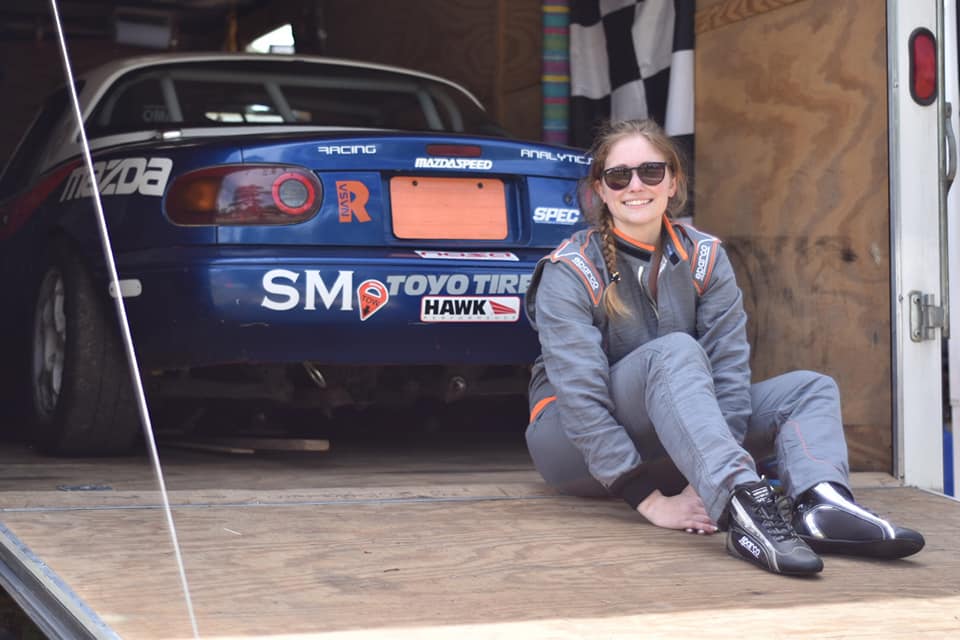

Crew Chief Eric: people. [00:59:00] Fun fact about Wally, he autocross forever, but he also was the owner of an alpine he auto to across a tiger. So, uh, there you have it.

Oh yeah, I remember that. He, I think well didn’t, yeah, he took that tiger quite a ways, as I recall, didn’t he? Yep. I mean, obviously he was in Detroit for a long time, but he resided in the BMV after he got out of all that, but awesome guy. Uh, unfortunately he passed away many, many years ago, but many of us here in our area knew Wally very, very well.

So, yeah. That’s, that’s funny how small the Otter Cross world can be, even though it’s a nationally recognized program.

Todd Lilly: I was enjoying your story about the neons. I almost bought one.

Crew Chief Eric: I’m sorry.

Tom Hill: Well, this guy’s running an FSP. We’re trying to get him to sort of take it to the next level. He is running the white tires and all that sort of stuff, but there are other things that he could do to, uh, kick it up a notch.

Crew Chief Eric: So this actually brings up a really good point about car prep. You can take this two ways. One, I’ve heard it said many times, autocross make terrible track drivers and track cars make terrible autocross cars, right? So [01:00:00] you can go either way. It, it’s vice versa. Track drivers going to autocross and, and, and, and so on and so forth.

The disciplines are so different and the driving styles are technically so different, grounded in the same foundational properties that they cannot. Used in both realms. Right? It’s like taking a bow and arrow to go shoot something you need a bazooka for, right? It just, it doesn’t, it doesn’t work. Do you guys think that that’s true or is there a compromised car that could do both

Todd Lilly: 66

Crew Chief Eric: GTOI I’ve ridden in your car?

Yes, it does.

Todd Lilly: It’s, you know. So, uh, sorry Tom. Lemme cut. So again, I had, you know, one, a friend of a friend, it was like a Mr. Actual track training type, like professionally paid to do this stuff for racing teams. So he helped us out at some event and he is like, what are you guys doing with your cars? And he is just goes through this whole list of stuff that we should be checking on our autocross cars.

We’re at a race track, track event. He’s like, you should be checking this, this, this, this. You know? And did you adjust [01:01:00] this? Since the track and all these adjustments he would’ve made, he knows Autocross and he knows track cars. He is like, did you guys make any of those adjustments? And I’m like, I put gas in it.

I think

Crew Chief Eric: I’d say chiropractor,

Todd Lilly: right? Yeah. You know, yeah. Check tire a couple pounds lower and we’re good to go. I mean, as far as one that does it both. I mean, I don’t change my stuff because it’s kind of hard to change from autocross to a road race configuration. And then I just drive around it knowing that if generally if it starts sliding, I know what’s gonna happen as opposed to trying to make it this track beast.

Which, I mean, you could pick up a couple tents, but if road race and tracks were any easier way it would be drag racing.

Tom Hill: Oh man.

Todd Lilly: Boom.

Tom Hill: My experience with the C four core events, the two of ’em that I had was. The big change that you needed to make was different tires, but I would, like I said, I typically would ruin a set of brakes.

That was the other thing too. You didn’t wanna run with your autocross bands on the track.

Todd Lilly: Not for two hot laps [01:02:00] in a row. You don’t.

Tom Hill: Nope. But I, you know, I always, I, I enjoyed those. We have a. Motorcycle track, little Talladega. It’s near the big Talladega, and that track was pretty cheap to rent. So I, I did a number of track days there.

It was, uh, you know, a hundred to 53 times in about a minute and a half for the lap. So it was, it was pretty brutal on brakes.

Crew Chief Eric: We talk about autocross and its complexity and this and that, but there’s one piece I think. That we’ve forgotten to address, which is the penalty side of autocross. I mean, in the track world, the penalty is, eh, I scrubbed the lap.

Or maybe you had the, uh, the unfortunate incident of mowing some grass or something like that. But at autocross, we have to remind people it’s a competitive event. It always is. There’s no like fun runs. It’s not like a de or there are fun runs, but it’s not like a de where you’re out there learning and it’s all about expanding your knowledge.

You’re competing against the clock, you’re competing against other cars in your class. You’re competing against everybody that’s there. So what’s penalty for screwing up? [01:03:00] Well, if you hit a C,

Tom Hill: it’s a, uh, time penalty. One second, I believe is what they’re, uh, putting on there. Is it two,

Todd Lilly: depends on where you’re racing.

Depends on where you race.

Tom Hill: So it depends thing. When we do two, I don’t hit cones that much, but, uh, it says modestly. Well, actually it’s a problem if you’re not hitting cones, at least on occasion, you’re not trying hard enough. Uh, yeah, two second penalty. I mean that, and in two seconds is like 10 years in autocross.

If you hit a cone, unless everybody else hits a cone, you’re probably done with that run. You’re heading towards a gate or a feature and you don’t go through that feature appropriately. You go around it or you miss it, which, uh, you know, if you’re not looking ahead, that’ll happen. Then it’s a DNF, so you don’t get a time at all.

They’ll, they’ll typically post what your scratch time is, but that run does effectively doesn’t count.

Crew Chief Eric: Also known as off course. Right, right. Because you did not stay within the boundaries of the course. There’s also another DNFI believe you can get, which is blowing through the stop garage when you run out of brake pads.

Isn’t that right, Todd?

Todd Lilly: Yes, exactly.

Crew Chief Eric: The other thing is, yeah, maybe you hit a cone. You know, a lot [01:04:00] of people worry, oh well it’s gonna mess up my car and this and that. Which kind of leads us into the question is autocross safe?

Tom Hill: Like I said, I’ve been doing this for a while. I have seen two cars essentially get towed, so it is not without risk, but I’ve also seen numerous cars.

We just had one a couple weeks ago, you know, the car, uh, we had one go in the ditch, the guy got it out, took it to the car wash, washed mud off and ran in the afternoon. Uh, he had a couple little minor problems with the car or you know, cosmetic issues, but you know, he is probably gonna fix it for less than 200 bucks.

So anytime you get out in the car and you fling it around, there is going to be a degree of risk. We endeavor and have safety rules, debates, and we’ll change the course if we think it’s dangerous. But you know, there’s only so much protection from an individual that can be done if you do something colossally stupid or perhaps have an equipment failure.

There is a risk of of hitting a solid object. Yeah. I’ve never seen anyone injured. I’ll put it to you that way.

Todd Lilly: We’ve had equipment failures that have had things, have a lot of people running off course. I do know one person [01:05:00] that had a stuck throttle on a, some sort of a kick, you know, 700 horsepower in a 1500 pound car, and that car went straight.

That was a mess. You know, that’s, uh, some sort of a failure on a home-built car, which is different than your, you know, driving your mom’s car. But, yeah, you know, I wasn’t kidding. I do not on purpose, but I generally, if there’s room, I’ll do a donut instead of, you know, if I, if the backend starts to come around, you end up doing a donut or spinning out or, or running over a whole pile of cones.

One time I was like, I was yelling at my wife. You just smashed into that cone. Well, I wanted to try going straight and see what happened. So you can do that, right? I mean, you can just go straight, hit a cone and say, oh, no big, you know, I gotta rub a little plastic off the paint. Generally speaking, you know, it’s a smoke and go, or a, you hit a couple cones or you get a red flag and you gotta stop or something like that.

But generally speaking, it’s way safer than track. But we’re not talking like good guys, autocross or Optima, ultimate streetcar, autocross, where they have concrete kras [01:06:00] all the way around the autocross course. So, I mean, that’s a different, some organizations wouldn’t allow the concrete caveras around, you know, they say it’s, you don’t have enough safety barrier.

The SCCA absolutely has a load of rules and they have a safety, uh, chief safety, you know, it’s a steward. Yeah. Actual position steward. Yeah. So I mean, they’re trying to make a safe course. If your top speed is. 50, that if you have a, a reasonable driver, a reasonable idiot, that you’re reasonably safe.

Crew Chief Eric: And some of that also comes down to the construction of a lot harder and harder these days to find lots like there are in California or maybe abandoned airports or even down south where Tom is, where there’s not a lot of islands and, and things in the middle of the lot for lighting.

And you know, the days of, you know, running at certain stadiums is still sort of a deal, but not really anymore, right? ’cause they’ve tightened down on what can be done and where auto crosses can be run and all that. So obviously you want a, a parking lot with the least amount of obstructions and those are the safest ones.

But then you have to keep in mind, hey, if there is some sort of [01:07:00] barrier in the center or whatever, where is that? You know, what’s the transition like? Are they using that part? How close is it to a gate? So these are things you have to kind of use your better judgment on your own. Are you gonna go 11 tenths into that corner?

Well, no. Maybe that’s to the point. You guys were talking earlier. That’s the throwaway corner. We’re gonna take it easy ’cause we don’t wanna do a donut six feet from a curb. Granted, they would probably never put the gate that close, but you never know, right? Physics will take us in interesting directions, but there’s another side of this, right?

We talk about all the time, and you guys mentioned it earlier, at least on the track side of the house, tech inspections, right? When you go to the track, because the car is under heavy duress, heavy stress, and lots of heat, things are prone to fail a lot more than, let’s say, they would be in an autocross.

So our tech inspections are very in depth, or we’re checking all these things. It’s like almost like a safety inspection for your state. What’s a tech inspection like for autocross? What are you looking for? What are you checking? Do you do it beforehand? Do you do it on site?

Tom Hill: That’s one of the things I do for, uh, our events is, uh, due to tech inspections, you know, we’re checking to see that [01:08:00] there’s not any sort of bad leaks.

I, I keep mentioning the battery. Hold down. That is the number one thing. It gets people in trouble in the tech inspection. You gotta have your battery batten down. Uh, I remember there was a guy there and a Lotus police, whatever. The battery’s in the front, the previous owner had left one of the hard to get to, clamps off, pull down.
Of course, it wasn’t really evident in the tech inspection. Battery came loose at the autocross trundled around under the hood. There did like 12 grand worth of damage. He had to have it taken on a tow truck. So, like I say, battery hold down’s, biggie. You wanna make sure that the steering wheel’s not loose.
We, we wiggle the tires to try to see if there’s any loose lu nuts. You know, you’re, you’re basically just doing a good visual inspection looking for anything that could cause problems in an autocross situation. It’s not terribly invasive, but you know, loose items outta the cockpit. Seat belt’s in good shape, no big cracks that obscure the vision on the windshield battery.
Hold down for the 11th time. You know, no missing lu nuts, things of that nature, but it’s, it’s as comprehensive as a, uh, five to seven minute inspection could be. [01:09:00]

Crew Chief Eric: Yeah. And that wheels shake is also for wheel bearings as well, to see if anything’s clicking or clacking CV joints, stuff like that. It’s a lot of suspension, heavy inspection.
I just outta curiosity, you guys still did the hands off brake test like in the old days. Uh,

Tom Hill: no.

Crew Chief Eric: So for those that don’t know what that is, I used to love that at the end of the tech inspection they would have you take off and then take your hands off the wheel and then slam on the brakes. And the idea was to see whether the car would track true, would track straight if there was an issue with the alignment.

So wasn’t sure if that had totally gone away. I always thought that was kind of fun and kind of just silly. ’cause you could drive with your knees if you were smart, but hey, you know, whatever.

Tom Hill: We do a walk around tech inspection, so we just, you know, stroll around a lot. And, uh, check cars out.

Todd Lilly: I also do tech inspection and yes, it’s always the battery hold down that you’re, you know, sending people away class and numbers sometimes sends people away.

The other thing is the lug nuts. You know, we had in California, one guy showed up and he is, and he was missing a lug nut. And the tech inspector, you know, he is like, come on man, I, you know, I’m [01:10:00] just missing one lug nut. And the guy’s like, okay, well, you know, go replace that lug nut and I’ll, you know, I’ll let it go.

So he checked the two wheels on the other side, were missing two lug nuts as well. Sometimes people are just asking, you know, it’s like, you know, that kind of person where you don’t inspect your car at all and autocross a track day, any of these things, this is not an arrive and drive. This is not come and show up and drive our supercars, drive our go-karts drive.

This is your car. You are responsible, right? So I mean, if your state has an inspection, basically it’s a state inspection would be good enough to, to do autocross.

Tom Hill: The other thing that is, uh. Become problematic as of late. We run sound at our events because that seems to be the number one complaints, and it’s such an inexact science, but we do have to run sound.

We, we we’re in a high school, uh, football stadium parking lot that’s right next to a big bunch of apartments. That’s one of the things that as of late, it’s been problematic.

Crew Chief Eric: It’s your guys’ sound limit, the same as the track guys. Is it 103 decibels? No, it’s like,

Todd Lilly: I think it’s 90 at something. Our, you had so many feet or something.

[01:11:00] 98 at

Tom Hill: 50 feet or something? Yeah, it’s like 97 or 98 that runs DNF. You get some warnings and stuff like that. Lower levels. Depending on the humidity and working with some of our guys. ’cause you know, huntsville’s just chalk a block with engineers. I’m thinking there’s gotta be a way to calibrate things.

Maybe you use one of those boat horns or something. It’s all about how it sounds to the people in the apartment. So maybe you go stand over near their place and blow the horn at the. Sound meter and ensure that it’s about the same every

Crew Chief Eric: time. I dunno, it sound sounds to me like super traps need to come back in style.

You guys remember those? Or you put the plates on the back to quiet the car down and whatnot? I, I have

Todd Lilly: one in my tool toolbox. Those, yeah. Yeah. I was just gonna say that, that’s a standard, uh, autocross item. It’s a plug in, you know, super trap type deal. I don’t know if yours, Tom, if yours is actually a super trap, but

Crew Chief Eric: he has a turbo.

That’s like a muffler. Anyway, so, you know,

Tom Hill: I was concerned about it being too loud, so I got thing that would fit over the, uh, exhaust, the tit. I loaned it to a guy one time at a, an event when he was blowing sound in his, uh, s 2000. It turned out to be so restrictive that his car wouldn’t even go [01:12:00] into Vita.

Crew Chief Eric: Wow. It’s like

Tom Hill: that

Crew Chief Eric: scene from Beverly Hills Cop where he shoves a potato, a banana tailpipe, right?

Todd Lilly: Oh, yeah. Uh, I mean on the sound thing. I, I get ya. There was, I was there with a guy some. Porsche, uh, at a track day event, and we were parked right next to each other. And I start my car and it’s pretty noisy, and he starts his car and we’re kind of screwing with each other before the event started.

You know, I revved it up a little bit and he revved it up and people were like, man, that GTO is loud. I’m like, okay. He ends up getting thrown off the track for sound violation, and I didn’t. It’s because my exhaust was pointed away from the sound meter or something. And, and to Tom’s point, you know, we’re not trying to get kicked off of these courses, these pads, right?

So I have, uh, you know, cutouts, I can close my cutouts if, if we’re in a, you know, some sort of a place where you wanna be a little bit, uh, less noisy, but you know, it’s really about what you hear, the DB where the meter. Is sitting is not necessarily what the person in the apartment complex is hearing, you know?

So I mean, as far as trying to keep your place happy, just [01:13:00] going by sound meter alone might not necessarily do it. One of the places we used to race, they would say, Hey, if you guys got cutouts or if you got super trap, put your Laguna Seka exhaust on because we’re trying to keep this lot. It just sort of depends,

Crew Chief Eric: and that’s also really important too, I guess, dovetails back into that safety conversation as well, is also to remember that you are a steward of the discipline.

So what you do coming and going from the lot. It’s representative of everybody that’s there. So, you know, kind of like the cars and coffee thing, if you screw around leaving, that has ramifications or repercussions for the people. And sometimes it has caused folks to, or organizations to lose lots. So, something else to keep in mind.

It’s not just about what’s going on when you’re there, it’s also in that surrounding area. And don’t be fooled if you don’t think the cops are hanging out either. Right. Waiting for everybody to tear out of there.

Tom Hill: It’s funny because almost without fail, we will have somebody drive by our event, not affiliated with the event.

They see a bunch of guys and guys out there driving around in their cars and they’re gonna have to do [01:14:00] a, you know, top speed run as they go past the site. Yep. Um, we’ve actually done some, uh, emergency service challenge races where we’ll have the cops and the ambulance drivers and such come and, and run.

We do what we can to, uh, maintain good relationships with those people. Uh, we’re, we’re sort of using this site at the pleasure of our local school system. So we do, um, the street survival schools, uh, that SECA puts on. And those are
Todd Lilly: excellent.

Tom Hill: And the other thing that’s kind of cool in hunt school, they’re doing this green power racing.

I don’t know if you guys have ever heard of it. Mm-hmm. It started in the uk it’s about electric cars. They got a class that, uh, they have elementary school, middle school, and high school kids. They have these kick cars. Basically they take ’em apart and put ’em back together as part of the class, learn about electricity, and they get out and race ’em.

Uh, and it’s like an endurance race. And the club does timing and, uh, race control, support for the schools along those lines as well. So we do what we can to make sure we’re giving back and being a valuable part of the

Crew Chief Eric: equation here. We’ve talked a lot about TER Cross, [01:15:00] but there’s. Other sort of sub variance of CROs.

I know of two others, pro solo, which we’ve mentioned, and then there’s Track Cross, which I know Todd does. Are there any others, and let’s expand upon the differences a little bit. Obviously we defined CROs, but what about the other two?

Todd Lilly: Track Cross is generally, and it depends on the the event, but generally it’s just a section of track that, you know, they’re timing it like autocross, so it’s one car at a time.

Same basic idea as autocross, but it’s on track. Occasionally they’ll throw out a cone or two to maybe slow down a corner, kind of change the speed. So, you know, like we were talking about Shenandoah, they use, you know, a section of the course that doesn’t have the straight, because they’re trying to keep, you know, the speeds in the seventies, you don’t, not into the hundreds depending on your car, of course.

Right. So that’s track cross where it’s, it’s actually on a road course track. So, you know, the cool thing is you can go learn the track and then go to this track cross, and then if they’re going the same direction [01:16:00] using the same sets of corners, you know, maybe they’ll use the emergency turnout or they’ll, you know, use some sort of a bypass or the infield or something like that.

That’s a little bit different. But you know, if you went back to 10 events, you would see the same course a couple of times and you’d have a chance to say, oh, I know these three or four corners, and you could throw something together.

Crew Chief Eric: And they’re still using cones to change the configuration of the track, even though the track is.

Static.

Todd Lilly: Some do like Shenandoah, not much of a need for additional cones. I, I did one in, uh, Las Vegas and they put, uh, those 55 gallon, you know, barriers in there that would mess up, you know, it was a, it was on purpose, you know, they’re like, if you hit that, you’re gonna destroy your car, so don’t drive through there.

So, I mean, it just depends on the event and who’s running it. There was one at Thunder Hill where they put, you know, a Chicago box in the, you know, in one of the straightaways, which wasn’t so good because there’s a wall there. And, you know, some people aren’t thinking about that. So that’s, you know, that’s another, you’re talking about where’s your throwaway corner, where are you gonna give it, you know, full go.

I think about if I lose control [01:17:00] of this car, where am I going? So in that straightaway, and then a Chicago box, maybe you want to take it easy on doing that lane change. A Chicago box is like avoiding a car in the middle of the road. You know, maybe you’re gonna take it easy on that. So it just sort of depends on the club.

Crew Chief Brad: So pro solo.

Todd Lilly: That’s all Tom. You know, I got the GTO and everybody’s like, oh man, wow, that’s so cool. The car’s so fast. What kind of times do you run? And I’m like, oh, you know, like 53, 54 seconds. It depends on the auto. They’re like, no, no drag race. I’ve never drag raced it. I’ve drag raced a motorcycle for fun, like at a track once.

But other than that, no drag racing terrible at the lights. Tom go.

Tom Hill: So pro solo is uh, kind of a blending, uh, somewhat of drag racing and autocross. There will be two courses. They endeavor to make them as equivalent and similar as possible. Mirror image, usually right, right. Mirror image, they try, depends on the site.

Regular autocross, when you come up to the start line, you get set and then they’ll tell you, okay, you can go. And [01:18:00] then the timing doesn’t start until you take off and break the beam. So you can sit there and, you know, scratch your head for a minute. With pro solo, it actually has a Christmas tree start, so that’s the sort of drag race angle.

The scoring on it gets kind of complicated. Normally the way it’ll work is you’ll have a day long session where you’ll do kind of standard dish kind of autocross thing, where you’ll come and get probably three runs. And that will be three runs on each side of the course and you do ’em kind of back to back.

So that’s kind of fun. And then you’ll come back and do an afternoon run and then the class winners and such will be selected then at that point to go into the tournament the next day. Normally they’ll have a last chance where you’ll come in and get two more runs of the course in the morning if you’re not already a class winner to kind of get in, you know, on that second chance sort of scenario.
But then you’ve got an index time that you ran the previous day, which is basically your fastest time. The objective is essentially to run as close to that time as as you can, and if you don’t, it does just reestablish your [01:19:00] index if you run faster. And then in that part of the show, the light timing is different.

So the what they want to do, they’re trying to make it so that both cars will finish at the same time. So if you’re in the 400 horsepower SSM and you got somebody that’s in the H Street Cobalt or whatever. You’re gonna have to sit there after they take off, which could be a little bit of a discipline problem.

So I’ve run pro solos. I think they’re fun. I’ve never really done very well at them. The, uh, other thing we haven’t talked about, the handicapping system called Pax comes into play and that’s a whole nother, uh, kettle of fish. So I think they’re fun, but I’ve never really had

Crew Chief Eric: much

Tom Hill: success at.

Crew Chief Eric: So do we wanna talk about Pax?

’cause every time it comes up there’s just this giant groan from everybody that knows what we’re talking about.

Todd Lilly: I, Hey, hey you. You know what, Tom? Sorry to cut in, but I, I can level this down. So I’m sitting at the stoplight, right? And there’s one of those sweet all-wheel drive Porsche, the brand new Corvette and me and my GTO, right?

And we see it’s on, okay. You know, engines are revving a little bit. [01:20:00] Light turns green. We take off tire smoke flying, just hauling ass to the next light. You know, we get to the next light. Porsche is first, Corvette second, and I come in last in between ’em, I rule down my windows and I yell pacs, I won.

Nobody cares about pacs. It’s not real. Okay? It’s like the race is the race. You gotta pax up kid.

Crew Chief Eric: It’s like the drag racer say it’s gonna give you 15 in the kick, right? And it’s like, seriously?

Todd Lilly: Yeah, something.

Tom Hill: It’s sort of funny ’cause there’s one dude that comes up with these PACS factors and the whole objective is.

Take the car outta the equation. Again, if you’re running hot Rod a GTO and I’m running into Volkswagen Golf, then what they wanna be able to do is multiply our times by a factor so that we could sort of run head to head. I’m, I’m with you. There’s nobody really likes pax.

Todd Lilly: Yeah,

Tom Hill: so

Todd Lilly: PAX is based off of a national driver in a national car that’s optimally set up for the class.

Right. So that’s where these PACS [01:21:00] numbers come from. So if your car is not necessarily optimally set up in your class, then the PACS might not, you know, because you put in a different seat in your car and now you’re in a some weird class. Well, that PACS isn’t really Yeah. Any good for you. But, but it is good.

So that way, you know, like maybe Tom and I are running at, AT events. He’s a better driver than me. I can see where my packs, if it’s getting closer to his packs or not, to determine if I’m getting better at driving, because we know Tom’s not getting any better. Right. You know, or you know, so, so you can at least see, you know, when you’re starting out, you’ll have changing seconds, you know, in your time, not tens or thousands.

Right. So you can see your improvement compared to maybe one of your friends that’s been doing it for a while that’s in a different class or something. That’s where I think it comes in handy. So you can take that guy that never changes, that’s always, you know, up there at the top of the heap and see how, how you’re comparing to him across these courses that it’s a different course every single time.

So, I mean, [01:22:00] that’s where I use pax.

Tom Hill: I mean, it’s a thing, the SECA uses it, it’s frustrating. I don’t, I mean, I’m, I, you know, like I said, one guy’s doing it, it’s not even a committee, so it’s imperfect to be sure, but I’m not sure it could be perfect. I, I really think that it’s not horrible,

Crew Chief Eric: but I, I

Tom Hill: haven’t had much

Crew Chief Eric: luck

Tom Hill: with

Crew Chief Eric: pacs.

I’m with you. The time should be the time, and the reason I say that is I got burned by the packs, not necessarily in autocross, but in time trials because SCCA decided, oh, we’re gonna carry the packs over to time trials, which makes no sense to me. And so a second place overall for the day, put me in eighth place by the end of the weekend because the pacs, and I’m like, my time is my time.

I should not get beat by a Miata with half my horsepower because the PACS said so it doesn’t work.

Tom Hill: You

Crew Chief Eric: know what I mean?

Tom Hill: Yeah. It’s kind of, to me it’s like, well, if you’re gonna have a ton of classes and you’re gonna have one or two people in classes, then you probably need something to try to be able to compare.

People outside their class.

Crew Chief Eric: I would not wanna be the guy doing it. I don’t disagree. And the [01:23:00] second worst job there is the guy that’s gotta come up with all the classing rules. ’cause that’s even worse than the pacs. Yeah.

Todd Lilly: So so’s they, they, they do have the what, the X class, which is a PACS based class, right?

So there’s a whole group of guys running on the PS class. I mean, those dudes are normally at the, their car is at the top of the prep. You know, their, their car is set up and ready to go and they’re the better drivers. So, I mean, they’re having fun in ps, you know, using it to their advantage.

Tom Hill: We run a, uh, pro class, which is, you know, whatever C you can run and they just use your PS again, it, it is funny to watch.

’cause if it rains at a certain time, you know, there’s so many things that can sort of derail it. Like I said, it’s, it’s an imperfect system, but it is a thing

Crew Chief Eric: makes it more interesting and it gives people a reason to come back and try again. Right. Like, or like we talked about at the beginning. So what comes next?

You graduate from CROs. Some people go to the track, some people go club racing, some people go Spec Miata, you know, spec E three six, things like that. But I think there’s a stop gap for those that aren’t a hundred percent [01:24:00] sure they wanna go to the track, but they don’t wanna leave. Autocross and I brought it up several times, and that’s time trials.

That’s where I found myself and join, because I’m still competing against cars in my class against the clock, but I’m doing it on the racetrack. So oftentimes, you know, people are like, ah, time trials. It’s just qualifying. But qualifying is what sets you up for the race, right? And so I think it’s a great blend between going to the track and just doing track stuff and going to autocross because you’re still competing.

You’re still trying to squeeze every little second out of the car, every little adjustment to gain back as much time as you can on that lap. And then to our point that we were just talking about, scoring is incredibly complicated. So is the class saying, but that’s what makes it fun and a reason to come back.

So something else to explore for the autocrossers that are listening to this, you know? Try time trials. It’s a fully sanctioned program with an SECA as well, and it’s an easy transition if you’re looking for something new and exciting that doesn’t have the same, let’s say, payload. As you know, club racing would have,

Todd Lilly: you know, the fastest [01:25:00] lap time is absolutely not the way you’re gonna be racing wheel to wheel.

I mean, unless you’re out in the front of the pack or by yourself or something. And even then fastest lap time, you’re, you’re leaving that door wide open for somebody to shove it in, into a corner, stuff it in there, and then that messes up your lap. Then you end up going off courses with what I did at Lemons once.

So I

Crew Chief Eric: That’s very true. And the other thing with time trials is, is you’re building your consistency. You want those laps to be within fractions of a second of each other lap after lap after lap. When you’re club racing, it’s all, well, I got stuck in this pack and now I had to make the pass and I’m holding ’em in a defending, so your lap time.

Pretty much goes completely out the window. But if you’re looking for precise track, driving time trials is definitely where it is. If you’re not doing track cross like you’re doing, which is also a nice little blend or hybrid there. Continuing that conversation of what other variants of autocross is there, obviously time trials being that ultimate blend of all those together.

Tom Hill: There are passing rules in time trials. ’cause you’re out there with other cars, you can be out there with slower cars and don’t you have to get a point [01:26:00] by or or at least it? It depends

Crew Chief Eric: on the, it depends on the organization. They all run them differently. So some are completely open passing and you just leave space and the guy goes by.

Sometimes you run door to door, other times it’s a staggered rally start. So they don’t want the cars on top of each other. They give everybody a certain amount of distance and then if you do end up catching, the other thing is they will stagger us by class. So you only qualify, let’s say all the BSP cars go out together and they should be running similar laptops.

So you, you all just eventually just spread out or give each other room. So there’s different strategies depending on what you’re doing. I happen to run, and it depends on the group. I would be an STU and SCCA. Ambrose’s got different rules than SCCA and BMW’s got theirs. They vary wildly other than the guiding principle that the fastest lap is what you’re scored on.

However you achieve that is, is kind of up to you. I’ve also been told, and I followed this rule religiously, if I can’t get it done in nine laps, I’m off the track, three warm, three hot, three cold, and I’m [01:27:00] gone. Because if you’re spending more time than that, you’re just destroying consumables. But we, that’s, that’s a conversation for another day.

So just like in circuit racing, we have our favorite and least favorite tracks, right? Some we go to because. We absolutely love them and others well, whatever, we’ll just kind of skip over ’em. But can the same be set of autocross? Is that true? Are there some that are great and some that are different? What makes a lot better than another one?

Tom Hill: The surface is the biggie. So, uh, concrete is king. There’s much more grip available on the concrete. I find, you know, I run on an asphalt course, uh, here locally, so when I go somewhere else that has concrete, there’s always a bit of an adjustment that has to take place, you know, take advantage of the additional grip.

Places like Bristol, the parking lot’s got a lot of bumps and elevation changes. There’s almost always a few cars that break some suspension parts on those, uh, at that lot. But it’s interesting because, you know, it’s, it’s a little different than a flat lot. So yeah, I definitely think there are different venues.

That have different characteristics that [01:28:00] make them more or less desirable.

Todd Lilly: The, like I said, the, that one airport that we run at at Crows Landing, the, you know, the backup runway for the shuttle, that’s a concrete, you know, striped concrete. So it’s like infinite traction. You’re setting your suspension as stiff as you can get it.

Picking up wheel. I was picking up wheels, you know, on the GTO. And so, you know, you have loads of traction, lots of runoff. If you run off the track, you’re running over weeds. And you’re talking about the asphalt course. Good guys, notorious, you know, they have that super smooth black asphalt that’s never used, you know, it’s off in some corner, so it’s sort of dirty and greasy and it’s like ice when you’re on it.

One of the lots we used to go to the asphalt was coming up so you’d get, uh, wagon wheels, you know, of debris, little pebbles and stuff. So if that was the line, there was no, choose your line, it’s stay out of, out of the stones. And then you’re talking about tom elevations or features in the parking lot, the American Autocross series, uh, that I ran in California, uh, one lot that they would use [01:29:00] had, you know, a big, like a drainage bump in the middle of.

They would use that as some sort of a banking curve, you know, so they’d do a banked curve, you know, and get you slowed down and then do a U-turn or something. Whereas other organizations that would use that lot, they would just go straight across that drainage dump, you know, and you’d be jumping your car, breaking suspension, you know, depending on what it was making an unsafe situation where, you know, one time it was, you know, go over that jump and then make a, a hard, right.

Well, you know, a lot of people just went straight because you know, you can’t break in the air. Right. So, yeah, absolutely different lots. And even, you know, that same, you know, I liked going to the events with, you know, that one club because they use the terrain, whereas other clubs didn’t necessarily pay attention to that.

So, I mean, it could be, try a different club, maybe that club uses. The lot more effectively. Even just where they set their trailer or where they have the staging or where they like to put the lights or they want to have the entrance on one side versus the [01:30:00] other. Try a different organization at the same lot and you might have a completely different experience.

Crew Chief Eric: And I think asphalt’s probably more variable than concrete in terms of its grip, let’s call it that, because it also depends on the composition of the asphalt itself. Right? I’ve been to some lots that just tend to bleed sand. It’s insane just because the asphalt’s so porous versus you’ve auto crossed the summit point on multiples of the tracks up there.

And the asphalt using a racetrack is completely different than that using a parking lot. So your grip factors are kind of all over the map. Concrete’s, uh, uh, to your point is way more consistent, right? It’s kind of, eh, there’s different mixtures there too, but not nearly as extreme as asphalt where you have different sealants and how old is it and you know how beaten by the sun and all this.

I think again, that brings back some replay value. To your point, Todd, about going to the same lot multiple times. You might not have had a great experience with that one club. The course layout didn’t work for that lot, but another course layout might have been awesome. And so that’s another bring it back.

Try it again. Keep going after it. You [01:31:00] know, don’t let your first or or second time ruin the experience. Try and try. You’re gonna become a better driver during that entire process.

Todd Lilly: And Tom said he went to nationals or has gone to nationals a couple times, and that the courses flowed together pretty well.

Well, I went to Nationals once. It seemed one of the courses was just horrendous. Didn’t flow at all for me and, and my driving style or the car I was in or whatever. Right. But, you know, you go back the next day and you’re like, oh, hey look, this, this is fun. So, I mean, absolutely. If you, you know, if you quit after just one bad event, right?

You’re gonna have a lot of bad events. You’re gonna have a lot of bad courses. You’re gonna have courses that you don’t like, courses that don’t fit your car, that don’t fit your driving style. It’s gonna be too hot, too cold, too wet, not enough traction. You got the purple crack guys that you know, you know that, that want ultimate traction.

You got the 200 tread wear guys that are like, Hey man, I’m trying to drive my car home. So you, you just never know what you’re gonna get. You gotta try a couple of them and, and see what shakes out. It’s not gonna be the perfect [01:32:00] experience

Crew Chief Eric: all time. I believe for Gump said it’s like a box of chocolates.

Right? Right. Just as a reminder for everybody that’s listening. I wanna summarize everything that we’ve captured here. We’ve gone off the deep end. We’ve talked, we’ve shared a lot of stories. We’ve talked about a lot of really interesting things. But if you’re trying to learn about autocross for the first time, I just wanna remind you that Autocross is a performance driving event and a safe way to learn how you can drive your car at its limits.

Events are run at speeds, usually between 40 and 65 miles an hour commonly in second gear. You not only learn how to handle your car at speeds that you drive daily, but you also gain confidence in your driving ability.

Todd Lilly: You learn the livings of your car’s brakes,

Tom Hill: you learn the correct seating, hand and feet positions.

Todd Lilly: And of course you learn the limits of your car’s, tire adhesion and do donuts.

Crew Chief Eric: And on top of all that, Otter Cross is a social gathering of new and old friends. And it’s a heck of a lot of fun if you couldn’t tell from all the stories that we shared on this episode.

Todd Lilly: Sure. And then, you know, the, one of [01:33:00] the events that I was going to was a two day event, you know, and it’s like car classing and all that stuff.

For the longest time I thought Cam was, who knew how to barbecue and tell the best lies, right? Because you’d hurry up, get the racing over with, and then, you know, the barbecue grills would come out and the bench racing. And you know, even here when we’re at Summit Point, I’ll throw out the barbecue grill, you know, at lunchtime.

And even if you’re just throwing hot dogs on, you say, Hey, did you have anything to eat? Here’s a wiener and you know, what car are you in? And so comradery, definitely a part of anything car related, right? Yeah. Does not just show up, do your thing, and leave. There’s a lot more, some of my best friends in California are my car racing buddies.

Right. My autocross buddies. Right. I still keep in touch with those, you know. They, they still know that I burn the food, so they’re gonna run the barbecue, right?

Tom Hill: I, I’ll say, uh, you know, it’s a great bunch of folks. My car, I was headed for, uh, nationals this year, but my car blew up on the Dino. My good friend [01:34:00] Eric Anderson from up in Knoxville, Tennessee, called me up and offered me a co drive and 400 horsepower SSM Miata, which was a lot of fun.

I, uh, was a tire warmer. Eric did win his class. And, uh, his usual co-driver, uh, Randall Wilcox won the, uh, XP class in that car as well. So that was a, a nice gesture on his part and I, uh, really appreciated him, uh, doing that. I was gonna be sitting at home with one for them.

Crew Chief Eric: So, to learn more about autocross, be sure to check out our website, gt motorsports.org, and search autocross or check out the show notes for links to additional tutorials and more things you can learn about this sport, even if you’re a veteran.

Maybe some top tips in there that you weren’t aware of, but you can also hop over to the Gospel of all things autocross scca.com and learn about Autocross Track Cross and Pro Solo, as well as reviewing all of their comprehensive rules about these disciplines of motorsport. And more [01:35:00] importantly, if you wanna follow Tom and his progress, you can follow him on The Little Race Shop of Horrors on YouTube.

And Todd

Todd Lilly: Day, tooth, goat, tiger. Uh, just about everything.

Crew Chief Eric: Instagram. Facebook. Instagram.

Todd Lilly: Yeah. Gmail, Facebook.

Crew Chief Eric: Well, guys, this has been a ton of fun. I really do appreciate you guys coming on the show and being able to share your passion and your stories about autocross and hopefully reaching out to some folks that might be on the fence about coming to their first event or reinvigorating folks for next season as we’re all turning wrenches here in the winter.

Getting ready for the 2022 autocross season. Well, gentlemen, again, I can’t thank you enough for coming on the show. This has been. Absolute blast and a lot of fun. So we look forward to seeing you both next season out on track somewhere, or maybe on a subsequent break fix episode. Absolutely.

Todd Lilly: Thanks.

Crew Chief Eric: That’s right, [01:36:00] listeners. If you enjoyed this episode, be sure to check out our Patreon for a follow on pitstop Mini. So check that out on www.patreon.com/gt motorsports and get access to all sorts of behind the scenes content from this episode and more.

Crew Chief Brad: If you like what you’ve heard and want to learn more about gtm, be sure to check us out on www.gt motorsports.org.

You can also find us on Instagram at Grand Tour Motorsports. Also, if you want to get involved or have suggestions for future shows, you can call or text us at (202) 630-1770 or send us an email at Crew chief@gtmotorsports.org. We’d love to hear from you.

Crew Chief Eric: Hey everybody, crew Chief Eric here. We really hope you enjoyed this episode of Break Fix, and we wanted to remind you that GTM remains a no annual fees organization, and our goal is to continue to bring you quality episodes like this one at no [01:37:00] charge.

As a loyal listener, please consider subscribing to our Patreon for bonus and behind the scenes content, extra goodies and GTM swag. For as little as $2 and 50 cents a month, you can keep our developers, writers, editors, casters, and other volunteers fed on their strict diet of fig Newton’s, gummy bears, and Monster.

Consider signing up for Patreon today at www.patreon.com/gt motorsports. And remember, without fans, supporters, and members like you, none of this would be possible.

Highlights

Skip ahead if you must… Here’s the highlights from this episode you might be most interested in and their corresponding time stamps.

  • 00:00:00 What is Autocross?
  • 00:01:10 History and Origins of Autocross
  • 00:03:53 Personal Autocross Journeys
  • 00:07:55 Autocross vs. Other Motorsports
  • 00:12:29 Getting Started in Autocross
  • 00:26:36 Course Walking and Preparation
  • 00:33:04 Navigating the Course: Tips and Tricks
  • 00:35:19 The Role of Data in Autocross
  • 00:42:40 Classing and Scoring in Autocross
  • 00:56:04 Choosing the Right Car for Autocross
  • 01:02:21 Safety and Penalties in Autocross
  • 01:04:58 Thrilling Autocross Stories
  • 01:07:26 Safety Measures and Tech Inspections
  • 01:10:32 Sound Limits and Noise Control
  • 01:14:57 Exploring Autocross Variants
  • 01:19:26 The Debate on PAX System
  • 01:23:50 Transitioning to Time Trials
  • 01:27:16 Choosing the Best Autocross Venues
  • 01:32:05 The Social Side of Autocross
  • 01:34:24 Final Thoughts and Resources

Bonus Content

There’s more to this story…

Some stories are just too good for the main episode… Check out this Behind the Scenes Pit Stop Minisode! Available exclusively on our Patreon.

Learn More

Want to learn more about Autocross? 

Look no further than GTM’s comprehensive guide to learning AutoCross. If you’re interested in an even deeper dive, check out more information at NMSA.

Photo courtesy Crew Chief Brad, Gran Touring Motorsports

Local clubs and national organizations offer schools, coaching, and plenty of seat time. From Dick Turner’s classic VHS tapes to modern Evo schools, there’s no shortage of resources. And unlike track days, autocross allows for in-car coaching, making it ideal for beginners.

Getting Started: What You Need

  • A car (any car — even a rental, as long as the battery is secured)
  • A pulse
  • A willingness to learn

Before the first run, drivers walk the course – sometimes multiple times – to visualize their line. It’s part reconnaissance, part meditation. Veteran autocrossers memorize cone placements, anticipate tricky transitions, and even squat to simulate their car’s ride height. Some use maps, videos, or even simulations to prep, but nothing beats boots on the ground.


Data, Development, and Donuts

Autocross isn’t just about driving – it’s about learning. From GPS-based data systems like RaceCapture and SoloStorm to video analysis and telemetry, drivers dissect every run to find tenths of a second. And yes, sometimes you learn by spinning out or mowing down a cone or two. As Todd puts it, “If you’re not hitting cones occasionally, you’re not trying hard enough.”

Autocross classing is a labyrinth of acronyms: CAM, CSP, STX, BSP, and more. Each class has its own rules about tires, modifications, and car eligibility. CAM (Classic American Muscle) welcomes vintage iron like Todd’s GTO, while CSP is home to Tom’s turbocharged Miata. And then there’s Pax – a handicapping system that attempts to equalize performance across classes. Love it or loathe it, it’s part of the game.


Community, Camaraderie, and Cone Carnage

Autocross is remarkably safe. Most events are held in open lots with minimal obstacles, and tech inspections focus on basics like battery security, lug nuts, and fluid leaks. But safety isn’t just physical – it’s cultural. Drivers are stewards of the sport, responsible for respectful behavior on and off the course. That includes how you drive home.

Not all autocross venues are created equal. Concrete lots offer superior grip, while asphalt can be greasy, bumpy, or unpredictable. Elevation changes, drainage bumps, and surface composition all affect performance. Sometimes the same lot feels completely different depending on the club running the event.

Beyond the driving, autocross is a social sport. From shared tools and co-drives to post-run barbecues and bench racing, it’s a place where friendships form and stories are swapped. As Todd jokes, “CAM class is really about who knows how to barbecue and tell the best lies.”

Autocross is more than just cones in a parking lot – it’s a proving ground for drivers, a playground for car lovers, and a launchpad into the wider world of motorsports. Whether you’re chasing trophies or just trying to avoid curbs, there’s a place for you here.


This content has been brought to you in-part by sponsorship through...