

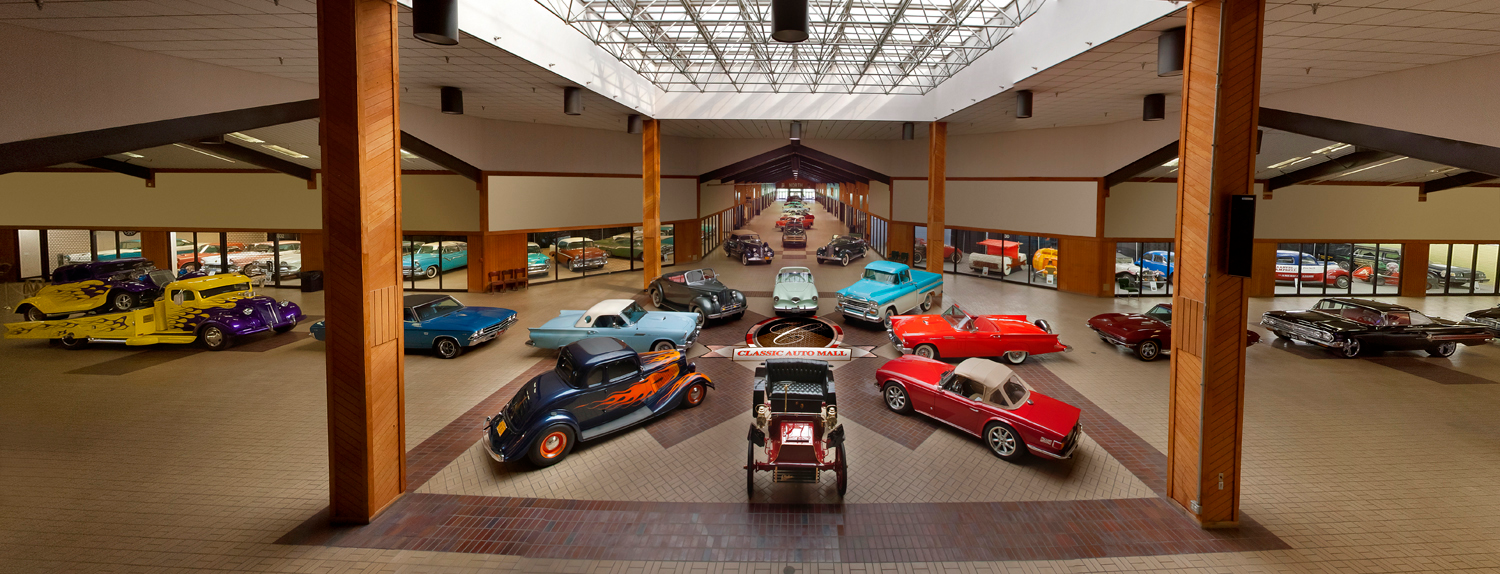
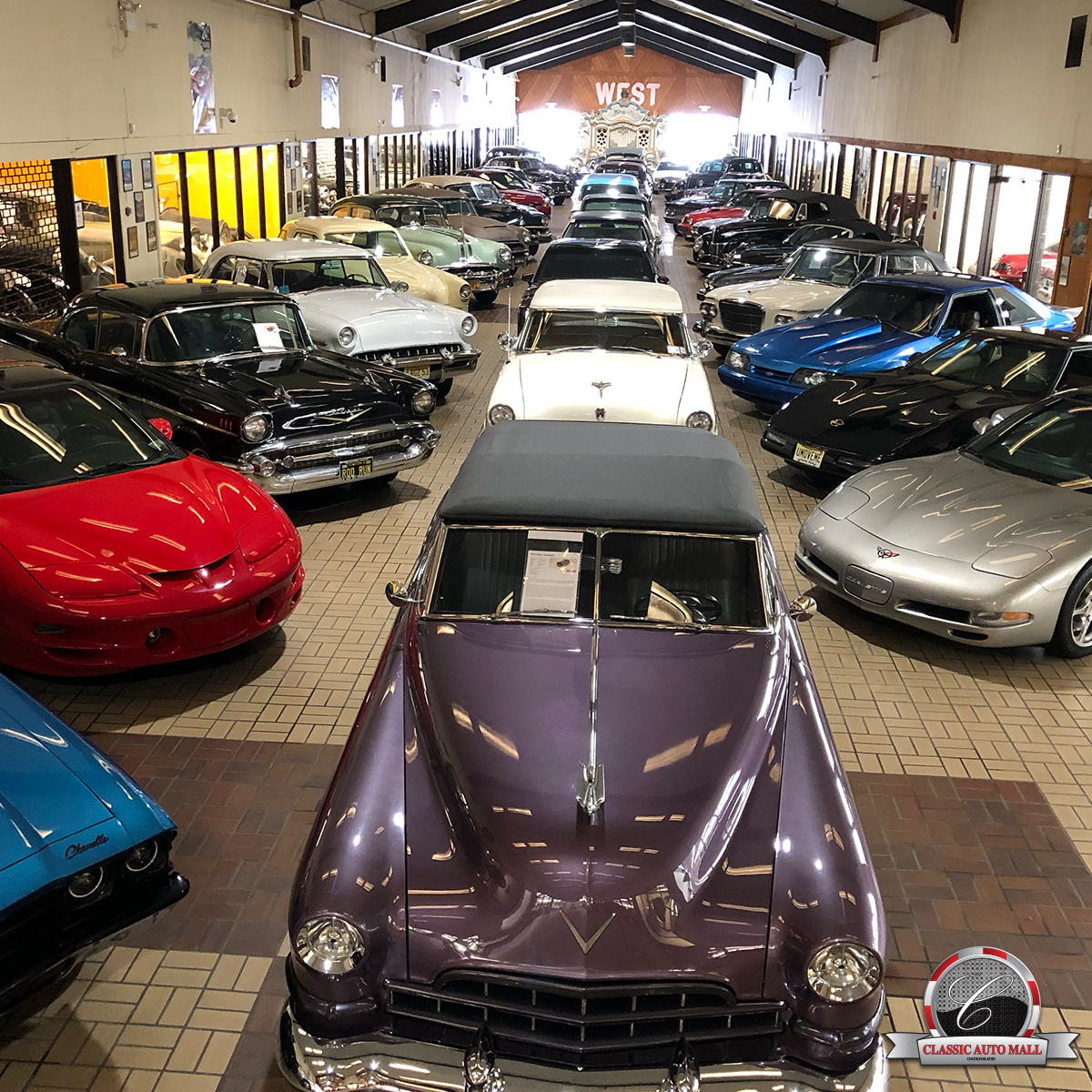
Classic Auto Mall isn’t just a consignment showroom — it’s a 336,000‑square‑foot automotive time capsule where barn finds, restorations, and high‑end exotics coexist under one roof. Under the leadership of Stewart Howden, the Mall has grown into one of the most extraordinary car destinations in the country, attracting enthusiasts, families, collectors, and curious travelers from all over. “A mall full of 400 barn finds behind pipe and drape convinced him to move his family in September 2017 and launch Classic Auto Mall in January 2018.”
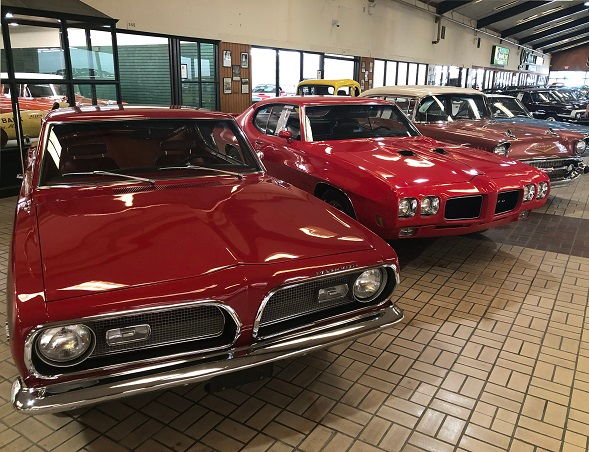
Howden’s path to Classic Auto Mall wasn’t linear. It began with a childhood love of cars and a formative listen to The Sounds of Sebring, a record that sparked a lifelong fascination with motorsports. His career took him through auctions in Auburn, Indiana and museum work in Branson, Missouri before a phone call led him to Morgantown, Pennsylvania — and to a mall filled with 400 barn finds hidden behind pipe and drape.



The building itself, a 1985 Kemmons Wilson–designed outlet mall, was perfect: oversized doors, wide corridors, and even a connected hotel. By 2018, Classic Auto Mall officially opened, and the inventory exploded — at one point reaching roughly 1,100 cars.
Spotlight







Synopsis
Break/Fix Podcast welcomes Stewart Howden, president of Classic Auto Mall, a consignment-based classic and collector car destination in Morgantown, Pennsylvania housing 1,000+ vehicles in a 336,000-square-foot former outlet mall. Howden recounts his path from a childhood love of cars and “The Sounds of Sebring” to auctions, a museum, and ultimately launching the mall in 2018 with a partner who had amassed 400 barn finds. He explains how the business survived and grew through COVID via remote sales and transport, discusses organizing inventory to encourage discovery, and shares notable oddities like a 1923 Chevrolet Weedman motorhome. The conversation covers market softening for “generic” classics versus continued strength at the high end, generational collectibility, restoration vs preservation, and the mall’s focus on helping collections and estates, plus hosting major events and community outreach.
- Classic Auto Mall is such a unique operation in the automotive world. What’s the story behind your path to the Mall, and what moment made you realize this was the place you wanted to lead?
- Walking through Classic Auto Mall feels like stepping into a living encyclopedia of American car culture. How do you personally describe the scale and spirit of the place to someone who’s never been?
- Classic Auto Mall is famous for its barn‑find inventory. What’s one discovery story that still gives you goosebumps when you tell it?
- With more than a thousand vehicles under one roof, what guides your approach to deciding what belongs on the floor, what gets highlighted, and how the collection evolves?
- Managing a facility of this size must come with some wild logistical challenges. What’s something people would never guess goes on behind the scenes?
- From your vantage point, what trends are you seeing in the collector‑car market right now — what’s rising, what’s cooling, and what’s surprising you?
- You’ve seen countless people walk in and reconnect with a car from their past. What’s a moment where you witnessed a buyer form an emotional bond that stuck with you?
- With so many survivor‑grade cars coming through the Mall, how do you think about the balance between keeping a car original and restoring it for the next generation?
- As you look ahead, what’s your vision for Classic Auto Mall over the next decade — new programs, new experiences, or new ways to connect people with the cars they love?
- If someone wanted to sell their car through CAM, what’s the process? Any rules? Etc?
- Classic Auto Mall has become a destination for enthusiasts, clubs, and families. How do you see its role in the broader car community?
Transcript
Crew Chief Brad: [00:00:00] BreakFix podcast is all about capturing the living history of people from all over the autosphere, from wrench turners and racers to artists, authors, designers, and everything in between. Our goal is to inspire a new generation of petrol heads that wonder, how did they get that job or become that person?
The road to success is paved by all of us, because everyone has a story.
Crew Chief Eric: BreakFix has always been about capturing the living history of the automotive world, the builders, the storytellers, the caretakers, and the people who keep this hobby alive one machine at a time. And tonight, we’re welcoming someone who sits right at the crossroads of preservation, passion, and pure automotive spectacle.
Stewart Howden is the president of Classic Auto Mall, one of the most extraordinary automotive destinations in the country, a place where 1,000-plus classic and collector cars live under one roof, where barn finds sit steps away from concours-level restorations, and where [00:01:00] every aisle feels like walking through a living museum of American car culture.
Stewart isn’t just the guy who runs the place, he’s the steward of thousands of stories, each one with its own history, its own quirks, and its own path to the mall’s massive showroom.
Don Weberg: From his early days in the automotive world to overseeing one of the largest indoor classic car facilities on the planet, Stewart has built a reputation for connecting people with the cars they’ve dreamed about for decades.
Whether it’s a survivor-grade muscle car, a chrome-soaked cruiser, or a forgotten gem pulled from long-term storage, he’s seen it all, and he’s here to share with us what it’s like to manage a collection that never stops growing, changing, and surprising even the experts. Tonight, we dive into the stories behind the mall, the market, the machines, and the man who keeps the automotive time capsule running.
Crew Chief Eric: That’s right. And joining me tonight is returning co-host Don Wieberg from Garage Style Magazine, [00:02:00] one of the many personalities on the Motoring Podcast Network. Welcome back, Don.
Don Weberg: Thank you, Eric. Good to be back.
Crew Chief Eric: Well, with that, let’s welcome Stewart officially to BreakFix.
Don Weberg: Welcome, Stewart.
Stewart Howden: Thank you so much for having me on the show today.
I’ve been looking forward to this. I got my notes, and I’m ready to go and talk cars and go down rabbit holes that we didn’t even expect.
Crew Chief Eric: I like to hear that. Well, Stewart, like all good BreakFix stories, there’s a superhero origin story out there. So tell us about the genesis of Classic Auto Mall and how you got into the collector car space.
And this is such a unique operation in the automotive world. There’s gotta be a big story behind the path to the mall. Take us on that journey.
Stewart Howden: Sure. So I started out like anybody. I loved cars as a kid, Hot Wheels and all the different iterations of cars and classic cars and sports cars and just any kind of cars I was into.
What really got me over the hump was The Sounds of Sebring, a record album that a neighbor kid had, and we went to their house one night, and he played it for me, and it was just nirvana. I thought, “Oh, this is the greatest thing I’ve ever heard.” So I [00:03:00] always wanted to be involved in classic cars, but- Never really knew how to do it.
Had a career path of, in music and different things and, you know, just wasn’t really sure what I was gonna do and how I was ever gonna get into classic cars. And long story short, met a guy who had an auction. It was interesting, he was working with, uh, eBay Crews at the time, and eBay Crews offered me a job to go to Auburn, Indiana and run this big auction facility out of the blue, and I had no experience in anything automotive, collector car world other than I just loved cars.
But that kind of started my path, and then I met so many wonderful people and, uh, ended up, I had a museum in Branson, Missouri that was a tourist attraction. I ended up in North Carolina for a couple years. My wife and I finally ended up in Lock Haven, Pennsylvania, in the center of the state, working with a guy, Grant Miller, one of the finest people you’ve ever met in your life, who did a dealer auction every week, and once a year did a classic car sale and said, “Hey, I want you to come run this.”
And it was good timing for us, and kids were in college and needed a little extra income and a steady paycheck instead of being an [00:04:00] entrepreneur and all that. So we’re doing that, and I get a call from a guy in Morgantown, Pennsylvania, which I have never even heard of, and he says, “Hey, I hear you’re the guy who knows consignment classic cars.”
And I said, “Well, I’ve, I’ve had some experience in it,” and so on and so forth. And he said, “Well, I, I need a business plan because I’m gonna do a consignment-based classic car dealership.” And I happened to have a business plan already. My doodling days were not scratching on a napkin, they were writing out a business plan of this.
I wasn’t sure that it was this or a mall or a warehouse or something, but it was a big unlimited space building. So I had this business plan already done, so I just scratched out the name and put his name in and did Morgantown. “Where? Morgantown, Pennsylvania, not West Virginia?” And put that in and sent it to him and he bought it from me, and he bought the deal.
And I said, “Well, that’s great.” So I told my wife and I said, “We got an extra little money, let’s go take a vacation.” About two weeks later I get a phone call and the guy says, “The family has voted.” And I said, “Okay.” And he said, “We want the guy who wrote the [00:05:00] plan to come execute the plan.” And I’m like, “Eh, I don’t know.
I’m kind of happy where I’m at and not quite sure what the plan that you’re talking about is, but I’ll come visit you on a weekend.” So a Saturday came and, and I drove over to Morgantown, and it was about a two and a half hour drive, and I’m not knowing what to expect. I’ve talked to this guy on the phone a couple of times.
He sent me money, the check didn’t bounce, so, you know, there’s a good start of the relationship there. And I pull into the parking lot of this outlet mall that was built in the early ’80s. There’s the worst beat up Expedition Ford you’ve ever seen in your entire life, brown with not a, with scratches and chips and all kinds of stuff on it, and this guy sitting in the, in this Expedition has got a long white ponytail and a long white beard.
And he’s older gentleman, maybe 10 years older than I am at the time, 15 years older. Not what I expected at all. I get in his car and I’m thinking, “This has got to be a prank. I mean, I don’t, who is this guy? What is this? I don’t understand. How can this possibly be my dream thing in this weird scenario?” Uh, long story [00:06:00] short, we came into the mall and he had bought, over the years, 400 barn finds for his collection, all different types, and he had lined them up in all the storefronts of the whole entire mall with pipe and drape behind them.
So it looked like each room was full, even though each room was only maybe a 10th or one 15th full. But when we went in, none of the hallways had anything in them, but there was these 400 barn finds. They were all in these rooms, and it was just, like, overwhelmingly intriguing, number one. I think if the building had have been empty, I would have never agreed to come here and do it.
I think I would’ve just said, “This is too surreal. I, I, I d- I…” Be careful what you wish for, you know? A chocolate sundae every day for 365 days is no fun. And I’m thinking, “This is gonna be just something, I don’t know.” But he said, “We want you to come do it. We w- partner up on this deal. It’s a great facility, 336,000 square feet on 27 acres, right on the Pennsylvania Turnpike, great car country area.”
So I said, “Okay,” and then I better check with my wife, and I checked with her, and she kind of reluctantly said, “Well, it [00:07:00] sounds like something worth trying.” And, uh, we moved here in September of 2017 and officially launched the business in January of 2018. It’s been a rollercoaster, unbelievable ride, and I don’t mean ups and downs, I just mean a wild ride.
It’s just been crazy the way this thing has grown and built, and we got to about 1,100 cars at one point in time, and it was … It wasn’t overwhelming. It was actually pretty cool. We actually had a good system that actually made it work for us. And, you know, the, the building was designed for us in 1985 by Kemmons Wilson, the founder of Holiday Inn, but he didn’t know it at the time, but- Yeah, no stairs, all the doors are big enough for cars to get through, couldn’t have been
And it has a Holiday Inn connected to it, so we can have events and have a place for people to stay, and it, it was just one of those things that it was divine intervention.
Crew Chief Eric: You know, Stewart, what’s interesting about this part of your story is that unlike a lot of other automotive businesses, whether they’re motorsport or otherwise, you survived COVID.
You started [00:08:00] just before and have made it out the other side successfully and continue to grow, whereas a lot of other places have unfortunately closed their doors. So I have to right away say congratulations, bravo. I mean, that’s commendable.
Stewart Howden: COVID happened, basically we were shut down the day before my birthday, March 18th of 2020.
We laid everybody off, including our son, who worked for us. My wife is our office manager. My wife and I locked the front doors of the building, and we’re walking past the reception area where the receptionist would normally sit, and the phone rang. And I said, “Oh, hold on. Let’s see what this is. Somebody forgot something or whatever.”
“Classic Automotive. Why, yes, we do have a ’67 Mustang for sale. Yeah?” Yeah, you’re gonna buy it? Okay, all right. Then all of a sudden the other line’s ringing. I was like, “Kathy, get back over here.” She answered the phone, “Yeah, we do have a ’71 Camaro for sale.” All of a sudden the phone’s ringing and it’s not stopping.
And we’re like, “What’s going on? Nobody’s gonna be buying cars during COVID.” It was the exact opposite. Everybody wanted to buy cars. They just couldn’t figure out how to do [00:09:00] it. The good news is, is that we had at the time about 900 cars in inventory, and we had the wherewithal and the f- facilities and business plan in place to make it work Without ever seeing a person or touching a person or being in their space.
And recall, hauling truck drivers were exempt from any of that. So even though a classic car was pushing the boundaries of what they were talking about when they allowed essential trucks to travel, here we are, we’re doing business. We’re literally sliding titles and checks in between the glass doors of our front of our building to the consignor, and truckers are coming up and we’re leaving the keys in a box outside, and they’re grabbing the key.
I mean, we were business as usual. We called our sons, said, “Come back to work.” Now, the downside, or good side of downside, 900 cars to 400 cars in about six months. All of a sudden we were down on inventory drastically, but we survived. We made it. And of course, we learned so much of our business during COVID, of things that we could do and do better and more [00:10:00] efficiently.
And we brought everybody back, you know, whenever we came back. I can’t remember the exact date it was, J- July or August. Everybody came back and we went back to full staff, and we started turning again, and then events started happening, and we were back in business. And, uh, it was, uh, one of those things that I would have
I, I just knew when COVID hit, I was like, “Well, you’d think something like this would ruin it,” you know? Something just so beyond your control. And, uh, it turns out it couldn’t have been better. It worked out really well.
Crew Chief Eric: And that’s a really important point you make, because we saw a shift in the collector market from that time forward, and we s- we’re still riding that bubble.
And I know this is something you talk about on your show all the time, but there’s another thing I wanted to pull on. There’s a thread. There’s something you said. You said that album, The Sounds of Sebring. Right. And what I find interesting, for those that are watching this behind the scenes on Patreon, your office is full of racing memorabilia, and you’re a classic car guy.
Explain that to me.
Stewart Howden: Well, first of all, my office is a five-year-old me [00:11:00] with an unlimited budget, so … And I’ve always been into race cars and European sports cars, believe it or not, so I’m into Porsches and BMWs and Mercedes, and that’s what I drive. But I have just a fond af- affection for classic cars, whether it’s a ’57 Thunderbird or a, or a 1960s whatever.
I mean, I’m, I’ve got a passion for all things automotive, cars, trucks, vans, motorcycles, sports cars, race cars. But for some reason, my office leans heavily on race cars, and I don’t know why. It wasn’t by design or a plan, it just kind of happened somehow, some way. I just ended up with a lot of race car stuff.
Crew Chief Eric: He says with the most subtle sarcasm. First of all, he’s a Porsche guy. He’s sitting in a 911 GT3 seat. That’s not, like, some bargain basement, bought it off Amazon. I could recognize that right away. I’m gonna go out on a limb. You’re a Tifoso. That’s, uh, Ferrari Formula 1 stuff behind you, is that right?
Stewart Howden: Jacket and some Formula 1 pictures there, and the 3.0 BMW CSL, which is in the background up there, which is one of my favorite [00:12:00] race cars of all time.
Crew Chief Eric: I knew you were a true Ferrari fan, Stewart, when I saw the 499P at Le Mans up on your wall there. So you know, we’re kindred spirits. It’s all good
Stewart Howden: Funny how you lean towards certain things and then your respite is something completely different.
Like, I worked in country music, and I’d have to literally, when I left our live performance theater at night in Branson, Missouri, I’d have to get in my car, and on my way home, I’d have to listen to Iron Maiden to kind of equal myself out from the country music. So you listen to country music all day and all night, and then you turn some Iron Maiden on, and then eventually you kind of just balance.
So that was my thing. And, uh, you know. I tell you, the other thing that got me into cars a little bit later on, but it kind of solidified it, there’s a great picture. I was talking to our guest yesterday about this. There’s a great picture. There’s an advertisement for Lotus. It’s a picture of Colin Chapman sitting on the hood of a Lotus Esprit in gold, and his 414 Cessna twin engine plane in black and gold livery is parked right behind him, and he’s in a three-piece suit.
And I thought, “Oh my God, that is it.” If you [00:13:00] could ever get to that, that’s nirvana. That’s game over, mic drop, whatever we used to call it back then.
Don Weberg: You know, Stewart, I have that ad framed in my garage.
Stewart Howden: No kidding. I love that.
Don Weberg: I do. Yeah.
Crew Chief Eric: It’s also in Cromback’s biography of Chapman and his machines, so it’s a very, very famous picture.
Stewart Howden: Yeah.
Crew Chief Eric: Before we move on to talk a little bit more about the mall itself, I have one question I have to ask, because, you know, as a tifoso, as a Porsche fan, we’re gonna ask you a classic Pit Stop question from Brake Fix, and the only one we’re probably gonna ask on this episode. You are at the head of the boardroom when two designs are presented in front of you, and you have to decide which one to build.
And that is the space age Porsche 959- Or the passionate Ferrari F40, which one do you choose?
Stewart Howden: You know, it’s funny, we had a conversation about the 959 on my show yesterday because my guest has a 959. It was, uh, interesting, and it was, it was one of those ones that was done by Canepa, so they added more horsepower and all the different things, [00:14:00] ’cause they’re a little crude from the era of when they came in.
But I wrote a paper on the 959 and the F40 when I was on my third version of trying to go to college. And, and, uh, that’s a whole long story in itself. I got three and a half years done and then waited too long to go back, and they said, “Well, you have to start over because you waited too long.” So I wrote a paper on the 959 and the F40.
I have to say, as much as I love both cars, from a value standpoint, you’d say the F40 because look at the value that it’s become. But we didn’t know that back in the day when we were sitting at, in the boardroom making a decision. So I would’ve picked the 959 at the time, just because it was so, you know, 444 horsepower, twin turbo, all-wheel drive.
Looked like a Porsche, but, and most people wouldn’t know the difference between it and a 911. It would look the same to them and, and that’s no different than a 288 GTO and a 308 Ferrari. But I love 935 Porsches. And I don’t even think I have a 935 on my wall, which is kind of surprising. It’s funny, now I’m thinking about this.
I love the 935, and purists will [00:15:00] say, “Oh, that’s not a purpose-built car. You gotta love the 962 or the 956 or, you know, the 917.” I don’t know, the 935 was my era. I went to Riverside in 1982 and watched John Paul and the Whittington brothers and all the guys racing back in the day, and Riverside was just like, I couldn’t be a, in a f- cooler place if I dreamt of it, you know?
I couldn’t have made it up to be any coolers. So the, the, uh, 959 would get the nod back in the day. Today, eh, I might err towards the F40.
Crew Chief Eric: So you are in a very small group of people that have picked the 959. The F40, like hands down, usually gets picked because it’s so raw and raucous and as close as to a, you know, a street-going race car as you can get.
You know, that’s not a bad thing, but it’s really interesting the people that choose and then how they articulate and justify their choice of the 959. So good job. That was really well done.
Stewart Howden: You know, I think the sophistication of the 959 is what got me. I love raw horsepower and raw, raw power, but there’s something about a well-balanced vehicle that did it for me, [00:16:00] and especially the 95-
And I’ve never gotten to drive one. One of these days, hopefully, uh, I’ll get to drive one if I become friends with somebody who’s got one close to us.
Crew Chief Eric: All right. Let’s switch gears. Let’s talk a little bit more about the mall itself. Let’s put ourselves in the shoes of a first-time visitor to Classic Auto Mall.
Some might say it’s like stepping through an encyclopedia of American car culture, but how would you describe a trip through the mall? What do you see? How did you guys organize 27 acres of space?
Stewart Howden: So what we did is, as we started the consignment business in 2018, as I said- We were taking cars. We were just, we were advertising that, “Hey, this is what we do.
We’ll sell your car for you. This is our program. This is how it works. This is…” And of course, everything that we did, we started out on the lower scale, the quality of cars, the amount of commitment that you had to make, all of that. So we don’t charge admission for you to attend and come to the mall. We don’t charge any upfront fees for you to consign your car.
That was the only fight that my partner and I ever had, by the way, was not [00:17:00] charging admission. He wanted to charge some kind of admission because he had it in his head, you have to charge admission to these things, and my theory was, no, I want more bodies through the building because even if it’s a, you know, a, a group of senior citizens, they all have kids and uncles and nephews and different people that are into cars, and it’ll be a way to spread the word.
But anyway, back to your question, we tell people all the time, we’re at these shows and events talking about Classic Auto Mall, we’ll say to a guy, “336,000 square feet.” Well, you might as well say, “I jumped over the moon.” They have no idea what the reference point of that is. It doesn’t mean anything. We have 1,000 cars in the building.
Okay, if you say so. You know, it just, it doesn’t have any kind of bearing on reality to people, but the greatest is when they walk in the door and they go, “Oh, wow, I knew that there was cars in here, but I didn’t real-” I mean, it’s just, it’s cars everywhere you go. It’s like a mall for cars, literally. And when they get to the very center and you can do a 360 and pivot and look down each of the hallways, and each one is full of 70, 80, [00:18:00] 90 cars in each hallway in addition to what’s in the rooms, it’s overwhelming.
It’s one of those things that you see the guys and they look at their watch and they go, “Oh, I didn’t plan enough time for this. This is, I’ve got way less time than I thought to go ahead and see all these cars.”
Don Weberg: You have, like, a little golf cart to get you around?
Stewart Howden: I have a personal golf cart because I don’t have time to be walking this daggone mall, and I’m lazy.
Uh We actually have all the guys, we probably have seven or eight electric golf carts, and we have three electric John Deere Gators, and then we have a, a little electric trolley tram type thing that, uh, we’ve kind of outgrown because we, I mean, we can’t fit it around the corners like we could before. But it’s a spread out space and, and if the guys were walking all day to doing this, they’d get half of what they get done in a day on a regular basis because they just, there’s only so much…
Uh, steps matter, you know? We all know that in any kind of business, how many steps you take is- Mm-hmm … in a relation to how much money you can make.
Don Weberg: And a big part of your business is barn find cars, isn’t [00:19:00] it?
Stewart Howden: Yep.
Don Weberg: You’re not just dealing with late model collectibles, you’re dealing with pretty much everything, but barn finds are a big part, aren’t they?
Stewart Howden: Obviously, the most cars we had in the building was the 400 barn finds of my partner’s. We’ve sold off a couple of hundred of those since we started, and there’s about 100 that he’s decided to keep that, you know, no amount of money will buy it from him, even if it doesn’t have any value, it’s just, it has sentimental value.
Don Weberg: Okay.
Stewart Howden: So we’ve done well with barn finds, and we actually still sell quite a few, but the ratio is not as strong as it was when we first started in ’18 and ’19 and ’20, just because we’ve sold a lot of these collections. We have a few more that are coming up. We have an auction coming up in a week that will be about half barn finds, and that’s mostly how we sell those.
They’re tougher to sell. In the old days, you could put a barn find on eBay, no title, no keys, no battery, no reserve, and the guy would sell it, and you’d do pretty well on it. Nowadays it’s a little tougher. It’s harder to get titles for cars. It’s not the same world as it used to be if there’s a missing title.
So our focus has been always barn finds, but we take a [00:20:00] $5,000 El Camino just as seriously as we take a million five Ferrari, and everything in between. We give everything the same program, take the same set of pictures. We do the same detailing of it. We promote it the same way. We’re equal opportunity here, and we don’t look down our nose at anybody’s dream car because, you know, everybody starts somewhere.
Don Weberg: Right.
Stewart Howden: And a $5,000 El Camino guy could be a $50,000 Corvette guy who could be a $150,000 Jaguar guy. You know, blessing of this place was is that when we first started, we had no idea- How many classic cars were in this part of the world within 100 miles of us? There was nobody who was saying, “Oh, Southeast Pennsylvania, there, that’s the car world.
Forget California, forget Florida, forget Scottsdale.” Nobody was saying that
Don Weberg: It’s interesting to me, I’m constantly looking at cars for sale. I can’t afford any of them, but I look, and it’s amazing to me the percentage of them that come from Pennsylvania. That is one amazing, amazing car state. It really is.
Stewart Howden: Yeah. We waited five years in our business before we did a, a, a deep [00:21:00] dive into where our consignments were coming from. We, we advertise, you know, we promote where our sales go to. We’ll do on the r- on the podcast show, we’ll say, “Ah, this week we sold a car to Houston, Texas, and San Jose, California, and Denmark, and so on and so on.”
But we never really deep dove into where the cars were coming from, and we should have done it, but I didn’t really wanna know the answer, I think. I, I ultimately just didn’t wanna know where our cars were coming from, how far of a distance they were coming from. And what we found was after five years, 80% of our cars were coming from within 75 miles of where we sit, which was encouraging and both frightening at the same time because it’s like, oh, wow, I would’ve thought it would’ve been 150 miles on average, and it was really not.
It was 75 miles where 80% of our cars came from, and we didn’t know that starting out. So, you know, God bless whoever was looking after us for that deal.
Don Weberg: Are there any barn find stories that really kinda turn you on? The, the ones that you can’t forget, they just give you goosebumps when you think about them?[00:22:00]
Stewart Howden: My partner found a 1923 Chevrolet Weedman Motorhome And there was a tree growing through the middle of it. It’s a wooden back. It’s got a, it’s a Chevrolet, which is surprising it’s not a Ford in 1923. Yeah. It’s a center seat for driving the vehicle, so it’s literally in the dead center of the- Mm-hmm … the windshield, like a McLaren F1, only different.
It has an armoire in it, and it has a bed in it, and it has these cool flaps that open up to allow a breeze to come through the top of it, and it has a slide out. Unlike- What? Not unlike a Prevost of modern era buses that have these big electric slide outs. It’s got a fold down kind of tent piece that folds out, and you’ve got, like, a canvas top on it.
And you would sleep there, and then you had your armoire and all this. And this was something that you never see these things. It’s still in our building. It’s still probably the most popular vehicle of all the types that we have in the building. People gravitate to this thing more than just about anything, and I love it, and it’s great to see kids and [00:23:00] grandpa, grandma, and mom and dad, and the kids all just equally flock to this thing and go, “Whoa.”
Where do you see something like that? And you could put the prettiest, shiniest whatever right next to it, and nobody would care.
Don Weberg: Absolutely. Very cool.
Crew Chief Eric: You said something interesting there. You put the prettiest, shiniest whatever next to it. So how do you guys organize the cars? So you have a thousand cars.
Are they just hither to and everywhere, or are they broken down by year or genre or by country? Like, how did you guys organize the collections?
Stewart Howden: My guys will ultimately, for some odd reason, try to put all the Corvettes together, try to put all the Mustangs together. Right now, we have, I think, 57 Corvettes in inventory, and probably 45 Mustangs.
What my goal has always been is to have everything spread out in kind of a hodgepodge, $5,000 car, a $15,000 car, a $50,000 car. No rhyme or reason to it, because I was always taught in business is that you didn’t want to pigeonhole yourself into having a person that came into your grocery store and only go to one area, and then [00:24:00] they leave and they never see the rest of it.
Because we have guys who come in looking for a Corvette, and then they see a Fiat Spider that their wife has always wanted, and if they, every car was in its own little area, they may have just gone to the Corvette room and that was it. But now they’re walking through, seeing the rest of the cars, there’s a Fiat Spider, “My wife’s always wanted one of those.
I hadn’t thought about one of those in 25 years, but here it is right here. I can buy it today,” and they’ll buy that. And all of a sudden you’ll have a sale that you never anticipated. The guy was coming to look at a Z06 Corvette. So we kind of gave up on trying to put them in any sense of order because it just, it’s one of those things, you know, like herding cats, it just make you crazy.
You just would never… I have so many anal retentive qualities about myself that if I let them start doing that, I would get on the bandwagon very quickly, and then I would just go nuts about anything that was out of place or anything like that. I’m a Disney clean and green guy in an old, dusty building that really, I mean, not many people would buy a building like we’re in because [00:25:00] they’re afraid of the maintenance and the upkeep and all that, because it’s an older building.
But my partner loves these older buildings, and it doesn’t cost nearly as much to maintain them as you would think, although the electric bill is quite steep here, but
Crew Chief Eric: So for the cars that are staying permanently, that are not for sale, have you set them up in such a way that maybe they’re, like, in a diorama, or you, they’re surrounded by their own type of memorabilia, like, like a Buick room, or you have an Oakland room or something like that?
Stewart Howden: No, we really, we only have a handful of vehicles that aren’t going anywhere. Uh, we’ve got the, the aforementioned, uh, Weidman camper. We’ve got a Volkswagen replica of a Volkswagen bus that was at Woodstock, that sat up on the hill at Woodstock, and they completely did a replica of that, and it’s really cool.
Not for sale. But 99.999% of our vehicles are for sale in the building, and mostly American-made Mustang, Camaro, Chevelle, Thunderbirds, uh, is, is our bread and butter. Would I love it to be filled with a Riva boat like I have over here, or a, or an [00:26:00] F40, or a 959, or a Testarossa for- Of course I would. But the practicality of it is, is that to do something in this scale, you got to have your bread and butter stuff.
You got to be like Walmart. You got to sell a ton of widgets at a nickel profit and, uh, you know, you’ll do good in the, in the long run.
Don Weberg: You sell more Fords than Ferraris
Crew Chief Eric: You mentioned the electric bill being high. Is that because of all the battery tenders you have to run for 1,000 cars?
Stewart Howden: It’s that and the heat and the air, and we don’t keep it
It, it ain’t cool in the summer and warm in the winter. Trust me. You wear your jacket in the winter, you’ll probably leave it on, but you gotta keep it somewhat climate controlled. We have 157 HVAC units on our roof. Yeah, so it, it’s a big old place to … A- and just the lighting bill, you know, and just, just for the lights, forget the heat and air, is expensive.
Crew Chief Eric: So let’s sort of switch gears and talk about the collector space from your vantage point. Sitting on top of an inventory of 1,000 cars, you saw everything go up, up, up, up, up, and used car market went crazy. Even, you know, your off [00:27:00] rental car Nissan Altima- Right … is three times more expensive than it should be right now.
Hopefully, that bubble maybe will correct itself in the future, but what are you seeing? What are you thinking? What do you think is cooling? Where do you think things are going?
Stewart Howden: Well, I can tell you that the one thing we’ve felt from COVID just happened within the past six to eight months, and that is the cyclical nature of people collecting one or two cars at a time is about a five-year window.
So everybody that bought their car in COVID, post-COVID area within, you know, four to five, six years ago, is now at that crossroads where they’re ready to sell the car. They wanna step up to something else, and this is a huge part of our market. But guess what? In 2020, when they bought that Chevelle, the market was $50,000 for that car, and guess what it is now?
Not 50. It’s 40, or maybe it’s 35. So now, all these guys that bought at the top of the market, which was, uh, inevitable it was gonna happen, [00:28:00] are now thinking, “Oh, I’d like to get rid of this car. Now I’m upside down in it. I got, you know, more money in it than it’s worth.” The old a- you know, I promised my wife we’d make a profit on every car we bought.
Uh, I knew we were gonna hit it on run, the market was never gonna shift. Didn’t really happen. The market’s still a little bit soft and just, dare I say, generic classic cars being a, a ’70 Chevelle with a 350 in it, not the original motor, not the original transmission. Nice car, number two-and-a-half, three condition, nice paint job, has flaws, great driver car.
You know, the market on those is just not gonna be very good now. And will it come back? I don’t know, it’s hard to say. I mean, we don’t see the ’55, ‘6, and ‘7 Thunderbirds ever coming back to the prices they were at. We don’t see the ’39 Ford Deluxes convertibles that were, you know, 80, $90,000. We don’t see them coming back.
But the Duesenberg market ain’t suffering. The Ferrari market ain’t suffering, you know?
Crew Chief Eric: Let’s talk about that, because I’m sure you’ve been keeping track like everybody [00:29:00] else. Kissimmee was a big move forward in the Ferrari space. Yeah. There, there’s been obviously incremental rise in investment in the Ferrari space for years.
It’s never a bad bet, you know? It’s sort of like nobody got fired for selling IBM, but, you know, you never really lose money buying a Ferrari, but that Bachman collection sort of reset everybody’s focus on Ferrari for this year. What are your thoughts?
Stewart Howden: Well, when you see an Enzo go for $12 million that, you know, was going for 3 and 4 million not that long ago, and I mean, I know not that long ago, in my mind, is usually a lot shorter time than it actually is, ’cause yesterday to me is five years ago, or five years ago is yesterday, you know?
The thing that surprises me most about the Ferrari market, I get the hypercar stuff. I get the whatever five is, FECTA, uh, where you got the 288 GTO, the La Ferrari, the F40, the F50, and the Enzo. Every guy who collects Ferraris who’s got any money, that, you have to have those five. You know, it has to be part of your collection.
I get those going up in [00:30:00] value. I get that they’re gonna continue to increase in value, uh, just because, you know, they’re amazing cars and limited production, and not everybody that wanted one could get one, and so that leaves a lot of room for marketability out there. What I don’t understand is a 400i that brings $150,000, or a 308, which are, pardon me, are not very nice cars to drive.
They’re not very fast. They’re not very reliable. They’re not very much of anything. And for them to bring $100,000-plus, I remember when a 308 Ferrari, you’d buy for 20, and then you’d go put 20 in it, and you’d have a car that was worth 15, so- I don’t understand that segment of the market. I get the upper end of the market.
There, you know, listen, the wealth in this country, and the world for that matter, is immeasurable in, in, compared to what it was even 25 or 30 years ago. And the amount of money that people can go and spend, I mean, standing next to a guy at an, at an RM auction and all of a sudden a $12 million bid, and it’s the guy next to you you’ve been chatting with, [00:31:00] who you thought was just some guy, and here’s this guy, you know, buying a $12 million car.
And it happens on a regular basis because of all the cars that we know about that sell at all the high-end auction houses, and sell with us, and sell with, you know, some of the other classic car dealers, uh, in the world, there are probably double that in private transactions, ’cause most rich guys are very protective of their identity and what they are and who they are.
You remember when the Forbes list first came out, they had a hard time getting anybody to admit that they had a million dollars. People didn’t wanna even talk about it. People, when I was growing up, the rich people drove Buicks and Oldsmobiles and the middle class guys were the ones who drove the Cadillacs and the Lincolns.
Uh, we didn’t have any idea that our neighbors were as wealthy as they were because they didn’t show it. They didn’t flaunt it. They didn’t wanna be on some list telling me how much money I got. It’d be funny to go back to the Forbes 400 list on the very first year that it came out and see what the top level was.
It was probably, you know, like 30 million or something.
Don Weberg: Stewart, the guy you’re talking about, the neighbor you don’t know how rich he is, that’s Eric. That’s Eric [00:32:00] Hit him up for a loan, he’ll do it to you.
Crew Chief Eric: Only if it’s a hot hatchback, Don. Only if it’s a hot hatch.
Stewart Howden: You know, that’s the problem. You know, when we talk about this hobby, we want to get the kids involved, we wanna keep the involvement of people who may have not been collector car people, but it’s difficult if you wanna send somebody to go, let’s say, Amelia Island.
And I’m not picking on Amelia Island, I love that concourse, it’s a great event. But the Ritz Carlton, if you wanna stay at the host hotel, it’s 2,700 a night, and it’s a three-night minimum. I don’t care how much money you have, at some point in time, you know, we may have to say, “Enough is enough.” We’re go- not, you know, we’re not we’re mad as hell and we’re not gonna take it anymore, like Network the movie, but we’re gonna say, “I’m not gonna pay $2,700 a night, even if I can.”
Don’t get me in a grocery store, ’cause I’m just, I don’t even understand this. What happened to the good old days?
Crew Chief Eric: Well, let’s not solve that problem tonight. Let’s, let’s talk about something else. We had this discussion, Don, on several What Should I Buy episodes that we’ve done in the [00:33:00] past, and that is thinking about grandpa’s car.
And that is a generational shift, and the shift is occurring now, right in front of our eyes, where when we were growing up, grandpa’s car was from the ’50s, maybe, that he drove every day. You kind of looked at what grandpa drove every day versus what grandpa aspired to. To your point, Stewart, from earlier, those Duesenbergs and the Packards and the cars of the ’20s that they grew up with, you know, things like that.
So when we keep shifting down the line, kids today, my girls as an example, what did my dad drive? Well, cars from the ’90s. Right. Cars from the ’90s are really popular right now, which is really interesting, because they have not yet bubbled into this escalation curve that we’re talking about. But I don’t want to sit here and debate the end of the Middle Ages- Sure.
with ’90s cars. What I wanna talk about is the cars that are coming out right now. In your opinion, with your wise eyes and all this experience, what is collectible today? What’s gonna be grandpa’s car 20, 30 years in the future when I’m a [00:34:00] grandpa?
Stewart Howden: The short answer is I don’t know, and my reason for not knowing is, is not understanding exactly how the technology of the side is going to work in the future.
Not because technology, because cars will be so technologically advanced, it’s because the electronics will be technologically advanced, and for a 1990 Lexus, they’re not gonna make any of that crap. They’re not gonna make any of the parts for that. So maybe that begets that to become collectible because it’s gonna become to the point where you can’t buy the little computer box that went on a 1991 Infiniti Q45 because they don’t make them anymore, and nobody wants to make them because there’s no value in it.
Crew Chief Eric: And my answer to that, I said it on another episode, there’s an LS swap ready every where you turn.
Stewart Howden: Right. Exactly. There will always be crate Chevy motors. That’s the beauty of, of what that is. But you know what? The cars that I gravitate towards still are ’90s cars, ’93 through ’95 928 Porsche GTS, a BMW 850CSi, Supra twin turbo.
I [00:35:00] love those cars because the ’90s for me were the interim years. I had cool cars when I was a kid, you know, 16 through 20-something. Then I couldn’t afford anything during that era when they had those cool twin turbos, and the good news is, is it gave me hope that if I ever did figure out a way to make any money, that they were still building cool cars, ’cause we thought in the late ’70s, w- if you drove a ’77 Plymouth Volare, you would realize that the death of the automobile was near, and it was coming- There was no way there was gonna be anything cool made anymore
Crew Chief Eric: But Corinthian leather, Stu.
Corinthian leather
Stewart Howden: You know what’s funny about that? Let’s say, let’s take a 1978 Corvette. Those of us who are car people go, “Well, you know, that’s a ’78 Corvette, underpowered, the malaise era. There wasn’t much to it. 180 horsepower in the L48, 220 in the L82. It just was not… But if you stop and back up about 25 feet and look at a ’78 Corvette, take every preconceived notion about how well it performs and does and doesn’t do [00:36:00] this, that’s a good-looking car.
Crew Chief Eric: It is. When you dress ’em up, yeah.
Stewart Howden: We forgot that because we were, “Oh, well, those, you know, that old ’78 Corvette’s nothing.”
Crew Chief Eric: You know, the solution to the ’78 Corvette problem is still the same, Stu. LS swap. Yeah.
Stewart Howden: Done. The LS swap solves everything, right?
Crew Chief Eric: That’s right. I would love to say,
Don Weberg: what I wanted to talk about is actually a few steps back from what Stewart was saying about the electronics of these cars.
And, you know, I was a believer in that, too. I thought, “Yeah, all these cars with their whiz bang stuff going on, they’re gonna just basically become extinct because nobody’ll be able to fix them.” You know, one car I really like, and a lot of people, you know, i- i- it’s one of those polar cars. People either really like it or they really hate it.
No, don’t worry, I’m not going after that one.
Crew Chief Eric: Okay, good.
Don Weberg: It, uh, it’s actually the Aston Martin Lagonda.
Crew Chief Eric: Oh.
Don Weberg: Yeah, it’s a big wedge of a brick of a sedan. And the early ones, as you know, they were hugely technological for the ’70s. Hugely. They had stuff going on in there that was ready for NASA.
Crew Chief Eric: It had [00:37:00] two fuses, Don.
Two fuses.
Don Weberg: Two. And, you know, really, they only needed three, but Lucas said, “Let’s save some money.”
Crew Chief Eric: But it came with that smoke in a jar, remember?
Don Weberg: Yeah. It’s good stuff. That’s good stuff, yeah. But I’ll tell you, though, it was, it was one of those English magazines, and I was reading an article, and I bought the magazine because it had this article about this guy who also likes these Lagondas.
And he was younger, he was in his 30s, so he buys, uh, I forget what year, ’77, ’75 Lagonda, filled with electrical problems. It just had electrical problems all over the place. He’s younger. He’s like Eric. He grew up techy nerd, and so he understands wiring and all this stuff. The next thing you know, he’s pulling this car apart to figure out, what can I do to fix this?
He finds out that in the ’90s, Nissan was using a whole bunch of products and components that were very similar to what the Aston Martin was using back in the ’70s. So he started Mickey [00:38:00] Mousing it together. It became one of the most reliable Aston Martins. It’s still running around in England right now.
He became a member of the club. The car became almost his daily driver. This thing is solid as a rock. It’s incredible. While I was reading this, I’m saying to myself, “Okay, great, there’s hope for this car. Not that I’ll ever be able to afford one, but there’s hope.” The younger people who are used to computer controls, they might be the ones who fix this stuff.
I mean, look at the World War II birds. Mm-hmm. They were, what? Exposed to the airplanes, exposed to the Jeeps. And what did they have to do when they were over there? Keep ’em running. ‘Cause guess what? There’s not a repair shop around the corner. You have to keep this thing going, okay? So based on that, what’d they do?
They became little engineers. They knew how to keep the Jeeps going, the airplanes go, God forbid the airplane breaks down, but you see what I’m saying. It’s the same thing, it’s just advanced. Now it’s computer stuff, and there is, again, a young person who was exposed to computers his whole life, and now he’s not afraid of going after this Aston Martin.
And not only that, because he had experience with Nissan cars, he’s looking [00:39:00] at the Aston Martin stuff saying, “God, this is so familiar. This looks just like what was used on the 200SX.” Mm-hmm. “This looks like this, this looks like that.” So they were able to put it back together, and I think that’s what kinda gives me hope for some of these cars that are coming down the line that I look at, and I’m sure you guys, too.
I look at ’em, I think, “Holy cow, I don’t want anything to do with that.” Well, yeah, because I was raised by World War II people. The difference in thinking is there, but these kids aren’t intimidated by him, not by a long shot.
Stewart Howden: I like the 200 SX reference, too.
Crew Chief Eric: I know, right?
Don Weberg: Great car.
Crew Chief Eric: Since we’re in the middle of car show season-
Stewart Howden: Yes
Crew Chief Eric: and car week is turning into car month, as we all know, and we get to bask in its glory every year, there is often a debate that percolates to the surface all the time, and that’s restoration versus preservation. And I wanna get your thoughts, especially with 1,000 cars at your disposal, where you guys find yourselves in that argument.
Stewart Howden: I love the preservation side of it, if it’s within practical and within [00:40:00] reason. There’s impractical restoration and preservation, unfortunately. A four-door 1940 Plymouth Sedan is not practical to restore. It’s a shame that it won’t be preserved in any way, shape, or form. And it shouldn’t always be about value.
But we always tell people, “Buy what you love, restore what you love, spend whatever you feel comfortable spending. If you get some of it back, you’ve hit a home run. If you don’t get any of it back, you were okay with it to begin with.” But I love original cars. I love low mileage cars that, you know, have been preserved and are mothballed, if you will.
’78 Corvette pace car comes to mind, just, uh, out of the blue, when p- people were saving those, or the last year for the Cadillac Eldorado Convertibles that weren’t particularly collectible when things turned around and people started saying, “Oh, I’ve got a ’78 Corvette with 20 miles on it.” And it didn’t have the impact that everybody thought it was gonna have.
And then you have others, remember the Ford GT when it came out in 2005? It tanked. I had one with 80 miles on it that I was begging to get rid of, and got, finally got it sold. It had all four options, in that midnight blue, and got it sold for 90 grand and was thankful for it to be gone. And [00:41:00] of course, you know, we all know where those went.
But- You know, the right car, I think a ZL1 aluminum block 1969 Corvette four-speed, blah, blah, blah, blah, blah, I think that should be preserved to the nth degree because it is such a important part of the history of the automobile and where we were able to go. Most of us didn’t even realize back in the ’60s you could check a box that would get aluminum 427 in a car.
No, we didn’t know any of that. We just go, “Oh, that looks cool. That’s what I’d like to have.” I bought a ’75 Trans Am. It was the worst year to possibly buy it. ’76 would’ve been better. This was in ’78. ’74 would’ve been better. I could’ve gotten an SD455 probably for the same price. I didn’t know anything. I just thought, “Hmm, that looks cool.
That’s what I’d like to own.” I mean, it leads from preservation to restoration to restomods too, so you got that element of it as well too. And my position is, is that there’s room for all of it, A, and B, it depends on the subject. I mean, you could put two cars side by side of each [00:42:00] other that were restored, and they’re not the same car even though they have the same specs.
You can put two SS 396 Chevelles with four-speed Muncie M20s, and they’re both red, and they both have Kroger wheels, and they both have this, and they both have that. But the level that one was done and the level that this one was done, it’s, there’s so many different variations. So I would say that it has to be almost done on a case-by-case basis.
Obviously, there’s no committee that rules who gets to… You know, you don’t have to come before me to determine whether you restore it, keep it at original, or restomod it. But it’s gotta be almost on an individual basis because there’s reasons that, you know, obviously, you don’t chuck a DZ302 out of a ’69 Z28.
I know crate motors are the answer, but at some point in time, that needs to be restored. You don’t wanna let that engine go by the wayside.
Crew Chief Eric: Well, since you went there again- … what’s your number one car you’d be like, if ever that came across, you’re like, “That needs a restomod. That needs an engine swap.
Don’t care what condition it’s in. There’s no preservation of that”? Right. You talked about the Volare. Is, is that your restomod car? Like-
Stewart Howden: Yeah. I think [00:43:00] somehow, deep down in, in the nether world of my body, somehow Volare is… I, I keep talking about it, so there must be something about it, right? There must be a reason I’m talking about it.
I’ve always wanted to have a Pro-Touring second gen Camaro.
Don Weberg: Oh.
Stewart Howden: I love that body style of the second gen, ’71, ’70 or ’71 through, 70 and a half through ’77 or whatever year that they kinda changed them a little bit from there, ’80, I guess, or so. I always loved those second generation Camaros. I always thought it would be fun to have a, a canyon-carving restomod to run Mulholland Drive in, with a great stereo, with Corbeau seats, Alpine cassette deck that, you know, slid it out of your hand and dropped it easily into the thing.
There was so many cool things that you wanted to do to make a restomod out of it. Just it’s so modern but yet so retro-looking. I think that would be my, my one guilty pleasure of that. But I, I see cars all the time that I think, “That might make a cool restomod.” And I don’t even like restomods per se. I don’t have any fault with them.
They’re just not my thing normally.
Don Weberg: Do you think there’s a point, Stewart, where- [00:44:00] You can’t keep the car original anymore. You’ve got to restore it. Maybe even if just for the next generation, you have to restore this thing
Stewart Howden: You don’t want a car to, to just disintegrate, A, and B, at what point do you realize that you’d rather have radial tires than bias-ply tires?
What point is it where you’d rather have four-wheel disc brakes on the car to make it stop? What point is you’d like to be a little more comfortable and add vintage air, if you could do it in a way that wouldn’t disrupt the dash or the firewall or all that? There’s all those questions. Th- they’re all hard to answer because knowing what I
I, I mean, I have a friend of mine who buys, he has a dual Ghia.
Don Weberg: Mm.
Stewart Howden: And he put vintage air in it. I mean, who does that? Nobody does that. I had a friend of mine who’s got a V16 Cadillac, put vintage air in it. He wanted to drive it. He wanted to use it. He wanted to enjoy it, but, you know, his wife wouldn’t go because she’s just miserable.
You know, it’s black interior, black exterior. You know, most car shows are on warm days, and she said, “You know what? I, I’m just not enjoying this,” and so he put air in it, and everybody’s happy. Is that harmful to a V16 Cadillac? [00:45:00] Uh, I don’t know. Probably. Does it matter to him? No. He doesn’t care. At the end of the day, we hope that we’re all just stewards of these cars, but we also get to enjoy them and use them, and if, God forbid, we take one out and run it into a tree, that’s our prerogative, even though, you know, we didn’t do it on purpose.
I mean, you can’t mothball these things. I mean, you can, but we all know that engines and not running, and suspensions and not being driven, modern electronics and not being used spell disaster.
Crew Chief Eric: Very true Well, as we look ahead to the future, and as we’re on the precipice of celebrating Classic Auto Mall’s 10-year anniversary, we’re getting very close to that initial, a meeting with that preservation class Ford Excursion that you described earlier.
Let’s talk about the next decade, new programs, new experiences, new things on the horizon for Classic Auto Mall. What’s your business plan for 2027 through ’37?
Stewart Howden: Our business plan is to become the, the one place you go when it’s time to sell the collection or to sell [00:46:00] Dad’s estate or Mom’s estate or whoever’s it is that’s collected the cars, because it’s such a slippery slope in the collecting side of it.
There’s, like, three schools of thought for collectors. There’s the collector who says, “I mapped out the whole thing. This is where this car goes. This is where this car goes. Every year, I update the value based on the trends in markets. This is the insurance policy. This is what’s done to it. This is the history of the car.
This is where the hardtop is up in the attic. This is the build sheet that goes with it.” There’s those guys. Then there’s guys who are like, “Uh, well, I don’t really care. Whatever ha- you know, let them deal with it. They’ll have to deal with it.” And we see that more often than we see the earlier version. And then there’s the guy who’s kind of the, the hybrid, the in-between guy of that.
But the guy who says, “You know what? Let’s leave it to them,” is also the guy on his deathbed who grabs his wife, pulls her down close to him, and then says, “Honey, whatever you do, don’t sell the Corvette for less than 60.” And it happens all the [00:47:00] time. Here’s the problem with it, Mom and the kids or whoever the, I’m not profiling here, just, I’m just using that as an example.
Mom and the kids now are left with Dad’s 10 or 12 cars. Nobody knows anything about them. There may be one in a restoration shop down the street and nobody knows about. There may be one that was at a museum on loan. There may be parts to a car that are, you know, a tri-power set up for a 427 that the guy took just to put a, a four-barrel on because he didn’t want to deal with the tri-power, but you don’t want to get rid of it ’cause the original intake and, and carburetors, and that’s valuable, hugely valuable, maybe $10,000.
And they have no idea where any of this stuff exists. It’s an emotional time. Part of the, most of these cars were part of the family. They need somebody who can step in and say, “We’re gonna take over. We’ve got you. We’re gonna take every car you got, whether it’s a $500 rust bucket in the backyard that Dad was slapping parts off of, or whether it’s a $5 million whatever, and everything in between, and we’re gonna take it and we’re gonna handle it, and you’re gonna wait for us to give you a call, and then you’re gonna bring us [00:48:00] the title, and we’re gonna hand you a check from Classic Automotive, not some stranger, not people coming to your house.
We’re gonna make this so simple for you.” So that’s our focus is really right now, is really marketing to the, that clientele because we’re coming upon a time, you know, in the old days, guys collected, a guy had a, one Ferrari, or he had a Camaro and a Harley, or he had a Chevelle, or he had a Thunderbird. So many people have so many multitudes of 20, 30, 40 cars.
It’s commonplace now, and it requires a whole lot of thought and process to get to that. So our goal in the next 10 to 15 years is, there should be some retirement in there somewhere, I’m certain, but probably not, is to really cater to the collections and estates, whether you’re pre-planning and thinning the herd, or whether it’s been left to you and you don’t know what to do and there’s no plan or whatever.
We want to be able to come in and say, “We got this. We got transportation. We got the insurance. We got the parts. We got this. We know where that is. This needs to fix. This you shouldn’t fix. This you should sell it just like it is. This should go to this auction. This should go to Classic Automobile. This should [00:49:00] go to the junkyard.”
The option may not always be us, but we want to be that go-to who guides you in the right direction, even if it sends a car to Bring a Trailer or, or RM Auctions. I mean, there’s certain cars that we do better with here, and there are certain cars that might do better at another venue, and we’re not afraid to say that because ultimately what we want to become is the thing that people think about when they think, “Oh, it’s time to do this, this dastardly task that we have to do.”
That’s where I see what we’re heading towards. Collectibility of cars, I don’t know. It’s hard to say. I, uh, I’ve given up on trying to predict what’s next ’cause I thought Duesenbergs were never gonna come back from the early 2000s, and boy was I wrong about that.
Don Weberg: Based on this, Stewart, uh, if somebody wanted to sell a, a collection through, uh, Classic Automotive, what’s the process?
What, what are the steps they gotta take? Are there any rules involved? What, what, what do they do?
Crew Chief Eric: Yeah. Let’s assume they’re not in their hospital bed, you know, their dying breath.
Stewart Howden: Right Basically, it’s just a phone call. Pick up the phone and call me directly. [00:50:00] I’ll take any phone call. You know, if you wanna yell at me or if you wanna give me praise or if you wanna be somewhere in the middle, I’m okay with it.
Pretty thick-skinned. I’ve pretty much been doing this so long that nothing really trips me up usually. I’ve pretty much got it down to a science that guys walk into my office and they go, “What about this?” And I go, “Well, you just do that, that, and this.” And they go, “How do you know that?” I go, “It’s not that I’m smart, it’s just that I’ve thought through every part of this that I possibly could.”
So what I tell people is, look, if you’re g- having a, a collection of cars and you’re thinking that it’s time to thin the herd, to get rid, to downsize, to go from 20 to two or four, pick up the phone and call me. Let’s talk about it. We’ve got a program, involves lots of different elements of the process, but a lot of it we will do on the cuff if we get a collection of cars.
If somebody’s gonna bring us 10 or 15 or 20 cars for sale, we’ll work with them. We’ll work with them on transportation. We’ll work with them on helping, uh, make some minor repairs. And, and what we do, we evaluate cars, but we don’t tell you to spend $500 to gain $100. We tell you that if you spend $500 to fix this car, it’s gonna get you another [00:51:00] 2,500, then we’re gonna guide you in that direction.
If it’s not gonna mean anything to fix something, then we don’t tell you to fix it. We’re not in this to try to nickel and dime you to, you know, replace every little fuse and this and that, and the particulars of this and that. There’s so many things that are better off to be left unfixed, A, and B, believe it or not, it’s easier to sell a car that you can tell people some problems of than to sell a car that you say is perfect because there is no such thing as a perfect car, and I can prove that.
Any car you wanna sh- well, even cars that come off the showroom floor. I got a new Bronco, and it’s got orange peel on the roof. It’s like-
Crew Chief Eric: Well, as you said earlier, Stewart, Classic Auto Mall has become a destination for enthusiasts, for clubs, for families, and so when we think of Classic Auto Mall as more than just a destination, how are you guys sort of flipping the script and reaching out to the broader car communities in the resounding areas?
What are you doing to sort of give back?
Stewart Howden: Well, we have probably 15 to 18 pretty large car shows at our facility every year. We have the [00:52:00] Camaro Nationals here, which brings 700 cars, 700 Camaros to our building, in addition to the however many we have in inventory at that particular time, 800, 900, 1,000, 1,100.
There’s no charge for any of these events to use our facility. Obviously, it’s good marketing for us. You bring a bunch of car guys to your parking lot, darn, what could go wrong? Nothing. It’s, they see your facility. The thing I’m most proud of in that what we do is the fact that I’ll see a group of four or five guys come in.
There’s one who’s kind of the leader, and he’s showing everybody around and telling them the lay of the land, and, “Hey, you gotta check out that room, and this is that. And oh, there’s that Chevrolet camper that we saw before.” And then the following week, I see a splinter group of that group. One of the guys that was in that group has now got five of his buddies, and they’re coming in, and they’re walking through and talking and telling and going.
And sometimes I literally will be standing in the mall way, and I’ll hear a guy talking, and he’ll be explaining Classic Auto Mall- To his buddy. And I turn around, and I don’t know this guy. I’ve never met him before. I’ve never even seen him before in my building, and he knows our program as [00:53:00] well as anybody could know it And I’m like, “Wow, that’s making an impact.”
That you know that you’ve made an impact when you can do that. And last, but certainly not least, is seeing the father and the son, the f- grandfather, the father, and the son, the grandfather and the grandson, the daughters, and all coming in and, and falling in love with cars and, and getting the nickel tour with Grandpa or Dad, and learning about this, and hearing Dad explain to him.
And Dad may get it wrong on a couple of points about a ’71 Camaro or a ’77 Volare or You know, he might get it wrong, but it’s okay because he’s sharing the hobby and the passion, and ultimately, that’s what we wanna do, is we wanna share and perpetuate. I know to call it a hobby is a little, uh, obviously it’s not a hobby.
It’s gotten a little bit bigger than that. It, it still is a camaraderie. Uh, as I was saying, when you’re at an auction and you’re standing next to a couple of guys, and the guy on your left turns out to be the janitor, and the guy on the right is a CEO, and you’re just the in-between middle manager guy, and, and everybody’s [00:54:00] talking and getting along, and nobody cares who has more money or less money or has this job or has this title or none of that.
None of that matters. We’re all talking cars. How fun is that, you know? I, I think that, uh, the hobby feels like it’s still doing well. The next 10 years will be interesting. It’ll, I, I, I don’t really know what to think it will happen. God forbid, petroleum could be outlawed. Who knows?
Crew Chief Eric: California has their way, you won’t be bu- able to buy tires for the cars anymore.
Right. But we’ll leave that where it is.
Stewart Howden: Thank you.
Crew Chief Eric: But with that, Stewart, we’ve reached that part of the episode where I like to invite our guests to share any shout-outs, thank yous, promotions, or anything else that we haven’t covered thus far.
Stewart Howden: Well, I gotta say a great shout-out to all my buddies at the Radnor Hunt Concours de Elegance, which is right here in our backyard, and was an event that I’ve known about long before I was in this part of the world.
And they’ve graciously put me on their board of directors, which is, you know, a pinch me kind of moment. And it’s one of those things that, uh, unless you’re a car guy, you probably wouldn’t understand, “Oh, oh, they put you on a board of [00:55:00] directors, how…” No, it’s, it’s this prestigious event that I’ve been following for all these years, and now I’m a part of it.
We knew that when we came to this market that we wanted to target the church parking lot car shows, we wanted to target the Concours de Elegances and all the events in between, the Philly Auto Show that we did for years. We wanted to focus on all of those events because our best marketing for what we do is not a full-page ad in Sports Car Market magazine or Auto Trader or any of that.
It’s one-on-one at an event. It’s setting up our little dog and pony with our truck and trailer, opening up the canvas, turning on the video, showing the drone fly-through footage of our building, and talking to people about how our process works. You know, you don’t have to know cars to be a car specialist for Classic Automotive.
You have to know our process, because the guy you’re talking to probably knows more about cars than you’ll ever know, or about the particular car he’s looking for, than you’ll ever know, and that’s okay. And my son, who’s 33 years old, uh, wanted to be a car specialist about three years ago, and, uh, I wanna give a shout-out to him because he said- “I can do it.”
And I said, “No, you’re too young. These old guys are [00:56:00] gonna not listen to you, and it won’t happen.” But what I didn’t realize is for years, and years, and years, he sat at dinner with us every night, and hears me and my wife talk about the day, and what happened, and the process, and the procedure. And I see him walk up to a client, and at first they’ve got their arms crossed like, “Who is this young kid?”
And within 30 seconds, their arms are wide open, and they’re just absorbing what he’s telling them, ’cause he’s telling them the process. How do you get your car shipped? How do you pay for it? Where do you take it to get it fixed? Where do you do this? Not about what the timing needs to be set at, and, you know, what the contents of this are, and how to set the valves, and he doesn’t have to know any of that.
He has to know the process of it, because, like I said, the guy standing in front of him knows all that, so. And our staff is amazing. I mean, we have a spec writer, and a photographer, and a description writer, and transportation guys, and, you know, the car specialist, and my wife is the office manager, and, uh, administrative assistants that are all just, you know, they’re mostly car people, and they enjoy it, and they love it.
And, uh, most of them came from a different background than cars. It wasn’t their path, but it’s worked out [00:57:00] to be great here for them.
Crew Chief Eric: And I think before we close out, Stu, we probably owe a shout-out to our mutual friend, Rob Parr, over at Collector Car Guide, for connecting us all these years ago. So, I know he listens to the show, so Rob, if you’re listening, thank you for connecting us.
Stewart Howden: We’ve been a supporter of Rob since I think the first edition came out in 2020, or whenever it was, I don’t remember. You know, I’m amazed at these race car drivers who say stuff like, “In 1969, I was passing Jackie Stewart, and it was an off-camber curve, and there was a little bit of oil on it.” I was like, “How do you, how do you remember that stuff?
I can’t remember that stuff.”
Don Weberg: Every guest on Brake Fix brings a different lens to the automotive world, but few offer a view as wide, as varied, or as surprising as the one you get when you walk through Classic Auto Mall. Stewart reminds us that behind every car, whether it’s a concours restoration or a dusty barn find, there’s a story waiting for the right person to hear, and places like the mall keep those stories alive.
Crew Chief Eric: That’s [00:58:00] right, and if today’s conversation sparked your curiosity, you can dive deeper into the world Stewart oversees by following Classic Auto Mall online. They share new arrivals, behind-the-scenes finds, and some truly wild automotive time capsules across their channels on Instagram, Facebook, YouTube, and TikTok, all found under @classicautomall.
So, with that, Stewart, I can’t thank you enough for coming on Brake Fix and sharing your story with us. And again, it’s great to reconnect with all of our friends in the auto sphere. And even though I haven’t personally made it out to Classic Auto Mall yet, it is definitely on my list of places to visit, so I look forward to reconnecting with you in person again outside of a car show, and maybe getting a behind-the-scenes tour of the facility.
Stewart Howden: Absolutely. We’ll be glad to give you the nickel tour, and I might even let you ride in the golf cart, so.
Don Weberg: The following episode is brought to us in part by Garage Style Magazine. Since 2007, Garage Style Magazine has been the definitive source [00:59:00] for car collectors, continually delivering information about automobilia, petroliana, events, and more. To learn more about the annual publication and its new website, be sure to follow them on social media @garagestylemagazine or log on to www.garagestylemagazine.com.
Because after all, what doesn’t belong in your garage?
Crew Chief Eric: We hope you enjoyed another awesome episode of Break Fix Podcast, brought to you by Grand Touring Motorsports. If you’d like to be a guest on the show or get involved, be sure to follow us on all social media platforms @grandtouringmotorsports. And if you’d like to learn more about the content of this episode, be sure to check out the follow-on article at gtmotorsports.org.
We remain a commercial-free and no annual fees organization through our sponsors, but also through the generous support of our fans, families, and friends through Patreon. For as little as [01:00:00] $2.50 a month, you can get access to more behind-the-scenes action, additional Pit Stop minisodes, and other VIP goodies, as well as keeping our team of creators fed on their strict diet of Fig Newtons, gummy bears, and Monster.
So, consider signing up for Patreon today at www.patreon.com/gtmotorsports. And remember, without you, none of this would be possible.
Highlights
Skip ahead if you must… Here’s the highlights from this episode you might be most interested in and their corresponding time stamps.
- 00:00 Meet Stewart Howden
- 02:19 Origin Story Begins
- 05:24 The Mall Takes Shape
- 08:12 COVID Survival Playbook
- 10:43 Stewart’s Racing Roots and Memorabilia
- 16:08 First Time at the Mall
- 23:13 How the Cars Are Organized
- 26:47 Market Trends and Ferrari Boom
- 32:55 Grandpas Car Generations & Future Collectibles
- 39:32 Restoration Vs Preservation
- 45:27 Classic Auto Mall: The Next Decade
- 45:52 Estate Collections Made Simple
- 49:38 How To Sell With Classic Auto Mall
- 51:33 Car Shows And Community
- 54:27 Shout Outs And Thank You’s!
Learn More
To explore the incredible inventory at Classic Auto Mall — from barn finds to high‑end collectibles — visit their official website at ClassicAutoMall.com.
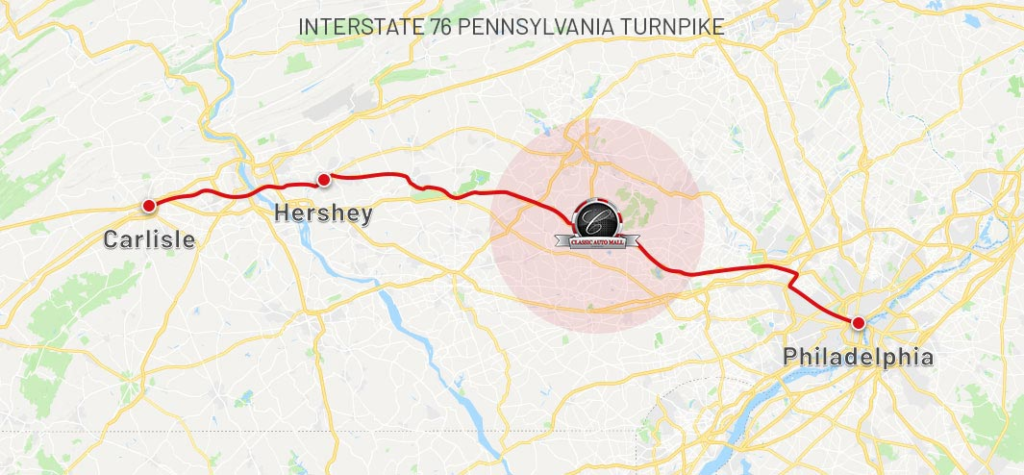
You can also follow along on social media for new arrivals, behind‑the‑scenes stories, and event updates: @ClassicAutoMall on Facebook, Instagram, YouTube, and TikTok. Whether you’re hunting for your next classic or just love automotive history, their channels offer a daily dose of car culture worth checking out.

Bonus Content
There's more to this story!
Be sure to check out the behind the scenes for this episode, filled with extras, bloopers, and other great moments not found in the final version. Become a Break/Fix VIP today by joining our Patreon.
All of our BEHIND THE SCENES (BTS) Break/Fix episodes are raw and unedited, and expressly shared with the permission and consent of our guests.
Support our Creators!
 For as little as $2.50 cents a month, you can get access to more behind the scenes action, additional Pit Stop mini-sodes and other VIP goodies, as well as keeping our team of creators fed on their strict diet of Fig Newton's, Gummy Bears, and Monster. Consider signing up for Patreon today. And remember, without *YOU*, none of this would be possible!
When COVID hit in March 2020, the Mall closed its doors and briefly laid off staff. But something unexpected happened: buyers kept calling, trucks kept arriving, and the Mall’s massive indoor space allowed contact‑free operations. “The mall’s ability to operate contact‑free and its large inventory… kept business alive even as inventory fell to roughly 400 cars in six months.”
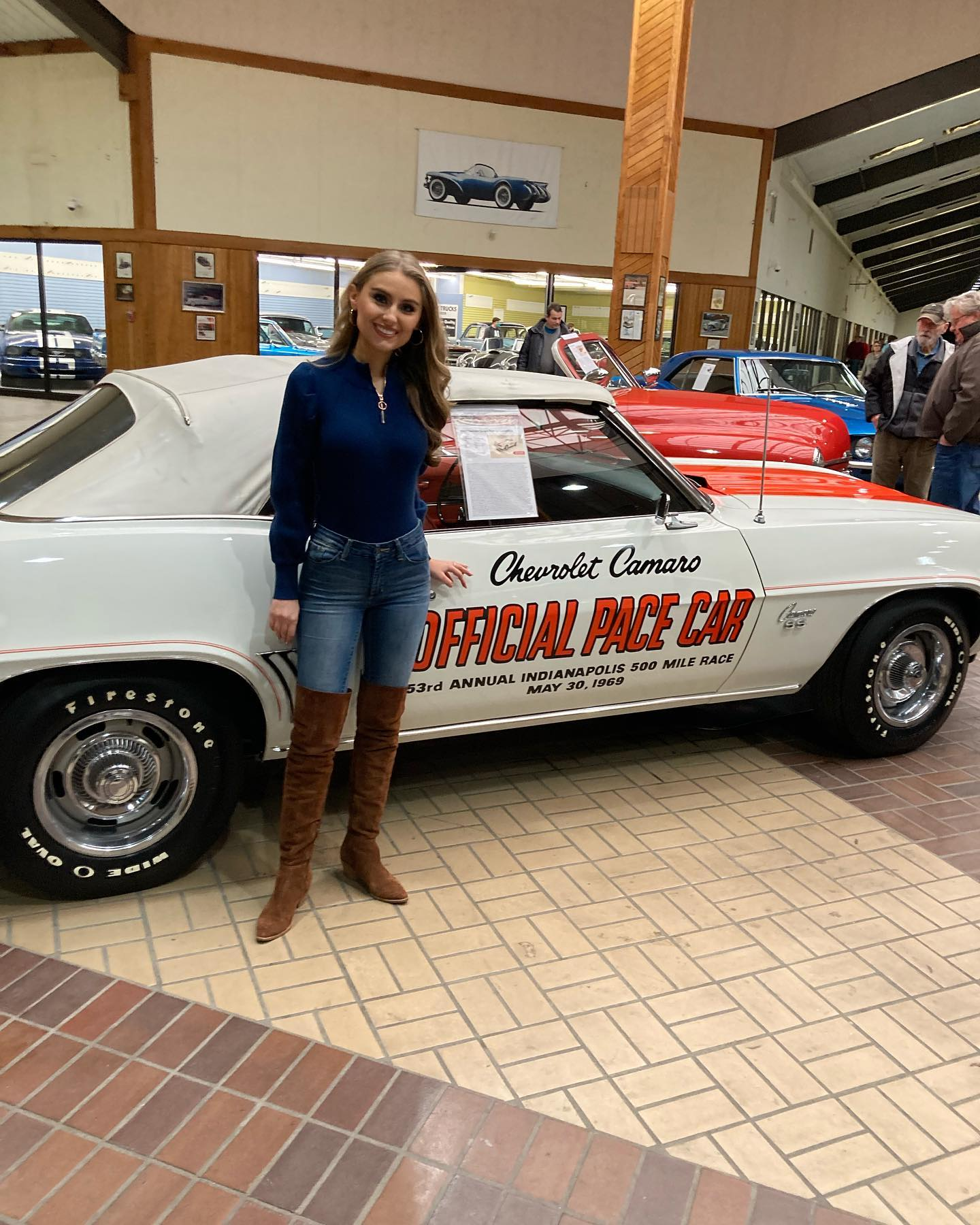
That period forced the team to streamline processes, and many of those efficiencies remain part of the Mall’s workflow today.
A Consignment Model Built on Accessibility
One of Classic Auto Mall’s defining traits is its egalitarian approach. There’s no admission fee, no upfront consignment charge, and every car — whether a $5,000 El Camino or a multi‑million‑dollar Ferrari — gets the same attention.
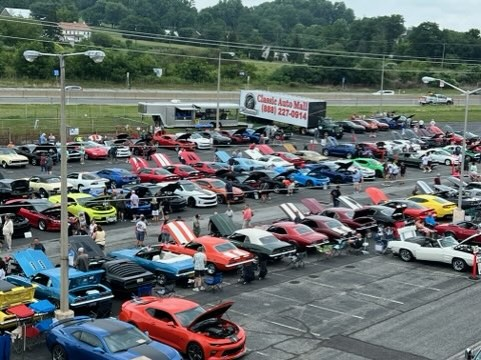
Visitors wander through hallways where drivers, restorations, and exotics sit side‑by‑side. The Mall hosts 15–18 major events each year, including the Camaro Nationals, which bring around 700 Camaros to the property.
Howden loves seeing multi‑generational families explore the space together, discovering cars they didn’t expect to find.
The Barn Find Legacy
Barn finds are part of Classic Auto Mall’s DNA. The original 400 barn finds brought into the mall created a mythology that still draws visitors today.
One standout story “… like the 1923 Chevrolet Weedman motorhome—complete with a tree growing through it—capture the public imagination.” — that became a viral curiosity. While titles and shifting market tastes have made some barn finds harder to sell, they remain a beloved part of the Mall’s identity.
The Future: Collections, Estates, and Full‑Service Support
Howden sees a post‑COVID correction in the collector‑car market. Many buyers who purchased during the pandemic are now selling, sometimes at a loss. High‑end Ferraris and hyper-cars continue to appreciate, while more generic classics have softened.
He also notes that future collectability may hinge on electronics and parts availability — a challenge for late‑model cars with complex systems.
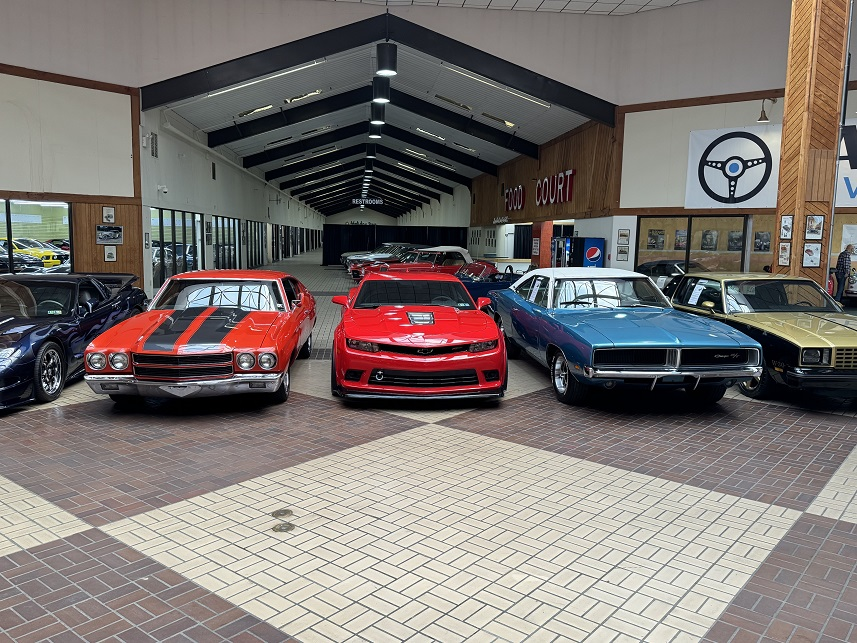
Still, he’s optimistic about younger enthusiasts who blend tech savvy with mechanical curiosity, keeping the hobby alive in new ways.
Looking ahead, Classic Auto Mall aims to become the go‑to resource for families managing collections and estates. The Mall already handles transportation, photography, descriptions, and sales logistics, but Howden wants to expand into full‑suite services that simplify downsizing or dispersing multi‑car collections. “Our vision is to guide families through valuation, transport, repair decisions, and sale venue selection so that emotional and logistical burdens are minimized.”
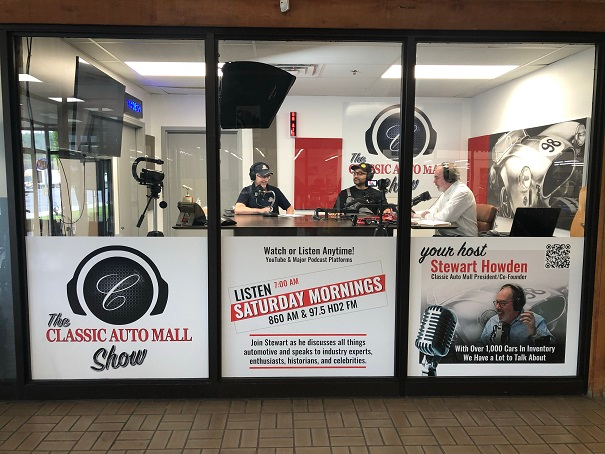
Stewart also remains active in the local car community, serving on the Radnor Hunt Concours d’Elegance board and encouraging collectors to reach out for guidance.
In the end, Classic Auto Mall is more than a showroom — it’s a living museum, a community hub, and a place where automotive history is preserved, discovered, and passed down. Under Stewart Howden’s leadership, it has become a destination where every car has a story, and every visitor finds something unexpected.
Guest Co-Host: Don Weberg
In case you missed it... be sure to check out the Break/Fix episode with our co-host.Other episodes you might enjoy
All your favorite episodes starring Don Weberg from Garage Style Magazine! ... Because after all, what doesn't belong in your garage?Remember to subscribe to Break/Fix using your favorite Podcast App.
This content has been brought to you in-part by sponsorship through...