

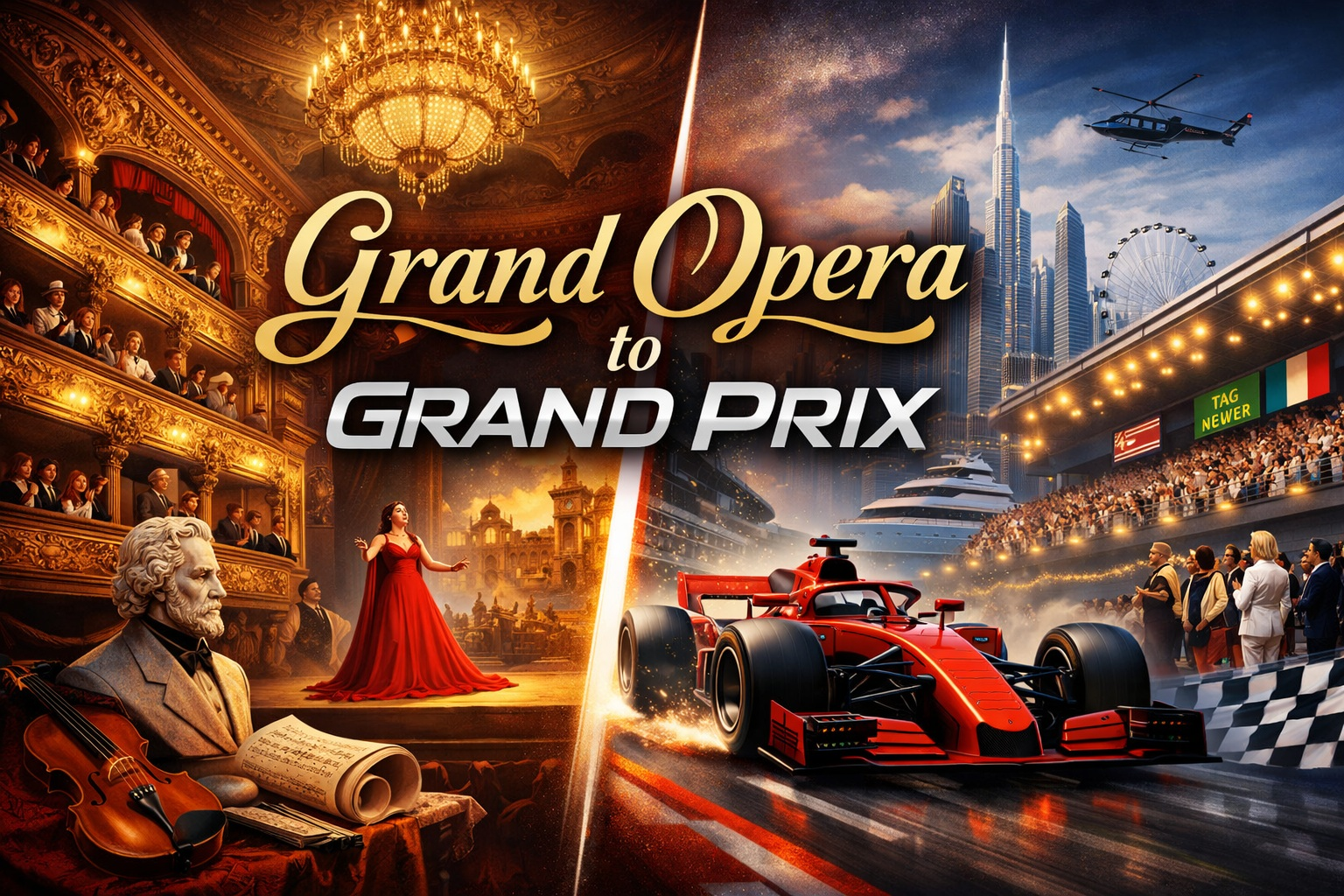
In the late 19th century, cities built opera houses the way nations today build Formula 1 circuits — as monuments. An opera house wasn’t just a venue for music; it was a declaration of cultural sophistication, a place where elites gathered to see and be seen, and a symbol that a city had arrived on the world stage.
Fast‑forward to the 21st century, and the Formula 1 Grand Prix has inherited that mantle. When a country hosts a race, it’s not merely staging a sporting event. It’s making a statement about global presence, ambition, and identity. The fashionable, the famous, and the aspirational gather under the spotlight, just as they once did beneath chandeliers and velvet curtains.



This parallel — between grand opera and Grand Prix — is the focus of a fascinating cultural analysis by Skip McGoun, emeritus professor of finance at Bucknell University and longtime scholar of automotive culture. His argument is simple but profound: both opera and Formula 1 have served as stages for prestige, identity, and social display. And both may be approaching their cultural “peak.”
Bio

Skip McGoun is the William H. Dunkak Emeritus Professor of Finance at Bucknell University and was a long-term Visiting Professor at the University of Ljubljana in Slovenia and at the University of Donja Gorija in Montenegro. He has presented and published on the history and culture of finance as well as automobile history and culture and served as Area Chair of the Vehicle Culture Section of the Popular Culture Association.
Synopsis
This History of Motorsports episode features Skip McGoun, emeritus finance professor at Bucknell University, comparing Grand Opera and Formula 1 Grands Prix as expensive spectacles that persist because they serve social functions beyond entertainment: creating a “there there” (brand identity for places) and providing venues to “see and be seen.” McGoun traces opera’s shift from royal courts to civic opera houses used to signal wealth and cultural sophistication, noting architectural features designed for social display. He argues F1 has similarly become an internationally recognized marker of wealth and technological sophistication, increasingly used by countries—especially from Hungary (1986) and Malaysia (1999) onward—for global rebranding, and he points to luxury/fashion and technology sponsorships as evidence of elite audiences. He closes by asking whether F1 has reached “peak Formula 1,” paralleling opera’s post-peak contraction, followed by audience discussion on rebranding, economics, and media change.
Follow along using the Slide Deck from this PresentationTranscript
Crew Chief Brad: [00:00:00] Brake Fix’s History of Motorsports series is brought to you in part by the International Motor Racing Research Center, as well as the Society of Automotive Historians, the Watkins Glen Area Chamber of Commerce, and the Argettsinger family.
Crew Chief Eric: In the late 19th century, cities built opera houses the way nations today build Grand Prix circuits, as monuments.
Back then, an opera house wasn’t just a place for music, it was a declaration of cultural sophistication, a stage where the elite could see and be seen, and a symbol that a city had arrived. Fast-forward to the late 20th and early 21st centuries, and that symbolic mantle has shifted. Today, a Formula 1 Grand Prix carries the same weight.
When a country hosts a race, it’s not just about speed. It’s a statement of global presence, ambition, and identity, and once again, a place where the fashionable, the famous, and the aspiring gather under the spotlight. So what does this transformation tell us? What can the [00:01:00] evolution from grand opera to Grand Prix reveal about the future of motor racing and the cultures that build their identities around it?
To explore those questions, we’re joined by someone uniquely equipped to connect these worlds. Skip McGown, emeritus professor of finance at Bucknell University and a longtime visiting professor across Europe, is a scholar who has spent his career examining the history and culture of both finance and the automobile.
He’s presented, published, and even chaired the Vehicle Culture section of the Popular Culture Association. And today, he helps us unpack the symbolism behind the spectacle and what it might mean for the road ahead.
Skip McGoun: Okay, well, speaking of cueing the music, I’m really glad that this is an academic conference as opposed to a music festival. First of all, it would mean that there are a lot more people in the audience now than there would be under those circumstances. And second, starting out on a Saturday morning at a music [00:02:00] festival would probably mean I’m the least desirable act on the program.
The other thing is, looking at this title, you know, you might think that Mark and I had a contest over who could come up with the least likely connection to motorsports. This isn’t true. This was purely by accident. Take a look at these images, and what I wanted to do was try to come up with what I felt were maybe the sorts of mental images that people might have for grand opera and Grand Prix.
Looking at grand opera, we have an opera diva wearing what I suppose now we would consider a kind of absurd costume. And looking at that image, you can also hear her singing becoming progressively louder until she finally dies at the end of the performance. On the other hand, we have the driver. And I was listening [00:03:00] to Paul’s presentation yesterday, and the way he was describing, I think it was the futurist ideal of the Italian man.
You know, could certainly imagine the qualities in our heads when we see an image like that. And not only that, it is connected, I think, to Mark’s presentation because that could be the astronaut image. For that matter, you could probably put a cigarette in his mouth, a hat on his head, and he could be the Marlboro Man.
Okay, so this is, this is a very familiar image to Americans. So we have one image that’s very, very positive, very, very attractive. We have another image that I wouldn’t s- necessarily say is a negative image. It’s, it’s also kind of a, almost a disparaging image, not something that we really can identify with.
It’s a very different mental images of grand opera and Grand Prix. But I think there are some similarities as well. First of all, when you consider opera, I [00:04:00] would expect that a lot of people, if not most people’s image of opera, is something that people don’t attend unless they’re otherwise compelled to do so.
Sadly, this I don’t think is unusual for cultural events. Now, I don’t know what the n- numbers are for opera, but at one point I did read 90% of the people who are visiting an art museum are not there for the art. They’re there for some other reason. Opera is really not most people’s idea of entertainment.
I’d also like to make a statement here that might be considered somewhat heretical in this context. But if I had to imagine a less spectator-friendly event than a Grand Prix, it would be difficult. But we have one event that’s [00:05:00] really avoided by a lot of people, and we have another event that I would argue is not necessarily at the apex of entertainment value.
So that’s one similarity. Second similarity is that putting on a Grand Prix or a grand opera is ferociously expensive. And I believe that neither of these could possibly cover all of the costs of the event simply on the basis of entrance fees. Even if you’re filling the stands or filling the, uh, auditorium, it’s not gonna pay for everything.
So if you’re looking at these two, what I would say is that society or the economy or whatever you call it, is expending considerable resources Against the amount of entertainment returned. So the conclusion from that is that somehow both of these [00:06:00] are supplying something that society wants. In effect, they’re performing some sort of social role, satisfying some sort of need society has in order to justify really kind of expending more resources than the entertainment that the attendees are getting in return.
So what are those two needs? The first need is kind of associated with place, is places have to or want to have a there there. Now, the phrase there there comes from Gertrude Stein, who in her autobiography had returned to Oakland, where she grew up, and was disappointed to discover that there was no there there.
And since then, that phrase has just begun to pop up all over the place. The way I like to think of it is for there to be a there there, it’s kind of like a brand image. A place has a brand image, and places want to create a there [00:07:00] there. I would assume this is… And that’s the one social role that I believe Grand Prix and Grand Opera both satisfy.
The second one is the idea of there there. Obviously, okay, I’m playing on the words. People want to associate with people they want to associate with. There has to be somewhere for people to hang out with the right kind of people. And I believe that, again, Grand Opera and Grand Prix both provide us with that sort of venue.
We want to go to those because they are there. Who’s they are there? People we want to associate with, people we want to be like, people who want to like us. Now, what I’m going to do is first look at Grand Opera. Does it satisfy those two social needs in order, again, to [00:08:00] justify the resources that are being expended in order to put it on?
Opera got its start in royal courts for obvious reasons. It was very expensive, again, to put on even back then. It was a way for royalty display its wealth. It was a way to display its culture. Okay, opera is, I think, especially interesting in that it combines music with art, with literature. And of course, the courts had to employ Or hire experts in all of those areas.
But in some cases, they actually participated in the operas themselves. So you had this royal beginning. What happened over a period of time was commerce increased. Merchants became wealthy in trade. So the wealth wasn’t necessarily concentrated in the aristocracy anymore, it was getting diffused out more into the [00:09:00] population.
You know, so how do these newly wealthy merchants display their wealth? And how do these newly wealthy merchants display the significance of the place where they’re living, you know, to kinda give their city a there there? They built opera houses. So opera had this historical connection with royalty, so when other common folk became wealthy, this was how they displayed their wealth.
So this was a way of saying, “Our city is someplace. There’s a there there.” Now, this is one of the earliest civic opera houses that is still there. This is the San Carlo in Naples. Probably, though, the most famous is, uh, Charles Garnier’s Paris Opera. Honestly, it’s… I don’t know about you, I cannot look at that image without thinking wealth and culture.
This was kind of the epitome of creating a there there. And if you [00:10:00] look at really cities all over the world, and even smaller, most of the cities in Europe, like if you look at the opera houses, one in Budapest, there’s one in Vienna, there’s one in Frankfurt. Cities built these really grand opera houses.
Other cities weren’t quite so wealthy. They constructed opera houses as well. Opera was a way to say, “There’s a there here.” Okay? And that there is associated with wealth and culture. So why is this a good thing? Well, it kind of reflects on the people who live there. You know, people are proud to say, “I’m from Naples,” or, “I’m from Paris.”
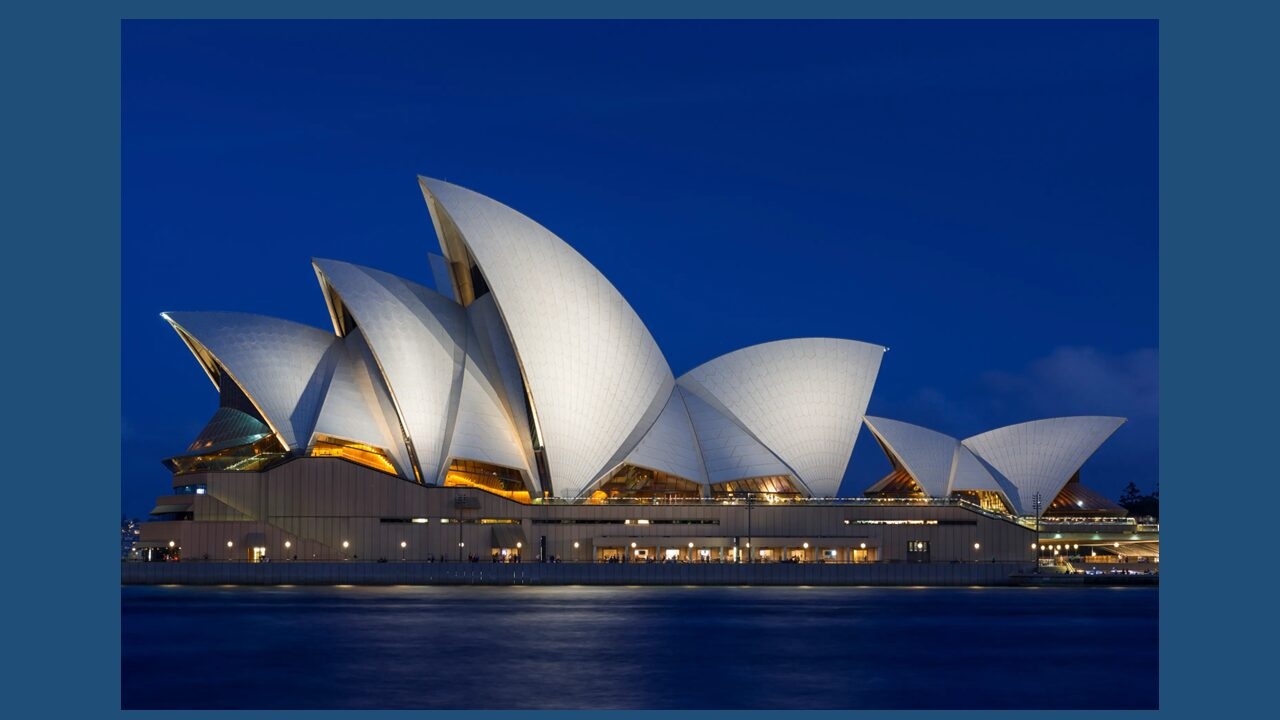
And it, of course, reflects on the people who might come there. There’s ways of monetizing that brand image. Are we still doing this? Yep. This is obviously one of the more famous uses of architecture in order for there to be a there there. I mean, this has become Sydney, no question. And it’s still being [00:11:00] done.
Relatively recently, much more recently than this, Oslo built an incredible new opera house. Hamburg built the Elbphilharmonie. So opera is still a way to kind of create a there there, a brand image that has the right connotations. Of course, when you have a grand opera house, you attract celebrities. And there were international celebrities, performers in the past, and international celebrity performance now.
You had celebrity conductors in the past, you have celebrity conductors now. The idea is there’s a there there, and that brand image is created, at least in part, with an opera house. Now, I want you to take a close look at this. This is, this is a drawing or an illustration of one of the earliest grand opera houses, and there are three things that I’d like to point out.
First of all, you notice the tiered boxes, and you notice how they’re shaped. They’re [00:12:00] clearly designed with a better view of the people across the way than whatever’s going on onstage. This was an excellent way to see and be seen. But at the same time, you notice there are floor-to-ceiling partitions between each of these boxes.
And the idea was that people would go to the opera, to the same performance night after night. Because the reason wasn’t there to be entertained by what’s going on onstage, it was to be entertained by what was going on everywhere else. People would go, and they would have dinner there. I think there were facilities behind the boxes for preparing meals.
People would sit in the boxes and read the newspapers. One thing that you can’t really see all that well is that these boxes had curtains so that there were other forms of entertainment that could be indulged in in the boxes as well. Now, the other thing that’s a little unusual about this is notice there are no seats here in the pit, because the pit was [00:13:00] an area where people could wander around, you know, where they could meet their friends, they could gossip, and no one was concerned that all of that talk was somehow interfering with the pleasure of the performance, because that really wasn’t the point of it.
The point was to see and be seen. And of course, there was kind of a presumption that at least right people of a certain sort were there, because you couldn’t just walk in off the street, okay? So these had to be people that were able to afford the entrance fee, the price of the ticket. Let’s take a look at the Paris Opera House.
You notice a couple of differences. First of all, the partitions between the boxes are not floor to ceiling, so there’s less privacy than there was. You’ll notice that there are seats in the pit, you know, so there wasn’t this wandering crowd during the performance. But of course, we still had boxes facing boxes.
And this very clearly shows the traditional [00:14:00] horseshoe shape, you know, of an auditorium, which obviously is much more effective at looking across at people on the other side and looking across at the, um, VIPs who had boxes at the very end, as opposed to watching what was going on on the stage Notice here that the area for circulation is no longer available.
What fascinates me about the Paris Opera House is that if you look at the plan, it’s in three pieces of the same size. One piece is the stage and the backstage area, one piece is the auditorium, and the next piece is the entrance lobby, which is as large as the auditorium. And you can see from the design that this is an excellent place for people to display themselves, to walk around, to see and be seen.
And as much space was devoted to this as was devoted to the [00:15:00] auditorium. That hasn’t necessarily changed. This is from the inside of the Sydney Opera House, and we still have seating, again, on the sides facing across, and very open. And you don’t have quite so large a lobby, but you do have a very fine restaurant and bar.
So if you’re interested in seeing and being seen, this is the place here to do it. Opera can be used in more dramatic ways to create a there there. Okay, this is the Roman Colosseum in Verona, where they stage a performance of Nabucco. Probably not the best place to hear the music, but obviously a great place to be able to tell people that you were there.
I don’t know if you’re familiar with this. This is from the Bregenz Opera Festival, where the extraordinarily elaborate stage settings are constructed in Lake Constance. Again, is this the [00:16:00] best place to hear music? Is there a best place to see performances? Although they’re, they’re shown on screens, so you can watch it that way.
But it’s to be there, and certainly put Bregenz on the map. Bregenz also, I think, has an excellent contemporary arts museum. But this is Bregenz. The Colosseum with the performance of Nabucco is Verona. And not only is it a great place to see and be seen, it’s a great place to kill and be killed. I, I don’t know if you remember the James Bond film that opened at the Bregenz Festival, where a number of people were shot, one of whom was not James Bond.
What I’m trying to illustrate here is that grand opera was, and I believe is still, an internationally recognized expression of wealth and cultural sophistication. It creates a there there for places, and it creates a, an appropriate venue [00:17:00] to see and be seen by the right people. Now, let’s take a look at Grand Prix.
What I’m going to try to do is make the argument that Grand Prix is an internationally recognized expression of wealth and, in this case, technological sophistication It wasn’t always that, but I’d like to make the case that within the last, I don’t know, 30, 40 years, it has become that. So we’re gonna look first at whether or not there is a there there, where the Grand Prix kind of create this brand image, now, in this case, not for cities, but for countries.
This is a little difficult, and, you know, you can disagree with how I’ve gone about this. But what I did was I looked at the dates when countries first hosted a Grand Prix. So these were the charter members at the first one in 1950. What we’re looking for is, is there some [00:18:00] evidence that holding the Grand Prix was kind of a deliberate attempt at brand image management, either image creation or maybe a rebranding to augment or alter the image?
First of all, I would argue that every one of these has a story as to how it ended up on this list when it did. All you had to do is attend the film on Thursday night, you know, to see the story of how racing came to Watkins Glen. So I don’t know all of these stories. I don’t know how many of these stories have even been documented, and I suspect a lot of what went on is not something that anyone would ever want to have documented.
But this is the original batch, and there’s nothing on there that’s surprising. These were all European countries that had long [00:19:00] histories of racing, okay? They had established venues for it. No surprise. Now, let’s look at the rest of the 1950s. Again, you know, a number of familiar countries. They did expand into the United States, but again, large market, history of racing, large automobile industry.
Goes without saying, it wasn’t trying to rebrand the United States. The interesting one to me is Argentina. This, I think, was a consequence of Fangio’s fame at the time. So that was really the motivation to create a Grand Prix in Argentina in the early 1950s. Again, not having anything to do with the country itself.
1960s, not necessarily any surprises, although, uh, you know, South Africa, we’re talking about the essentially European part of South Africa. We’re not talking about the much broader population there. And again, a history of racing. This, to me, is where it starts to get [00:20:00] interesting. Brazil, kind of following on with the fame of a driver, in this case Emerson Fittipaldi.
Okay, so they can kind of capitalize on that by holding a Grand Prix there. The one I find most interesting, now sincerely, you can disagree with any of these. As I said, I have no idea what the real story was behind. I’m only trying to kind of infer it from what happened where, when. Japan, I think, would be interested in rebranding itself.
You know, it didn’t want to be seen as this just tradition-bound culture. It wanted to be seen as an industrial power, particularly in the area of automobiles. You know, this was when they were, you know, starting in the process of making big pushes to export their automobiles abroad, you know, including to the United States.
So I would argue that in this case, this may be one of the first examples we’ve seen of a Grand Prix’s effort to kind of rebrand a [00:21:00] place. Moving on to the ’80s, I find a couple of these curious. San Marino, that’s pretty small. And of course, the race was not held in San Marino. It was held in Italy. I think Italy wanted to have another Grand Prix, but at the time the tradition was to label Grand Prix with the name of a country.
So San Marino steps up to the plate and puts their name on another Grand Prix that’s being held in Italy. So th-this was not an effort to rebrand or create any sort of image for San Marino. Europe, a little odd. Europe isn’t a country. At the same time that this was going on, Europe was creating Europe, the European community, you know, subsequently to become the European Union.
So a way of enhancing that image of Europe as a unit, you create a European Grand Prix, which was actually held at the Nürburgring, which hadn’t [00:22:00] had a Grand Prix since 1976. This was kind of a way to, for Germany to take another bite at the apple. The real rebrand here was Hungary. Even though I was alive and reasonably cognizant of what was going on in the world in 1986, I’m not sure people had much of an image of Hungary.
Hungary? Um, I don’t know. So Hungary’s trying to kind of take a step into the international spotlight by hosting a Grand Prix. I think that was probably the first step in using Formula 1 as creating a there there. Japan was kind of trying to create the idea of a different there there. This is like a there there from ground zero.
1990s, Pacific Grand Prix was held in Japan. Again, I’ve got to wonder if Japan wanted to, uh, have another race, but this time they called it the Pacific Grand Prix. Luxembourg, this race was [00:23:00] also held on the Nür– at the Nürburgring. You tell me, was it- A way to hold another race in Germany and Luxembourg tagged along, or was it a way to, for Luxembourg to kinda take a step up and maybe get a different image other than a place to park your money and then tap into Germany to actually hold the race?
I don’t know. Again, Malaysia, I believe, is kind of similar to the idea of Hungary. Malaysia wants to begin to appear on the world stage, and they do that with a Grand Prix. After that, it all broke loose. We have at least two of these countries that have been, are of course, very familiar to Americans, but not with images in America that they would’ve wanted.
So this was, I would say, a rebrand. I suspect most Americans had heard of Singapore, but had no idea where it was. Bahrain and Abu Dhabi would’ve been very challenging. So here, clearly for, I think all five cases, it’s a [00:24:00] way of saying there’s a there there, or at least the kind of there we would prefer you to think of.
Same here. Three countries that I think would want a different image. Russia clearly would’ve wanted a better image than was circulating in the United States. India would kind of want a certain better image than was circulating in the United States. Korea, again, was looking to sell a lot of cars, and this again, would be a way of associating the automobile with Korea.
Azerbaijan, I’m willing to bet that there were very few Americans that could put their hand on a world map and cover Azerbaijan. I’m not so sure too many Americans would’ve known how to pronounce Azerbaijan. Clearly, they’re looking to step up. And finally, in the 2020s, again, Saudi Arabia, not a very good image in the United States, as we are seeing in the news.
But by holding a Grand Prix, well, you [00:25:00] know, maybe people will look at it differently. Qatar again. Rwanda. You know, just as I was preparing this presentation, I’m reading a news story that, you know, Rwanda’s in discussions with the FIA to hold a Grand Prix there. I think that even beats Azerbaijan in terms of rebranding.
I would argue that like we saw with grand opera being used to create a brand image for cities, F1 now is being used to create a image for countries. I think it started with Hungary in 1986, and then once Malaysia in 1999, then the dam broke. It was all a process of creating or altering, rebranding a country.
The expense of putting these Grand Prix on was covered by the benefits that these countries hoped to obtain. By holding the [00:26:00] event. And of course, this is way beyond entertainment. It was a much different motivation, which was why they felt it was worth doing. Again, has a Grand Prix become a place to see and be seen?
Okay, so this is a tough one. So I’m trying to figure out a way to kinda get at this without trying to look at celebrity photos of Grand Prix to see who was there. So what I figured was that if companies are advertising luxury, fashion, and technology, they must expect that there are people in the audience, or spectators, who have an interest in luxury, fashion, and technology.
In other words, those are the they, as in they’re there. I presented on this topic a, a couple conferences ago. You know, and when it started out, it was all automotive products, [00:27:00] tobacco products, alcohol products. So I think when these items began to be advertised, it was a signal that the firms doing the advertising suspected that those sorts of people would be out there in the stands.
They would be there. Keeping in mind, too, this again, a very, very complicated issue, and not one that’s necessarily, you can necessarily get at with this approach. But I thought that a lot of reason that companies advertise is not necessarily to reach the people in the stands. They’re to get the access so that they can take their best clients and customers, and they can go to those back areas and get close to the stars.
Same result. So let’s take a look. First thing I notice, and what I’ve really– what I’ve done here is gotten all of the examples of a [00:28:00] certain product category that I could find. It, it’s hard to be too specific about what was accomplished because notice, you have some ads that are very large and clearly visible from the stands, some that may be marginally visible, or some that hard to imagine someone there actually seeing this.
You know, in a lot of cases, I’m thinking the, the smaller ads here are associated with kind of a barter deal. Longines provides timing, equipment, and services to, I think in this case, a longtime sponsor of Ferrari. And in exchange, Ferrari puts the name on the car. Not necessarily so the public can see it, but it’s there They’re a sponsor.
So this was really one of the first uses of luxury fashion technology sponsorships. And I can’t help thinking that a lot of those had something to do [00:29:00] with providing services to the teams. This, I think, was a major, major change for a sportswear company to actually become a title sponsor. It’s very significant, very innovative.
Again, the idea being that there were people out there who were interested in clothing and what they were wearing. Obviously, I wouldn’t have kind of fallen into that category. The only r-real fashion advertiser here was Ted Lapidus, which actually was in the same year as Benetton. And there are all sorts of backstories to these that, you know, I stumbled across.
Kilimato was a cosmetics company, and I believe had some sort of either business or personal affiliation with the team. And in exchange for, you know, providing a lot of money to the team, painted the car. This one’s very fascinating. Red Bull decides to branch out into [00:30:00] clothing, so they rename Toro Rosso to AlphaTauri and paint the car.
I don’t know that that’s ever happened before and whether it’ll ever happen again, but that’s how we got a sportswear company as a title sponsor. There were a lot more examples of wearables that really weren’t title sponsors. You know, they just appeared. I recognize a lot of those. I don’t recognize– I think for the most part, it did kind of fall under the sportswear category.
You know, we’re really not talking about high fashion here. Although I think either Ellesse or Annabelle. I had to look up a lot of these. More upscale. You know, but the names that are familiar, Nordica, Diesel, Tommy Hilfiger, Russell Athletic, are sportswear. Notice that some of the names are relatively large, some of them are smaller.
I was just excited to learn that my new glasses are Carrera. [00:31:00] That was not intentional, okay? Somehow I managed to avoid fashion altogether, but the person who was fitting my glasses said, “These look pretty good on you.” So I said, “Okay.” Now, my old glasses, I had someone tell me that I looked like an Italian philosopher, especially when I was holding an espresso.
That, that like made my day. So I was kinda shooting for a similar look, okay? Now, take a look at the dates They all seem, you know, they, they all seem to kind of, you know, fill… In the ’80s and ’90s was when this sort of sponsorship peaked. Then technology began to emerge. So what we had was advertising by companies that I’ve, I’ve labeled m- mainframe computing, computer services from a centralized location.
And notice that these were pre- pretty large. Then not surprisingly, following up on that, we had personal computer advertising. You know, and I’m not [00:32:00] lingering on these slides, and it’s like kind of Where’s Waldo is trying to, to find where the ad is somewhere on the car. Electronic components, computer-related services, other business services.
Notice, you know, we’re no longer in the automotive products, tobacco, and alcohol era. So this is how I would sum it up. The idea that this was a place to see and be seen, to me, I think started to emerge in the, the ’80s, and then in terms of wearables on into the ’90s. And then the association with the technological sophistication started out again around the same time, but then really exploded into the current century.
Now, early in my career, I would be talking with a colleague. His comment to me was always along the lines of, “This is a kind of an interesting idea, McGoun. So what? Why should anyone care about this? Why should it matter? What can we do with it?” Can’t get up here and say, [00:33:00] “Well, yeah, you know, I shown this cool connection between grand opera and Grand Prix.
Any questions? So what?” I would argue that peak opera occurred in nineteenth century Italy. This is when opera was its most popular, the stars were the biggest, the tunes were the most familiar, and I would say, sadly, this has remained the core of the opera, uh, repertoire ever since. You know, there are others, but this is what shows up in the Roman Colosseum.
This is what shows up at Bregenz, Peak Opera. What happened? How did kind of opera fall off its peak? Remember, opera is entertainment, and still is entertainment, but at the same time, it was the place to create a there there for a city, and it was the place to go and see and be seen by the right people.
Okay, this is the Festspielhaus in [00:34:00] Bayreuth, designed by Wagner. And one thing that happened, and I think kind of Wagner was certainly instrumental in it, that the opera became less entertaining. You know, you couldn’t hum the tunes anymore, and it became more esoteric. But looking at the design of this, first, what do you notice?
There are no side boxes Wagner said, “Look, you go to the opera to hear my music and watch the activity on the stage. You don’t go for any other reason.” Okay? Seeing and be seen just kinda fell off the map in terms of opera or, you know, film. The other interesting thing about this is, what’s interesting about the pit here?
There are no aisles. There’s an aisle on one side, there’s an aisle on the other side. So if you didn’t have one of the world’s strongest bladders, you are going to see and be seen in a not very nice way. Okay? So you’re trying to get from here all the way around to the [00:35:00] end. So his idea was, “Look, no one interrupts my performances.
You sit there, you watch it, you pay attention. That’s it.” But as we saw, that really wasn’t the point of opera. It wasn’t just entertainment. Opera is still alive. It’s alive with new venues. Okay, the open-air opera in Santa Fe. Glyndebourne, again, still a place to see and be seen, but not with the cachet that it had before.
It still creates a there there. Again, for Santa Fe, it’s more than a place to get an authentic burrito. And what could be a better way to see and be seen than here on the lawn at Glyndebourne? We’re talking serious cachet here. So those old rationales are still in play, and they are trying to introduce contemporary themes.
This is John Adams’s Doctor Atomic. This is Turnage’s [00:36:00] Anna Nicole. You know, I, I was reading the New York Times this morning, and they’re talking about another new opera that’s being performed. But these operas just, they don’t enter the regular repertoire. Okay? It’s really kind of frozen in time. Now, Formula 1, it doesn’t get any more associated with fashion than this.
You know, LVMH is the largest, wealthiest fashion conglomerate in the world. Arnault is one of the wealthiest people in the world. If there was ever any doubt about the connection between Formula 1 Grand Prix and fashion, luxury, there you go. I just saw that article in the Financial Time. Now, my understanding from the article is what Apple’s interested in doing is acquiring content for their virtual reality equipment.
That’s the connection here, so further cementing the idea of an association between Grand Prix and technology. So [00:37:00] here’s the question I’ll leave you with. Have we now reached peak Formula 1? Looking back over what happened to opera, in retrospect, we can look back and we can see that there was a peak opera where things more or less got frozen.
And the relevance of grand opera and its effectiveness at performing those necessary social functions didn’t disappear. It’s still there, and it’s still entertaining, but it shrunk. And Formula 1 now is riding the crest. So have we reached peak Formula 1 in satisfying those social needs? If not, how much longer does it have to go?
Where can it go? Or do we already see signs of atrophy and something else out there emerging to take over? Thank you very much.[00:38:00]
Kip Zieter: Skip, I’m wondering, as a, as a NASCAR fan, to go back to the opera houses, would my parallel be the Grand Ole Opry? Sorry, just kidding. Anyway. Anyway, that was, that was terrific. We have people with microphones in the audience. Does anyone have questions or comments for Skip?
Skip McGoun: I really want to reply to that.
You know, that’s a really excellent observation. And as I was going through here, I realized that there are other, I don’t know what I should call it, institutions, events, whatever, that also perform these functions. It’s just that at the times, these had really reached kind of the apex of, of visibility. But no, I agree, I agree completely.
Trevor Roberts: Uh, before I hand off the mic to everybody else, uh, I finally get to play in my wheelhouse as a musician here. It’s interesting to look at the sliding scales of both of these, and it’s a great comparison and a great talk. But I would say they’ve kind of gone diametrically to each other, where opera at one point in time, again, [00:39:00] like it was the seen and be seen.
It was the, “Oh, we hope people will pay attention.” And now, again, like you were talking about, you kind of gloss over the celebrity and all of that of Formula 1 now. But I mean, you look at Martin Brundle’s grid walks, they’re all just people that are there. They have no care in the world other than, “I’m rooting for Mercedes today because they paid me to be here.”
Skip McGoun: Wait, why… Okay, let me ask. Why did you say they were there?
Trevor Roberts: Effectively invited and paid to be there just to be, to be seen. I mean, there’s the real fans in the, the grandstands and all of that. But you have all of these people that, you know, like 17th century opera, where it was walking around and having a conversation.
They’re on the grid just to be seen and to have their celebrity out there. Or, I mean, Louis Vuitton is now sponsoring all the trophies this year.
Skip McGoun: Well, I didn’t want to overdo it, but at the same time, there was a large popular f- following of opera at the time as well. You know, people would l- kind of line up at the, at the entrance to the theater, you know, to see people come in.
It’s like, you know, every night there was something like Academy Awards. So it’s kind of… I kind of [00:40:00] glossed over- Yeah … the fact that, yeah, it was much broader than just that.
Paul Baxa: Thanks, Skip, for that wonderful presentation. As a connection to my talk yesterday, Giuseppe Campari was an opera singer, and he was actually a, not so much an amateur.
I think he performed in some of the bigger theaters at the time. Just to fill, fill in one thing with Hungary, I think you’re correct that it was trying to build up the image of that country. But it was also significant because it was the first Grand Prix behind the Iron Curtain. Hungary was still part of the, the Soviet, uh, world at that time, so.
Skip McGoun: In- interesting. Okay, short personal story. I broke through the Iron Curtain once, going from Austria to Yugoslavia, and I didn’t notice any difference, that I had been fed this Eastern European stereotype. And I’m looking around, it’s like, “Okay, where are the bread lines?” You know, “Where are the depressed-looking people, you know, wearing ugly clothes?”
So, you know, it’s obvious that Hungary and many [00:41:00] other countries like that really needed, uh, needed the rebrand.
Mark Raffauf: I thought that was really very, very interesting because the parallels are, are fantastic. However, couple observations being still involved in the industry today. One is, it’s my opinion, having been on FIA commissions and things before 2000, a lot of Formula 1 races had nothing to do other than how much money Bernie Ecclestone was gonna make by having another race.
Okay? Okay. Two- Yeah. See, this is- After 2000, after 2000, I wonder what your thoughts are, this is the question, of the percentage of failures of this process. Turkey, India, China, Korea, they all failed. Yeah. No, that was- So there’s a lot of, there’s a lot of things that I think you’re making a point, but I think there’s gonna be more to it to your endpoint, which in our world here in the US, I mean, we have massive partnership deals with people like AMD and Lenovo.
It’s all business to business. It has nothing to do with the consumer. They don’t put their stuff on cars. It’s all about [00:42:00] enticing people to use their products on a business-to-business level, which I’ve seen as a fascinating development of what you’re talking about. I agree with everything you said.
Don’t get me wrong, and don’t be critical. Oh. But there’s a lot of stuff going on out there that potentially in five years, Formula 1 on television will be gone. It won’t be there. That, you know, it’s- It will be every other way, easier, better. Might have to pay for it more. Yeah. But you’re gonna get better content through other ways, I think.
That’s just my opinion. But I am, I’m interested in your thoughts on at least the part about the- Seriously, I mean- …
Skip McGoun: the
Mark Raffauf: shift in the economics and where it goes … that’s an excellent
Skip McGoun: point. Yeah. I, you know, I would love some time to make a presentation, you know, on just one of those cases. We’re at that point Yeah, well, I’m at the point where I’m kinda reaching my sell-by date, so.
At, at any rate, when, when I was listening to your presentation yesterday, you know, you were talking about that the, you can get a car now and get it on the track for only, only three-quarters of a million dollars. You know, so the idea is that you’re right. I’m, [00:43:00] I’ve thought about that, is there are people who are clearly making money on this.
But they’re also highly subsidized by the folks who are willing to kick in three-quarters. It would- Yeah … kinda like an NFL player buying their own equipment and then playing for free. Sure. Yeah, I know I might get a concussion and ruin my life, but heck, I’m there for the fun of it. Yeah. So the, if you look, if you look at the whole cost- Right
it’s not even close. But yeah, I’d like to do what you were suggesting. Yeah. Really would.
George Webster: So another perspective on this. A year ago, I was at a N- paid barbecue. I met some people at the table who were Formula 1 fans. I’m a Formula 1 fan, it goes back to 1960 or whatever, the first year here. These people, I tried to talk to them about Formula 1.
We had nothing in common because their Formula 1 was all drive to survive. Yeah. And nothing else. Yeah. And I don’t know what that means, but that’s a whole other [00:44:00] perspective on this thing, that there’s another universe out there.
Crew Chief Eric: On the internet, our British friends have been a flurry of comments. Some of them overlap with things that have been said in the room.
But one that stands out specifically is in remark to what you were talking about, countries using Formula 1 to basically symbolically represent themselves in a better light. There is an opposing point here, and I think it’s very valid, which is why I’m bringing it up. It’s the flip side of this argument, is the South African Grand Prix being taken off the calendar in the ’80s when the world was pressuring South Africa to end apartheid.
So any comment on that?
Skip McGoun: I don’t know if that’s inconsistent with anything here. Diametrically opposed organization. W- well, no, you’re s- you’re saying it was, th- you know, it was taken off the calendar because of opposition to apartheid. Yeah. Well, it was kind of like rebranding in a negative direction. It’s still, Formula 1 was a key component in brand image.
Its absence was as [00:45:00] significant as its presence. Perhaps even more so.
Audience Q&A: I wanna bring this back to Watkins Glen. Okay. Watkins Glen has an opera house. Or did. It, it’s gone. Yeah. Well, F1 was in Watkins Glen, and it’s gone. What happened during that time when the rich and famous came to the Glen for, uh, natural beauty reasons, and they had an opera house because it was a there there.
They had to have a place to go. And lots of small towns had opera houses- Oh,
CROWD: yeah …
Audience Q&A: where drama and music and speakers came. N- not of great note, but it was a place- That small rural places aspired to be like the grand places of Europe-
Skip McGoun: Mm-hmm …
Audience Q&A: and have an opera house- Yeah … even here,
Skip McGoun: so. Well, that’s the thing.
Opera kind of fell off the wagon, you know, in terms of providing for those social needs, and replaced by something else. Movies. [00:46:00] Movie, you can’t mingle or gossip. You know, it’s more like the Festspielhaus at Bayreuth. All right, Jim Ellis, the last piece we got. Uh,
Jim Miller: thank you. So to, uh, first, a couple of quick things.
One is to underscore Paul’s remark about the Hungarian race being behind what, in those days, was called the Iron Curtain. Uh, that’s worth looking into. I, I don’t know much about it, but it’s only three years short of its becoming an independent country. Uh, the second thing, more important, is w- where can I get a pair of glasses that will make me look like an Italian
CROWD: philosopher?
Jim Miller: Oh, that’s- You’ll have to ask Carol. Okay.
CROWD: Uh,
Jim Miller: and, and lastly, Herbert von Karajan, who led the Berlin Philharmonic for forever and recorded numerous operas, was a major Porsche driver and owner. And I think as an Austrian, he was buddies with Ferry Porsche.
Kip Zieter: The glasses question sounds like a coffee break discussion to [00:47:00] me.
Skip, that was wonderful. Thanks very much. Always thought-provoking as always. Thank you.
IMRRC/SAH PROMO: This episode is brought to you in part by the International Motor Racing Research Center. Its charter is to collect, share, and preserve the history of motor sports, spanning continents, eras, and race series. The center’s collection embodies the speed, drama, and camaraderie of amateur and professional motor racing throughout the world.
The center welcomes serious researchers and casual fans alike to share stories of race drivers, race series, and race cars captured on their shelves and walls, and brought to life through a regular calendar of public lectures and special events. To learn more about the center, visit www.racingarchives.org.[00:48:00]
This episode is also brought to you by the Society of Automotive Historians. They encourage research into any aspect of automotive history. The SAH actively supports the compilation and preservation of papers, organizational records, print ephemera, and images to safeguard, as well as to broaden and deepen the understanding of motorized wheeled land transportation through the modern age and into the future.
For more information about the SAH, visit www.autohistory.org.
Crew Chief Eric: We hope you enjoyed another awesome episode of Break Fix Podcast, brought to you by Grand Touring Motorsports. If you’d like to be a guest on the show or get involved, be sure to follow us on all social media platforms at GrandTouringMotorsports.
And if you’d like to learn more about the content of this episode, be sure to check out the follow-on article at [00:49:00] gtmotorsports.org. We remain a commercial-free and no annual fees organization through our sponsors, but also through the generous support of our fans, families, and friends through Patreon.
For as little as $2.50 a month, you can get access to more behind-the-scenes action, additional Pit Stop minisodes, and other VIP goodies, as well as keeping our team of creators fed on their strict diet of Fig Newtons, Gummi Bears, and Monster. So consider signing up for Patreon today at www.patreon.com/gtmotorsports.
And remember, without you, none of this would be possible.
Highlights
Skip ahead if you must… Here’s the highlights from this episode you might be most interested in and their corresponding time stamps.
- 00:00 Introduction: Opera to Grand Prix
- 01:39 Images and Stereotypes
- 03:54 Two Shared Similarities
- 06:20 “There-There” Explained
- 07:50 Opera Origins and Civic Pride
- 10:44 Modern Opera Branding & Social Theater
- 15:27 Opera Spectacle Locations
- 17:03 Grand Prix as Status Symbol
- 17:43 F1 Expansion Timeline
- 22:07 Rebranding Nations with F1
- 26:08 “They’re-There” at the Track
- 27:52 Luxury Sponsorship Mechanics – Sportswear vs High Fashion
- 31:25 Peak Era? and Tech Shift – The So What?
- 35:14 Opera Today Still Alive
- 38:02 Audience Q&A
- 47:12 Wrap Up, Sponsor Credits and Outro
Livestream
This episode is sponsored in part by: The International Motor Racing Research Center (IMRRC), The Society of Automotive Historians (SAH), The Watkins Glen Area Chamber of Commerce, and the Argetsinger Family – and was recorded in front of a live studio audience.
Learn More
Michael R. Argetsinger Symposium on International Motor Racing History
 The International Motor Racing Research Center (IMRRC), partnering with the Society of Automotive Historians (SAH), presents the annual Michael R. Argetsinger Symposium on International Motor Racing History. The Symposium established itself as a unique and respected scholarly forum and has gained a growing audience of students and enthusiasts. It provides an opportunity for scholars, researchers and writers to present their work related to the history of automotive competition and the cultural impact of motor racing. Papers are presented by faculty members, graduate students and independent researchers.The history of international automotive competition falls within several realms, all of which are welcomed as topics for presentations, including, but not limited to: sports history, cultural studies, public history, political history, the history of technology, sports geography and gender studies, as well as archival studies.
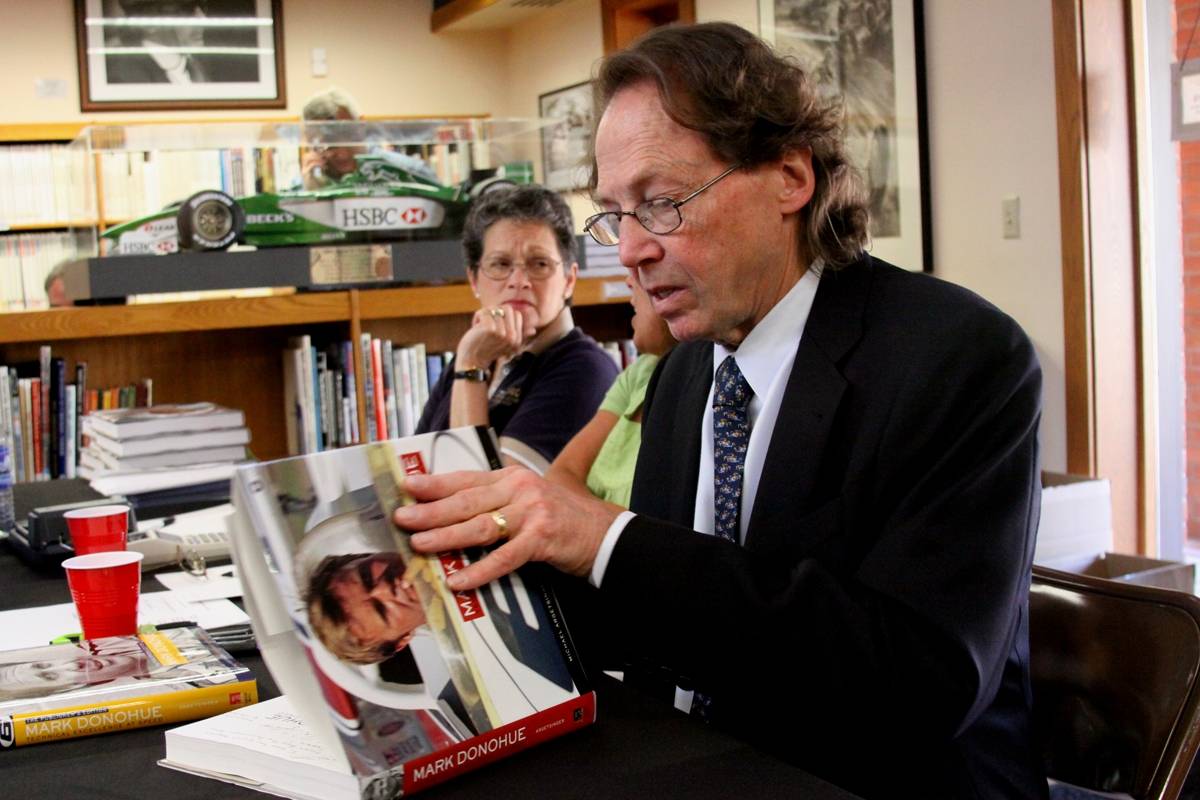 The symposium is named in honor of Michael R. Argetsinger (1944-2015), an award-winning motorsports author and longtime member of the Center's Governing Council. Michael's work on motorsports includes:
- Walt Hansgen: His Life and the History of Post-war American Road Racing (2006)
- Mark Donohue: Technical Excellence at Speed (2009)
- Formula One at Watkins Glen: 20 Years of the United States Grand Prix, 1961-1980 (2011)
- An American Racer: Bobby Marshman and the Indianapolis 500 (2019)
Consider becoming a Patreon VIP and get behind the scenes content and schwag from the Motoring Podcast Network
Do you like what you've seen, heard and read? - Don't forget, GTM is fueled by volunteers and remains a no-annual-fee organization, but we still need help to pay to keep the lights on... For as little as $2.50/month you can help us keep the momentum going so we can continue to record, write, edit and broadcast your favorite content. Support GTM today! or make a One Time Donation.
Opera began in royal courts, where rulers used lavish productions to display wealth, taste, and cultural sophistication. As commerce expanded and merchants grew wealthy, opera moved from palaces to cities. Civic opera houses became the new symbols of prosperity — architectural declarations that a city mattered.
Even cities without immense wealth built opera houses to create a “there there,” a brand identity rooted in culture. Residents took pride in saying they were from Naples or Paris, and visitors associated those cities with refinement.
This tradition continues today. The Sydney Opera House has become synonymous with Australia. Oslo’s waterfront opera house and Hamburg’s Elbphilharmonie are modern examples of architecture used to project cultural prestige.
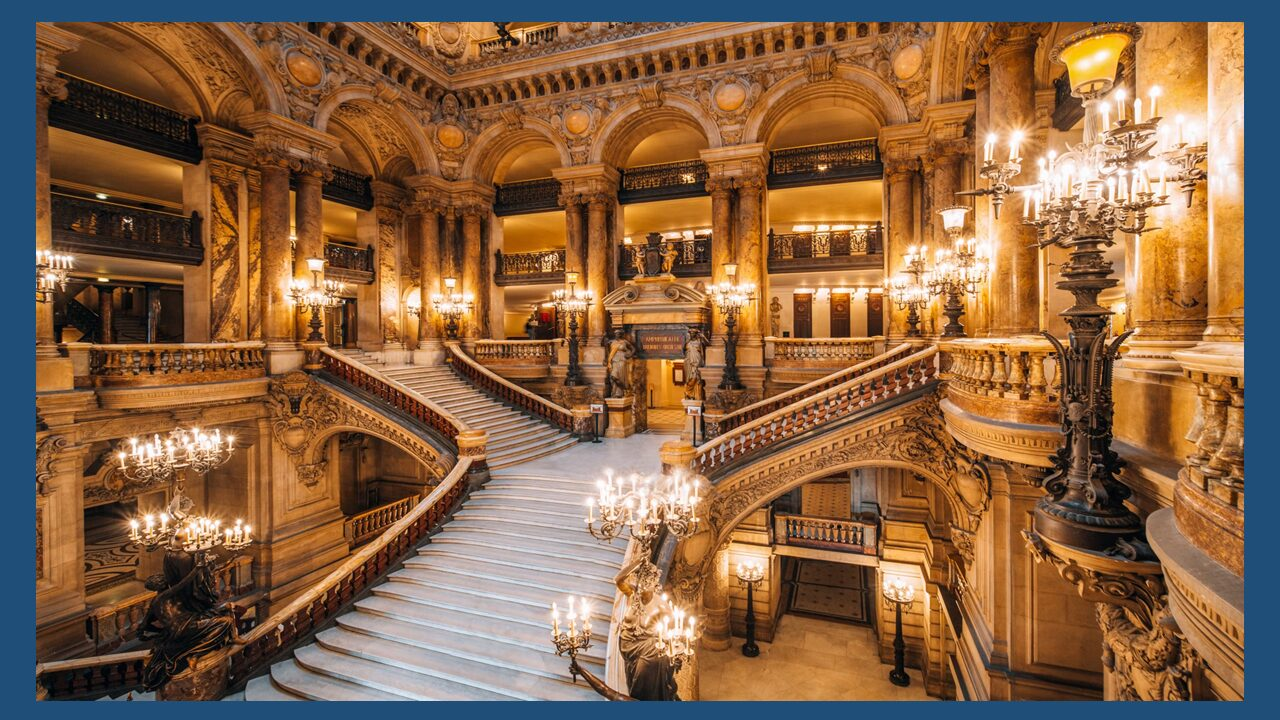
Early opera houses made their social purpose explicit. Tiered boxes were shaped to provide better views of other patrons than of the stage. Floor‑to‑ceiling partitions offered privacy. People attended the same performance night after night not for the music, but for the social theater happening around them.
They dined in their boxes, read newspapers, and enjoyed private entertainment behind curtains. The pit had no seats — it was a space for wandering, gossiping, and mingling. The performance was merely the backdrop.
Later designs, like the Paris Opera House, refined this concept. The lobby was as large as the auditorium, built as a grand promenade for display and conversation. Even today, venues like the Sydney Opera House maintain open sightlines and social spaces that encourage visibility.
Opera also embraced spectacle in unconventional ways. Verona’s Roman Colosseum hosts operas like Nabucco, where the experience is more about being there than hearing perfect acoustics. The Bregenz Festival stages operas on floating sets in Lake Constance — visually stunning, culturally iconic, and designed to put Bregenz on the map.
Opera, McGoun argues, remains an internationally recognized expression of wealth and cultural sophistication. It creates a “there there,” and it provides a venue for the right people to see and be seen.
Formula 1: The Modern Stage for National Identity
Over the last 40 years, Formula 1 has evolved from a European motorsport tradition into a global branding instrument. Countries now use Grand Prix events to craft or reshape their international identities — just as cities once used opera houses.
McGoun traces this evolution by examining when countries first hosted a Grand Prix.
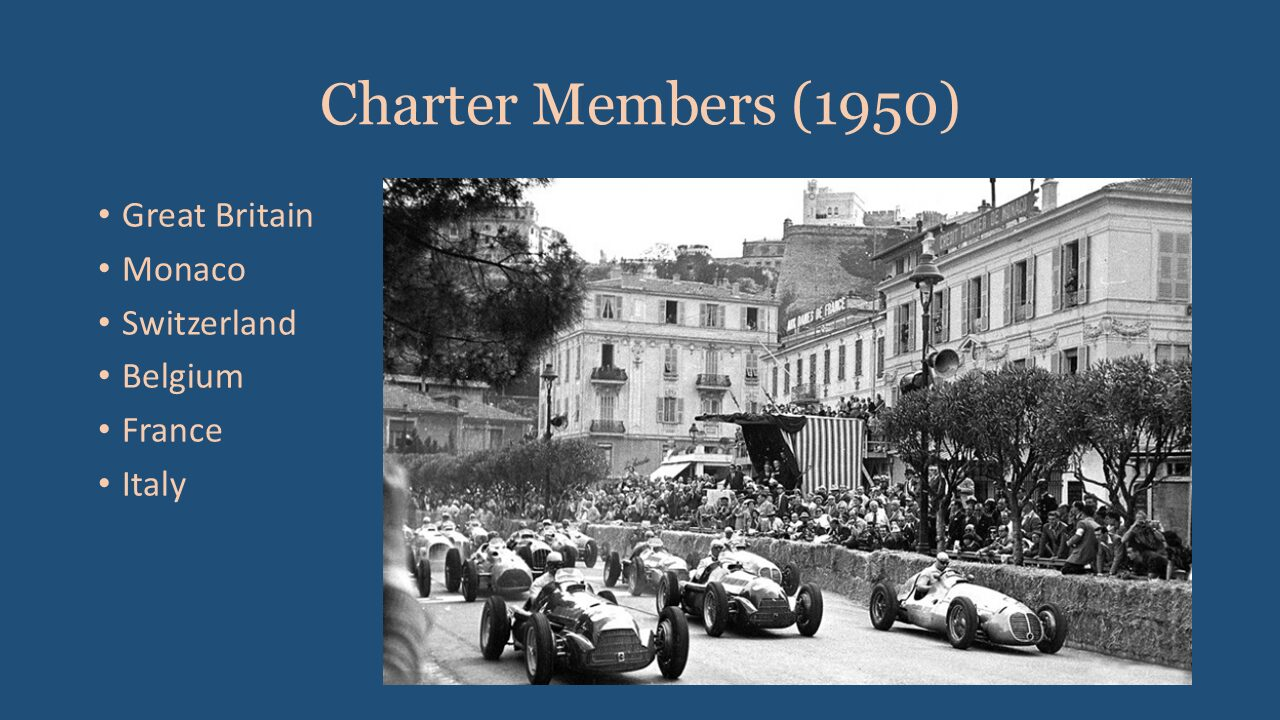
The original 1950 season included only European nations with long racing histories. The United States joined soon after, driven by its massive automotive industry. Argentina entered largely due to Juan Manuel Fangio’s fame.
The First True Rebrand: Japan and Hungary
Japan’s entry in the 1970s marked a shift. The country wanted to be seen not as tradition‑bound but as a rising industrial and technological power. Hosting a Grand Prix aligned perfectly with its push to export automobiles and assert itself globally.
Hungary’s 1986 Grand Prix was even more significant. As the first race behind the Iron Curtain, it represented a deliberate attempt to step into the international spotlight and create a national identity from scratch.
The 1990s & 2000s: The Dam Breaks
Once Malaysia joined in 1999, the pattern became unmistakable. Countries began using Formula 1 to announce themselves to the world:
- Singapore
- Bahrain
- Abu Dhabi
- Russia
- India
- Korea
- Azerbaijan
- Saudi Arabia
- Qatar
Even Rwanda has reportedly explored hosting a Grand Prix — perhaps the most dramatic rebranding attempt yet.
Just as opera houses once created cultural prestige for cities, Formula 1 now creates technological and cultural prestige for nations. The cost of hosting a Grand Prix is justified not by entertainment value, but by the promise of global recognition.
Formula 1 as a Venue for Social Display
If opera houses were built for social display, can the same be said of Formula 1?
McGoun approaches this by analyzing sponsorship — specifically luxury, fashion, and technology brands. If these companies invest in Formula 1, they must believe the audience includes people who care about luxury, fashion, and cutting‑edge tech. In other words, the “they there.”
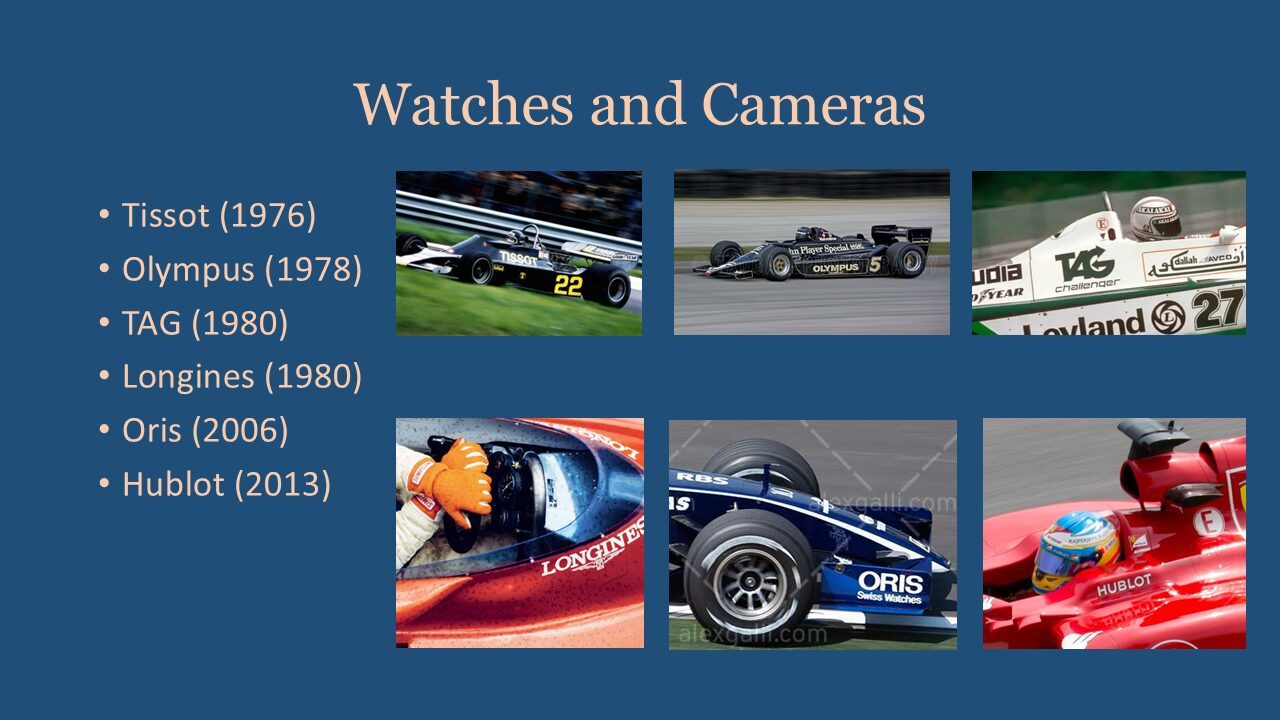
Early sponsorships were dominated by automotive products, tobacco, and alcohol. But when luxury brands began appearing on cars and trackside banners, it signaled a shift:
- Benetton became a title sponsor
- Ted Lapidus brought high fashion into the paddock
- Cosmetics companies painted entire cars
- Red Bull rebranded Toro Rosso into the fashion label AlphaTauri
By the 1980s and 1990s, sportswear brands like Nordica, Diesel, Tommy Hilfiger, and Russell Athletic were everywhere. Even eyewear brands like Carrera appeared — a detail McGoun jokes about after discovering his own glasses carried the name.
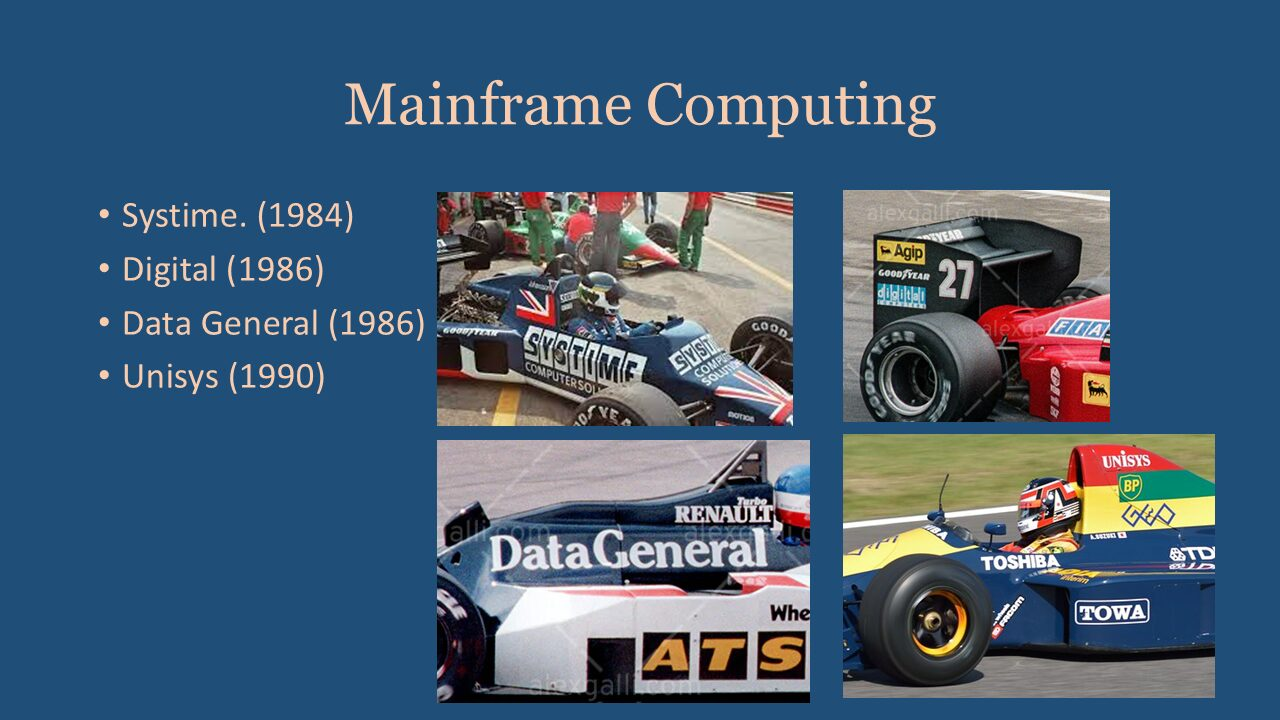
As the 1990s gave way to the 2000s, technology companies surged into Formula 1:
- Mainframe computing firms
- Personal computer brands
- Electronic component manufacturers
- Business‑technology service providers
The message was clear: Formula 1 wasn’t just fast — it was technologically sophisticated. Sponsorship reflected that identity.
Today, luxury and tech converge. LVMH sponsors trophies. Apple explores acquiring Formula 1 content for virtual‑reality platforms. The association between motorsport, fashion, and technology has never been stronger.
Peak Opera, Peak Formula 1?
McGoun closes with a provocative question: Has Formula 1 reached its cultural peak?
Opera’s peak occurred in 19th‑century Italy, when its stars were the biggest and its tunes the most familiar. Over time, opera became more esoteric, less accessible, and less central to cultural identity. It didn’t disappear — but it shrank.
Formula 1 today is riding a similar crest. It satisfies deep social needs: prestige, identity, spectacle, and technological aspiration. But how long can it sustain that role? Are we already seeing signs of atrophy? Or will something else emerge to take its place?
The parallels between opera and motorsport suggest that no cultural institution remains at its peak forever. But for now, Formula 1 remains one of the most powerful stages on which nations — and people — project who they are and who they aspire to be.
Other episodes you might enjoy
If you enjoyed this History of Motorsports Series episode, please go to Apple Podcasts and leave us a review. That would help us beat the algorithms and help spread motorsports enthusiasm to others.Remember to subscribe to Break/Fix using your favorite Podcast App.
Support our Creators!
 For as little as $2.50 cents a month, you can get access to more behind the scenes action, additional Pit Stop mini-sodes and other VIP goodies, as well as keeping our team of creators fed on their strict diet of Fig Newton's, Gummy Bears, and Monster. Consider signing up for Patreon today. And remember, without *YOU*, none of this would be possible!
This content has been brought to you in-part by support through...